Persian letters


“How can one be Persian?” asks Montesquieu. “How can one learn Persian?” they ask me sometimes.

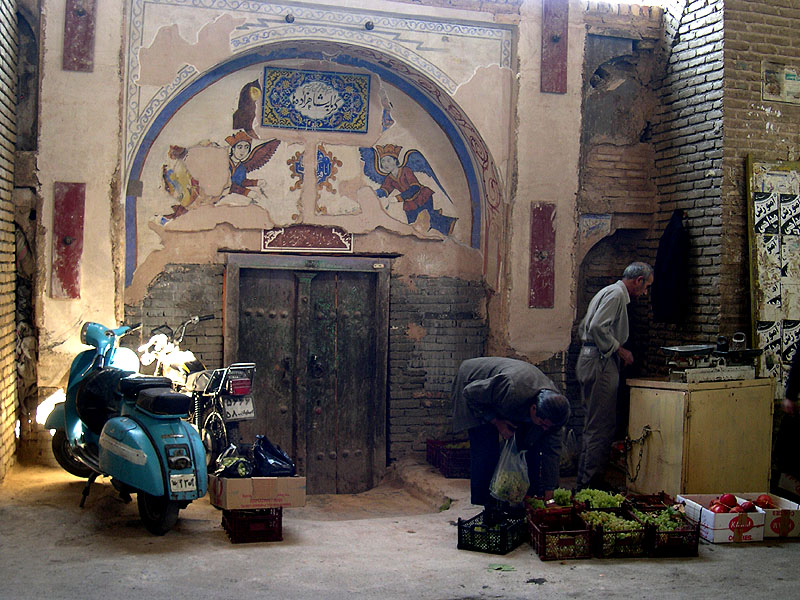
The French of the East. For a thousand years, the language of culture from Istanbul through the Caucasus to India, and in many places still it is; without it you cannot penetrate beyond a certain point into this world. The language of the purest poetry: the Persian poems are structured so much by the musicality of the language that they are untranslatable, any attempt is just a prosaic extract of their content. The language of music: the two and a half thousand year old Persian music is just as sophisticated, powerful and engaging as the European classical music. The language of a unique visual culture, to which, apart from the miniatures, the Iranian films and photos also bear witness. Of a multinational, multicultural, beautiful and isolated country of the size of a quarter of Europe, where only this language opens up doors and people, but this really does.


Kayhan Kalhor (kamanche) and Erdal Erzincan (saz): Gulnîshan (7:01)
Iranian Kurdish folk song performed by the classical Persian kamanche-player Kalhor and his frequent companion, the Turkish Erzincan, to illustrate Iran’s many cultures. From the concert held in Tehran’s Vahdat Hall.


history
• Müteferrika in Iran
• Sir Gore Ouseley and the Treaty of Gulistan (1813)
• Sándor Kégl’s Persian journey
• Ármin Vámbéry’s Persian journeys
• Persian travel sketches by Fedor Karacsay
• Nasreddin Shah in Hungary, 1889
• Ahmad Mirza, the little prince (1909-1925)
• Ahmad Mirza on the bridge of sirat
• Paraphrase of the Shahnameh against Hitler, 1943
• Beard fashions in Iran
• Elections and manifestations in Iran, 2009
• It’s winter

sites
• The chariot of time on Isfahan’s main square
• Bicycles in Isfahan
• The faces of Kashan
• Qâjâr-era palaces in Kashan and Shiraz (fr)
• Abyaneh, the Red Village
• Ashura in Abyaneh
• Village mosque in Abyaneh (fr)
• Nomadic butter churn in Abyaneh
• Masouleh, 1975
• The Persian desert
• On the edge of the desert
• A mineral world
• Vaults of Yazd
• Zoroastrian towers of silence
• The tomb of Queen Esther in Hamadan
• The Bakhtiari village of Sar Agha Seyyed
• Bakhtiari tents
• Khaled Nabi’s cemetery
• Gorgan: Turkoman shepherds and the village of Ziyarat
• Ruinous hammam in Kerman
• Cave dwellings in Kandovan
• Tehran, Behesht-e Zahra cemetery
• Beggar’s fiddle from the Museum of Music
• First day in the school in Mazandaran and Tehran
• Tabriz, the city of treasures
• Armenian monasteries in Iran
• Armenian churches in Northern Iran (fr)
• “Shepherd’s church” facing the Armenian cemetery of Julfa
• The Armenian quarter in Isfahan (fr)
• Damghan, birthplace of the demijohn?
• Qajar influences in 19th-c. Tiflis

nature
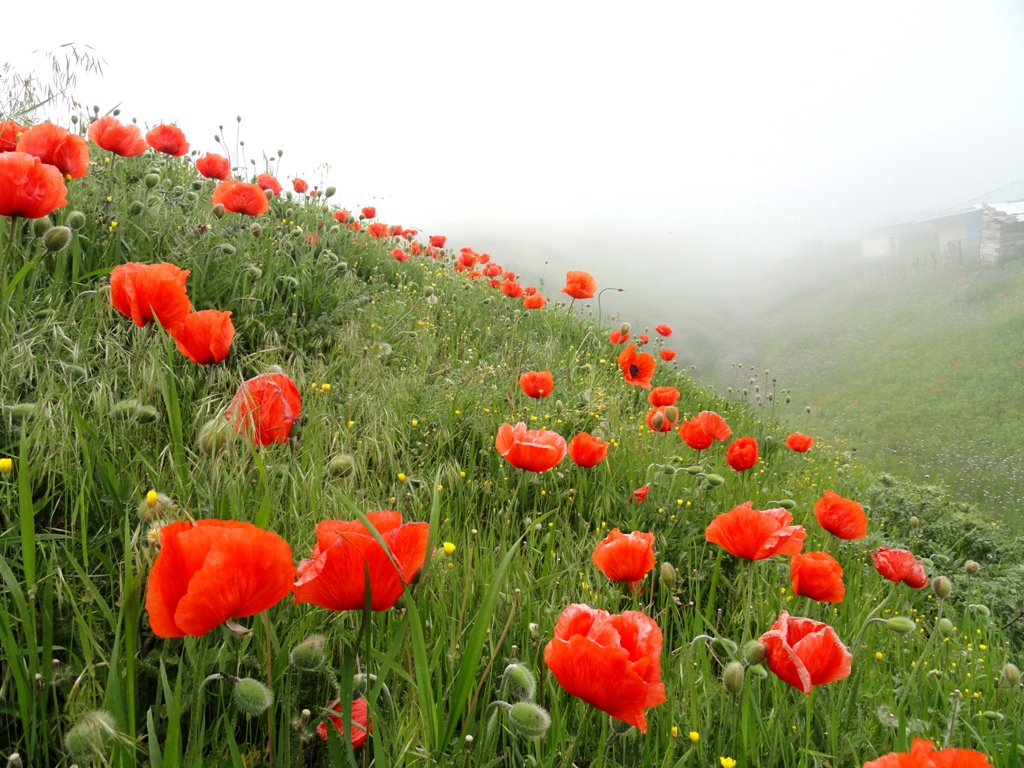
• Spring poppies in the Zagros
• Imperial crowns in the Zagros
• Conquering the Savalan Mountain
translations of poetry
• Mehdi Akhavan Sales: Comets and nights
• Sohrab Sepehri: Direction
• Omar Khayyam: The eternal secret
• Mehdi Akhavan Sales: It’s winter
• Hafez: From the blood of my heart
• Malek o-Sho'arâ Bahâr: Dawn bird
• Hushang Ebtehaj: As strangers
• Shahram Nazeri: Spring lily
• Fereidoun Moshiri: Trust in the spring
• Sohrab Sepehri: Village

music
• The power of Persian music
• Bakhtiari folk music: Cheshme-ye Kuhrang
• Masoud Bakhtyari: Tey tum rah
• Mahsa & Marjan Vahdat: Gol-e lâle
• Mohsen Namjoo: Name
• Hojjat Ashrafzadeh: Jam-e vasl
• Hossein Alizadeh - Kayhan Kalhor - Mohammad Reza Shajarian - Homayoun Shajarian: Zemestân ast
• Kayhan Kalhor: Desert night
• Soheil Nafisi: Hame-ye faslân-e donyâ
• Mohammad Reza Lotfi: Vatanam Iran
• Sahrab Tolouie: Tango perso
• Shahram Nazeri: Lâle-ye bahâr
• Shajarian – Kalhor – Alizadeh: Morgh-e sahâr
• Bijan Kamkar & Mastan Ensemble: Gharibâne
• Soheil Nafisi: Shahâbhâ va shabhâ
• Hossein Alizadeh: Horizon
• Sepa va dopa. Dance from Lorestan
• Asita Hamidi: Dokhtar-e Buir Ahmadi
• Freidoun Poorreza – Hossein Hamidi: Naz Bedashteh
• Davood Azad: Rumi + Bach
photo
• Hamid Khurshidi: Shepherds in Gorgan
• Alieh Sâdatpur: Bicycles in Isfahan
• Shahram Sharif: Iranian fragments
• Ehsan Amini and Hamed Masoumi
• Ahmad Kavousian: Masouleh 1975
• Ahmad Kavousian: Desert people
• Nasrollah Kasraian: The desert
• Alieh Sâdatpur: Bakhtiari tents
• Hamid Khurshidi: First day in the school in Mazandaran
• Ali Rafiei: First day in the school in Tehran
• Mohammad Javad Martabi: The village of Ziyarat
• Abotaleb Nadri: Brick-making children
• Ali Majdfar and Ardeshir Soltani: Khaled Nabi’s cemetery
• Mansure Motamedi: Flower-sellers in Tehran
• Omid H. Hassan: Tehran in Budapest

miniature
• Paraphrase of the Shahnameh
• A cup of tea from Isfahan
• Persian Jewish bride and bridegroom portrait

motifs
• Butterfly and candle
• Bird
• Imperial crown and tulip
• Bear cub

Iranian languages and cultures
• Tat villages in the Caucasus
• Lahij, the village of Persian border guards
• Tat and Pamiri languages
• Persian architecture in Tiflis
• The market in Kabul
• Poppy fields in Afghanistan

other
• A train to Persia
• Come with us to Iran!
• 30 (and more) reasons to visit Iran (fr)
• Happy new year, Persia
• Persian cuisine
• Iran’s secret language, the Russian
• The “five stones” game in Persia
• Sufi
• The origin of sin


2 comentarios:

  1. A wonderful kind of travel guide, ideal to enhance my eagerness to to visit Iran!

    ResponderEliminar

Blogger sometimes eats the messages. Before sending your comment, it is safer to copy it out, so you can send it again if necessary.