Switch over to our new blog! • ¡Pásese a nuestro nuevo blog!

The renewed version of our blog, with more features, a richer design, and available in nine languages, can be read here: https://wangriver.com

The new version also includes the old posts, often in expanded form. If you are curious about the updated version of this post, replace “riowang.blogspot.com/” in the URL with “riowang.studiolum.com/”, and the new link will most likely lead you there.


La versión renovada de nuestro blog, con más herramientas, un diseño más rico y disponible en nueve idiomas, se puede leer aquí: https://riowang.com

La nueva versión también incluye las publicaciones antiguas, a menudo en una forma ampliada. Si tiene curiosidad por la versión actualizada de esta entrada, sustituya «riowang.blogspot.com/» en la URL por «riowang.studiolum.com/es/», y el nuevo enlace probablemente le llevará allí.

Mostrando entradas con la etiqueta Ajvaz; Michal. Mostrar todas las entradas

Dragon invasion


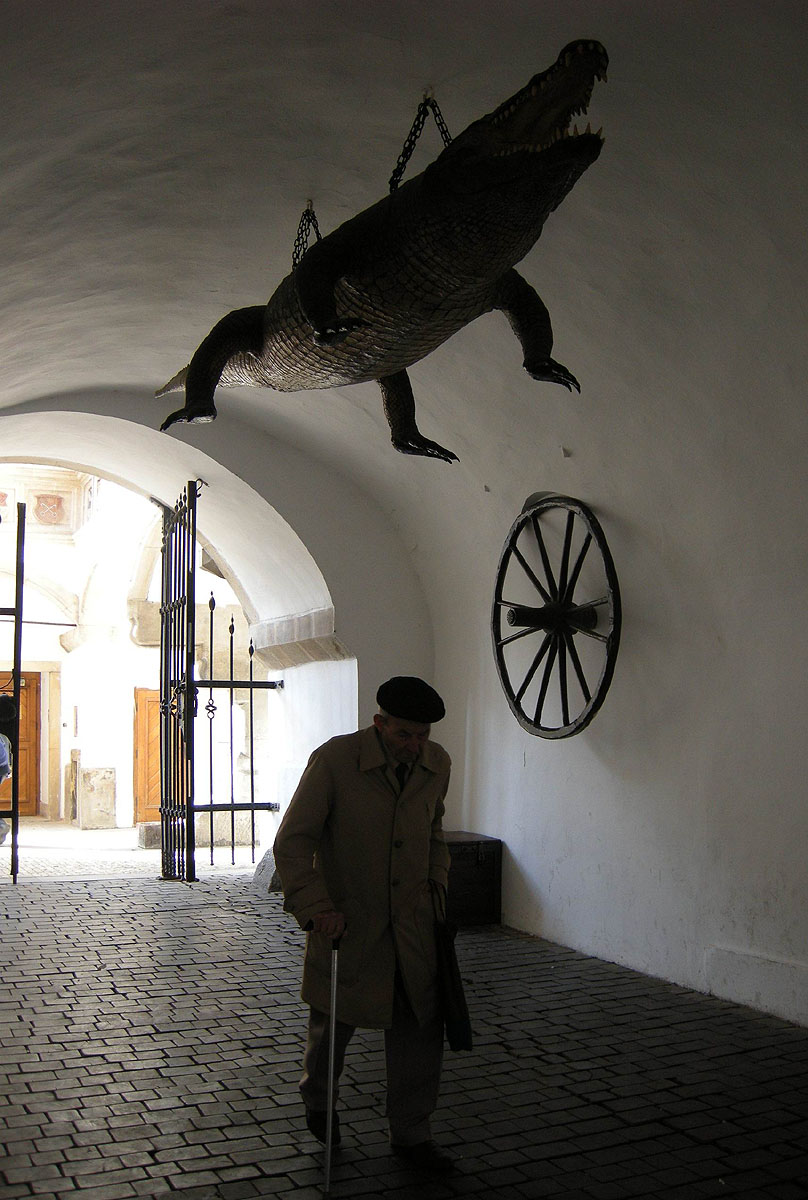
Several readers have inquired after the previous post about the identity of this crocodile swimming in such an absurd and nevertheless such a self-evidently natural way above the cobblestones of Brno and the field of sight of its passers-by like the monsters living in the other dimension in the Prague of Michal Ajvaz. This is the brněnský drak, the dragon of Brünn/Brno.
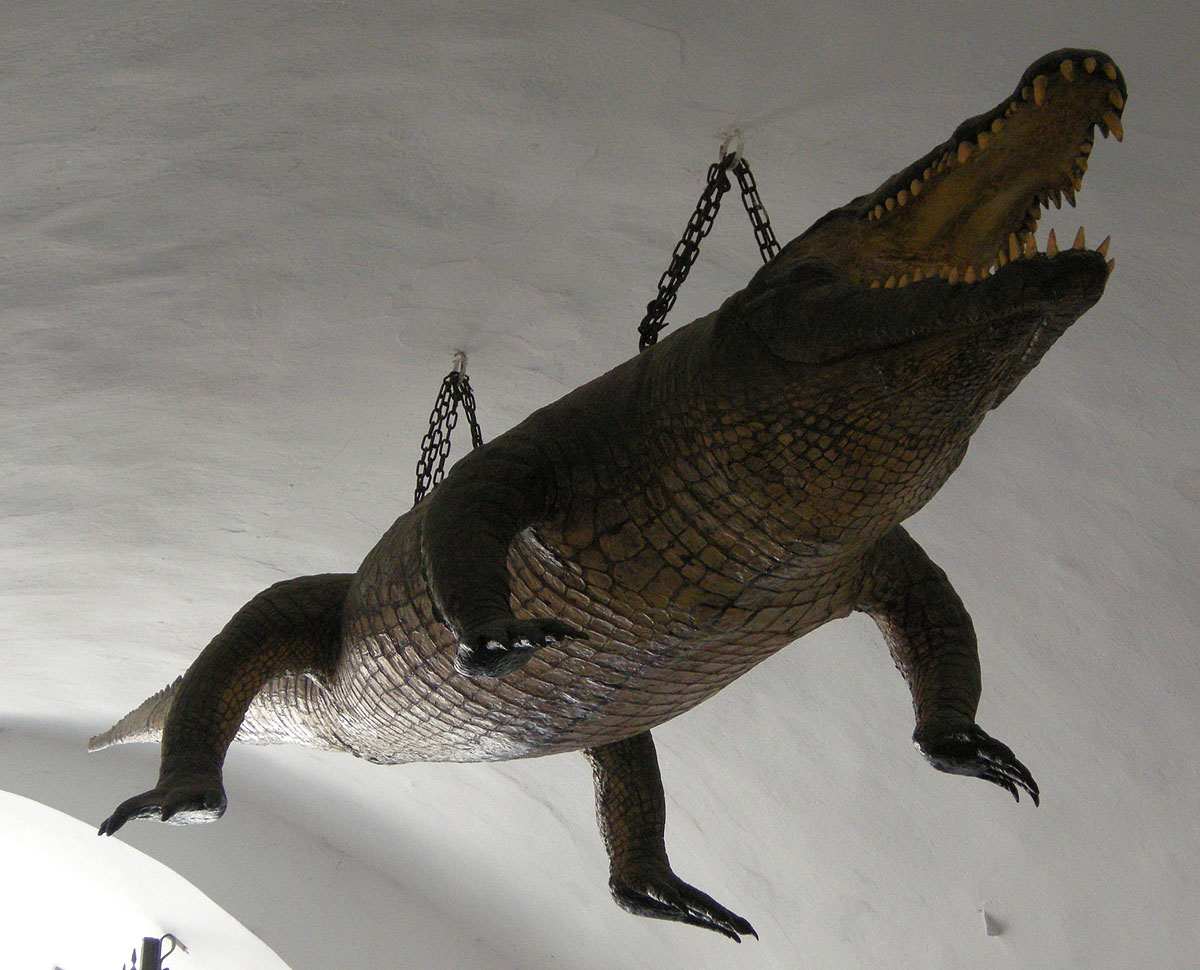

The dragon had come swimming on the river Svratka and terrorized the city by taking as prey the livestock and people coming down to the river. The city council offered a huge price for him who would kill it, but all who had attempted it perished. Finally a traveling journeyman won it by hiding a sack of unslaked lime in the body of a disembowelled ox and placing it on the river bank. The dragon devoured it, hide and hair, but when it retired to the river to digest, the lime began to boil in the water, and it was exploded in a thousand parts. The story of how it was pieced together by local artisans so that it could be hung up in the passage under the town hall’s clock tower as a warning to any further dragons passing by, must belong to the golden pages of the chronicle of Brno’s handicraft industry.

The talents of local artisans are also attested by the wheel on the wall of the same passage, which is not only a rustic decoration, but an important historical monument, and even a personality: it is the brněnské kolo, the wheel of Brno. It had been made in Lednice, some forty kilometers to Brno by wheelwright Jiří Birk for a bet in only twelve hours from the moment of chopping the tree to wheeling it in through the gate of Brno. He won the bet, but lost his clients, as from that time on he was considered to have made a pact with the devil. He died poverty-stricken.
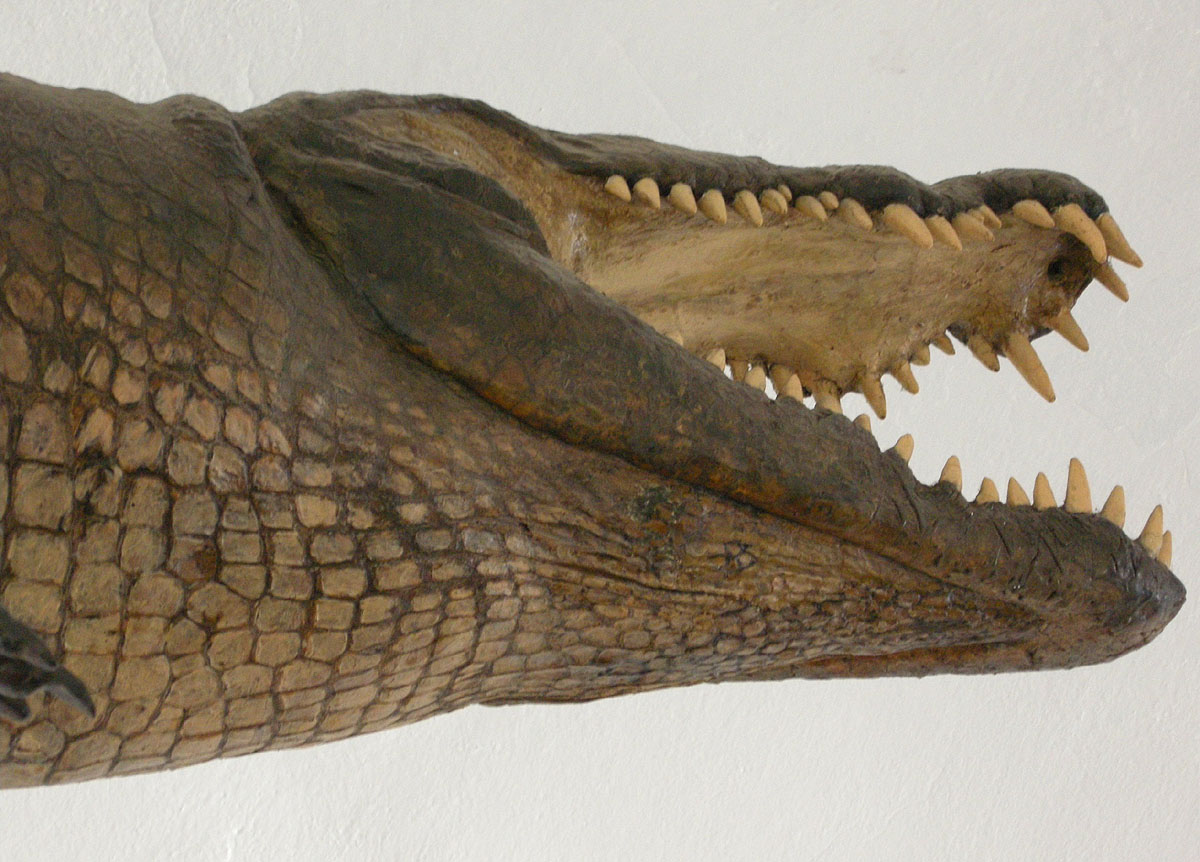

This is the one version. Another is that the crocodile came to the town already stuffed in 1608. It was a gift of the Sultan to the Margrave of Brünn, who was none else than the younger brother of the alchymist emperor Rudolf, the later emperor Matthias. This is how the memorial table placed on the wall of the clock tower by the town council in 1749 announces it.

However, the council did not know enough the documents in their own archives. For these prove that the crocodile had been restored and cleansed of worms back in 1578-79. So it had to come to the city much earlier than that.
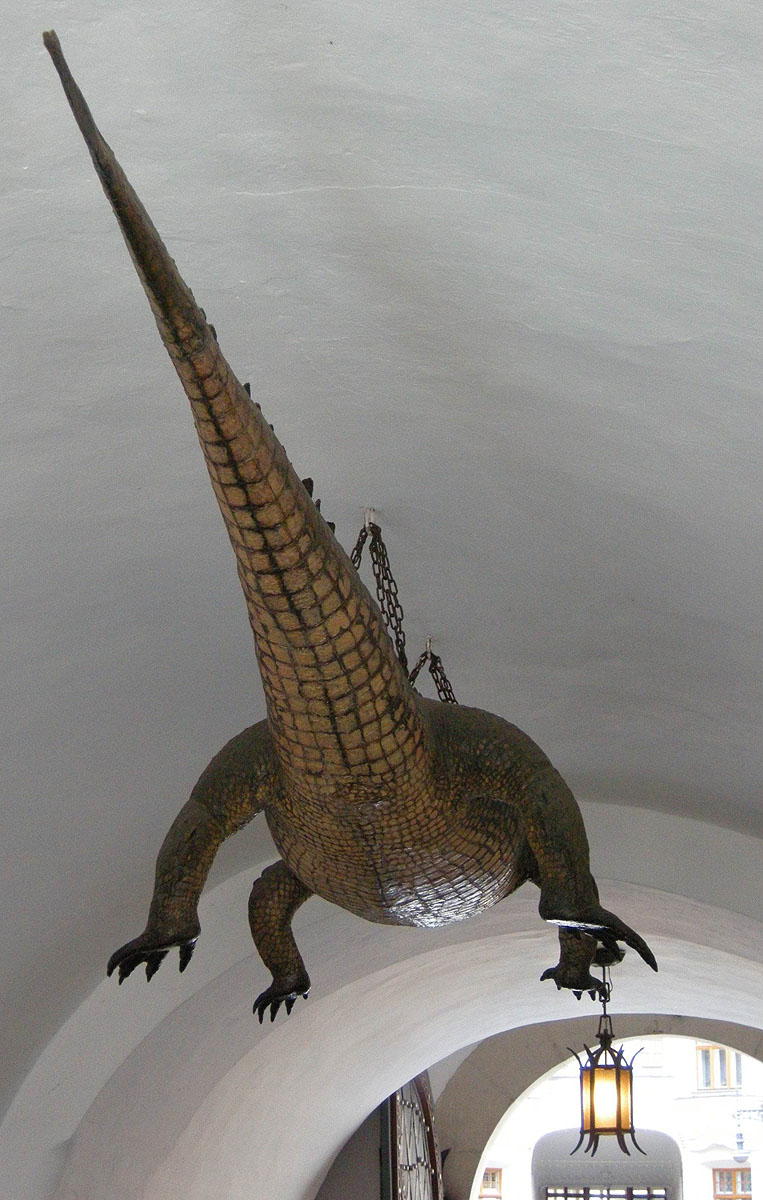

There is every indication that from the beginning of the 1500’s an unparalleled invasion of crocodiles showered upon Europe. As far as the sporadic sources permit to see, a terrible struggle unrolled between the natives and the intruders, and finally the latter were overcome. However, the trophies of some of them have been preserved in memory of the victory.


The most famous among them is undoubtedly the lagarto de la Malena, “the lizard of Malena” whose legend (!) was proposed by Spain just in the last year on the list of the “immaterial heritage of the world”. This dragon lived in a well in the Magdalena or Malena quarter of the southern Andalucian city of Jaén, taking as prey the people and sheep coming for water until a traveling journeyman did away with it. It is still debated how it was exactly killed. Some say that with the lime-stuffed bait prepared according to the Brno receipt, while the other party says that the winner completely covered himself with mirrors, thus blinding and then easily killing the beast. Its stuffed skin was preserved for a long time in the Church of San Ildefonso, but today it is only remembered by its statue set up at the well of Malena.


If the lime strategy came from Brünn, then the mirror tactics from Valencia. There a traveling Jew (!) killed in the same way the beast living in the river (which has dried up by today) and terrorizing the city. Its skin has been preserved on the wall of the atrium of the Collegio del Patriarca from which it has been called el dragón del Patriarca. What is more, its portrait was given a distinguished place in the decoration of the yearly Corpus Christi processions.


The skin of the lagarto de Calzadilla, the “lizard of Calzadilla” near to Cáceres has survived in the church of the Ermita del Cristo in very bad conditions. Its statue on the main square attests that it had devastated the flock until a shepherd did away with it. Unfortunately I could not clear how he did it, but the strange weapon in his hand refers to some new and cunning method.


The first crocodile in Europe we know about is so old that even its skin has already perished and now only a wooden portrait is hanging on its place. Its living original was sent by the Sultan of Egypt in 1260, after the Spanish conquest of Andalusia to King Alfons X as a first attempt to establish diplomatic contacts, together with an elephant tusk, a living giraffe and other exotic treasures. It was hung in front of the gate of the Cathedral of Seville to which it gave the name of Puerta del Lagarto, “the Gate of the Lizard”.
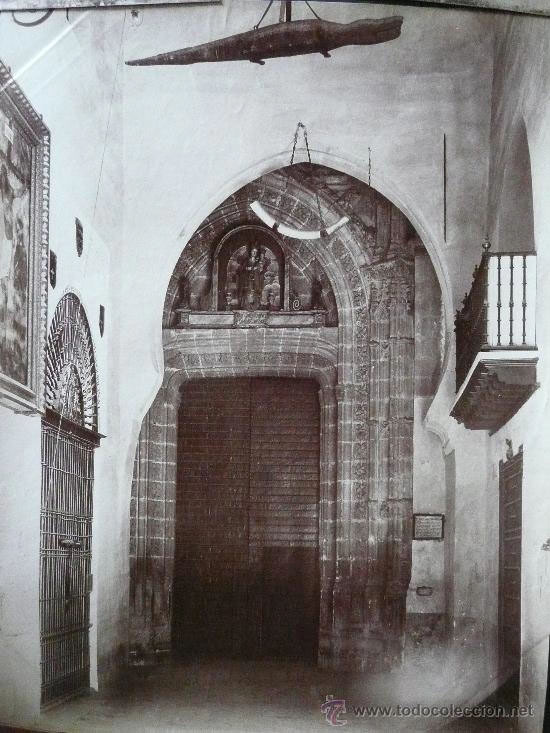

To Mallorca everything gets later. The crocodile invasion slapped the island only with its tail at the end of the 18th century. This beast lived in the alleys of Palma and took its prey in the night, mainly children from their cradles, at least according to the legend. Finally it was killed in 1776 by the Captain of Alcúdia, Bartomeu Coc who in that night was giving a serenade to his lady and immediately offered the crocodile to her as a token of his love. This gesture absolutely swept the lady off her feet, and she gave her hand without hesitation to the brave captain. This is how the deceased monster got the name of drac de na Coca, “the dragon of Mrs. Coc”. The trophy was preserved for long by her descendants, the Roselló family who exhibited it on ever 31 December. At the beginning of the 20th century they donated it to the Museu Diocesà where it is now on display. Its picture was published by one of our favorite daily readings, the excellent Mallorca Daily Photo Blog.


The heroic deed of Captain Coc also inspired a popular ballad, sung in the record below by the queen of the island’s folk music Maria del Mar Bonet.


Maria del Mar Bonet: El drac de na Coca (The dragon of Mrs. Coc). From the album Bon viatge faci la cadernera (1990).

Pel carrer de Sa Portella,
quan la nit cau,
diuen que hi surt una bèstia;
valga’ns Déu, val!

S’engoleix les criatures
valga’ns Déu, val!
Les mares de Sa Portella
ploren d’espant.

Han dit que la nau
d'un vell mercader
que anava i venia
de Mallorca a Alger,
va dur d’un viatge
un ou venturer.
I va néixer el drac:
feroç carnisser.

Pel carrer de Sa Portella
valga’ns Déu, val!,
les nits fan olor de por,
d’algues i sal.

Bartomeu Coc, cavaller,
jove i galant,
diuen que arriba d’Alcúdia
quan la nit cau.

De nit ve d’Alcúdia,
–galant cavaller–,
per veure la dama:
rosa de febrer.
I allà ha de combatre
enmig del carrer
fins que en queda tros
del drac carnisser.

Pel carrer de Sa Portella,
quan l’alba penja,
la pluja esborra la sang
color de menta.
In the alley of Sa Portella
when the night falls
they say, a dragon rises:
Lord, have mercy on us!

It devours the children:
Lord, have mercy on us!
The mothers in Sa Portella
are crying in terror.

They say that the ship
of an old merchant
that went here and there
between Mallorca and Algiers
brought on an occasion
a strange egg:
and a dragon was born of it,
a bloody killer.

In the alley of Sa Portella
– Lord, have mercy on us! –
the nights smell of alga
and of salt and of terror.

Bartomeu Coc, a young
and brave knight,
they say, came from Alcúdia
when the night fell.

He came from Alcúdia in the night
that brave knigh,
to see the lady of his heart
the rose of February.
And they went into battle there
in the middle of the alley
until at the end the bloody
dragon was cut in pieces.

In the alley of Sa Portella
when the dawn rises
the rain washes away
the mint-colored blood

Archive photo of the drac de na Coca from the collection of the legends of Mallorca.

But some crocodiles also appeared in countries where in lack of a sea they could have not come by themselves: for example in Switzerland or, indeed, in Bohemia. As their presence could not be explained away with natural reasons, thus their true story has survived more in detail, and it perhaps helps to understand that of the other crocodile trophies as well. In fact, these crocodiles had been taken home by pilgrims from the Holy Land and Egypt in the 15th and 16th century. Like for example the crocodile of Sankt-Gallen being restored on the picture below, which was brought by Ulrich Kromm from his pilgrimage in Egypt, and donated in 1623 to the library of the town.


Or the other Czech crocodile, the “dragon of Budyně”, brought alive from the Holy Land in 1522 by IV. Jan Zajíc z Hazmburka, that is John Rabbit of Rabbitburgh the Fourth.


The crocodile lived in the moat of the renaissance Budyňe castle of the von Rabbitburgh family until he died, and Jan IV loved to show up with it on festive occasions in the posture of a dragon-killer. This is how he had his portrait painted in the banquet hall of the castle.


The crocodile, as we have already mentioned when speaking about the 15th-century pilgrim guides, became an emblematic animal of the Holy Land, and an almost indispensable souvenir for better-off pilgrims. No wonder that every contemporary crocodile trophy with a known origin came to Europe in this way.

The wonders of the Holy Land from the 1486 Mainz edition of Breidenbach: These animals were
faithfully painted just as we saw them in the Holy Land.
From top to bottom:
Giraffe. Crocodile. Indian goat. Unicorn. Camel. Salamander.
The name of this one is not known.

This situation gradually changed in the 17th century. The stuffed crocodiles remained favorite pieces of the cabinets de curiosités, but their emphasis shifted from their connections with the Holy Land to the a growing interest in natural history.
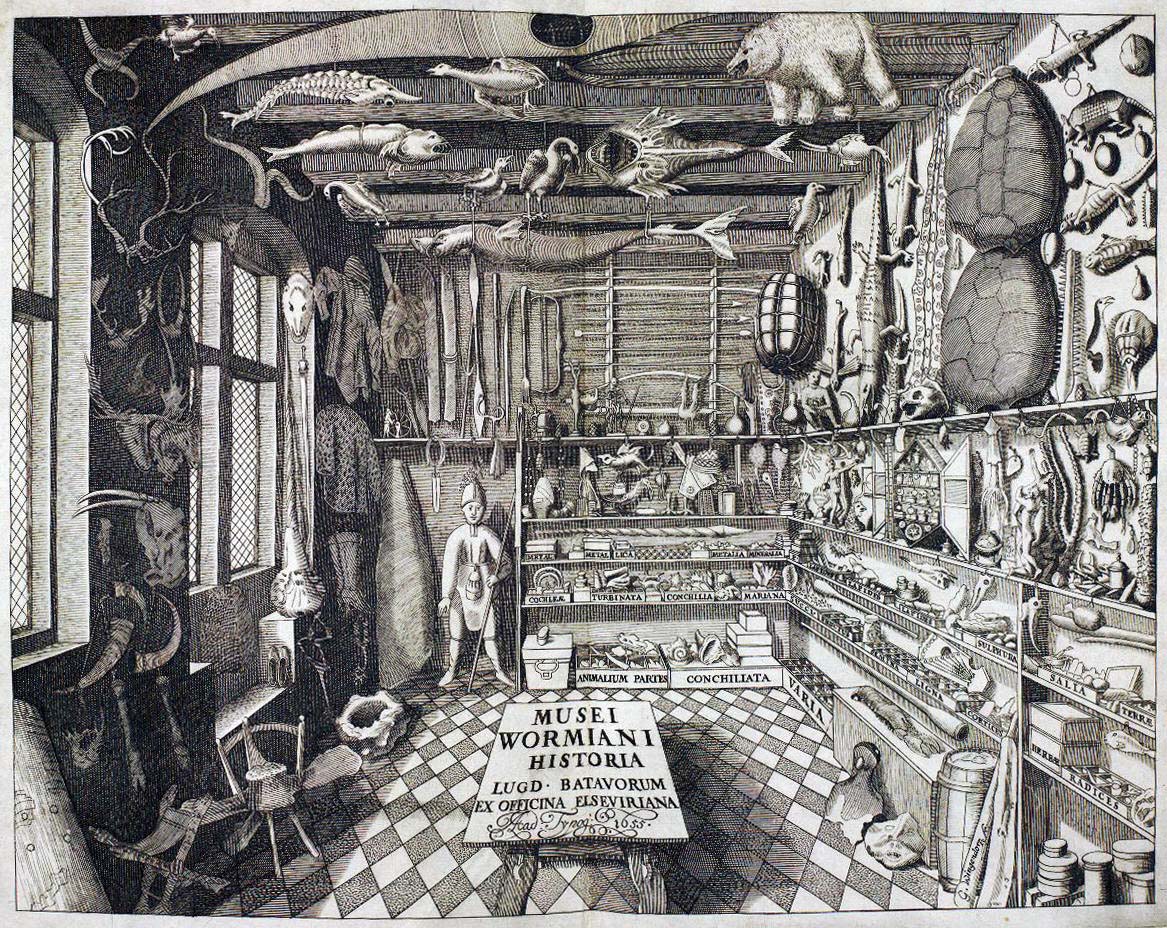

Later, with the establishment of special collections and scientific museums the hanging crocodiles were ousted from these sanctuaries of science, and gradually became the hallmark of old-fashioned antique shops and obscure scholars. As the text and illustration of Sir Terry Pratchett’s popular fantasy series Discworld presents it in an emblematic way:

Like all wizard’s workshops, the place looked as though a taxidermist had dropped his stock in a foundry and then had a fight with a maddened glassblower, braining a passing crocodile in the process (it hung from the rafters and smelt strongly of camphor).


Fortunately the dragon of Brno fell not on this sad, lonely and eccentric old age. It still stands in the center of the city’s life, lending its name to the beer, football club and radio station of the city, its image to the stamp of the tourist information center of Brno, and its “copies” decorate the town hall of Brno’s Husice district and the alternative theatre Husa na provázku, Goose on a string. What is more, even the emblem of this latter shows a crocodile performing as a lion, while in the reality it is only a little sea-horse.


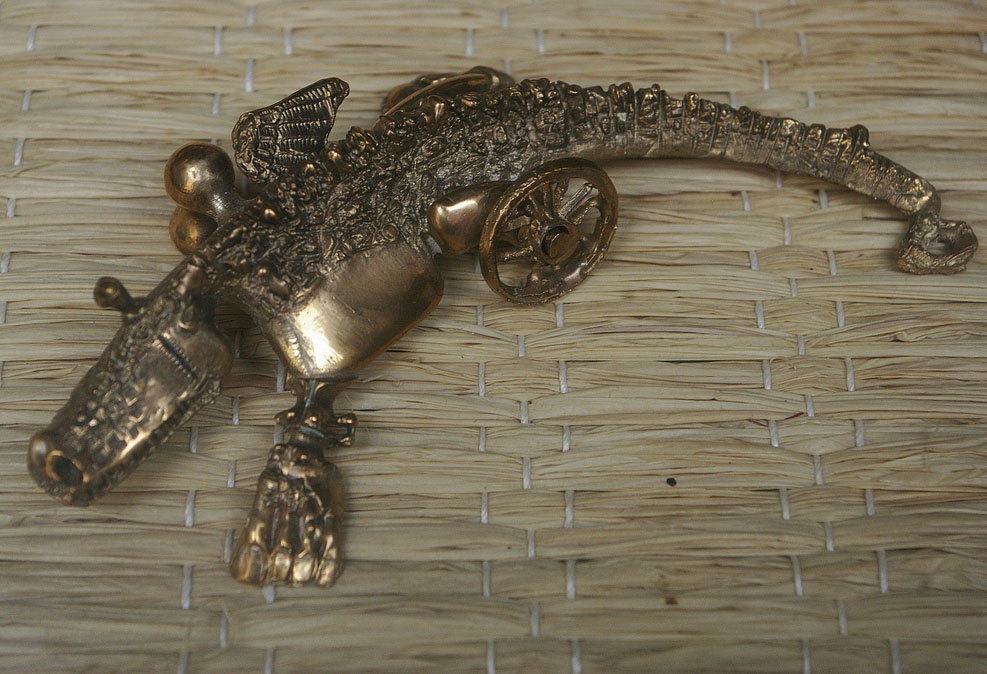
It even inspired a jewel, displayed by janina on flickr with the comment: There are some stories about Brno, and many of them are shown on this dragon. “Where, where? lemme see!” says zmetok in excitement. Homework! replies janina. As you see, we are working on it.

Elephant

Elephant
Since the bear cubs received their short story from Michal Ajvaz, I also include here the one he wrote about the elephant and its tender which is just as sad as the Japanese comics. We also have in stock from him stories with shellfish, cangaroo, varanus, leopard, beetle, dragon, spider, seahorse, but I do not intend any post about them in the foreseeable future. Unfortunately he wrote nothing about rhinoceroses.

Trunk

I have a little elephant. He joined me in the Royal garden, and since then he has been with me. He is not even one meter high. At the beginning I was worrying what I would do with him when he would grow adult, but it looks like he will not grow higher. He is affectionate and playful, but only when we are alone, he does not feel well in company, among people and animals he feels embarrassed, he is filled with distress, standing from one foot to the other and making broken, neurotic movements with his trunk. He is oversensitive and immeasurably suffers of everything. He is a veritable master of suffering – no, not of affected and hypochondriac suffering, he does not enlarge little things, but regards them as drips of the large ocean of distress whose depths are revealed in every calamity befalling him.

When we jog along the street together, people often laugh at us and shout after me, saying that I have a dog with a trunk on my side. They, poor ones, consider it laughable that someone keeps an animal with a trunk, even if he is charming and lovable, just because custom has it so that people keep dogs and not elephants. If the custom dictated it so that people keep elephants, they would die of laughter if I took a shepherd dog with me and they would shout after us by asking where it lost its trunk. People are often amazing and they are capable of incredible sacrifices, nevertheless they cannot have any understanding as far as trunk is concerned. While trunk is an excellent and practical thing. I am sad to see all that, and the elephant lives his existence as a being with a trunk as an indelible fault

He loves to come with me on excursion, I go ahead with a map in my hand on some path in the forest or the meadow, the elephant is stamping behind me, with backpacks on both of us. On the way to Karlštejn we stopped by at a restaurant. I ordered tripe soup for both of us. My elephant sat on the chair and started to eat in his usual way, first sniffing up a few soup from the plate with his trunk and then squirting it into his mouth. The sounds of sniffing could not be covered by any means, and the guests – local cottage owners with jiggling paunch swelling out of their sweatsuit – laughed at him, and they even tried to imitate the elephant’s sniffing. He stopped eating, although he was very hungry, and he just kept huddling above his soup with hanging trunk. I again discovered the feeling of indelible fault and the imploring for forgiveness in his look. I recommended him not to take care of anyone and to continue eating. It is not his fault of eating so loudly: if the other guests had trunks, they would not be able to eat without loud sniffing either. But the elephant kept sitting and suffering spiritlessly and in silence. What could have I done? I also wanted to stop eating out of solidarity, but then I realized that if he saw me going hungry because of him then he would feel even worse. So I finished eating my soup and we left. We walked along in silence, but he already did not run about me so happily as before, and he did not give me small pushes for fun as earlier. When finally there appeared the Karlštejn that he had desired to see so much, I discovered that he was simulating joy just for my sake. Tears sat in his eyes.

In that moment I wished I also had a trunk. Looking at the misery of the small elephant, it seemed an immense injustice that I calmly wander about in the world without a trunk. I also felt that the trunk created such a distance among us that could not be overcome. But as in the meantime the elephant really loved me, I also felt something that I formulated in a proverb: “The one with a trunk does not believe to the one who has no trunk.” My request, however, did not gain a hearing


Bear cub

Conrad Gesner: Historia animalium. Bear
One of my favorite readings by Erasmus is the De recta Latini Graecique sermonis pronuntiatione dialogus (Dialogue on the correct Latin and Greek pronunciation). The dialogue takes place between a lion and a bear. It is them who weigh up the pros and cons of the “Erasmian” pronunciation still in use in today’s erudite circles, and of the Modern Greek pronunciation which, according to the dialogue, was “reconstructed” by Erasmus himself, but according to a later report by Vossius he knew it from the news about some Greeks “of wonderful erudition” visiting Paris not much before. The lion and the bear discuss all these matters in the most refined Humanist Latin and with the most erudite Humanist pedantry. The dialogue begins like this.

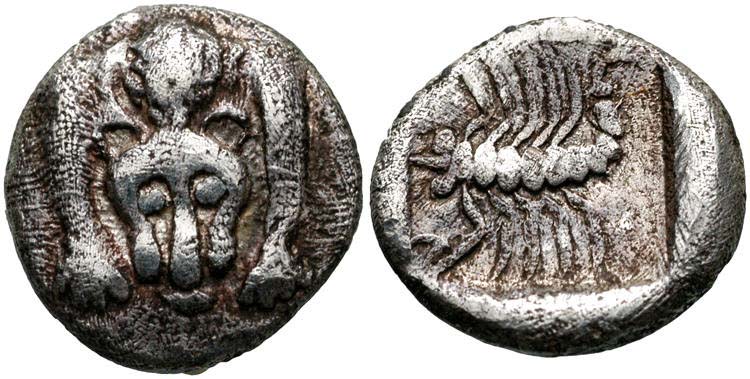
Obolus from Caria-Mylasa, with lion’s head, c. 450-400 B.C.URSUS: Sit felix occursus, optime Leo, nam totos sex menses te non vidi. LEO: Istuc non temere precaris, Urse, neque enim quibuslibet bene cessit occurrisse Leoni. VR. Nae venuste, Leo, Imo ne Urso quidem. LE. Istuc sane malo tibi credere quam facere periculum, tametsi legimus Leonem inter bestias fortissimum ad nullius occursum expavescere. Caeterum Divinae literae testantur esse formidabilem occursum Ursae, cui sint erepti catuli. VR. Quaeso quid loquuntur de Ursa? LE. Liber Regnorum secundus sic habet: Viros fortissimos & amaro animo, veluti si ursa raptis catulis in sylva saeviat. VR. Quid propterea? LE. Solomon paroemiographus hunc in modum loquitur: Expedit magis occurrere ursae, raptis foetibus, quam stulto confidenti. Et apud Osee Prophetam ita minitatur Deus: Occurram eis quasi ursa raptis catulis. UR. Sit igitur impavidus Leo, quum bestia bestiis occurrit. Nam si qua fides apologis, Leo bestia fassus est formidabilem hominis occursum. Nunc seculum est aureum, quo Leonis Urso, Ursi Leoni laetus ac faustus est occursus. Opportune vero catulorum facta mentione mihi redigis in memoriam ego tibi magnopere gratulor. LE. Quo tandem nomine? UR. Quod tibi catulus domi natus est. LE. Hoc omen avertant Superi, ut mihi catulus dominetur. UR. Ajo dómi nâtum; audis accentum acutum in priore voce, in posteriore circumflexum. LE. At istud magis etiam abominandum. An tibi videor canis? UR. Minime, Leonem esse te non potes inficiari. Habent autem & Leones catulos. LE. Habent profecto, verum habent & Ursi.
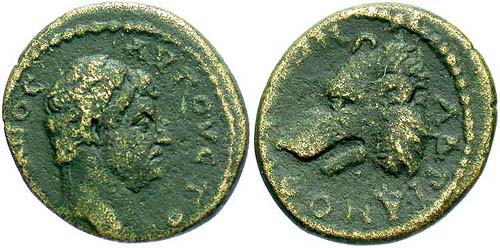
Coin of Hadrian with bear’s headBEAR: Let our encounter be happy, oh excellent Lion, since I have not seen you for six entire months. LION: This is no empty supplication, oh Bear, since to most people it is no luck to encounter the Lion. BE: Of course, Lion. But not even the Bear! LI: This I believe you rather than getting in trouble, even if we read that the Lion is the strongest among all animals and he never retreats from any encounter. Nevertheless the divine Scripture attests that it is terrible to encounter the she-bear robbed of her cubs. BE: Please, tell me, what do they say about the she-bear? LI: It is written in the second book of the Kings: They are mighty men and they are fierce, like a she-bear robbed of her cubs in the forest. BE: And what else? LI: Solomon, the collector of excellent sayings spoke thus: It is better to meet a bear robbed of her cubs than a self-confident fool. And in the prophet Hoseas it is God who threatens like this: I will encounter them like the bear robbed of her cubs. BE: Well then, the Lion should stay undisturbed, when beast meets beast. For if we can give trust to animal fables, a beast should rather fear the encounter with the man. But now we live in a golden age, when the Lion is happy to meet the Bear and the Bear the Lion. But it was very opportune to mention the cubs, so you have reminded me to congratulate you. LI: On what reason? BE: On the occasion that a kid was born to you at home [domi natur]. LI: Let the gods keep far from me this bad omen that a kid would rule me [dominatur]. BE: I said dómi nâtum: you can hear the acute accent on the first syllabe and the inflexed tone on the second one, can’t you? LI: That would be an even more abominable thing! Or do I seem a dog to you? BE: Not to the least extent. You could not even deny of being a Lion. But even lions have kid, isn’t it. LI: Yes, really, just like bears do.

The Lion, animal of Judah appears to be much more well up in the Ancient Testament than in Classical Latin. The reason of his misunderstanding is that the Latin catulus is mostly used in the sense of the young of a dog, a puppy – yes, this is where the family name of both the Golden Age poet Catullus and the conspirator Catilina comes from, just like that of the Fabius from the bean, of the Ciceros from the pea, and of the Horatius from the garden: Latins were down-to-earth people –, but this same word was generally used for the young of any other four-footed animal. Like that of the lion for example, which equally howls and preys as catulus leonis in the Genesis, the Judges, the Psalms, Isaiah or Jeremiah.

Lion on a Greek coin
Or that of the bear, as the Lion attests it after realizing his mistake. Not only in the Vulgate, but also in the Latin poets, for example in Ovid, where the cyclops Polyphemus tries (in vain) to melt the heart of the nymph Galatea like this:

Inveni geminos, qui tecum ludere possint,
Inter se similes, vix ut dignoscere possis,
Villosae catulos in summis montibus ursae.

(Metamorphoses, XIII.834-836)....
I came upon two bear cubs that you can play with
they are twins: so alike you can hardly separate them
cubs of a shaggy bear, found upon the hilltop.


– to which the erudite Petrus Burmannus adds this sour comment in the great Paris edition of the Ovidii opera omnia of 1822: “Ad ludendum catuli ursae non nisi Polyphemo idonei videri poterant.” – “To actually play with bear cubs, this is an idea that can come only to Polyphemus’ mind.”

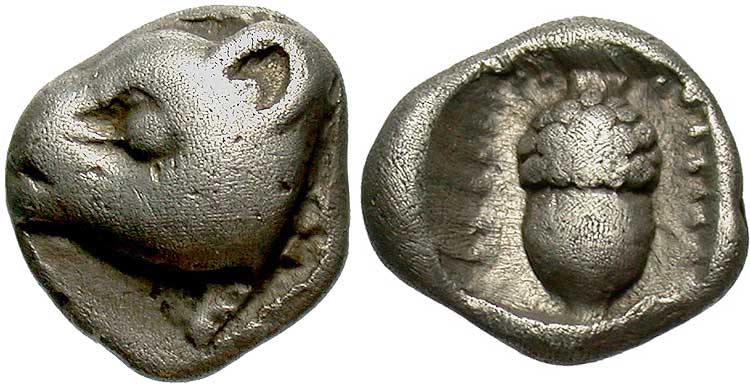
Obolus of Mantinea with bear’s head, c. 490-470 B.C.
The word catulus was associated with the young of the dog only by custom and not by etymology. For the proper diminutive form of dog – canis – should be caniculus, whose feminine form canicula means “extremely hot weather” in Hungarian and “summer holidays” – каникулы – in Russian, as it is in hot August that the sun rises in the constellation of the Lesser Dog. According to Walde’s Latin etymological dictionary, catulus comes from an ancient Indoeuropean *qatos meaning “young of animals” in general, and it still survives in words like Russian котиться, “give birth” or the Irish cadla and Old High German hatele, both meaning “goatling.”

Most languages, however, besides their own word for “young of animals” also use a separate term for the young of some animals or groups of animals. In Hungarian, for example, the general term is kölyök, but the kölyök of the bear – catulus ursae – is called bocs (pronounce “boch”). Where does it come from?

Footprint of black bear
The three volume Hungarian etymological dictionary A magyar nyelv történeti-etimológiai szótára (1967) like so many times, leaves us hanging with this term as well:

bocs 1792: „Bots: medve kölyök” (SzD.). J: 1. 1792: ’medvebocs; Bärenjunges’ (l. fent); 2. 1838: ’bizonyos állatok kicsinye; Junges gewisser Tierarten’ (Tsz.); 3. 1858: ’nyers vas- vagy acélöntvény-tömb; Dachel, Ofensau’ (Toldy: Műszótár: NSz.).
Ismeretlen eredetű. Eleinte erdélyi tájszóként jelentkezik. A szász E.
botsch ’koca, disznó’ és a magyar szó viszonya – jelentéstani okból – nem világos; bár föltehető, hogy összefüggenek, s hogy a magyar az átadó. – Az 1. és a 2. jelentés rokonsága nyilvánvaló; a 3. névátvitel eredménye lehet, de esetleg még megvizsgálandó az erdélyi szász viszonthatás vagy a német mintára történő tükörszó-alkotás lehetősége is; vö. ném. Ofensau ’vasöntvény, bocs’, Bär ’rosszul sikerült öntvény’. A 3. jelentéssel kapcsolatban vö. medve. – Honfoglalás utáni török jövevényszóként való magyarázata nem valószínű, kaukázusi, német és román származtatása téves.
Melich: Nyr. 24: 65, 557; Lumtzer–Melich: DOLw. 70, 305; Munkácsi: Ethn. 16: 79, KSz. 6:210; EtSz.; SzófSz; Rásonyi: NyK. 51: 102. (Drăganu: Rom. 68.)


bocs 1792: Bots: young of the bear” (SzD.). J: 1. 1792: ‘medvebocs; Bärenjunges’ (see above); 2. 1838: ‘young of certain animals; Junges gewisser Tierarten’ (Tsz.); 3. 1858: ‘a raw block of cast iron or steel; Dachel, Ofensau’ (Toldy: Műszótár: NSz.).
Of unknown origin. It is first documented as a Transylvanian dialectal word. The relation between the Transylvanian Saxon botsch ‘sow, pig’ and the Hungarian word is unclear, although they are probably connected, and the Hungarian term was the origin of the Saxon one. – The relation between meaning 1 and 2 is obvious. Meaning 3 can be the result of a translation of the name, although the possibility of the reaction of the Saxon word or a loan translation on German model cannot be excluded either: cf. German Ofensau ‘block of cast iron, bocs’, Bär ‘an abortive block of cast iron’. For meaning 3 see also the entry medve (bear). – Its attribution to a post-Conquest Turkish loan word is improbable, its attempts of derivation from German, Romanian or the Caucasus are mistaken.
Melich: Nyr. 24: 65, 557; Lumtzer–Melich: DOLw. 70, 305; Munkácsi: Ethn. 16: 79, KSz. 6:210; EtSz.; SzófSz; Rásonyi: NyK. 51: 102. (Drăganu: Rom. 68.)

We have seen that the Hungarian Etymological Dictionary has been compiled by a very strong Finno-Ugrist lobby which, for historical and political reasons reaching back to the 19th century, looks with extreme suspicion on any research of the Turkish, Iranian and other Eastern contributions to the Hungarian language – although there were a lot like this. We already know that “of unknown origin” in the HED means “unfortunately its Finno-Ugrian origin cannot be proved.” But what other possible origins exist?

Meaning 3 – “a raw block of cast iron or steel” – immediately reminds one of the Italian word boccia meaning a solid globe or bowl, and bozza meaning a roughed out (stone) block, a work hew out. However, the editors of the HED were not reminded of anything like that.

But now meanings 1 and 2 are much more interesting for us: the cub of the bear, or a cub/young animal in general. And these also remind me of a possibility which I cannot prove, but I would consider it well worthy of an etymological research. And this is the Persian word بچه bache/boche, “child / young of animals.”

Bears. Persian miniature. Khorasan, 16th centuryBears. Persian miniature. Khorasan, 16th century (from here)

The fact that Iranian words were assimilated into Hungarian is attested, apart from a number of entries in the HED, by a glossary published in 1999 by the Turcologist Péter Sára on the Hungarian words of Iranian origin, which lists on its 120 pages mostly words regarded as “of unknown origin” by the HED. These words come from a centuries long coexistence of Hungarian tribes with Iranian nomads, for example with Alans on the steppe, before the conquest of today’s Hungary in 896. It is by no chance that in the ancient legend of origins of the Hungarians – of which I want to write in a future post – the two broders Hunor and Magyar, forefathers of the Hun and of the Hungarian people, marry the daughters of an Alanian king.

The relation between Hungarian bocs and Iranian bache is made more probable by the fact that the Hungarian word also seems to have originally meant “child / young of animals” in general, and its meaning was limited to the young of the bear only later. The memory of the original meaning is kept in the frequently used term medvebocs “bear cub,” where the reference to medve, the bear, would be tautological if bocs only meant the young of the bear. As a counter-proof, there does exist in Hungarian a word which has always indicated the young of only one animal: the Slavic loanword bárány, lamb, which refers only to the young of the juh, sheep. This is obviously never used in the tautological form juhbárány.

This career of the word bocs is modelled by two other Hungarian words which originally also meant “young of animals” in general. The one is the Turkish loanword borjú, calf, which can refer beside the cattle to the young of a number of other animals of great size: teveborjú, szarvasborjú, elefántborjú, the young of the camel, of the deer, of the elephant. And the other is gida, goatling: kecskegida, szarvasgida, őzgida – the young of the goat, of the deer, of the roe.

The word gida is of course also regarded as “of unknown origin” in the HED, or more precisely, the dictionary offers two alternatives of origin. The one is the onomatope gidi-gidi, geda, gidu, traditionally used to call the goatling, while the other is the Biblical name Gideon, for – quote – “Gideon in the Bible cooked a goat as a sacrifice, and this is the reason why his name was transferred on the animal.” The fact that such an archaic theory, reminding of the times of the first Reformation when Hungarian language was related to ancient Hebrew by erudite zealots could find its way to the dictionary indicates the level of preparation of the HED. Nevertheless, the idea that the word gida can be related to the Indoeuropean cadla, hatele, Gitzel/Kitz, all meaning originally “young of animals” and later “goatling,” thus going through the same carrier like borjú and bocs, strangely did not even occur to the editors.

And finally, to make this Babelian fair complete, here you are an absurd short story from the Czech author Michal Ajvaz, which peculiarly unites the two meanings of Hungarian bocs: the bear cub and the raw, unworked, heavy block.

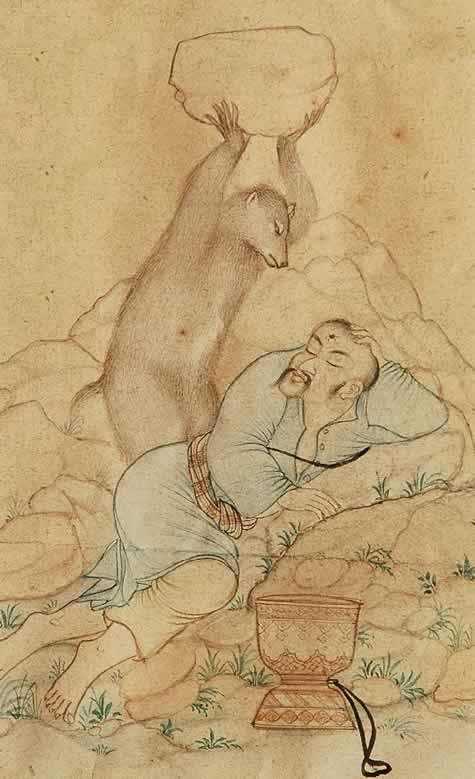
The friendly bear. Persian miniature, 18th c.The friendly bear. Persian miniature, 18th c.

The bear cub

I keep dragging along a bear cub in a backpack on my back. The bear cub is quite heavy and it keeps stirring in the pack. This makes me tired and exhausted. With a bear cub on my back I cannot pay enough attention to anything. So I do not have any lust of anything. If they came to tell me that I won a trip to Paradise, perhaps in the first moment I would be happy, but then I would immediately realize that even there I should carry on a heavy bear cub on my back, and all my joy would be gone away. I would say thanks, but would tell that “for family reasons I cannot participate.” How many experiences I have lost because of the bear cub! I could have been a guest on a party in the gardens of the seaside villas where the guests entertain themselves by throwing film stars in evening dress into the swimming pool. With the bear cub on my back I was not permitted to enter, or I myself did not try to get in anywhere.

Since long I have recognized that I should put down the backpack together with the bear cub, especially as I already don’t remember why I had started to carry it along, and because the bear cub did not get familiar with me. It lives in its small world, gruntin for itself, and does not care for me. But it is very difficult to suddenly change something that one has done for almost all his life. It requires much more courage than look into the face of some unexpected danger. If I pass by the terrible entrance of the Labyrinth of Radlice, avoided by anyone else, I often enter just by curiosity, and prick the sleeping Minotaurus with my umbrella. I can peacefully have a chat with the Gorgo Medusa which enters into the restaurant and sits at my table, while the other guests by screaming flee away. However, I found not enough courage to get rid of my backpack. What a small thing the Gorgo Medusa is in comparison with the bear cub.

In certain moments I suddenly stop on the street and I tell to myself: “How could I be such an idiot to have dragged along this bear cub for nothing! I will go home right now, I put down the backpack and I don’t take it up any more.” And I am immediately overwhelmed by happiness. I imagine how I would run through the city, getting rid of the burden of several years, jumping high on the street like an astronaut on the Moon, up to the height of the second floor, and waving my hand to the people looking out of the windows. It is already late, but perhaps the doors of the seashore villas are not yet definitely closed, perhaps I manage to arrive to the party, perhaps I can throw at least one film star into the swimming pool.

After a short time, however, doubts fall on me and I tell to myself: “Calm down. Take your time. Look before you leap. It is not so simple to make such an important step. Measure twice, cut once. Think it over thoroughly. You have enough time. Wait a little bit.”

And I wait, and my courage slowly dissipates, and I keep strolling about the streets with a bear cub on my back.


The past has begun

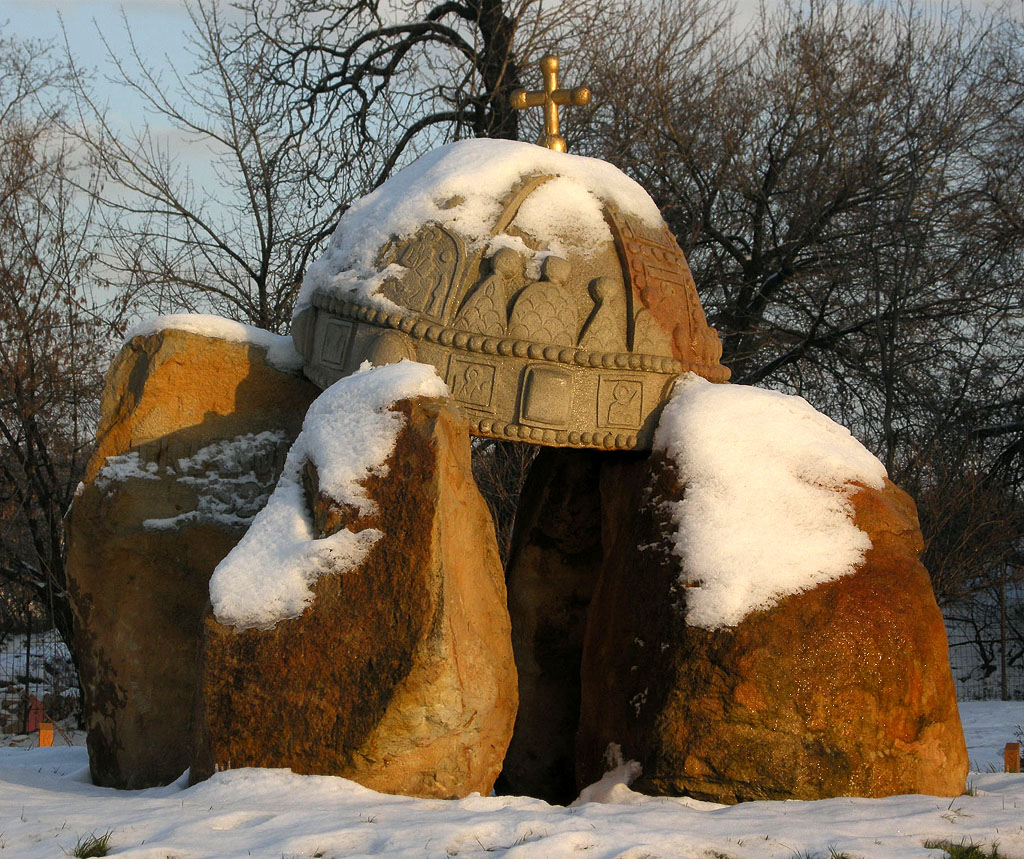
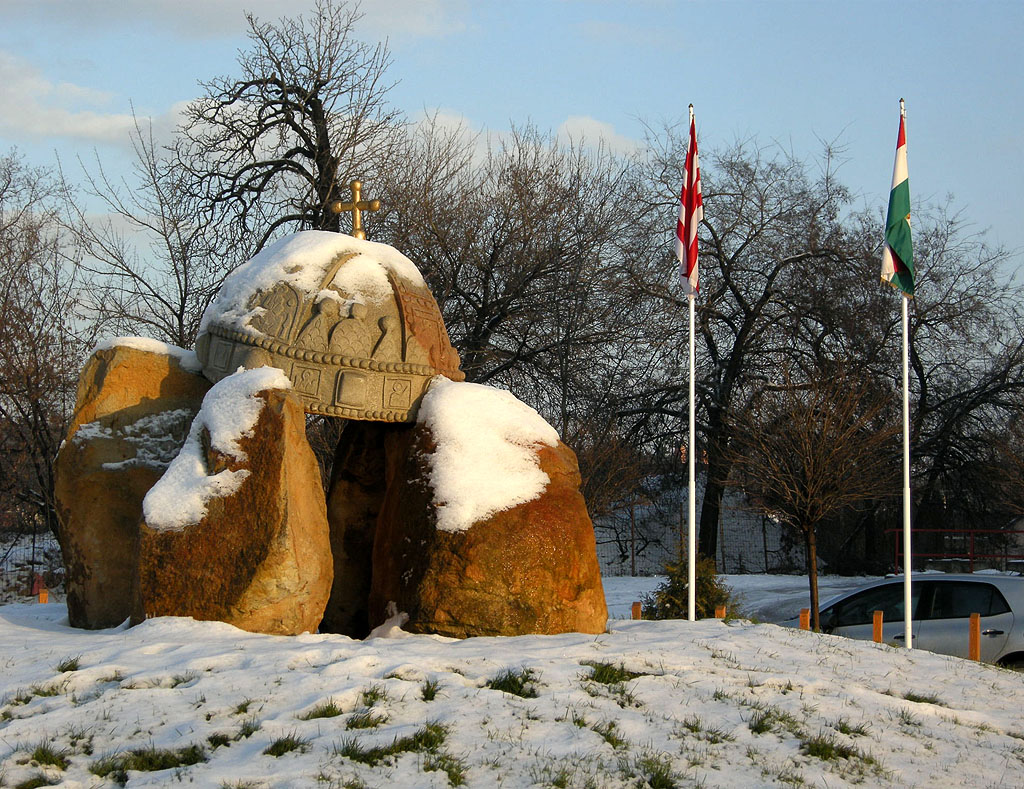
Statue of the Holy Crown of Hungary in front of the Dunakeszi railway station
The borders of our world are not in the distance, on the horizon or in the depths: they glimmer at the immedite vicinity, at the obscure edges of our intimate spaces. Somebody on a morning finds a wriggling sea star on the damp carpet of the living room, or a statuette of a god with an obstinate look in the eye, bird- and turtle-shaped mechanisms that sometimes hum and a red lamp is gleaming on the place of their eyes, or a book printed with unknown letters that include irised illustrations representing jungle temples and tigers. These things arrived to our shores only by mistakes, and then we enwrap them with some kind of substitutive meanings originating in our own experiences, on the basis of false similarities. We are guarded by the protective arm of the careful and perfidious god of the grammar that conceals from us the face of the monsters. (Michal Ajvaz: Druhé město (The other town), Brno 2005)

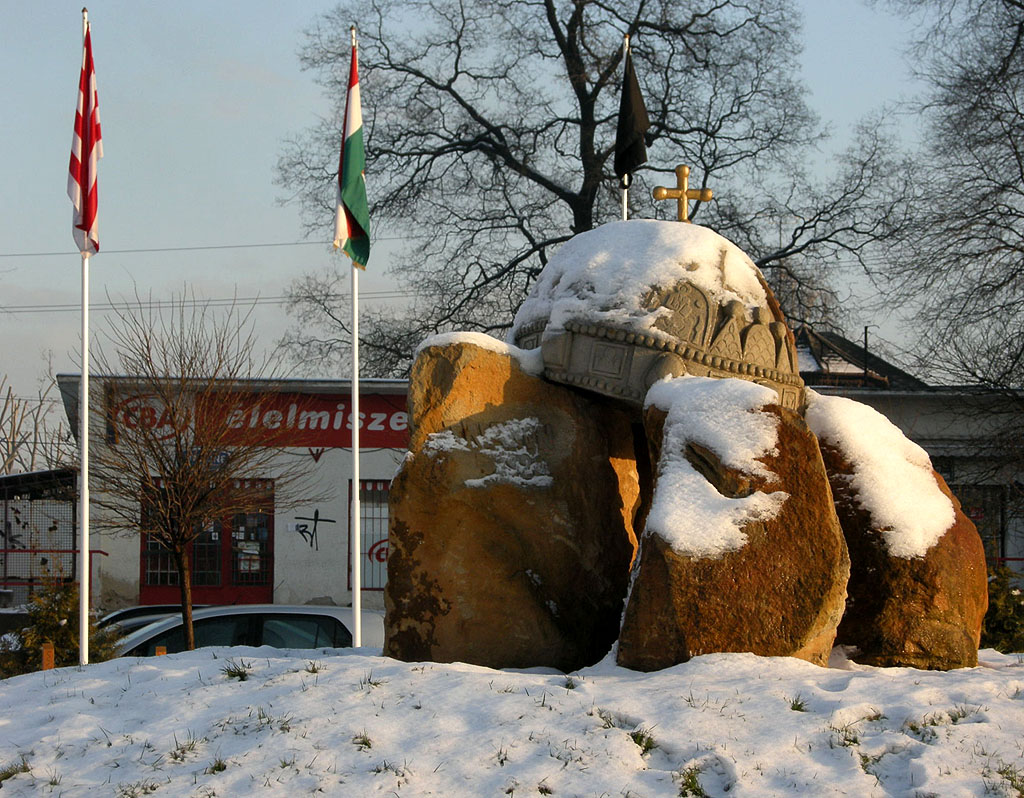
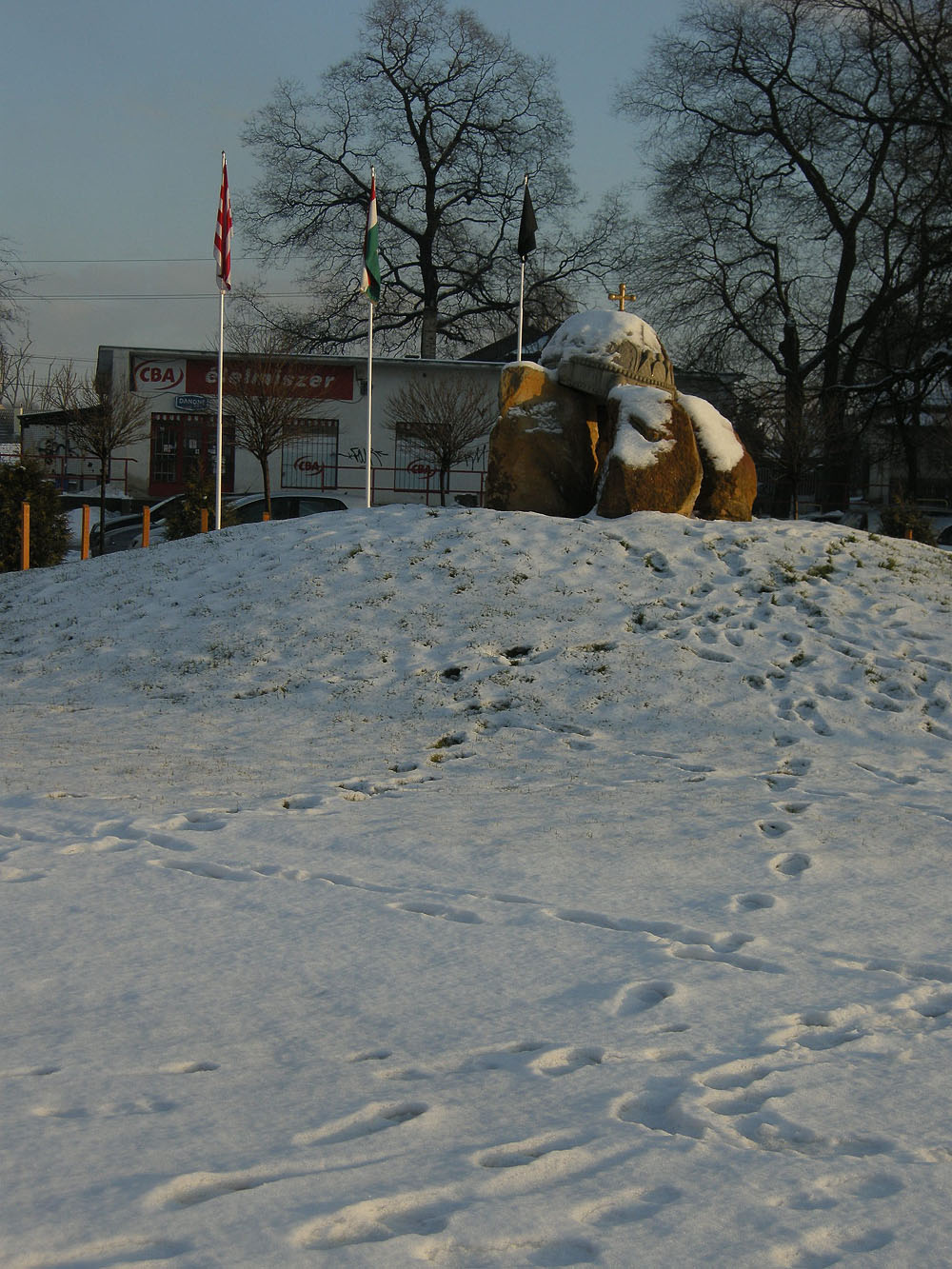
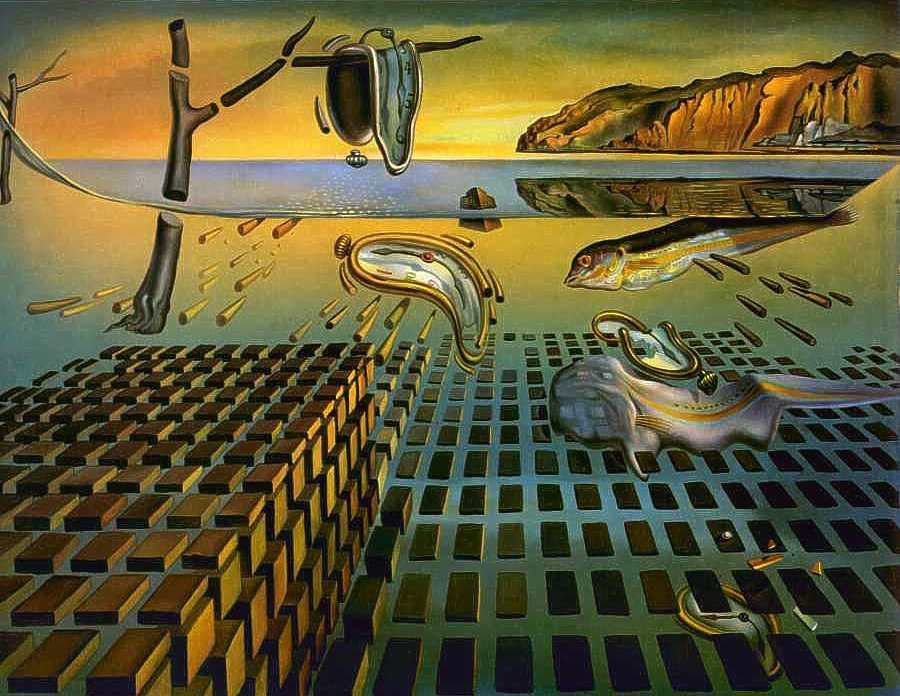
As the objects of the obscure, irrational and surreal “other town” hiding behind the usual and everyday Prague which sometimes penetrate by chance into our world and thus open the eyes of Michal Ajvaz to the existence of that one, are not what they appear to be, the sand container in Petřín is in the reality the lighting-window of the dome of an underground pagan cathedral, and the last door of the basement toilet of the Slavia café opens on an immense jungle cut across by a powerful river, in which the members of a tiger-adoring sect are massacring their own heretics; so the Hungarian crown standing in front of the railway station of Dunakeszi and slowly dribbling on the four Stonehenge dolmens supporting it like the clocks of Dalí, thus dissolving and invalidating the time, is not identical with the Hungarian crown that we have seen in the previous two posts, although it bears a striking resemblance to it. For the one we have seen in Iran and Austria, is the insignia of the Hungarian kings since the 12th century which, with its components coming from different countries, with the beautiful enamel images from 11th-century Limoges and 12th-century Byzantium, with the portrait of the Byzantine emperor Michael Dukas inserted on the place of a former icon of the Virgin Mary, with the cross standing obliquely but proudly on its top, and with its history full of vicissitudes is a true portrait of the thousand years old Hungarian statehood. The crown modeled in Dunakeszi, however, is a several thousand or ten thousands year old jewel of Hun or Sumerian origin – anyway, the both are the same –, a magic model of the cosmos, an energy center, sum of an infinite knowledge coming from outside the Earth or from the collective unconscious of mankind, the tabernacle of the religion of the highest order that has ever existed or that can be conceived. At least this is what the members of this esoteric Hungarian sect, unfortunately growing in number, preach of it.

Statue of the Holy Crown of Hungary in front of the Dunakeszi railway station
The priests and believers of this religion are among us, like the night high priest of the faith of Dargúz in Ajvaz’s novel who in the daytime is the waiter of the restaurant of Pohořelec. They are stubborn Calvinists holding in contempt all kind of Popist idolatry, but uttering with the utmost respect the name of the Holy Crown. Catholics taking Communion every day, but propagating the Gospel of the Holy Crown every week in the Tuesday prayer meeting with the devote support of the parish priest. Department leaders of the Hungarian National Library who open the halls of the library to the mission of this cult. Architects – a most important order of knighthood of this religion – of whom you hope statically reliable houses and you receive the pattern design of the lines of force of the Holy Crown embracing the universe. Goldsmiths, sculptors and applied artists who on the one hand guarantee with their name for the authenticity of the myth of origin of this cult object, and on the other hand fill with works of art inspired by the myth the cultural centers, public squares, institutions and publications. Their presence is more perceptible in the countryside where I live than in the city where – as Ajvaz puts – the arm of the careful and perfidious god of the grammar conceals from us their network and their communities, on whose regular gatherings the wandering prophets of this faith József Molnár V., Gábor Papp, Lajos Szántai and their disciples steadily provide with spiritual food the believers of this mistery religion.

Statue of the Holy Crown of Hungary in front of the Dunakeszi railway station
The crown in Dunakeszi refers to this still hiding world not only with its typical stylistic marks – its stiff, idol-like elaboration, its rustic dolmens and the burial hill heaped up under them –, but also with the fact that it visualizes an important article of faith of this cult: that the angle of inclination of the cross on the top of the crown is exactly identical with the angle of obliquity of the axis of the Earth. The sculptor, in order to emphasize this dogma, slipped the crown on the dolmens so that now everything is oblique on it, except for the only really oblique element, the cross, which thus stands erect perfectly vertically towards the sky, parallel with the axis of the Earth, looking exactly on the North Star like a small magic antenna.

Kacsintós Shakespeare / ravasz Sekszpir Viliam, Cseh Tamás - Bereményi Géza számának illusztrációja.....In order to make realistic
the implausible hunch on your back,
you must simply bend the back of the world
on the model of your hunch.

Tamás Cseh - Géza Bereményi:
Song about the Wily William Shakespeare

Still hiding world, I say. Because if the book of Michal Ajvaz mapped how an “other world” imperceptibly fills in the cavities of the usual everyday reality, another Czech author, Karel Čapek has described in his War with the salamanders what happens when the situation becomes unstable, and that other, dark and surreal world breaks with a great force into ours.

Statue of the Holy Crown of Hungary in front of the Dunakeszi railway station
May God save us of such eventuality.