…ceci est une korn.
 “Bretaña. La pipa solo es buena si arde bien.” Collection Villard, Quimper. Poststamp 5. 7. 1910

 Las lenguas celtas no alcanzaron su mayor extensión geográfica en la Antigüedad sino, como escribe Peter Burke, en la era de los grandes descubrimientos. A principios del siglo XVI, los barcos Ingleses y franceses del Atlántico se servían principalmente de marinos de la costa céltica, Gales y Bretaña, por lo que el galés y el bretón sonaban con frecuencia en los puertos y embarcaciones de toda la zona norte del océano, desde el Canal a las islas del Caribe
Fueron marineros bretones bajo bandera francesa, de vuelta de la costa brasileña, quienes primero comerciaron con tabaco en el norte de Europa, y bajo el nombre que le daban los indios —betum, usado por ellos para emplastos medicinales— la palabra se transfirió del bretón al francés: Petun, pétuner, 'tabaco, fumar', aunque hoy es un arcaísmo y sólo la lengua bretona lo conserva así: Butun, butunad. La palabra tabaco y sus variantes en las lenguas modernas europeas, que los etimologistas españoles del Renacimiento hicieron derivar de las lenguas indígenas del Caribe, en realidad venía del árabe clásico ṭub[b]āq, hierba 'medicinal' y está en el español ya en el s. XV, desde donde se impone luego en América. El jurista Jacques Gohory escribió la Instruction sur l'herbe Petum ditte en France de la Reyne ou Medicée: et sur la racine Mechiocan, donde, junto con los tratados posteriores de Carolus Clusius se asienta fugazmente en la Europa culta el uso del término de origen brasileño. Valga como ejemplo etimológico parcialmente inexacto de tabaco la explicación de Nicolás Monardes en su Historia medicinal de las cosas que traen de nuestras Indias Occidentales que sirven de medicina, en el capítulo «Del Tabaco y sus grandes virtudes» (Sevilla, 1574, f. 41r):
“El nombre proprio suyo entre los Indios, es Picielt, que el de Tabaco es postizo, de nuestros Españoles, por una Ysla do hay mucha cuantidad dél llamada este nombre Tabaco.”
En otros casos, aparte de petum, betum o picielt, veremos designar la planta con nombres indígenas como cogioba, cohobba, quauhyetl, yietl. El doctor Monardes aún defendía los usos curativos del tabaco, al contrario de lo que hará en 1674 Benito Remigio Noydens en el Suplemento del Tesoro de Covarrubias, condenándolo como vicio fomentado por el demonio.
 Parece que el primer uso industrial del tabaco en Europa se documenta en 1525 en Bretaña. Aquí se funda la primera manufactura, en el puerto de Morlaix, donde las hojas del tabaco importado del Nuevo Continente como hierba medicinal se tratan, secan y enrollan en forma de pequeñas zanahorias –carotte en francés, en bretón moderno Karot–. La «zanahoria», que aún ostentan las enseñas de las tabaquerías de Bretaña, se troceaba entonces con un cuchillo según se requiriera su uso en pipa o para ser masticado. La propia pipa se hacía originalmente de cuerno de oveja y se llamó, por su forma cónica (de corneta), korn en bretón.
 «¿No es molestia?» - «No.» - «Páseme la zanahoria de tabaco [tabac en carotte] para llenar mi pipa.» Mujer fumadora de Morlaix. Artaud et Nozais, Nantes
Mientras que en muchos lugares del Renacimiento y el Barroco europeo fumar era algo «generizado», un pasatiempo exclusivamente masculino, en Bretaña siguió siendo remedio de la fatiga y el hambre para ambos sexos, tal como era en su tierra de origen. Los fotógrafos franceses que a finales del s. XIX vagaban por el país para registrar fotos etnográficas, quedaban realmente sorprendidos al ver a las contumaces abuelas fumadoras en pipa bretonas, que pronto se convirtieron en figuras inevitables del pintoresquismo ilustrado, divulgado en las colecciones de postales de La Brettagne Pittoresque y Types Bretons. Hace poco philaevrard ha publicado una buena selección de ellas procedentes de su colección, en el Cparama forum, dedicado a antiguas postales francesas.
Klervi Rivière – Marie-Aline Lagadic: Labousig ar hoad. Balada gwerz – bretona – accrue de un marino que invita a una chica a navegar juntos a Inglaterra pero ella le rechaza. Del CD Femmes de Bretagne (Mujeres de Bretaña, 1996).

Las postales con lugares identificables en el mapa de Bretaña
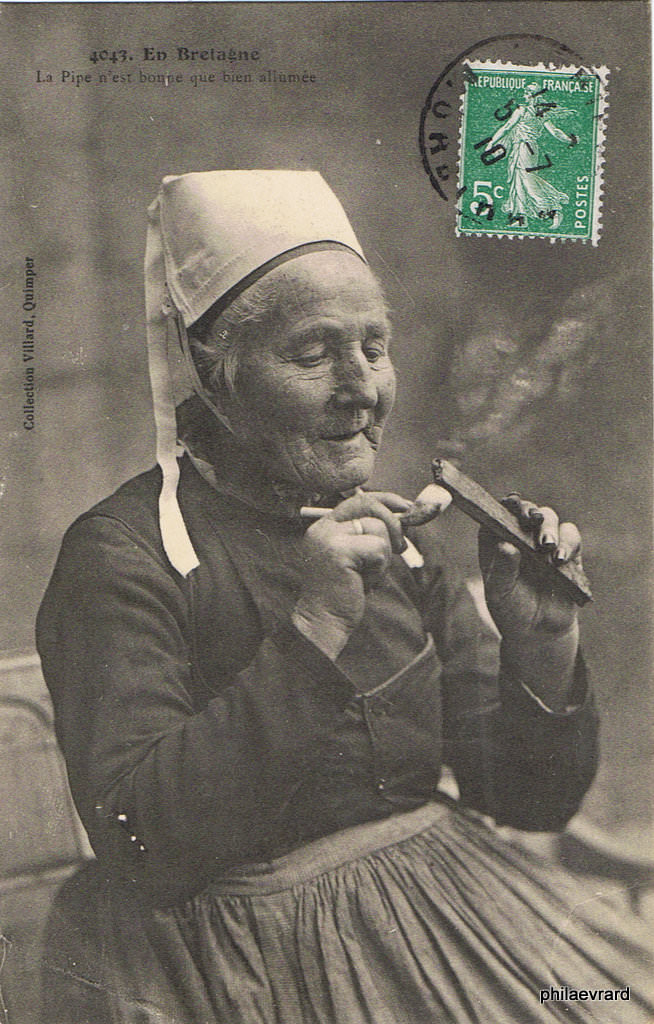 “Bretaña. La pipa solo es buena si arde bien.” Collection Villard, Quimper. Poststamp 5. 7. 1910
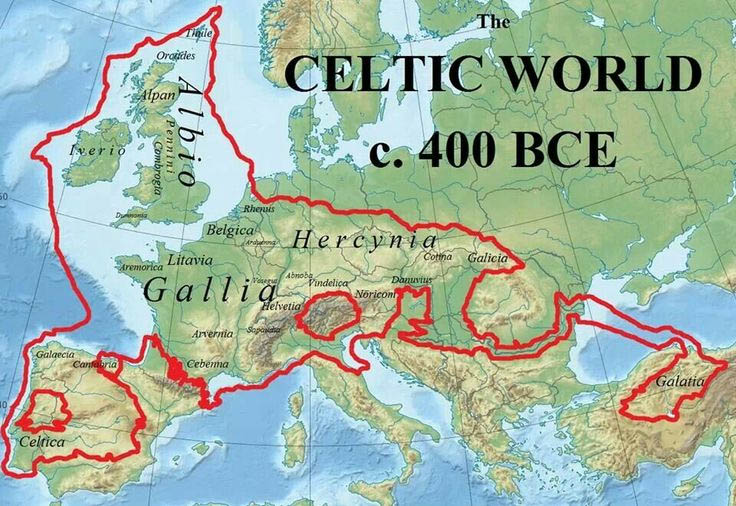 Las lenguas celtas no alcanzaron su mayor extensión geográfica en la Antigüedad sino, como escribe Peter Burke, en la era de los grandes descubrimientos. A principios del siglo XVI, los barcos Ingleses y franceses del Atlántico se servían principalmente de marinos de la costa céltica, Gales y Bretaña, por lo que el galés y el bretón sonaban con frecuencia en los puertos y embarcaciones de toda la zona norte del océano, desde el Canal a las islas del Caribe
Fueron marineros bretones bajo bandera francesa, de vuelta de la costa brasileña, quienes primero comerciaron con tabaco en el norte de Europa, y bajo el nombre que le daban los indios —betum, usado por ellos para emplastos medicinales— la palabra se transfirió del bretón al francés: Petun, pétuner, 'tabaco, fumar', aunque hoy es un arcaísmo y sólo la lengua bretona lo conserva así: Butun, butunad. La palabra tabaco y sus variantes en las lenguas modernas europeas, que los etimologistas españoles del Renacimiento hicieron derivar de las lenguas indígenas del Caribe, en realidad venía del árabe clásico ṭub[b]āq, hierba 'medicinal' y está en el español ya en el s. XV, desde donde se impone luego en América. El jurista Jacques Gohory escribió la Instruction sur l'herbe Petum ditte en France de la Reyne ou Medicée: et sur la racine Mechiocan, donde, junto con los tratados posteriores de Carolus Clusius se asienta fugazmente en la Europa culta el uso del término de origen brasileño. Valga como ejemplo etimológico parcialmente inexacto de tabaco la explicación de Nicolás Monardes en su Historia medicinal de las cosas que traen de nuestras Indias Occidentales que sirven de medicina, en el capítulo «Del Tabaco y sus grandes virtudes» (Sevilla, 1574, f. 41r):
“El nombre proprio suyo entre los Indios, es Picielt, que el de Tabaco es postizo, de nuestros Españoles, por una Ysla do hay mucha cuantidad dél llamada este nombre Tabaco.”
En otros casos, aparte de petum, betum o picielt, veremos designar la planta con nombres indígenas como cogioba, cohobba, quauhyetl, yietl. El doctor Monardes aún defendía los usos curativos del tabaco, al contrario de lo que hará en 1674 Benito Remigio Noydens en el Suplemento del Tesoro de Covarrubias, condenándolo como vicio fomentado por el demonio.
Parece que el primer uso industrial del tabaco en Europa se documenta en 1525 en Bretaña. Aquí se funda la primera manufactura, en el puerto de Morlaix, donde las hojas del tabaco importado del Nuevo Continente como hierba medicinal se tratan, secan y enrollan en forma de pequeñas zanahorias –carotte en francés, en bretón moderno Karot–. La «zanahoria», que aún ostentan las enseñas de las tabaquerías de Bretaña, se troceaba entonces con un cuchillo según se requiriera su uso en pipa o para ser masticado. La propia pipa se hacía originalmente de cuerno de oveja y se llamó, por su forma cónica (de corneta), korn en bretón.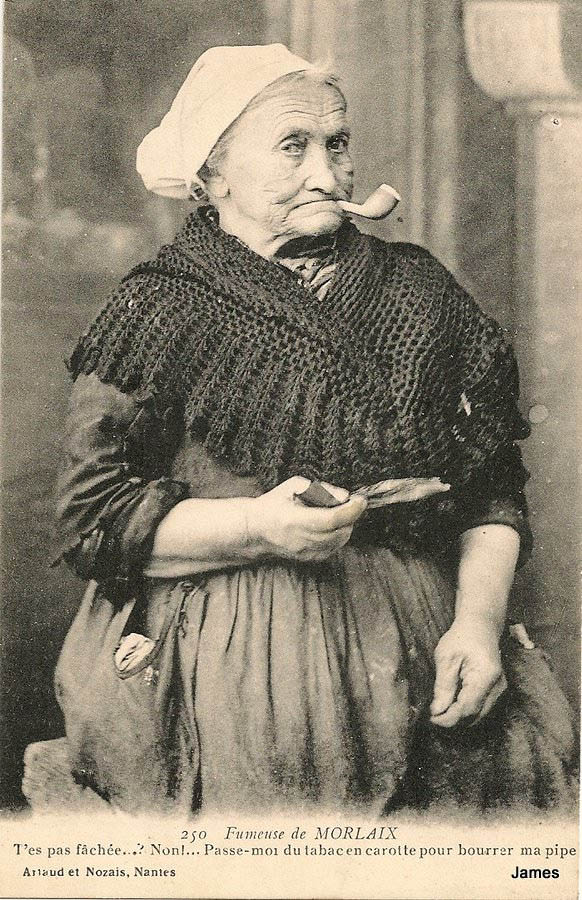 «¿No es molestia?» - «No.» - «Páseme la zanahoria de tabaco [tabac en carotte] para llenar mi pipa.» Mujer fumadora de Morlaix. Artaud et Nozais, Nantes
Mientras que en muchos lugares del Renacimiento y el Barroco europeo fumar era algo «generizado», un pasatiempo exclusivamente masculino, en Bretaña siguió siendo remedio de la fatiga y el hambre para ambos sexos, tal como era en su tierra de origen. Los fotógrafos franceses que a finales del s. XIX vagaban por el país para registrar fotos etnográficas, quedaban realmente sorprendidos al ver a las contumaces abuelas fumadoras en pipa bretonas, que pronto se convirtieron en figuras inevitables del pintoresquismo ilustrado, divulgado en las colecciones de postales de La Brettagne Pittoresque y Types Bretons. Hace poco philaevrard ha publicado una buena selección de ellas procedentes de su colección, en el Cparama forum, dedicado a antiguas postales francesas.
Klervi Rivière – Marie-Aline Lagadic: Labousig ar hoad. Balada gwerz – bretona – accrue de un marino que invita a una chica a navegar juntos a Inglaterra pero ella le rechaza. Del CD Femmes de Bretagne (Mujeres de Bretaña, 1996).
Las postales con lugares identificables en el mapa de Bretaña


 Come with us to…
 Atlantis
 Bestiary
 Bohemia+Prague
 Books, exhibitions, music, film
 Brave old world
 Caucasus
 Cemeteries
 Crimea
 Get to know the
 Images of the East
 Lightwriting
 Lwów/Lemberg
 Mallorca
 Message on the wall
 The Museum of Propaganda
 Odessa
 Paper Museum
 Persian letters
 The Jewish heritage


