
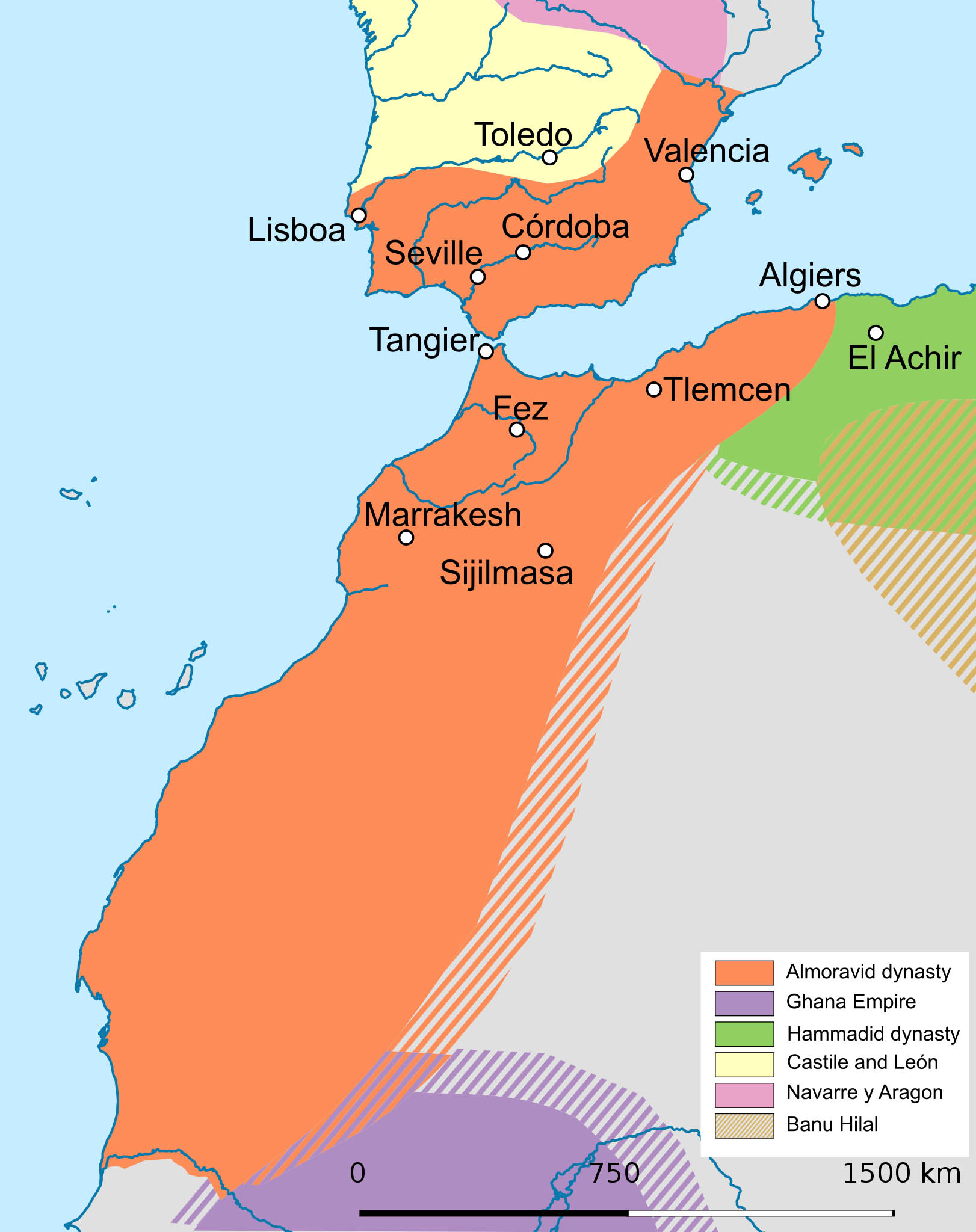
 The history of Morocco is a succession of capitals. The successive dynasties, having overthrown the previous one, always create a new capital in their own tribal territory, spectacularly humiliating the city of their defeated opponent, looting and destroying it, and tearing down and carrying away the marble covering and decoration of their royal buildings and mosques to decorate the ones of the new capital.
 Marrakesh was founded in 1070 against the northern Fez by the Berber Almoravids coming from the nearby Atlas valleys. Organized by fanatical Muslim preachers, this dynasty quickly took control of the trade routes south of the Atlas, along which gold flowed from the Ghana empire to Morocco. Then, with this military and economic background, they easily occupied Andalucia, where the golden age of the Cordoban caliphs ended around this time. Marrakesh became the center of a rich world empire spanning two continents, and the first Almoravid caliph ruling from here, Ali ben Youssef (1106-1143), tried to make the city worthy of this rank. This ruler, born of an Andalusian Christian mother and raised in a cultured Andalusian environment in Ceuta, saw Córdoba as his role model. He tried to build the first mosque of Marrakesh on the model of the Great Mosque of Córdoba, bringing architects and even building elements – capitals and marble carvings – from there, including from Medinat al-Zahra, the Cordoban caliphate city looted and destroyed by the Almoravids.
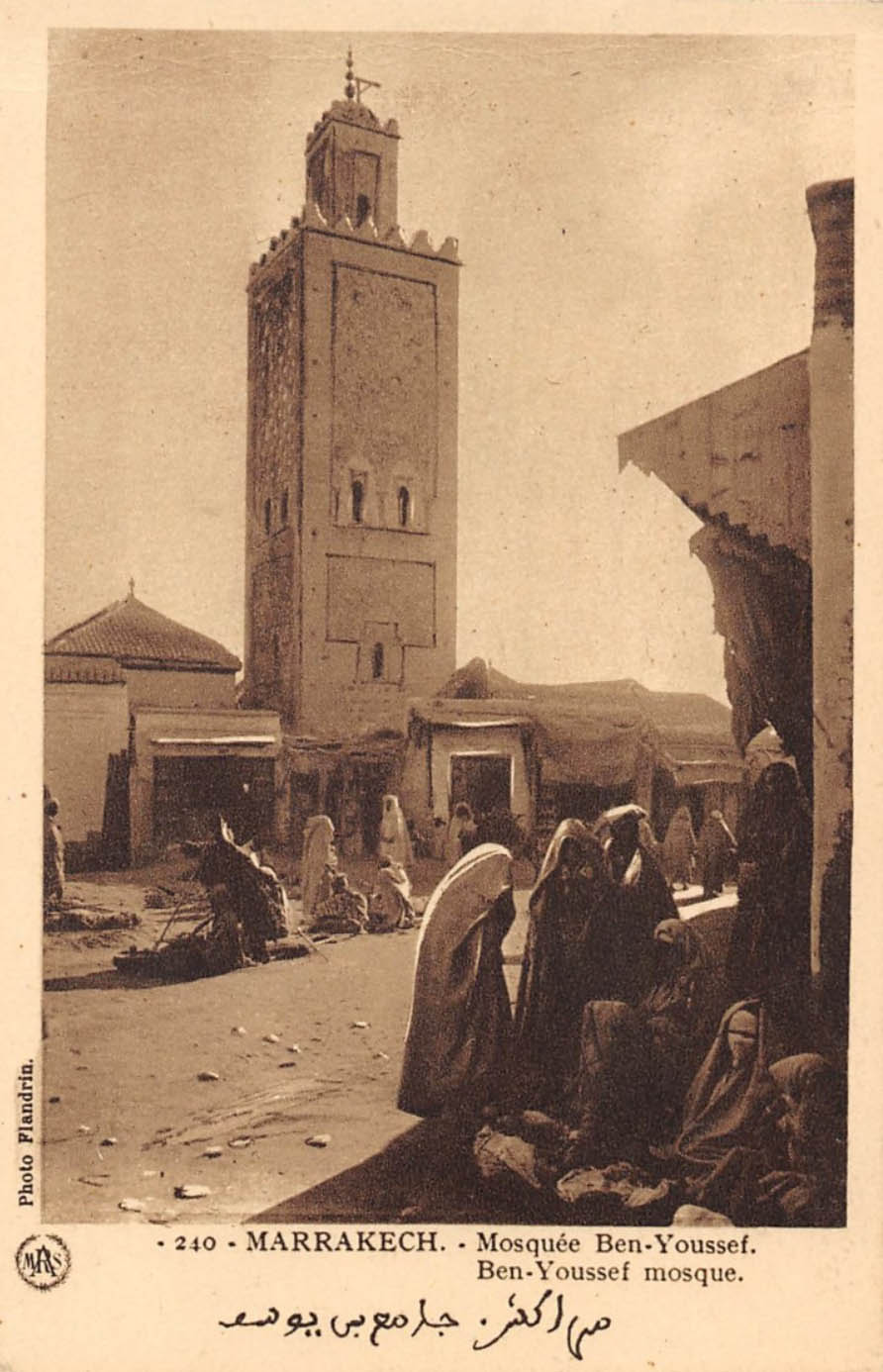
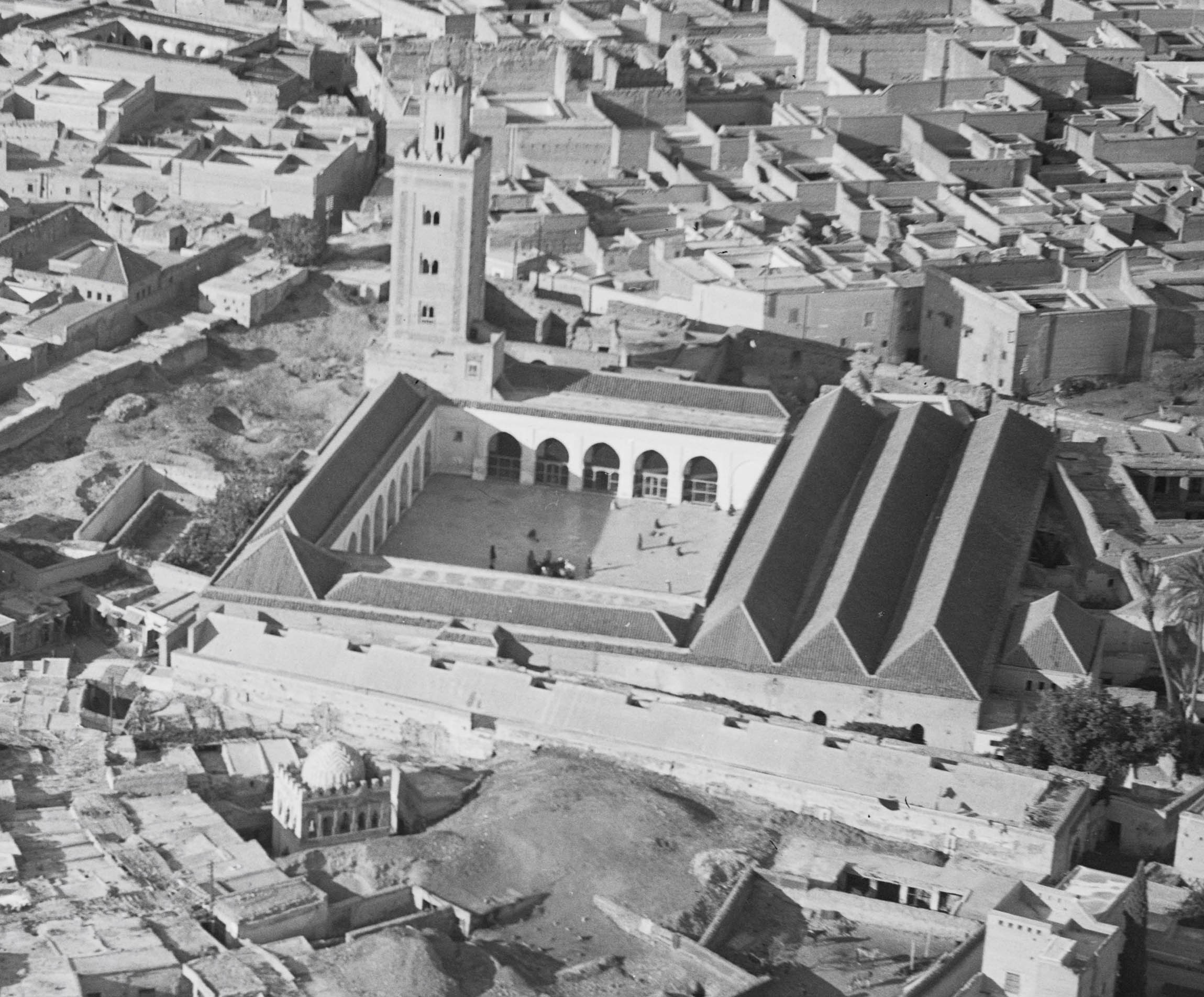
 The Ben Youssef Mosque still stands to the north of the bazaar. However, this is no longer the one built by Ali ben Youssef. The Almoravid mosque, along with the entire city, was destroyed by the next fanatical Berber dynasty, the Almohads, after the capture of Marrakesh in 1147. Then the mosque built on its place and destroyed again, was rebuilt again by the Saadi dynasty in the 1550-70s, and then by the Alawi dynasty in the early 19th century.
 Postcard of the mosque based on Marcelin Flandrin’s photo, 1930s
However, just as there are survivors of every destruction, who survive by hiding in basements, locking themselves in warehouses, pretending to be dead, so there are three survivors of Marrakesh’s first heyday.
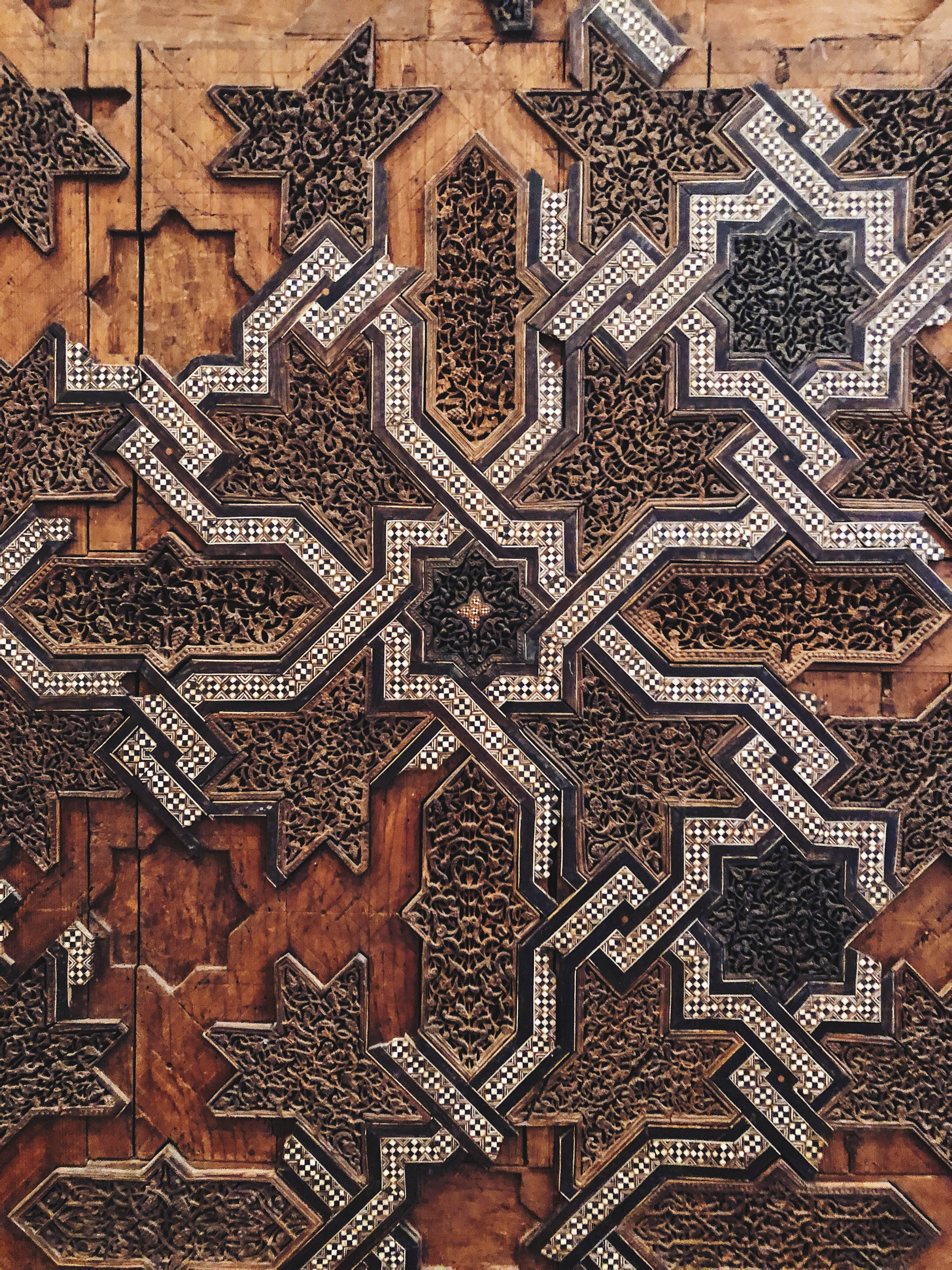
One is the Almoravid mimbar – pulpit –, one of the masterpieces of Islamic art, which Ali ben Youssef ordered in Córdoba in 1137, and which the Almohads took to the Kutubiyya mosque built by them, which is why it is usually referred to as the Kutubiyya mimbar.
 Detail of the mimbar
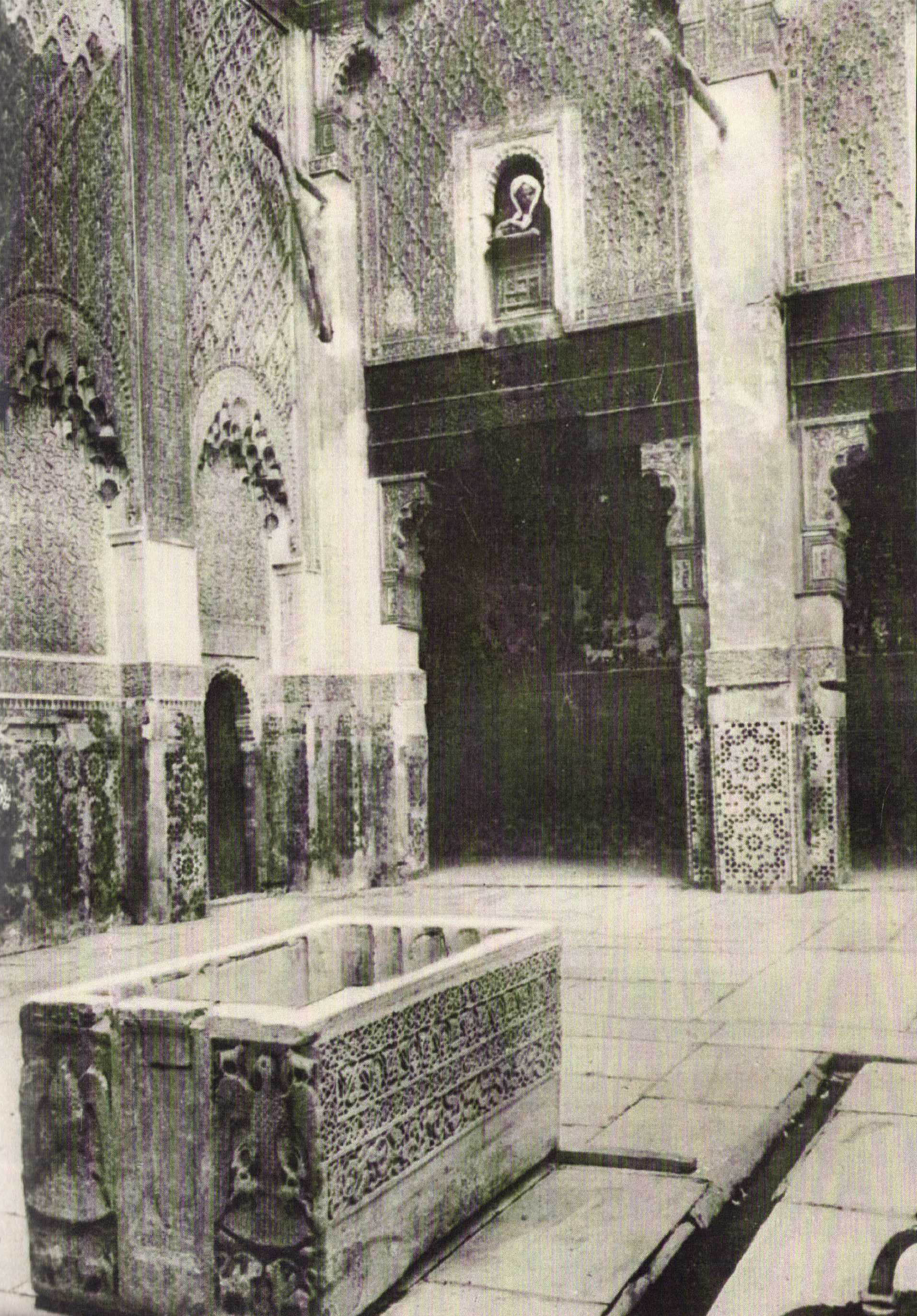
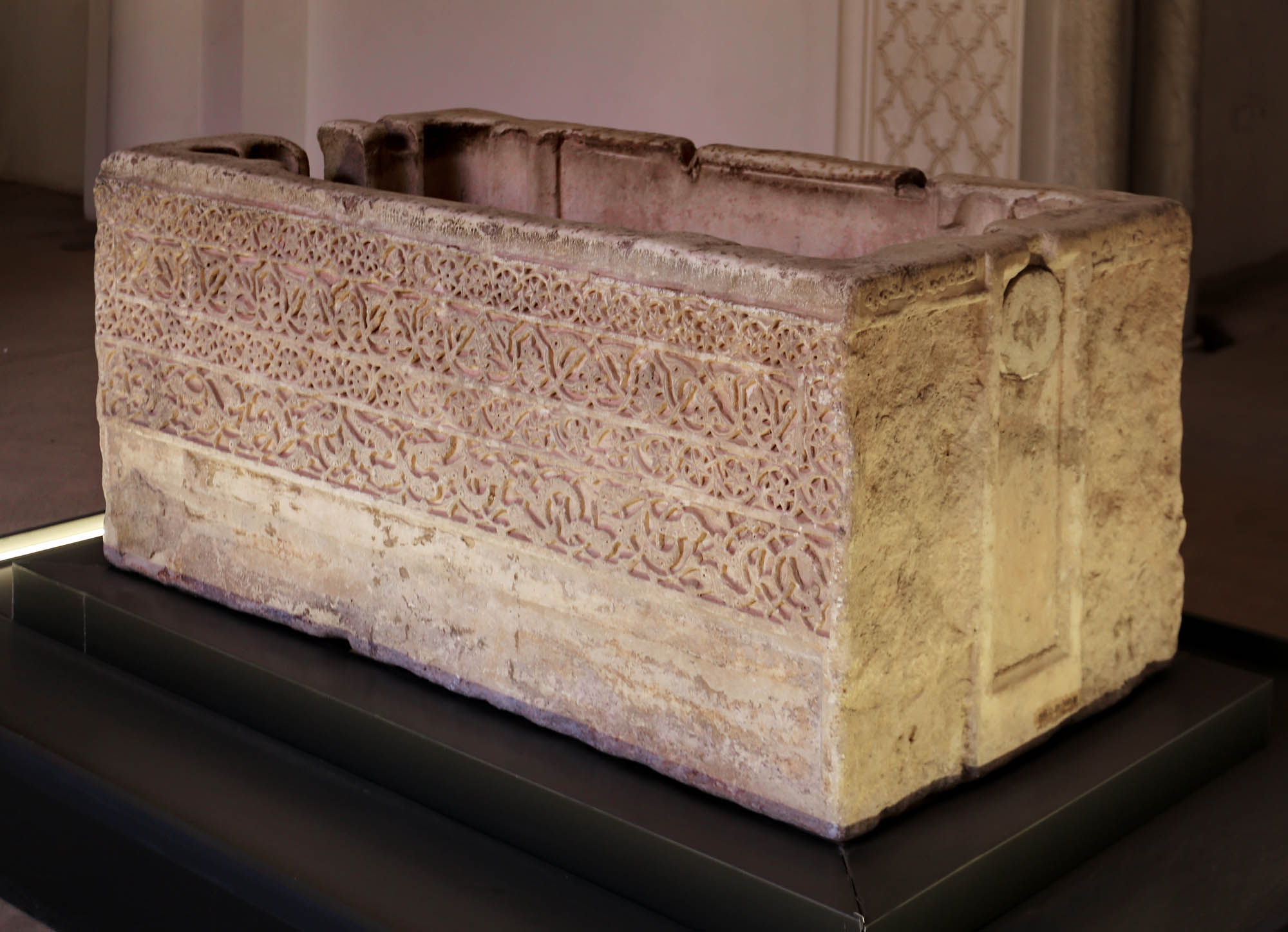
The other, also imported from Córdoba, is a marble water tank richly carved with vegetal patterns and animal figures, once used for ritual ablution. According to its inscription, it was ordered by Abd el-Malik ben El Mansour, courtier of the Cordoban Umayyad caliph Hisham II, between 991 and 1008. It was probably brought from there by Ali’s father Youssef ben Tashvin, after the sack of the city. Today it is in the Ben Youssef madrasa or theological school, next to the above mosque, which I will write about soon.
 The Umayyad water tank in the courtyard of the Ben Youssef madrasa in the 1930s

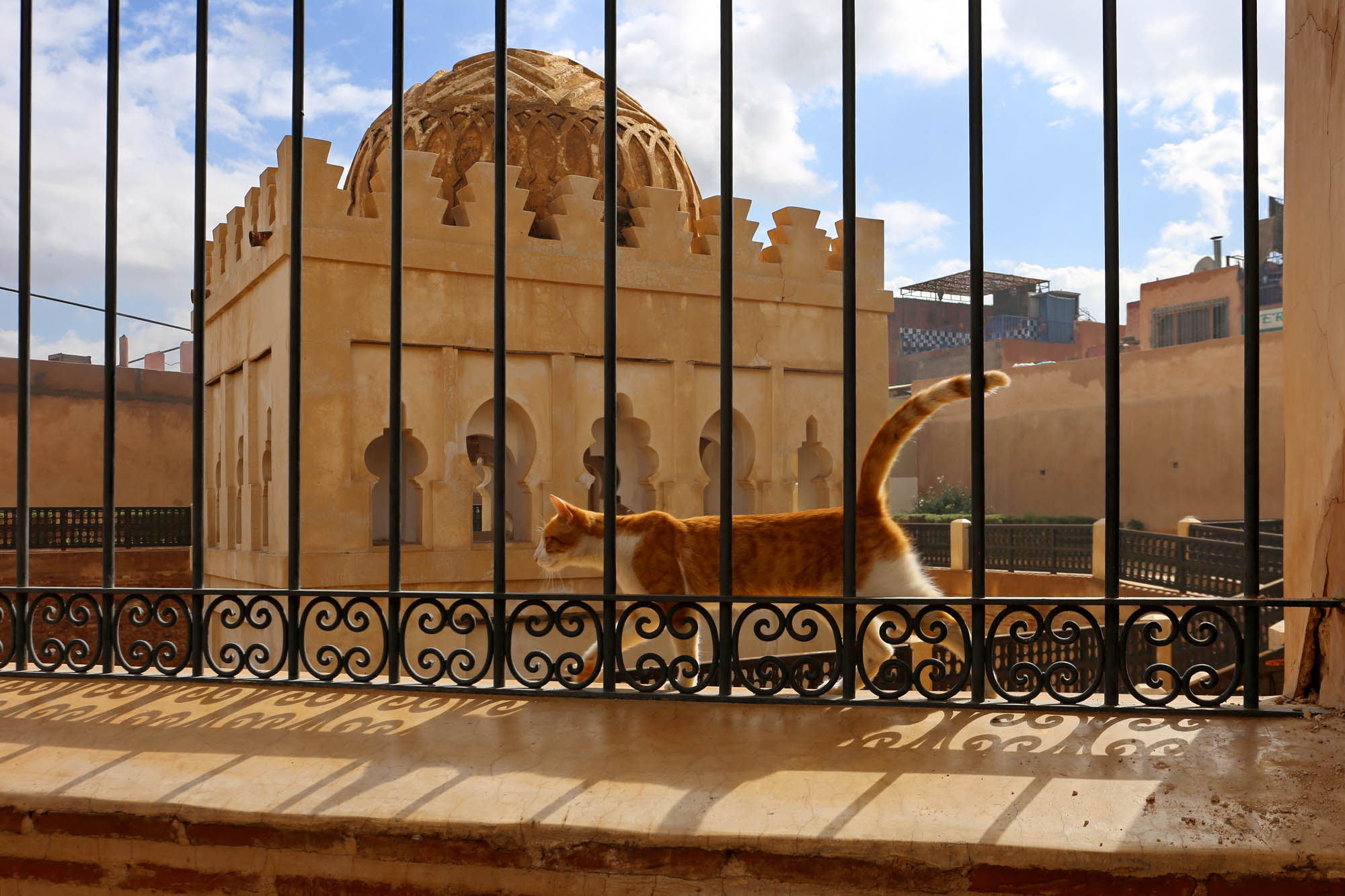
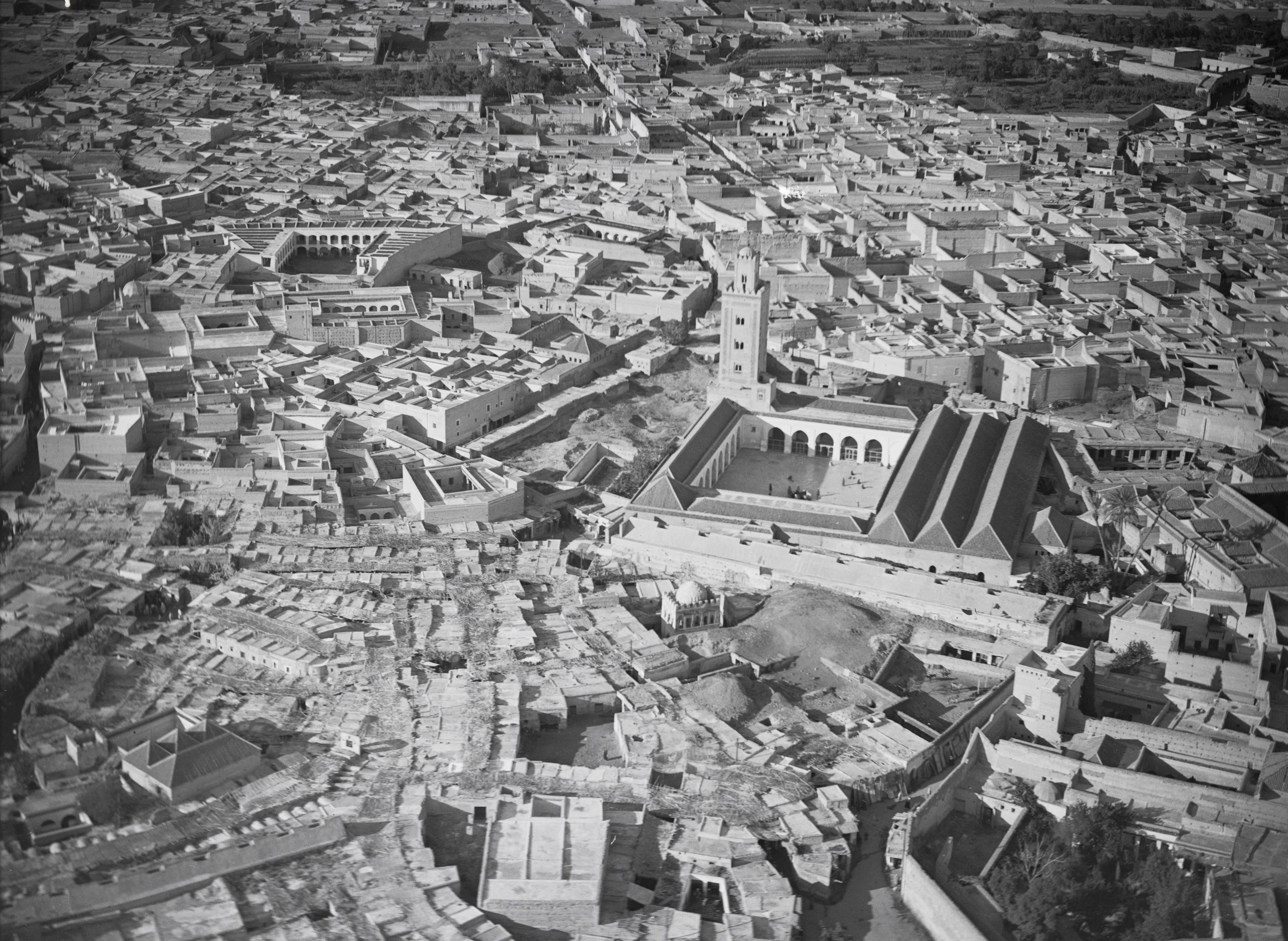
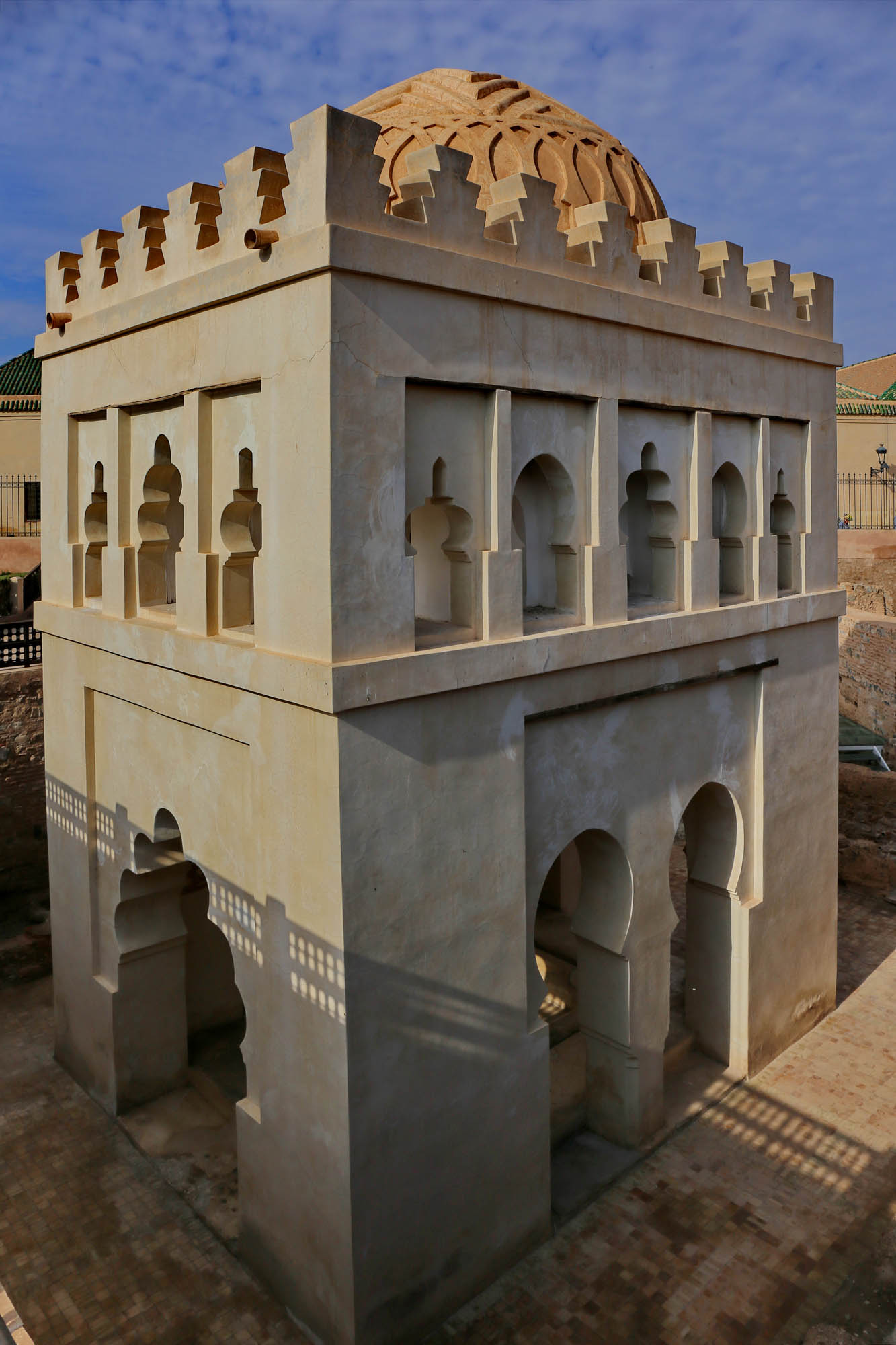
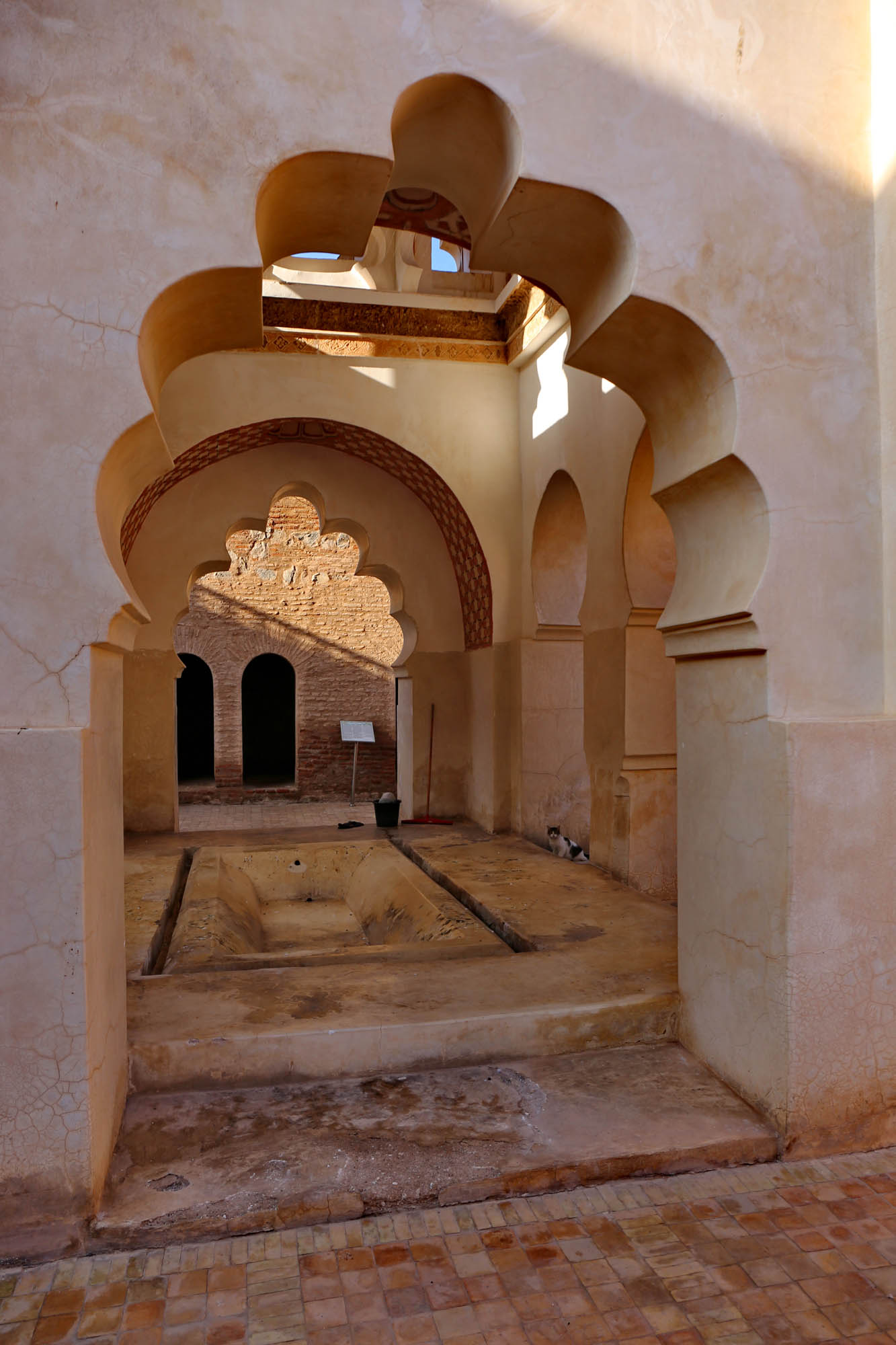
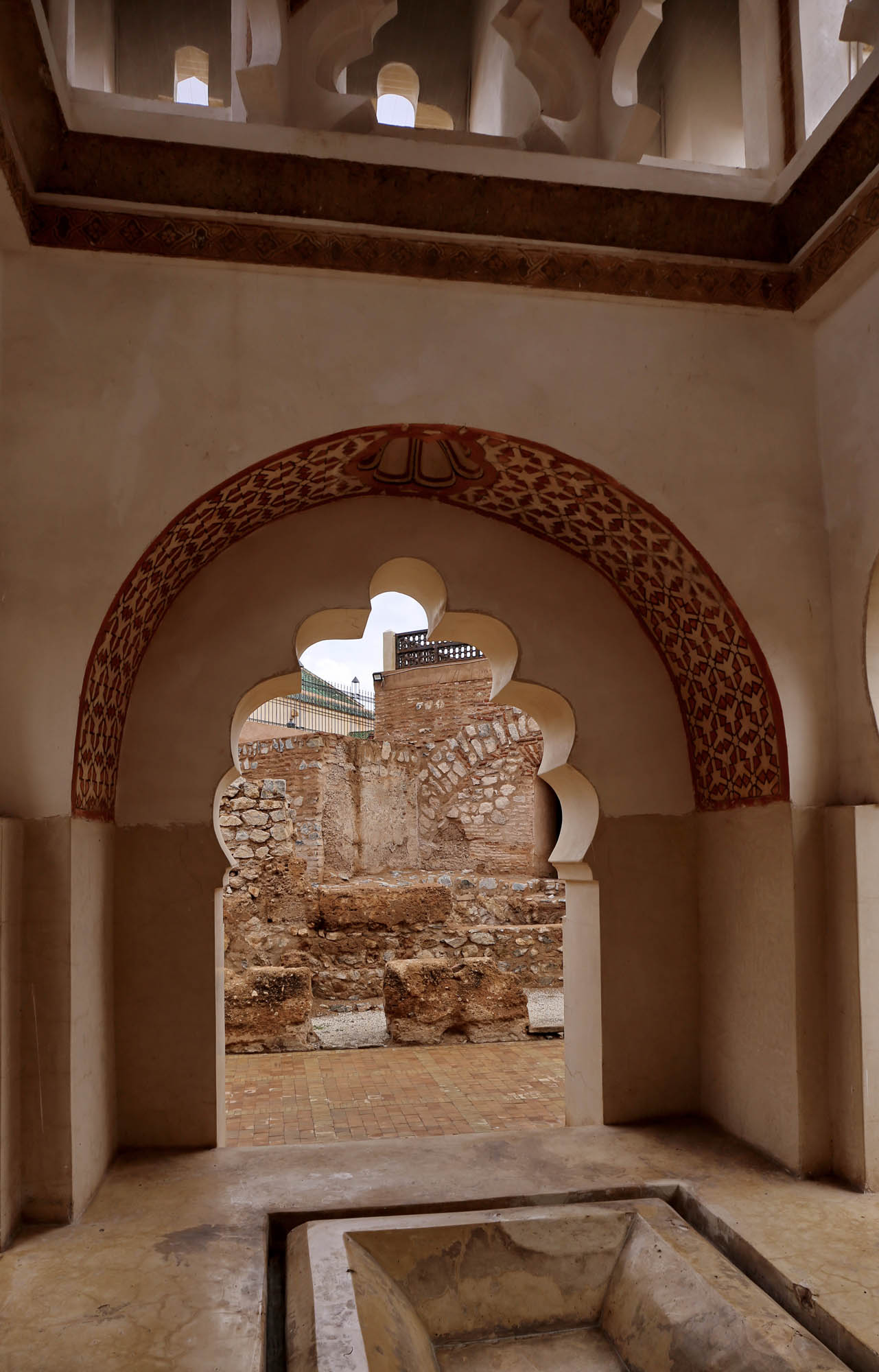
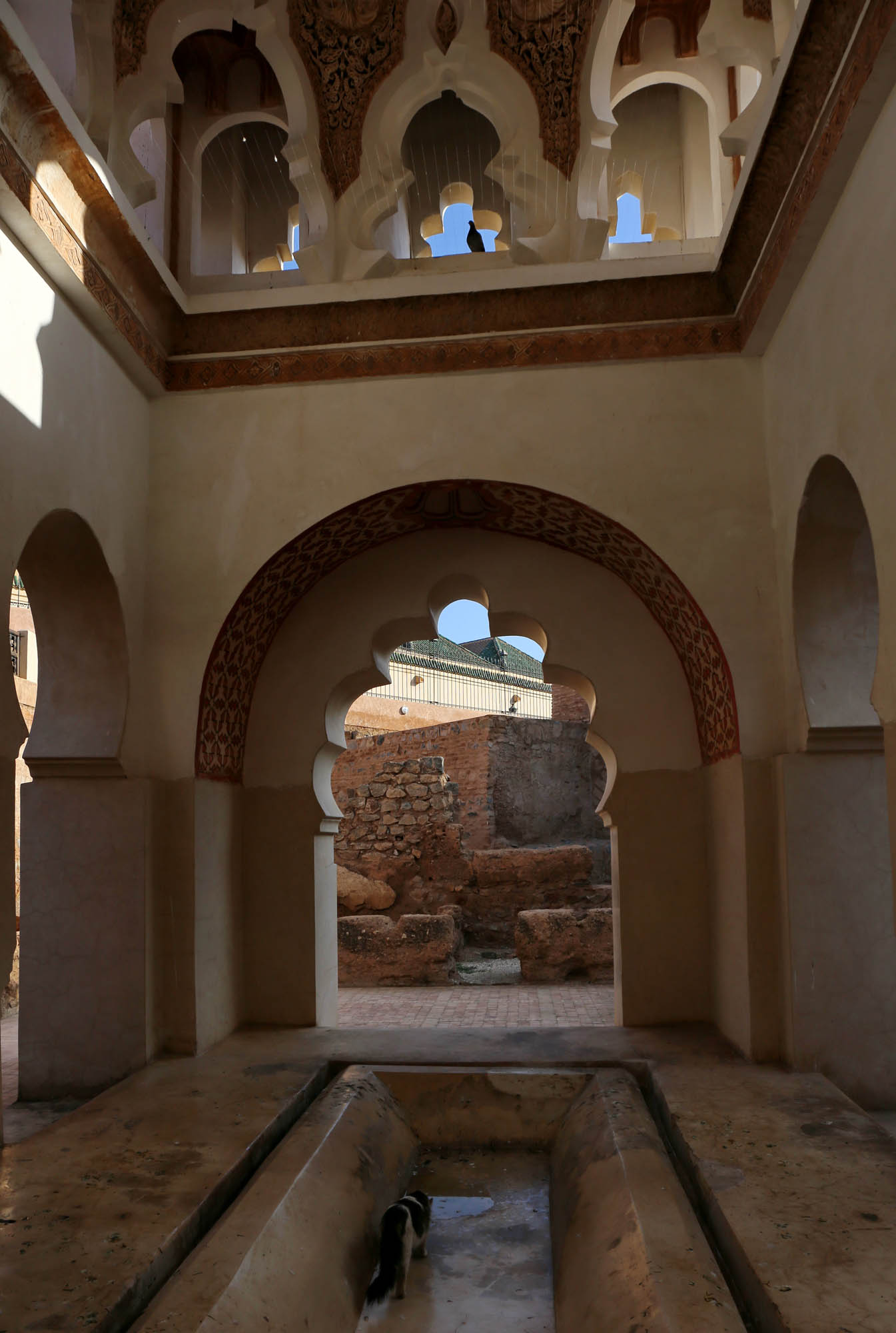
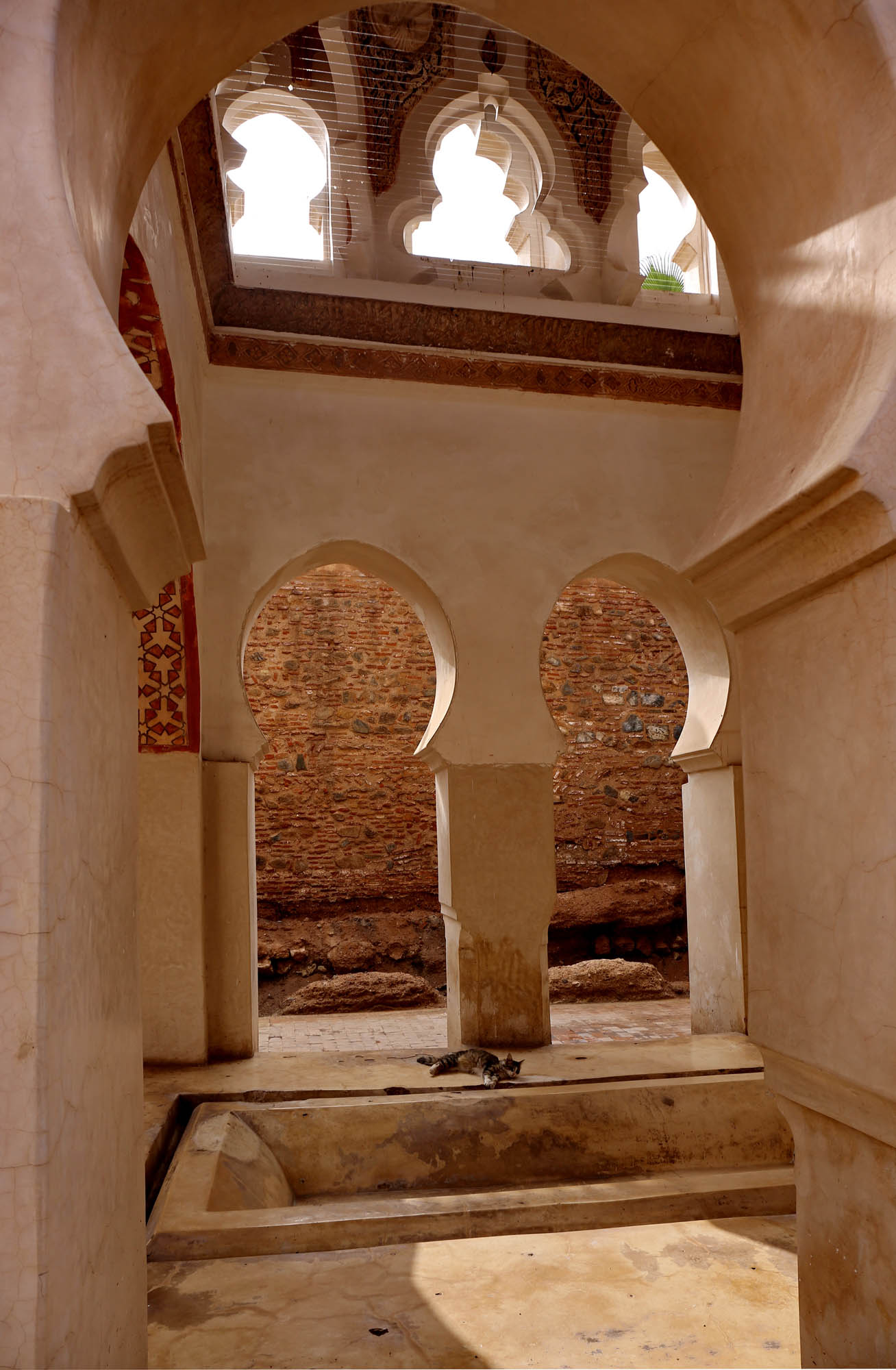
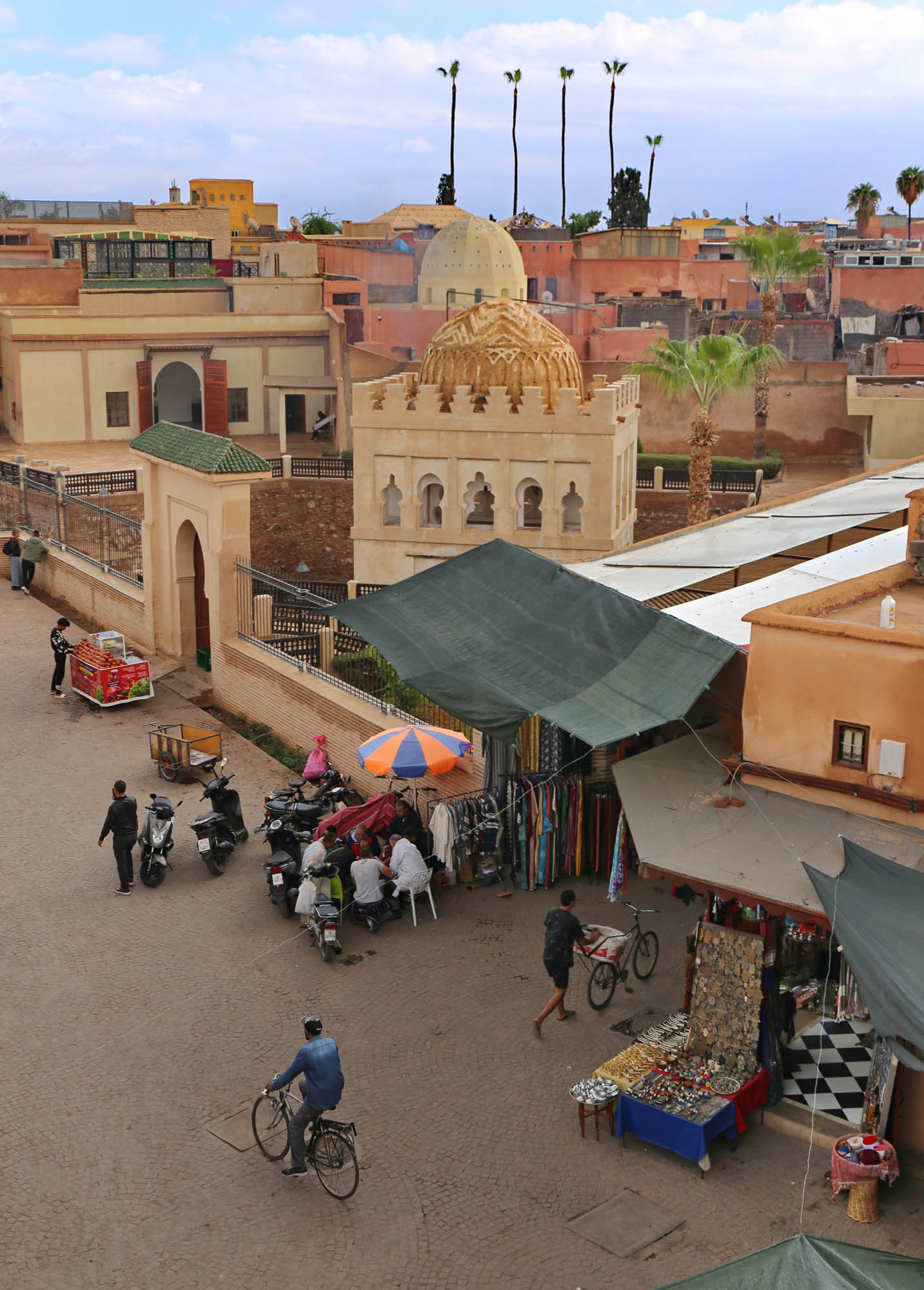
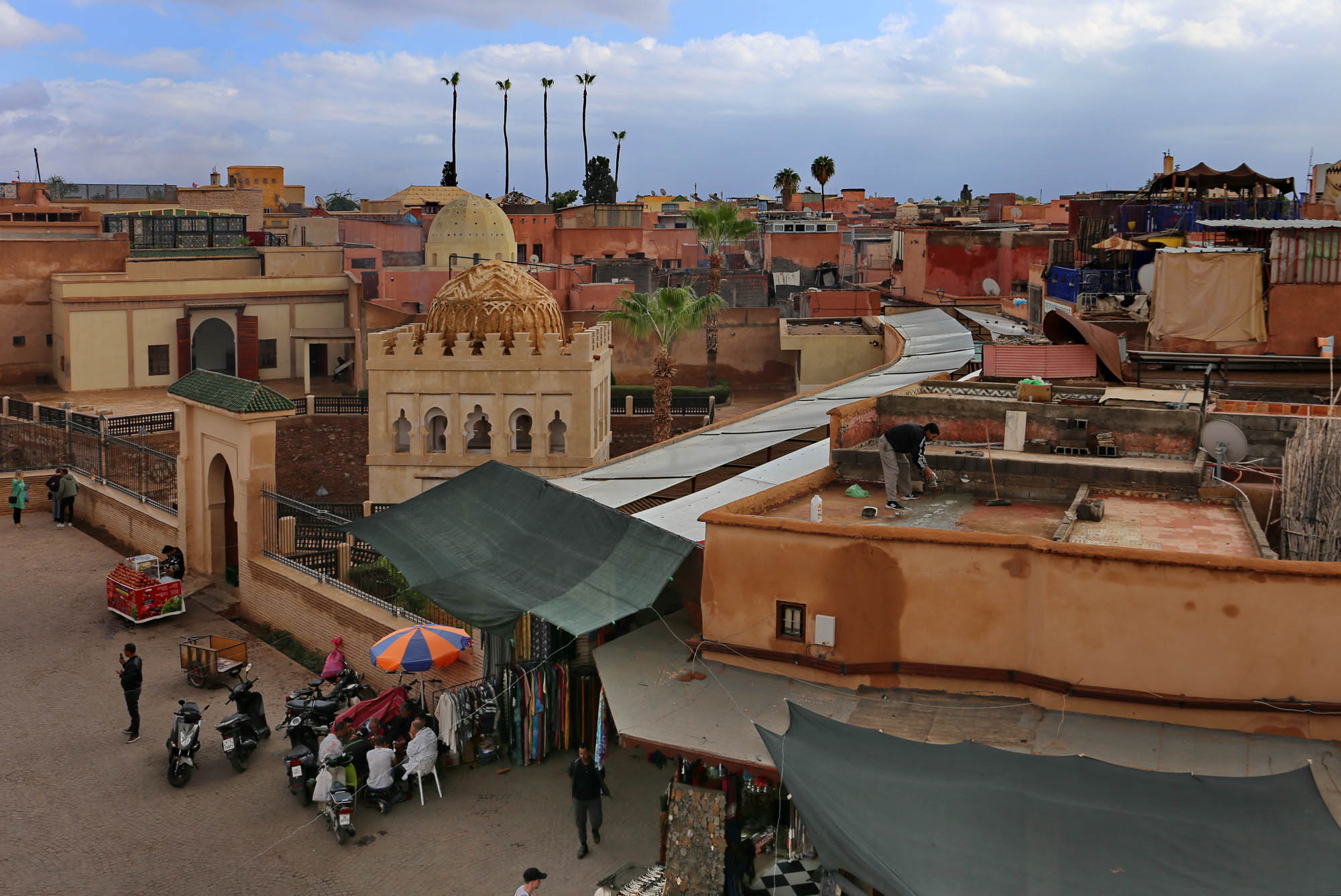
And the third is the Koubba. This word, meaning “dome”, traditionally denotes a tomb. This small architecture, however, was not built as a tomb, but as a pavilion for ritual ablution, a midaʿa, in front of the Ben Youssef Mosque. At the bottom it had a basin for washing, and it was surrounded by latrines and basins for giving water to animals. In this way, it was not only a religious, but also a public service institution for the bazaar that extended south of the mosque. This is probably why it was saved. The bazaar gradually grew around it and covered it, while the ground level that rose at a height of 7-8 meters due to the destruction, covered its entire lower part. It was only in the first half of the 20th century that they began to excavate and free it form the stalls built on top of it. It was restored in recent decades and has been open to visitors since last February.
 In the aerial photo from 1930-31, the Ben Youssef Mosque is in the middle, with the newly excavated Koubba in front of it

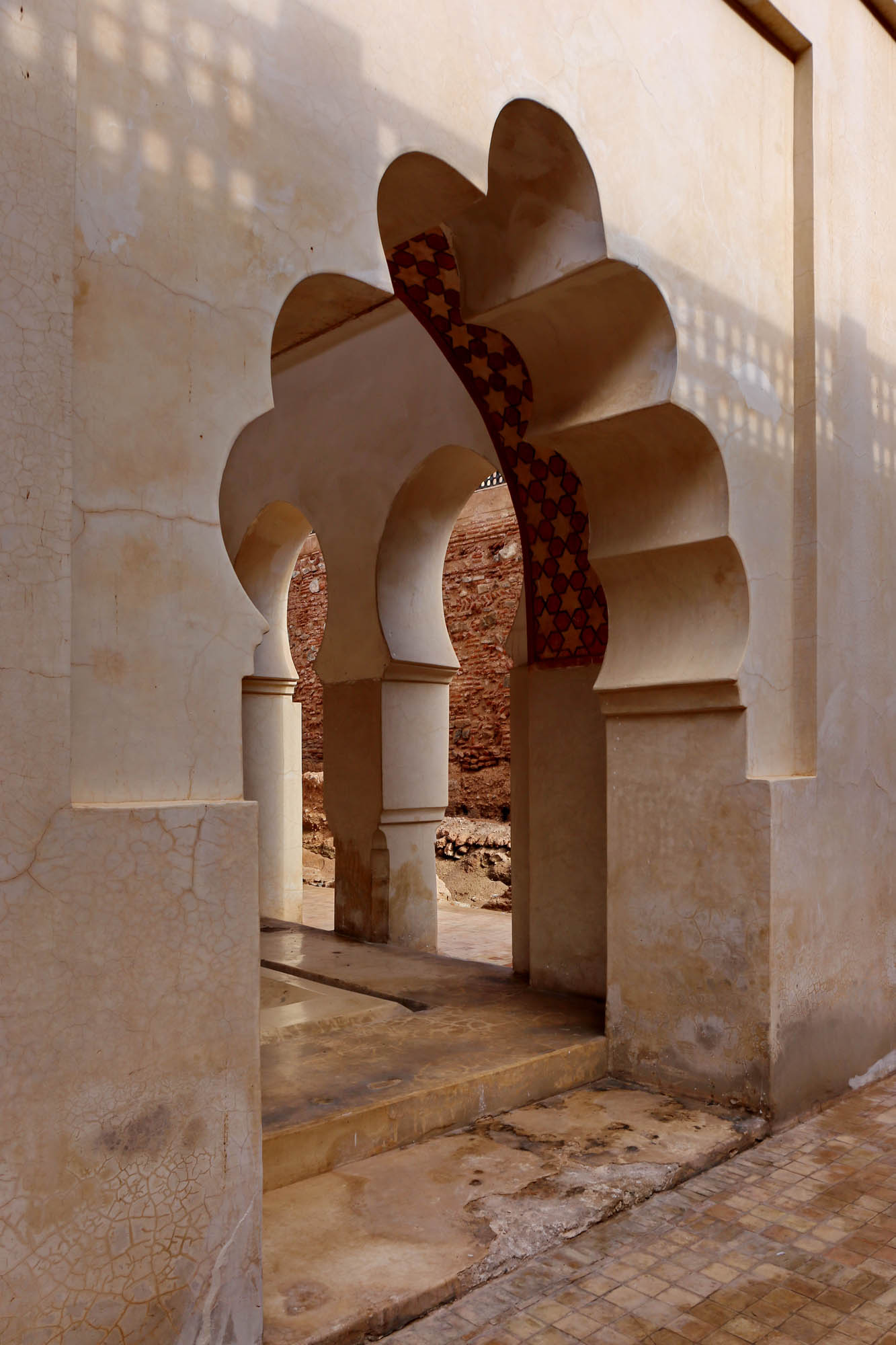
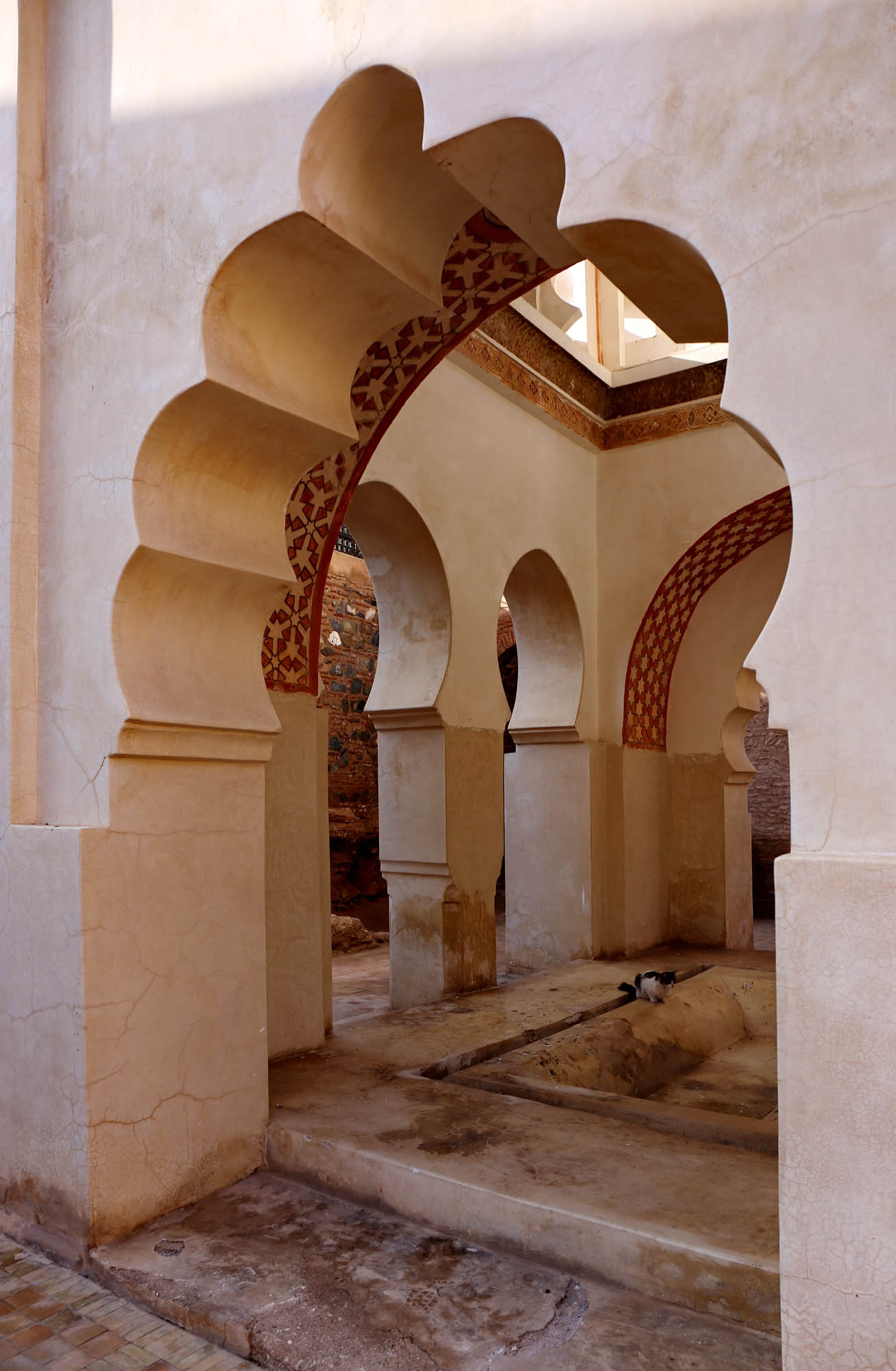
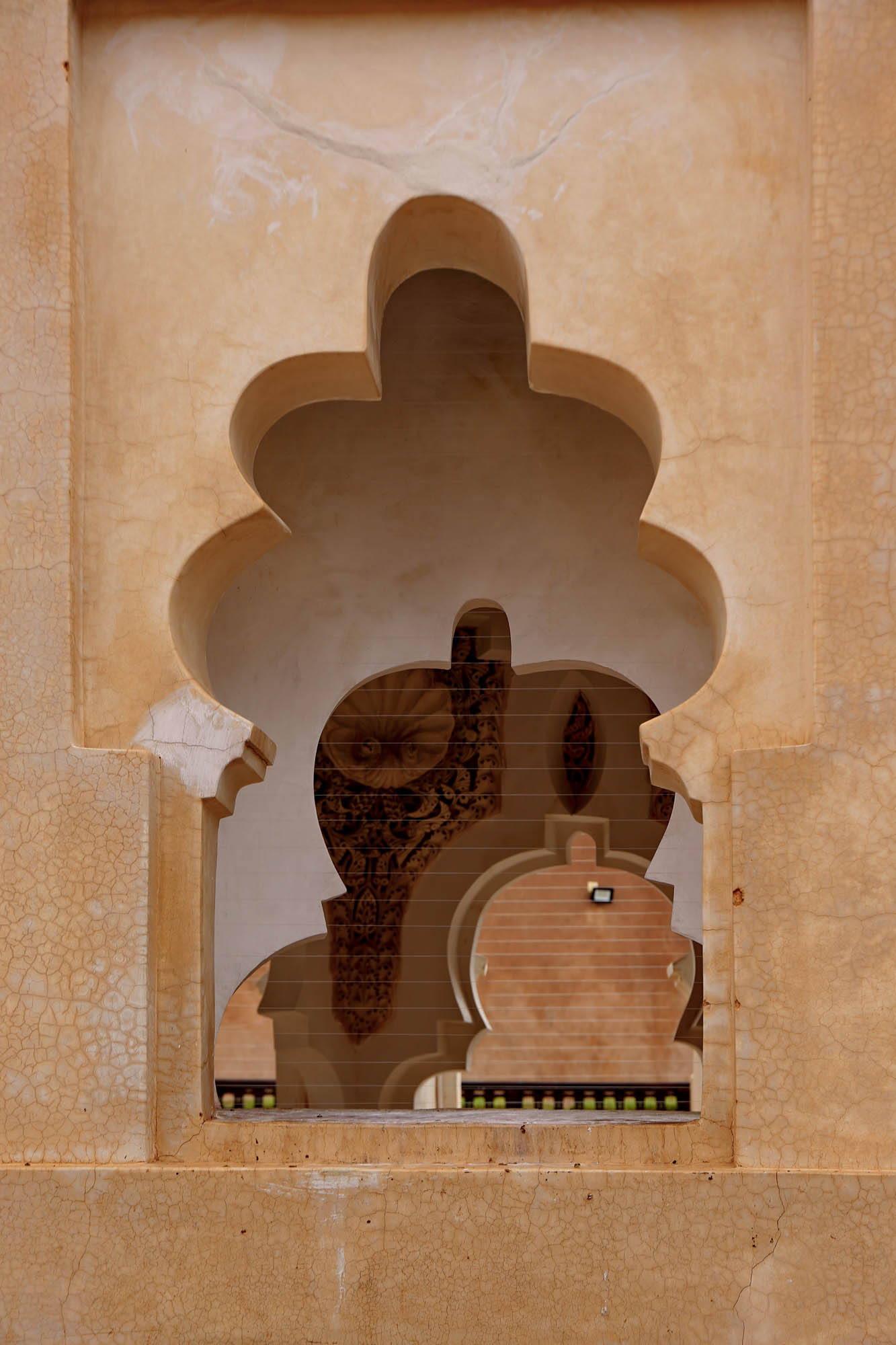
The lower part of the building opens onto the pool with two horseshoe-arched gates on the longer sides, and one multi-leaf gate on the shorter sides. The internal arches of the latter are decorated with a beautiful geometric pattern. On its inner cornice, a Kufi inscription dating back to 1125 runs around, gloryfing Allah andd the builder Ali ben Youssef.


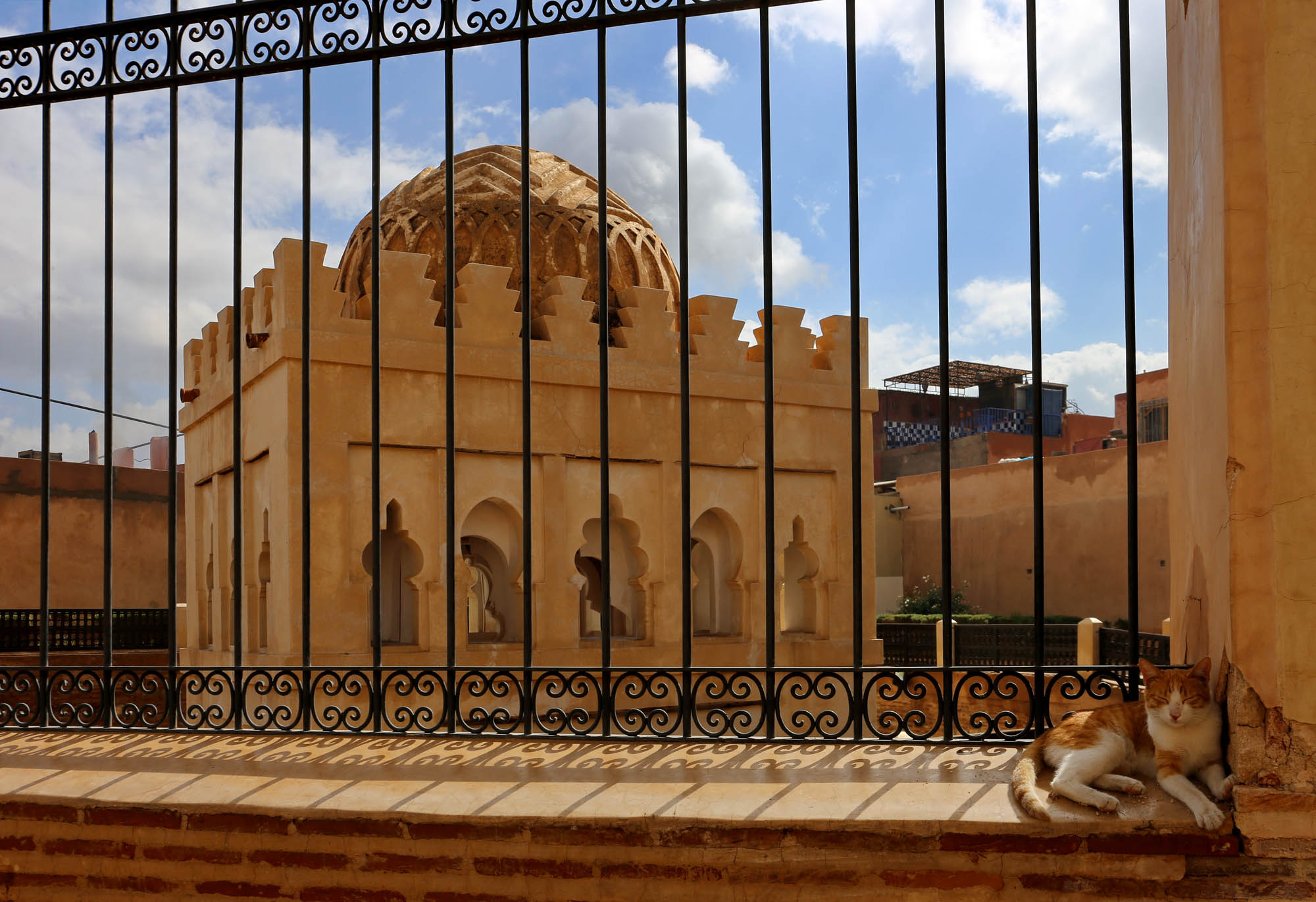
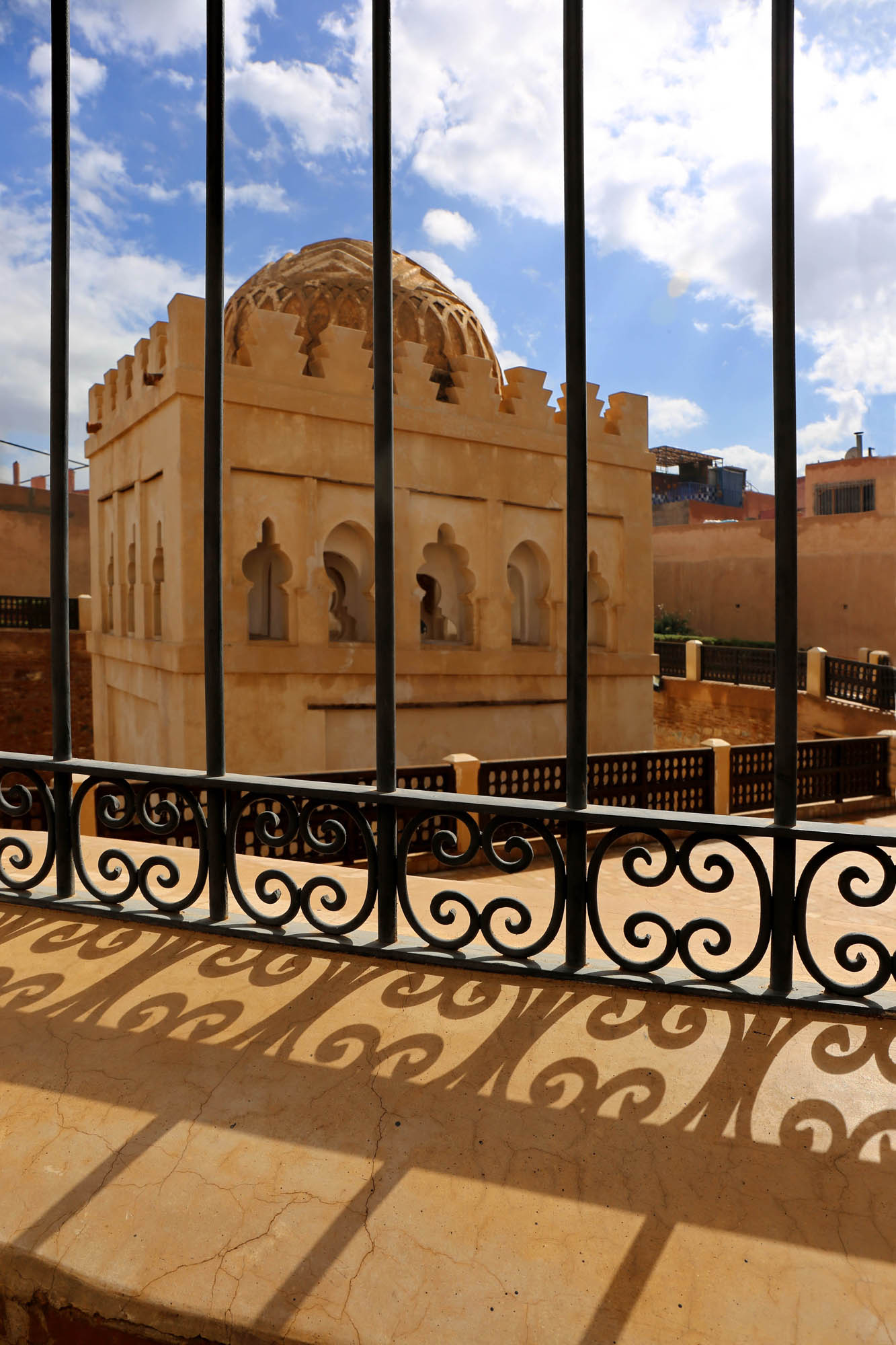
On the longer side of the upper part, there are five alternately multi-leaf and horseshoe-arched windows, while on the narrower side two multi-leaf ones. The dome rises above the upper, fringed cornice, whose complicated brick architecture, as we will see, is purely decorative and does not reflect its real architecutre visible from the inside.


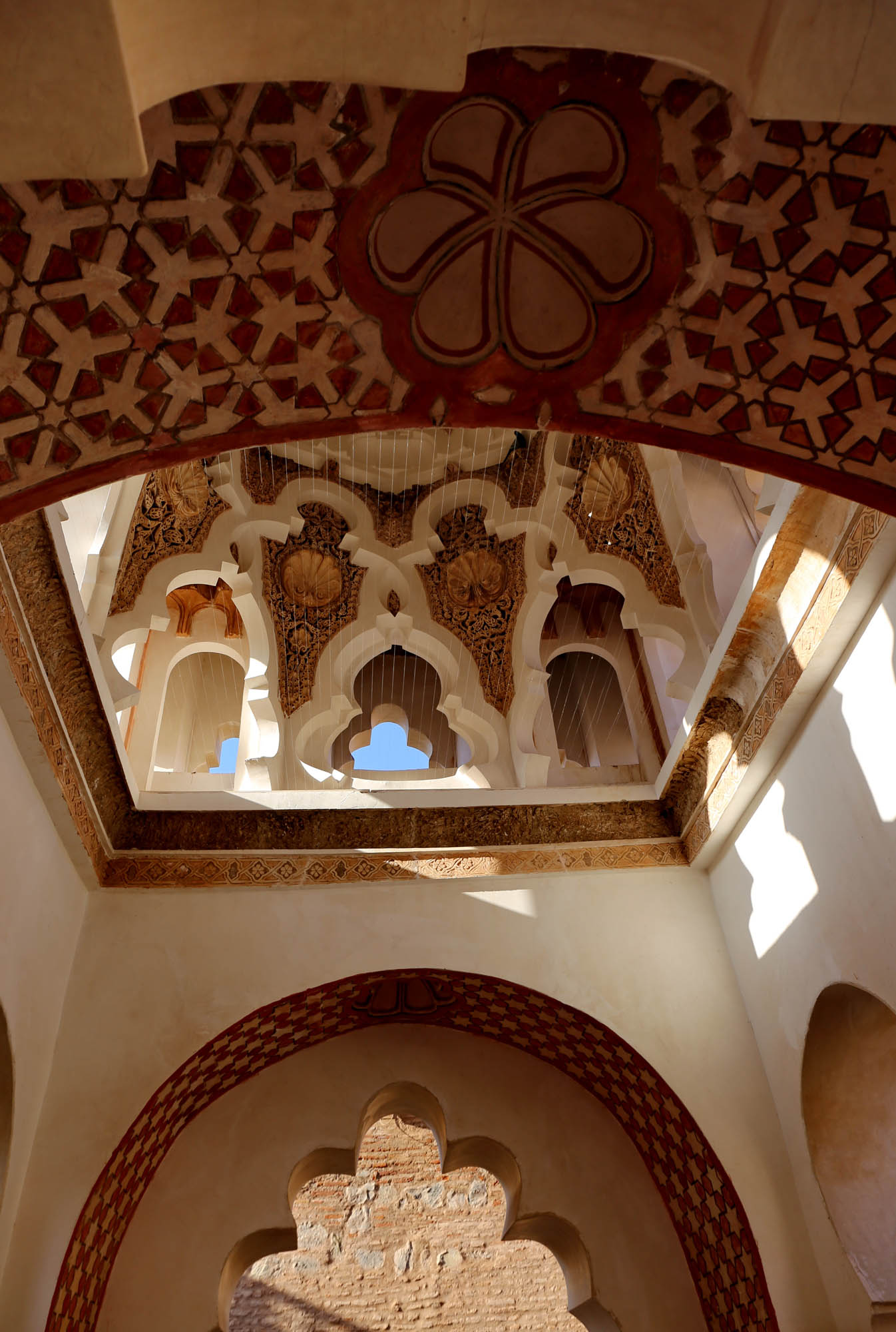
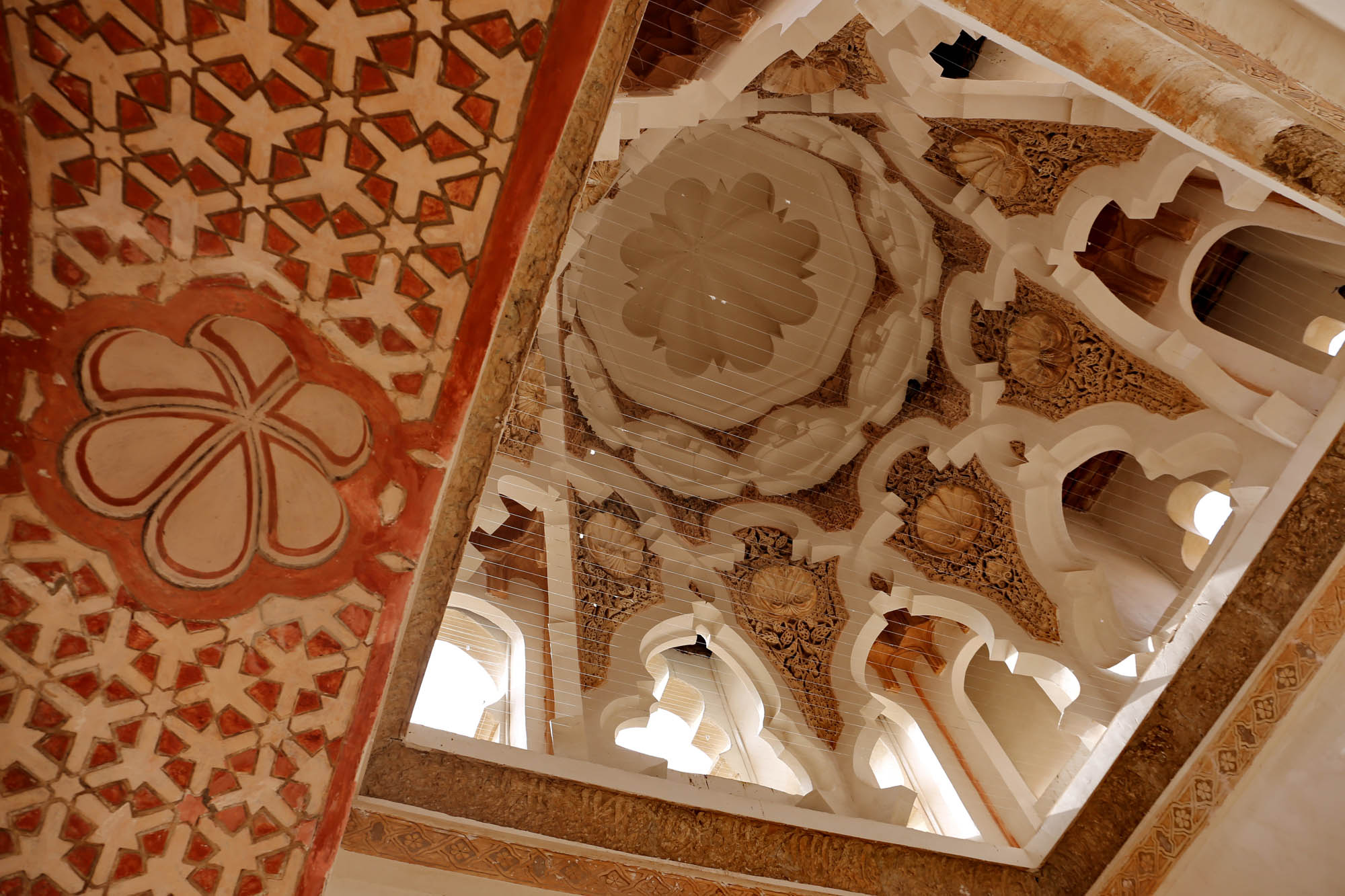
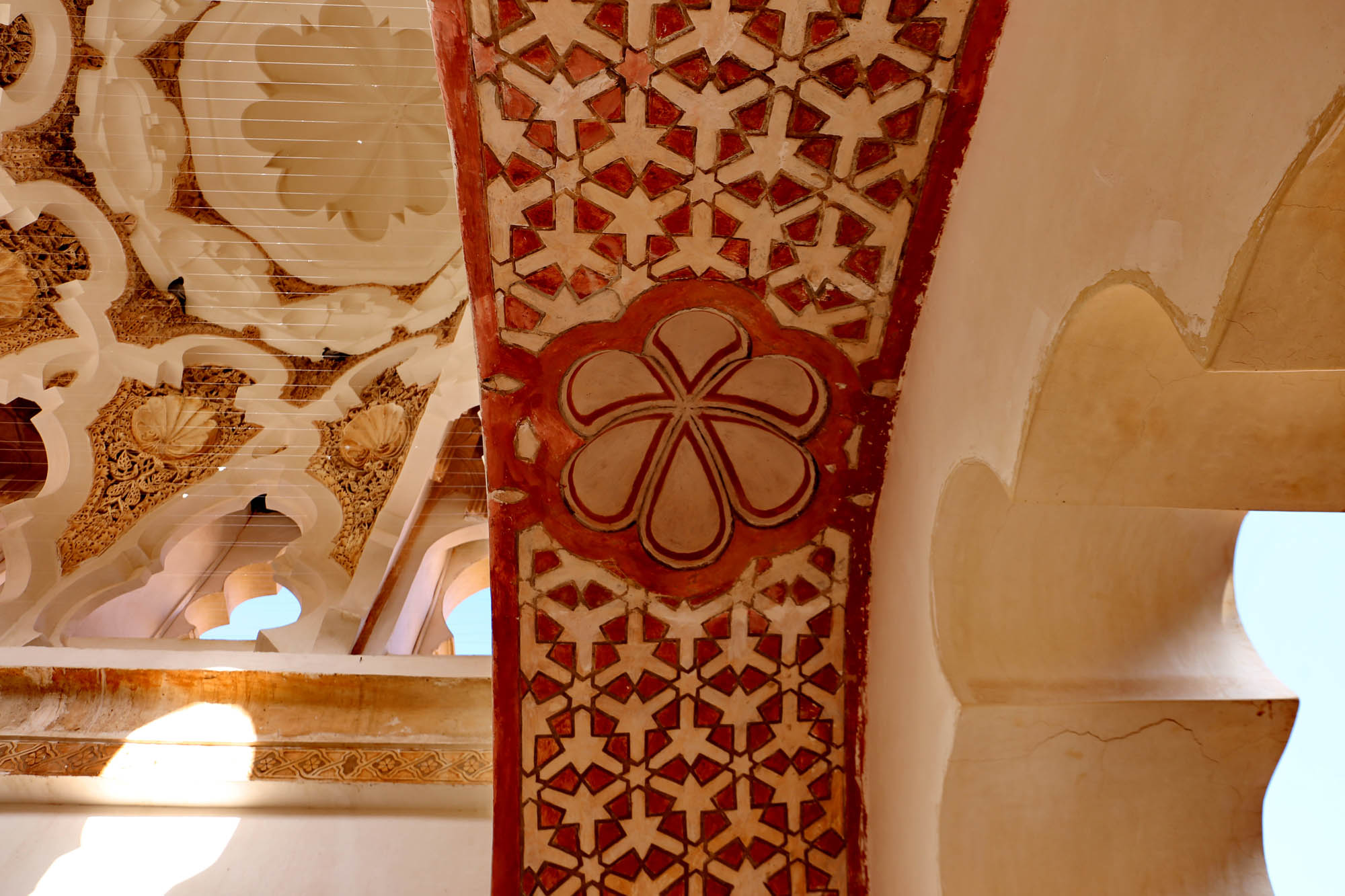
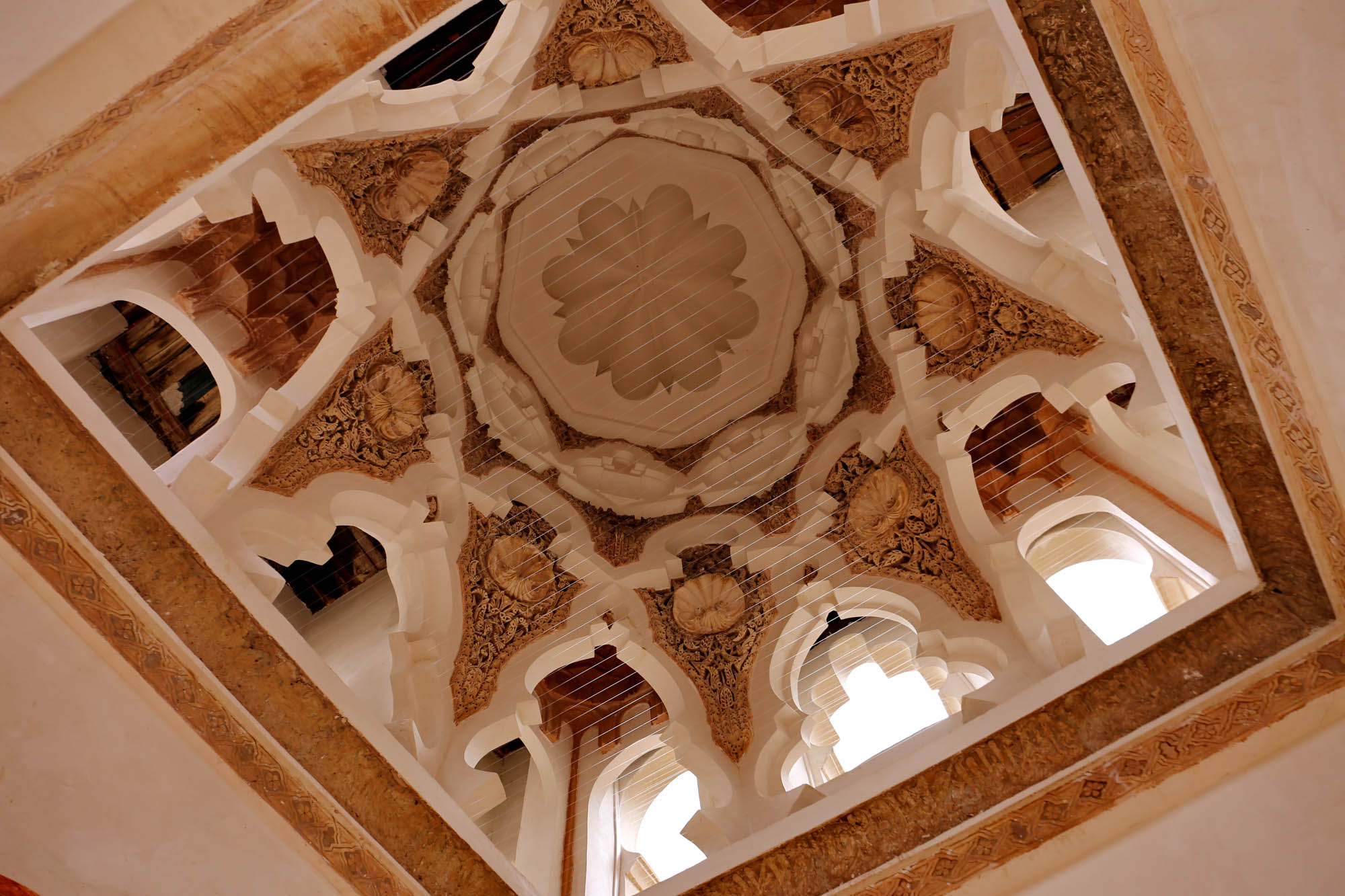
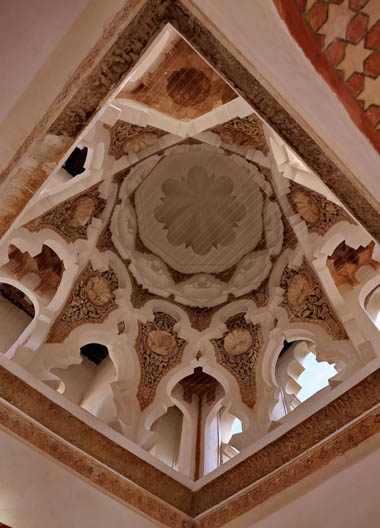
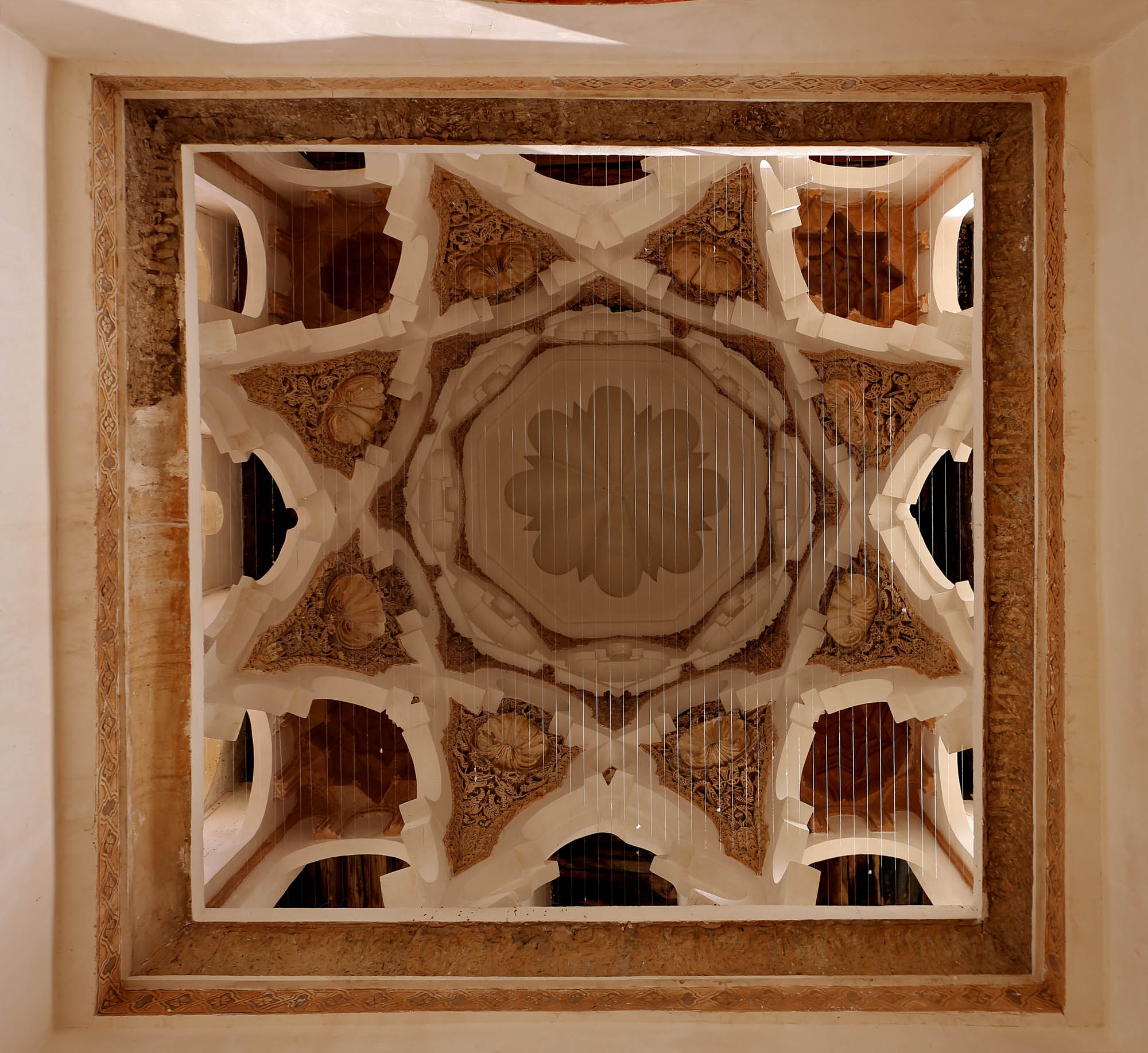
The windows illuminate the lower part of the dome. This dome is the most special element of the koubba. It is supported by intersecting multi-leaf arches starting from the third points of the cornice. The arches transform the square into an octagon, and then into the beehive-like dome. The undecorated white surfaces of the arches, the octagon and beehive emphasize the structure, while the infill surfaces between them are covered with colored stucco, acanthus and palm leaves, with an accented central shell on each of the eight eaves. This structure is obviously a development of the mihrab, prayer niche of the Great Mosque of Córdoba, but it is even more special as far as it solves the basic problem of all domes, the squaring of the circle without the intervention of a tambour, the intermediate element usual in Western domes that transforms the square into a circle.


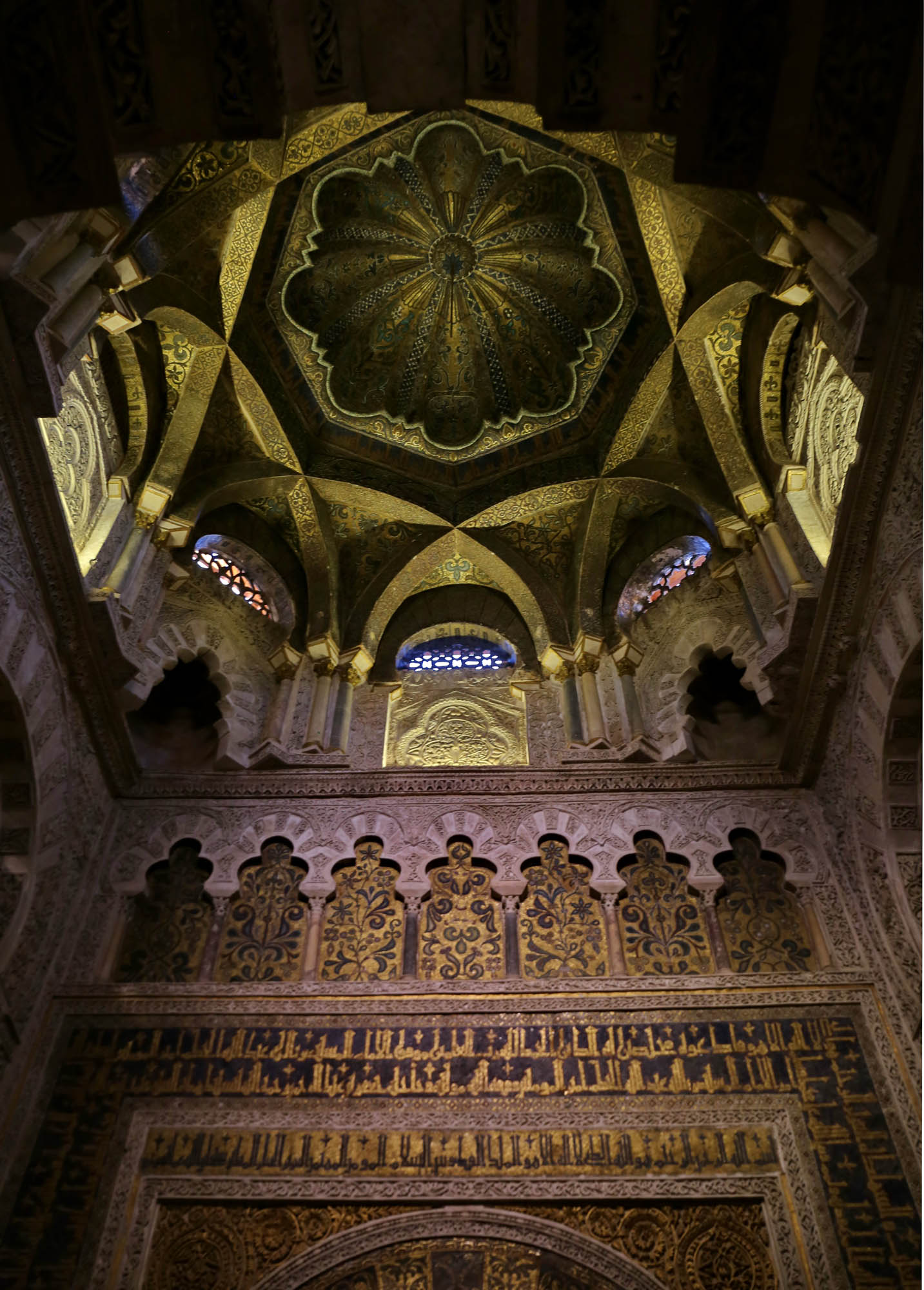
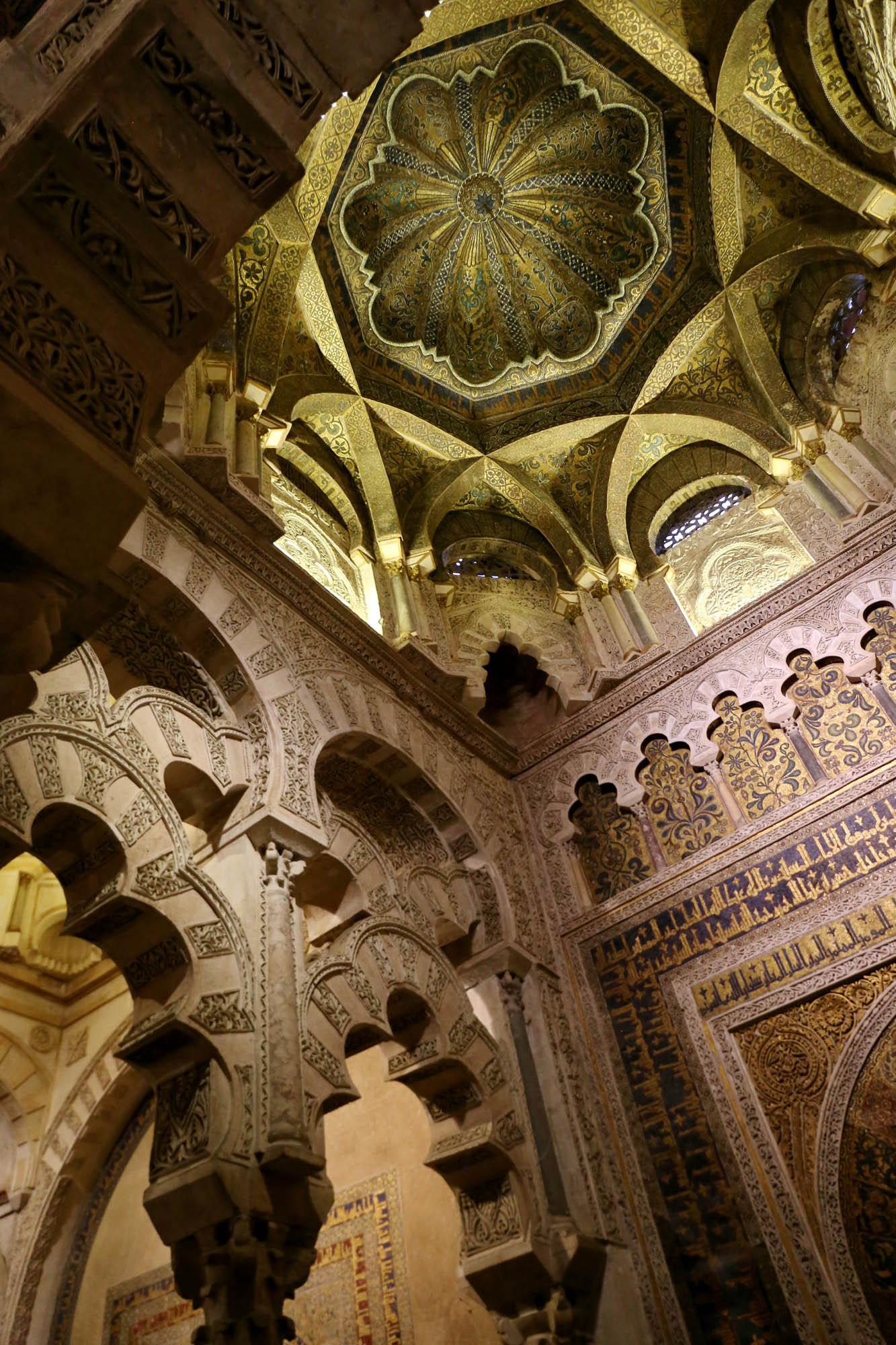
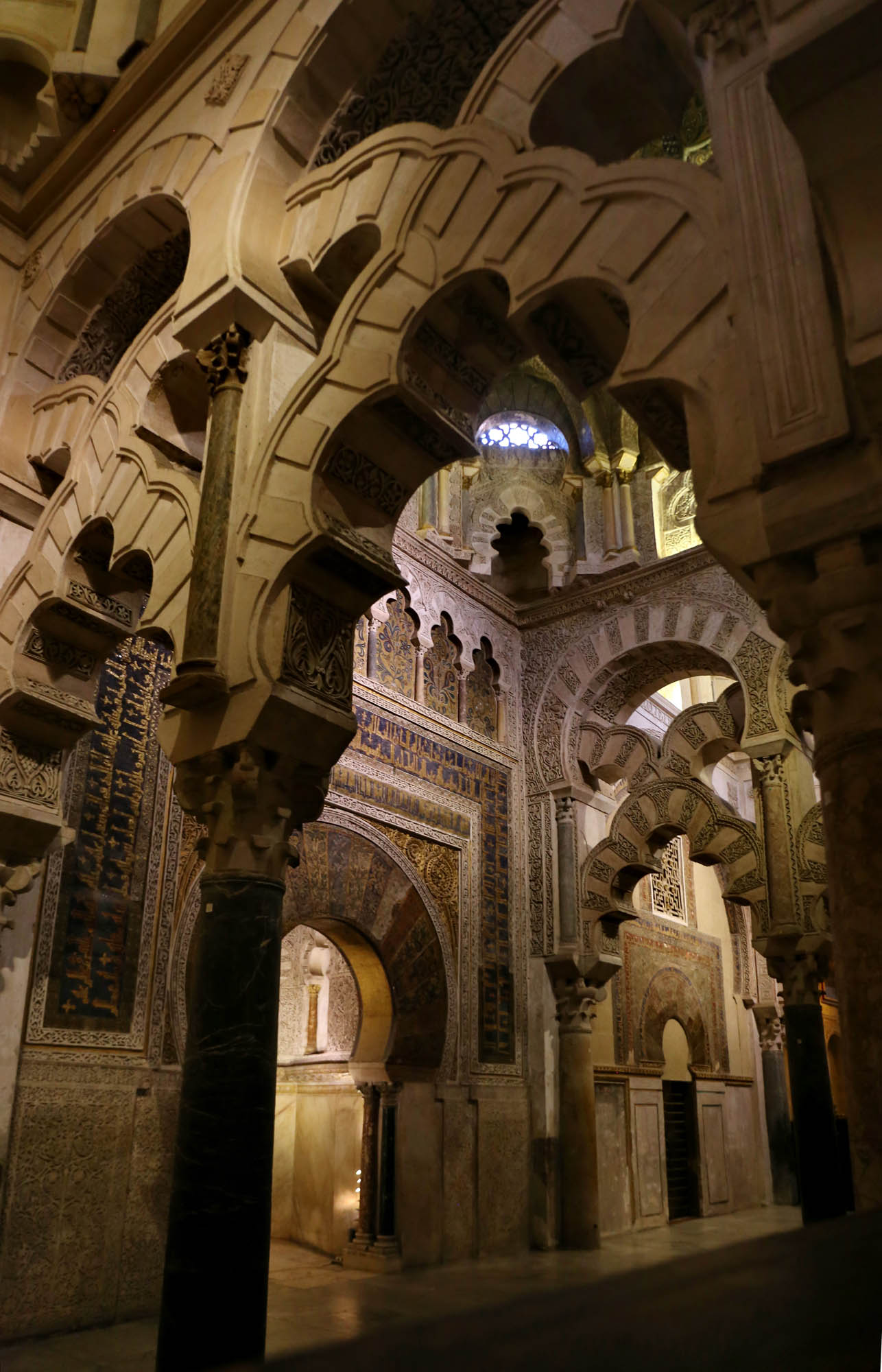
 The dome and multi-leaf entrances of the mihrab of the Great Mosque of Córdoba, built around 960


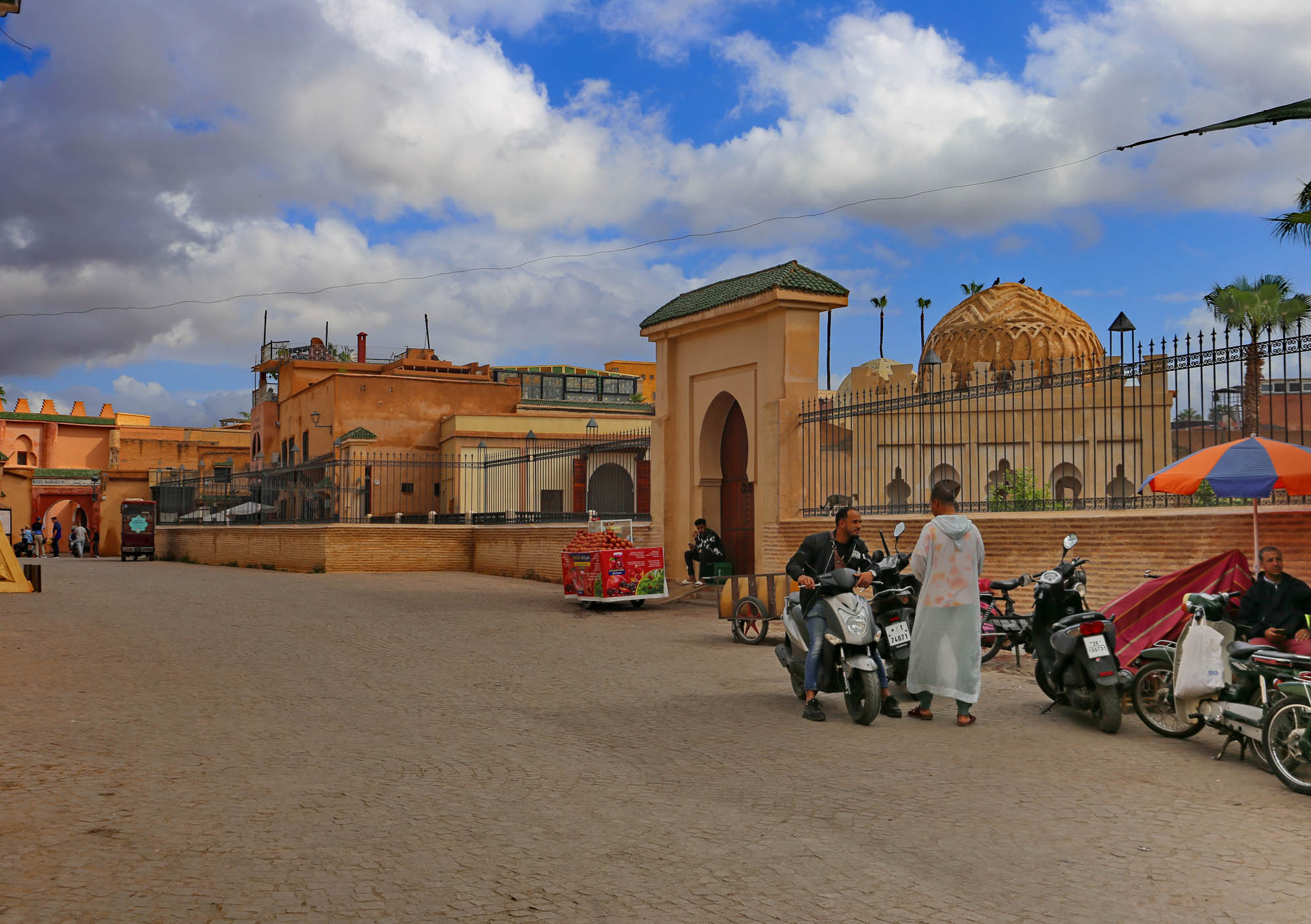
The entire architecture cannot be well photographed. From the street, you can only see the upper part, while up close is difficult to capture in a picture. Its prominent point of view is the roof terrace of the Les Almoravides café to the west of the mosque, from where it is clearly visible how it is located at the entrance of the bazaar, surrounded by the market, but keeping a small distance from it, and lowered, as a witness to a former city on a different level not only in space, but also in time.











 Come with us to…
 Atlantis
 Bestiary
 Bohemia+Prague
 Books, exhibitions, music, film
 Brave old world
 Caucasus
 Cemeteries
 Crimea
 Get to know the
 Images of the East
 Lightwriting
 Lwów/Lemberg
 Mallorca
 Message on the wall
 The Museum of Propaganda
 Odessa
 Paper Museum
 Persian letters
 The Jewish heritage


