Switch over to our new blog! • ¡Pásese a nuestro nuevo blog!

The renewed version of our blog, with more features, a richer design, and available in nine languages, can be read here: https://wangriver.com

The new version also includes the old posts, often in expanded form. If you are curious about the updated version of this post, replace “riowang.blogspot.com/” in the URL with “riowang.studiolum.com/”, and the new link will most likely lead you there.


La versión renovada de nuestro blog, con más herramientas, un diseño más rico y disponible en nueve idiomas, se puede leer aquí: https://riowang.com

La nueva versión también incluye las publicaciones antiguas, a menudo en una forma ampliada. Si tiene curiosidad por la versión actualizada de esta entrada, sustituya «riowang.blogspot.com/» en la URL por «riowang.studiolum.com/es/», y el nuevo enlace probablemente le llevará allí.

Mostrando entradas con la etiqueta Byzantium. Mostrar todas las entradas

Hagia Sophia through the back door

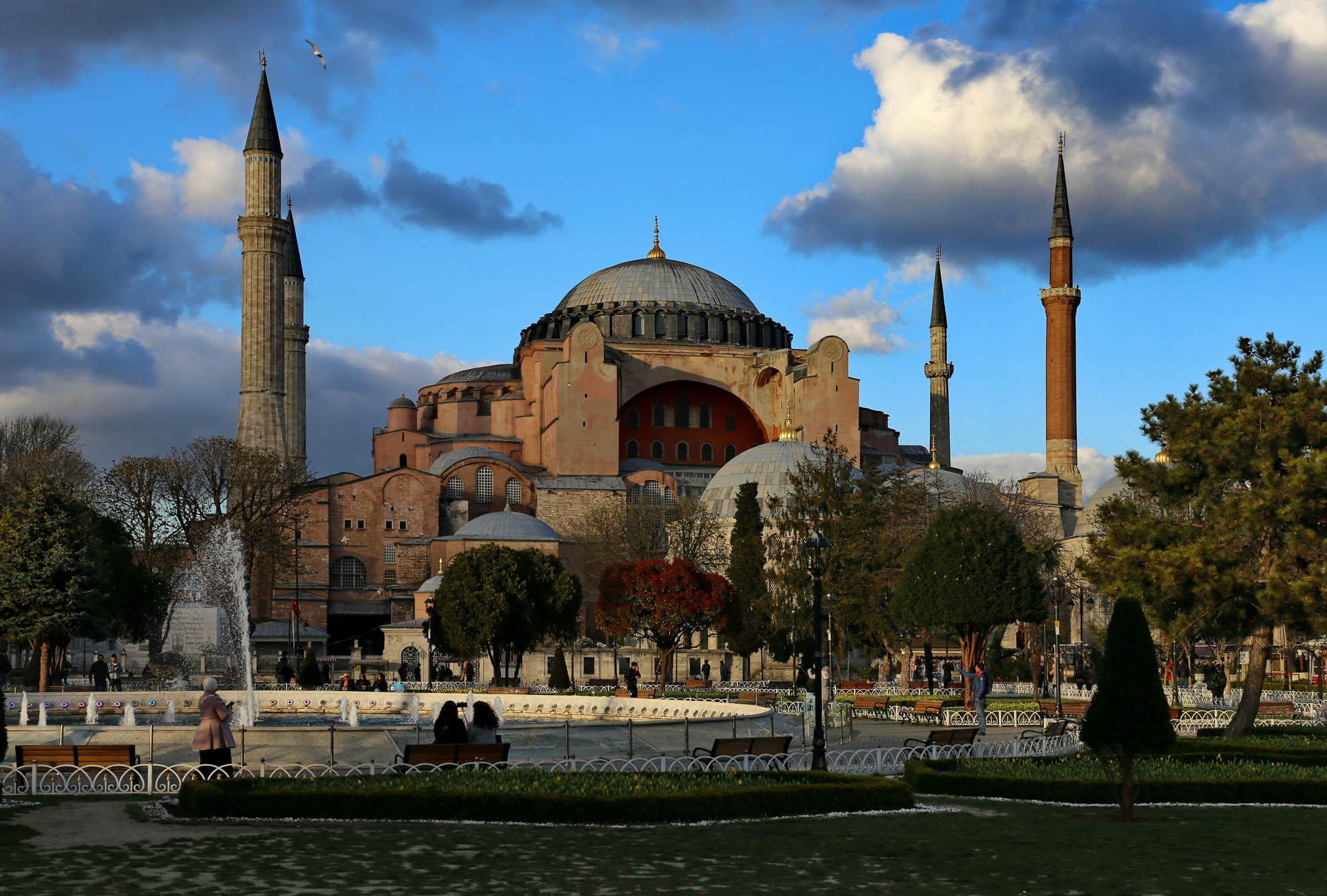
In July 2020, Turkish President Erdoğan restored by decree the mosque status of the Hagia Sophia Cathedral, which was transformed into a mosque in 1453, after the capture of Constantinople, and then into a museum in 1934 by Atatürk’s decision. This decision, by which Erdoğan sought to favor his conservative voter base and illustrate his own authoritarian power, sparked protest around the world. The public nature of the museum made it a kind of bridge between cultures and religions, and its non-denominational accessibility symbolized that it was not only part of Islam, but of the world’s heritage, a common cultural treasure of humanity. Sharia, of course, does not recognize such categories. But what will happen to the beautiful Byzantine mosaics rediscovered after 1934 and made publicly visible, which are obviously incompatible with an active mosque, since this is why they were whitewashed in 1453? And how can hundreds of thousands of tourist visit a cult place that serves prayer? Erdoğan dismissed these problems: “Like all our mosques, the doors of Hagia Sophia will be wide open to locals and foreigners, Muslims and non-Muslims”, he said. That promise has since been proven to be a lie.

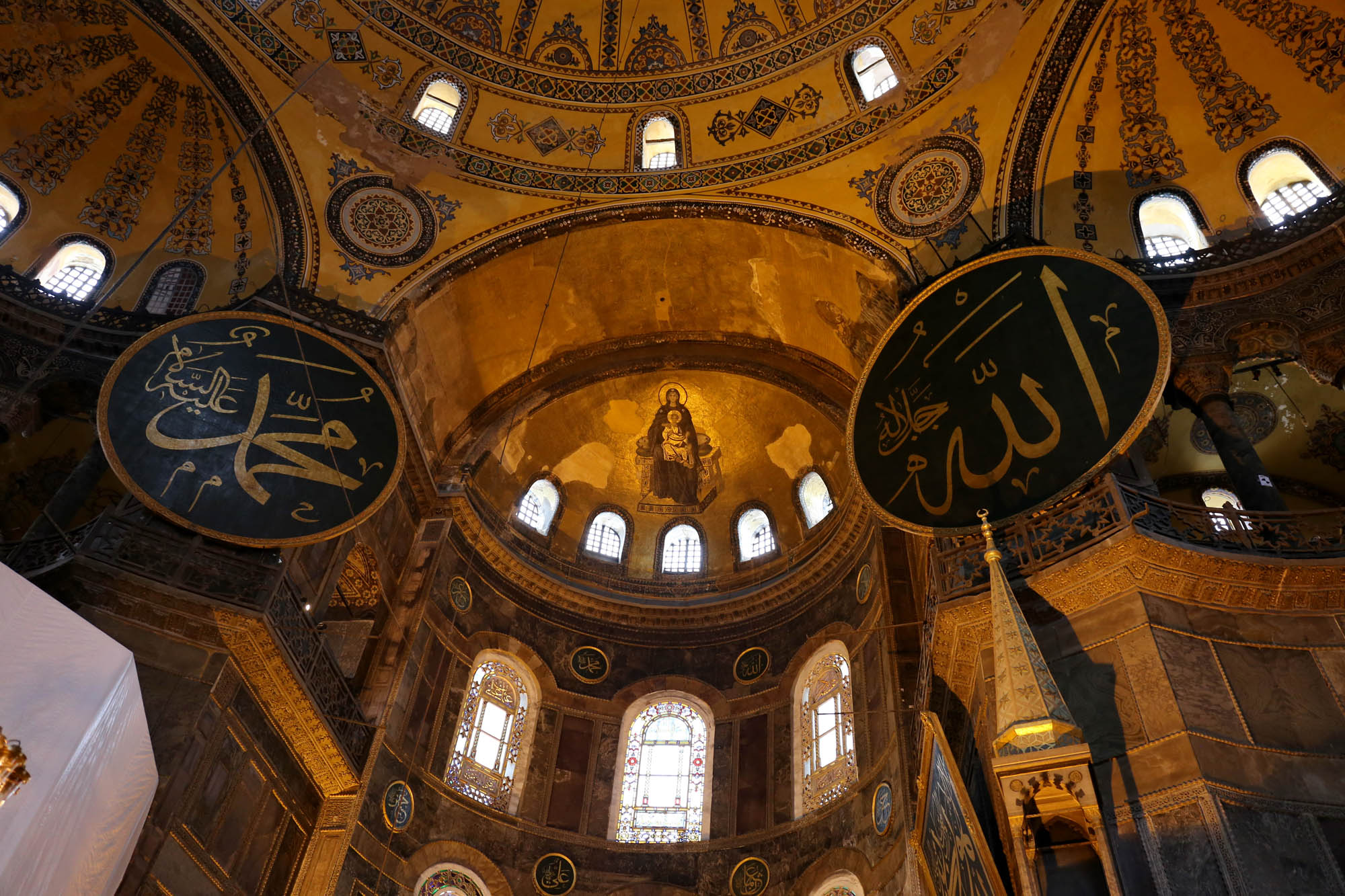
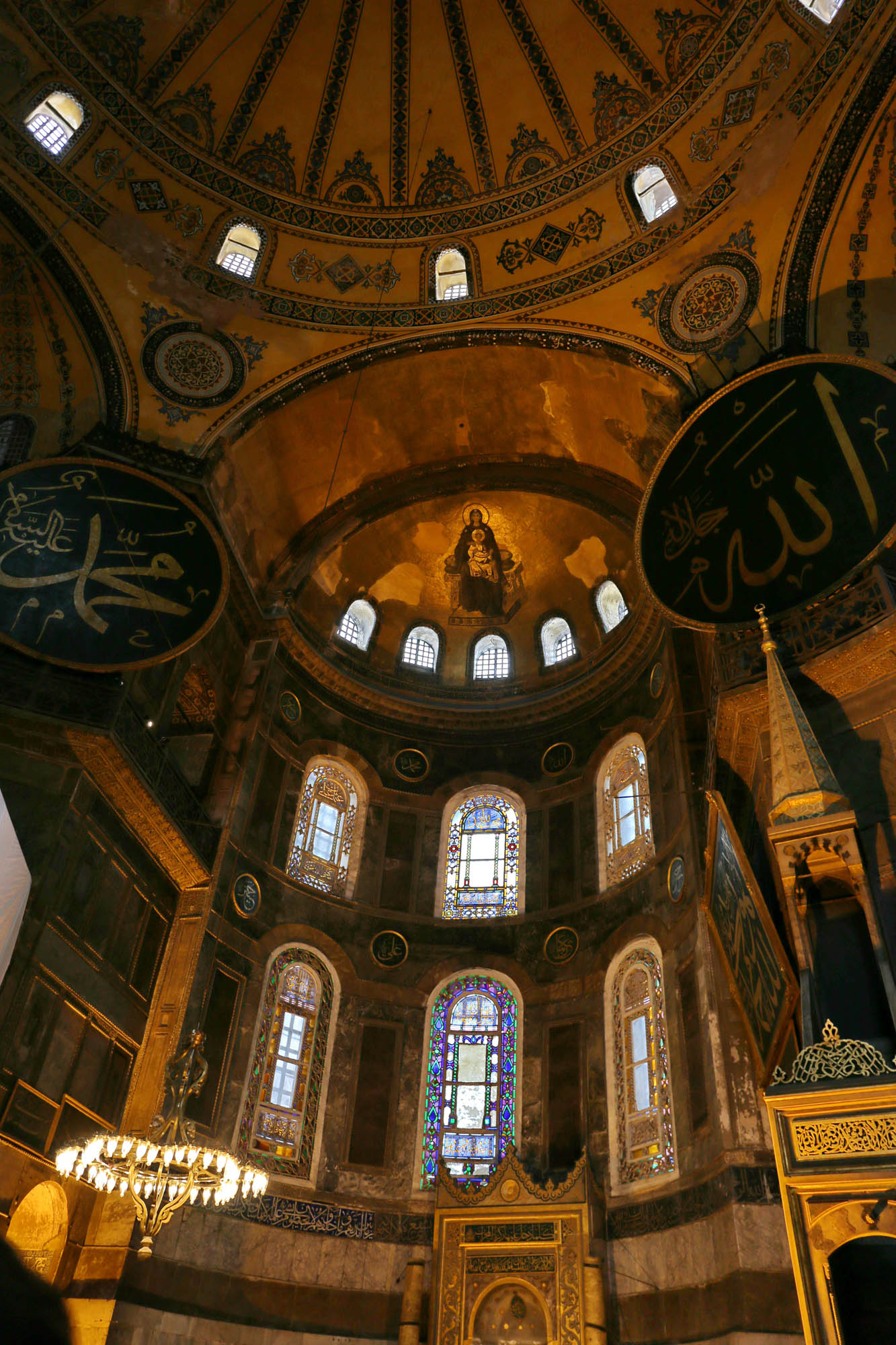
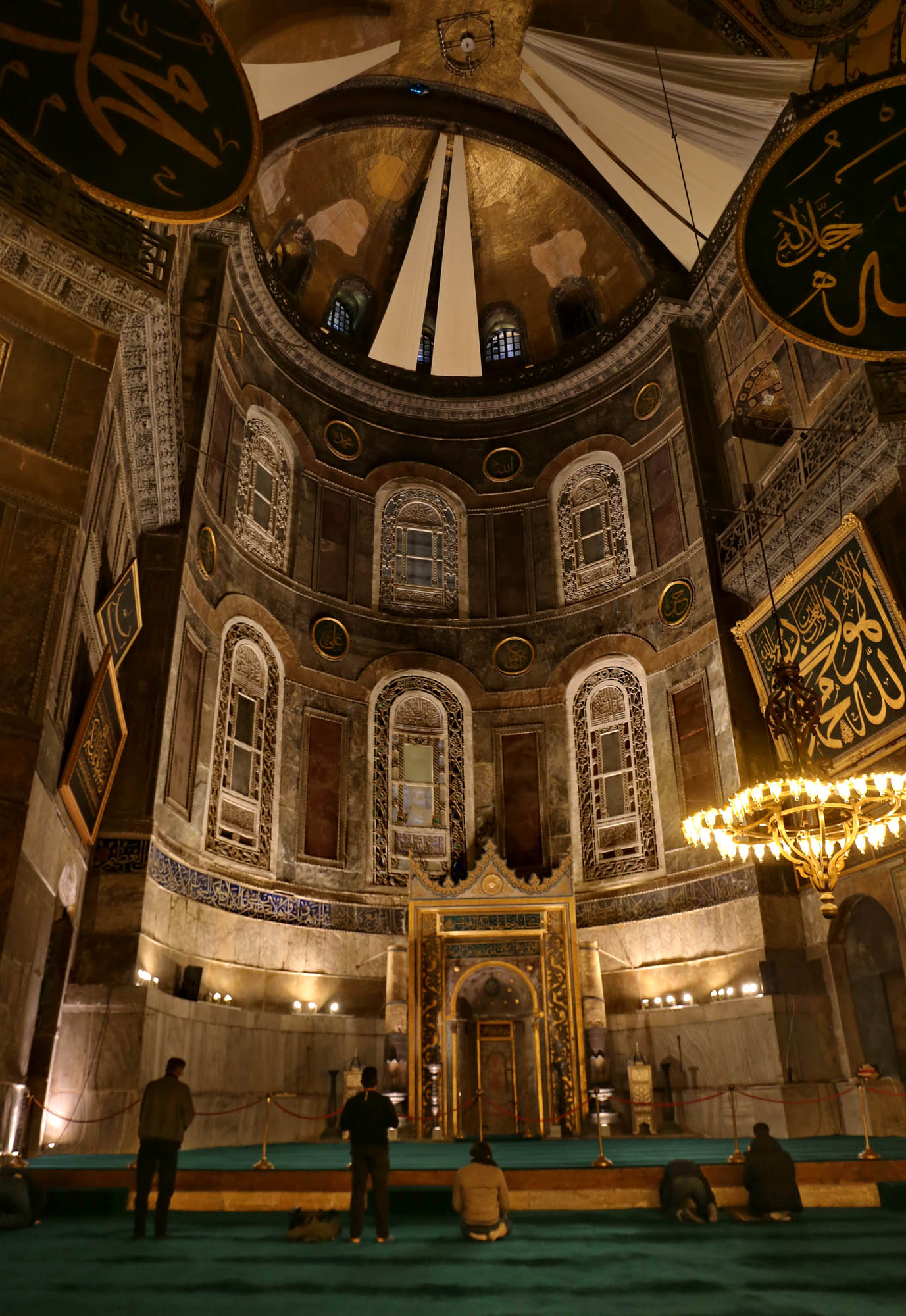
At the time of the decision, these questions were not relevant, because the country was still closed to tourists due to Covid. When it was possible to travel again in 2021, I visited the cathedral with curiosity. The change was big. You could enter the building without a ticket, but only to the lower level. The gallery with most of the mosaics was closed to visitors. Many people were praying in the mosque. The prominent mosaics visible from here – the image of the Mother of God with the child Jesus on the vault of the apse, above the current mihrab, and the archangel Gabriel on her left – were covered by stretched canvases.

The apse mosaic of Hagia Sophia in 2019 (above) and 2021 (below)

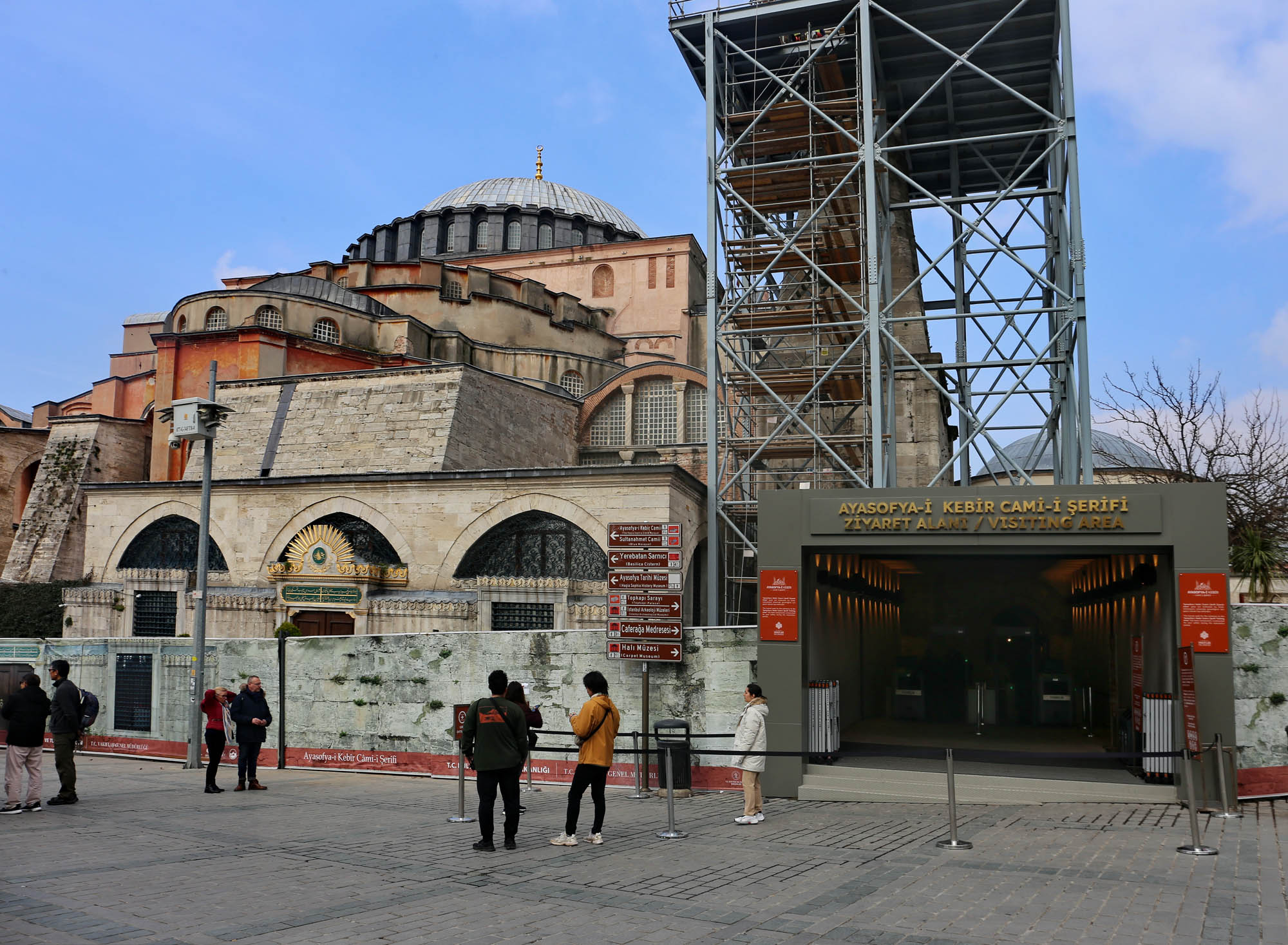
Before our current trip to Istanbul, news spread that the gallery had been opened. We visited the cathedral again with curiosity. The result, to put it kindly, is half-baked. The lower level can be entered only by Turkish citizens – so much for Erdoğan’s promise. The entrance to the gallery is on the back side of the church, from the side towards Topkapı Sarayı. It is a makeshift tunnel with electronic access gates. The ticket office is opposite the tunnel, with a long line in front of it for the €25 ticket (which is more expensive than the most expensive Western ticket I know, the one for the Vatican Museum). Tickets can supposedly be bought online, but according to the local guards, it is not recommended, because the electronic entry gate often does not recognize the electronic ticket code. In such cases, the ticket is reset, and a new one must be purchased by waiting for your turn in the line.

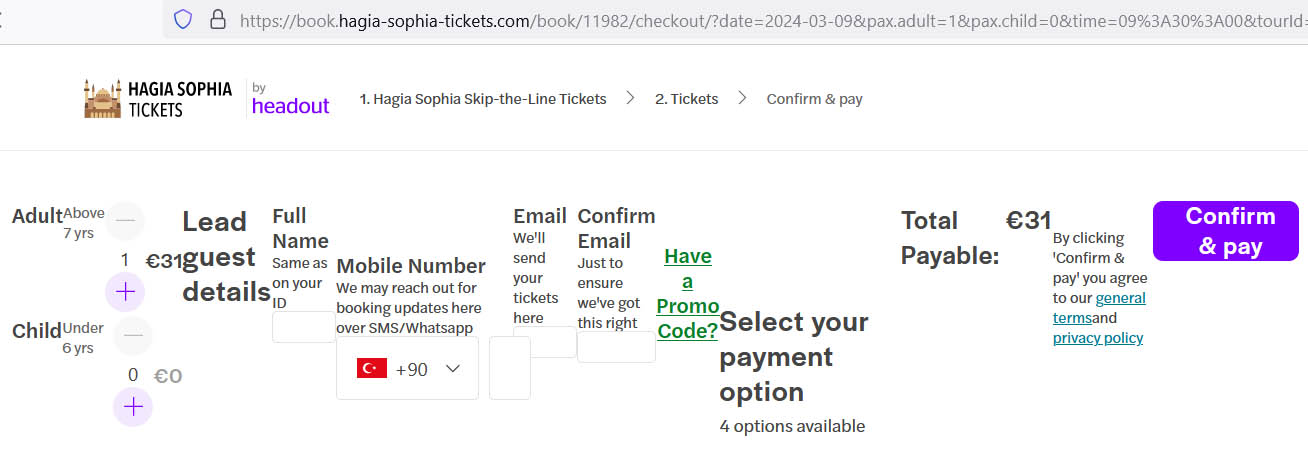
Later, I experience that online ticket buying is virtual in the strict sense of the word. In some of the overlappingmandatory sections of the poorly designed website it is simply impossible to enter data. Thus, the queue is the only way to go.

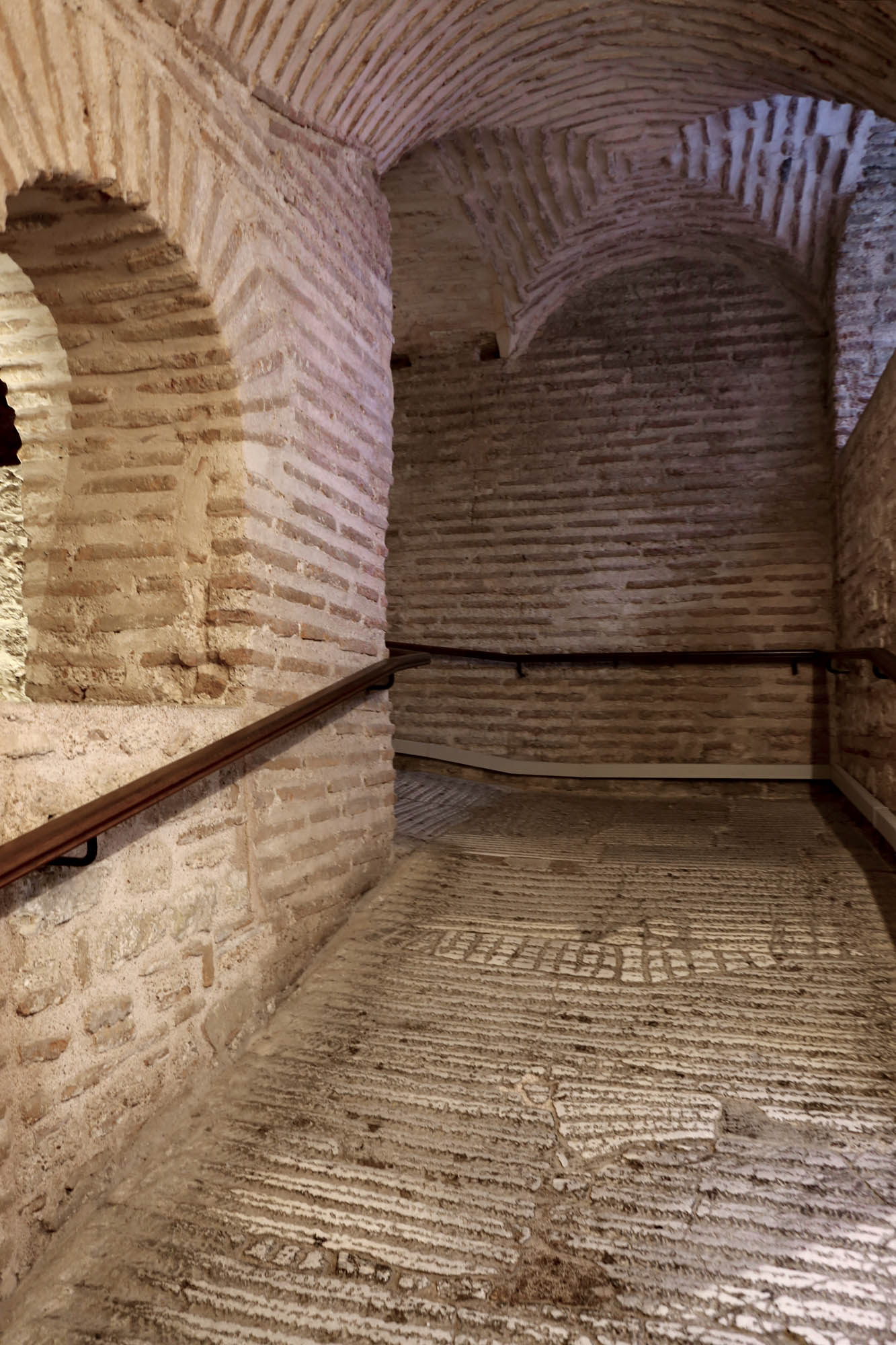
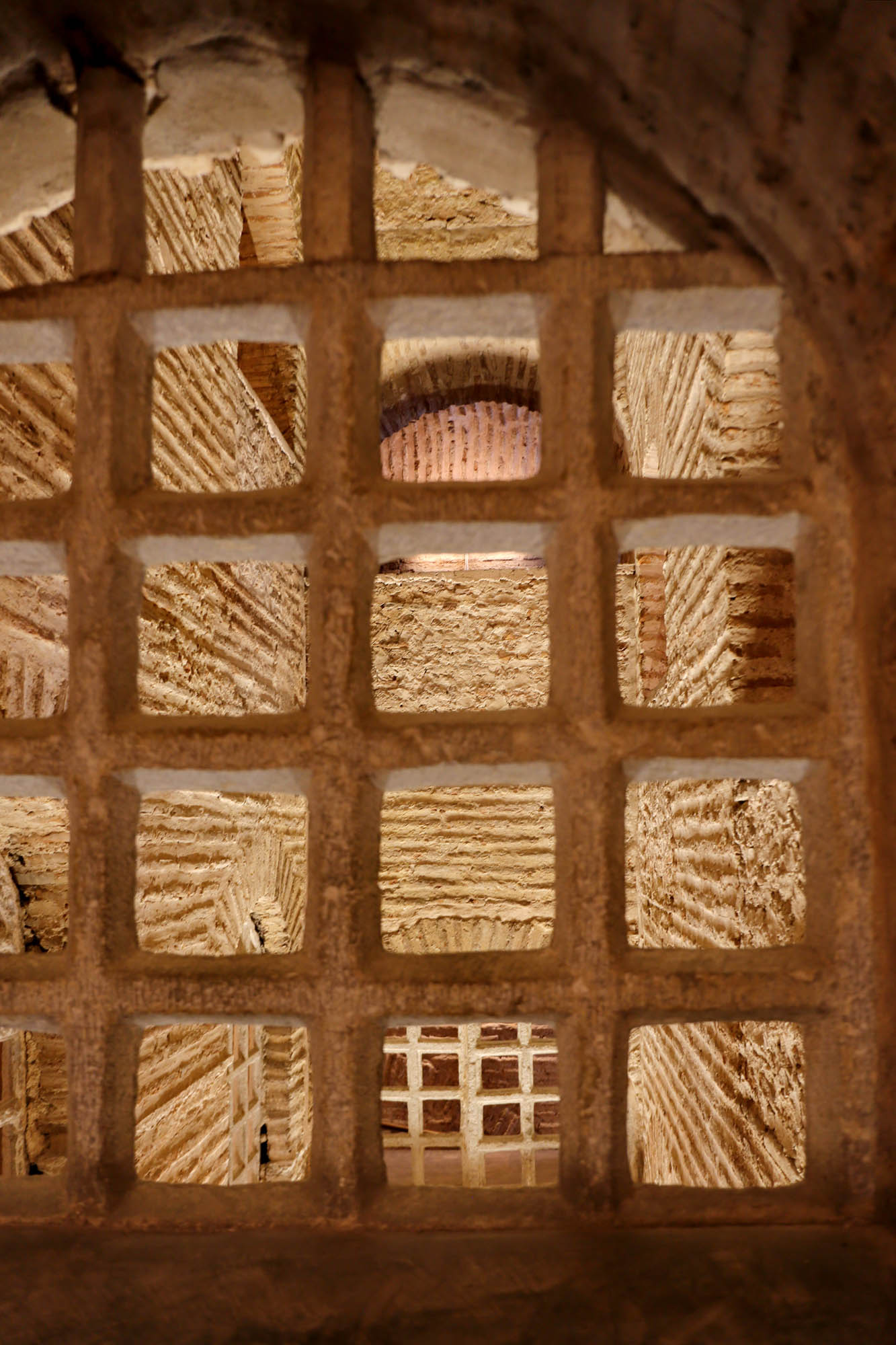
When you are finally inside, a spiral staircase takes you directly to the gallery. It has a gently sloping, knurled surface. It was obviously used for bringing up construction material fifteen hundred years ago.

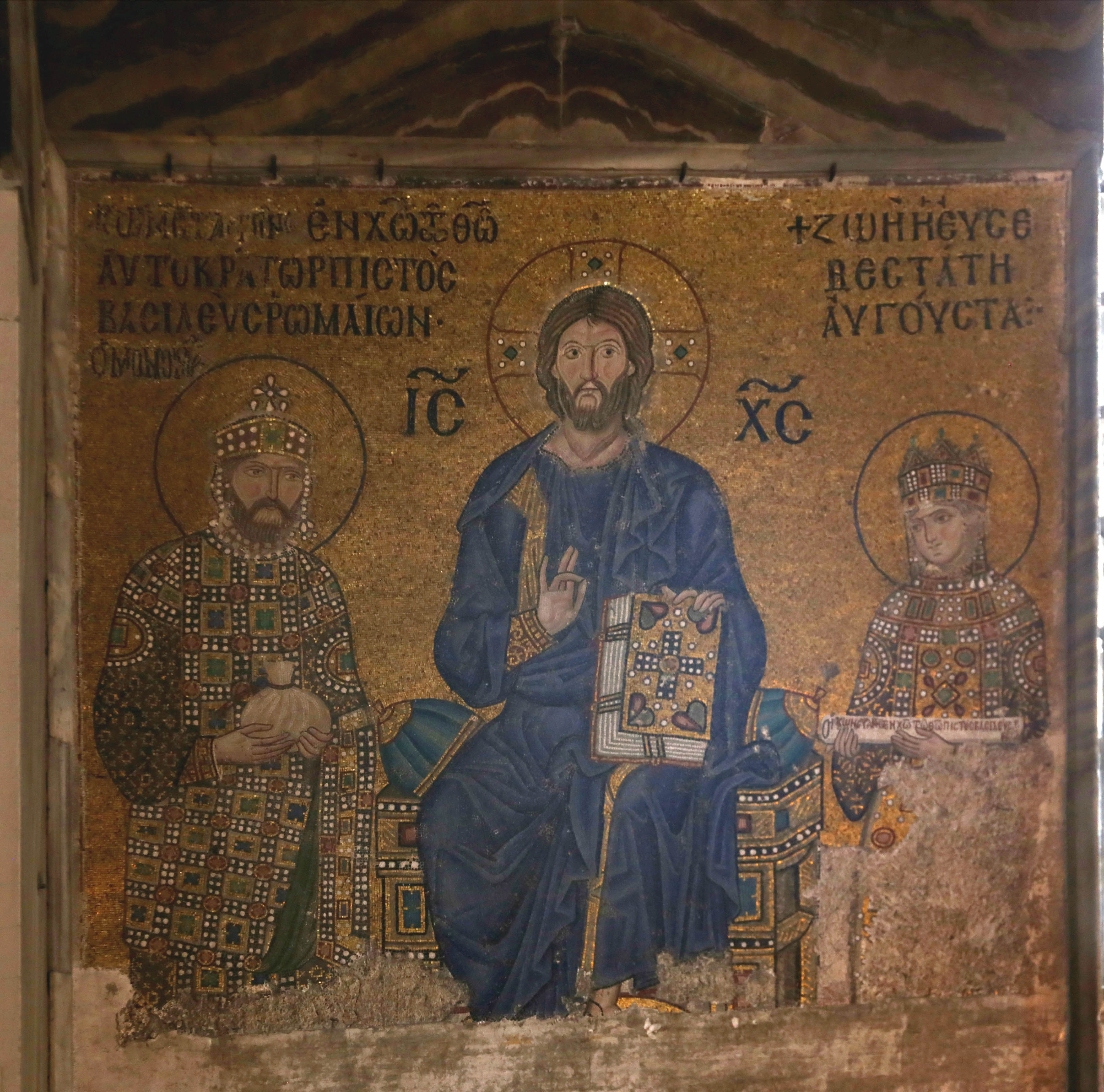
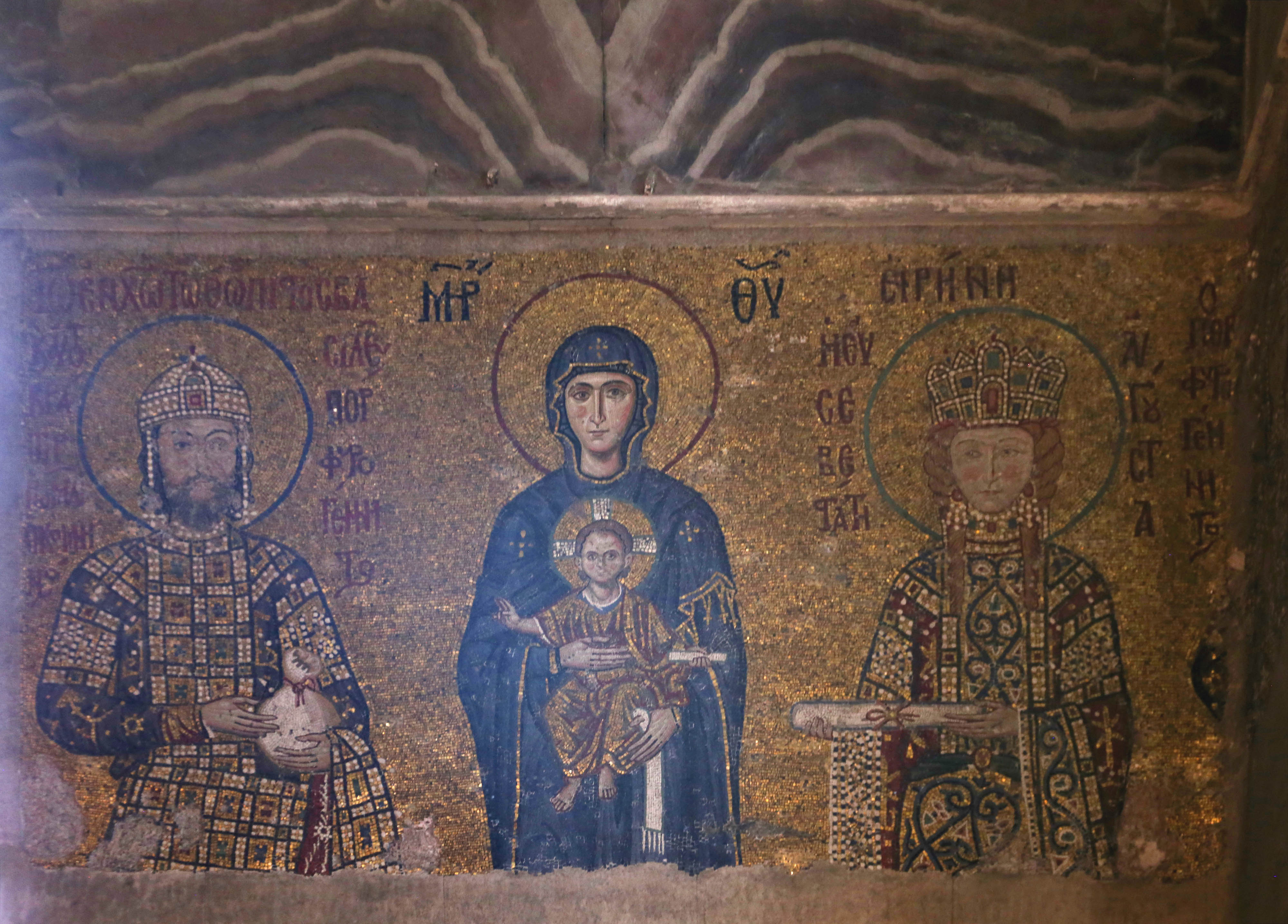
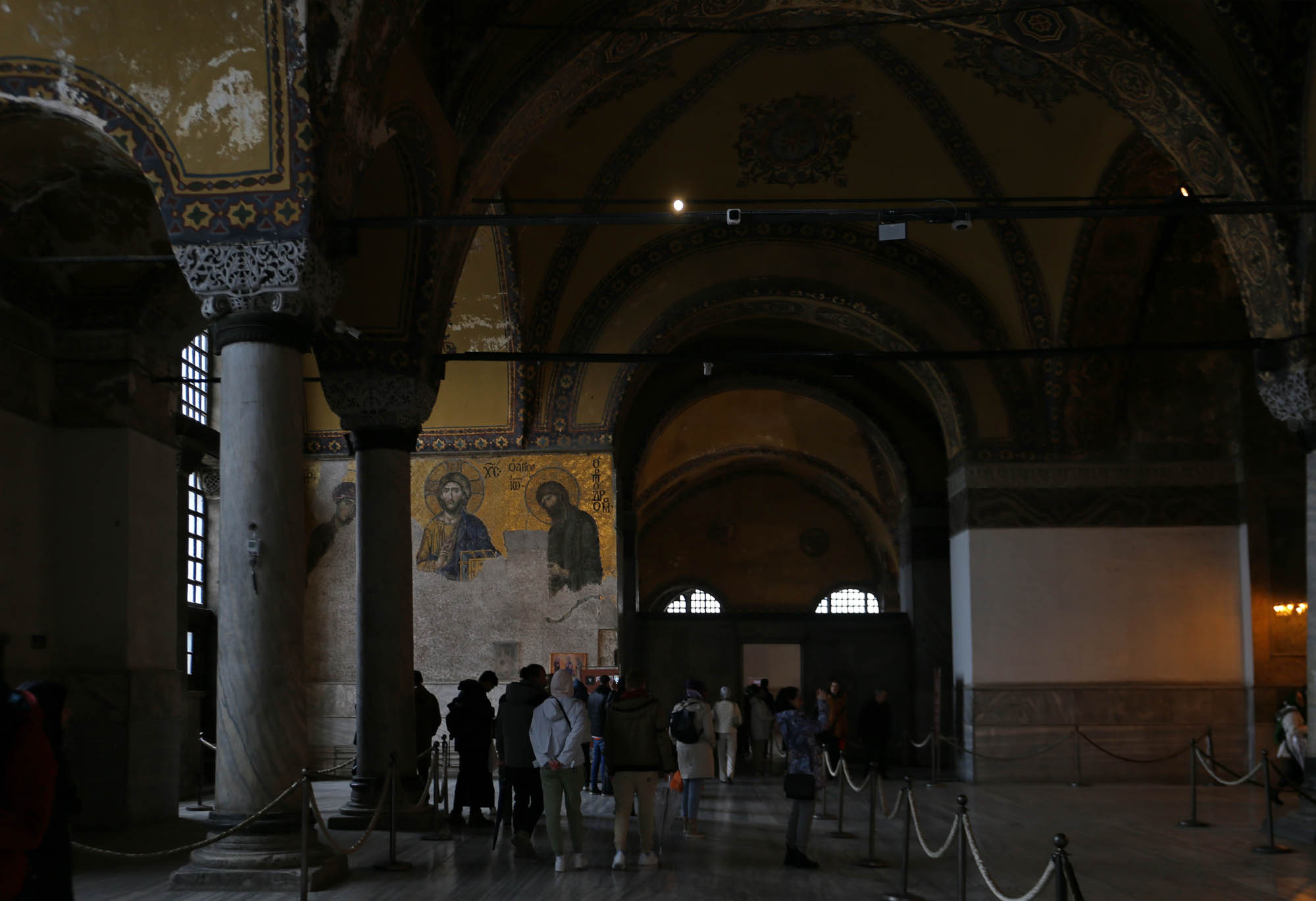
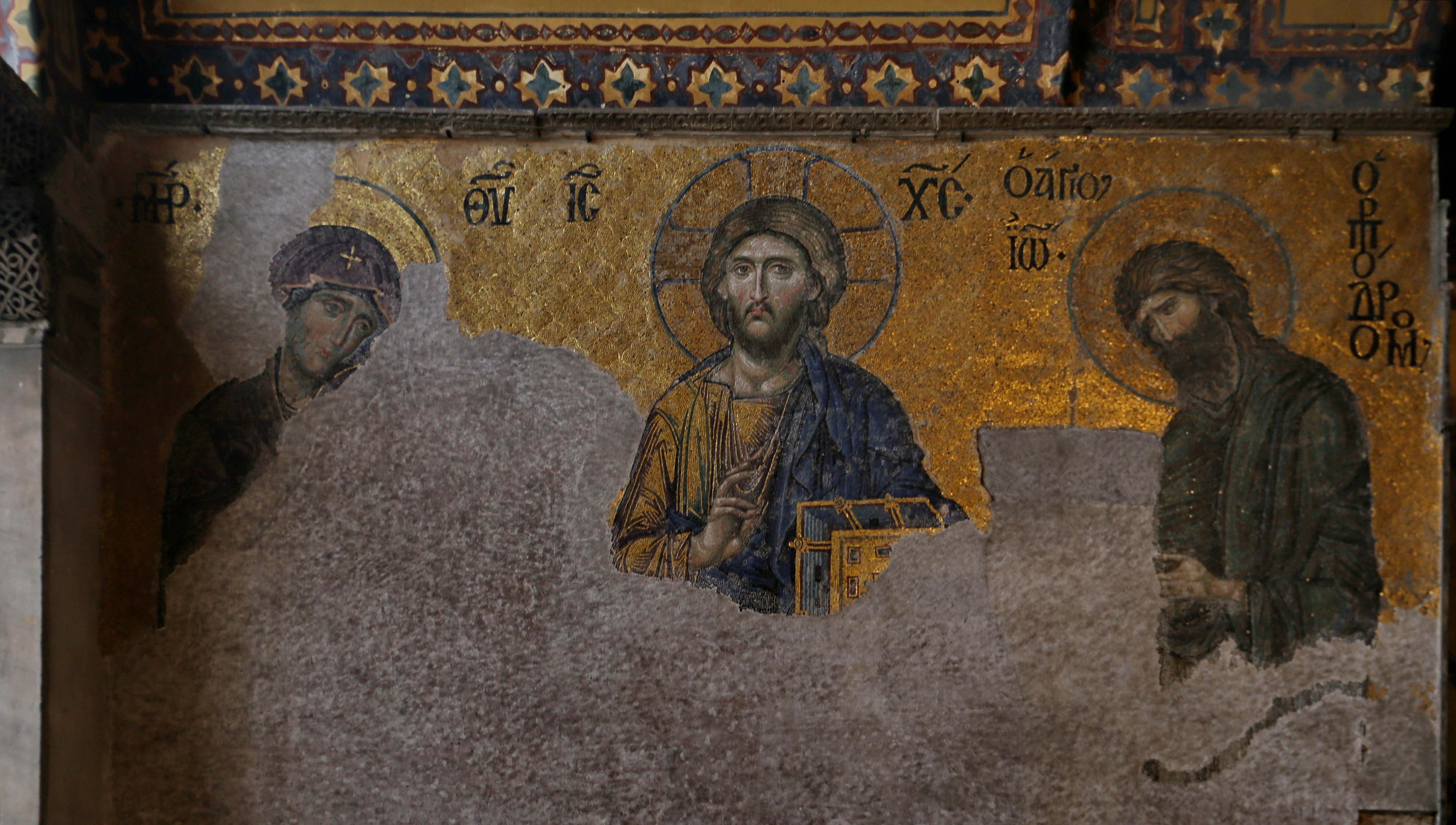
You can walk around the gallery and see everything: the mosaics depicting the emperors and their spouses, the beautiful Deesis mosaic, the pictures of the three church fathers on the wall of the northern gallery facing the interior, the Viking runes scratched into the marble of the southern gallery by the bored bodyguards.

Christ Pantokrator, with Empress Zoe and her third husband, Constantine IX Monomachus on either side. Made between 1028 and 1042. The mosaic originally depicted her first husband, Romanos Argyros. Only the head was replaced in 1042 for that of her third husband.

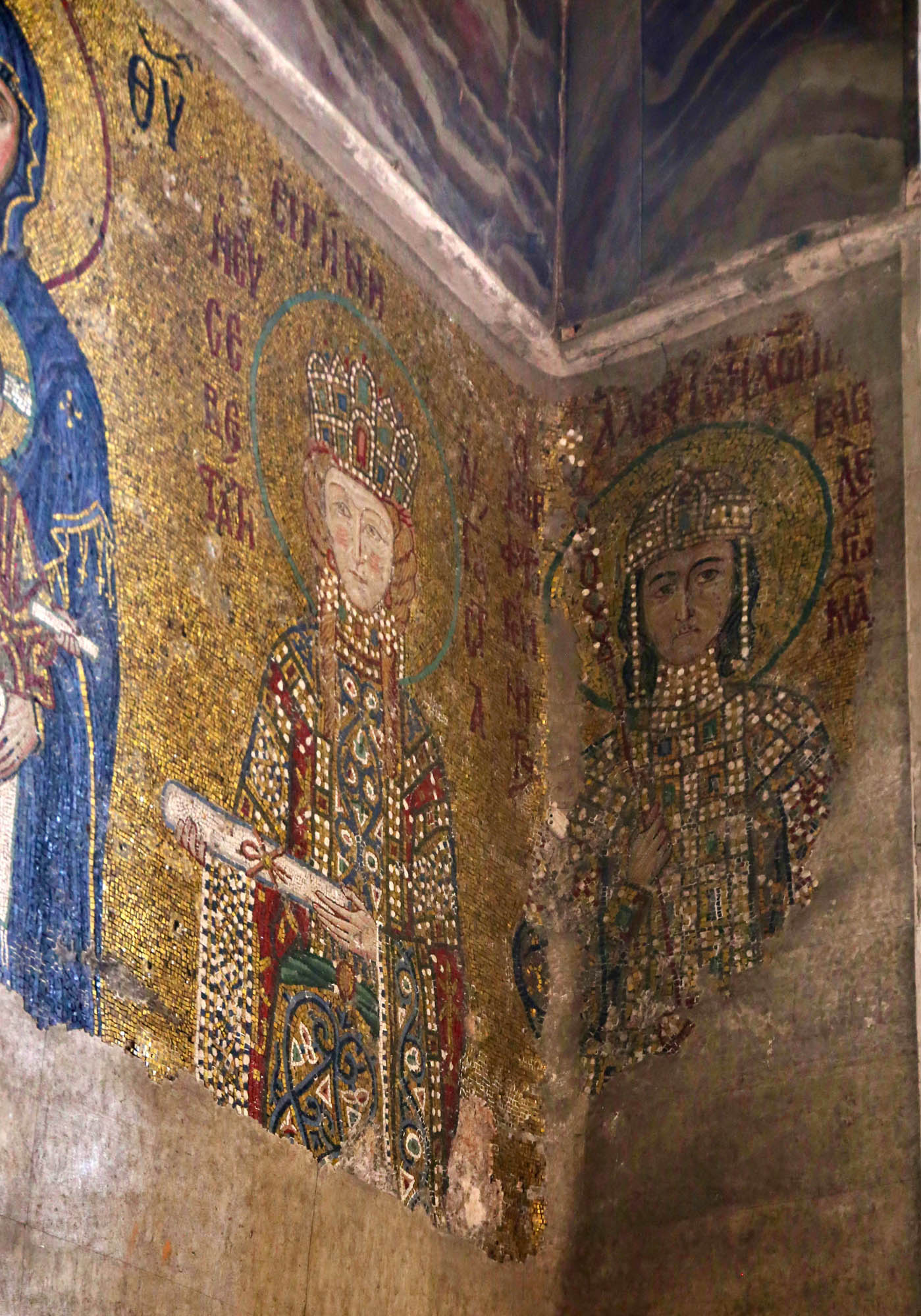
The Mother of God, with Emperor John Komnenos and his wife Eirene (the Hungarian Piroska, daughter of St. Ladislas, King of Hungary) on her both sides. To the right, on the turning wall, the heir to the throne, Alexios, who died early. Made between 1118 and 1143

Deesis, i.e. the plea of the Mother of God and Saint John the Baptist to Christ the Pantokrator. It was made in 1261, after the reconquest of Constantinople from the Crusaders. John’s title “ὁ πρόδρομος”, the forerunner is translated as “pioneer” by the informative inscription

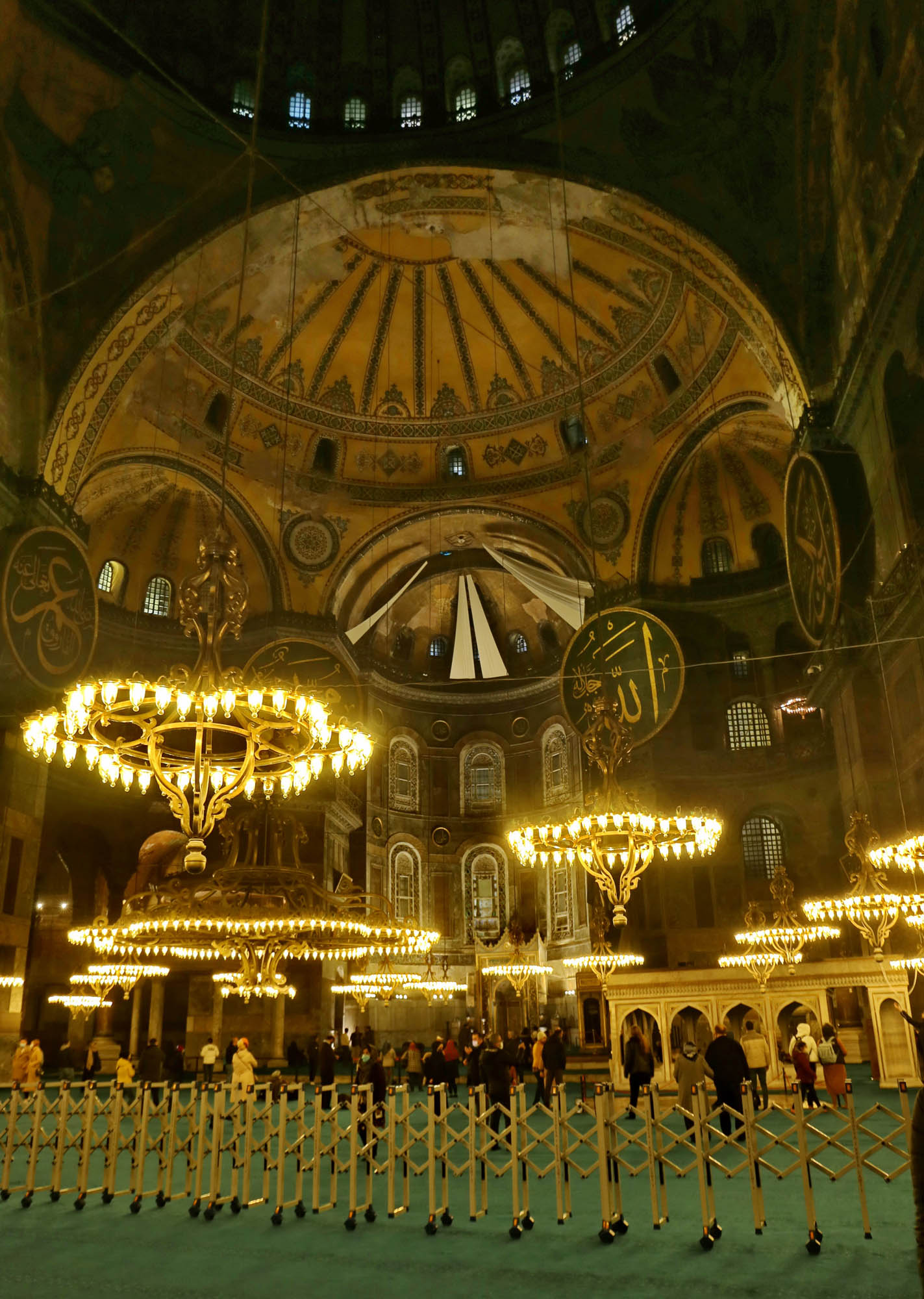
You can also look down on the lower level, and you can see how Turkish citizens – most of them tourists just like you, no one is praying, so the segregation is more discriminatory than religious – are walking around in the mosque. However, you cannot go down.

hagiasophia1 hagiasophia1 hagiasophia1 hagiasophia1 hagiasophia1 hagiasophia1 hagiasophia1 hagiasophia1 hagiasophia1 hagiasophia1 hagiasophia1 hagiasophia1 hagiasophia1 hagiasophia1 hagiasophia1 hagiasophia1 hagiasophia1 hagiasophia1 hagiasophia1

And some pictures from 2021, when foreigners could admire the church also from the lower level:

hagiasophia2 hagiasophia2 hagiasophia2 hagiasophia2 hagiasophia2 hagiasophia2 hagiasophia2 hagiasophia2 hagiasophia2 hagiasophia2

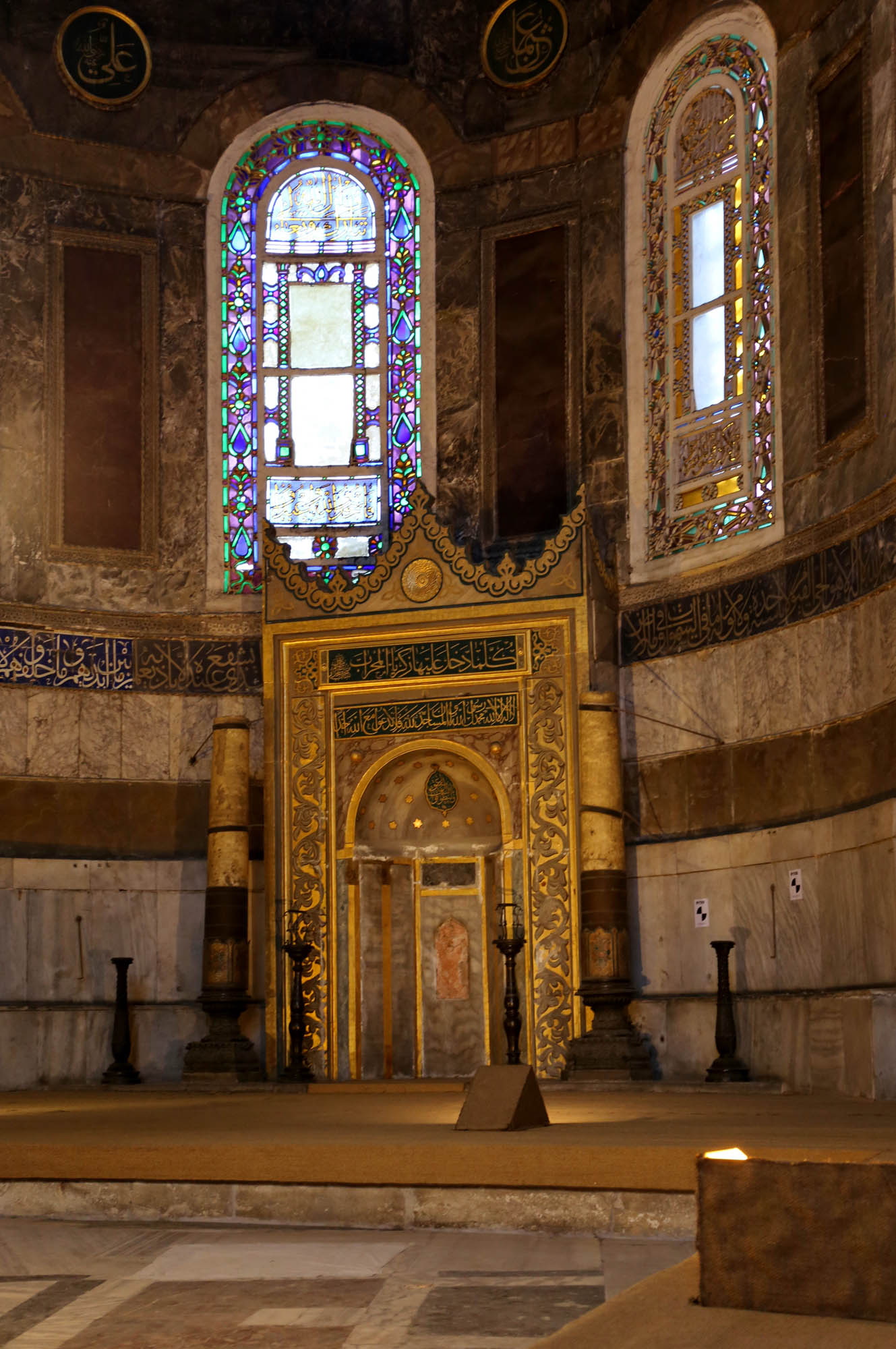
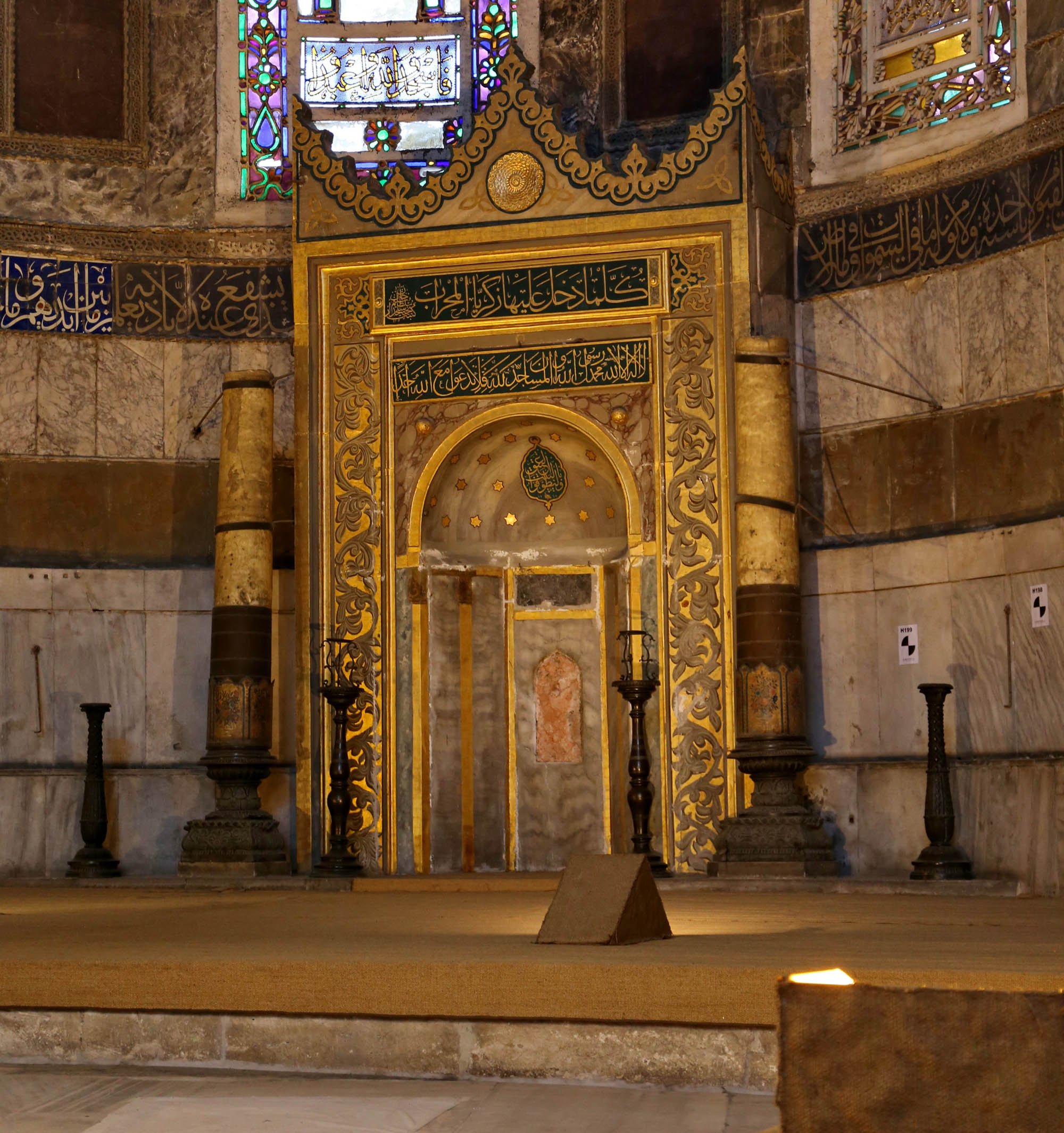
This is a particularly big loss for us Hungarians. After all, on either side of the mihrab stand the two large bronze candlesticks that King Matthias had made in Buda in Italian Renaissance style, and which Sultan Suleyman took from the Church of Our Lady in Buda Castle after the sacking of the city in 1526, along with the library, weapon collection, bronze statues and the library of Matthias’s palace as well as with the treasures of the churches of Buda and Pest. Until now, you could admire them up close, and even a sign proved their coming from Buda. Now, viewed from the gallery, they are almost indistinguishable in the covering of cult objects. As if we had been robbed a second time. Along with all of humanity.

The candlesticks on either side of the mihrab back in 2021

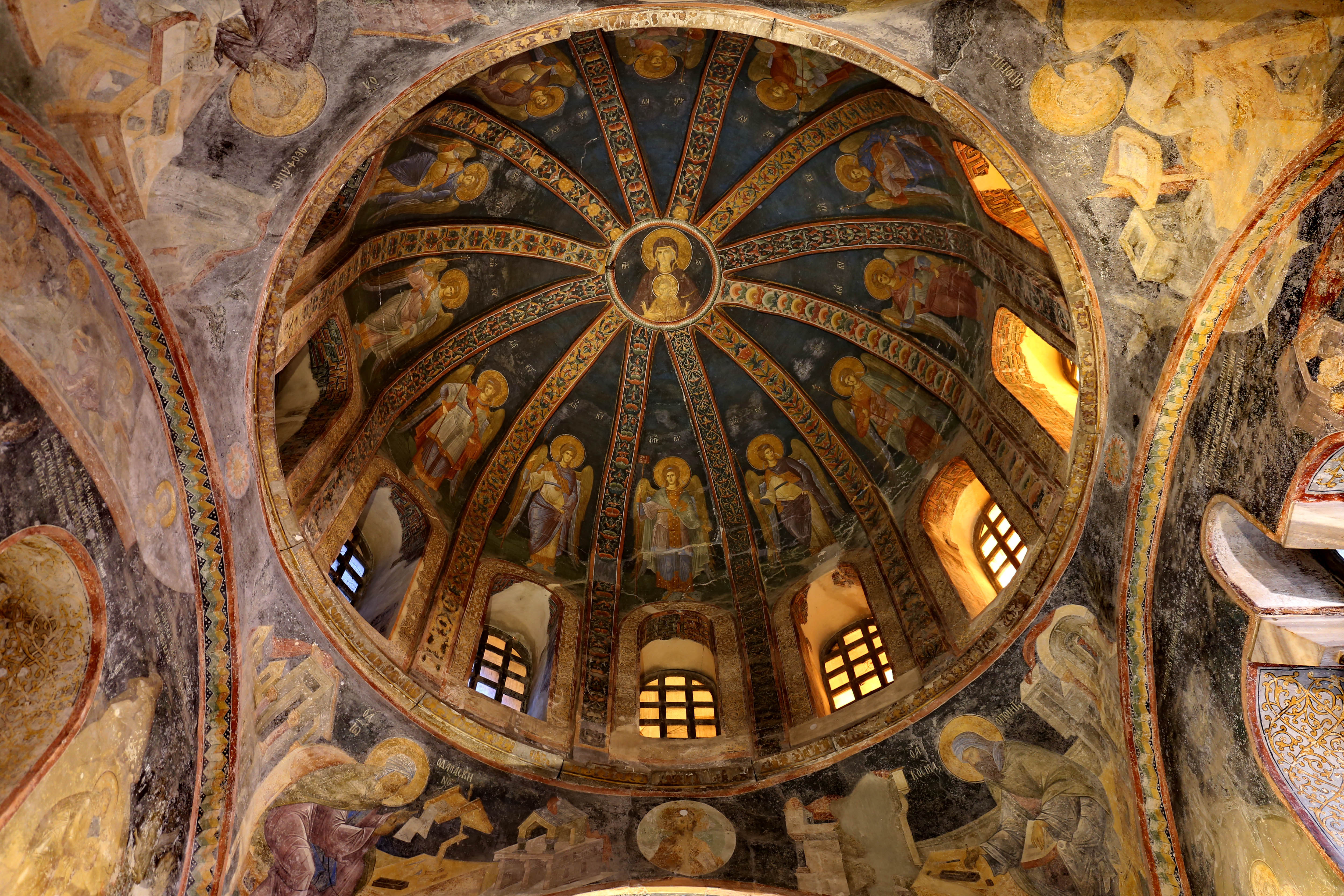
At the same time as the Hagia Sophia, the greatest treasure of Byzantine art, the Chora church, was also reclassified from a museum to a mosue, even though its mosaics had only recently been restored with many years of work. It was also closed immediately, and since then noises of work can be heard from it. It is rumored that it will also be opened within a mont or two. But there, all the mosaics are in the cult space of the mosque. I wonder what the combination of violence, stupidity and hypocrisy experienced in Hagia Sophia will result there?


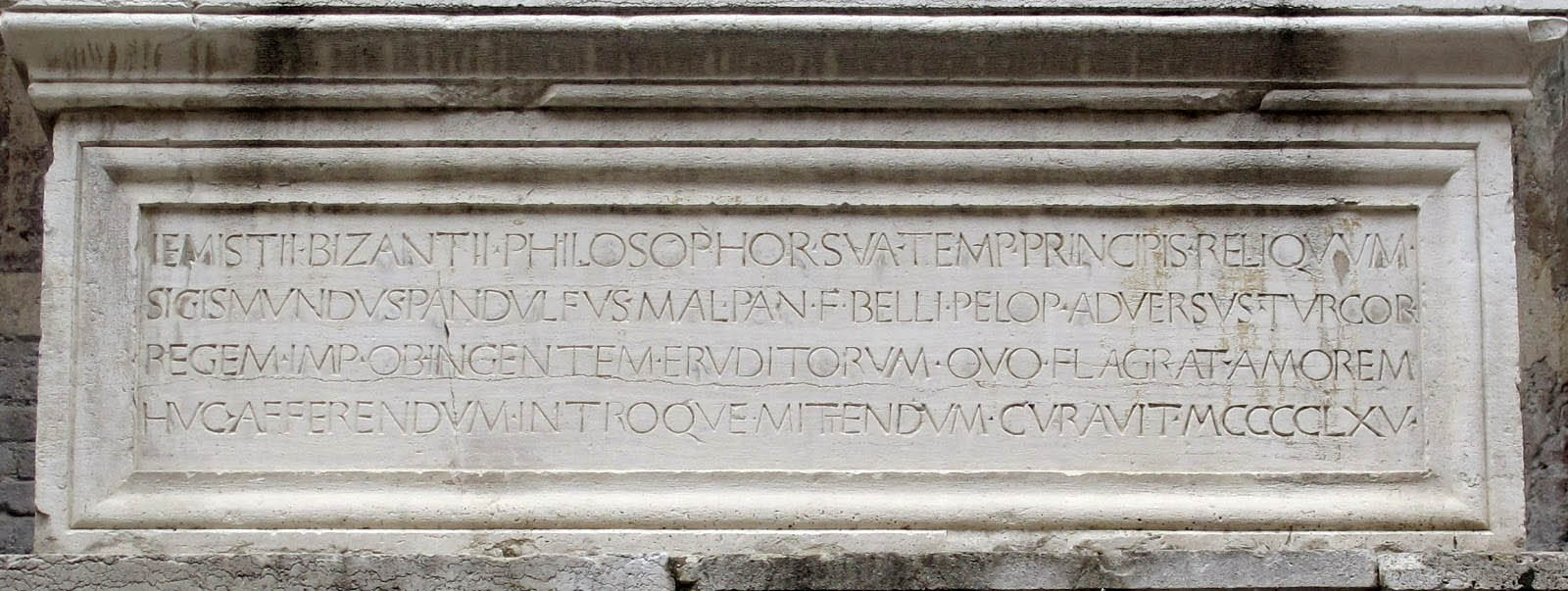
Plethon’s tombstone


Gemistus Plethon’s portrait from Benozzo Gozzoli’s Three Magi fresco (Firenze, Palazzo Medici Riccardi, 1459-1461)
An interesting inscription is hiding in the unfinished cathedral of the excommunicated condottiere, Sigismondo Pandolfo Malatesta in the town of Rimini. I mean, not in the church itself, but on its external side, on the sarcophagus in the third window niche to the right. Since 1466 here lays, half in the open air, the body of one of the last great Greek Neoplatonic philosophers, Georgios Gemistus Plethon. His importance is shown by the fact that, as Marsilio Ficino recalled, he inspired the foundation of the Florentine Academy, and thereby, symbolically, the whole Italian Renaissance humanism:
“In the Synod of Florence, organized with the participation of Greeks and Latins, Cosimo de’ Medici often heard a Greek philosopher named Gemistus Plethon, to explain the Platonic mysteries. His inspired lectures made so big impression on him, that at that time the idea of the foundation of the Academy was conceived in him.”
The corpse of Plethon were stolen in 1466 by his former students and by Venetian mercenaries led by Malatesta from the Peloponnese city of Mystras, which came under Turkish rule, and brought to Rimini, “so our great teacher could lay among free people”, and in order to authenticate with his authority the shockingly pagan Neoplatonic iconography of the Malatesta church. The inscription of his tomb poses an interesting geographical and historical problem: since when is Byzantium called Byzantium?


The question may seem pointless at first. It is therefore worth to go over from where this term comes from.

The “Byzantine” Empire in the reality never existed under this name, which put roots and is exclusively used in historiography. The term was coined about a century after the fall of the Roman Empire – as it was really called – by a German humanist historian, Hieronymus Wolf.

Wolf learned self-taught Greek. In 1549 he published the first translation of Demosthenes’ speeches. From 1551 he worked the Augsburg Fugger library, where he catalogued the medieval Greek manuscripts brought from Venice. In 1557 he published his main work, the Corpus Historiae Byzantinae, compiled from the Greek sources in the Augsburg library, with which he unintentionally rewrote the world history. When in the early 17th century the compilation of a similar summary from the surviving Constantinople sources was encouraged by Louis XIV of France, it obviously had to be based on Wolf’s work, so that Philippe Labbé, the Jesuit scholar leading the project did not even try to find a new title for the 34-volume collection: it was also published as Corpus Scriptorum Historiae Byzantinae. The scholars dealing with the late Roman Empire, centered on Constantinople, all adopted this terminology (e.g. Corpus Scriptorum Historiae Byzantinae, Bonn 1822-1897). The adjective “Byzantine”, which during the Enlightenment spread worldwide, especially due to the writings of Montesquieu, was impossible to be detached from the (late) Roman Empire. And the adjective was also associated with an explicitly negative connotation, which was deduced from the supposed qualities of state power: courtly intrigues, complicated bureaucracy, incomprehensible and over-decorated ceremoniality and fraudulent diplomacy.

Emperor Constantin I donates the city to Christ and the Virgin Mary. Mosaic, Hagia Sophia, ca. 1000

The problematic character of the “Byzantine” adjective can be shown in three examples:

A country? – A state called “Byzantium” or “Byzantine Empire” never existed in world history. If someone used this term between the 6th and 15th centuries, nobody would have understood what he meant. The official name of the Constantinople-centered and Greek-speaking state was Βασιλεία τῶν Ῥωμαίων (Basileia tōn Rōmaiōn), that is, Rome, to its very end. Its own citizens called themselves Romans, even though they were also aware of their Hellenistic cultural heritage. In history, it is not possible to draw a caesura, that is, to mark a date when Rome became Byzantium. The root of the problem is that with the coronation of Charlemagne, the Roman Empire got a challenger, who sought to strengthen his own legitimacy. Therefore they tried to deprive the Empire from its Roman character, by calling it Greece, or the Empire of Constantinople, but never Byzantium. This endeavor appeared during the Holy (German) Roman Empire of Otto, but it could overcome only after the real Roman Empire was finally swallowed by the Turkish flood. When Wolf came into scene, there was no longer anyone who could have protested against the “Byzantine” title.

The map of Constantinople (1422). This is the oldest surviving map of the city, and the only one made before the Turkish conquest

A city? – The city of Byzantion did exist, in the place of Constantinople, the modern Istanbul, on the peak of the headland reaching into the Golden Horn bay and the Marmara Sea, opposite to Chalcedon, the “city of the blind”, who did not notice that the opposite coast was much more suitable for the foundation of a city. It was founded by Megaran colonists under the leadership of Byzas, on the altitude which was later called “the first hill”. In 330, this settlement was completely rebuilt on Roman model by Emperor Constantine, who called it Constantinople, or New or Second Rome. It cannot be therefore associated with the (Eastern) Roman Empire, since the history of the town of Byzantion ended at the moment when this latter was born through the foundation of Constantinople.

The heraldic animal of the Palaiologos dynasty, the two-headed eagle

A famous person? – Until Christmas of the year 800, apart from a few self-proclaimed emperors, nobody called in question that the Roman Emperor rules from Constantinople. Even the Roman popes recognized his supremacy as long as the late 8th century, they minted money on Constantinople model, and dated their documents by the years of the emperors until 781/782. After Pope Leo III crowned Charlemagne in Rome, they had to coin a new title for him, because despite the fact, that the Eastern Roman Empire was ruled for the moment by a woman, nobody imagined that Charlemagne would move to Constantinople to rule from there the rest of the Roman Empire. Between 800 and 1461, the titles of the Eastern and Western Roman Emperor existed parallel to each other, and in this period it was the Western emperors who felt it more critical to prove the “Romanness” of their empire. A mean to this was to call “Greek” the Emperor of Constantinople, who since Heraclius did not use the title “Augustus”, but adopted the Greek “basileus”. The official language of the empire was Greek, but the state itself, its rulers and its organization was the legal successor of the Roman Empire. This is why in Constantinople they did not know greater diplomatic insult than the terms of “Greek” Emperor or “Greek” Empire. Liutprand of Cremona, the envoy of the Holy Roman Emperor Otto tells this about the reception of those who came with letters addressed like this.
“The Greeks scolded the sea and cursed the ocean, and were extremely amazed that the waves did not open by themselves to swallow the ship on which such a monster was traveling. «A foreigner», they shouted, «some Roman beggar dares to call the only great and majestic Roman Emperor, Nicephorus, the Emperor of the Greeks! What should we do with these unholy, crooked people? They are poor maggots; if we kill them, we contaminate our hands with vile blood.» Therefore, they put the papal emissaries in prison, and they forwarded the sinful letter to Nicephorus in Mesopotamia…”
But what has all this to do with the inscription on Plethon’s tombstone?

The Rimini epitaph calls the philosopher “Byzantine”:


IEMISTII•BIZANTII•PHILOSOPHOR[um]•SVA•TEMP[ore]•PRINCIPIS•RELIQVVM•
SIGISMVNDVS•PANDVLFVS•MAL[atesta]•PAN[dulfi]•F[ilius]•BELLI•PELOP[onnesiaci]•ADVERSVS•TVRCOR[um]•
REGEM•IMP[erator]•OB•INGENTEM•ERVDITORVM•QVO•FLAGRAT•AMOREM•
HVC•AFFERENDVM•INTROQVE•MITtENDVM•CVRAVIT•MCCCCLXV•
“The mortal rests of the Byzantine Gemistus Plethon, the greatest philosopher of his age was brought here by Sigismondo Pandolfo Malatesta, son of Pandolfo, commander of the Peloponnesian war born against the Turkish ruler, and, inspired by his ardent love to erudite people, he placed them here in 1465.”
Apart from Gemistus Plethon, there were a number of other “Byzantine” famous people, for example the astronomer Epigenes of Byzantium, who lived around 200, and thus actually came from the town of Byzantium. The same is the case with his contemporary, the linguist Aristophanes, who also was a “real” Byzantine. In a more complicated situation is Stephanus Byzantinus, who was known for his geographical work Ethnica, written about the ancient Greece. In his works published in Europe, his name was only written “Stephanus” as long as 1678, their Amsterdam edition. In the Leiden edition of 1688 he is already mentioned as Stephanus Byzantinus. That is, he was simply renamed sometime in the last third of the 17th century.

If we assume, that the tomb inscription was not made after Wolf’s work of 1557 (and the tombstone-carver did not keep pace with the latest scientific research), then we must also assume, that the term “Byzantine” already existed before 1557, as a typical Renaissance hyper-classicism (like Istropolis instead of Posonium), but it was only applied to the city, and not to the state. Wolf was probably aware of this use, and as he tried to draw a caesura between the ancient and medieval Greek literature and sources, he adopted the term “Byzantine”, which was later extended on the basis of his work to the Constantinople-centered Roman Empire.

Byzantium, like a ghost, definitively broke free from Wolf’s bottle, and it is unlikely that we will ever squeeze it back there. Nowadays, if anybody talks about the Roman Empire in connection with the period between the 6th and 15th century, he will shock his listeners just as much as if he used the term of Byzantine Empire in those very centuries.

Piero della Francesca: The Baptism of Christ, 1448-1450 k. London, National Gallery. According to Carlo Ginzburg and other art historians, the exotically dressed figures in the background are Eastern Orthodox theologians, who are discussing the central topic of the Synod of Florence (1439-1442), the Filioque, that is, the relationship between the persons of the Trinity. Thus, after many centuries, they are the first Byzantine figures in Western art, and there is a good chance that also Gemistus Plethon can be found among them.


El sepulcro de Pletón


Retrato de Gemisto Pletón en Benozzo Gozzoli, Viaje de los Magos (Florencia, Palazzo Medici Riccardi, 1459-1461)
La catedral inacabada del excomulgado condottiere, Sigismondo Pandolfo Malatesta, en la ciudad de Rímini, esconde una curiosa inscripcion. De hecho, no la esconde, digamos que más bien la exhibe discretamente en su exterior, en un sarcófago dispuesto en la tercera ventana a la derecha de la nave. Desde 1466 está allí, medio a la intemperie, el cadáver de uno de los últimos grandes filosófos neoplatónicos griegos, Georgios Gemistos Pletón. Prueba su grandeza el que, como recordó Marsilio Ficino, fuera él quien inspiró la creación de la Academia Florentina y, en consecuencia, de manera simbólica, fundara todo el humanismo renacentista italiano:
«En el Sínodo de Florencia, organizado con participación de griegos y latinos, Cosimo de' Medici escuchó a menudo a un filósofo griego llamado Gemisto Pletón explicar los misterios platónicos. Sus inspiradas lecciones le provocaron tan fuerte impresión que por entonces concibió la idea de crear una Academia».
El cadáver de Pletón fue robado el año 1466 de su tumba en el Peloponeso, en la ciudad de Mystras –caída en manos turcas–, por sus antiguos discípulos con ayuda de unos mercenarios venecianos a las órdenes de Malatesta, y conducido a Rimini «para que nuestro gran maestro descanse entre gente libre», y para autorizar con su presencia la fuerte iconografía pagana neoplatónica de la iglesia de Malatesta. La inscripción del sarcófago plantea un interesante problema histórico y geográfico: desde cuándo Bizancio se llamó Bizancio.


La pregunta podría parecer trivial de entrada. Vale la pena revisar el origen del nombre.

El Imperio «bizantino» en realidad nunca vivió bajo tal denominación, que nace y se usa exclusivamente en la historiografía. El término fue acuñado cerca de un siglo después de la caída del Imperio Romano –como era realmente llamado– por un historiador humanista germano, Hieronymus Wolf.

Wolf aprendió griego de modo autodidacta. En 1549 publicó la primera traducción de los discursos de Demóstenes. Desde 1551 trabajó en la biblioteca Fugger de Augsburgo, donde catalogó los manuscritos medievales griegos llegados desde Venecia. En 1557 publicó su trabajo principal, el Corpus Historiae Byzantinae, compilado a partir de las fuentes griegas de la biblioteca de Augsburgo. Con él, inadvertidamente, reescribió la historia del mundo. Cuando a principios del s. XVII Luis XIV de Francia encargó una similar compilación de las fuentes supervivientes de la historia de Constantinopla, tuvieron que basarse, obviamente, en el trabajo de Wolf. De este modo, Phillippe Labbé, el jesuita responsable del proyecto, ni se molestó en buscar un título alternativo para sus colección de 34 volúmenes: Corpus Scriptorum Historiae Byzantinae. Los estudiosos dedicados a las postrimerías del Imperio Romano, al centrarse en Constantinopla, todos asumieron esta terminología (p.e. Corpus Scriptorum Historiae Byzantinae, Bonn 1822-1897). El adjetivo «bizantino» que durante la Ilustración se extendio por todo el mundo, especialemnte gracias a los escritos de Montesquieu, ya fue imposible de despegar del (último) Imperio Romano. Y el adjetivo iba también cargado de connotaciones explícitamente negativas deducidas de las supuestas características del aparato de poder: intrigas cortesanas, burocracia compleja, ceremonialismo sobrecargado e incomprensible y diplomacia fraudulenta.

El Emperador Constantino I entrega la ciudad a Cristo y la Virgen María. Mosaico, Hagia Sophia, ca. 1000

El carácter problemático del adjetivo «bizantino» puede verse en estos tres ejemplos:

¿Un país? — Un estado llamado «Bizancio» o un «Imperio Bizantino» no han existido nunca en la historia real del mundo. Si alguien hubiera usado tal término entre los siglos VI y XV, nadie le habría entendido. El nombre oficial del estado centralizado en Constantinopla y de lengua griega era Βασιλεία τῶν Ῥωμαίων (Basileia tōn Rōmaiōn), es decir, Roma en su fase final. Sus ciudadanos se autodenominaban romanos aun siendo conscientes de su herencia helenística. En la historia no se marcan cesuras tan tajantes como la de una fecha a partir de la cual Roma devino Bizancio. La raíz del problema es que con la coronación de Carlomagno el Imperio romano ganó un contendiente que buscaba fortalecer su propia legitimidad. Para ello buscó despojar al Imperio de su carácter romano, llamándolo Grecia, o Imperio de Constantinopla, pero nunca Bizancio. Este empeño adquirió carta de naturaleza con el Sacro Imperio Romano (Germánico) de Otón I, pero no obtuvo su victoria definitiva hasta que el auténtico Imperio Romano fue engullido por la marea turca. Cuando Wolf entró en escena ya no quedaba nadie que fuera a protestar contra el apelativo «bizantino».

Mapa de Constantinopla (1422). Es el mapa más antiguo que se conserva de la ciudad, y el único
anterior a la conquista por los turcos

¿Una ciudad? — La ciudad de Bizancio existió, en el sitio de Constantinopla, la moderna Estambul, sobre el promontorio que toca la bahía del Cuerno de Oro y el Mar de Mármara, frente a Calcedonia, la «ciudad de los ciegos», que no se percató de que aquella costa opuesta era mucho mejor para instalar una ciudad. La fundaron colonos de Megara a las órdenes de su caudillo Byzas, a la altura de lo que luego se conocería como «la primera colina». En el 330 el emperador Constantino rehizo por completo bajo patrones romanos el primitivo asentamiento, que pasó a llamarse Constantinopla, o Nueva o Segunda Roma. No podía de este modo asociarse con el Imperio Romano (Oriental) pues la historia de aquella ciudad de Bizancio acabó en el momento en que éste nació con la fundación de Constantinopla..

El animal heráldico de la dinastía de los Paleólogos, el águila bicéfala

¿Un personaje famoso? — Hasta la Navidad del año 800, aparte de unos pocos autoproclamados emperadores, nadie cuestionó que el Emperador romano gobernaba desde Constantinopla. Incluso los papas de Roma reconocieron su supremacía hasta finales del s. VIII, acuñaron moneda según el modelo de Constantinopla y fecharon sus documentos siguiendo los años de sus emperadores hasta 781/782. Una vez que el papa León III coronó a Carlomagno en Roma, tuvieron que definir un nuevo título porque, a pesar de que por entonces el Imperio Romano Oriental estaba regido momentáneamente por una mujer, nadie pensaba que Carlomagno fuera a desplazase hasta Constantinopla para gobernar desde allí todo el Imperio Romano. Entre 800 y 1461 los títulos de Emperador del Imperio Romano Oriental y Occidental convivieron en paralelo. Y en este periodo fueron los emperadores occidentales quienes se sintieron más proclives a ostentar la «romanidad» de su cetro. En consecuencia, llamaban «griegos» a los emperadores de Constantinopla, que desde Heraclio dejaron de usar el título de «augustus» para adoptar el griego «basileus». El idioma oficial del imperio era el griego pero el estado mismo, sus gobernantes y su organización eran los sucesores legítimos del Imperio Romano. Por esta razón nada sentían en Constantinopla como mayor insulto diplomático que oírse nombrar «imperio –o emperador– griego». Liutprando de Cremona, legado del Sacro Emperador Romano Otón, cuenta cómo recibían a quienes llegaban con cartas dirigidas de este tenor:.
Los griegos reñían al mar y maldecían el océano, y se mostraban vivamente extrañados de que las olas no se hubieran abierto para engullir el barco en el que un monstruo tal viajaba. «Un extranjero», gritaban, «un mendigo romano se atreve a llamar al único, grande y majestuoso emperador romano, Nicéforo,  "¡emperador de los griegos!" ¿Qué debemos hacer con estas gentes sacrílegas, y perdidas? Son pobres gusanos; si los matamos, contaminaremos nuestras manos con sangre vil.» Y así, encerraron a los emisarios papales en prisión y remitieron la carta pecaminosa a Nicéforo en Mesopotamia……
Pero qué tiene todo esto que ver con la inscripción del sepulcro de Pletón.

El epitafio de Rímini llama al filósofo «bizantino»:


IEMISTII•BIZANTII•PHILOSOPHOR[um]•SVA•TEMP[ore]•PRINCIPIS•RELIQVVM•
SIGISMVNDVS•PANDVLFVS•MAL[atesta]•PAN[dulfi]•F[ilius]•BELLI•PELOP[onnesiaci]•ADVERSVS•TVRCOR[um]•
REGEM•IMP[erator]•OB•INGENTEM•ERVDITORVM•QVO•FLAGRAT•AMOREM•
HVC•AFFERENDVM•INTROQVE•MITtENDVM•CVRAVIT•MCCCCLXV•
Los restos mortales del bizantino Gemisto Pletón, el más grande filósofo de su tiempo, fueron traídos hasta aquí por Sigismondo Pandolfo Malatesta, hijo de Pandolfo, comandante de la guerra peloponesa emprendida contra el imperio de los turcos, y, inspirado por su ardiente amor hacia las personas sabias, los depositó aquí en 1465.
Aparte de Gemisto Pletón hubo más gentes «bizantinas» conocidas. Por ejemplo, el astrónomo Epígenes de Bizancio, que vivió hacia el año 200 y, por tanto, realmente era de la ciudad de Bizancio. Lo mismo ocurre con su contemporáneo, el lingüista Aristófanes, que también fue un auténtico «bizantino». En situación algo más confusa está Esteban de Bizancio, lexicógrafo griego conocido por su obra geográfica Ethnica, sobre la antigua Grecia. En sus obras publicadas en Europa su nombre se escribió solo como «Stephanus» hasta 1678, en la edición de Amsterdam. En la edición de Leiden de 1688 ya se le nombra como «Esteban de Bizancio». Es decir, fue sencillamente rebautizado en algún momento del último tercio del s. XVII.

Si asumimos que la inscripción del sarcófago no se hizo después de la obra de Wolf de 1557 (y el tallador estaba al tanto de las últimas investigaciones científicas), tendremos que admitir también que el término «bizantino» ya existía antes de 1557 como otro de los típicos hiperclasicismos renacentistas (como Istrópolis en lugar de Posonium), pero aplicado exclusivamente a la ciudad, no al estado. Wolf probablemente estuvo al tanto de este uso, y mientras trataba de marcar un corte entre la literatura y las fuentes griegas antiguas y medievales, adoptó el término «bizantino» que luego se extendería, gracias a su obra, para designar a todo el Imperio Romano con centro en Constantinopla.

Bizancio, como aquel genio del cuento, salió volando escapado de la lámpara de Wolf, y es improbable que podamos comprimirlo de nuevo allí dentro. Hoy en día, si alguien habla del Imperio Romano en relación con el período entre los siglos VI y XV, sorprende a sus oyentes tanto como si aplicara el término Imperio Bizantino en aquellos mismos siglos.

Piero della Francesca: Bautismo de Cristo, 1448-1450 (Londres, National Gallery). Según Carlo Ginzburg y otros historiadores del arte, las figuras ataviadas de manera exótica al fondo son teólogos ortodoxos orientales que están discutiendo el tema central del Sínodo de Florencia (1439-1442), el Filioque, es decir, la relación entre las personas de la Trinidad. Por lo tanto, después de muchos siglos, son las primeras figuras bizantinas representadas en el arte occidental, y hay una buena probabilidad de que Gemisto Pletón se encontrara entre ellos