Switch over to our new blog! • ¡Pásese a nuestro nuevo blog!

The renewed version of our blog, with more features, a richer design, and available in nine languages, can be read here: https://wangriver.com

The new version also includes the old posts, often in expanded form. If you are curious about the updated version of this post, replace “riowang.blogspot.com/” in the URL with “riowang.studiolum.com/”, and the new link will most likely lead you there.


La versión renovada de nuestro blog, con más herramientas, un diseño más rico y disponible en nueve idiomas, se puede leer aquí: https://riowang.com

La nueva versión también incluye las publicaciones antiguas, a menudo en una forma ampliada. Si tiene curiosidad por la versión actualizada de esta entrada, sustituya «riowang.blogspot.com/» en la URL por «riowang.studiolum.com/es/», y el nuevo enlace probablemente le llevará allí.

Mostrando entradas con la etiqueta statue. Mostrar todas las entradas

Ancient glory

November 7th is a day of glory. Everyone knows this, especially those who were reminded of it at school ceremonies before 1990, or had to drive across the square named after it on the way to Buda or the City Park. But that it would also become a day of glory for Iran? That’s a brand-new development—freshly minted just yesterday.

Iran’s relationship with glory has cooled off in recent times. Signs have appeared before, stretching even into the distant past—way back to the Battle of Karbala in 680, where the Shiites suffered their greatest defeat, commemorated annually as Ashura, their biggest religious holiday. You could say their entire social-psychological makeup is ritualistically trained to accept defeat. Yet even among these recurring setbacks, a particularly deep low came this past June, when Israeli and American forces swiftly pulverized Iran’s air defenses and bombed its nuclear facilities.

The Iranian regime, sharp-eyed enough to assess this as its own total failure and a questioning of its half-century-long existence, delivered a resounding response to the West yesterday. True, it had to reach far back in time to the last measurable victory: Shapur II, the Sasanian shah, at Edessa in 260, triumphing over the Roman Emperor Valerian. The emperor and his army vanished into the Persian Empire, and Shapur had the triumph immortalized on the rock tomb near Persepolis—a relief showing the defeated emperor kneeling before the mounted shah, his cloak draped over his shoulder, pathetically puffed up by a totally inappropriate pathos formula.

According to reports, the Iranian regime, allegedly at Supreme Leader Khamenei’s personal suggestion, commissioned a statue version of that relief—and unveiled it yesterday, November 7th, Friday, in the heart of Tehran at Enghelab Square, literally “Revolution Square.” The statue, the Iranian press notes, is a serious warning to the West. Crowds cheered the unveiling, which didn’t hurt that it came with a pop concert.

The message is made clear by two gigantic figures, a Sasanian and a modern Persian warrior, with the inscription on their shields: مقابل ایرانیان دوباره زانو مزید moqâbel-e Irâniyân dobare zânû mizid “Time to kneel before the Iranians… again”. Although the message is written in Persian — a language largely unfamiliar to the West — the seas surrounding Iran are labeled in English. This suggests that the designers probably downloaded a map of their own country from a Western website as well—a curious form of kneeling, one might say

The West will probably decode this “serious warning” and panic a little. But there’s another, subtler layer here worth decoding. Until now, the regime had strictly avoided glorifying pre-Islamic Persian history—first, because it represented the jahiliyyah, the age of ignorance before the true faith, and second, because the Pahlavi shahs, overthrown in the 1979 revolution, had built their legitimacy precisely on that history. Perhaps for the first time, the regime is centering a Sasanian shah in its celebratory narrative. And right on the central square, renamed from Shah Square to Revolution Square. Does this imply that the era of Islamism has blown its course, and that the country, like any state of a failed ideology, must now lean on tried-and-true nationalism to shore up its legitimacy?

The monumental tableau vivant staged by Shah Reza Pahlavi in 1971 at Persepolis for the 2,500th anniversary of the Persian Empire has long been considered banal, pompous, and petty. The Enghelab Square version adds to this mediocrity with genuinely dreadful cinematography.

Of course, Iran wasn’t the first to give an example of defeating a paper tiger. Christianity has suffered similarly humiliating blows, when in 1453 the Turks captured Constantinople, shattering its self-esteem and sense of security. The impact resonated across the West, and on that occasion, we commemorated a very old victory against paganism: Piero della Francesca’s fresco cycle of the Legend of the True Cross in the Franciscan church of Arezzo (1450–63). Its final scene depicts Emperor Heraclius, in 628 at the Battle of Nineveh, defeating Shah Khosrow II of Persia and recovering the True Cross stolen from Jerusalem. The shah kneels on the ground among the Christian commanders, whom Piero, unlike in earlier images, updates with contemporary clothing instead of Roman armor. As if to say: “Watch out, Muslims! Just as we got our revenge on the pagans back then, we’ll take Constantinople back too.” The pagans are still waiting, perhaps growing weary by now.

Both works share a tension between glorious past and shameful present, a way to soothe helplessness and ignite hope through a historical example. But you know what? As the old joke goes: ours is prettier.

The Etruscan bronzes of San Casciano

A new exhibition at the James-Simon-Galerie in Berlin offers a vivid glimpse into how the Etruscans used their votive figurines, showcasing one of the most sensational Etruscan finds of recent years: the bronzes of San Casciano.

San Casciano dei Bagni, officially one of the most beautiful small towns in Italy, is located in Tuscany, within the UNESCO World Heritage site of Val d'Orcia, 70 kilometers southeast of Siena. With its 42 abundant hot springs, it is the largest thermal zone in Italy and the third largest in Europe. Before the Roman expansion, the area belonged to the Etruscan city-state of Chiusi. According to Livy, the Balnea Clusina was discovered and developed into a therapeutic bath by King Porsenna of Chiusi. The bath remained popular throughout the Etruscan and Roman periods, with Horace even mentioning it in his Satires.

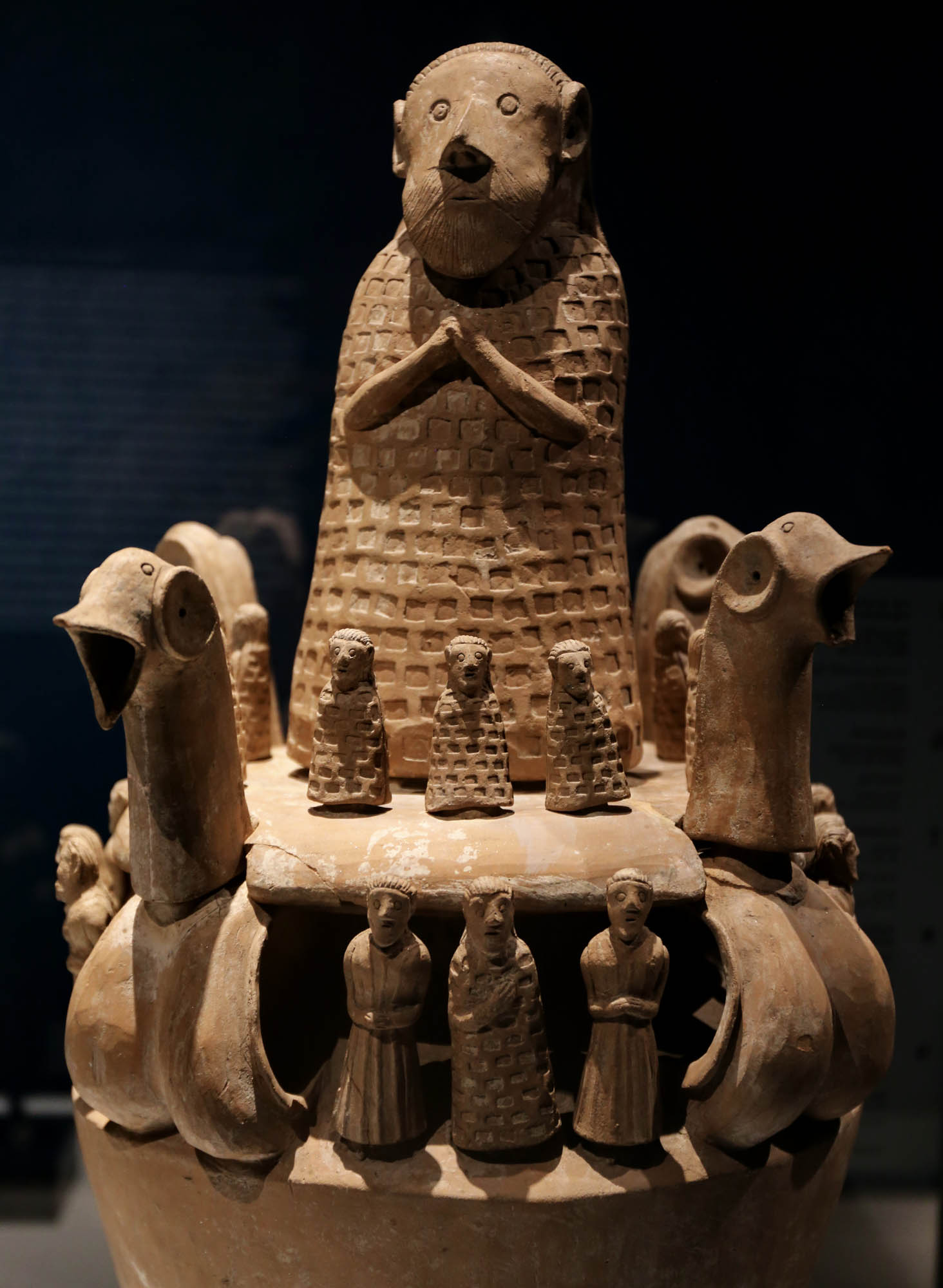
Etruscan funerary urn from Bettola, near San Casciano (debated in literature whether original or a 19th-century forgery)

sancasciano1sancasciano1sancasciano1sancasciano1sancasciano1sancasciano1sancasciano1sancasciano1sancasciano1sancasciano1

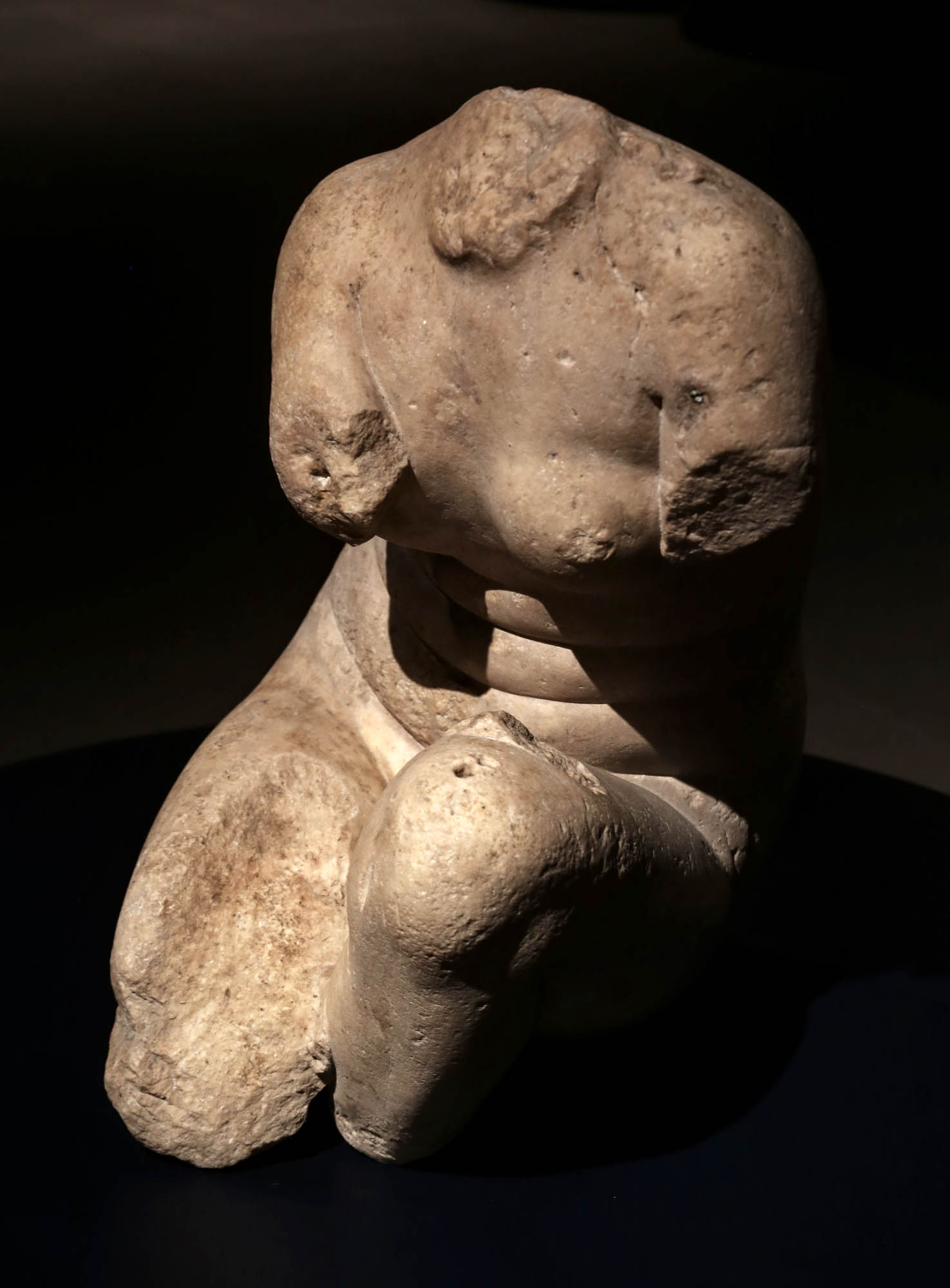
With the decline of the Roman Empire and its bathing culture, most of San Casciano’s thermal baths closed, though some are still in use today. Over the Bagno Grande, the Medicis built a new bath in 1575, during which several Etruscan-Roman relics were found. The exhibition includes an altar dedicated to Apollo, Asclepius, and Hygieia—the gods of healing—along with a statue of a Bathing Aphrodite (a popular Hellenistic sculpture type mentioned by Pliny as Venus Daedalsas), and numerous small bronze votive statues.

sancasciano2 sancasciano2 sancasciano2 sancasciano2 sancasciano2 sancasciano2 sancasciano2 sancasciano2 sancasciano2 sancasciano2 sancasciano2 sancasciano2 sancasciano2 sancasciano2 sancasciano2

In 2018, new excavations began in the Bagno Grande area. Notably, the entire excavation was funded by the municipality, and in return, the archaeologists published their latest results at the town hall and regularly held guided tours of the excavation site.

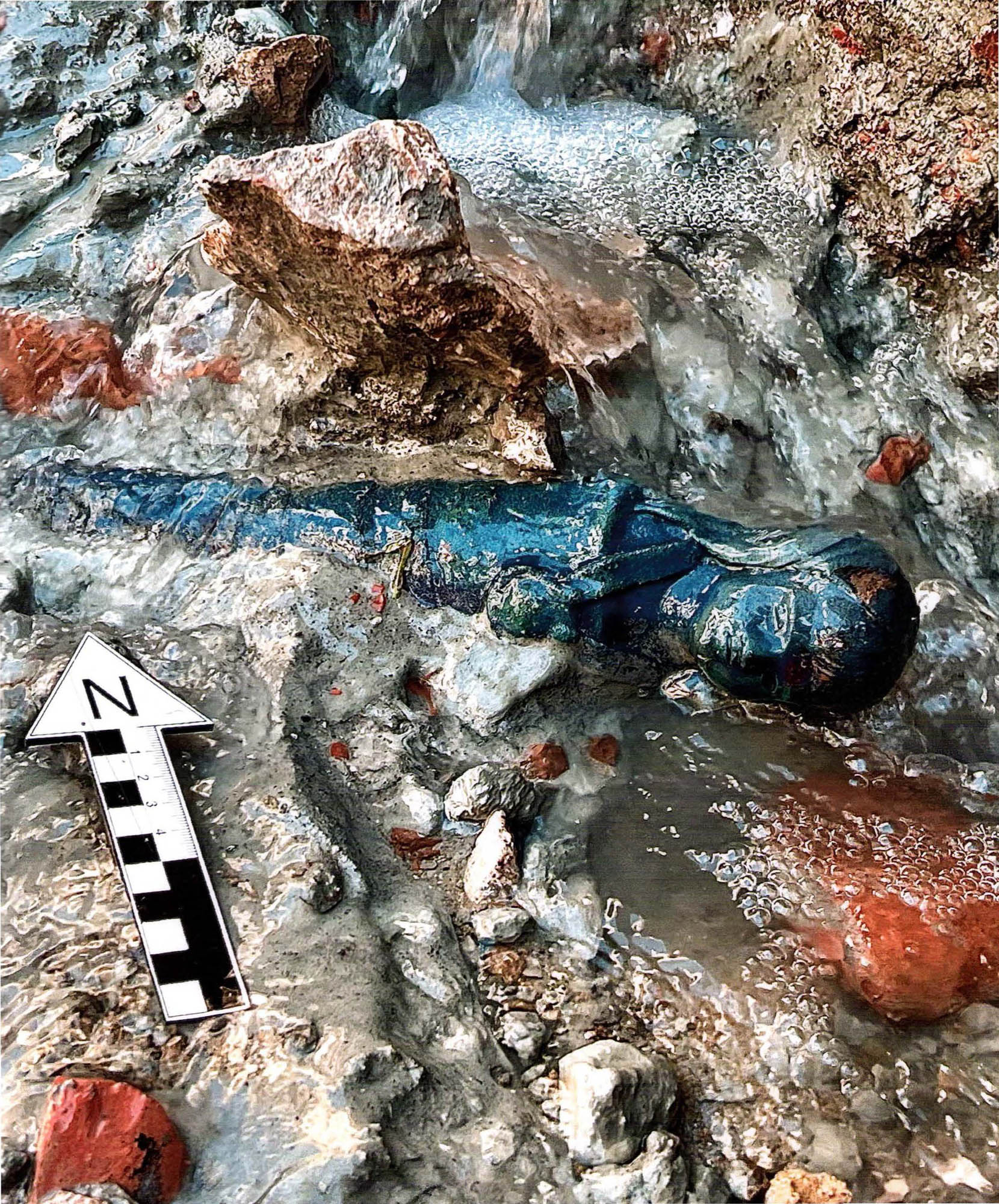
The excavations led to sensational results during the Covid (2020-2022). Next to the still-functioning bath, an Etruscan bath sanctuary was uncovered, dating back to the 3rd century BCE. For seven centuries, bathers hoping for healing continuously enriched the site with bronze and other votive offerings.

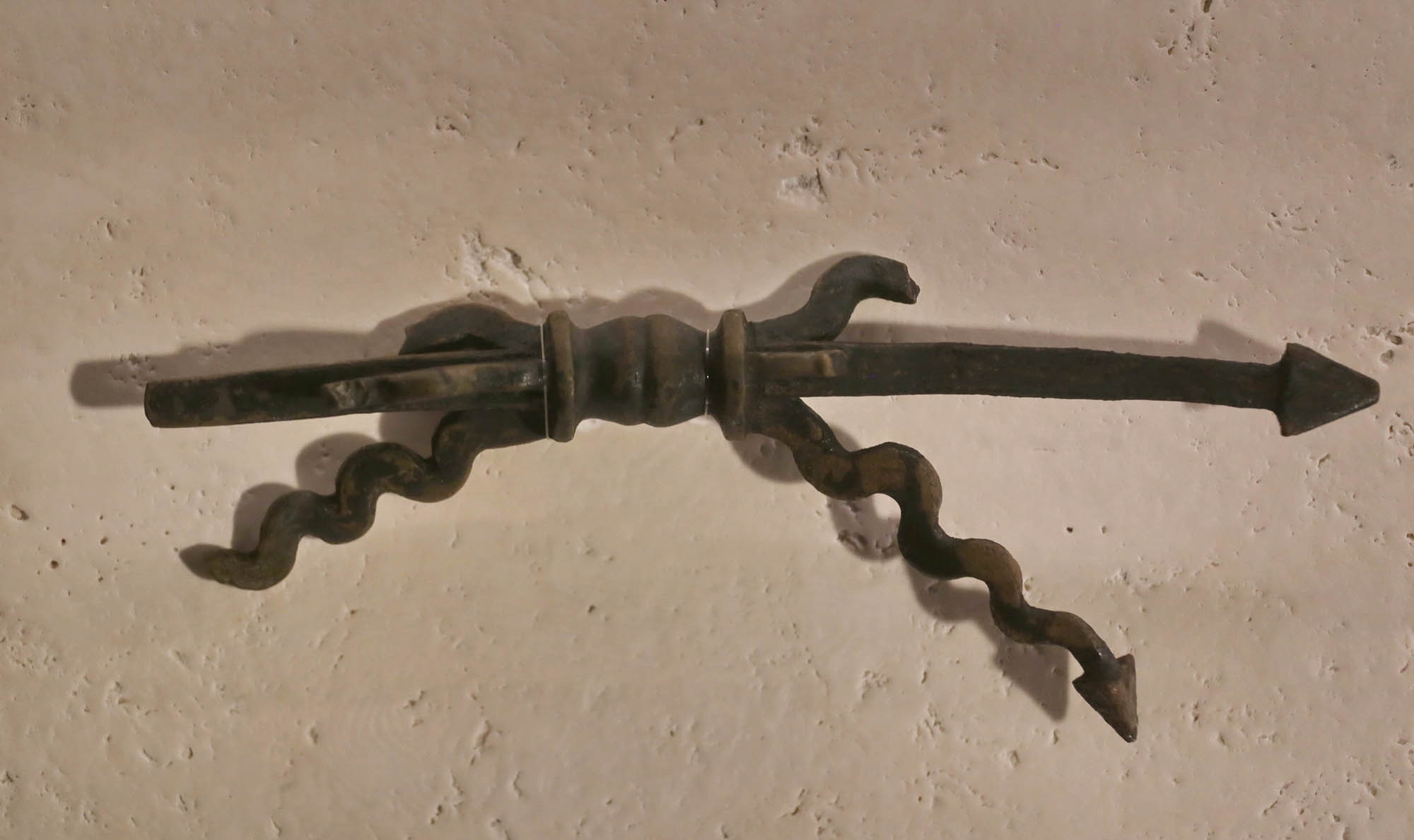
The earliest items, dating from the 3rd century BC to the 1st century AD, were found under a layer of terracotta tiles, on top of which a bronze lightning bolt had been placed. This suggests that the bath was struck by lightning in the 1st century CE. According to ars fulguratoria, the Etruscan “lightning interpretation”, objects kept in sacred spaces had to be buried when such a strike occurred. From then on, votive objects were placed on top of the tile layer, continuing until the 4th century.

Bronze lightning bolt placed over votive objects

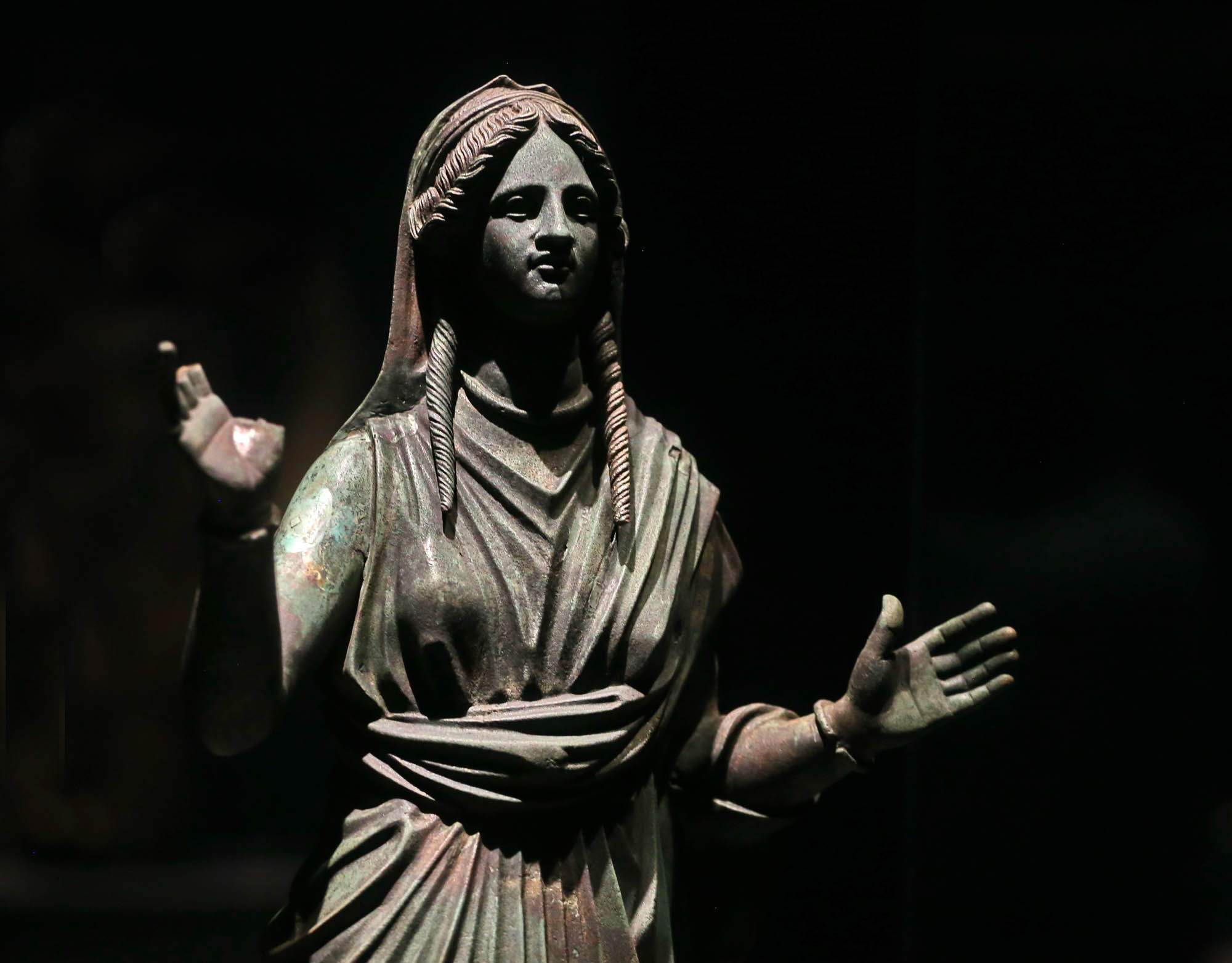
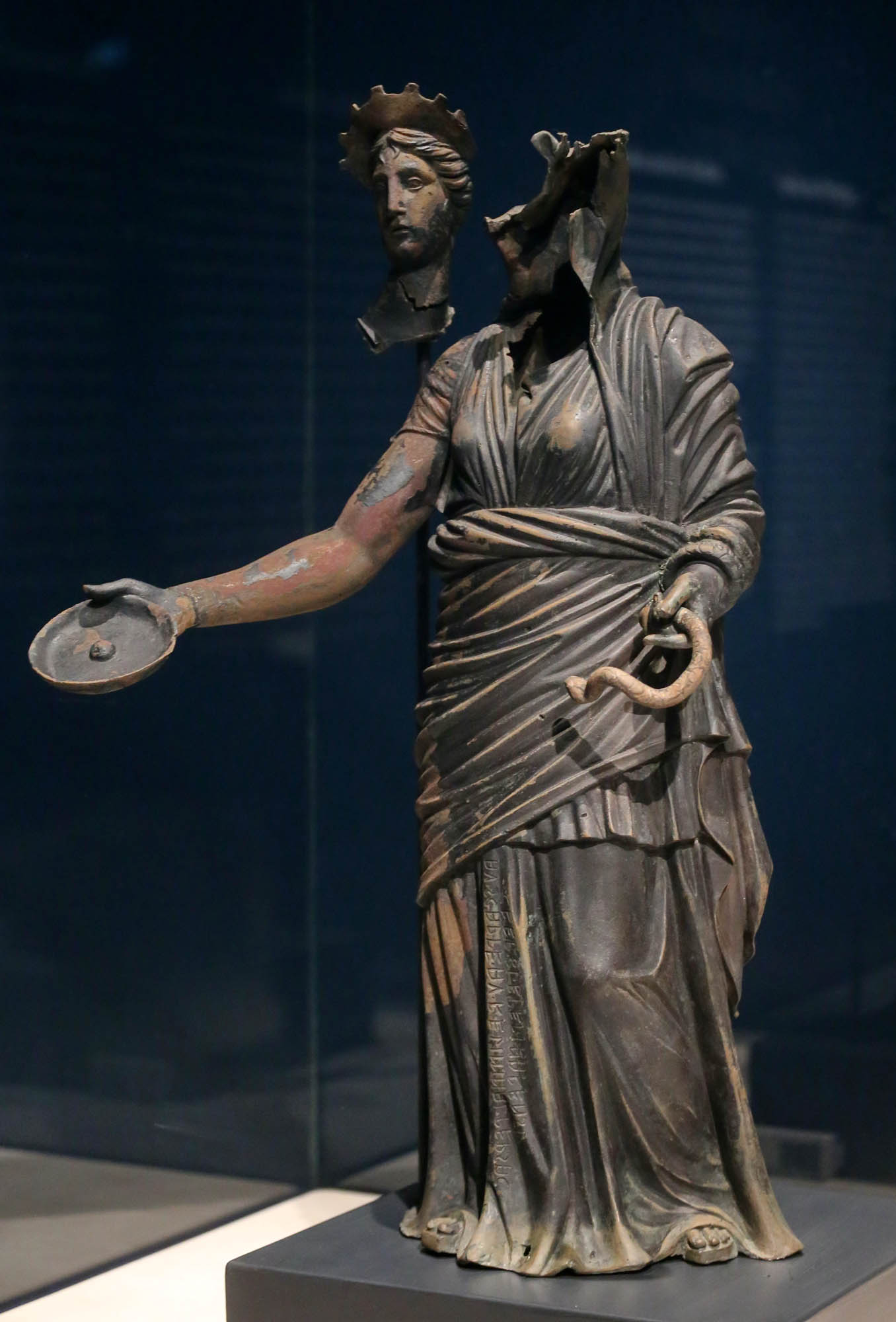
This ritual preserved for us many authentic Etruscan artifacts, even before Chiusi’s culture and language transitioned from Etruscan to Latin around the time of Christ’s birth. Some of these items bear donor inscriptions in Etruscan script. According to these inscriptions, the primary deity of the bath was the source goddess Flere Havens in Etruscan, or Fons Calidus in Latin. Alongside her were honored deities such as Fortuna Primigenia, Apollo (Aplus in Etruscan), and later Asclepius, Hygieia, and Isis.

Flere Havens, Etruscan spring goddess among the buried objects, c. 150-100 BCE

sancasciano3 sancasciano3 sancasciano3sancasciano3sancasciano3sancasciano3sancasciano3sancasciano3sancasciano3sancasciano3sancasciano3sancasciano3sancasciano3sancasciano3sancasciano3sancasciano3 

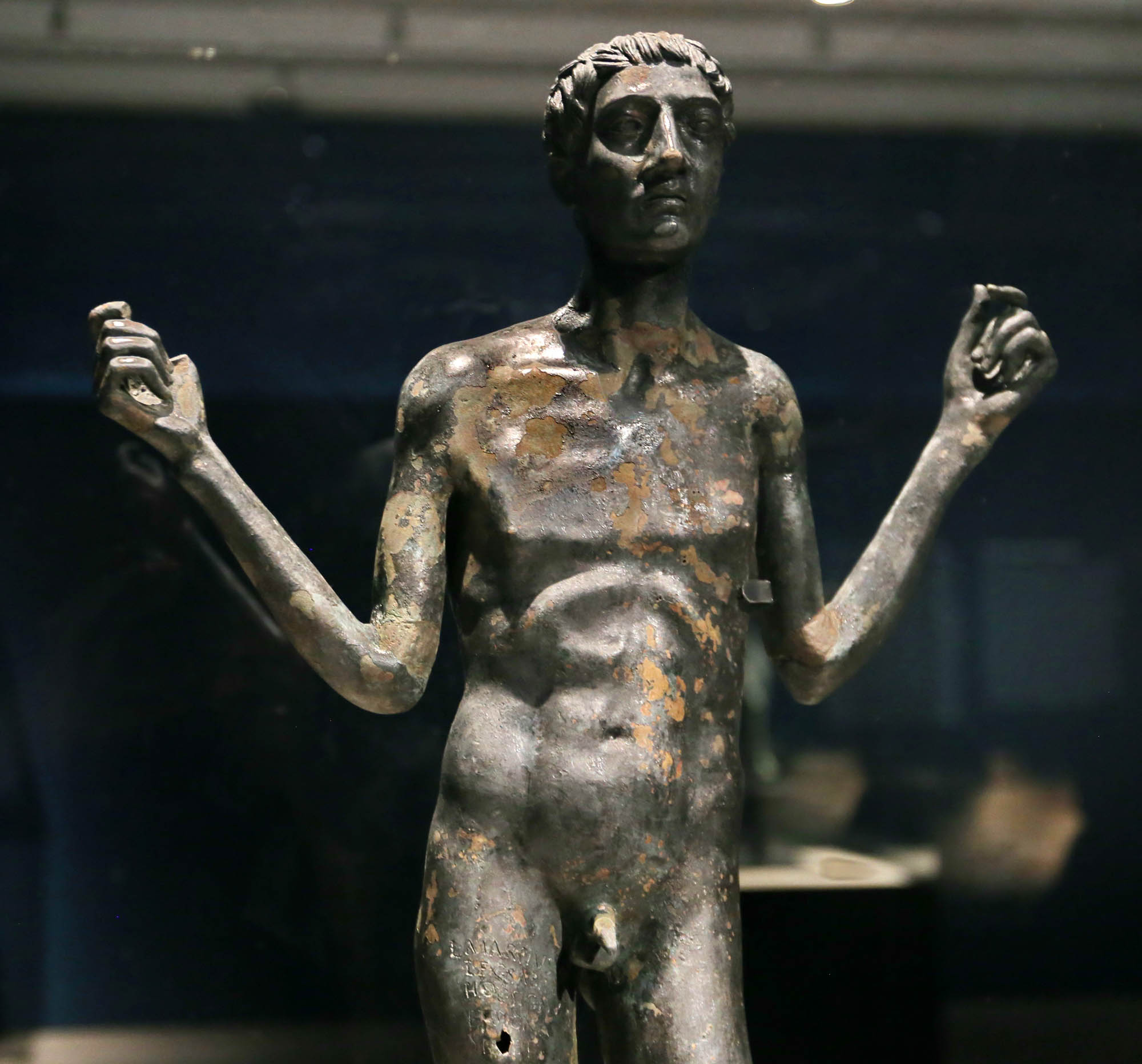
Lucius Marcus Grabillo’s votive statue to the spring goddess, Latin inscription, 1st century AD

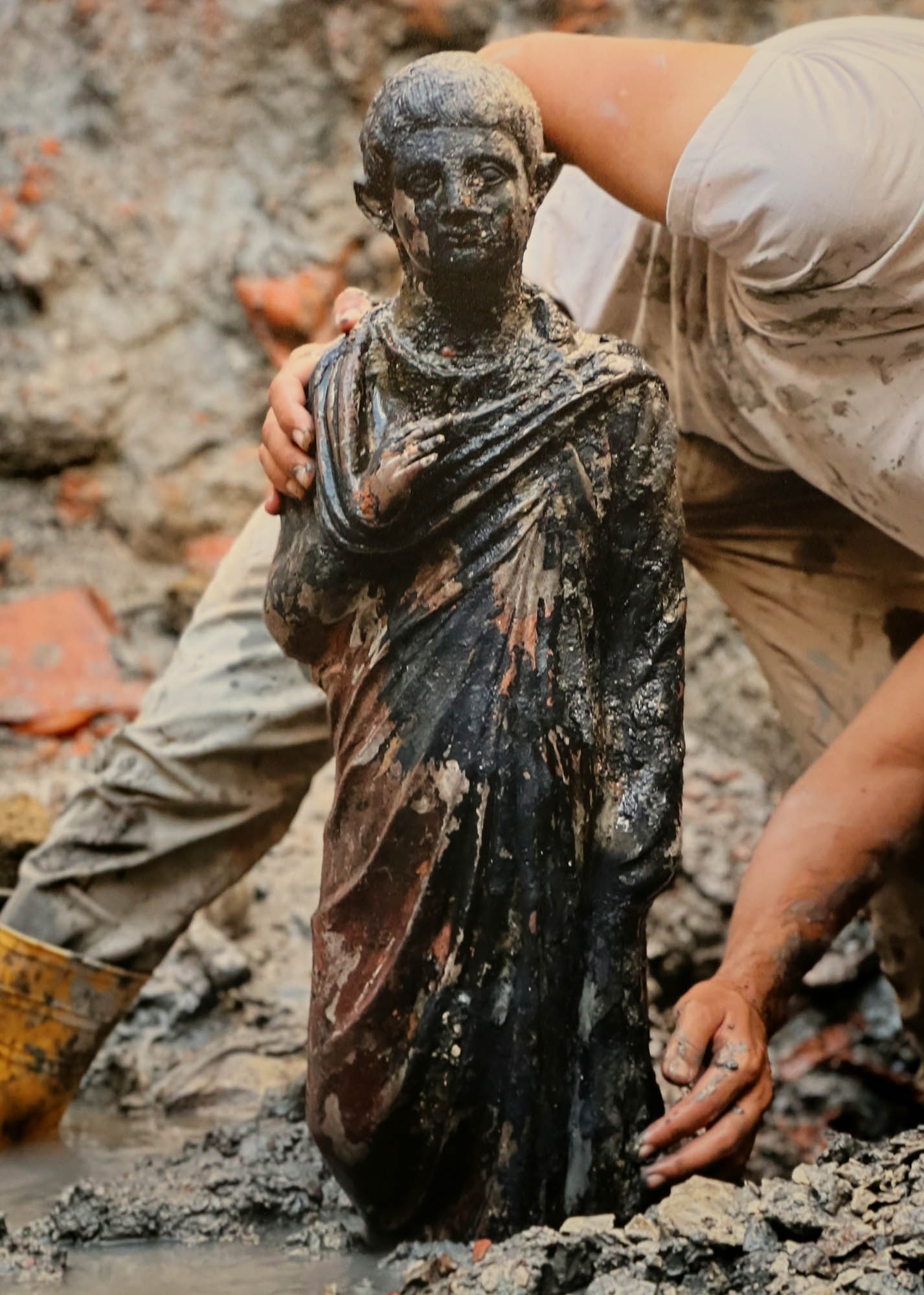
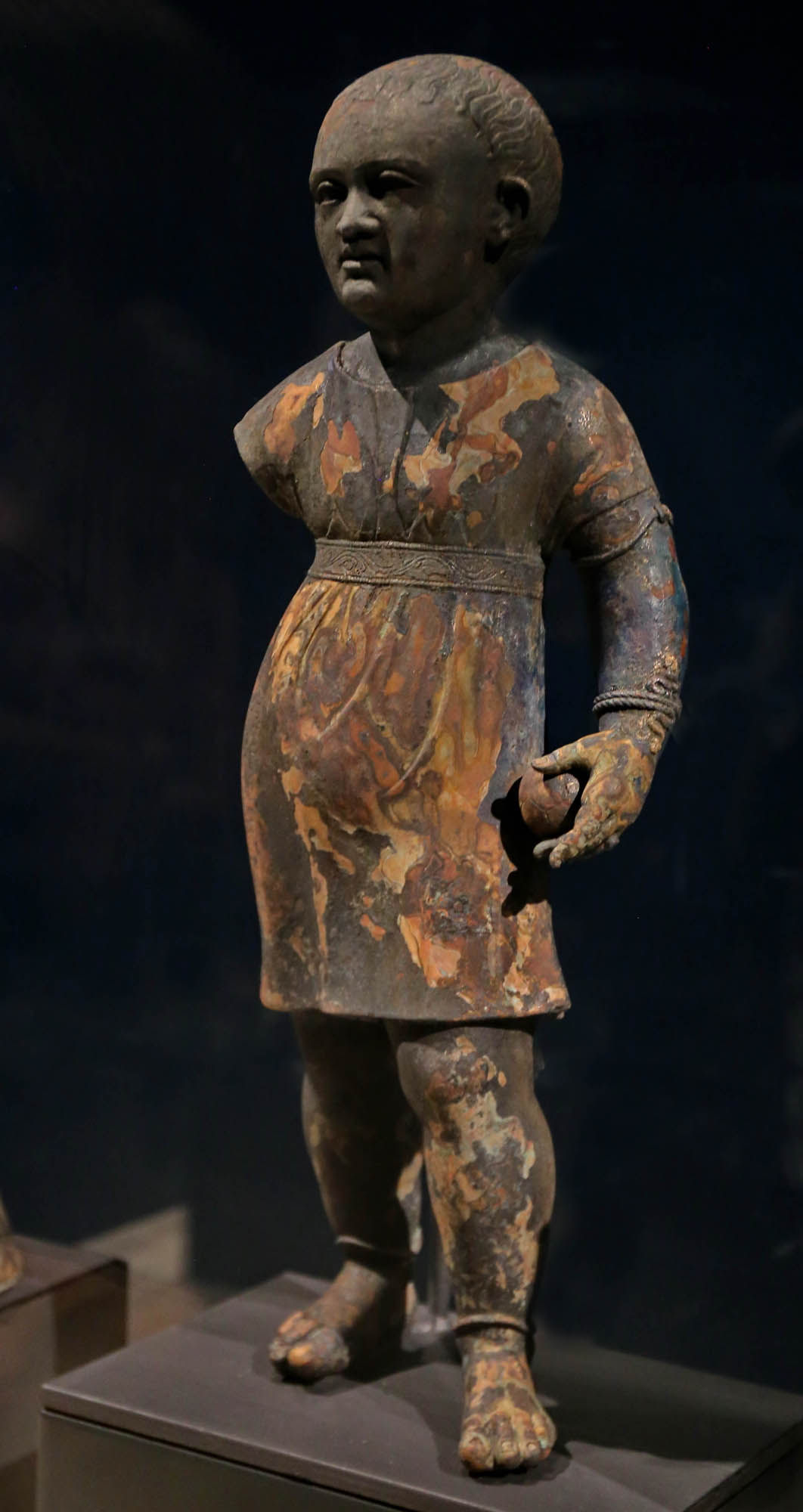
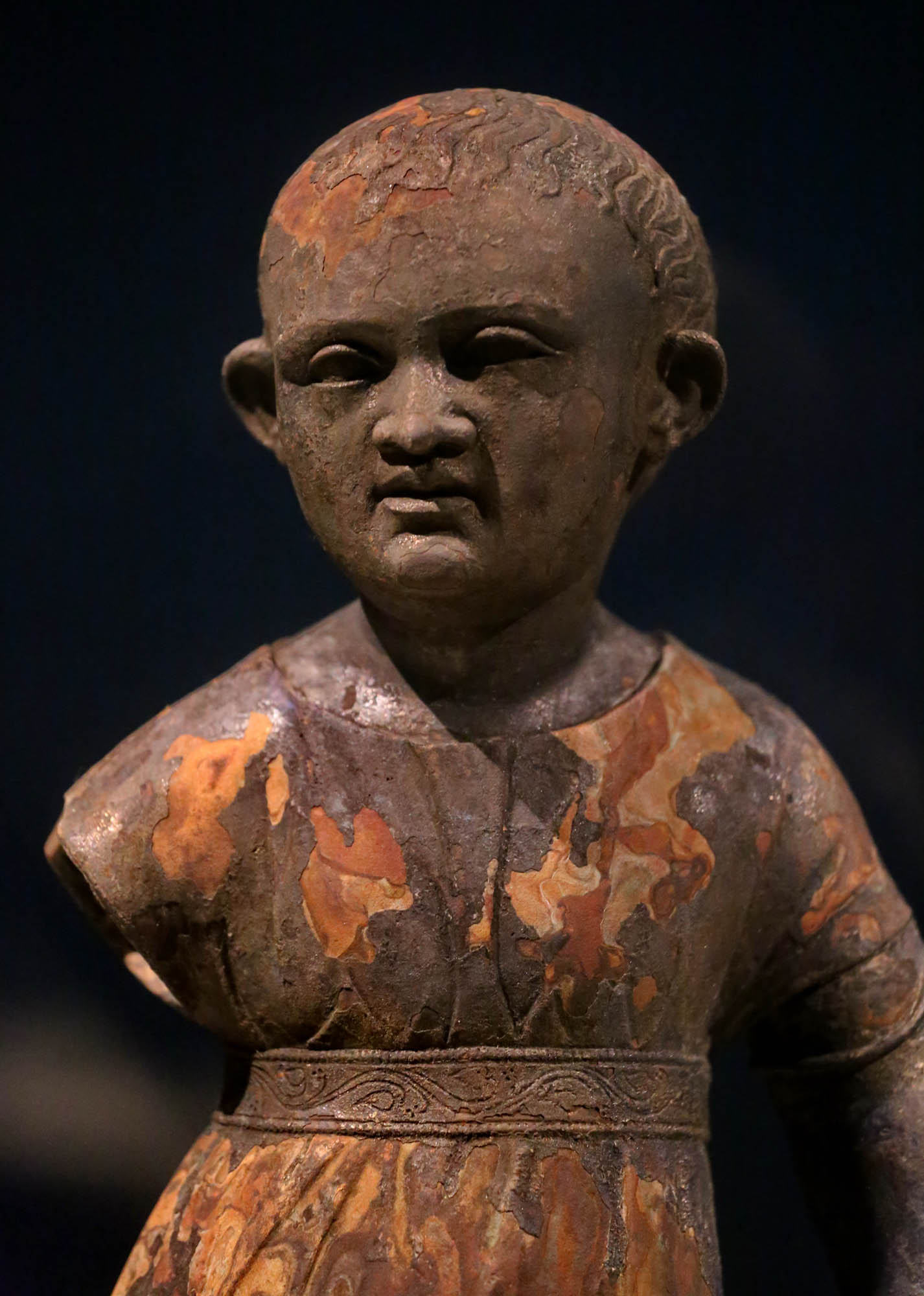
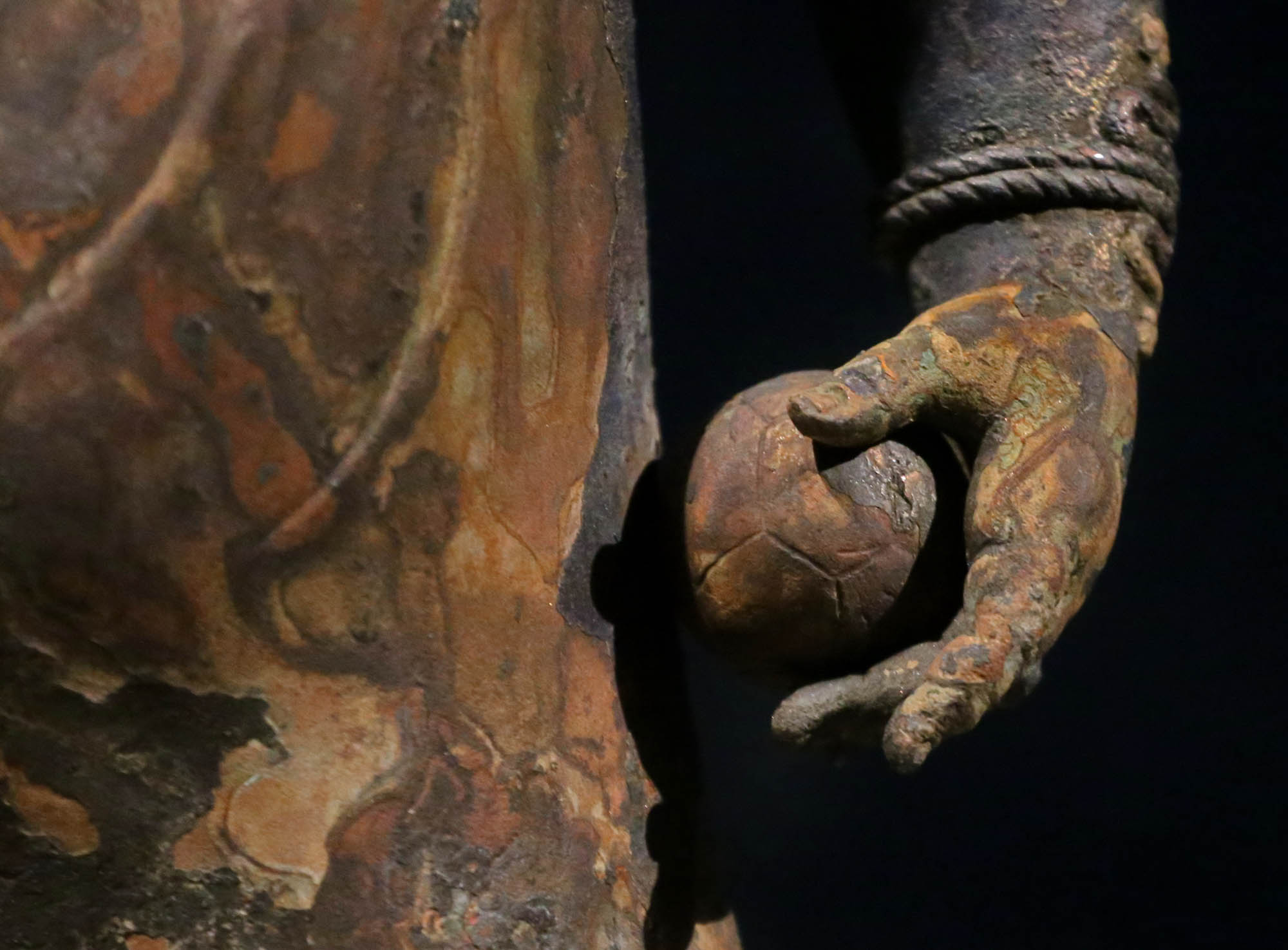
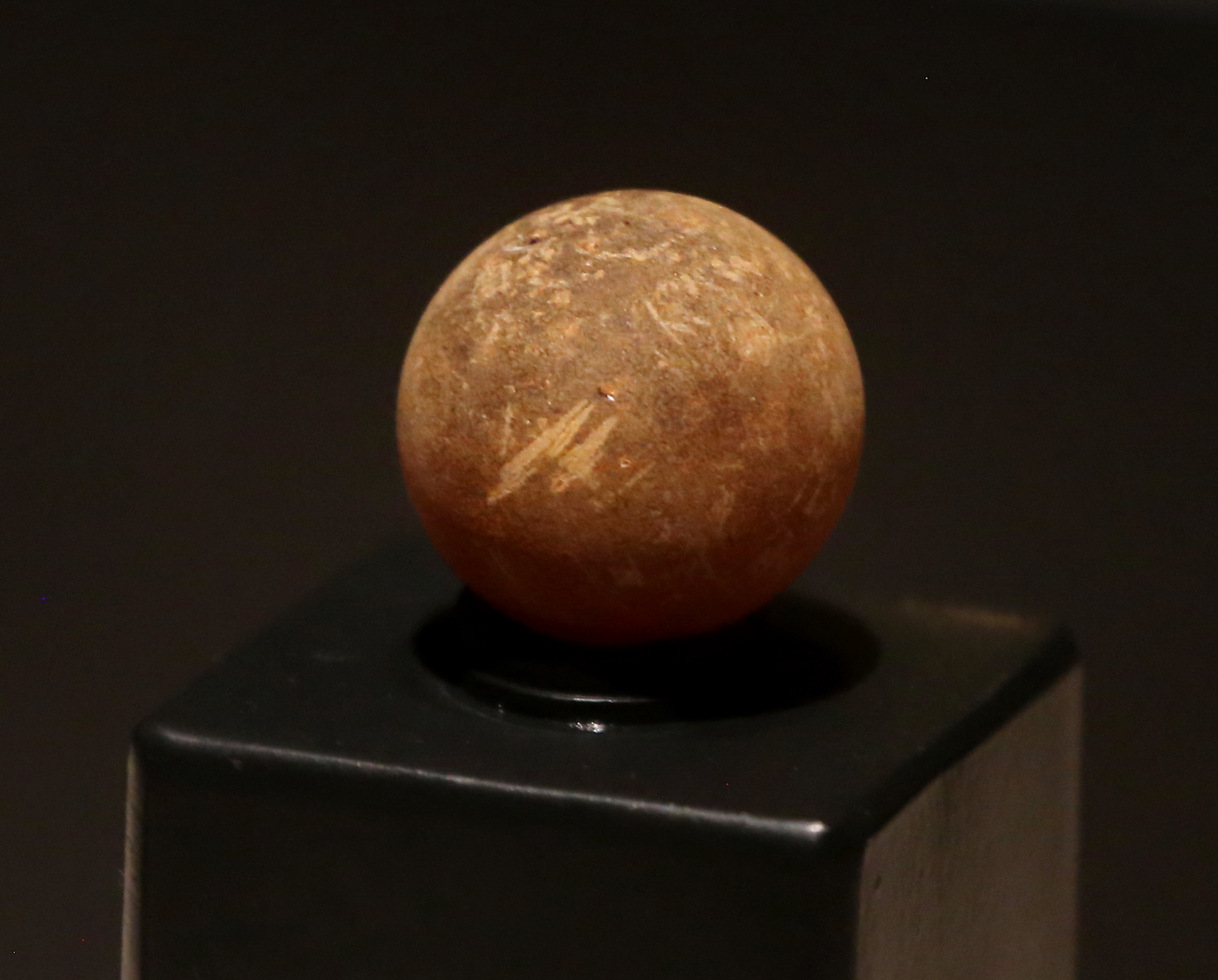
A small boy can be seen holding a sphere that still rolls—such spherical sculptures, even without the figures, were also found among the finds

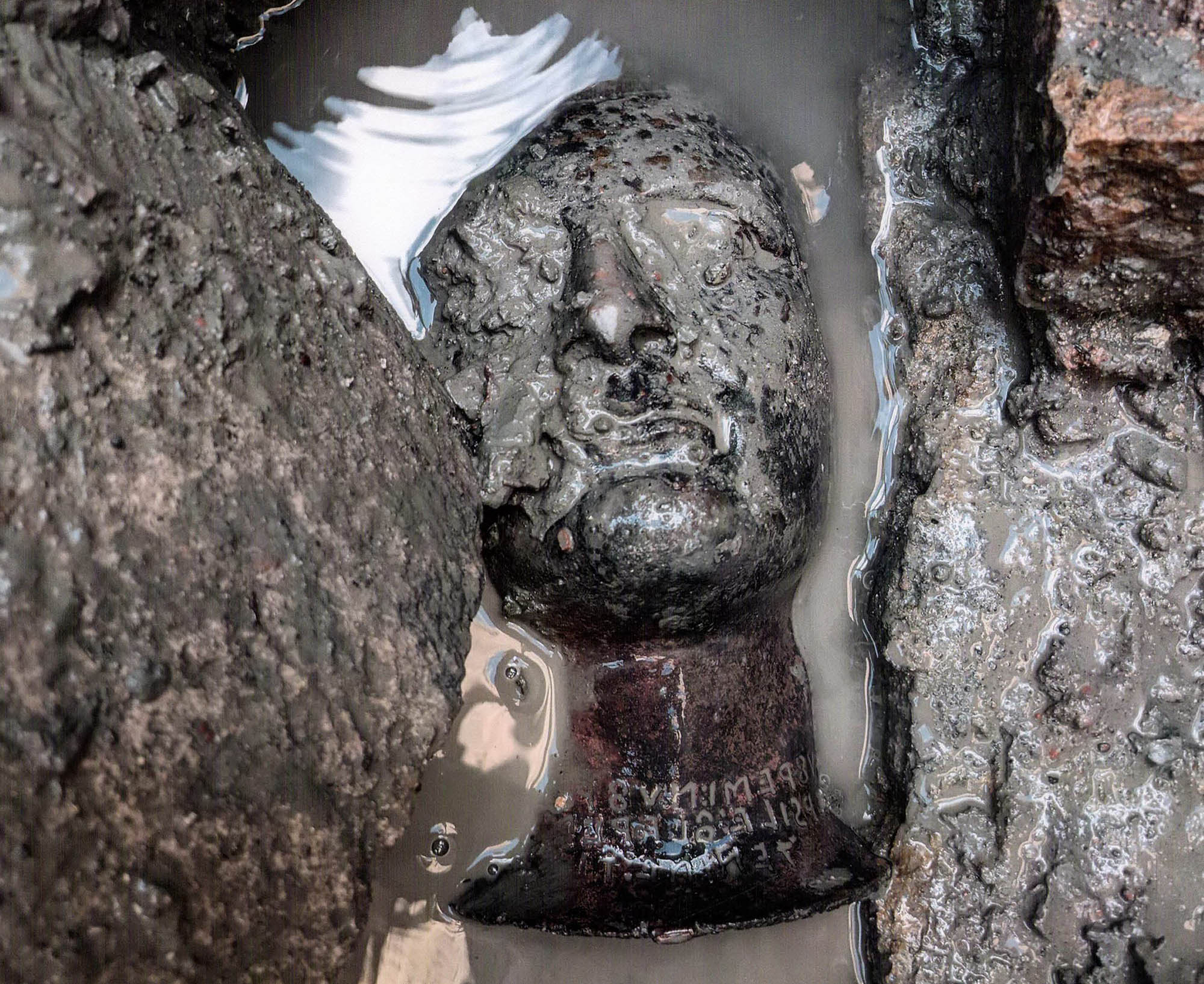
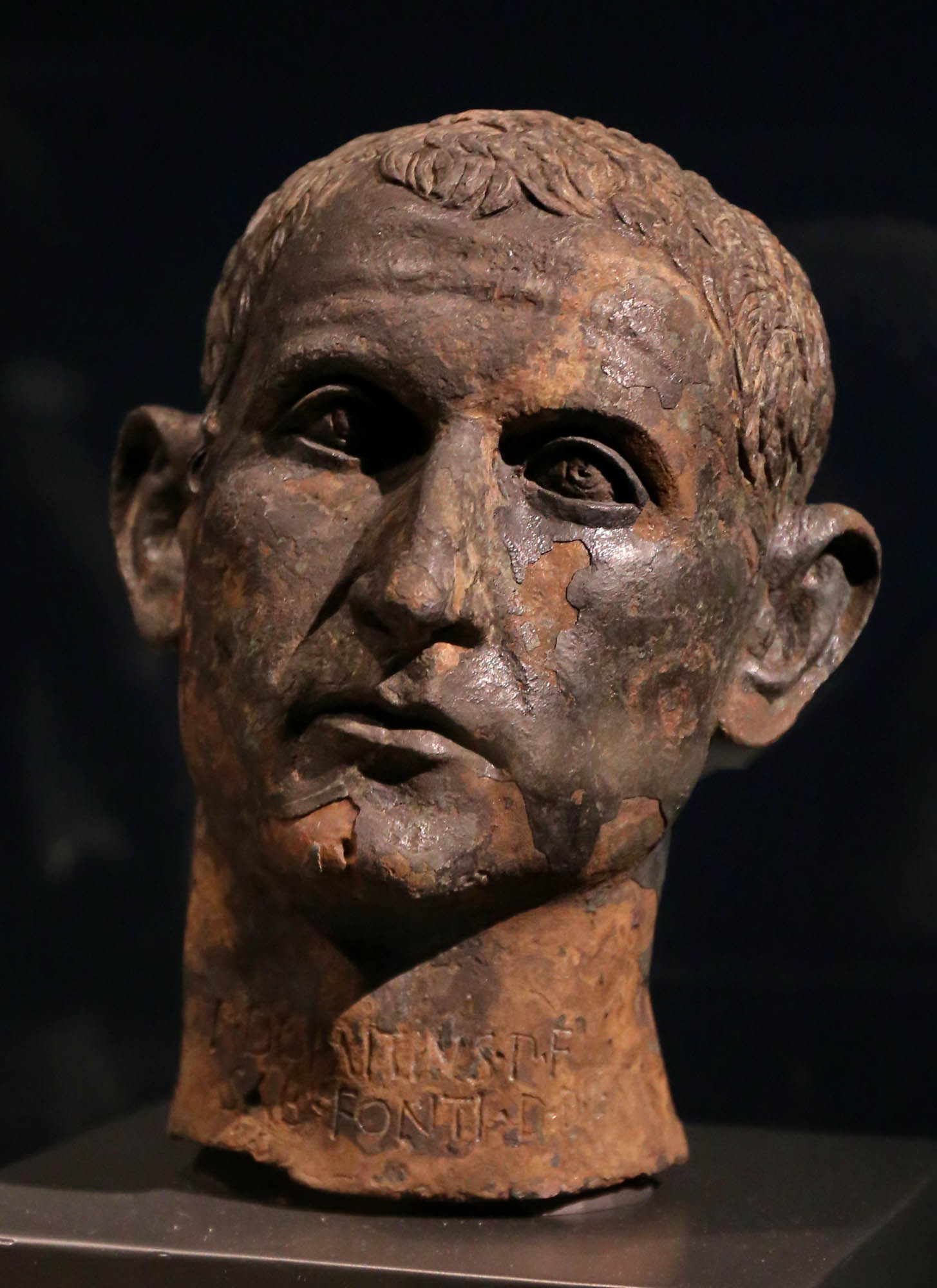
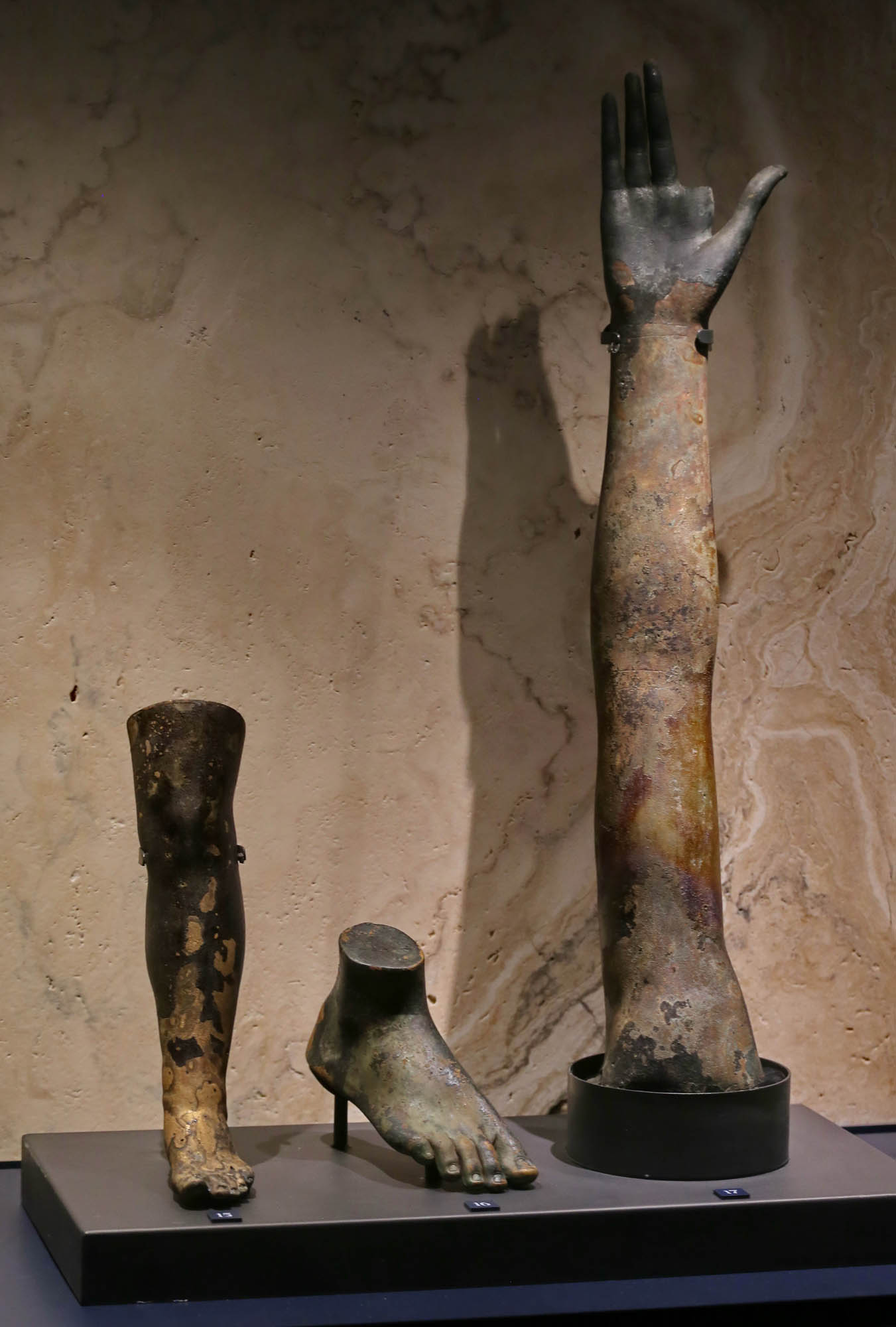
Numerous bronze male and female portrait statues have survived, most with Etruscan-language votive inscriptions on their necks or the back of their heads.

sancasciano4sancasciano4sancasciano4sancasciano4sancasciano4sancasciano4sancasciano4 

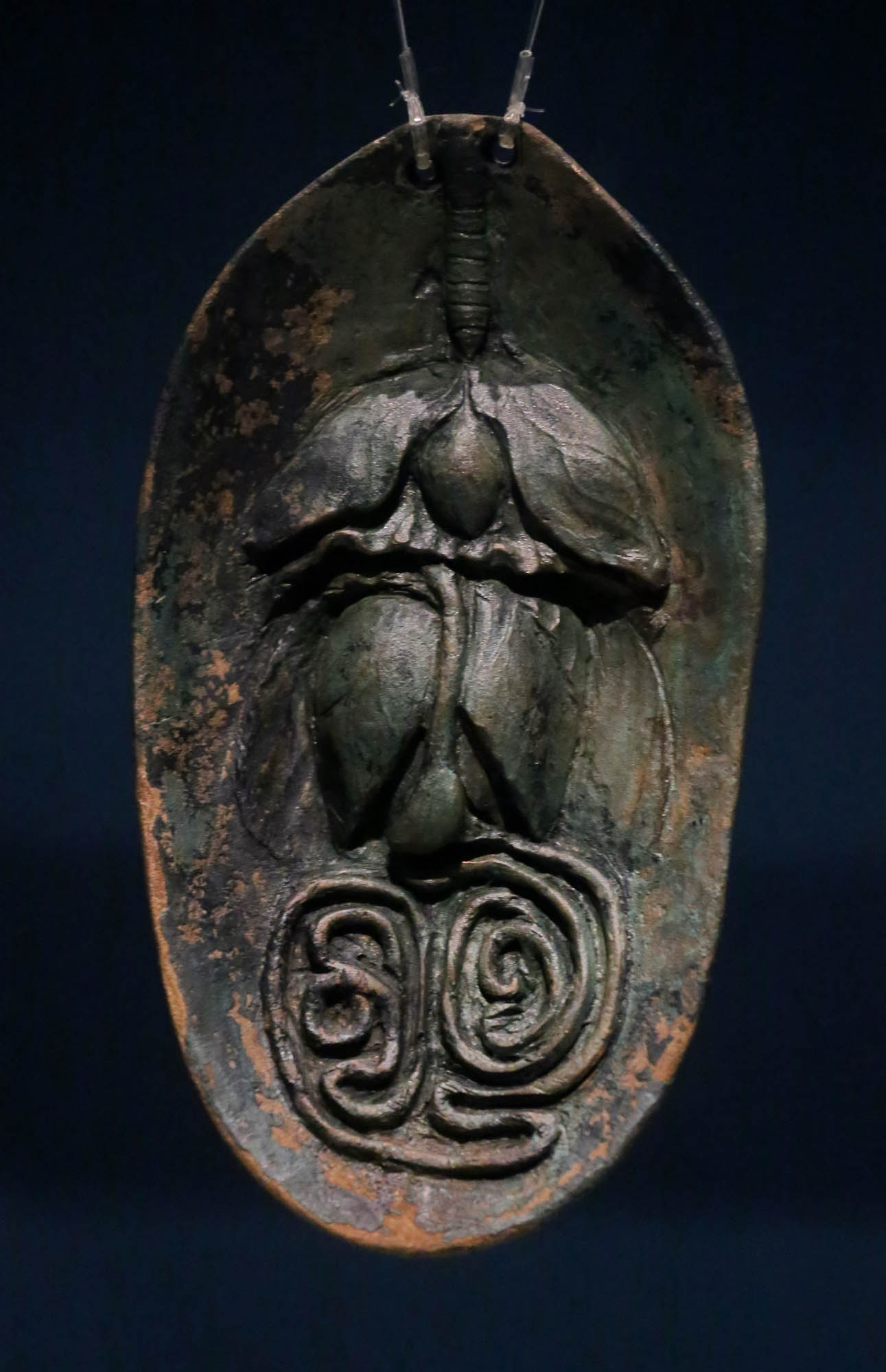
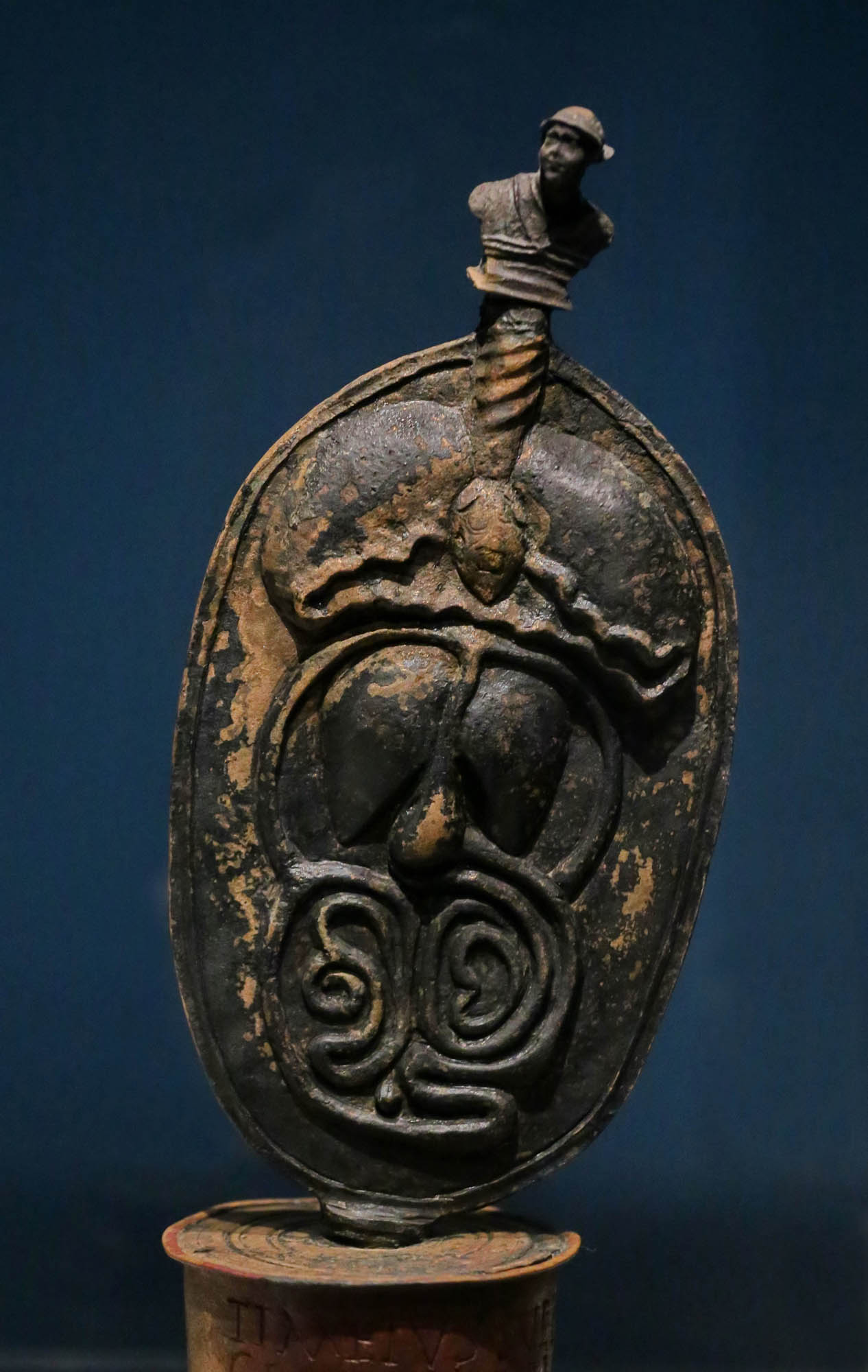
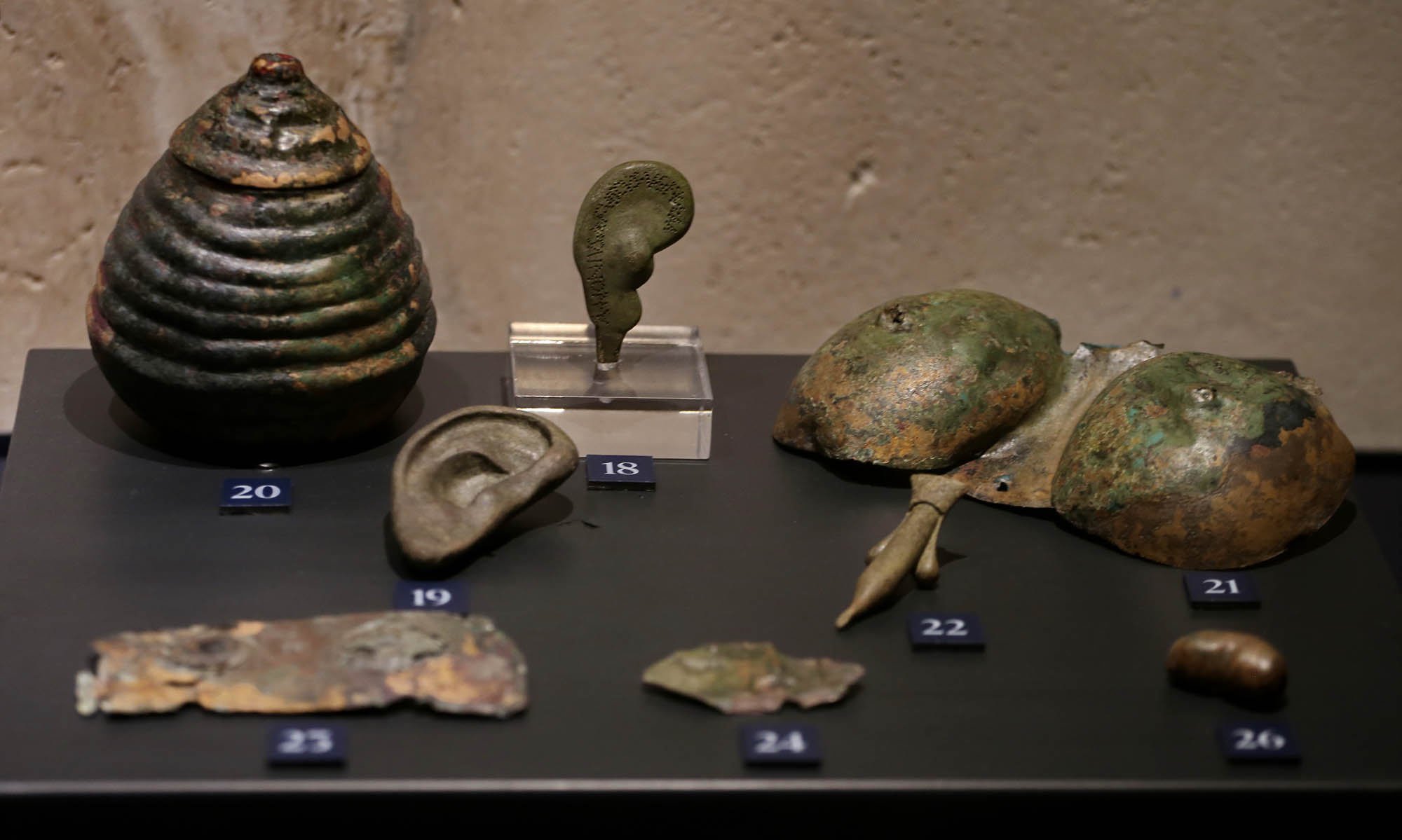
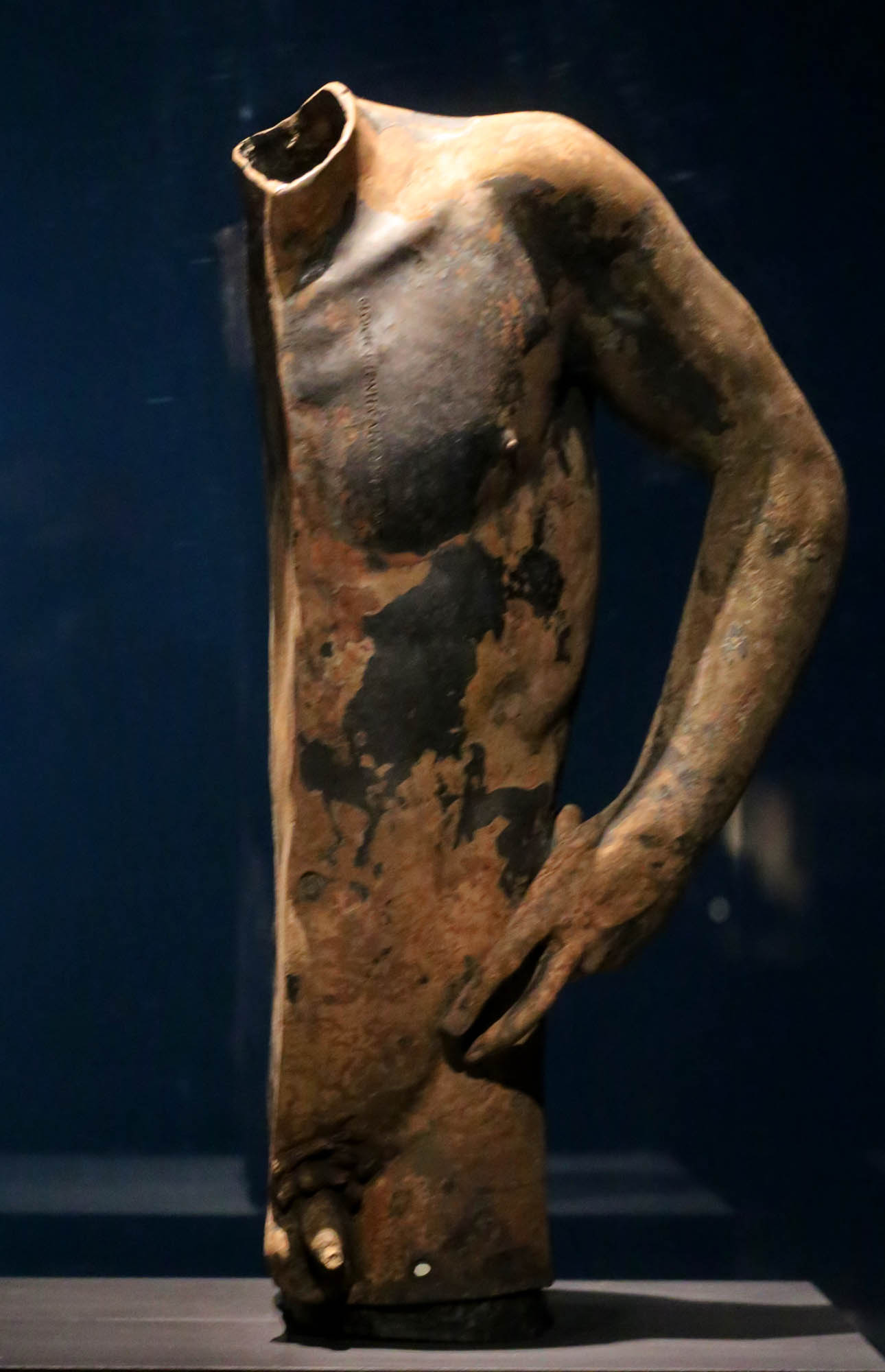
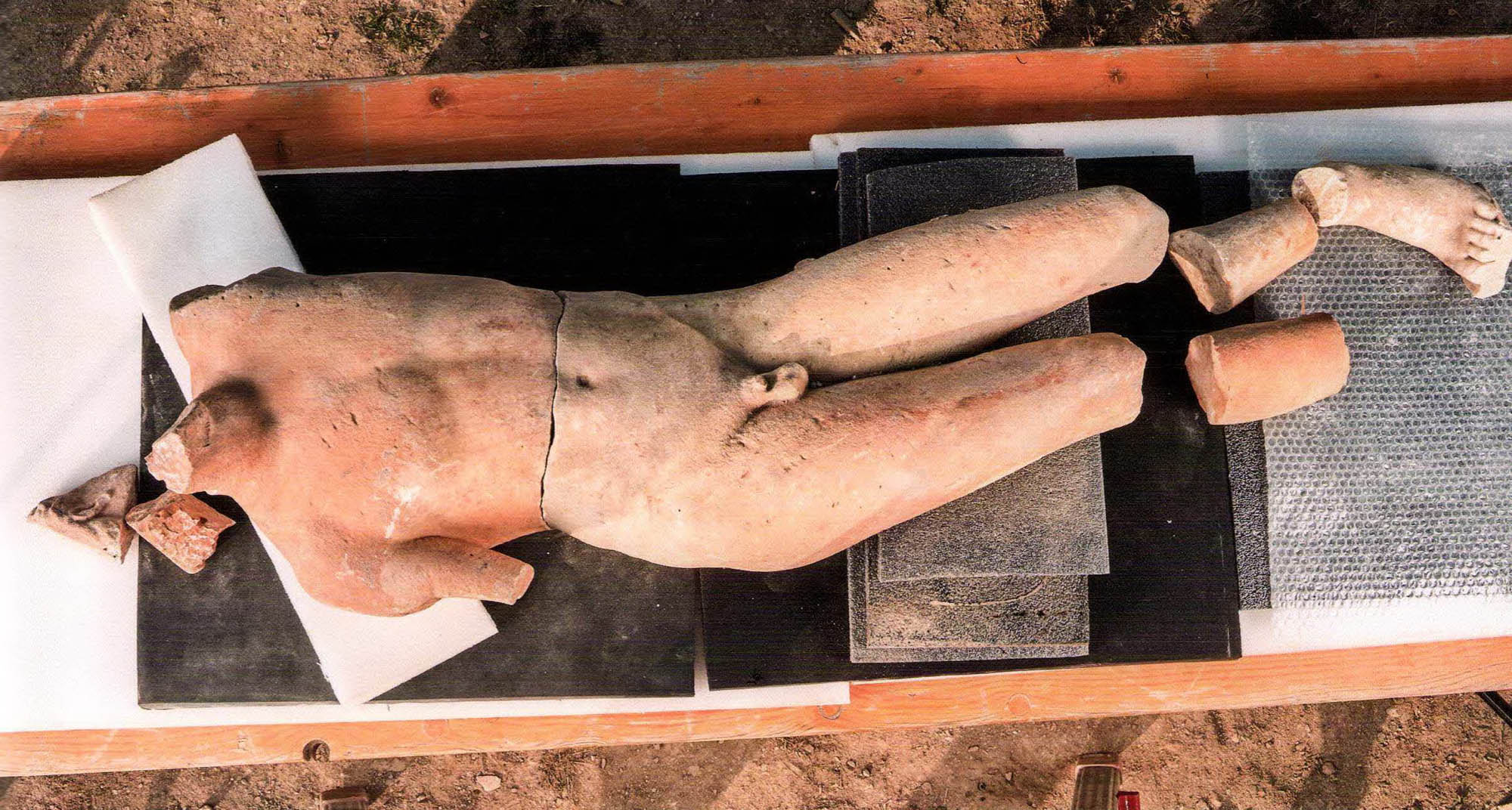
Many offerings were made in the form of bronze copies of body parts awaiting healing, including anatomical details like internal organs, limbs, breasts, and even a life-sized bronze male upper torso cut in half lengthwise.

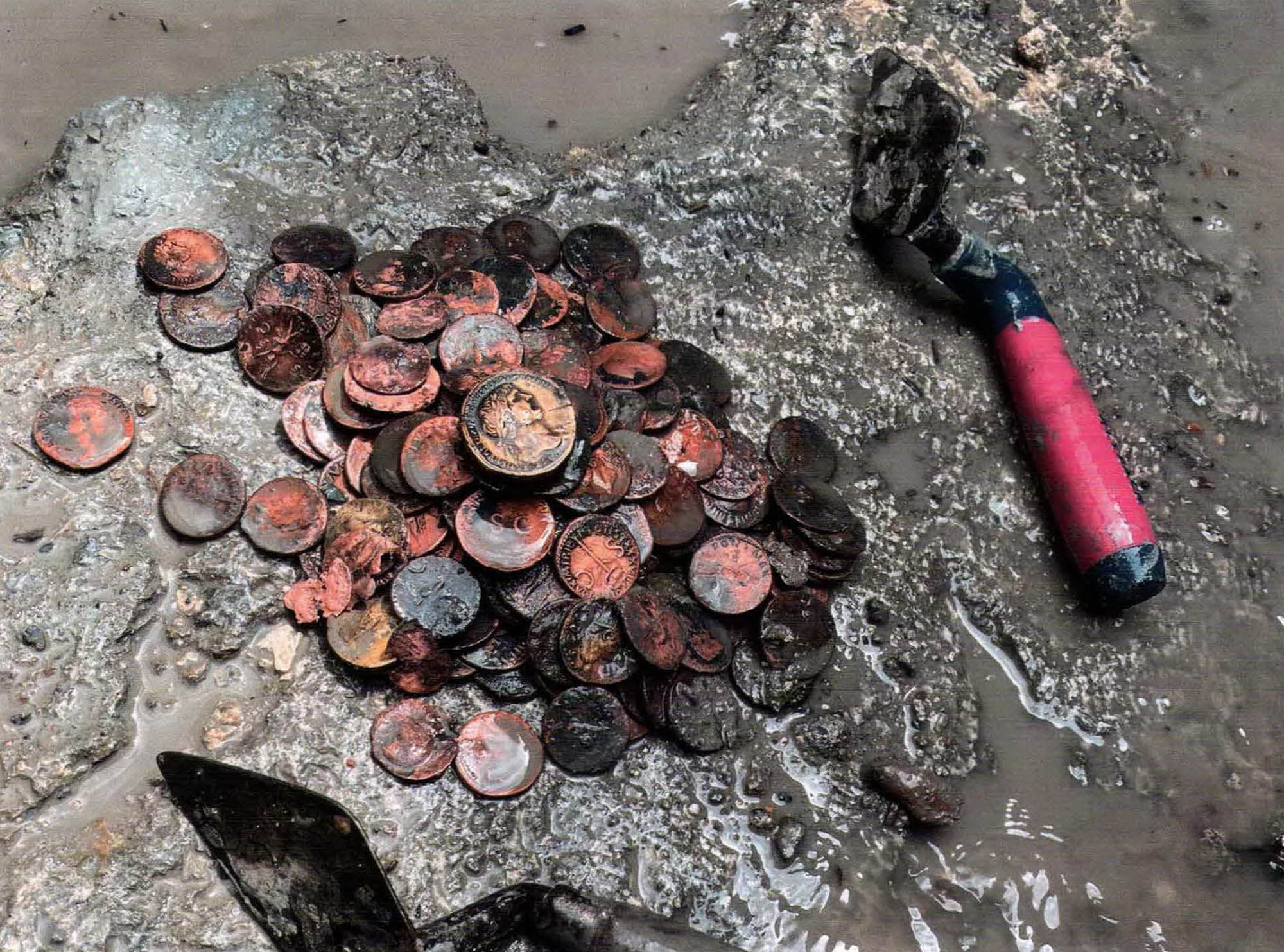
In addition to the bronze votive statues, the mud preserved remains of several crop sacrifices. Nearly 9,000 coins were also found, mostly gleaming copper coins, suggesting that the donors sourced them directly from the imperial mint.

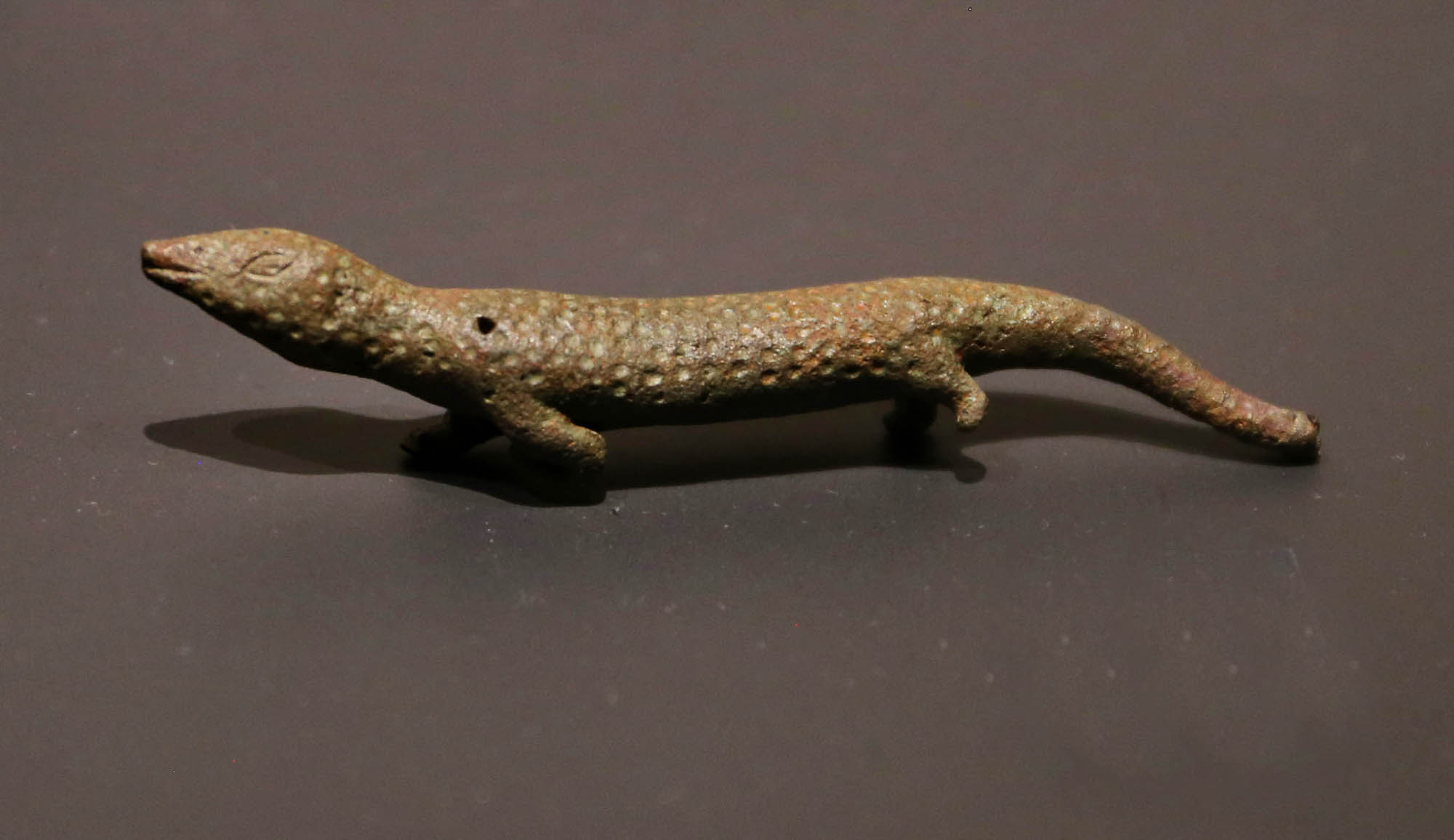
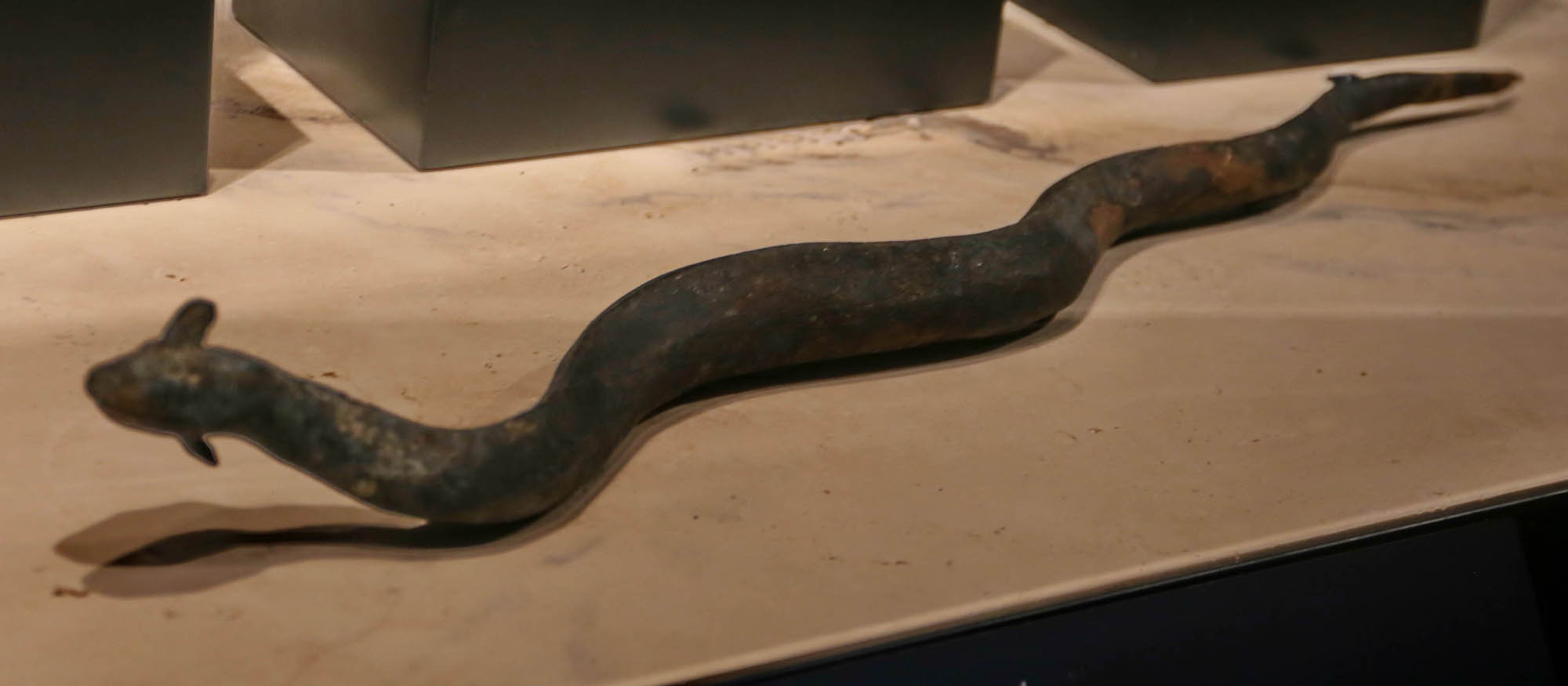
Animal figurines were also discovered, including a lizard, symbolizing disease, which had to be symbolically killed by Sauroktonos, that is, Lizard-killing Apollo. as well as a bronze snake, likely the guardian of the sacred spring.

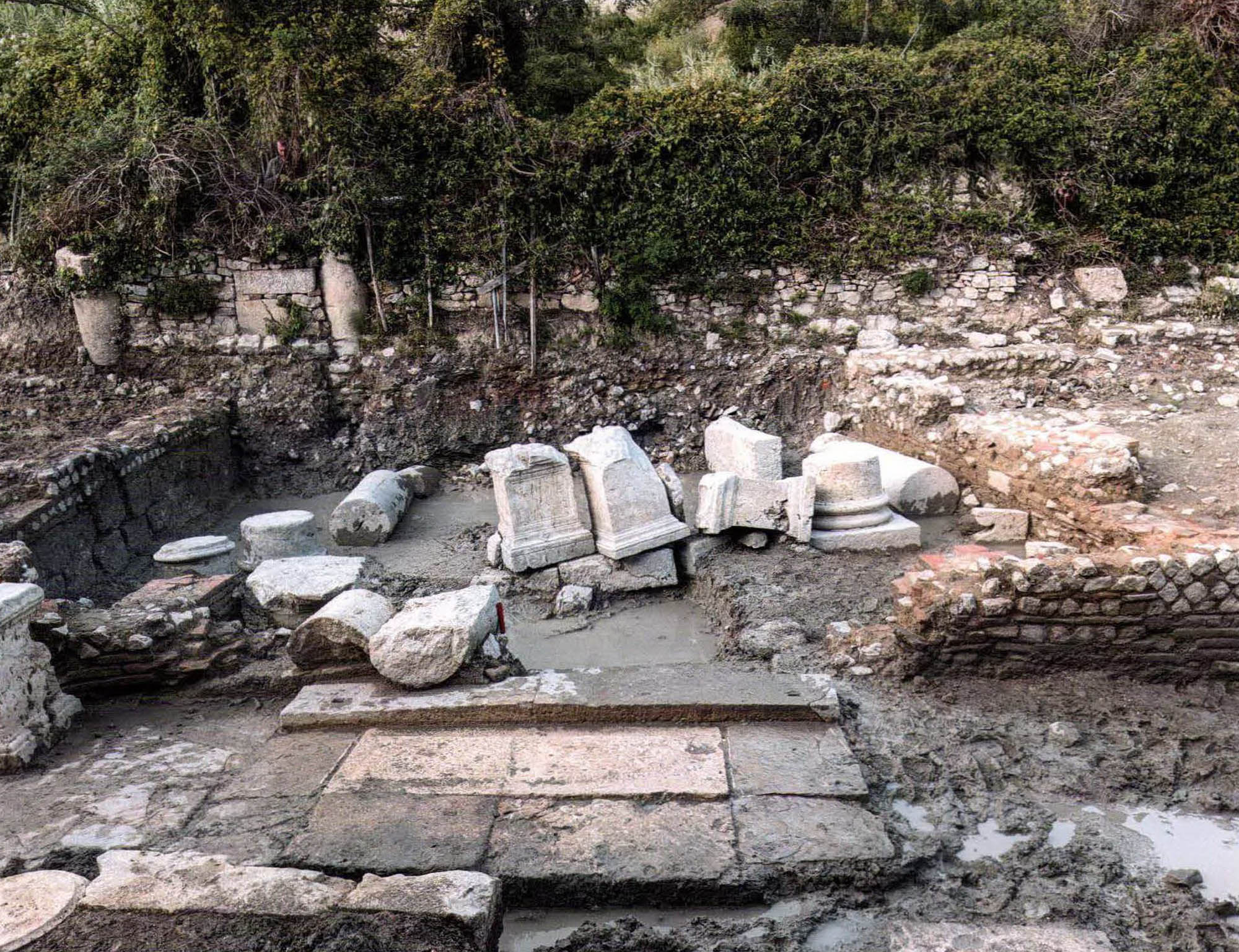
The sacred bath was closed in the 4th century CE, likely in a ritual manner, as suggested by the careful placement of pieces of a marble bath gate and cult statues before the burial. It seems that the rise of Christianity did not allow for the continuation of the pagan cultic bath. Regardless, it is beautiful that, after seven centuries of use, its patrons gave it a proper farewell.
The ritually broken sanctuary gate and statue of Apollo Sauroktonos

Shadow folk

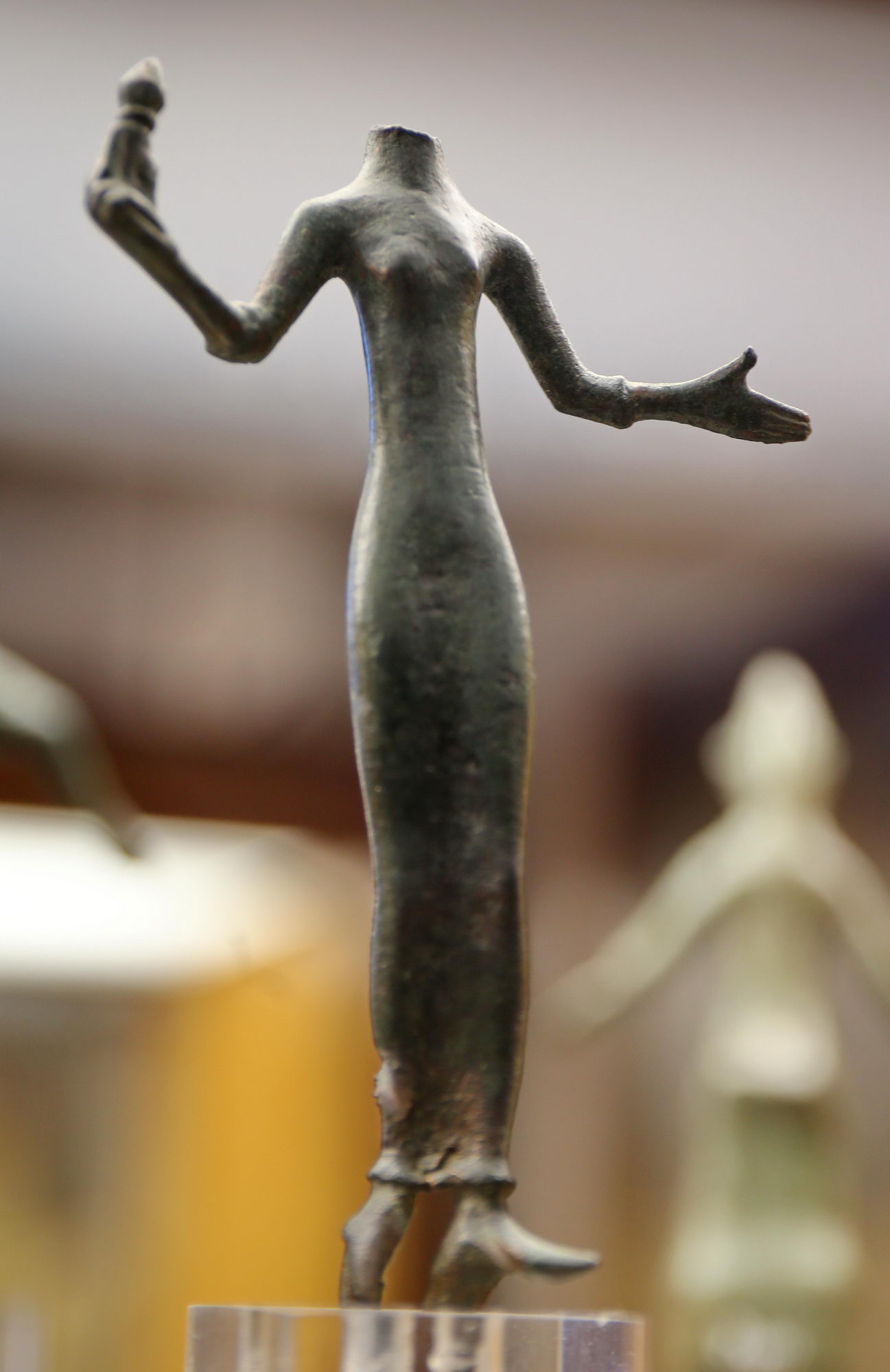
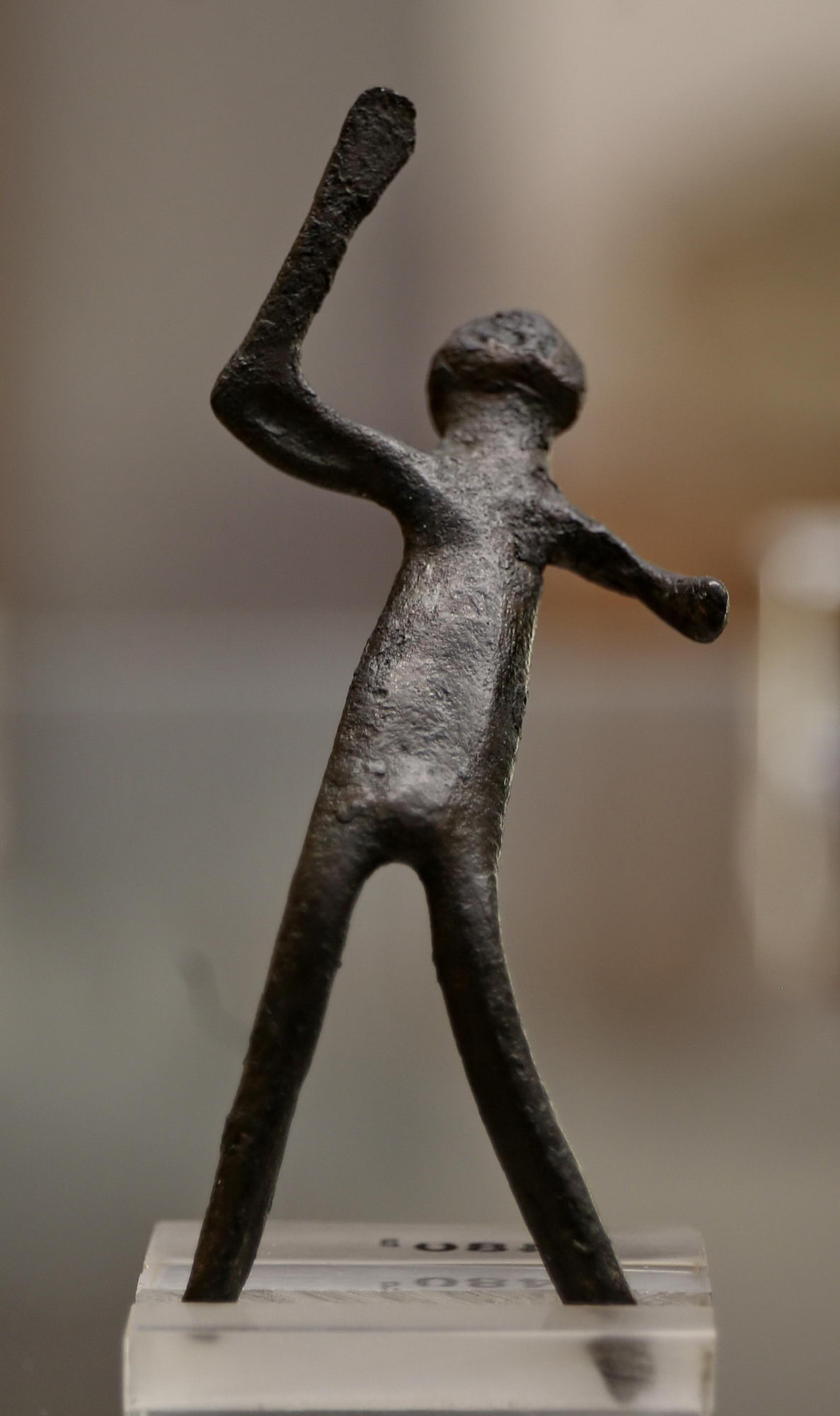
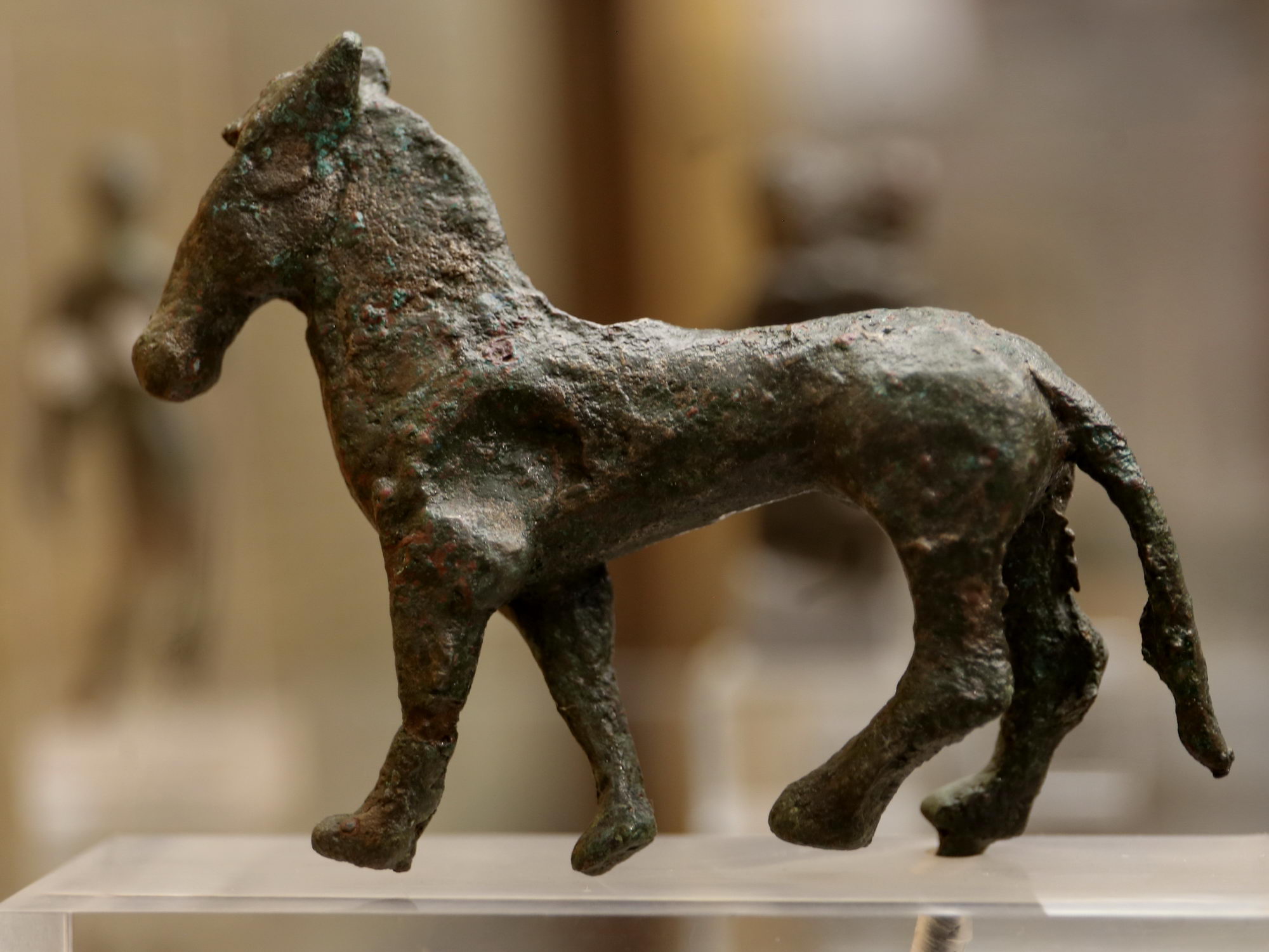
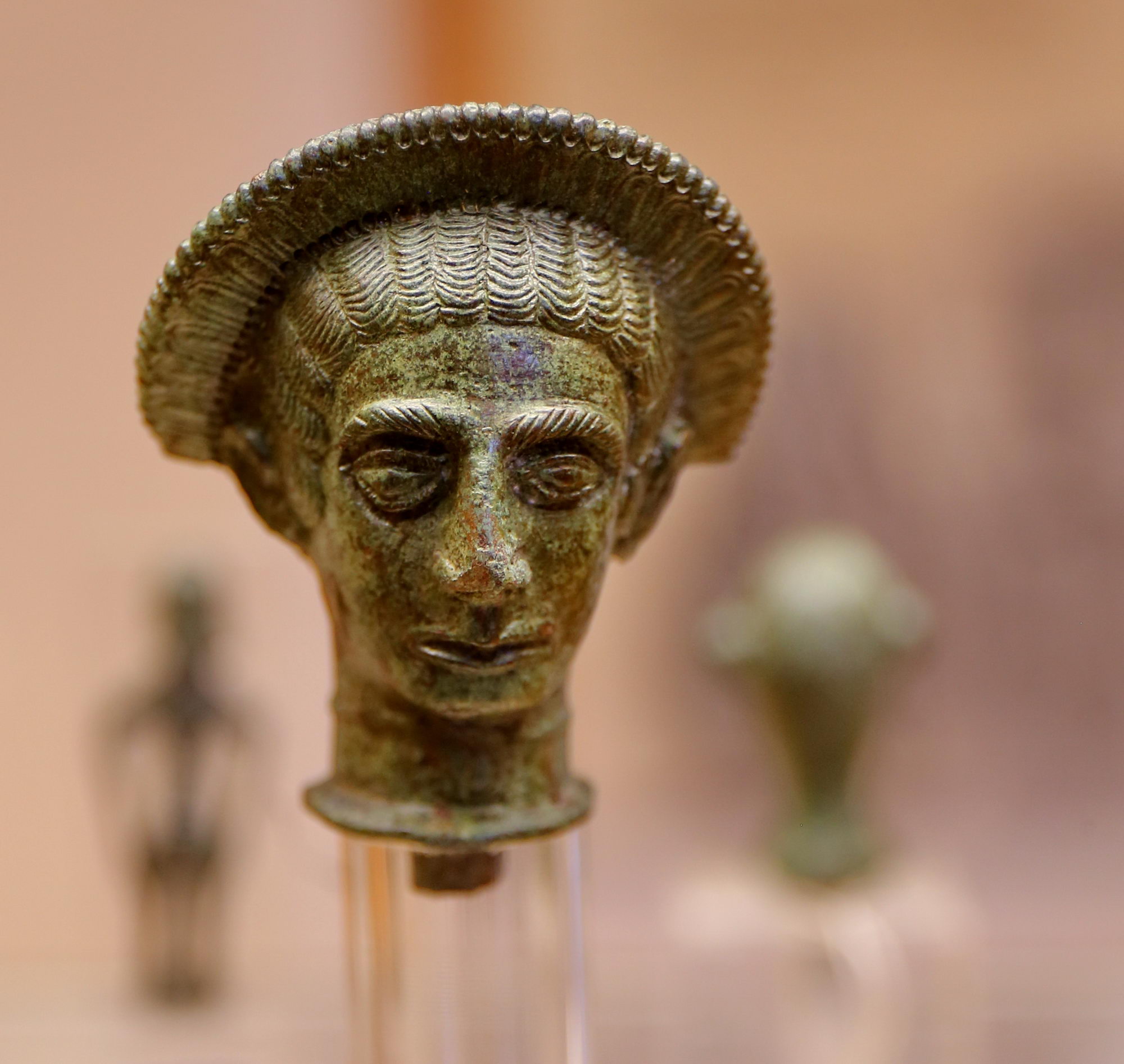
Etruscan votive (= offered to the gods) bronze figurines from the Archaeological Museum of Fiesole.

Small, light-footed, slender figures—refined, through endless repetition, into their purest, most elemental forms, like the letters of a handwritten script. Grotesque and cheerful at once. Yet they are not mere objects, not little knick-knacks for a shelf. Each one stands here in place of a real person, representing a moment of great need when divine help was sought: in illness, at a turning point in life, before a sporting contest, in the hope of victory that meant everything. A tiny, anxious people of shadows. The humans have long since vanished; only these remain—still clutching their troubles, no longer knowing for whom or where they should lay them down.

votives1 votives1 votives1 votives1 votives1 votives1 votives1 votives1 votives1 votives1 votives1 votives1 votives1 votives1 votives1 votives1 votives1 votives1 votives1 votives1 votives1 votives1 votives1 votives1 votives1 votives1 votives1

votives2 votives2 votives2 votives2 votives2 votives2 votives2 votives2 votives2 votives2 votives2 votives2 votives2 votives2 votives2 votives2 votives2 votives2 votives2 votives2 votives2 votives2 votives2 votives2 votives2 votives2 votives2 votives2

Etruscan angels

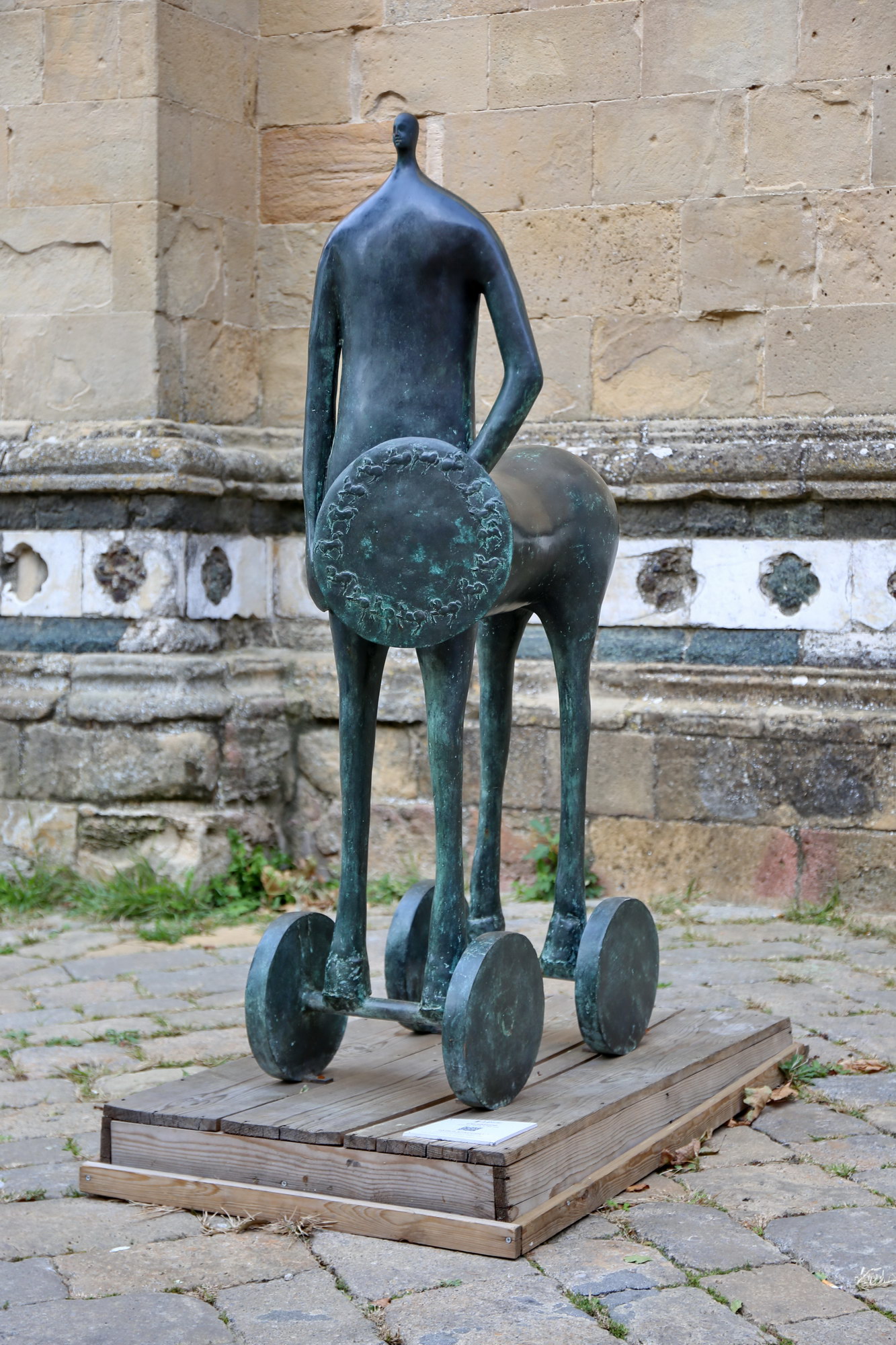
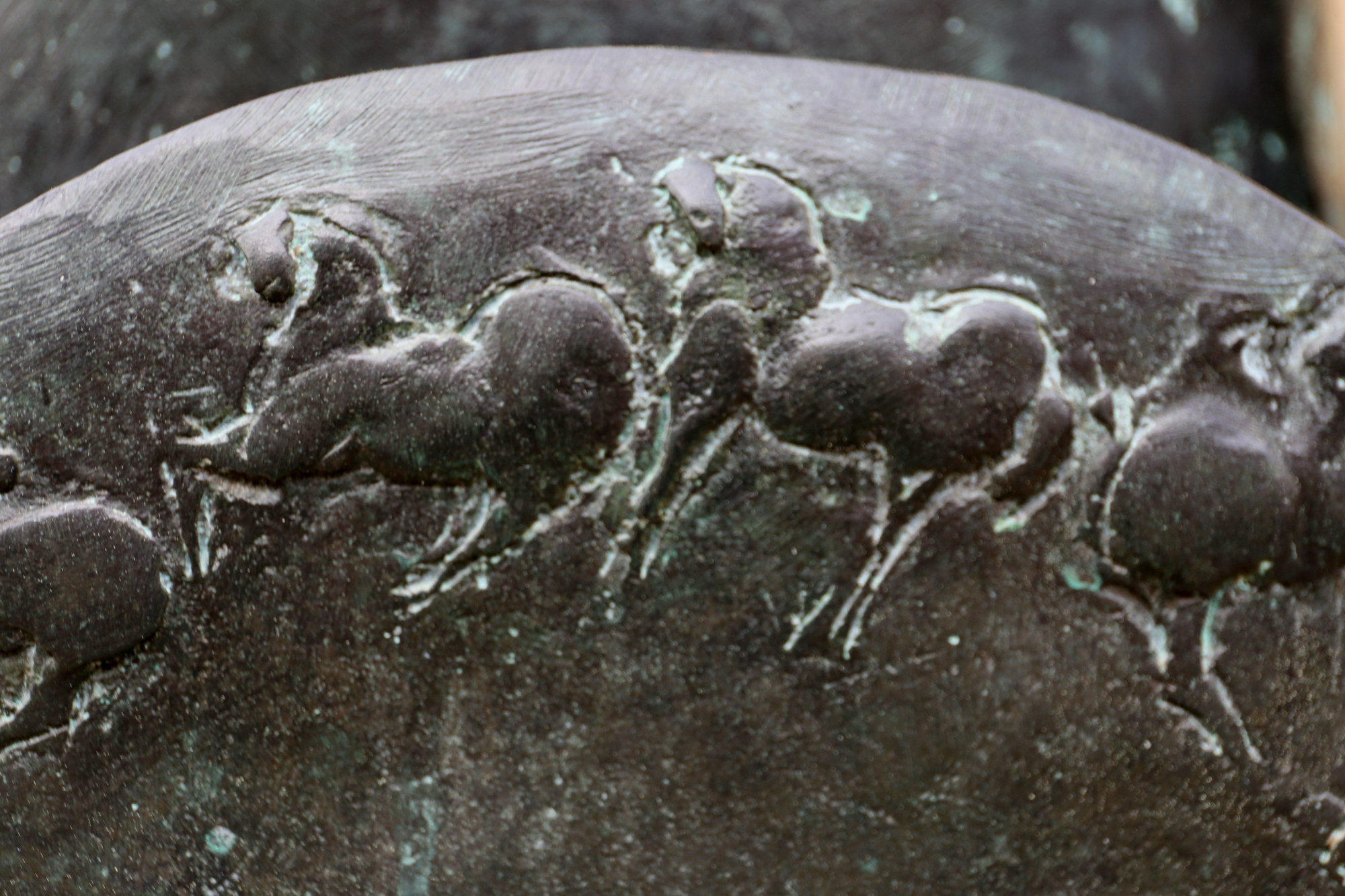
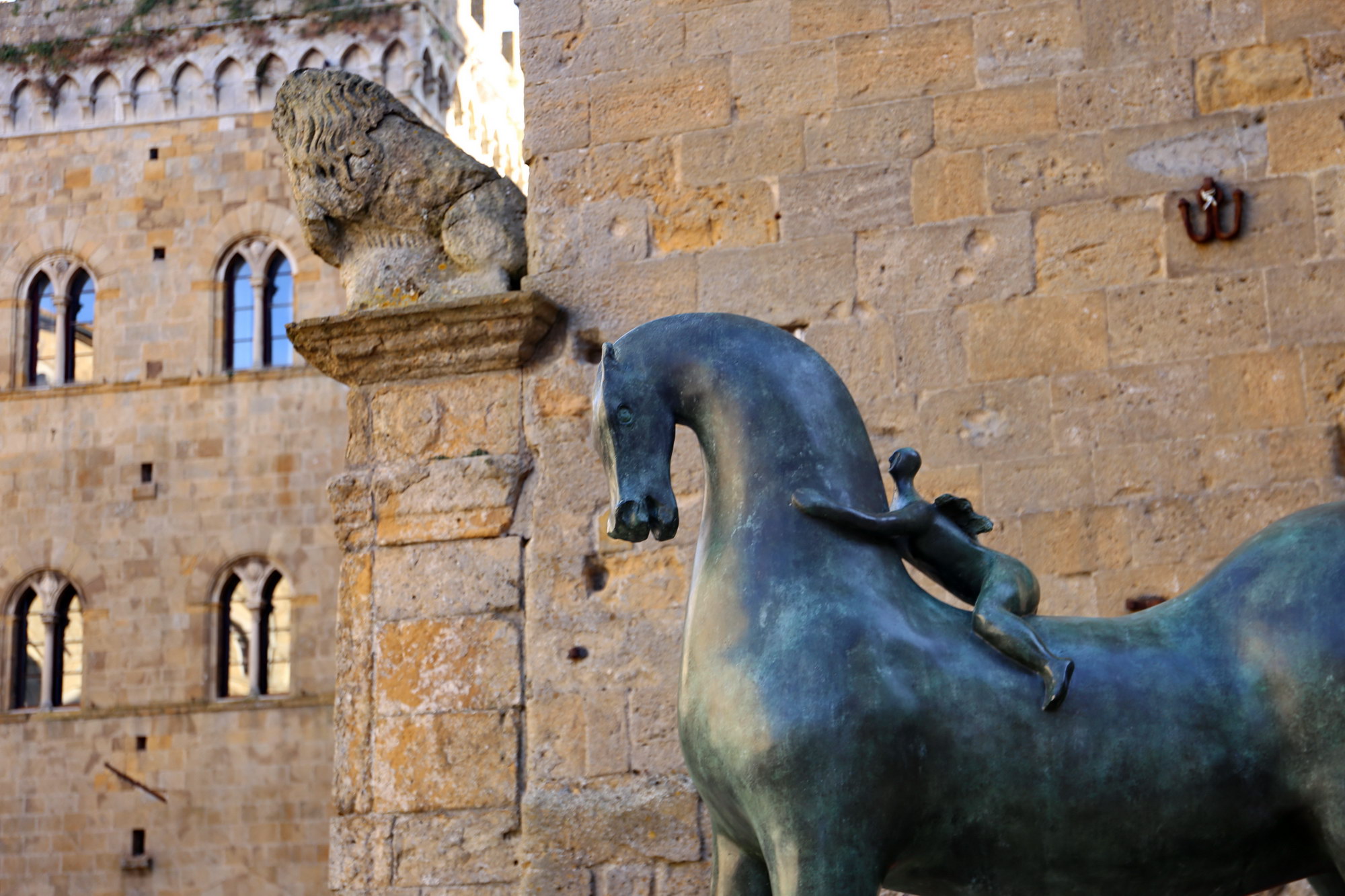
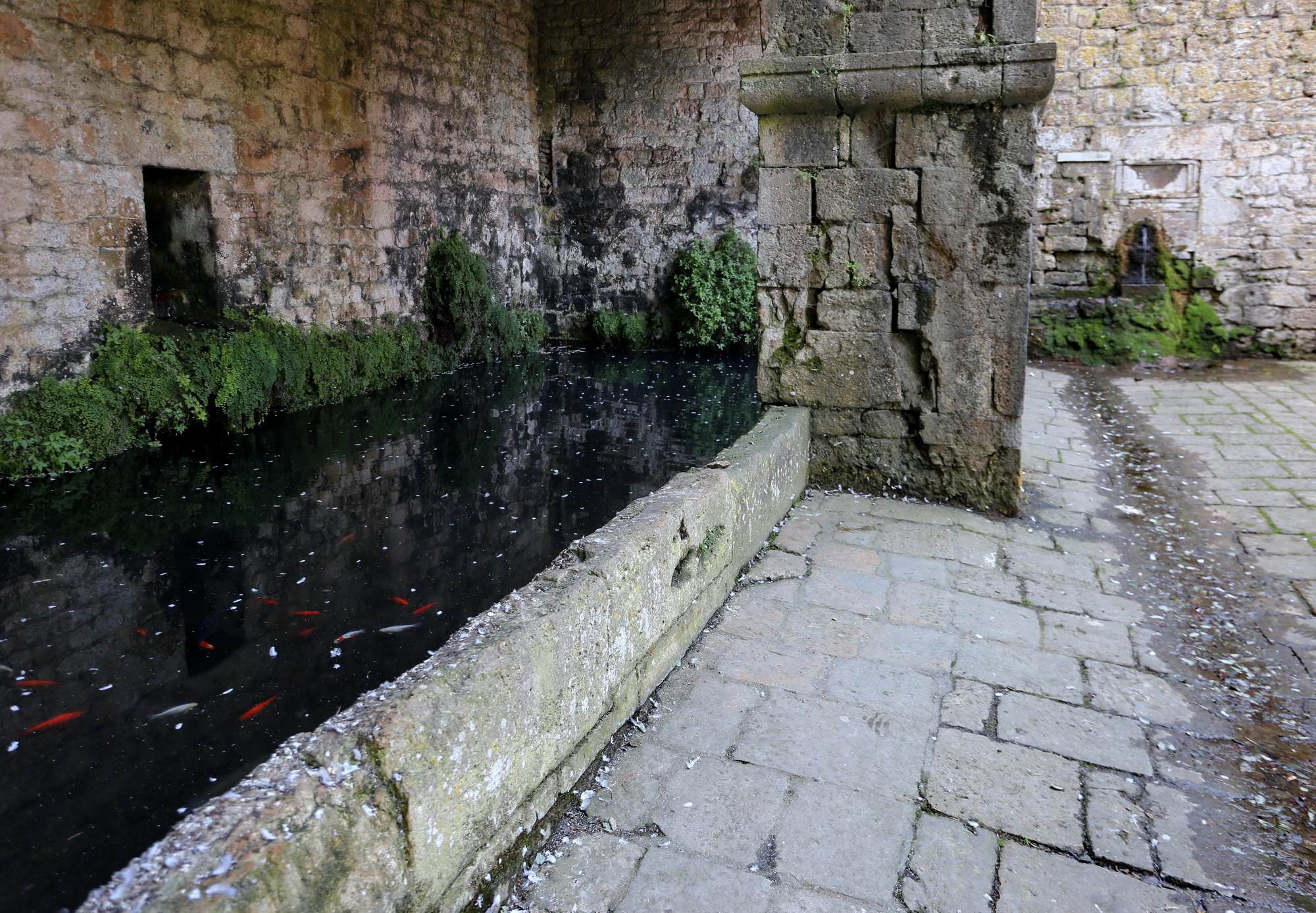
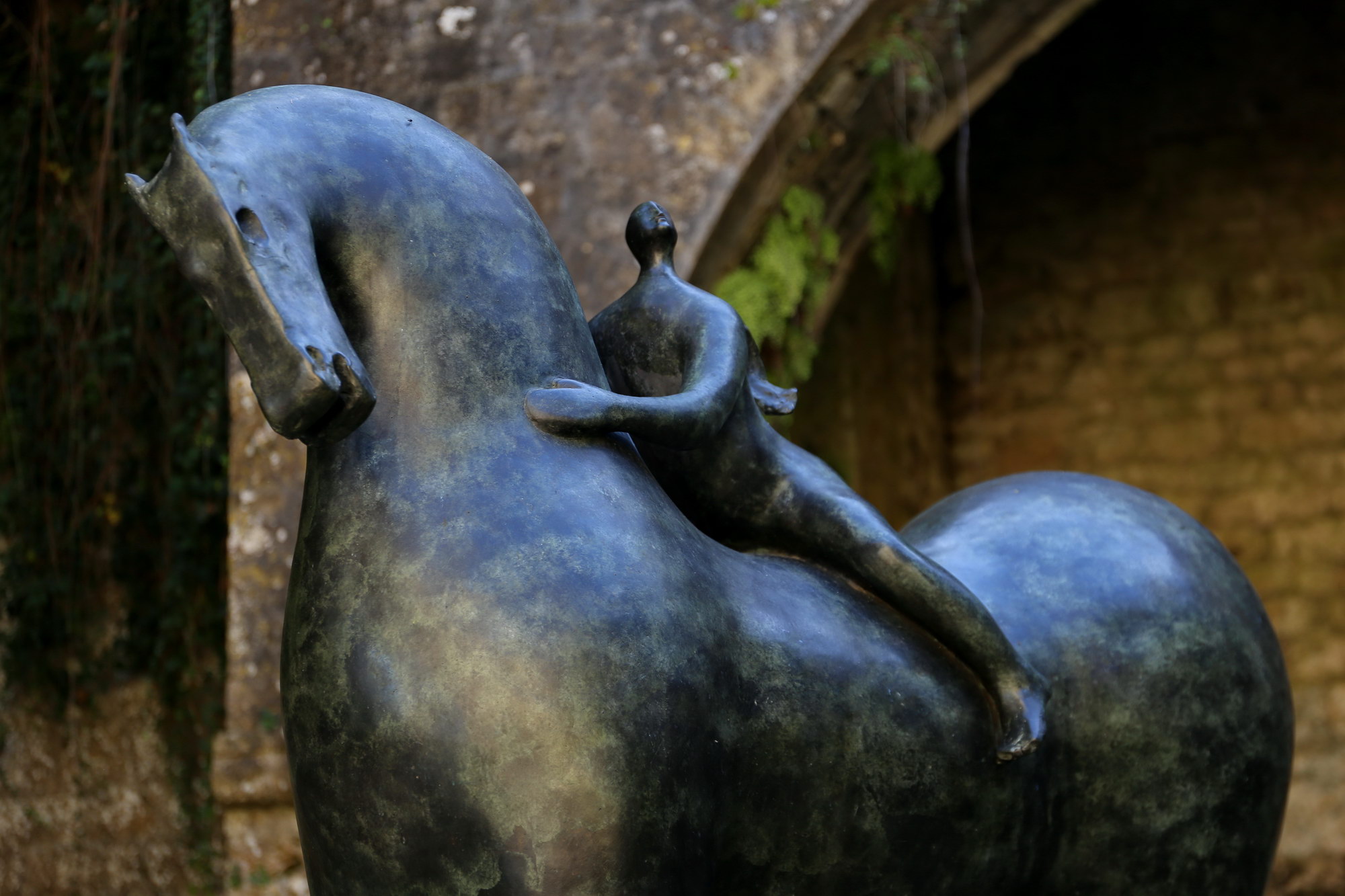
They stand in the main square of the old town, at the city hall entrance, in front of the Church of St. Michael, by the medieval laundry, in the Etruscan museum, and in the cloister courtyard of the art gallery. Men, women, and horses. It’s as if they were grotesque figures from László Réber's works – vulnerable yet protective, like angels or perhaps the genius spirits of the forgotten Etruscan mythology, the faceless, worn-down figures on the small sarcophagi of the Etruscan museum. Their shapes recall Etruscan figurines – not the slender elegance of the Evening Shadow, certainly not that, but rather their solidity, the lack of segmentation, the essential unity with the stones of the city, which they seem to repopulate, or perhaps they’ve always been here. Paolo Staccioli’s ceramic and bronze sculptures recreate a lost past in the squares of Volterra and the time capsules of its museums.

staccioli1 staccioli1 staccioli1 staccioli1 staccioli1 staccioli1 staccioli1 staccioli1 staccioli1 staccioli1 staccioli1 staccioli1 staccioli1 staccioli1 staccioli1 staccioli1 staccioli1 staccioli1 staccioli1 staccioli1 staccioli1 staccioli1 staccioli1 staccioli1

staccioli2 staccioli2 staccioli2 staccioli2 staccioli2 staccioli2 staccioli2 staccioli2 staccioli2 staccioli2 staccioli2 staccioli2 staccioli2 staccioli2 staccioli2 staccioli2 staccioli2 staccioli2 staccioli2

staccioli3 staccioli3 staccioli3 staccioli3 staccioli3 staccioli3 staccioli3 staccioli3 staccioli3 staccioli3 staccioli3 staccioli3 staccioli3 staccioli3 staccioli3 staccioli3