Switch over to our new blog! • ¡Pásese a nuestro nuevo blog!

The renewed version of our blog, with more features, a richer design, and available in nine languages, can be read here: https://wangriver.com

The new version also includes the old posts, often in expanded form. If you are curious about the updated version of this post, replace “riowang.blogspot.com/” in the URL with “riowang.studiolum.com/”, and the new link will most likely lead you there.


La versión renovada de nuestro blog, con más herramientas, un diseño más rico y disponible en nueve idiomas, se puede leer aquí: https://riowang.com

La nueva versión también incluye las publicaciones antiguas, a menudo en una forma ampliada. Si tiene curiosidad por la versión actualizada de esta entrada, sustituya «riowang.blogspot.com/» en la URL por «riowang.studiolum.com/es/», y el nuevo enlace probablemente le llevará allí.

Mostrando entradas con la etiqueta pilgrimage. Mostrar todas las entradas

To Mecca via Paris

Iskander completing the pilgrimage to Mecca. Ferdowsi, Shahnameh, Persian manuscript copied in 1440, BnF

– And why don’t you travel to Mecca?
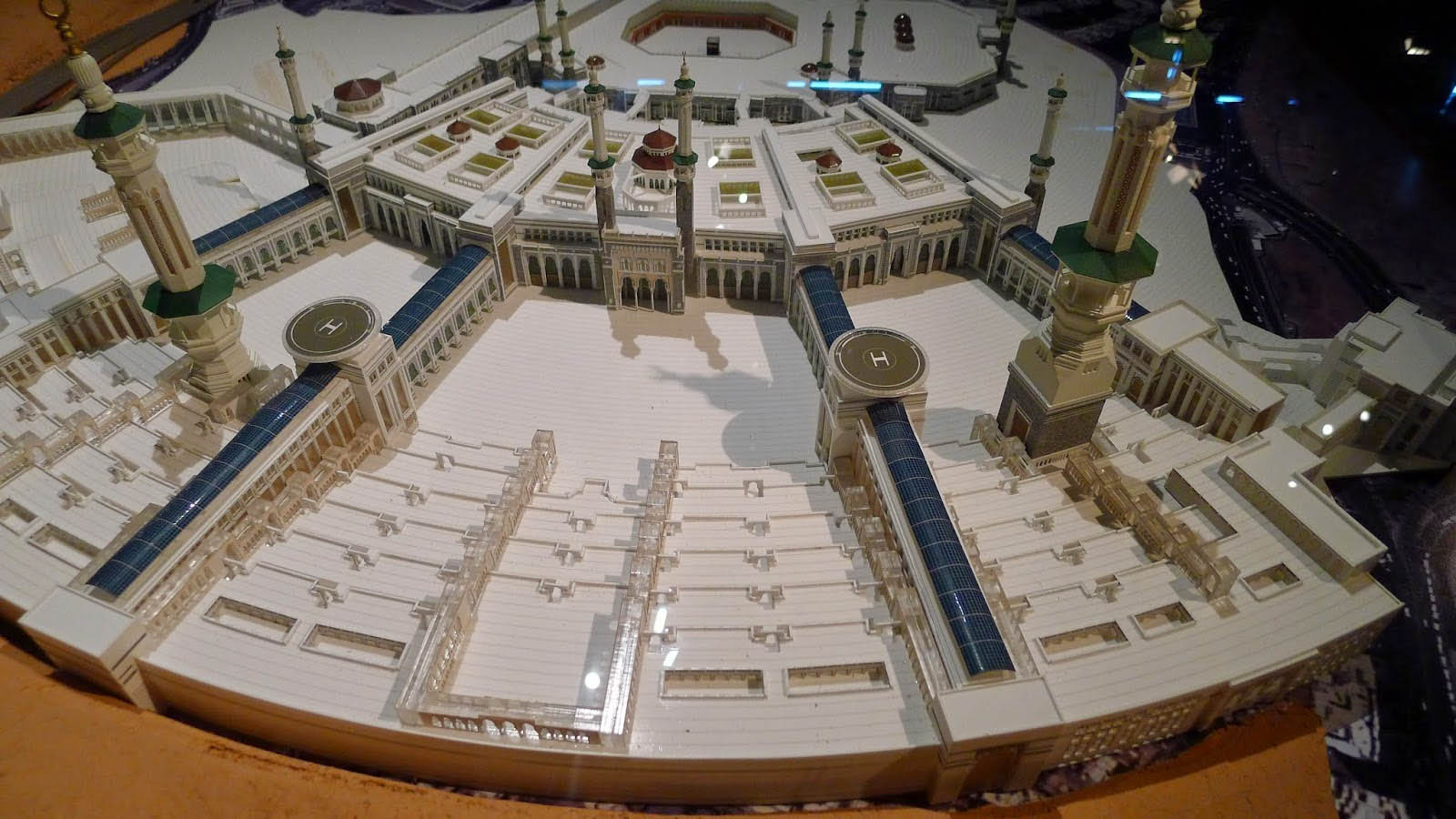
Standing in front of the large model of the Great Mosque of Mecca, I lift my eyes. The couple standing before me in the semi-darkness of the exhibition “Hajj, the pilgrimage to Mecca” of the Institut du monde arabe of Paris, looks at me smiling.

– It is an extraordinary experience, we have already done it three times… all these people from around the world, all this brotherhood, all this peace is something you won’t find anywhere else. Really, you should go, everyone can go there, you know…
I recall an image, this highway, where the roads part: straight Mecca for Muslims, and for non-Muslims, next exit right…
– I do not think I can…
They hesitate. And with a sigh:
– Ah, true, you must be Muslim…
The woman smiles at me as at an ignorant child, while the husband continues in a soft voice:
– But you know, it’s very simple. A simple formula to utter, nothing more, no preliminary studies, no ceremony… For ou, a historian, to say that Muhammad is a prophet… this is a historical truth, right? It would not be difficult for you…
A simple formula. A formality, so to say.
I think of Richard Burton visiting Mecca in 1853, disguised as an Afghan doctor. Surely, no period is simple, but 2014 does not seem to me the easiest year to take the route of pilgrimage.
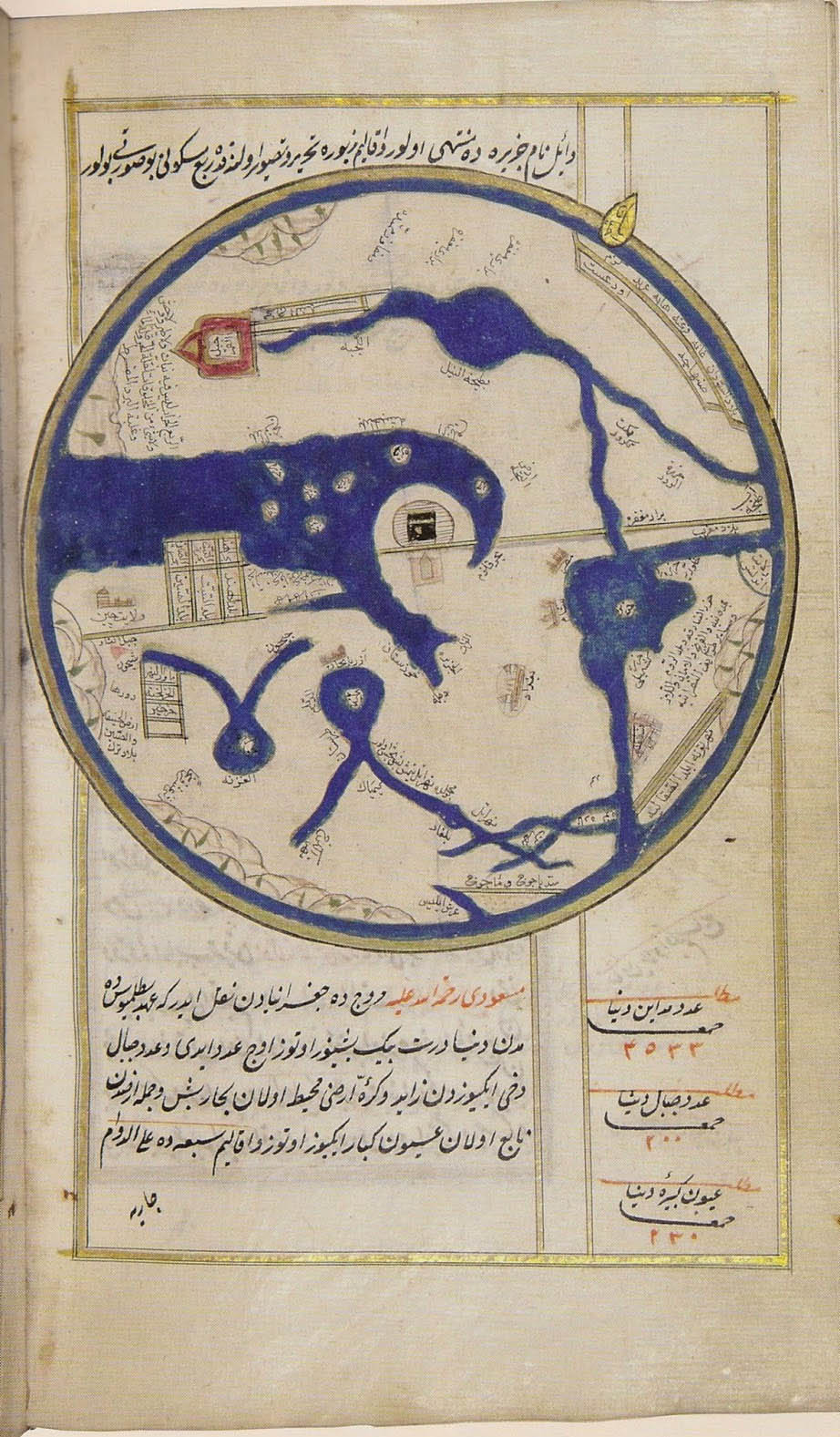
Map, Turkey, 1650, Leiden, University Library.

No, this journey has never been easy, but during the centuries there were several European travelers to visit, describe, survey, map, draw and photograph the holy places of Islam.
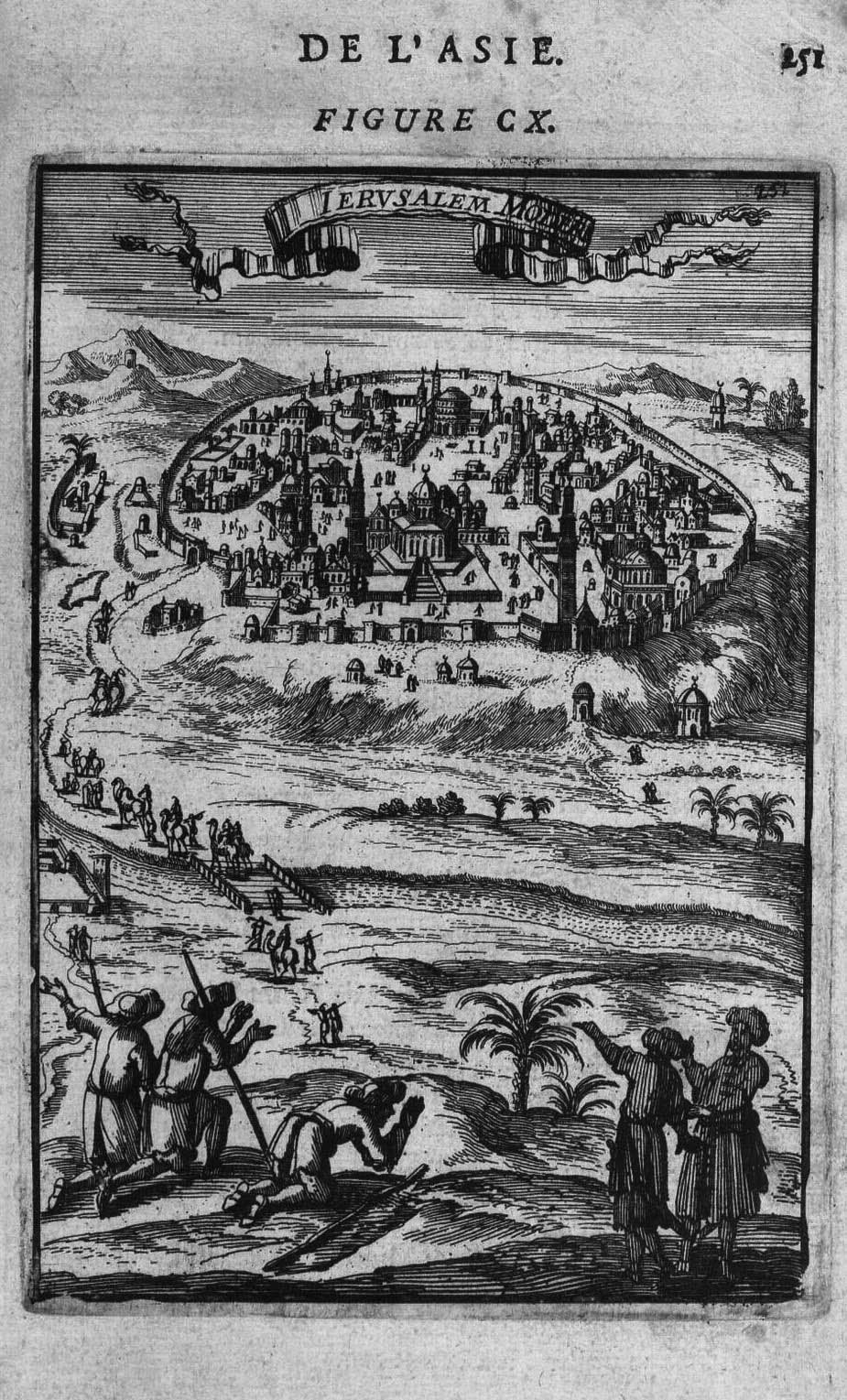
Alain Manesson Mallet, Description de l’univers contenant les différents systèmes du Monde, les cartes générales et particulières de la géographie ancienne et moderne, les plans et profils des principales villes et des autres lieux plus considérables de la terre, avec les portraits des souverains qui y commandent, leurs blasons, titres et livrées, et les mœurs, religions, gouvernements et divers habillements de chaque nation…, 1683, BnF. On this view of Jerusalem, the pilgrims in the foreground are represented in an attitude of adoration.

hajj1 hajj1 hajj1 hajj1 hajj1 hajj1 hajj1 hajj1 hajj1 hajj1 hajj1 hajj1 hajj1 hajj1 hajj1 hajj1 hajj1

To reach Mecca, these travelers had to outwit and outsmart the traps, pretend to convert, sometimes disguise themselves, like Ali Bey el Abassi, who gave a lecture on his travels at the Institut de physique in Paris in 1807.
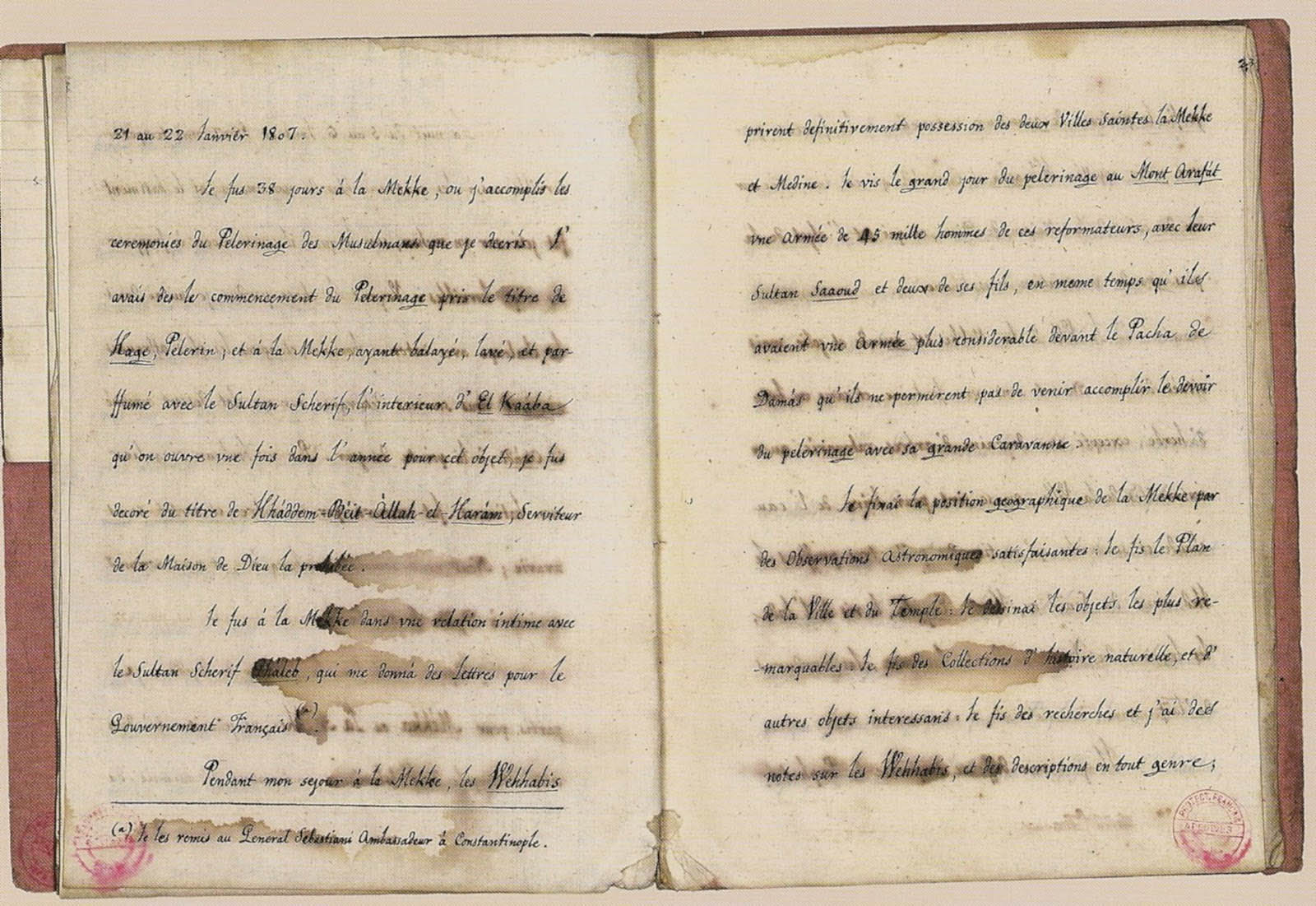
Rapport fait à la classe des sciences physiques et mathématiques de l’Institut par le chevalier Badía, contenant un précis de ses voyages Afrque et en Asie

Domingo Badía y Leblich was born in Barcelona in 1767. He traveled to Africa and the Middle East between 1803 and 1807, and then in 1817-1818. Disguised as a Muslim under the name of Ali Bey el Abassi, he first visited Morocco in 1803 with the support of the Spanish Secretary of State Manuel Godoy, with the aim of conquering the kingdom for Spain. He managed to fool both Sultan Moulay Sliman, and the heads of the religious orders. When he already felt that his popularity in Morocco was such that he would be able to overthrow the sultan and seize the power, he lost the backing of the Spanish authorities. He then decideto undertake on his own account the pilgrimage to Mecca.
In the holy city he was welcomed with honor, due to the noble pedigree he has invented for himself, connecting him directly to the prestigious Abbasid dynasty.
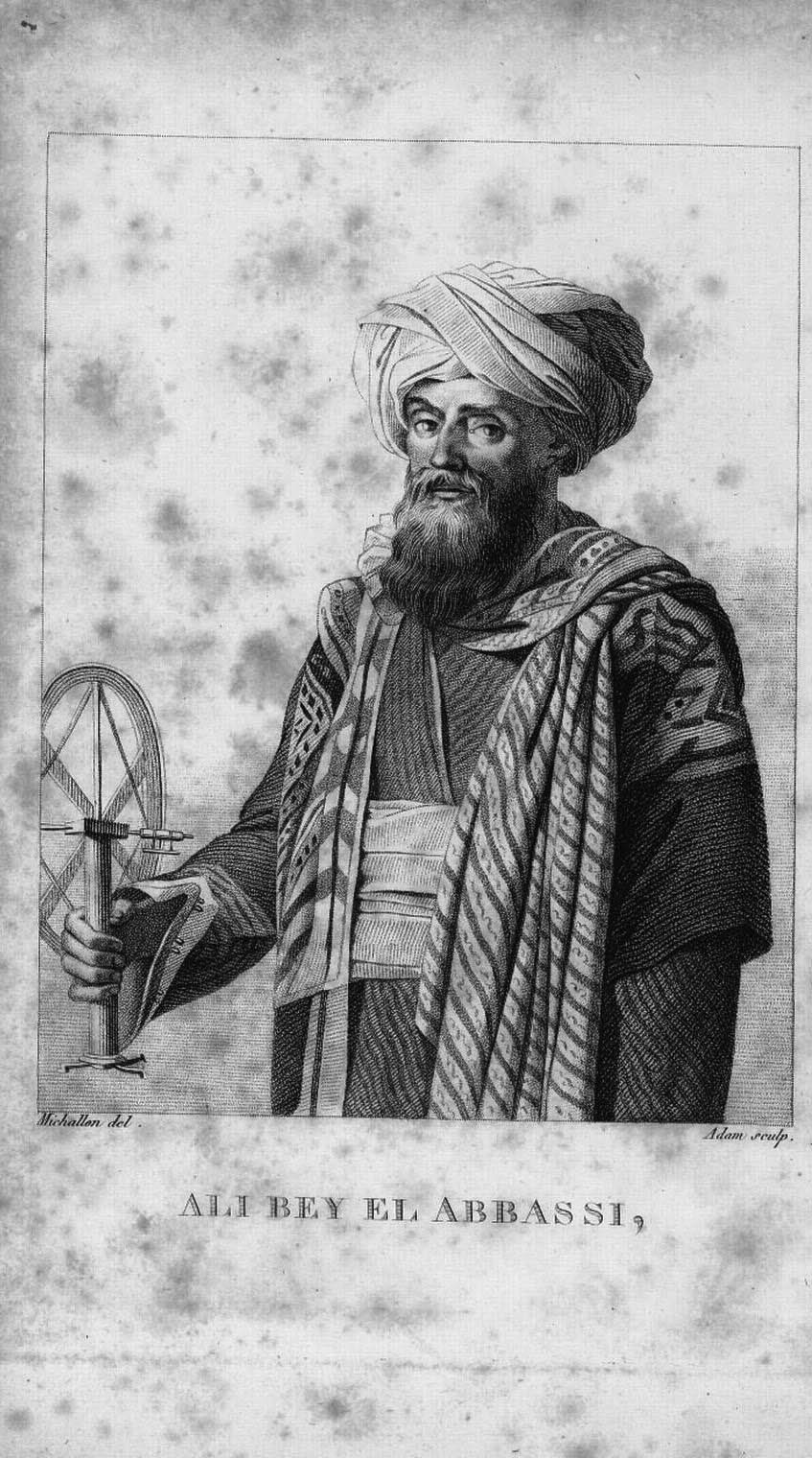
Ali Bey El Abassi (Domingo Badía y Leblich) (1766-1818), Voyages d’Ali Bey El Abbassi en Afrique et en Asie pendant les années 1803, 1804, 1805, 1806 et 1807, illustrated byAchille-Etna Michallon, (1796-1822), Didot (Paris), 1814. This and some of the following images are from this work.

Upon his return to Europe, while Spain was occupied by France, and Napoleon placed on its throne his brother Joseph Bonaparte, Ali Bey el Abassi, redressed as Domingo Badía, stood in French service. In 1808, after the withdrawal of Napoleon’s army, Badía, considered a traitor in Spain, was forced into exile in Paris. There he published in 1814 under his Muslim name the account of his journey to Marocco and  to the Middle East. Written in French and lavishly illustrated, the book was quickly translated into English, German and Italian – but never into Spanish.

hajj2 hajj2 hajj2 hajj2 hajj2 hajj2 hajj2 hajj2 hajj2 hajj2 hajj2 hajj2 hajj2 hajj2 hajj2 hajj2 hajj2 hajj2 hajj2 hajj2 hajj2 hajj2 hajj2

*

But the Europeans also played a special role in the history of the hajj, not as adventurous participants, but as representatives of local authority in front of the Muslim population, especially the French in North Africa. Since the Napoleonic era, the French administrators in Egypt attempted to facilitate and at the same time to control the pilgrimage, thus ensuring the cooperation of local notables.
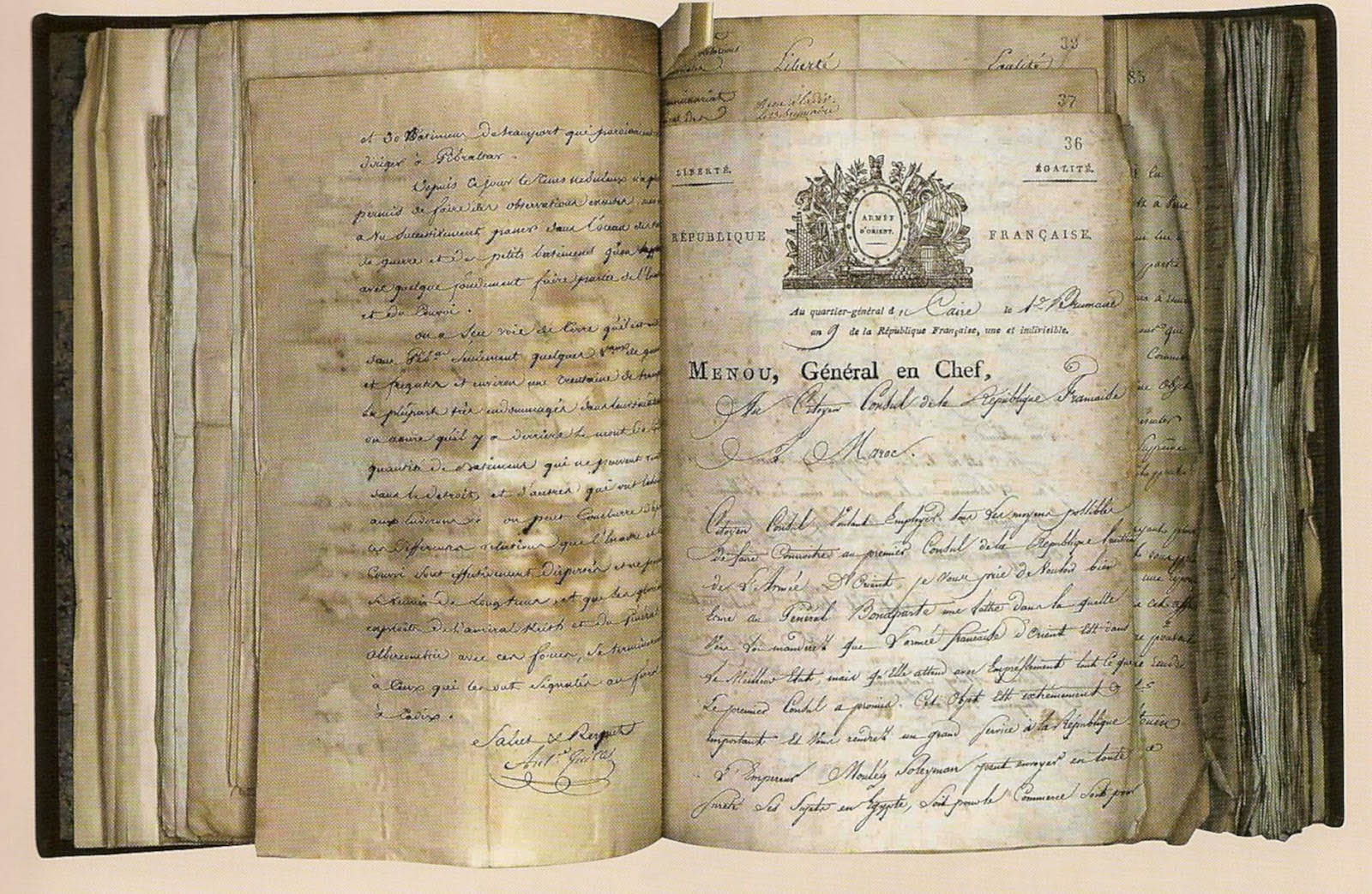
Letter by General Menou from the headquarters of Cairo to the French Consul in Morocco, to reassure the sultan about the safety of travel to Jeddah via Alexandria, 1800.

During the nineteenth century, the rise of imperialism in the Muslim areas profoundly transformed the context of pilgrimages, and elevated the holy places of Islam into the forefront of international concern. After the conquest of Algeria in 1830, France had “Muslim subjects”, whose religious life will form part of public policy. After 1871, the French colonial administration will feel a strong temptation to simply ban the pilgrimage. In the prevailing anti-clericalism, brought by the return of the Republic in France, the Muslim practices appear backward and superstitious. Failing to completely ban the hajj, the administration makes efforts to regulate the pilgrimage by the introduction of travel authorizations, by controlling travel on land and sea, and by strengthening the health surveillance measures affecting the pilgrims. Thus the excuse of epidemics in Hejaz or in India (cholera in 1865 and between 1883 and 1896, and the plague in 1899) will help to prohibit the pilgrimage for several years, and to introduce a “pilgrim’s certificate”, which are a kind of a sanitary passport.
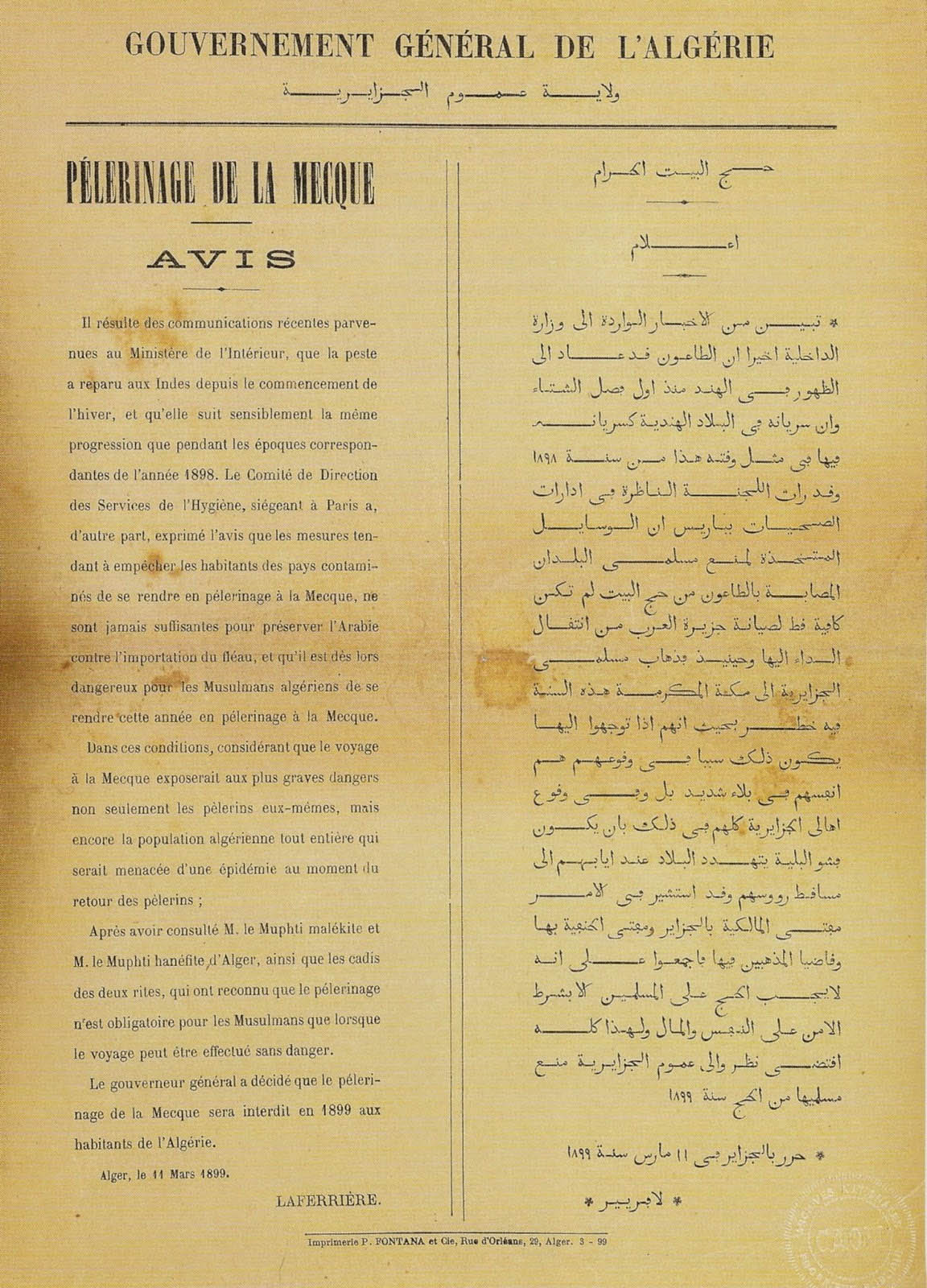
Notice of prohibition of the pilgrimage for the year 1899. Gouvernement général de l’Algérie.
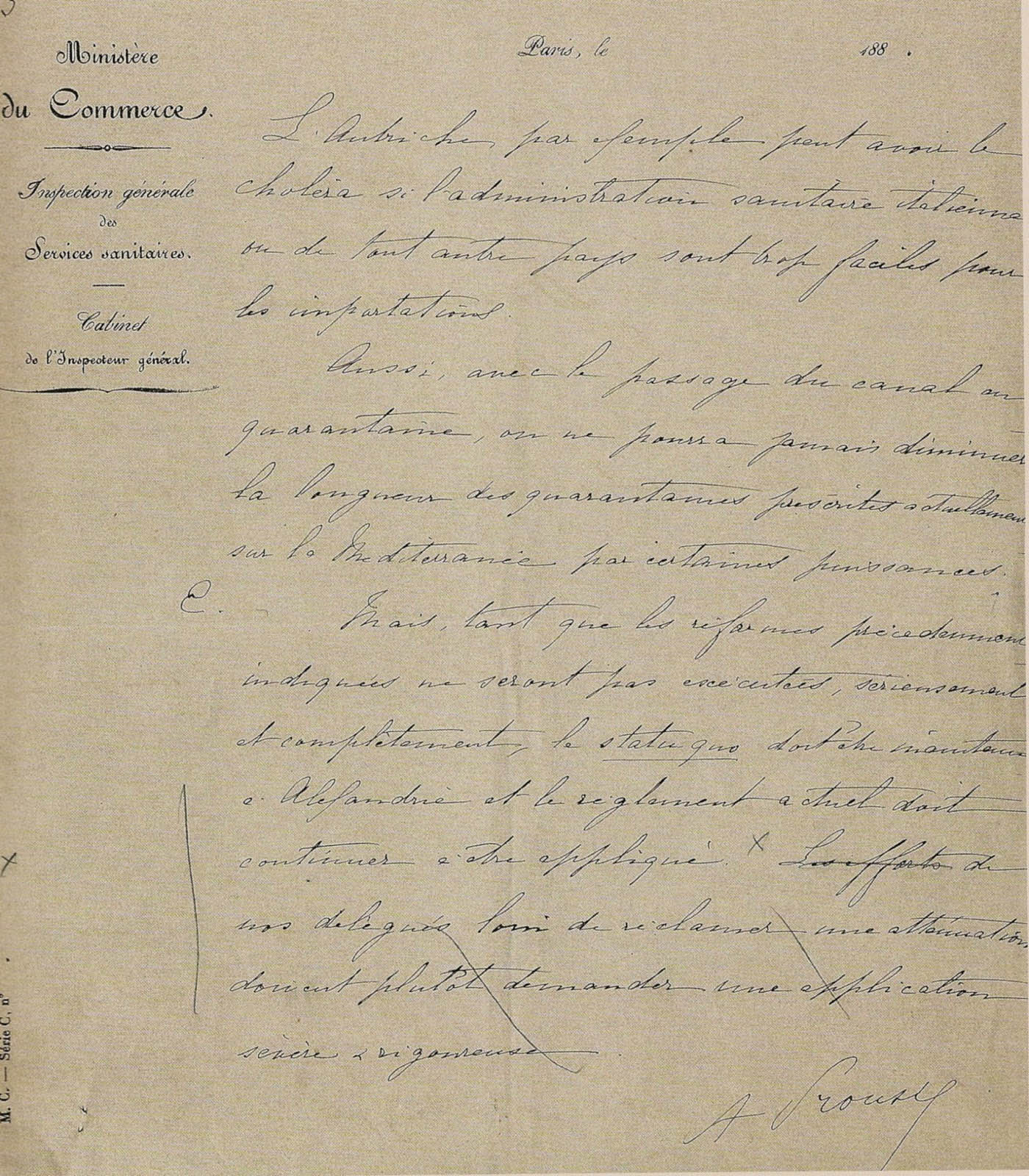
A letter concerning the quarantine for the pilgrims returning from Mecca via the Suez Canal, written by the Medical Officer of Health Adrien Proust, father of the writer

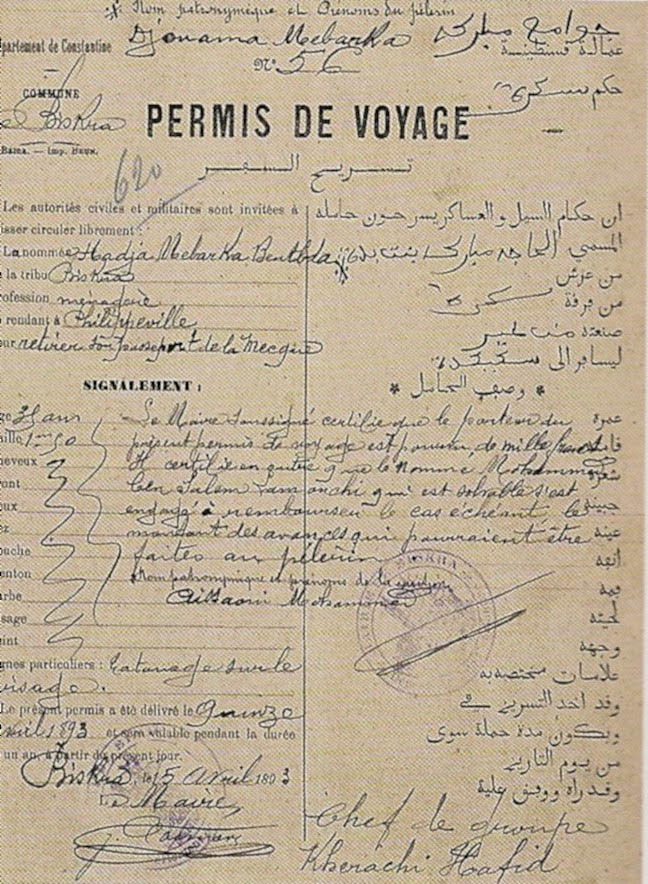
Since the Quran traditionally bases the departure to the pilgrimage on a triple freedom – freedom of self, freedom of movement, and financial independence, that is, the possession of the material resources required to the journey –, the colonial authorities bound the issue of the passport of pilgrimage to these requirements. This served to prevent the pilgrimage of the poor, who would go begging along the road of hajj, and who were often lumped together with the “illegals”, or “sans-papiers”, as we would say today in France.
The following permit to travel, issued to a woman wearing “a tattoo on her face” as a distinctive sign, makes reference to the creditworthiness of the household head, and his commitment to reimbuse the eventual costs of repatriation to the colonial government.
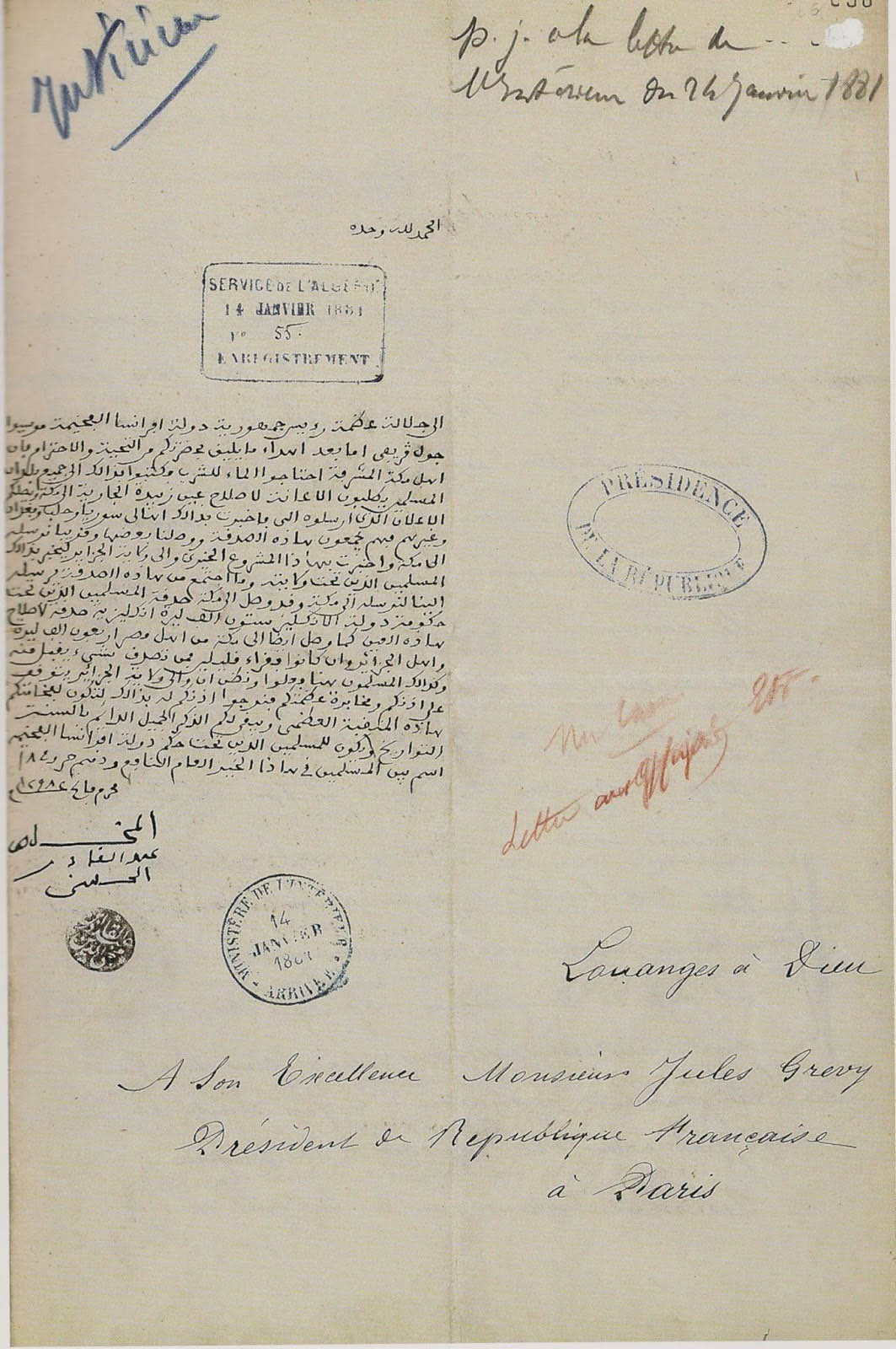
Demand of Abdel Kader to the President of the French Republic Jules Grévy for the permission to launch a subscription in Algeria for the construction of a fountain in Mecca, 1881

The improvement of the means of transport accompanying the colonial conquest greatly promoted the travel to Mecca. The railway, established in Egypt in the 1850s, allowed an easy access to the Red Sea, where the pilgrims boarded on steamboats, also supported by the opening of the Suez Canal in 1869. At the turn of the century, as a response to the growing Western economic influence, the Ottoman authorities decided to build a railway line from Damascus to Mecca. Financed exclusively by Muslim capital, and realized by German engineers, the line was completed in 1908, at the time of the Young Turk revolution, and soon found success.
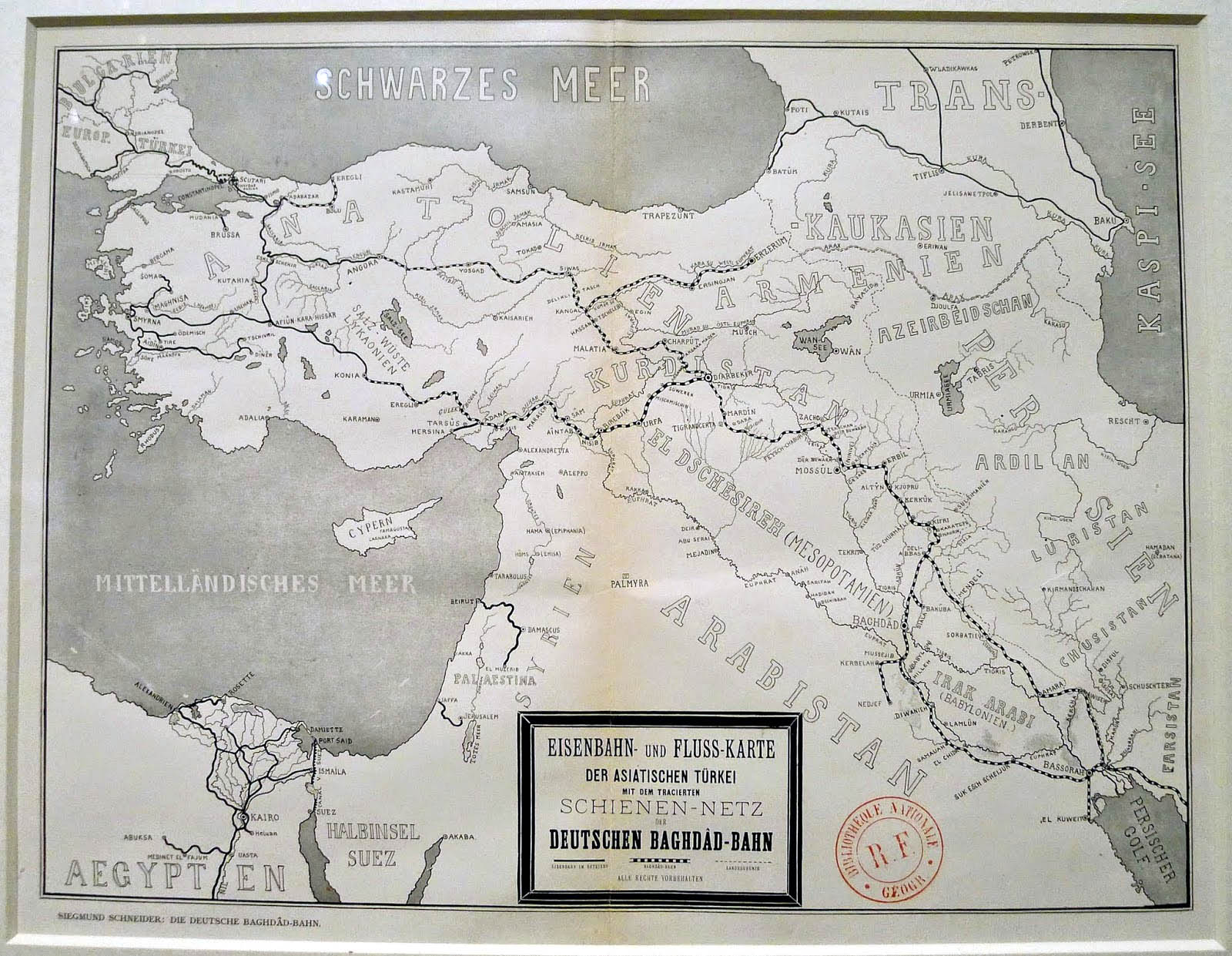
Deutsche Baghdad-Bahn, ca. 1908.

Map of the railway line Damascus–Mecca, Egypt, 1905.
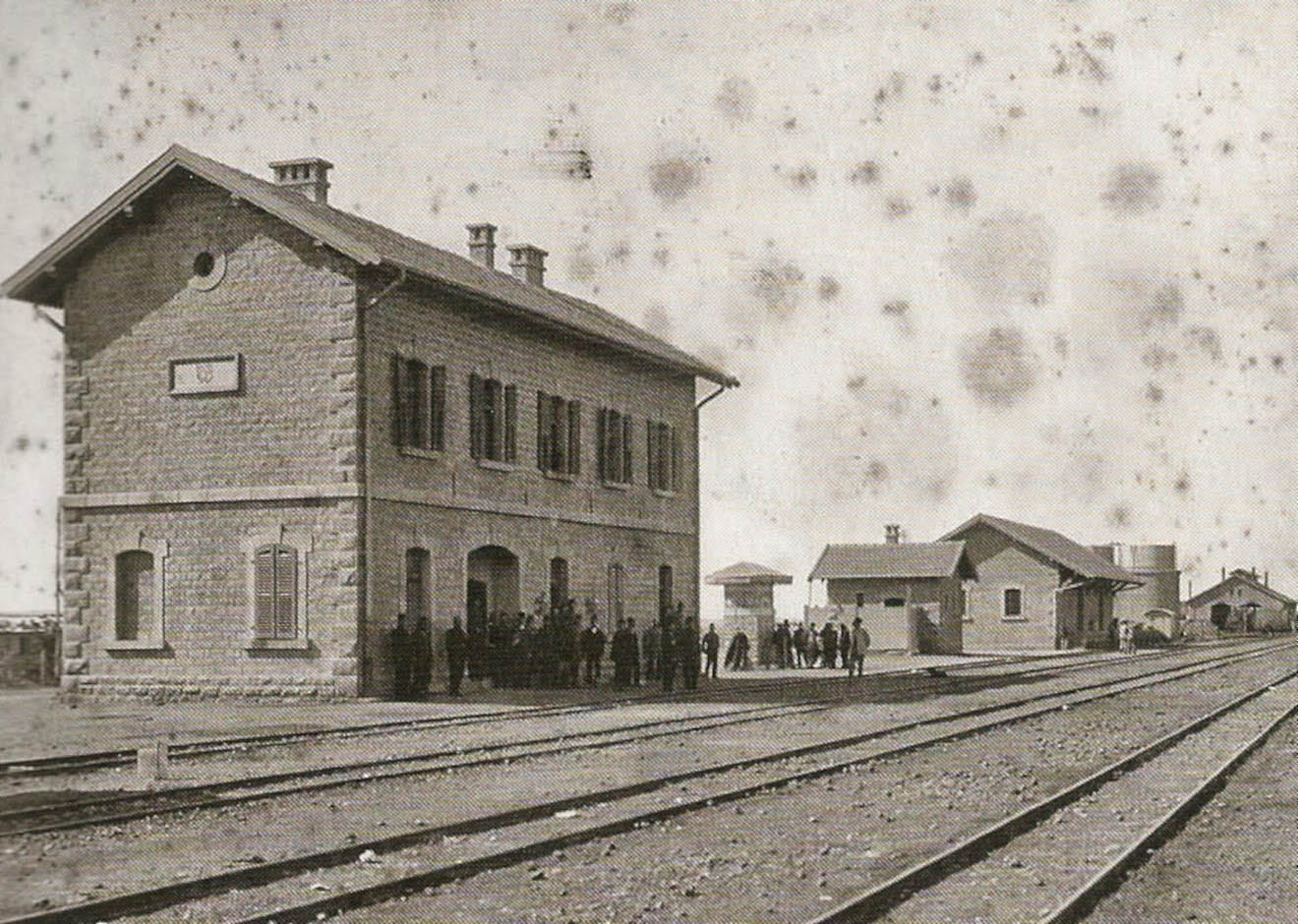
A station along the Hijaz railway line

On the sea, British and French companies provided the shipping lines from all ports of North Africa, Asia Minor and the Syrian coast to Alexandria or Port Said, from where the pilgrims arrived through the Canal or by railway to Suez city, the main port of embarkation for Jeddah.

hajj3 hajj3 hajj3 hajj3 hajj3 hajj3 hajj3

The paradox of this boom of transport, however well-controlled, was that it promoted the flow of pilgrims to a territory forbidden to non-Muslims. The colonial powers watched with anxiety the masses of pilgrims marching into the closed holy places, where they undoubtedly encountered ideas hostile to the colonial powers, which they brought with themselves and disseminated on their return.

Or perhaps they only brought back souvenirs, these first products of a nascent tourism industry?
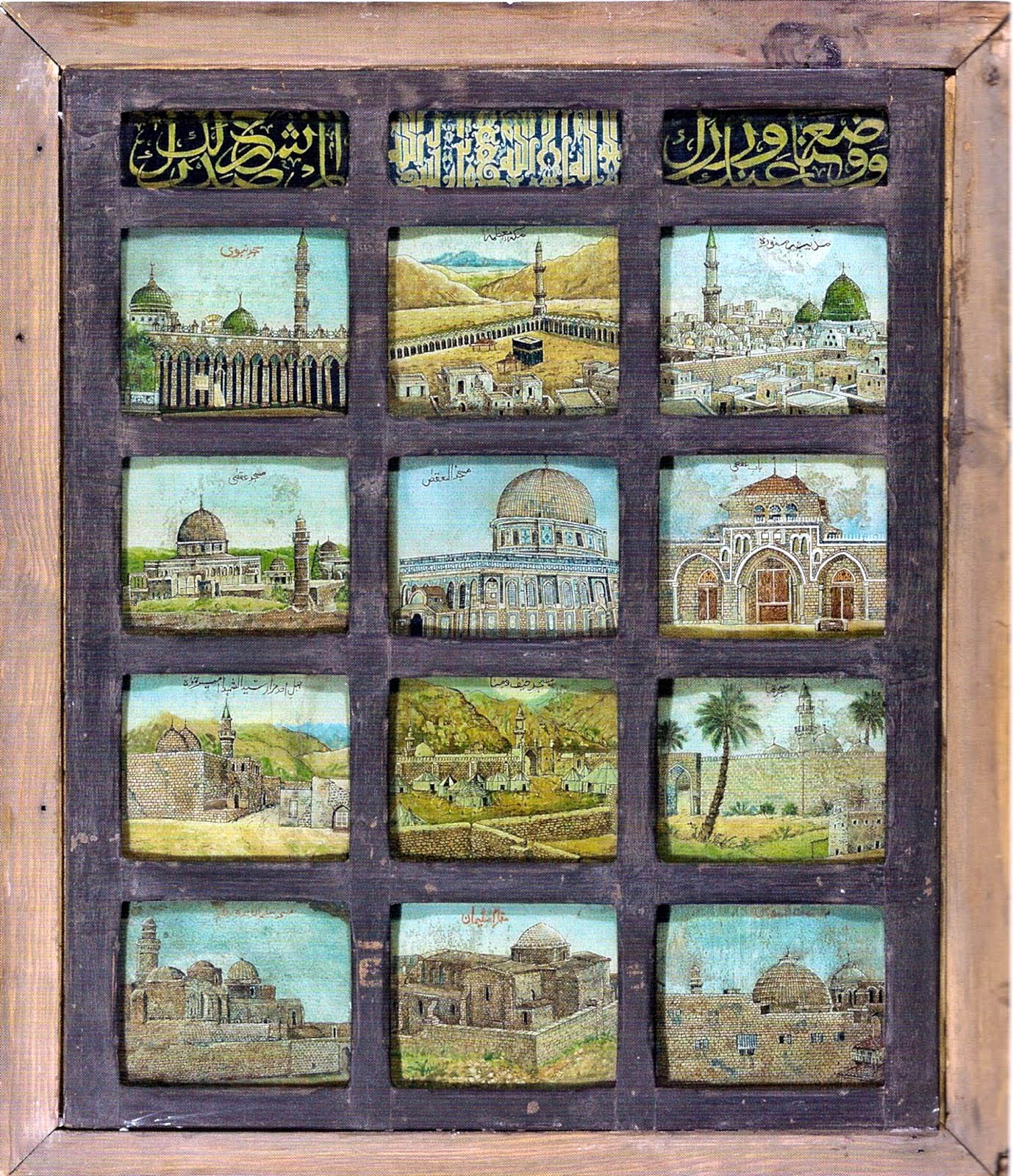
Twelve views of mosques along the pilgrimage route, including Mecca, Medina and Jerusalem. India, 19th century

La route du Hajj via Paris

Iskander accomplissant le pèlerinage à La Mekke, f. 342. Šahnama. Abū l-Qāsim Ḥasan b. Isḥāq b. Šarafšāh Firdawsī Ṭūsī, manuscrit persan copié en 1440, BnF.

— Et pourquoi n’iriez-vous pas à La Mecque ?
Debout devant la large maquette de l’extension de la grande mosquée de La Mecque, je les regarde. Le couple qui se tient devant moi dans la pénombre de l’exposition « Hajj, le pèlerinage à La Mecque » à l’Institut du monde arabe, à Paris, me fait face en souriant.


— C’est une expérience extraordinaire, le pèlerinage, nous l’avons fait déjà trois fois et… ces gens venus des quatre coins du monde, toute cette fraternité, cette paix, c’est quelque chose qu’on ne rencontre nulle part ailleurs. Vraiment, vous devriez y aller, chacun peut y aller, vous savez…
Une image me traverse, cette autoroute dont les voies se séparent — La Mecque tout droit pour les musulmans, non-musulmans prochaine sortie à droite.
— Je ne crois pas pouvoir…
Ils hésitent. Et dans un soupir :
— Ah, c’est vrai, il faut être musulman…
La femme me sourit comme à un enfant ignorant avant que son mari ne tempère d’une voix douce :
— Mais vous savez, c’est très simple. Une simple formule à prononcer, rien de plus, pas d’études préalables, pas de cérémonie… Vous qui êtes historienne, dire que Mahomet est un prophète… c’est une vérité historique, non ? Ce ne serait pas difficile pour vous…
Une simple formule. Une formalité pour tout dire.
A moi de leur sourire. Je pense à Richard Burton visitant La Mecque en 1853 sous le déguisement d’un médecin afghan. Sans doute aucune époque n’est-elle simple, mais 2014 ne me semble pas l’année la plus simple pour prendre la route du pèlerinage.

Carte, Turquie, 1650, Leyde, University Library.

Non, ce voyage n’a jamais été simple mais il y eut au cours des siècles des voyageurs européens pour visiter les lieux saints de l’islam et les décrire, les arpenter et les cartographier, les dessiner, les photographier.

Alain Manesson Mallet, Description de l’univers contenant les différents systèmes du Monde, les cartes générales et particulières de la géographie ancienne et moderne, les plans et profils des principales villes et des autres lieux plus considérables de la terre, avec les portraits des souverains qui y commandent, leurs blasons, titres et livrées, et les mœurs, religions, gouvernements et divers habillements de chaque nation…, 1683, BnF. Sur cette vue de Jérusalem, les pèlerins au premier plan sont dans une attitude d’adoration.

hajj1 hajj1 hajj1 hajj1 hajj1 hajj1 hajj1 hajj1 hajj1 hajj1 hajj1 hajj1 hajj1 hajj1 hajj1 hajj1 hajj1

Pour atteindre La Mecque, ces voyageurs ont dû ruser, déjouer les pièges, prétendre se convertir, parfois se travestir, comme Ali Bey el Abassi qui donna une conférence sur ses voyages à l’Institut de physique à Paris en 1807.

Rapport fait à la classe des sciences physiques et mathématiques de l’Institut par le chevalier Badía, contenant un précis de ses voyages Afrque et en Asie

Domingo Badía y Leblich est né à Barcelone en 1767. Il a voyagé en Afrique et en Orient entre 1803 et 1807, puis en 1817-1818. Déguisé en musulman et sous le nom d’Ali Bey el Abassi, il s’est d’abord rendu au Maroc en 1803 avec le soutien du Secrétaire d’État espagnol Manuel Godoy dans l’objectif de conquérir le royaume au bénéfice de l’Espagne. Il parvint à tromper autant le sultan, Moulay Sliman, que des chefs de confréries religieuses. Alors qu’il estimait que sa popularité au Maroc était telle qu’il était en mesure de renverser le sultan et de s’emparer du pouvoir, Ali Bey perdit l’aval des autorités espagnoles. Il décida alors d’entreprendre pour son propre compte le pèlerinage de La Mecque.
Dans la ville sainte, la noble généalogie qu’il s’est inventée, le reliant directement à la prestigieuse dynastie des Abbassides, lui permit d’être accueilli avec honneur.

Ali Bey El Abassi (Domingo Badía y Leblich) (1766-1818), Voyages d’Ali Bey El Abbassi en Afrique et en Asie pendant les années 1803, 1804, 1805, 1806 et 1807, illustrations de Achille-Etna Michallon, (1796-1822), Didot (Paris), 1814. Toutes les images qui suivent, comme le portrait ci-dessus, proviennent de ce même ouvrage.

À son retour en Europe, alors que l’Espagne est occupée par la France et que Napoléon a placé sur le trône son frère Joseph Bonaparte, Ali Bey el Abassi redevenu Domingo Badía se mit au service des Français. En 1808, lors du retrait des armées de Napoléon, Badía, considéré désormais comme traître, fut contraint de s’exiler à Paris. C’est là qu’il publia en 1814 sous son nom d’emprunt le récit de son périple au Maroc et en Orient. Écrit en français et abondamment illustré, l’ouvrage fut rapidement traduit en anglais, en allemand et en italien — mais pas en espagnol.

hajj2 hajj2 hajj2 hajj2 hajj2 hajj2 hajj2 hajj2 hajj2 hajj2 hajj2 hajj2 hajj2 hajj2 hajj2 hajj2 hajj2 hajj2 hajj2 hajj2 hajj2 hajj2 hajj2

*

Mais les Européens ont également joué un rôle particulier dans l’histoire du hajj, non plus comme participants de fortune mais comme dépositaires de l’autorité vis-à-vis des populations musulmanes, notamment en Afrique du nord pour les Français. Dès l’époque napoléonienne, les administrateurs français en Égypte cherchent tout à la fois à faciliter et à contrôler le pèlerinage afin de s’assurer la coopération des notables locaux.

Lettre du général Menou au quartier-général du Caire au Consul de la République française au Maroc dans le but de rassurer le sultan sur la sûreté du voyage à Djeddah via Alexandrie, 1800.

Au cours du XIXe siècle, la montée en puissance de l’impérialisme dans les régions peuplées de musulmans transforme profondément les enjeux liés au pèlerinage et place le territoire sacré de l’islam dans le domaine des préoccupations internationales. La France, par sa conquête de l’Algérie en 1830, est désormais dotée de « sujets musulmans », dont la vie religieuse va s’inscrire dans le cadre des politiques publiques. Après 1871, la tentation première des administrateurs coloniaux français serait d’interdire purement et simplement le pèlerinage ! Dans le climat d’anticléricalisme qui prévaut avec le retour de la République en France, les pratiques musulmanes apparaissent rétrogrades et superstitieuses. A défaut d’empêcher totalement le hajj, l’administration va réglementer les départs en pèlerinage par le principe des autorisations de voyager, par l’encadrement des déplacements sur terre comme sur mer et enfin par le renforcement des mesures de surveillance sanitaire touchant les pèlerins. Ainsi l’argument des épidémies au Hedjaz ou même en Inde (pandémie de choléra en 1865 puis entre 1883 et 1896, épidémie de peste en 1899) va permettre d’interdire le pèlerinage plusieurs années de suite, puis d’imposer des « carnets de pèlerinage » qui sont des sortes de passeports sanitaires.

Avis d’interdiction du pèlerinage pour l’année 1899, Gouvernement général de l’Algérie.

Courrier concernant la quarantaine à organiser pour les pèlerins de retour de la Mecque, au passage du canal de Suez, rédigé par le médecin hygiéniste Adrien Proust, père de l’écrivain.

Alors que traditionnellement le Coran place le départ en pèlerinage sous le signe d’une triple liberté, liberté de soi, liberté de ses déplacements et enfin indépendance financière liée à la possession des moyens matériels nécessaires, les autorités coloniales vont s’appuyer sur ces prescriptions pour poser des conditions à l’attribution des passeports. Il s’agit d’empêcher le déplacement des « indigents » qui iraient mendier sur la route du hajj, indigents souvent confondus avec des « clandestins » — nous dirions aujourd’hui en France des « sans-papiers ».
Le permis de voyager ci-dessous, accordée à une femme portant un « tatouage sur le  visage » en guise de signe distinctif, cite la solvabilité du chef de famille et son engagement à rembourser à la puissance coloniale d’éventuels frais de rapatriement.


Sur cette lettre, Abdel Kader demande au président de la République Jules Grévy l’autorisation d’ouvrir une souscription en Algérie pour la construction d’une fontaine à La Mecque, 1881.

Enfin, l’amélioration des moyens de transport qui accompagne la conquête coloniale bouleverse les conditions du voyage vers La Mecque. Le chemin de fer, implanté en Égypte dans les années 1850, permet l’accès à la mer Rouge où se développe la navigation à vapeur — accrue par l’ouverture du canal de Suez en 1869. Au tournant du siècle, en réponse à l’emprise économique croissante des occidentaux sur le voyage vers le Hedjaz, les autorités ottomanes décident la construction d’une ligne de chemin de fer reliant Damas à La Mecque. Financée exclusivement par des capitaux musulmans et réalisée par des ingénieurs allemands, la ligne est achevée en 1908, au moment de la révolution jeune-turque, et connaît aussitôt le succès.

Deutsche Baghdad-Bahn, vers 1908.

Carte des chemins de fer Damas – La Mecque, Égypte, 1905.

L’une des gares sur la ligne du Hedjaz

Sur la mer, les compagnies de navigation britanniques ou françaises assurent des liaisons maritimes à partir de tous les ports d’Afrique du Nord, d’Asie mineure et de la côte syrienne, vers Alexandrie ou Port Saïd, d’où les pèlerins joignent par le canal ou par chemin de fer la ville de Suez, principal port d’embarquement pour Djeddah.

hajj3 hajj3 hajj3 hajj3 hajj3 hajj3 hajj3

Le paradoxe de cet essor des transports bien contrôlé est qu’il favorise le flux des pèlerins vers un territoire interdit aux non-musulmans : les puissances coloniales ne peuvent donc y pénétrer et voient avec appréhension se refermer sur ces masses de pèlerins les portes d’un territoire sacré où circulent sans doute des idées hostiles à leur pouvoir et que les pèlerins rapporteront et diffuseront à leur retour.

Mais peut-être ne rapportaient-ils que des souvenirs, ces premiers produits de l’industrie touristique naissante ?

Douze vues de mosquées sur la route du pèlerinage dont la Mecque, Médine et Jérusalem. Inde, XIXe siècle.

On the way to Velikoretskoye


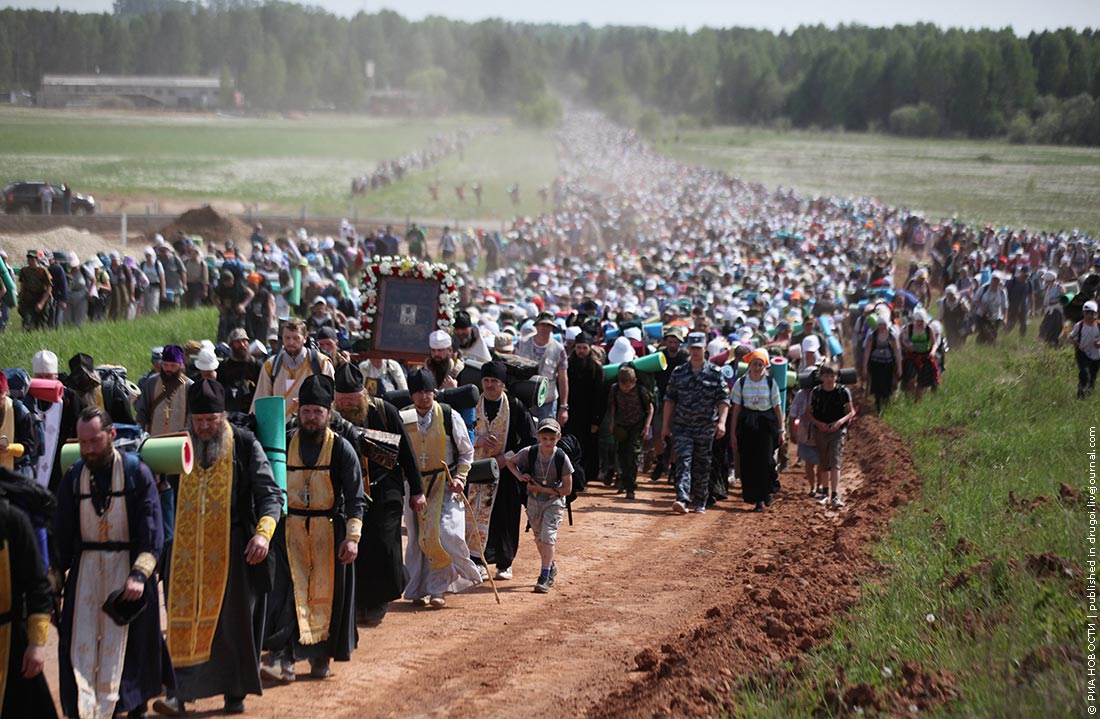
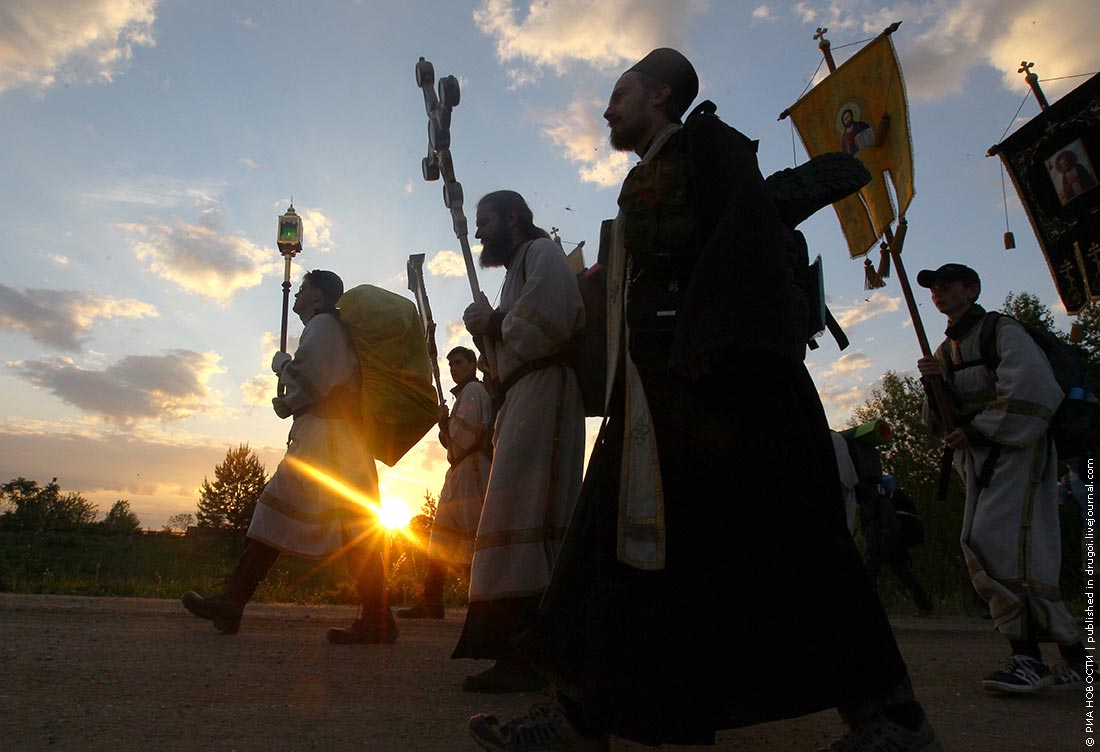
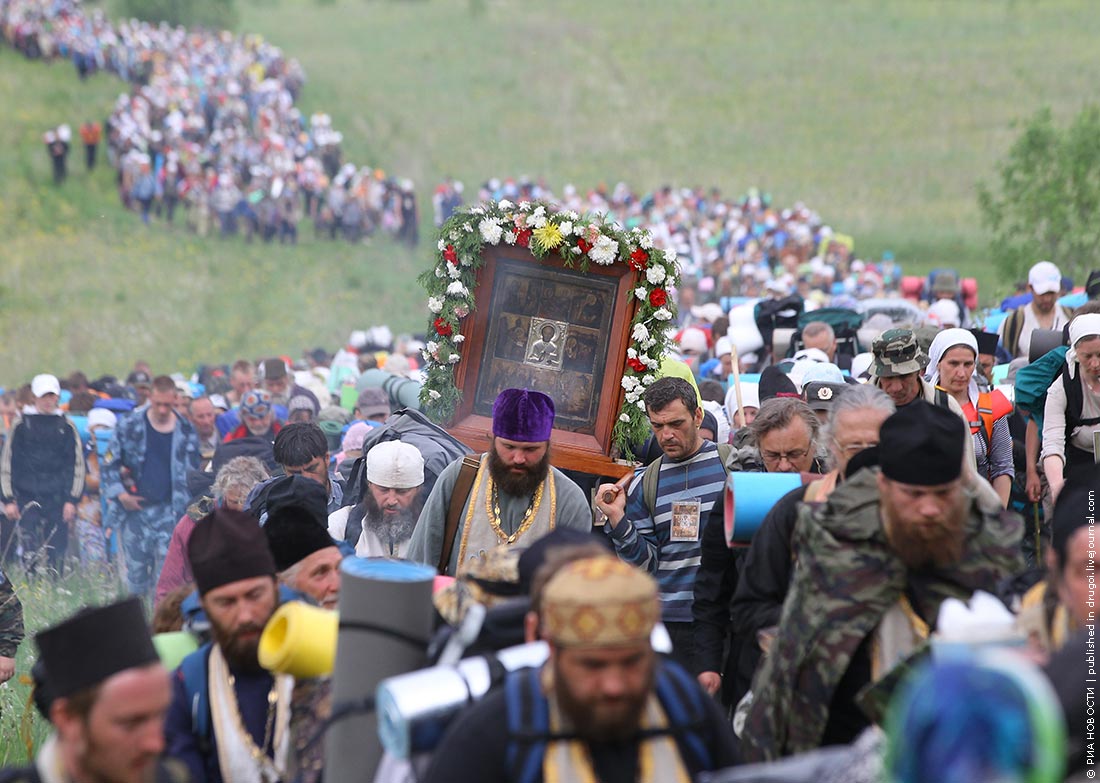
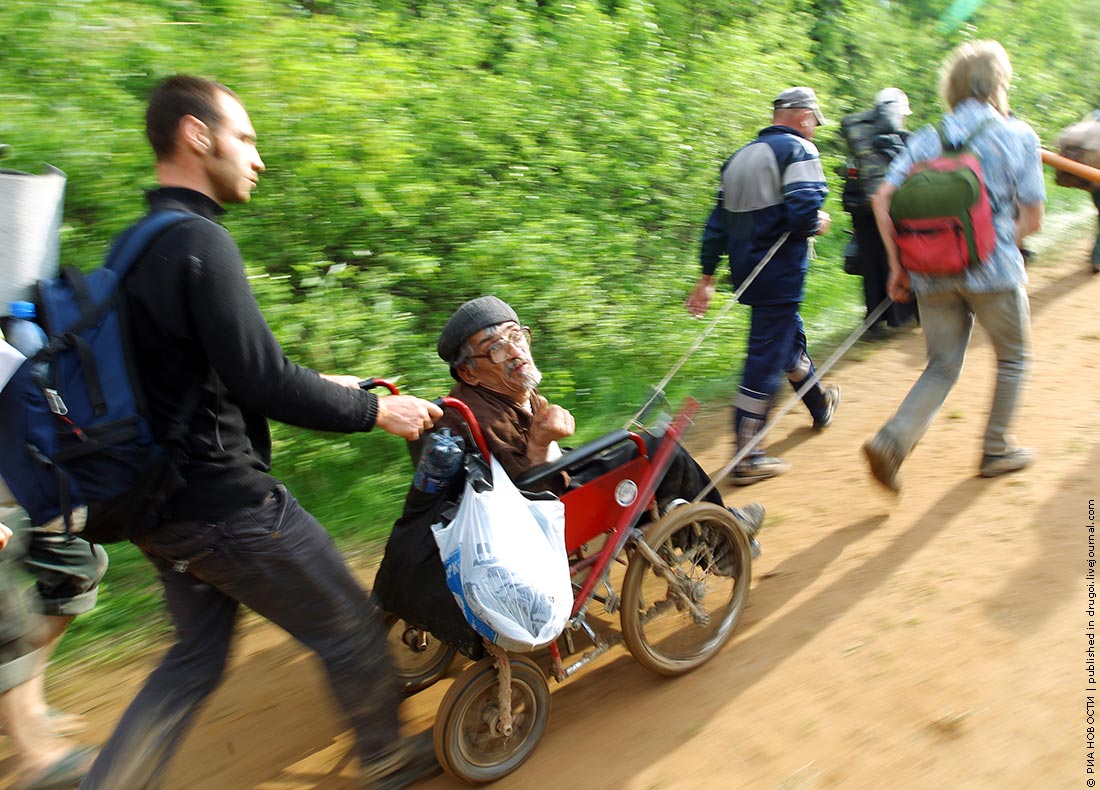
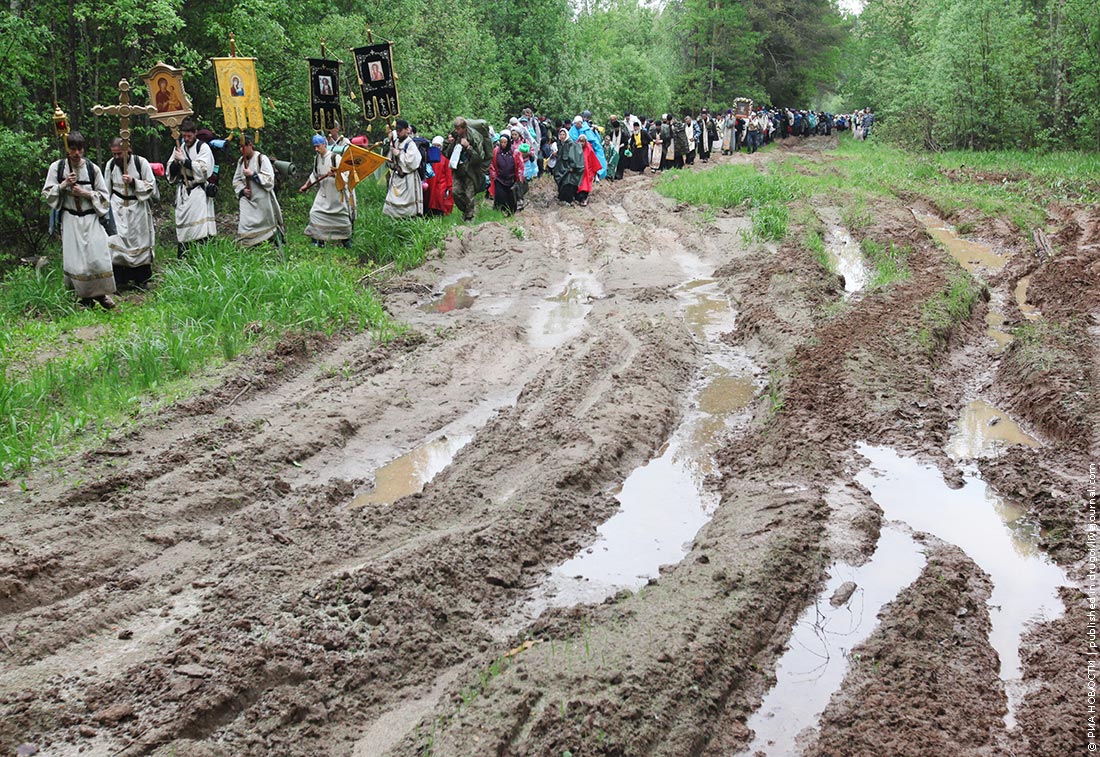
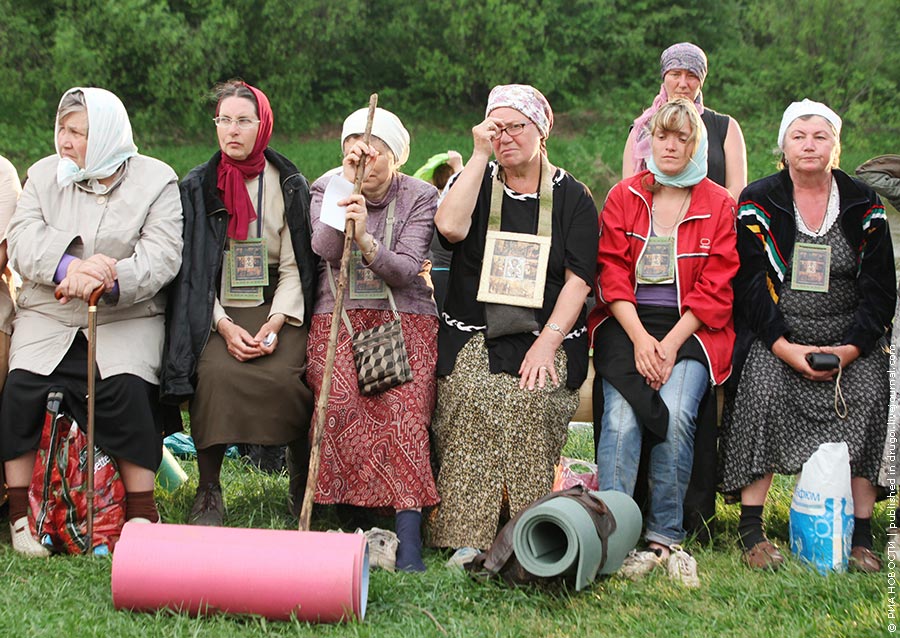
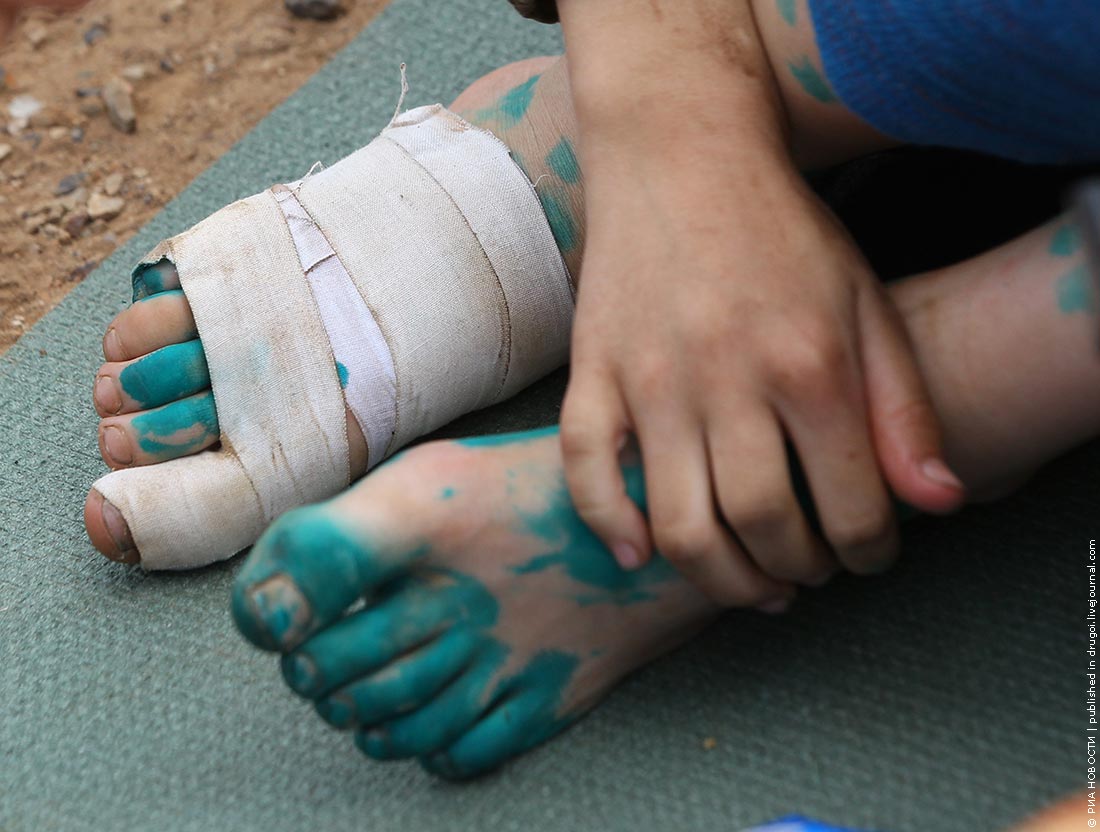
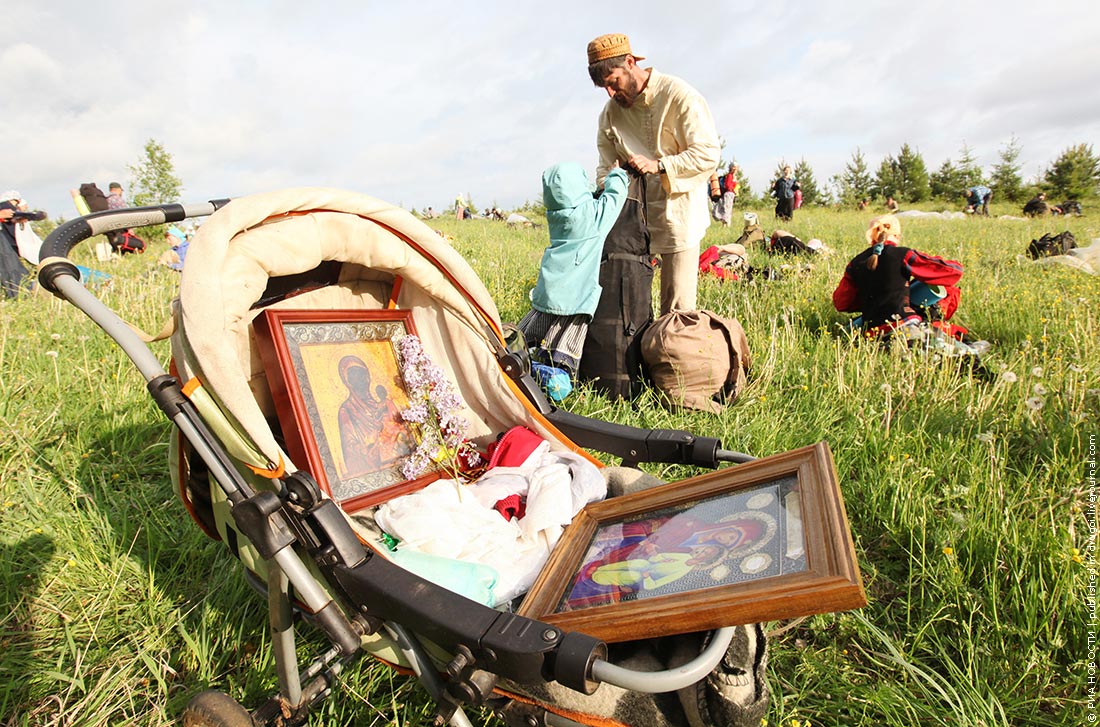
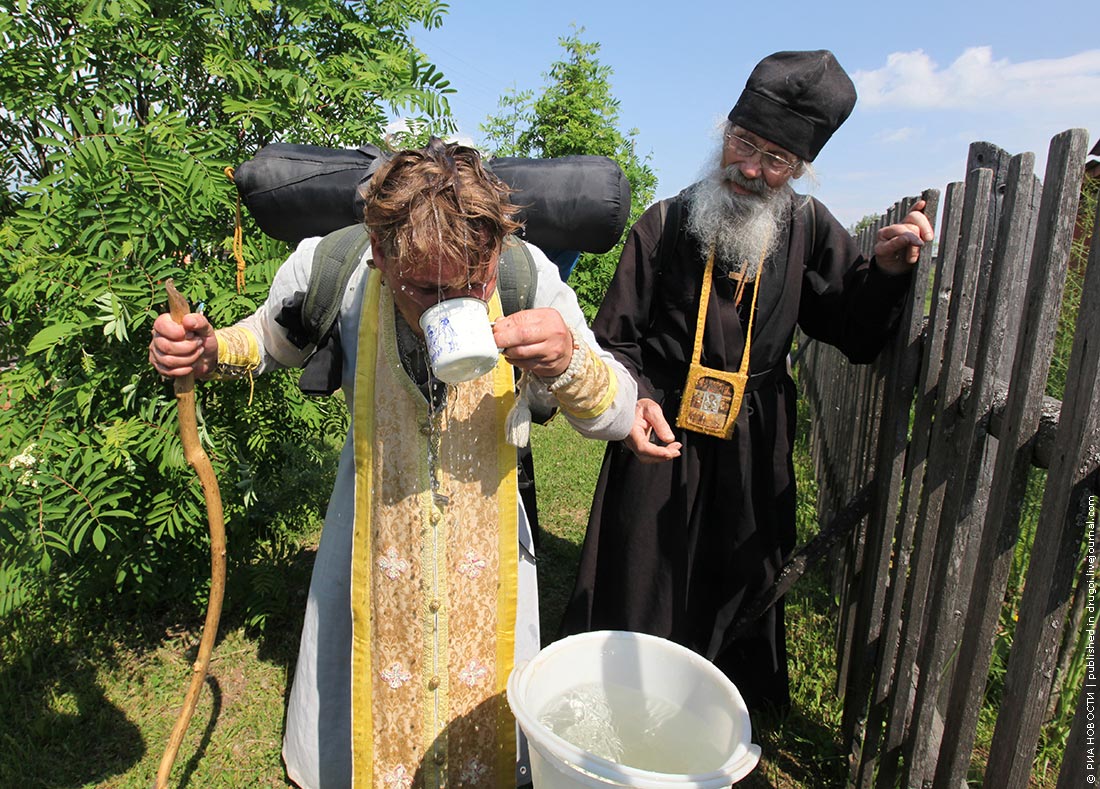
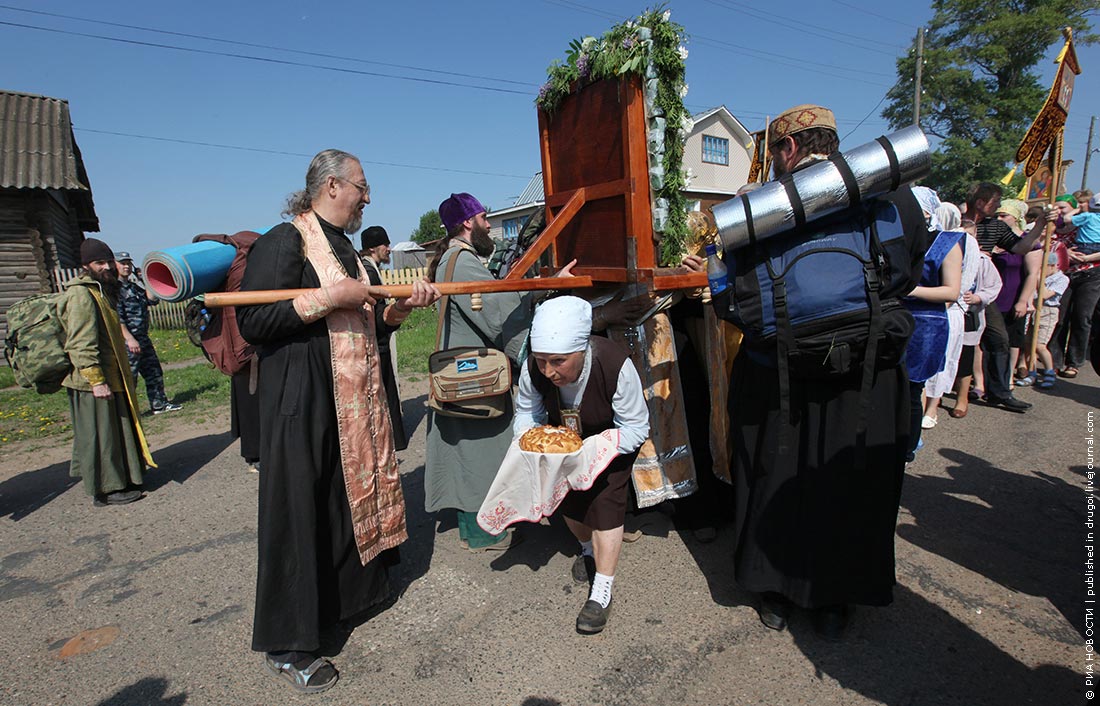
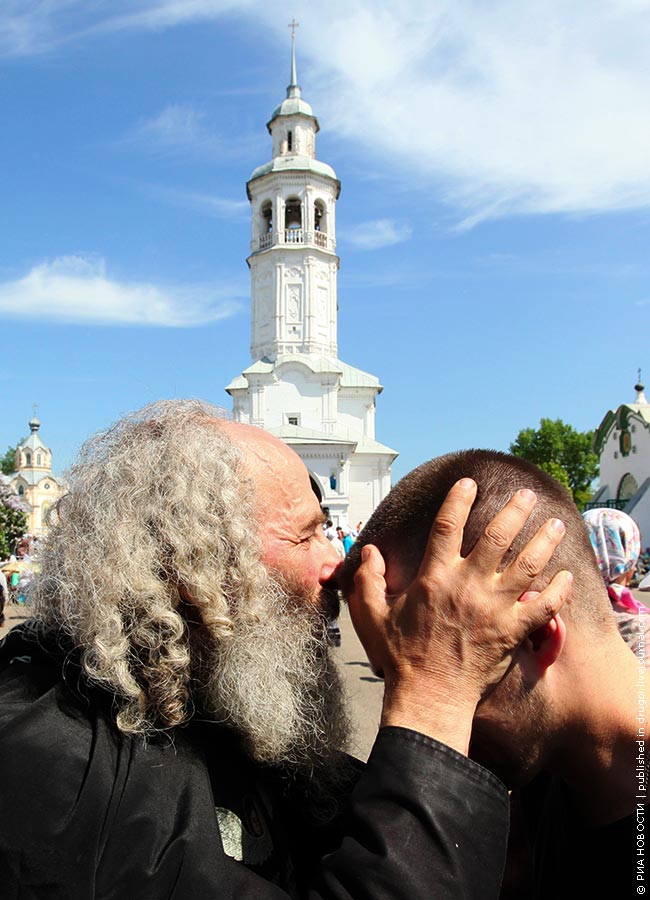
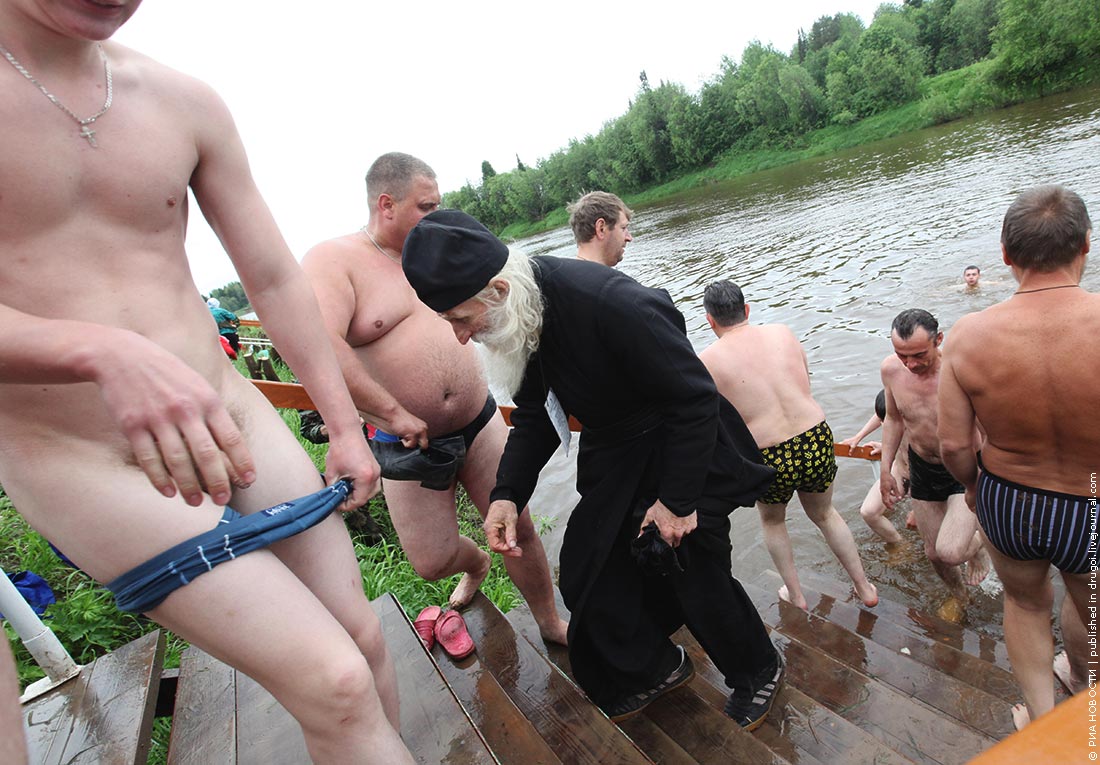
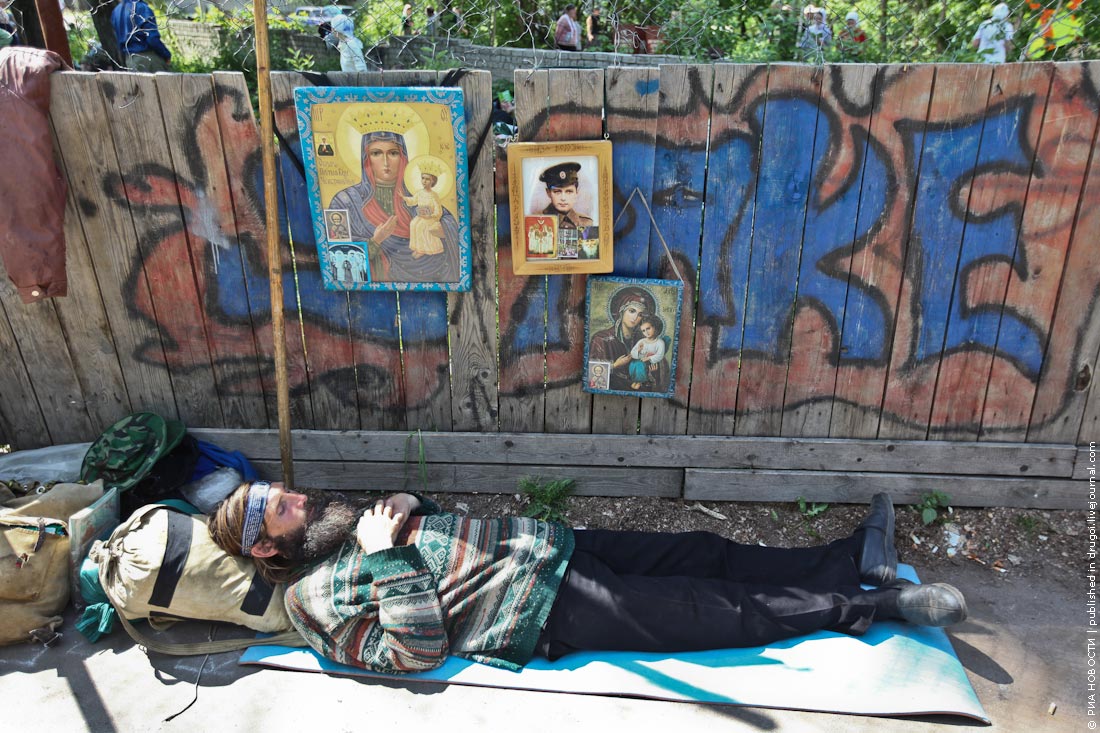
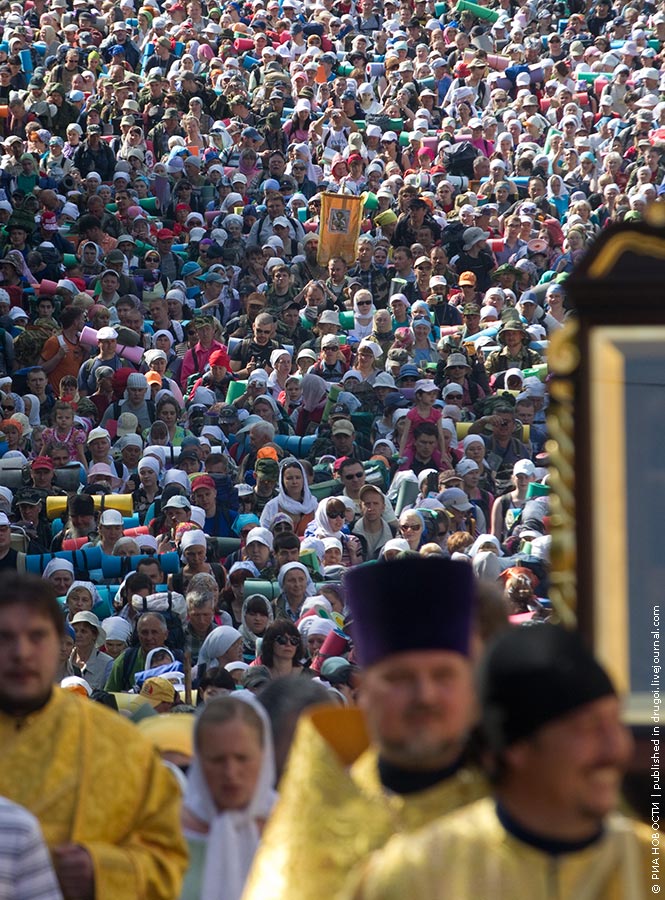
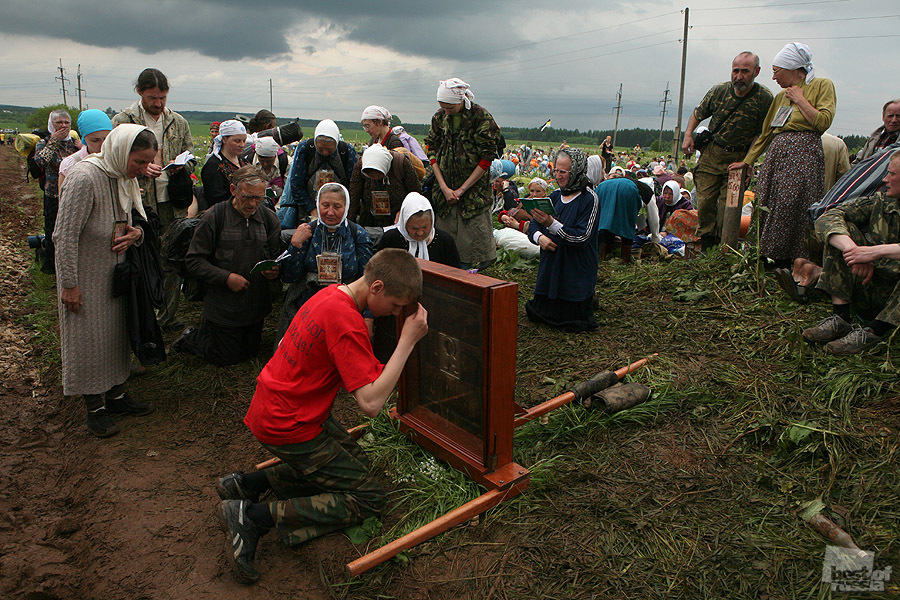
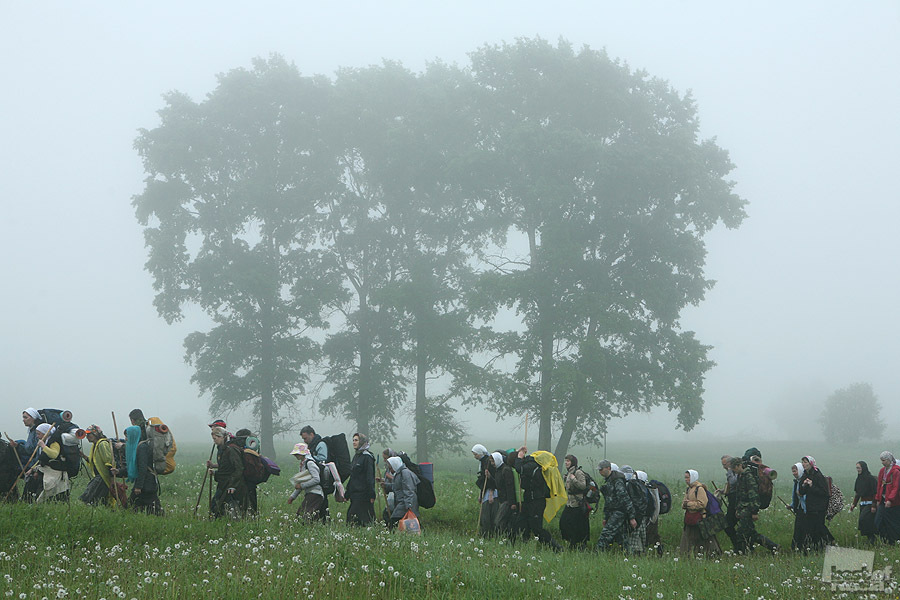
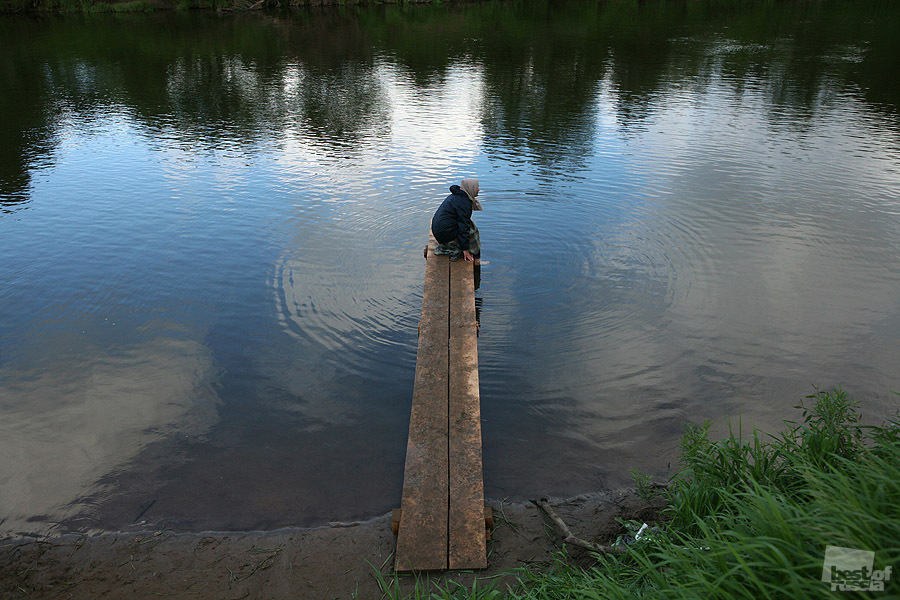
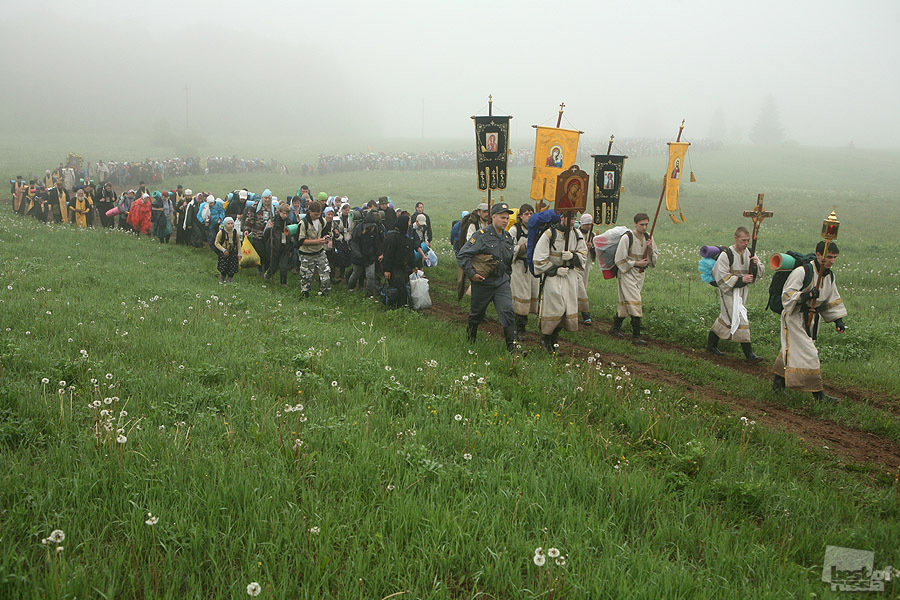
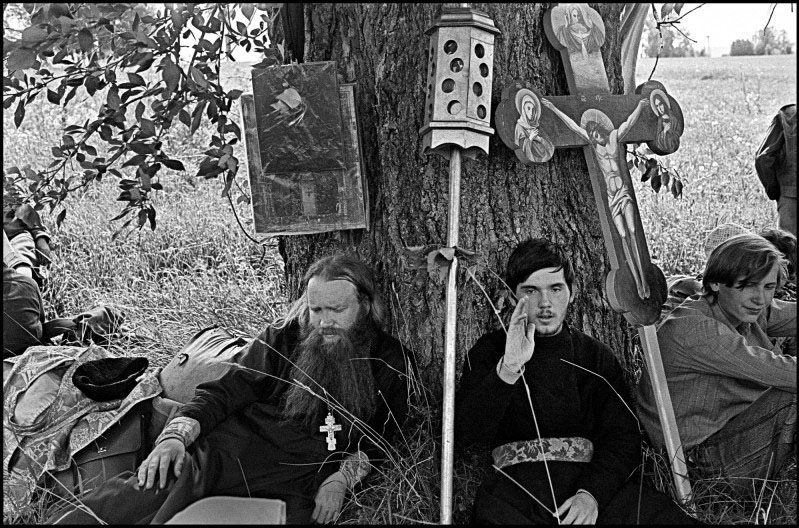
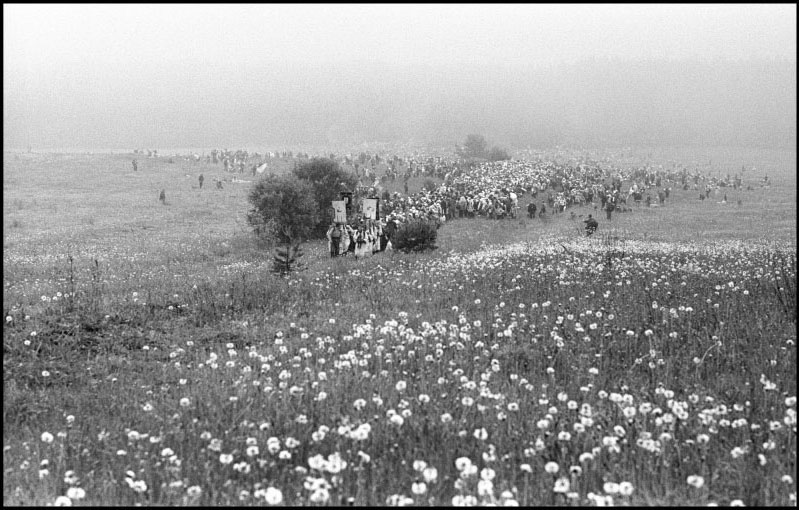
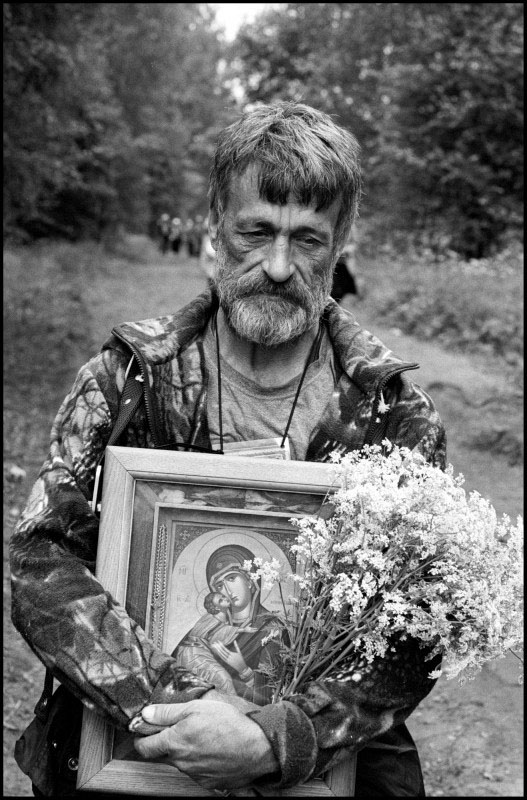
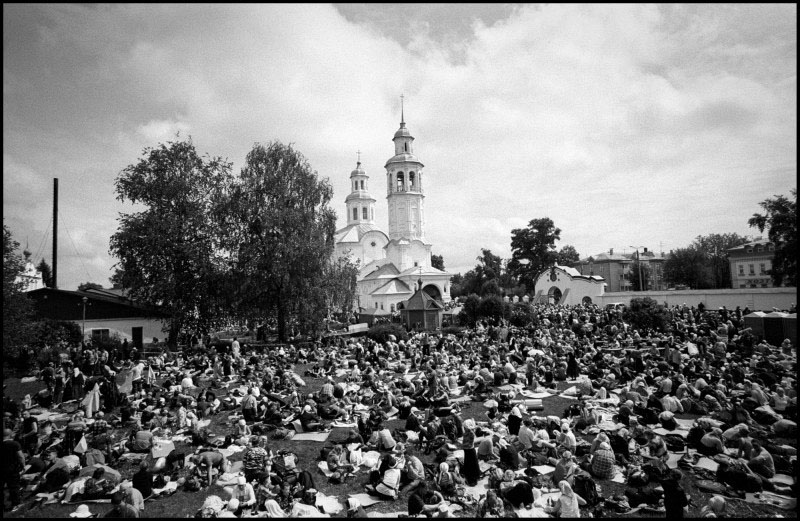
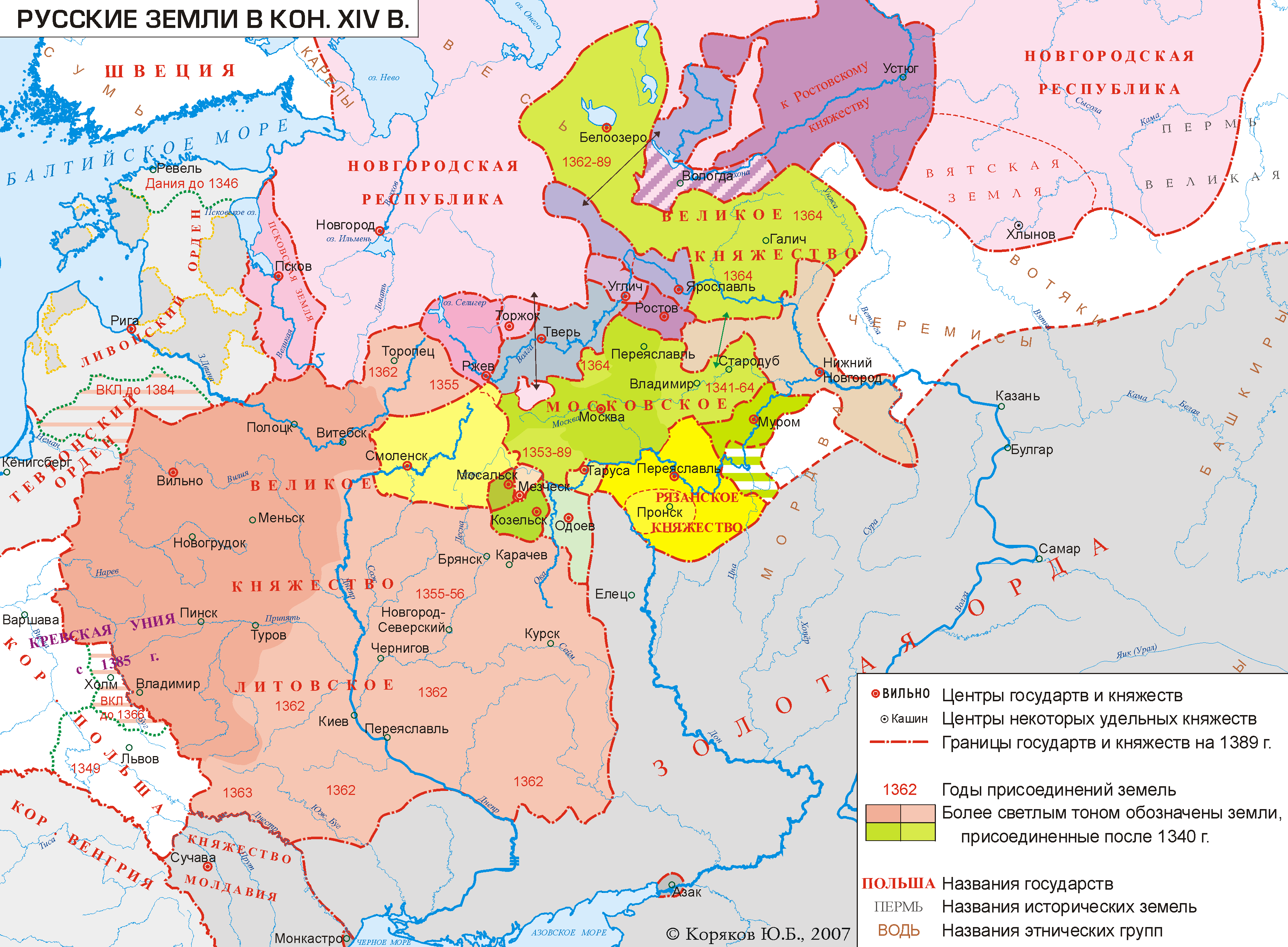
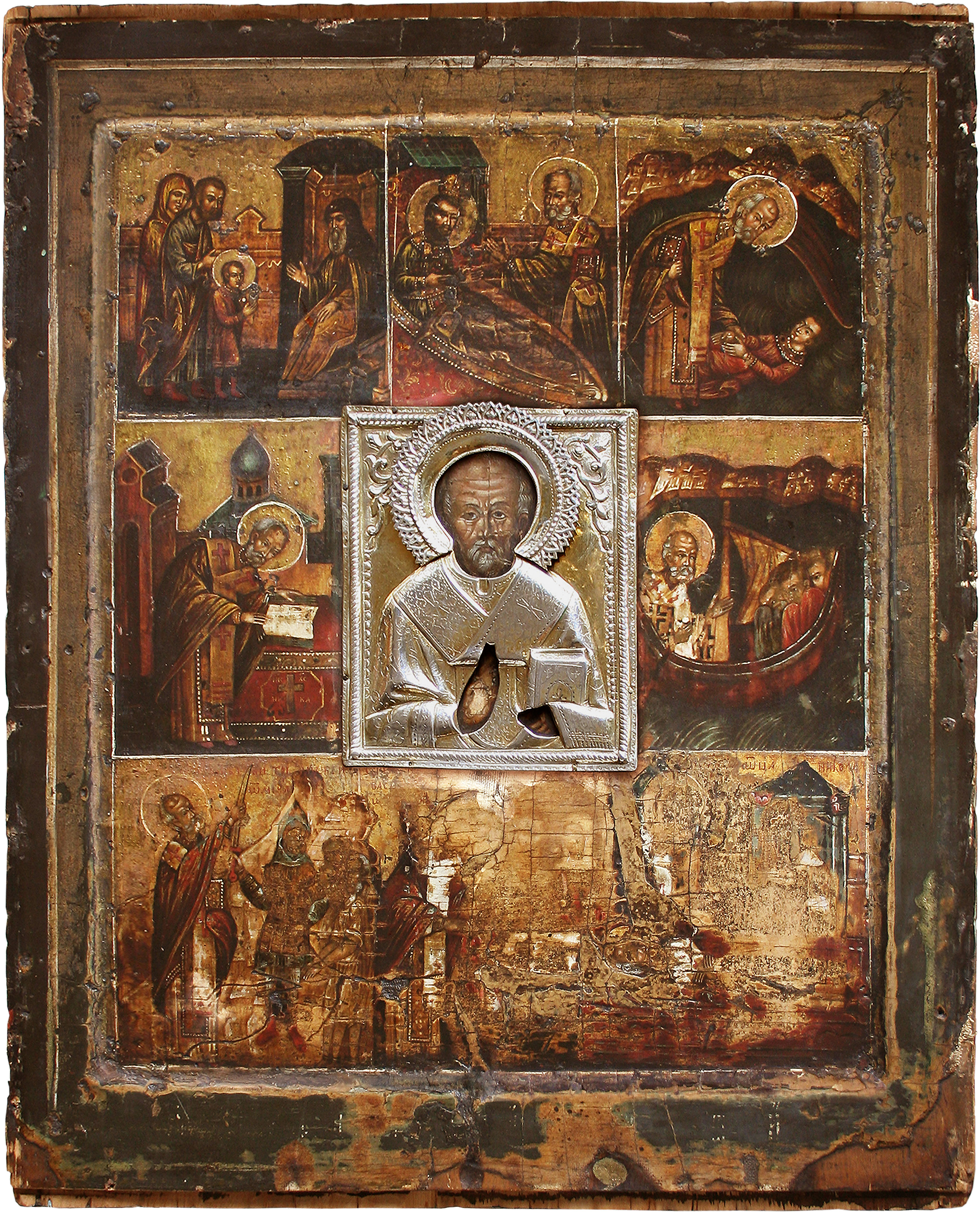
In 1383 along the northeastern borders of the then Russian principalities, three day’s journey away from the town of Hlynov – later Vyatka, today Kirov – a peasant found an icon along the river Velikaya. A chapel was erected for it, and soon so many miraculous healings were done through the intercession of the prayers told before it that its fame spread far, and gave to Saint Nicholas, depicted in the icon, the epithet Чудотворец, ‘Wonderworking’ all over Russia. The icon was repeatedly borrowed by the town of Hlynov, and then sometime after 1400 they agreed with the village – called after the river Velikoretskoye, ‘laying at the river Velikaya’ – that it would permanently remain in the Cathedral of Hlynov, but once a year, on the Sunday after the feast of its finding, 22 May, it would be brought back to the village through a solemn pilgrimage. Since 1668 the pilgrimage starts from Vyatka on a fixed day, 24 May, that is 3 June according to the new calendar, and returns there on 8 June. This year’s pilgrimage was ended therefore yesterday, and today the first photos already appeared on the Russian net. The pictures of Ilya Pitalev were published by Drugoi on his own site. You should click on each photo, as they really live in a large size.


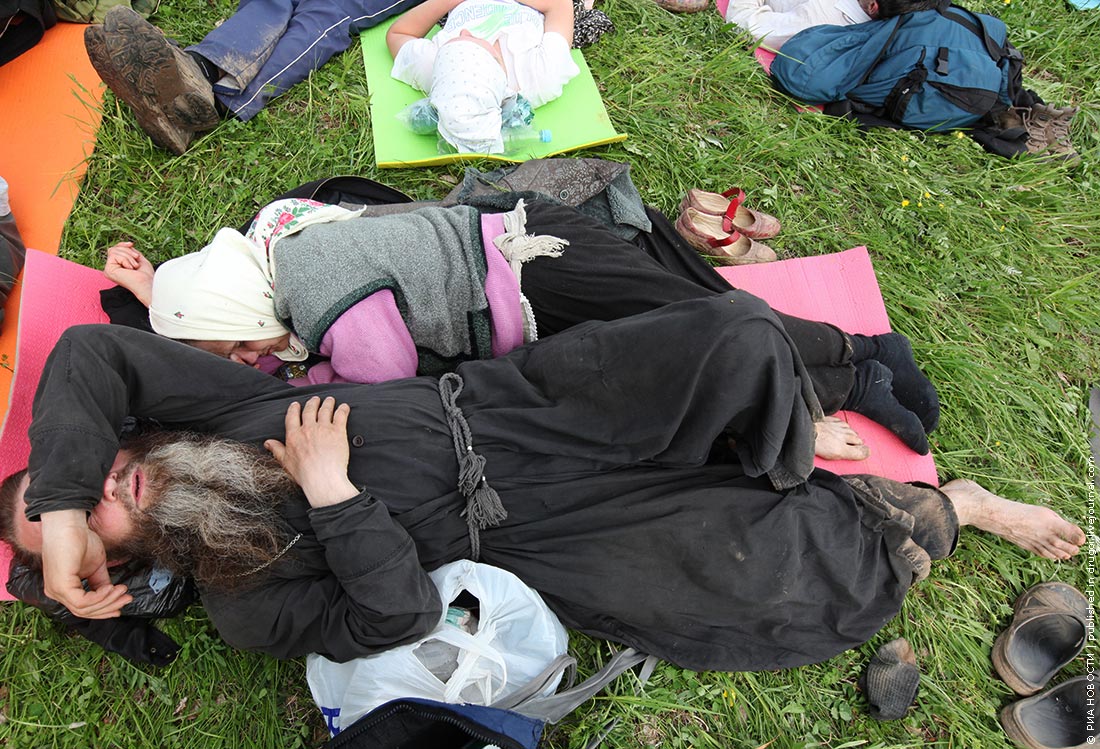
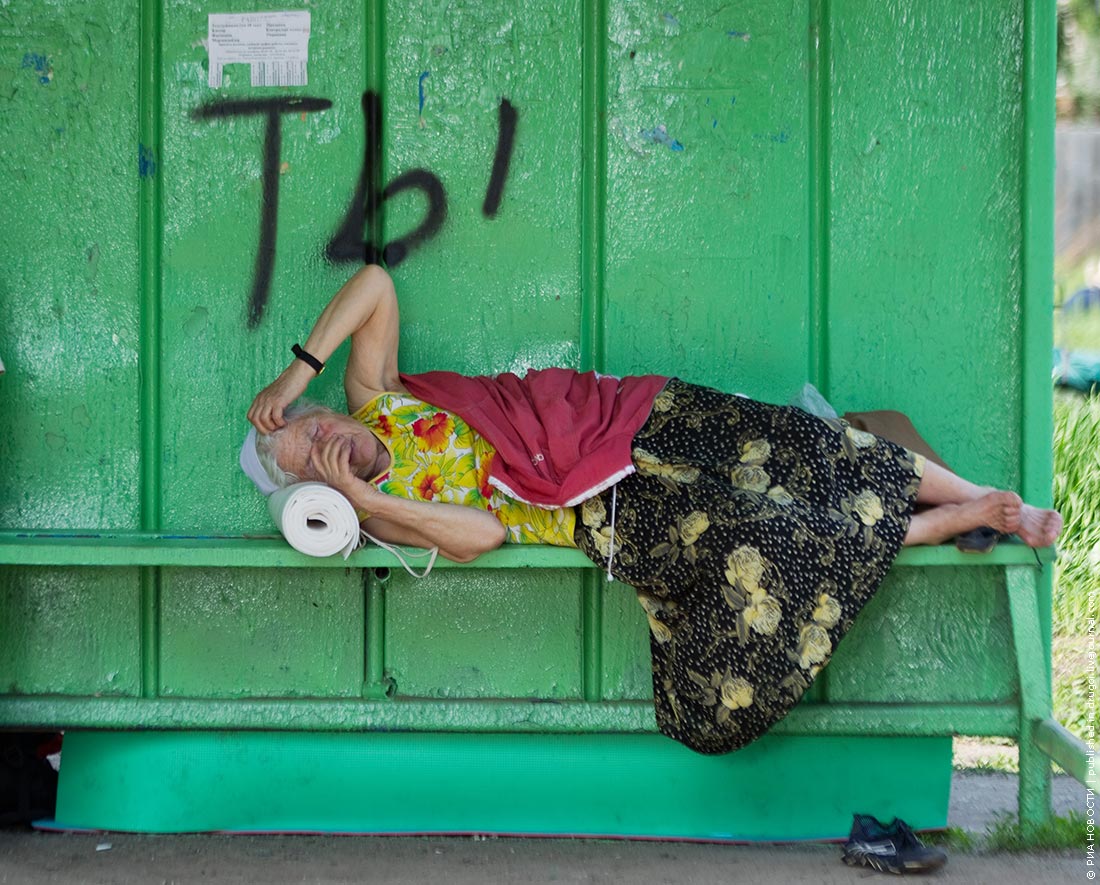
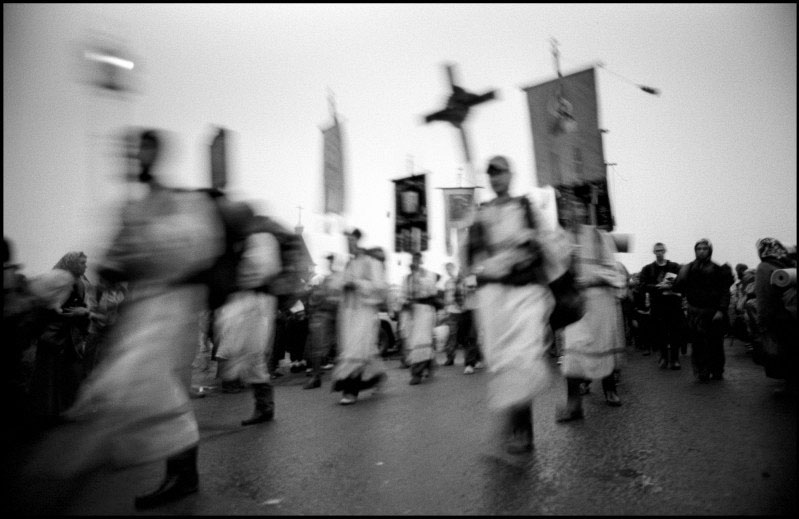
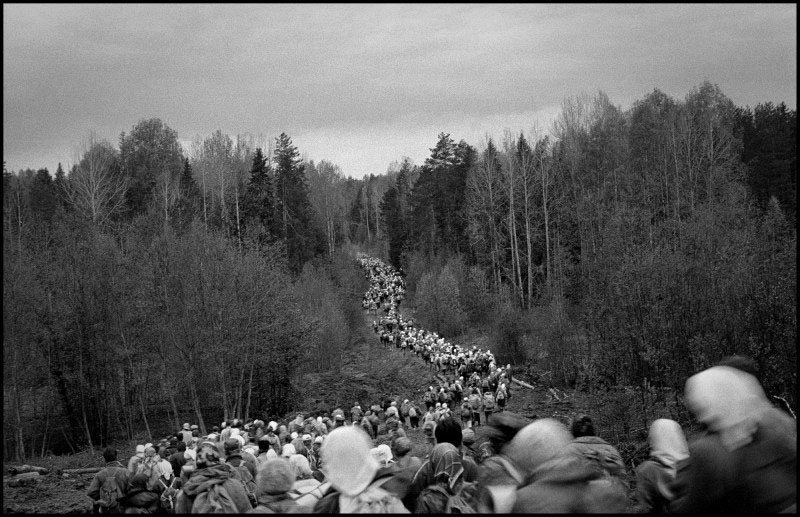
A peculiarity of the pilgrimage’s history is that it was maintained also throughout the Soviet power. In 1935 the Cathedral of Vyatka was demolished, the city was renamed after the assassinated party secretary of Leningrad Kirov, and the icon was transferred to museum. Nevertheless, the believers took the road year after year. In 1959 a particular official ban was announced for it, but the faithful continued the pilgrimage, by hiding in the woods from the militia. From 1989 onwards, the ban was gradually lifted, and the icon was given back to the Church of Saint Seraphim of Sarov in Kirov. Since 1993 the pilgrimage has again passed along the historic route, for six days, one hundred and eighty kilometers there and back, mostly under rain, and with the pilgrims sleeping under the open sky. In 2008 30 thousand people took part in it, and thus it became one of the largest regular pilgrimages in Russia. Last year 60 thousand were present at the ceremony in Velikoretskoye. On this year’s attendance we have no figures yet.


One participant in last year’s pilgrimage has also published a detailed log on the Internet. It is worth to browse it through even without any Russian knowledge in order to have a vivid impression of the road on the basis of the many photos. Since browsing between days is not resolved in it, so you must to click separately on the first, second, third, fourth, fifth and sixth day of the pilgrimage.


The pictures made by Vladimir Pomortsev a year ago were also included in the photo exhibition “Best of Russia”, organized every year in February.


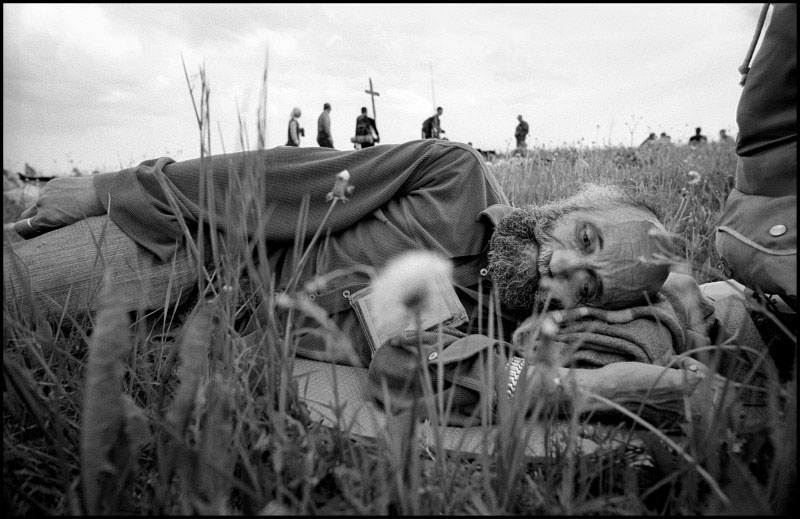
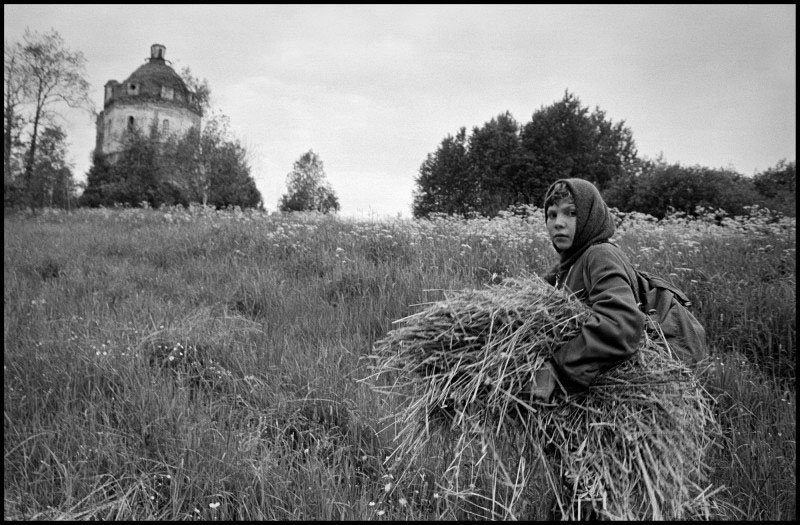
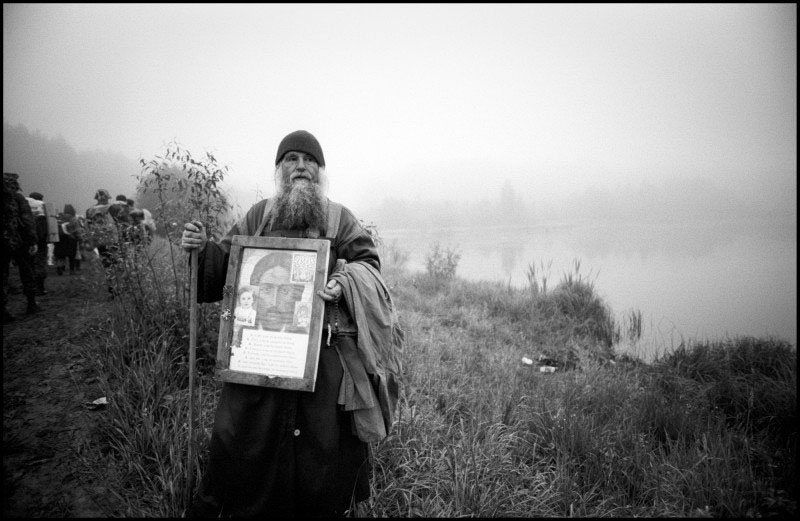
Among the photos of the previous pilgrimages emerge the pictures by the renowned photographer Aleksei Myakishev made between 1994 and 2010, of which he published almost sixty ones on his site. It is interesting to see how strongly his vision is rooted in the art of Tarkovsky. Here we present only some of them.