


 The Tatar mosque is the only mosque in Tbilisi, and virtually the only one in all Georgia. Although “Tatar” in the Caucasus primarily meant today’s Azeris, nevertheless the Tatar mosque was founded in 1860 not by them, but by the “proper” Tatar merchants from the Volga region. They built it in the center of this multi-ethnic Georgian merchant city, on the narrow street starting upwards from the bazaar, in the neighborhood of the Turkish baths. Accordingly, it was a Sunni mosque, while the mainly Shiite Azeris went to the larger mosque next to the bazaar. That one was named the Mosque of Shah Abbas the Great after its builder, although it was built some hundred years later, some time in the 18th century. This monument of the brilliant, cunning and ruthless ruler was destroyed at the command of his worthy colleague, Stalin, together with the entirety of old Tbilisi as it was known in Stalin’s youth. In place of the bazaar, there is now a large Soviet-era roundabout, and instead of the mosque of Shah Abbas, there is a travel agency. The Tatar mosque is used, uniquely, as a shared space by the few Sunni and Shiite inhabitants of the Georgian capital.
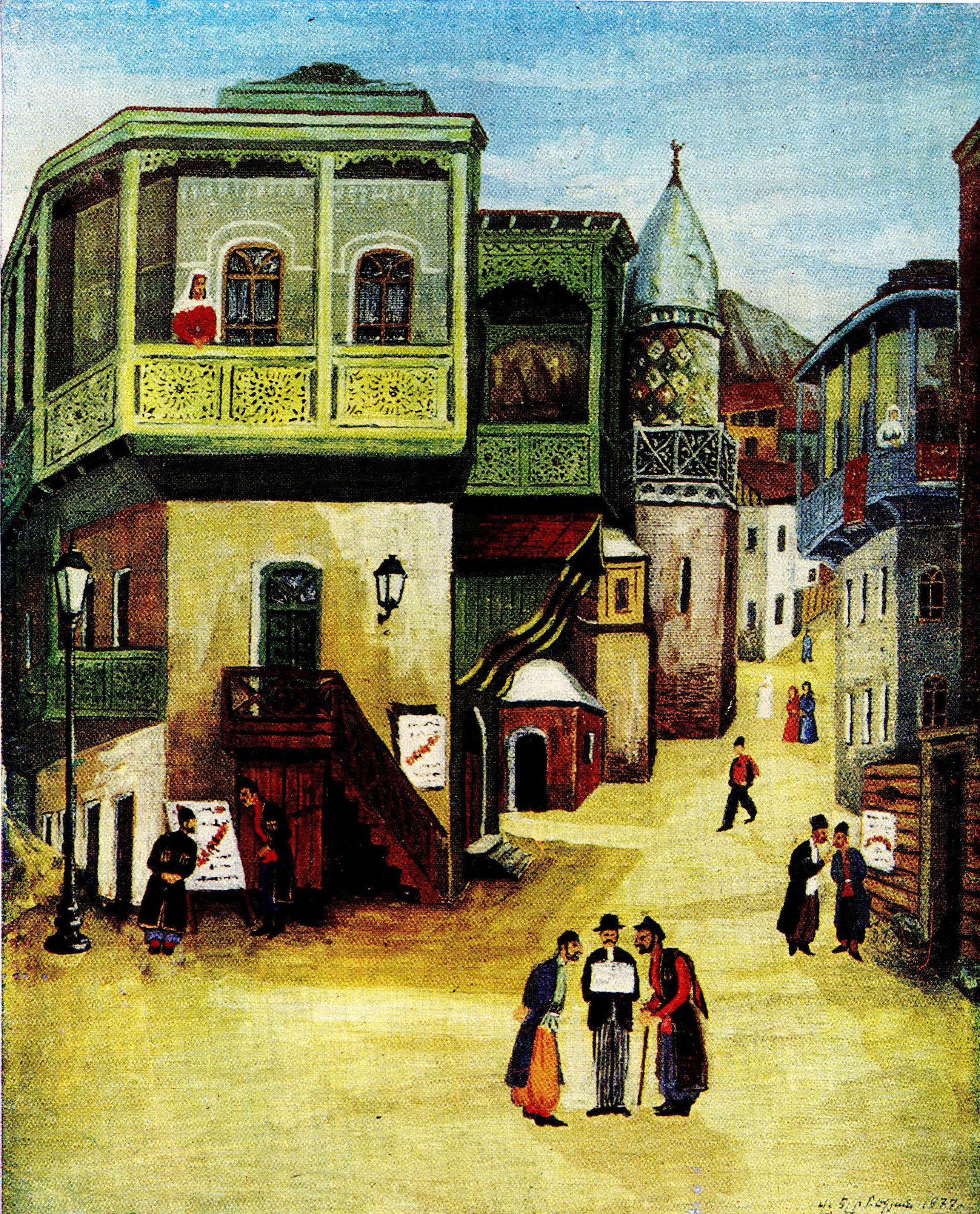
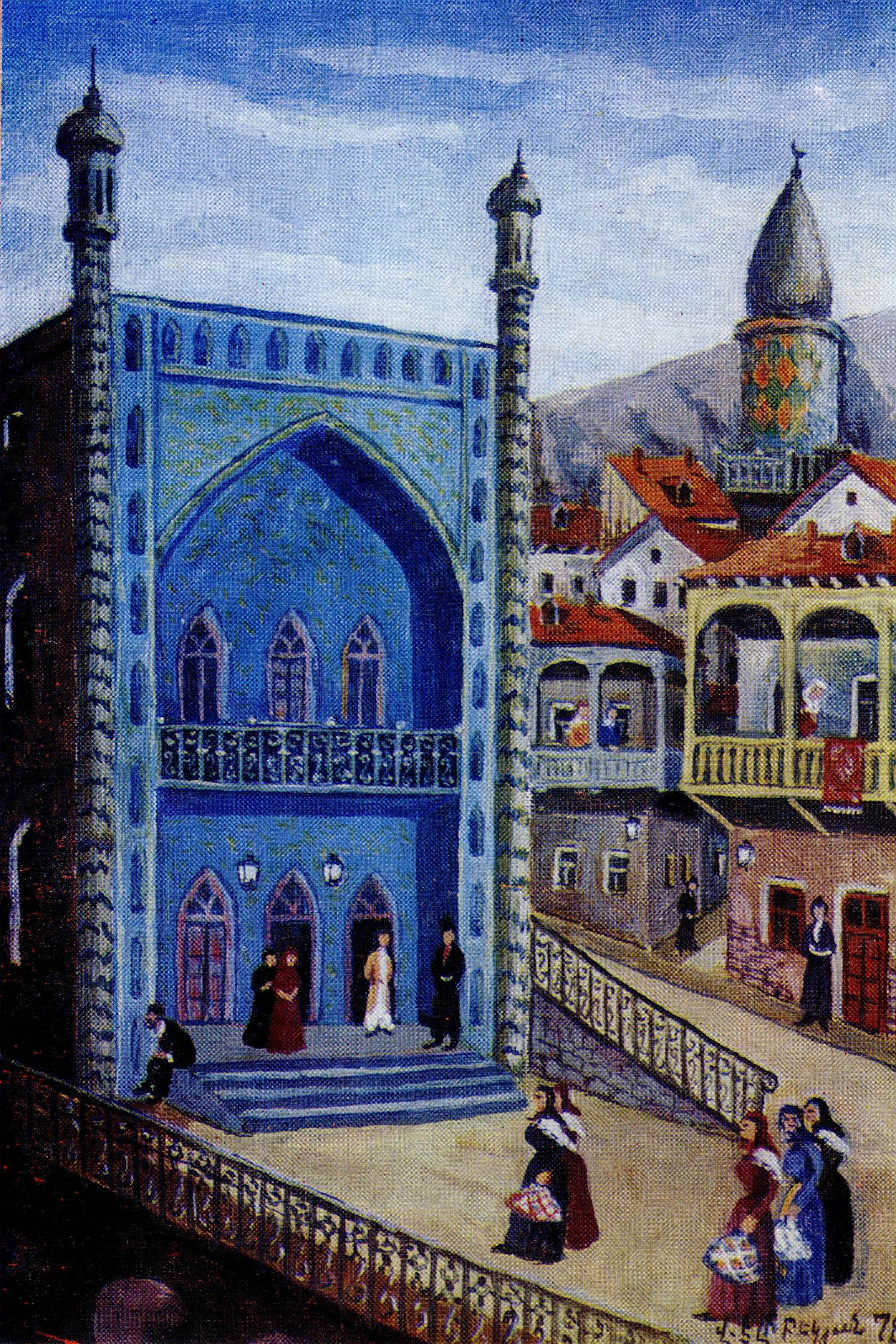
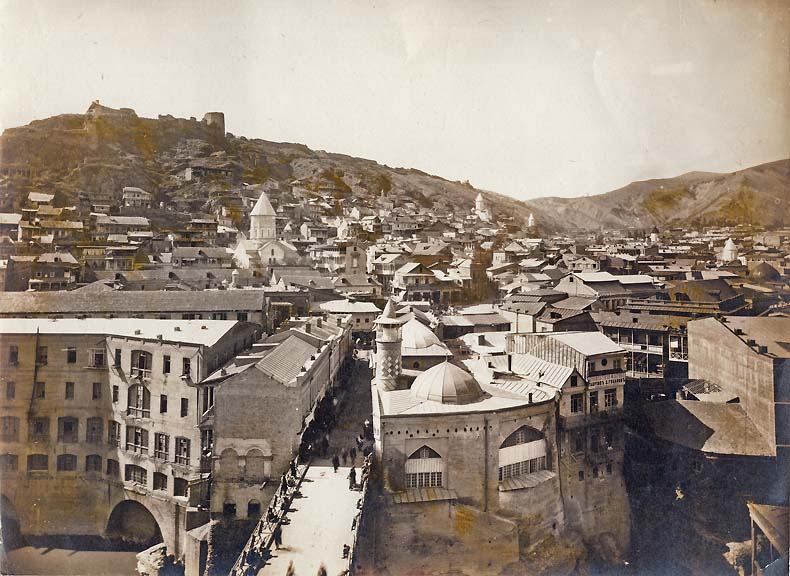 Two photos by Dmitri Ermakov, the chronicler of the Caucasus, from our post about him. Above: The Maidan, destroyed in the 1930s, with the Mosque of Shah Abbas next to the bridge over the Kura. Below: The street from the Maidan up to the Tatar mosque, 1881. Further below: The Tatar mosque and its environs, as depicted by the Armenian naive painter of old Tbilisi, Vagarshak Elibekyan.

We climb the narrow street that leads to the mosque, and beyond it, to Narikala Citadel and the botanical garden.
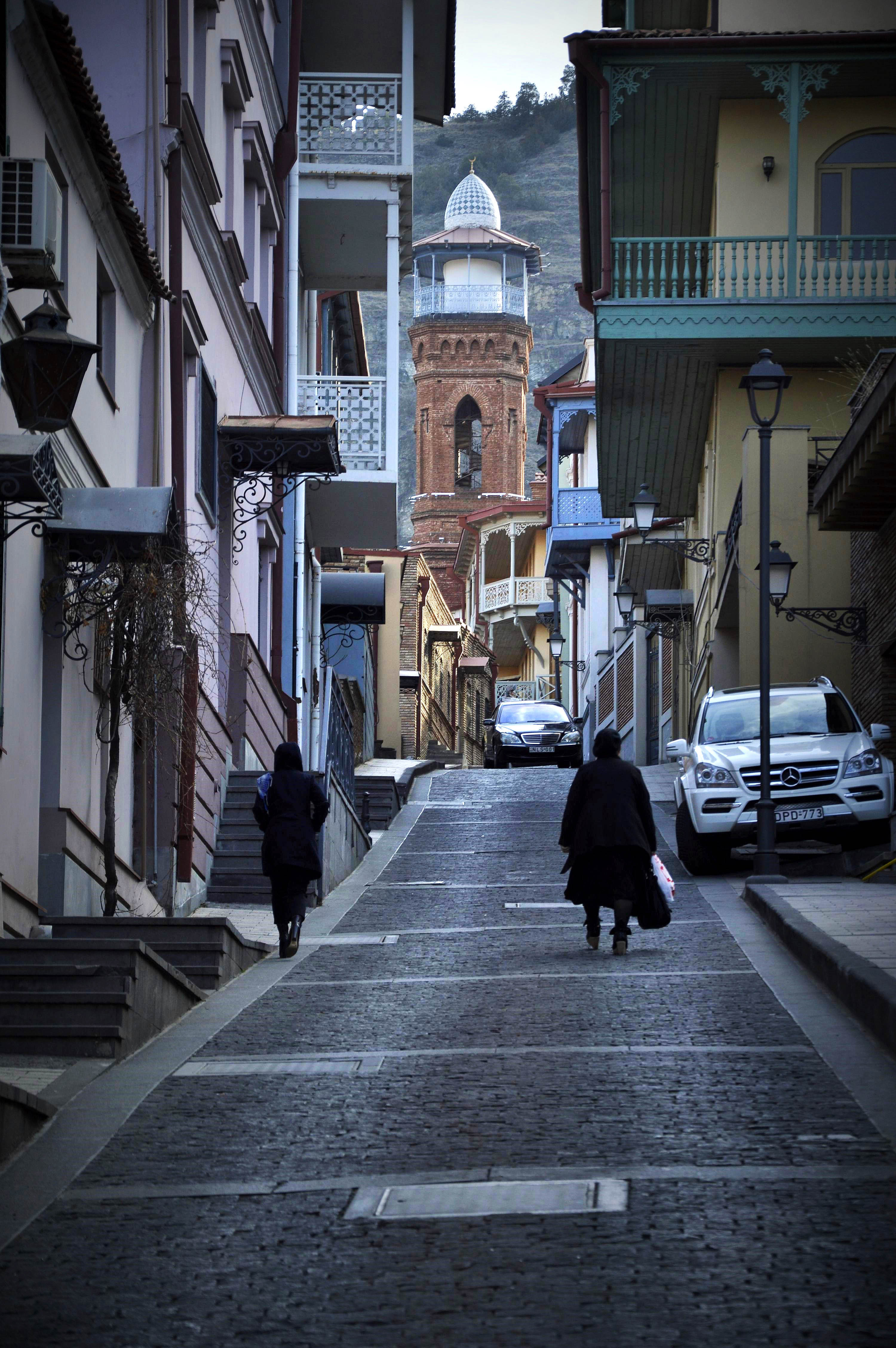
The mosque is today the property of the Azeris living in Tbilisi. Across the street is a memorial plaque to the popular Azeri actor of Tbilisi, İbrahim Hüseyn oğlu Hüseynzadə, who, as an artist, went by the name İbrahim İsfahanlı (1897-1967). The Azeri quarter has been largely restored. Maybe a bit more than necessary, but the horse-headed terminals the balcony consoles on the house next to the mosque are still like they were in the hundred-year-old pictures.

The everyday door to the mosque opens from behind the alleys of the Azeri quarter. Turning into the alley, two pretty little girls step out before us in front of their flat, the older one holding an advertisement with multi-language inscription.
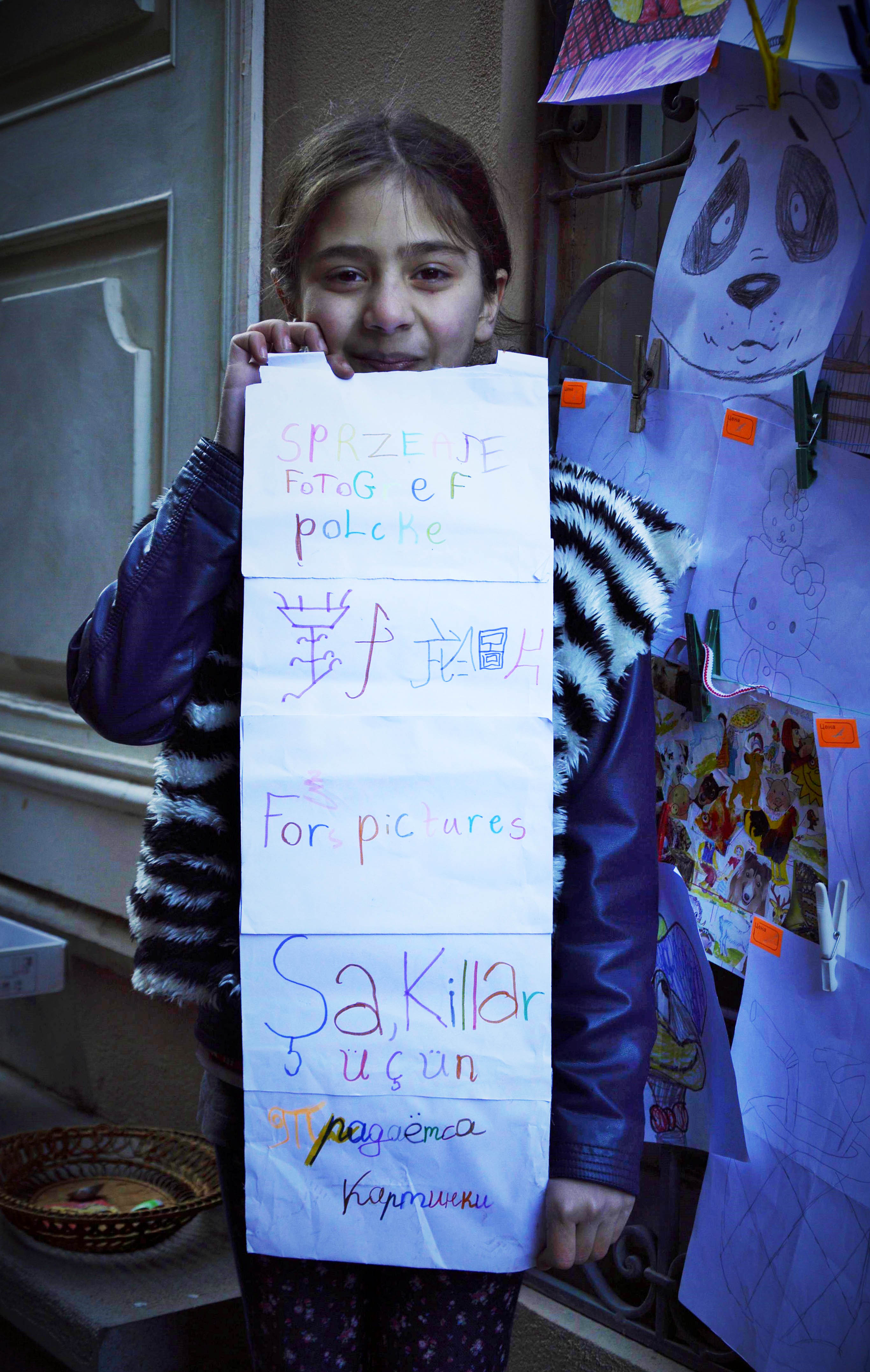
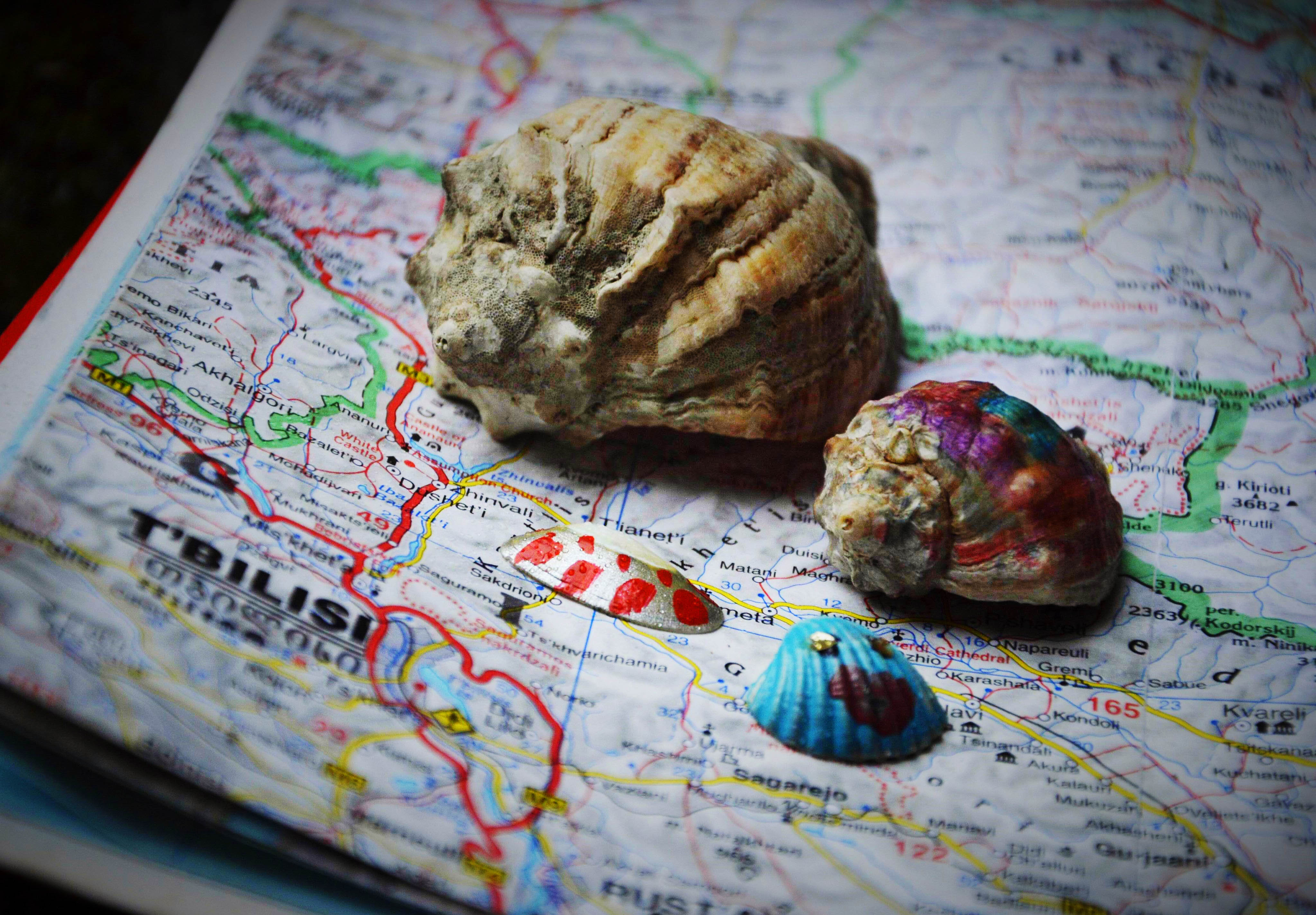
“Pictures for sale!” The exhibition of pictures for sale has been arranged in the two windows of the flat, while even more objects of art are being created on the steps. From the same vendor, hand-painted shells for a bargain price.
“Arşın mal alan!” – “Silk for sale!” The titular aria from Uzeyir Hajibeyov’s successful 1913 comic operetta, the first Azeri opera (movie version of 1965, the full film is to be seen here). The locations in the film recall old Tbilisi.
The language of the older girl quickly goes back to Georgian as she prattles on, and Turkish, Russian and English, although in the latter she’s still mixes up the numbers. Her little sister is just learning the businesswoman’s job, but she already poses in a skilled way when we ask them whether we can take photos of them with the shells we purchased. “Come next weekend, too. We sell every Saturday and Sunday here in front of the house.” “Next week we will not be here”, I say, “but in May we’ll be back with a great company”. “Come, by then we’ll have gone down to the sea with my parents, we will bring new shells, a lot.”



 Come with us to…
 Atlantis
 Bestiary
 Bohemia+Prague
 Books, exhibitions, music, film
 Brave old world
 Caucasus
 Cemeteries
 Crimea
 Get to know the
 Images of the East
 Lightwriting
 Lwów/Lemberg
 Mallorca
 Message on the wall
 The Museum of Propaganda
 Odessa
 Paper Museum
 Persian letters
 The Jewish heritage


