


The name of the Görlitzer Bahnhof has been given to the third stop from the east of the 1st U-Bahn in Berlin, in the middle of Kreuzberg. You travel through it a couple of times, before you realize: but where is the Bahnhof here? The stops of the U-Bahn, as you learn it from the loudspeaker, are called Haltestelle, and where you hear Bahnhof, there is in fact a train station standing next to it. However, in the neighborhood of Haltestelle Görlitzer Bahnhof there is no train station whatsoever.
But the name is the imprint of a former reality. The Oranienstraße stop, established in 1902 along the line then called “Elektrische Hochbahn”, was renamed in 1926 Görlitzer Bahnhof, to warn the passengers: here they have to get out if they want to travel from the nearby train station to Silesia, Görlitz, Breslau, and from there with a change to Vienna.
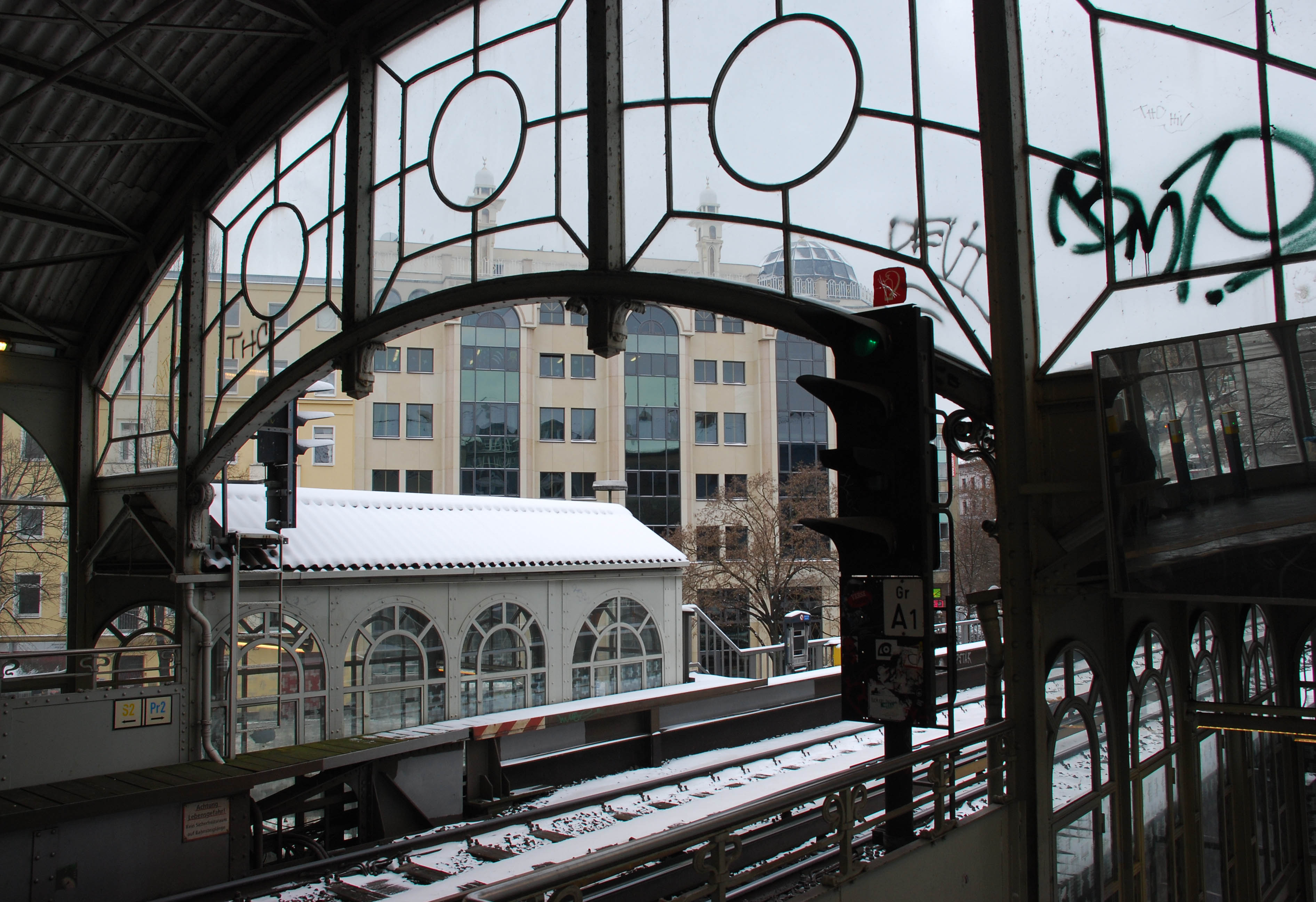
 The U-Bahn stop Görlitzer Bahnhof
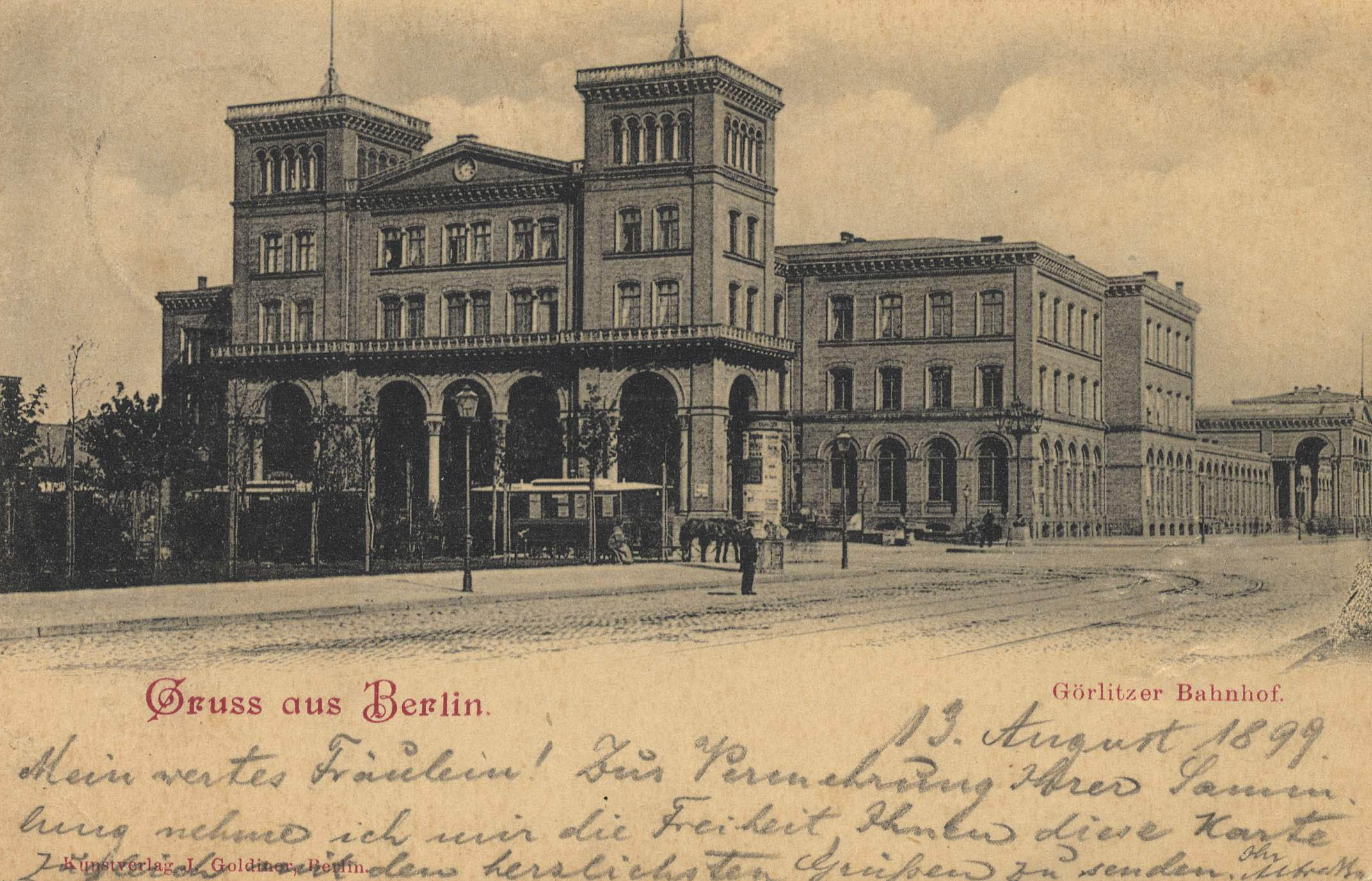
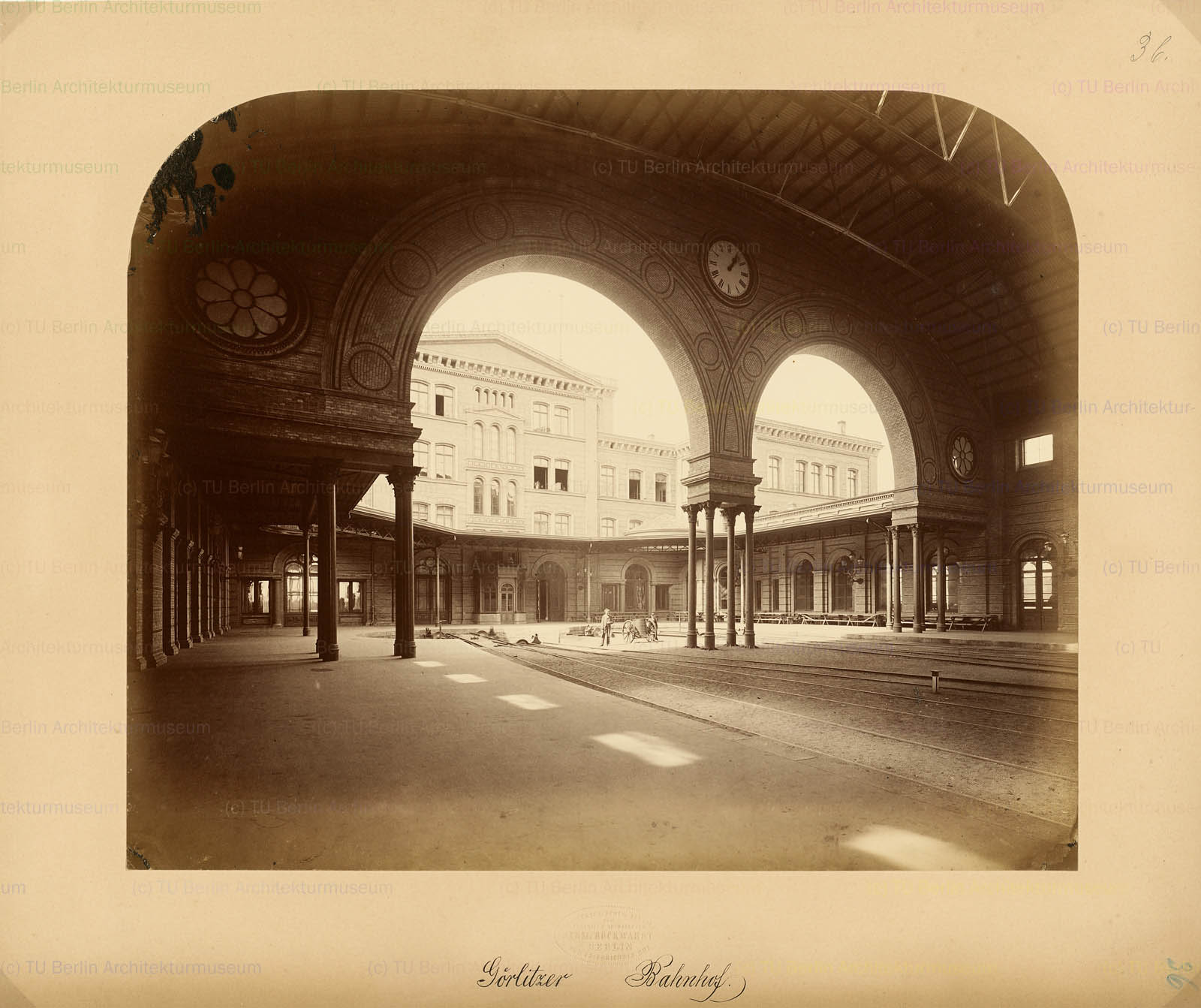
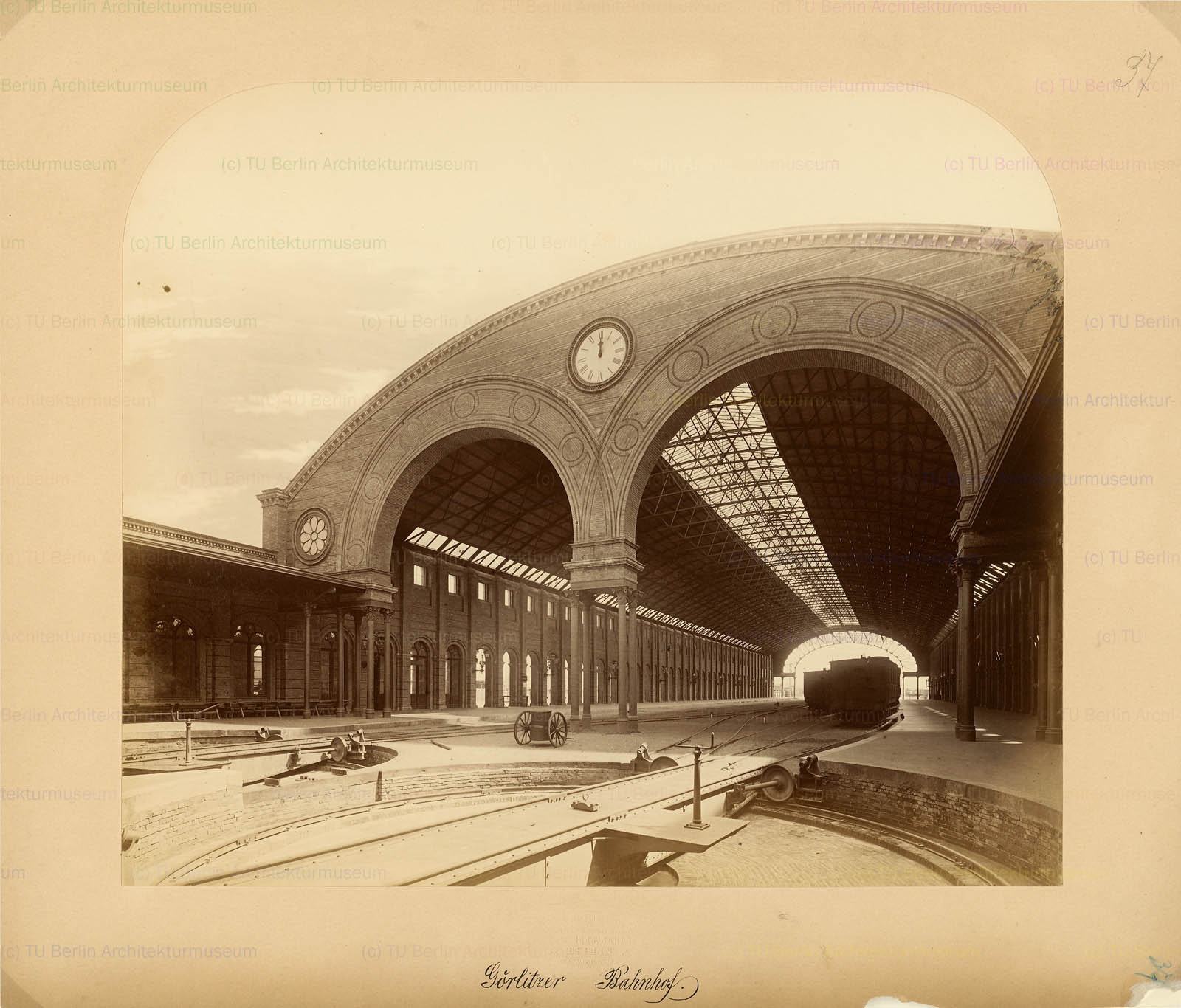
The Görlitz Train Station, once standing around the corner, was built in 1865 by the “Railway King” of Berlin, Bethel Henry (originally Baruch Hirsch) Strousberg (1823-1884). He was called the Railway King not as if he devoted all his life to the railway: he traded with anything which benefited him, from machine production through newspaper foundation to living cattle. His fame and fortune was nevertheless linked to the Prussian railway constructions, primarily due to his ingenious financing construction, which allowed a fast realization of a large amount of railways through the involvement of the capital of subcontractors. He did not pay them in cash, but in the shares of the new railway line, which at the time of the industry’s boom brought extraordinary profits to them, while he did not have to spend a cent.
 The former building of the Görlitz train station
The Prussian railways were built initially as private enterprises, and only later went over to the possession of the German state. Berlin’s large, representative terminuses were the main stations of private railway construction companies. The Görlitz Train Station united Strousberg’s private railway lines. From here the trains started to Silesia, Berlin’s traditional cultural hinterland –
jeder zweite Berliner stammt aus Schlesien, every second person in Berlin comes from Silesia, said the 19th-century proverb –, first to Görlitz, and then changing to the province’s capital Breslau, but the planned end goal was Vienna, so that a direct line would link the two imperial cities. Accordingly, the two streets flanking the station on the north and south were named Görlitzer and Wiener Straße, while the newly opened streets of the area, whose value was increased by the construction, received their names after the cities of Silesia, like Sorau, Oppeln, Lausitz, Liegnitz, Glogau, Ratibor.
 The Görlitz Train Station and the surrounding area on the Pharus-Plan of Berlin, around 1905
The first train that left the station on September 13, 1866, carried soldiers to the
Austro-Prussian war, which broke out a few months earlier, but whose outcome was already determined by the Königgrätz Battle of July 3. The war ended with the victory of Prussia and of the
“Little German solution”, which meant the realization of a German Empire without the participation of Austria. The direct Berlin-Vienna connection lost its importance, and the Görlitz railway was never continued to Vienna. Only the name of the Wiener Straße recalls the old plan to this day.


The plans of the station were made by the great architect of historicist Berlin,
August Orth (1828-1901), who at the beginnings of the Prussian railway constructions in the 1850s seized his first practice with
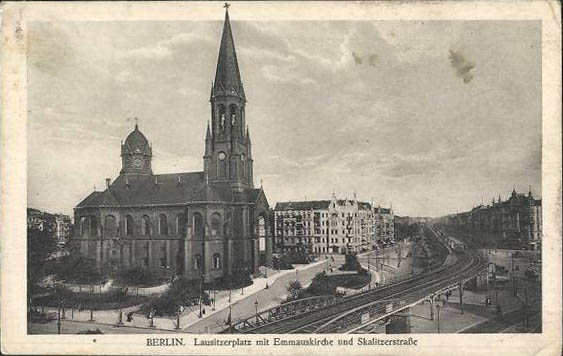
one of the greatest railway construction company, developing it further on many railway buildings until the end of the century. He built, next to the Görlitz Train Station, and in an architectural unity with it, the new Lutheran church of the increasingly growing neighborhood, the Emmauskirche (1890-93), which had the largest capacity among Berlin’s churches until 1945, when, shortly before the end of the war, its nave was hit by a bomb. The perilous nave was demolished in 1949, and the tower stands now on the square as a memento for itself.
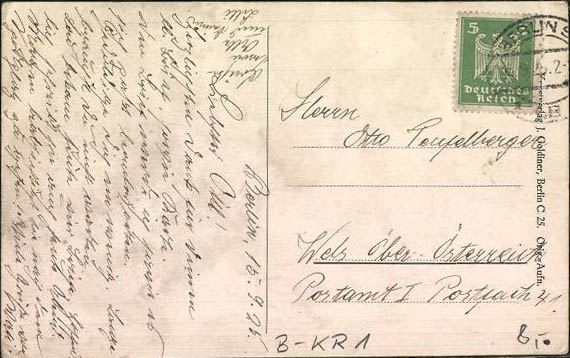
 The Emmauskirche on a postcard sent in 1925 to Austria, with the Hoch- (today U-)Bahn in the foreground. To the right, the Görlitz Train Station just falls behind

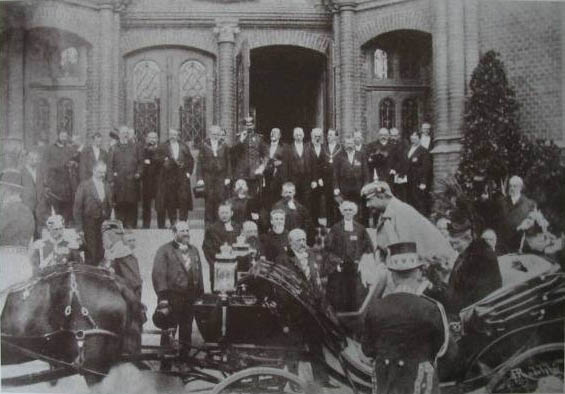
 The consecration of the Emmauskirche, 1893
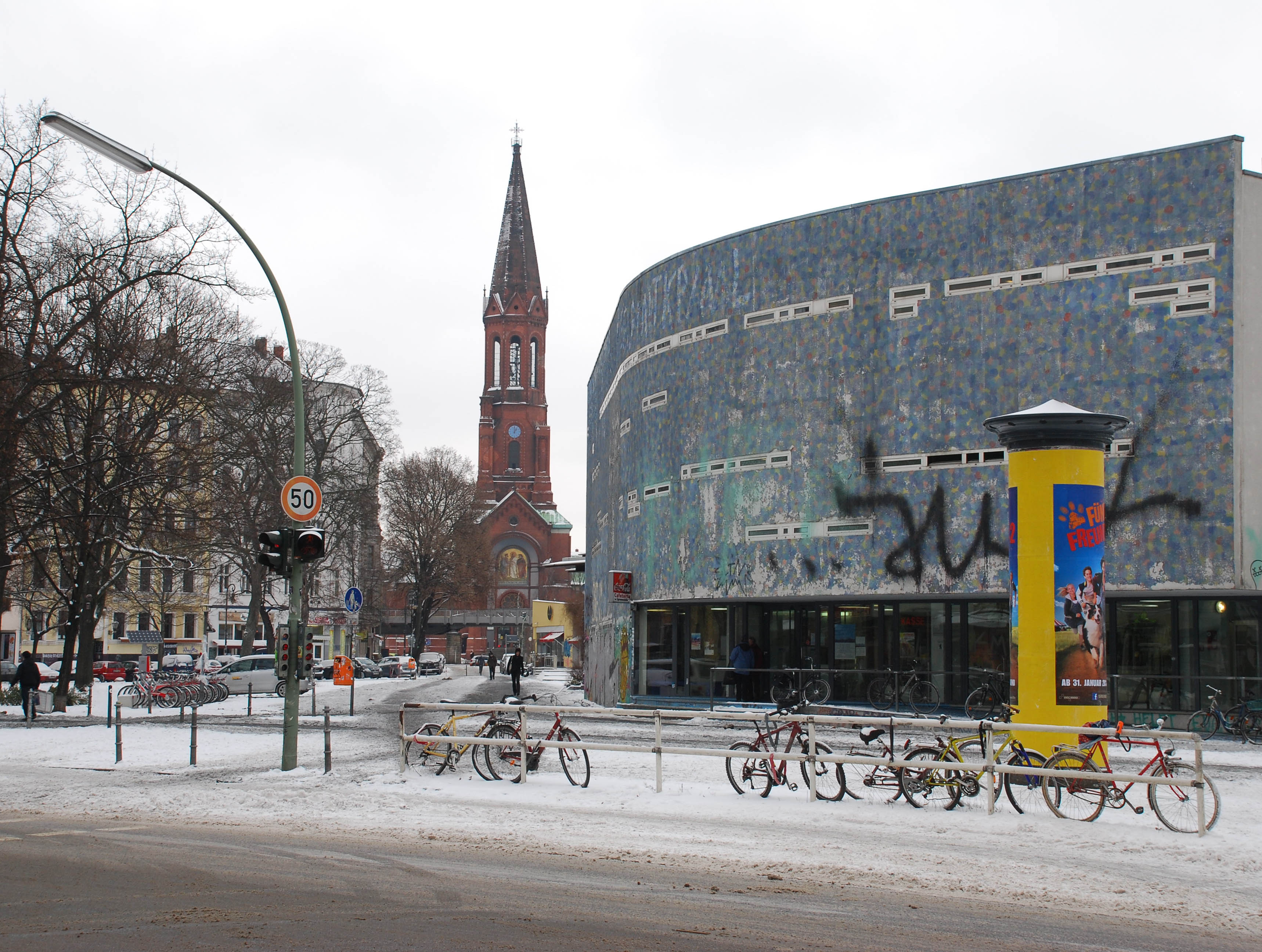
 The tower of the Emmauskirche today, seen from the Wiener Straße, in the foreground the swimming pool standing at the corner of the former Görlitz Train Station
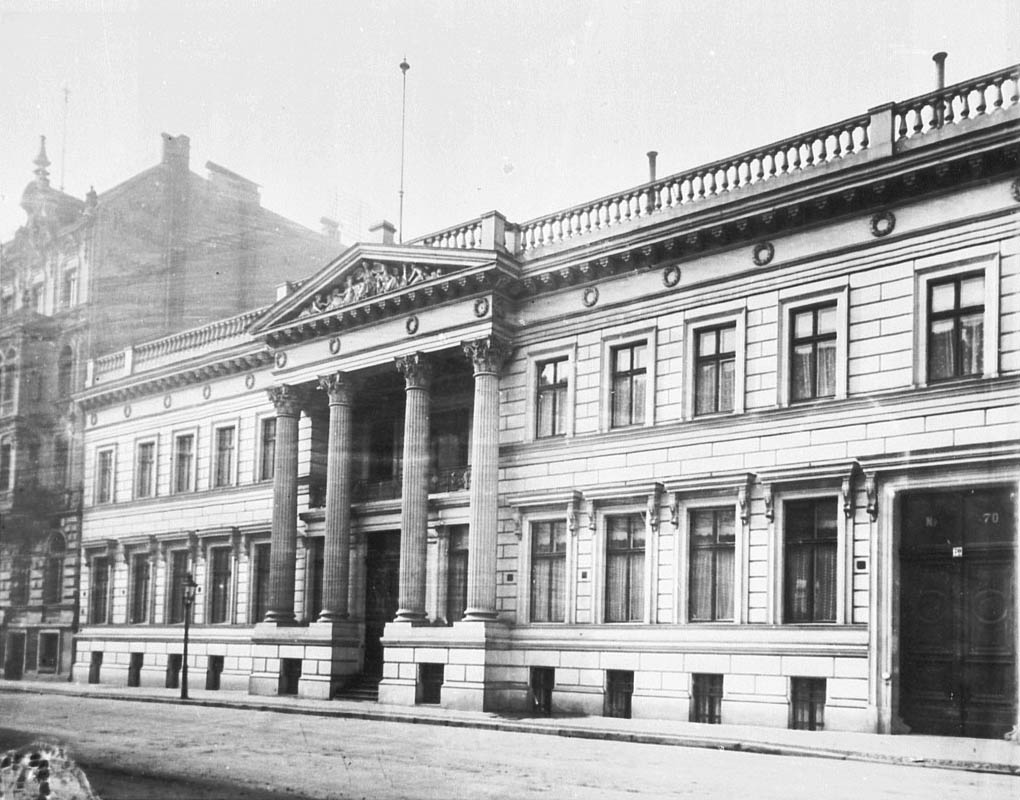
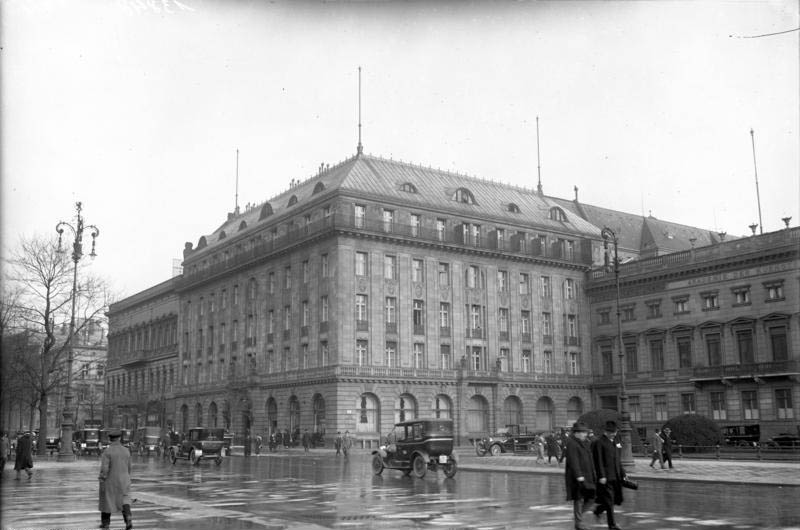
In 1867 the Railway King commissioned August Orth also with the building of his own palace at Wilhelmstraße 70, at the corner of Brandenburger Tor. The Strousberg Palace, which, due to its perfect realization of the
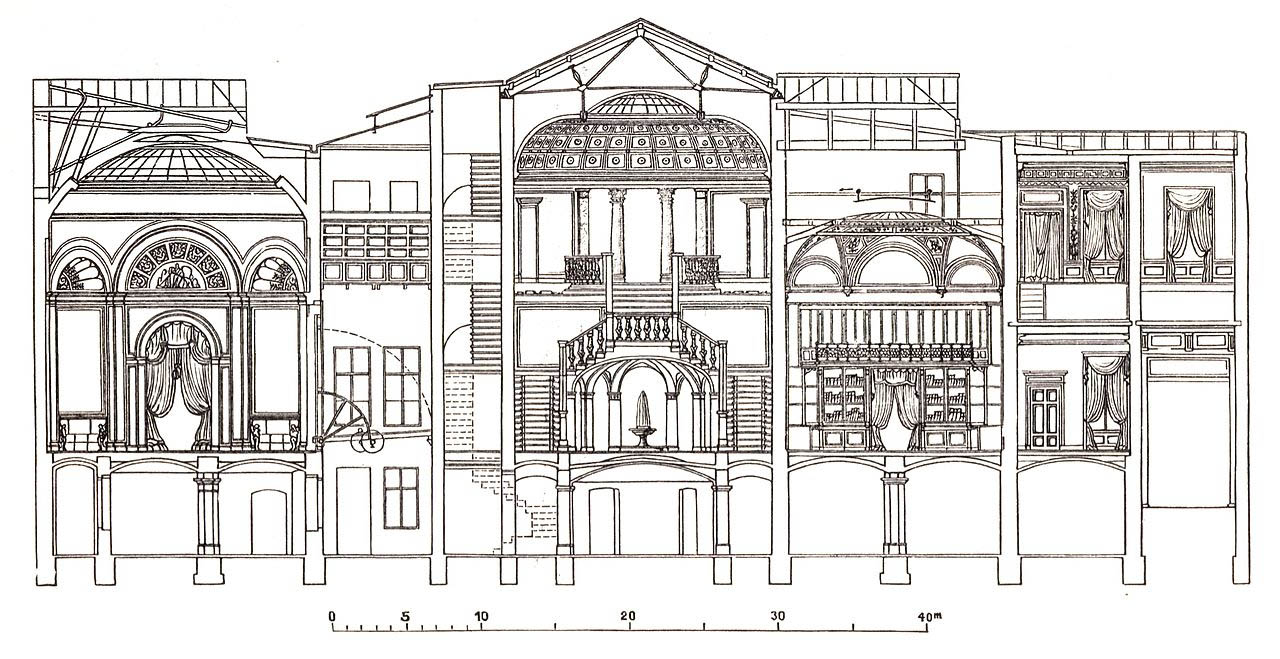
Schinkelian classicism, its stunning interior decoration, and a number of technical achievements first introduced here – such as gas lighting, hot water supply, central washing machine and bathrooms – was called “Berlin’s first palace” even at the turn of the century, was purchased in 1884 by the British Embassy. In 1939 the embassy was closed down, and afterwards the
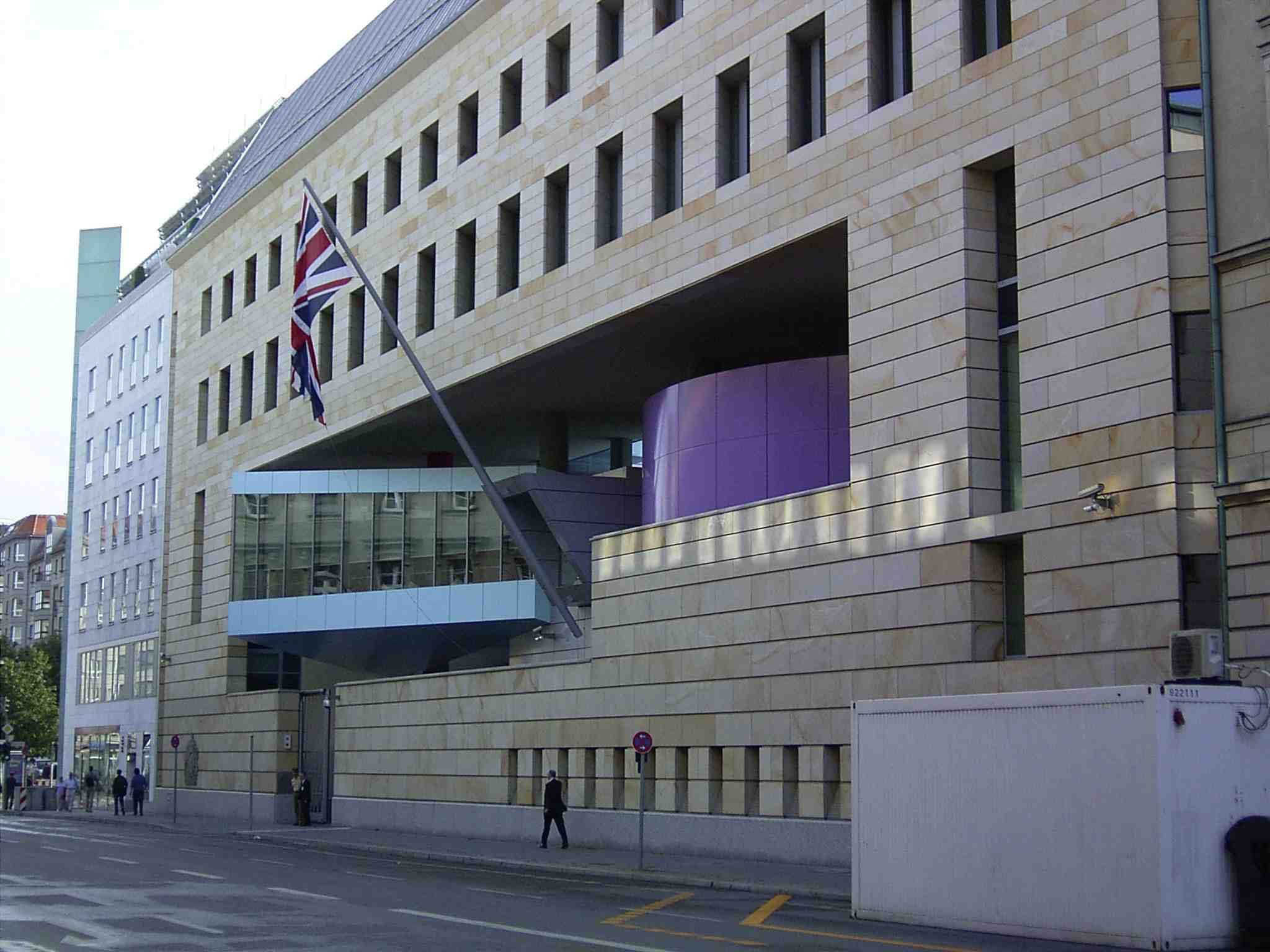
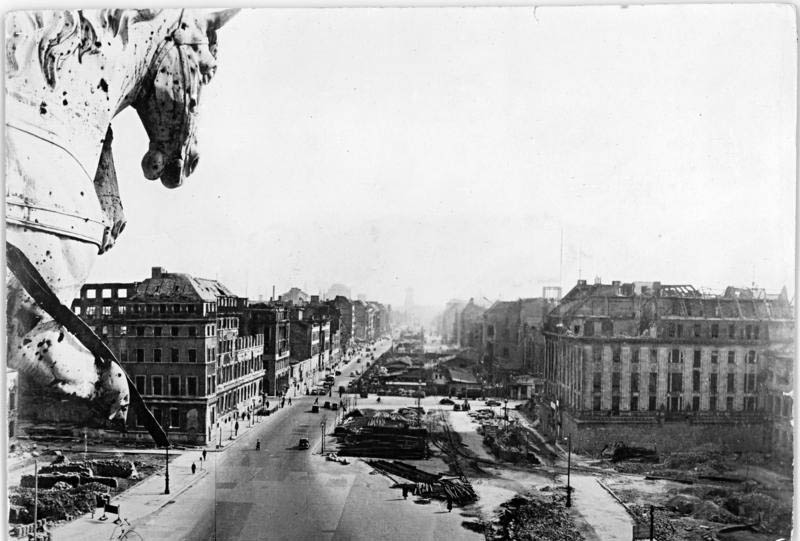
Reichsministerium für Ernährung, the Ministry of Supply moved into the building, which thus became the target of repeated air attacks. Although after the war the protection of monuments classified it among the buildings to be restored, in October 1950 this palace, which fell in the Soviet sector, was simply demolished, together with the legendary Adlon Hotel standing next to it. On the property, vacant for decades, only after the unification of Berlin, in 1998 they built the new building of the British Embassy, which reminds the pre-war palace, beyond its name and function, also with an original iron grid built into the gate.
 The British Embassy – the Strousberg Palace – in the 1920s
 The 1998 building of the British Embassy
 Sectional view of the Strousberg Palace, August Orth, 1867
 The Adlon Hotel, built in 1907, bombed in 1945, demolished in 1984, and rebuilt in 1995-97, and the same seen from the top of the Brandenburg Gate on March 23, 1950 (the Strousberg Palace is in the street behind the hotel)

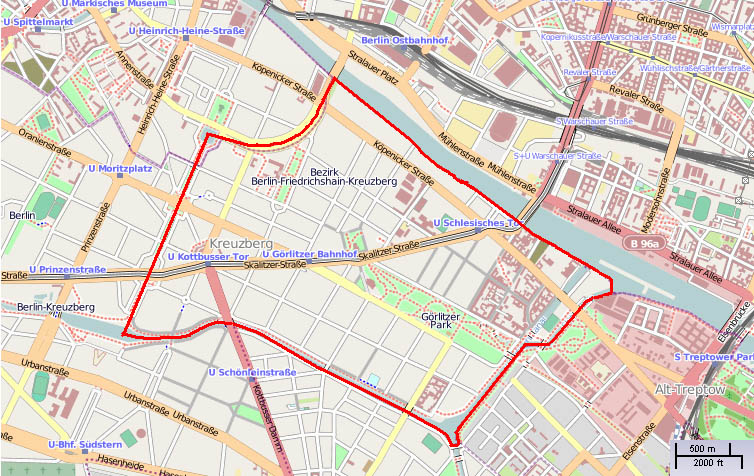
The Görlitz Train Station was also hit by several bombs during the war. Its fate, however, was sealed not by them, but by the fact that the demarcation line of the zones of occupation made it a kind of a blind street of the Western sector. To the north, east and south, along the channels it was bordered by the Soviet sector, the later East Berlin, and therefore the train has not even left the station, and already reached the border. The state railways, which for a couple of years stood under Eastern control even in the West, sought to limit the railway traffic from West Berlin, and so in 1951 they closed down all the terminuses there. After June 1, 1952 West Berlin citizens were even forbidden to enter the territory of East Berlin. Freight traffic went on for a while – the remains of the GDR customs office and military checkpoints were visible even a few years ago along the rails passing over the channel –, but the building of the station was gradually dismantled by the Berlin Senate between 1961 and 1967, in spite of the protests of the residents of Kreuzberg. The rails were also taken up, and first the building of a new residential area, then that of the southern bypass highway was planned on their place. None of them was realized, but the uncertainty, the enclosure of the quarter, and the lease terminations due to the planned highway led to the fact that this inclusion of Kreuzberg (the infamous Berlin SO 36, as it was called after its postal code) gradually became the neighborhood of squatters, political dissidents and foreign workers, the center of Berlin’s alternative scene. It has preserved this character even after the unification of Berlin, when the quarter rebuilt its relations with the neighboring districts, and the capital with great efforts modernized the neighborhood. The former immigrants are now reminded of by the gigantic
Wahhabi Mosque – the Omar ibn al-Khattāb Moschee, named after the
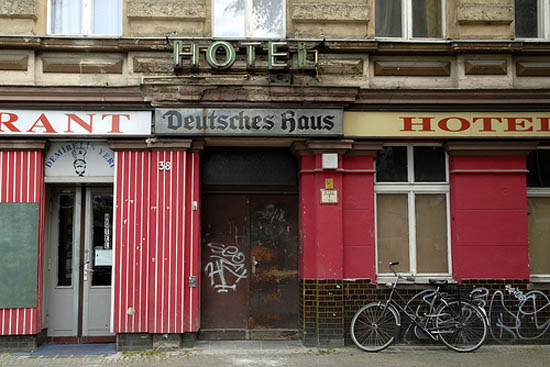
great conqueror, or Maschari Center, for German use – facing the U-Bahn stop, on the place of the former Deutsches Haus railway hotel, as well as by the unemployed youth passing their time in the Görlitzer Park established on the place of the taken up rails of the Görlitz Train Station. And in the park itself only the two railway warehouses now functioning as
Das Edelweiss Café, and the short rail section visible some hundred meters away, around Treptow, recall the former railway station.
 “Berlin SO 36”, that is, the former Eastern inclusion of Kreuzberg (marked in red). The three borders along the channels were also the borders between West and East Berlin
 The former Deutsches Haus railway hotel facing the U-Bahn stop, already closed…
 …and the Arabic mosque built in its place today…

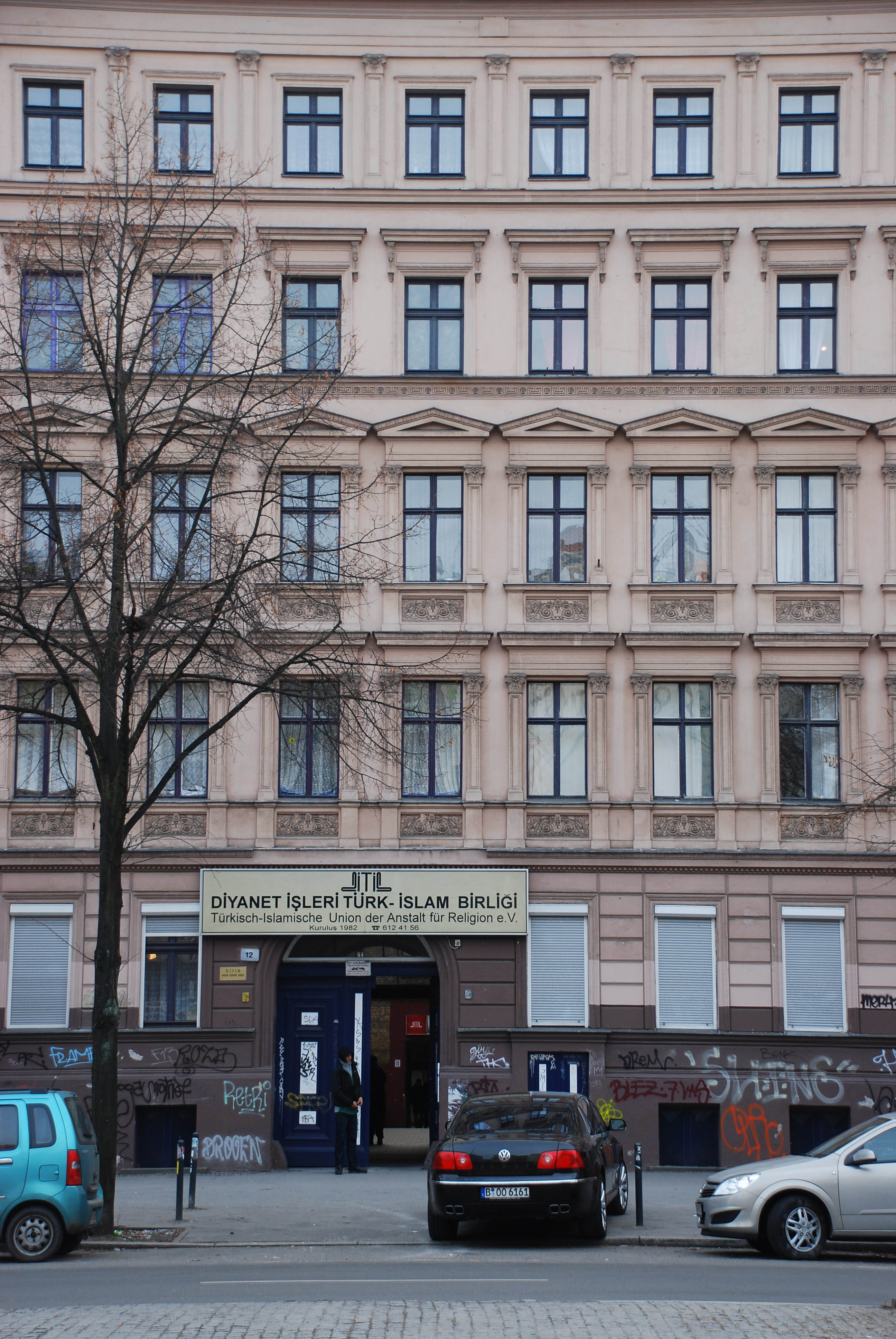
 …as well as the “traditional” Turkish mosque two buildings away along the Wiener Straße.
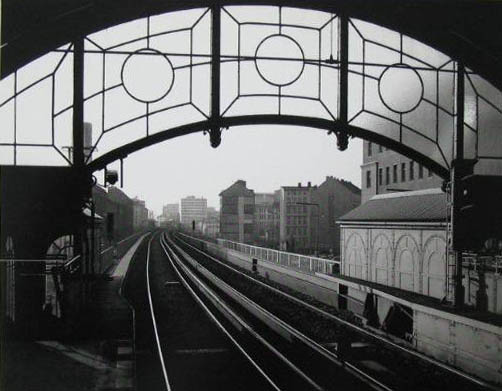
 Looking towards West Berlin from the U-Bahn, on a postcard around 1950
 The last two warehouses in the Görlitzer Park
But the rails were taken up not only here, but also from the East Berlin border up as far as to Görlitz. In fact, one of the two rails laid by the Railway King were taken away by the Soviets in 1945 as a war reparation. A section of it was rebuilt after the unification, but most of the Berlin-Görlitz traffic goes on one rail to this day.
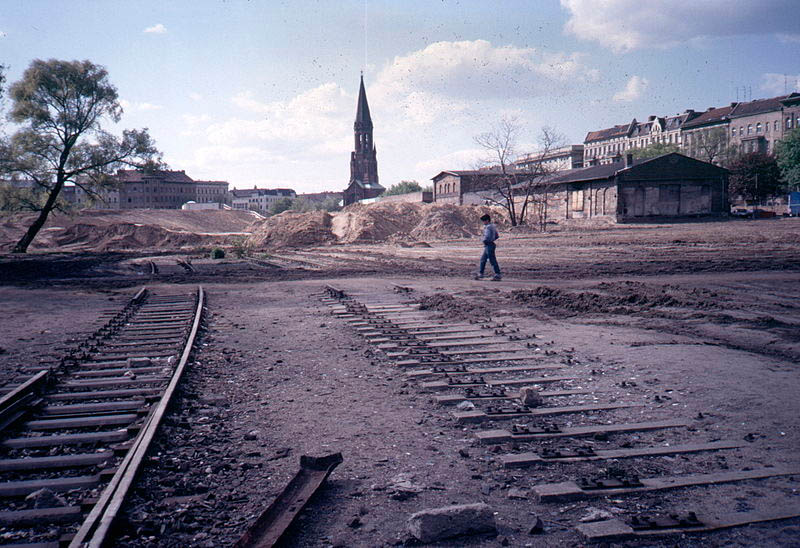
 The last rails, May 1987
 The former German Silesia (with yellow border) and the modern Polish Silesia (in darker red). The territories laying to the north, unmarked here (Lusatia, Eastern Brandenburg, Pomerania) were also allotted in 1945 to Poland. The former German Silesia (with yellow border) and the modern Polish Silesia (in darker red). The territories laying to the north, unmarked here (Lusatia, Eastern Brandenburg, Pomerania) were also allotted in 1945 to Poland. |
And indeed, why would two rails be necessary to an unexisting province? After all, Görlitz is not any more what it used to be. Lower Lusatia, of which it was the capital, together with Silesia and all the eastern part of Germany were allotted to Poland by the Yalta winners, thus relieving the remorse of the British government for having dragged Poland into the war with empty warranties in 1939, and then being unable to prevent Lwów’s and the Kresy’s falling into Soviet hands. Georg Thum in his
Uprooted: How Breslau became Wrocław during the century of expulsions, published in the last year both in Germany and
Poland – about which we will soon write – describes in detail and soberly how the more than four and half million inhabitants of the once almost purely German-populated provinces were expulsed, just like the Polish population of Lwów and the Kresy, during which more than half million people lost their lives.
Görlitz was lucky – if it can be called a luck –, as the
Odera-Neisse-border left half of it German, only the half over the Neisse bridge became Zgorzelec. Silesia’s other cities, however, after the deportations and settlements, the conscious effacing of the German past and the conscious building up of a Polish past, are today integral parts of the Polish Republic. Breslau is now Wrocław, Sorau Żary, Oppeln Opole, Lausitz Łużyce, Liegnitz Legnica, Glogau Głogów, Ratibor Racibórz. The memory of these German cities is today only preserved by the names of the streets around the repeatedly effaced Görlitz Train Station in Kreuzberg, in the core of Berlin’s bohemian world.
Stat rosa pristina nomine, nomine nuda tenemus.
The ancient rose remains by its name, naked names are all we have.
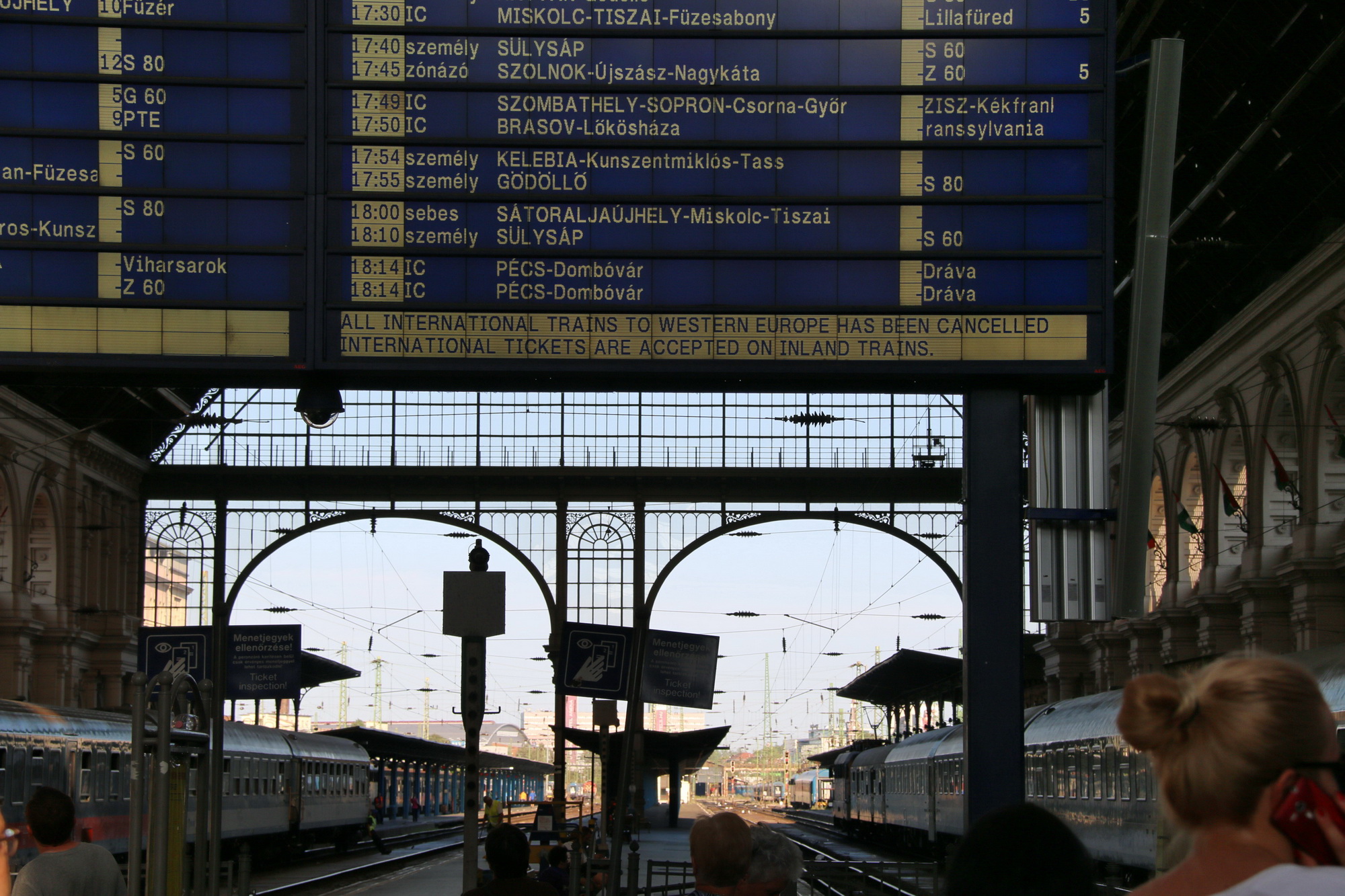 Budapest, Eastern Railway Station, yesterday afternoon
 These days, the vast majority of the traveling public opts to go to Szombathely, on the Hungarian-Austrian border, only for lack of a better option, and from there they continue their way on foot, but I actually have a meeting today in Szombathely. All the displays, and even the clocks in the Kelenföld railway station, in the western outskirts of Budapest, are dark, like in times of war, to prevent unauthorized access to information about the movement of trains. “A ticket for the 10:11 intercity, please.” “Unfortunately, all tickets have been sold out for second class, and for first class… checking… also for first class. You should perhaps choose a different train.” “A later train, you mean?” “Well, yes. There is one at 10:37 via Székesfehérvár, and somewhat later via Győr.” “And you think that there will be space on these?” “Well, I think yes, since they start from the Buda railway station, not from the Eastern one in Pest.” “And which one do you recommend?” “Er, I do not know. The one via Székesfehérvár is slower, and the rails are being repaired between Ajka and Boba, there you have to change for the bus, and then back to the train. But via Győr, towards Vienna, they are walking the entire length along the rails.”











 Come with us to…
 Atlantis
 Bestiary
 Bohemia+Prague
 Books, exhibitions, music, film
 Brave old world
 Caucasus
 Cemeteries
 Crimea
 Get to know the
 Images of the East
 Lightwriting
 Lwów/Lemberg
 Mallorca
 Message on the wall
 The Museum of Propaganda
 Odessa
 Paper Museum
 Persian letters
 The Jewish heritage


