Switch over to our new blog! • ¡Pásese a nuestro nuevo blog!

The renewed version of our blog, with more features, a richer design, and available in nine languages, can be read here: https://wangriver.com

The new version also includes the old posts, often in expanded form. If you are curious about the updated version of this post, replace “riowang.blogspot.com/” in the URL with “riowang.studiolum.com/”, and the new link will most likely lead you there.


La versión renovada de nuestro blog, con más herramientas, un diseño más rico y disponible en nueve idiomas, se puede leer aquí: https://riowang.com

La nueva versión también incluye las publicaciones antiguas, a menudo en una forma ampliada. Si tiene curiosidad por la versión actualizada de esta entrada, sustituya «riowang.blogspot.com/» en la URL por «riowang.studiolum.com/es/», y el nuevo enlace probablemente le llevará allí.

Mostrando entradas con la etiqueta Dante. Mostrar todas las entradas

Biographies

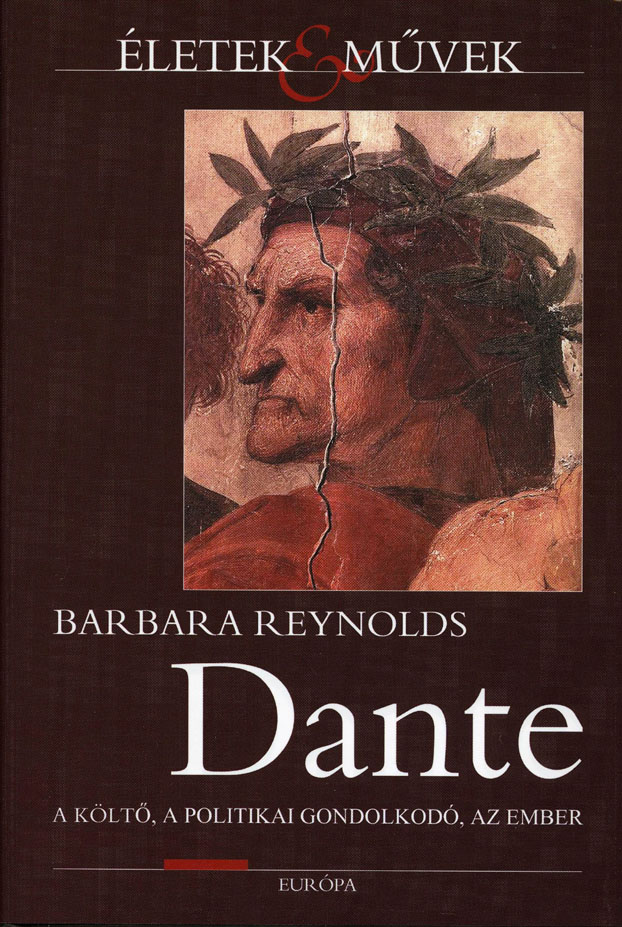
Barbara Reynolds: Dante, a költő, a politikai gondolkodó, az ember, 2008, könyvborítóFresh and crispy, right from the book factory. This is the very first copy. I hurry to boast of it while it is the only one. Tomorrow the rest will come too, soon they will be out in the bookshops. And I encourage everyone to read it. As Vergilius to Dante, so this book rallies to the support of the reader who lost his way in the archaic language of the Comedy and in the thick of Medieval Tuscan internal politics. It accompanies you from chapter to chapter, from canto to canto through the dark forest of the Comedy, and if you read the two works in parallel with each other, you will certainly reach out to the stars that close each of the three canticas.

The literary review Litera asked for two pages of our Hungarian translation to advertise its publication. In the publishing house we discussed for a while which pages should that be. The description of medieval Florence is beautiful, the deciphering of the identity of the donna gentile or of the mysterious expression tra feltro e feltro is a good detective job, while the investigation about the eventual drugs used by Dante is a complete rubbish, but the publishing house expects to increase with it the number of copies sold. It will be a surprise even to me which pages will finally be published in Litera. I, in any case, proposed those two pages of the epilogue where Barbara Reynolds describes how the last thirteen (!) cantos of the Paradiso were lost and found.

After the funeral ceremonies, his sons Pietro and Jacopo turned their minds to setting his papers in order. To their dismay, they were unable to lay hands on the last 13 cantos of Paradiso. They were certain that their father had finished the work, but the manuscript did not go beyond Canto XX. Where was the rest of it? They knew that it was his practice to send batches of cantos to Can Grande della Scala but enquiries made in that quarter were fruitless. In a state of desperation they were persuaded by friends to try to finish Paradiso themselves. They knew their father’s work well and would later write commentaries on it. They had also tried their hand at verse. Nevertheless, the task was far beyond their abilities.

After about eight months, Jacopo had a dream one night in which his father appeared to him. On being asked by Jacopo if he had finished his poem, Dante replied, ‘Yes, I finished it.’ He then took his son by the hand and showed him a room in a house and touched part of the wall, saying:
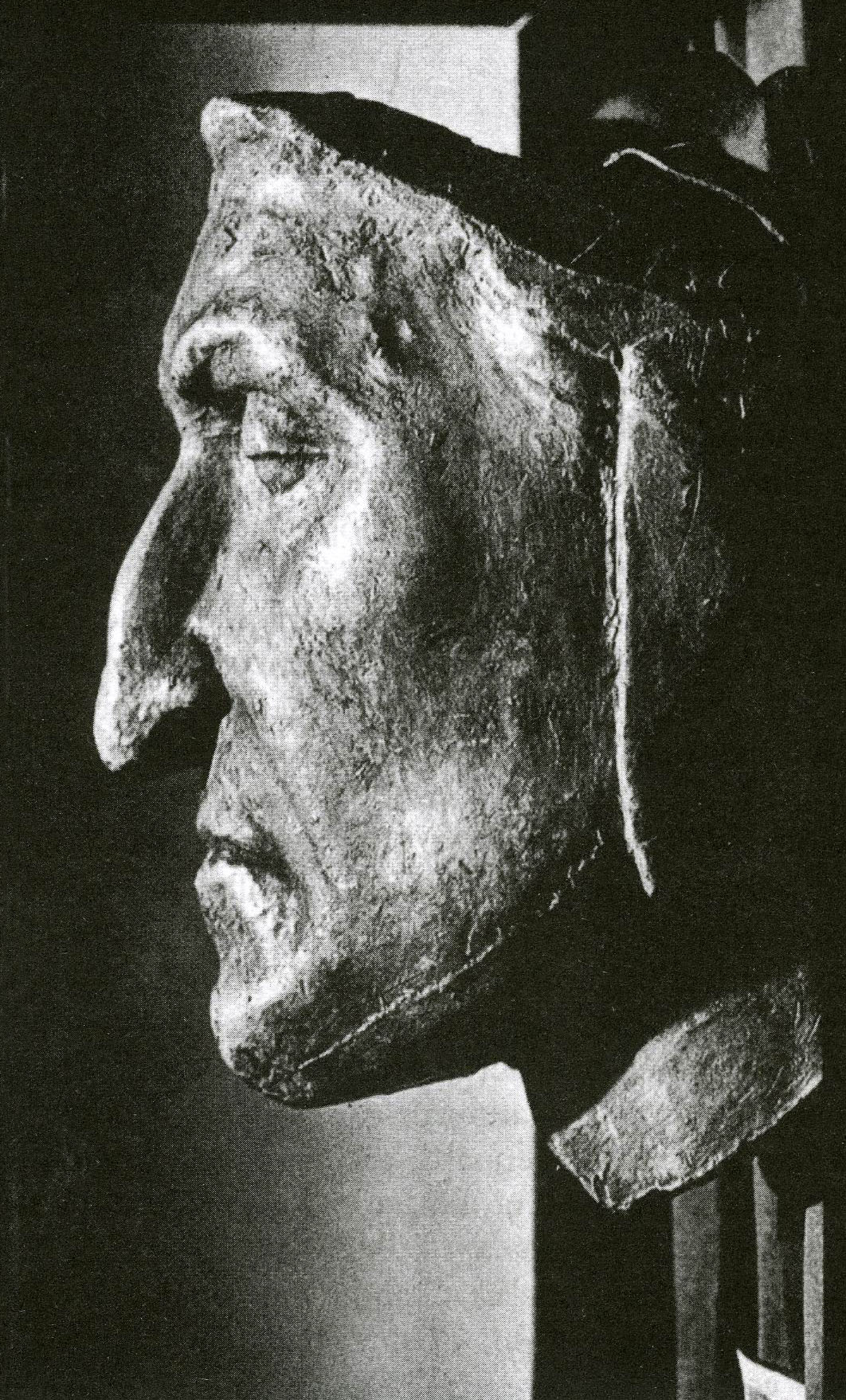
Dante halotti maszkja‘Here is what you have been looking for.’ On waking, Jacopo went with a friend to the house and there they found, in a recess in a wall, concealed by a flap of material, a pile of manuscript covered with mildew. They lifted it out and brushed it clean: it was the missing 13 cantos.

This story is beautiful in itself. However, it is even more beautiful what Reynolds leaves here unsaid: that the same story repeated seven centuries later – with her.

She writes about this in her introduction to that recent English translation of the Comedy that she considers as the best and she quotes from it all along her Dante biography. This translation was made by the eminent British writer, classical philologist, Christian humanist and author of detective stories Dorothy L. Sayers, who also happened to be godmother and first master of Barbara Reynolds. She intended it to be the last and greatest opus of her life. However, when she died on December 17, 1957, she left the translation unfinished. She arrived only as far as the twentieth canto of the Paradiso. Thirteen cantos were missing, those thirteen cantos.

Reynolds, who at that time was working on her own main work, the Cambridge Italian Dictionary, regarded it as her duty to complete the translations, and what is more, to complete it exactly like Sayers would have done it. Through the detailed analysis of the cantos hitherto finished she “learned” the style of Sayers, she read through all her works, her correspondence, manuscripts and readings, and then she translated the missing cantos and published the English Comedy. And with this, a “second thread” started in her scholarly work. While she kept working for twenty more years on the Italian Dictionary and on her original topic, the history of 19th-century Italian literature, on the other hand she also translated, after the Comedy, Dante’s first work, the Vita Nuova, she composed from the collected background material the biography of Sayers, she edited her correspondence in five volumes, and finally, with the work of a life, at the age of ninety-two she wrote this biography of Dante.

The salty bread

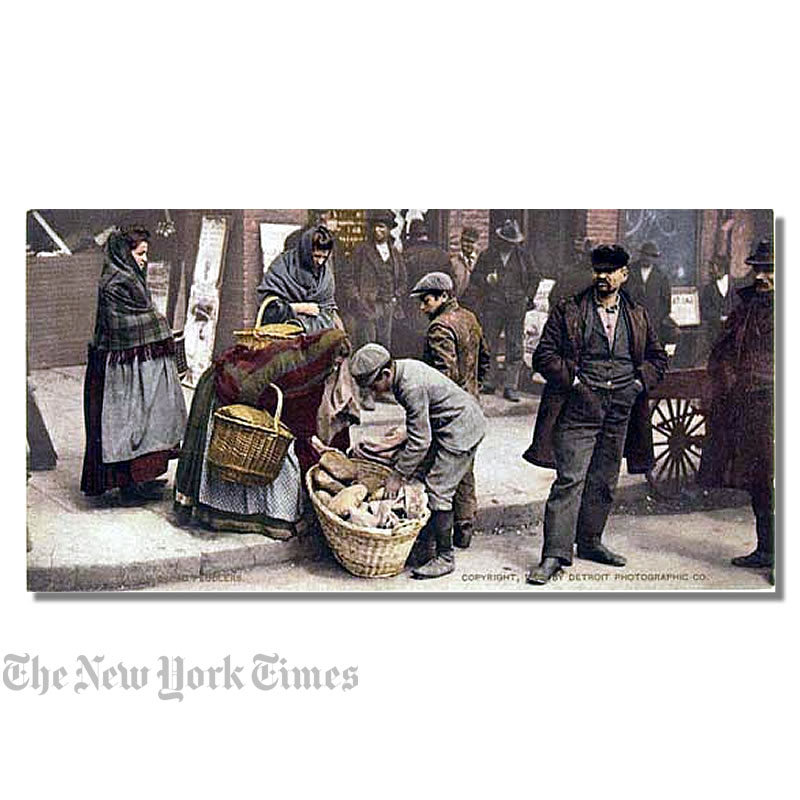
Italian bread peddler, Mulberry St., New York. Photocrome, 1902. Detroit Publishing Company, 1880-1920Bread peddler in the Italian quarter of New York. Photocrome, 1902. Detroit Publishing Company

Dante was banished from Firenze in November 1301, after the opposing party seized the power over the city by conspiracy.

As to which party Dante belonged and which one was the party opposing it is a tricky question even at the Italian department. The basic factor that determined the political field of 13th-century Italy was the struggle between the Papacy and the Empire, and this field was split along this fault line into the two parties of pro-Empire Ghibellines and pro-Papacy Guelfs. But as to what it means to be a Guelf or a Ghibelline in 1301, thirty-three years after the last Hohenstauf offspring was beheaded on the marketplace of Naples, was just as controversial and different from town to town as the meaning of the Left and of the Right in the countries of Eastern Europe twenty years after the end of the Cold War. Dante belonged to the so-called “white” wing of the Guelf party defending the independence of Florence, while their opponents, the “black” Guelfs advocating a much closer collaboration with the Pope robbed them of the power over the city with the support of the troops of the Ghibelline Siena. On the other hand, the white Guelfs who were immediately banished from the city, continued to fight for their return in alliance with the Ghibellines of Florence whom they had defeated at Campaldino in 1289 and banished from the city. The white Guelf Dante, who for personal reason very soon had an argument with his fellow exiles, spent most of the remaining twenty years of his life in Ghibelline courts as the most influential Italian advocate of the cause of the Empire, while it was the black Guelf Cino da Pistoia who provided him a lecturer’s position at the University of Bologna. And if the threads are not entangled enough: Corso Donati, the leader of the Black party was the brother-in-law of Dante (this is why Dante’s wife could remain in Florence), and he ordered the banishment of the White just one year after Dante – who was a Prior of Florence in the summer of 1300 – having subscribed with his own hands the document about the banishment of his own best friend Guido Cavalcanti. Albeit Cavalcanti was a White Guelf just like Dante, but he fall on the other side of another fault line: he belonged to the noblemen deprived of their citizenship after a long internal struggle by the White and Black Guelf burghers in agreement.

Every person has his own trauma that he then drags along for a life. For Dante it was this exile that he could not get over until his death. To this topic he returns again and again in his writings, the contrivers of this are inflicted by him with the most terrible punishments in the Inferno – the main conceiver Boniface VIII with more than one, as if Dante was trying where it hurts him the most painfully –, and while in the Holy Week of 1300 he arrives from Hell to Heaven, most characters foretell him about this. This is done in the most explicit form by his ancestor Cacciaguida in the 17th canto of the Paradiso:

Tu proverai sì come sa di sale
lo pane altrui, e come è duro calle
lo scendere e’l salir per l’altrui scale.

Thou shalt by sharp experience be aware

how salt the bread of strangers is, how hard
the up and down of someone else’s stair.

This “salty bread” is usually interpreted as the “bitter bread of exile”, the one “salted with tears” by the refugee. This is how it is also interpreted by the most authoritative Renaissance commentator Cristoforo Landino of the Comedy, expounding these verses of Cacciaguida like this in his commentary first published in 1498:

ma nondimeno tu nel tuo essilio sarai percosso dalla prima saetta, che trahe l’essilio: & questo è, che ti converrà lasciar le cose a te piu care, cioè, la patria, i parenti, gli amici, le case, le possessioni, & simili, & proverai, come sa di sale, cioè, quanto pare amaro.

nevertheless you will be reached too by that first arrow that means the exile: that is, you will have to leave everything that is dearest to you, your homeland, your parents, your friends, your home, your possessions and everything else, and then you will see how salty, that is, how bitter it is.


However, this verse of the Comedy also offers another possibility of interpretation. The archaic structure sì come or, in a contracted form, siccome in the sì come sa di sale was used in the old literary Tuscan language in the sense of modern che, on the model of Latin sicut. If we translate the first two verses like this, they will simply mean: You will be aware that the bread of others is salty.

What is the difference? That the bread in Florence is not salty. It was not salty already in Dante’s time. Medieval Florence had no sea, and purchased salt from the great enemy, Pisa – for an usurious price. Salt was regarded as a treasure in the city, like pepper elsewhere, and whenever it was used, it was rather added to the companaticum, that is to the things “eaten with the bread”, and omitted from the bread itself. Even today one of the specialities of Tuscan kitchen is that their bread lacks salt, while traditional smoked meat – in compensation – is much more salty than elsewhere in Italy. Salty bread – as all our Tuscan friends proudly proclaim it – is therefore per definitionem “the bread of strangers”.

Dante wrote this canto of the Paradiso almost twenty years after his banishment in Ravenna, where after so much wandering he finally received a house of his own from the lord of the city, Guido Novello da Polenta. It was here, writes Barbara Reynolds, whose excellent biography of Dante has just been translated to Hungarian by us:

where it was possible for his sons and a daughter to join him and possibly also his wife, where the bread was surely more palatable and the stairs at last familiar beneath his feet.

The stairs – for that short time he could spend in Ravenna, where his tomb today stands in the small square at the side of the church, just having enough time to complete his Comedy – perhaps yes. But salty Ravenna bread could never feel as tasty to him as twenty years earlier quello bbòno, della hhasa.

Hoax

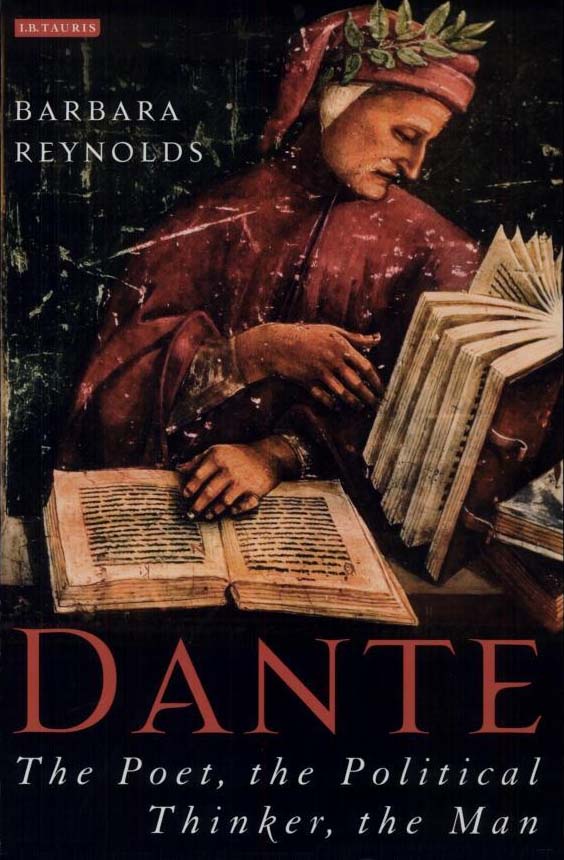
Barbara Reynolds, Dante, The Poet, the Political Thinker, the Man, 2006, book coverI am translating the recent Dante biography by Barbara Reynolds to Hungarian. (Large portions of the original English can be read here, while the Hungarian version will be published for Christmas at the Europe Publisher). It is an excellent book. The author, who studied and translated Dante throughout all her life – on this I want to publish some touching details in a next post – decided at the age of ninety-two to “read all his works again, this time with an independent mind”, and as a consequence “present a portrait of Dante, the poet, the political thinker and the man, which has not been seen before”. She has managed to do so indeed. During the three years of “lectura Dantis” accomplished at the Italian department I did not learn as much about Dante as from this book. This is obviously no great eulogy for anyone who knows the standard of the Italian department in Budapest, but even for them it will be a dazzling qualitative leap that from now on they will have at least one good book to read during the five years.

It is an especially great – and rare – achievement that the book is enjoyable both for experts and non-experts. It gives a brief and clear overview on the hopelessly intricate Italian politics – which deeply influenced the career and writings of Dante –, on the life and ideas of the author, as well as on the almost untraceable path and episodes of the Comedy. Whoever having read this book will embark with easy heart upon the Comedy. He or she will not be frightened away any more by the dark forest of untold names and unnamed events but, having a clear grip of the situation, will be able to completely dedicate himself to the literary and human subtleties of the works, also continuously pointed out by Reynolds. And as a bonus, as Reynolds herself writes, “almost every chapter contains new ideas and fresh insights, some of them radical, many controversial”.

While translating the chapter on the ninth circle of Hell, I believed for a moment that I also might increase the number of new insights. Here Dante and Virgil arrive to the bottom of Hell, the very center of the globe of the earth where the king of demons Lucifer personally tortures the perpetrators of the greatest sin, those who betrayed their benefactors. The three main figures among them are Judas, Brutus and Cassius who betrayed Christ and the Empire ordered by God, respectively, and who are strangled by the very mouth of Lucifer for ever and ever.

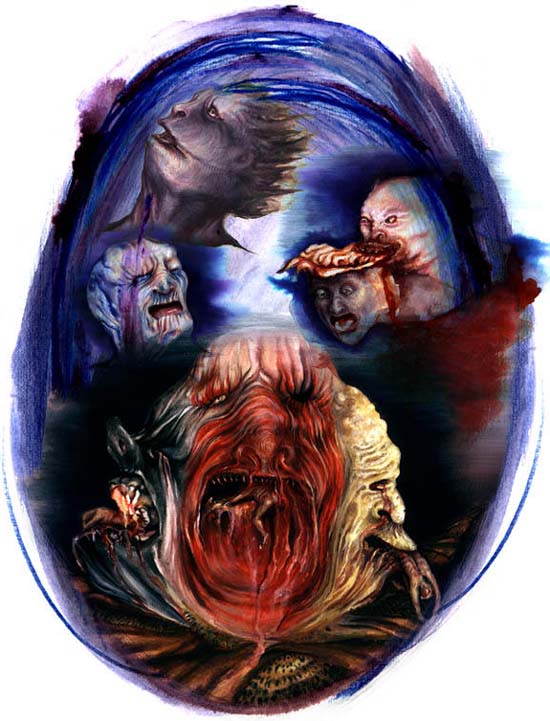
Suloni Robertson, A Pokol kilencedik köre, illusztrációSuloni Robertson: The ninth circle of Hell.
Above the four Toscan betrayers contacting Dante,
below the three-faced Lucifer strangling Judas, Brutus and Cassius.

Virgil presents the three figures to Dante like this:

„Quell’anima là sù c’ ha maggior pena”,
disse ’l maestro, „è Giuda Scarïotto,
che ’l capo ha dentro e fuor le gambe mena.
De li altri due c’ hanno il capo di sotto,
quel che pende dal nero ceffo è Bruto:
vedi come si storce, e non fa motto!;
e l’altro è Cassio, che par sì membruto.”

“That upper spirit,
Who hath worse punishment,” so spake my guide,
“Is Judas, he that hath his head within
And plies the feet without. Of th’ other two,
Whose heads are under, from the murky jaw
Who hangs, is Brutus: lo! how he doth writhe
And speaks not! Th’ other Cassius, that appears
So large of limb.”

Reynolds’ British sense of reality cannot refrain from commenting on this description:

Given his [Lucifer’s] enormous height, which from Dante’s indications has been calculated to be over 1,400 feet, and given that about one-half of him is visible above the ice, his three heads area about 700 feet above Dante’s own. There is a conflict here between realistic description and poetic imagination, since from so far below and in such darkness it would be impossible for Dante to see, for instance, that Cassius is sturdy of limb.

I, however, am thrilled with a discovery. A silent Brutus… a fat Cassius… let us wait a moment. Well, Dante did not have to see this at all: he could know it from Plutarch. Is it not in the Parallel Biographies that Julius Caesar says he is not afraid of the merry and fat Cassius, but rather of the silent and sombre Brutus? And if so, then how can it escape the attention of Reynolds that this saying is repeated verbatim in Julius Caesar?

While searching for the volumes of Plutarch and Shakespeare, I am also enlightened by further thoughts. In fact, Plutarch was only discovered at the middle of the 15th century, and he has been translated only since the middle of the 16th century. Shakespeare read him in the novelistic English translation of 1579 by Thomas North that had been prepared on the basis of the verbose French translation by Jacques Amyot (1559). How was it known to Dante? Perhaps through the same prophetic foresight with which he had described, two centuries before the age of discoveries, the Cross of the South to be seen on the southern sky?

This vision melts away in a minute. This quotation of Shakespare sounds correctly like this:

Let me have men about me that are fat;
Sleek-headed men and such as sleep o' nights:
Yond Cassius has a lean and hungry look;
He thinks too much: such men are dangerous.
Would he were fatter! But I fear him not:
Yet if my name were liable to fear,
I do not know the man I should avoid
So soon as that spare Cassius.

There is Cassius and there is fatness, there is silence and soon there will be Brutus as well, but… not in that way.

As in the tricky question, like what is ‘fork’ in German: Gabel, where were the languages confused: Babel, who killed Cain: Abel. Er… I mean…

One of a blog’s greatest advantages in contrast to scientific publication is that one can report in it not only on those discoveries that have proved true, but also on those that have only caused intellectual pleasure, even if for a minute only.