Switch over to our new blog! • ¡Pásese a nuestro nuevo blog!

The renewed version of our blog, with more features, a richer design, and available in nine languages, can be read here: https://wangriver.com

The new version also includes the old posts, often in expanded form. If you are curious about the updated version of this post, replace “riowang.blogspot.com/” in the URL with “riowang.studiolum.com/”, and the new link will most likely lead you there.


La versión renovada de nuestro blog, con más herramientas, un diseño más rico y disponible en nueve idiomas, se puede leer aquí: https://riowang.com

La nueva versión también incluye las publicaciones antiguas, a menudo en una forma ampliada. Si tiene curiosidad por la versión actualizada de esta entrada, sustituya «riowang.blogspot.com/» en la URL por «riowang.studiolum.com/es/», y el nuevo enlace probablemente le llevará allí.

Mostrando entradas con la etiqueta forgery. Mostrar todas las entradas

Long live the Republic!

Among the photos of the Dicescu collection, presented yesterday, there is one – picture 13 in the first mosaic –, in which, it seems, we can discover the earliest example of the well-known Stalinist photoshop procedure.
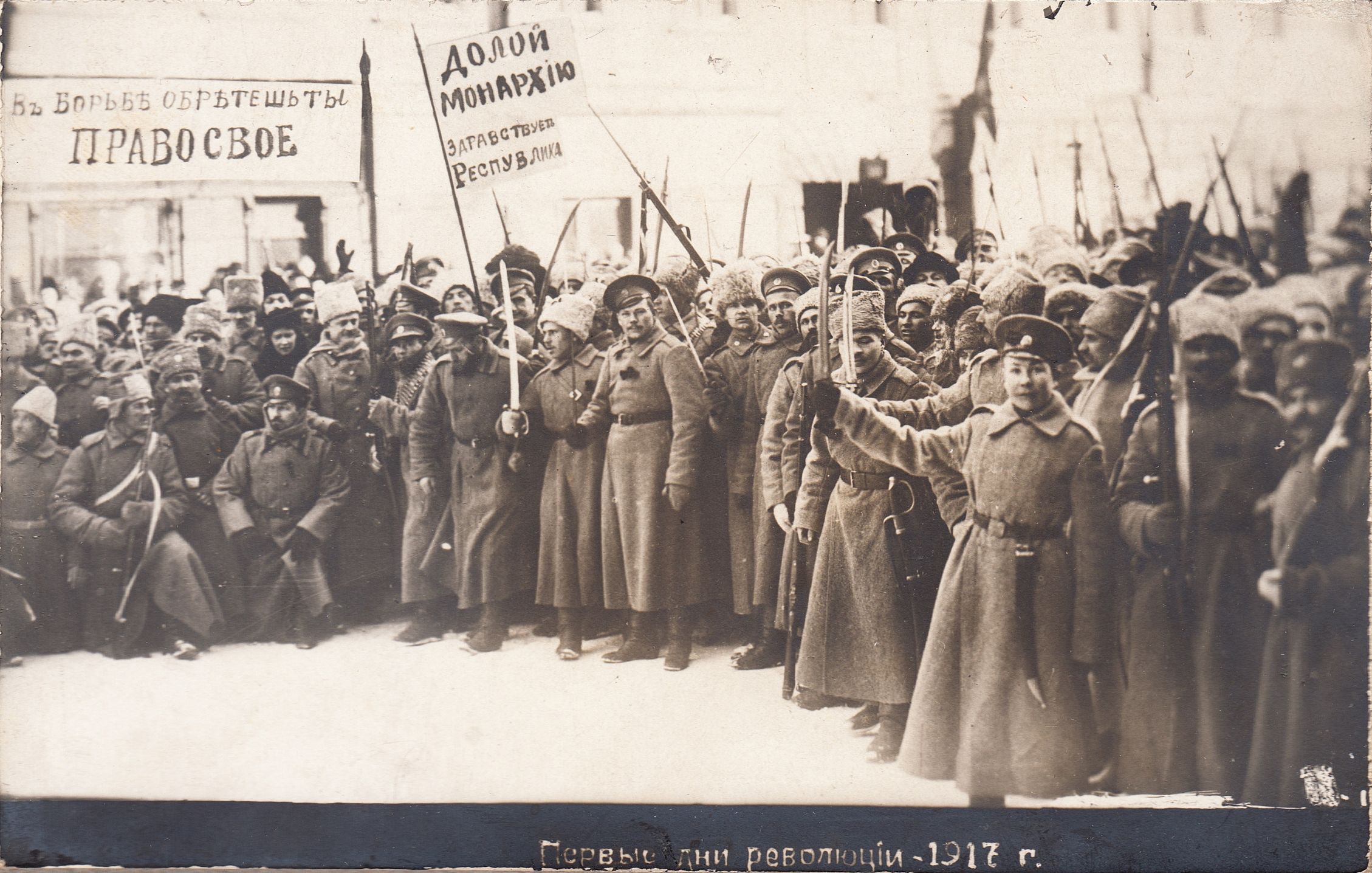

In the photo, taken in the first days of the February Revolution, the soldiers posing for a group picture on St. Petersburg’s Liteyny Prospect with drawn swords, cheer the revolution. This is also emphasized by the inscriptions of the banner and flag in the background: В борьбе обретешь ты право свое – “In struggle you find your rights,” and Долой монархию! Да здравствует республика! – “Down with the monarchy! Long live the Republic!”

However, David King’s great overview, The Commissar vanishes: The falsification of photographs and art in Stalin’s Russia (1997) also publishes a previous version of this image.
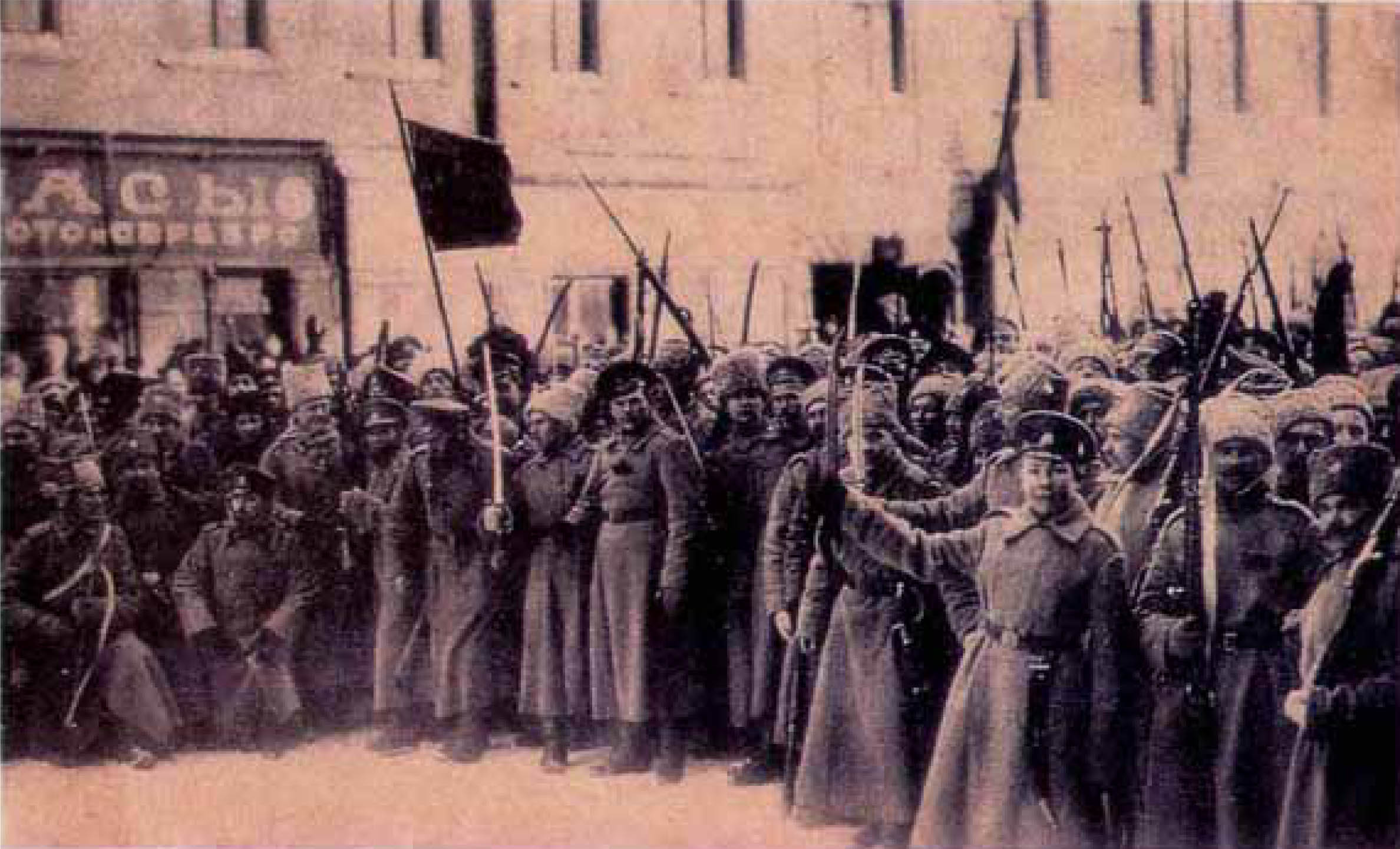

The waving of the flag is much more natural here than in the previous photo, but we do not know what is written on it, if anything at all. And about the banner, it turns out that it was retouched onto the place of a shop sign in the background, whose original inscription was: Часы, золото и серебро – “Clocks, gold and silver”.

In David King, this beautiful circular story, as the earliest example of Communist photo retouching, ends here. However, there are some additional details that deserve attention.
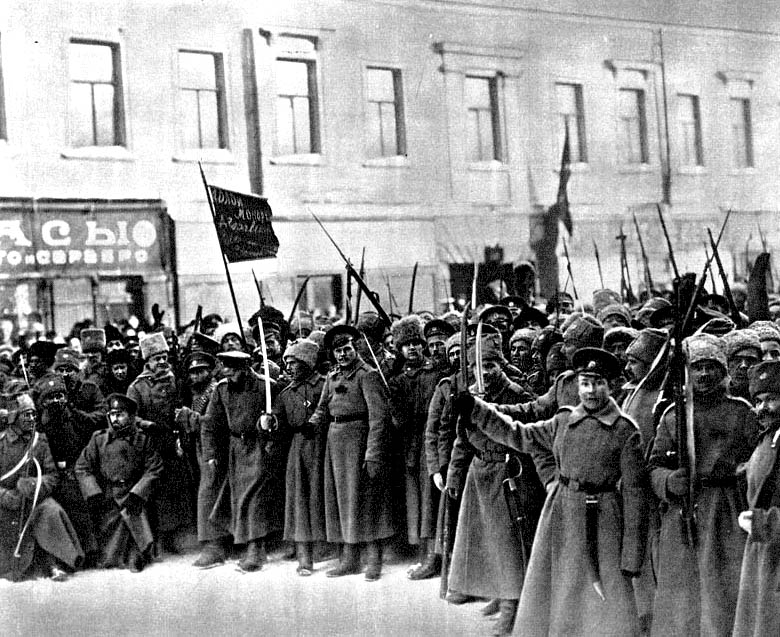

On the Russian internet you can already find the heretofore unpublished archival original of this picture. The original photo clearly shows that the flag actually had an inscription, and it really began with Долой мо…


And in another photo, which displays the same soldiers in another pose, you can see not only the entire shop sign in the background, but also the inscription of the flag. And it reads the same as in the retouched picture, though somewhat erroneously: Долой монорхію. Да Здравствует Демократическая Республика – “Down with the monorchy. Long live the Democratic Republic!”
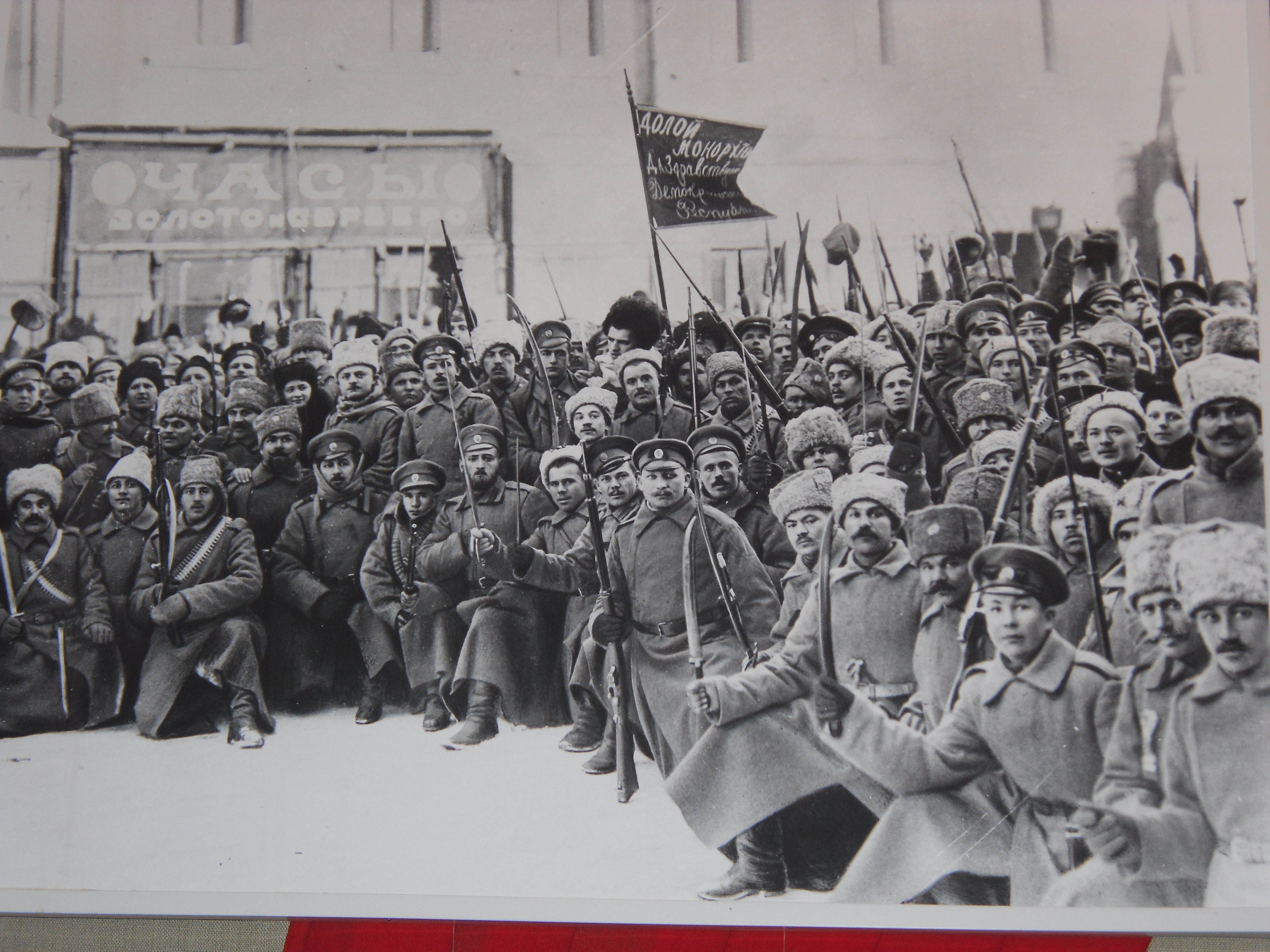
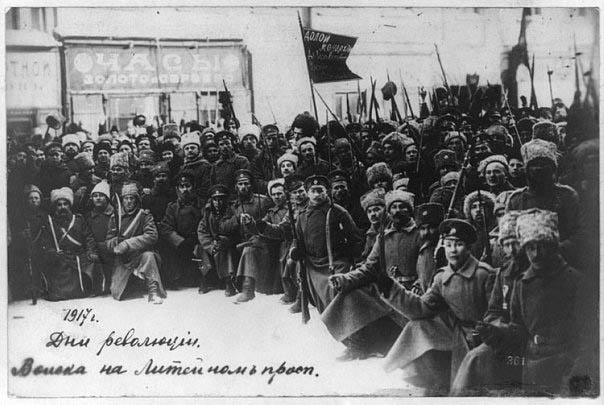
That even the previous image is still not completely retouch-free, is proven by this “more original” version, with a larger cut-out and handwritten caption, which suggests that it was also part of the Ion Dicescu collection.

But what is the other inscription retouched on the photo: In struggle you find your rights? For assistance, let us contact the classic:

“Koreyko was attentively watching Sinitsky’s new riddle. On the beautiful image of the goose there was also a sack, from which the following things were peeking out: a letter T, a pine tree, behind which the sun was rising, and a sparrow sitting on musical staves. The riddle ended with a comma upside down.
– This is certainly no child’s play to decipher – Sinitsky said. – You will have to rack your brains for a while!
– Come on, come on – Koreyko replied with a smile. – Only this goose disturbs me. What on earth does this goose do here? Aha! Got it! Done! In struggle you find your rights!
– Yes – said the old man, frustrated, in a drawled tone. – How did you get it so fast? You’re an incredibly talented person. One can immediately see that you’re a first-class bookkeeper.
– Second-class – corrected Koreyko. – But for whom did you make this riddle? For the press?
– For the press.
– Then it was a totally pointless work – Koreyko said. – In struggle you find your rights: this is the slogan of the Socialist Revolutionaries. Not suitable for print.”


The Socialist Revolutionaries – the esers (эсеры or “S.R.s”) – who, until the armed Bolshevik putsch in October, were the leading party of the revolution and the organizers of the workers’ and soldiers’ councils, drew the slogan of their movement from the German jurist Rudolf von Jhering.

“In struggle you find your rights!” Socialist Revolutionary posters, 1917
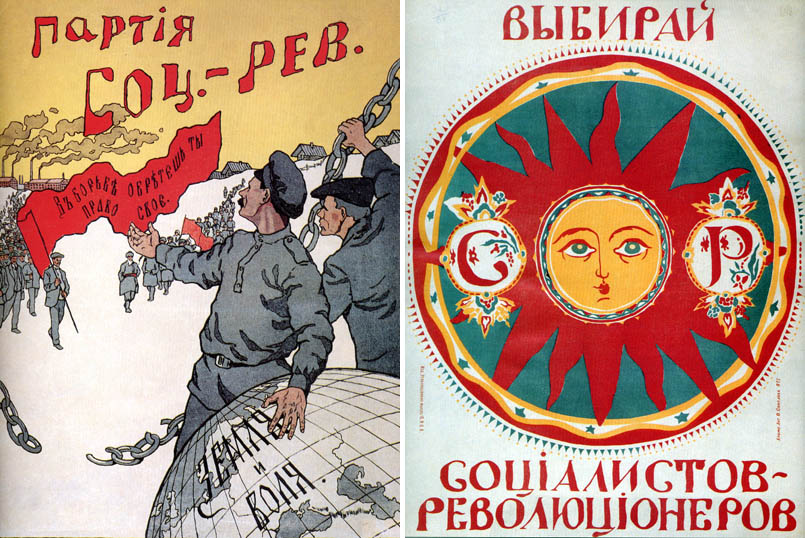

The retouched photo has therefore nothing to do with the Communists; on the contrary, it comes from the party which they considered their most powerful rival, and whose memory after the civil war they condemned to oblivion. And the purpose of the retouching was also not that kind of falsification of history, the Orwellian retrospective change of the past, what we know from the manipulated photos of Stalinism.

Think about it: these photos were distributed right after the well-known events, in the form of postcards. Their purpose was propaganda: to popularize the achievements of the revolution and the party standing behind them. They do not alter the events depicted in them, but, in the manner of folk luboks, they make their message unambiguous for recipients who are familiar with this visual formula. One of the two retouched inscriptions makes clearly visible the slogan which was really carried by the soldiers, and the other represents the one which must be somewhere in the picture in order to make it clear, to whom the republic is due. It could also be placed in a caption, but when there is space for it in the place of the absolutely irrelevant shop sign, let it be there, as in the luboks. Just as in that other picture from the Dicescu collection, of which the postcard version was also complemented with a flag labeled Long live the Republic! with the purpose of disambiguation.
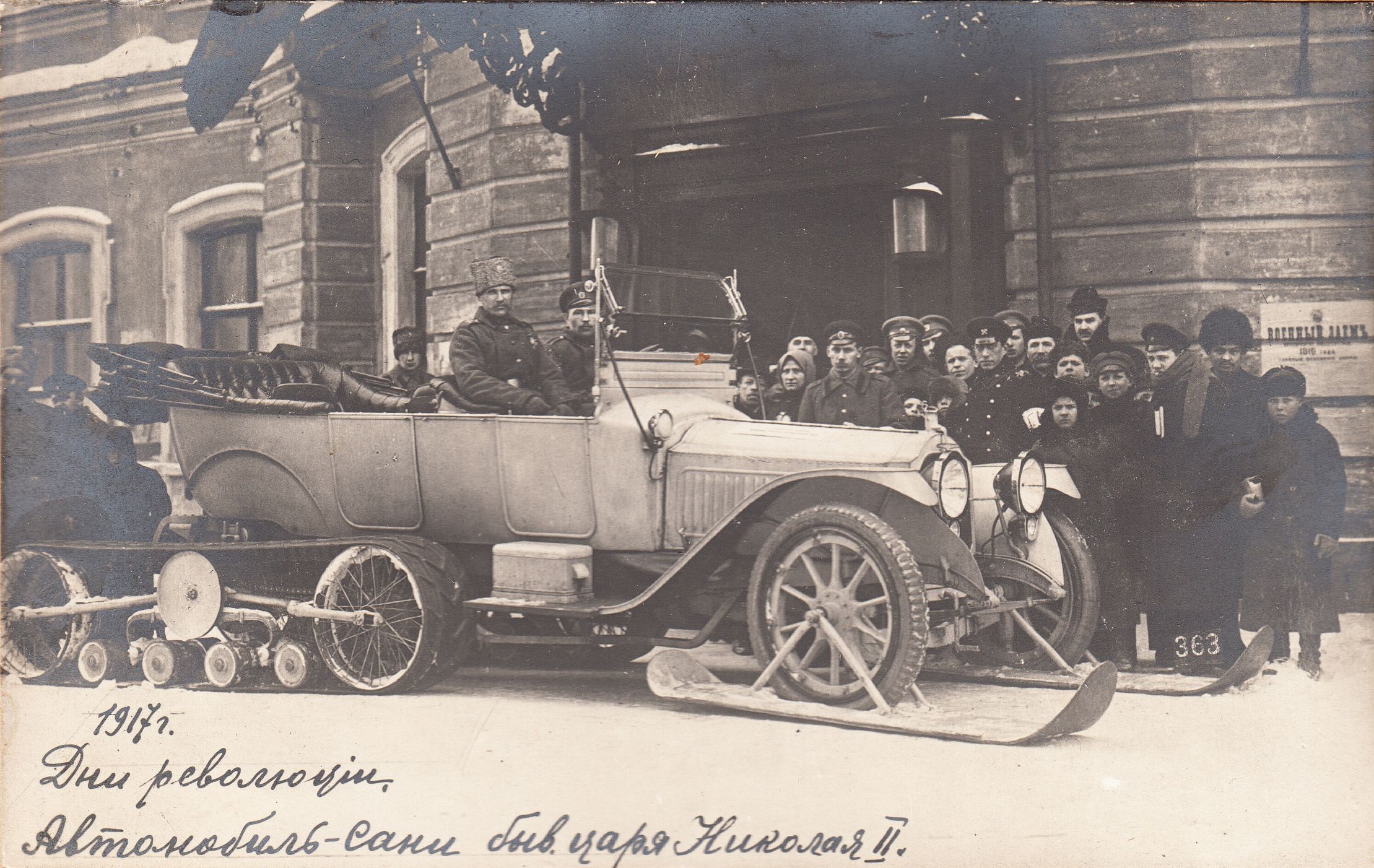
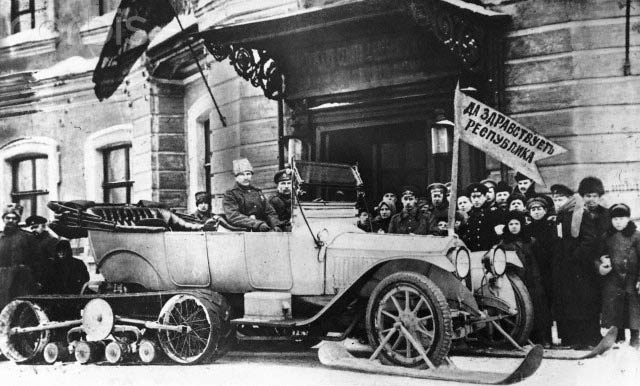

“Absolutely irrelevant shop sign”, I say,  in full awareness that, in the later decades of the Russian revolution it is prophetically relevant that you read “Clocks, gold and silver!” in the place of the slogan of the Red Army. Just like the fact that the signs betraying this pursuit are carefully retouched from the picture, which we have already written about in connection with Yevgeny Khaldei’s 1945 Reichstag photo.

Survival kit


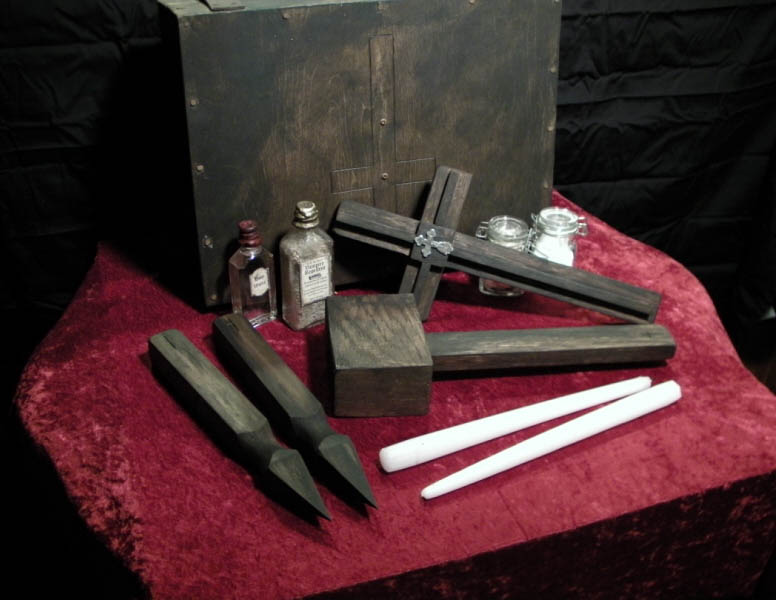
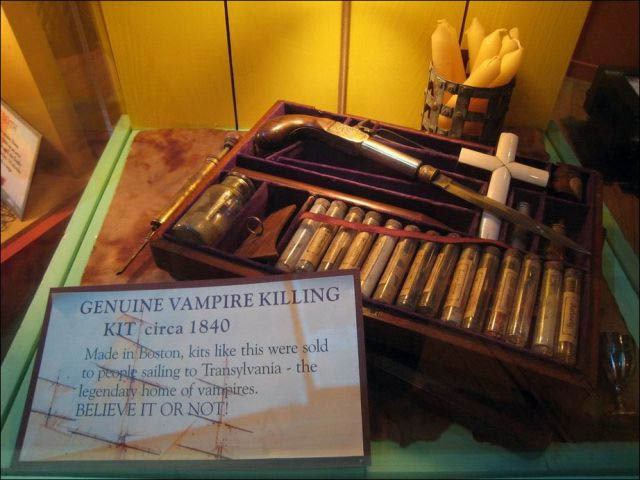
Whoever has been inspired by the previous post to set out on the trails of Bram Stoker and Dracula to Bistritz and the Borgó Pass, is in a far better situation than the unsuspecting Jonathan Harker. Not only because he already knows exactly what kind of threat he would face, but also because he can buy with a single click, collected in a single package, all that is necessary to an easy victory over that threat.


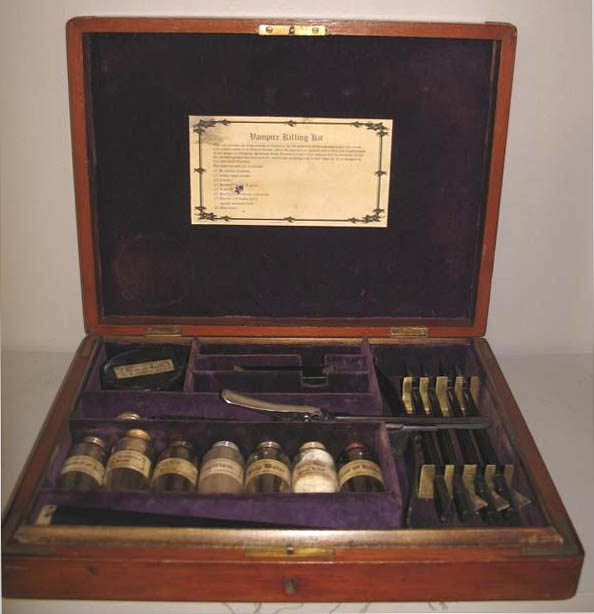
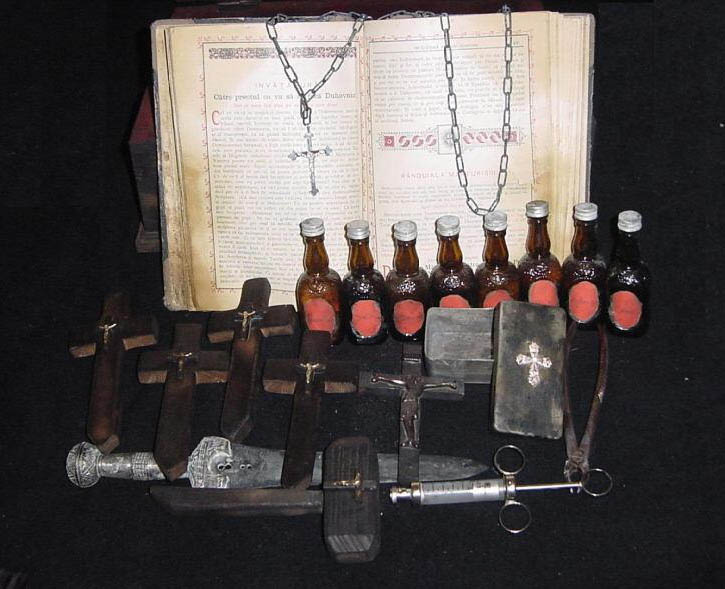
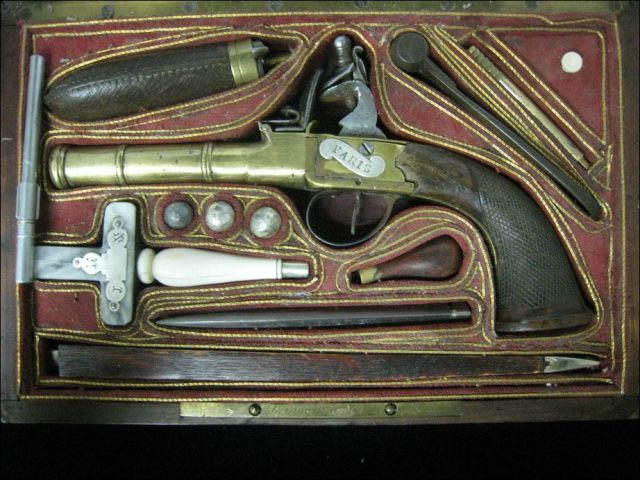
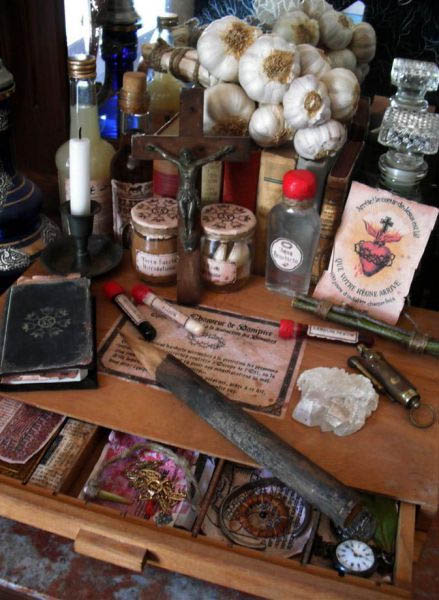
The 19th-century vampire killing sets, made for those traveling from the U.S. East Coast to the eastern curve of the Transylvanian Carpathians, are steadily to be purchased on eBay, and even at the prestigious Sotheby’s auction house, for about 10-14 thousand USD. No small amount, but a man’s life is worth any money.


The content of the sets is rich and varied, from the garlic, holy water, holy candles and crucifix expelling vampires to the wooden stake and decapitating dagger for the final showdown, and it even includes such apocryphal weapons, not mentioned in the vampire literature, as the gun with silver bullets, which initially served as a protection against werewolves. The rosary plays a particularly important role, since it was introduced into the literature by the Dracula novel itself, and its first documented use is tied to the King of Hungary Hotel in Bistritz:

Just before I was leaving, the old lady came up to my room and said in a hysterical way: “Must you go? Oh! Young Herr, must you go?” She was in such an excited state that she seemed to have lost her grip of what German she knew, and mixed it all up with some other language which I did not know at all. I was just able to follow her by asking many questions. When I told her that I must go at once, and that I was engaged on important business, she asked again: “Do you know what day it is?” I answered that it was the fourth of May. She shook her head as she said again: “Oh, yes! I know that! I know that, but do you know what day it is?” On my saying that I did not understand, she went on: “It is the eve of St. George’s Day. Do you not know that tonight, when the clock strikes midnight, all the evil things in the world will have full sway? Do you know where you are going, and what you are going to?”

She was in such evident distress that I tried to comfort her, but without effect. Finally, she went down on her knees and implored me not to go; at least to wait a day or two before starting. It was all very ridiculous but I did not feel comfortable. However, there was business to be done, and I could allow nothing to interfere with it. I tried to raise her up, and said, as gravely as I could, that I thanked her, but my duty was imperative, and that I must go. She then rose and dried her eyes, and taking a crucifix from her neck offered it to me. I did not know what to do, for, as an English Churchman, I have been taught to regard such things as in some measure idolatrous, and yet it seemed so ungracious to refuse an old lady meaning so well and in such a state of mind. She saw, I suppose, the doubt in my face, for she put the rosary round my neck and said, “For your mother’s sake,” and went out of the room.


Strangely enough, they do not contain any mirror, which is the surest recognition tool of the vampires in disguise.

I only slept a few hours when I went to bed, and feeling that I could not sleep any more, got up. I had hung my shaving glass by the window, and was just beginning to shave. Suddenly I felt a hand on my shoulder, and heard the Count’s voice saying to me, “Good morning.” I started, for it amazed me that I had not seen him, since the reflection of the glass covered the whole room behind me. In starting I had cut myself slightly, but did not notice it at the moment. Having answered the Count’s salutation, I turned to the glass again to see how I had been mistaken. This time there could be no error, for the man was close to me, and I could see him over my shoulder. But there was no reflection of him in the mirror! The whole room behind me was displayed, but there was no sign of a man in it, except myself. This was startling, and coming on the top of so many strange things, was beginning to increase that vague feeling of uneasiness which I always have when the Count is near. But at the instant I saw that the cut had bled a little, and the blood was trickling over my chin. I laid down the razor, turning as I did so half round to look for some sticking plaster. When the Count saw my face, his eyes blazed with a sort of demoniac fury, and he suddenly made a grab at my throat. I drew away and his hand touched the string of beads which held the crucifix. It made an instant change in him, for the fury passed so quickly that I could hardly believe that it was ever there. “Take care,” he said, “take care how you cut yourself. It is more dangerous that you think in this country.” Then seizing the shaving glass, he went on, “And this is the wretched thing that has done the mischief. It is a foul bauble of man’s vanity. Away with it!” And opening the window with one wrench of his terrible hand, he flung out the glass, which was shattered into a thousand pieces on the stones of the courtyard far below.


I wonder from what period these kits come. Most of them are dated to the 1840s and 1850s at eBay, but as a post of BS Historian writes, this is absolutely impossible. The MondoSkepto blog, quoted by him – and unfortunately since then disappeared – published a detailed analysis of the content of these kits, and pointed out, that many of their elements cannot be older than the turn of the century – that is, the vampire craze following the publication of the Dracula novel (1897). Of course, today a kit from those years would be considered a museum piece, too, but back then they felt like adding the extra decades necessary to its credibility.


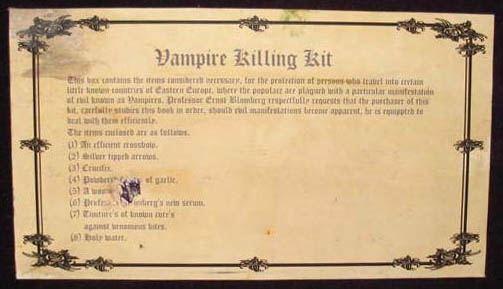
And the vampire fever has not died ever since. In 2005 a certain Michael de Winter boasted that it was him to invent the vampire killing pseudo-kits back in the 1970s, which is just as far-fetched as the claim of their being from the 19th century, since similar ones had been openly prepared already in the 1950s. It is plausible, however, that he made the typography of that frontispiece without a book, which has since then inspired the attribution of a number of kits to the never existing Professor Ernst Blomberg. And the industry, as it is obvious or suspected from some sites, is still thriving.


Ad astra


Very deep is the well of the past, it is no small effort to pick out all the garbage that has been thrown into it. Our recent post on medieval and Renaissance bicycles has been honored first of all by the original Russian “translator”, Boris Indrikov, who also provided us with the reproduction of Van Gogh’s posthumous painting Self-portrait with bicycle, without the artist’s left ear and all the rest.


Then our estimated Greek friend Poly Hatjimanolaki congratulated through us to Boris, at the same time reminding us of Paco Ignacio Taibo II.’s absurd thriller, The bicycle of Leonardo. The idea that the great Renaissance master was also the inventor of the bike among so many other things, has stirred the fantasy of others as well and inspired a novel by Guy Davenport.


And it is no mere accident. Do you see the conspicuous similarity of the vehicles on the covers? All of them are based on the drawing discovered by Augusto Marinoni in the Codex Atlanticus of Milan which has preserved the sketches of Leonardo. He published his discovery in 1974 in a paper delivered precisely in Vinci, the birthplace of Leonardo. Subsequently the bicycle of Leonardo run a brilliant career, it has been also modeled in life size for the Florentine exhibition in honor of the millennium traveling all over the world. Its only fault was the impossibility of being steered. Apparently this minor problem did not excite the master.
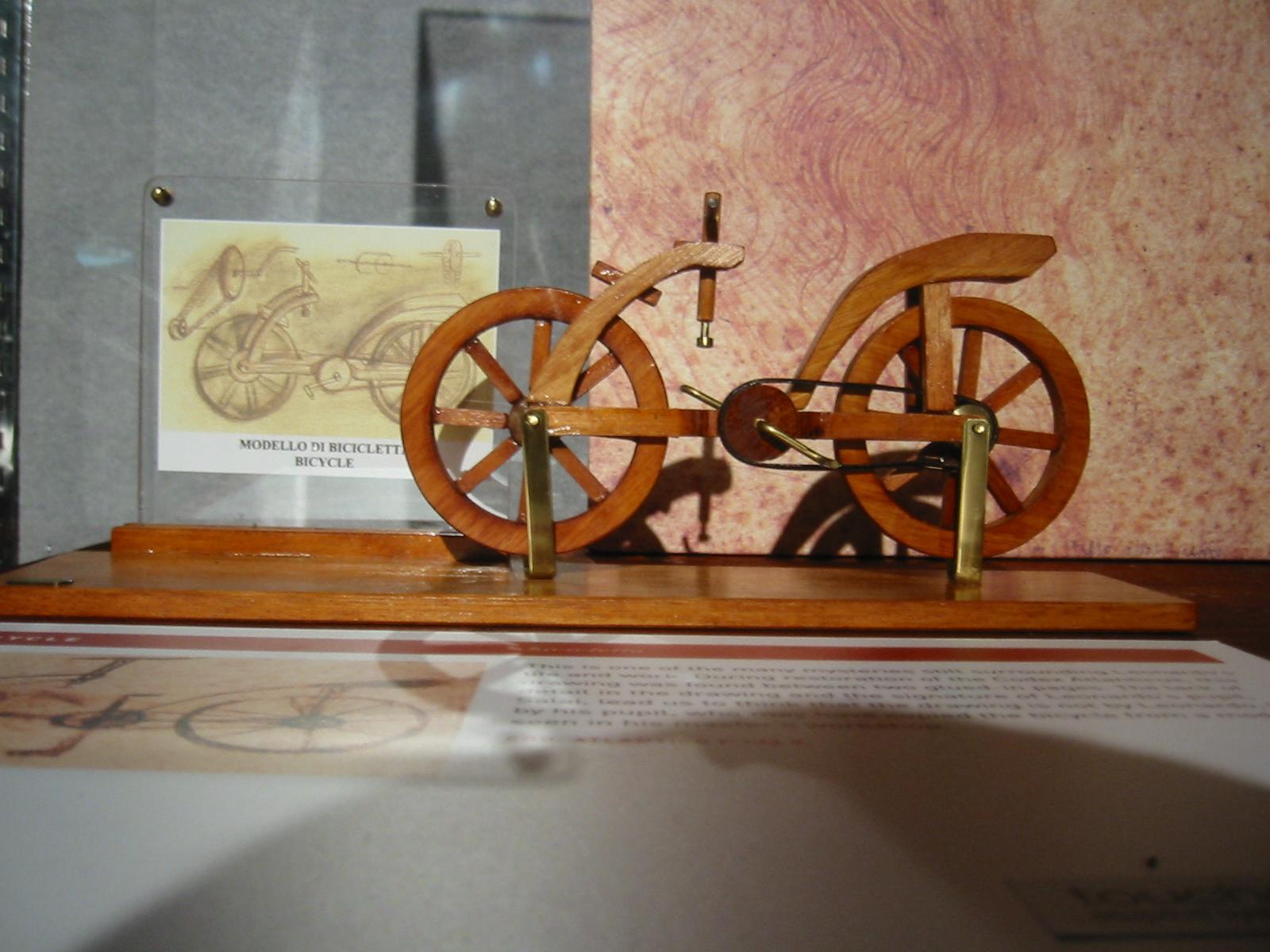

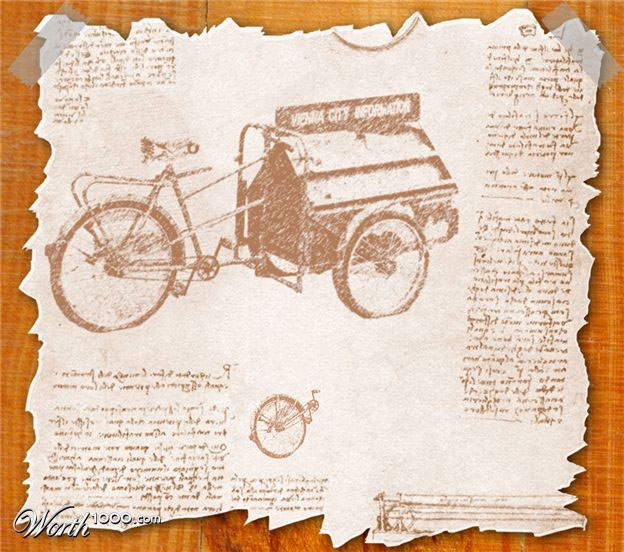
It was only in 1997 that Dr. Hans-Erhard Lessing pointed out in a detailed study that the design was a forgery, and a quite recent one at that, drawn into the codex (!) after its restoration in the 60s, more precisely between 1967 and 1974. No trace of it can be seen on the photos made before and during the restoration, only some circles and lines appear through from the other side of the page, and these were complemented into a bike by the forger. It is noteworthy, writes Lessing, that in all the literature on bicycle history none else has accepted the attribution except for Marinoni and his Italian followers.

No, this design of Leonardo is surely not authentic: it has been made for the Photoshop competition of Worth1000.

For the stake, writes Lessing, was not small. The Italians had to demonstrate that the first paleo-bicycle before the patent of the modern bike in 1817 was not the célérifère of 1791 of Comte de Sivrac as it has been asserted by the French for a century. Bicycle, in fact, must be an Italian invention. For Malaparte made it clear already in 1949:

In Italy, the bicycle belongs to the national art heritage in the same way as Mona Lisa by Leonardo, the dome of St. Peter or the Divine Comedy. It is surprising that it has not been invented by Botticelli, Michelangelo, or Raffael. Should it happen to you, that you voice in Italy that the bicycle was not invented by an Italian you will see: All miens turn sullen, a veil of grief lies down onto the faces. Oh, when you say in Italy, when you say loudly and distinctly in a café or on the street that the bicycle—like the horse, the dog, the eagle, the flowers, the trees, the clouds—has not been invented by an Italian (for it were the Italians that invented the horse, the dog, the eagle, the flowers, the trees, the clouds) then a long shudder will run down the peninsula’s spine, from the Alps to the Etna.

Reconstruction of the célérifère.

But in the reality all the noble efforts of the Italians were just shots in the air. For Comte de Sivrac never existed, and consequently neither the célérifère. Both were invented in 1891 by the journalist Louis Baudry de Saunier who in his national pride wanted to dispute the primacy of the German Baron Karl Drais, the actual inventor of the bicycle.

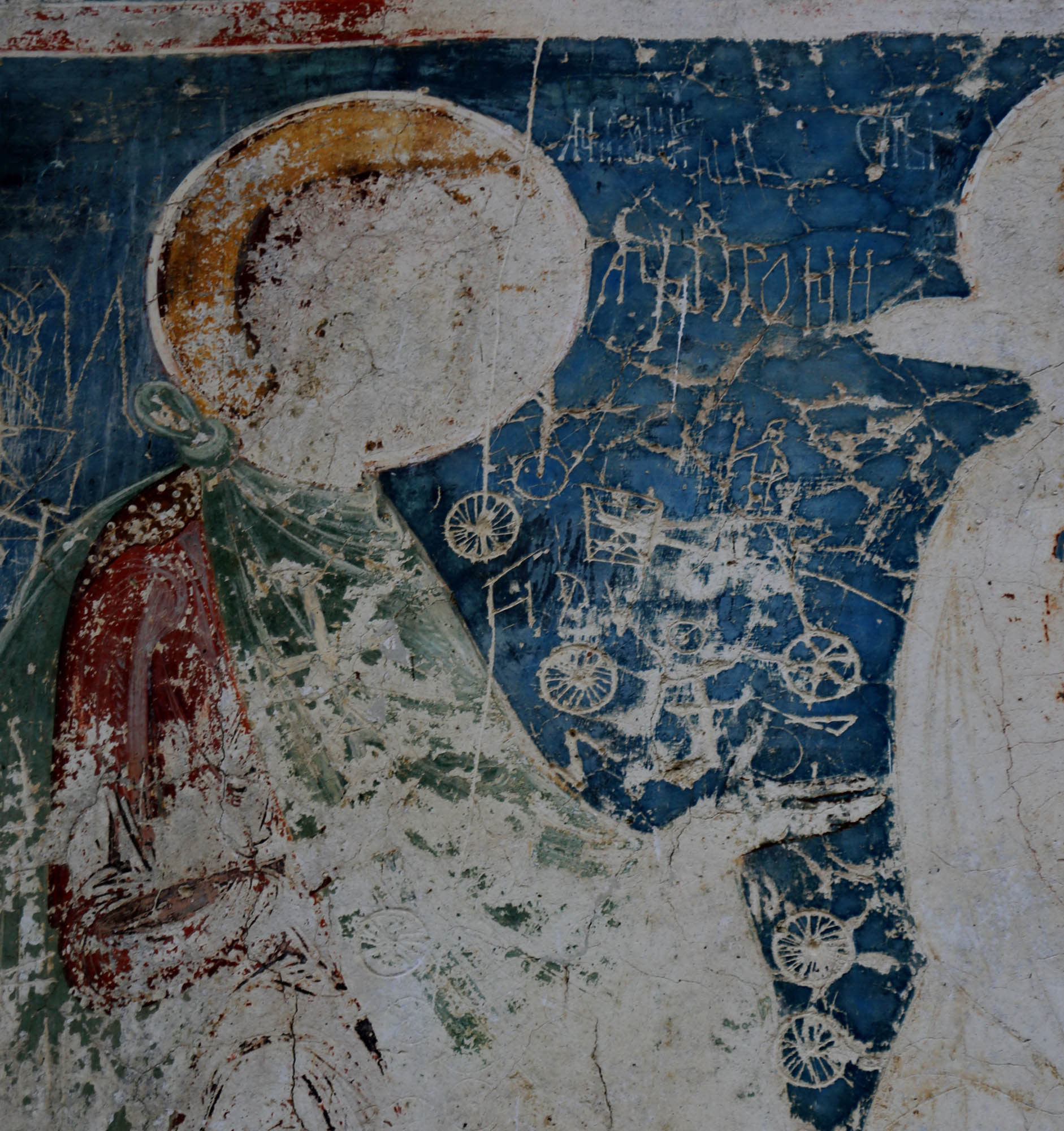
Meanwhile, if not Leonardo, then who was the one who scratched a host of small Renaissance bicycles in the external fresco of the church of Arbore in Bukovina, painted in the 1530s?


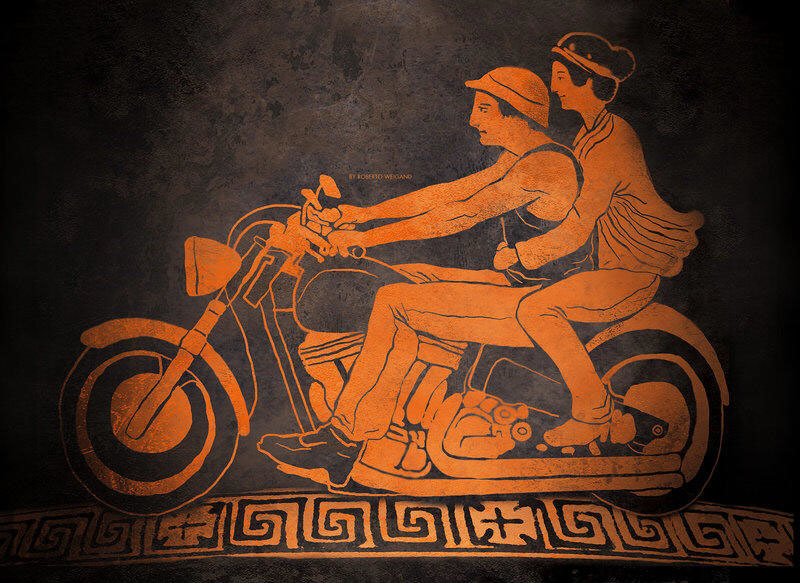
However, the series of surprising discoveries has not yet come to an end. The document sent to us in a comment by Syr Wullam cuts every petty cause among modern European nations already at the roots. Already ancient Greeks knew the bike! What is more, writes our blue-blooded expert,

the Greek did not need to strain themselves with pedals as the poor chaps in the Middle Ages and the Renaissance. No, they just gave it the gun as the peasant to his Berva (© my granny).


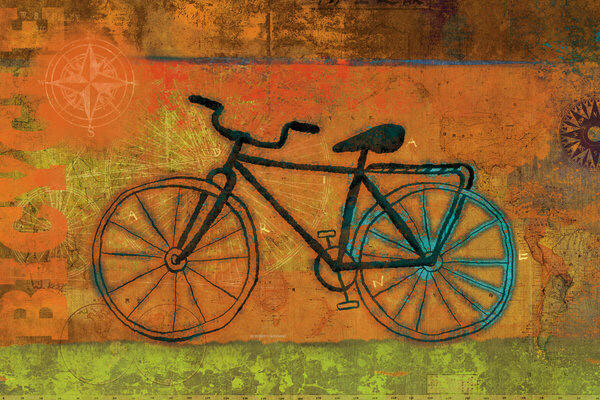
We have also checked some other works of the artist Robert Weigand. Most of his drawings are in the style of the illustrations of Reader’s Digest which, interestingly, reintegrate the allegoric and emblematic pictorial language of the Early Modern period to 20th-century applied graphics – but this problem deserves a post of its own and will also receive it. However, what we have discovered with surprise – why should always other make the surprising discoveries? – was the fact that even the topics of Weigand’s other pictures are in line with the article by Indrikov. In several illustrations we find the bicycle, the Sun and the Moon, and even their modern knight balancing between them as if he did it on two wheels. Is it not possible that the master is a secret member of the Order of the Sun and the Moon which has survived until today?


However, the greatest and most breathtaking coming out was yet to come. The person exposed was no less than Wang Wei himself, co-author of our blog, founding father of Studiolum, whom after several years of bosom-friendship we have thought to know like our palm. Indeed, after reading the previous post he wrote to us:

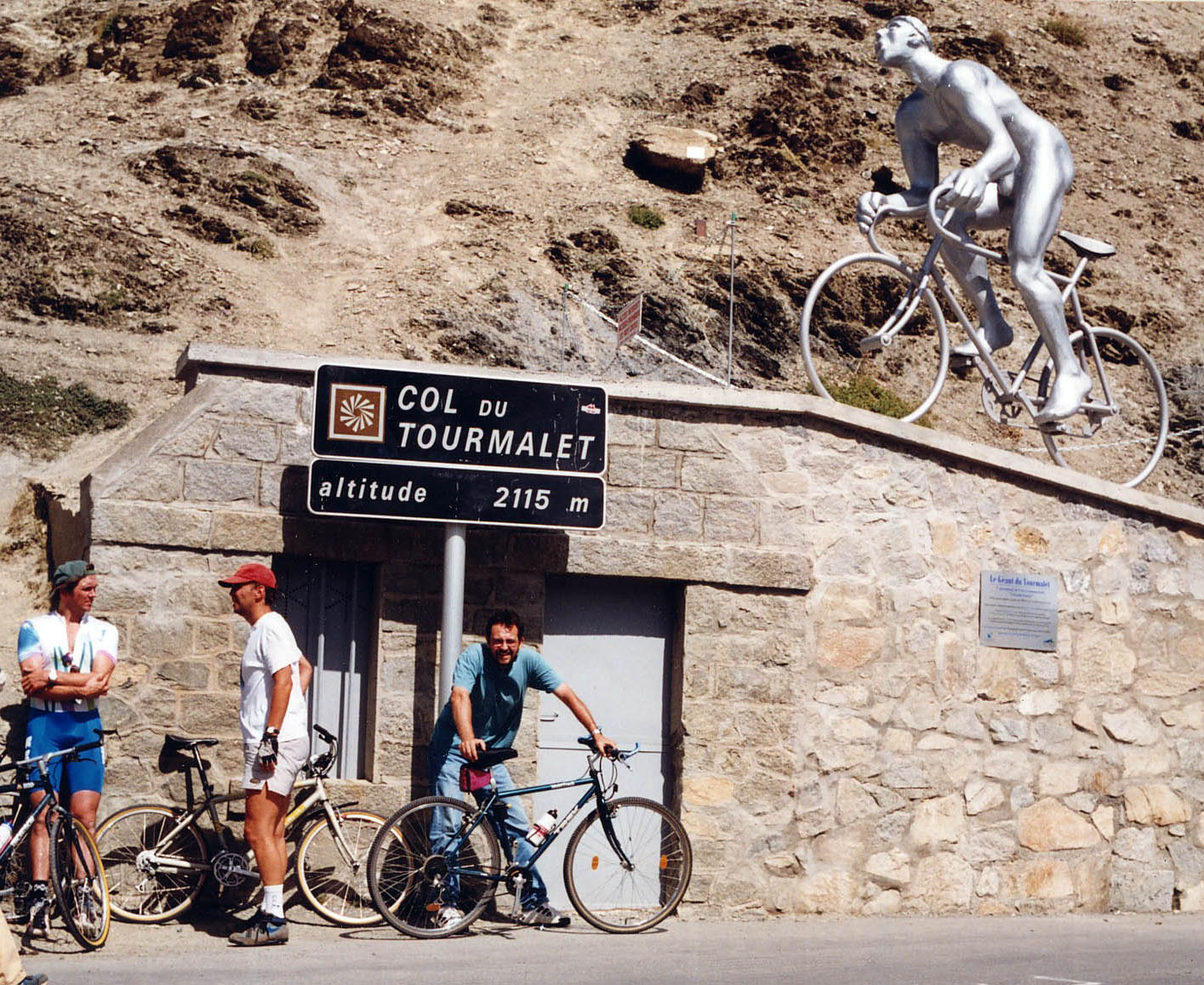
Te mando un documento único. Que en realidad es una confesión secreta: yo pertenezco a la venerable «Order of the Sun and of the Moon». Una de las pruebas que tenemos que pasar es subir al Tourmalet intentando pasar completamente desapercibidos entre la masa de absurdos deportistas plebeyos que, ataviados con ropajes ridículos, exhiben su vanidad y se pavonean ante las damas. La hazaña no es pequeña, pues los aspirantes a caballeros de la Orden pueden ser requeridos por el Gran Maestre para pasar la prueba en cualquier momento del día o de la noche, en cualquier época del año, llueva o truene, con luna o bajo un sol de justicia. Cuando esa llamada ocurre, tenemos que dejar nuestra casa inmediatamente, coger la primera bicicleta que encontremos en la calle y, vestidos tal como estábamos en nuestros aposentos, lanzarnos a la carretera y subir la mítica montaña. Ello exige un permanente estado de vigilia física y espiritual que muchos no pueden soportar. Otros fracasan repetidas veces en sus intentos de escalada de las durísimas rampas y van repitiendo la prueba cada vez que son requeridos hasta que, convencidos de su inferioridad, deben abandonar sus pretensiones de entrar en la Orden. En fin, esta es una de las pruebas que mandó mi escudero al Gran Consejo de la Orden y que ahora te revelo en primicia.

Hereby I send you a unique document which is actually a secret confession: I belong to the venerable “Order of the Sun and of the Moon.” One of the tests we must pass is to climb the Tourmalet completely unnoticed among the mass of plebeian mock-athletes dressed in ridiculous clothes showing off their vanity to the ladies. The feat is not small, as the aspiring knights of the Order may be required by the Grand Master to pass the test at any time of the day or night all year round, in rain or frost, in moonlight or under the sun of justice. As soon as we hear this call, we must immediately leave our home, take the first bike that we find in the street and, dressed just as we were in our homes, take the road and climb the mystical mountain. This requires a constant state of physical and spiritual vigilance that many can not endure. Many fail repeatedly in their attempts to climb the hard ramps and try to repeat the test several times until, convinced of their inferiority, they abandon their claim to enter the Order. This is thus one of the tests that my squire recorded for the Grand Council of the Order with the following document which is now revealed to you as the first person outside the Order.


This unique document which can be dated to several years before, almost to the Middle Ages, attests not only for how long Wang Wei has been a knight of the Order of the Sun and of the Moon. But it also sheds light on something he has not unrevealed in one of his previous posts: the reason why his Mallorcan Catalan compatriots are so enthusiastic fighters for the freedom of Transylvania.