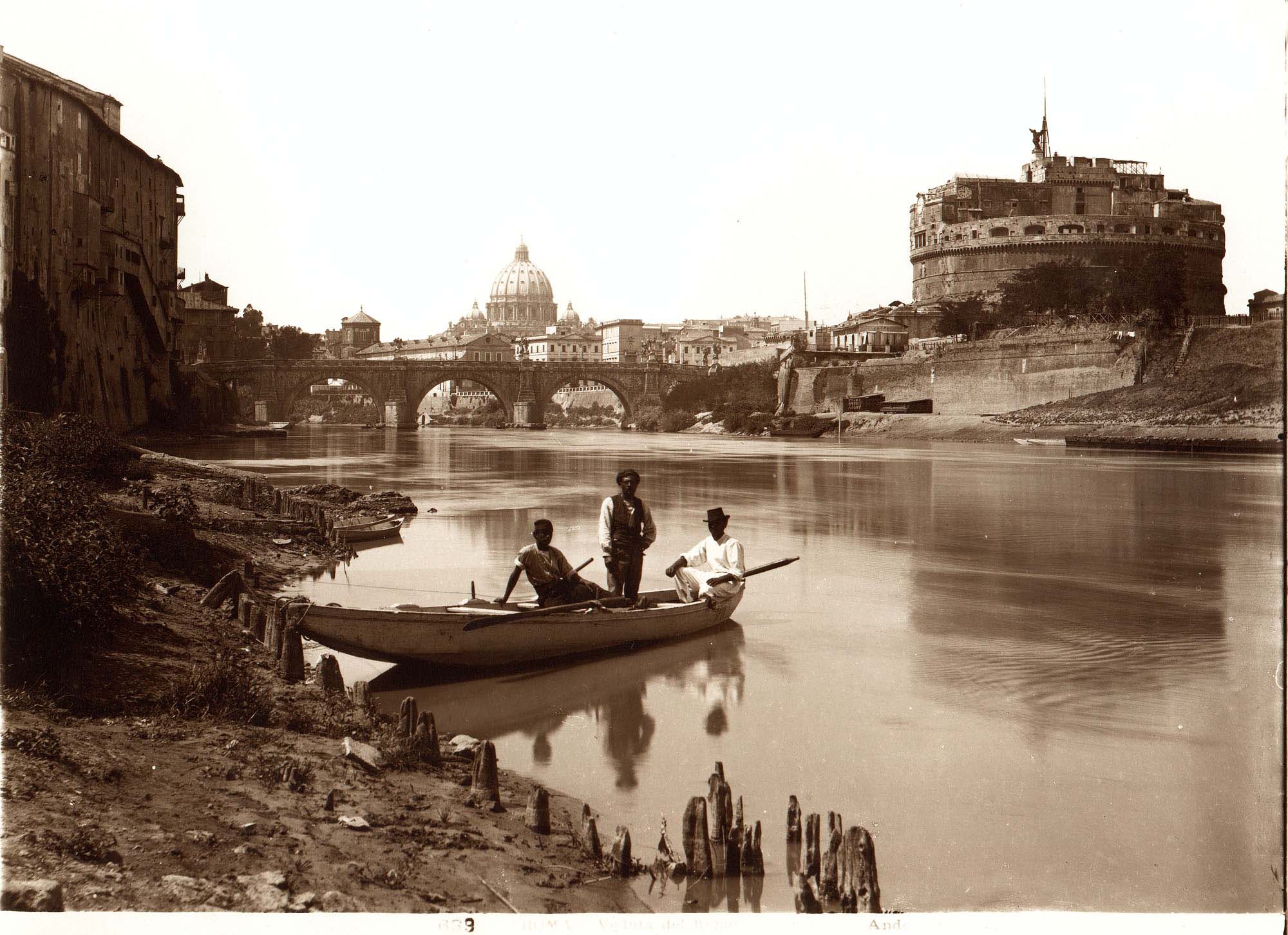
 Late nineteenth century, a quarter to twelve, Rome. It’s hot.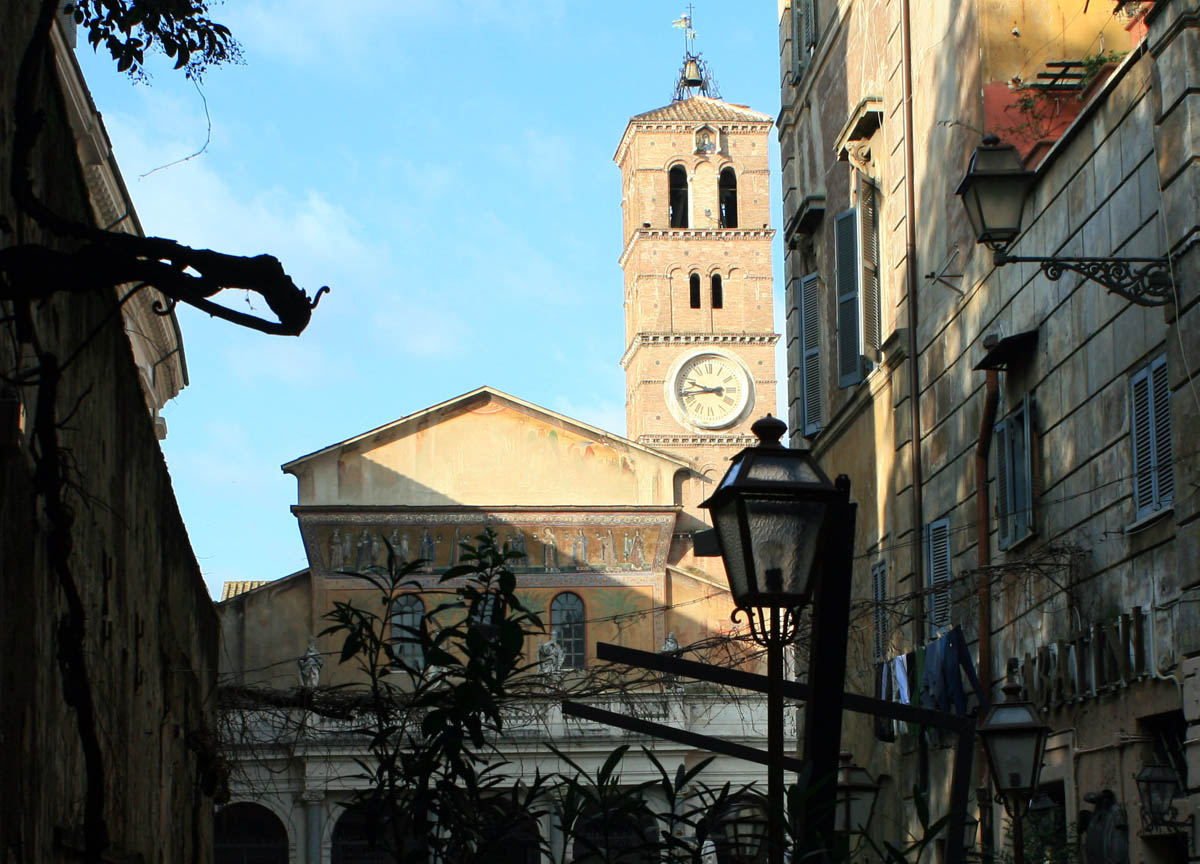
A bar in the Trastevere, in front of Santa Maria. A late February Sunday, a quarter to ten in the morning. In the bar there is only a Roman family with two little children, having a breakfast. Orange juice, smell of coffee. Two pictures on the entrance wall, not particularly drawing attention.
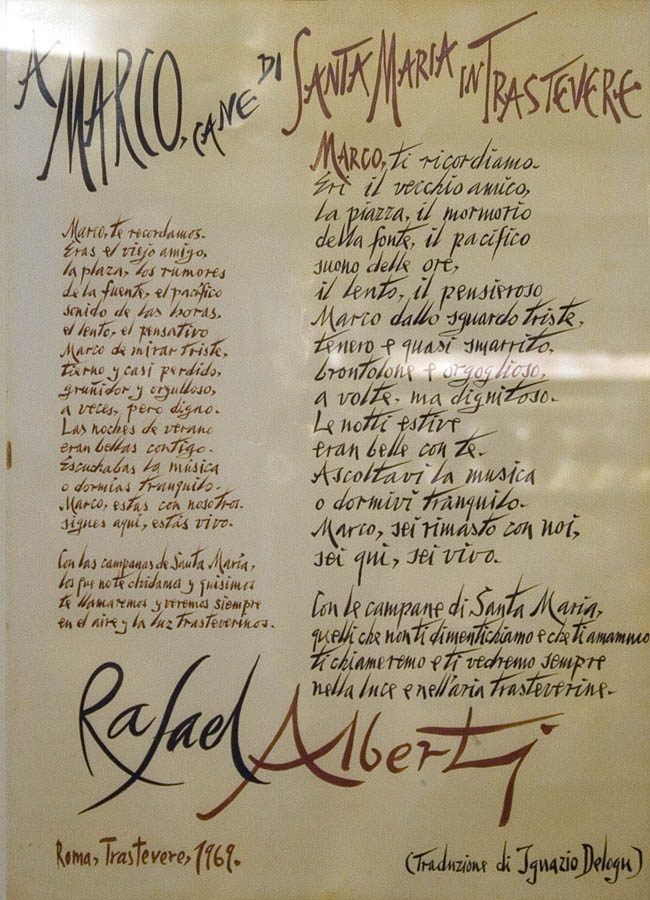
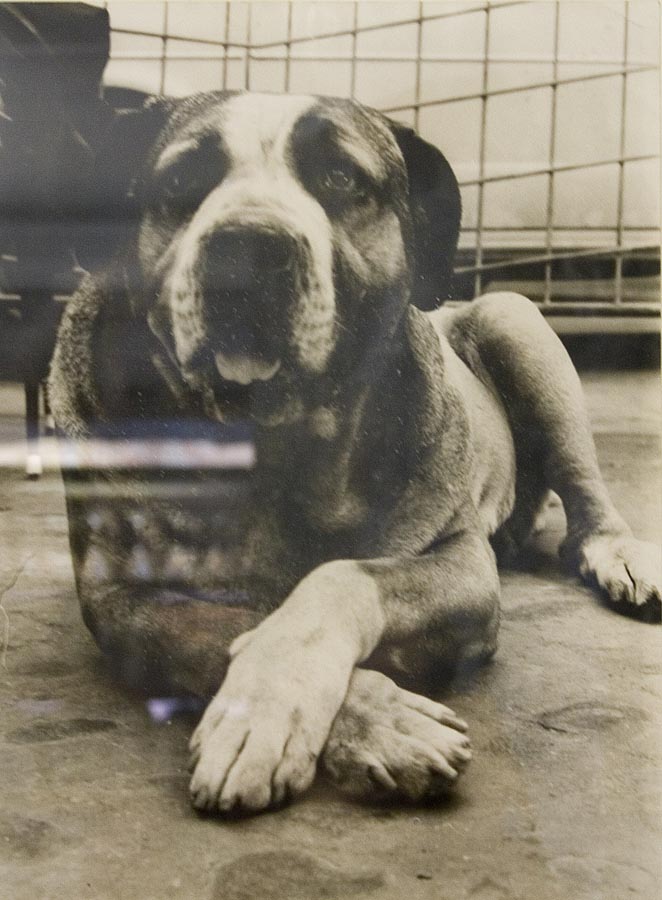
| Marco, te recordamos. Eras el viejo amigo, la plaza, los rumores de la fuente, el pacífico sonido de las horas, el lento, el pensativo Marco de mirar triste, tierno y casi perdido, gruñidor y orgulloso, a veces, pero digno. Las noches de verano eran bellas contigo. Escuchabas la música o dormías tranquilo. Marco, estás con nosotros, sigues aquí, estas vivo. Con las campanas de Santa María, los que no te olvidamos y quisimos te llamaremos y veremos siempre en el aire y la luz trasteverinos. | Marco, we’ll remember you. You were our old friend, the square itself, the gurgle of the fountain, the peaceful sound of the hours, the slow, the thoughtful Marco of the sad and tender and almost lost look, the grumbling and proud sometimes, but always decent. Summer nights were beautiful with you. You were listening to music or tranquilly sleeping. Marco, you’re with us still here, alive. With the bells of the Santa Maria we, who love you and do not forget you will always call you and will always see you in the air and light of the Trastevere. |
The image of that morning in Rome and the poem to Marco, also included by Alberti in his Roma, peligro para caminantes (1968) came to my mind as I was reading Ahmatova, translated into Spanish precisely by Alberti and María Teresa León:
| Но я предупреждаю вас, Что живу в последний раз. Ни ласточкой, ни кленом, Ни тростником и ни звездой, Ни родниковою водой, Ни колокольным звоном - Не стану я людей смущать И сны чужие навещать Неутоленным стоном. | But I warn you that I live for the last time. Neither as a swallow, nor as an acer, neither as a reed nor as a star, the gurgling water of a fountain or the sound of the bells – I will not perturb people nor confuse others’ dreams with my unsatisfied moaning. |
And each time when I hear the bells around my house, and the sound of the quarters of the town house’s clock, I think that the bells are the last survivors of something that barely exists, or rather the echos of an Atlantis which is all over long ago. And I think that on the day – which will come – when the bells will not ring any more, I will have few interest in staying alive.


 Come with us to…
 Atlantis
 Bestiary
 Bohemia+Prague
 Books, exhibitions, music, film
 Brave old world
 Caucasus
 Cemeteries
 Crimea
 Get to know the
 Images of the East
 Lightwriting
 Lwów/Lemberg
 Mallorca
 Message on the wall
 The Museum of Propaganda
 Odessa
 Paper Museum
 Persian letters
 The Jewish heritage


