Switch over to our new blog! • ¡Pásese a nuestro nuevo blog!

The renewed version of our blog, with more features, a richer design, and available in nine languages, can be read here: https://wangriver.com

The new version also includes the old posts, often in expanded form. If you are curious about the updated version of this post, replace “riowang.blogspot.com/” in the URL with “riowang.studiolum.com/”, and the new link will most likely lead you there.


La versión renovada de nuestro blog, con más herramientas, un diseño más rico y disponible en nueve idiomas, se puede leer aquí: https://riowang.com

La nueva versión también incluye las publicaciones antiguas, a menudo en una forma ampliada. Si tiene curiosidad por la versión actualizada de esta entrada, sustituya «riowang.blogspot.com/» en la URL por «riowang.studiolum.com/es/», y el nuevo enlace probablemente le llevará allí.

Mostrando entradas con la etiqueta illustration. Mostrar todas las entradas

Tales about the Maidan


It was two years ago now, on 16 January 2014, that the parliament of Kiev, under pressure from President Yanukovich, outlawed the hundreds of thousands-strong protests in the Maidan, by then in its second month. Soon the first deadly clashes began between the protesters and the corps of the Berkut, the riot police.

The Western internet portals now mainly remember the anniversary with the photos of Maxim Dondyuk, who achieved his greatest international success with his coverage of the bloody month of the Maidan. In 2015 he was among the Prix Pictet Prize finalists, and won several other awards. The commemorations emphasize the the kinship of his photos with paintings and tales:

“The figures of the Ukrainian civil war appear in iconic settings in his photograph, as if the light and darkness, good and evil clashed with each other.” (Index)

majdan1 majdan1 majdan1 majdan1 majdan1 majdan1 majdan1 majdan1 majdan1 majdan1 majdan1 majdan1 majdan1 majdan1

In an interview given to Photography last year, the photographer also points out that his most important sources of inspiration had been not other photos, but paintings, and even battle scenes. The tale-like character of his pictures, however, is not unique. Similar images were taken at the height of the clashes by Mustafa Nayyem, whom we quoted that night, and many other Ukrainian photographers as well. It was apparently a general tendency to take pictures of the Maidan as signs of a supernatural vision, a legend, an apocalyptic struggle between light and darkness.

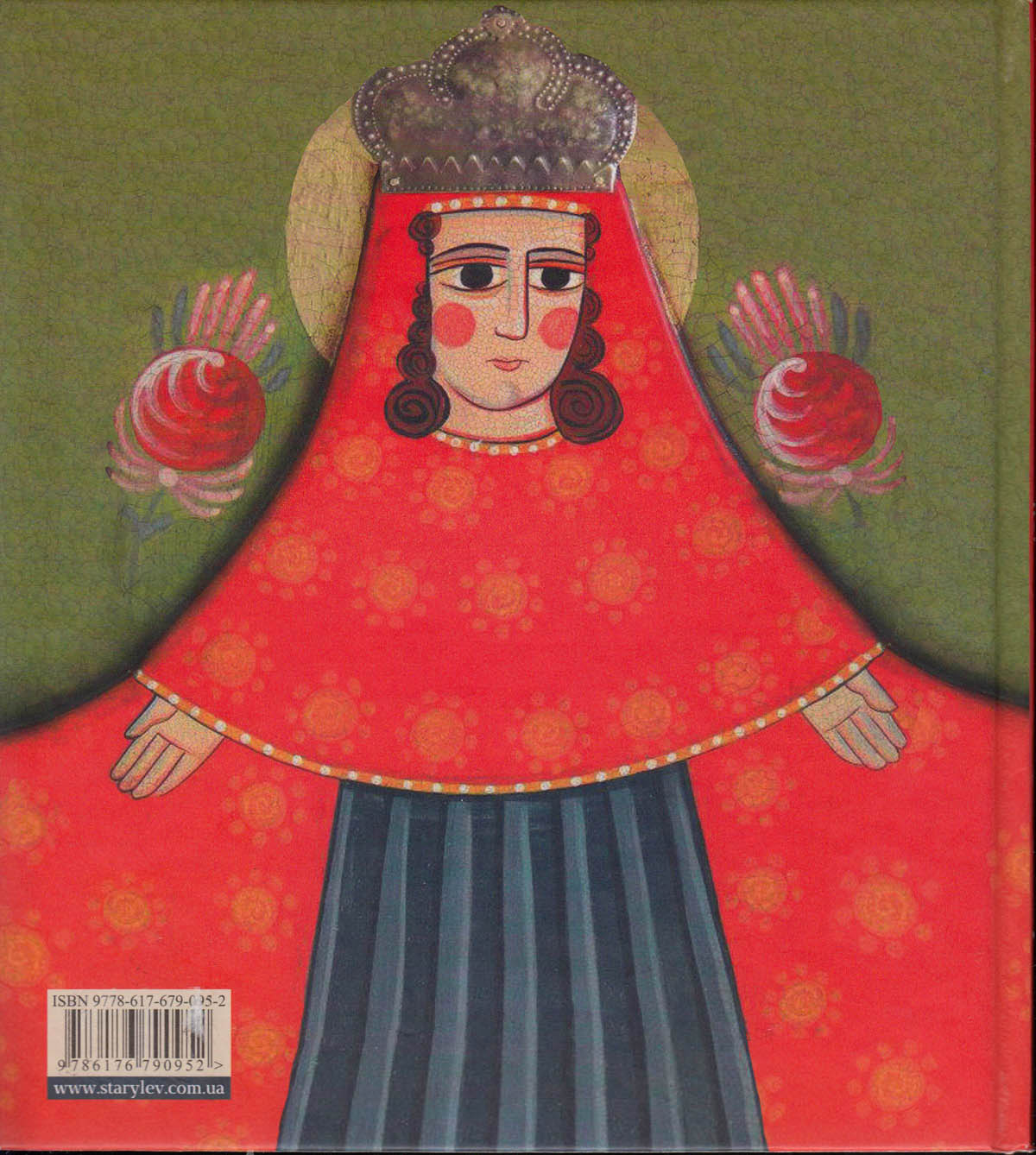
That this attitude was indeed general, is well illustrated by a fairy tale book published a few months later in Lviv/Lemberg, by the Old Lion publishing house, where the story book on the Ukrainian war was also published later. This book, illustrated in a dreamlike manner by Hristina Lukashchuk – a young writer-architect-designer, author of the highly acclaimed psycho-erotic novel Kurva (Whore, 2013) – also presents the Maidan as a clash between good and evil. It fits the events into the framework of a naively static and mystical, half-Christian and half-pantheistic Ukrainian nationalist worldview, as solemn and devout as cheap prints in folk fairs, through which they take on a universal dimension, and become a heroic example to be followed by the little readers. Its mythology, though in different ways, helps both them and us to understand Ukrainian reality.
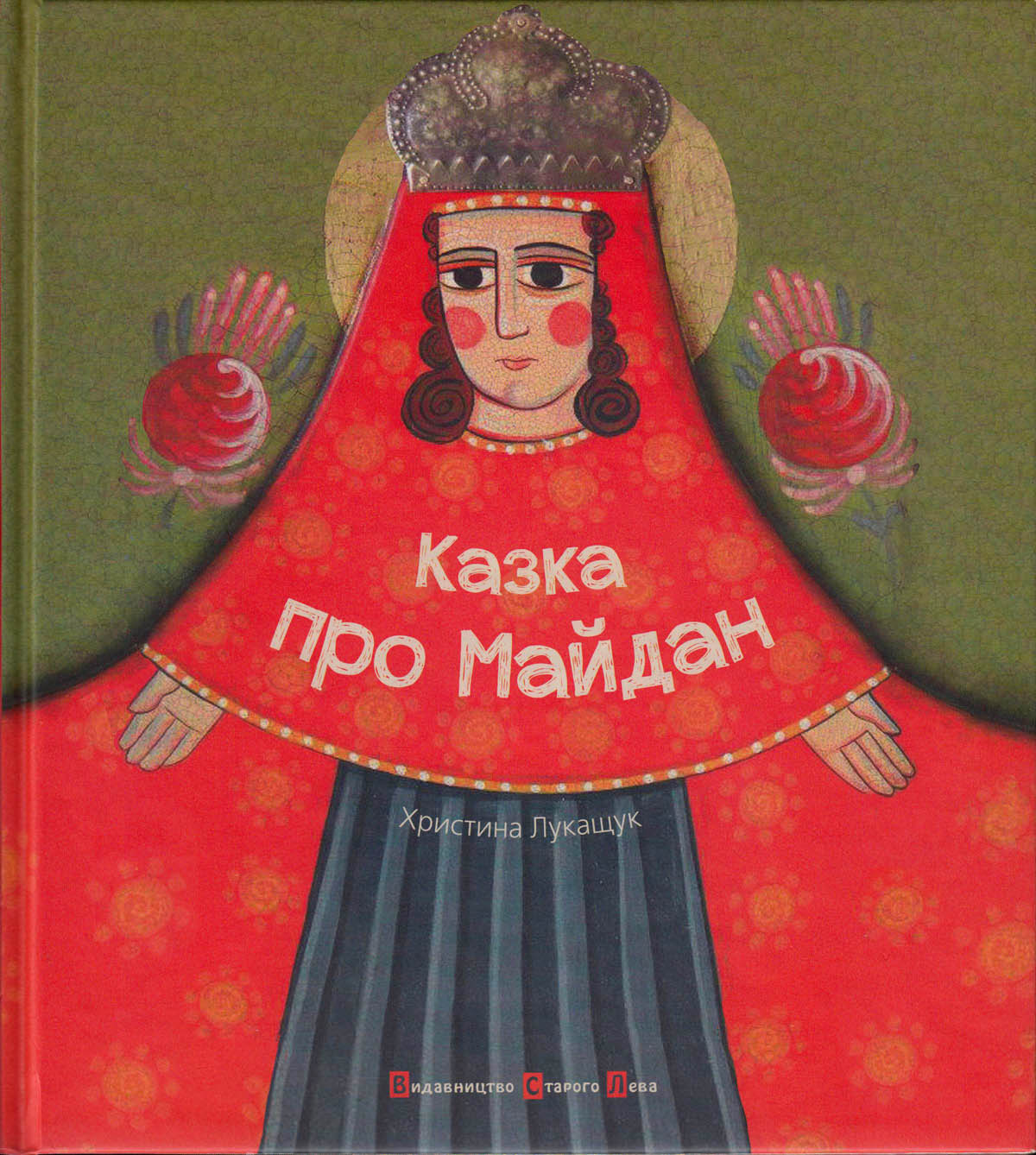
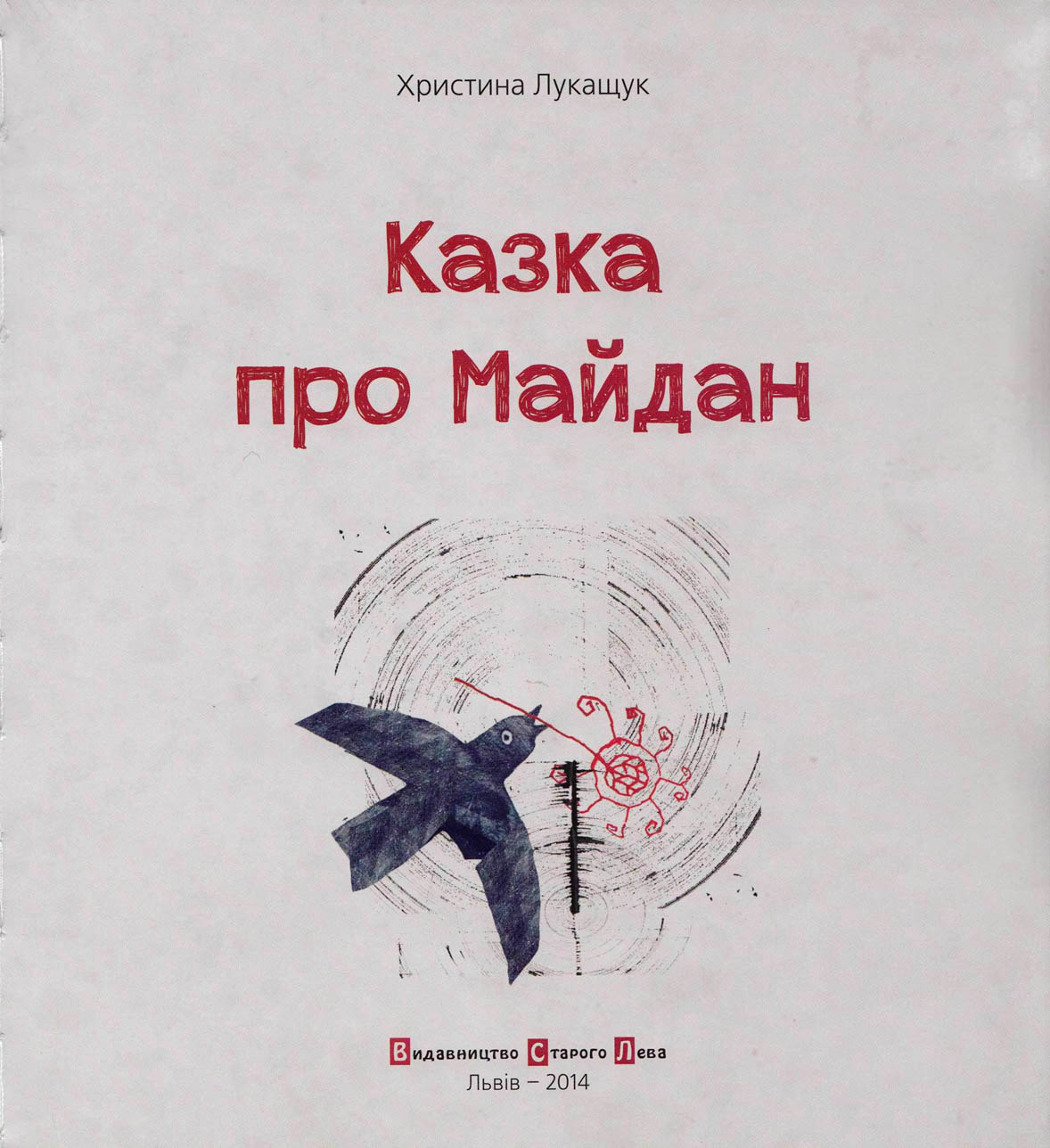

Tale about the Maidan
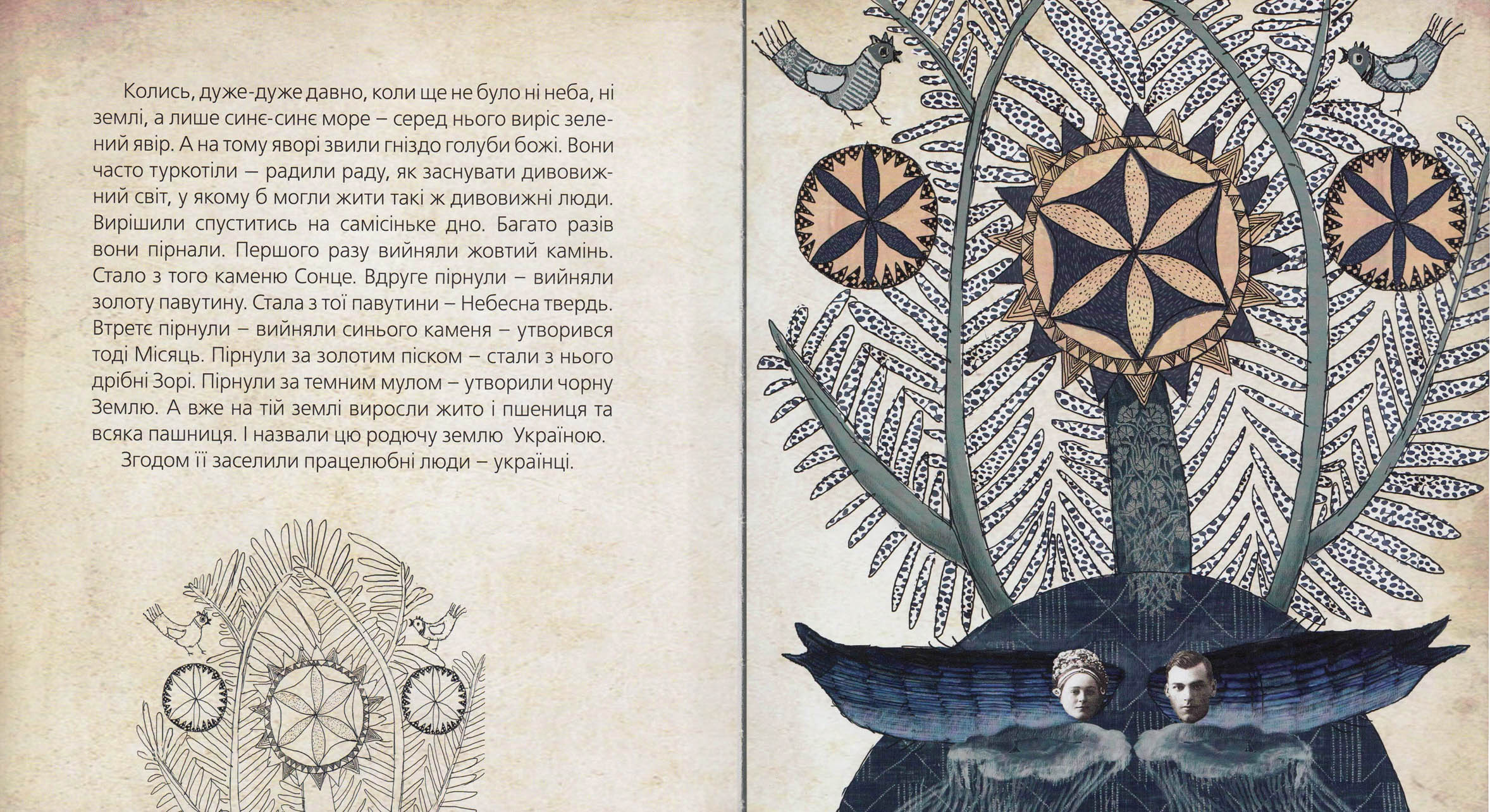

“Once upon a time, very, very long time ago, there was still no heaven, no earth, only the deep blue sea, in the middle of which rose a beautiful green maple tree. The doves of God sat on the branches of the maple tree, and there they cooed, holding council on how to create a wonderful world, and a wonderful man worthy of this wonderful world. They decided to go down to the depths of the sea. When they went down for the first time, they brought a yellow pebble to the surface. This became the Sun. They went down for the second time, and brought up a green net. It became the vault of heaven. They went down for the third time, and brought up a blue stone. It became the Moon. They went down for golden sand: this became the tiny stars. They went down for dark mud: from this they created the black Earth. And this earth produced wheat and rye, and all other crops. And they named this blessed fertile land Ukraine. And in this land a hard-working people settled: the Ukrainians.”

The male representative of the hard-working Ukrainians settling in this land has a striking similarity to the young Stepan Bandera, the father of Ukrainian nationalism, and founder of the Ukrainian Insurgent Army, which collaborated with the Nazis and made did their dirty work in the form of Polish and Jewish genocide. Which is understandable, since he is considered the original coordinates of Ukrainian history by the official Ukrainian historiography and state ideology.
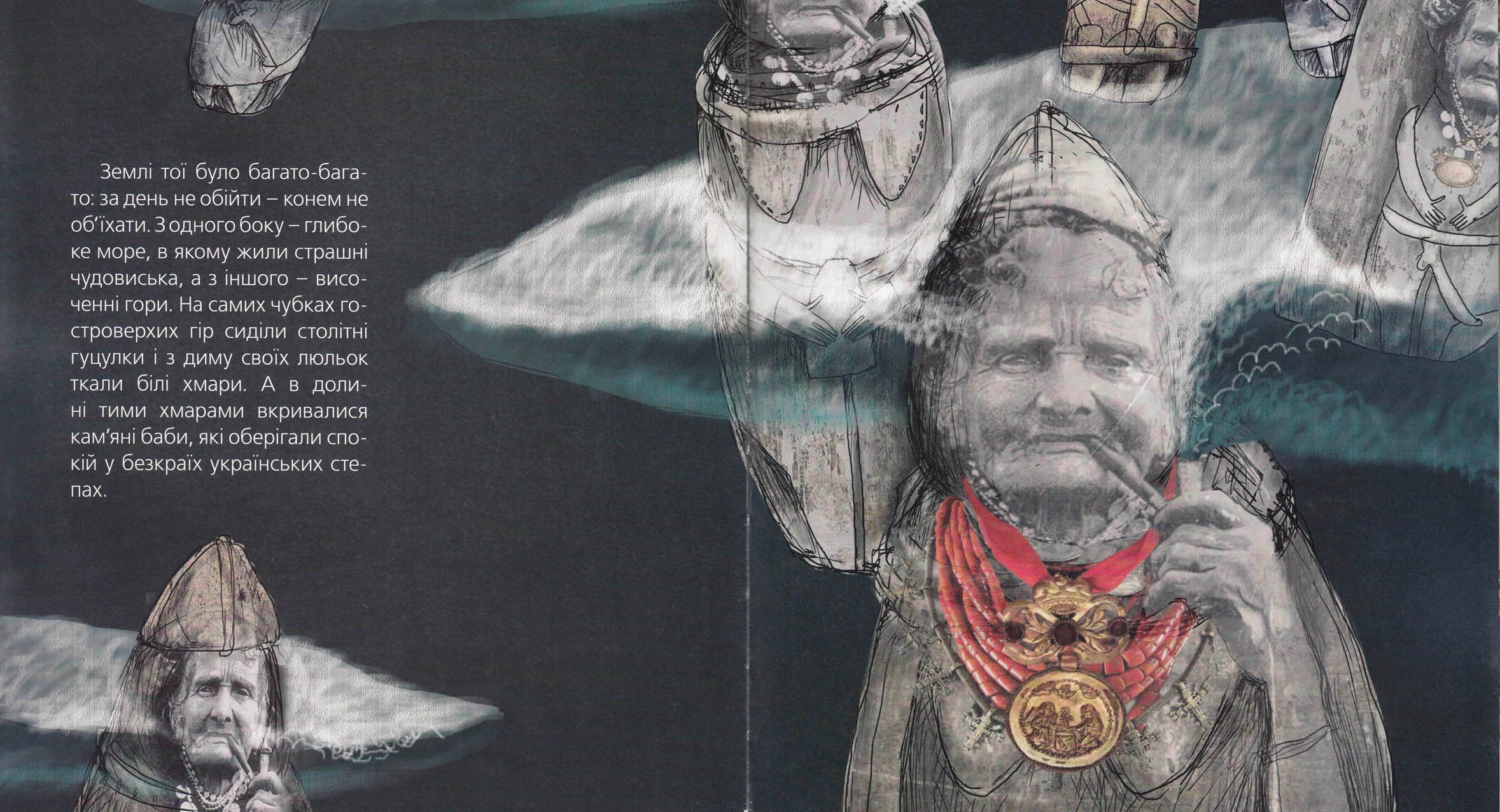

“This land was very, very rich. In one day you could not go around it, you could not run around it by horse. One end of it was washed by the deep sea, where wonderful monsters lived, in the other end high mountains rose. On the peaks of the highest mountains, hundred-year-old Hutsul women sat, and let white clouds fly from the smoke of their pipes. And the white clouds descended into the valleys, and became those stone idols, which watch over the peace of the Ukrainian steppe.”
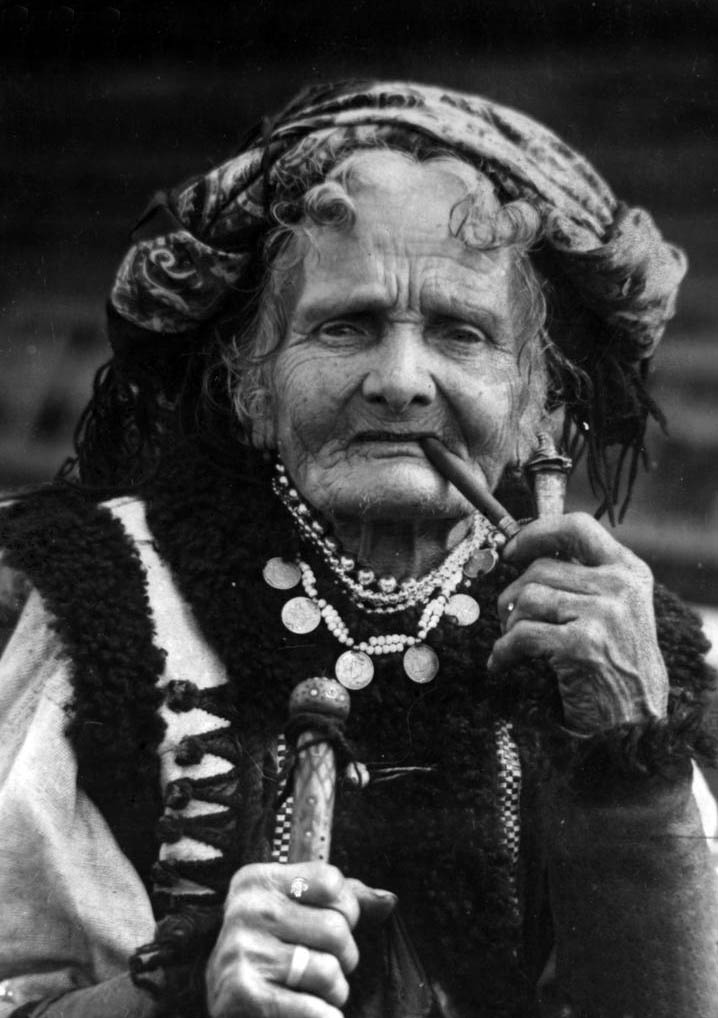
A 110-year-old Hutsul woman. Verkhovina, 1926. Photo by Mikola Senkovsky.
(The explanatory pictures and commentaries are additions by río Wang)
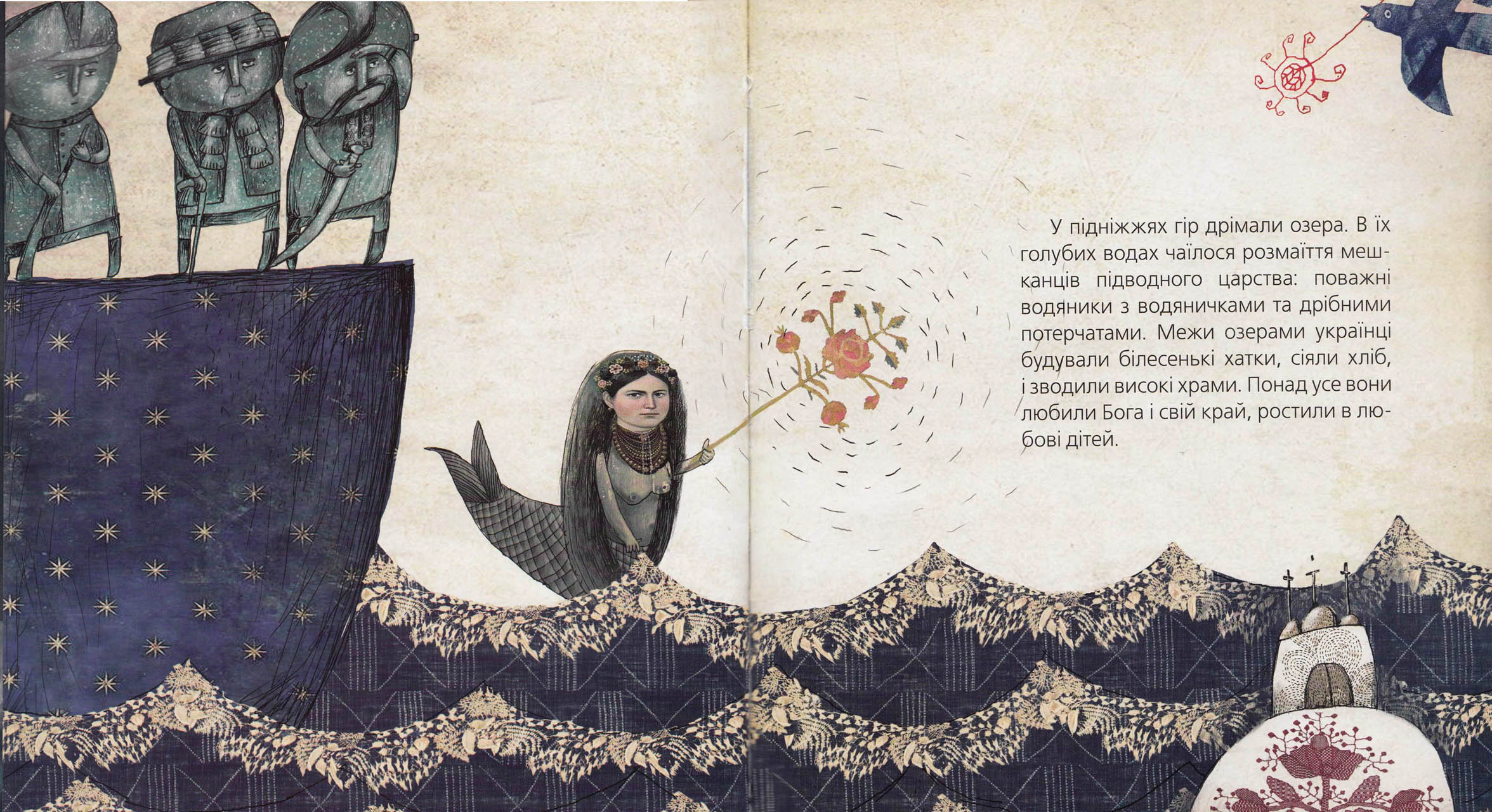

“At the foot of the mountains, lakes slept. Through the clear water of the lakes you could see a colorful underwater kingdom, the water dwarves, fairies and mermaids. Between the lakes, the Ukrainians built tiny white houses, baked bread, erected high churches. They loved above all God and their land, and raised their children in love.”
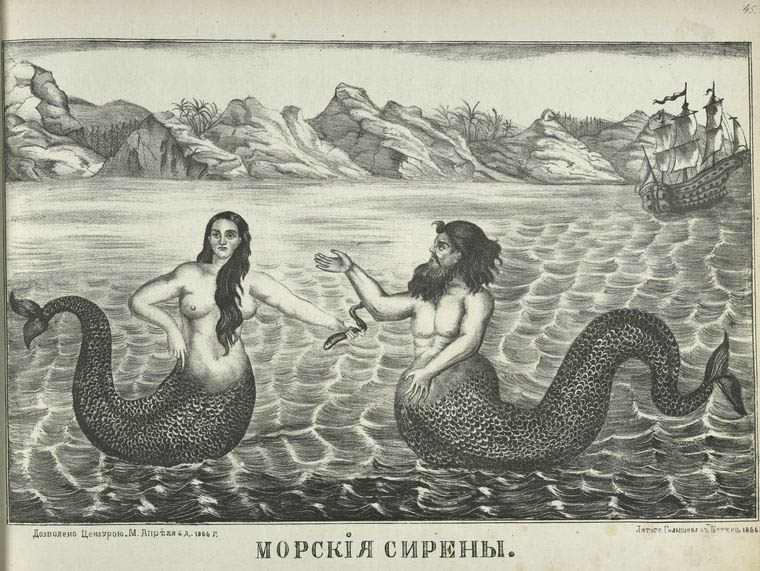
The usual portrayal of mermaids in Russian luboks, 1866
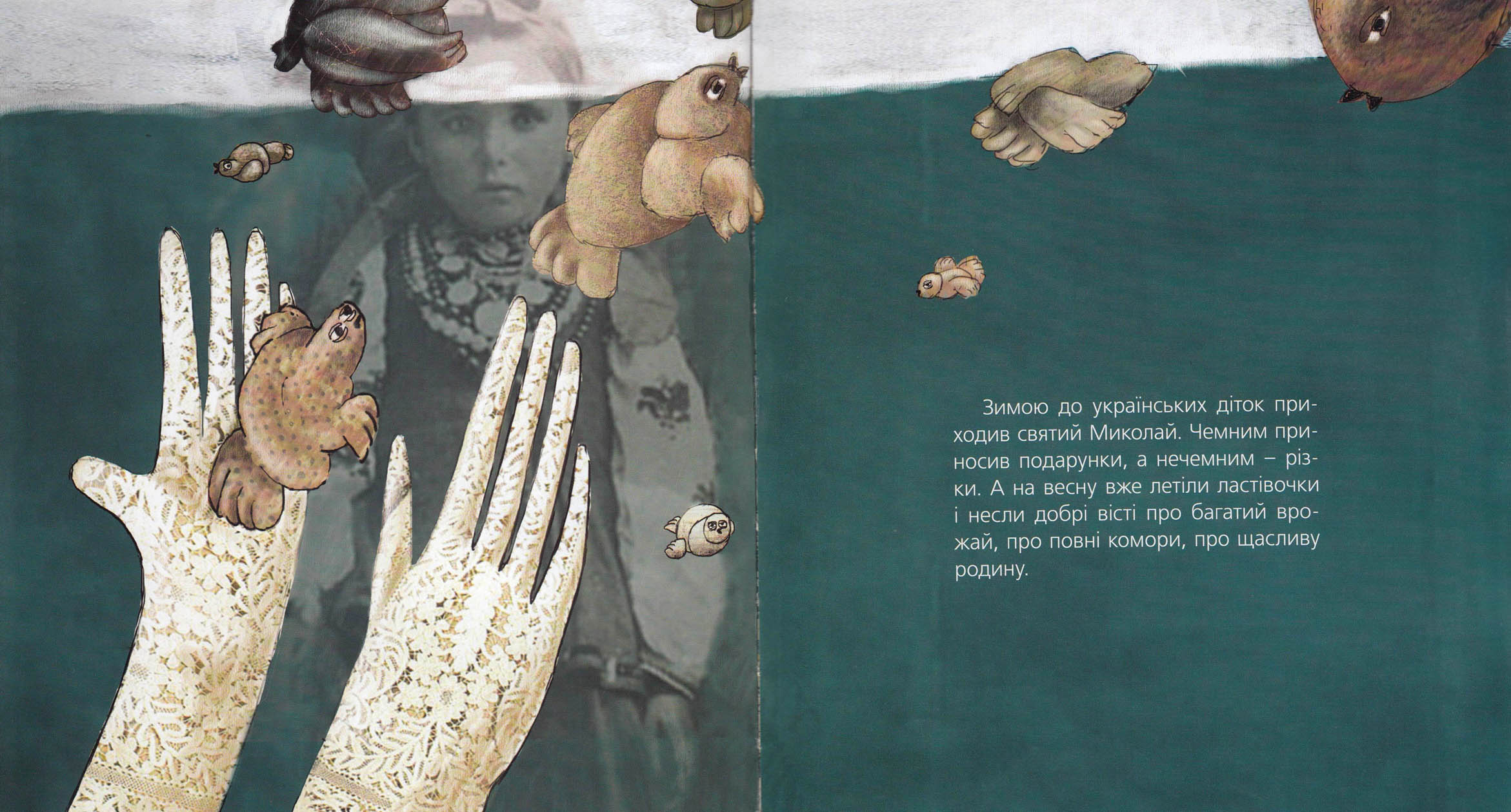

“In winter, St. Nicholas arrived to the Ukrainian kids. To the good ones he brought gifts, to the bad ones, a birch-rod. And in the spring, the swallows flew up and down, carrying with them news of the rich crops, full granaries and a happy homeland.”
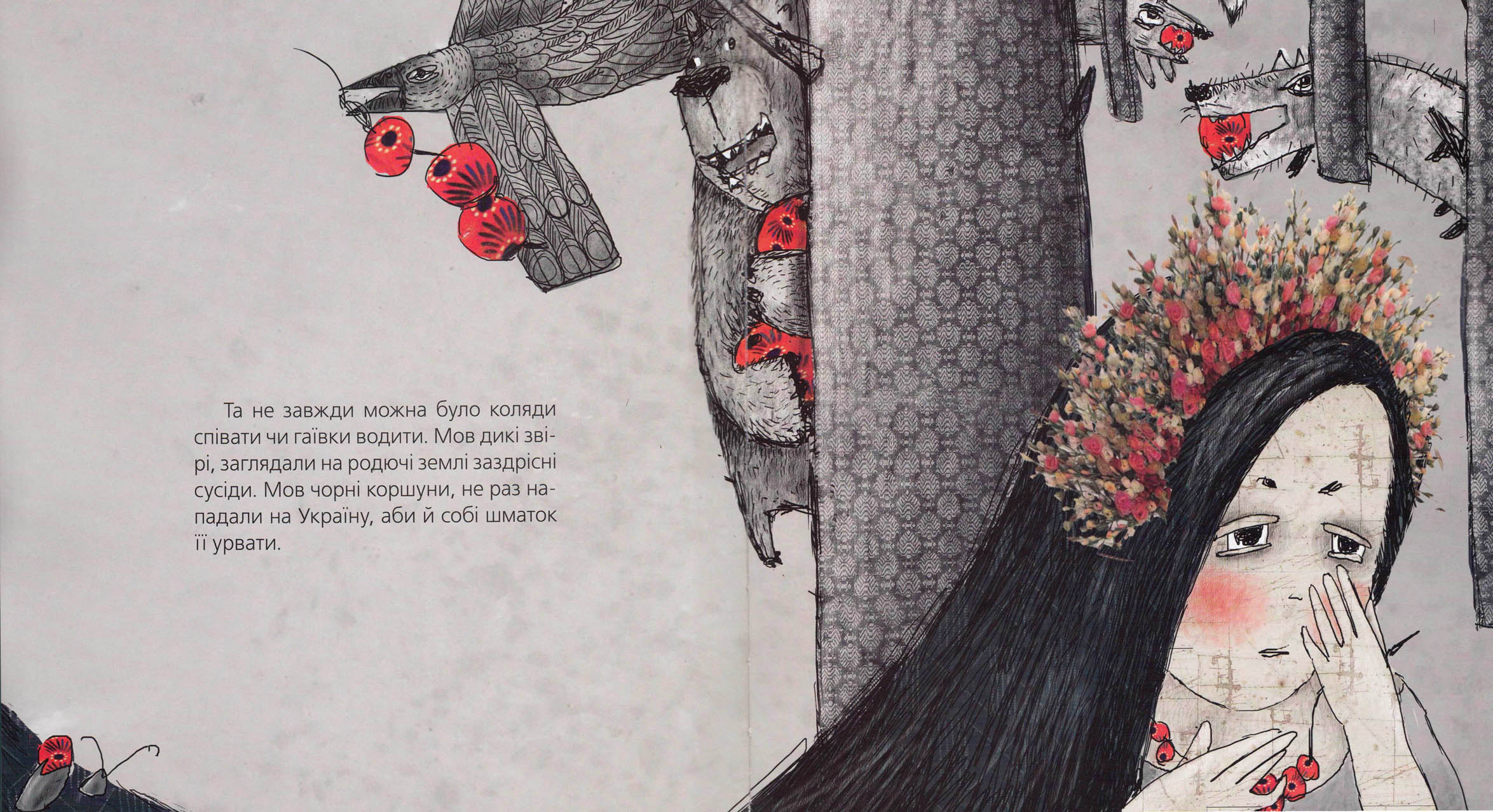

“The winter songs and spring round dances, however, did not last forever. Like wild animals, the envious neighbors watched the beautiful land with yearning. Like the black dragon, they rushed at once to Ukraine, to tear off a piece or two of it.”

The drawing leaves no doubt as to which neighbors are concerned. Whose symbol is the white eagle, the Wulf and Brezhnev-faced bear Misha?
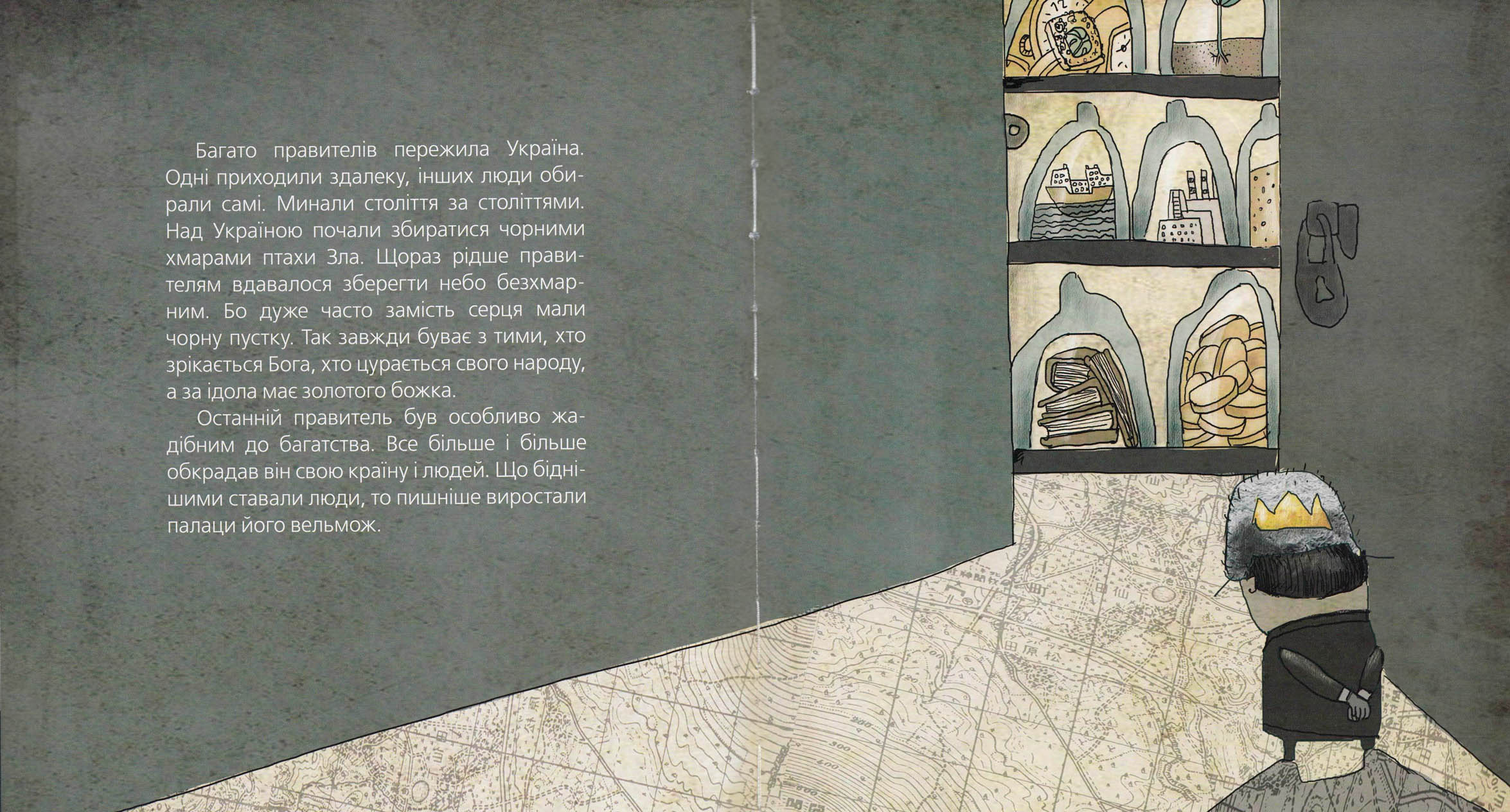

“Ukraine has experienced many kinds of domination. Some came from afar, while others were elected by themselves. The centuries passed, one after the other, and the birds of Evil were gathering over Ukraine, like a black cloud. The leaders of Ukraine rarely managed to keep the sky cloudless. Indeed, very often they only had a black hole in the place of their hearts. It always happens so to those who turn away from God and from the people, and worship golden idols instead. The last leader was particularly greedy. He more and more exploited his country and his people. The poorer the people became, the brighter palaces he erected in his large greed.”

The vozhd’, as corpulent as Yanukovich, with a crowned ushanka on his head, is engrossed in contemplating the extorted treasures. The preciouss, the expropriated wildlife, the ships and factories, and the gold coins are easy-to-understand symbols of wealth. But what about the books? The bookshelf is not the usual epitheton ornans of this kind of tyrant. Except for Yanukovich! He was, as we have seen, a lover of books. It is very likely that his hallmark is this unusual status symbol.
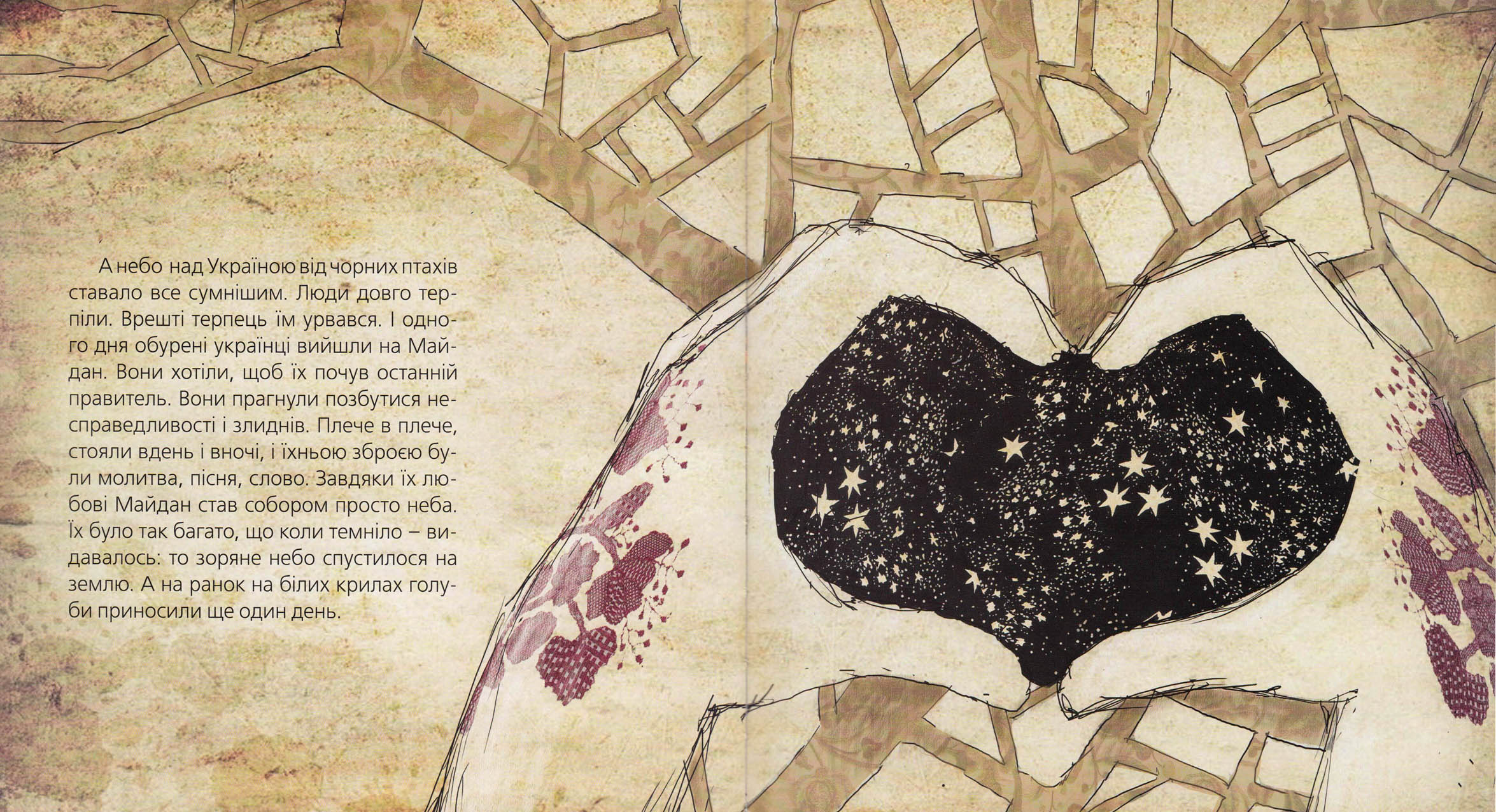

“And the sky over Ukraine increasingly darkened with the black birds. People tolerated it for a long time. But finally they ran out of patience. One day, the Ukrainians went out to the Maidan. They demanded a righteous leader for themselves. They wanted to put an end to injustice and wickedness. Shoulder to shoulder they stood there day and night, the prayer, the song and the word were their only weapon. Thanks to them, the Maidan became a church under the open sky. They were so many, that when it got dark, it was revealed that the sky and its stars moved down to earth. And in the morning, the white wings of the doves brought the new day.”
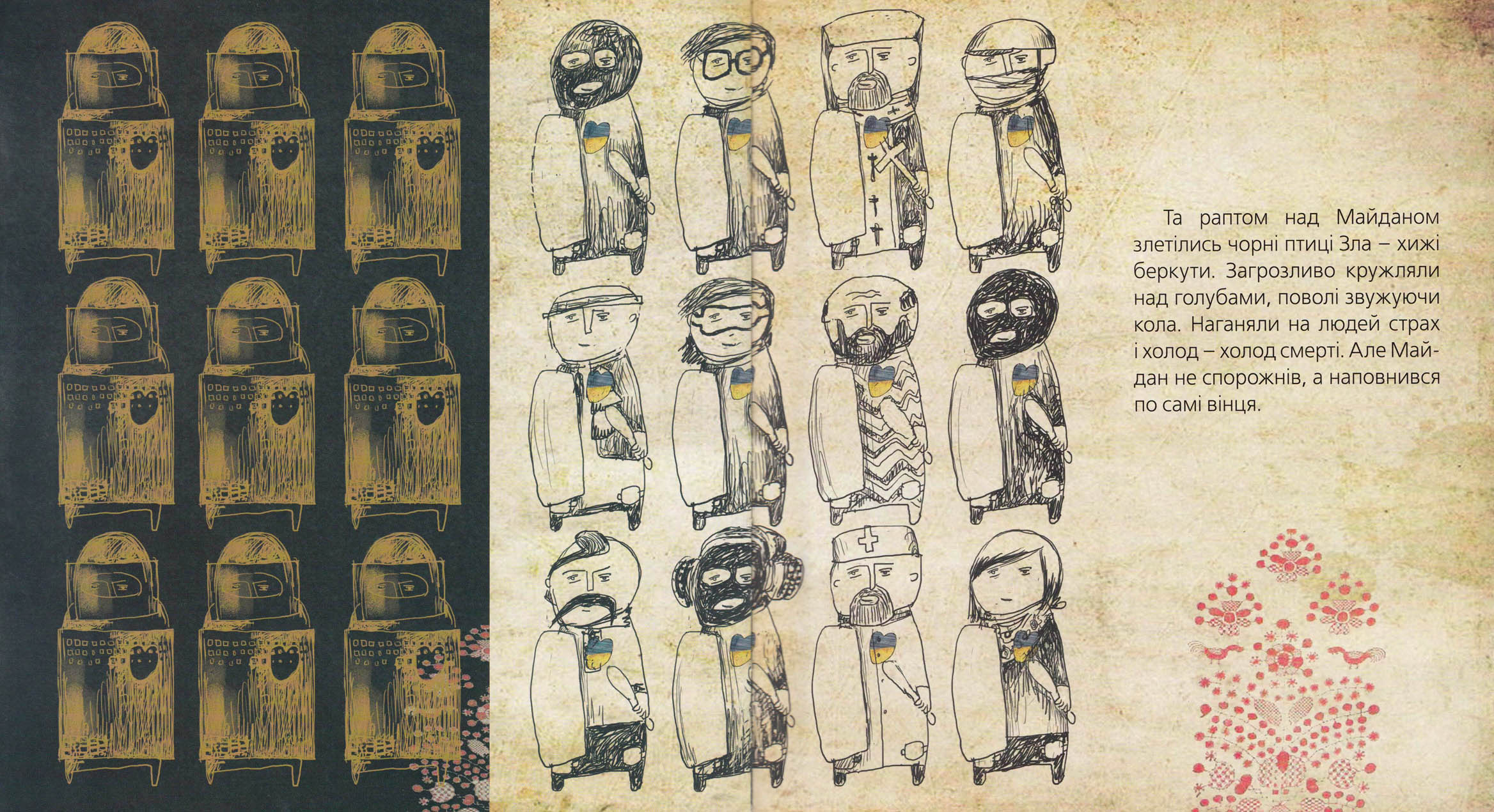

“But suddenly the black birds of the Evil, the killing eagles [berkut] also appeared above the Maidan. They circled menacingly around the doves, and their circle became increasingly tighter. They shed fear and cold on the people, the chill of death. However, the Maidan did not empty, on the contrary, it was filled to the brim.”
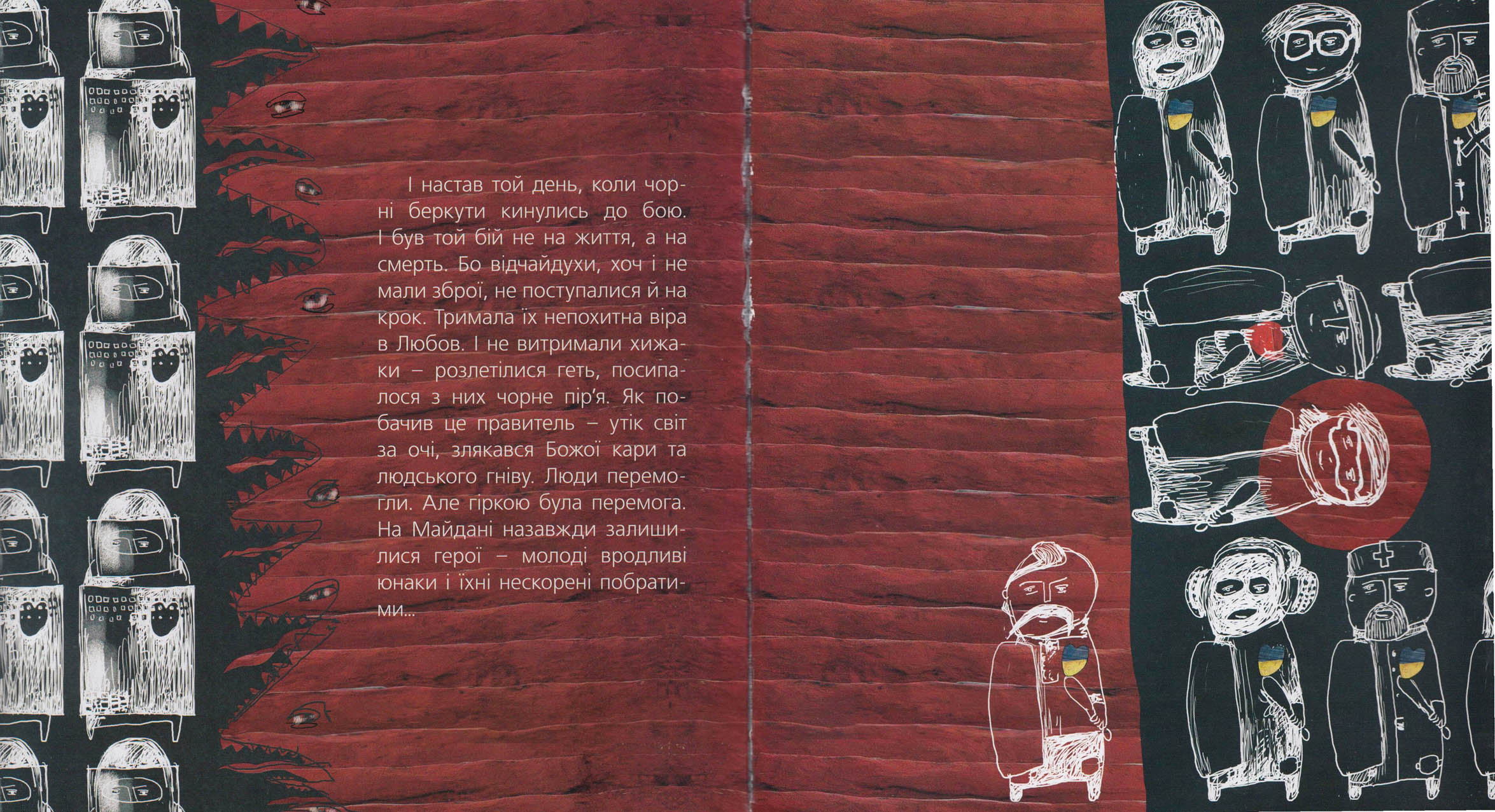

“And then the day came when the eagles attacked. And that fight was not that of life, but that of death. However, the fearless ones, even though they were unarmed, did not retreat a step. They were held steady by their unwavering faith in Love. And the predators could not bear this. They finally fled, with falling black feathers. This was also seen by the leader, the blood-sucking tick, and he was frightened of the wrath of God and people. The people won. But the victory was bitter. Many heroes remained forever in the Maidan – beautiful young boys and their unbreakable brethren…”
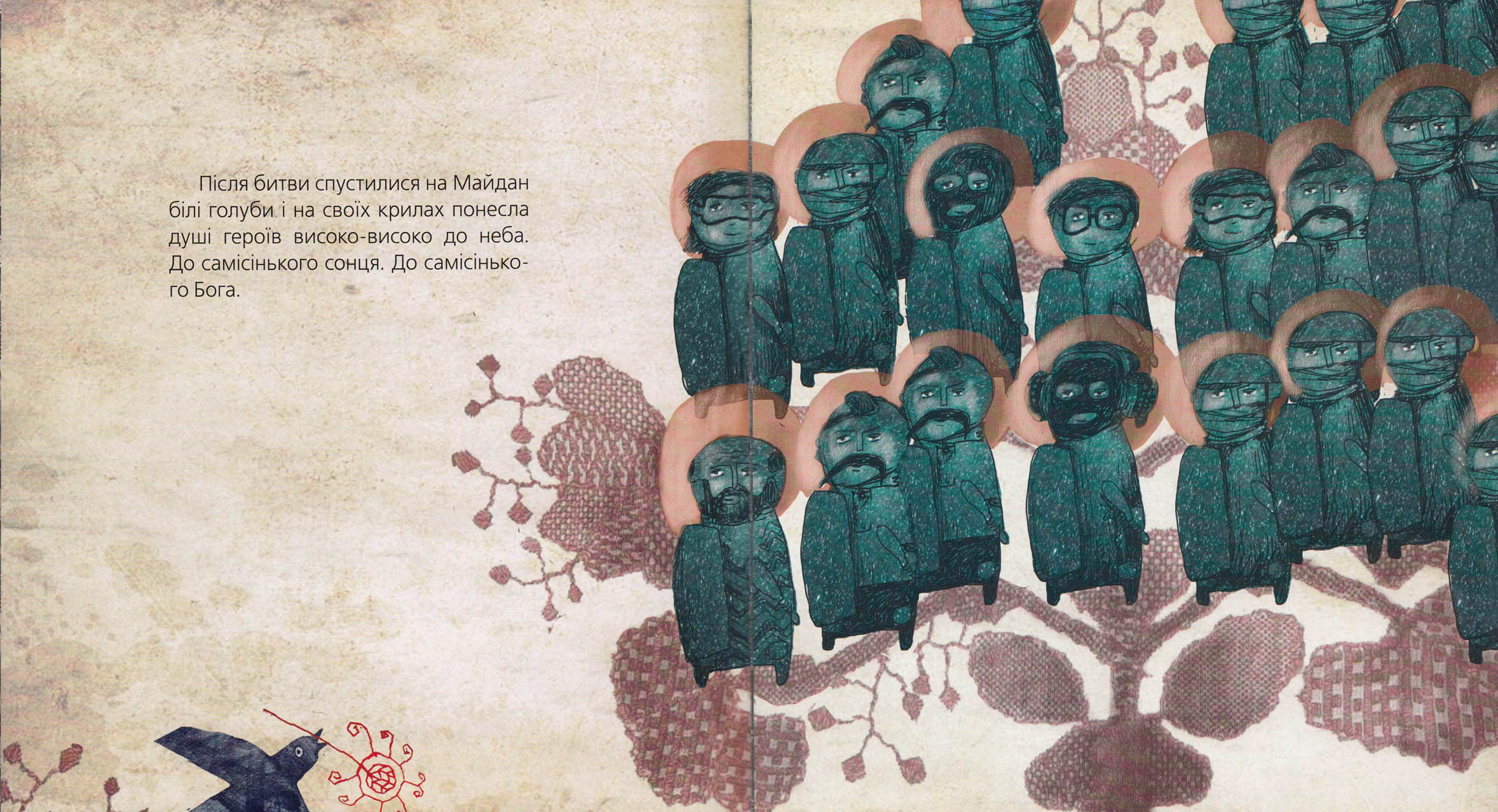

“After the battle, the doves descended to the Maidan, and carried the souls of the heroes on their wings far, far away, up into heaven. Up to the Sun. Up to God.”


“And from the blood of the heroes, a new tree grew in the middle of the Maidan. Its crown reaches half of the world, and a new life is sprouting in its shadow. And above, in the deep blue sky, the doves of God are hovering.”

Daughter of the 21st century

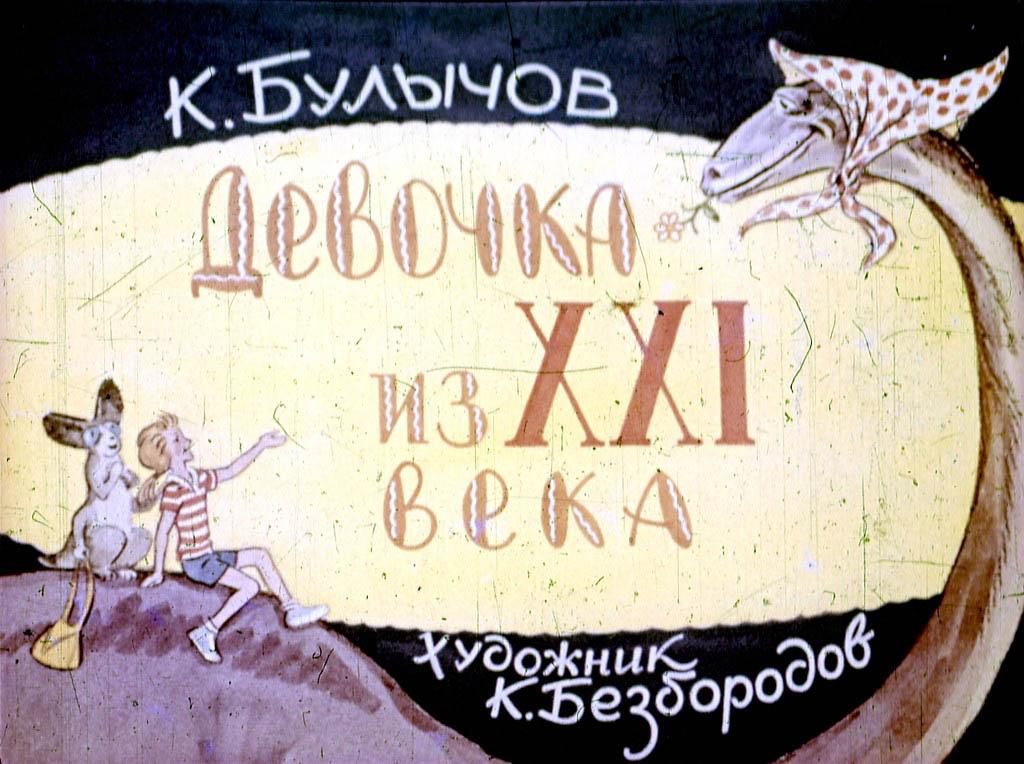
A little girl from the 21st century. Written by K. Bulychov, drawn by K. Bezborodov

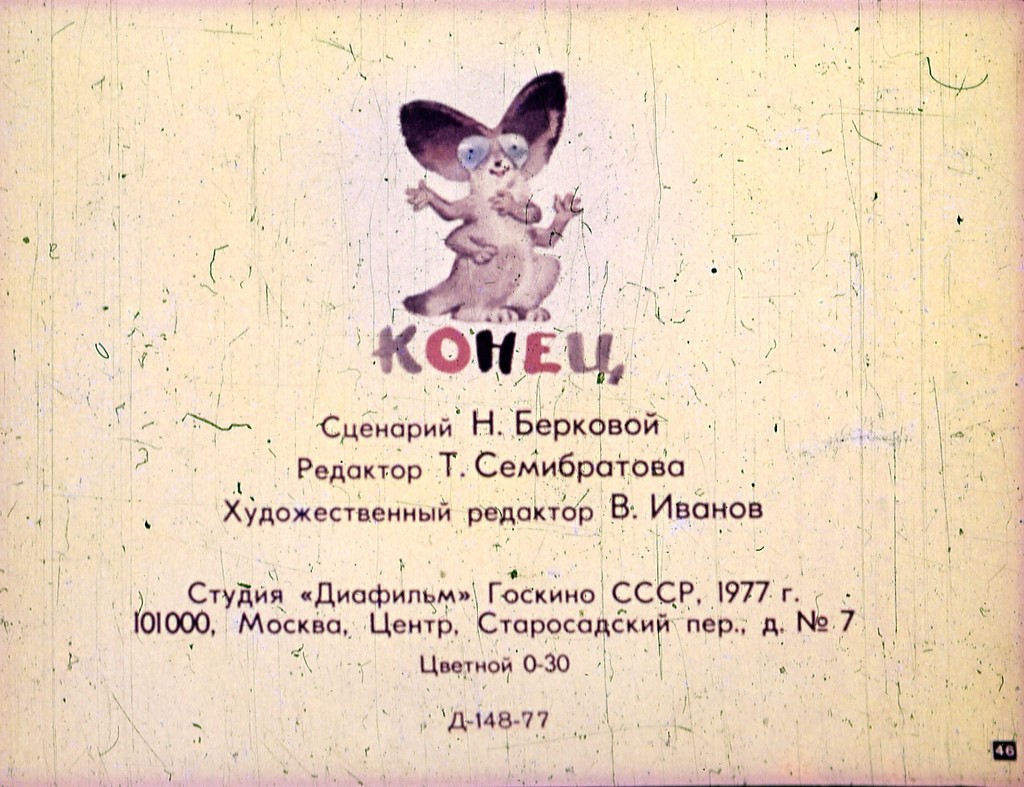
In the new year you look back to the past for a moment. And you find that the past looks back at you. This Soviet slide from 1977 predicted to its contemporaries how a little girl would live in 21st-century intergalactic Moscow, Alisa in Wonderland.

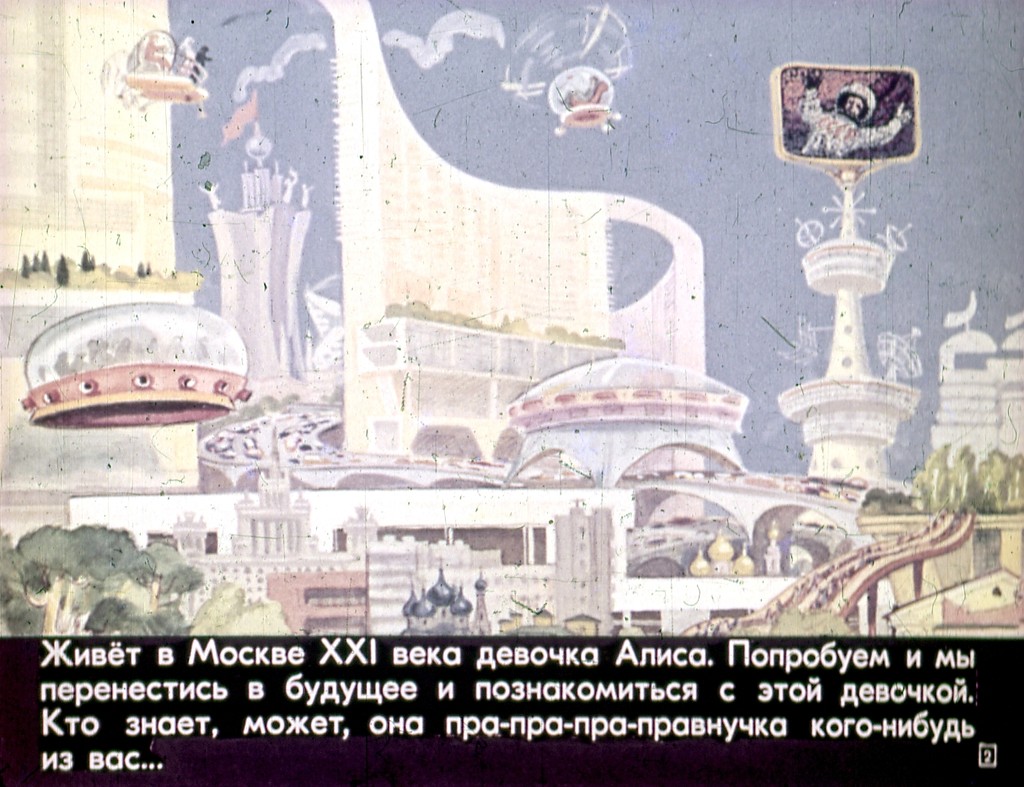
In 21st-century Moscow lives a little girl, Alisa. Let us try to fly ahead in time and get to know this little girl. Who knows, perhaps she happens to be the great-great-great-granddaughter of one of you…

Her father is a biologist researching alien beings, her mother designs houses on other planets. And the little girl is an ordinary Moscow girl, who, like everyone else, keeps in her room a dachshund, cats, a hedgehog and a Martian praying mantis, and from Sirius she has received a big-eared shusha, a real living cheburashka, whom she teaches to speak and read in Russian. The most attractive dream for those of us, who at that time – I mean, not in the 21st century, but in 1977 – grew up on Gerald Durrell and Dr. Dolittle – Doktor Aybolit –, had the same desires, and prepared to be exobiologists in the 21st century, if ever such a century would come to be.

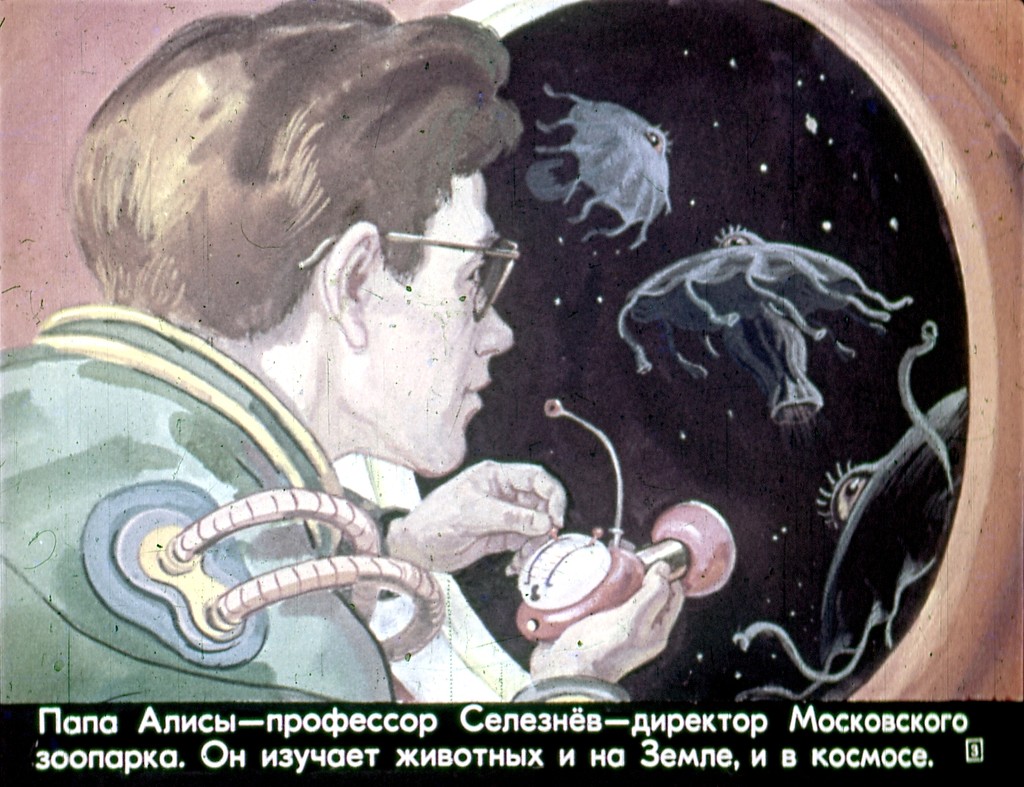
Alisa’s father – Professor Seleznev – is the director of the Moscow zoo, where he studies the animals of the Earth and of the cosmos

Yes, something like this...

Nevertheless, if you look back after forty years, in this alternative 21st century it is not the alien animals that are the most interesting, nor even the eighty-storey cities. And not even the great dream which came true with the production of oranges and bananas in the kolkhoz of Podmoskovye (although it would be probably more profitable to deliver it by rocket from Tau Ceti, but nevertheless – it is ours!) But the fact that, despite the astronaut scenery, in daily life nothing has changed, everything goes on as in 1977. Just like in the postcards of a hundred years ago which dreamed about the 2000s, life in the happy time of peace goes on amidst the scenery of Jules Verne. I do not even dare to consider how hopelessly old-fashioned they will find the imagery and lifestyle of Star Wars in the period when that epic takes place.

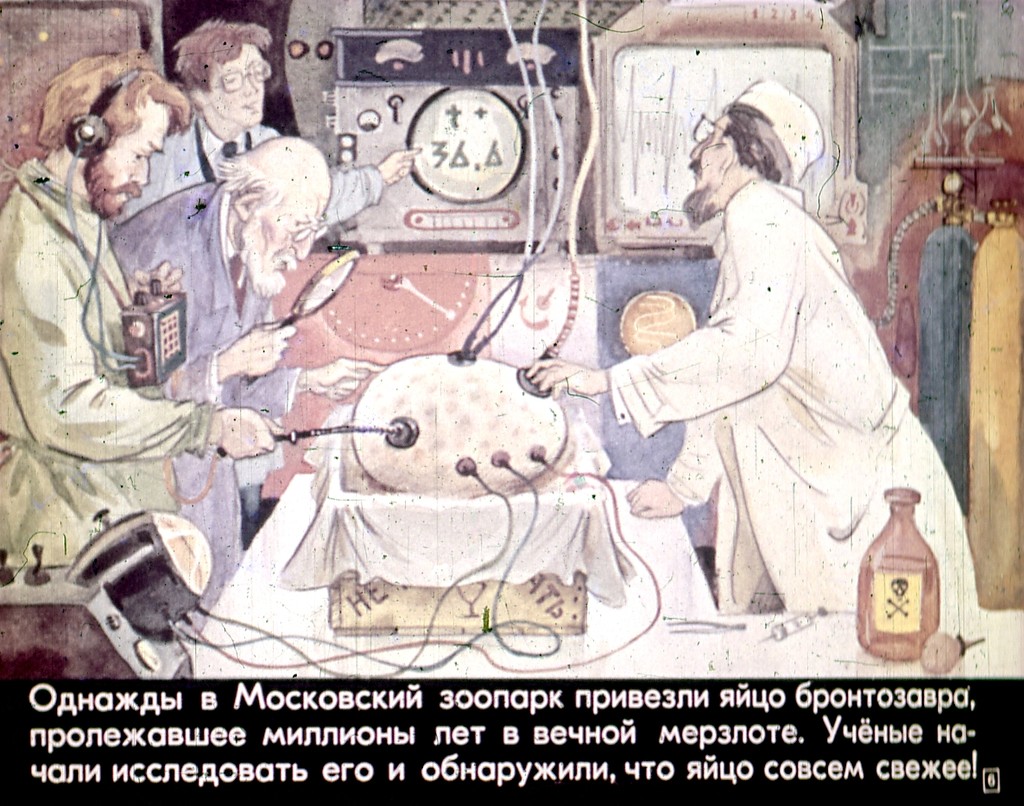
Perhaps only one thing has really changed: how the scientists look. Instead of the typical thick-necked alcoholic institute leader apparatchiks, the arrogant and servile lecturers of the late Brezhnev era, by the 21st century finally all the scientists have taken on intelligent facial expressions that witness a real interest and proficiency in their subject. And if for no other reason than this, it was worth it to wait for this wonderful twenty-first century.


alisa alisa alisa alisa alisa alisa alisa alisa alisa alisa alisa alisa alisa alisa alisa alisa alisa alisa alisa alisa alisa alisa alisa alisa alisa alisa alisa alisa alisa alisa alisa alisa alisa alisa alisa alisa alisa alisa alisa alisa alisa alisa alisa alisa alisa


War


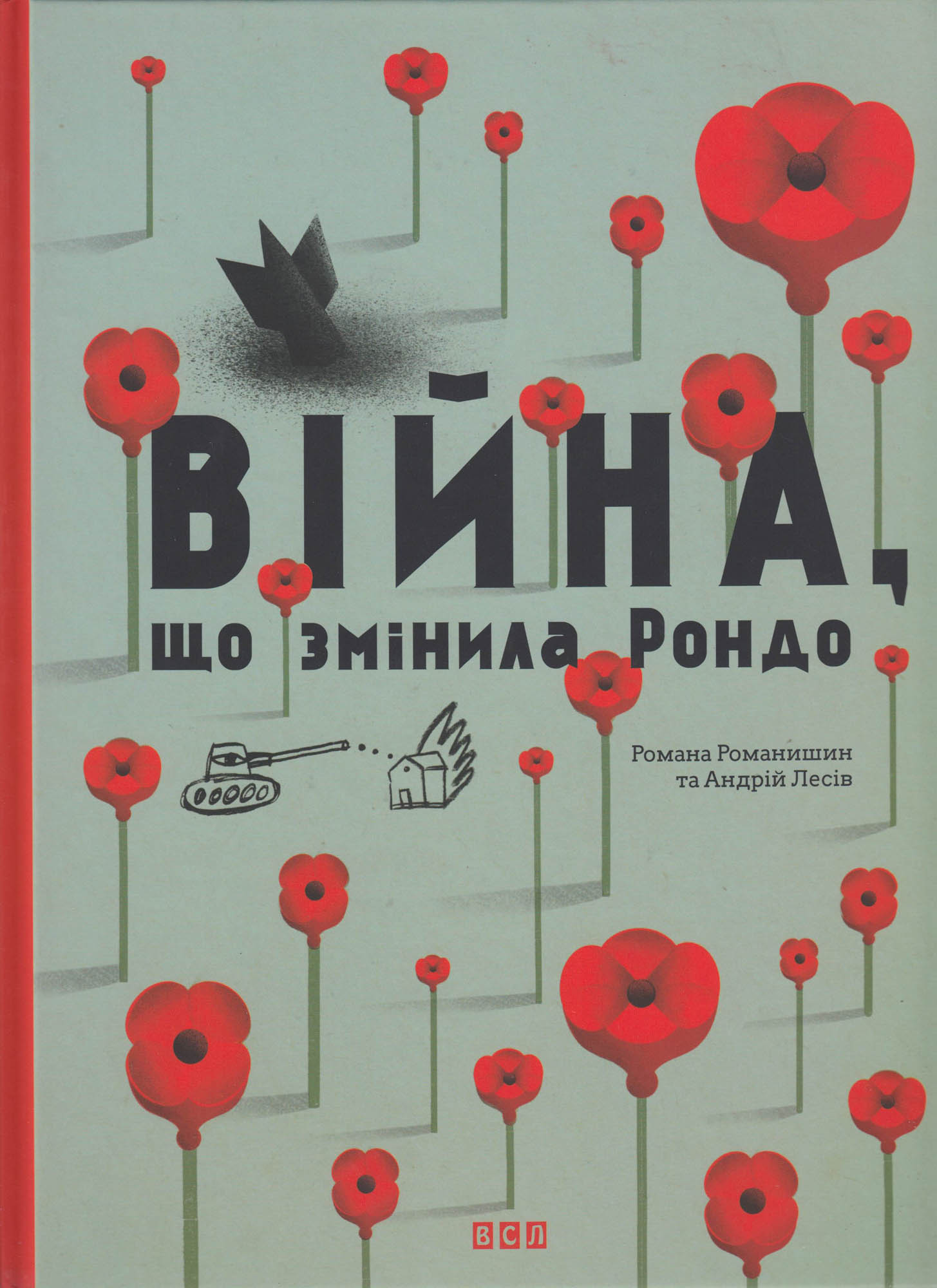
The Old Lion Publisher of Lviv has been in the market for a few years, and published some wonderful children’s books with the characteristic beautiful, surrealistic illustrations of contemporary Lviv books. The first one, which we will soon present, is about Lemberg’s heraldic animal, who gave its name to the publisher, the old lion, who receives exotic visitors in his loft, and while we accompany their way from the railway station to Lemberg’s main square, we also get to know the city’s enchanting small streets and houses.

The Old Lion also publishes other books related to Lemberg and to the Ukraine. Last year was published the picture book – which we will also present – that explains the Maidan to the children, with illustrations based on old Rusyn motifs. And this year the book that tells what is war, and how to counter it.

In 2015 the book received the special prize of the Bologna Ragazzi Award, and on this occasion the publisher interviewed the two authors, Romana Romanyshyn and Andrij Lesiv.

The war, as our previous post shows, is actual again in the Ukraine now, a hundred years after the great war that destroyed Galicia. However, acording to the authors, the book is not only about this war.

“We have many book ideas, that are constantly noted on this paper on the wall here, marking their priority by underlining, highlighting and with exclamatin marks. The theme of war has never been included on this paper. We heard about the war only from our grandparents, or from the news about other countries. All these horrors were far away, and seemed to never reach here. But things have changed in the Ukraine. Other kinds of priorities have emerged, we had to rethink the values. Suddenly, all the stories told by witnesses about other wars, have become reality in our own country. This book on the war naturally reflects the events happening now. But this book is not only about our war in the Ukraine, it contains no data or geographical reference to it. All is based on simple symbols, like light and darkness, flowers and weeds, thin paper and sharp metal. The language of symbols is a clear and universal language, independent of geography.”


The War that changed Rondo


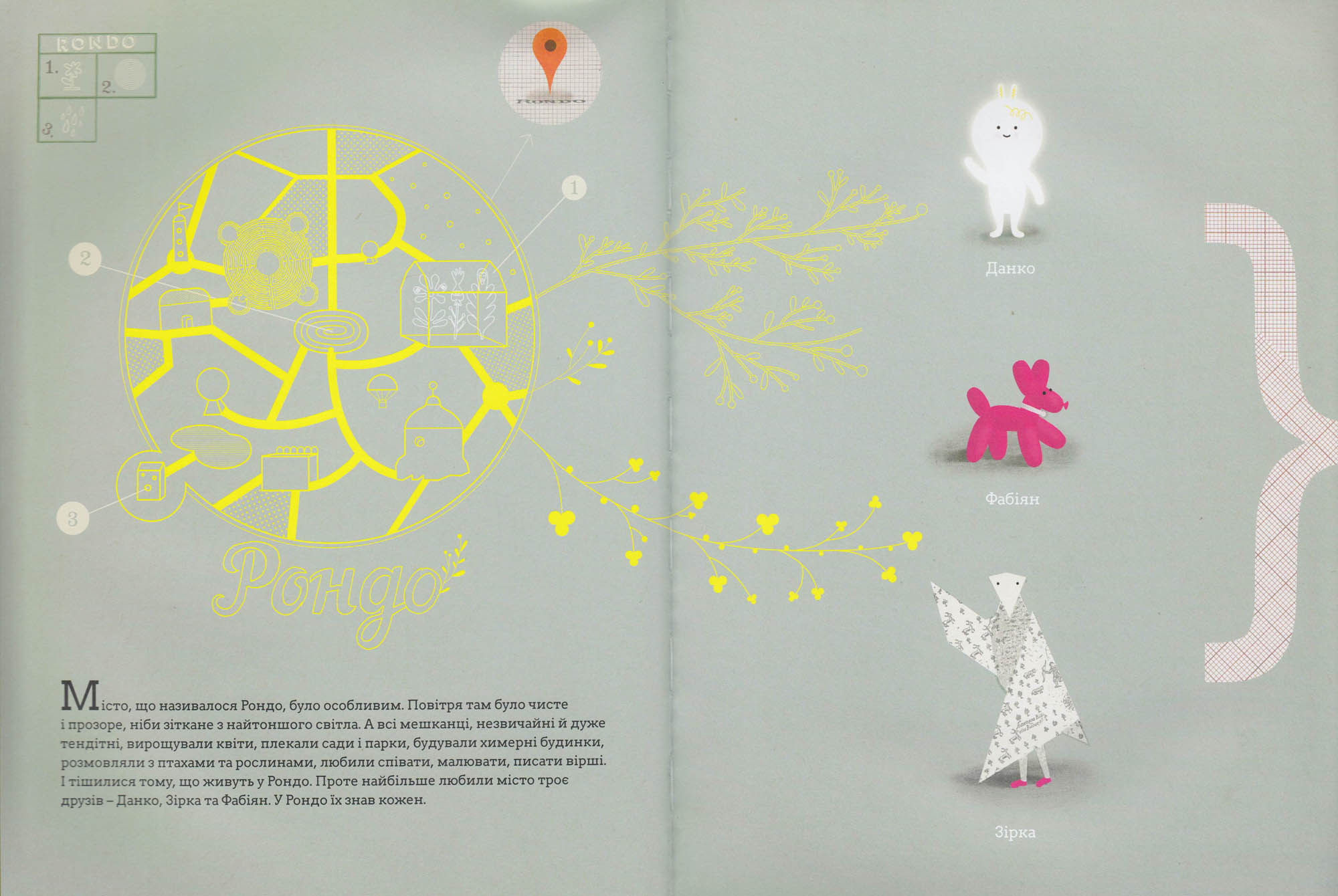
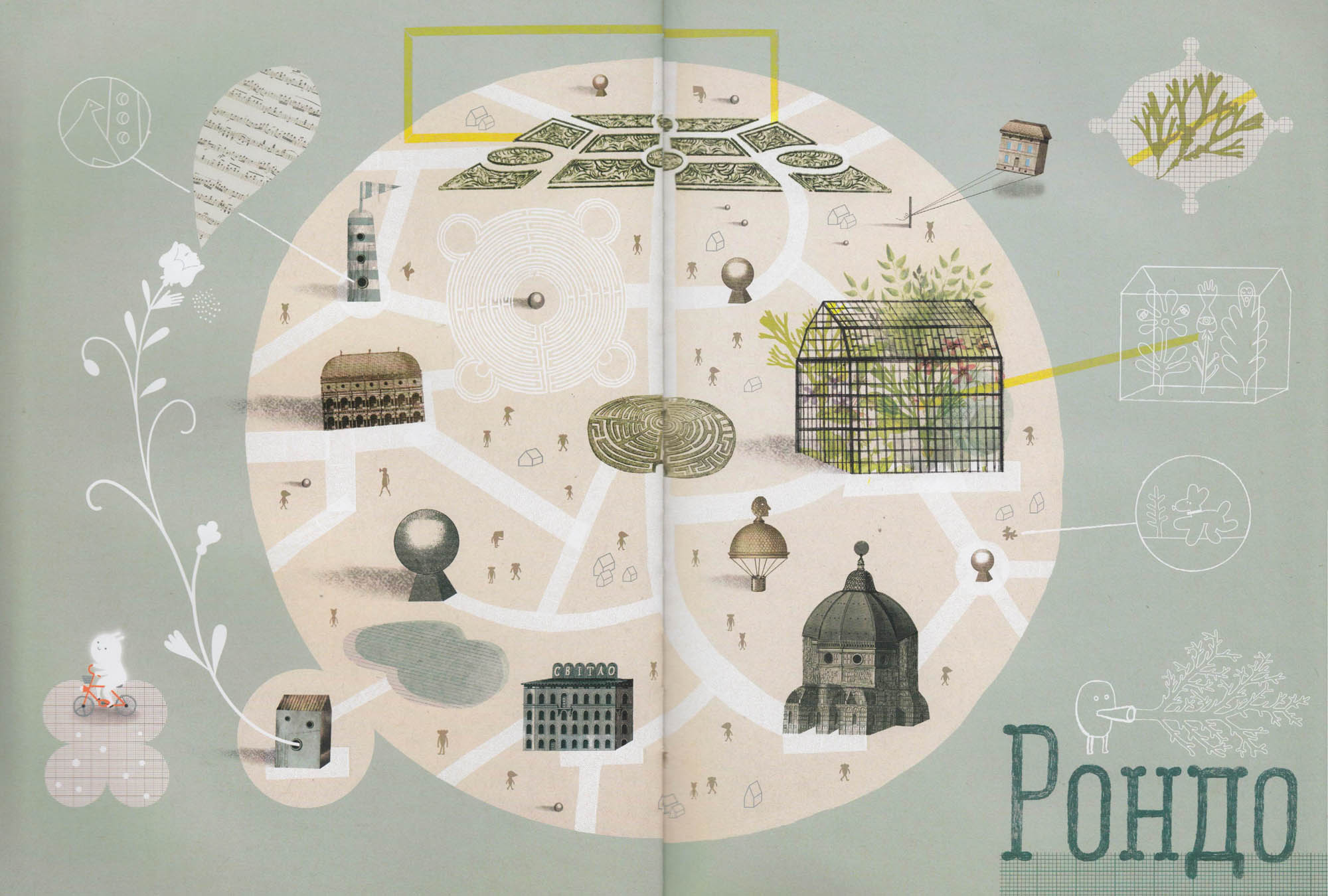
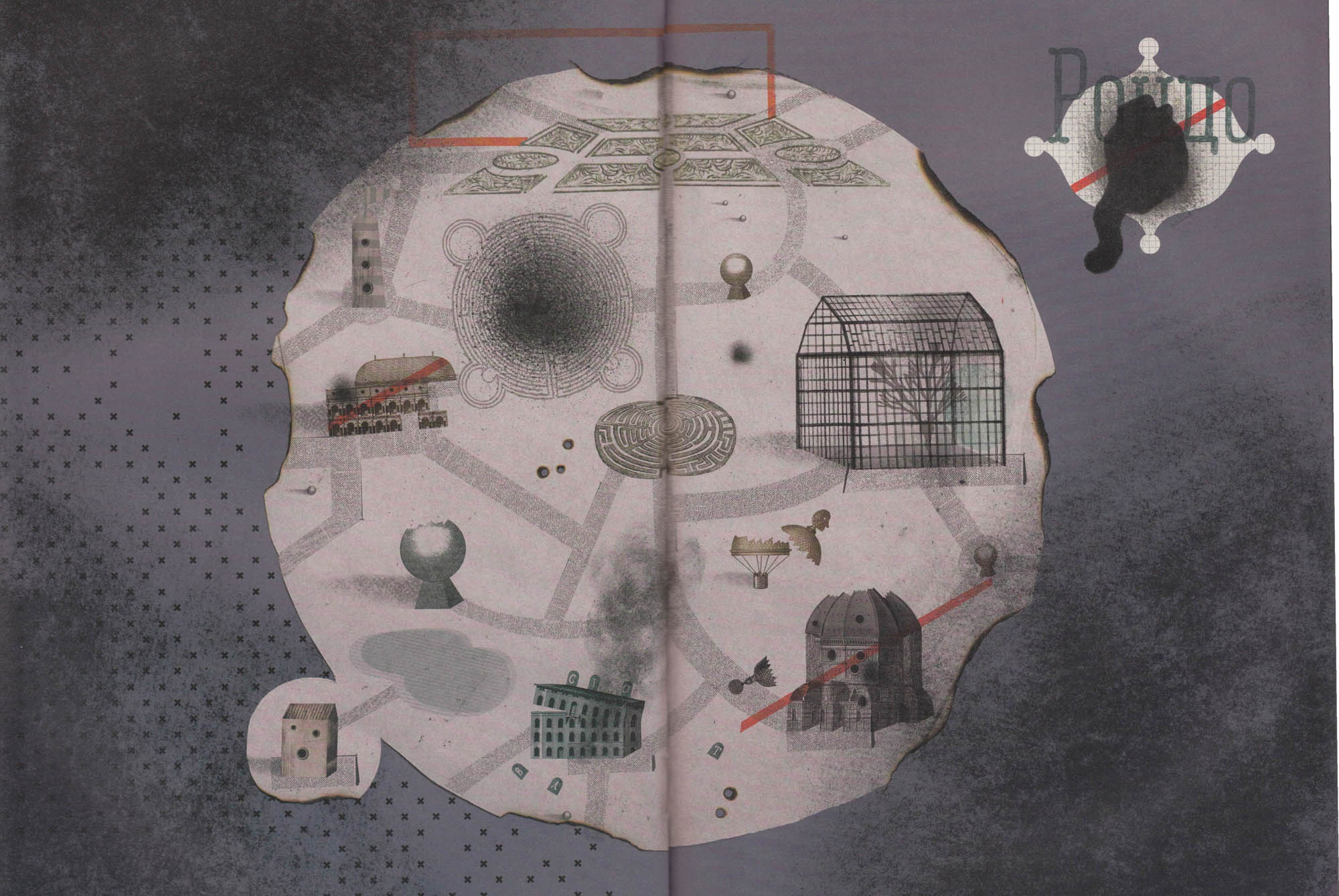
The city called Rondo was special. The air was clean and transparent, as if it were of the finest light. And its inhabitants were also all special and fragile. They grew flowers, tended gardens and parks, built fantastic houses, talked with the birds and plants, loved to sing, draw and write poetry. And they were happy to live in Rondo. But the city was most loved by three friends: Darko, Zirka and Fabian. Everyone knew them in Rondo.


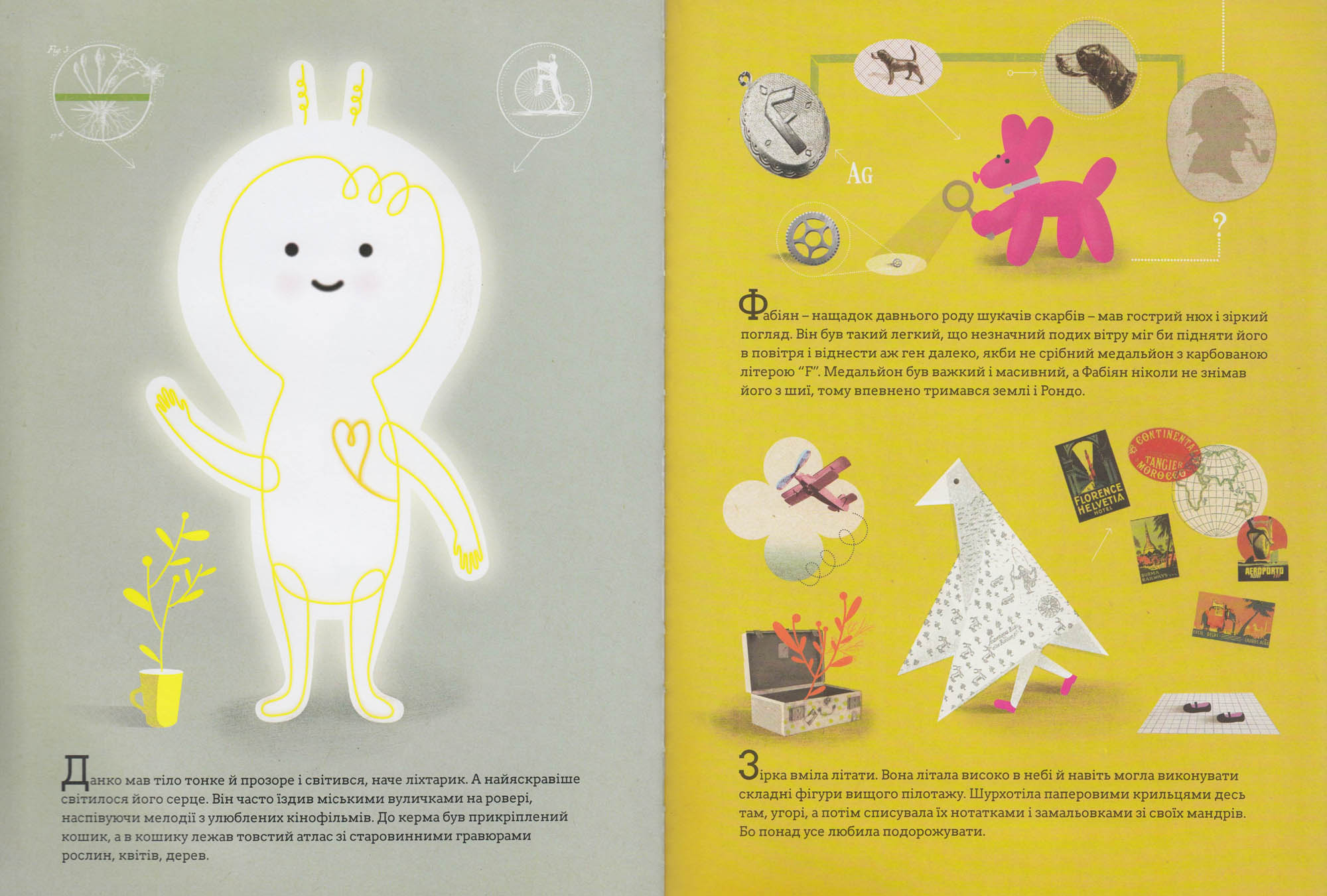
Danko’s body was thin and translucent, and bright as a candle. His heart shone the brightest. He often rambled the streets of the city on his penny-farthing, humming the melodies of his favorite movies. A basket hung on the handlebar, with a thick atlas in it, which contained the old engravings of plants, flowers and trees.


Mozart: Rondo alla turca. Fiona Vilnite’s transcript for string quartet

Fabian was a descendant of ancient treasure hunters, with sharp sense of smell and sight. He was so light, that even the slightest breeze could have lifted and taken him far away, had he not had a silver medal with a letter “F” in his neck. The medal was heavy and solid, and Fabian never took it off his neck, he was so stuck to the land and to Rondo.

Zvirka could fly. He soared high in the sky, and could even perform complex aerobatics. He flew high on his paper wings, and he wrote on them his travel sketches and notes. Because he loved to travel more than anything else.


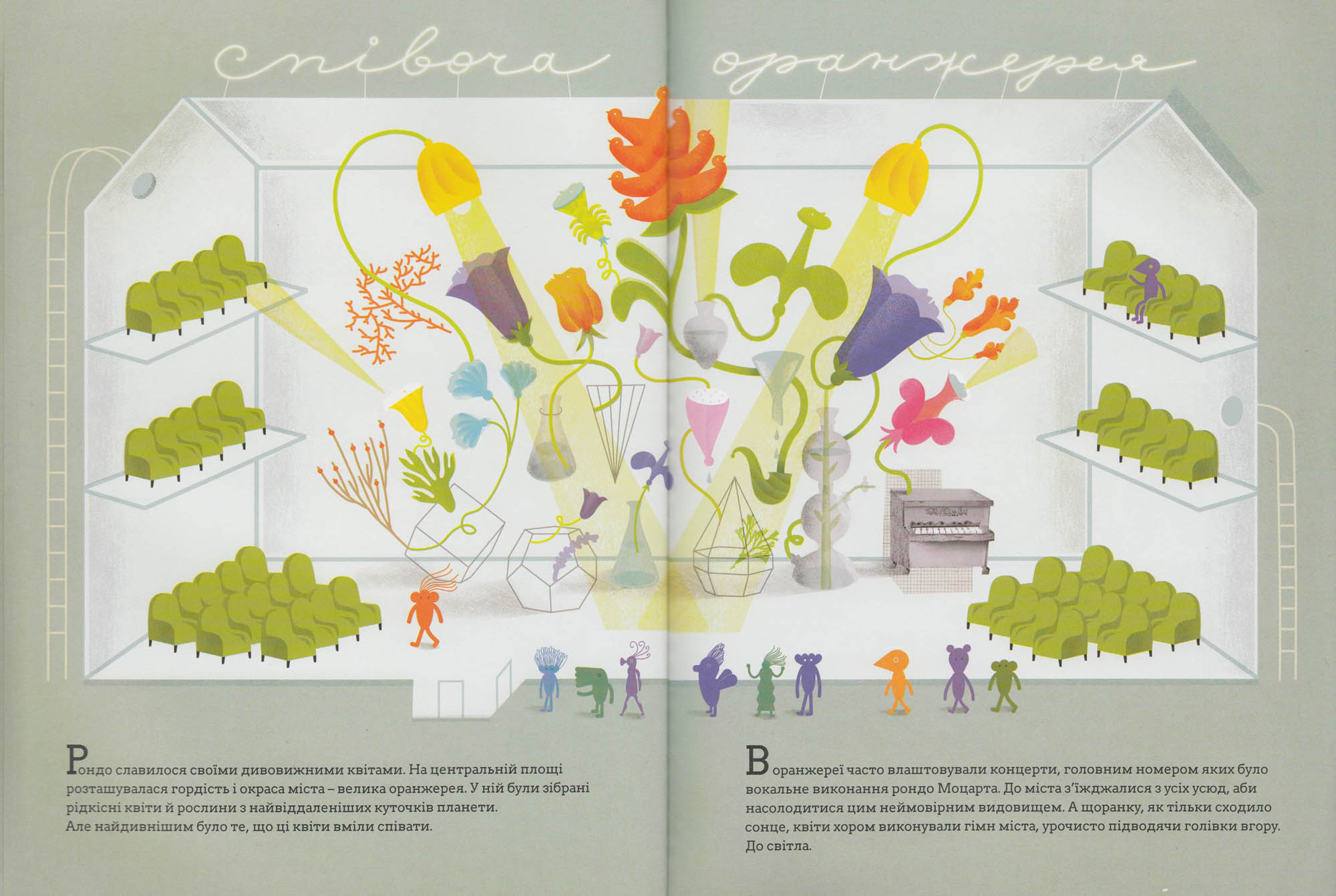
Rondo was famous for its beautiful flowers. On the main square was the city’s pride and treasure, the greenhouse. Here they collected the rarest flowers and plants from the most remote corners of the planet. But what was most surprising: these flowers could sing.

They often staged concerts in the greenhouse, which always featured Mozart’s Rondo. They came together from every corner of the city to enjoy this incredible spectacle. And every morning, when the sun rose, the flowers sang the anthem of the city, proudly lifting up their heads into the light.


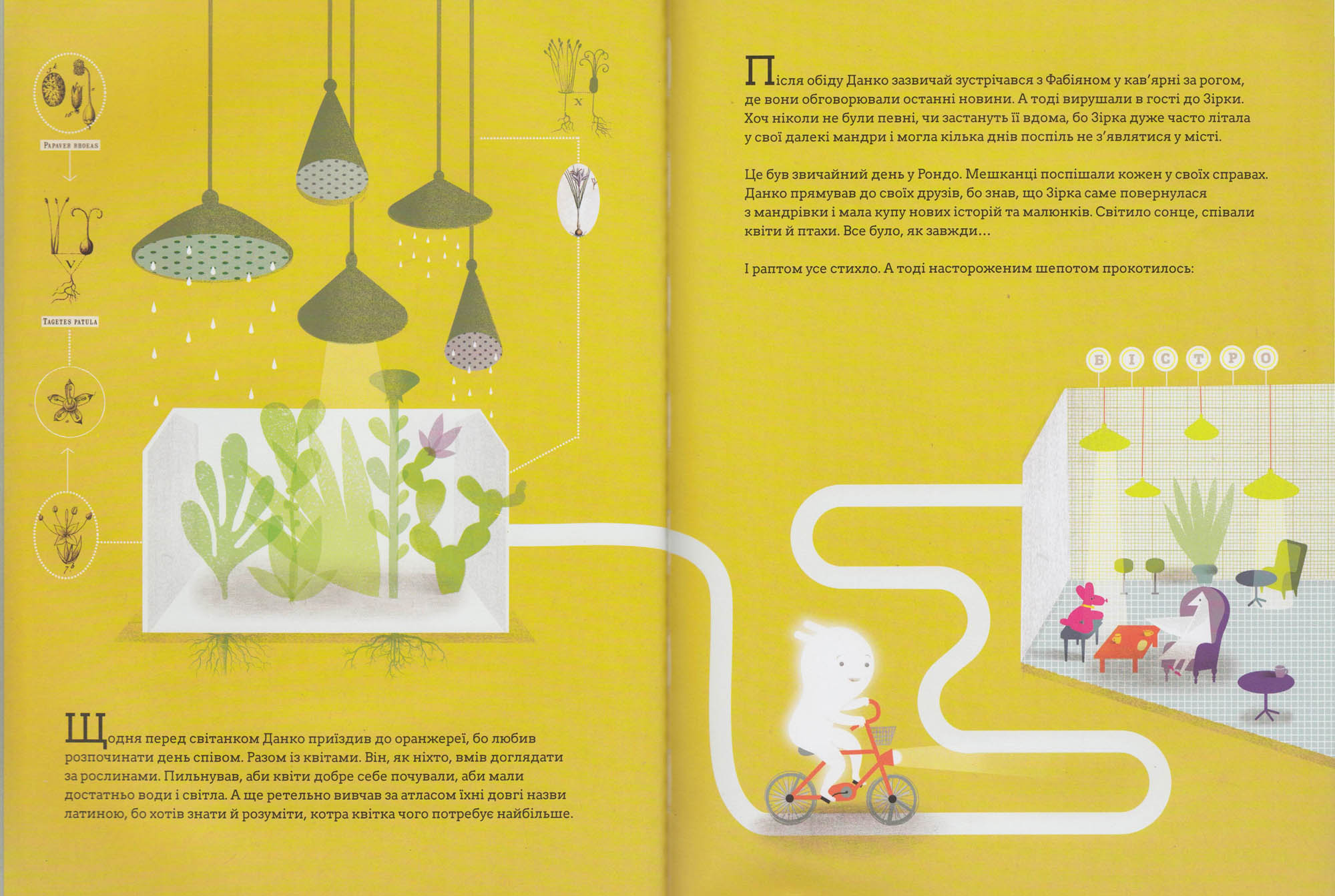
Danko cycled every morning before sunrise to the greenhouse, because he loved to start the day by singing. Together with the flowers. He understood the flowersr better than anyone else. He took care so they felt well, and always had enough water and light. He carefully studied the atlas with the Latin names, because he wanted to know, which flower what needs the most.

After lunch, Danko often met Fabian in the corner café, where they discussed the latest news. Then they went to see Zvirka. Although they were never sure whether they find him at home, because Zvirka often flew to distant voyages, and he was not seen for several days in the city.

This day was just like any other in Rondo. The inhabitants of the town rushed after their jobs. Danko was going to his friend, because he knew that Zvirka had just come back from a journey, and he brought lots of new stories and pictures with him. The sun was shining, the birds and flowers singing. Everything was like always…

Suddenly everything was quiet. The news swept through the town:


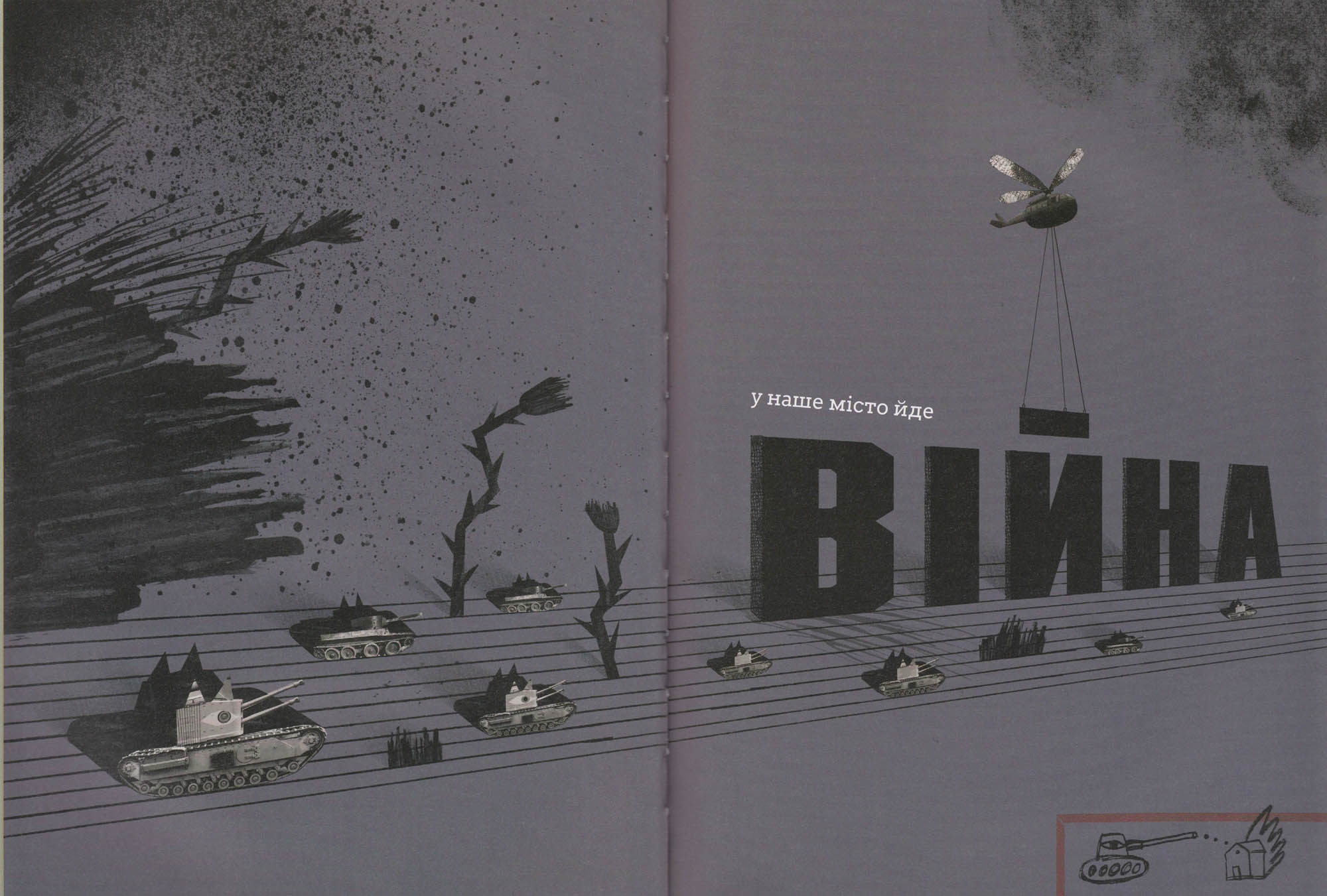
THERE IS WAR IN OUR CITY!


The inhabitants of Rondo did not know, who the War is. It came out of nowhere, black and terrible. Roaring and gnashing crept towards the city, leaving behind ruins, chaos and darkness. Everything it touched fell into an impenetrable darkness. But the most terrible was that it sowed black flowers, dry and thorny weeds, which had no smell and no sound. They instantly sprang out of the earth, and grew into a thick jungle, which hid the sun. And in the lack of light, the fragile and defenseless flowers of Rondo began to fade and wither. They had no more force to raise their heads towards the light. And worst of all, they did not sing any more.


Danko, Zirka and Fabian, though fragile, were brave. They went out against the War. First they wanted to speak to it, asking it to go away. But the War ignored them, stubbornly going further, and launched its terrible machinery into attack. It threw fiery sparks and sharp stones everywhere.


One of the stones hit Danko on the chest, just above the heart, and a huge crack arose on his body. The sparks reached Zirka, and burned through his paper wings. And a black flower grew out in front of Fabian, piercing his leg.

The War did not spare anyone.


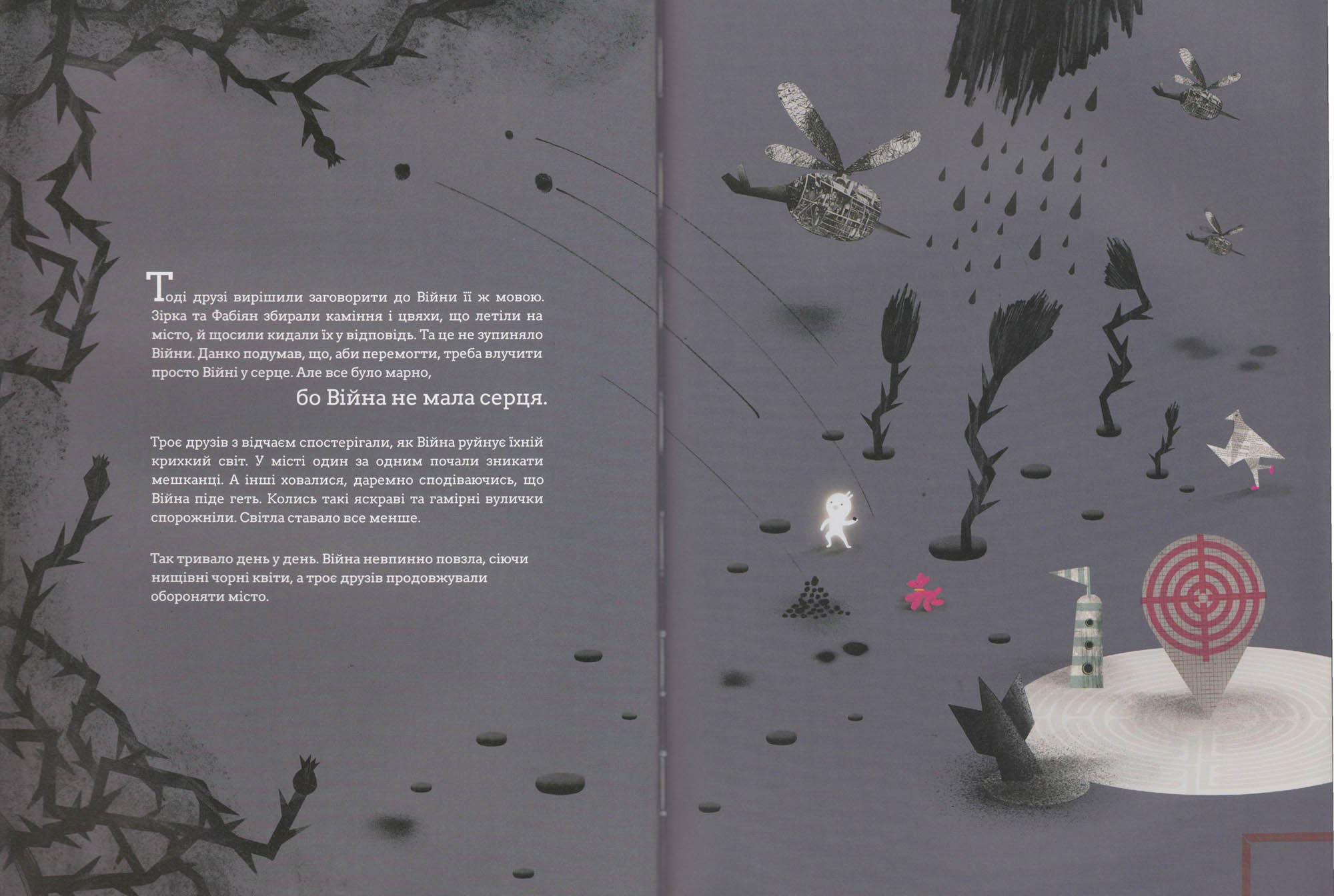
Then the three friends tried to talk to War in its language. Zirka and Fabian collected the stones and nails flying over the city, and threw them back. But this did not stop the War. Danko thought that the War could be stopped if they made better its heart. But in vain, because the War had no heart.

The three friends watched in despair as the War was destroying their fragile world. The inhabitants of the city disappeared one after another. There was less and less hope that the War would ever leave. The once bright and bustling streets became empty. And there was less and less light.

It went on day after day. The War steadily advanced, spreading black flowers everywhere, and the three friends tried to defend the city as they could.


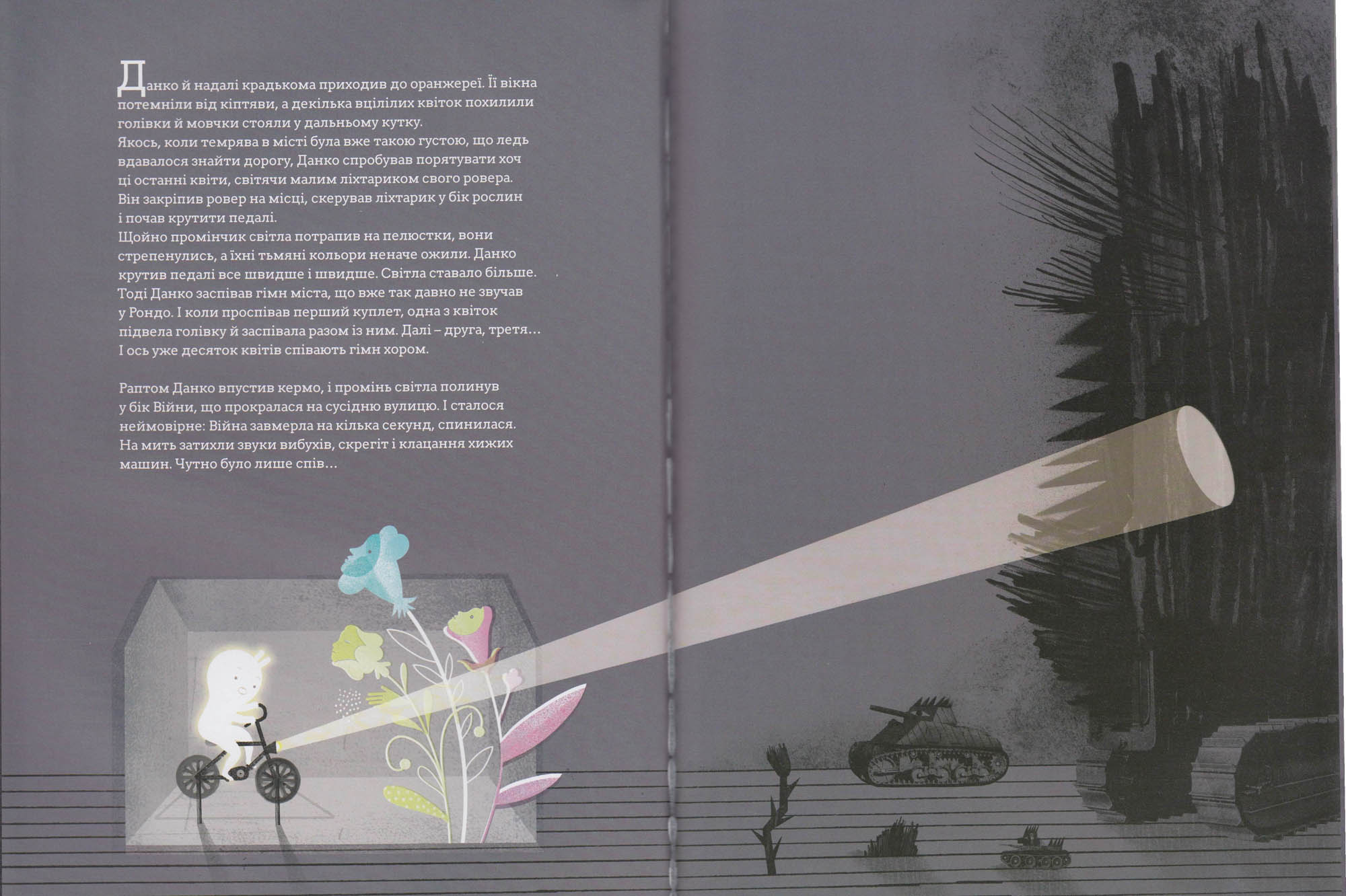
Danko continued to go to the greenhouse, whose windows were darkened, and where the few surviving flowers stood languidly and silently in the corner.

On one occasion, when darkness was already so thick, that Danko could barely find his way, he tried to save at least these last flowers with the light of his penny-farthing. He put it on a stand, directed its lamp on the flowers, and began to pedal.

As soon as the light fell on the flowers, they recovered, and their pale color became vivid. Danko pedaled more and more quickly. The light grew greater and greater. Then Danko started to sing the anthem of the city, which had not been heard for long in Rodno. As he arrived at the end of the first stanza, one of the flowers lifted its head, and sang wwith him. And then the second and the third. Then a dozen of them sang the anthem in choir.

And Danko understood: the War was terrified, because a dozen flowers kept on singing, in spite of everything, because even the thinnest beam of light weakened the darkness. So, to stop the War, the whole community has to build the great machinery of Light, which dispels darkness and saves the singing flowers!


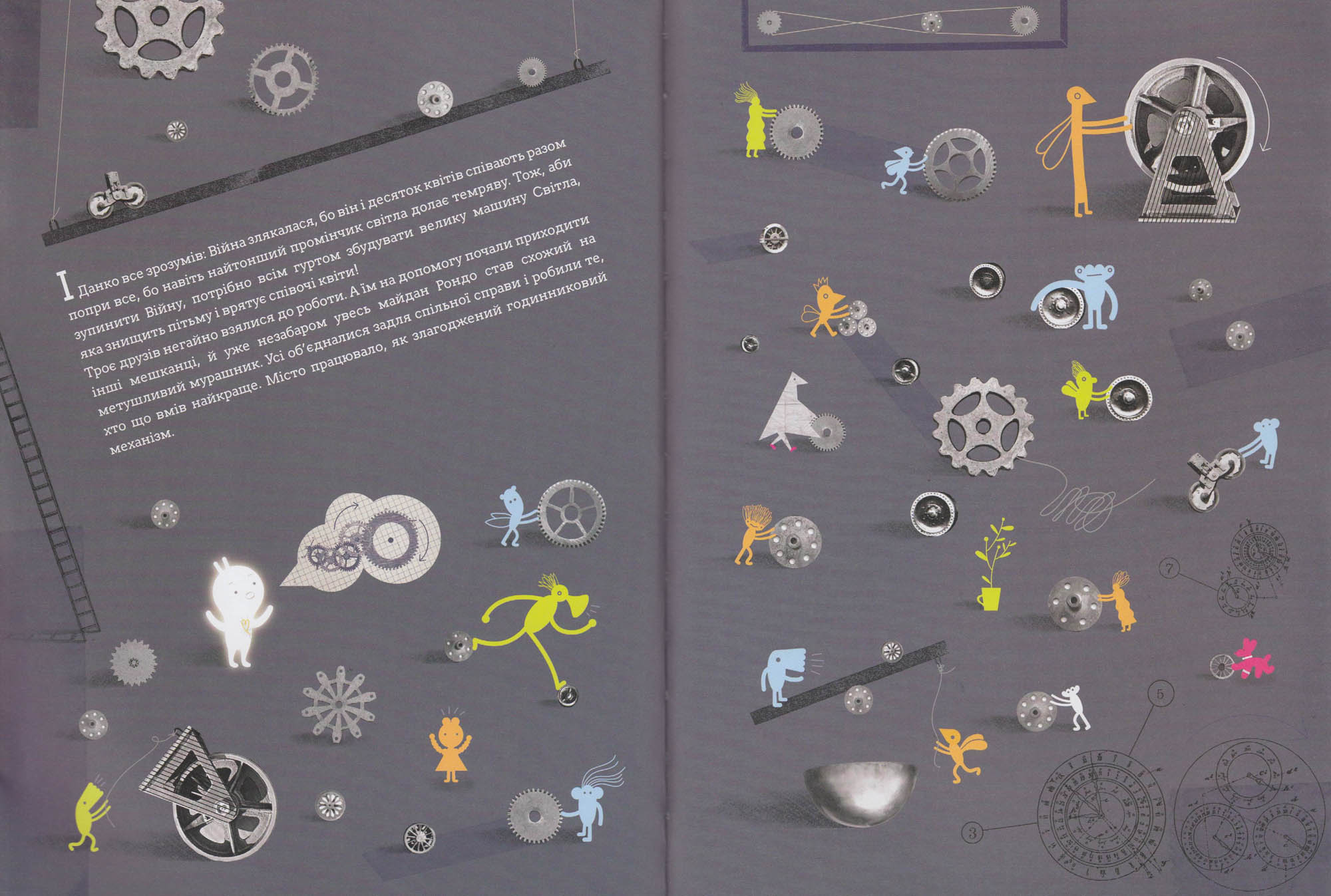
The three friends immediately went to work. The other inhabitants of the city also come one after the other to help them, and the main square of Rondo became a bustling ant’s nest. All united in a common cause, they worked as well as they could. The city worked like a single coordinated clockwork.


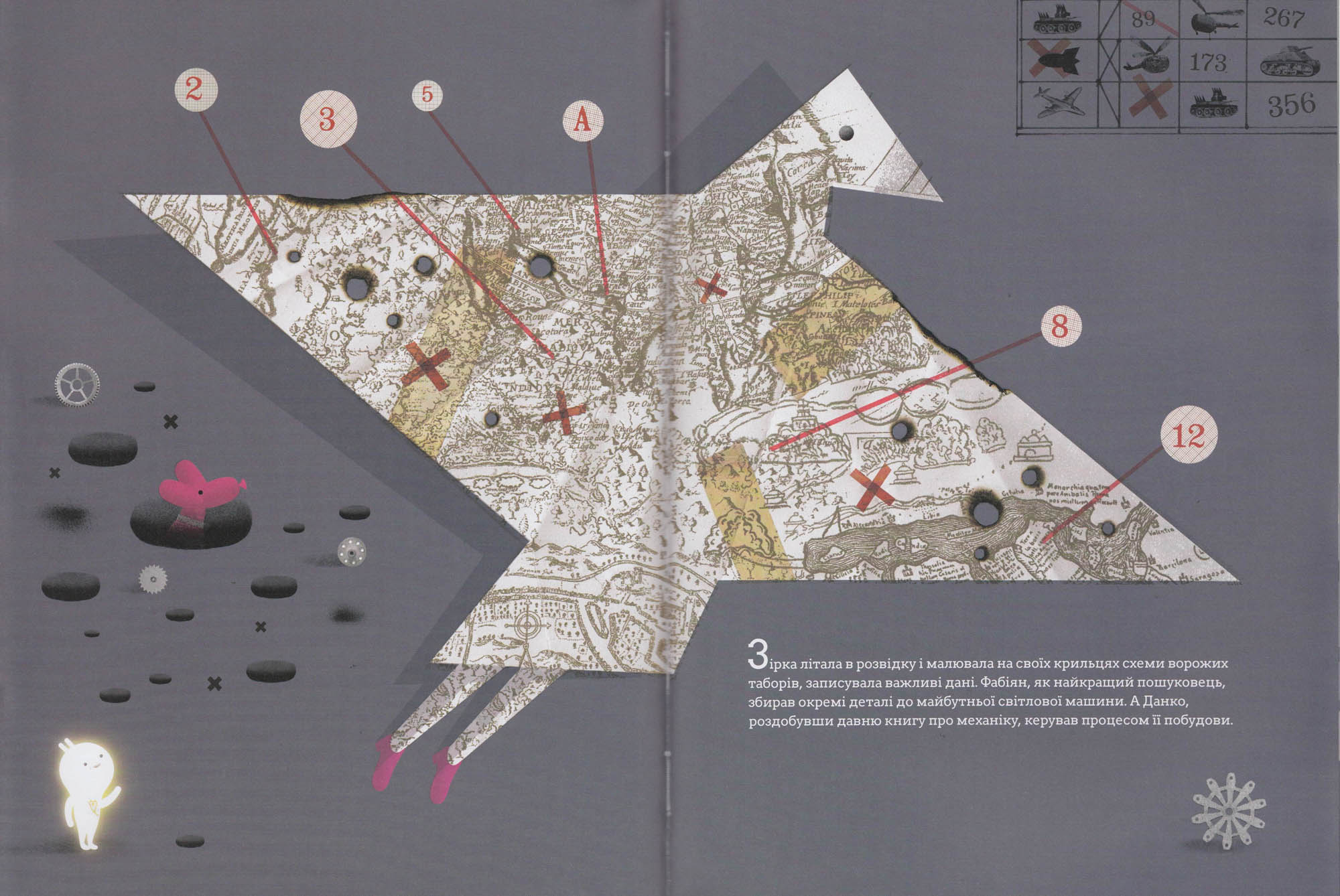
Zirka carried out reconnaissance flights, and drew on his wings the location of the enemy camp, and the peered data. Fabian, as the best treasure hunter, collected parts to the light machine in construction. Danko acquired a large book on mechanics, and directed from it the construction of the machine.


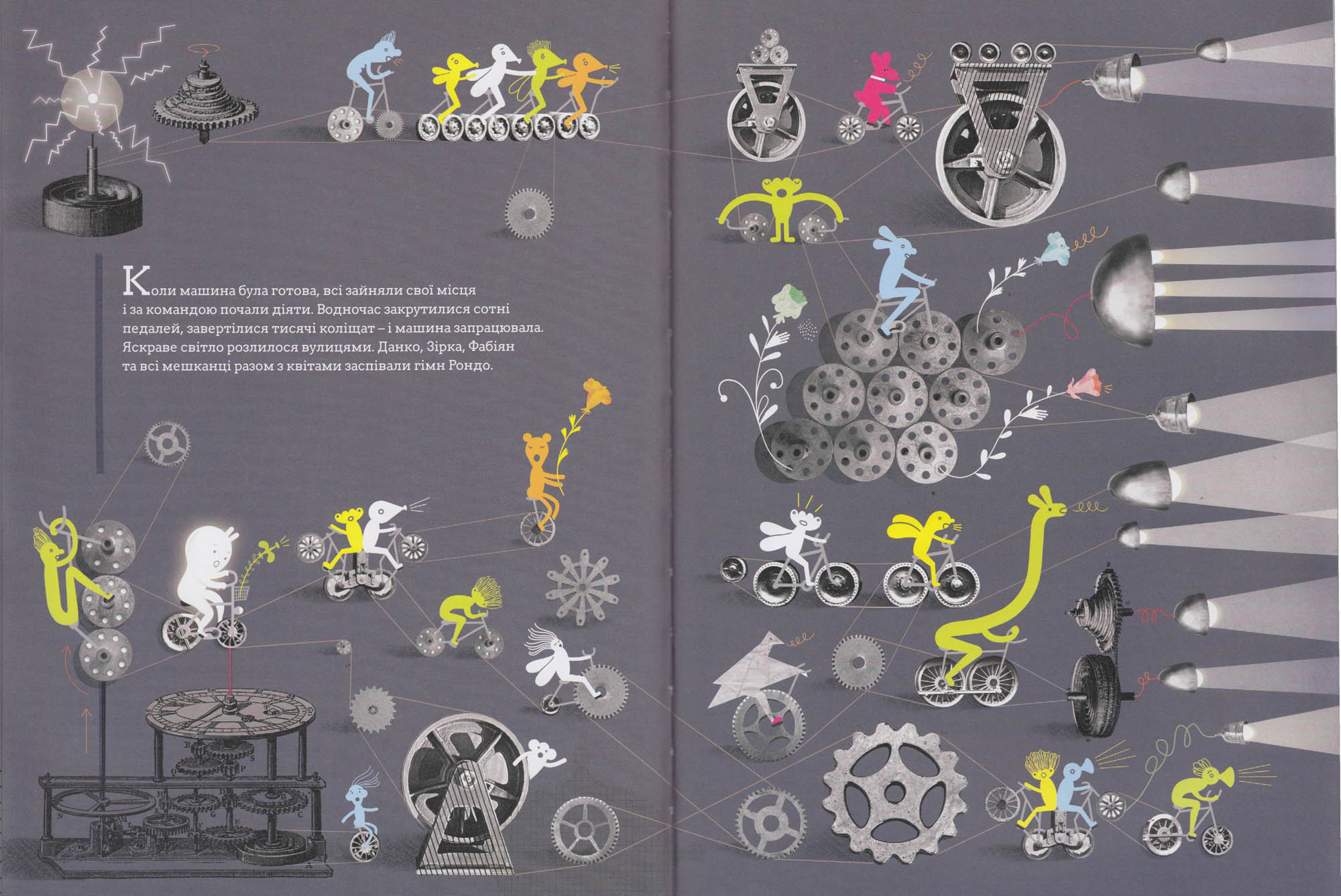
When the machine was ready, they all took their places, and began to pedal on command. Hundreds of pedals, thousands of wheels started to spin at a rate – and the machine was launched. Light flooded the streets. Danko, Zvirka, Fabian and all the inhabitants of the city sang the anthem of Rondo together with the flowers.


Mozart: Rondo alla turca. Guitar transcription by Charlie Parra del Riego


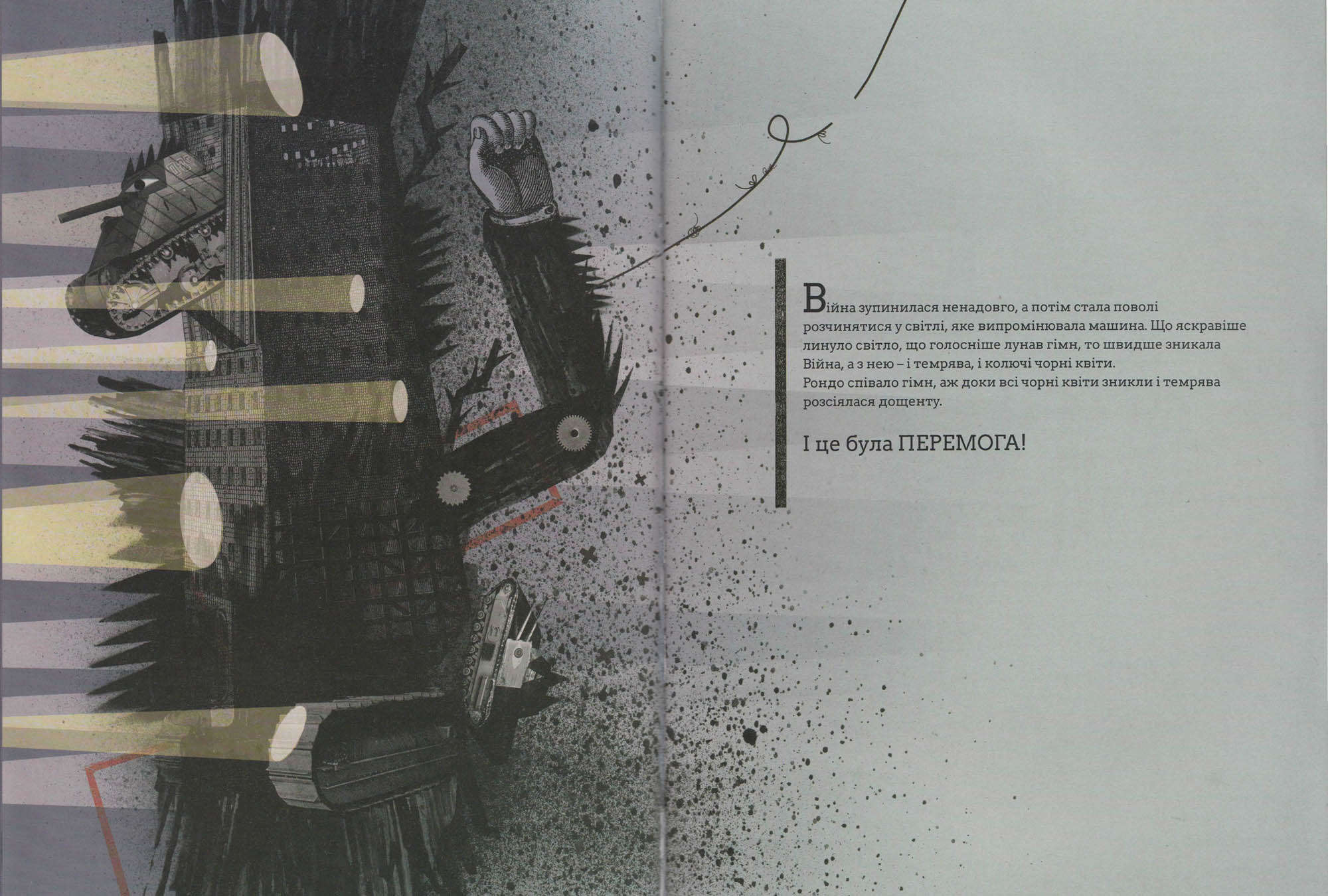
The War stopped short, then it slowly began to dissipate in the light emitted by the machine. The stronger the light, the louder the anthem, the quicker the War disappeared, and together with it, the darkness and the thorny black flowers as well.

Rondo sang the anthem until the last black flower disappeared, and the last remnant of the darkness was dispelled.

It was a victory!


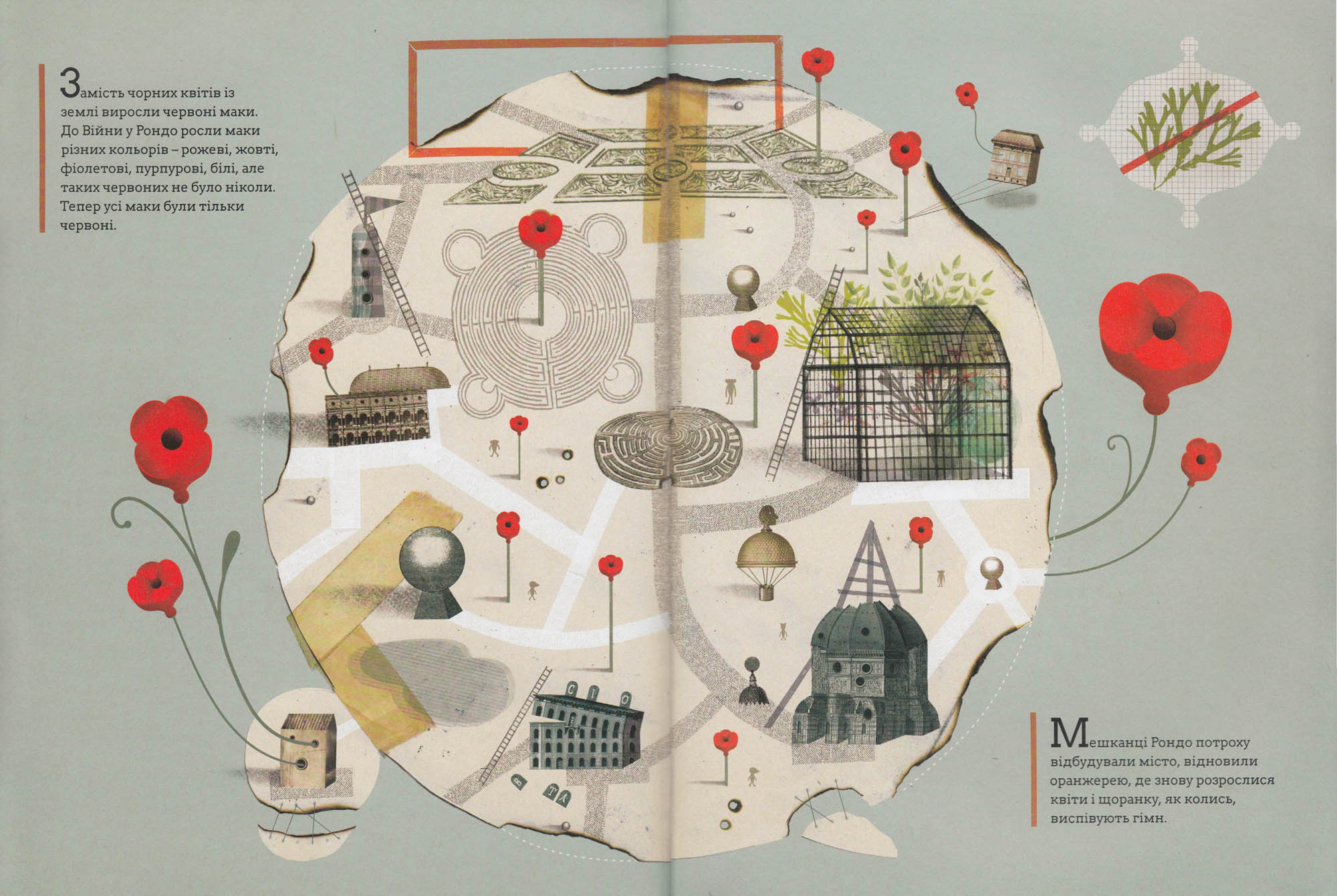
In place of the black flowers, red poppies grew out of the earth. Before the War, poppies of many colors grew in Rondo, pink, yellow, violet, purple, white, but not a single red one. Now, however, all the poppies were only red.


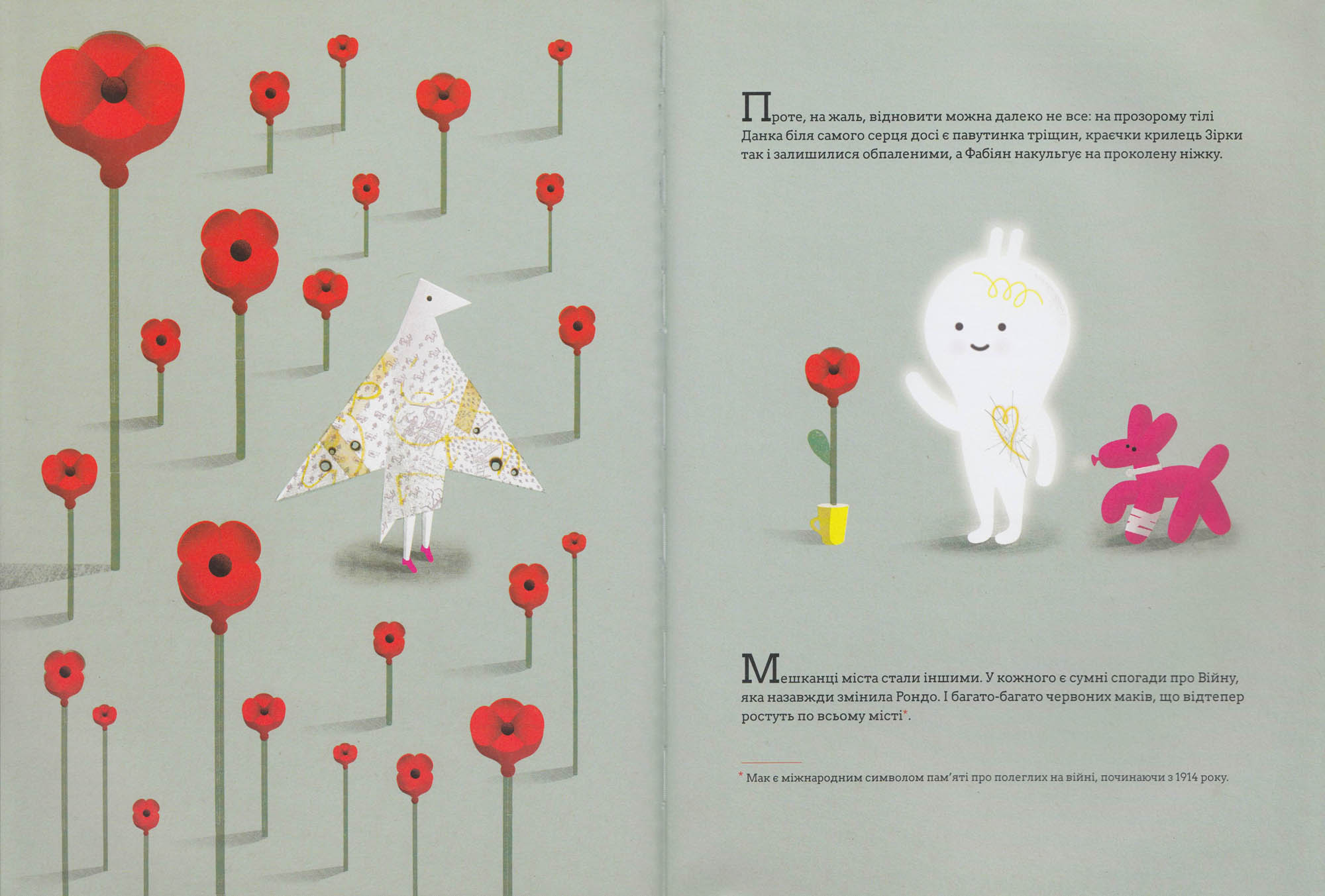
However, unfortunately, not everything could be restored. The cracks remained on Dankoʻs transparent body and heart, as well as the burn marks on Zirka’s wings, and Fabian was limping with his pierced leg.

The inhabitants of the city also became different. Everyone had sad memories about the War, which changed Rondo. And the city was covered with the multitude of the red poppies growing all over.*

(* Since 1914, the red poppy has been the symbol of the falle in the war.)


Mozart: Rondo alla turca. The original piano piece, performed by Daniel Barenboim