Switch over to our new blog! • ¡Pásese a nuestro nuevo blog!

The renewed version of our blog, with more features, a richer design, and available in nine languages, can be read here: https://wangriver.com

The new version also includes the old posts, often in expanded form. If you are curious about the updated version of this post, replace “riowang.blogspot.com/” in the URL with “riowang.studiolum.com/”, and the new link will most likely lead you there.


La versión renovada de nuestro blog, con más herramientas, un diseño más rico y disponible en nueve idiomas, se puede leer aquí: https://riowang.com

La nueva versión también incluye las publicaciones antiguas, a menudo en una forma ampliada. Si tiene curiosidad por la versión actualizada de esta entrada, sustituya «riowang.blogspot.com/» en la URL por «riowang.studiolum.com/es/», y el nuevo enlace probablemente le llevará allí.

Mostrando entradas con la etiqueta etymology. Mostrar todas las entradas

Armenian tea in Istanbul


We recently wrote about a pre-war ghost sign in Istanbul’s Beyoğlu district, which advertised the since-then disappeared Loucrezis furniture store in three scripts: Greek, Armenian and Latin. We have now found a similar one on the other side of the Golden Horn. Just a few steps from the Spice Bazaar, at the corner of Vakif Hanı Sokaği and Sultan Hamamı Caddesi stands an eclectic palace with a pointed corner adjusted to the angle of the streets, which cuts like the bow of a ship into the small square before the arched façade of the former Deutsche Orientbank (another ghost sign!).


And this ships carries a valuable cargo. The same ad is written on the sharp corner in three scipts, three languages. In Ottoman Turkish:

چای ایساقولیان

in Armenian:

ԹԷՅ ԻՍԱԳՈԻԼԵԱՆ

and in Latin script:

THÉ ISSACOULIAN

Judging from the first two versions – see the phonetic details in the previous post – the most likely transcription of this Armenian name is Isagoulyan, rendered in the third version according to the rules of French, the most widely used Latin-script languages in turn-of-the-century Istanbul.


According to the Pervititch maps, this building was called Sadıkiye Hanı in the first half of the 20th century. Today it has no inscription, and you cannot find anything about it on the net. Today it houses a children’s clothing store. I don’t know whether Isagoulyan’s tea was merely advertised or also sold here. But it is not impossible that it was also sold, since here, around the spice bazaar were the best delis, like on the other corner the coffee-roasting Yeni Han or Kurukahveci Han.

This ghost sign is also mentioned in the Painted Signs and Mosaics site. According to its author, the Armenian script is actually in Turkish, since until the introduction of the Latin alphabet in 1928, most Turks preferred to use the phonetically handier Armenian alphabet instead of the complicated Ottoman writing. We already mentioned this in the previous post, and there, the Armenian letters in fact rendered a Turkish word. This is probably not the case here. The Armenian name is preceded by the word T’EY instead of the Turkish ÇAY. And this can only be Armenian.

It is an interesting etymological trivia that almost every language of the world uses one of two sounding versions of Chinese 茶 for tea. Those who brought it by ship from China, mostly loaded it in Fujian, like the Dutch, and they spread the local tê pronunciation in Western Europe (except for the Portuguese who loaded it in Macau, and took over the local chàh pronunciation). And those who received it overland, got it through the Silk Road with Persian mediation, who added a -yi ending to the Northern Chinese pronunciation chá. So everyone who got the tea this way, from the Russians to the Turks and Arabs, uses some version of the Persian چای châyi. The WALS map tangibly illustrates this, marking in blue the descendants of tê, and in red those of chá or châyi. And you can easily see that in the red sea around the Caucasus, Armenian is the only defiant blue dot.

There are languages that use both words for tea. Sometimes because they are spoken at the meeting point of two cultures, and sometimes because of some interesting historical twist, as in Moroccan Arabic, where black tea is called the usual šay, but fresh green tea tay, since under Sultan Hassan I, mentioned two posts earlier – when piracy was still a common industry in the country – a captive European crew was exchanged for a cargo of Fujian green tea, and the difference in taste was widely experienced.

According to the commentary of Language Log, Armenians also use both words for tea, although the dictionary only gives the tea version. The origin of chay is understandable there. But, thousands of kilometers away from the oceans, where does tea come from?


The four letters of God

God’s name in vain… Frehling Santino, 1700

An instructive article appeared yesterday at the Nyelv és Tudomány (Science and Language) portal, from the keyboard of László Fejes. The article entitled Honnan jött az isten? (“Where did god come from?”) tries to unravel the origin of the Hungarian word isten, ʻgod’, and the lesson is that only God knows. The TESz, that is, the etymological dictionary of the Hungarian language, as we have already pointed out a couple of times here at río Wang, now shoots wide of the mark again, when it relates the first element is- with the word ős, ʻancient, forefather’, which phonetically sounds unlikely. The historian András Róna-Tas suggests that it might come from the name of the Hittite sun god Ištanu, but the gap of 1800 years between the Hittite origin and the assumed reception excludes it. And Károly Rédei in his article “Isten szavunk eredete” (“The origin of our word Isten, ʻGod’”, Magyar Nyelv XCV (1999) 1, 40-45) regards it an Iranian loan word, and derives it from the Middle Iranian *ištān, ʻhonored’ (plural).

I also want to contribute to the small shop of etymologies with an attractive piece of merchandise, which may not be the most convincing, but is definitely the oldest. It comes from the eleven-language dictionary of Calepinus, published in 1590 in Basle, which I happen to have here on my bookshelf. ;) I found this bulky folio volume some thirty year ago in a waste paper recycling shop, and purchased it at the price of scrap paper, for about one euro in today’s currency.

The Augustinian monk Ambrosius Calepinus (1440-1510) published in Reggio in 1502 his great Latin dictionary, which, next to the definition of the words, quoted several examples of their use from classical authors. The dictionary immediately became very popular, with dozens of editions throughout the centuries, which also included equivalents to the Latin words for increasingly ancient and modern languages. The 1590 Basle edition was the one which first included the Hungarian and English equivalents, thus it can be regarded as the first Hungarian dictionary. The Hungarian words, as Kálmán Szily pointed out (“Ki volt Calepinus magyar tolmácsa?” – “Who was Calepinus’ Hungarian interpreter?” Értekezések a Nyelv- és Széptudományok köréből, XIII (1886) 8), were added by the Transylvanian Jesuite Stephanus Arator, that is, István Szántó in Rome. And the same person complemented the considerations on the four letters of God’s name with a Hungarian supplement, thereby also offering an etymology of the Hungarian Isten.


“Dĕŭs, singular, masculine [in Hebrew אלוח eloah, Greek Θεός, French Dieu, Italian Dio, Idio, German Gott, Flemish Godt, Spanish Dios, Polish Bood, Hungarian Isten or Ιϛε * , English God].

Its origin is explained in several ways. According to some, it comes ἀπὸ τοῦ δέους, from fear, because they considered, that (if we are allowed at all to quote such an ungodly phrase) the first gods were invented by fear. Papinius seems to be of this view, when he says: The first gods were created by fear in the world. Cicero, On the responses of the haruspices: «Who is so foolish, that at least when he looks up to the sky, would not feel the existence of the gods?» Idem, in book 1 of The laws: «No nation is so uncouth or savage, that even if they do not know which god they have, at least they know that they have one.»

Others derive it a dando, from ʻgiving’, because everything comes from God, the source of all good things, and He gives to everything the existence and survival. Others from the Greek δαίω, ʻto know’, because God knows everything, and everything is naked before His eyes. Again others from the name Θεός, replacing the unvoiced sound with a voiced one, and the o with u, and this is why we say Deus in Latin. Again others from the Hebrew name די Dai, ʻmighty, sufficient’, from which also the term Saddai comes, meaning the omnipotent or self-sufficient God, as it is well known that He is enough for Himself, He does not need anyone, but He alone pours out abundance to everyone.

It is not unworthy to consider, that almost every people and language writes the name of God in four letters. In fact, the Hebrews call Him
יהוה Yehova, with four letters, the Chaldeans also with four letters, אלוח Eloha, the Syriacs also אלוח Eloha; at the Aethiopians He is אמלו Amlau, at the Assyrians אדעד Adad, at the Greeks Θεός, at the Egyptians Θωύθ, at the Persians Σύρη, at the Latins Deus, at the Italians Idio, at the Spanish Dios, at the French Dieu, at the Germans, Flemish and English Gott or Godt, at the [Persian] Magi Orsi, at the Poles Boog, from bog, that is, ʻfear’, at the Dalmatians and Illyrians Boga or Boog, at the older Muslims, whom we also call Saracens, Abgd, at the Turks following Mohamed Alla, at the peoples discovered in the world called “new” Zimi, at the Vlachs Zëul, at the Gypsies Odel.

At the Hungarians, if we look at its origin, the name of God has also four letters. They call him with great respect Isten, which, although seems to have five letters, if we consider its origin, has only four. In fact, the Hungarian term comes from the second aorist of the Greek verb ʻto be’ ἴστημι, which sounds ἐϛὶν [ἐστὶν]: ʻI exist, I am by way of myself’, which second aorist is written with four letters. The s and t, written with two letters in the Hungarian word, are both encompassed in the single Greek letter ϛ sigmatau. Thus, by virtue of its origin, the Hungarian name also has to be written with four letters, so: Ἴϛεν [Ἴστεν]. In this way, the name of God is a τετραγράμματον [four-letter name] for every people, and we think He is called so, because His essence is one, but within His one essence He is three actually existing and different persons.”


László Fejes is probably of the same opinion, for in his article – merely as a hilarious illustration – transcribes the Hungarian word Isten with four Hebrew letters. ;)


Ultimately, this is not very different from the solution of István Szántó, who, having transcribed the word in Greek letters, discovered in it the meaning of the other Hebrew tetragrammaton, יהוה YHWH, ʻthe Existing, the One who Is’. But why should we marvel at this? In his century it was widely known that all languages, but especially Hungarian, came from Hebrew.

The tetragrammaton (here transcribed as IEVE instead of YHWH) as the foundation of the Holy Trinity. Illustration of Dialogue against the Hebrews (1109) by Petrus Alphonsus (before his conversion, Moses Sepharadi), St. John’s College MS E. 4 f. 153v

Las cuatro letras de Dios

El nombre de Dios en vano… Frehling Santino, 1700

Un instructivo artículo apareció el último día de julio pasado en el portal de Nyelv és Tudomany (Ciencia y Lenguaje), salido del teclado de László Fejes. El artículo titulado «Honnan jött az isten?» –¿De dónde vino Dios?–. Trata de averiguar el origen de la palabra húngara Isten, ‘dios’, y la conclusión es que sólo Dios lo sabe. El TESz, es decir, el diccionario etimológico de la lengua húngara, como ya hemos señalado en otras ocasiones, marra también aquí lejos del blanco al relacionar el primer elemento is- con la palabra ős, ‘antiguo, antepasado’, cosa que suena poco probable fonéticamente. El historiador András Róna-Tas sugiere que podría provenir del nombre del dios solar hitita Ištanu, pero la brecha de 1800 años entre el origen hitita y su presunta recepción excluye la hipótesis. Y Károly Rédei en su artículo «Isten szavunk eredete» –El origen de nuestra palabra Isten, ‘Dios’– (Magyar Nyelv, XCV.1 (1999), 40-45) considera que es un préstamo iraní y lo deriva del iraní medio *ištān, ‘honrado’ (en plural).

Queremos contribuir a este pequeño zoco etimológico con una ligera pero atractiva mercancía que si bien puede no ser la más convincente, es sin duda la más antigua. Viene del diccionario de once lenguas de Calepino, publicado en 1590 en Basilea, que tenemos en nuestra estantería ;) Encontramos el voluminoso in-folio hará casi treinta años en un taller de papel reciclado, y lo compramos a peso por algo así como 1€ al cambio actual.

El monje agustino Ambrosius Calepinus (1440-1510) publicó en Reggio en 1502 su gran diccionario de latín donde junto a la definición de las palabras citaba ejemplos de su uso en autores clásicos. El diccionario de inmediato se hizo muy popular, con decenas de ediciones en los siglos siguientes que fueron incorporando cada vez más equivalentes de las palabras latinas en otras lenguas antiguas y modernas. La edición de 1590 de Basilea fue la que por primera vez incluyó traducciones húngaras e inglesas, por lo que puede ser considerada como el primer diccionario húngaro. Las palabras húngaras, como Kálmán Szily señaló («Ki volt Calepinus magyar tolmácsa?» –¿Quién fue el intérprete húngaro de Calepinus?– Értekezések a Nyelv- és Széptudományok köréből, XIII.8 (1886)), fueron añadidas por el jesuita transilvano Stephanus Arator, es decir, István Szántó en Roma. Y fue este mismo erudito quien amplió las consideraciones sobre las cuatro letras del nombre de Dios con un suplemento húngaro, con lo que también dio una etimología del Isten húngaro.


“Dĕŭs, singular, masculino [en hebreo אלוח eloah, griego Θεός, francés Dieu, italiano Dio, Idio, alemán Gott, flamenco Godt, español Dios, polaco Bood, húngaro Isten o Ιςε * , inglés God].

Su origen se explica de varias maneras. Según algunos se trata de ἀπὸ τοῦ δέους, de 'miedo', porque consideraban (si se nos permite citar una frase tan impía) que los primeros dioses fueron inventados por el miedo. Papinius parece ser de esta opinión cuando dice: «Los primeros dioses fueron creados por el miedo en el mundo». Cicerón, Sobre las respuestas de los arúspices: «¿Quién es tan loco, que por lo menos cuando mira hacia el cielo, no sienta la existencia de los dioses?» Ídem, en el libro 1 de Las leyes: «Ninguna nación es tan zafia o salvaje, que incluso si no saben qué dios tienen, al menos saben que tienen uno».

Otros lo derivan de a dando, de ‘dar', porque todo viene de Dios, fuente de todos los bienes, y Él da a todo su existencia y subsistencia. Otros del griego δαίω, ‘saber’, porque Dios lo sabe todo y todo está desnudo ante sus ojos. Aún otros del nombre Θεός, sustituyendo el sonido sordo con uno sonoro y la o por u, y es por eso que decimos Deus en latín. Y todavía otros del nombre hebreo די Dai, ‘poderoso, suficiente’, de donde también viene el término Saddai, es decir, el Dios omnipotente o autosuficiente, ya que es bien sabido que Él es suficiente por Sí mismo, no necesita a nadie sino que el solo derrama abundancia para todos.

No es ocioso tener en cuenta que casi todos los pueblos y lenguas escriben el nombre de Dios con cuatro letras. De hecho, los hebreos Le llaman
יהוה Yehova, con cuatro letras, los caldeos también con cuatro letras, אלוח Eloha, los sirios también אלוח Eloha; para los etíopes es אמלו Amlau, para los asirios אדעד Adad, para los griegos Θεός, para los egipcios Θωύθ, para los persas Σύρη, para los latinos Deus, para los italianos Idio, para los españoles Dios, para los franceses Dieu, para alemanes, flamencos e Ingleses Gott o Godt, para los [persas] magos Orsi, para los polacos Boog, de bog que significa ‘miedo’, para los dálmatas e ilirios Boga o Boog, para los los musulmanes más antiguos, a los que también llamamos sarracenos, Abgd, para los turcos que siguen a Mahoma, Alla, para los pueblos descubiertos en el mundo que llaman «nuevo», Zimi, para los valacos Zeul, para los gitanos Odel.

Para los húngaros, si nos fijamos en su origen, el nombre de Dios tiene también cuatro letras. Ellos le llaman con gran respeto Isten, que aunque parece tener cinco letras, si tenemos en cuenta su origen tiene sólo cuatro. De hecho, el término húngaro proviene del segundo aoristo del verbo griego «ser» ἴστημι, que suena ἐςὶν [ἐστὶν]: ‘Existo, soy por mí mismo', cuyo segundo aoristo se escribe con cuatro letras. La s y la t, escritas con dos letras en la palabra húngara, se engloban ambas en la única letra griega ς sigmatau. Por tanto, en virtud de su origen, el nombre húngaro también tiene que escribirse con cuatro letras, así: Ἴςεν [Ἴστεν]. De esta manera, el nombre de Dios es un τετραγράμματον [nombre de cuatro letras] para todos los pueblos, y creemos que Él es llamado así porque su esencia es una, pero dentro de su única esencia Él es tres personas realmente existentes y distintas».


[En otra ocasión hablaremos de la utilización peculiar que hace nuestro Sebastián de Covarrubias en su Tesoro de la lengua castellana o española (1611) del Calepino y cómo en el caso de esta palabra remite al interesante repertorio del padre jesuita Juan Fernández, Divinarum Scripturarum iuxta sanctorum Patrum Sententias Locupletissimus Thesaurus (1594). Sobre el hebreo de Covarrubias es ya obligatorio consultar los artículos de György Sajó en los núms 307 y 308 (2013) del BRAE.]

László Fejes es probablemente de la misma opinión, pues en su artículo —sólo como ejemplo chusco– transcribe la palabra húngara Isten con cuatro letras hebreas. ;)


En definitiva, esto no es muy diferente de la solución de István Szántó, quien habiendo transcrito la palabra en letras griegas, descubrió en ella el sentido del otro tetragrámaton (o tetragrama) hebreo, יהוה YHWH, 'el existente, el que es'. Pero por qué íbamos a maravillarnos de tal cosa. En aquel siglo era un lugar común ampliamente aceptado que todas las lenguas, pero sobre todo la húngara, venían del hebreo.

El tetragrama (aquí transcrito como IEVE en lugar de YHWH) como fundamento de la Santísima Trinidad. Ilustración del Diálogo contra los Hebreos (1109) por Pedro Alfonso (antes de su conversión, Moisés Sefaradí), Colegio de San Juan MS E. 4, f. 153v


Katsap and khokhol

“Just carry on in this spirit, idiots!”

Neighboring peoples hating each other from the heart always have some nice names in store for the other, in which they compress their contempt and aversion. In Russian-Ukrainian relations, such is the pair of names which are particularly common these days in the flames of Ukrainian and Russian forums: katsap and khokhol.

The хохол, used by the Russians to mock the Ukrainians – yes, the great Ukrainian writer Nikolai Gogol [pronounce Khokhol] was also called like this –, originally meant the single, long lock of hair left on the otherwise completely shaved head of the Zaporozhye Cossack warriors. The Cossacks, of course, were only one amongst the several Southern Russian, Ruthenian, Rusyn and other ethnic groups with radically different historical traditions, who were involved in the Ukrainian ethnogenesis. Nevertheless, as this nickname, documented since the 17th century, was used for all the “little Russians” in today’s Ukraine, it was in fact the first comprehensive ethnonym of the Ukrainian nation, crystallizing itself since the late 19th century. Perhaps this also contributes to the fact that today the figure of the warrior or funny Cossack is a mascot of Ukrainian identity even in such regions as Podolia or Galicia, which have nothing to do with the Cossack tradition, and where the local Ruthenians even considered the Cossacks as a different and hostile ethnic group. And perhaps also to the other fact that today they try to put a positive spin on the name khokhol, and thereby the image of the Ukrainian nation, with the long hair.

“I am XXL / khokhol. – The Ukrainian girls are the most beautiful!”

However, the origins of the name кацап – used by the Ukrainians to mock the Russians – are disputed. According to Vladimir Dal’s authoritative Great Russian dictionary, it was borrowed from the Turkish and Tartar kasab, ʻbutcher’ in the meaning of ʻwarrior, soldier’, and it also came to the Ruthenians from the Cossack territories over the Dnester.


Nevertheless, The etymological dictionary of the Ukrainian language (1985, II. 572.) is not satisfied with this etymology:

“…очевидно, утворене від цап за допомогою специфічного компонента ка-, як жартівливе позначення людей, що носять довгі бороди (Фасмер II 213, Преобр. I 302, Bruckner 211), недостатньо обґрунтоване виведення (Крымский Укр. Гр. I 20, Яворницький 342) від тур. крим.-тат. аз. kassap «м'ясник», яке походить від ар. qaşşăb.”

“…obviously from tsap, ʻbilly-goat’, with the addition of the prefix ka, ʻlike’, as a comic reference to people wearing long beards (Фасмер II 213, Преобр. I 302, Bruckner 211). The explanation (Крымский Укр. Гр. I 20, Яворницький 342), which derives it from Turkish and Crimean Tartar kassap ʻbutcher’ or Arabic qaşşăb (with a similar meaning) is not satisfactory.”


The Ten Commandments of the [marriageable] daughters. A ten-piece series of postcards by Hulak Vasil, 1918. Seventh commandment: Never fall in love with a katsap!

Although the source of the pejorativeness of ethnic nicknames is, in most cases, the fact that exclusively the people disdaining us uses that name, nevertheless, it is not even so that the source of the nickname is indifferent. It just feels better if you are mocked as a formidable enemy. And it just feels better if you can mock them as miserable billy-goats.


Tantour

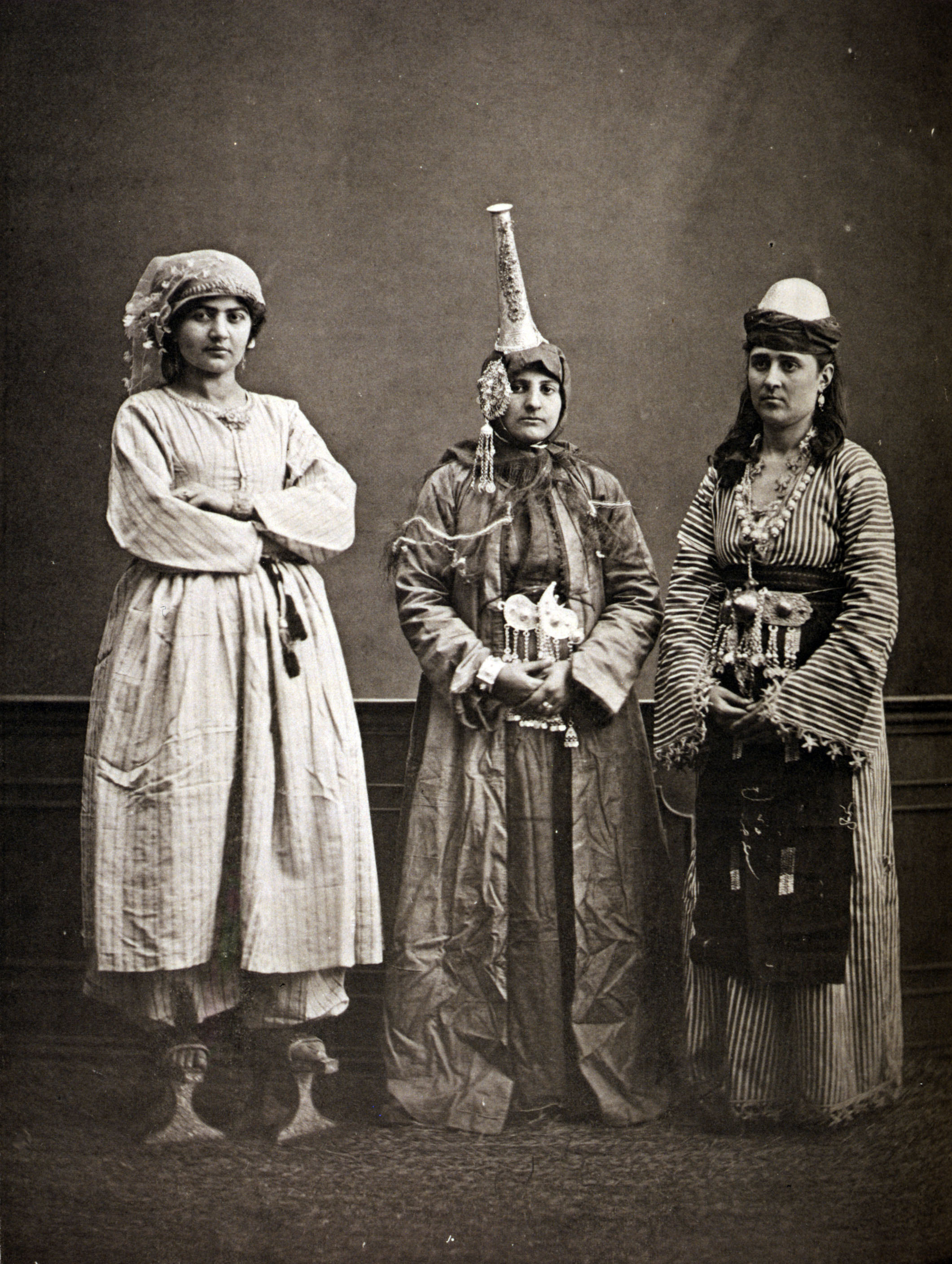
Mujer de ciudad, mujer drusa y mujer campesina de Damasco. Foto de Sebah, 1873

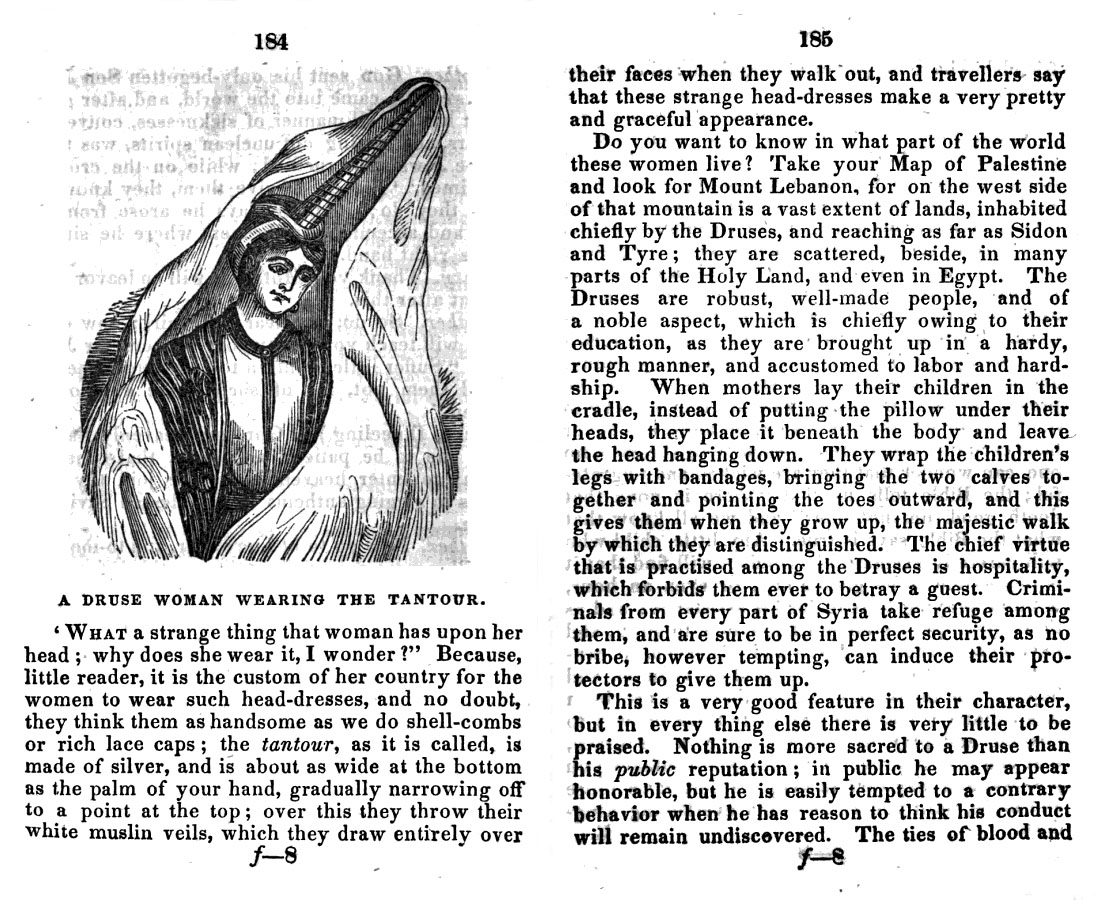
En un comentario a nuestra entrada «Damascus Anno», un lector se sorprendía ante la imagen del tocado de una mujer drusa. Podíamos pensar que, al ser él un ciudadano británico lo habría tenido que ver, quizá, en su infancia pues Children’s Magazine publicó este grabado y su descripción para los pequeños lectores ya en 1834:


«'¡Qué cosa tan extraña tiene esta mujer sobre su cabeza! ¿para qué lo lleva, me pregunto?' Pues, pequeño lector, es costumbre en su país que las mujeres usen tales tocados, y sin duda se ven tan guapas con ellos como aquí con las peinetas de concha o las mantillas de lujoso encaje; el tantour, como se le llama, está hecho de plata, y es casi tan ancho en la parte inferior como la palma de la mano, estrechándose gradualmente hasta la punta en la parte superior; encima le colocan velos blancos de muselina con los que ocultan enteramente sus rostros cuando salen, y los viajeros dicen que estos extraños tocados les dan un aspecto muy bonito y elegante».

Mujer drusa de las montañas Shouf luciendo el tantour. Foto de Félix Bonfils, ca. 1870

Según la página del sitio levantino Al Mashriq que describe los trajes tradicionales del Levante, este tocado era usado por las mujeres casadas de las aldeas drusas en las montañas del Líbano, principalmente alrededor de Deir el Qamar, y por lo general lo recibían de su marido el día de la boda. Podía ser de hasta un metro de alto, según el prestigio y riqueza de la familia. El origen de esta moda es incierto. Algunos piensan que deriva de los altos sombreros persas o del interior de Asia, mientras otros creen que lo llevaron los cruzados hasta el Líbano. Esto se contradice con el hecho de que ya los relieves grecorromanos de Kartaba, en Líbano, muestran tocados similares. De acuerdo con la descripción del Museo Tareq Rajab de Kuwait, los cruzados lo importaron en sentido contrario, desde el Líbano a Francia, donde a menudo es identificado con el hennin desde finales del siglo XIV, y lo vemos en miniaturas y pinturas desde la década de 1420 en adelante.

Hans Holbein el Viejo: Presentación de Cristo en el Templo, 1500-1501, y Hugo van der Goes: Altar Portinari, 1476-78, detalles

Este peculiar complemento se menciona con frecuencia en los relatos de viajeros del siglo XIX a Tierra Santa.

«Nada de particular ocurrió durante nuestro regreso a Zahle, salvo que adelantamos a algunas mujeres a caballo que usaban el tantour, ese adorno extraordinario que portan en la cabeza las mujeres drusas; es un cuerno de plata o de cobre plateado dependiendo de la riqueza de la poseedora, de un pie y medio o dos de longitud, que surge de la parte superior de la frente como un cuerno de unicornio, y va adornado con figuras en relieve de estrellas o animales según variados patrones. Por encima se engancha un velo de muselina blanca, con el cual se puede ocultar el rostro a voluntad. Este cuerno se fija sobre una almohadilla en la cabeza con una tan engorrosa complicación que a veces no se lo quitan durante un mes —un incómodo gorro de noche, es de suponer, para cualquier mujer.» (James W. Parker: Three weeks in Palestine and Lebanon, 1836).

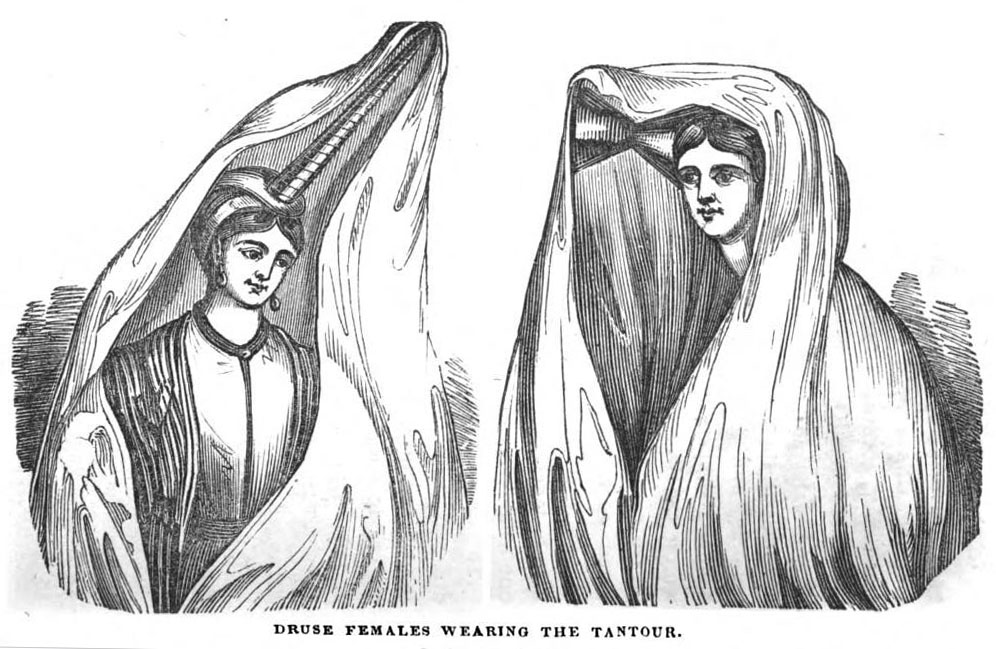
Parece que la ilustración de Parker fue la única representación europea contemporánea
del tantour, luego repetida en otras publicaciones. Con toda probabilidad
también Parker la copió de una anterior fuente impresa.

«Mientras esperaba al Emir, fui hasta el pueblo de Babdall, y al volver la esquina de una casa topé con media docena de niñas y mujeres que bajaban con dificultad por las peñas, tocadas con unos tantours cuyo notable tamaño indicaba que eran de la casta más alta. Los adornos pesados ​​y ruidosos barrían el suelo, sus velos blancos ondeando como banderas enmarcaban sus rostros risueños y sus cabezas eran cornucopias de joyas y flores; los cuellos como de ídolos de templos indios, amarillos de oro reluciente, y los trajes de un color marrón-rojizo, salpicados todos de estrellas y orlados con encajes del mismo metal. ... ¡Qué maravillosa costumbre la de este apéndice colocado en la cabeza el día de la boda y fijado allí hasta la muerte, durante el sueño, la enfermedad, en las fatigas del trabajo de casa o en el campo, siempre allí puesto, amarrado y seguro como el bauprés en la proa de un barco!. No le atañe ninguna superstición, no hay tradición que pretenda explicarlo ni religión que lo consagre. Ha atravesado por todas las religiones y cambios, se eleva más allá de cualquier circunstancia histórica y permanece entronizado en la frente de la matrona a pesar del anatema del sacerdote o la volubilidad de las modas. ... No es fácil adivinar por qué razón terrenal ofendía al clero, hasta que el obispo de Beirut me iluminó diciéndome con gravedad que ¡el tantour era el ídolo que adoraban los drusos! Los cristianos, dijo, sólo recientemente habían caído en esta práctica anticristiana. ... Una pequeña figura de bronce, eminentemente arcaica, encontrada en el barrio de Saida y actualmente en mi poder representa a una mujer desnuda salvo por una ligera ropa en la cintura, y llevando el tantour. Se encontró en uno de los sarcófagos primitivos abiertos en la roca o hechos de piedra, que tantas veces me llenaron de asombro al pasar inesperadamente sobre ellos.» David Urquhart: The Lebanon (Mount Souria), 1860.

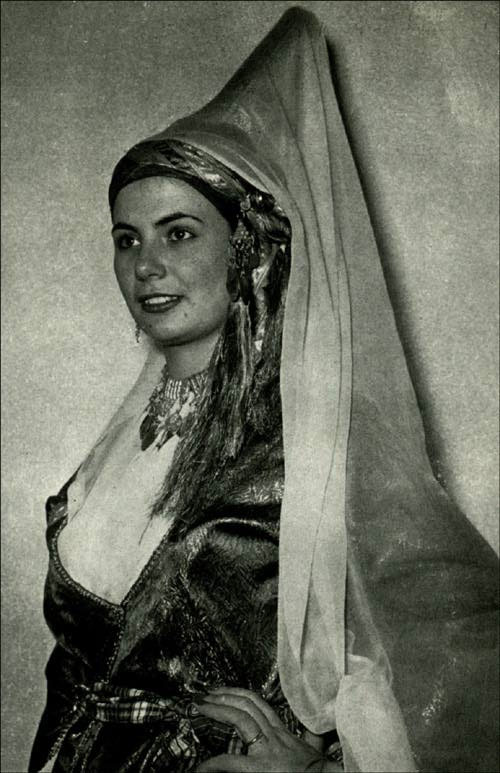
“Princesa libanesa del siglo XIX”. Traje reconstruido, de aquí

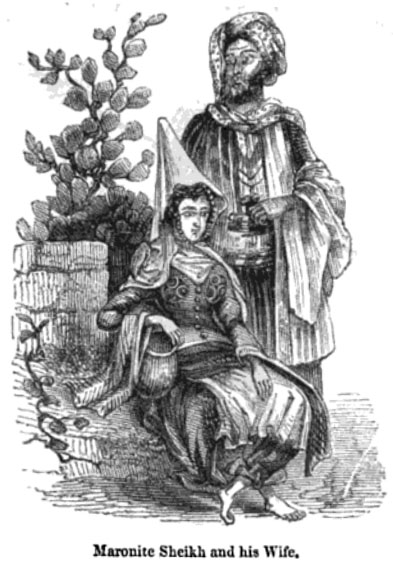
De la reciente prohibición cristiana del tantour informó la edición de 1861 de la London Review, explicando que en una ocasión «cuando una dama maronita estaba recibiendo el sacramento de mano de un obispo, por desgracia sacudió de repente la cabeza, el tantour golpeó el cáliz y derramó su contenido al suelo: en consecuencia, los sacerdotes denunciaron su uso». Esto es, con toda probabilidad, sólo una anécdota piadosa, y la verdadera razón debe haber sido el deseo de demarcación simbólica de la secta musulmana de los drusos. Sin embargo, varios viajeros notan cómo el tantour estaba difundido entre las cristianas maronitas del Líbano, mientras otros se esforzaban por descubrir en él la supervivencia de una costumbre presente en el Antiguo Testamento:

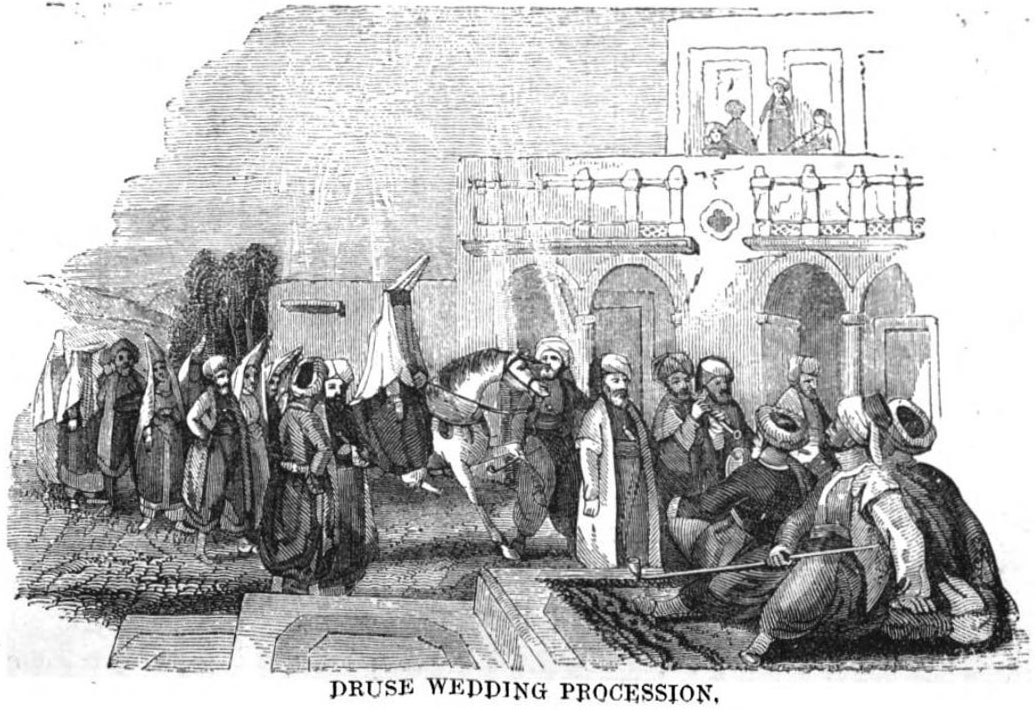
«También vi una procesión extraordinaria, y me dijeron que era una boda drusa. Había varias mujeres montadas en camellos y una a caballo, que Abdallah dijo que era la novia. Llevaba en la frente lo que se conoce como el tantour, es decir, un tubo de estaño de considerable longitud, con una proyección de quince pulgadas en disposición semi-horizontal, «como un cuerno de unicornio», y lo cubría con un ligero velo. Otras varias mujeres en la procesión también usaban el tantour. ... Algunos de estos tubos están hechos de plata y adornados con joyas, y otros que vi alcanzaban quizás veinte pulgadas de largo. De dónde surgió la moda de usarlo, no lo sé decir, pero no hay ninguna duda de que los han usado ​​las gentes de este distrito desde tiempos inmemoriales, y que el valor de estos tubos o cuernos está en consonancia con la riqueza de la persona que los lleva, del mismo modo como las cadenas de oro y los anillos suelen tenerse por signos de distinción en Inglaterra. Cada parte del atuendo, que ya era usado hace 3.000 años, con todos los matices del color, desde la piel de tejón, o la sandalia, (Ezequiel xvi. 10,) hasta la diadema o turbante, todavía está en uso. Las mujeres, según creo, rara vez se quitan el tantour, y me han dicho que lo llevan incluso de noche. Una cosa relacionada con el tantour es particularmente digna de atención, y es que mientras algunas lo llevan oblicuamente desde la frente, como he descrito, otras lo llevan en la coronilla, y otras casi perpendicularmente. En el primer caso denota a una mujer casada, en el segundo una mujer soltera o joven, y el último una mujer casada con hijos. Así era con Ana, como se registra en 1Sam. ii. 1, 10. Cuando Samuel nació, ella dijo: "Mi corazón se regocija en Jehová, mi poder [la Escritura usa aquí la metáfora cuerno] se exalta no sólo en mi cabeza, a pesar de que es una marca de honor entre las mujeres, (ya que muestra que Dios me ha bendecido con un hijo), sino— en el Señor, y eso es mucho mejor". La misma figura se utiliza en Sal. xcii. 10; cxii. 9, y en otros lugares. El grabado de al lado, aunque no exactamente igual a la procesión que vi, da una idea aproximada de la misma, así como del tantour» John Gadsby: My wanderings: being travels in the East in 1846-47, 1850-51, 1852-53, 1855.


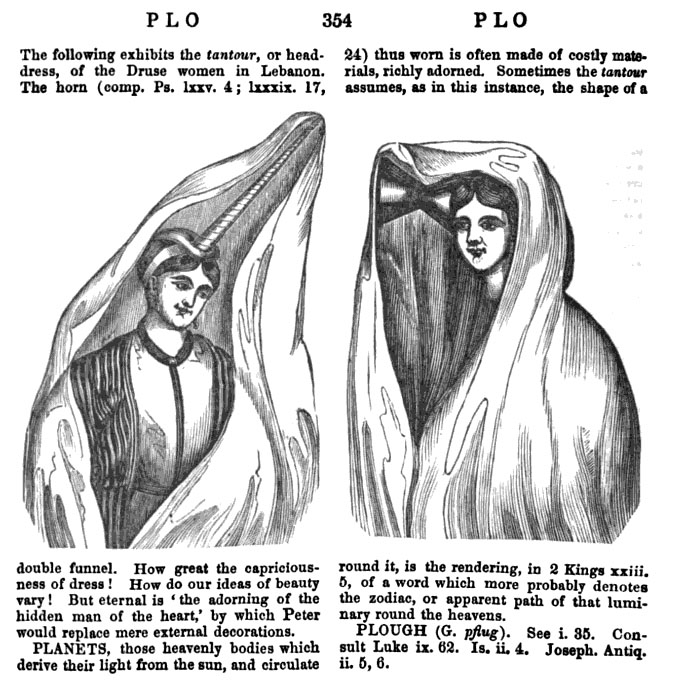
La idea de que el tocado druso representara una tradición superviviente desde tiempos bíblicos deslumbró la imaginación de los orientalistas del siglo XIX. Las descripciones de tantours hablaban cada vez más de las citas bíblicas inscritas en los cuernos, y el tantour acabó entrando en la exégesis, los diccionarios bíblicos e incluso en los comentarios a la Sagrada Escritura.

La explicación bíblica del tantour y su habitual ilustración, en la entrada «PLAITING of the hair» del People’s Dictionary of the Bible, 1850.


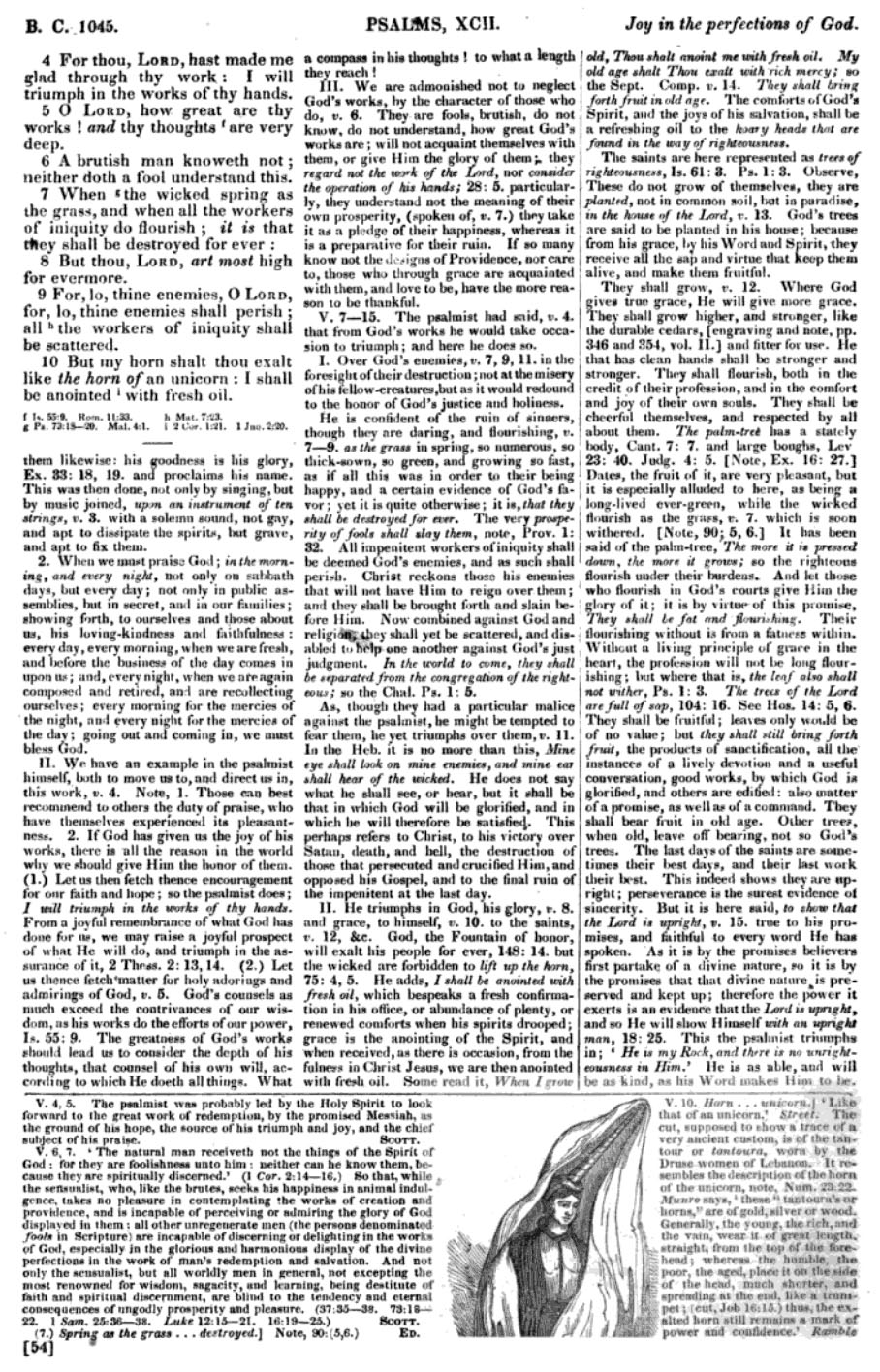
El versículo 10 del Salmo 92 —«Pero tú exaltarás mi fuerza [cuerno] como la del unicornio [en otras traducciones: toro salvaje]»— lo explicaba así The comprehensive commentary on the Holy Bible, Brattleboro 1837, ilustrado con la imagen ya bien conocida: «Calle. la cita muestra el vestigio de una costumbre muy antigua, la del tantour o tantoura, usado por las mujeres drusas del Líbano. Imita la descripción del cuerno del unicornio, nota, Núm. 23,22. Munro dice: «estos ‘tantoura o cuernos’ son de oro, plata o madera. En general, las mujeres jóvenes ricas y presumidas lo llevan de gran longitud, recto desde la parte superior de la frente, mientras que las humildes, pobres o ancianas, lo colocan ladeado, mucho más corto y abierto al final como trompeta (cita, Job 16:15). Así, el magnificado cuerno sigue dando un mensaje de poder y confianza». Ramble in Siria, 1833.”

Esta explicación, a pesar de ser ingeniosa y atractiva, es por completo infundada. Los versículos bíblicos sobre los cuernos, como ha comprobado Két Sheng en el texto hebreo, se refieren todos a los cuernos de los toros y es una antigua expresión idiomática que nunca adoptó el Corán ni la tradición musulmana. Y sería inútil buscar la supervivencia de las tradiciones judías del Antiguo Testamento en una comunidad musulmana étnicamente árabe de origen persa del siglo XI. Con el desarrollo de la arqueología bíblica, a medida que los investigadores que llegaban a Tierra Santa dejaban poco a poco de compulsar cada una de sus experiencias sobre una fuente bíblica inmediata, el tantour también fue desapareciendo de la exégesis.

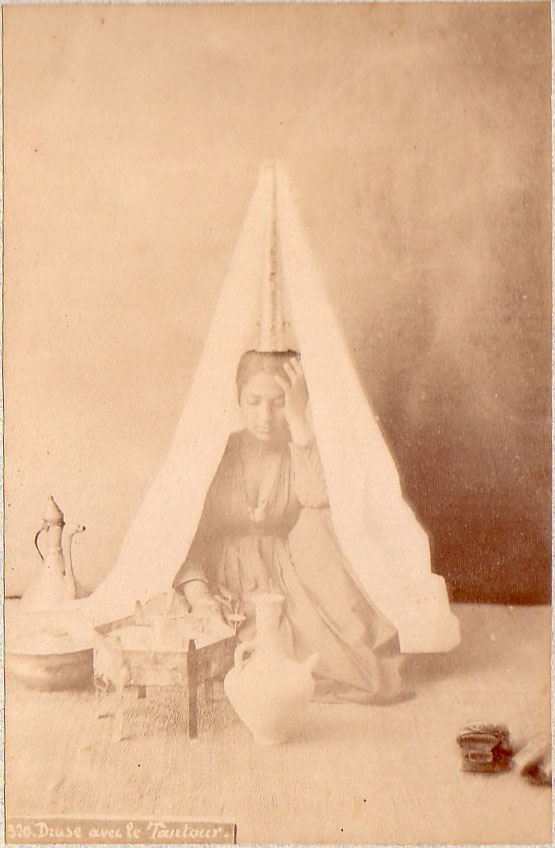
La primera imagen de esta entrada da fe también de lo mucho que los orientalistas se aferran a sus propias tradiciones. De hecho, en la vida real, esta vista, es decir un tantour sin velo, era inimaginable. Se explica porque la foto fue tomada en la Exposición Universal de 1873 de Viena, donde lo más importante era mostrar al público uno de aquellos tocados, no cubierto por ningún velo, de los que habían leído en los relatos de viajes de todo el siglo anterior. Pero esta vista imposible en la realidad fue inmediatamente canonizada por la página que muestra los trajes sirios en el voluminoso álbum de Braun y Schneider, Geschichte der Kostüme (c. 1861-1880), obviamente copiando aquella foto de Viena.


Tan oscuro como el origen del tocado es el origen de su nombre —obviamente, los dos problemas están conectados—. El árabe clásico desconoce esta palabra. Két Sheng sólo lo ha encontrado en el diccionario de árabe levantino (J. Elihay: The Olive Tree Dictionary. A Transliterated Dictionary of Conversational Eastern Arabic (Palestinian), s.a.)::

ṭanṭūr(a) = 1) gorro alto 2) capucha (de una chaqueta, etc.).

Esta palabra — en árabe طنطورۃ — es sospechosa, ya que contiene cuatro consonantes en lugar de las tres obligatorias: ṭnṭr. Esto ocurre generalmente en las palabras compuestas o en palabras de origen extranjero. Aquí probablemente se trate del segundo caso..

Mujer drusa, 1870s: tal vez sea una foto de Félix Bonfils, de aquí

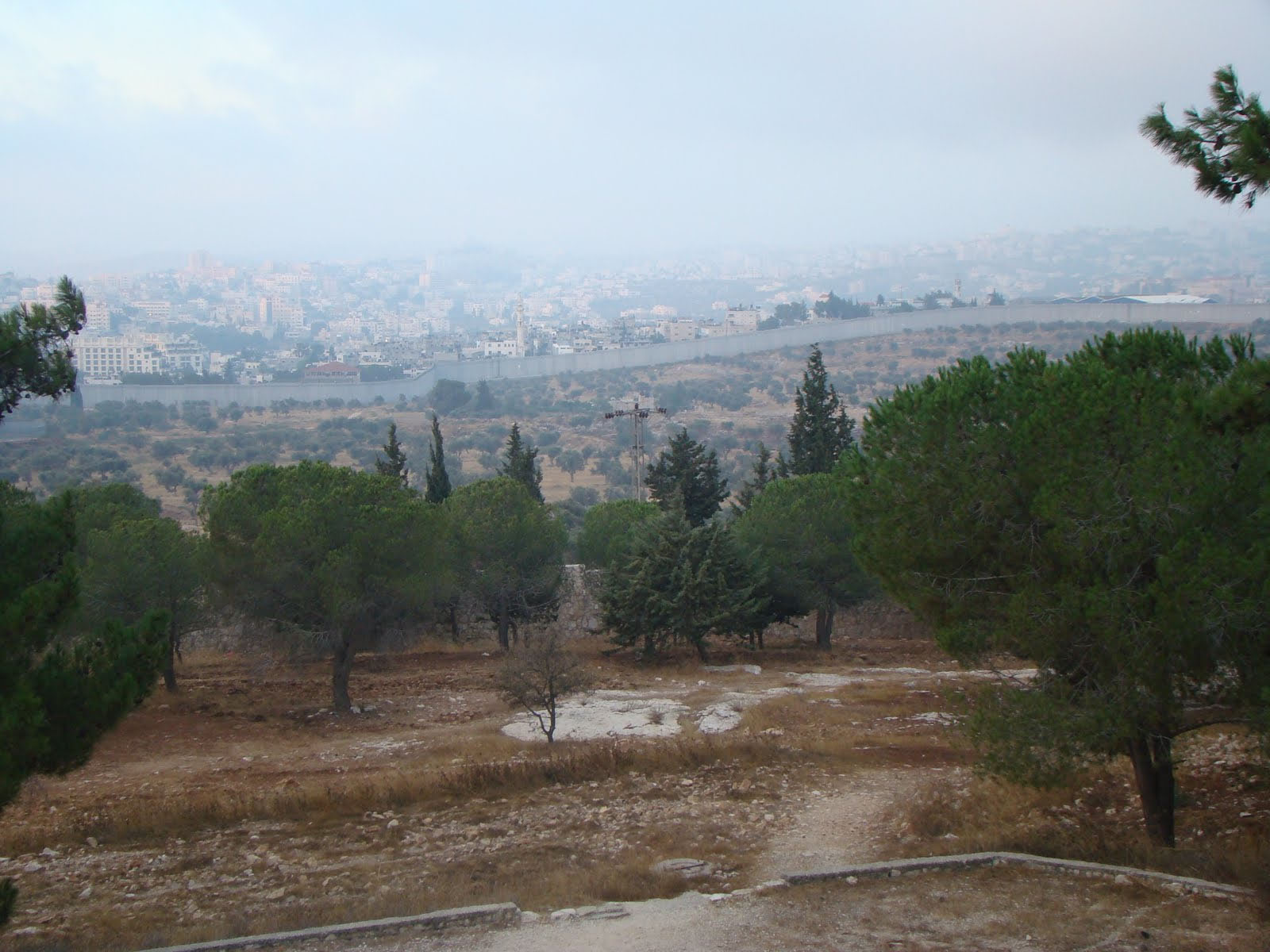
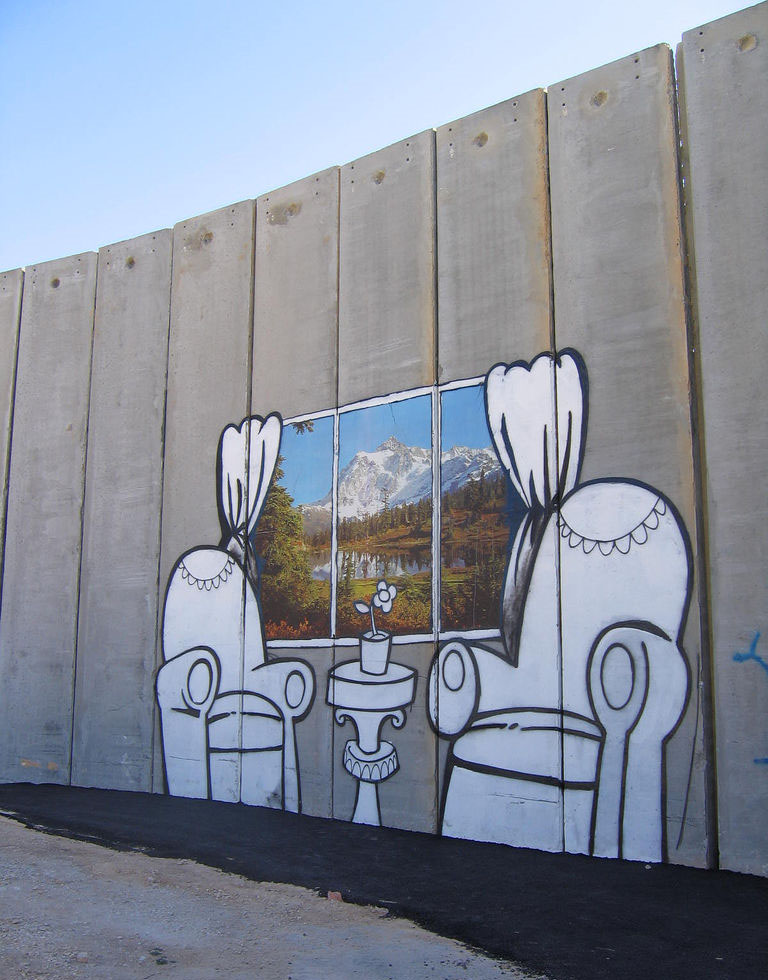
Conocemos otras tres apariciones de esta palabra. La primera está en el ecuménico —cristiano - ortodoxo, anglicano, protestante, católico— Instituto Tantur, entre Jerusalén y Belén, cuyo nombre, según consta en su página web, significa «loma» o «altozano» en árabe. De hecho, el Instituto se encuentra en lo alto de una hermosa colina, con una vista excelente sobre el puesto de control palestino-israelí número 300, popularmente conocido como «Puesto de control Tantur».

Vista de Belén desde el Instituto Tantur, y del mundo desde el lado palestino del Puesto de Control Tantur.


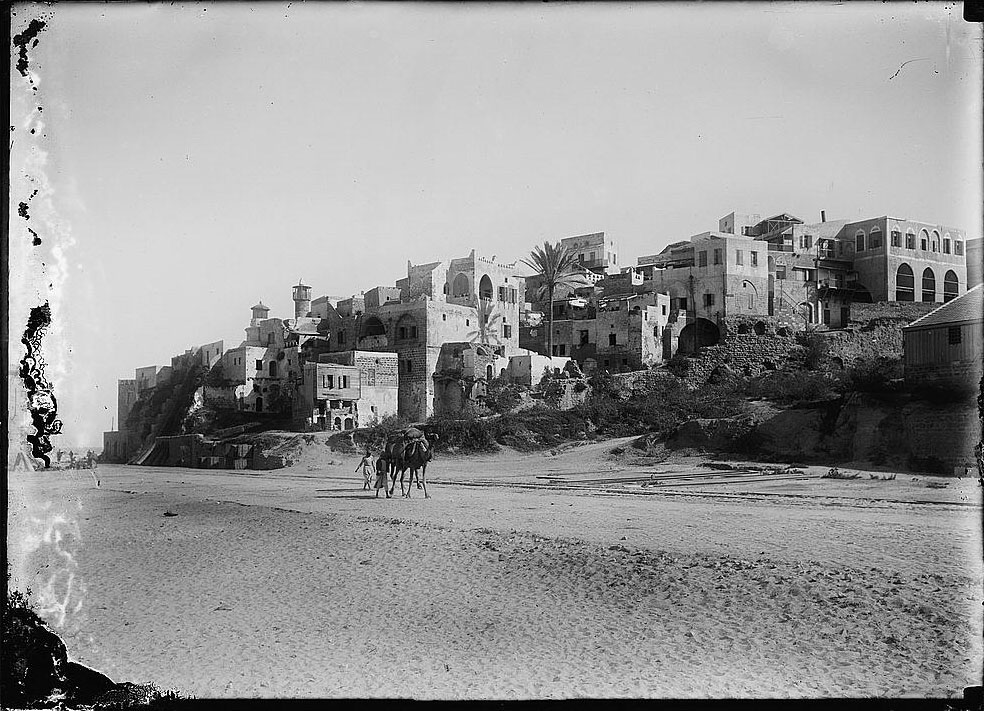
El segundo es el nombre de la antigua aldea costera árabe Tantura —الطنطورة— destruida en 1948 junto con otras 300 aldeas palestinas por el ejército israelí. Ahora los kibutz Dor y Nahsholim están al lado de sus ruinas; el aspecto antiguo y moderno del lugar puede contemplarse aquí, aquí y aquí. Según la Wikipedia inglesa el nombre significa «colina» en árabe local, y la Wikipedia hebrea añade que este cerro era el local Tel Dor.


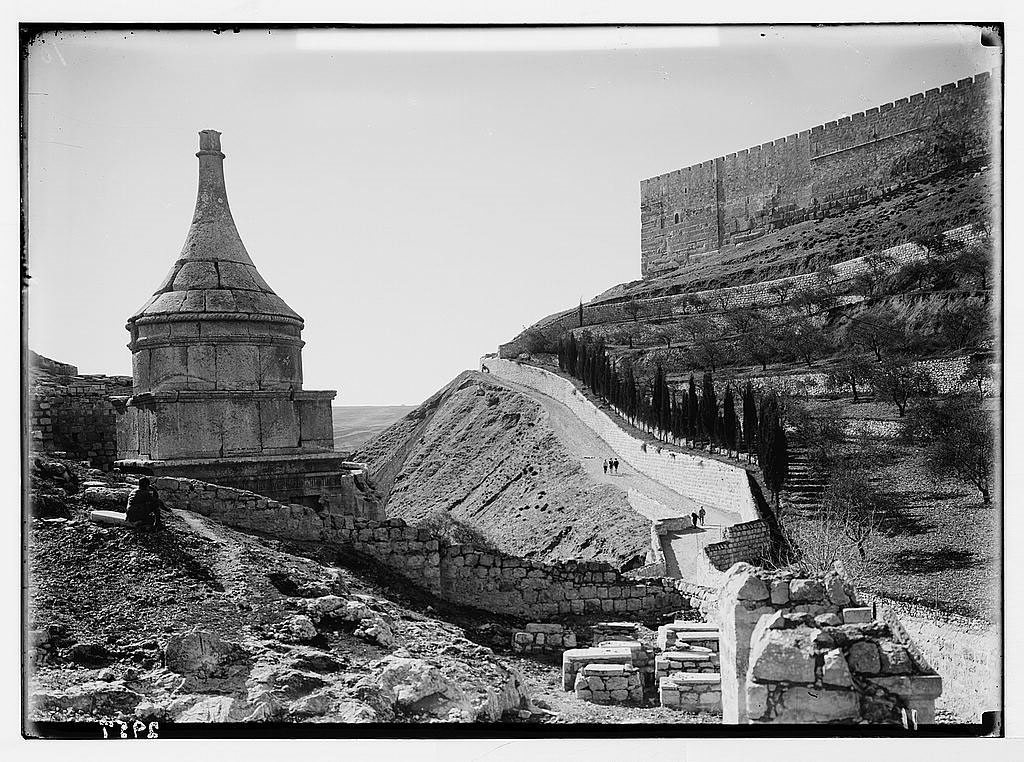
La tercera aparición de este nombre se encuentra en Jerusalén, en el valle de Cedrón. Aquí se alza un monumento funerario monolítico tradicionalmente llamado Tumba de Absalón, cuya lapidación ritual solía ser un programa ceremonial no sólo para los judios, sino también para los peregrinos cristianos medievales. En realidad el monumento no fue erigido hasta el siglo primero, y de acuerdo con su inscripción en griego recientemente descifrada por Joe Zias y publicada en Haaretz, los primeros cristianos veneraban en ella la tumba de Zacarías, padre de San Juan Bautista. En árabe se llama —inspirándose claramente en su forma— Tantour Pharoun, es decir, «el sombrero del faraón / rey». O, para ser más precisos, su tantour.


Başqa şəhər


Budapeşti Arazla birlikdə gəzirik və onun gözləri ilə şəhəri mən də özüm üçün kəşf edirəm: Osmanlı hökmranlığı dövründən (1541-1686) qalmış, neçə müsəlman mehrabının – ibadət üçün divarda Məkkəyə istiqamətlənmiş oyuğun xristian kilsələrində günümüzə çatdığını və ya Gül Baba türbəsinin indi illər əvvəl olduğu kimi turistlər deyil, daha çox ibadət vaxtları inanan müsəlmanlar tərəfindən ziyarət olunduğunu, buna görə hətta bu abidəyə giriş biletlərinin ləğv olunduğunu öyrənirəm. Araz Macar İrsi Evinin nəşr etdiyi iki böyük Azərbaycan dastanı – “Dədə Qorqud” və “Koroğlu”nun macar dilinə tərcüməsinə rast gəlib, sevinir. O, macar yazılarını diqqətlə oxuyaraq, çoxlu, həm aşkar, həm də sezilməyən şəkildə mövcud olan türk dilinə qohum söz və strukturları açmağa çalışır. Sonunculardan biri kimi, böyük təəccüblə kəşf etdik ki, macarca “féreg” həm “qurd", həm də “canavar" mənasını verdiyi kimi, azərbaycanca etimoloji olaraq onunla heç bir əlaqəsi olmayan “qurd” (türkcə “kurt”) sözü də eyni iki mənanı verir. Əlavə olaraq, bu söz “özünə yer etmək, içərisinə soxulmaq” mənasını verən “girmək” sözündən gəldiyi kimi, “féreg” də göründüyünə görə macarca tamamilə eyni mənanı verən “fér” felindən gəlir. Uzundur çöllərin yolları.

Lakin əsl qarşılaşma bizi Macar Milli Muzeyinin zirzəmi mərtəbəsində gözləyirdi. Qarderobun yaxınlığında divara iki daş, Osmanlı dövrünün 17-ci əsrin ortalarına aid iki macar qalasından iki tikili kitabəsi yerləşdirilib. Onların yazısı güclə sezilir (buna görə sadəcə foto-şəkli günahlandırmayın), lakin nə oxuna bilərdisə yanlarındakı lövhəciyə yazılıb:

“Ya Allah! Ya Xaliq! Sekeşfehervor (Székesfehérvár) qalası. Əlahəzrət Şahbaz Paşanın dövrü. 1070-ci il (18 sentyabr 1659 – 8 avqust 1660)”

“Küll aləmin xəlifəsi Məhəmməd Sultan xanın – Allah onun ömrünü və hökmünü uzun etsin – hökmdarlığı dövründə Siyavuş vəzir paşa, Mustafa mir liva paşa və Cəfər Mustafa mir alay bəy tərəfindən 1059-cu ildə (15 yanvar – 6 dekabr 1649) inşa edilib” (Buda qalsının Siyavuş bürcündən)

Araz deyir ki, qurucuların adları İranın ilk azərbaycanlı sülaləsi olan Safavilərin taxta gəlməsinə kömək etmiş, sələfləri hazırda Azərbaycanda məskunlaşan, şiə türk cəngavərləri – Qızılbaşlar üçün səciyyəvidir. Sekeşfehervar paşasının adı 1890-cı ildə Şandor Keqlə əbədi dostluq əhdi vermiş azərbaycanlı Şahbaz bəyin adı ilə, Buda paşasının adı isə bu yaxınlarda vəfat etmiş Simin Daneşvarın 20-ci əsr İran tarixində ən görkəmli romanını barəsində yazdığı İran şiə türk dastan qəhrəmanının adı ilə eynidir.

Bu şəhərdə gizlənmiş neçə-neçə bilinməyən şəhərin arasında ən gizlilərindən biri Azərbaycanlı səyahətçiyə öz simasını göstərir.