Switch over to our new blog! • ¡Pásese a nuestro nuevo blog!

The renewed version of our blog, with more features, a richer design, and available in nine languages, can be read here: https://wangriver.com

The new version also includes the old posts, often in expanded form. If you are curious about the updated version of this post, replace “riowang.blogspot.com/” in the URL with “riowang.studiolum.com/”, and the new link will most likely lead you there.


La versión renovada de nuestro blog, con más herramientas, un diseño más rico y disponible en nueve idiomas, se puede leer aquí: https://riowang.com

La nueva versión también incluye las publicaciones antiguas, a menudo en una forma ampliada. Si tiene curiosidad por la versión actualizada de esta entrada, sustituya «riowang.blogspot.com/» en la URL por «riowang.studiolum.com/es/», y el nuevo enlace probablemente le llevará allí.

Mostrando entradas con la etiqueta lion. Mostrar todas las entradas

Lions on the wing


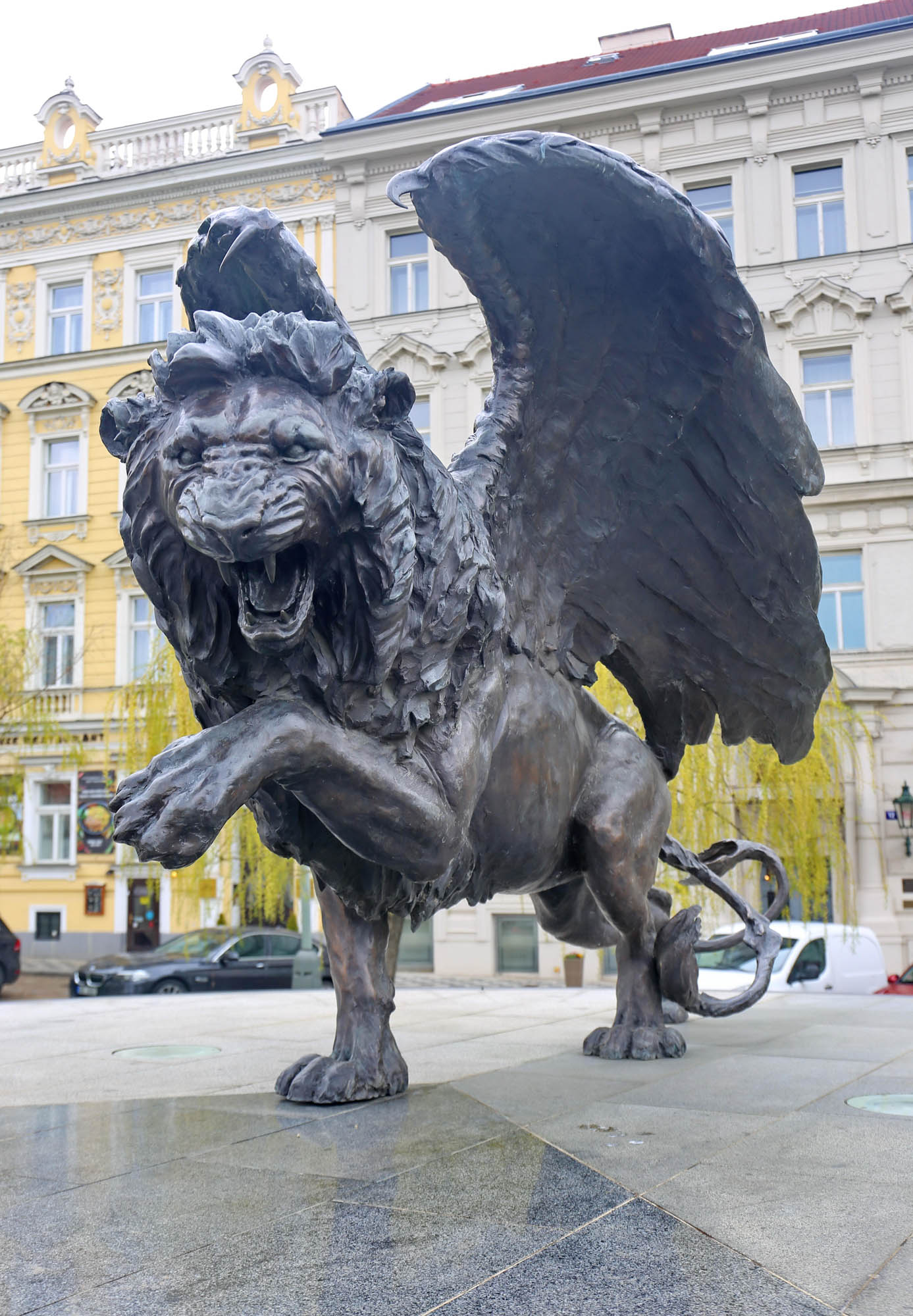
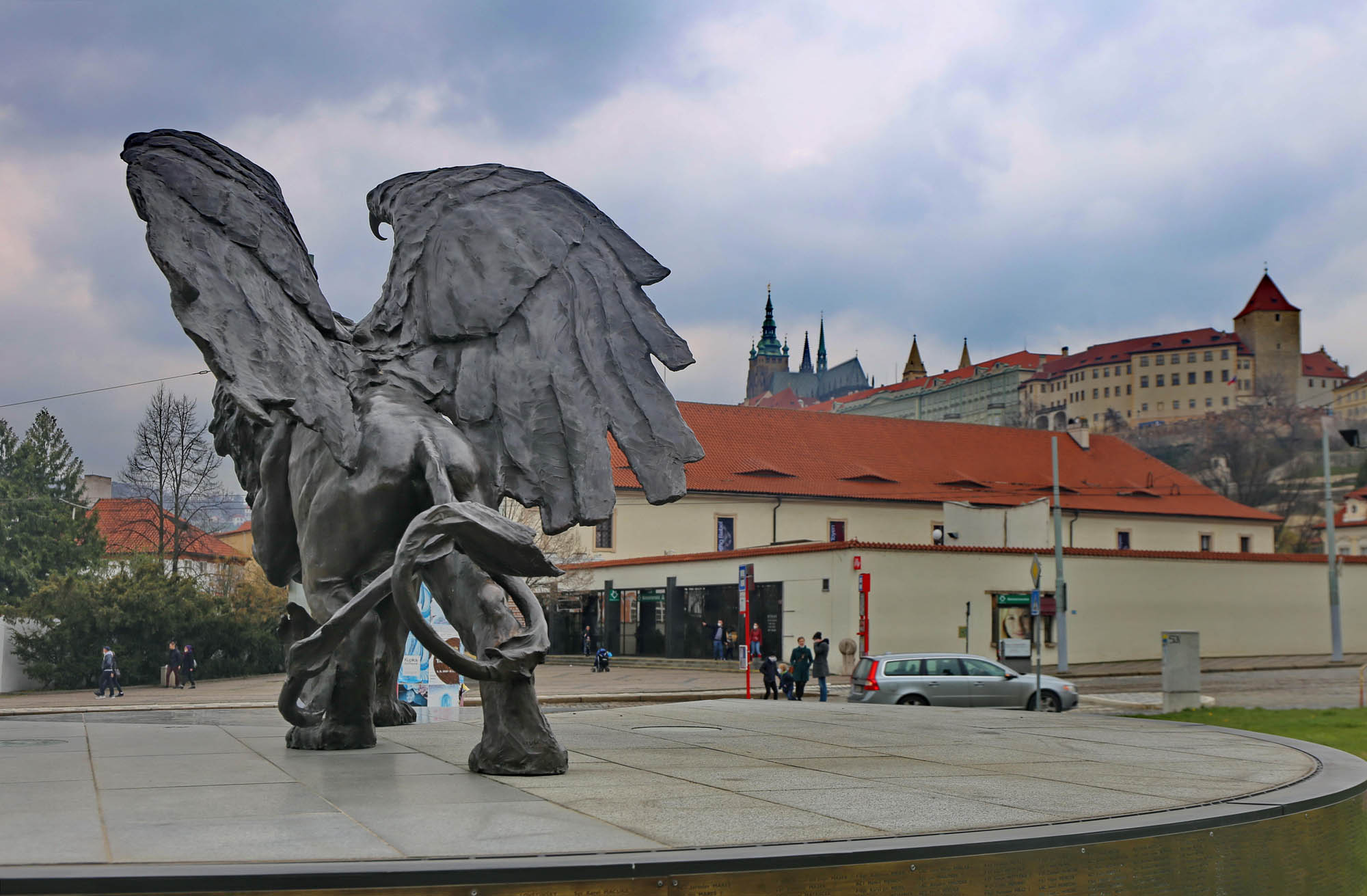
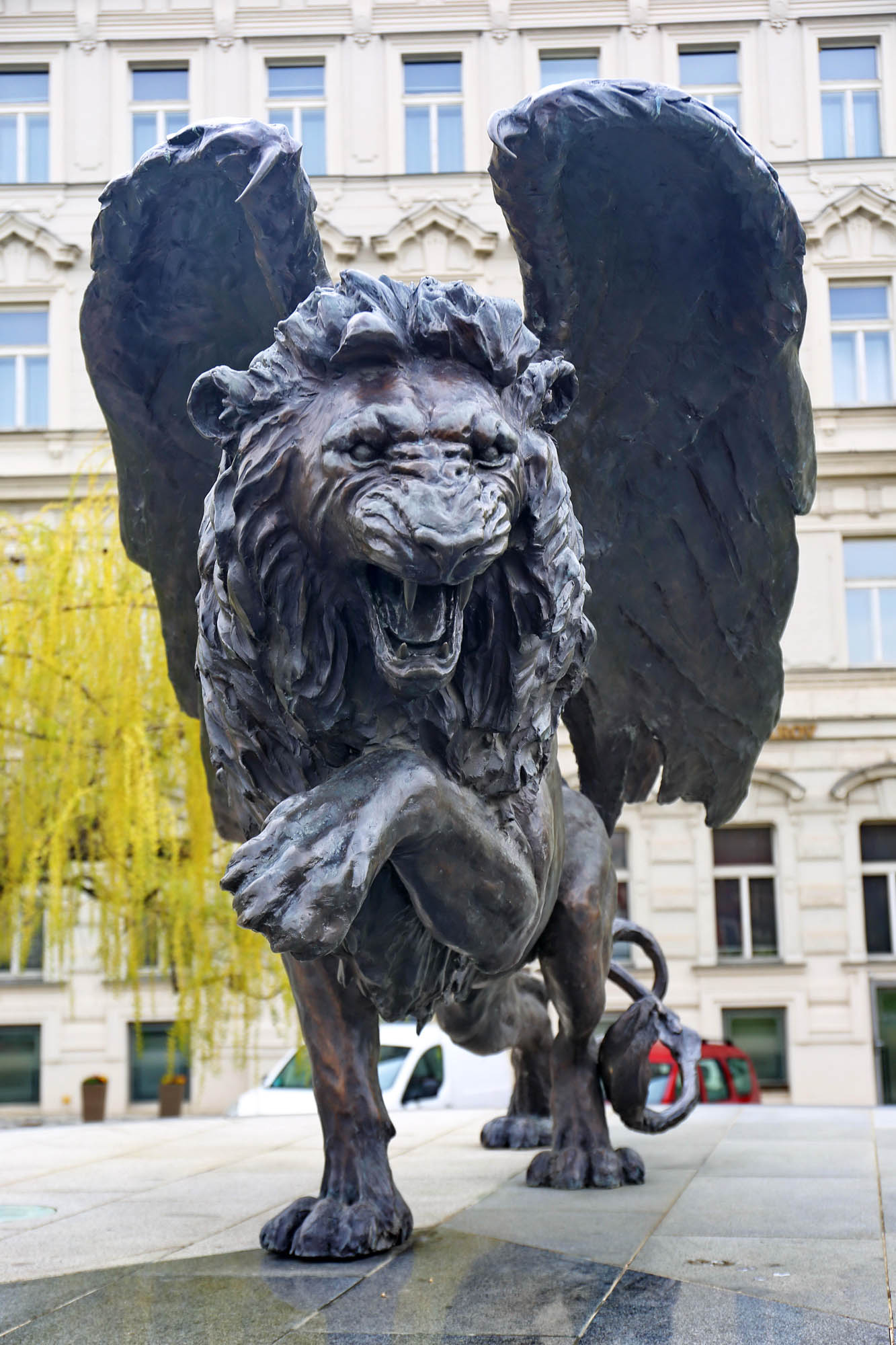
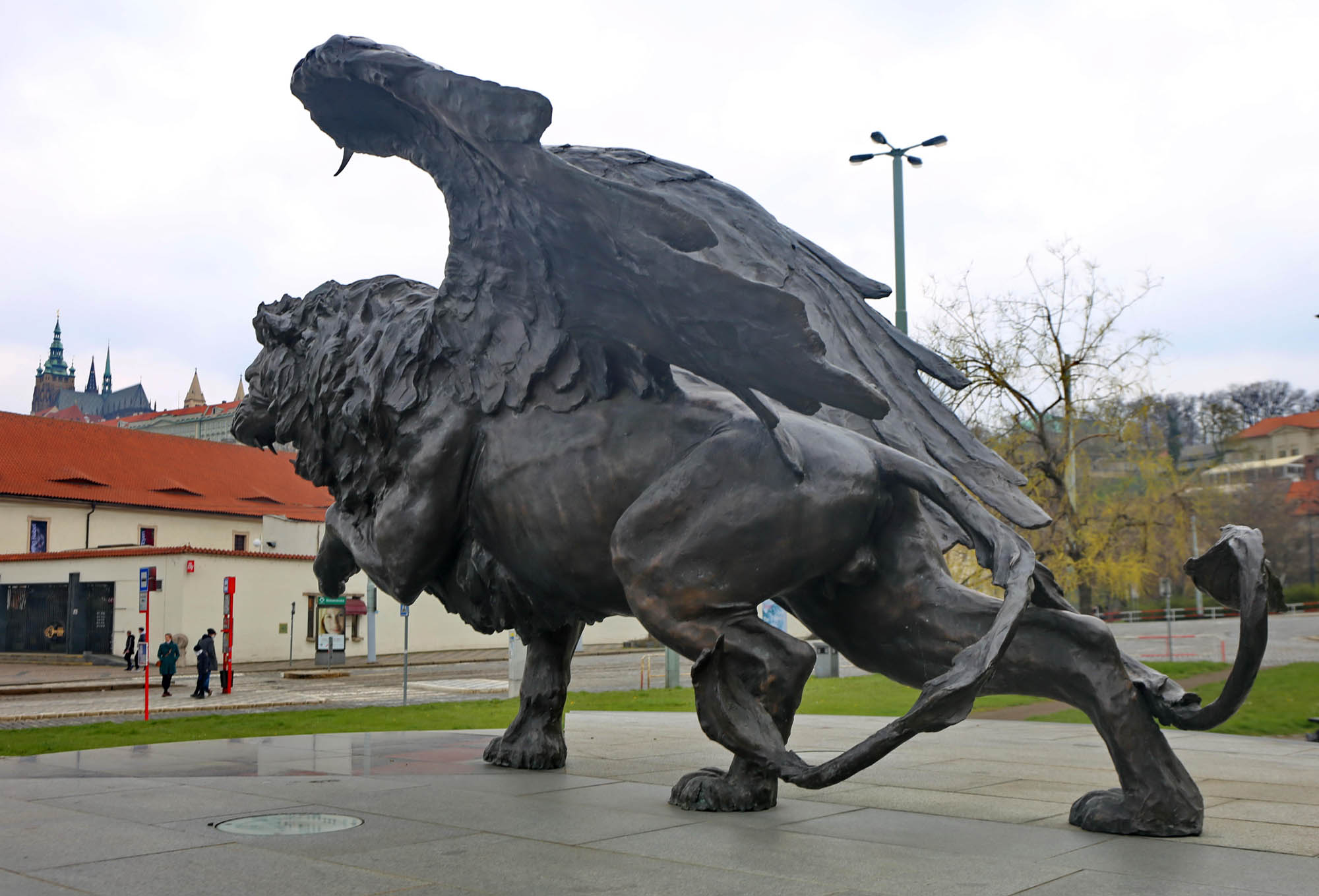
When future extraterrestrials wonder which living beings went extinct together with mankind in the 21st century, they will come to the surprising conclusion that several mammals had winged variants, and, although their fossil remains have not survived, representations of them will be easy to find. Altogether, man, cattle and lions have each had winged subspecies, it will be concluded. But the most peculiar mutation had to have been the winged lion with the double tail, either as a result of one of the nuclear accidents that had preceded the destruction of humanity, or as a development along with the wings for aerodynamic balance. In the absence of a fossil skeleton, evidence of this two-tailed winged lion will only exist in the form of a statue on the former Klárov Square of the former Prague, on the bank of the Vltava, next to the Lesser Side bridgehead of the Mánes Bridge.


The statue, erected through the fundraising efforts of the British community in Czechia, commemorates the winged Czech lions who, in the 1940s, protected the ground-going British lions against the attacks of the German eagles.

The air force of the Czechoslovak Republic was established in 1918 and ceased to exist exactly twenty years later, when the invading German army disbanded them and confiscated their planes. The Luftwaffe offered to take the Czech pilots, too, but the vast majority of them preferred to emigrate. Many joined the Polish Air Force, and they fought on their side in September 1939, but then fled the country with the rest of the Polish army, and continued to fight the Germans in the skies above other lands. The statue, erected as a gift from the British community in Czechia, commemorates the 2,500 Czech pilots who defended Britain during the “Battle of England” i.e. the ongoing German air strikes of 1940 and 1941.


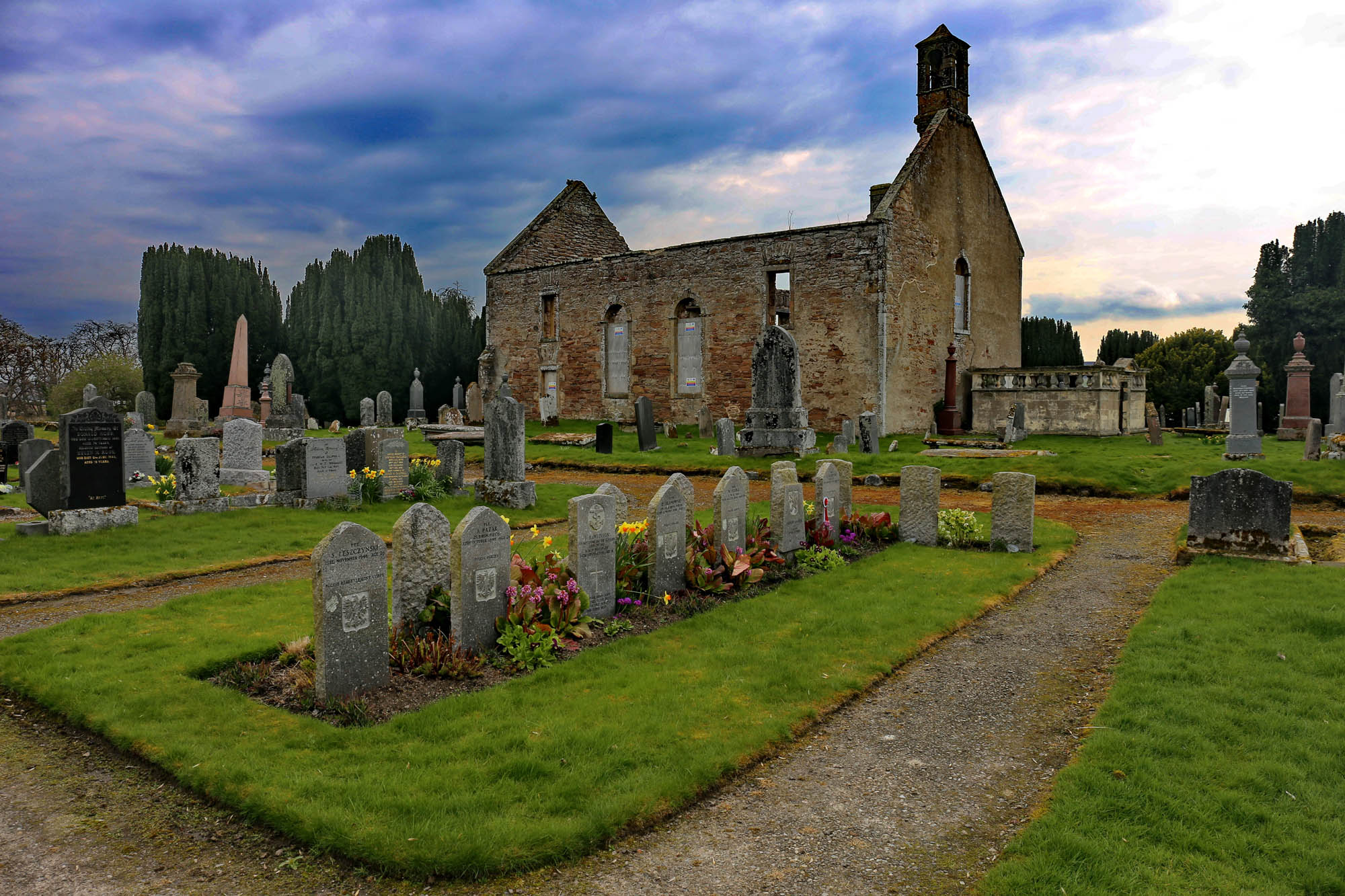
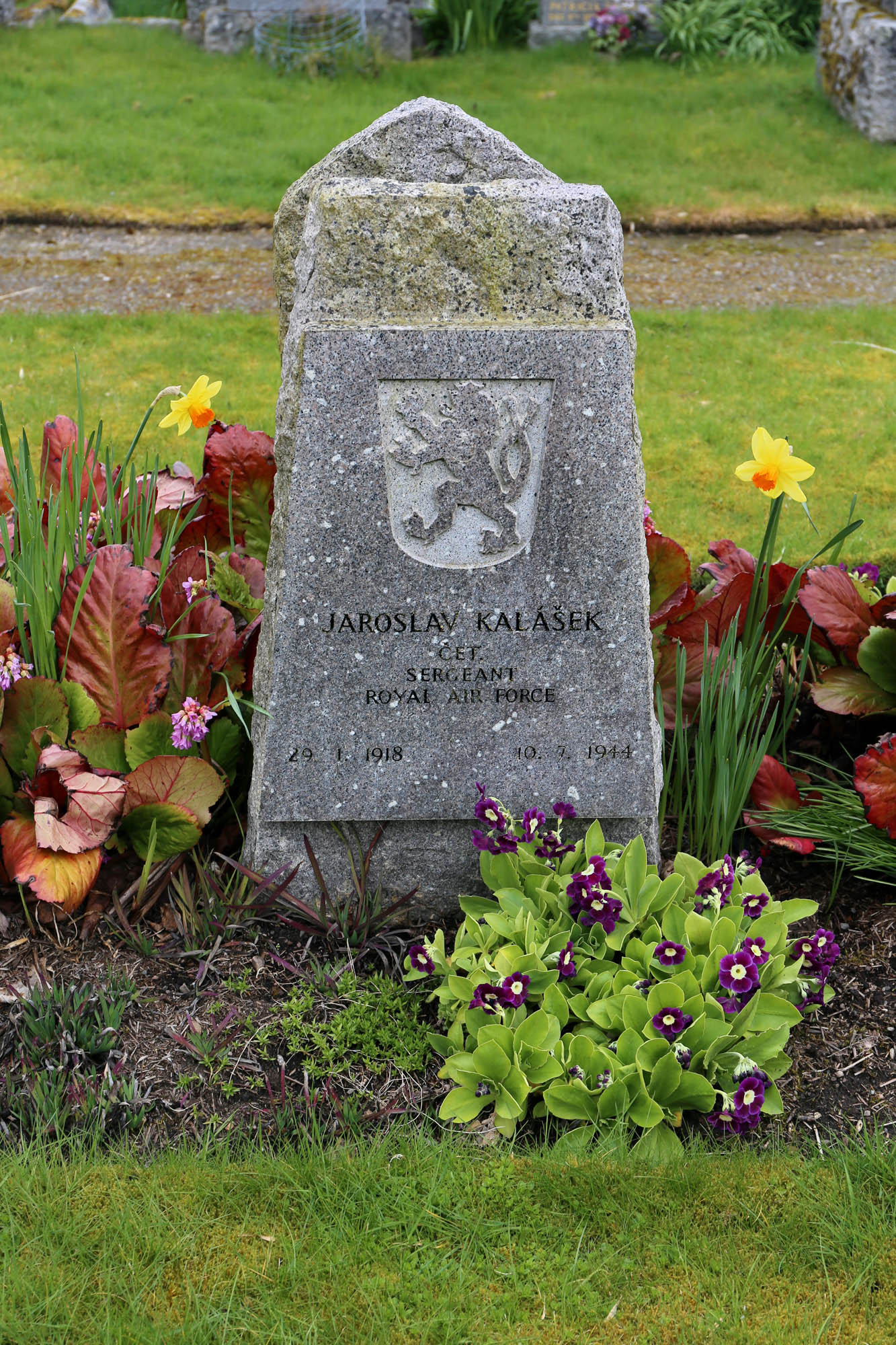
Looking at the statue, I recall an earlier encounter with such a lion. It was in northern Scotland, on the banks of Cromarty Firth, in the cemetery of the now-perished village of Kiltearn (in local Gaelic, Cill Tighearna). Lloyd and I turned off the main road onto a dirt road leading to the cemetery right on the beach for the ruins of the medieval church and the tombs of the medieval Scottish lairds. We were very surprised to see, among the tombs of the lairds and burghers, a small plot of military graves from the 1940s, of three Canadians, twelve Poles and one Czech pilot.


klarov1 klarov1 klarov1 klarov1 klarov1 klarov1 klarov1 klarov1


The Czech sergeant, Jaroslav Kalášek was of the same age as the Czechoslovak Air Force: he was born in 1918 and died in 1944. According to the Czech war graves register, he fled to England in 1939, through Hungary and France, that is, together with the Polish army, which, after the coordinated German-Soviet invasion of Poland, was given a free escape route by Hungary, despite the displeasure of the German ally. He served in the coast guard unit of the British Air Force, which defended the industrial centers of Scotland against German airstrikes, thus making that coast a bit of a Czech sea. Their resistance is remembered, in addition to the war graves, by the artificial island in front of the middle pillar of the World Heritage Forth Bridge, with the remains of an air defense battery protecting Scotland’s east coastline.


Those of the Czech winged lions who survived the war were awaited by the damnatio memoriae at home. During the decades of Cold War, it was forbidden to talk about the service of Czech pilots in the British Army. Nevertheless, the regime remembered precisely who took part in this officially non-existent service: they were persecuted, imprisoned as enemies of the system, forced into menial jobs, and denied pensions. They were rehabilitated only after the Velvet Revolution, by a decree of Václav Havel on 29 December 1989, which restored their rank, pension and place in the historical memory of the country.

The erection of the winged two-tailed lion in 2014 also belongs among the gestures of restoring historical memory. However, it does not please everyone. A 2014 issue of Český rozhlas published, under the title “Circus in Klárov”, a legitimate criticism on the various postmodern sculptures spotted in this amorphous square of the Lesser Side, including “the extremely poorly modeled lion by the British sculptor Colin Spofforth, who makes kitschy sculptures exclusively for shopping mails, and whose work was never allowed out in public spaces”.


But Praga has even endured worse statues. This one will also remain as an imprint of our age, or at most a metronome will be put in its place.


A Jew of three emperors


This lion has been already cited twice by us, when writing about double-tailed animals. First, many years ago, when we were looking for the pedigree of the double-tailed dogs discovered in Mallorca, and then recently, when we measured the lands of the double-tailed lion. Now the time has come to speak about it in its own right.


This lion decorates the most beautiful headstone of the old Jewish cemetery in Prague. Not one lion, but two, one at each end of the sarcophagus, which includes four tails all in all. They protect the tomb from both sides, or rather display in both direction the coat of arms indicating the rank of the deceased.


This pose of the lions and their double tail is really quite unusual in a Jewish cemetery. We have already mentioned that the lion on Jewish tombstones mostly refers to the tribe of Judah or those of Davidic descent, or the name of the deceased as Judah, Aryeh, Leb or Löw. Sometimes it supports, together with a fellow lion, the crown of the Torah, which symbolizes the protection of the faith. But it never holds a nobleman’s coat of arms – as a Jew could never have such a thing –, nor is it ever double-tailed, which has served as the heraldic device of Czech kings, ever since Emperor Frederick Barbarossa in 1158 bestowed it, together with the title of king, upon the Czech prince Wladislaw II, for having supported his Milan campaign. And indeed, this tomb is so unusual, and so extremely rich, that already in the 18th century there was a legend about it, saying that a Jewish king from Poland (!) was buried here. However, the tomb does not belong neither to any king, nor to any man, but – as we read in the moving verses of the epitaph, translated by Rachel Greenblatt – to a woman, one Hendl Bassevi, the wife of Jacob Bassevi, who died in 1628.


“Jacob erected a monument in bitterness [Gen 35:20]: / And all the people wailed a lament: / For the respected gentlewoman: / Who is buried and concealed here: / Gone is her splendour, gone is her glory: / The voice of the multitudes in the faithful city [saying]: / Let us search and examine our ways.

Where is the pious one, where is she who typified humility: / In piety, in modesty, in holiness, and in purity: / Her exit [from this world] did not differ from her entry: / She hurried to [perform] a lesser commandment as much as a weighty one: / And she became the foundation stone: / To the afternoon service as to the morning she hastened: / And her heart was [directed] faithfully to God: / In fear, in awe, in clear language: / Following the order and the law according to Rabbi Hamnuna: / To the candle of commandment and the Torah of light: / She stretched out her arm and held tightly with her right [hand]”


Jacob Bassevi – Yaʻakov Bat-Sheba, Jakob Schmiles (1570-1634) –, born in Verona, was a young man when he came to Prague, where in 1601 he became the Hofjude, court Jew of Emperor Rudolf II. This position began to be institutionalized in the princely courts of Europe more or less around that time. Due to a boom in international trade in the wake of the great geographical discoveries, and an army which, on the eve of the Thirty Years’ War, had become increasingly costly, requiring more and more mercenaries and equipment, the rulers were ever in need of more cash. And one could legally turn for cash only to the Jews, who were not subject to the church ban on lending at interest. Therefore, in many royal courts they gave a standing order to an influential Jewish banker for financial management, producing cash, and the acquisition of various goods, which was in turn recompensed with a wide range of privileges and business opportunities. In the court of Prague, the first Jew to obtain this title from Emperor Rudolph was Mordechai Maisel (1528-1601), the charismatic superior of the local Jewish community. After his death, he was succeeded by Jacob Bassevi in this office, which he held to the satisfaction of three consecutive emperors – Rudolph (1576-1612), Matthias (1612-1619) and Ferdinand II (1619-1637) – for more than thirty years. The latter appreciated his services so much, that he elevated him at the rank of nobility, for the first time among all Jews in the Hapsburg Empire. He received the title “von Trautenberg”, with a coat of arms decorated with three eight-pointed (!) stars, as we see in the 19th-c. chalk drawing above. This explains why, at the peak of his glory and riches, he decorated the tomb of his wife, the most prestigious tombstone in the cemetery of Prague, with double-tailed Czech royal lions, supporting the coat of arms of a nobleman.

Jacob Bassevi von Trautenberg’s coat of arms from his former palace in Prague (photo, 1896). The palace was demolished at the turn of the century, together with most of the old Jewish quarter, and the coat of arms was transferred to the museum of Prague, from where it disappeared. Note the interesting arrangement: the nobleman’s coat of arms is held up by two typical lions of Judah, like the crown of the Torah on Jewish tombstones.

But glory and riches are fleeting, and man is like grass. Jacob Bassevi is subsequently remembered by history as the greatest financial adventurer of the Hapsburg empire, the perpetrator of the first “global financial crisis” of the early modern age, in which eventually he himself fell.

After the Battle of White Mountain, in which Bohemia was subdued, Ferdinand II urgently needed even more cash than usual, to pay his soldiers and to continue the war, which was destined to last thirty years. Therefore, in 1622, he rented out the imperial coinage monopoly for a yearly six million guilders of cash to a consortium formed for this purpose. The two financial experts of the consortium were Jacob Bassevi, and the Dutch banker Hans de Witte, living in Prague, and the three dignities who provided the undertaking with the appearance of integrity and political protection, were the Bohemian viceroy, Karl von Liechtenstein, the Moravian archbishop and imperial commissary Franz von Dietrichstein – the builder of the castle of Nikolsburg –, and the imperial commander-in-chief Albrecht von Wallenstein. The consortium also involved ten aditional silent partners, all impeccable gentlemen, who provided the capital, and who were not officially included in the contract. The formula was simple: the difference between the price of raw silver – which was kept low by virtue of the consortium’s monopoly on buying silver – and the value of the silver coins issued was the consortium’s profit. The greater the profit, the more silver was bought and then issued. Therefore, Jacob Bassevi organized an extremely effective acquisition network of small Jewish traders around the empire, who were also provided with state-certified scales. The name of these tilting sales – Wipperwaagen – gave the name to the great financial crisis of the time: Kipper- und Wipperzeit – and the German nickname for the counterfeiter: Kipper und Wipper.

In fact, the consortium, in an effort to maximize profits, so effectively siphoned silver from the whole empire, from Bohemia through Lower Austria to Hungary, that the price of silver began to sharply rise, which threatened the profitability of the undertaking. They could have reduced the price of silver by slowing down the acquisition, but then the profit would also have risen more slowly. Therefore, Bassevi and Witte proposed a third way, by reducing the silver content of the coins. The idea found favor, and as the price of silver increased, so they decreased its proportion in the coins – all the way down to 13% of the original content.

The consortium members made incredible gains – Bassevi, 2 million 300 thousand guilders; Witte, 18 million 500 thousand –, while inflation and dissatisfaction grew throughout the empire. The following flyer came out against “the Jewish counterfeiters” and is almost a true likeness of Jacob Bassevi, vacillating between Justice and Avarice, while the avenging divine justice is already hanging over his head. The flyer entitled “The epitaph for good money” also represents the Christian accomplice with the Jewish money-changer. And the page “The laughing and crying money” soberly lists the rate of inflation from month to month, leaving to the reader to fill in the empty spaces after June 1623.


As long as Karl von Liechtenstein, the plenipotentiary Bohemian viceroy lived, no one dared to mess with the consortium, not even the emperor, for whom the fixed cash income was all-important in wartime. However, after the death of Prince Liechtenstein, when even his own soldiers did not accept the worthless money, he issued an arrest warrant against the authors of the scheme. In 1631, Bassevi and Witte fled to the Jičín castle of Albrecht von Wallenstein, where they found protection for a while. But in February 1634, when Ferdinand II caused the assassination of Wallenstein, suspected of treason, the road ended for them as well. Witte committed suicide, and Bassevi died in Jungbunzlau / Mladá Boleslav while trying to escape. His grave still stands there, in the local Jewish cemetery.


The court Jews were usually the superiors of their communities, who also used their influence to bring prosperity in the Jewish quarter. Mordechai Maisel managed to obtain many privileges for them, and his constructions basically defined the Jewish quarter for the centuries to come. He built the Jewish council house, the High Synagogue, the Maisel Synagogue in the street named after him, he paved all the roads of the quarter, built a hospital for the poor, and designated the present boundaries of the cemetery. And although the majority of the Jewish quarter became victim to the demolitions of the early 20th century, his foundations still stand today.

Jacob Bassevi was also a generous patron of the arts. The buildings erected by him, however, all came to a fate as tragic as his personal one.

His most important foundation was the extension of the Jewish quarter. In Prague, Jews were forbidden to live outside the ghetto, but space within it became increasingly scarce. After the Battle of White Mountain, Bassevi bought from the Treasury the plots to the north of the walls of the Jewish quarter, which had been seized from the rebels, and attached them to the ghetto. Here, in the Great Yard flanked by Rabbi Street and Gypsy Street – which in the following map bears the name Masařská, Butcher Street – he built the largest synagogue of Prague.

This map is part of the urban plan of 1896, which marks in yellow the medieval blocks to be destroyed, and in red the line of the streets to be newly created. The full map shows that almost all the Jewish quarter, with its centuries-old crooked streets, houses, synagogues and all its history fell victim to renovation fever. Today the palace quarter around the Parížská-Široká axis stands in its place. The small island, consisting of the old cemetery and the few buildings standing next to it – which is today used to create the illusion of “the Jewish heritage” for tourists – are only the tip of an iceberg, or rather of a submerged continent.

The map below shows that the eclectic block of flats at number XIV was built exactly on the location of the Great Yard, which had been created by the extension of the ghetto, and of the Great Yard – Großhöfische/Velkodvorská – Synagogue. The synagogue was pulled down after the other houses on 20 May 1906. I have marked the map with little black arrows indicating the points of view of the photos which I was able to collect depicting the conditions before and during the demolition. As the news of the demolition – just like in other cities – attracted a lot of curious photographers to the quarter, a large trove of photographic material has survived, on the basis of which I soon want to present the entire lost Jewish quarter of Prague in the same way.

The second map shows today’s state of the block and the surrounding area. The eclectic block of flats was destroyed during the Prague uprising, senselessly unleashed three days before the end of the Second World War. A number of plans were proposed to erect new buildings in its place, but none of them were realized. Now an anonymous square is here, with parking lots, and with the underground garage of the Brutalist-style Hotel Intercontinental.

asanacni1 asanacni1 asanacni1 asanacni1 asanacni1 asanacni1 asanacni1 asanacni1


The pre-war block of flats, destroyed in the May 1945 uprising, in the place of the Great Yard Synagogue. Today its northern part is occupied by Hotel Intercontinental.

The name of Jacob Bassevi was linked for centuries also to another magnificent building: the Renaissance Bassevi Palace, the most splendid palace in the Jewish quarter, which, according to the literature, was just as important as the Wallenstein Palace on the Lesser Side of Prague. It stood roughly at the intersection of today’s Parížská and Kostečná streets, in the southernmost block of the Jewish quarter, whose southern façade looks at the Old Town Square. On the following map, the double palace bears the cadastral numbers 73 and 74.

asanacni2 asanacni2 asanacni2 asanacni2 asanacni2 asanacni2 asanacni2 asanacni2

Bassevi’s debts compelled his sons to sell the palace in 1685, which passed through many hands over the next three hundred years, until it, too, was dismantled at the turn of the century. Only the Bassevi coat of arms, depicted above, was transferred to the museum of Prague, but as we have seen, this has also since disappeared.

However, the demolished palace did not disappear without a trace. Besides the few photos above, something else recalls it in the old town. If we go a few streets away from the river, to the maze of the small medieval streets beyond Koží Street, which the urban planners – as the map above shows – also wanted to destroy, but the First World War left no time and money for it, we unexpectedly find a little Renaissance palace at Dlouhá Street 37 (cadastral number 729). The palace of the Green Tree was built roughly at the same time as the Bassevi Palace, in 1608, and the interventions of 1648 and 1927 did not change it much. Time has stopped under the Renaissance arcades of the little courtyard. If you go through the deep entrance arch, and stop in the middle of the courtyard, you can vividly imagine, what the lost palace of Jacob Bassevi was like, home of the most powerful Jew who ever lived in Prague.
dlouha37 dlouha37 dlouha37 dlouha37 dlouha37 dlouha37 dlouha37 dlouha37 dlouha37 dlouha37 dlouha37 dlouha37 dlouha37 dlouha37 dlouha37 dlouha37 dlouha37 dlouha37 dlouha37 dlouha37 dlouha37 dlouha37 dlouha37 dlouha37 dlouha37 dlouha37 dlouha37

The lion's tail

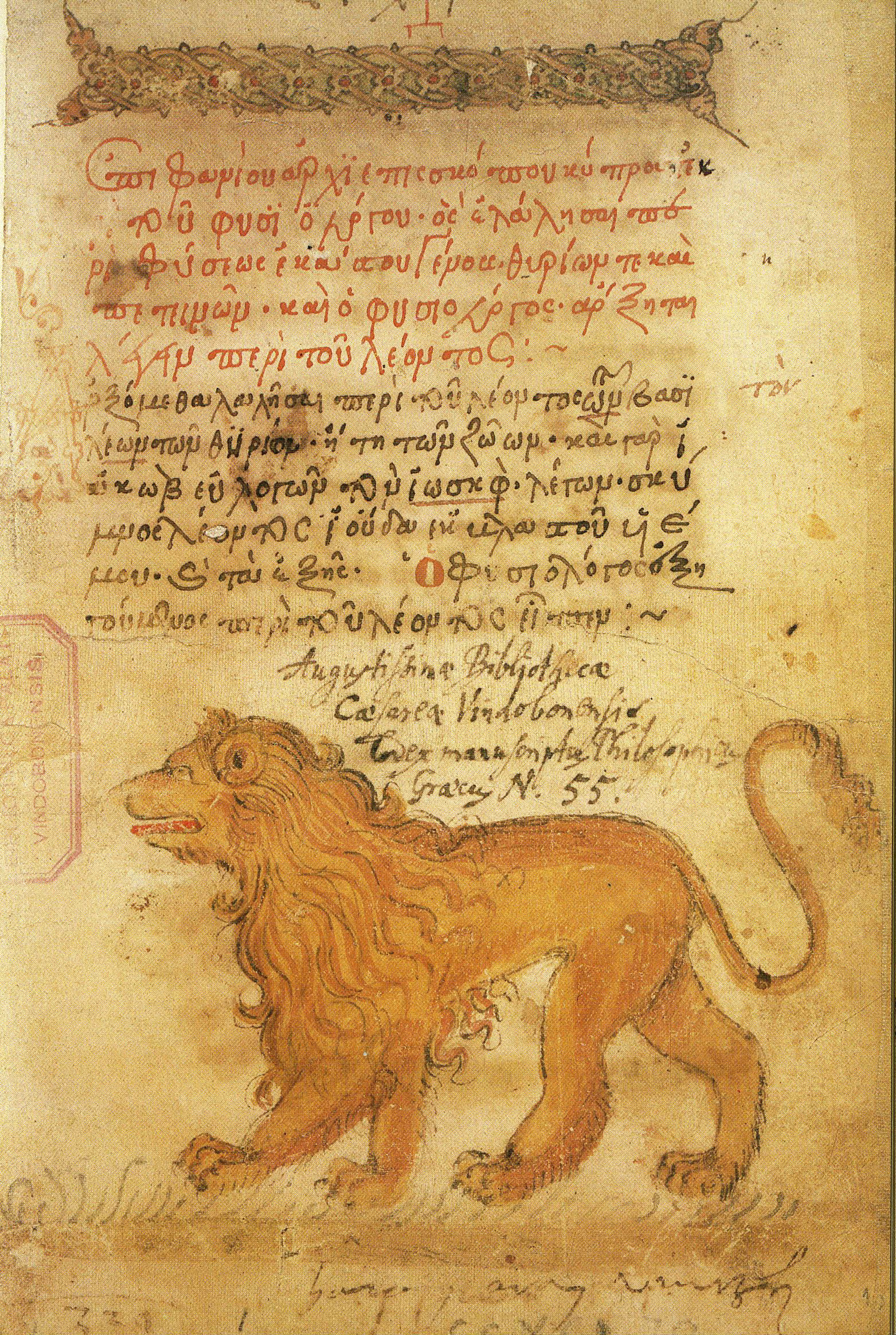
Lion in the Greek manuscript of the Physiologus (see below), made in Venice in the early 16th century, which in 1587 come from the property of the great Hungarian humanist and doctor Johannes Sambucus (János Zsámboki) to the Viennese Imperial Court Library (today Austrian National Library) (Cod. Phil. Gr. 290)

I have already mentioned, that the translator of Umberto Eco sometimes comes across passages, where the master (and his editor), similarly to good Homerus, fell asleep, or rather did not check in the impetus of the narration whether the facts only vaguely living in his memory conform to the reality. Earlier I used to add my corrections in footnotes, until the publisher, shocked by the number of notes, asked me to rather correct the text itself, since Eco (and his editor) would have written the same, had they looked after it. Since then I have done so, but to keep track of what I do, I write the more complex cases here in the blog. Like the last time I did with Eratosthenes’ well, or I will do now with the lion’s tail.

The lion’s tail came here, or rather into the chapter on bestiaries of Eco’s new book, from the Physiologus. The Physiologus was a Greek-language compilation from the second to third century AD, which was translated into several languages, and became one of the bestsellers of the Middle Ages and the forefather of all bestiaries. It described forty animals, plants and minerals, still on the basis of the Hellenistic tradition, but already interpreted in Christian spirit. Eco mentions an example:

Dopo avere descritto questi esseri, il Fisiologo mostra come e perché ciascuno di essi sia veicolo di un insegnamento etico e teologico. Per esempio il leone che, secondo la leggenda, cancella le proprie tracce con la coda per sottrarsi ai cacciatori, diventa simbolo di Cristo che cancella i peccati degli uomini.After describing them, the Physiologus also explains how and why each of them carries some ethical and theological teaching. The lion, for example, which erases its own footprints with the tail, so as to hide from the hunters, becomes a symbol of Christ, who erases the sins of mankind.

The lion erasing its own footprints with the tail. Physiologus, Codex Sambucus

An attractive parallel indeed, which connects the signifier with the signified by way of the naive association of “erasing” – just like St. Isidore of Seville does in his Etymologies, so indulgently referred to by Eco –, but which does not further expand the analogy (the footprints of Christ =/= sins of mankind). However, when we open the Physiologus at this place, we read something absolutely different: a fully expanded metaphor, which refers to a Christological doctrine living throughout the whole Middle Ages:

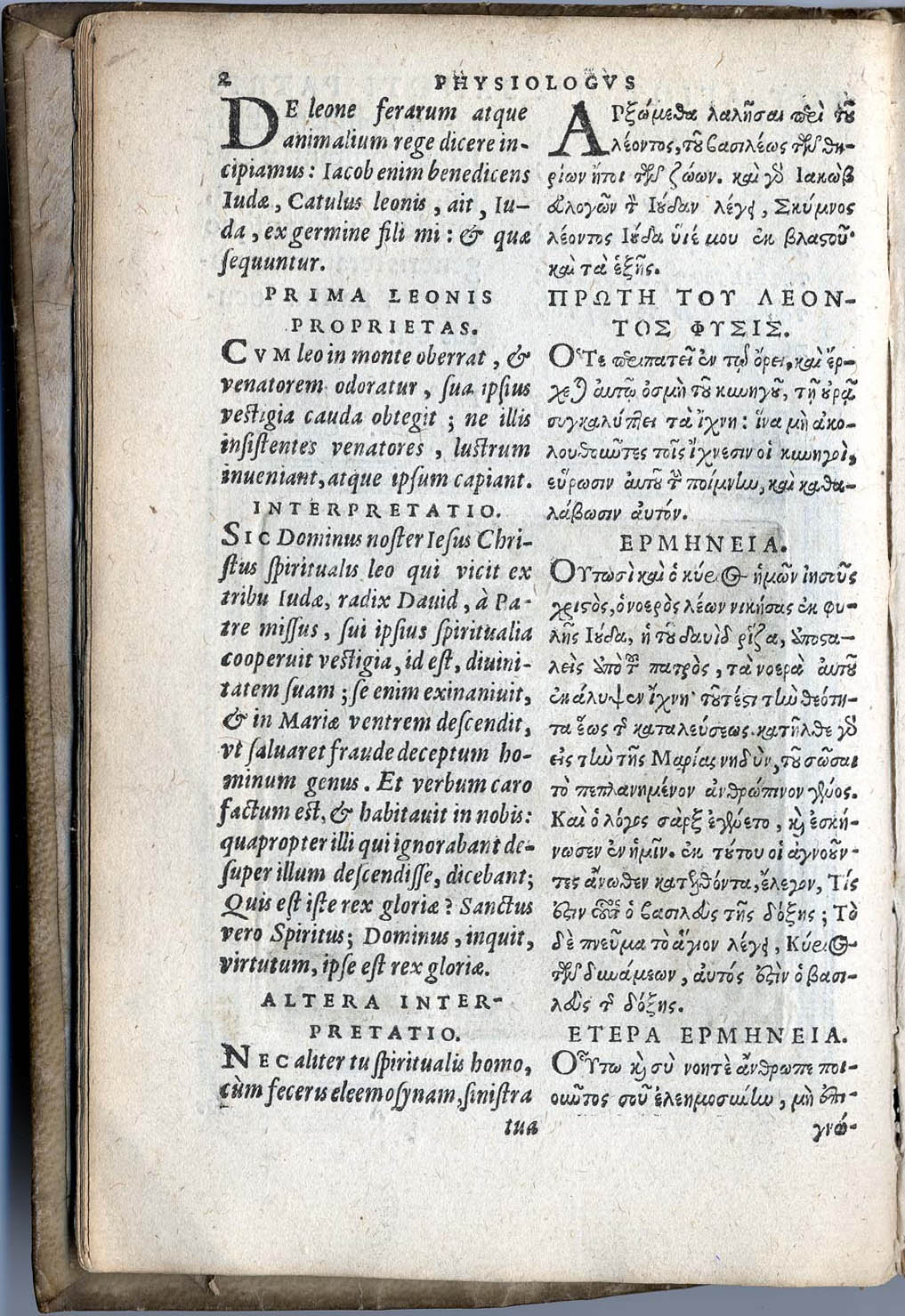
The first two pages on the lion from the 1588 Plantin edition of the Physiologus (the Greek and Latin original of the cited text is on the second page)


“When the lion roams the mountains, and he feels the smell of the hunter, he erases his footprints with his own tails, to prevent the hunters following him up, finding his abode, and capturing him … In the same way our Lord Jesus Christ, the spiritual lion … sent by the Father, erased His spiritual footprints, that is, His divinity; He emptied himself, and descended into the womb of Mary to save the deceived mankind.”

The unknown author (identified in the Middle Ages with the fourth-century Bishop of Cyprus and Church Father St. Epiphanius) relates the “scientific observation” accepted from Plutarch and Aelian with a popular theological doctrine which we find in several church fathers – Athanasius, St. Gregory of Nazianzos, Dionysius Areopagita, and even Epiphanius himself – as well as in later writers referring to them: that Christ assumed a human body so as to cheat the devil, the cheater of mankind, who, knowing nothing about His divinity, sought to destroy him as a man and as a (purely human) Messiah, thus actively contributing to His death on the cross and thereby the salvation of mankind.

The theologians recall this great trick with pleasure and by coloring the details. The fourth-century Rufinus of Aquileia, translator of Origen and friend (and later bitter debate partner) of St. Jerome, connects this doctrine with the metaphor of the hook in his commentary on the Apostles’ Creed:

“The object of the mystery of the Incarnation was the divine virtue of the Son of God, as a hook, concealed beneath the form of human flesh. He being found in fashion as a man (Phil 2:8), lured the Prince of this world to a conflict, offering His flesh as a bait. … As a fish seizes a baited hook, it not only does not take the bait off the hook, but is drawn out of the water to be itself food for others. So he, who had the power of death, seized the body of Jesus in death, not being aware of the hook of Divinity enclosed within it, but swallowed it and was caught. The bars of hell being broken apart, he was drawn out as it were from the abyss to become food for others. Ezekiel foretold this under the same figure, saying, ‘I will draw you out with My hook, and stretch you out on the earth. The plains shall be filled with you, and I will set all the fowls of the air over you, and I will satiate all the beasts of the earth with you’ (Ez 29:4-5, 32:3-8). … Job in like manner says in the person of the Lord speaking to him, ‘Will you draw forth the Leviathan with a hook, and will you put your bit in his nostrils?’” (Job 41:1-2)


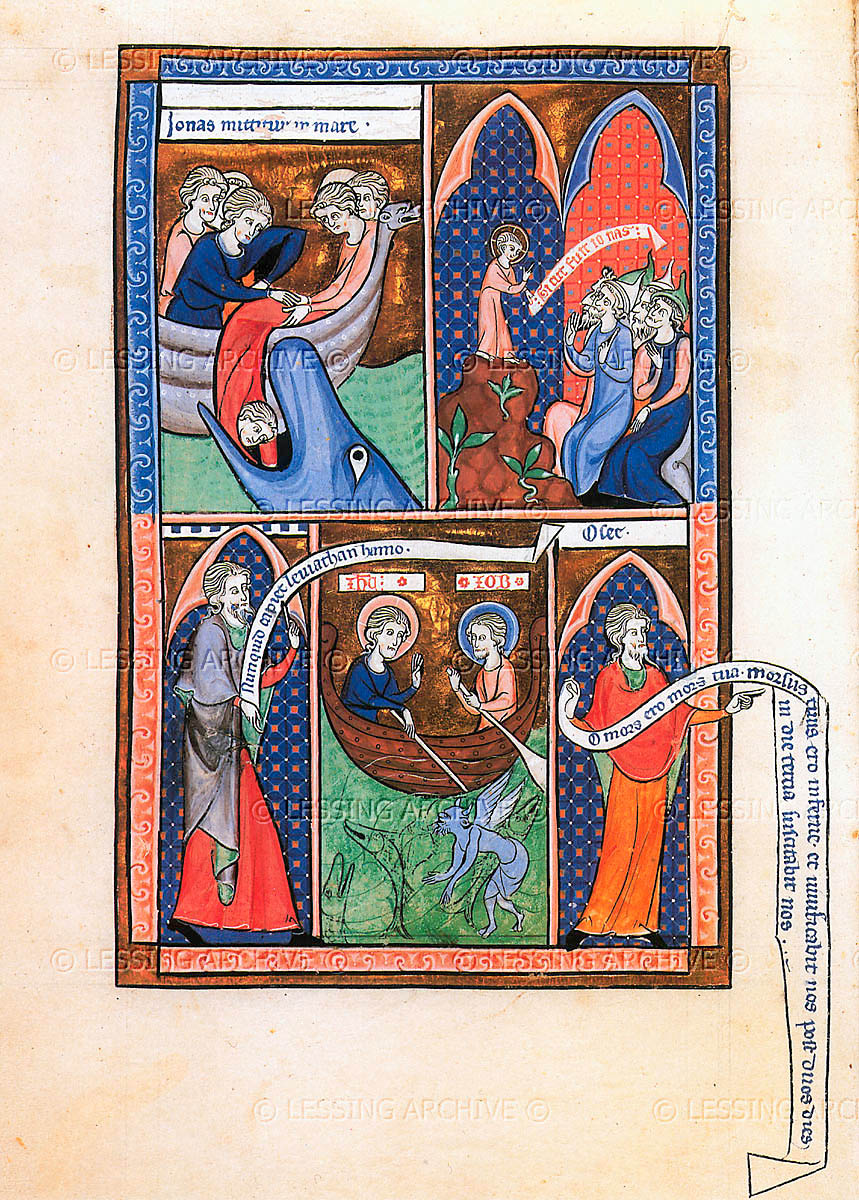
We see this version of the metaphor in one of the beautiful pieces of thirteenth-century Parisian miniature painting, the Reims Missale (1285-1297) preserved in St. Petersburg, on whose complex iconography I once held an entire semester at the university. On Folio 59v – also an illustration of the Creed – Christ fishing in a boat with Job puts the same question to him, while with the fishing pole hanging in front of the devil He already proves that He does draw forth the Leviathan. And the long scroll of Prophet Oseas, standing to the right, tells us how to understand this: O mors ero mors tua, morsus tuus ero inferne, “oh, death, I will be your death, I will be your sting, oh hell”. Accordingly, this verse became the first antiphone of the Holy Saturday Laudes, the the morning office.

Guillaume Bouzignac (c. 1587 – 1641): O mors ero mors tua, Les Arts Florissants, William Christie


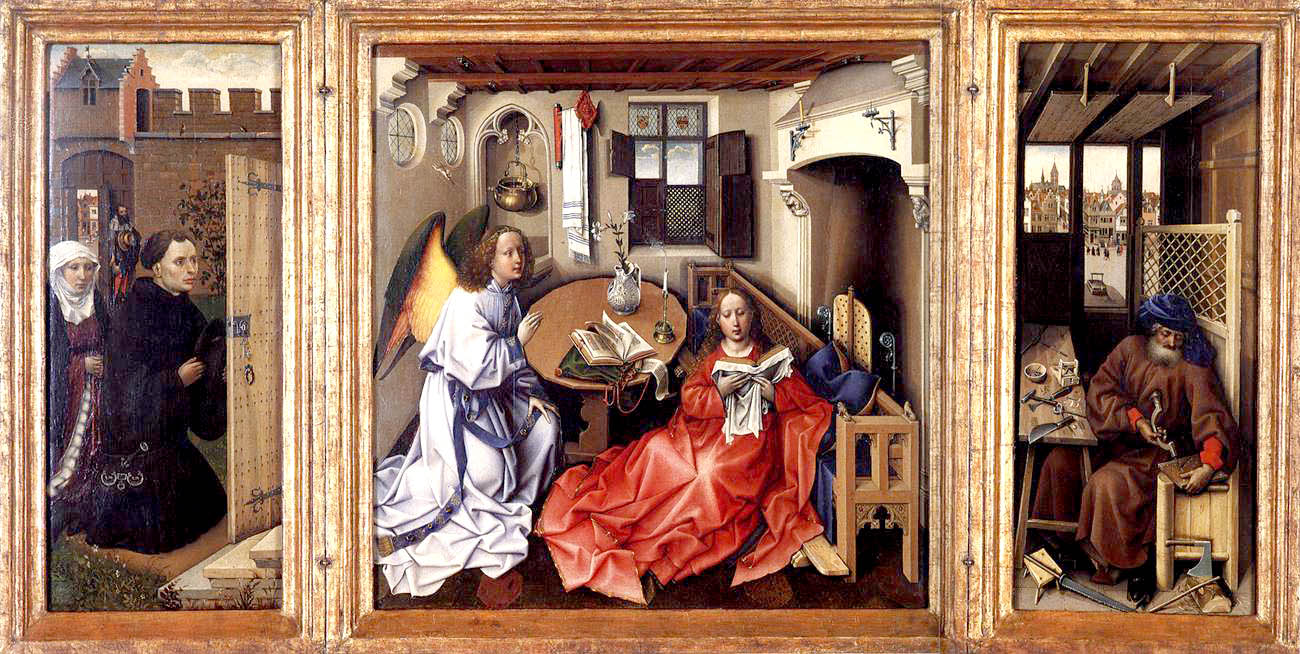
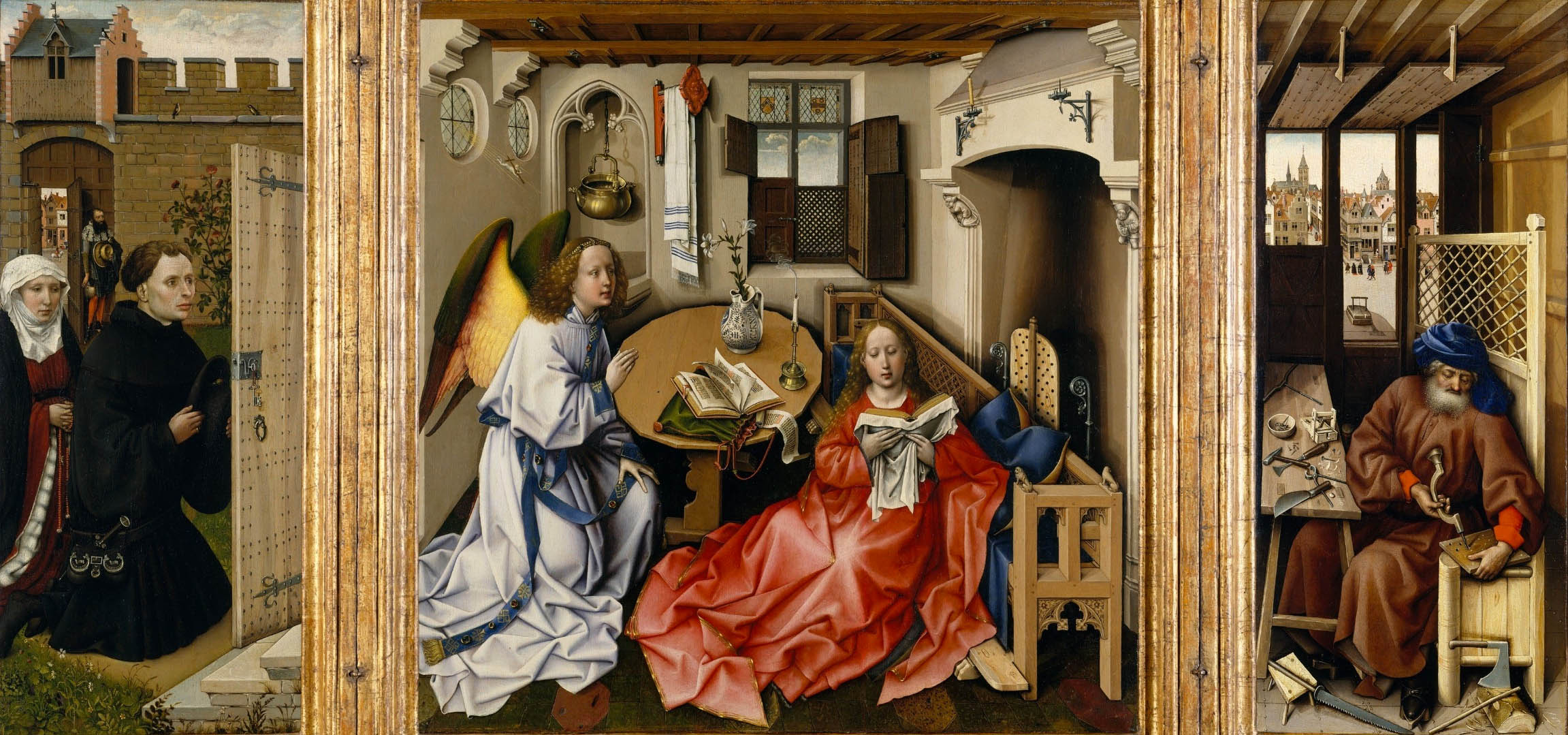
Other times they referred to the trap set to the devil with a different tool. St. Augustine says: “The Lord’s Cross was the devil’s mousetrap, the bait that caught him, the Lord’s death.” This is what we see in Robert Campin’s Mérode Altarpiece (between 1425 and 1428): while in the middle the scene of the Annunciation, that is, of Christ’s incarnation takes place, on the right side St. Joseph is knocking together mousetraps.


Supported by the authority of all this tradition, I have thus changed Eco’s text in the Hungarian translation, carefully erasing the traces of his slip-up:

After describing them, the Physiologus also explains how and why each of them carries some ethical and theological teaching. The lion, for example, which erases its own footprints with the tail, so as to hide from the hunters, becomes a symbol of Christ, who hides His divine nature from the devil.

After the Middle Ages, the motif of Satan cheated by Christ’s human nature and then bitterly disappointed, receded into the background, but hit has not completely disappeared. Its distant echoes can be heard even in so unexpected places, as Carman’s Carman Sunday’s on the way.


The demons where planning on having a party one night.
They got beer and Jack Daniels and pretzels, a little red wine, and some white.
They were celebrating how they crucified Christ, on that tree.
But Satan, the snake himself, wasn’t so at ease.
He took his crooked finger and he dialed the phone by his bed,
To call an old faithful friend, to know for sure, that he was dead.

He said, “Grave, Grave tell, did my plan fail?”
Old Grave just laughed and said, “Oh man, the dude is dead as nails.”

Chorus:
Well hey, hey, hey on Friday Night, they crucified the Lord at Calvary,
But He said, “Don’t dread, in three days, I’m gonna live again, you’ll see.”
When problems try to bury you and make it hard to pray,
It may seem like Friday night, but Sunday’s on the way!

A tranquilizer and a horror flick could not calm Satan’s fear.
So Saturday night, he calls up the grave… scared, of what he’d hear.
“Hey, Grave, what’s goin’ on?” Grave said, “Man, you called me twice,
and I’ll tell you, once more again boss, the Jew’s on ice!”

Devil said “Man grave, do you remember when old Lazarus was in his grave?
You said everything’s cool and four days later, BOOM, Ol’ Lazarus, he was raised!
Now this Jesus, He is much more trouble than anyone has been to me.
And he’s got me shocked, cuz He says, He’ll only be there three!”

Chorus

Sunday morning Satan woke with a jump, ready to blow a fuse.
He was shaking from the tips of his pointed ears, to the toes of his pointed shoes.
He said “Grave tell me is He alive? I don’t want to lose my neck!”
Grave said, “Your evilness, maintain your cool. You are a wreck!”
Grave said, “Now just cool your jets, Big D, my sting is still intact,
You see, Jesus is dead forever, he ain’t never coming back,
so just mellow out man, just go drink up or shoot up, but just leave old Grave alone,
and I’ll catch you la… la… oh no! OH no! OH NO! OH NO…
SOMEBODY’S MESSING WITH THE STONE!

Then the stone was rolled away and it bounced a time or two,
and an Angel stepped inside and said, “I’m Gabriel, who’re you?
And if you’re wondering where the Lord is, at this very hour,
I’ll tell you he’s alive and well, with resurrection power!”

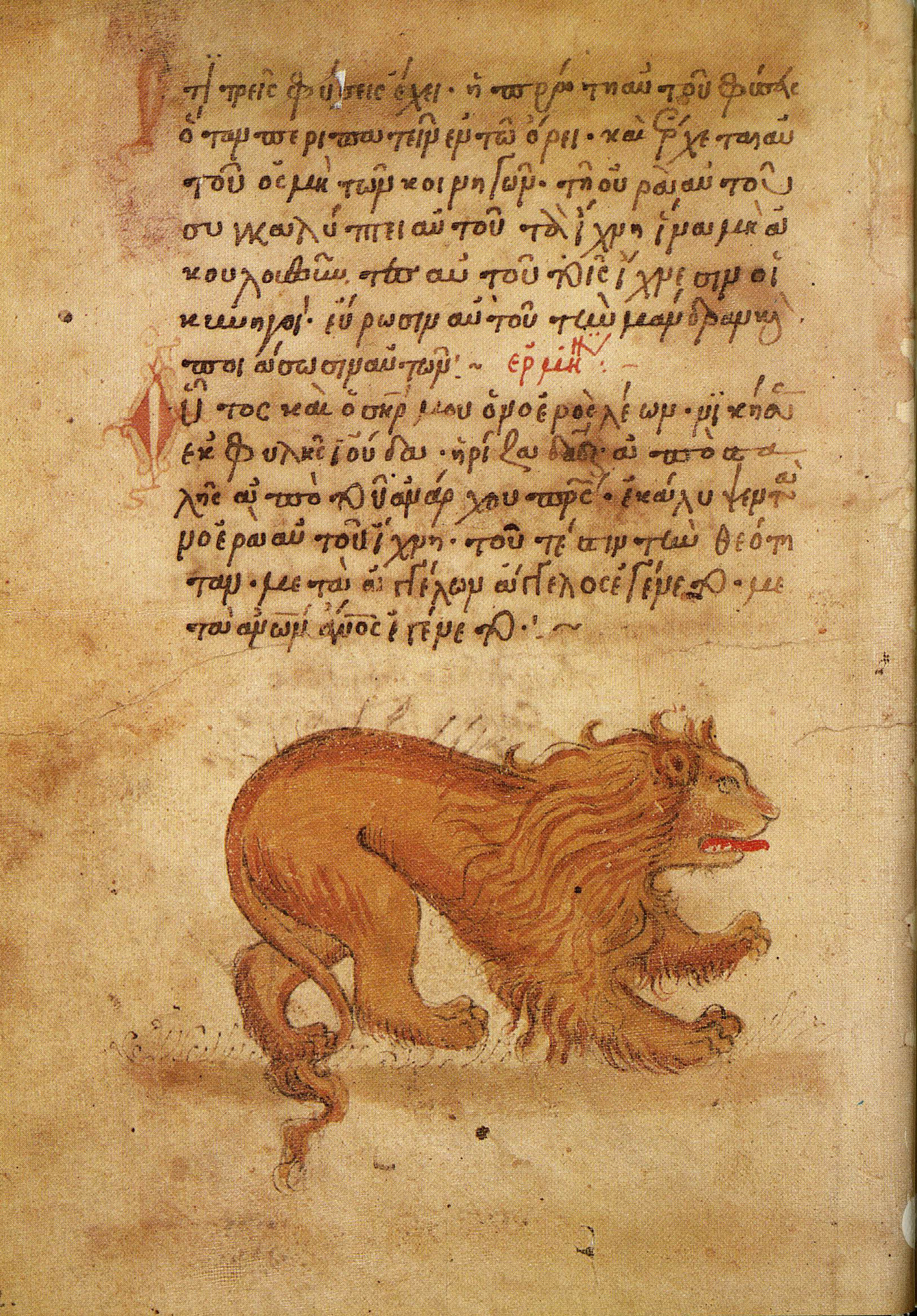
“The third characteristics of the lion: when its female gives birth, the puppy comes dead into the world, and she keeps it until, on the third day, the father comes and, by breathing onto its face, resuscitates it.” Physiologus, Codex Sambucus

Cola de león

León del manuscrito griego del Physiologus (ver más abajo), copiado en Venecia en el s. XVI, y que en 1587 pasó de las manos del gran humanista y médico húngaro Johannes Sambucus (János Zsámboki) a la Biblioteca de la Corte Imperial Vienesa (hoy Biblioteca Nacional de Austria) (Cod. Phil. gr. 290)

Ya hemos contado cómo el traductor de Umberto Eco ha de vadear a veces pasajes donde el maestro (y su editor), al igual que el buen Homero, se adormila; y hay otros lugares en que llevado por el ímpetu del relato no comprueba si lo que le dicta la memoria se ajusta a la realidad. Al principio solíamos añadir las observaciones en notas a pie de página hasta que el editor, sorprendido por su elevado número, prefirió que corrigiéramos directamente el texto, considerando que Eco (y su editor) habría escrito lo mismo de haber realizado él la comprobación. Así lo hacemos pero para mejor guardar registro del proceso anotamos algunos casos complejos también aquí. La última vez fue el pozo de Eratóstenes, y hoy es la cola del león.

La cola del león ha llegado hasta nuestra mesa –o mejor dicho hasta el capítulo sobre los bestiarios del nuevo libro de Eco– desde el Physiologus. El Physiologus, compilación en lengua griega elaborada en los siglos segundo y tercero, traducida luego a varios idiomas y convertida en uno de los best-sellers de la Edad Media, es la matriz de todos los bestiarios posteriores. Describía cuarenta animales, plantas y minerales, siempre sobre la base de la tradición helenística pero interpretada ya en clave cristiana. Eco menciona un ejemplo:

Dopo avere descritto questi esseri, il Fisiologo mostra come e perché ciascuno di essi sia veicolo di un insegnamento etico e teologico. Per esempio il leone che, secondo la leggenda, cancella le proprie tracce con la coda per sottrarsi ai cacciatori, diventa simbolo di Cristo che cancella i peccati degli uomini.
Después de describir a estos seres, el Physiologus muestra cómo y por qué cada uno de ellos conlleva una enseñanza ética y teológica. El león, por ejemplo, que según la leyenda borra sus propias huellas con la cola a fin de esconderse de los cazadores, se convierte en símbolo de Cristo, que borra los pecados de la humanidad.

El león borra el rastro de sus huellas con la cola. Physiologus, Codex Sambucus

Un paralelo atractivo, en efecto, que une significante y significado por la asociación ingenua de «borrar» –tal como hace san Isidoro de Sevilla en sus Etimologías, citado con cierto desdén por Eco– pero que no desarrolla la analogía apuntada (huellas de Cristo =/= pecados de la humanidad). Sin embargo, al abrir el Physiologus por la página correspondiente leemos algo bien distinto: una metáfora mucho más expandida que recoge una doctrina cristológica viva a lo largo de toda la Edad Media:

Las dos primeras páginas sobre el león en la edición del Physiologus de 1588 impreso por Plantin (el original griego y latino del texto citado se ve en la segunda página)


«Cuando el león vaga por las montañas y nota el olor del cazador, borra sus huellas con su propia cola para evitar que le persigan, que encuentren su morada y lo capturen ... De la misma manera nuestro Señor Jesucristo, el león espiritual ... enviado por el Padre, borró sus huellas espirituales, es decir, su divinidad; se despojó totalmente y descendió al vientre de María para salvar a la humanidad engañada».

El autor desconocido (identificado en la Edad Media con el obispo de Chipre del siglo IV y Padre de la Iglesia san Epifanio) relaciona la «observación empírica» aceptada por Plutarco y Eliano, con una doctrina teológica popular que exponen varios Padres de la Iglesia –Atanasio, Gregorio Nazianzeno, Dionisio Areopagita, e incluso el propio Epifanio– y, citando a éstos, otros escritores posteriores: que Cristo asumió un cuerpo humano con el fin de engañar al diablo, el engañador de la humanidad, que así, sin tener conocimiento de su divinidad, querría matarle como hombre y como un Mesías exclusivamente humano, contribuyendo de esta manera activamente a su muerte en la cruz y por tanto a la salvación de la humanidad.

Los teólogos cuentan este truco con gran placer y vívidos detalles. Rufino de Aquilea, también en el siglo IV, traductor de Orígenes y amigo (aunque luego entablarían una fuerte disputa) de san Jerónimo, conecta esta doctrina con la metáfora del anzuelo en su comentario sobre el Credo de los Apóstoles.

«El objeto del misterio de la Encarnación era la virtud divina del Hijo de Dios como anzuelo oculto en la forma de la carne humana. Estando Él bajo la condición de hombre (Fil. 2:8), atrajo al Príncipe de este mundo hacia una celada, ofreciendo su carne como cebo ... Como el pez que se traga el anzuelo no sólo no separa el cebo del gancho sino que él mismo sale fuera del agua para convertirse en comida para otros, así él, que tenía el imperio de la muerte, se apoderó del cuerpo de Jesús en la muerte, sin ser consciente de que el gancho de la divinidad estaba encerrado dentro, y se lo tragó y fue capturado. Al romperse las barras del infierno se vio arrastrado, por así decirlo, desde el abismo para convertirse en alimento de otros. Ezequiel profetizó esto bajo la misma figura, diciendo: «Voy a sacarte con mi anzuelo, y te extenderé sobre la tierra. Las llanuras se llenarán de ti, y dispondré sobre ti a todas las aves del cielo, y saciaré a todas las bestias de la tierra contigo» (Ez 29:4-5, 32:3-8) ... Job de la misma manera dice, en la persona del Señor que le habla: «¿Podrás tú atrapar con anzuelo al Leviatán, y le pondrás una anilla en las narices?» (Job 41:1-2)


Vemos una versión de la metáfora en una de las mejores muestras de la miniatura parisina del siglo XIII, el Misal de Reims (1285-1297) conservado en San Petersburgo, cuya compleja iconografía enseñamos durante un semestre en la universidad. En el folio 59v –también ilustración del Credo– Cristo pesca desde una barca con Job y le plantea la misma pregunta. Pero con la caña tendida ante el diablo ya le está demostrando cómo es capaz de atrapar al Leviatán. Y la larga filacteria del profeta Oseas, a la derecha, nos dice cómo interpretar el conjunto: O mors ero mors tua, morsus tuus ero inferne, «oh, muerte, seré tu muerte; seré tu dolor, oh, infierno». En consecuencia, este versículo se convirtió en la primera antífona de las laudes del Sábado Santo, en el oficio matutino.


Guillaume Bouzignac (ca. 1587 – 1641): O mors ero mors tua, Les Arts Florissants, William Christie


Otras veces se alude a la trampa tendida al diablo con un instrumento diferente. Dice san Agustín: «La cruz de Cristo fue ratonera del diablo; el cebo que lo atrapó, la muerte del Señor». Es esto lo que vemos en el Retablo de Mérode, de Robert Campin (entre 1425 y 1428): mientras que en el centro tiene lugar la escena de la Anunciación, es decir, de la Encarnación de Cristo, en el batiente derecho san José arma unas trampas para ratones (y fijémonos cómo se cruzan sus herramientas, la presencia de los clavos... sobre su banco de carpintero).


Apoyados en la autoridad de toda esta tradición hemos cambiado así el texto de Eco en la traducción al húngaro, cuidando de borrar las huellas del desliz:

Después de describir a estos seres, el Physiologus también muestra cómo y por qué cada uno de ellos conlleva una enseñanza ética y teológica. El león, por ejemplo, que borra sus propias huellas con la cola a fin de esconderse de los cazadores, se convierte en símbolo de Cristo que esconde al diablo su naturaleza divina.

Pasada la Edad Media, este motivo de Satanás engañado por la naturaleza humana de Cristo y amargamente burlado, quedaría en segundo plano. Pero no desapareció del todo. Sus ecos lejanos se escuchan hasta en lugares tan inesperados como esta sorprendente Sunday’s on the Way (el domingo está en camino) de Carman.


The demons where planning on having a party one night.
They got beer and Jack Daniels and pretzels, a little red wine, and some white.
They were celebrating how they crucified Christ, on that tree.
But Satan, the snake himself, wasn’t so at ease.
He took his crooked finger and he dialed the phone by his bed,
To call an old faithful friend, to know for sure, that he was dead.

He said, “Grave, Grave tell, did my plan fail?”
Old Grave just laughed and said, “Oh man, the dude is dead as nails.”

Chorus:
Well hey, hey, hey on Friday Night, they crucified the Lord at Calvary,
But He said, “Don’t dread, in three days, I’m gonna live again, you’ll see.”
When problems try to bury you and make it hard to pray,
It may seem like Friday night, but Sunday’s on the way!

A tranquilizer and a horror flick could not calm Satan’s fear.
So Saturday night, he calls up the grave… scared, of what he’d hear.
“Hey, Grave, what’s goin’ on?” Grave said, “Man, you called me twice,
and I’ll tell you, once more again boss, the Jew’s on ice!”

Devil said “Man grave, do you remember when old Lazarus was in his grave?
You said everything’s cool and four days later, BOOM, Ol’ Lazarus, he was raised!
Now this Jesus, He is much more trouble than anyone has ever been to me.
And look Grave he’s got old Devil shook cuz He said, he’s only gonna be dead for three!”

Chorus

Sunday morning Satan woke with a jump, ready to blow a fuse.
He was shaking from the tips of his pointed ears, to the toes of his pointed shoes.
He said “Grave tell me is He alive? I don’t want to lose my neck!”
Grave said, “Your evilness, maintain your cool. You are a wreck!”
Grave said, “Now just cool your jets, Big D, my sting is still intact,
You see, Jesus is dead forever, he ain’t never coming back,
so just mellow out man, just go drink up or shoot up, but just leave old Grave alone,
and I’ll catch you la… la… oh no! OH no! OH NO! OH NO…
SOMEBODY’S MESSING WITH THE STONE!

Then the stone was rolled away and it bounced a time or two,
and an Angel stepped inside and said, “I’m Gabriel, who’re you?
And if you’re wondering where the Lord is, at this very hour,
I’ll tell you he’s alive and well, with resurrection power!”

«Tercera característica del león: cuando la hembra da a luz, el cachorro viene al mundo muerto, y así permanece hasta que, al tercer día, se le acerca el padre y, echándole su aliento en el rostro, lo resucita» Physiologus, Codex Sambucus.