  |
 – «¡Sólo en Lwów!» El encabezamiento de nuestra entrada —cambiando el signo de interrogación por el de exclamación— fue primero título de una canción cuyas letra y música escribieron Emanuel Szlechter y Henryk Wars, figuras muy conocidas de la vida literaria de pre-guerra en Lwów y, junto con Wiktor Budzynski, responsables del programa dominical, que duraba todo el día, Wesoła Lwowska Fala, «La Feliz Onda de Lwów», escuchada a lo largo y ancho de Polonia. También colaboraron en la película Włóczęgi (erizos), que convirtió al admirado dúo radiofónico de Lwów, Szczepko y Tonko en nuevas estrellas de cine. La canción —interpretada en la película por el actor armenio de Lwów Jerzy Michotek que, después de pasar varios años en distintos campos de prisioneros soviéticos, trabajó tras la guerra para la radio recién creada de Wrocław, Polonia, y en 1990 publicó sus memorias con este mismo título— se convirtió en un himno para los expatriados de Lwów y lo ha continuado siendo hasta nuestros días. De momento reservamos esta canción y su traducción para ilustrar una próxima entrada.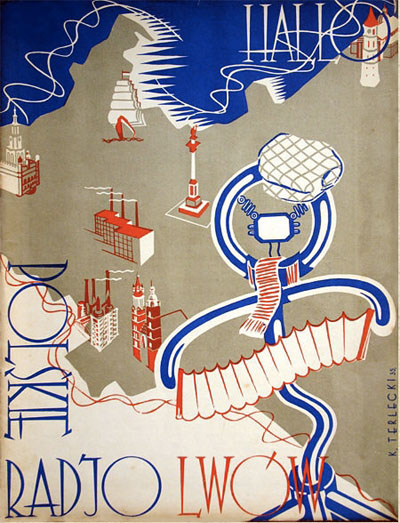
Es también el título de un estudio realizado por Olena Onufriv, directora del departamento de música de la radio de Lviv, publicado en el volumen Lemberg: eine Reise nach Europe (Berlín, 2007). El estudio comienza con este resumen:
«Cuando en septiembre de 1989 se celebró en Lviv con gran solemnidad el 50 aniversario de la radio local, la generación nacida después de la guerra no encontró en ello nada de particular. Sólo las personas mayores pudieron extrañarse, ya que aún recordaban bien las retransmisiones de antes de la guerra, por ejemplo a Szczepko y Tonko, cuyos divertidos diálogos hacían reír a toda la ciudad, y que en 1936 y 1939 también ejercieron de estrellas de cine. Por supuesto, la radio transmitía en polaco en aquel entonces. Y lo mismo pasó con la Orquesta Filarmónica local y con el Conservatorio, cuya existencia se contaba igualmente desde 1939 a pesar de haber existido durante medio siglo en Lemberg y Lwów. La redacción de la radio de Lviv reacciónó sólo en 1999, en el supuesto aniversario sexagésimo de la radio, exigiendo entonces el reconocimiento de la verdadera fecha de fundación, el 15 de enero de 1930. Con todo, hasta hoy aún no se ha llevado a cabo oficialmente.»
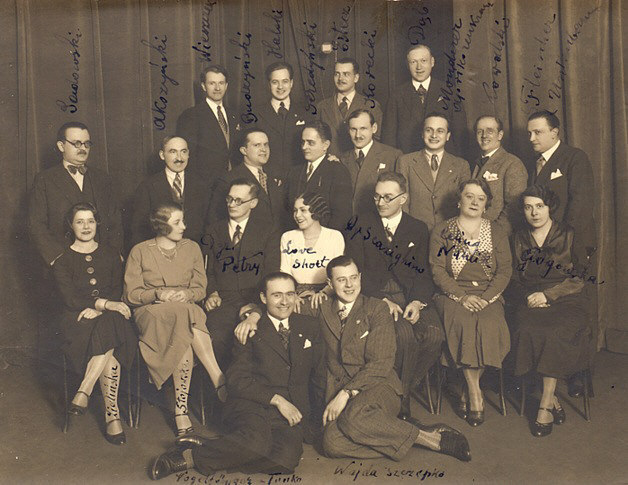 Personal de redacción de la radio de Lwów en los años 30 (sentados en el suelo: Tońko y Szczepko)
No se sabe cuando empezó a emitir la primera radio en Galitzia. Los primeros documentos de la policía son de 1927. En aquel momento la posesión de un aparato de radio precisaba de una licencia más el pago de una cuota, y en ese año la policía requisó 56 receptores ilegales, mientras que en 1934 el número alcanzó los 457. A su vez, la difusión de la radio nacional se inició en 1929, y la recién formada Compañía de Radio Polaca de Lwów anunció el 17 de septiembre 1929 —exactamente diez años antes de su cierre— la creación de la emisora de radio de 10 kW a las autoridades municipales.
 Estaciones polacas de radio en 1939
 Incio de la radio de Lwów en la feria nacional y su edificio, que aún permanece, en la calle Bátori, 6
El programa de más exito de la radio de Lwów fue, además de «La Feliz Onda de Lwów», el diario «La Feliz Semana de Lwów», una versión radiofónica del famoso cabaret de Lwów. Se publicaba un sumario en los periódicos matutinos, y por la noche se emitía el diálogo cómico aderezado con las canciones de Szlechter y Wars, interpretadas por Aprikosenkranz y Untenbaum (Mieczysław Monderer y Adolf Fleischer), que popularizaron en todo el país el tipo de humor judío de Galitzia y el dialecto yidis de Lemberik, o por Szczepko y Tonko, representantes de una determinada subcultura de Lwów, la del suburbio de Lyczaków (el «Gangland») —casa de «los chicos de Lyczaków» que en 1920 defendieron la ciudad sitiada— que cantaban usando el típico «argot de Lwów», fuertemente mezclado con ucraniano, húngaro, yidis y alemán. Incluso llegaron tan lejos como para invitar al gobernador de Polonia Józef Pilsudski en su cumpleaños probar la famosa salchicha de Lwów, a lo cual respondió el mismo día Piłsudski agradeciéndolo en un telegrama. Por esto sabemos que las mejores salchichas de Lwów se pueden comprar en casa de la tía Bandziuszkowa. El telegrama se pudo contemplar hasta septiembre de 1939, enmarcado en la pared del estudio.

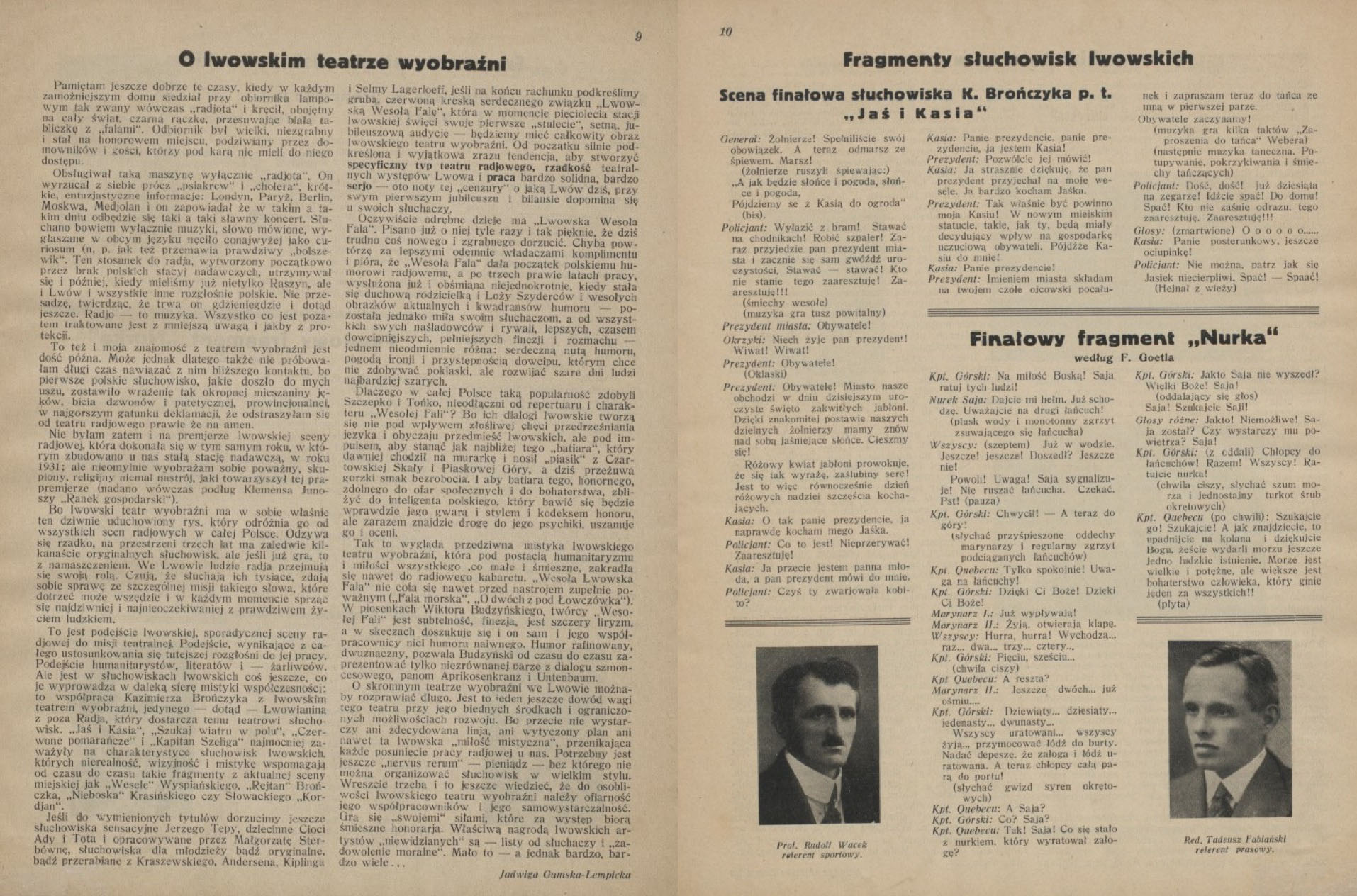 The daily papers of Lwów report on the radio dialogues and on their last page publish details of them
También fue famosa la sección de música de la radio, dirigida por Adam Sołtys, gracias a la cual casi todo el país pudo escuchar por primera vez la música de Ucrania. En 1939 retransmitieron la primera ópera ucraniana, escrita por Petro Nichnsky, y varios cantantes tradicionales ucranianos, como los miembros del cuarteto masculino Jevhen Kosak aparecían con regularidad en el programa.
The radio tower was bombed on 16 September 1939 by the German army, and its studio was looted the next day by the Soviet army. The recording of a single broadcast survived in Warsaw, in which a patient of a mental institution by mistake becomes an office manager and terrorizes his subordinates. The fate of Fleischer and Monderer is unknown. Szlechter died in 1943, at the age of 37, we do not know where. Wars emigrated in time, and he established together with several former colleagues the Merry Wave of Lwów Theater to amuse the Polish exile army on the front. After the war they all stayed in the West.
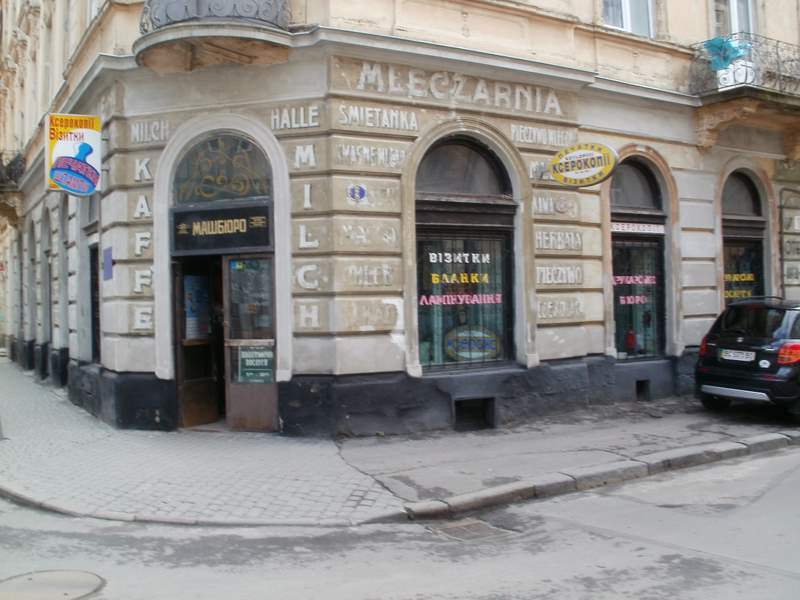
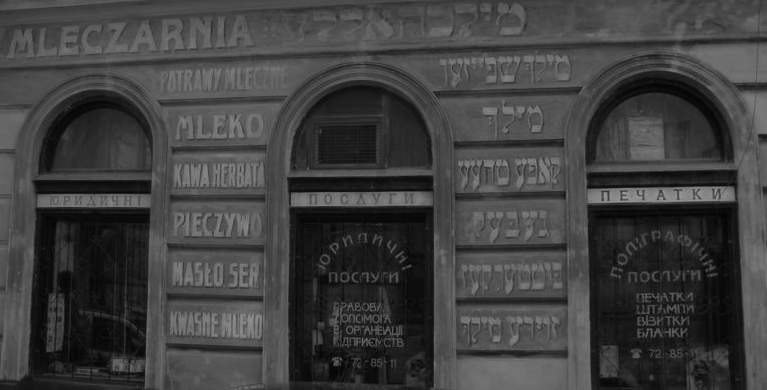
Y aquí iba a terminarse esta historia de no haber recibido hace unos días un comentario de Alfanje tras haber publicado nuestro mapa de los monumentos de Lwów, donde incluimos dos fotos de las inscripciones multilingües que han sobrevivido milagrosamente en la fachada de una lechería de Lviv.
Al leer seguido el blog de Alfanje, tan concentrado e informativo gracias a su aguda mirada, encontramos la entrada del 26 de julio donde publicaba una foto con una placa conmemorativa en el lado sur de la plaza principal de Wrocław.

W tym domu w. 1945 r mieściła się pierwsza
siedziba Polskiego Radja we Wrocławiu.
W 25-ta rocznicę nadania
pierwszej Polskiej audycji na fale eteru
Towarzystwo Milośników Wrocławia
29 września 1971
En esta casa estuvo en 1945 el primer
estudio de la Radio Polaca de Wrocław.
En el 25 aniversario
de la transmisión de Polonia por las ondas del éter,
la Asociación de Amigos de Wrocław
29 de septiembre de 1971
siedziba Polskiego Radja we Wrocławiu.
W 25-ta rocznicę nadania
pierwszej Polskiej audycji na fale eteru
Towarzystwo Milośników Wrocławia
29 września 1971
En esta casa estuvo en 1945 el primer
estudio de la Radio Polaca de Wrocław.
En el 25 aniversario
de la transmisión de Polonia por las ondas del éter,
la Asociación de Amigos de Wrocław
29 de septiembre de 1971
El personal de la radio polaca, que comenzó a transmitir en Wroclaw casi exactamente seis años después de que la radio de Lwów fuera silenciada, llegó de Lwów a Breslau en aquella gran oleada que resume de forma concisa Adam Zagajewski, dejando a otros escritores alemanes y polacos el despliegue de los detalles:
«En el año 1945, casi toda la familia hizo las maletas y llenó los baúles preparándose para abandonar Lwów o sus aledaños. Al mismo tiempo liaban los bártulos innumerables familias alemanas obligadas a dejar sus casas y sus pisos de Silesia, Gdánsk, Szczecin, Olsztyn y Królewiec. Millones de personas comprimieron con las rodillas las tapas rebeldes de maletas que no cerraban bien. Ocurría así por orden de tres caballeros de edad provecta que se habían dado cita en Yalta.».
Así fue como la radio de Wrocław comenzó a emitir en 1945, en parte con personal exiliado de Lwów, como Jerzy Michotek, y así es como llegó a alcanzar su 25º aniversario en 1971. Sin embargo, al igual que en las celebraciones del cumpleaños en Lviv, esta placa conmemorativa no menciona que ya antes otra radio había estado trabajando en Breslau, que en 1945 podría haber celebrado el 21º aniversario de su fundación.
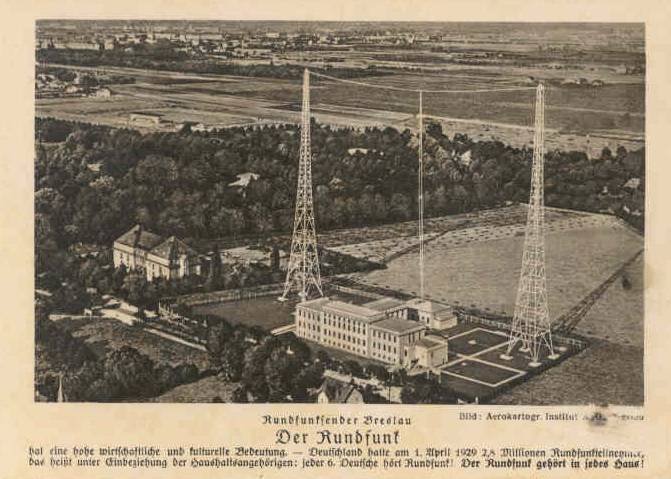


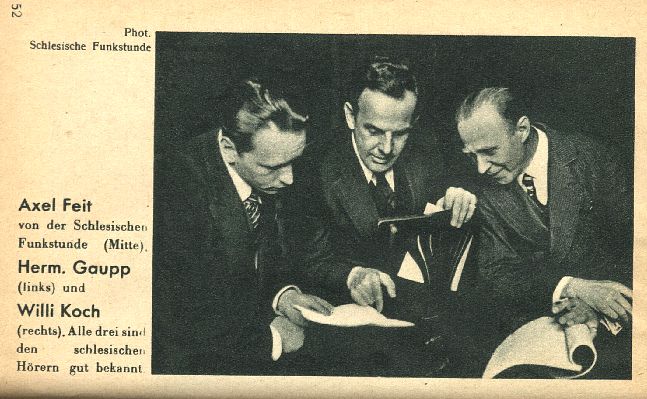
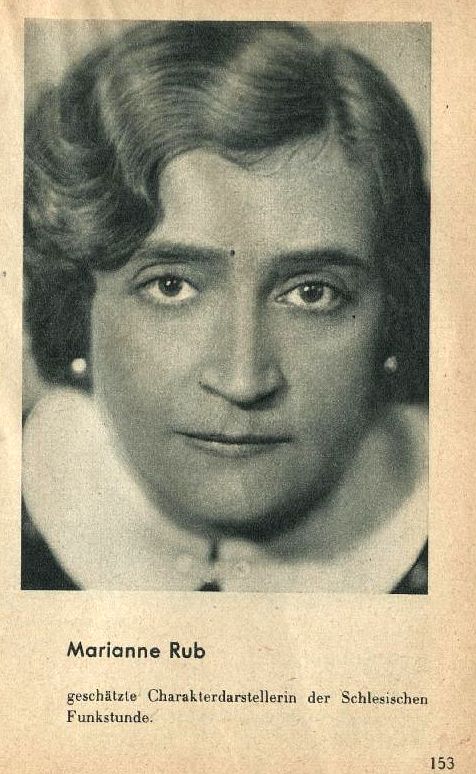
La Schlesische Funkstunde de Breslau comenzó sus emisiones el 26 de mayo de 1924. Desde aquí se transmitió el Hallo! Hier Welle Erdball! de Fritz Walter Bischoff, la última gran obra para radio de la República de Weimar (1928), así como el Leben in dieser Zeit, de Erich Kästner, su obra de mayor exito, antes de que el gobierno nacional-socialista quemara públicamente todas las obras de este autor. Acerca de esta radio se puede leer en detalle (con muchas ilustraciones) en las memorias de Hans Ulrich Berkner, y algunas de sus fotos se encuentran en el sitio histórico de la radio de Wroclaw (de donde hemos seleccionado las imágenes de arriba). Su antigua sintonía se puede escuchar en la colección de sonidos de la «Radio Eshibition» húngara:
Radio Breslau, sintonía anterior al 7 de febrero de 1945
Esta estación de radio de Breslau en Gleiwitz, en la frontera polaca, fue atacada el 31 de agosto de 1939 por un grupo de soldados alemanes de las SS en uniforme militar polaco, generando así un pretexto para la invasión de Polonia (la llamada «Provocación de Gleiwitz»). La acción estuvo a punto de fracasar, ya que los atacantes no sabían que esta estación estaba operando desde hacía años sólo como estación repetidora de la torre de Breslau, y no emitía programas propios. Por este motivo, durante largas horas fueron incapaces de leer el comunicado de la provocación: «¡Atención, la estación de Gliwice está, finalmente, en manos de Polonia, la hora de la libertad ha llegado! ¡Viva Polonia!»
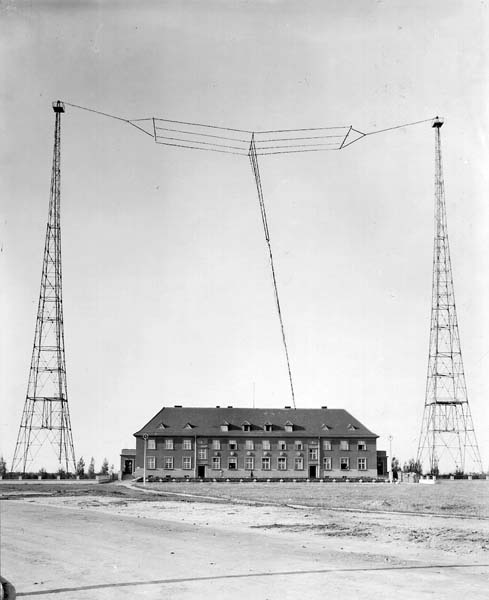 La estación de Gleiwitz (hoy Gliwice) en 1939
Éter, el «quinto elemento», quinta essentia, era en la filosofía natural griega la materia superior de este mundo, cuyas reglas estaban por encima de las de los otros elementos. Antes de la llegada de la televisión y de Internet, como muestran los ejemplos anteriores, era evidente que quien controlara el éter controlaba el presente, y como sabemos desde Orwell, quien controla el presente controla el pasado. Y quien controla el pasado controla el futuro.
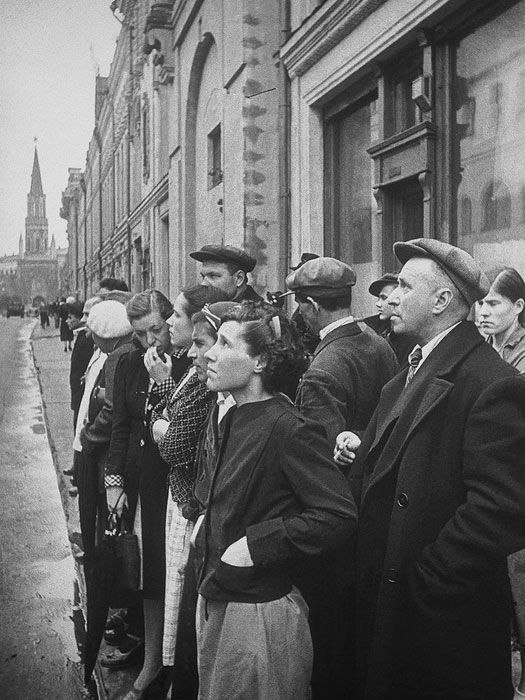 El 22 de junio de 1941 la radio de Moscú anuncia el comienzo de la Guerra, que ya estaba en marcha desde hacía dos años y medio
Na falach eteru. “En las ondas del éter”. Marcha de los soldados polacos. Interpretada por la banda militar de Kielce


 – “Only in Lwów!” The title – of course, without a question mark – was first of all the title of a song, whose text and music were written by Emanuel Szlechter and Henryk Wars, well-known figures of pre-war literary life in Lwów and, together with Wiktor Budzyński, editors of the all day Sunday broadcast Wesoła Lwowska Fala, “Merry Wave of Lwów”, popular all over Poland, as well as contributors to the film Włóczęgi (Vagabunds) which introduced the beloved duo of the Lwów radio, Szczepko and Tońko as celebrated film stars. The song – performed in the film by the Lwów Armenian actor Jerzy Michotek who, not much later spending years in various Soviet prison camps, after the war worked for the newly established Polish radio in Wrocław, and in 1990 published his memoirs with the same title – became a hymn for the expatriates of Lwów and it has remained so to this day. We keep in store this song with translation for the illustration of another post.


 Come with us to…
 Bestiary
 Bohemia+Prague
 Books, exhibitions, music, film
 Caucasus
 Cemeteries
 Crimea
 Get to know the
 Images of the East
 Lightwriting
 Lwów/Lemberg
 Mallorca
 Message on the wall
 The Museum of Propaganda
 Odessa
 Paper Museum
 Persian letters
 The Jewish heritage


