Switch over to our new blog! • ¡Pásese a nuestro nuevo blog!

The renewed version of our blog, with more features, a richer design, and available in nine languages, can be read here: https://wangriver.com

The new version also includes the old posts, often in expanded form. If you are curious about the updated version of this post, replace “riowang.blogspot.com/” in the URL with “riowang.studiolum.com/”, and the new link will most likely lead you there.


La versión renovada de nuestro blog, con más herramientas, un diseño más rico y disponible en nueve idiomas, se puede leer aquí: https://riowang.com

La nueva versión también incluye las publicaciones antiguas, a menudo en una forma ampliada. Si tiene curiosidad por la versión actualizada de esta entrada, sustituya «riowang.blogspot.com/» en la URL por «riowang.studiolum.com/es/», y el nuevo enlace probablemente le llevará allí.

Mostrando entradas con la etiqueta Holy Week. Mostrar todas las entradas

Sett'ispadas de dolore


Eva Lutza (trumpet, song): Sett’ispadas de dolore (Seven swords of pain) (video here). Medieval Lamentation of Mary in Sardinian language, still sung in the towns of Sardinia on the Holy Week.

Eva Lutza (trompeta, voz): Sett'ispadas de dolore (Siete espadas de dolor) (vídeo aquí). Lamentación medieval de la Virgen, sardo. Aún se canta en las ciudades de Cerdeña durante la Semana Santa.

Pro fizu meu ispriradu
a manos de su rigore
sett’ispadas de dolore
su coro mi han trapassadu.

Truncadu porto su coro
su pettus tengo frecciadu
de cando mi han leadu
su meu riccu tesoro
fui tant’a cua chignoro
comente mi es faltadu
sett’ispadas de dolore
su coro mi han trapassadu.

In breve ora l’han mortu
pustis chi l’han catturadu
bindig’oras estistadu
in sa rughe dae s’ortu
e bendadu l’ana mortu
cun sos colpos chi l’han dadu
sett’ispadas de dolore
su coro mi han trapassadu.

Morte no mi lesses bia
morte no tardes piusu
ca sende mortu Gesusu
no podet vivever Maria
unu fizu chi tenia
sa vida li han leadu
sett’ispadas de dolore
su coro mi han trapassadu.
For my son, who died
at the hands of violence
seven swords of pain
have pierced my heart

My hart is broken
my chest pierced by arrows
since they have taken away
my precious treasure
with such fury, that I do not
know, how he disappeared
seven swords of pain
have pierced my heart

In short time they killed him
after they captured him
it lasted fifteen hours
from the garden to the cross
they killed him blindfolded
with the beating they gave him
seven swords of pain
have pierced my heart

Death, do not leave me alive
death, do not delay more
because being dead Jesus,
Mary cannot live any more:
from the only son I had
they took away the life
seven swords of pain
have pierced my heart
Por mi hijo que ha muerto
a manos de la violencia,
siete espadas de dolor
han traspasado mi corazón.

Tengo el corazón roto
el pecho asaeteado
desde que me han robado
mi tesoro precioso
con tanta saña que ignoro
cómo se me ha ido,
siete espadas de dolor
han traspasado mi corazón

En breve tiempo lo mataron
después de capturarlo,
pasaron quince horas
desde el huerto a la cruz,
atado lo mataron 
con los golpes que le dieron,
siete espadas de dolor
han traspasado mi corazón

Muerte, no me dejes viva,
muerte, no te tardes más
pues estando Jesús muerto,
María no puede vivir:
un hijo que tenía
le han quitado la vida,
siete espadas de dolor
han traspasado mi corazón.

settispadas settispadas settispadas settispadas settispadas settispadas settispadas settispadas settispadas settispadas settispadas settispadas settispadas settispadas settispadas settispadas settispadas settispadas settispadas settispadas settispadas settispadas settispadas settispadas settispadas settispadas settispadas settispadas settispadas settispadas settispadas settispadas settispadas settispadas settispadas settispadas settispadas settispadas settispadas settispadas settispadas settispadas settispadas settispadas settispadas settispadas
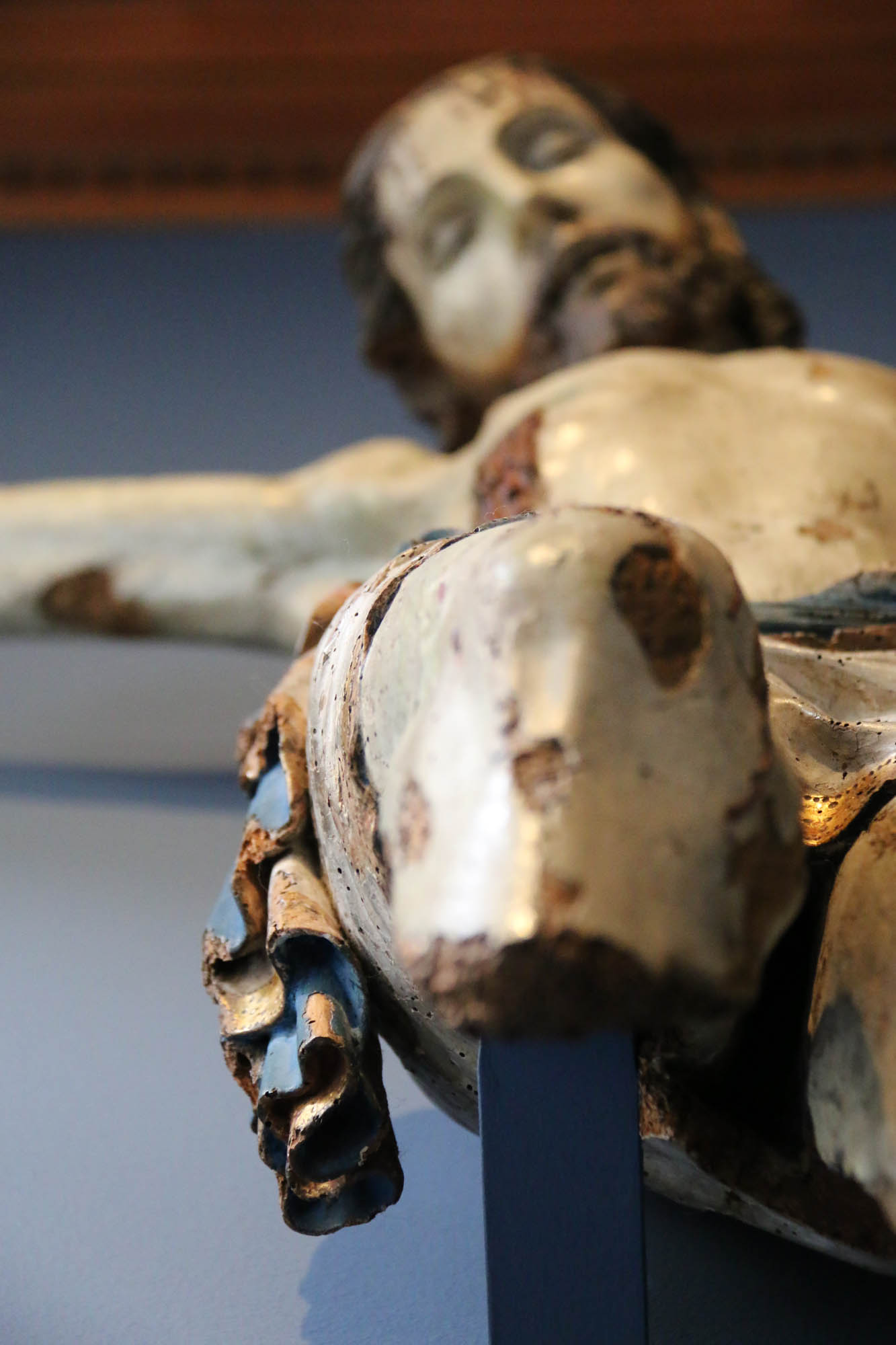
Giovanni Tedesco: Fragment of a Crucifix. Perugia or Siena, ca. 1460. Berlin, Bode Museum
Giovanni Tedesco: Fragmento de Crucifixión. Perugia o Siena, c. 1460. Berlín, Museo Bode

Semana Santa

Holy Week / Semana Santa
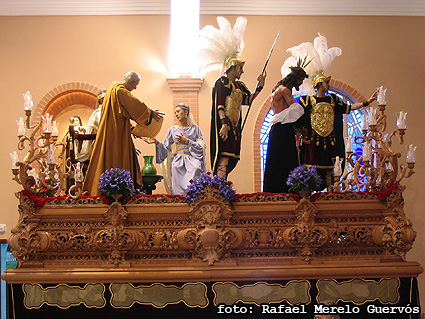
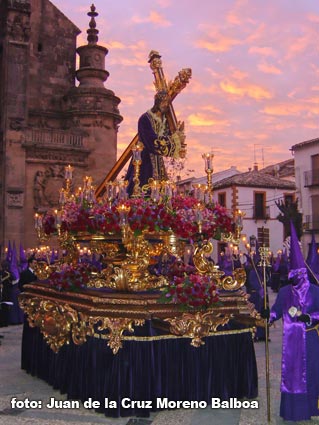
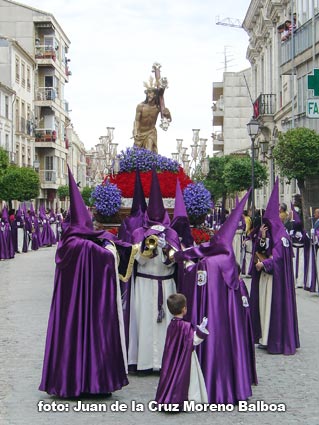
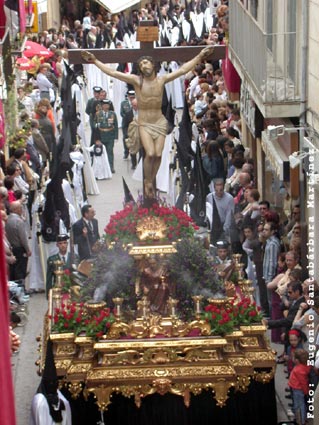
Vaya, esta vez nos olvidamos de dirigir a tiempo la atención hacia la Semana Santa de Úbeda, tal como hicimos el año pasado. Estas fiestas son verdaderamente de las más arraigadas e imponentes de Europa, y en ellas se involucra toda la ciudad. Empiezan oficialmente el Domingo de Ramos, pero las dieciocho cofradías de origen medieval se preparan durante meses, casi durante todo el año anterior. En su blog documentan día a día los acontecimientos con imágenes, texto y vídeo. El año pasado ya presentamos en detalle el orden de las procesiones y su desarrollo a lo largo de la semana, pero cada año hay también novedades. Con las líneas evocadoras del hijo ilustre de Úbeda Antonio Muñoz Molina en su novela Sefarad entendemos cuánto significan estas celebraciones para la ciudad y para toda España:
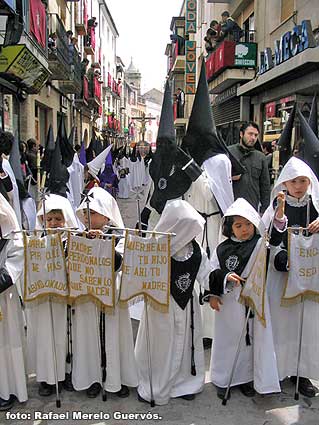
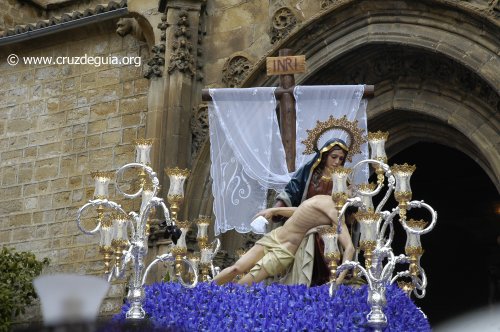
We have forgot to tell you in due time to follow with attention the events of the Holy Week in Úbeda just like we did in the last year. This series of celebrations which belongs to the most traditional and largest ones in all Europe and which sets all the town in motion, officially began on Palm Sunday. However, the eighteen confraternities of medieval origin have been preparing to it for months, or rather throughout all the previous year. On their common blog they document the events day by day in photo, text and video. In the last year we have already presented in detail the processions following each other in this week, but they bring some novelty as well in each year. From the evocative lines of Úbeda’s great son Antonio Muñoz Molina in his novel Sefarad we can understand how much these celebrations mean to the town and to the whole Spain:

Nos gustaba volver con nuestros hijos pequeños y nos enorgullecía descubrir que se emocionaban con las mismas cosas que nos habían ilusionado en la infancia a nosotros. Querían que llegara la Semana Santa para ponerse sus trajes diminutos de penitentes, sus capuchones infantiles que les dejaban destapada la cara. Apenas nacían los inscribíamos como hermanos en la misma cofradía a la que nuestros padres nos habían apuntado a nosotros. Viajaban ansiosos en el coche, ya un poco más crecidos, preguntando nada más salir cuántas horas faltaban para la llegada. Habían nacido en Madrid y hablaban ya con un acento que no era el nuestro, pero nos daba orgullo pensar y decir que pertenecían a nuestra tierra tanto como nosotros mismos, y al llevarlos de la mano un domingo por la mañana por la calle Nueva igual que nos habían llevado a nosotros nuestros padres, al subirlos en brazos ante el paso de un trono para que vieran mejor al borriquillo que cabalga Jesús entrando a Jerusalén, o la cara verde y siniestra que tiene Judas en el paso de la Santa Cena, sentíamos consoladoramente que la vida estaba repitiéndose, que en nuestra ciudad el tiempo no pasaba o era menos cruel que el tiempo tan angustioso y trastornado de la vida en Madrid.

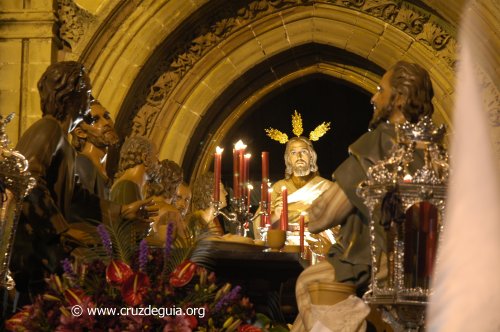
We were happy to return together with our small kids and we have discovered with pride that they were enchanted by the same things which had also enchanted us in our childhood. They could hardly wait the Holy Week to come, when they can put on their small penitent’s clothes and children’s hood which leave the face free. As soon as they were born we inscribed them into the same confraternity to which our fathers had inscribed us, too. They were not much older now, as they sat excited on the back seat of the car and kept asking us how many hours we need yet to get there. They were already born in Madrid and spoke in a dialect which is not ours, but we were proud to think and say that they also belonged to our land, just as much as ourselves. And when on Sunday morning we take them by the hand, as our parents had taken us, to walk out on the calle Nuova and to lift them up when a throne passes by so that they could better see the ass’s colt on which Jesus had entered Jerusalem or the green and sinister face of Judas at the Last Supper, we are consoled by the feeling that life repeats itself, that in this town of ours time does not pass by, or at least it is less cruel than the anxious and chaotic time of life in Madrid.


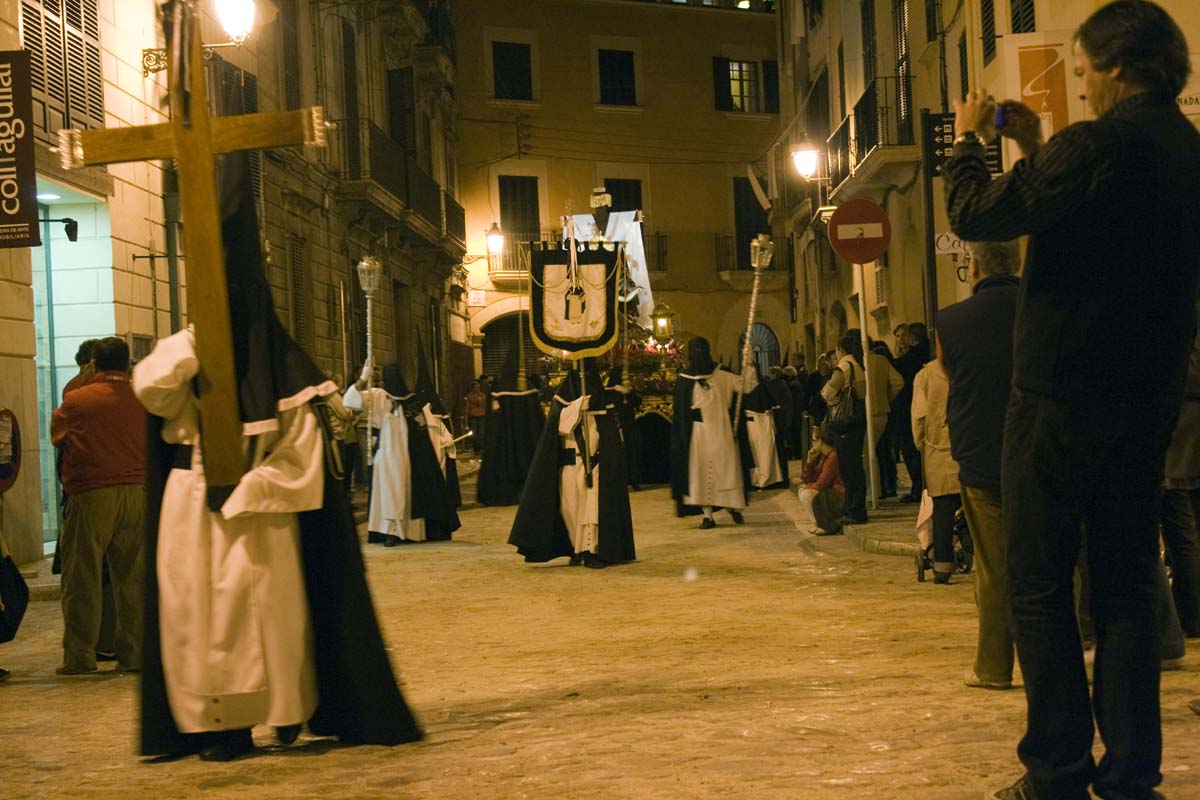
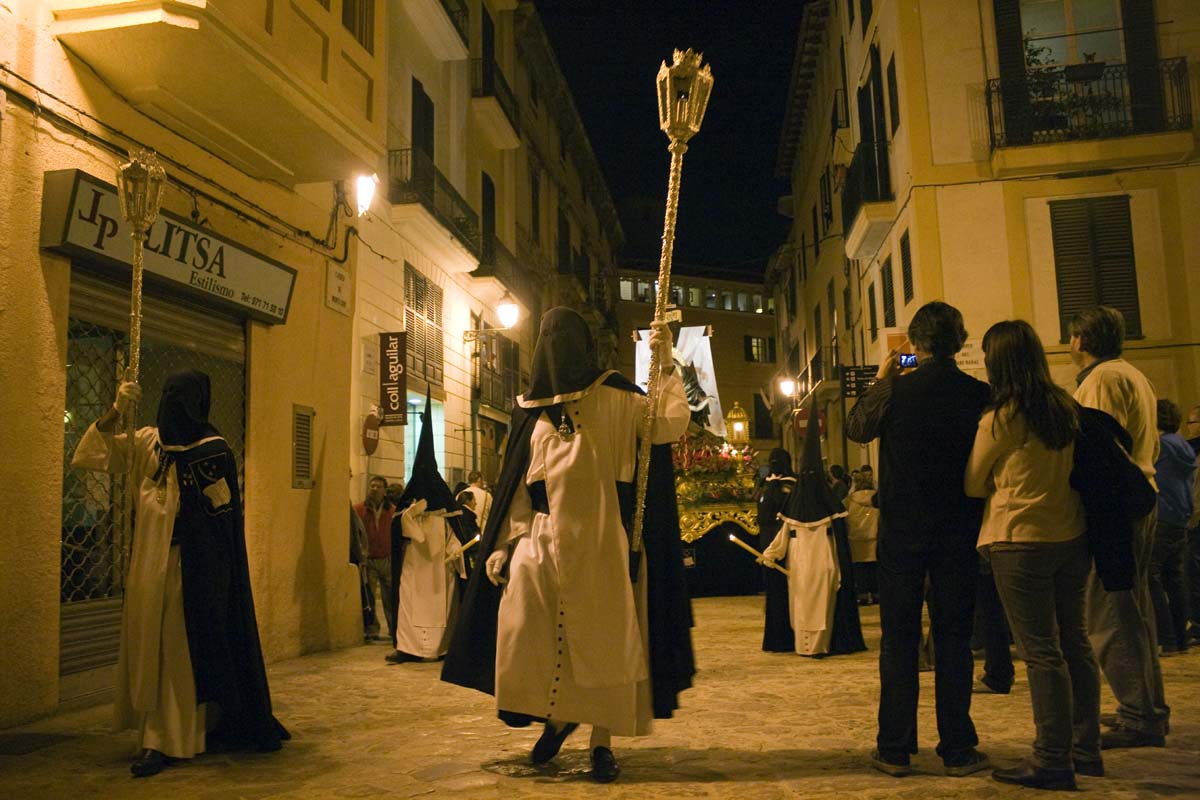
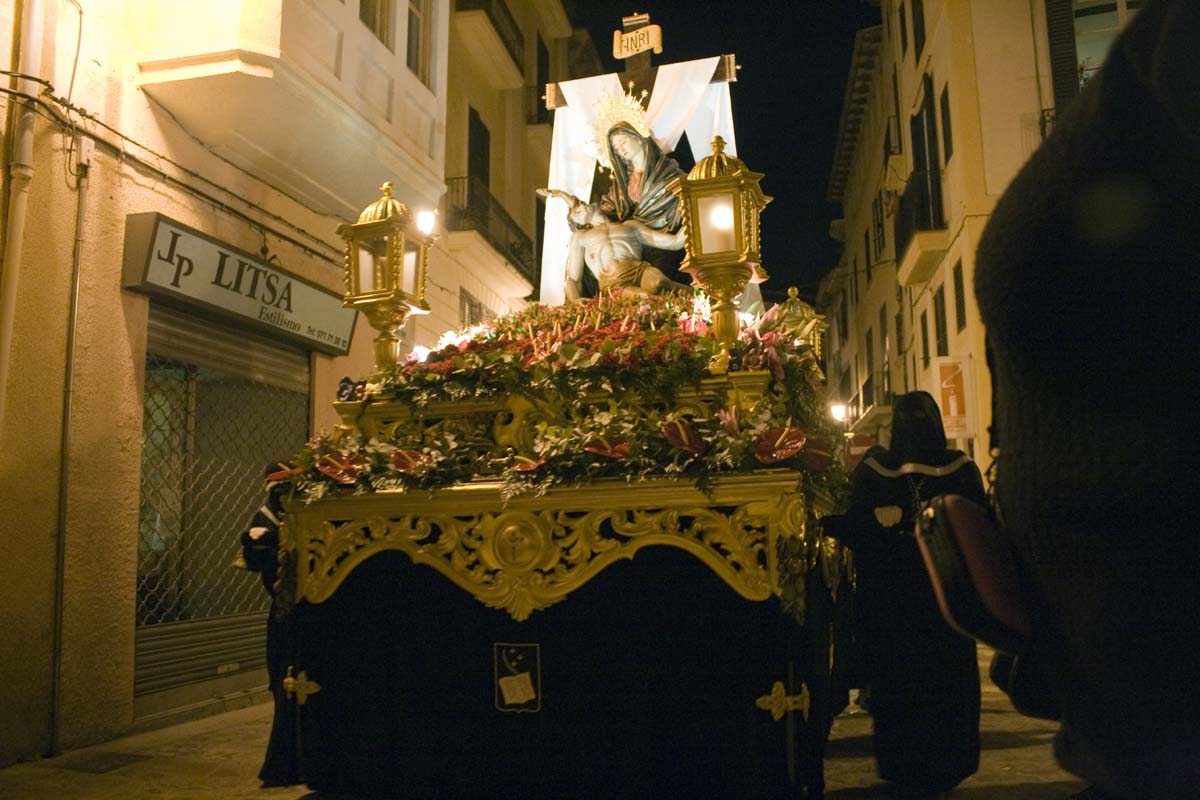
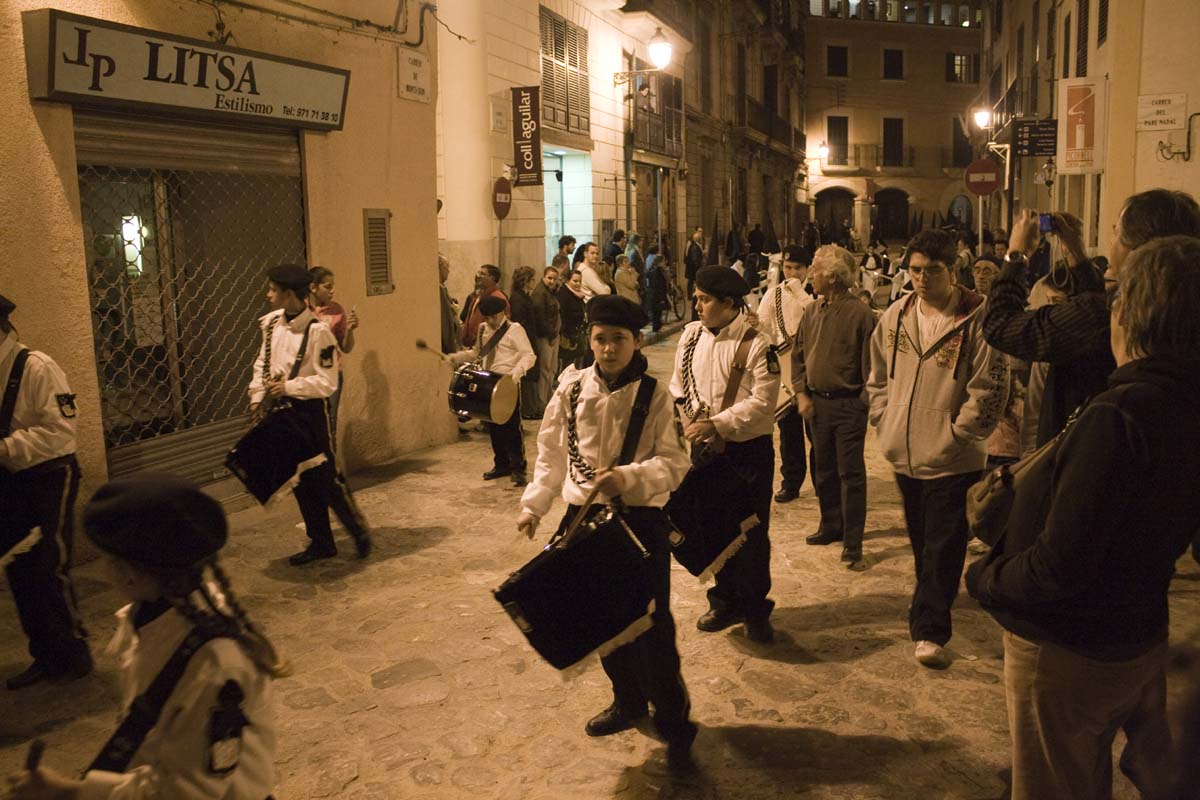
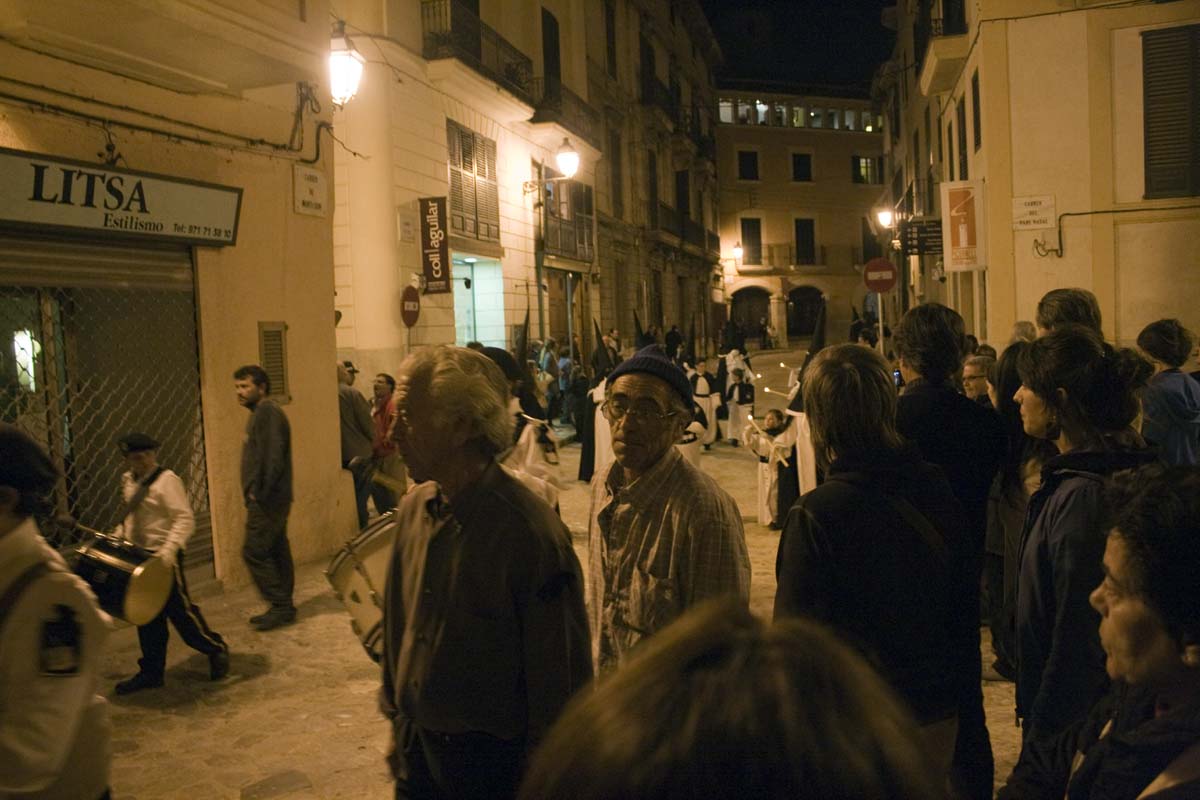
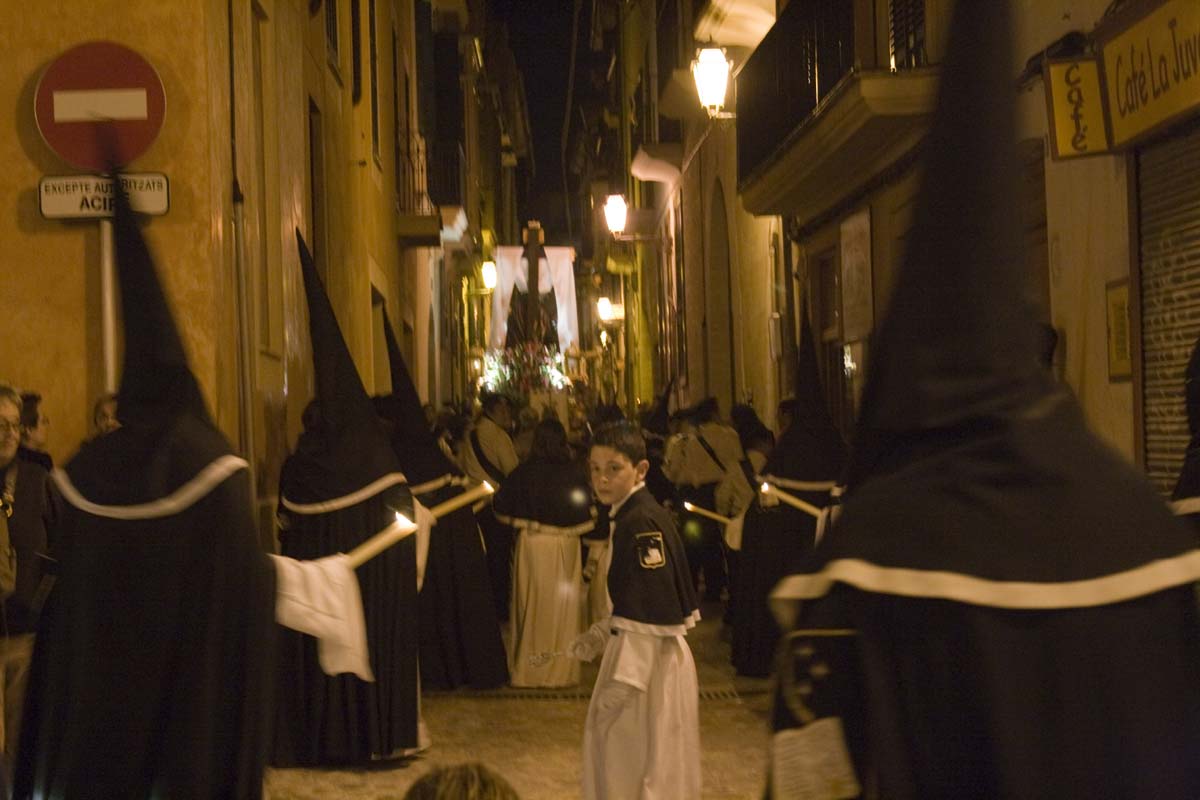
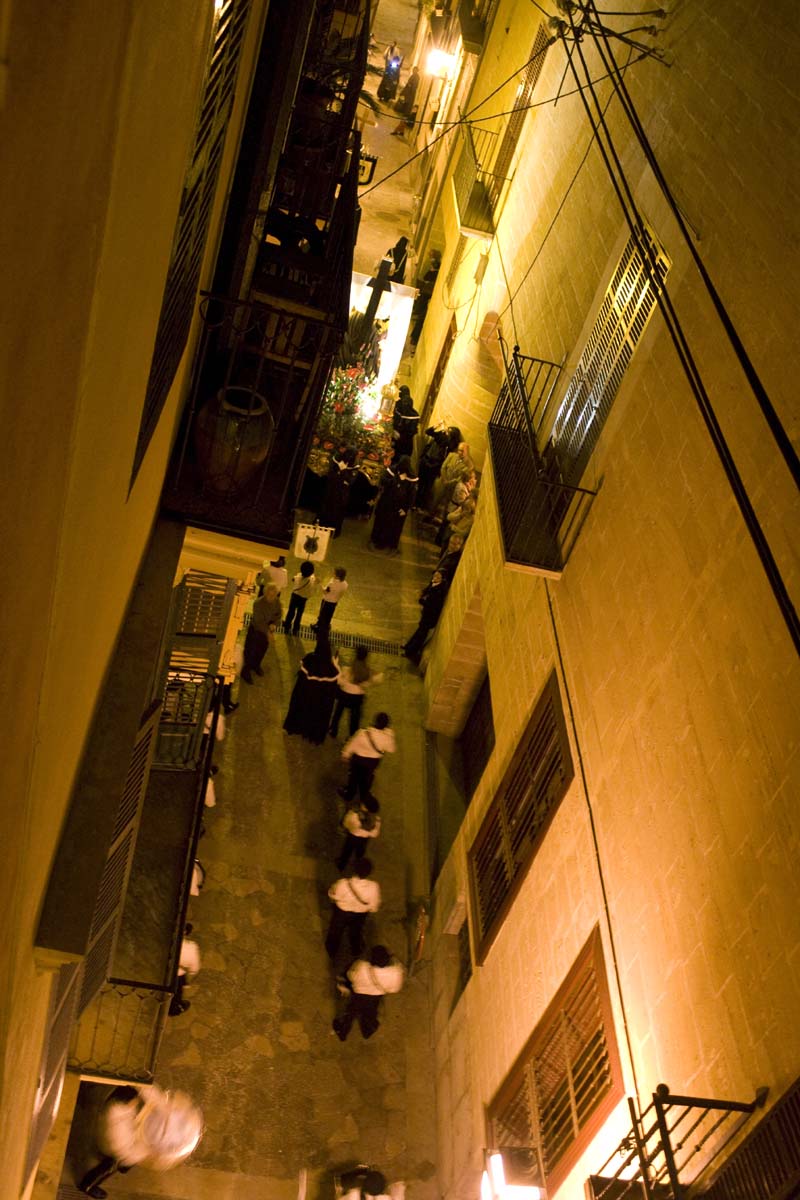
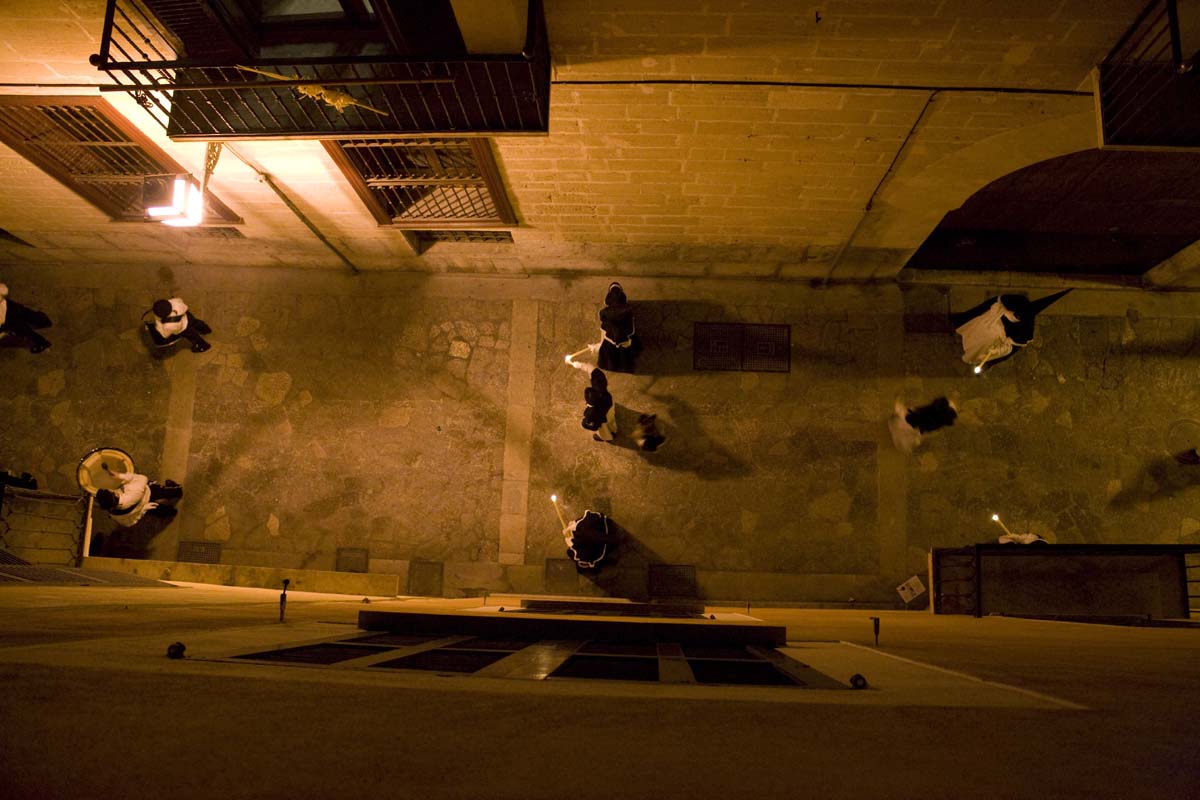
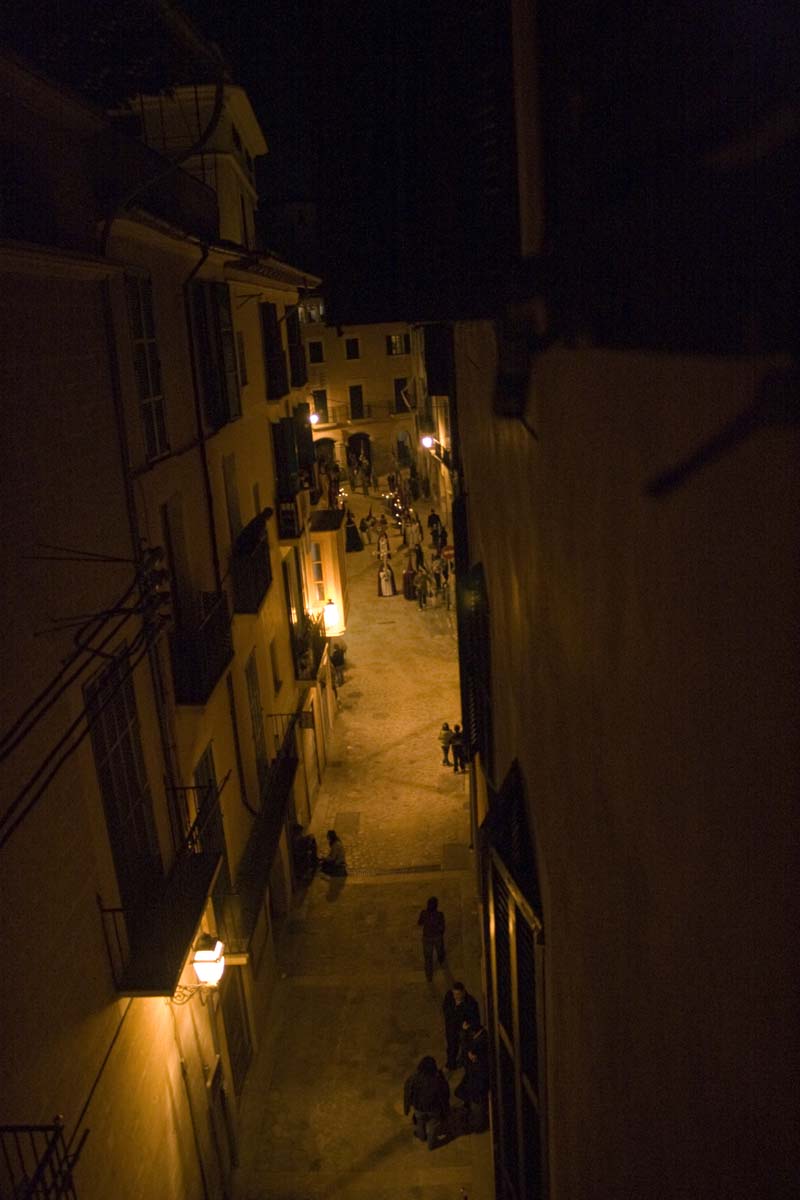
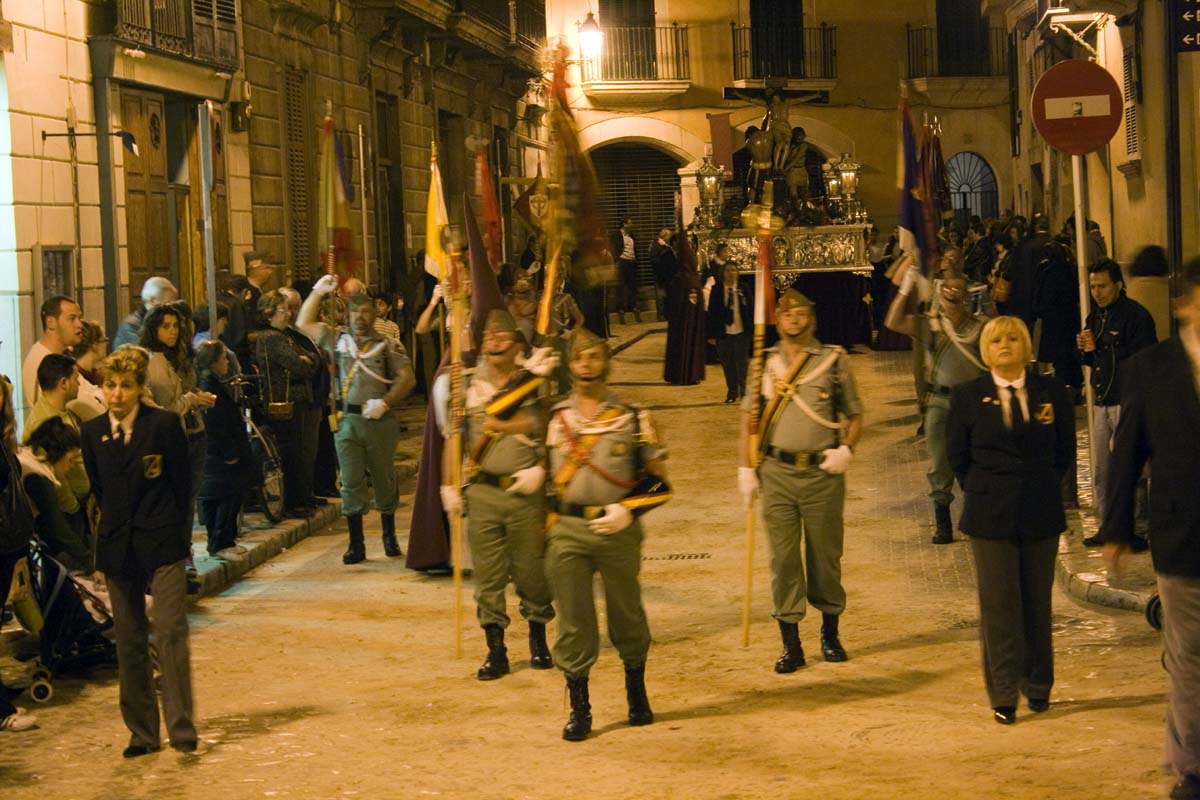
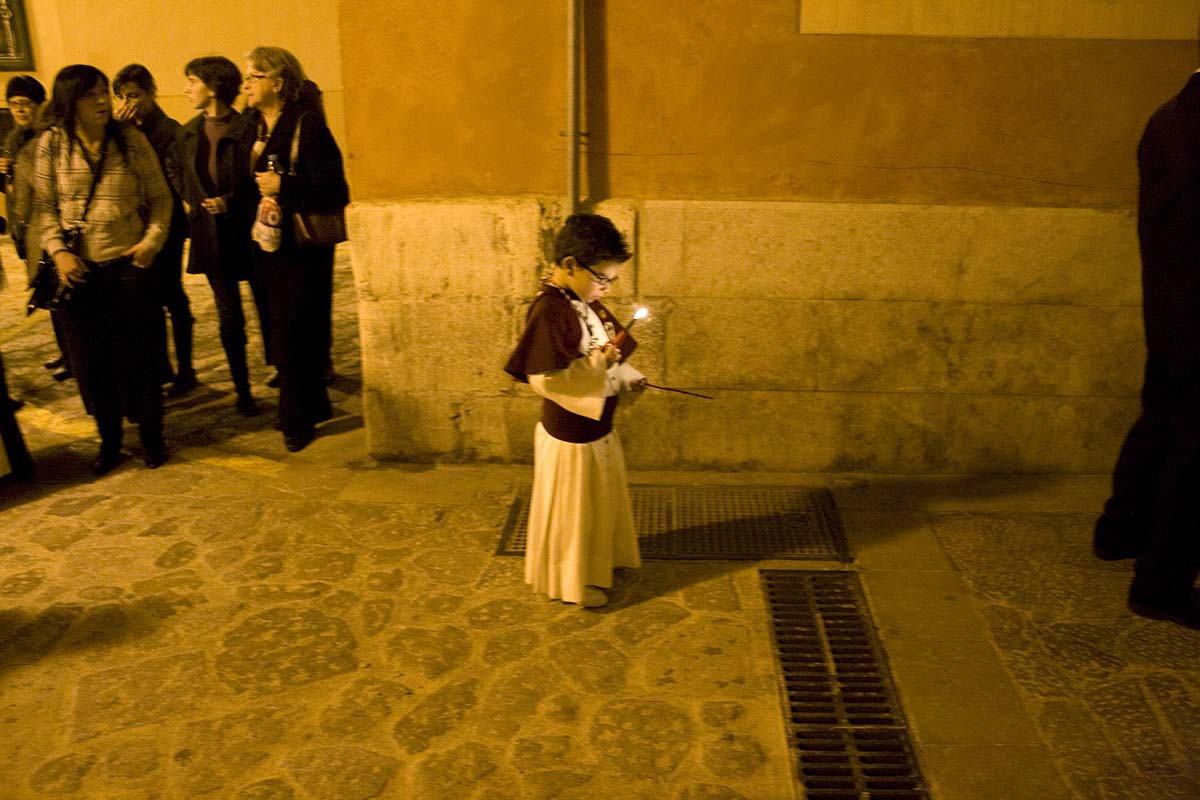
Pero también las otras ciudades españolas celebran la Semana Santa con procesiones diarias. Wang Wei nos ha enviado bonitas fotos de la procesión de lunes en Palma de Mallorca. «Es una procesión pequeña», escribe, «prácticamente de Santa Clara a San Francisco. Dan la vuelta justo a nuestra casa por la calle de Montesión y luego por la calle del Sol. Siguen casi el perímetro del antiguo ghetto (el call –judería– es precisamente el nombre de la calle que se ve en las primeras fotos). Al ser una procesión pequeña, sin ningún turista, es más impresionante. Se ve bien el fondo, las raíces católicas de un pequeño pueblo, replegado sobre sí mismo, como era Palma hace siglos, y no solo el espectáculo turístico en que se va convirtiendo poco a poco.»
But the other Spanish towns also celebrate the Holy Week with daily processions. Wang Wei has sent us nice photos on the Monday procession in Palma de Mallorca. “It is a small procession,” he writes, “actually only from the Santa Clara to the San Francisco. They pass exactly in front of our house, on calle de Montesión, on the border of the ancient ghetto (the name call – ghetto – indicates precisely the street that can be seen in the first photos). It is impressive exactly because it is so small, without any tourists. They display the origins and the Catholic roots of a small settlement closed in itself like Palma was centuries ago, and not just a touristic spectacle into which the city has been converted step by step.”

Mallorca, Holy Monday / Lunes SantoMallorca, Holy Monday / Lunes SantoMallorca, Holy Monday / Lunes SantoMallorca, Holy Monday / Lunes SantoMallorca, Holy Monday / Lunes SantoMallorca, Holy Monday / Lunes SantoMallorca, Holy Monday / Lunes Santo

Desde
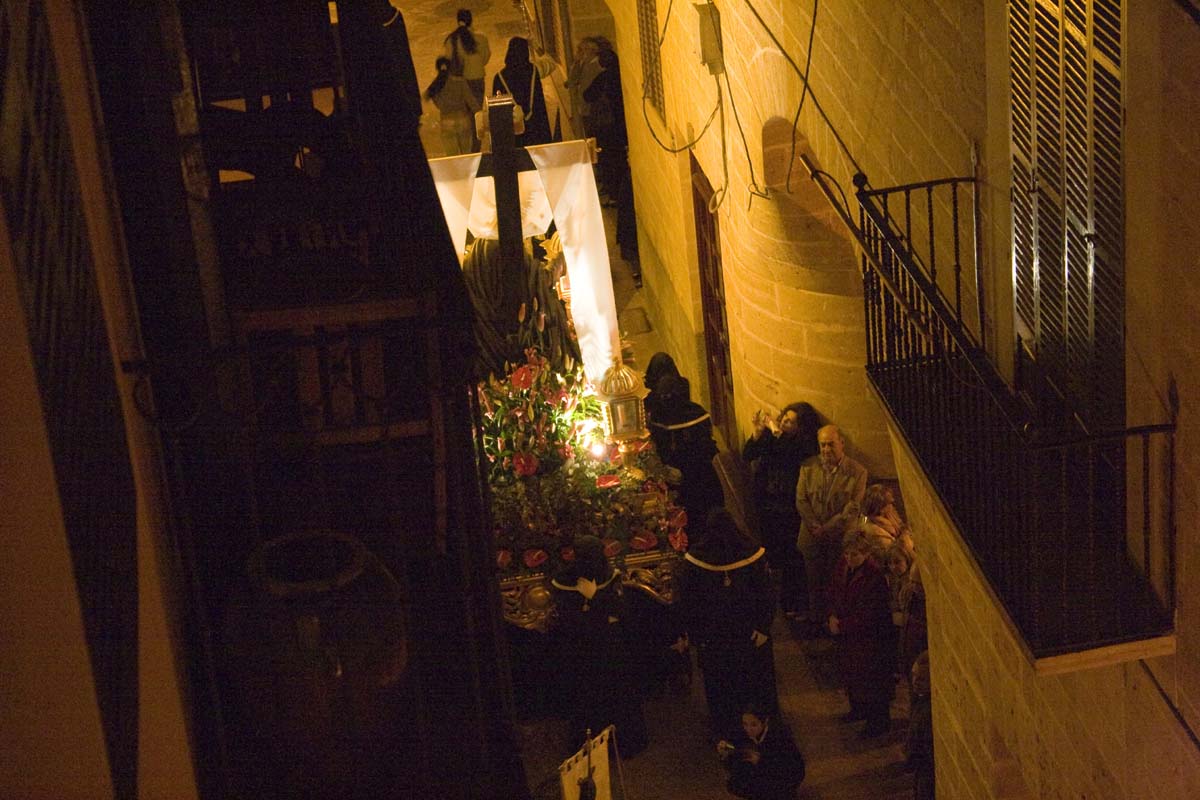
el call la procesión entra en la calle de Montesión. Asomados a una ventana de la casa de Wang Wei seguimos el desfile hacia la iglesia de los jesuitas, construida prácticamente sobre la antigua sinagoga.

From the call the procession enters the calle de Montesión. From a window of Wang Wei’s house we watch it proceeding towards the Jesuit church which was practically developed from the old synagogue five hundred years ago.

Mallorca, Holy Monday / Lunes SantoMallorca, Holy Monday / Lunes SantoMallorca, Holy Monday / Lunes SantoMallorca, Holy Monday / Lunes SantoMallorca, Holy Monday / Lunes SantoMallorca, Holy Monday / Lunes SantoMallorca, Holy Monday / Lunes SantoMallorca, Holy Monday / Lunes SantoMallorca, Holy Monday / Lunes Santo

Las grandes procesiones de Palma, claro está, son las del Jueves y Viernes Santo. La multitudinaria es la del Viernes; sin embargo, la mayor devoción es para la del Jueves, la del Crist de La Sang (Cristo de la Sangre). Este año, después de muchos en que no fue así, la imagen salió de la Iglesia del antiguo Hospital General, donde está siempre, y llegó hasta la Catedral.

However, the main processions of Palma obviously take place on Holy Thursday and Friday. The largest one is that of Friday, but the most devotional one is the Crist de La Sang (Christ of the Blood) on Thursday. In this year, after several years when it was organized differently, the image started from the Church of the old Hospital General where it is conserved, and arrived to the Cathedral.

En nuestro pueblo la fiesta no es tan suntuosa, pero en majestuosidad seguramente no queda detrás de las españolas.
In our village the feast is not so sumptuous, but in majesty it surely does not leg behind the Spanish ones.

Andalusian Holy Week

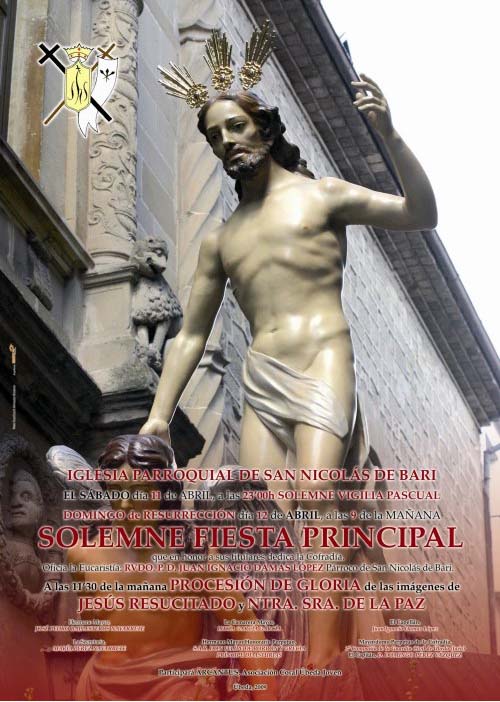
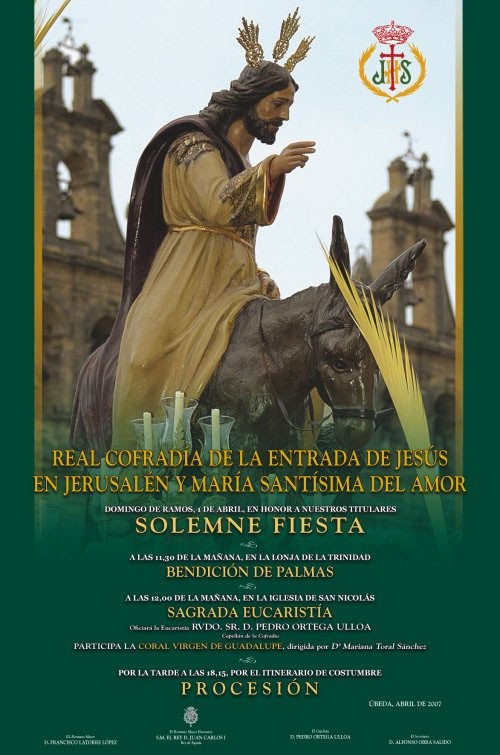
A nagyheti körmenetek plakátja, 2007, Úbeda, Spanyolország
On the El País web forum in which I also participate, this is already the second year that web guru and olive planter porrozillo has published the photos of the Holy Week processions in Úbeda. This year he only sent a short video, but it reminded me to publish here the photos of the previous year to demonstrate that there are places where they still do it properly.

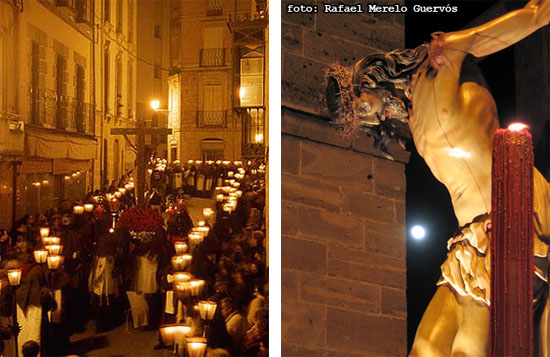
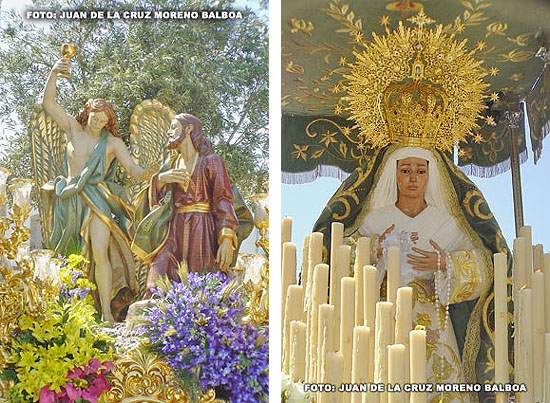
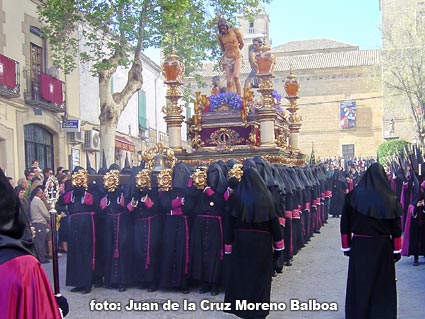
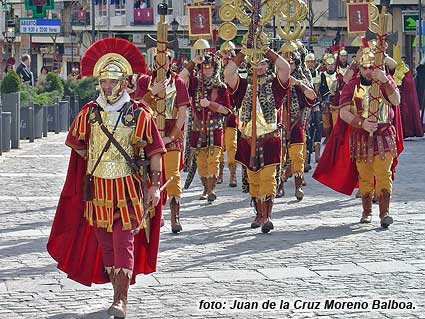
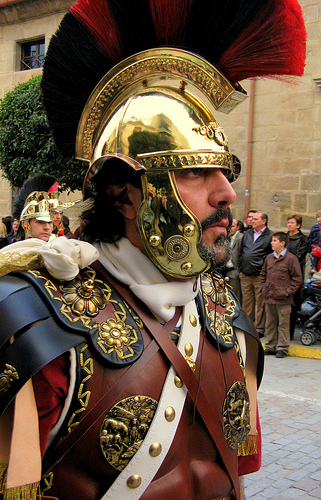
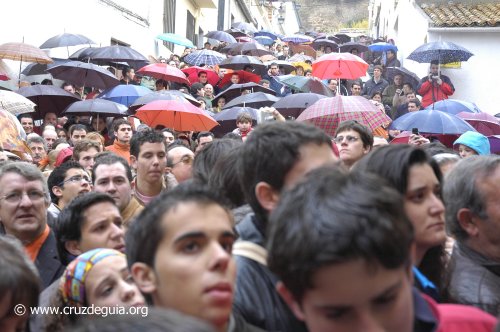
The Andalusian Úbeda, on Unesco’s World Heritage list, is famous for its olive plantations and its Holy Week processions. These latter have been organized by the city’s eighteen religious confraternities active since the Middle Ages. The ceremonies start already at the beginning of Lent with posters, advertisements and publications, daily festive Stations of the Cross, pageants presenting the holy images and statues with the partecipation of thousands of persons, as well as public rehearsals of the bands on the main square. The common blog of the confraternities publishes illustrated daily reports on all that. By the way, the series of Lenten and Holy Week feasts is only the biggest among the ten similarly generous feasts organized throughout the year by the confraternities, and in addition there are also yearly four flamenco and old music festivals in the city. After all, one has to fill out with something the dead time between the pruning of the olives and the harvest.

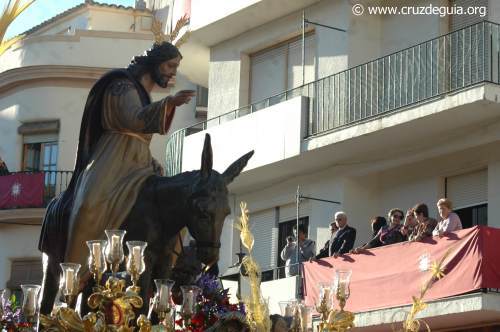
The Holy Week ceremonies start on Palm Sunday with the entrance of Christ in Jerusalem. This is organized by the Borriquillo (Ass’s colt) confraternity from eleven in the morning until the fireworks of nine in the evening.

Krisztus bevonulása Úbedába, 2007, Úbeda, Spanyolország
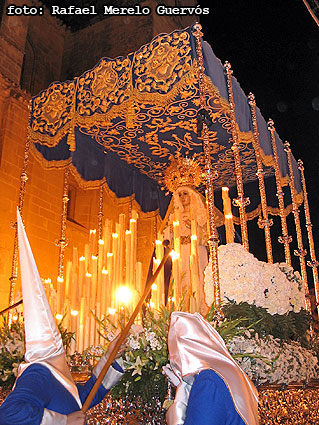
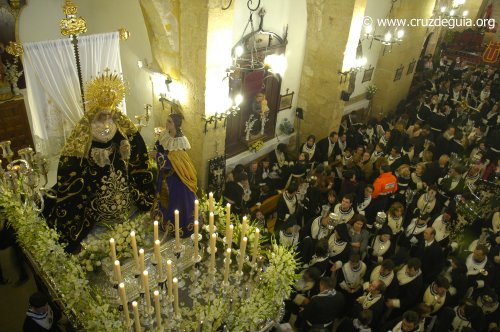
On Monday the confraternity of Our Lady brings forward with all solemnity the statue of the Virgin from the church of Santa María de los Reales Alcázares, so that she would also start her all week long way to the Golgota, accompanying the image of Jesus in every other procession.

Krisztus bevonulása Úbedába, 2007, Úbeda, Spanyolország
On Tuesday night from ten o’clock celebrations of Tenebrae, and then a night procession with the Cross throughout all the city.

Krisztus bevonulása Úbedába, 2007, Úbeda, Spanyolország
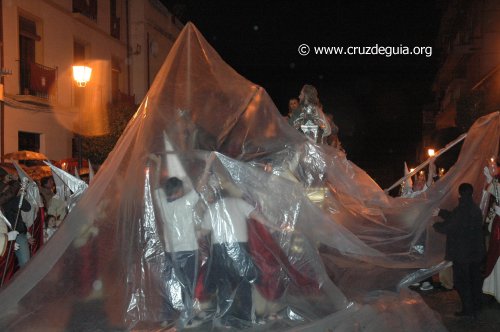
The Wednesday procession on the vigil of the Last Supper was washed out by a downpour, but the commemoration was nevertheless celebrated.

Krisztus bevonulása Úbedába, 2007, Úbeda, Spanyolország
On Thursday morning, prayer on the Mount of Olives.

Krisztus bevonulása Úbedába, 2007, Úbeda, Spanyolország
Then a series of processions follow throughout all the day, each celebrated by a different confraternity: that of the Column, of the Flagellation, and, already at the dawn of Friday, the Sentence.

Krisztus bevonulása Úbedába, 2007, Úbeda, Spanyolország
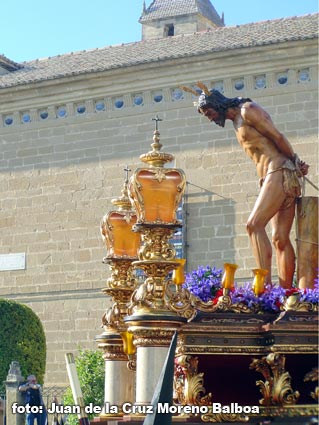
On Friday, at sunrise starts the procession of the Road to the Calvary, organized by the Jesus Nazareno confraternity of the guild of the oil pressers since the 1400s. The commemoration of each of the three Falls under the Cross are taken over from them by other processions. At three o’clock in the afternoon starts the procession of the Death on the Cross.

Krisztus bevonulása Úbedába, 2007, Úbeda, Spanyolország
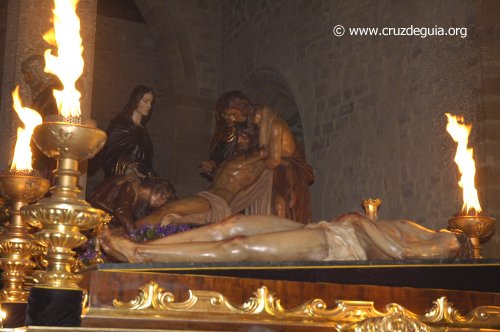
After the procession of the Descent from the Cross, at seven o’clock in the evening starts that of the Vigil or of the Pietà. This is the largest one among all, organized with the participation of all confraternities, twenty processions with forty-nine images all in all.

Krisztus bevonulása Úbedába, 2007, Úbeda, Spanyolország
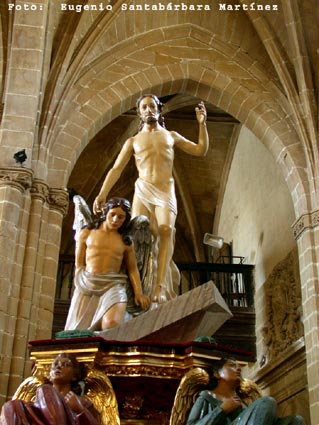
Finally, the series of Holy Week commemorations is closed on Sunday morning with the High Mass and the procession of the Resurrection.

Krisztus bevonulása Úbedába, 2007, Úbeda, Spanyolország
If you are curious of videos and more photos, have a look at the blog of the Úbeda confraternities, where you can also read the reportages on the Holy Week of this year.