Switch over to our new blog! • ¡Pásese a nuestro nuevo blog!

The renewed version of our blog, with more features, a richer design, and available in nine languages, can be read here: https://wangriver.com

The new version also includes the old posts, often in expanded form. If you are curious about the updated version of this post, replace “riowang.blogspot.com/” in the URL with “riowang.studiolum.com/”, and the new link will most likely lead you there.


La versión renovada de nuestro blog, con más herramientas, un diseño más rico y disponible en nueve idiomas, se puede leer aquí: https://riowang.com

La nueva versión también incluye las publicaciones antiguas, a menudo en una forma ampliada. Si tiene curiosidad por la versión actualizada de esta entrada, sustituya «riowang.blogspot.com/» en la URL por «riowang.studiolum.com/es/», y el nuevo enlace probablemente le llevará allí.

Mostrando entradas con la etiqueta marginalia. Mostrar todas las entradas

Iron curtain


While we were touring Maramureș and Bukovina, from where our reporting was suspended due to a computer error – but we will make up for this soon –, Arkadiusz Bernaś, the former director of the Polish Institute in Budapest and the present one of the same Institute in Stockholm, to whom we thank for our travel to Drohobycz, hurried with a good material to the help of Río Wang:

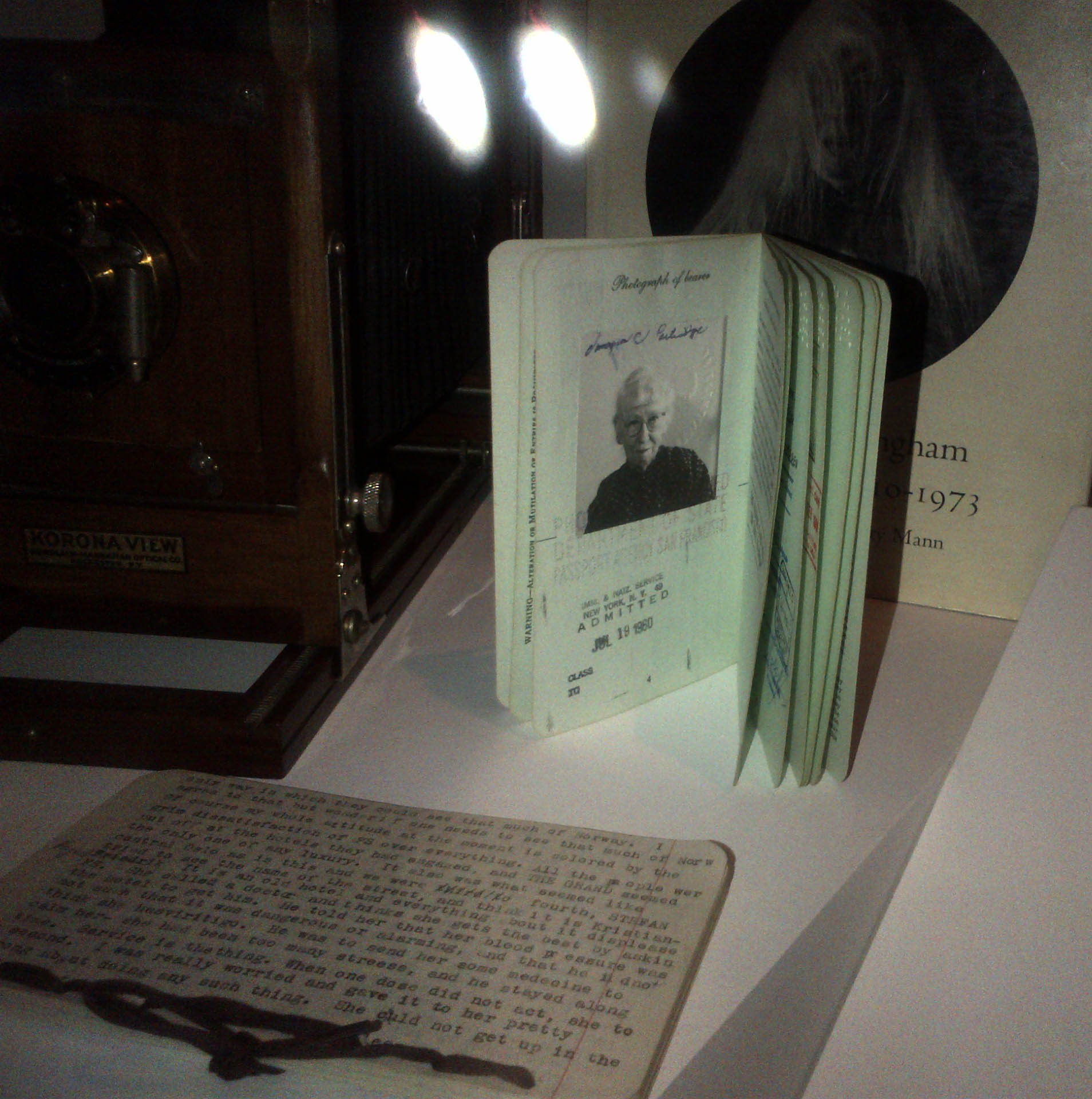
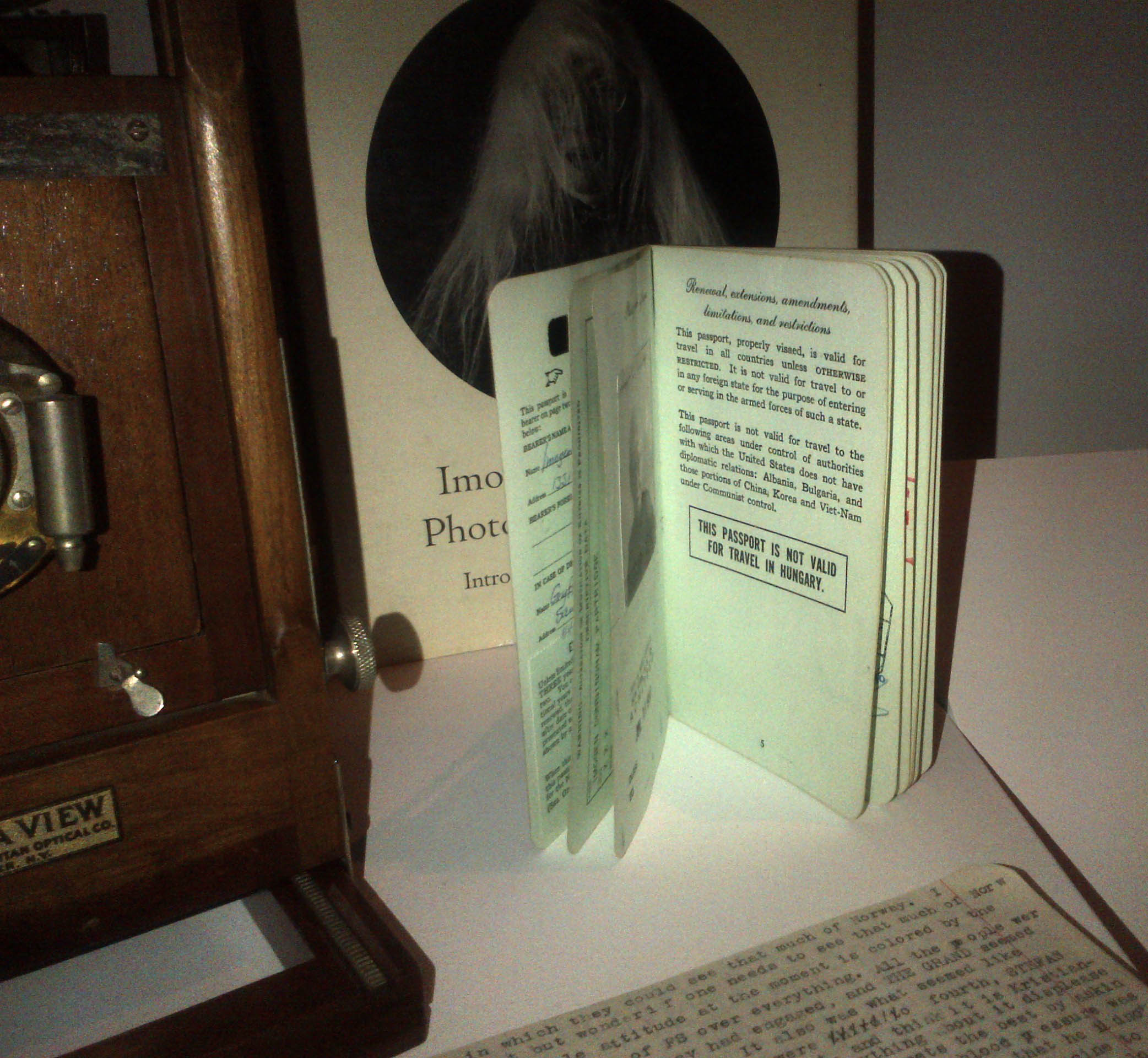
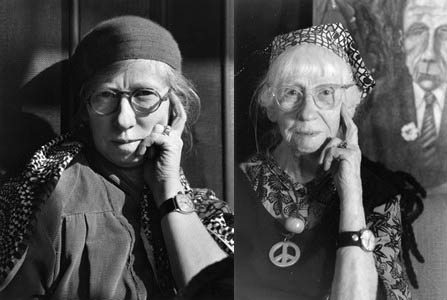
“I have seen an Imogen Cunningham photo exhibition here in Stockholm:

http://www.photoliaison.com/imogen_cunningham/Imogen_Cunningham.htm

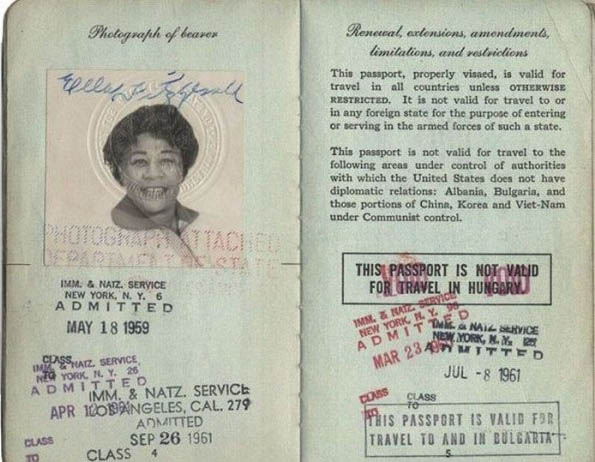
The photographer’s passport was also exhibited, I took a quick photo of it. How long may they have stamped this into American passports?”


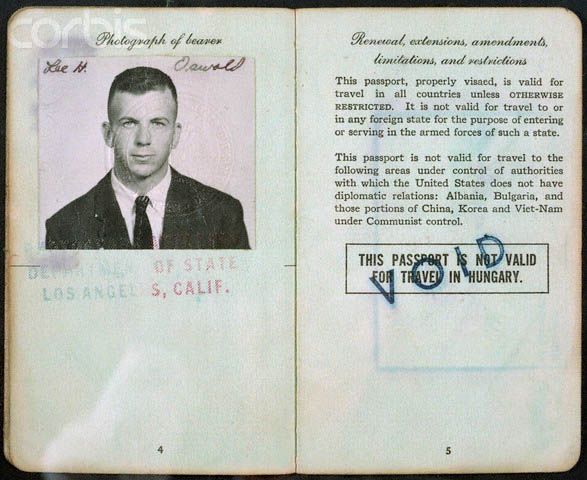
The internet only knows about three passports into which a stamp with this text was sealed.

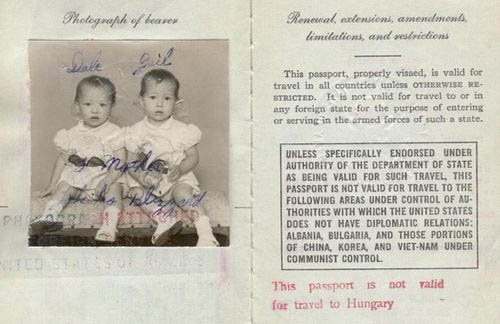
One of them is presented by Gail Ingram in the travel blog Equator. The photo represents her and her twin sister in 1958. She attributes the stamp to the suppression of the Hungarian revolution in 1956.


The other, issued on May 18, 1959, belonged to Ella Fitzgerald.


The third one belonged to nobody else but President Kennedy’s assassin, Lee Harvey Oswald. This was issued on September 10, 1959.


However, according to the article of an amateur researcher of the Kennedy assassionation, this kind of stamp was not at all common in the era, despite the fact that American-Hungarian relations really sunk to their deepest point after 1956. In 1998, the author officially asked about the reason at the American State Department, who after so long time could not give any information any more.

And you, dear readers, can you?


Triangular letters


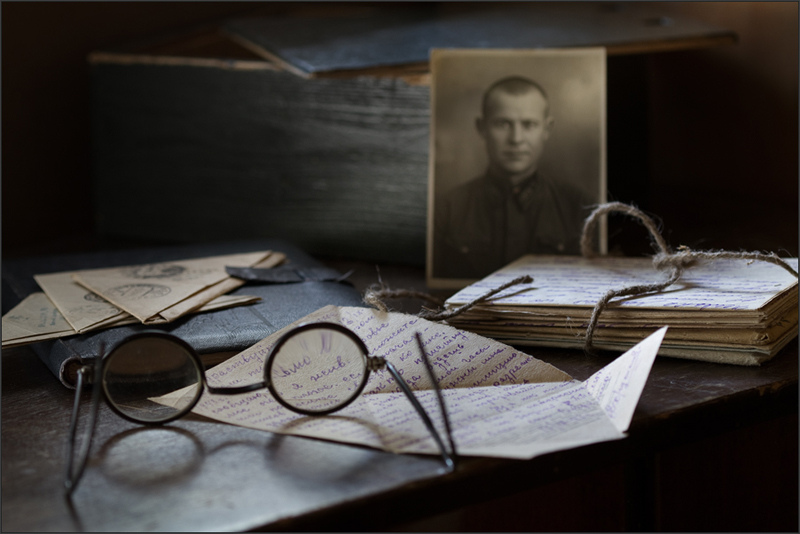
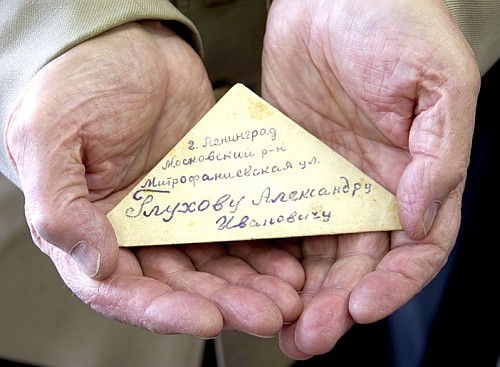
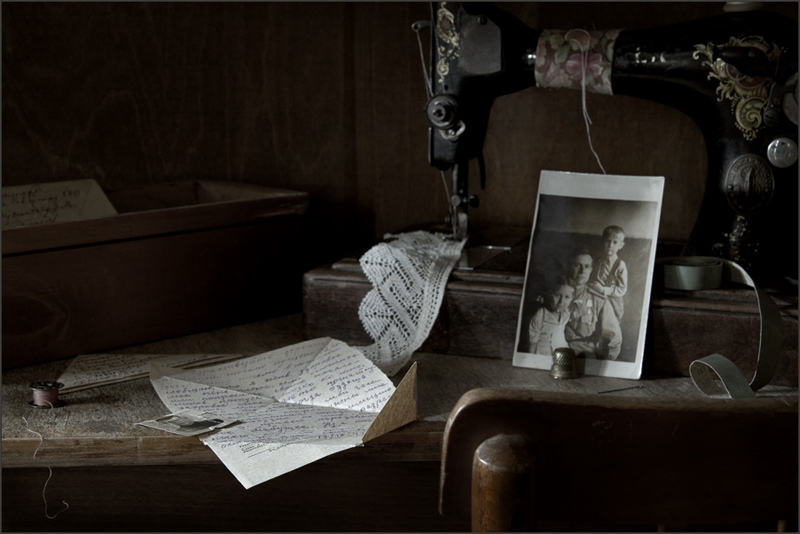
“Concerning the first picture: what a strange way of folding letters!” – writes Effe in his comment to yesterday’s post on contemporary Soviet still life photos. And indeed, already the diamond grid of the folding of the letter on the edge of the table is unusual, but even more unusual is the triangular shape of the letters laying behind it, on the folder. However, there was a time when this folding was not considered unusual at all, moreover the mails folded in this way were the most valuable the postman could bring; and, as the story unfolding from the few objects on the picture indicates, for several people they remained more valuable than any other a postman can bring them any more. These are the письма-треугольники, the “triangular letters”, the standard form of soldiers’ correspondence during the Great Patriotic War.


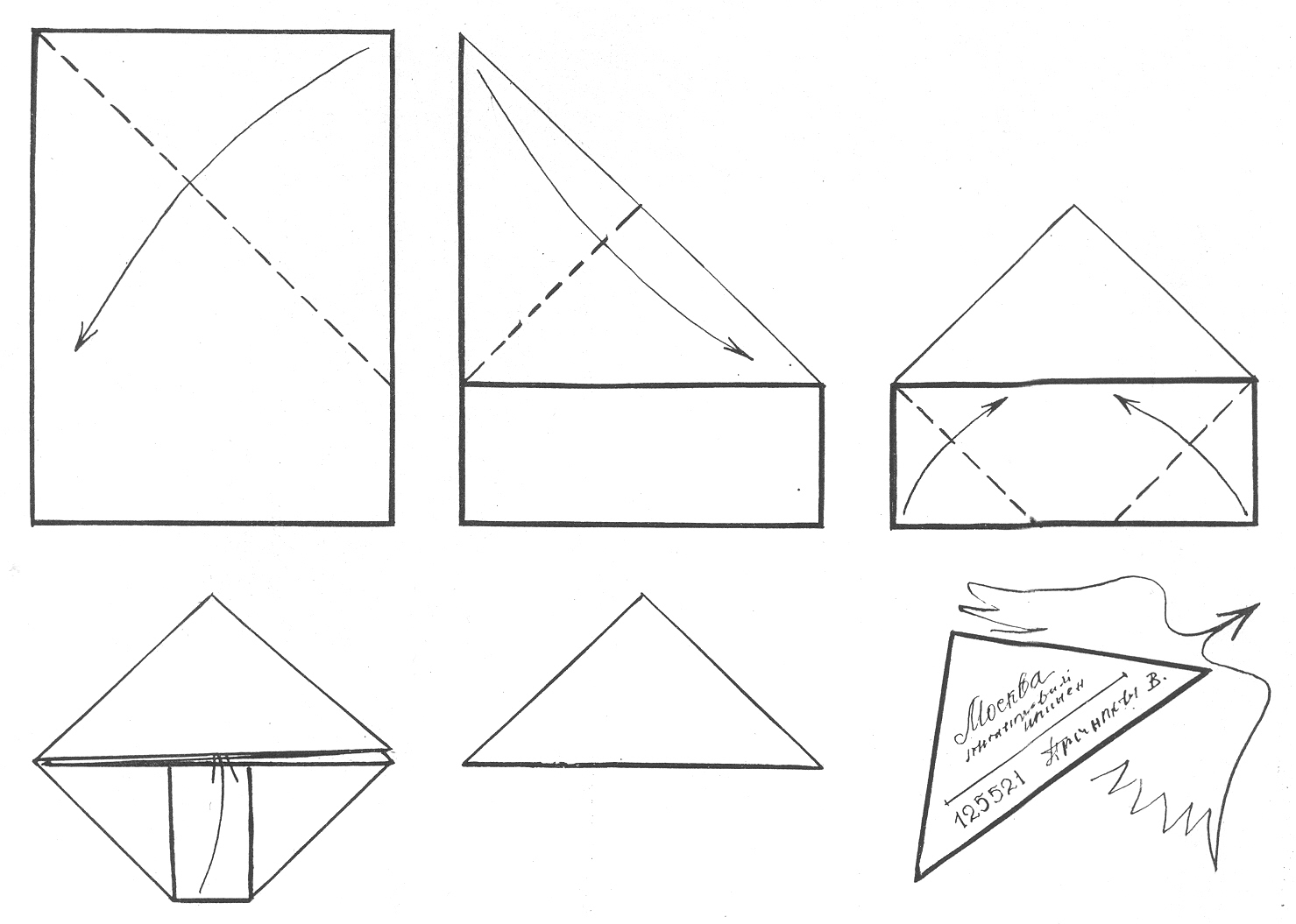
During the war, the mails were brought for free from the front to home. It could not have been differently, because probably the postage stamps would have been the last item the halting logistic support would have delivered to the front. Even so, postcards and envelopes were shortages. The soldiers’ genius has thus created, right in the first months of the war, the format that was a letter and its own envelope in one. The folding process is very similar to how we, in our childhood, folded our soldier’s shako, knowing nothing about the triangular soldier’s letters.


To such a letter it was enough a page torn from a booklet, a cigarette paper sacrificed, the wide margins of a newspaper and the idle half an hour spent in a temporary cover. Their content is not more complicated than that: they assure of their love those at home, draw something for the little ones who cannot read yet, and promise to return home after the war. It did not depend on them.


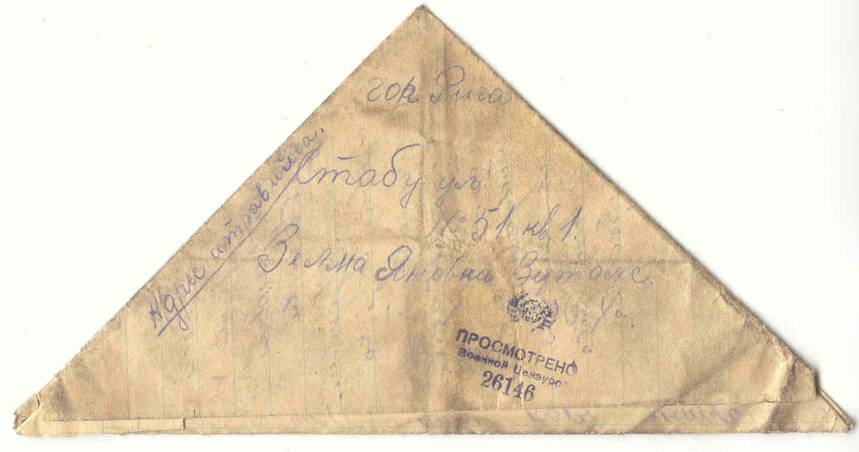
Folding had one more advantage: that the content of the letter was easy to check. Therefore, it was forbidden to seal them in any way. The censors working at the front did not primarily search for letters reviling the system – according to the analysis of the surviving front letters, almost none of them includes any political reference or Stalin’s name –, but whether they include any indication from which military movements and plans could be deduced. These were erased with black ink, but the mail was still transmitted. As the then seventeen year old front post officer Valya Uvarova recounts it in the 7 May 2008 issue of Аргументы и факты:

There were many letters, and their stream flowed in both directions, to the front and from the front. Beside the postal service, in a special “secret” room there was a censor: her task was to open and read the triangular letters. Valentina Antonovna recalls that censors usually had a humane attitude to front letters. If only a few lines of them contained military secrets – such as the name of the base occupied or the name of the corps –, then they, having canceled it, let the letter go to the recipient. They only banned its forwarding if all its content was of such kind, but this happened very rarely.


Of these letters, which once traveled from west to east by the millions, still thousands are preserved in collections, in private hands, in folders such as in the first picture. You can find lots of them on the Russian web too, mostly followed by a story, so similar to the other stories, and nevertheless always unique and unrepeatable

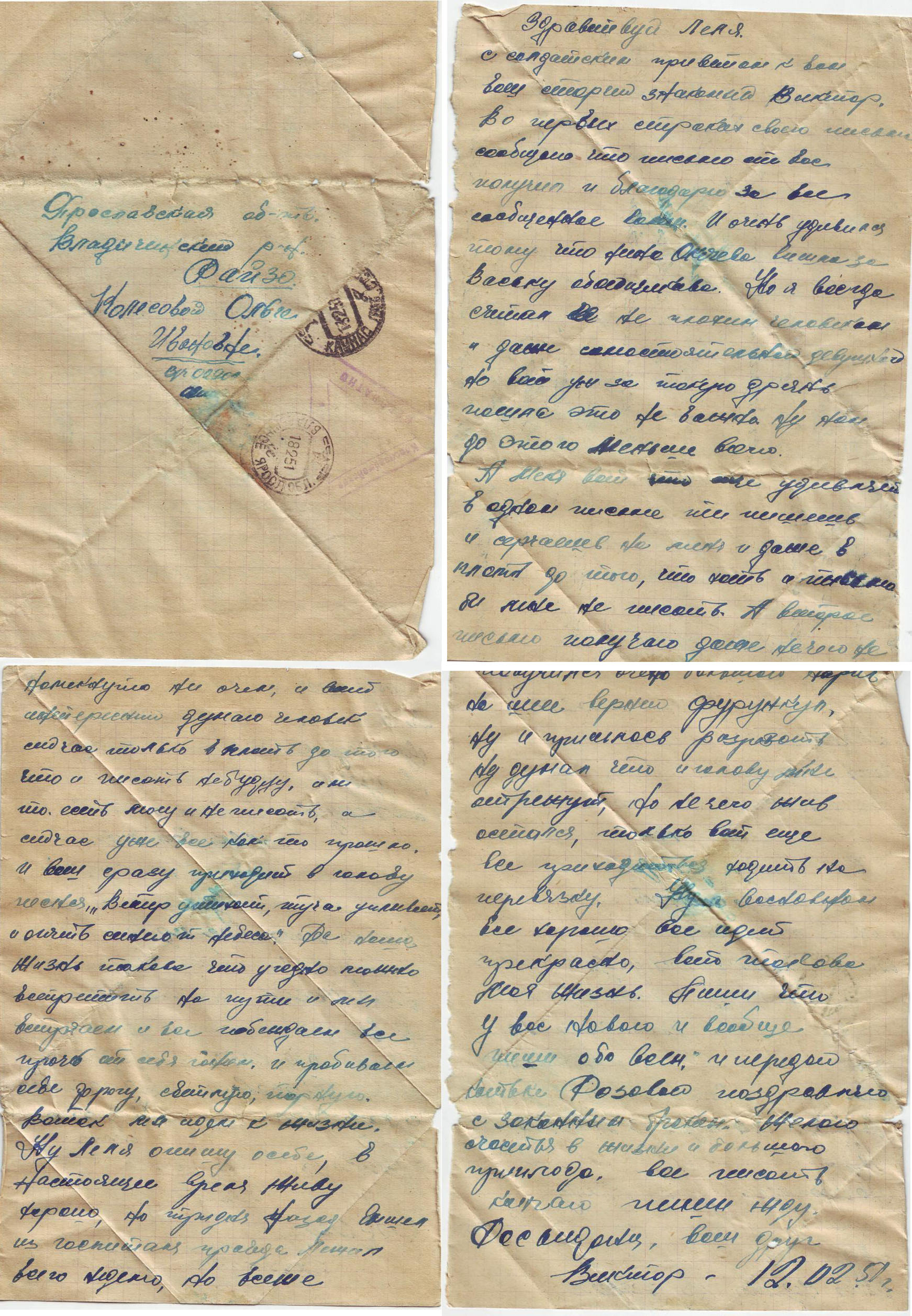
A late letter: even in February 1951 there came a treugolnik from the front

I was fascinated by a special collection, the letters of Yakov Lazirovich Ashurov from Azerbaijan. He was born in Baku in 1924, joined up at the age of seventeen, was killed at Stalingrad in 1942. His letters to his parents survived in the Iranian Tat (Juhuri) language, related to Persian and Kurdish, of the Caucasian Mountain Jews (on which we will write more later), as well as in biblical Hebrew.


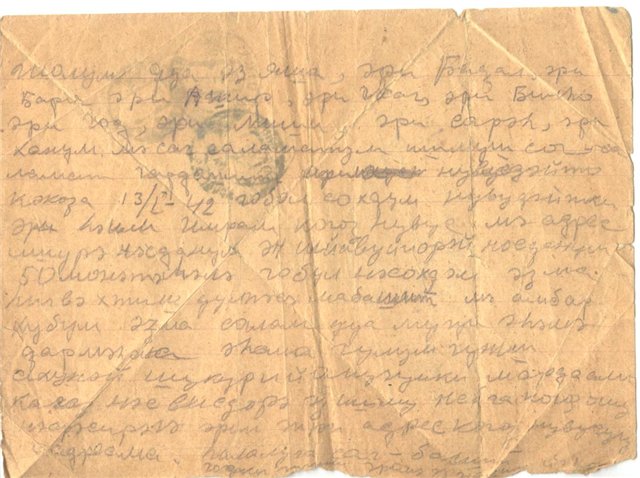
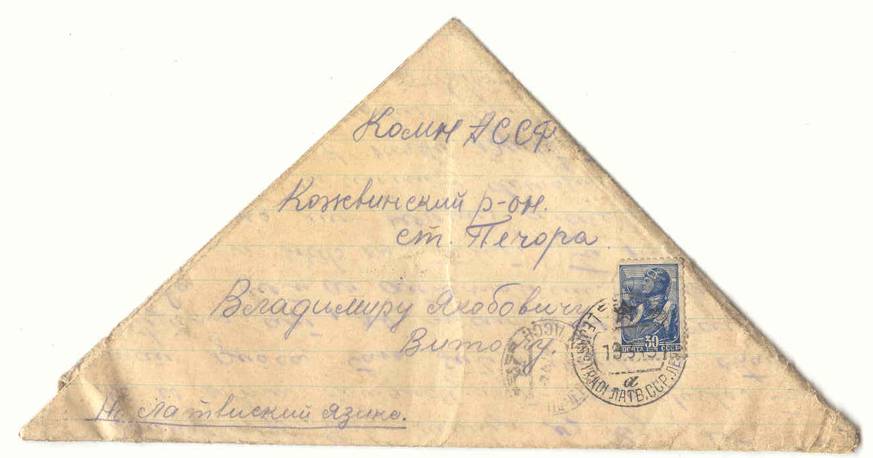
Triangular letters were sent to the front as well, these ones bearing a stamp of course. Moreover, even to the Gulag, as it is attested by the Latvian-language letter below, sent from Latvia to the Pechora camp in the Komi land on 19 March 1945. The letter is now at auction for only 33 dollars. Buy it if you want to possess a real historical document.


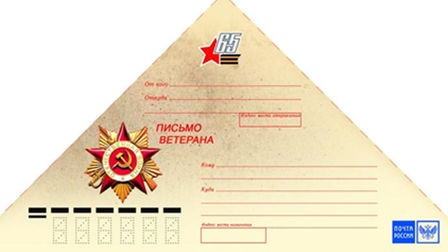
On 9 May 2010, the 65th anniversary of the victory, the Russian state distributed among the war veterans still alive a set of triangular letters printed for this occasion. They were already in envelope, but they could still be sent without a stamp to anywhere within Russia.


And finally these letters were immortalized by the contemporary famous soldier’s songs, such as Mark Bernes’ Полевая почта, “Field Post” below. We hope that Araz, the walking encyclopedia of the Soviet film will tell us which contemporary newsreels and later films were used to compose the genial video clip of the song.


В селе далёком плачет Мать от счастья,
Узнав, что сын здоровый и живой.
Ей эту весть сквозь битвы и ненастья
Приносит треугольник полевой.
The mother in the far away village is crying
of joy, knowing that her son is healthy and alive:
this was let her known through battles and storms
by the triangular letter from the front.


Peace and conflict

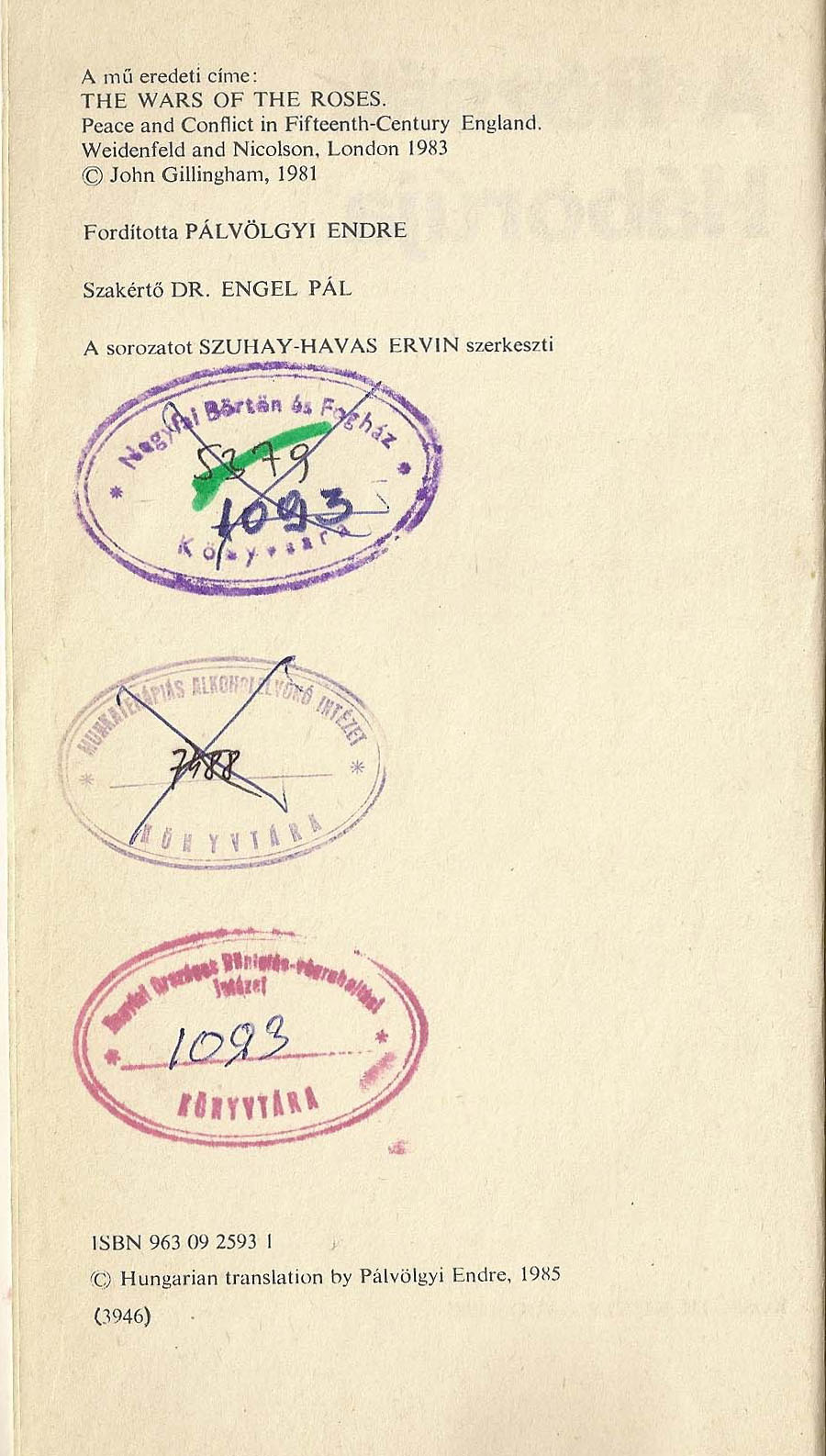
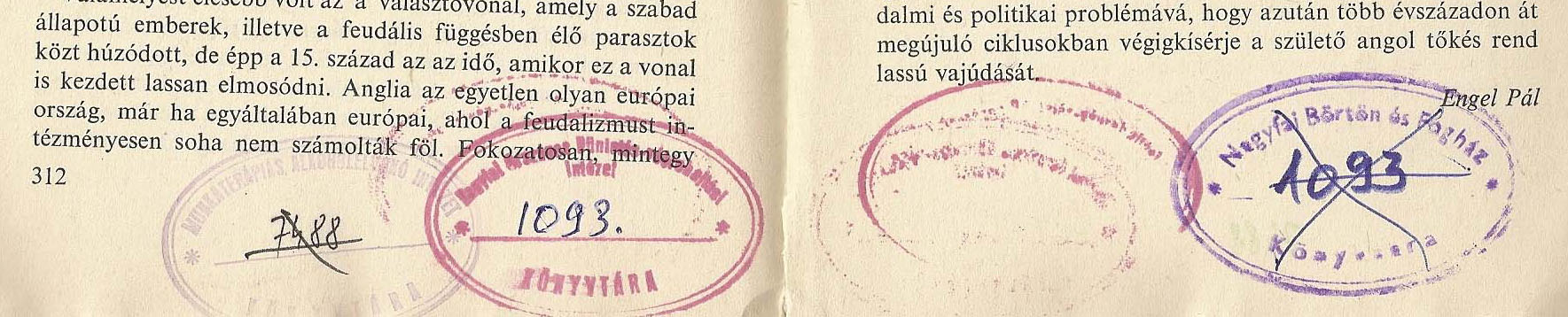
Slow, round-shaped seals are hiding between the pages of library books, like fossils between rock layers, witnesses to the prosperity and transformation of remote, exotic and unlikely geologic eras. This copy has been revealed and shared with our readers by Dániel Kálmán.

Library of the Prison and House of Detention of Nagyfa

Library of the Work Therapy Anti-Alcohol Institution

Library of the National Institution of Enforcement of Sanctions, Nagyfa

“…The barons, having suddenly realized that the Middle Ages is nearing to its end, made huge efforts to revitalize the ancient feudal pleasures of looting, massacring and pillaging…”

“…but those who visited the presentation of “Henry VI” or “Richard III”, must have left the theater with a grim face. The gloomy impression of the 15th century…”

“…England was the only European country – if we can call it European at all – where feudalism has never been institutionally liquidated…”

“…the crisis accompanies in continually renewing cycles the prolonged labor-pains of the English capitalist system in birth… [sic!]”

1983: “Suspect P. G. received a police warning since he implemented the crime of library incitement by adding various comments to the books of M. Károlyi, “Together in the exile, together in the revolution” and L. Gyurkó’s biography of János Kádár [1982, the first man of the Communist Party of Hungary], furthermore by underlining or striking through certain sentences or providing them with exclamation marks. With his additions he has questioned the factuality of the narrations of the persons presented in them, the authenticity of their stories, and their activity set out in the interest of the Socialist social order.” (“Börtönviszonyok a pártállamban” [Prison conditions during the party state], Magyar Hírlap, 2 May 2010)

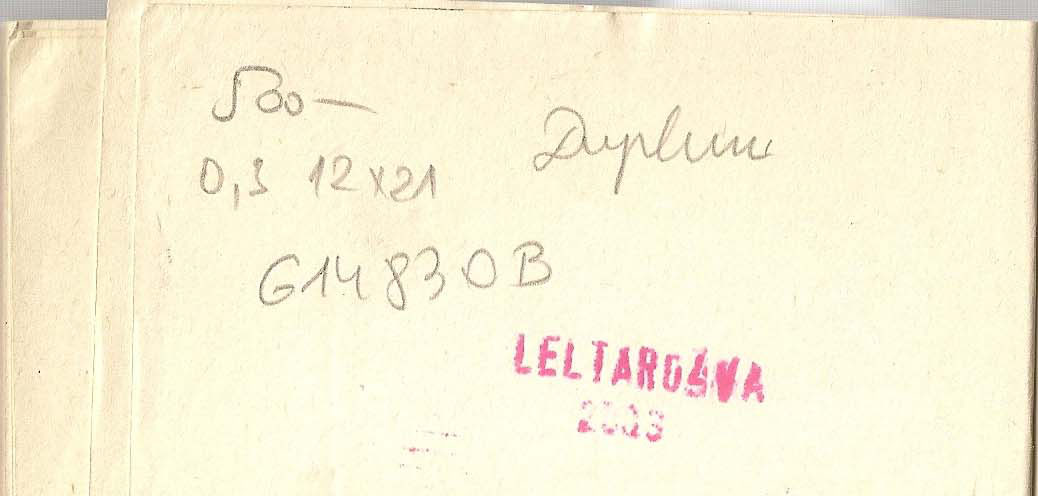
Duplicate. Inventoried. To be sold.

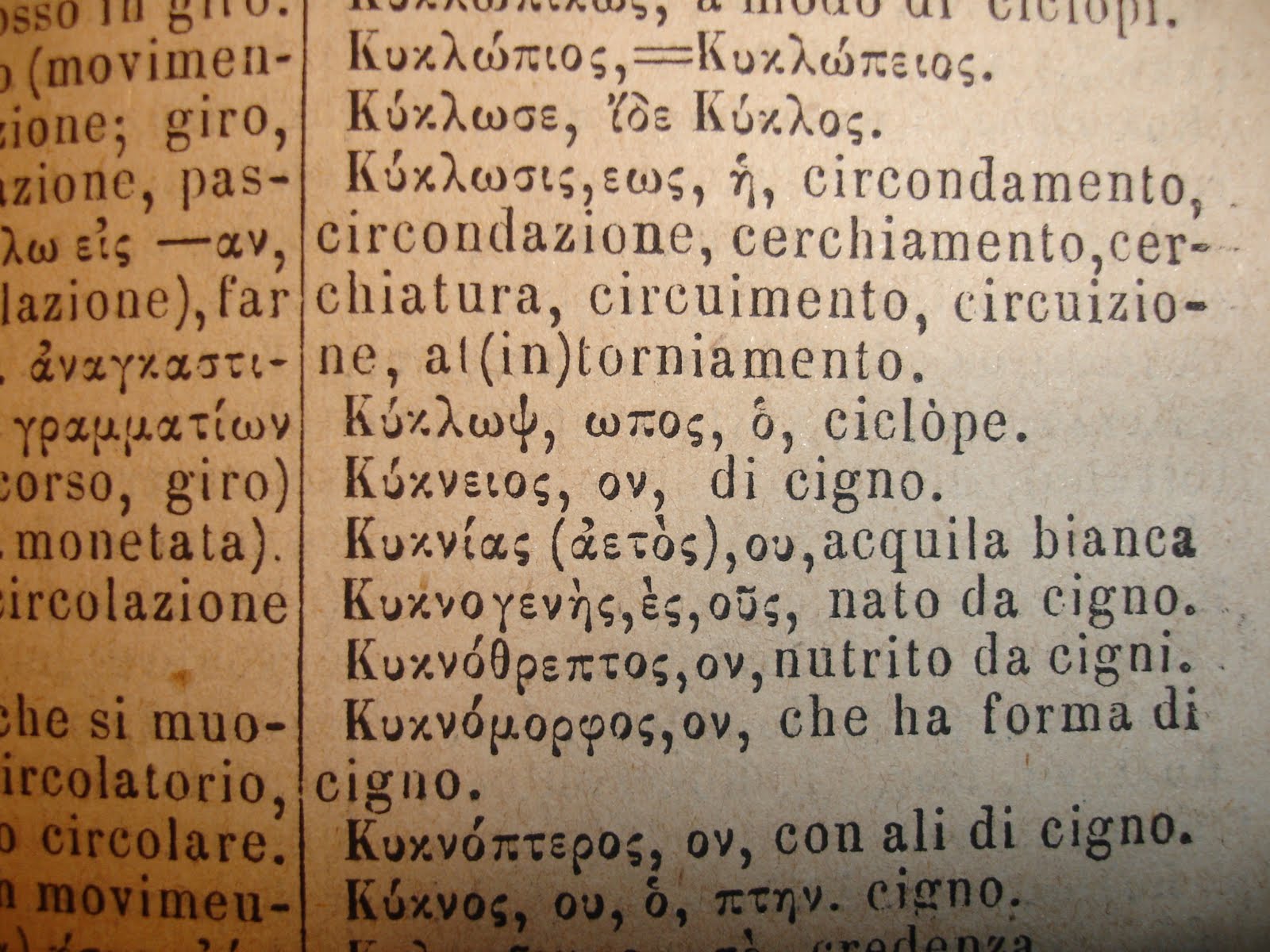
Κύκλωψ

der himmel
ein betrunkener
seemann
dem einer das auge
ausgestochen hat

im finstern
die weiße perle

du schläfst
mit dem zyklopen

Uljana Wolf


il cielo
un marinaio
ubriaco
cui si sia
cavato l’occhio

nel buio
la perla bianca

tu dormi
col ciclope


the sky
a drunken
sailor whom
one has put out
the eye

in the darkness
the white pearl

you sleep
with the cyclops

Marinero soy de amor
Sefardí – Cervantes – Savall


Note

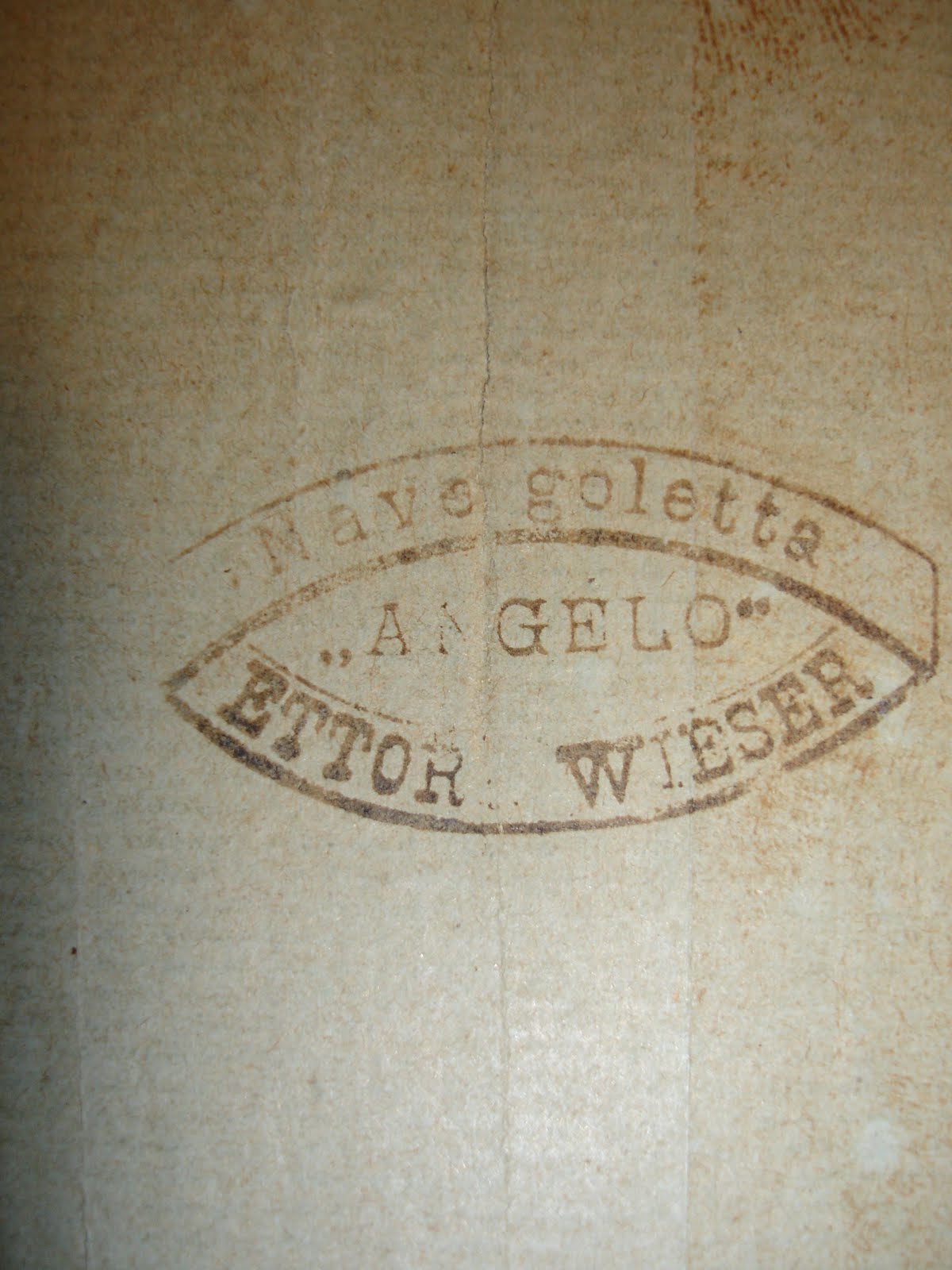
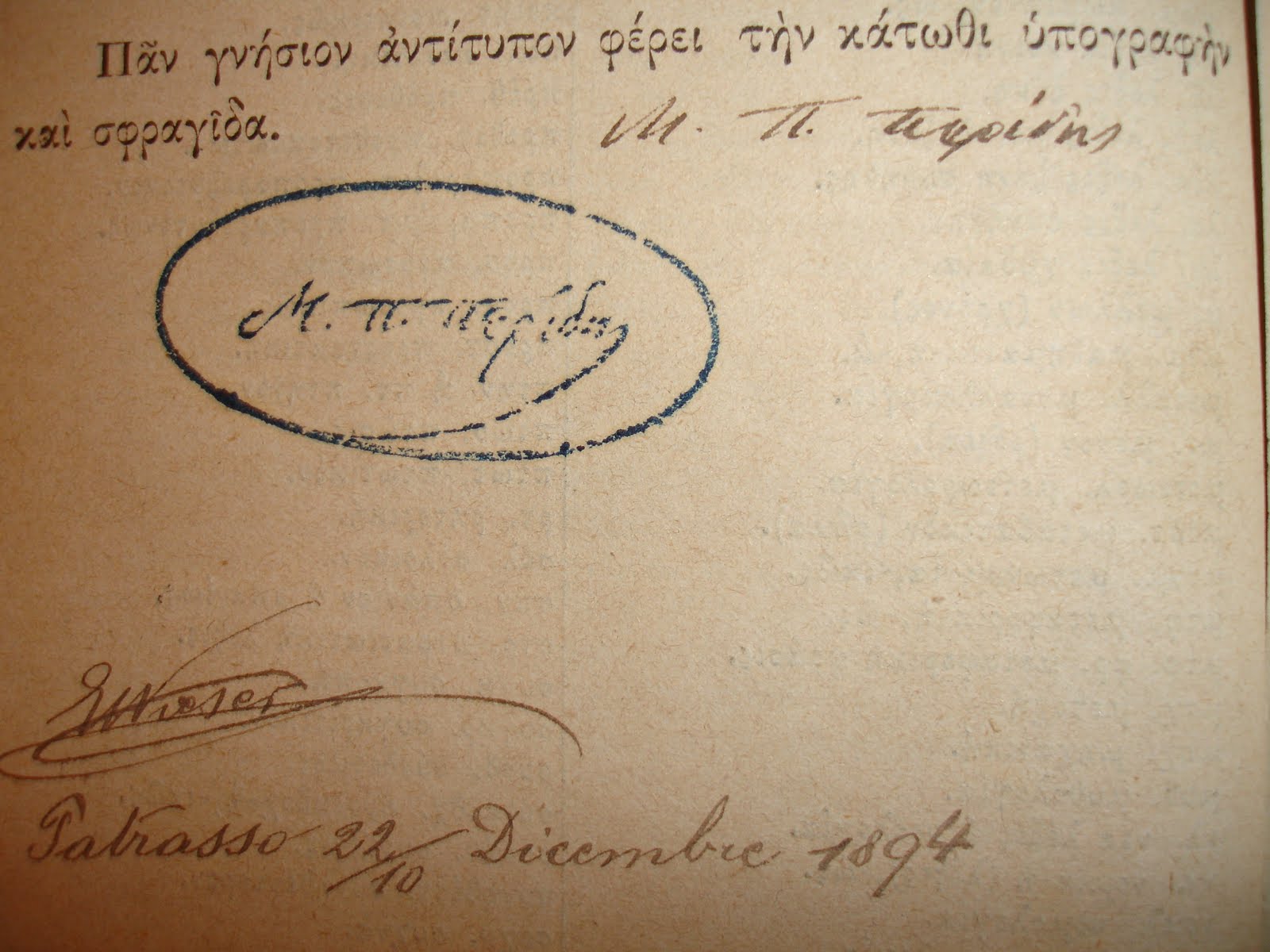
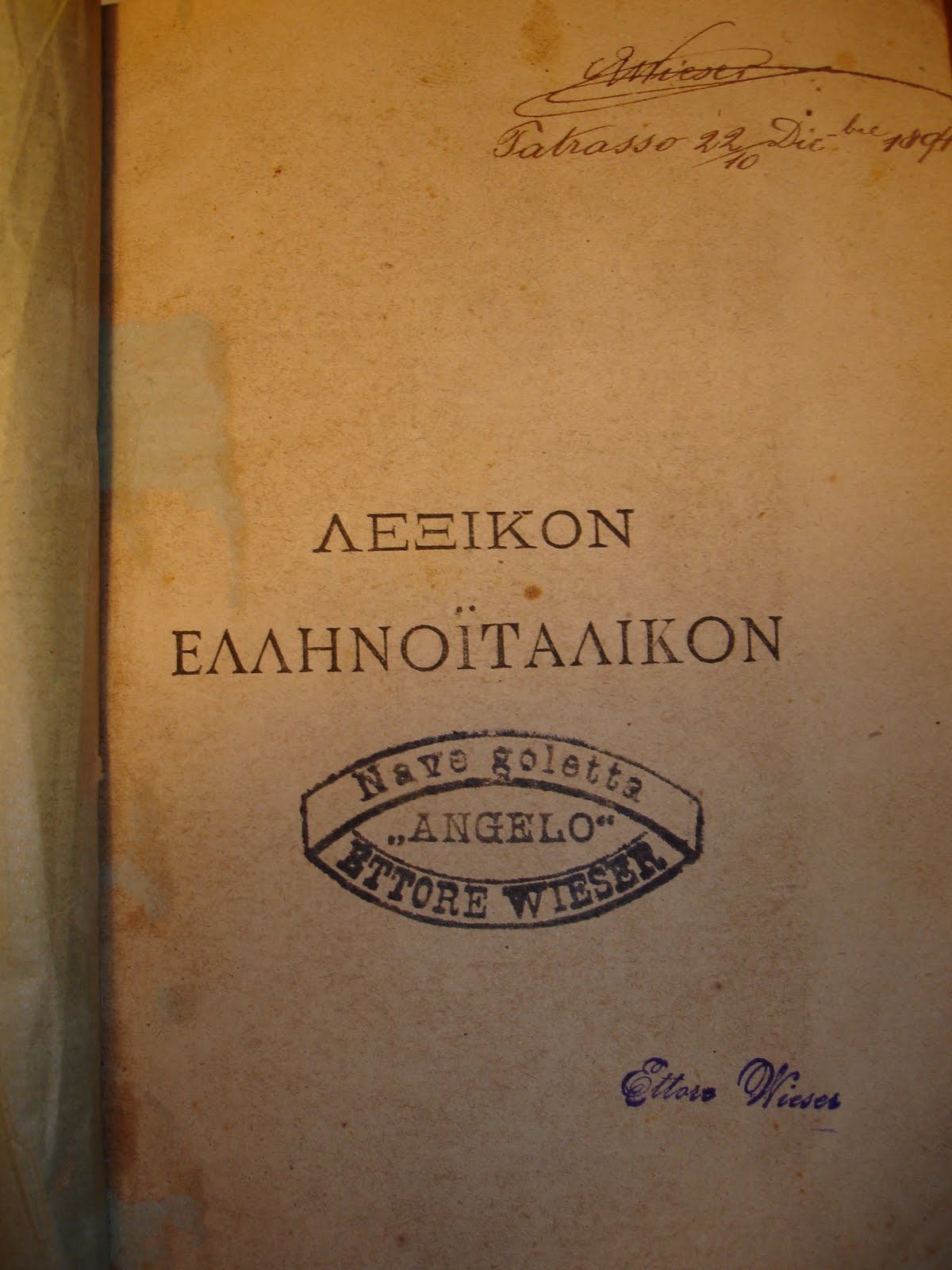
1. Πᾶν γνήσιον ἀντίτυπον φέρει τὴν κάτωθι ὑπογραφὴν καὶ σφραγίδα: ogni copia autentica reca la seguente firma e il sigillo.

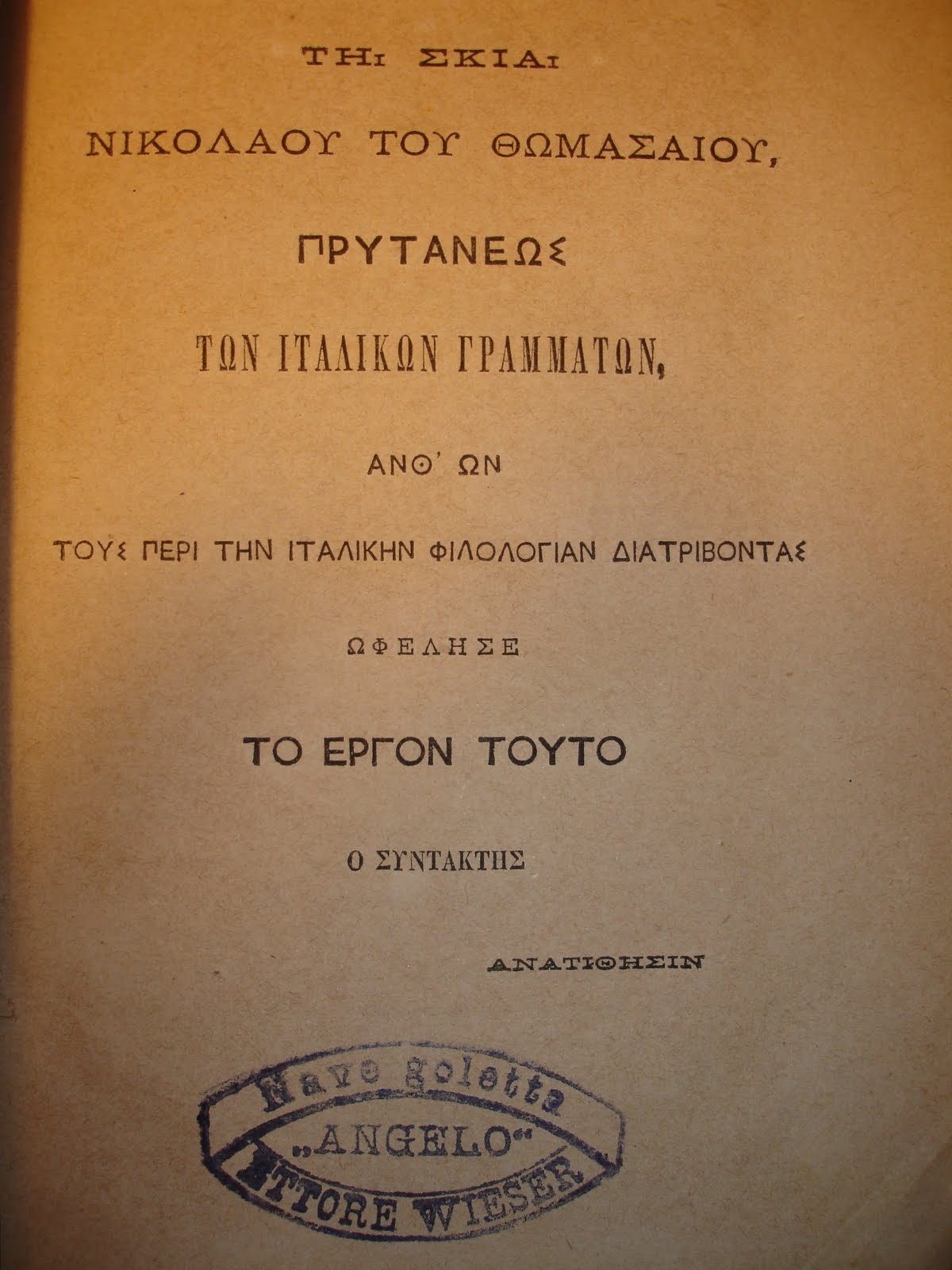
2. So al momento pochissimo di Ettore Wieser: era triestino, navigava, leggeva libri in italiano, tedesco, francese e greco, alcuni dei quali, acquistati a Patrasso, si era portato a bordo della goletta "Angelo", (forse, ma non ne ho ancora trovato conferme definitive) ha partecipato alla battaglia di Domokós del 1897 tra le fila dei garibaldini e, almeno in fatto di libri, aveva uno spiccato senso della proprietà.

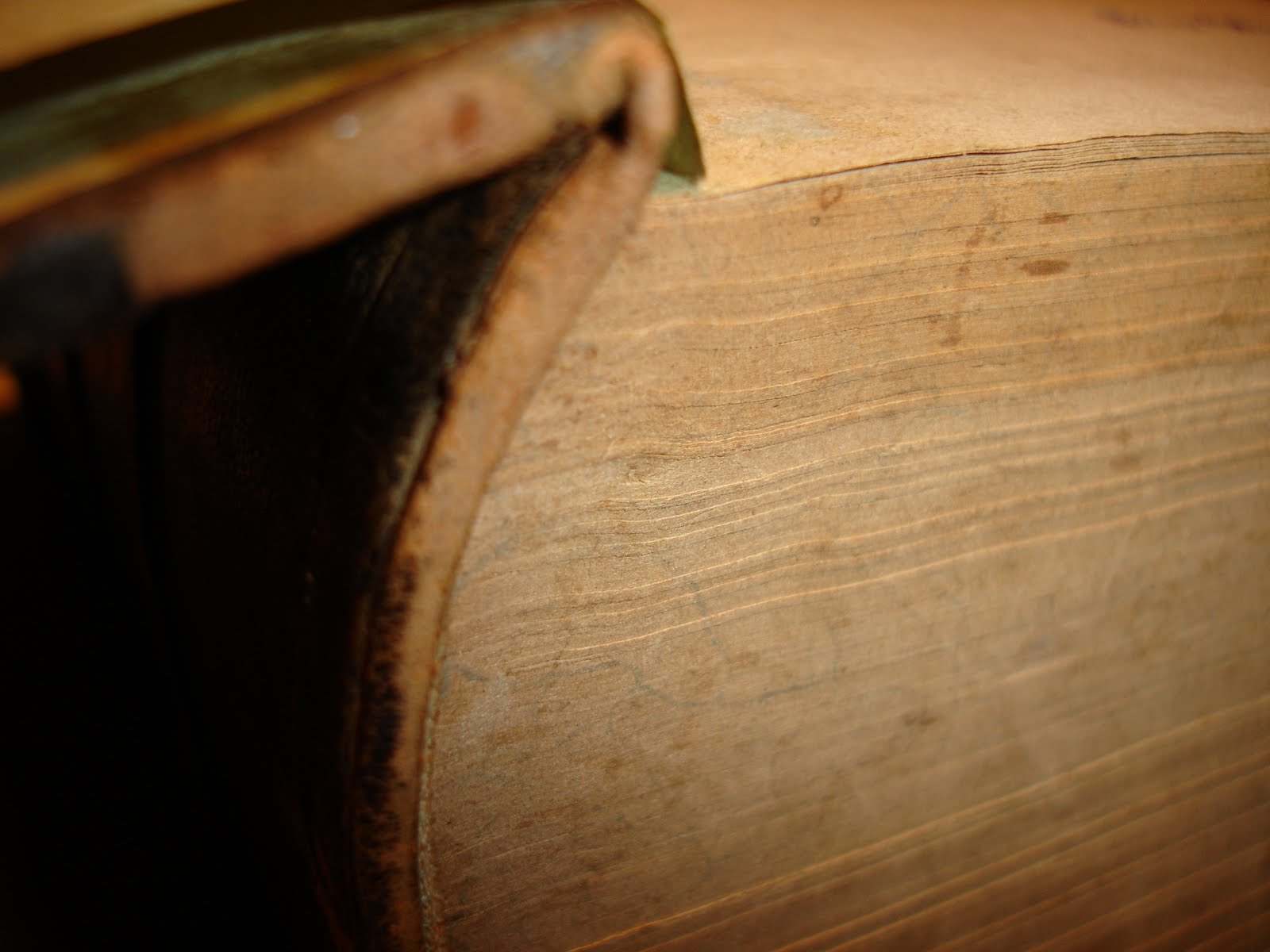
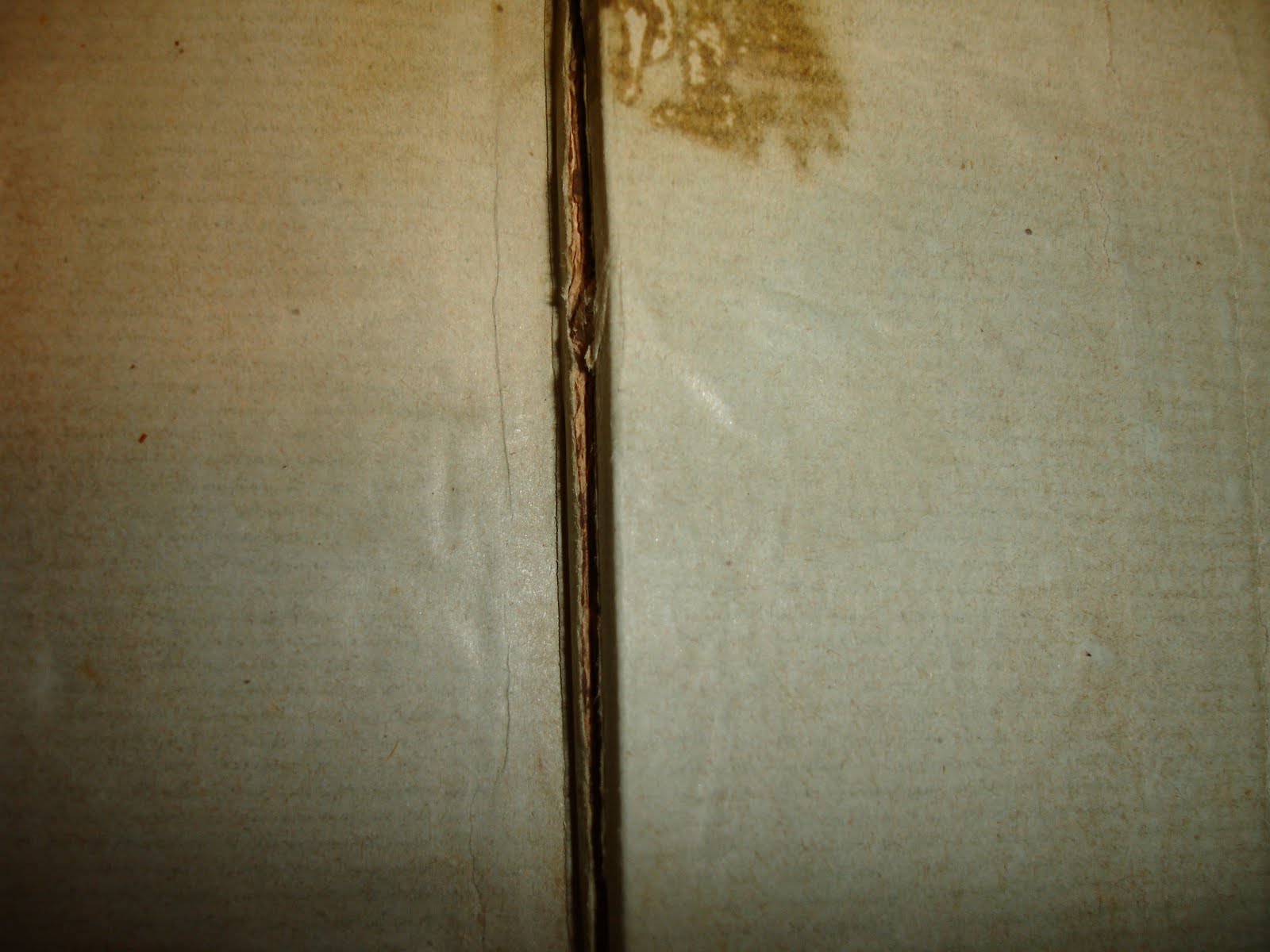
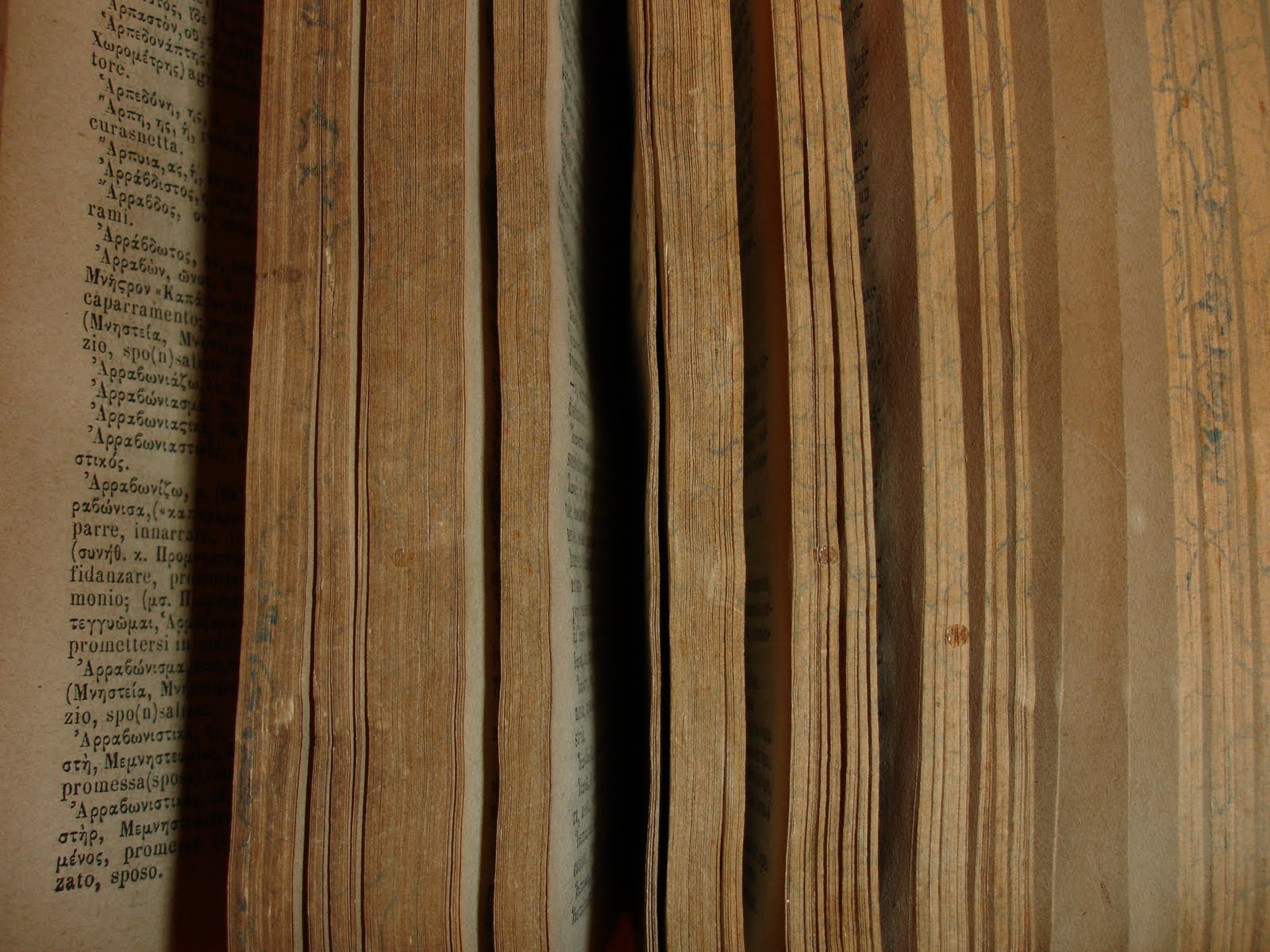
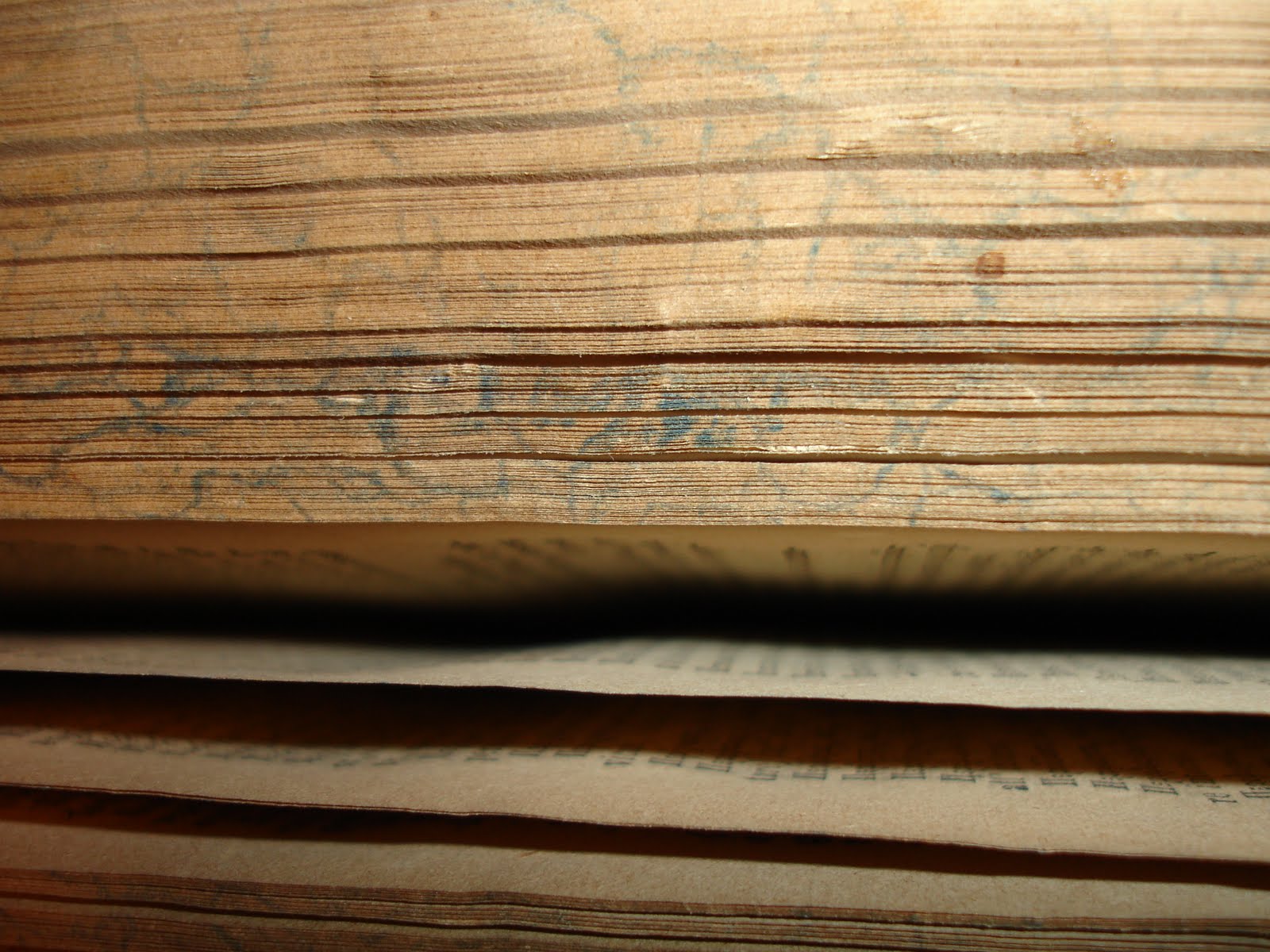
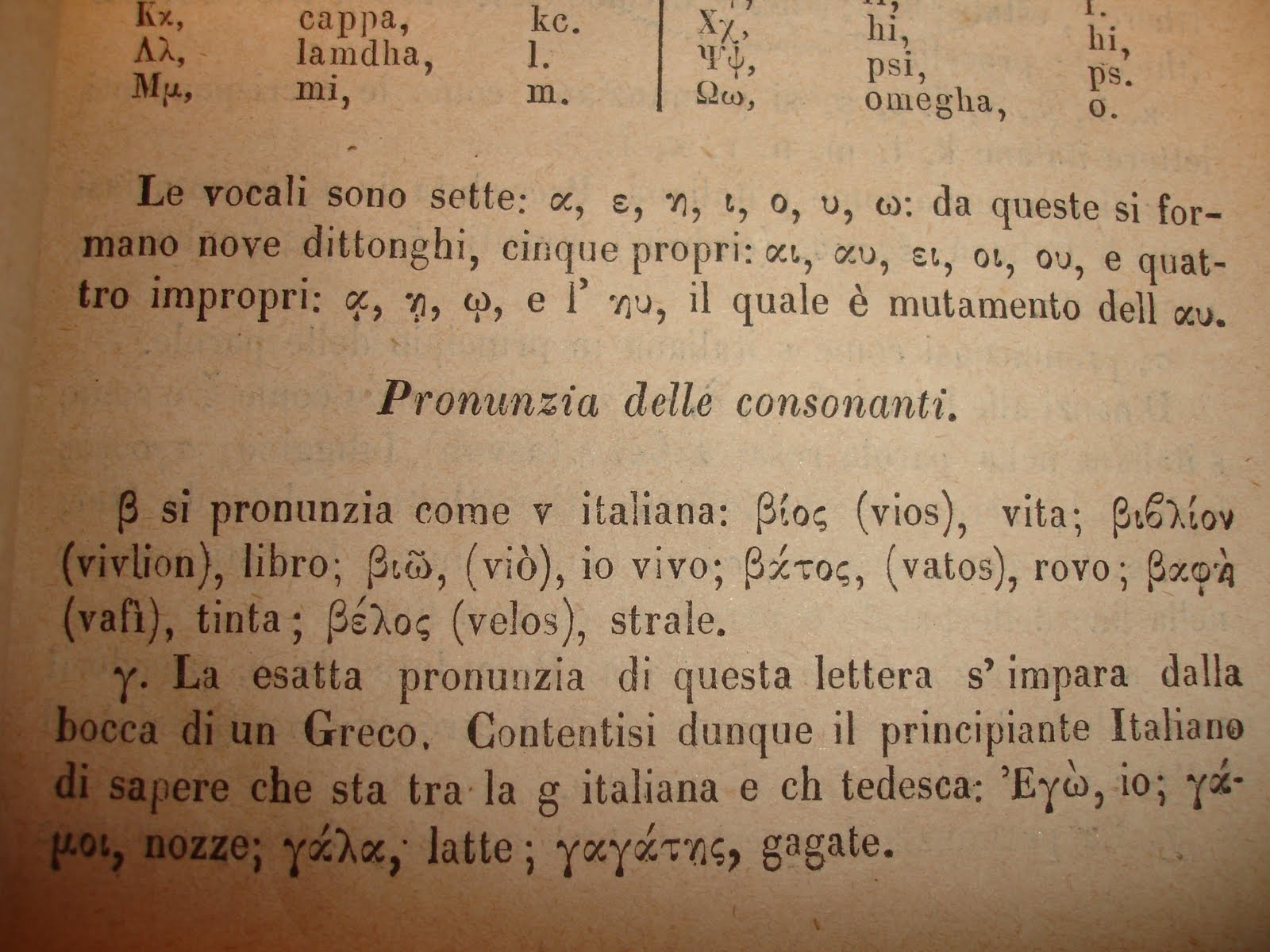
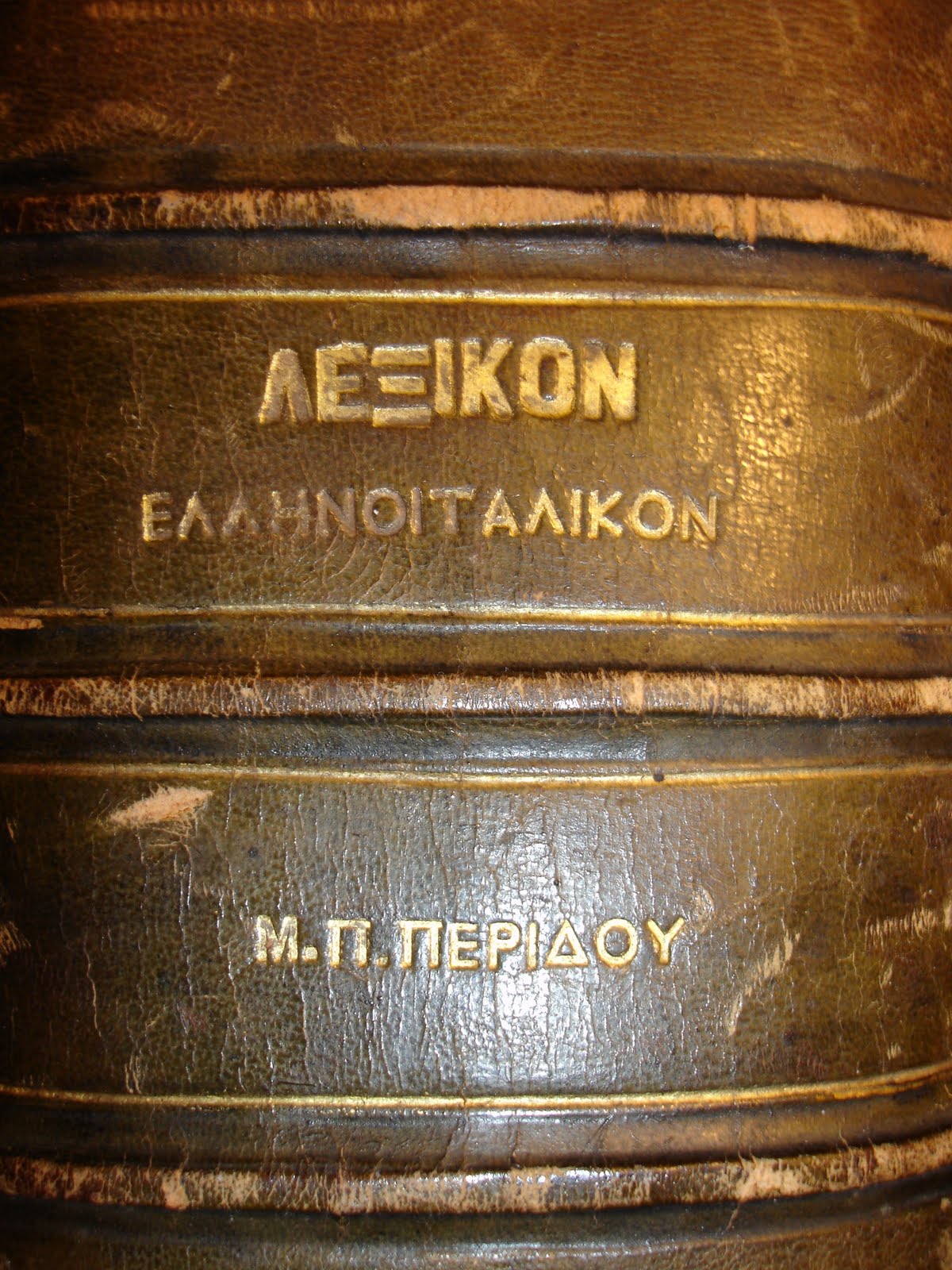
3. Il testo illustrato nelle fotografie ha un odore che potrò integralmente restituire, incluse le sue nuances marine, fra qualche decina d’anni, se tutto va bene, con uno speciale link (il listink).

4. Questo è tutto quello che ho da dire sull’editoria elettronica.

Notes

1. Πᾶν γνήσιον ἀντίτυπον φέρει τὴν κάτωθι ὑπογραφὴν καὶ σφραγίδα: each authentic copy bears the following signature and seal.

2. I know very little about Ettore Wieser so far: he was of Triest, he used to sail and to read books in Italian, German, French and Greek, some of which he had bought in Patras and brought on board of the schooner “Angelo”; in 1897 he (perhaps, but I have not found a final evidence yet) took part in the battle of Domokós with the Garibaldinians – who were first the volunteers supporting Garibaldi, then those inspired by his ideals – and, at least as far as books are concerned, he had a strong sense of property.

3. The volume shown in the pictures has a particular smell that I will be able to fully reproduce, including its marine nuances, within some decades by means of a special link (the listink).

4. This is all I have to say about ePublishing for now.