Switch over to our new blog! • ¡Pásese a nuestro nuevo blog!

The renewed version of our blog, with more features, a richer design, and available in nine languages, can be read here: https://wangriver.com

The new version also includes the old posts, often in expanded form. If you are curious about the updated version of this post, replace “riowang.blogspot.com/” in the URL with “riowang.studiolum.com/”, and the new link will most likely lead you there.


La versión renovada de nuestro blog, con más herramientas, un diseño más rico y disponible en nueve idiomas, se puede leer aquí: https://riowang.com

La nueva versión también incluye las publicaciones antiguas, a menudo en una forma ampliada. Si tiene curiosidad por la versión actualizada de esta entrada, sustituya «riowang.blogspot.com/» en la URL por «riowang.studiolum.com/es/», y el nuevo enlace probablemente le llevará allí.

This was brought by the railway


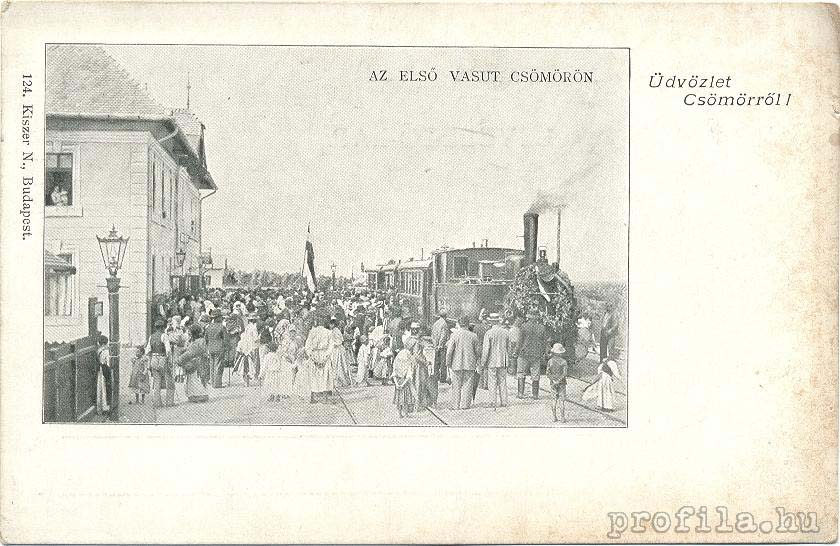
In the village where I live, the railway arrived at the same time with the 20th century. However, the preparations, the establishment of a stock company, the collection of the share capital, the development of the plans already begun a decade earlier. Town clerk Gyula Bitskey made the following proposal on the town council’s special meeting held on 20 January 1892:

“I consider it unnecessary to argue for the generally proven fact as to how great blessing for a municipality is if it has a railway station, what a boost it means for the industry, an increase of the value of the property, an easy and good sale for the local products and, in consequence, an intensification of tax payment. I am therefore convinced that the honorable Council desires and wishes the establishment of a railway connection with the capital city.

The vineyards in the Old Hill which because of their soil are the most exposed to the devastation of phyloxera, will soon be totally useless areas, but if we will have a railway station, they will become the most sought for holiday resorts, and their value will reach never seen heights.

The price of our products will considerably increase due to the easy transport. The vacationers will pay a good price for the empty rooms in the village. The artisan class, so absent until now, will settle in the village and, due to the competition, the articles of the shops, butcher-houses and inns will become cheaper.

The transport of the much-needed fertilizers, carbon and firewood, wheat, wine, melon, fruits, milk etc. will be cheap and quick.

The village will be populated, new colonies and holiday resorts will be established, rates and taxes will be shared on a larger base and become more bearable.

The communication with the authorities and offices will become easier.

The value of lands and houses will be doubled.

Honorable Council! – I am far from having exhausted the benefits to be reached by the establishment of a railway connection!”

The words of the clerk were confirmed by history. The branch line built from the Budapest-Gödöllő railway to the village allowed to the women of Csömör to deliver every morning fresh vegetables and fruits to the markets of Budapest. Even in the 1990s it was a refreshing spot on the early morning train the group of the last women in the traditional Slovak pleated skirt with blue flower pattern and great shawl carrying large baskets to the market of Bosnyák square. The focus of the village’s agriculture changed from the arable lands to intensive vegetable production in the gardens and later in glass-houses which meant a certain extent of independence even in the times of the Socialist kolkhoz, just as the possibility of commuting into the factories of the city for the men who lost their lands. Young people could daily go to the middle schools of Budapest, and although they spent most of the day in the city, they did not lose their contact with the village unlike their companions living in colleges, and after graduating they returned to live here. The vacationers came as well, the middle and high bourgeoisie and officers of Budapest who before the war built holiday villas, and after the war as personae non gratae in the city they settled here. Up to the mid-90s, the introduction of the phone and the bus and the proliferation of cars the railway remained the only contact to the city and the outside world for the village.
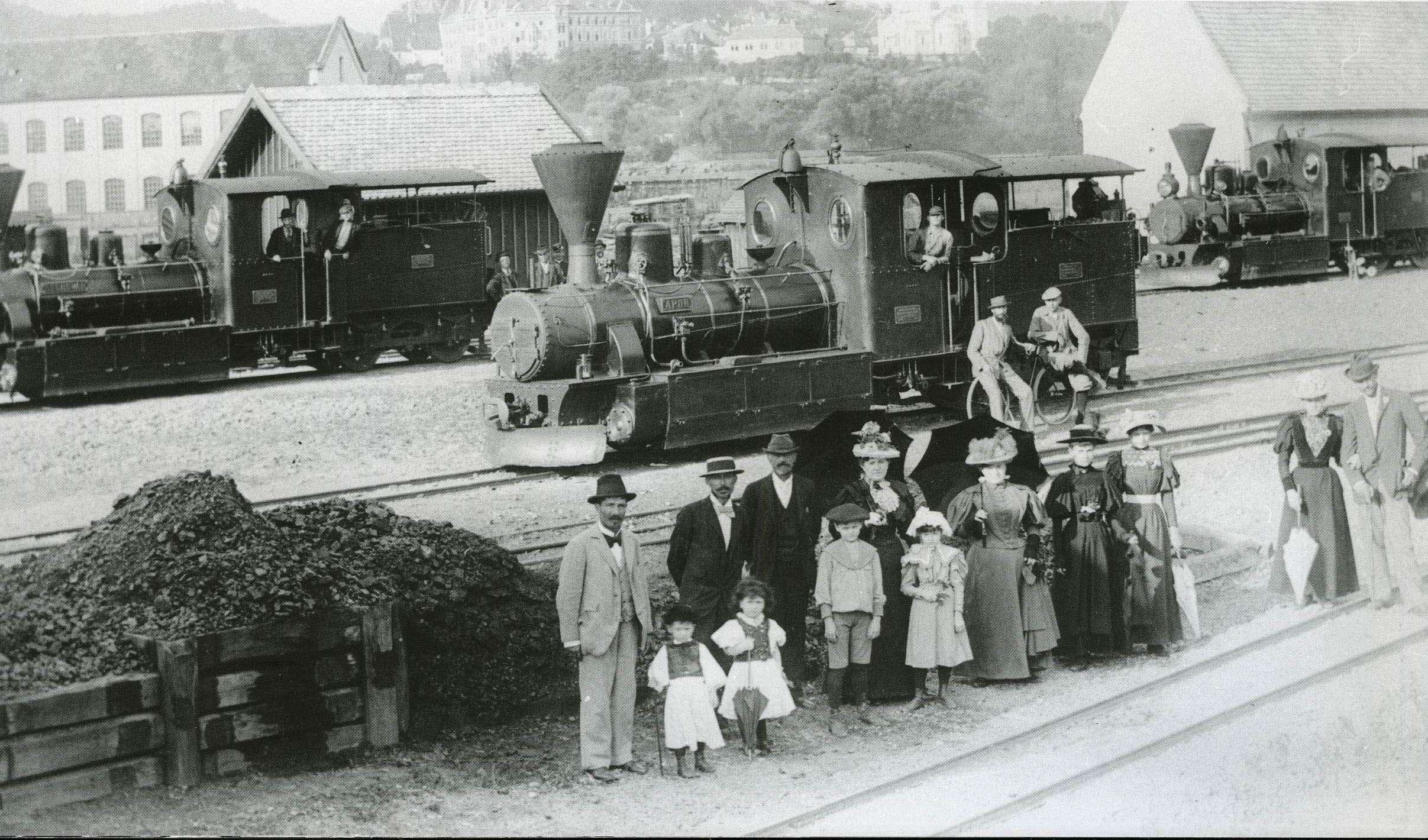

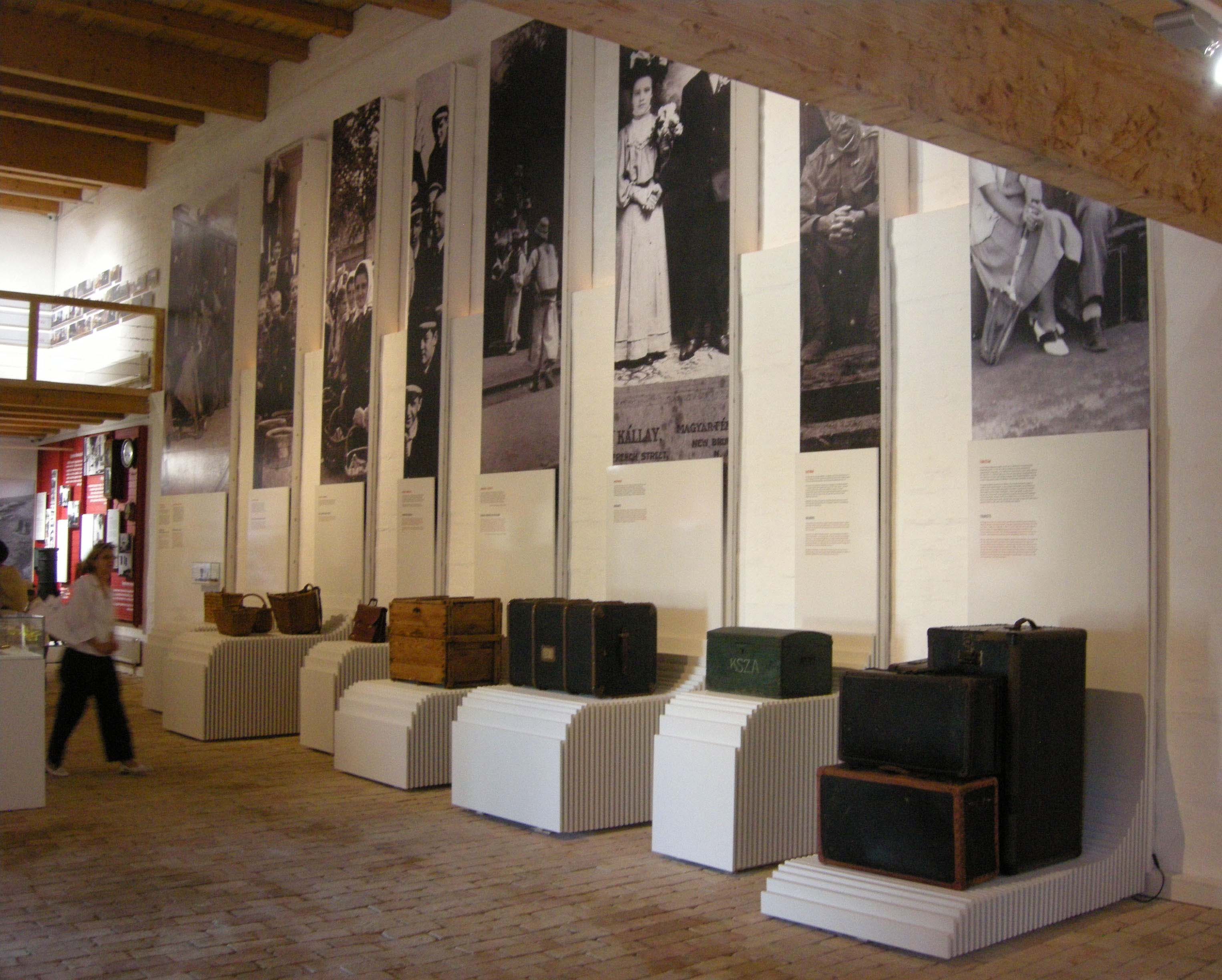
That the railway in the past hundred years brought the city and the world not only to Csömör but to the whole country, is dramatically shown in the exhibition The golden age of railways – Rural modernization, opened on the last weekend in the Open Air Museum – the Skanzen – of Szentendre. The installation established by Zsolt Sári in the large inner space of the former granary from the northern Upland region illustrates this story with a multitude of archive photographs, documents and railway items. The exhibition also has an elegant, beautifully typographed and clearly structured bilingual (Hungarian-English) catalog, which is the source of the following images and information

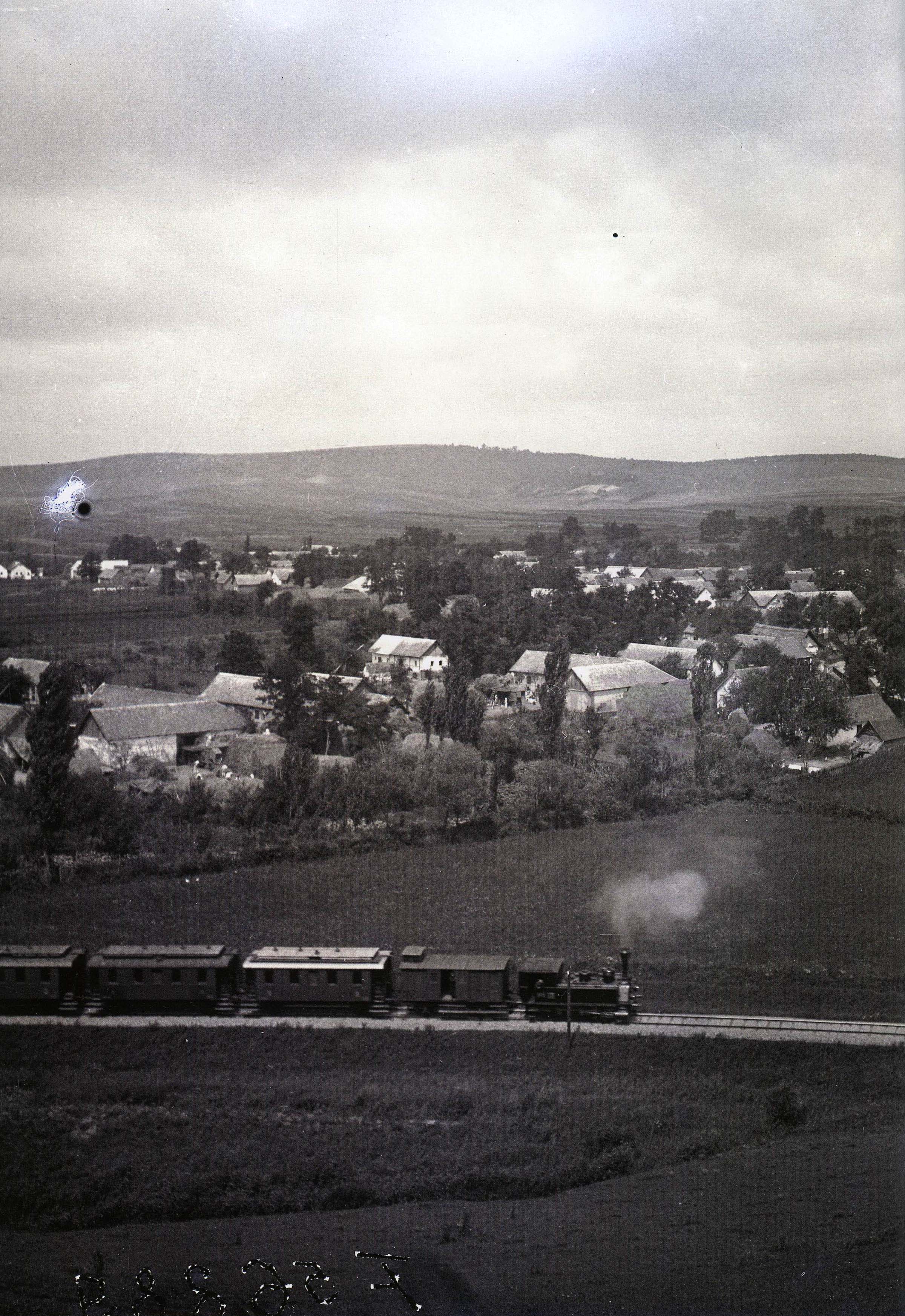
The first Hungarian railroad was opened in 1846 between Pest (Buda and Pest were two cities on the two banks of the Danube until their union in 1873) and Vác, forty kilometers to the north. The celebrated poet Sándor Petőfi even dedicated a poem to it. The real railway building fever, however, arrived only with the economic boom following the transformation of the Hapsburg Monarchy into the dualistic Austro-Hungary in 1867, which gave large opportunities to the country. The Hungarian State Railways were established in 1868, and by 1873 all the cities of the country were interconnected with railroads in the length of 4100 kilometers. After the passing of the law on the building of local railways in 1880, a further 13 thousand kilometers were built by nearly two hundred private companies. On the evening of the first world war, the country was interwoven by 21200 kilometers of railroads.

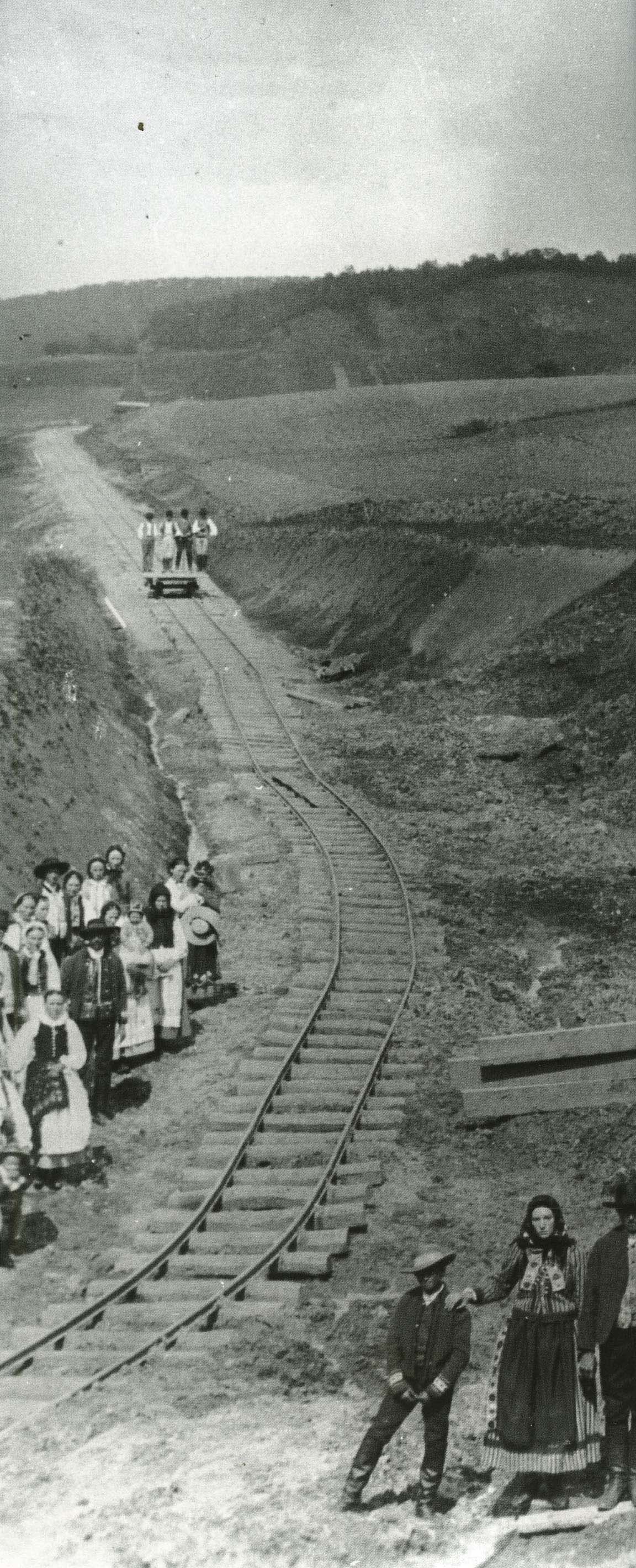
The railway contributed to the spreading of middle class values right from the beginning of its building through the collaboration of foreign – mainly Austrian, Czech and German – skilled workers who passed their knowledge and tools to the great number of workers coming from all over the country. It was then that the trolley, the barrow or the horse-drawn truck spread even to the smallest villages. The trunk lines were usually funded by the state, while local stock companies were established for the building of the local railways, but these too enjoyed substantial public support.


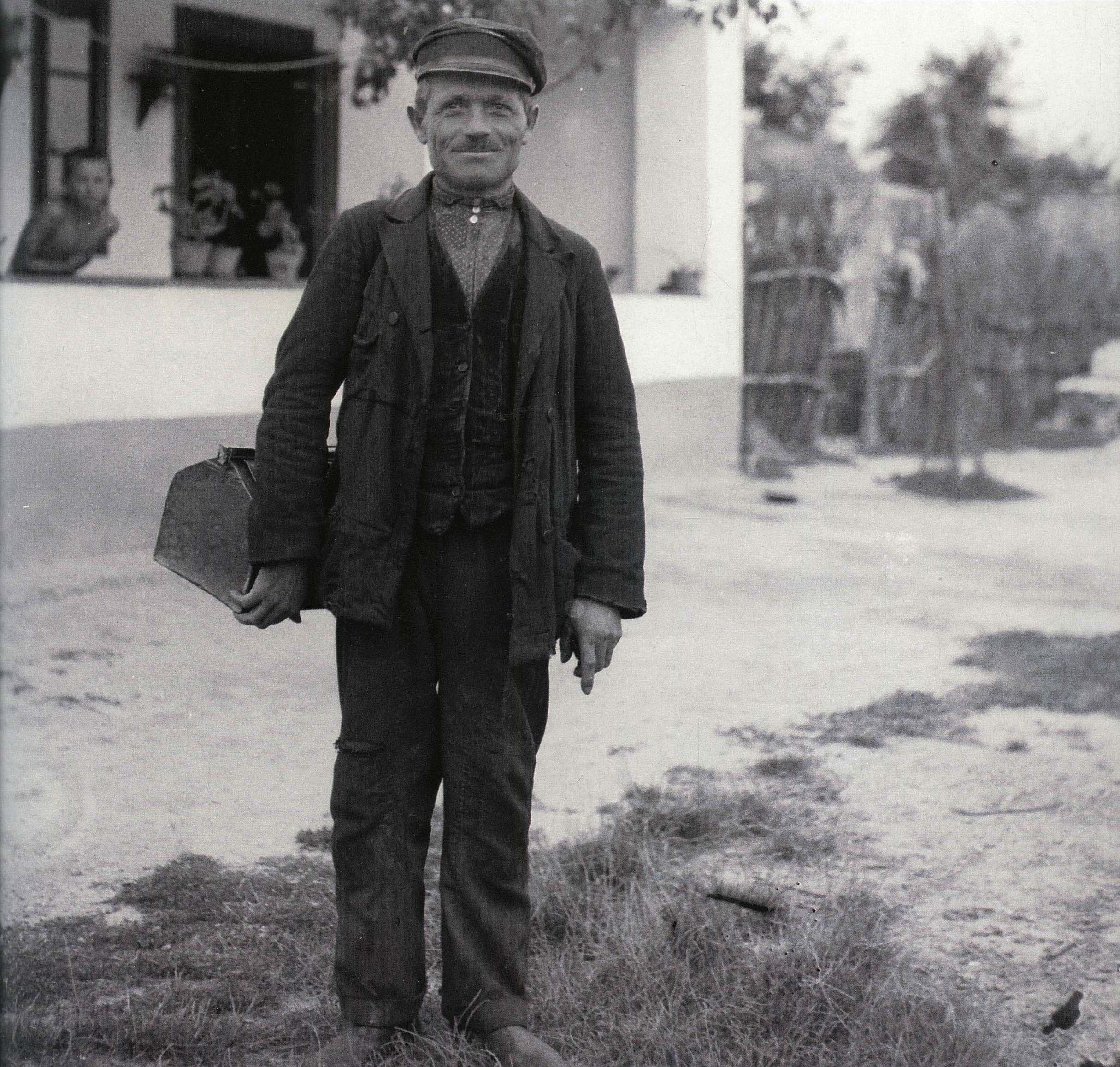
The real tool of modernization, however, was traveling. “I want to make this lazy Hungarian move! I want even the housewife of Brassó [today Braşov, Romania] to come to buy hat in Budapest!” It was with this slogan that the minister of public transport Gábor Baross introduced in 1899 the so-called diminishing tariff system that revolutionized the rail transport in Hungary. The essence of the system, divided into 14 zones, was that on the one hand the fares between two nearby zones were very low, and on the other hand above 225 kilometers every ticket costed the same: thus it was very cheap to travel both to the nearby town and to very far. The mere introduction of the zone system increased by 7 million the hitherto 12-14 million passengers per year.

The specific groups of the passengers are separately presented in the exhibition. Due to the low local tariffs, villagers could regularly carry their products to the markets of the nearby towns. A class of commuters to the factories was born. It was then that the bicycle became popular in the villages, as the workers from the more distant places could come by them in the morning to the nearest railway station. The teams of agricultural seasonal workers also traveled from place to place on hired freight trains.

Students from the nearby villages, whose parents could have not allowed to pay for the college, could now daily go to the urban schools. Railway tourism was also in development, facilitated by the “penny trains” regularly organized by the Railways for the special programs held in various cities. The middle class, of whose way of life summer holiday was an integral part, discovered the Hungarian spas and the mountain resorts in the Tatra mountains.
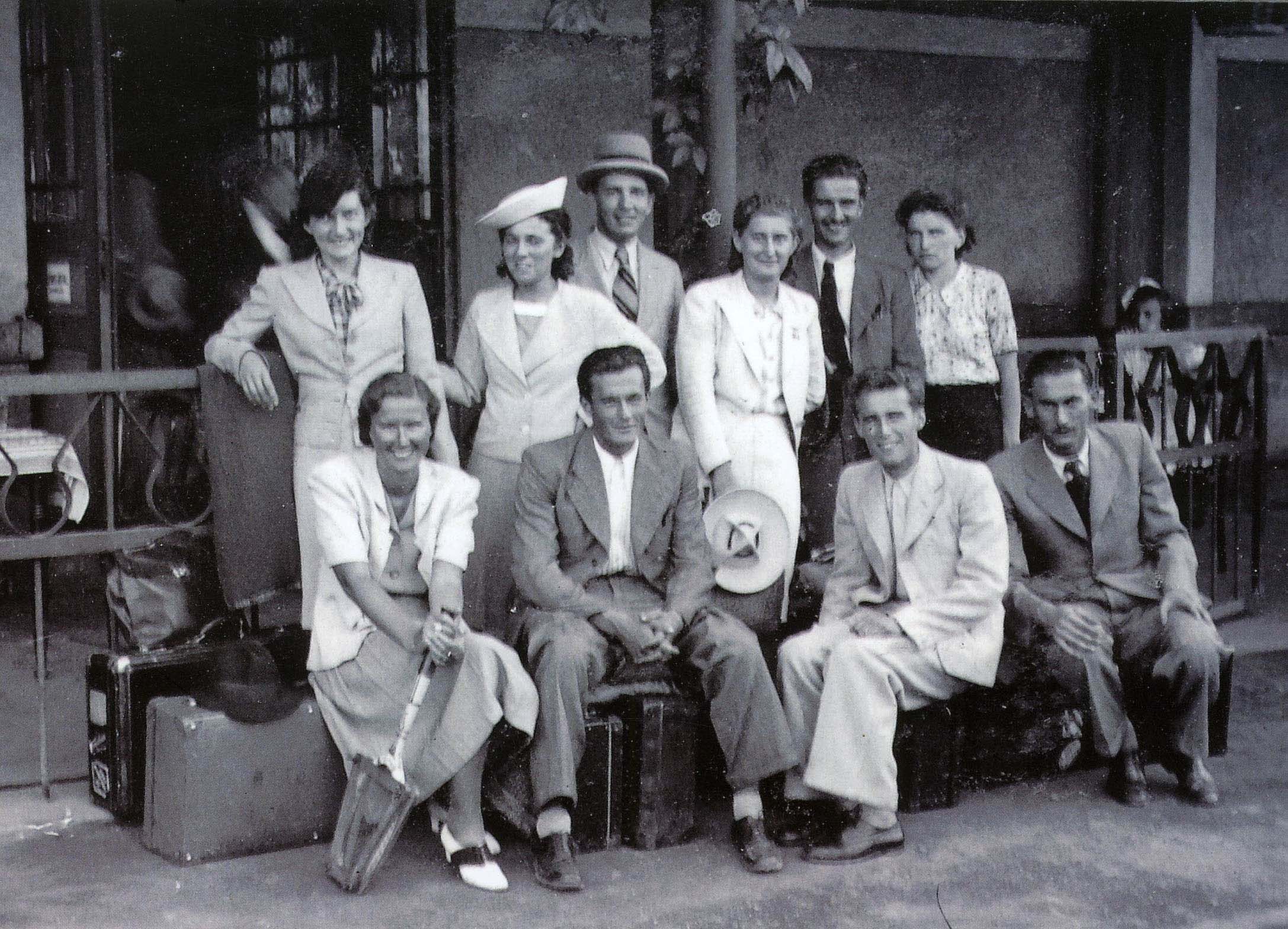

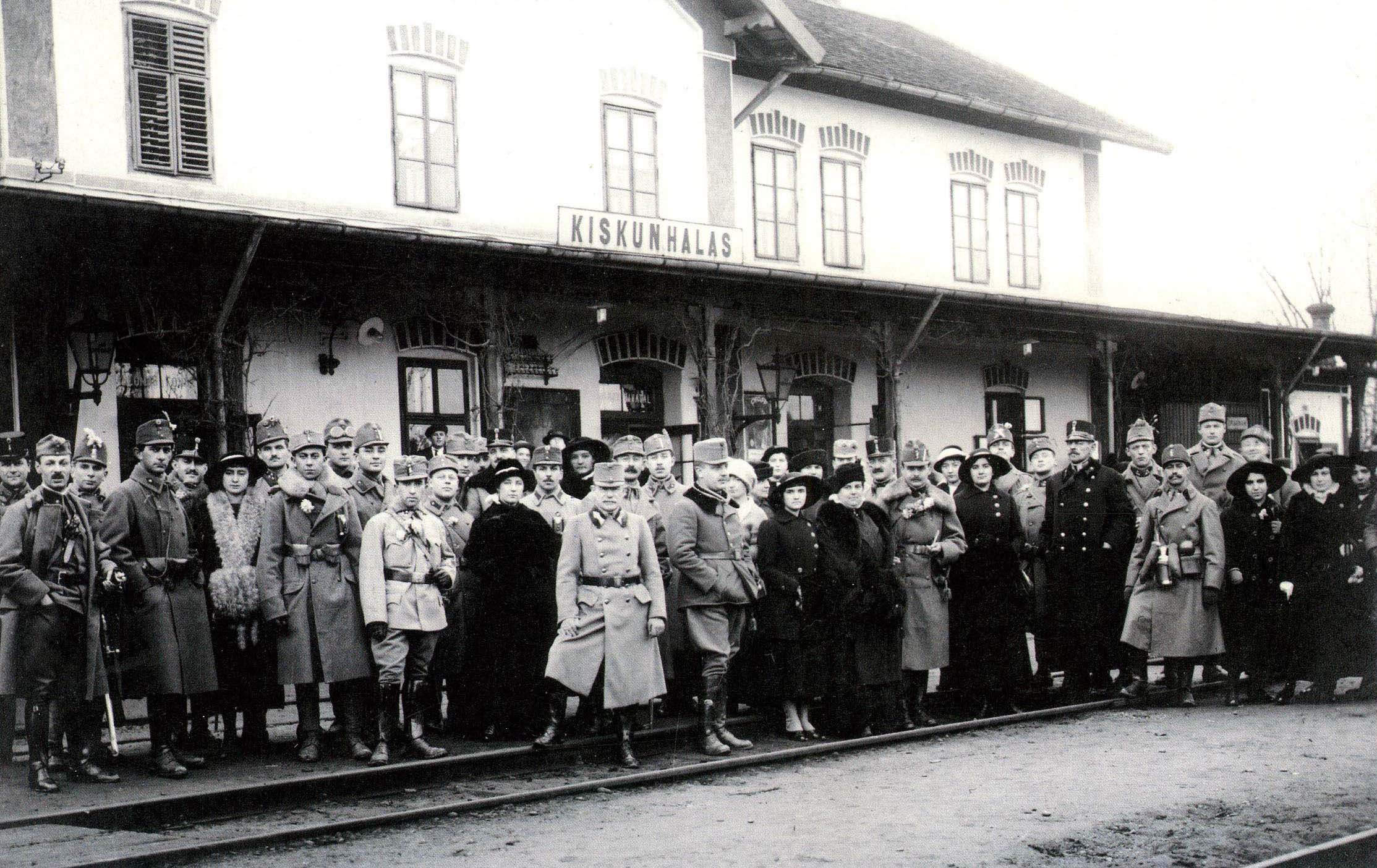
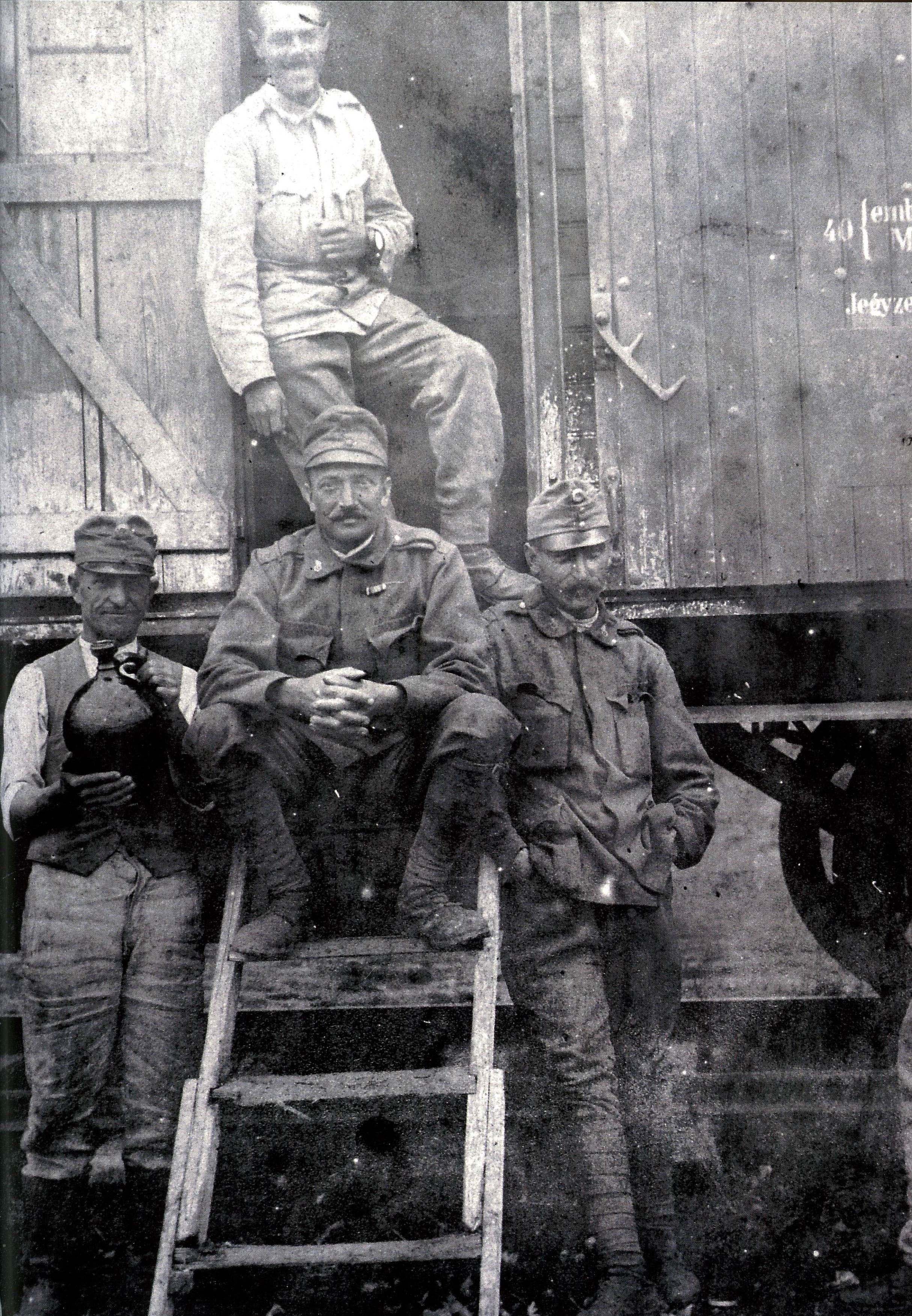
And the soldiers’ trains were also on the move, which henceforth became an integral part not only of military logistics, but also of military folklore and memoirs

“…We’re going to get on the train on Friday morning between nine and ten… we are going to be garnished, our cadet is buying tricolor ribbons for the hats, and small flags will be on the gun’s barrels, yes, my dear wife, our journey is going to be beautiful, but unfortunately I’m not writing this because I’m happy for it, I only wanted you to know how garnished we will be…” (Letter by Gyula Pörs from the 83rd regiment to his wife from Vienna to Senyeháza on 2 July 1915, leaving for the Eastern front in Galitsia)

After the introduction of the diminishing tariff system, in 1891 the fares on freight items were also radically reduced. Agricultural products could access in large quantities and cheaply to the cities and abroad. It was at this time that Hungarian grain became widely known for its good quality, and a large zone of food processing industry was built at the south of Budapest, whose surviving buildings are now considered industrial monuments.


The railway also delivered industrial products all over the country, filled the little shops with the same goods, and contributed to the standardization of furnishings. A good example of this is the Thonet bentwood furnisher, founded in 1842 in Vienna which, beginning with the 1860s, established a number of factories in Hungary at the meeting of beech forests and railway stations. The railway itself was the largest customer of the Thonet furniture, and from there they spread to the middle-class and later to peasant households.
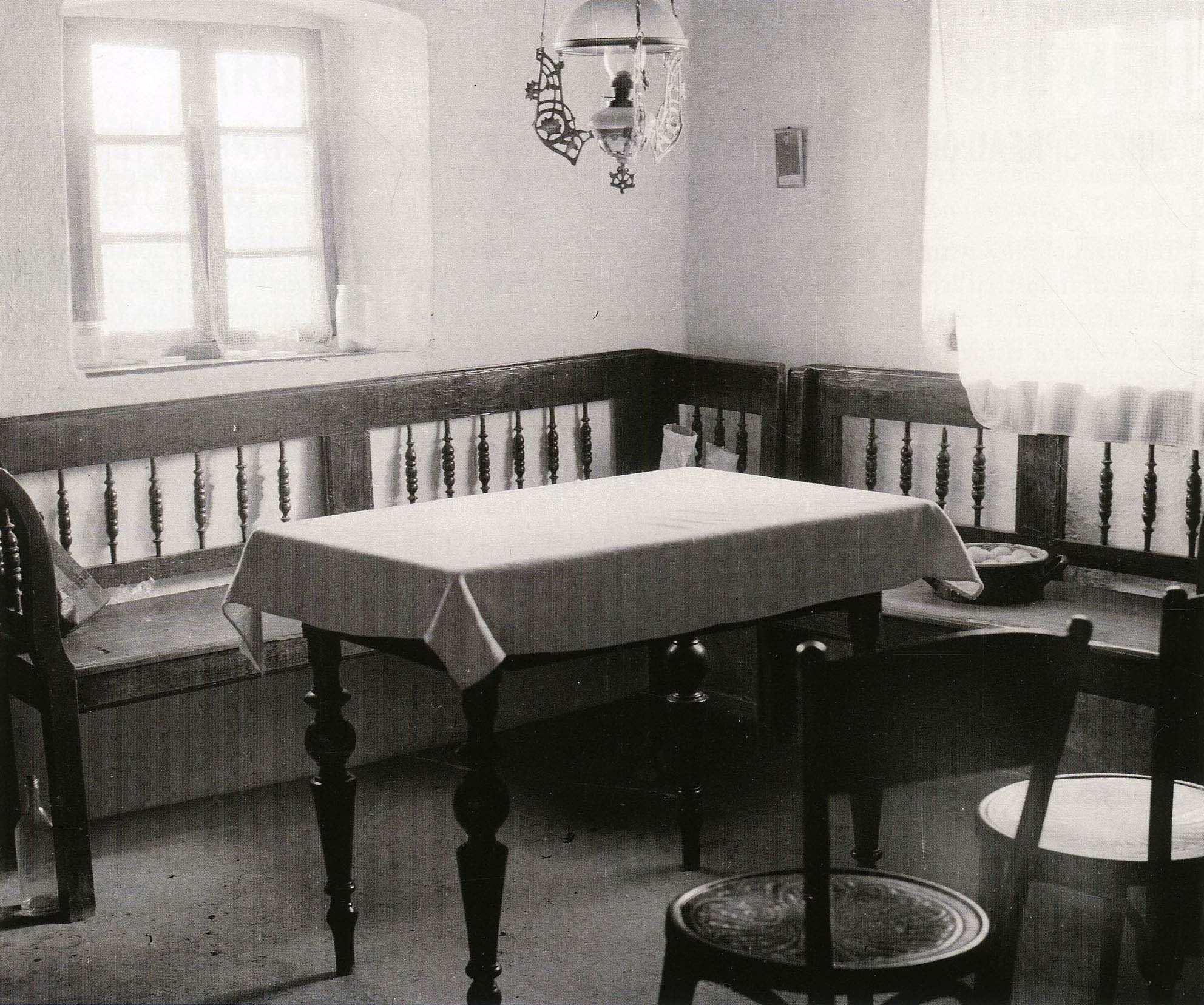

A separate chapter is – and at the exhibition it has a separate catalog indeed – that of the railway restaurants. Some typical items of their menu soon found their way to the average Hungarian kitchen where they are still considered as festive dishes: the Wiener schnitzel, meatball, scones or Zwack Unicum. And the typical checkered tablecloths of the railway restaurants can be still found in traditional peasants’ kitchens and in some last small suburban eating-houses, referred to precisely as “kockásabroszos”, that is, “those with checkered tablecloth”.
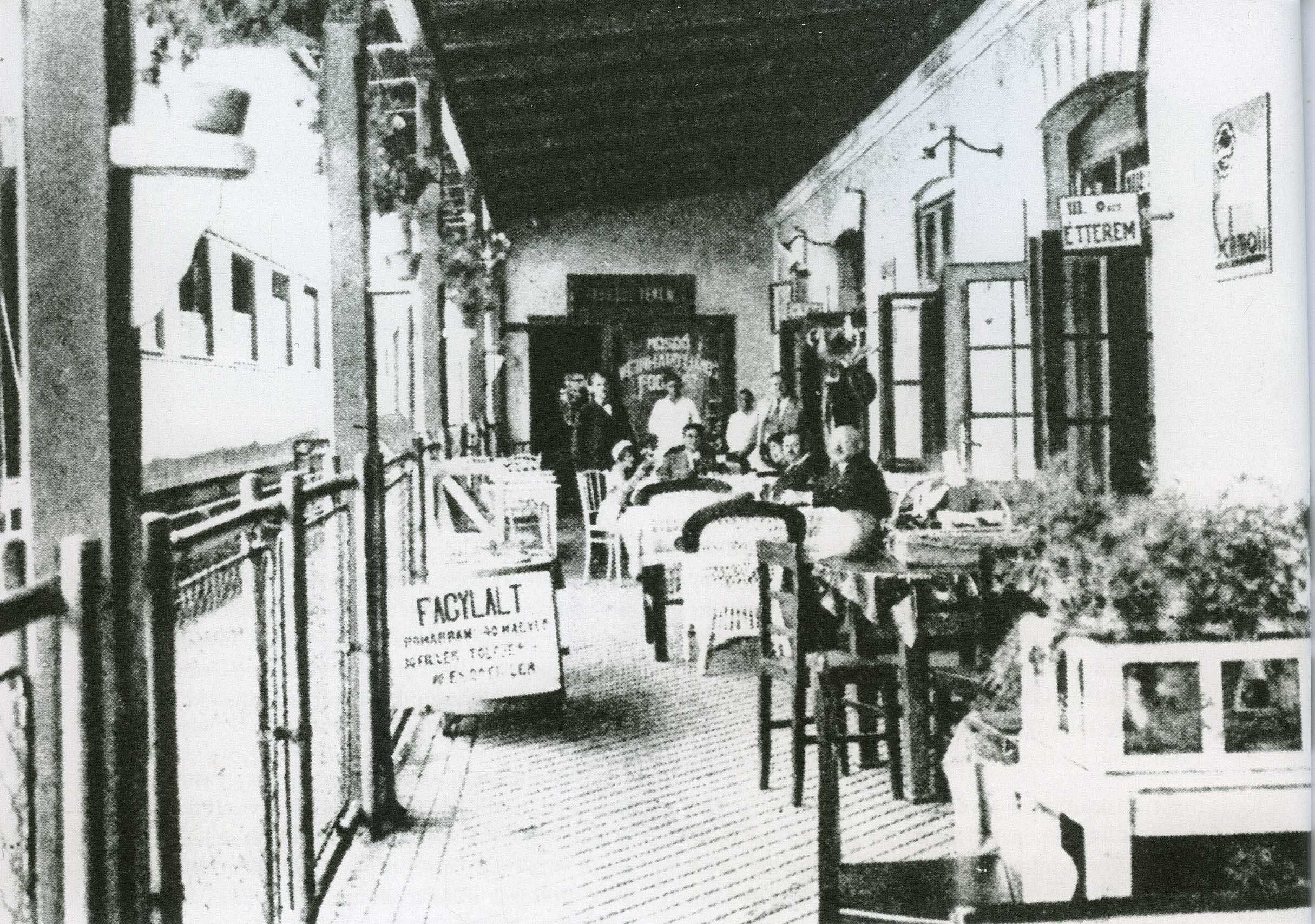
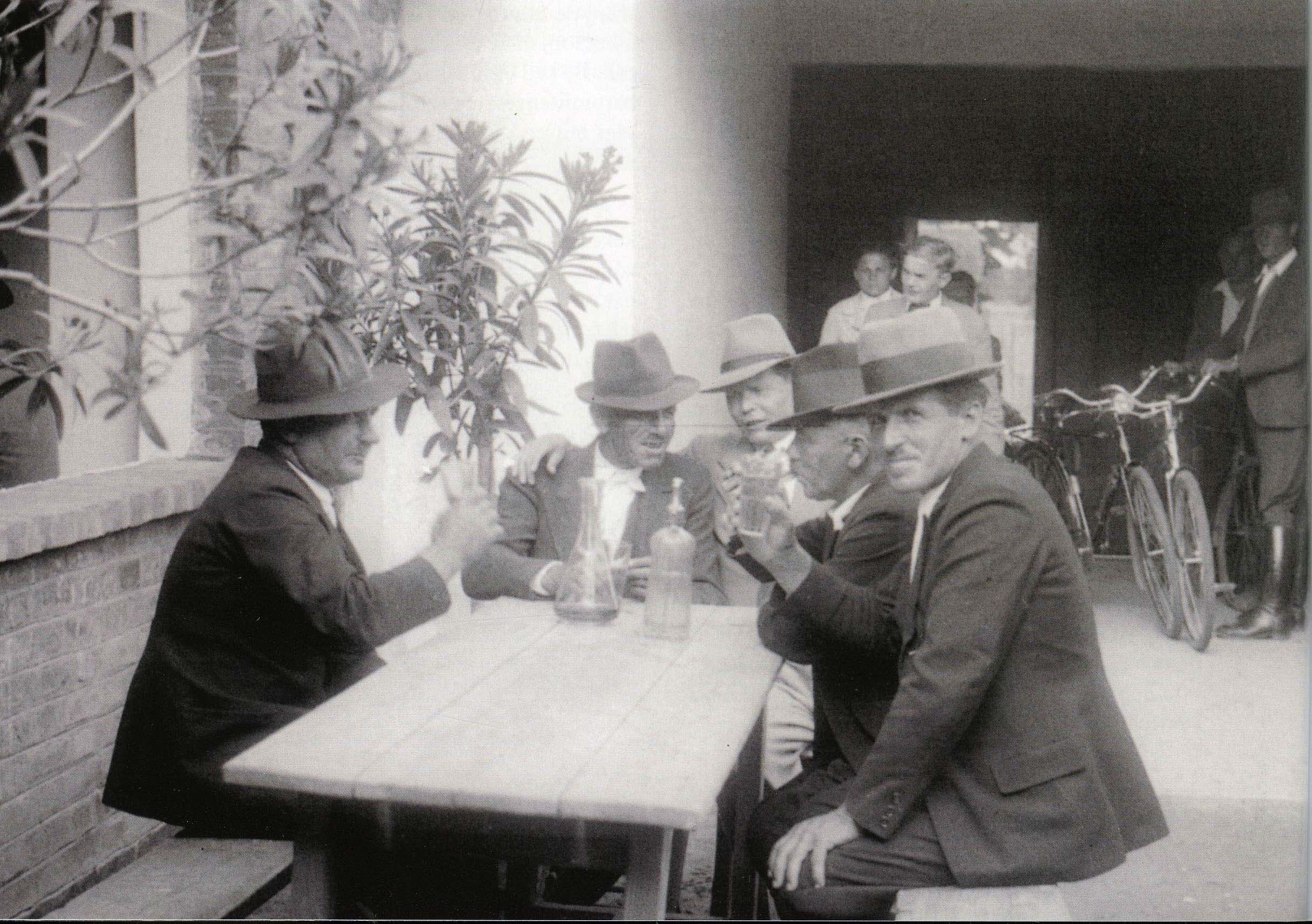


The railway stations built from the 1870s on single type designs were among the most important representation and social spaces of villages and little towns. Their stylistic elements and architectural solutions – cellars, stone and brick plinth, frontal plaster and brick decorations – quickly appeared on the wealthier houses as well. The small iron stoves of the railway waiting rooms were also taken over in rural homes. And moreover the brick outdoor furnace that one would consider such a traditional element of archaic peasant household, also appeared for the first time in the uniformly designed gardens of railway guards.

The typical station designs also included typical vegetation: linden and chestnut avenues which tolerated well the smoke of the locomotives and which can be still seen around old railway stations all over the Monarchy, as well as geraniums, dahlia and bred roses planted in wooden boxes, which soon became an indispensable visual element of Austrian and Hungarian village houses. The Austro-Hungarian bureaucracy also developed a special code, in terms of which in the Eastern part of the Monarchy the erect type geranium, while in the Western part the bent down type geranium had to be used in official window flower boxes.
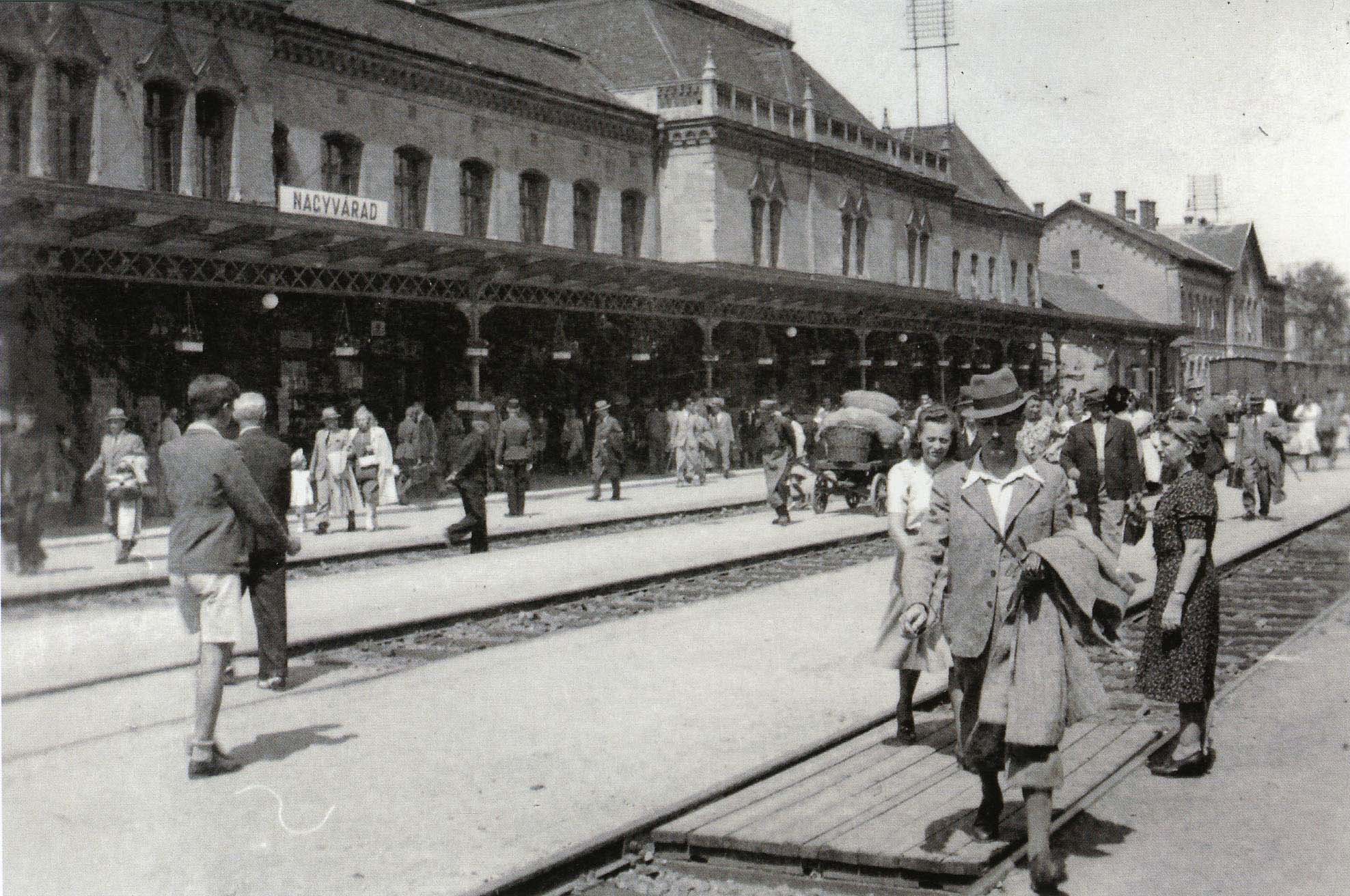

The local times used before the railway and following the course of the sun were in 1891 officially replaced by a uniform Central European time zone. It is from then on that every clock shows the same time across the country. Moreover, in many places even the clock appeared for the first time on the facade of the railway station, and from there it found its way into private houses. The fixed working time that followed the clock instead of the sun also appeared at this time first in the urban and then in the rural work as well.
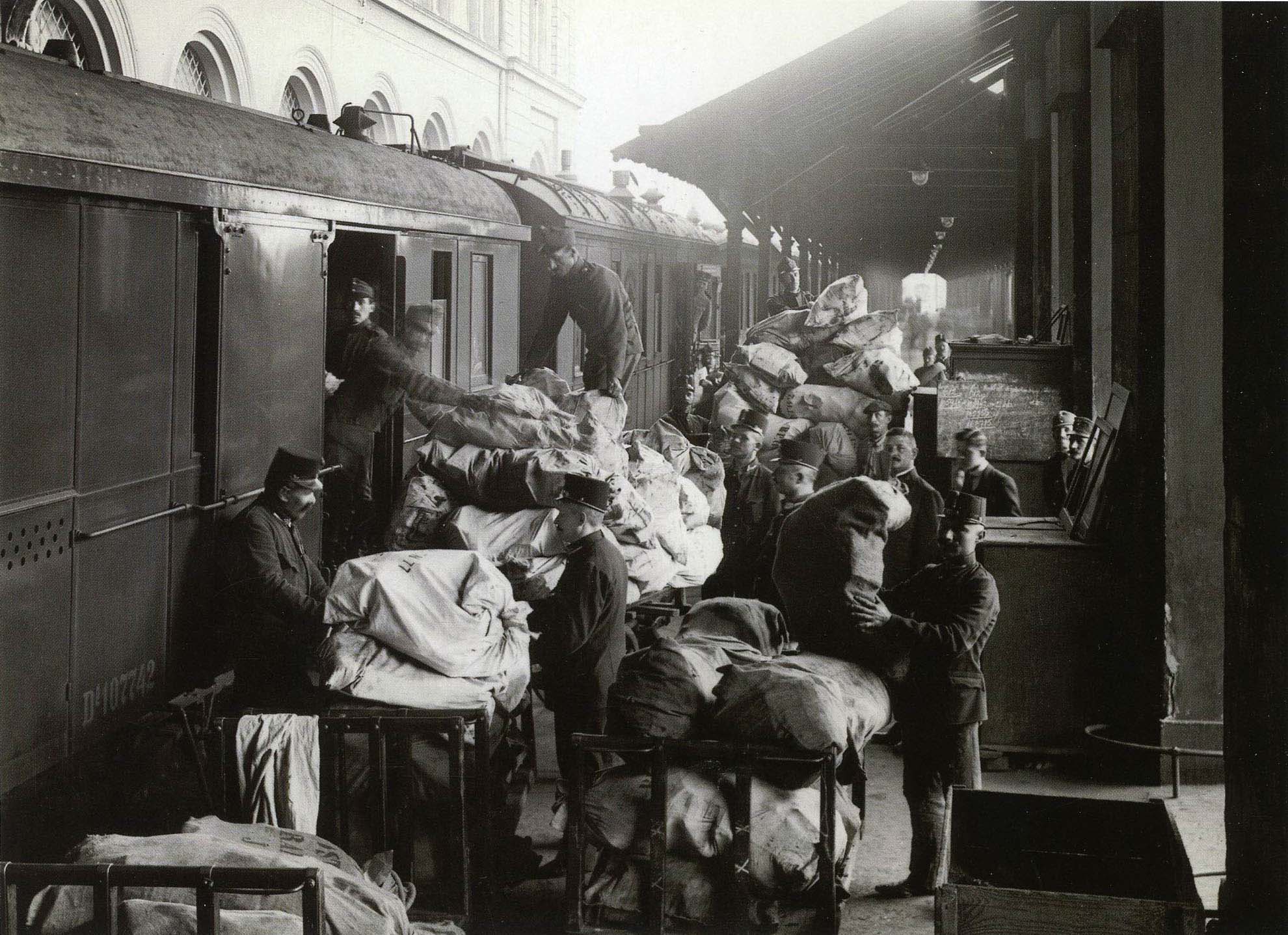

And the railway not only brought middle-class lifestyle and objects to the countryside, but also introduced to the city the village’s culture and folklore which at the turn of the century became one of the most important means of expression of national self-image. This is how the folk dress of certain traditional zones near to the main railway lines, first Mezőkövesd and its matyó dress and later Kalocsa became the representants and important manufactural centers of folk culture, whose home-made products also spread in the middle-class homes and clothing through the mediation of the railway.
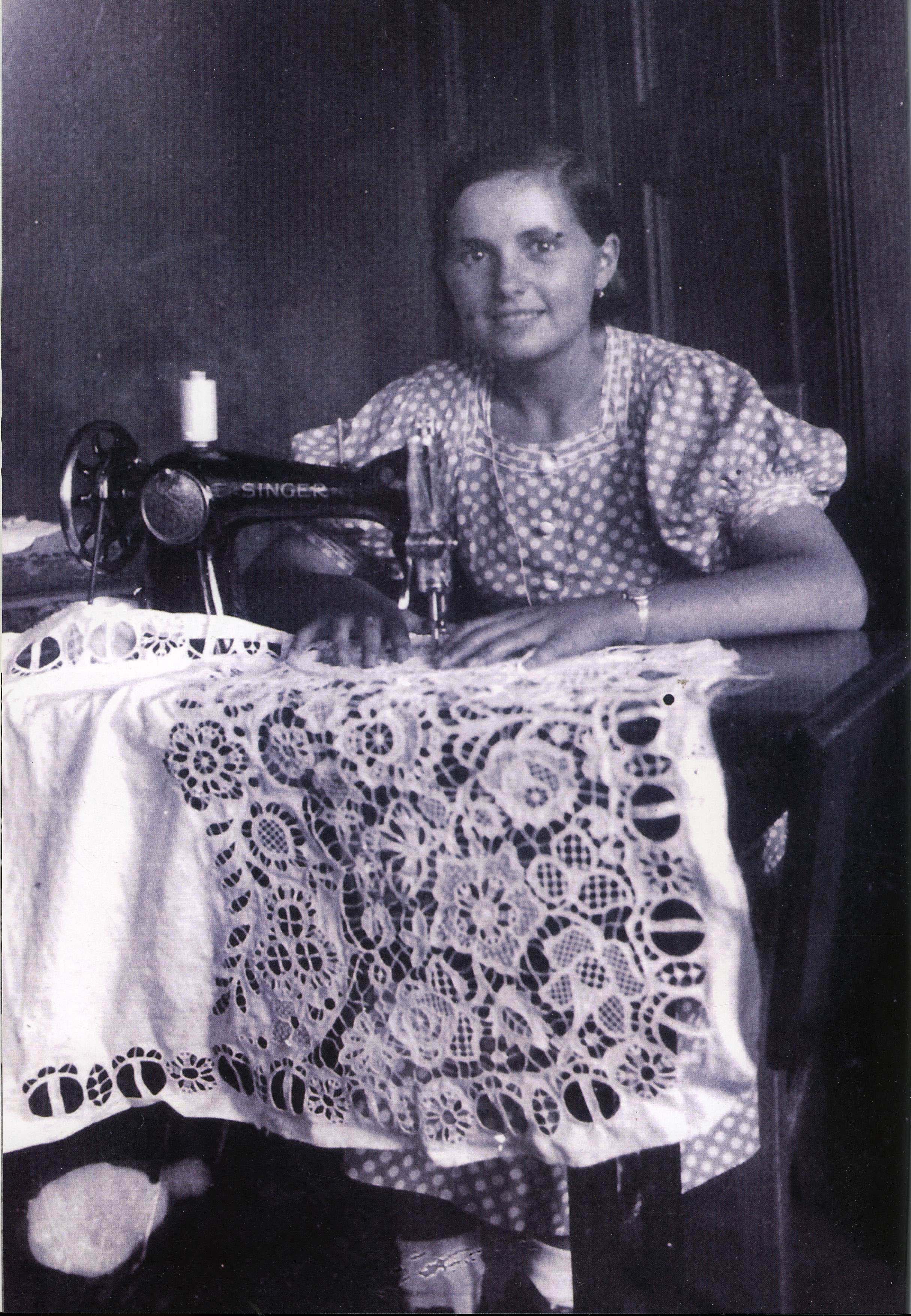

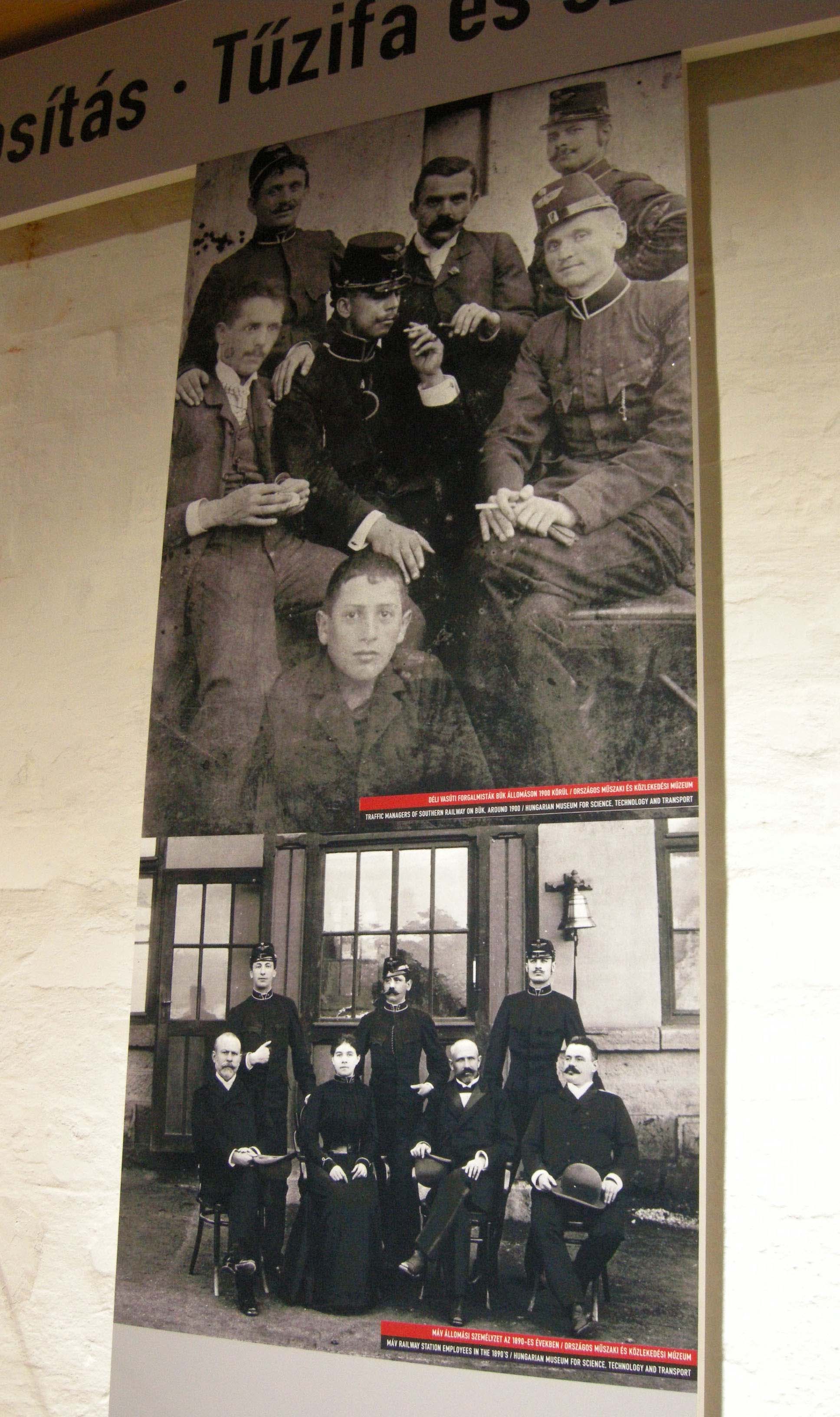
And the railway has created a society within the society: the world of the railwaymen. To be a railwayman meant a fix salary and a life-long work, health insurance, pension and a number of other benefits, which was an unimaginably great thing at that time. To be a railwayman meant a rank and a social rise: the railwayman was a gentleman, a good party even for rich peasants’ daughters. He had a credit at the shopkeepers, and his own glass in the pub.
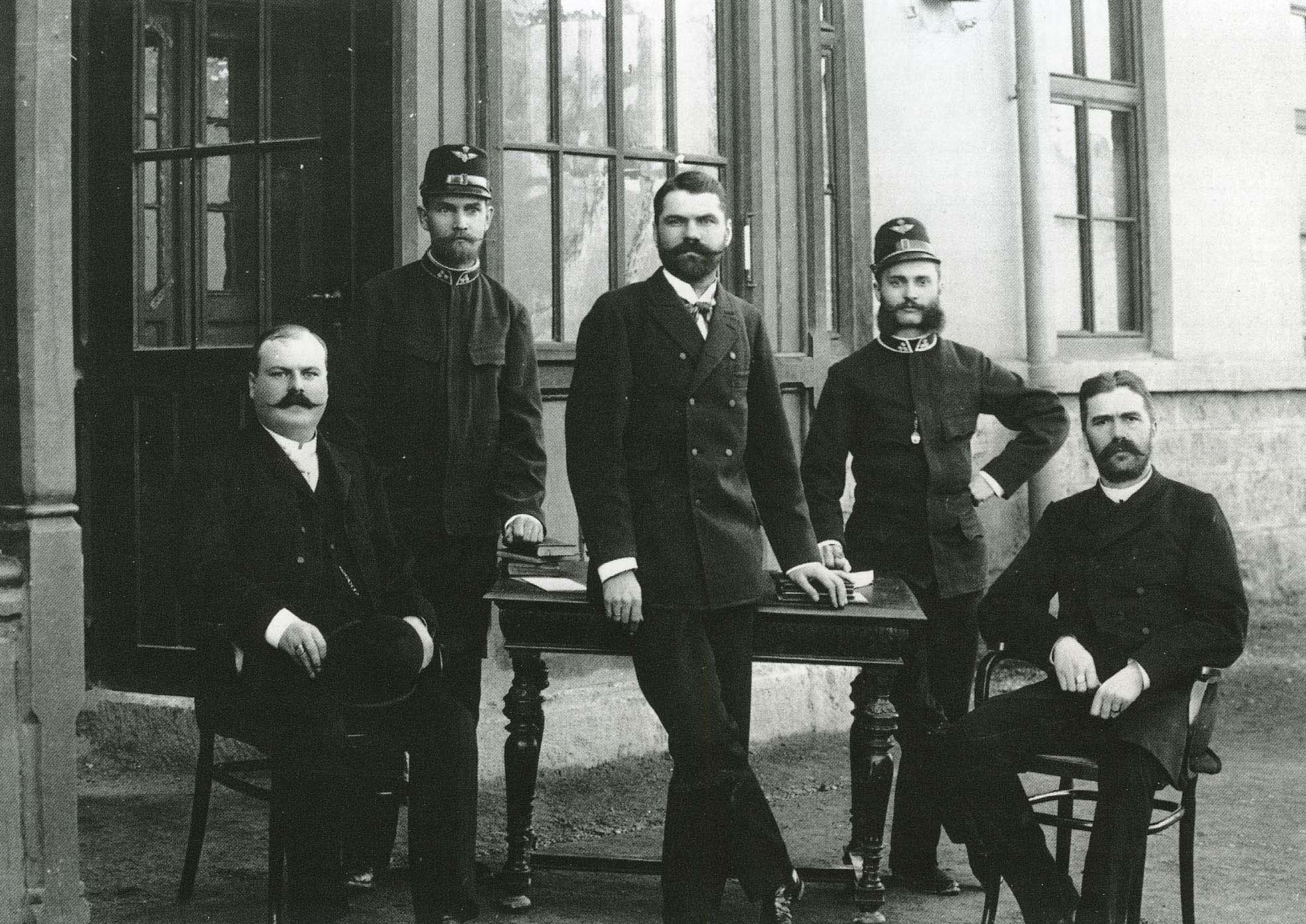


The railwayman’s life was based on a strict hierarchy, responsibility and discipline, which was symbolized by the uniform. The properly regulated railway uniform represented a rank and an authority just as that of a military officer.
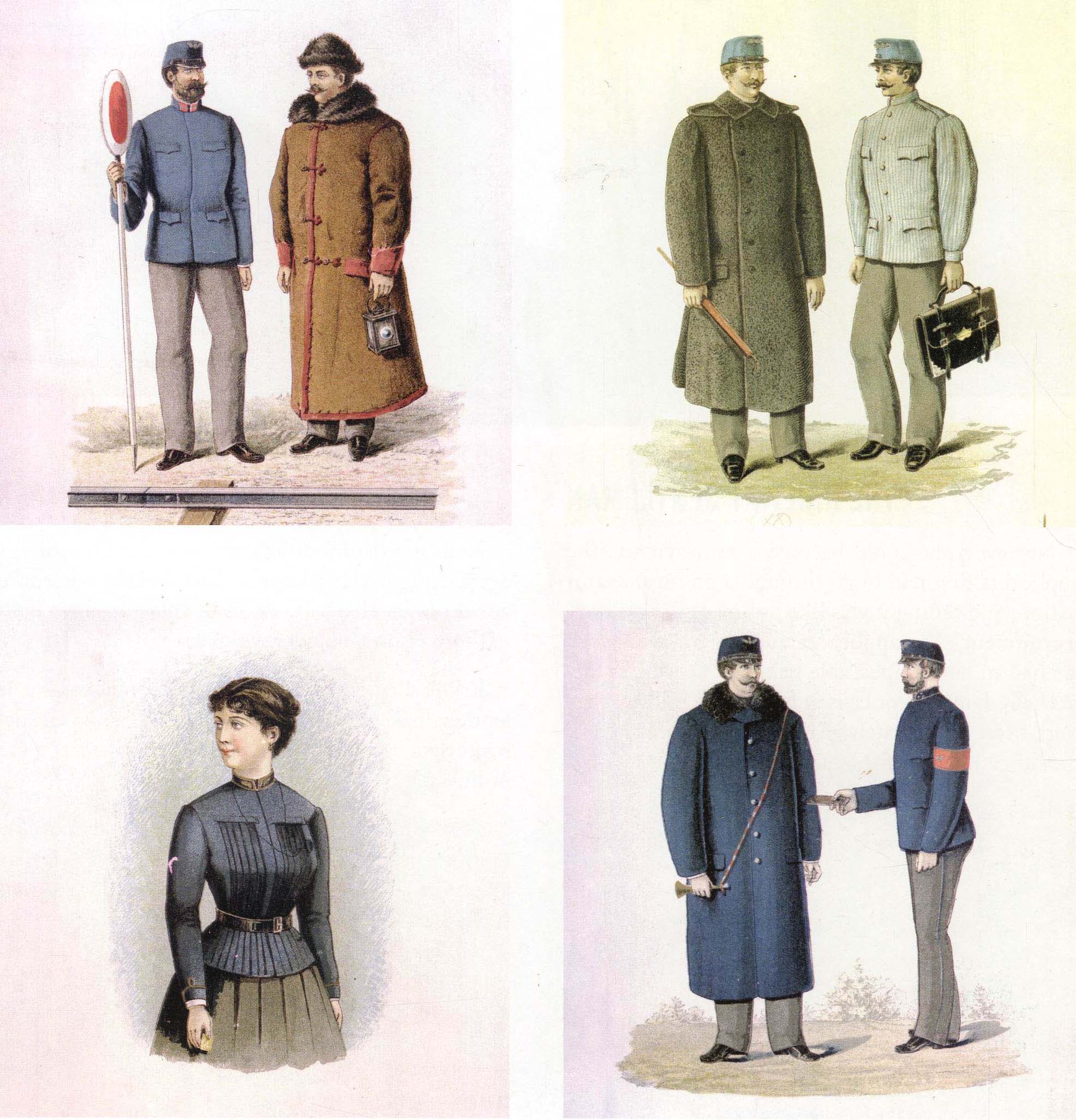

The railway uniform in several places even had an influence on rural clothing. For example, in the town of Tura, not far from my village, it substituted for the traditional male folk dress: the lads ordered clothes at the local taylor which imitated the railway uniform.
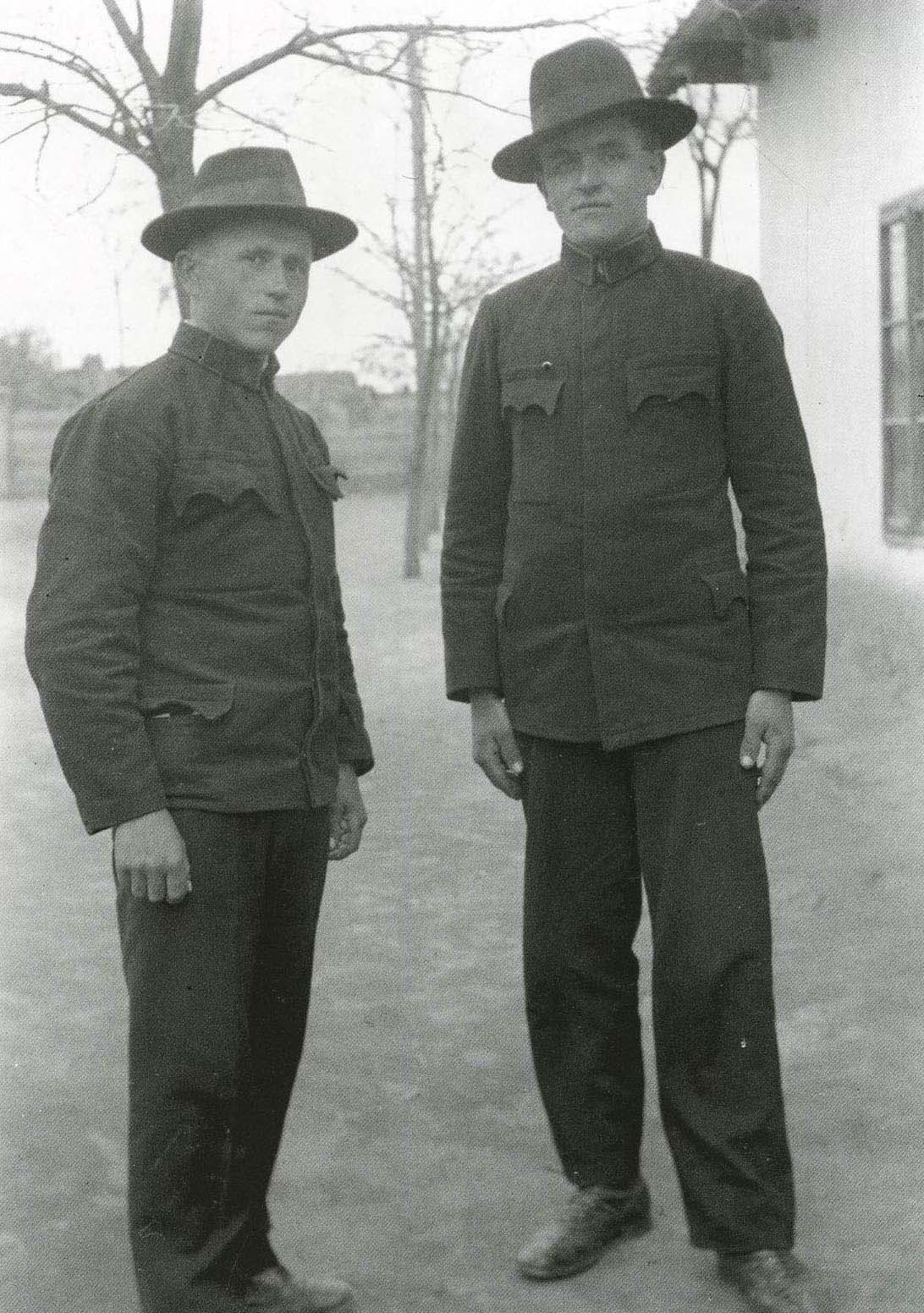

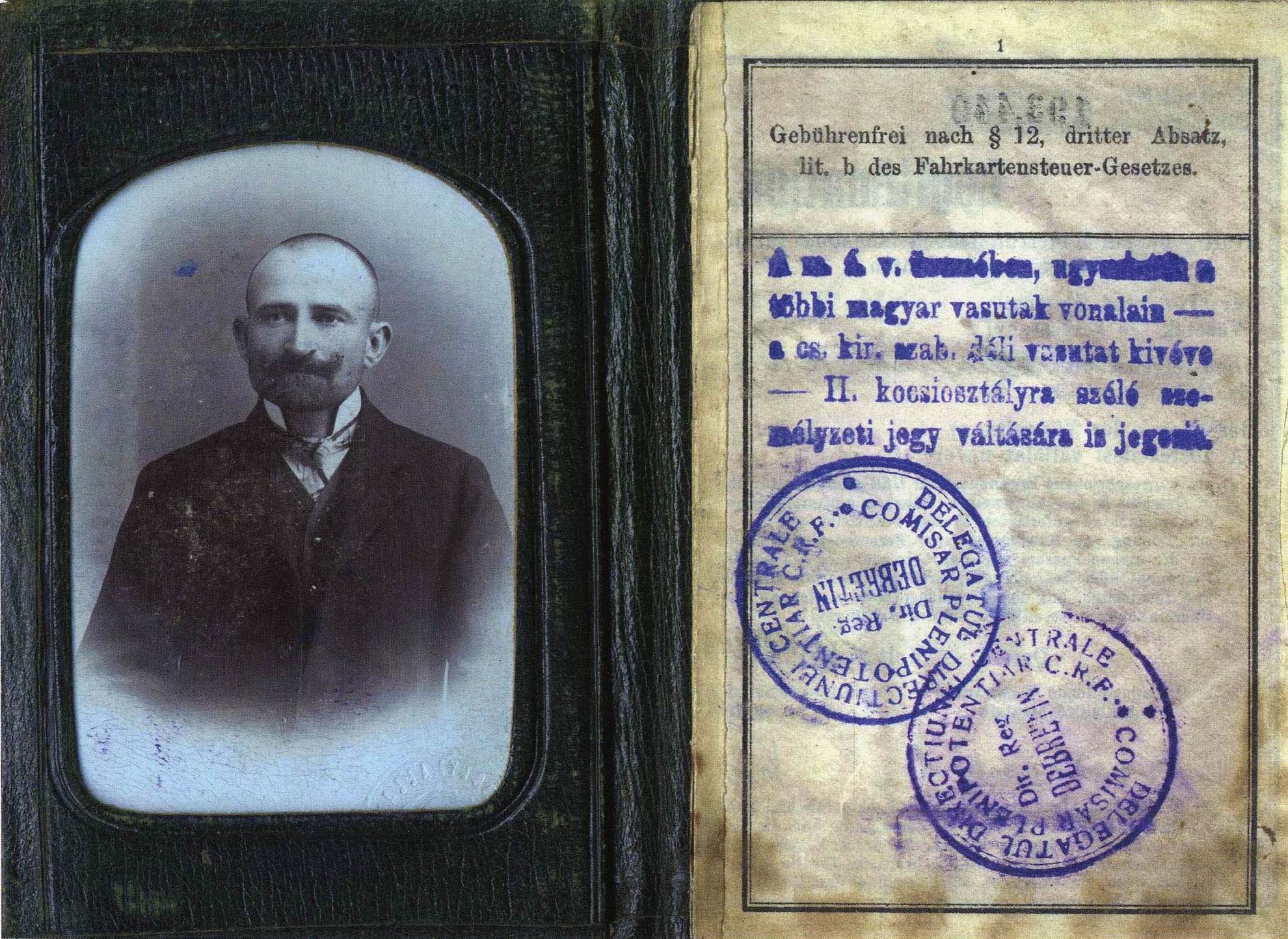
One large wall of the exhibition is completely filled with a mosaic made of passport photographs, the portraits of several thousand railwaymen who maintained and operated this huge machinery for long decades. The documents and photos in the foreground of the mosaic present the individual life stories of some railwaymen: locksmith Géza Sárközy in 1898 was already a train apprentice, then he passed an officer’s exam in Cegléd, becoming a locomotive heater, and finally in 1900 a driver of the Hungarian Royal State Railways. János Csonth from 1888 was walking through the ladder of ranks until in 1911 he became a stationmaster in Rozsnyó (today Rožňava, Slovakia), and after the Trianon Treaty in 1920 he received a service apartment and a job in Budapest from the railway. Gyula Ébersz, son of a German immigrant from the Black Forest, who became so much Hungarian that as a railway officer in Munkács (today Mukačevo, Ukraine) in 1920 he “did not want to make an oath for the Czechs”, so he was deported with his wife and three children to the diminished Hungary in a freight train in which they also lived for more than a year. Finally he received a job at the Debrecen railway station, but as a consequence of the previous hardships he soon died in a heart attack. The railway, however, still cared about them: his wife as a “rail widow” received a rented flat in Püspökladány and a saleswoman’s job in a kiosk.

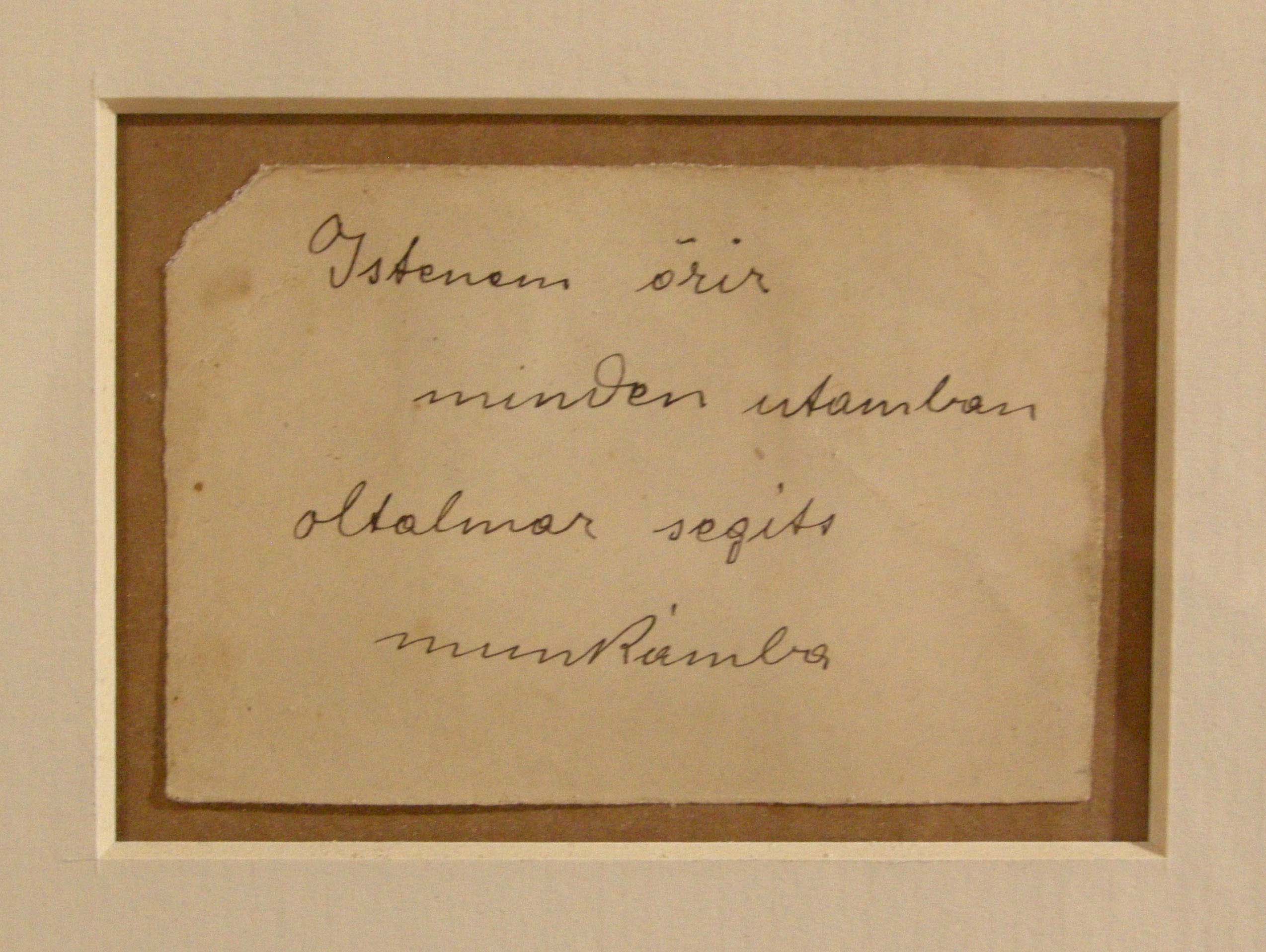
My God, take care of me on all my ways
protect and help me in my work.

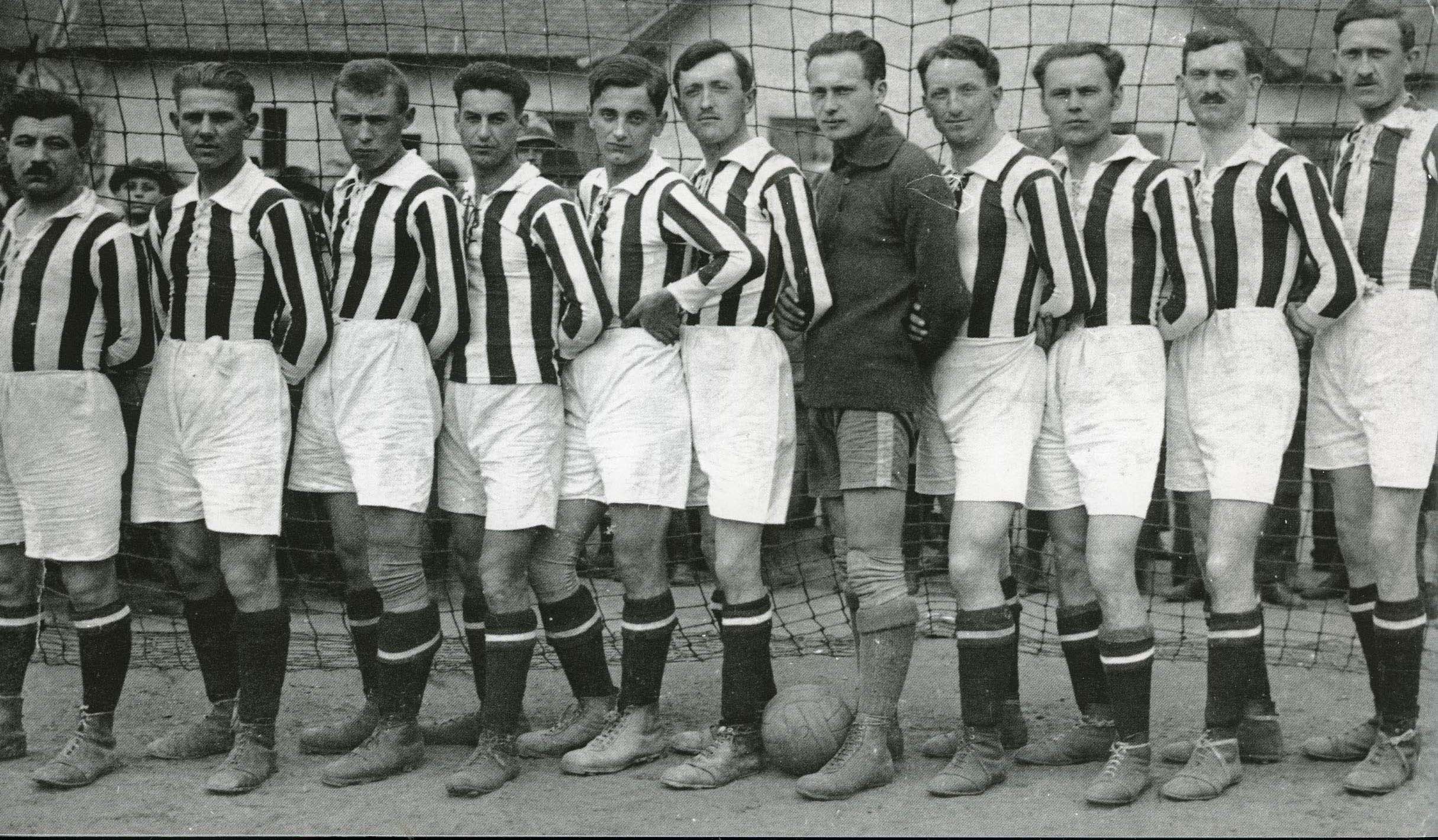
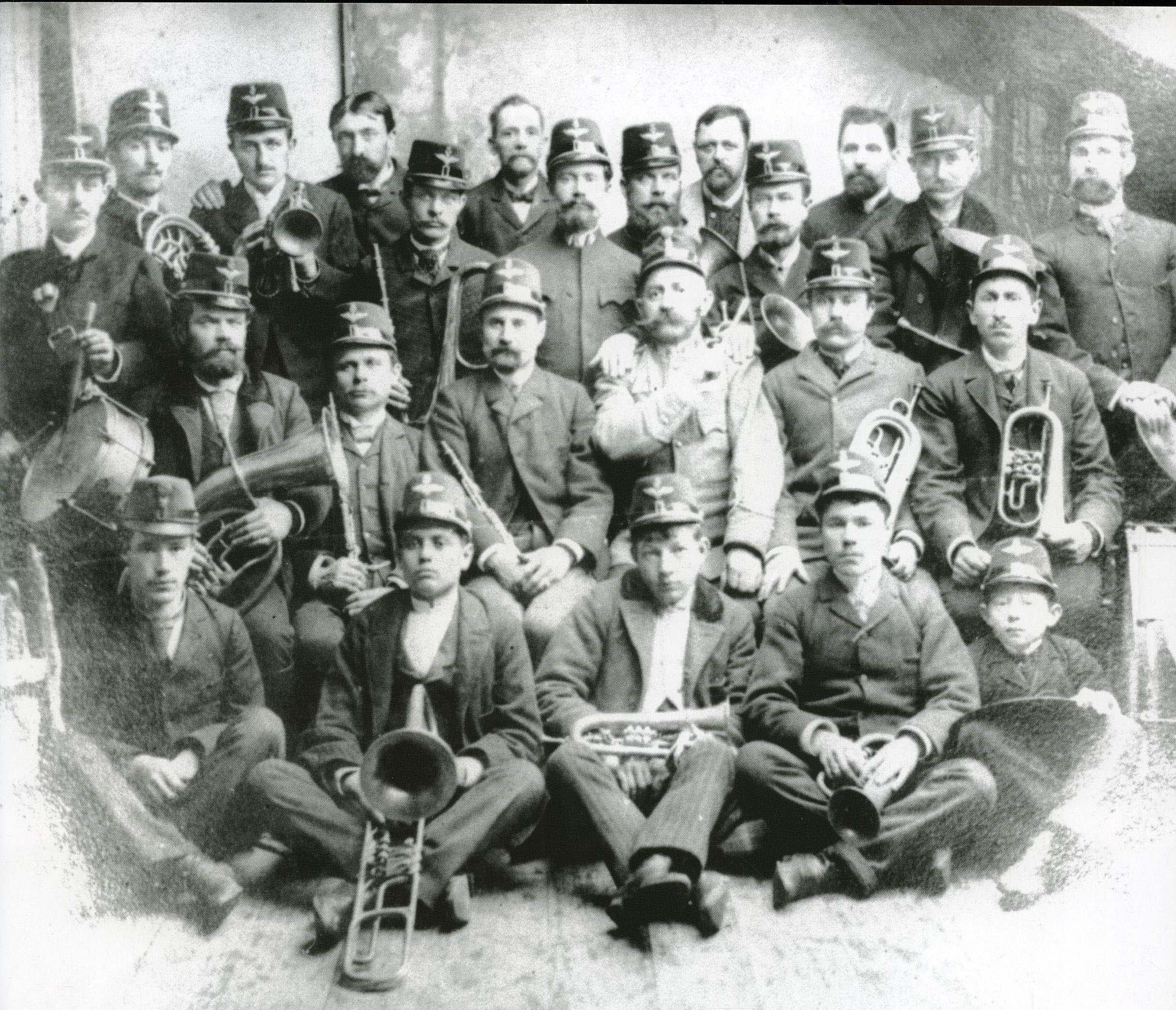
The exhibition also presents in detail the associations, choirs and sport clubs of the railwaymen. In Hungary the first public football match was organized by them in the autumn of 1896: this was the beginning of the first railway sport club “Törekvés” (Ambition) whose local house of culture is still standing in my native district Kőbánya, at the corner of the railway officers’ colony, proudly bearing on its facade the more than hundred years old inscription “Törekvés”.

Nowadays railways have hard times. The branch lines are closed down not only in Hungary, but all over Europe – and of course they are similarly bewailed everywhere: we will soon present a Spanish example of that. We leave this well organized and structured exhibition with a double feeling. On the one hand it is a heart-wrenching thought that we still saw this world functioning, we traveled on many little branch lines, knew the ethos of railwaymanship, ate in the typical railway restaurants. And probably we are the last generation who saw all this. On the other hand it is comforting to see how much the railway during the hundred years of its existence fufilled its vocation, transporting not only people and goods but also culture, civilization and middle-class lifestyle. I wonder what could now play a similar civilizatory role in Hungary.
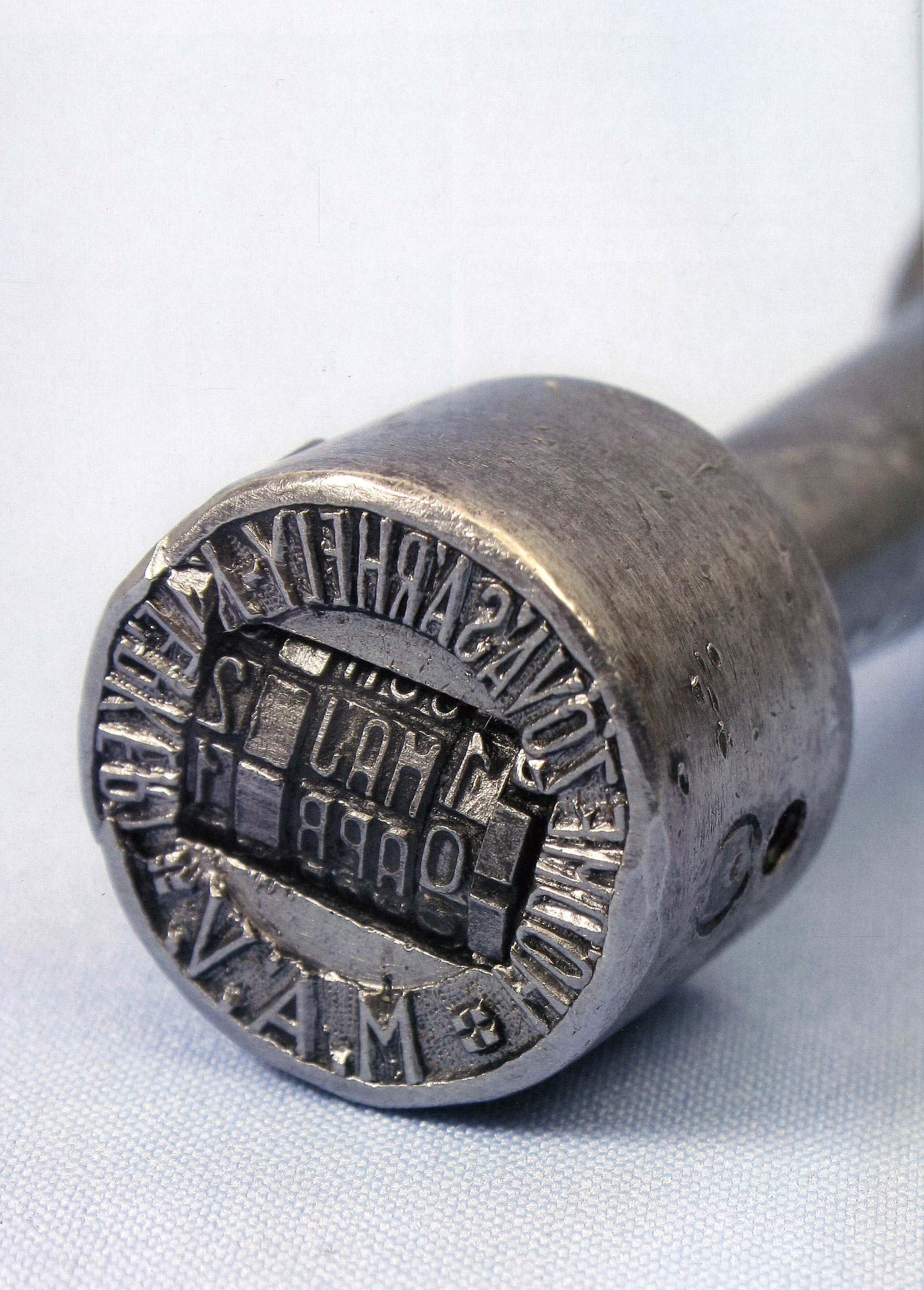

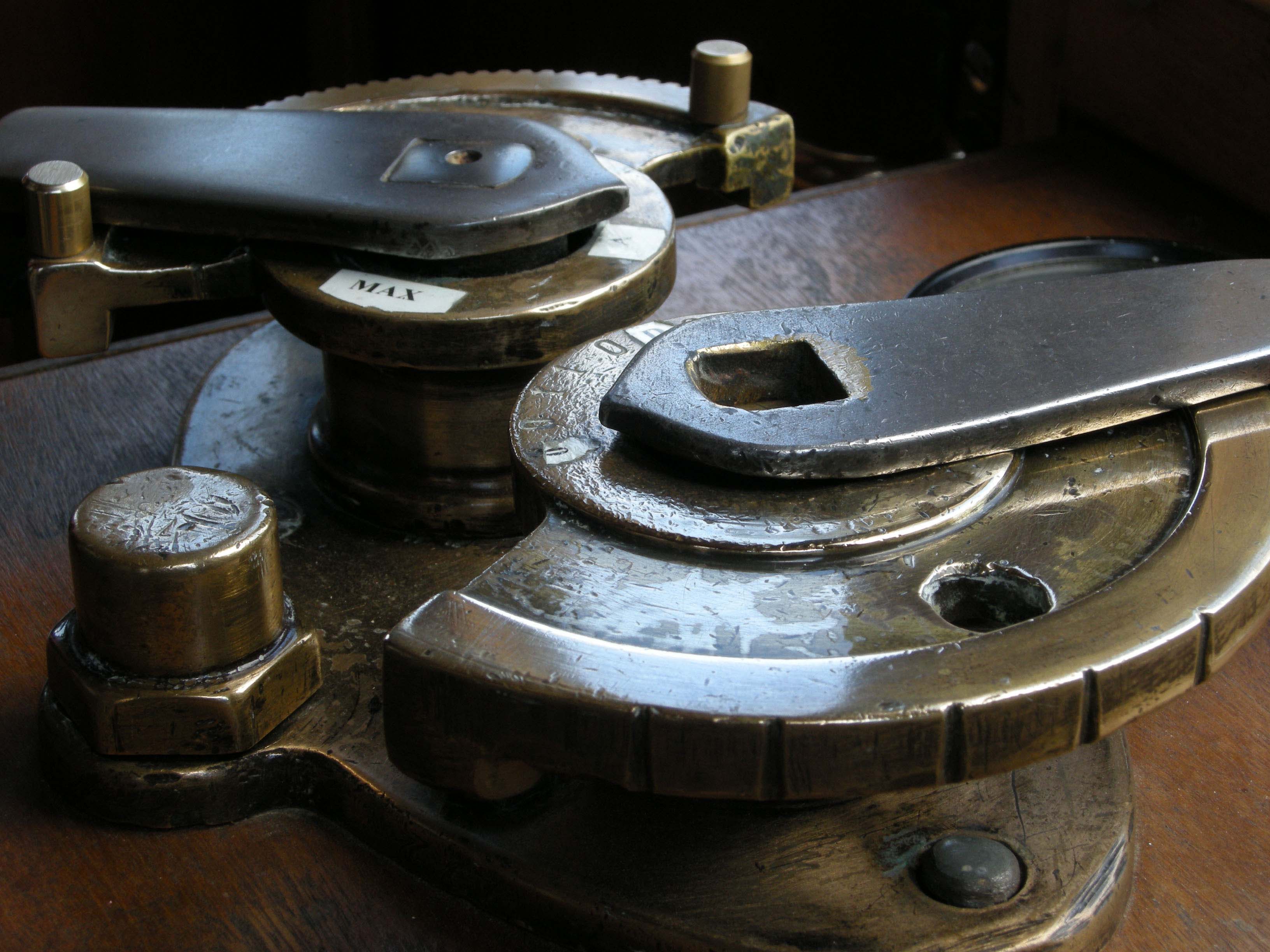
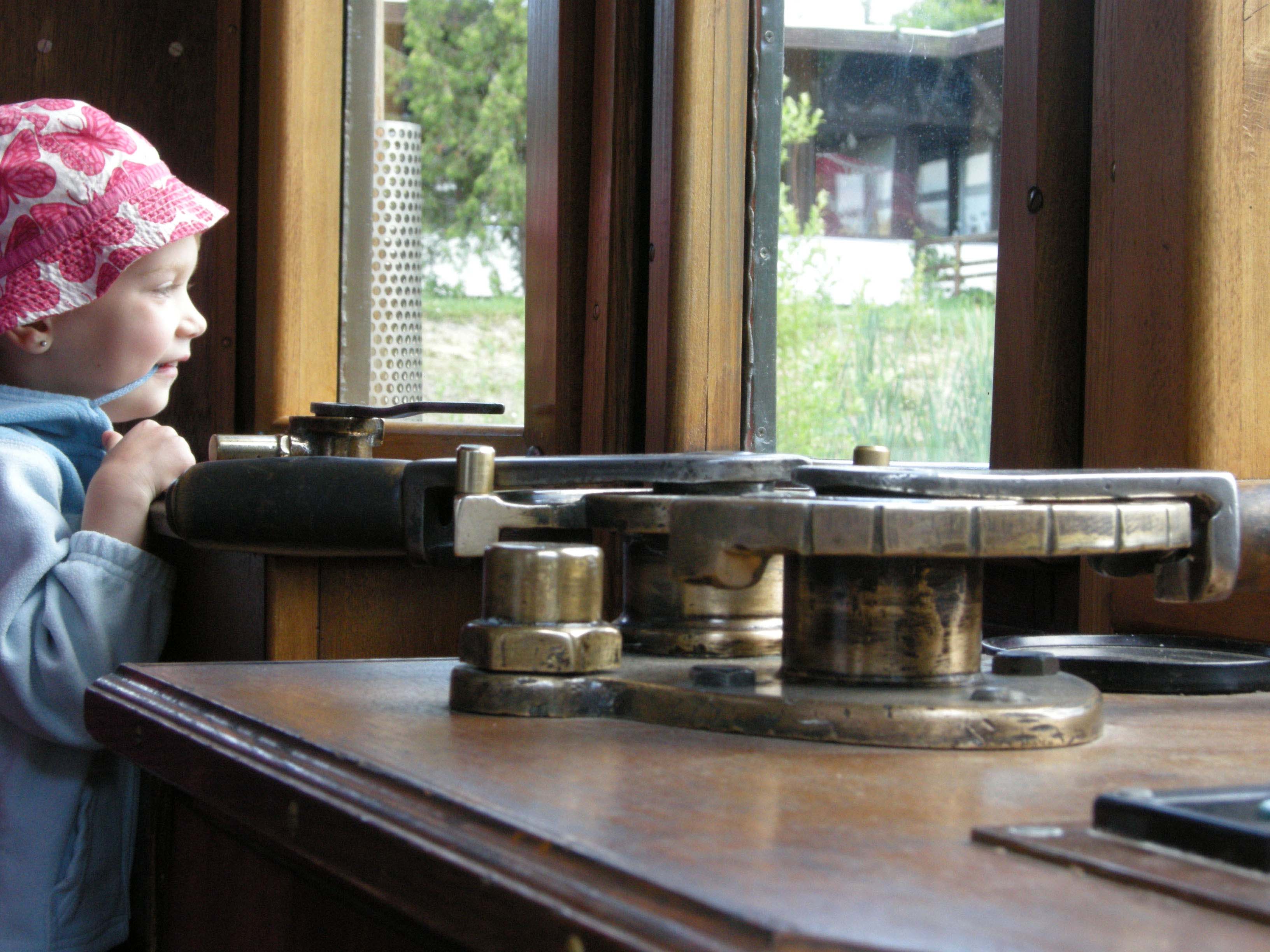
The exhibition, quite in style, can be reached by rail: on a small local railway. A narrow gauge train, built in the 1930 was recently set up in the Open Air Museum together with an authentic railway station, launched by railwayman in period uniforms, provided by period advertisements, and sometimes even carrying passengers in period costumes. This small vicinális fits quite well to the old rural houses, and in the stopped time of the Skanzen it lets you experience something from that world about which the exhibition gives news in the 19th-century granary. Get on board.


Esto nos trajo el ferrocarril


Al pueblo donde vivo llegó el ferrocarril el mismo día que el siglo XX. Sin embargo, los preparativos, la constitución de la sociedad anónima, la obtención del capital, el desarrollo de los planos, todo eso había comenzado diez años antes. Gyula Bitskey, el secretario municipal, hizo la siguiente propuesta en la sesión especial del Consejo de la Ciudad el 20 de enero de 1892:
«Considero innecesario abogar por el hecho, ampliamente demostrado, de cuán grande bendición es para un municipio tener una estación de ferrocarril, cómo impulsa la industria, incrementa el valor de las propiedades, facilita y promueve  la venta de los productos locales y, en consecuencia, provoca un aumento de los ingresos por impuestos. Estoy, por tanto, convencido de que este Honorable Consejo desea y exige la creación de una conexión ferroviaria con la capital..

Las viñas de las Colinas Antiguas, debido a su suelo, son las más expuestas a los estragos de la filoxera y pronto serán áreas totalmente improductivas, pero enseguida que tengamos la estación de ferrocarril se convertirán en el más buscado centro de esparcimiento turístico y su valor nunca cesará de crecer.

El precio de nuestros productos aumentará considerablemente gracias al transporte fácil. Los turistas pagarán un buen precio por las habitaciones disponibles en el pueblo. La artesanía, tan ausente de aquí hasta hoy, se instalará en el pueblo y, gracias a la competencia, los artículos en los comercios, carnicerías y posadas serán más baratos.

El transporte de los tan necesarios fertilizantes, del carbón y la leña, el trigo, el vino, los melones, las frutas, la leche, etc., será barato y rápido.

El pueblo aumentará su población, se establecerán nuevas colonias y centros de vacaciones, las tasas e impuestos serán compartidos por una base más amplia y así serán más soportables.

La comunicación con las autoridades y la administración será más fácil.

El valor de las tierras y las casas se duplicará.

¡Honorable Consejo! — ¡Estoy muy lejos de agotar los beneficios que se obtendrán mediante el establecimiento de una conexión de tren!»

Las palabras del secretario las confirmó la historia. El ramal hasta el pueblo, construido a partir de la línea Budapest-Gödöllő,  permitía a las mujeres de Csömör llevar las verduras y frutas frescas por la mañana temprano a los mercados de Budapest. Todavía en la década de los 90 era una estampa vivificante ver en el tren de la mañana al último grupo de mujeres que aún vestían la tradicional falda plisada eslovaca, con el característico patrón de flores azules, envueltas en un gran chal, llevar los canastos hasta el mercado de la plaza Bosnyak. El eje de la agricultura del pueblo cambió de las tierras de labor a la producción intensiva de verduras en huertos y, más tarde, en invernaderos, lo que significó un cierto grado de independencia, incluso en los tiempos de los koljoses socialistas. También dio la posibilidad de desplazarse a las fábricas de la ciudad a los hombres que perdieron sus tierras. Los muchachos podían ir cada día a los institutos de Budapest, y aunque pasaban la mayor parte del día en la ciudad, no perdían su contacto con el pueblo, a diferencia de los compañeros que se quedaban internos en los colegios y solo después de graduarse volvían a vivir aquí. También llegaron turistas; la burguesía media y alta y los oficiales de Budapest que antes de la guerra habían construido villas de vacaciones y después de la guerra eran más bien personas no gratas en la ciudad, se establecieron aquí. Hasta mediados de los años 90, con la introducción del teléfono y el autobús y la proliferación de los automóviles particulares, el tren siguió siendo el único enlace del pueblo con la ciudad y el mundo exterior.


Que el ferrocarril en los últimos cien años trajo la ciudad y el mundo no sólo a Csömör sino a todo el país, queda drásticamente demostrado en la exposición La edad de oro de los ferrocarriles - la modernización rural, inaugurada el pasado fin de semana en el Museo al Aire Libre —la Skanzen— de Szentendre. La instalación dispuesta por Zsolt Sári en el gran espacio interior del antiguo granero de las tierras altas del norte ilustra esta historia con una multitud de fotografías de archivo, documentos y objetos relativos al tren. La exposición también cuenta con un elegante catálogo bilingüe (húngaro-inglés) bellamente impreso y claramente estructurado. Esta la fuente principal de las imágenes y las informaciones que siguen.


El primer ferrocarril húngaro se inauguró en 1846 entre Pest (Buda y Pest fueron ciudades independientes a cada orilla del Danubio hasta su unión en 1872) y Vác, cuarenta kilómetros al norte. El célebre poeta Sándor Petőfi hasta le dedicó un poema. La verdadera  fiebre de construcción del ferrocarril, sin embargo, llegó sólo con el auge económico posterior a la transformación de la monarquía de los Habsburgo en el dualismo austro-húngaro, acontecimiento que abrió grandes oportunidades para el país. Los Ferrocarriles Estatales Húngaros se establecieron en 1868, y en 1873 todas las ciudades del país estaban interconectadas por este medio sumando una longitud viaria de 4100 kilómetros. Después de la aprobación de la ley sobre la construcción de ferrocarriles locales en 1880, otros 13 mil kilómetros se construyeron dando empleo a casi dos centenares de empresas privadas. Hacia el fin de la primera guerra mundial, el país tenía una red de 21.200 kilometros de vías férreas.


El ferrocarril contribuyó a la expansión de los valores de la clase media desde el comienzo de su implantación por medio del contacto con los trabajadores cualificados extranjeros —sobre todo austríacos, checos y alemanes— que trasladaron sus conocimientos y herramientas a los numerosos trabajadores húngaros provenientes de todos los rincones del país. Fue entonces cuando se difundieron la carretilla, las carretas y carros tirados por caballos hasta en los pueblos más pequeños. Las líneas principales las financió generalmente el Estado, mientras que para la construcción de los ferrocarriles locales se abrieron en cada zona empresas privadas de valores, pero siempre con grandes apoyos públicos.


El verdadero instrumento de modernización, sin embargo, era viajar. «¡Quiero conseguir que este húngaro perezoso se mueva! ¡Quiero que hasta el ama de casa de Brassó [hoy Braşov, Rumania] vaya a comprase un sombrero a Budapest!» Fue con esta consigna que el ministro de transporte público Gábor Baross introdujo en 1899 el llamado sistema de disminución de tarifas que revolucionó el transporte por ferrocarril en Hungría. La esencia del sistema, dividido en 14 zonas, era, de una parte, que las tarifas entre dos zonas próximas fueran muy bajas, y de otro lado que por encima de 225 kilometros cualquier billete costaba lo mismo: por tanto, era muy barato tanto viajar al pueblo cercano como ir muy lejos. La simple introducción del sistema de zonas aumentó en 7 millones la cifra que hasta entonces era de unos 12-14 millones de pasajeros al año

Los grupos específicos de pasajeros se muestran por separado en la exposición. Debido a las bajas tarifas locales, los lugareños podían llevar con regularidad sus productos a los mercados de los pueblos vecinos. Nació una clase especial de pasajeros que iban a las fábricas. Fue también entonces cuando se popularizó la bicicleta en los pueblos, pues los trabajadores que vivían más lejos de la estación se acercaban hasta allí cada mañana en su bicicleta. Los equipos de trabajadores agrícolas de temporada también viajaban de un lugar a otro en trenes de carga contratados al efecto.


Los estudiantes de las aldeas cercanas, cuyos padres no podían permitirse pagarles los estudios en un colegio, podían ir ahora cada día a las escuelas urbanas. El turismo ferroviario asistió también a su desarrollo, promovido por los «trenes centavo» que regularmente ofrecían los ferrocarriles en unos programas especiales celebrados en varias ciudades. La clase media, de cuyo modo de vida las vacaciones estivales eran una parte esencial, descubrió los balnearios de Hungría y las estaciones de recreo en las montañas Tatra.


Y los trenes de soldados también formaban parte del invento. Pronto fueron no solo una parte básica de la logística militar, sino también del folklore y la memoria.

«Subiremos al tren en la mañana del viernes entre las nueve y diez ... van a engalanarnos, nuestro cadete está comprando cintas tricolores para las gorras, y pondremos pequeñas banderas en los cañones de las armas, sí, querida esposa, nuestro viaje será hermoso, pero lamentablemente no estoy escribiendo esto porque me alegre de ello, sólo porque quiero que sepas lo guapos que iremos...» (Carta enviada por Gyula Pörs, del regimiento 83 desde Viena a su esposa en Senyeháza el 2 de julio de 1915, partiendo hacia el frente oriental en Galitsia).


Tras la introducción del sistema de tarifas reducidas, en 1891 los precios sobre los objetos de carga también disminuyeron drásticamente. Los productos agrícolas podían acceder en grandes cantidades y a buen precio a las ciudades, y salir al extranjero. Fue en este momento cuando el grano húngaro se conoció ampliamente por su buena calidad, y se construyo al sur de Budapest una gran zona industrial de procesamiento de alimentos cuyos edificios, los que han sobrevivido, se consideran hoy monumentos industriales.


El ferrocarril también repartía productos industriales por todo el país, proveía de los mismos bienes a las pequeñas tiendas y contribuyó a la estandarización del mobiliario. Un buen ejemplo de ello fue la famosa empresa de madera curvada Thonet, fundada en 1842 en Viena que, a partir de la década de 1860, estableció una serie de fábricas en Hungría, allí donde confluyeran hayedos y estaciones de ferrocarril. El propio ferrocarril fue el cliente más importante de los muebles Thonet, y desde aquí se extendieron a la clase media y luego a los hogares campesinos.


Capítulo aparte es —y de hecho cuenta en la exposición con un catálogo propio— el de los restaurantes de los trenes. Algunos elementos típicos de su menú pronto encontraron una vía hacia la cocina húngara, donde aún se tienen por platos de fiesta: el Wiener Schnitzel, las albóndigas, los bizcochos o el Zwack Unicum. Y los manteles a cuadros, típicos de aquellos restaurantes de tren, aún pueden encontrarse en las cocinas campesinas tradicionales y en algunas de las últimas casas de comida de los suburbios, a las que se las denomina precisamente «kockásabroszos», es decir, «las de manteles a cuadros».


Las estaciones de ferrocarril construidas a partir de la década de 1870 con un único tipo de diseño pasaron a figurar entre los espacios sociales más representativos de los pueblos y pequeñas ciudades. Sus elementos estilísticos y soluciones arquitectónicas —bodegas, zócalo de piedra y ladrillo, frontón de yeso y decoración de ladrillo— se utilizaron también rápidamente en las casas más ricas. Las pequeñas estufas de hierro de las salas de espera encontraron asimismo su sitio en los hogares rurales. E incluso el horno de ladrillo al aire libre, que se podría considerar como un elemento tradicional de la familia campesina arcaica, apareció realmente por primera vez en la uniforme configuración de los jardines de las viviendas de los guardias de ferrocarril.

El diseño típico de una estación incluía también un repertorio vegetal: avenidas de tilos y castaños, que toleran bien el humo de las locomotoras y que aún se pueden ver alrededor de las estaciones antiguas en todo el territorio de la Monarquía, así como geranios, dalias y rosas plantadas en cajas de madera, que pronto se convirtieron en un elemento visual indispensable en las casas de las aldeas austríacas y húngaras. La burocracia austro-húngara desarrolló un código especial según el cual en la parte oriental de la Monarquía se plantaban geranios arbustivos, mientras que en la parte occidental aquellas mismas jardineras oficiales debían mostrar geranios colgantes.


Los horarios locales usados antes del tren y según el curso del sol fueron oficialmente reemplazados en 1891 por el huso horario uniforme de Europa Central. Desde entonces cada reloj muestra la misma hora en todo el país. Por otra parte, en muchos lugares las gentes vieron por primera vez un reloj en la fachada de la estación de tren, y desde allí entró en las casas particulares. El tiempo de trabajo fijo siguiendo el reloj en vez de al sol fue también hijo de este momento, primero en en las zonas urbanas y luego en las tareas rurales.


Y no sólo el ferrocarril llevó el estilo de vida y los bienes de la clase media al campo, sino que introdujo en la ciudad la cultura del pueblo y un folclore que en el cambio de siglo se convirtió en uno de los medios de expresión más importantes del imaginario colectivo y la autorrepresentación nacional. Es así como el vestido folclórico de ciertas zonas tradicionales próximas a las principales líneas férreas, en primer lugar Mezőkövesd y su vestido matyó y más tarde Kalocsa, se convirtieron en centros representativos e importantes de manufactura de la cultura popular, cuyos productos caseros y prendas de vestir también entraron en los hogares de la clase media por mediación de la vía del tren.


Y el ferrocarril creó una sociedad dentro de la sociedad: el mundo de los ferroviarios. Ser ferroviario significaba un sueldo fijo y un trabajo de por vida, un seguro sanitario, pensiones y toda una serie de beneficios singulares e impensables en aquel momento. Ser ferroviario era un rango e implicaba un ascenso social: el ferroviario era un caballero, un buen partido incluso para las hijas de los campesinos ricos. Tenían el crédito de los tenderos y un vaso propio en el bar.


La vida del ferroviario se basaba en una estricta jerarquía, responsabilidad y disciplina, simbolizadas por el uniforme. El uniforme de tren, adecuadamente regulado, ostentaba el rango y la autoridad, igual que el de un oficial militar.


El uniforme de tren en varios lugares de las zonas rurales legó a tener influencia en la ropa local. Por ejemplo, en la ciudad de Tura, no lejos de mi pueblo, sustituyó al traje tradicional masculino: los jóvenes pidieron a los sastres del lugar que les hicieran la ropa a imitación de aquellos uniformes.


Una gran pared de la exposición la ocupa por completo un mosaico de fotografías de pasaporte, los retratos de varios miles de ferroviarios que mantuvieron y manejaron esta enorme maquinaria durante largas décadas. Los documentos y fotos del primer plano del mosaico presentan historias de la vida personal de algunos de ellos: el cerrajero Géza Sarkozy en 1898, de aprendiz, a continuación pasó el examen de oficial en Cegléd, convirtiéndose en operario de la caldera de la locomotora, y finalmente, en 1900, flamante conductor de los Ferrocarriles del Estado Real de Hungría. János Csonth desde 1888 ascendió por los escalafones hasta convertirse en 1911 en el jefe de la estación de Rozsnyó (hoy Rožňava, Eslovaquia), y después del Tratado de Trianon, en 1920, recibió una vivienda oficial y un trabajo en la estación de Budapest. Gyula Ébersz, hijo de un inmigrante alemán de la Selva Negra, se volvió tan húngaro que, como oficial ferroviario en Munkacs (hoy Mukačevo, Ucrania) en 1920 «no quiso hacer un juramento por los checos», lo que motivó que fuese deportado junto con su esposa y sus tres hijos a la reducida Hungría en un tren de carga en el que tuvo que vivir durante más de un año. Finalmente recibió una oferta de empleo en la estación de trenes de Debrecen, pero a consecuencia de las dificultades anteriores murió pronto de un ataque al corazón. Con todo, el ferrocarril aún se preocupó de la familia: su esposa, como «viuda del ferrocarril», recibió un piso en alquiler en Püspökladány y un trabajo de vendedora en un kiosco.


Dios mío, cuida de mí en todos mis caminos
protégeme y ayúdame en mis trabajos.

La exposición también nos muestra en detalle las asociaciones, los coros y los clubes deportivos de los ferroviarios. En Hungría, el primer partido de fútbol público fue organizado por ellos en el otoño de 1896: este fue el principio del primer club deportivo ferroviario, el «Törekvés» (ambición), cuyo local social sigue en pie en mi distrito natal, Kőbánya, en la esquina de la colonia de los oficiales de tren que ostenta con orgullo en su fachada la inscripción «Törekvés», de más de cien años de antigüedad.


Hoy en día los ferrocarriles pasan por una época dura. Los vías secundarias cierran no sólo en Hungría, sino en toda Europa —y, por supuesto, nos lamentamos mucho de que así sea—. Pronto daremos un ejemplo español de ello: en España se ha destruido el tren a la vez que se construían más kilómetros de vías de alta velocidad que en ningún otro país del mundo. Salimos de esta exposición tan bien organizada y estructurada con un doble sentimiento. Por un lado duele constatar que todavía pudimos ver el funcionamiento de aquel mundo, viajamos mucho en aquellos trenes secundarios, conocimos el viejo espíritu del ferrocarril, comimos en sus restaurantes. Y seguramente somos la última generación que pudo hacerlo. Por otro lado, reconforta ver cómo cumplió su función aquella inmensa cantidad de vía férrea durante estos cien años largos de existencia. No sólo transportó personas y mercancías, sino también civilización, cultura y el estilo de vida de la clase media. Nos preguntamos qué otro elemento podría desempeñar un similar papel civilizador hoy en Hungría.


A la exposición, en perfecta sintonía, se puede llegar en tren: un pequeño tren local. Es un tren de vía estrecha construido en 1930 que fue instalado recientemente en este Museo al aire libre junto a una estación real. Lo gobierna un ferroviario en uniforme de época y está dotado de los mismos anuncios publicitarios del primer período, e incluso a veces transporta pasajeros ataviados con trajes de época. Este pequeño cercanías casa bastante bien con las viejas edificaciones rurales y con el tiempo detenido de la Skanzen, y permite experimentar algo de aquel mundo del que la exposición da noticias en un granero del siglo XIX. ¡Pasajeros, al tren!


European Vision


The following summary was written by Araz on the request of the Hungarian linguistic portal Nyelv és Tudomány (Language and Science), and now he also publishes it in English and complemented with some further illustrations on Río Wang.

I doubt if two years ago, when Hollywood actor Willem Dafoe  and actress Ashley Jensen jokingly voted for Azerbaijan at the Graham Norton’s Eurovision Warm-up comedy show on BBC Two, anybody would imagine that this country with such a hard-to-pronounce name will win Europe’s most watched song contest, which brought more than 120 million people to the front of the television screens past weekend on 14 May 2011.


Inspired by the Italian Sanremo Music Festival, the Eurovision Song Contest among the European Broadcasting Union (EBU) member countries absorbs attention of the European audience every year since 1956. EBU member broadcasters organise selection of the national finalists and the contest culminates in a spectacular live television show, hosted usually by the last year’s winning country, during which every country cast votes for other’s entries to determine the winner. 

Eurovision, which was started as a “light entertainment programme” to bring together the countries of post-war Europe, embraced new members since 1993 after the fall of the Soviet Union and Eastern Block. The most number of debuts was back in 1994, when Hungary also made its entry with Kinek mondjam el vétkeimet? (Whom can I tell my sins?), performed by Friderika Bayer. This song finished the voting race in the fourth place and it is Hungary’s best result at Eurovision so far.

Graham Norton may ridicule it up, but for the countries in the coming wave of the new EBU members like Azerbaijan Eurovision became another chance for international visibility, which sometimes raised winning the competition up to the level of a national mission. This further aggravated the controversial image of Eurovision as an overly politicised, “wacky song contest”, which suffers clique voting syndrome. Debates about neighbour and diaspora voting resulted in decision to give the professional jury votes a 50 per cent say in the final results since 2009.

“We freed ourselves from the Soviet Empire through song, now we will sing our way into Europe!” allegedly said the prime minister of Estonia congratulating crowds of citizens after the country’s victory in 2001. Estonia as the first post-soviet country winning Eurovision was followed by Latvia in 2002, Ukraine in 2004, Russia in 2008 and lastly Azerbaijan in 2011.

Azerbaijan was also the last country of the new wave, making its debut entry only in 2008. The song Day after Day was a completely Azerbaijani production, composed by Govhar Hasanzade and written by Zahra Badalbeyli. The duet of Elnur Hüseynov and Samir Cavadzadə was remembered by the vivid scenic characters of the angel and the demon fighting “day after day”. The rock-style composition, starting with opera falsetto and culminating in a traditional Azerbaijani mugham, got top 12 score from Hungary, but came only as eighth in the finals. It is interesting that Azerbaijan actually is the top fourth country getting votes from Hungarian audience so far.


“For peace we pray” was the opening line of the first ever Eurovision song from Azerbaijan. Peace indeed is very much needed in the troubled South Caucasus region, torn apart by interethnic conflicts since late 1980s, and especially in Azerbaijan, which suffers continuing occupation of 20 per cent of its territory, effectively controlled by the neighbouring Armenia, after a full-scale war over its Mountainous Garabagh region widely know under its Russian transliteration of Nagorno-Karabakh. The third South Caucasian country Georgia has got even two broke away ethnic regions of South Ossetia and Abkhazia. Similarly self-declared republics since 1990s in 2008 however they were officially recognised by Russia that even more tightened the Gordian knot of South Caucasian conflicts.

As one of the visible international events Eurovision has become a scene for some political demarches. A vivid example is Georgia’s withdrawal from the 2009 Eurovision hosted by Moscow after the 2008 Russian invasion because of a controversy raised by Russia over the Georgian finalist song We Don’t Wanna Put In which was allegedly referring to Vladimir Putin, Prime Minister of Russia. 

As the first South Caucasian country joining Eurovision in 2006, Armenia’s first ever entry immediately entailed a scandal, because the birth country of the singer was indicated as Nagorno-Karabakh. Armenia and Azerbaijan live in a “no war no peace” situation since the 1994 ceasefire and this leaves its mark on the festive atmosphere of the contest so much that a separate Wikipedia entry was dedicatd to their tense Eurovision relations. This is why showing the flag of Armenia as representing Azerbaijan at the recent Eurovision special of the most popular Russian talk show “Пусть говорят” (Let them speak) caused excessive indignations.

Səfurə Alizadə, the Azerbaijani star of Eurovision in 2010

So in parallel with an arms race, costing Azerbaijan increasing portion of its annual budget, built mainly on the Caspian oil and gas revenues (an amount in the recent years far exceeding two billion US dollars), and pushing Armenia towards closer military cooperation with Russia, which apart from headquartering there its Trans-Caucasus Group of Forces, reportedly handed over arms in the value of almost two billion US dollars since 1996, two countries apparently became involved also in a Eurovision race.

It seems that starting from its second year in Eurovision Azerbaijan opted for leaving it to crack-jacks and it proved to be efficient with its songs coming third and fifth in 2009 and 2010. This year’s song Running Scared , crafted by a famous Swedish crew of Stefan Örn, Sandra Bjurman and Iain Farquharson, with a more plain, down-to-earth lyrics and a “western-style, middle of the road R&B pop tune” was performed by the Ell/Nikki duo. The duet of a 21 years old international relations student Eldar ‘Ell’ Qasımov and a 30 years old housewife and mother of two children living in London Nigar ‘Nikki’ Camal, both with apparently no professional vocal or stage experience, were selected by the national jury among five out of the unprecedented number of initial 77 aspirants, who made it to the local finals in February. But eventually this turned out to be a winning combination.


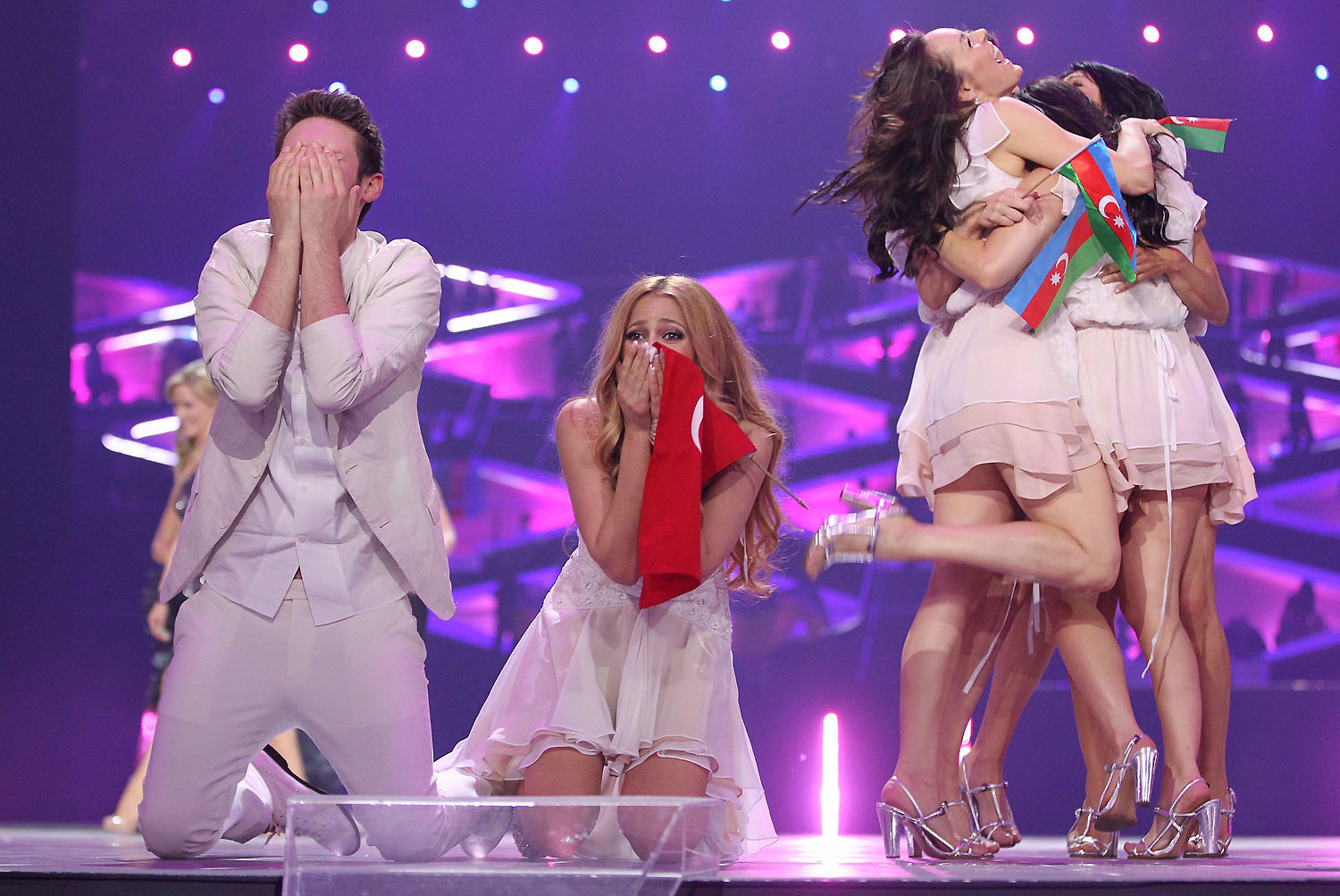
Running Scared got 12 points from Malta, Russia and Turkey, 10 points from Croatia, Moldova, Romania, San Marino and Ukraine, as well as solid 7 points from Hungary among other 30 countries, who sent their 1 to 8 points to Azerbaijan . So Ell and Nikki won the 2011 Eurovision Song Contest in Düsseldorf, which brought together 42 countries, and Baku won the right to host the competition next year.

Google Maps was probably overloaded by requests for where on Earth Azerbaijan is. Sceptics inquiring in the Internet “Is it really in Europe?” are reminded that Azerbaijan is a member of Council of Europe since 2001. Besides EBU membership is not limited to geographical Europe, so even Israel hosted Eurovision three times, most recently in 1999. Another immediate concern was about Armenia’s participation in the next year’s contest. However Baku had hosted range of prestigious international events with delegates from Armenia, including the World Wrestling Cup with the neighbour country athletes participating.


But of course there were lots of positive sentiments and congratulations. Brits immediately claimed a portion of the victory – after all, Nikki lives in Enfield, North London since 2005 with her husband Luke and their daughters Jasmine and Saida. Charmed by Ell’s fluent knowledge of their mother tongue the German audience joke that Ell is almost a German after living there as an exchange student back in 2004 and 2008. Swedish did not brag much about their compatriots behind the scenes, anyway their song was third this year. And of course the Turkish audience, culturally very close to Azerbaijan, were extremely touched by the scene of Nikki, probably not deliberately, in the euphoria of victory coming to the stage for claiming their prize with a Turkish flag in her hands. Many who supported Turkey, which consistently gives its 12 points to Azerbaijan, most probably voted for Ell/Nikki after the Turkey song did not qualify to the finals.

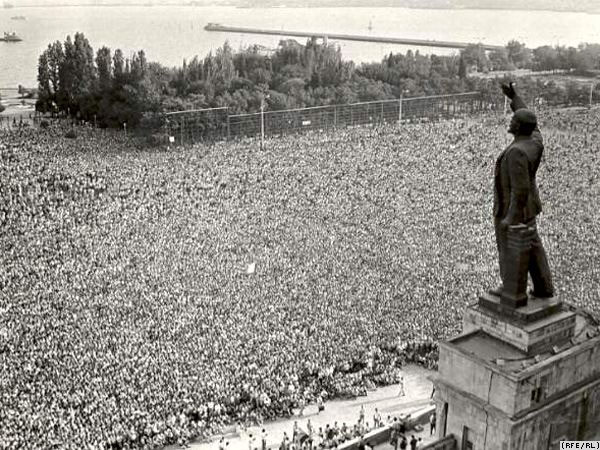
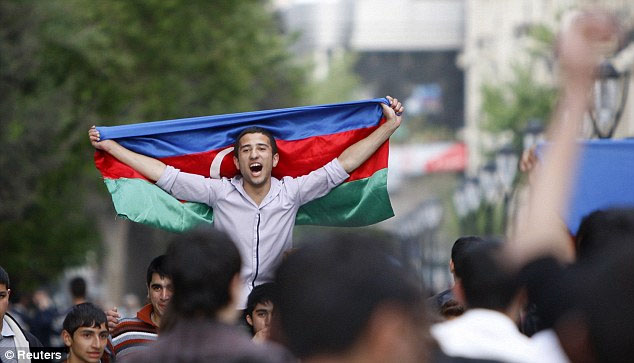
The joyful screams of Azerbaijani team in Düsseldorf echoed in cheerful rally of young people back in Baku streets that were a “scene of mad joy”. One of these spontaneous gatherings ended up at the central Freedom Square, which was a scene for massive anti-soviet rallies bringing together half a million people back in 1988.


But it seems that the people of Azerbaijan, who paid a high price for getting free from the soviet totalitarian regime, could not really get rid of its negative heritage. Azerbaijan, which appeared on the political map of the world back in 1918 as the first parliamentary republic in the Muslim East, once holding the torch of enlightment for many other nations , today unfortunately has sunk into the disgrace of being among the most corrupt and least free countries, as the ruling regime does not do much to recognise the memory and vision of the founders of the first Republic.

“The power of victory! Freedom of Assembly in Azerbaijan right NOW. People on the streets and everywhere… NOW!” wrote in his Facebook status Emin Milli, one of the two youth activists, who were arrested back in July 2009 and were conditionally released last November after a strong international pressure. Another young intellectual, former parliamentary candidate Baxtiyar Hajiyev was arrested this March and just last week on 18 May is sentenced to two years in prison on a charge that looks rather fabricated.

“There is no doubt that the Truth will shine one day, those on the side of the foundations of freedom, principles of the United Nations and human rights will win. The sun of this victory will rise over our dear motherland moaning under the tyranny of red despotism, as 28 May 1918 did once. You should have absolutely no doubts about it, dear citizens!” exclaims through the decades in a 1953 radio interview the voice, which belongs to Məhəmməd Əmin Rəsulzadə, one of the founders of Azerbaijan Democratic Republic, who passed away in exile two years after this broadcast. 93 years after the 28 May 1918 declaration of independence his virtually only standing monument in Azerbaijan, some 20 kilometres away from Baku, is visited only by opposition groups, and no fireworks or big celebrations are visible throughout the country.

Anti-soviet rally in the autumn of 1989 on the Liberty Square in Baku.
Source: Azadliq Radiosu (FER)

I don’t know whether Graham Norton, who presents BBC’s coverage of Eurovision for three years now, remembered his warm-up show back from 2009. But just days ago, on 12 May another Graham from Britain sounded as sarcastic, but not so comical, speaking about Azerbaijan during the recent debates on the country at the European Parliament in Strasburg. Graham Watson, Member of the European Parliament for South-West England since 1994, brought up the fact that “The media in Azerbaijan is not free. Its elections are not fair. Its people are subject to arbitrary and sometimes violent treatment by officials. Peaceful demonstrations in recent weeks have met with repression more common to an Arab than to a European country, from an 18-year-old regime which has slowly stifled hope of progress.” 

“Does Baku belong to progressive Europe or to outdated Orient?” was the very question faced by the protagonist of the world known novel Ali and Nino: A Love Story, taking place in the fascinating fin-de-siècle Baku of the first oil boom a century ago. It seems that the founders of the first Republic then answered this question: by establishing a functional parliament with equal participation of all ethnic or religious groups and with women having rights to vote and be elected even earlier than most of the modern democracies such as the United States or France, among many other progressive beginnings. Right between the sky Blue as recognition of Turkic roots and bright Green as a sign of respect to Islamic traditions, the blazing Red on the tricolour national flag, which rose again after more than seven decades of oblivion, is indeed the symbol of the progressive European values of freedom, equality and democracy. One can only hope that with Eurovision coming to Baku next year these values will also return to the country, now experiencing its second oil boom.

So, in four years Azerbaijan sang its way to the dream of Eurovision, but the question is how long will it take to sing its way to the realization of the European Vision?