Switch over to our new blog! • ¡Pásese a nuestro nuevo blog!

The renewed version of our blog, with more features, a richer design, and available in nine languages, can be read here: https://wangriver.com

The new version also includes the old posts, often in expanded form. If you are curious about the updated version of this post, replace “riowang.blogspot.com/” in the URL with “riowang.studiolum.com/”, and the new link will most likely lead you there.


La versión renovada de nuestro blog, con más herramientas, un diseño más rico y disponible en nueve idiomas, se puede leer aquí: https://riowang.com

La nueva versión también incluye las publicaciones antiguas, a menudo en una forma ampliada. Si tiene curiosidad por la versión actualizada de esta entrada, sustituya «riowang.blogspot.com/» en la URL por «riowang.studiolum.com/es/», y el nuevo enlace probablemente le llevará allí.

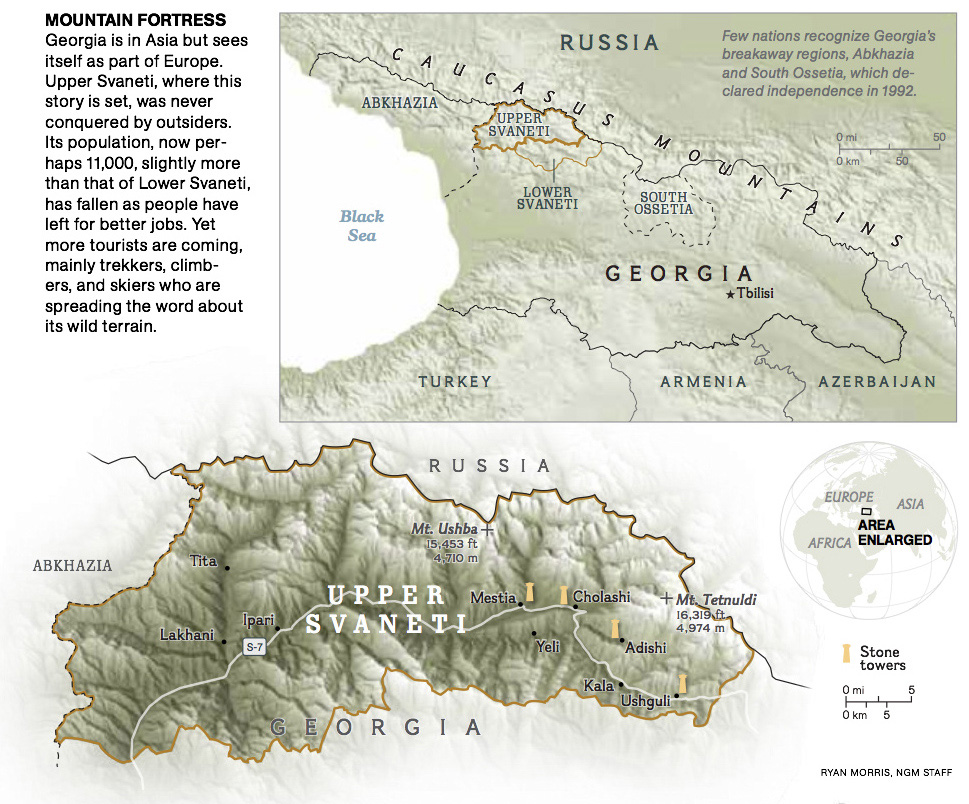
La tierra de las canciones olvidadas


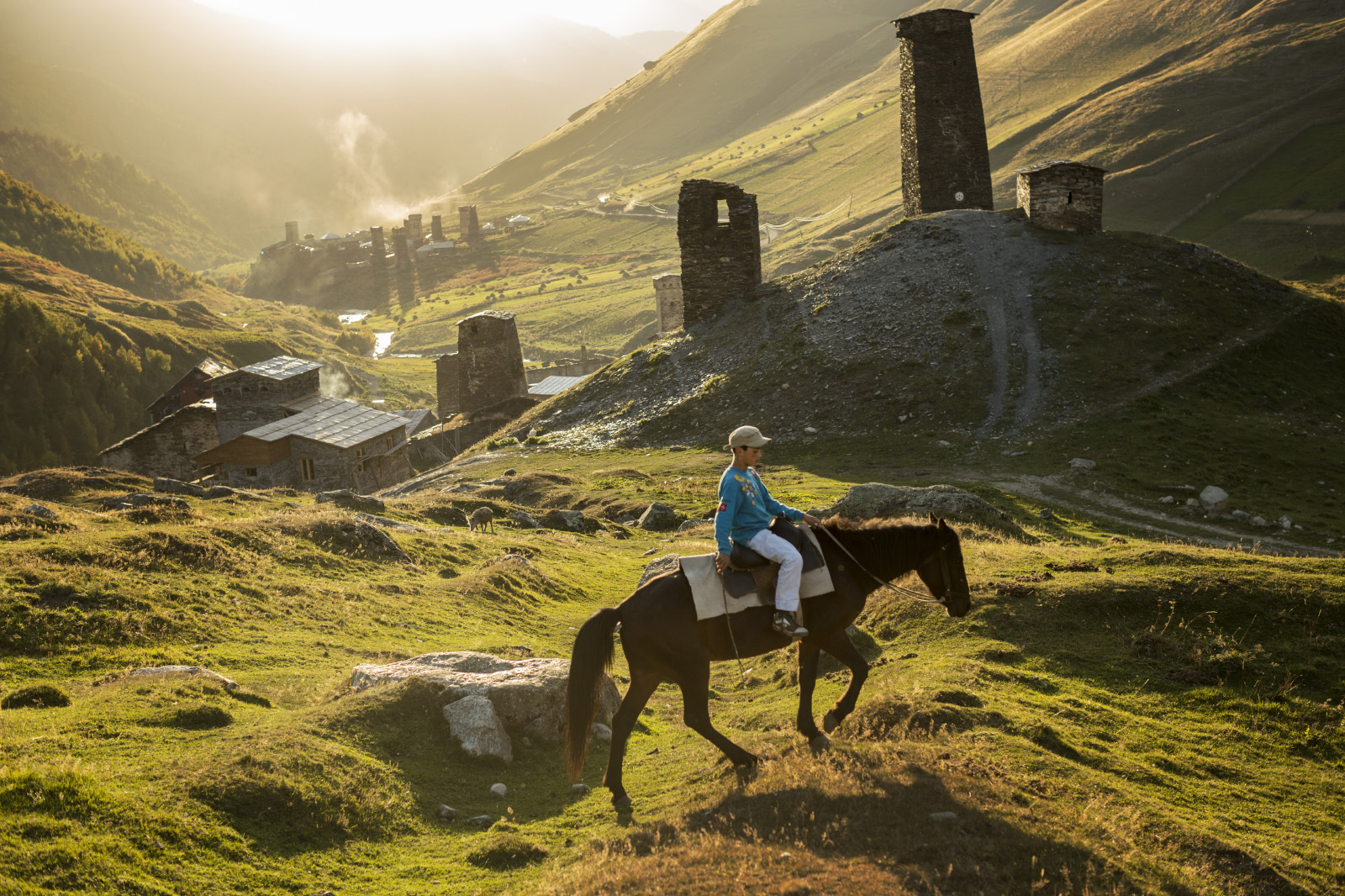
Jinetes en paisajes oníricos, hombres que guían a la puerta de la iglesia un toro con velas encendidas en las astas, muchachas, casi niñas, entonando para sí canciones ancestrales. Y altas torres allá donde mires, agrupadas o señeras, torres cerradas, oscuras. Aaron Huey lleva dieciséis años volviendo a Svaneti; desde hace trece fotografía metódicamente la región. Diez de sus fotos salieron en la edición de octubre de 2014 de National Geographic ilustrando el hermoso ensayo de Brook Larmer sobre Svaneti, pero en su portafolio personal nos muestra cinco veces más.


Cantores de San Pantaleón: Aslanuri Mravaljmier. Canción de saludo

svan1 svan1 svan1 svan1 svan1 svan1 svan1 svan1 svan1 svan1 svan1 svan1 svan1 svan1


«A lo largo de la historia, muchos imperios poderosos —árabe, mongol, persa, otomano— enviaron ejércitos arrasando Georgia, la frontera entre Europa y Asia. Pero el hogar de los svanes, una franja de tierra escondida entre los desfiladeros del Cáucaso, permaneció inconquistado hasta que los rusos impusieron su control a mediados del siglo XIX. El aislamiento de Svaneti ha moldeado su identidad —y su valor histórico. En tiempos de peligro, los georgianos de las tierras bajas enviaban iconos, joyas y manuscritos a las iglesias y torres de la montaña para que las protegieran y conservaran, convirtiendo a Svaneti en un depósito de la cultura georgiana antigua.

En su fortaleza montañosa, las gentes de Svaneti han logrado preservar una cultura aún más antigua: la suya propia. Ya en el siglo I a.C., los svanes —a quienes algunos consideran descendientes de esclavos sumerios— tenían reputación de feroces guerreros, como lo documenta el geógrafo griego Estrabón. Para cuando llegó el cristianismo, hacia el siglo VI, la cultura svana estaba ya profundamente arraigada en el territorio —con su propio idioma, su música de rica textura y unos complejos códigos de caballerosidad, venganza y justicia comunal.

Si los únicos vestigios de esta antigua sociedad fueran los cientos de torres de piedra que se alzan sobre los pueblos svanes, ya sería suficientemente impresionante. Pero estas fortalezas, construidas en su mayoría entre los siglos IX y XIII, no son emblemas de una civilización perdida; son los signos más visibles de una cultura que ha perdurado de manera casi milagrosa a través del tiempo. Los svanes que aún viven en la Alta Svaneti —hogar de algunas de las aldeas más elevadas y aisladas del Cáucaso— se aferran con fuerza a sus tradiciones de canto, lamento, celebración y defensa feroz del honor familiar. «Svaneti es un museo etnográfico viviente», dice Richard Bærug, académico noruego y propietario de una posada, quien intenta ayudar a salvar el svan, un idioma en gran parte no escrito que muchos estudiosos creen anterior al georgiano, su pariente más difundido. "En ningún otro lugar se encuentra un sitio que conserve así las costumbres y rituales de la Europa medieval".»


Zedashe Ensemble: Raidio. Canción del sacrificio del toro
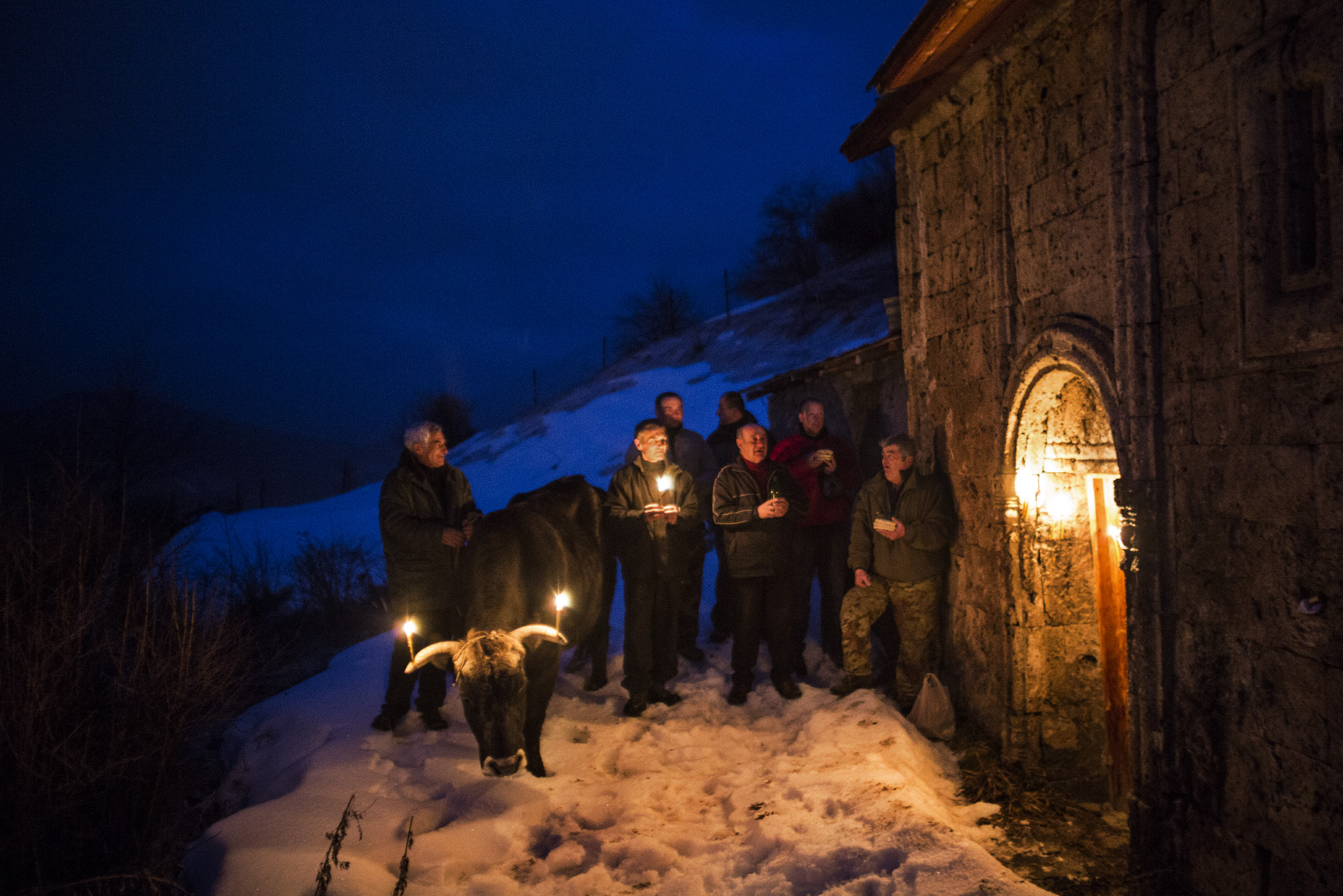

svan2 svan2 svan2 svan2 svan2 svan2 svan2 svan2 svan2 svan2 svan2 svan2 svan2 svan2

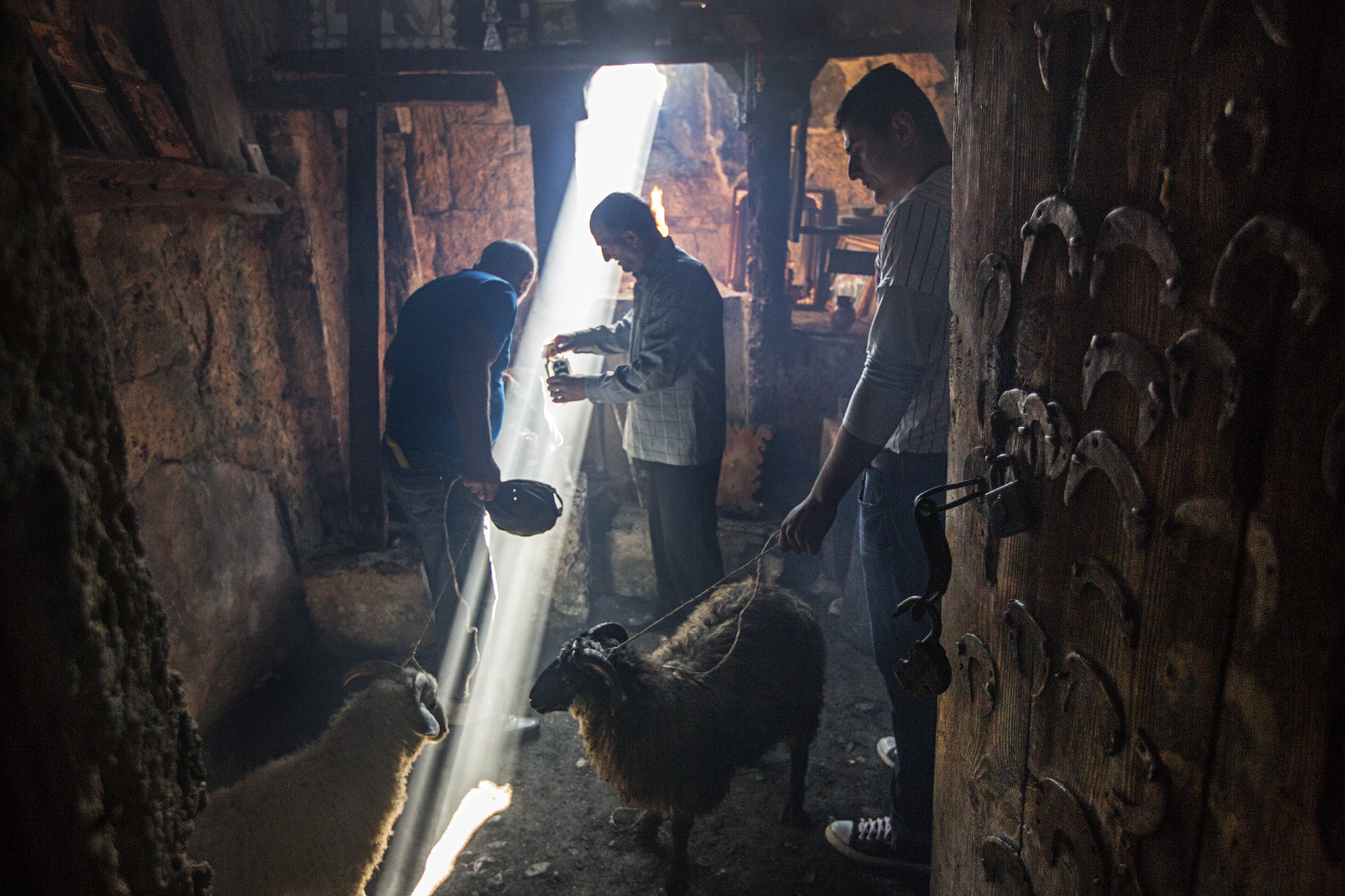
«Trabajando arropado en su capa tradicional de lana, Kaldani encarna la persistencia de la cultura de los svanos —y afronta los peligros que ésta encara. Es uno de los escasos hablantes fluidos que quedan del svan. También es uno de los últimos mediadores del pueblo, a quien desde hace años se convoca para resolver disputas que van desde pequeños hurtos hasta enemistades sangrientas de larga duración. La obligación de defender el honor familiar, aunque hoy algo atenuada, condujo a tantas venganzas en la sociedad svana antigua que los estudiosos concluyen que las torres de piedra se construyeron no solo para 0efender a las familias de invasores y avalanchas, sino también de ellas mismas.

En el caos tras la caída de la Unión Soviética, las venganzas de sangre regresaron con fuerza. «Nunca descansaba», dice Kaldani. En algunos casos, después de negociar un precio de sangre (usualmente 20 vacas por un asesinato), llevaba a las familias enfrentadas a una iglesia y les hacía jurar sobre los iconos y bautizarse mutuamente. El ritual, dice, asegura que las familias «no se enfrentarán durante 12 generaciones».» [Quien quiera tener una prueba visual de este tipo de conflictos puede ver სვანი, el film de Badri Jatchvliani, Svani («Los svan»), 2007 en YouTube, con subtítulos ingleses.] 


Mzetamze Ensemble: Iavnana. Canto de curación
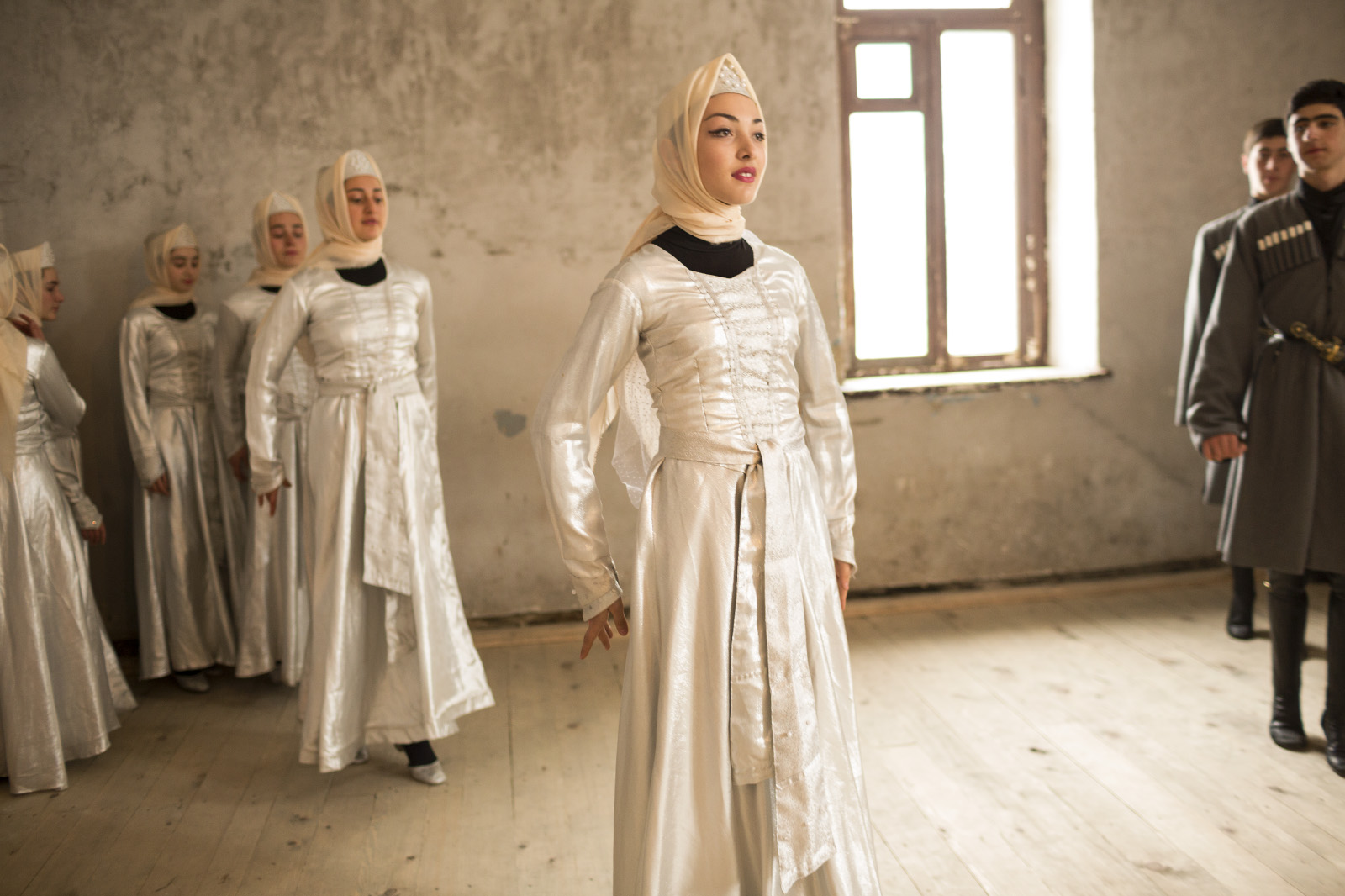

svan3 svan3 svan3 svan3 svan3 svan3 svan3 svan3 svan3 svan3 svan3 svan3 svan3 svan3

«La canción de amor y venganza comienza suavemente, con una sola voz trazando la línea de una melodía antigua. Otras voces, en la habitación sin calefacción junto a la plaza principal de Mestia, se suman en seguida construyendo una densa progresión de armonías y contramelodías que crece en urgencia hasta resolverse en una sola nota de claridad resonante.

Esta es una de las músicas polifónicas más antiguas del mundo, una forma compleja que presenta dos o más líneas melódicas simultáneas. Es anterior en siglos a la llegada del cristianismo a Svaneti. Sin embargo, ninguno de los músicos en la sala esta tarde de otoño supera los 25 años. Cuando termina la sesión, los jóvenes hombres y mujeres salen a la plaza, charlando, riendo, besándose en el aire libre —y revisando sus teléfonos móviles. "Todos estamos en Facebook", dice Mariam Arghvliani, una joven de 14 años que toca tres antiguos instrumentos de cuerda (incluida un arpa de madera svana en forma de L) para el grupo folclórico en el que participa, Lagusheda. «pero eso no significa que olvidemos nuestro legado.» Aun así, su talento podría haberse marchitado y perdido, junto con toda la tradición musical svana, de no ser por un programa juvenil lanzado hace 13 años por el carismático cruzado cultural de Svaneti, el padre Giorgi Chartolani.

Sentado en el cementerio de su iglesia, Chartolani recuerda el tumulto postsoviético que puso en peligro una cultura ya debilitada por casi siete décadas de represión comunista. "La vida era brutal entonces", dice, acariciándose la larga barba. El sacerdote se vuelve hacia las lápidas, algunas grabadas con las imágenes de jóvenes muertos en venganzas oscuras. "Los pueblos se estaban vaciando, nuestra cultura desaparecía", añade, señalando que 80 de las 120 canciones svanas conocidas han desaparecido en las últimas dos generaciones. "Había que hacer algo." Su programa, que ha enseñado música y danza tradicional a cientos de estudiantes como Arghvliani, fue, según él, "una luz en la oscuridad".»

El Ensemble Lagusheda de Stary Sącz, Polonia, el 1 de junio de 2014

En el video realizado por National Geographic, Aaron Huey habla de cómo llegó a Svaneti siendo un estudiante mochilero, cómo se quedó con una familia que lo «adoptó» y cómo se enamoró de esta tierra y de estas personas, hasta poder tomar unas imágenes tan íntimas de ellos.


«La primera vez que fui a Svanetia, no estaba planeando ir a Svanetia. Aún no era fotógrafo, era un mochilero. Pero esta es la historia que me convirtió en fotógrafo. Conocí a un lingüista alemán que me habló de un lugar donde la gente aún hablaba un idioma que nunca había sido escrito, que estaba rodeado por picos de entre 5.000 y 5.500 metros de altura, de manera que este lingüista alemán me dibujó un mapa en una servilleta, lo copié en mi cuaderno, y me fui al día siguiente. Y en el trayecto en autobús hacia las montañas, una mujer se dio vuelta después de unas dos horas y me dijo: “¿A dónde vas?” Le dije que acamparía cuando el autobús se detuviera al final del camino. Y ella simplemente me miró y dijo: “No, chico. Por favor, no hagas eso.” Y me llevó con ella. Y me llevó a una boda.

Estas historias no son solo para hacer encuadres bonitos. Contamos las historias de pueblos enteros. Así que si contamos bien la historia, preservamos esas cosas, ¿sabes? Ese es nuestro trabajo. Preservar esa poesía. Mucha gente nunca ha oído hablar de Svanetia, o de esta región de la República de Georgia, o de este pueblo, los svanes; puede que esto sea lo único que lleguen a leer sobre este pueblo. Y creo que eso es lo que busco ahora en todos mis proyectos.»

Entre ritual y teatro: la berikaoba

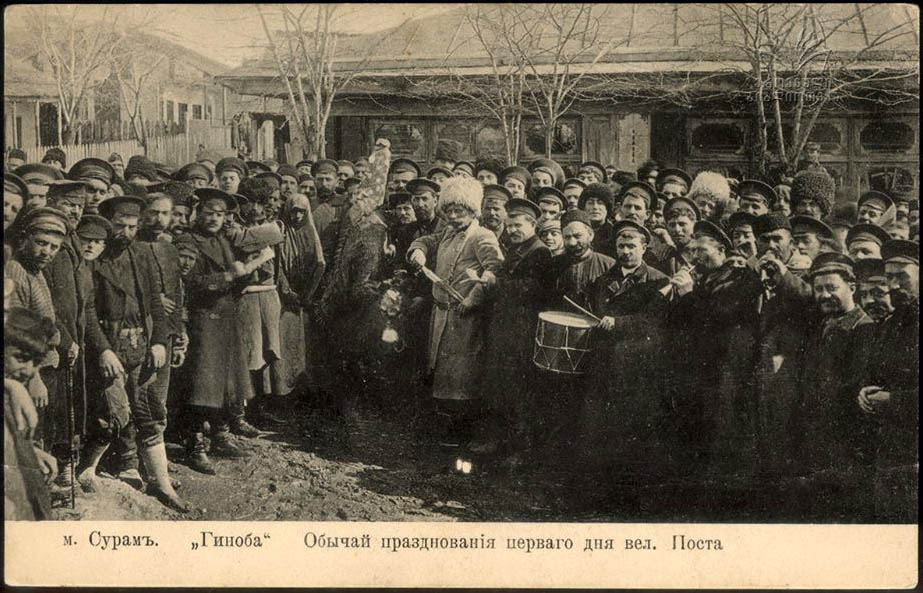
Keenoba / berikaoba, generalmente el primer día de la Semana Santa, en la ciudad de Suram. Postal de Georgia, principios del s. XX

Durante su viaje de febrero a Georgia, yendo por la provincia de Kakheti a lo largo del río Alazani, el coche de los dos exploradores del río Wang fue detenido por unos extraños personajes con coloridos atuendos y máscaras. Esta mascarada revive una de las tradiciones populares más famosas y más antiguas de Georgia, la berikaoba (ბერიკაობა).

toll toll toll toll toll toll toll toll toll toll toll

El nombre proviene del kartveliano ber (ბერ), 'chico', y directamente de berika (ბერიკა), 'máscara de teatro georgiano', más el sufijo -oba (ობა) que indica acción. Este género teatral se define por la mascarada y la improvisación. Su nacimiento se remonta a las antiguas fiestas de fertilidad y renacimiento, así como al culto de los dioses paganos Kviria y Telef. Los temas propios de la berikaoba van desde un erotismo explícito a la protesta social pasando por la sátira política.

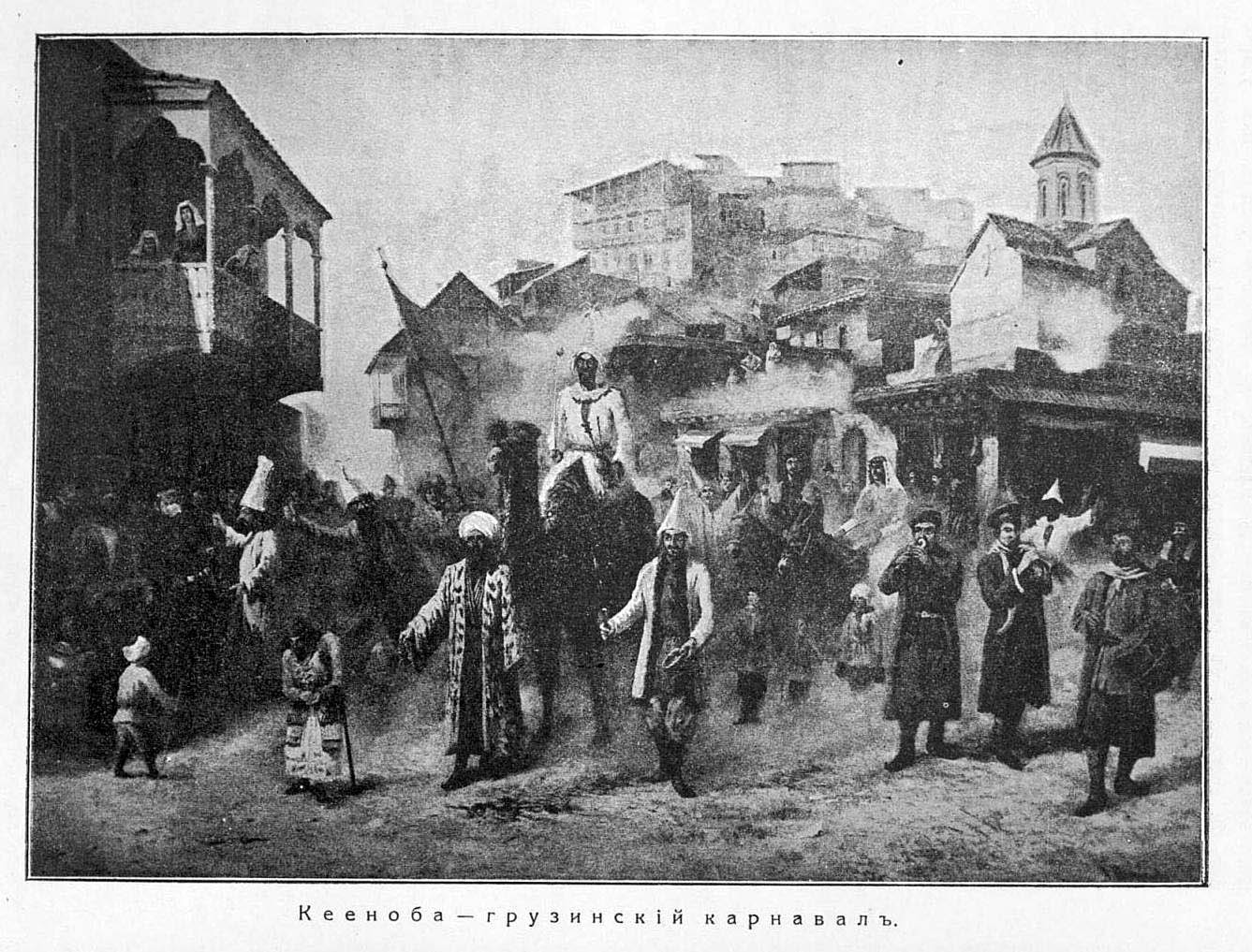
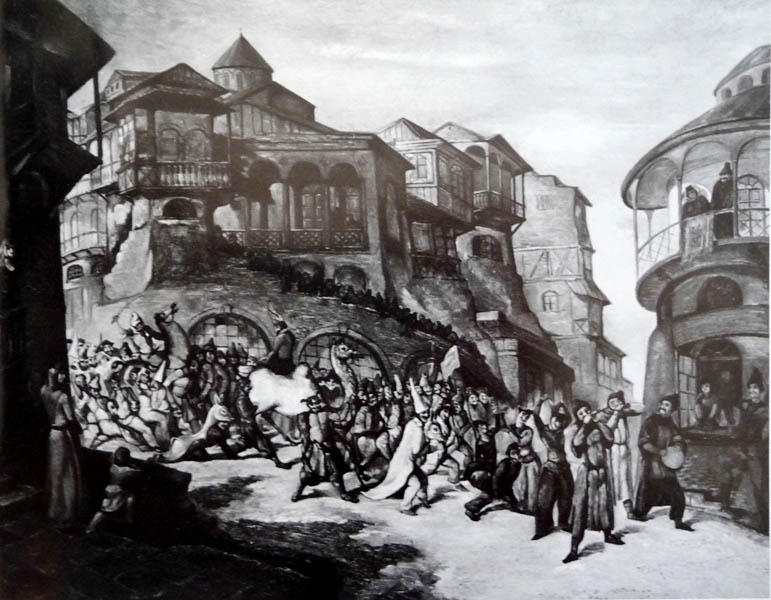
Una tradición similar era la keenoba (ყეენობა, de 'khan'), la sátira contra los invasores extranjeros de Georgia y contra la burocracia zarista rusa. Fue particularmente popular en Tbilisi a finales de 1800.

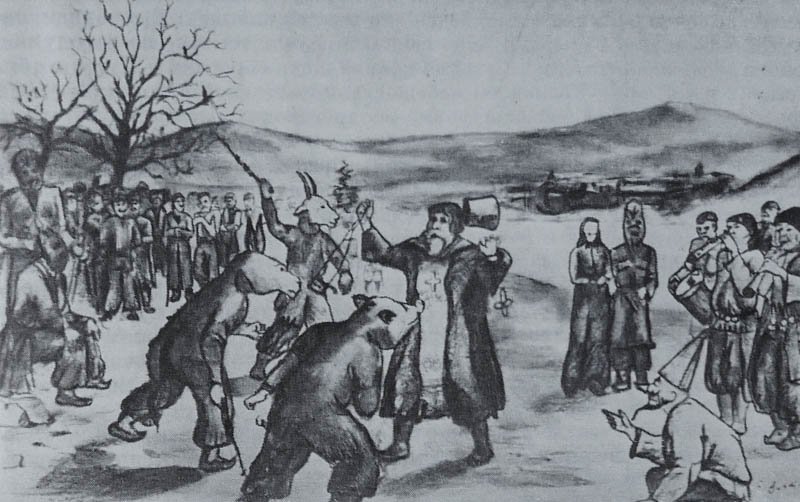
Ceremonia de Keenoba en el Meidán de Tbilisi. Ilustración de Летопись Грузии (Выпуск 1),  1913, editado por B. Esadze

Lado Gudiashvili: Keenoba, 1937, en el mismo Meidán

berikaoba berikaoba berikaoba berikaoba berikaoba
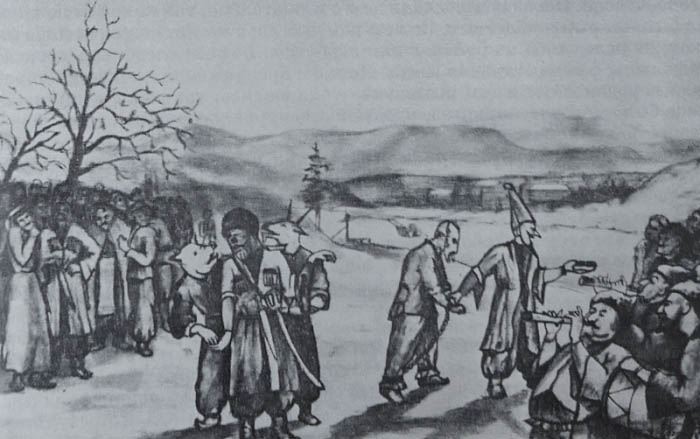
Representaciones de una keenoba, por el pintor naïve armenio del viejo Tbilisi, Vagharshak Elibekyan

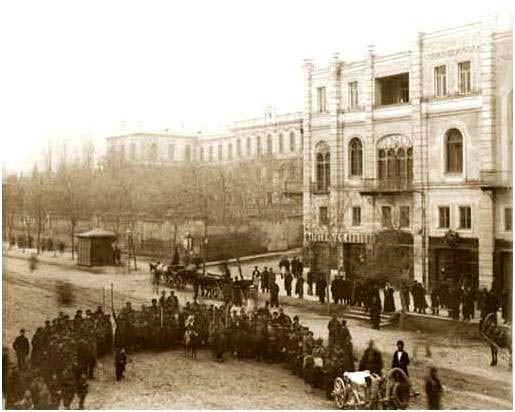
Keenoba a principios del s. XX en Tbilisi, en la Avenida Golovin (hoy Rustaveli)

Los actores que escenifican la berikaoba, llamados berikas, se apoyan en varias estructuras de representación desarrolladas a lo largo de muchas generaciones, de las cuales un centenar ha sobrevivido por escrito. Las berikaoba eran en su mayoría esencialmente anticlericales y dirigidas contra el poder de los terratenientes. En las típicas berikaoba aparecen como personajes el novio, la novia, la casamentera, el juez, el médico, el sacerdote, el cerdo, la cabra, el oso, y similares.

«Durante la actuación, lo que normalmente está bajo siete sellos, inaccesible a la observación cotidiana, a la exposición, y ha permanecido en lo más profundo de la vida sociocultural, se hace aflorar – Dilthey utiliza el término Ausdruck, 'expresión', de ausdrücken, literalmente, 'apretar, prensar, exprimir'. […] La experiencia representada mediante un proceso que 'exprime', y se transforma en 'expresión' liberándola» (Turner * 1986:36)

Con el baile de máscaras los actores inician un juego de identidades que les permite, bajo el disfraz, llevar múltiples personalidades de forma simultánea.

gudiashvili gudiashvili gudiashvili
Lado Gudiashvili: Ilustraciones al libro Berikaoba de D. Rukhadze, 1966


La berikaoba la escenifican varios actores, exclusivamente hombres. La mayoría llevan trajes de piel animal, con otros aditamentos: colas, plumas, cuernos, máscaras hechas de calabazas, así como cintas y cencerros para aumentar la vistosidad de la escena. La fiesta comienza con la reunión de los vecinos del pueblo, que eligen a los actores de la berikaoba. La procesión de los berikas, acompañada por el sonido de las gaitas (stviri, სტვირი), va de puerta en puerta recogiendo vino, miel, harina, carne y otras viandas cedidas por los anfitriones. Los personajes principales de la procesión son la «novia», llamada Kekela (კეკელა), y el «novio», que, tras una serie de intentos fallidos, persuade a Kekela de que se case con ella. La boda es interrumpida por la aparición de un «tártaro», obvia referencia a los siglos de invasiones de Georgia por parte sus poderosos vecinos musulmanes. El «Tártaro» mata al «novio» y la gente trata de consolar a Kekela, prometiéndole que encontrará un mejor esposo. Mientras los berikas tratan de resucitar al novio con agua milagrosa, hierbas y piedras mágicas, corre la noticia del secuestro de Kekela. Cosa que definitivamente devuelve la vida al novio. Atrapa a los raptores y consuela a su novia. La actuación finaliza con una larga fiesta, la tradicional supra.

Actores tradicionales de una keenoba. Foto de A. Aivazov, 1890, de aquí

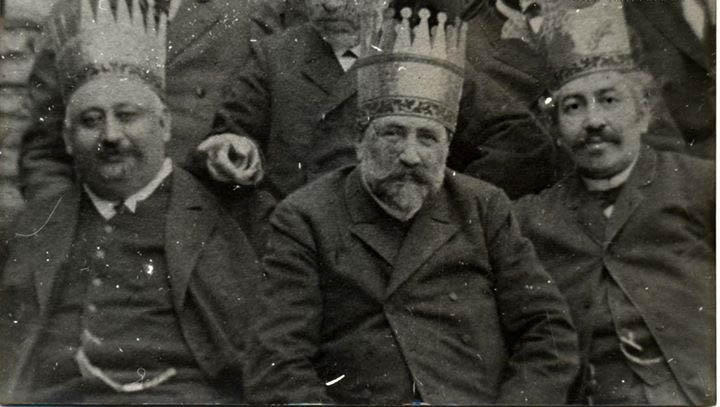
El príncipe Ilia Chavchavadze, «padre fundador» de la Georgia moderna, también participó en una ceremonia de keenoba en 1894

Se encuentran descripciones detalladas de berikaoba en obras literarias desde el siglo XVII. Las representaciones solían tener lugar en Pascua o en otras fiestas religiosas, bodas y ocasiones similares. La única regla obligatoria era que las funciones las realizaran exclusivamente hombres. Las canciones y la música que acompañan la berikaoba se llaman berikuli (ბერიკული). Es una tradición que se mantuvo viva hasta el siglo XIX.

Ahora bien, como pudieron comprobar nuestros intrépidos exploradores, la tradición sigue en pie, especialmente entre los jóvenes, como una de estas experiencias «de otro tiempo» o de búsqueda de «nuevas identidades» mencionada por Turner; o simplemente como una forma más de entretenimiento.

Escena de berikaoba medieval en la fortaleza de Gremi (que visitaremos), de un antiguo film georgiano. Para representaciones modernas, ver  este vídeo.

Between ritual and theater: the berikaoba

Keenoba/berikaoba, usually held in the first day of Holy Week, in the city of Suram. Early 20th-century postcard from Georgia

During their February trip around Georgia, in Kakheti province, along the river Alazani, the car of the two explorers of río Wang was stopped by strange characters wearing colorful clothes and masks. This masquerade revives one of the most famous and oldest Georgian folk customs, the berikaoba (ბერიკაობა).
toll toll toll toll toll toll toll toll toll toll toll

The name comes from Kartvelian ber (ბერ), ʻchild’, and directly from berika (ბერიკა), ʻGeorgian theater mask’, provided with the suffix -oba (ობა), which signals an action. This theatrical genre is defined by masquerade and improvisation. Its birth reaches back to the ancient fertility and rebirth feasts, as well as to the cult of the pagan gods Kviria and Telef. The typical themes of the berikaoba go from explicitly erotic through political satire to social protest.

A similar tradition was keenoba (ყეენობა, from ʻKhan’), the satire against the foreign invaders of Georgia and the Russian tsarist bureaucracy. This topic was particularly popular in Tbilisi in the late 1800s.

Keenoba ceremony in the Meidan of Tbilisi. Illustration from Летопись Грузии (Выпуск 1), 1913, edited by B. Esadze

Lado Gudiashvili: Keenoba, 1937, in the same Meidan

berikaoba berikaoba berikaoba berikaoba berikaoba
Representations of keenoba from the Armenian naïve painter of the old Tbilisi, Vagharshak Elibekyan

Keenoba in the early 20th c. in Tbilisi, on Golovin (today Rustaveli) Avenue

The actors performing berikaoba, called berikas, are supported by various play structures, evolved over many generations, from which a hundred have survived in a written form. The berikaoba performances were mostly anti-clerical in nature, and directed against the landlords’ power. The typical berikaoba masquerades include the groom, the bride, the matchmaker, the judge, the doctor, the priest, the pig, the goat, the bear, and the like.

“During the performance, what is normally sealed up, inaccessible to everyday observation and reasoning, in the depth of sociocultural life, is drawn forth – Dilthey uses the term Ausdruck, ʻan expressoin’, from ausdrücken, literally, ʻto press or squeeze out’. […] The peformed experience is a process, which “squeezes out”, and becomes the “expression” crowning it.” (Turner * 1986:36)

With the masquerade, the actors initiate a game of identities, which allows them, through the disguise, to wear multiple identities simultaneously.

gudiashvili gudiashvili gudiashvili
Lado Gudiashvili: Illustrations to D. Rukhadze’s Berikaoba, 1966


The berikaoba is performed by several actors, exclusively men. Most of them wear costumes of animal leather, with other supplements: tails, feathers, horns, pumpkin masks, as well as ribbons and cowbells to increase the spectacularity of the scene. The festivity begins with the gathering of the villagers, who choose the actors of the berikaoba. The procession of the berikas, accompanied by the sound of bagpipes (stviri, სტვირი), moves door-to-door, to gather wine, honey, flour, meat and other victuals served by the host. The main characters in the procession are the “bride”, called Kekela (კეკელა), and the “groom”, who, after a series of attempts, persuades Kekela to marry her. The wedding is interrupted by the appearance of a “Tatar”, which is a clear reference to the centuries of invasions of Georgia from its powerful Muslim neighbors. The “Tatar” kills the “groom”, and the people try to console Kekela, promising to find a better husband for her. While the berikas try to resuscitate the groom with healing water, herbs and minerals, the news spreads about Kekela’s abduction. This finally brings the groom back to life. He chases the kidnappers and consoles his bride. The performance finishes with a lengthy feast, the traditional supra.

Traditional keenoba players. Photo by A. Aivazov, 1890, from here

Prince Ilia Chavchavadze, the “founding father” of modern Georgia, also participated in a keenoba ceremony in 1894

Detailed descriptions of berikaoba are found in literary works since the 17th century. Berikaoba plays usually take place at Easter and other religious holidays, weddings and similar occasions. The only obligatory rule of the play is that the roles can be performed only by men. The songs and music accompanying the berikaoba are called berikuli (ბერიკული). This tradition has remained alive until the late 19th century.

However, as our explorers experienced, the tradition still lives on, especially among young people, as an experience of the “other time” and “new identities” referred to by Turner, or simply as a form of entertainment.

Medieval berikaoba scene in the fortress of Gremi (which we will also visit), from an old Georgian film. For the modern masquerades of berikaoba, see this video.

Musa Dagh, the mountain of resistance


April 1915, one hundred years ago. Five thousand Armenians, persecuted by the Turks, seek refuge on the massif of Musa Dagh, north of the Bay of Antioch. The following excerpt is taken from Franz Werfel’s historical novel The Forty Days of Musa Dagh (1933), which narrates the story of this case of Armenian resistance during the “Great Crime”, in Armenian Medz Yeghern. In this piece, the Armenian Gabriel Bagradian is struggling with the preparations for the defense of Musa Dagh, an “island” of salvation for five thousand Armenians. Every gesture is permeated by precision, from the census of the Armenians of the region, through the mapping of the area, to the analysis of the mountain itself, essential for the defense, despite the scarce military resources. Only careful preparation and deep knowledge of the area – do not forget that until 1915, the region was mostly inhabited by Armenians – can help the small group of Armenians escape the immense tragedy that was taking place at that time.

“Now that he had no Stephan to teach, Samuel Avakian had another, entirely different occupation. Gabriel passed him all the rough notes which he had been collecting for many weeks and asked the student to reduce them to one comprehensive, statistical statement. Avakian was not told why.

His first job was to classify under various headings the population of all the villages, from Wakef, the lace-making village in the south, to Kebussiye, the bee-keeping village in the north. The information gathered by Bagradian from the village clerk of Yoghonoluk and the other six village elders was to be arranged and checked. By next morning Avakian had the following precise table for Gabriel […]

This census included the Bagradian family, with dependants. But, aside from such lists, more exact classifications were drawn up, giving the number of families in each village according to occupation or craft, indeed from every conceivable angle.

But it was not only a matter of human beings. Gabriel had tried to find out the number of head of cattle in the district. That had been by no means an easy task, an only partially successful one, since not even the mukhtars knew the exact figures. Only one thing was certain. There were no big livestock, no oxen or horses. On the other hand, every well-to-do family owned a couple of goats and a donkey, or a riding and sumpter mule. The larger herds of sheep, owned by individual breeders of communes, were driven, in the fashion of all mountaineers, up onto the quiet meadow pasturage – sheltered meadows where they stayed from one shearing to the next in the care of shepherds and shepherd’s boys. It proved impossible to get any exact idea of these herds.

The industrious Avakian, to whom every task was a boon, went zealously forth into the villages and had already transformed Bagradian’s study into a kind of statistics bureau. Secretly he rather scoffed at this very elaborate hobby, by which a rich man was attempting to fill up the days of an indefinite period of suspense. Nothing seemed too trifling for this pedant, who had obviously conceived the idea of writing a scientific memoir on the village life around Musa Dagh. He even wanted to know how many tonirs, kneading-troughs walled into the ground, there were in the villages. He investigated the harvests minutely and seemed to be worried by the fact that the mountain folk imported their maize and the reddish Syrian wheat from Mohammedans down in the plain. It seemed to annoy him that there should be no Armenian mills, either in Yoghonoluk and Bitias or elsewhere. He even ventured to trespass on Krikor’s preserve and inquire as to the state of the drug supplies. Krikor, who had expected to display his library, not his pharmacy, traced the curve of the roof with a pair of disillusioned fingers. On two small shelves bottles, jars, and crucibles of all kinds were set out, painted with exotic inscriptions. It was all there was to suggest a chemist's shop. Three big petroleum jars in a corner, a sack of salt, a couple of bales of chibuk-tobacco, and some cheap ironmongery indicated the more active side of the business.

Krikor proudly tapped one of the mystic jars with his long bony fingers. “The whole pharmacopoeia, as St. John Chrysostom pointed out, can be reduced to seven primary substances: lime, sulphur, saltpetre, iodine, poppy, willow-resin, and bay-oil. It’s always the same thing in hundreds of different disguises.” After such a lesson in contemporary pharmaceutics Gabriel made no further inquiries. Luckily he had a fairly extensive medicine chest of his own. But, more significant than all this, was the incident of the small arms. Chaush Nurhan had already dropped some dark hints on the subject. Yet, the instant Gabriel tried to broach it with village notables, they beat a hasty retreat. One day, however, he assailed Mukhtar Kebussyan of Yoghonoluk in his best parlor and pinned him down:

“Be frank with me, Thomas Kebussyan. How many rifles have you, and what pattern are they?”

The mukhtar began to squint horribly, and wagged his bald pate.

“Jesus Christ! Do you want to bring ill-luck on us all, Effendi?”

“Why should I, of all people, seem so unworthy of your confidence?”

“My wife doesn't know it, my sons don't know it, not even the schoolteachers know it. Not a soul.”

“Did my brother Avetis?”

“Your brother Avetis certainly did, God rest his soul. But he never mentioned it to anyone.”

“Do I look the sort of person who can't keep his mouth shut?”

“If it comes out, we shall all be slaughtered.”

But since Kebussyan, for all his squinting and wagging of the head, could not manage to get away from his guest, he ended at last by double-bolting the parlor door. In a frightened hiss he told his story. In 1908, when Ittihad had gone over to revolution against Abdul Hamid, the Young Turkish agents had distributed weapons to all districts and communes of the empire, especially to the Armenian districts, which were regarded as the chief supporters of the revolt. Enver Pasha had of course known all about it and, when war broke out, his instant order had been to disarm the Armenian population. Naturally the character and methods of the government officials concerned had made a great difference to the way in which the order was carried out. In such vilayets as Erzerum or Sivas, hotbeds of provincial zeal for Ittihad, unarmed people had been forced to buy rifles from the gendarmes, simply to hand them back to the government. To possess no arms in such a district was merely considered a cunning attempt to evade the law.

But here, under Djelal Bey, it naturally had all gone far more smoothly. That admirable governor, whose humane instincts were always in rebellion against the edicts of the pretty war god in Istanbul, carried out such orders very negligently, where he could not simply allow them to disappear in his wastepaper basket. This mildness usually found its echo in the administrative methods of his subordinates, with one harsh exception – the Mutessarif of Marash. The red-haired müdir of Antioch had arrived one day in January in Yoghonoluk, with the chief of the Antioch police, to collect all weapons. He had gone away again quite peacefully on receiving the smiling assurance that no such weapons had been distributed. Luckily the mukhtar of those days had not given the Committee’s agents a written receipt.

“Very good” – Gabriel was delighted with the mayor – “and are these guns worth anything?”

“Fifty Mauser rifles and two hundred and fifty Greek service-carbines. Each has thirty magazines of cartridges, that is, about a hundred and fifty shots.”

Gabriel Bagradian stood reflecting. Really that was scarcely worth talking about. Had the men in the villages no other firearms of any kind?

Kebussyan hesitated again. “That's their business. Lots of them hunt. But what use are a few hundred old blunderbusses, with flint locks?”

Gabriel rose, and held out his hand to the mukhtar. “Thank you, Thomas Kebussyan, for having trusted me. But, now that I know, I'd like you to tell me where you've hidden them.”

“Must you really know that, Effendi?”

“No. But I'm curious, and I don't see why you should keep that secret, now that you've told me all the rest.”

The mukhtar writhed in inner conflict. Apart from his brothers in office, Ter Haigasun, and the sexton, there was not a soul who knew that secret. Yet there was something in Gabriel against which Kebussyan could not hold out. He unburdened himself, after desperate admonitions. The chests containing these rifles and supplies were in the churchyard of Yoghonoluk, buried in what seemed the usual graves, with false inscriptions on the crosses.

“So now I've put my life in your hands, Effendi,” the mukhtar moaned as he opened the door again for his visitor. Gabriel answered him without turning round:

“Perhaps you really have, Thomas Kebussyan.”

Thoughts at which he himself began to tremble kept haunting Gabriel Bagradian. They had such power to move his heart that he could not escape them, day or night. Gabriel saw only the first steps, only the parting of the ways. Five paces on from where they branched, and all was darkness and uncertainty. But in every life, as it nears decision, nothing seems more unreal than its own aim.


Yet was it easy to understand why Gabriel, with all his roused-up energy, should have moved only about this narrow valley, avoiding any avenue of escape that might still have been open to him? Why are you wasting time, Bagradian? Why let day after day slip by? Your name is well known, and you have a fortune. Why not throw both these into the scales? Even though you are faced with danger and the greatest difficulties, why not try to reach Aleppo, with Juliette and Stephan? After all, Aleppo is a big town. You have connections there. At least you can put your wife and son under consular  protection. No doubt they’ve been arresting notables everywhere, banishing them, torturing them, putting them to death. Such a journey would certainly be a terrible risk. But is it any less of a risk to stay here? Don’t lose another minute. Do something before it's too late to save yourself!

This voice was not always silent. But its cries came muted. Musa Dagh stood serene. Nothing changed. The world around seemed to show that the Agha Rifaat Bereket had been right. Not a breath of outside trouble reached the village. His home, which even now he could still sometimes mistake for a vanished fairy-tale, kept fast hold of Gabriel Bagradian. Juliette lost reality in his eyes. Perhaps, even if he had tried, he might not have freed himself now from Musa Dagh.

He kept his solemn promise not to say a word of the hidden small arms. Even Avakian had learned nothing. On the other hand that tutor was suddenly given a fresh task. He was appointed cartographer. That map of the Damlayik which Stephan, with clumsy markings, had begun early in March, to please his father, gained fresh significance. Avakian was instructed to make an exact, large-scale map of the mountain in three copies. “So he’s come to the end of the valley, with all its livestock and people,” thought the student, “and now he has to go to the hills.”

The Damlayik is, of course, the real heart of Musa Dagh. That spur of mountain disperses itself in many ridges towards the north, where they peter out in the vale of Beilan in dream-like natural citadels and terraces, while southwards it suddenly descends, disordered, embryonic, into the plains around the mouth of the Orontes. In its center, Damlayik, it gathers all its strength, its concentrated purpose. Here, with mighty fists of rock, it drags the vale of the seven villages, like a many-folded coverlet, to its breast. Here its two crests rise almost sheer over Yoghonoluk and Hadji Habibli – the only treeless points, grown over with short crop-grass. The back of the Damlayik forms a fairly wide mountain plateau; at its widest point, between the ilex gorge and the steep, shelving rocks along the coast, it is, as the crow flies (by Avakian’s reckoning), more than three and a half miles across. But what most of all preoccupied Avakian were the curiously sharp demarcation lines which nature seemed to have set round this mountain plateau. There was, first, the indentation towards the north, a narrow defile laced to a ridge between two peaks, even directly approachable from the valley by an old mule-track, which, however, lost itself in undergrowth, since here there was no possibility of reaching the sea across walls of rock. In the south, where the mountain broke off suddenly, there rose, above a sparse, almost arid half-circle of rocky banks, a towering mass of rock fifty feet high. The view from this natural bastion dominated a sweep of sea and the whole plain of the Orontes with its Turkish villages as far as away beyond the heights of the barren Jebel Akra. One could see the massive ruin of the temple and aqueduct of Seleucia, bent under the load of its green creepers; one could see every cart-rut on the important highroad from Antioch to El Eskel and Suedia. The white domino-houses of these towns gleamed, and the big spirit factory on the right bank of the Orontes, in nearest proximity to the sea, stood livid in sunlight.

Every strategic intelligence must perceive at once what an ideal place of defense the Damlayik was. Apart from the arduous climb up the side facing the valley, which exhausted even leisurely sightseers by its rough, uncompromising ascent, there was only one real point of attack – the narrow ridge towards the north. But it was just here that the terrain offered defenders a thousand advantages, and not least the circumstance that the treeless declivities, strewn about with knee-pine, dwarf shrubs, tussock grass, and wild bush growths of every kind, provided a difficult series of obstacles.

Avakian's map-drawing efforts took a long time to satisfy Gabriel. Again and again he discovered fresh mistakes and inadequacies. The student began to be afraid that his employer's hobby had little by little become a mania. He had still no inkling. Now they spent whole days on the Damlayik. Bagradian, the artillery officer of the Balkan war, still possessed field-glasses, a measuring-gauge, a magnetic compass, and other, similar surveying-instruments. They came in very useful now. With stubborn insistence he made certain that the course of every stream, each tall tree, big block of granite, was being marked. And red, green, and blue markings did not suffice him. Strange words and signs were added.

Between the dome-shaped peaks and the northern saddle there was a very extensive gentle declivity. Since it was overgrown with lush and excellent grass, it was here that they always found themselves in the midst of herds of sheep, black and white, with shepherds who, like the shepherds of antiquity, drowsed above their flocks in sheepskins, summer and winter. Gabriel and Avakian, counting their steps, got the exact boundaries of this pasturage. Gabriel pointed out two streams which, above, on the verge of the meadow, forced their way through thick growths of fern. “That's very lucky,” he said; “write above that, in red pencil: ʻtown enclosure.’”

There was no end of such secret terminology. Gabriel seemed to be looking with particular zest for some spot which he would choose for its quiet, sheltered beauty. He found it. And it, too, was near a well-spring, but nearer the sea, in a place between high plateaus of sheer rock, where a dark-green girdle of myrtles and rhododendron bushes extended.

“Pick that out, Avakian, and write over it, in red: ʻThree-Tent Square.’”

Avakian could not manage not to ask: “What do you mean by ʻThree-Tent Square’?”

But Gabriel had already gone on and did not hear him.

“Must I help him dream his dreams?” the student thought. Yet only two days later he was to learn exactly what was meant by “Three-Tent Square.”


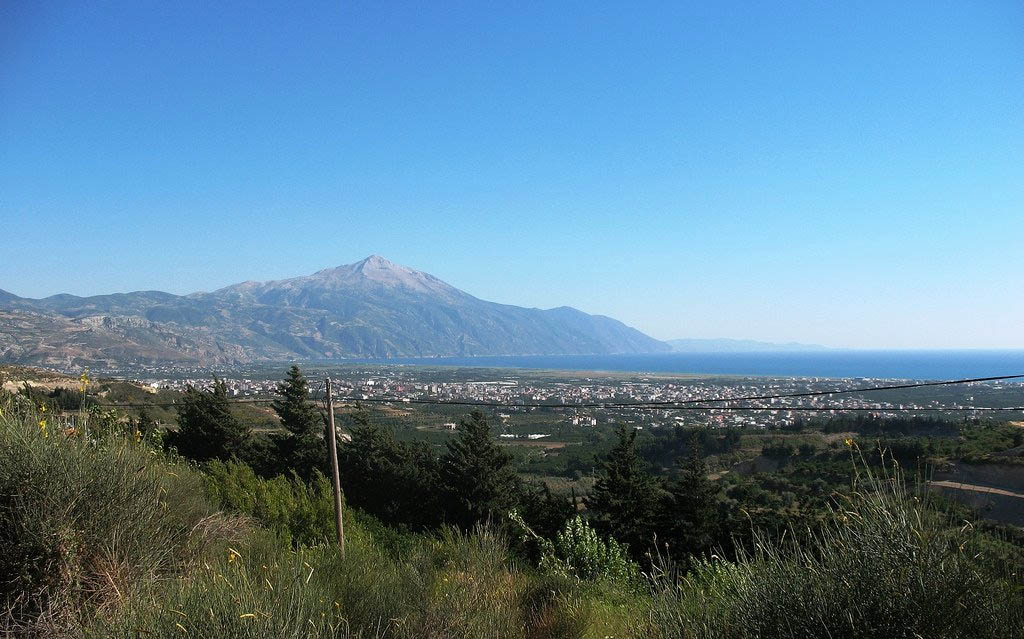
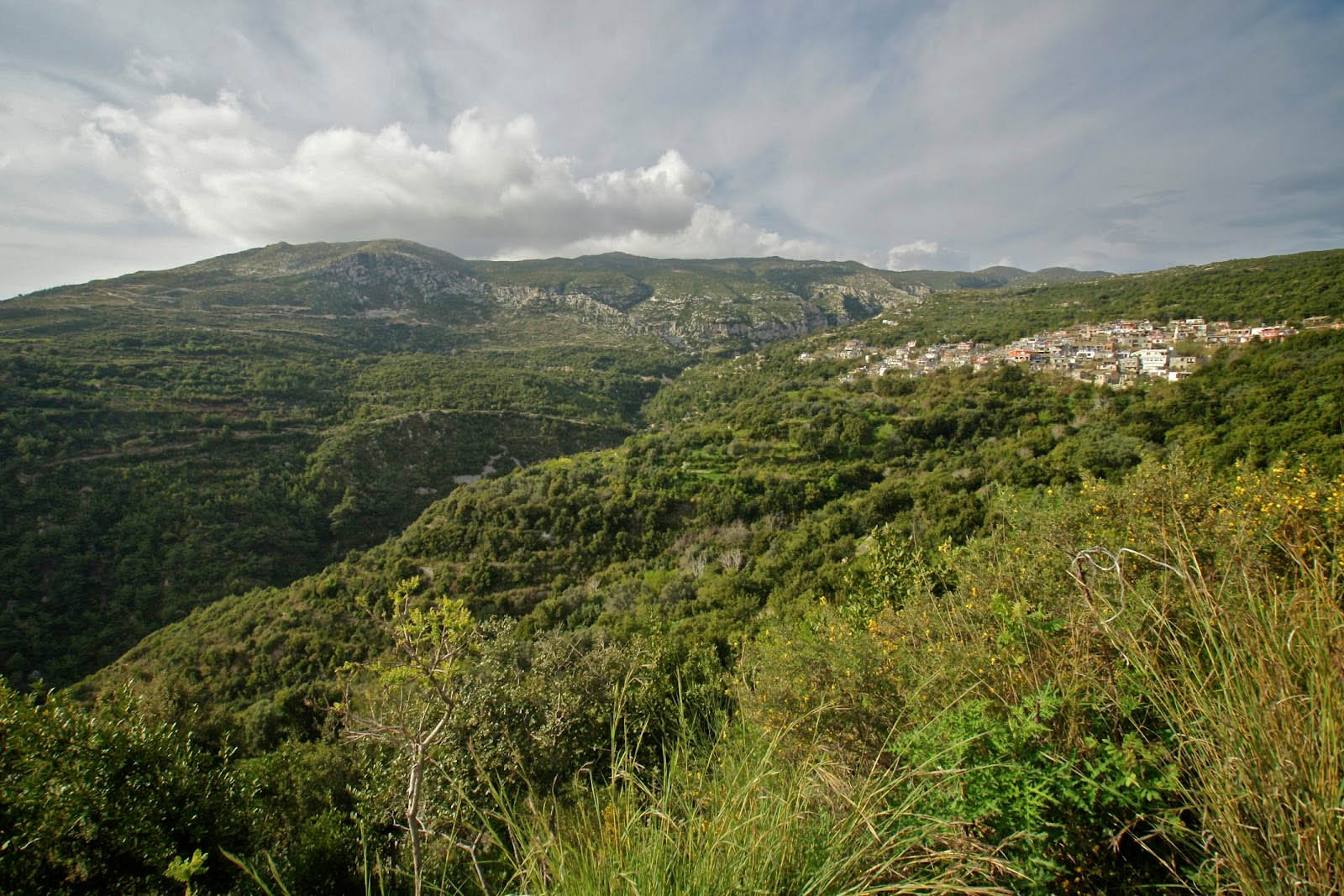
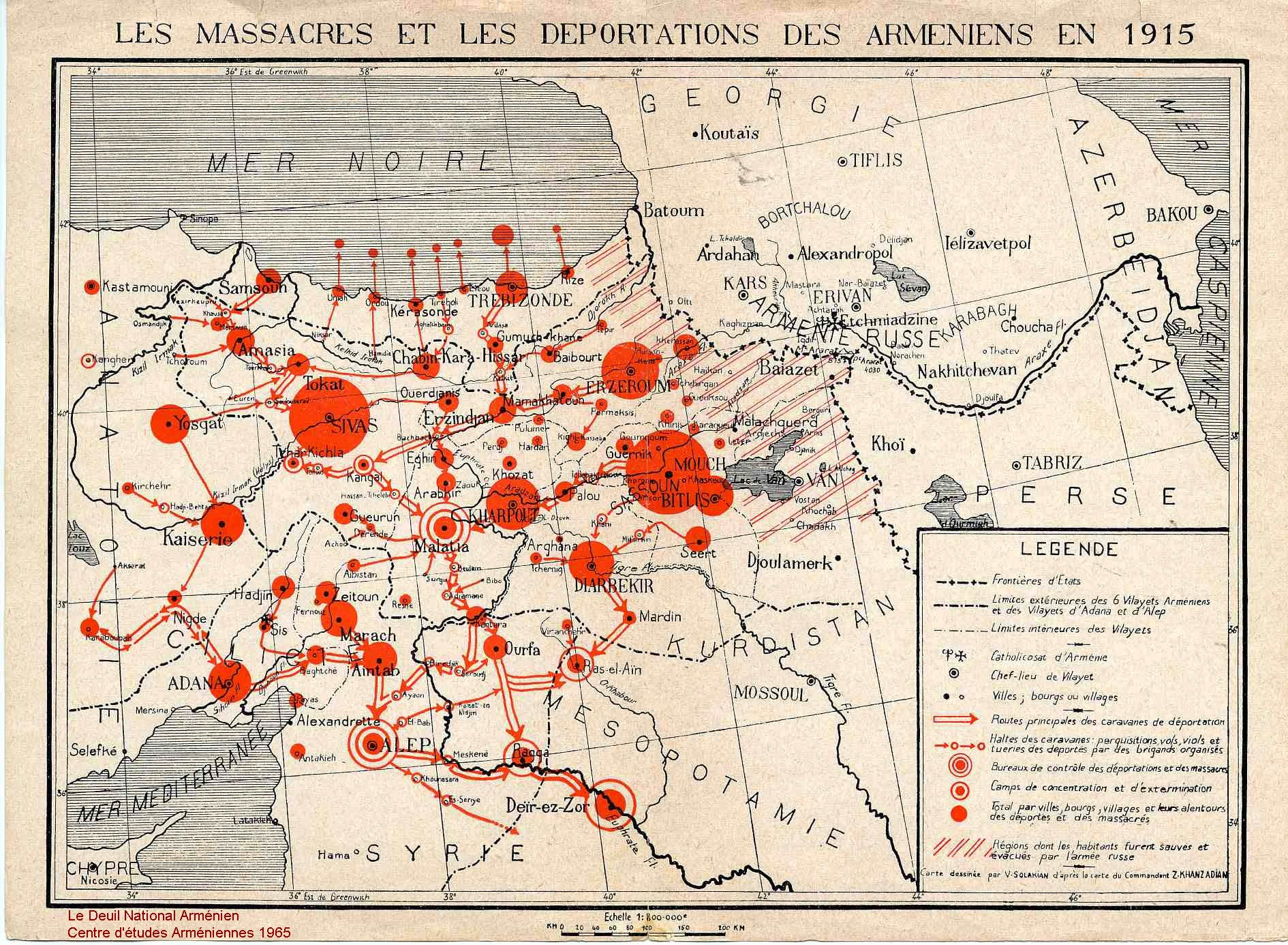
The mountain of Musa Dagh as seen from the sea, and from the land with the village of Yoghonoluk. From the blog of Georg Pfarl, written about his visit to the place in 2011. Below: Musa Dagh marked in blue on the map of the massacres and deportations of 1915