Switch over to our new blog! • ¡Pásese a nuestro nuevo blog!
The renewed version of our blog, with more features, a richer design, and available in nine languages, can be read here: https://wangriver.com
The new version also includes the old posts, often in expanded form. If you are curious about the updated version of this post, replace “riowang.blogspot.com/” in the URL with “riowang.studiolum.com/”, and the new link will most likely lead you there.
La versión renovada de nuestro blog, con más herramientas, un diseño más rico y disponible en nueve idiomas, se puede leer aquí: https://riowang.com
La nueva versión también incluye las publicaciones antiguas, a menudo en una forma ampliada. Si tiene curiosidad por la versión actualizada de esta entrada, sustituya «riowang.blogspot.com/» en la URL por «riowang.studiolum.com/es/», y el nuevo enlace probablemente le llevará allí.
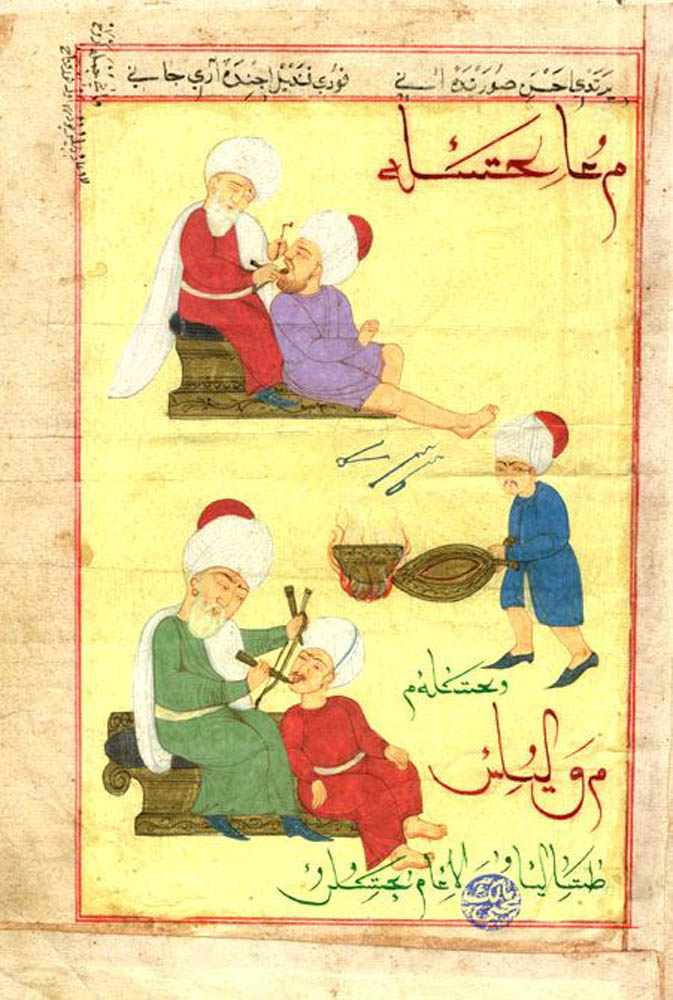
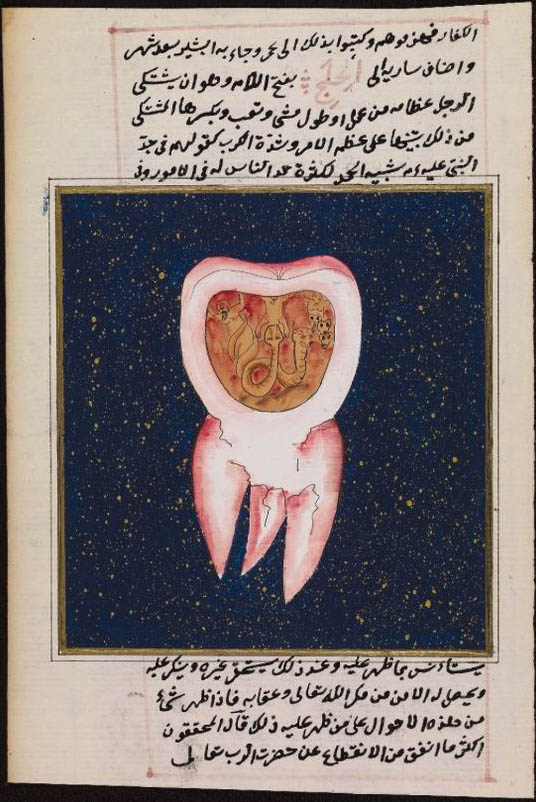
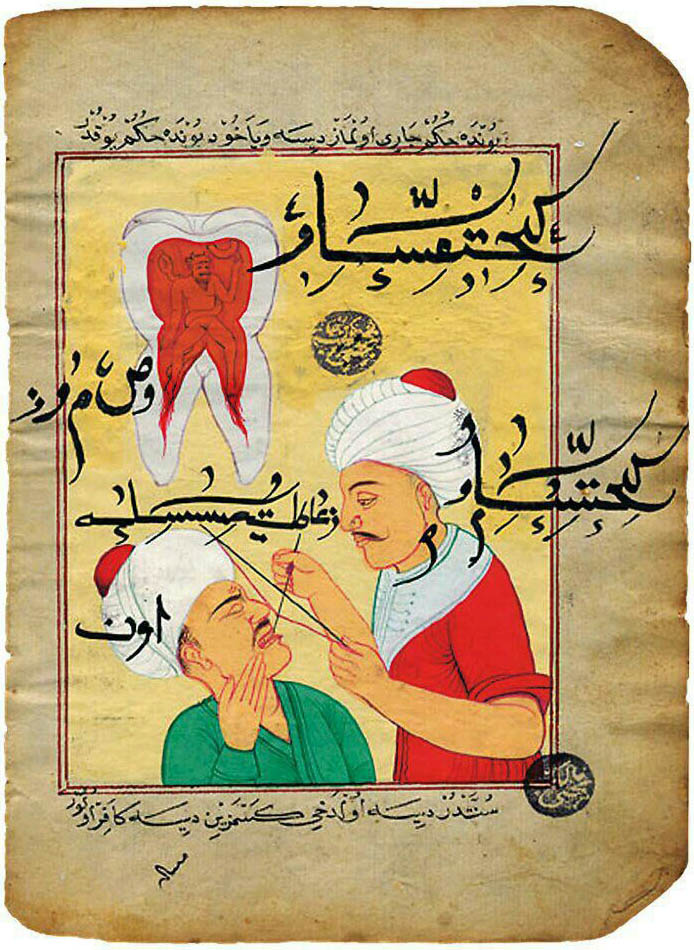
Has your tooth ever hurt? In earnest? Then you will realize that this illustration of an Ottoman manuscript, in which there is nothing else in the whole universe, but the painful tooth, in whose red-hot inside snakes and devils provoke hellish torments, and the unsympathetic cold space around it, is not a naive metaphor, but the most accurate representation of reality.
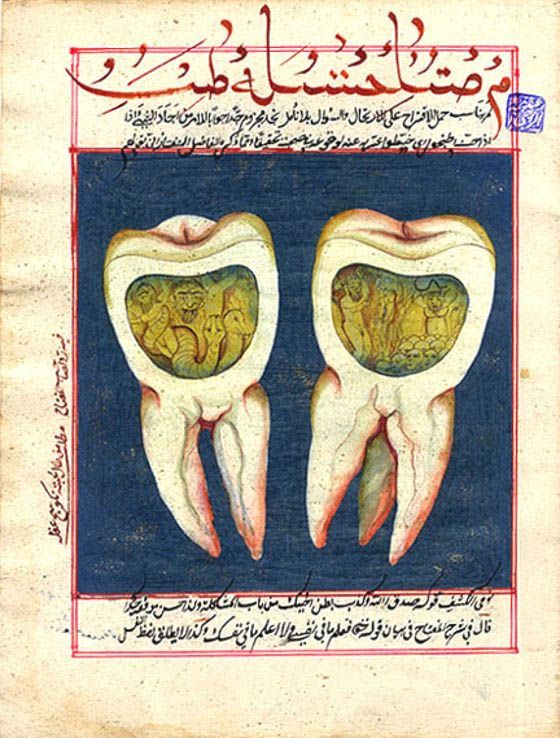
As many teeth, so many hellish pains. If you heroically browse through the medical manuscripts and loose illustrations of the small shops in the Istanbul book bazaar, you will wander through more circles of hell than Dante.
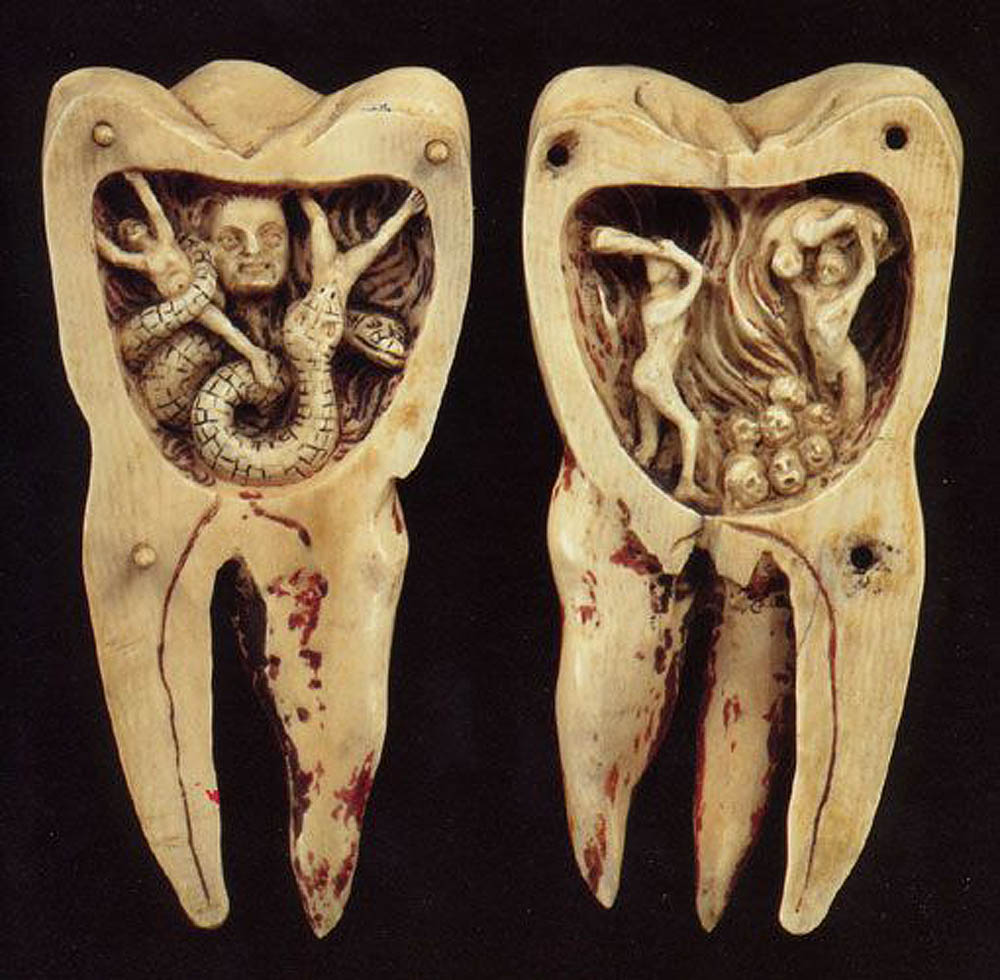
This tooth model, carved out of ivory, has a number of photos on the web, without a proper source reference. A seemingly reliable site regards it a Souther French work of around 1780. The date is probably correct, but the origin is rather Ottoman, since its manuscript models can be still found in the Istanbul book bazaar.
But where the need is greatest, the help is the closest. In fact, the above illustrations come from manuscripts, which, aftter presenting the severity of the problem, immediately offer cures and preventive procedures against it.
Islamic dentistry leads back its origins to Mohammad, who instructs the believers in a special hadith to wash their teeth at least twice or thrice a day. He is also referred by the great 10th-century Arabic physician, Ibn Sina or Avicenna, whose famous Al kanun fi al-tibb (The canon of medicine) gives instructions for treating teeth, drilling, pain relief, and fixing dentures with gold wire to the jaw.
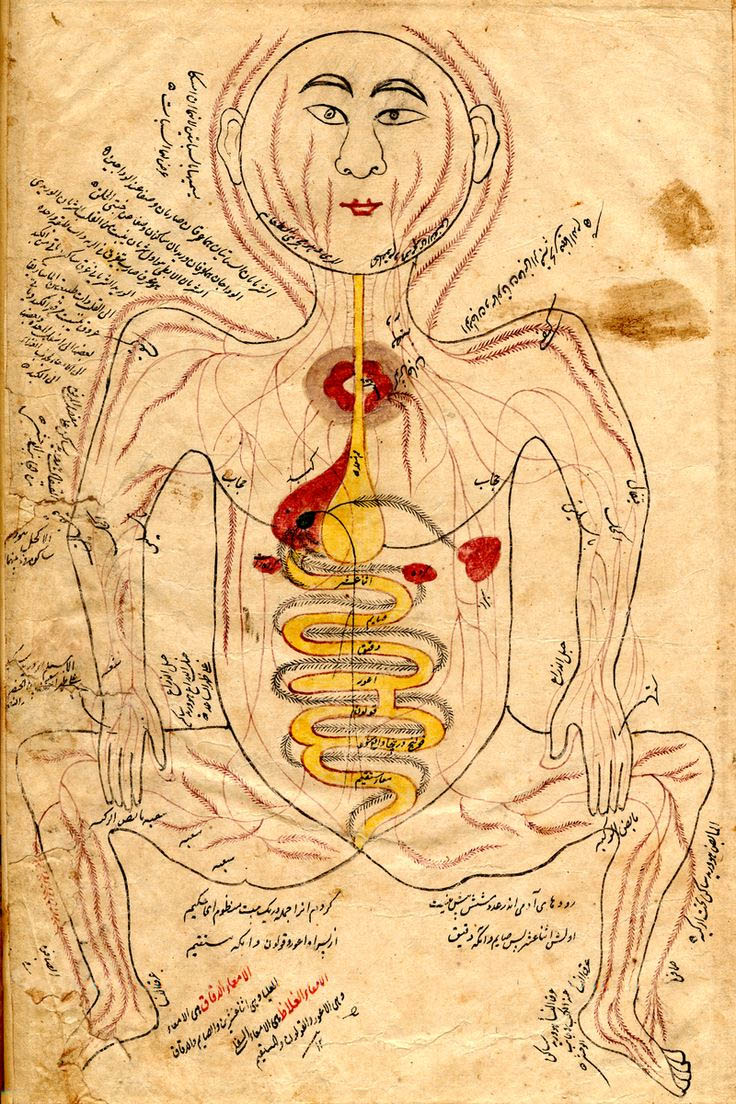
Avicenna’s work was also the kanun, the basic reference of Ottoman physicians. One of the indispensable institutions of Ottoman cities was the hospital, darüşşifa, where also dental surgeries were performed. The surgeries needed professionals, and the professionals passed on their knowledge in manuals. The first Ottoman medical manuscripts, Bereket’s Tuhfe-i Mubrizi, Ahmadi’s Tarvih al-ervah and Hacı Paşa’s Müntehab al-şifa, all come from the 14th century, and they also deal with the treatment and anatomy of teeth.
In the 15th century, two important factors led to the boom of Ottoman dentistry. On the one hand, Sultan Mehmet II established a glorious court in Constantinople, occupied by him in 1453, which attracted qualified doctors from all over the empire. Here the first Ottoman surgical encyclopaedia and at the same time the first illustrated Ottoman medical work, Cerrâhiyyetüʿl-Hâniyye (Surgery of the Empire) was composed in 1465 by chief physician Şerefeddin Şabuncuoğlu. Among its pictures there are also many illustrations of dental surgeries.
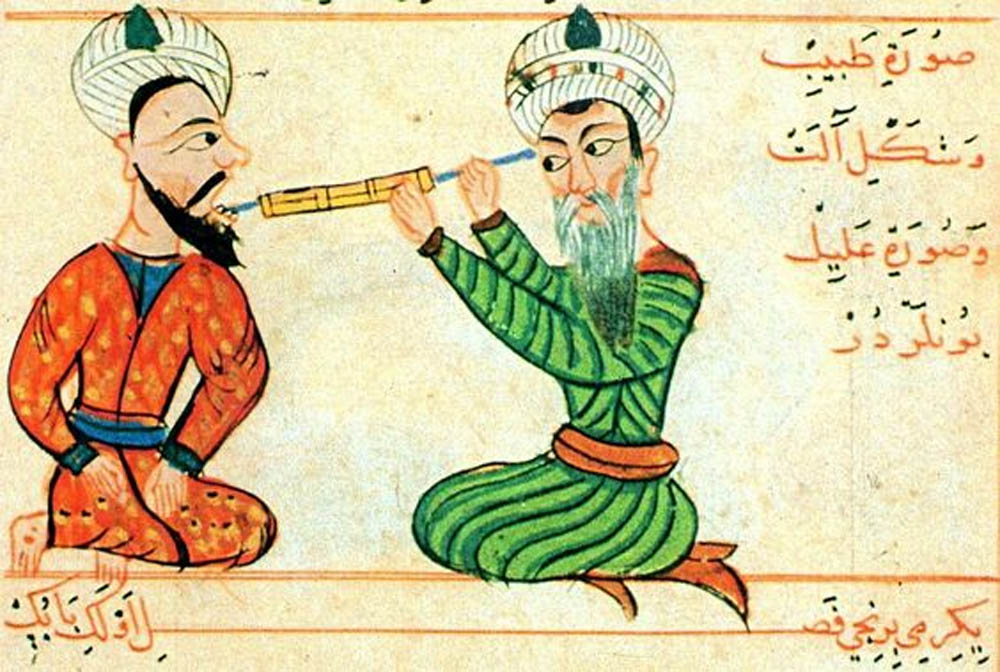
On the other hand, the Ottoman praxis was further enriched by the knowledge brought to Constantinople by the Jewish doctors expelled from Spain in 1492. The first Ottoman dental monograph was written by the Sephardic Moses Hamon (Ibn Hamun) in the court of Sultan Suleiman. Its illustrations further develop those of Şabuncuoğlu.
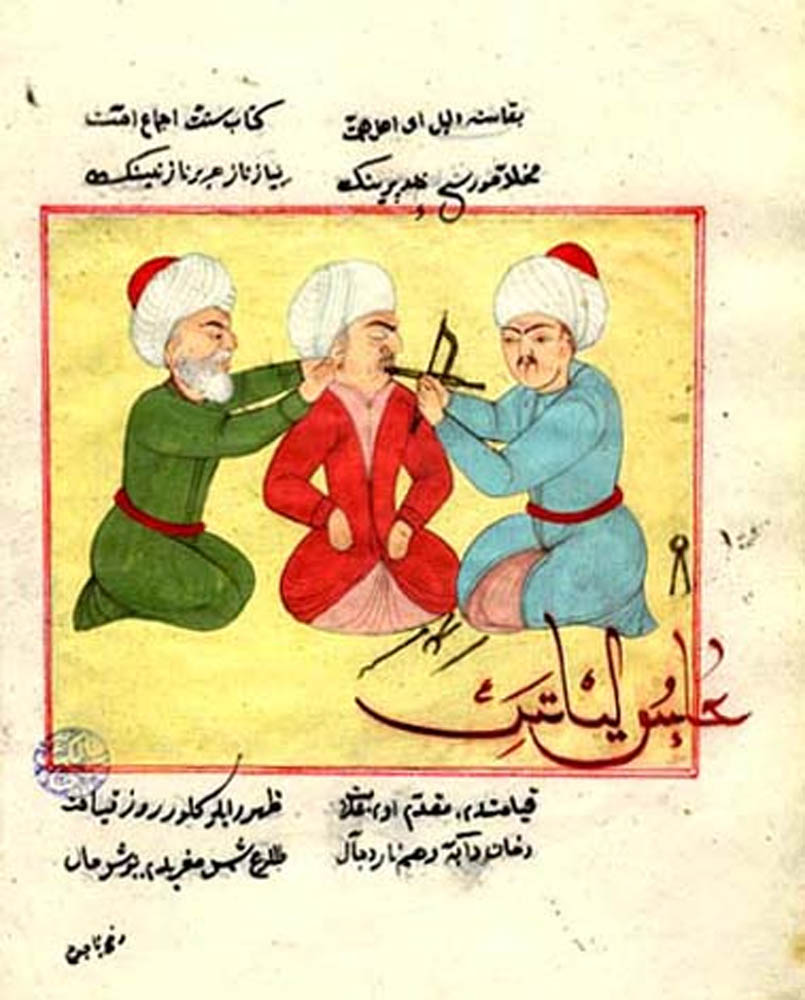
Ibn Hamun’s knowledge and illustrations were taken over, expanded and varied by a number of further manuscripts, from Şemseddîn-i İtâkki’s medical compendium of 1632, which already includes the Renaissance anatomical charts of Andreas Vesalius’ De humani corporis fabrica of 1543, to the great Marifetname encyclopaedia, compiled in 1765 by the Sufi doctor İbrahim Hakkı, which was the crowning and last great creation of Ottoman medical science.
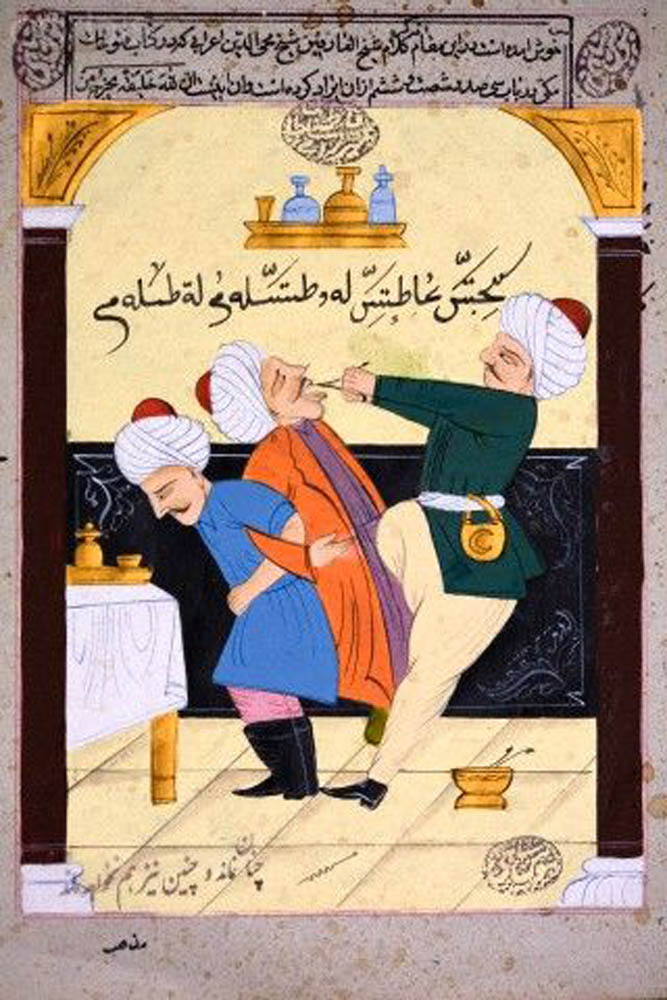
This manuscript literature flourished in many variants until the end of the 19th century, when European medicine and book printing gradually replaced it. To which of these works belonged the solitary teeth, suffering alone in the universe, with a little hell in their cavity? We do not know. These metaphors of disconsolate suffering are now sold by pages in the Istanbul book bazaar, torn away from a thousand years of accumulated medical knowledge, which could help them.
¿Alguna vez le han dolido de verdad, de verdad, las muelas? Entonces sabrá que esta ilustración procedente de un manuscrito otomano, donde todo el cuadro lo ocupa una muela en cuyo interior se agita un infierno de serpientes y diablos en llamas que atormentan más allá de lo imaginable, y abandonada, además, en un insondable universo frío y hostil, no es una ingenua metáfora, sino la representación de la realidad más cruda.
Tantas muelas tenemos como tribulaciones horribles nos acechan. Si uno se arma de valor y repasa los manuscritos médicos y las hojas sueltas ilustradas que se ofrecen en las pequeñas tiendas del bazar de libros de Estambul, cruzará más círculos infernales que Dante.
De este modelo de muela tallada en marfil hay varias fotos en la web sin una fuente de referencia clara. Un sitio aparentemente fiable lo considera una obra del sur de Francia, fechable hacia 1780. La fecha podría ser cierta pero el origen es más probablemente otomano, pues sus modelos manuscritos se ven en el bazar de libros de Estambul.
Pero allí donde la necesidad aprieta, el socorro está más cerca. De hecho, las ilustraciones anteriores obran en manuscritos que, después de hacernos bien patente la gravedad del problema, dan de inmediato remedios y procedimientos preventivos.
La odontología islámica remonta sus orígenes hasta el propio Mahoma, quien enseñó a los creyentes en un hadiz especial a lavarse los dientes al menos dos o tres veces al día. Lo mismo recomienda el gran médico árabe del siglo X Ibn Sina o Avicena, cuyo famoso Al kanun fi al-tibb (El canon de la medicina) instruye sobre el cuidado de los dientes y el tratamiento de las caries, ofrece recetas para aliviar del dolor y expone técnicas para la fijación de prótesis con alambre de oro.
El texto de Avicena era el kanun, la obra de referencia básica para los médicos otomanos. Una de las instituciones indispensables en la ciudad otomana era el hospital, darüşşifa, donde también se realizaban cirugías dentales. Las intervenciones exigían profesionales, y aquellos profesionales dejaban sus conocimientos anotados en manuales para los nuevos dentistas. Los primeros manuscritos médicos otomanos, el Tuhfe-i Mubrizi de Bereket, el Tarvih al-ervah de Ahmadi y el Müntehab al-şifa de Hacı Pasa, datan todos del siglo XIV y se ocupan también de la anatomía y del tratamiento general de los dientes.
En el siglo XV, dos factores importantes contribuyeron al auge de la odontología otomana. Por un lado, el sultán Mehmet II estableció una imponente corte en Constantinopla, que había ocupado en 1453, y atrajo a los médicos más cualificados de alrededor del Imperio. Allí se compuso la primera enciclopedia quirúrgica otomana y, al mismo tiempo, la primera obra médica otomana ilustrada, la Cerrâhiyyetü'l-Hâniyye (Cirugía del Imperio), elaborada en 1465 por el médico jefe Şerefeddin Şabuncuoğlu. Entre sus imágenes se encuentran muchas de cirugía dental.
Por otro lado, la praxis otomana pudo enriquecerse todavía más gracias a los conocimientos que trasladaron a Constantinopla los médicos judíos expulsados de España en 1492. La primera monografía dental otomana fue escrita precisamente por un sefardita, Moses Hamon (Ibn Hamun), en la corte del sultán Solimán. Sus ilustraciones desarrollan con mayor detalle las de Şabuncuoğlu.
Los conocimientos e ilustraciones de Ibn Hamun fueron acumulándose, ampliados y variados luego en diversos manuscritos complementarios, desde el compendio médico de Şemseddîn-i İtâkki, de 1632, que ya incluye copias de las planchas anatómicas renacentistas del De humani corporis fabrica (1543) de Andreas Vesalius, hasta la gran enciclopedia del Marifetname, compilada en 1765 por el doctor sufí Ibrahim Hakkı, culminación y última gran creación de la ciencia médica otomana.
Todo este corpus de literatura manuscrita floreció con numerosas variantes hasta el final del siglo XIX, cuando la medicina europea y la impresión de libros lo fue reemplazando. ¿A cuál de aquellas obras pertenecía la muela solitaria que sufre su pequeño infierno interior en la espantosa soledad del cosmos? No lo sabemos. Estas conmovedoras metáforas del sufrimiento desconsolado ahora se venden sueltas en el bazar de libros de Estambul, arrancadas de siglos de sabiduría médica acumulada. Que quizá aún podrían ayudarnos.
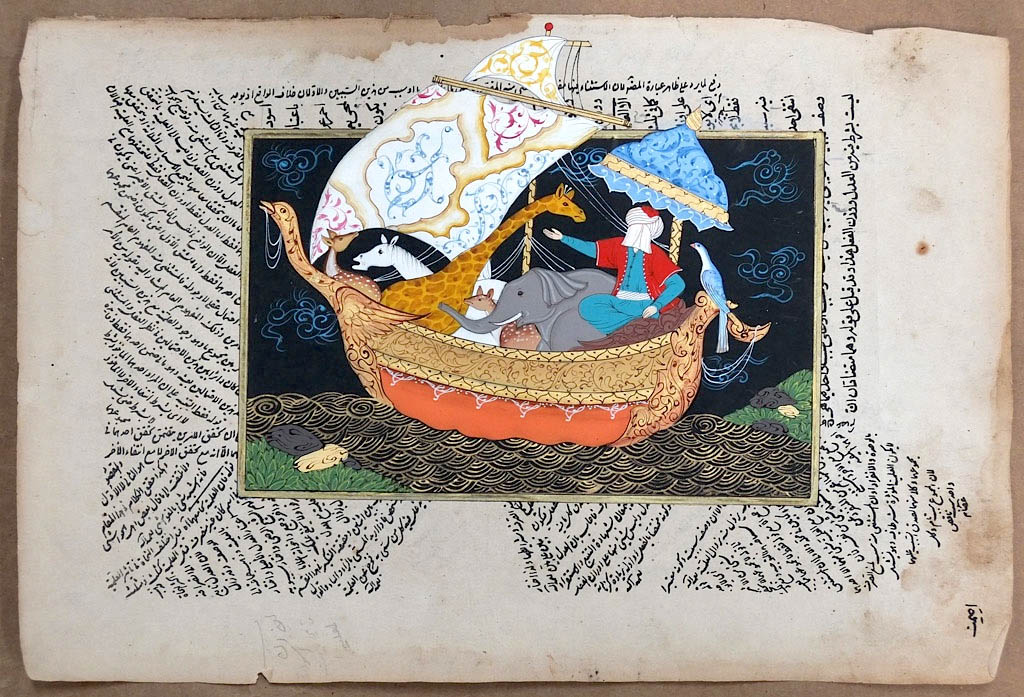
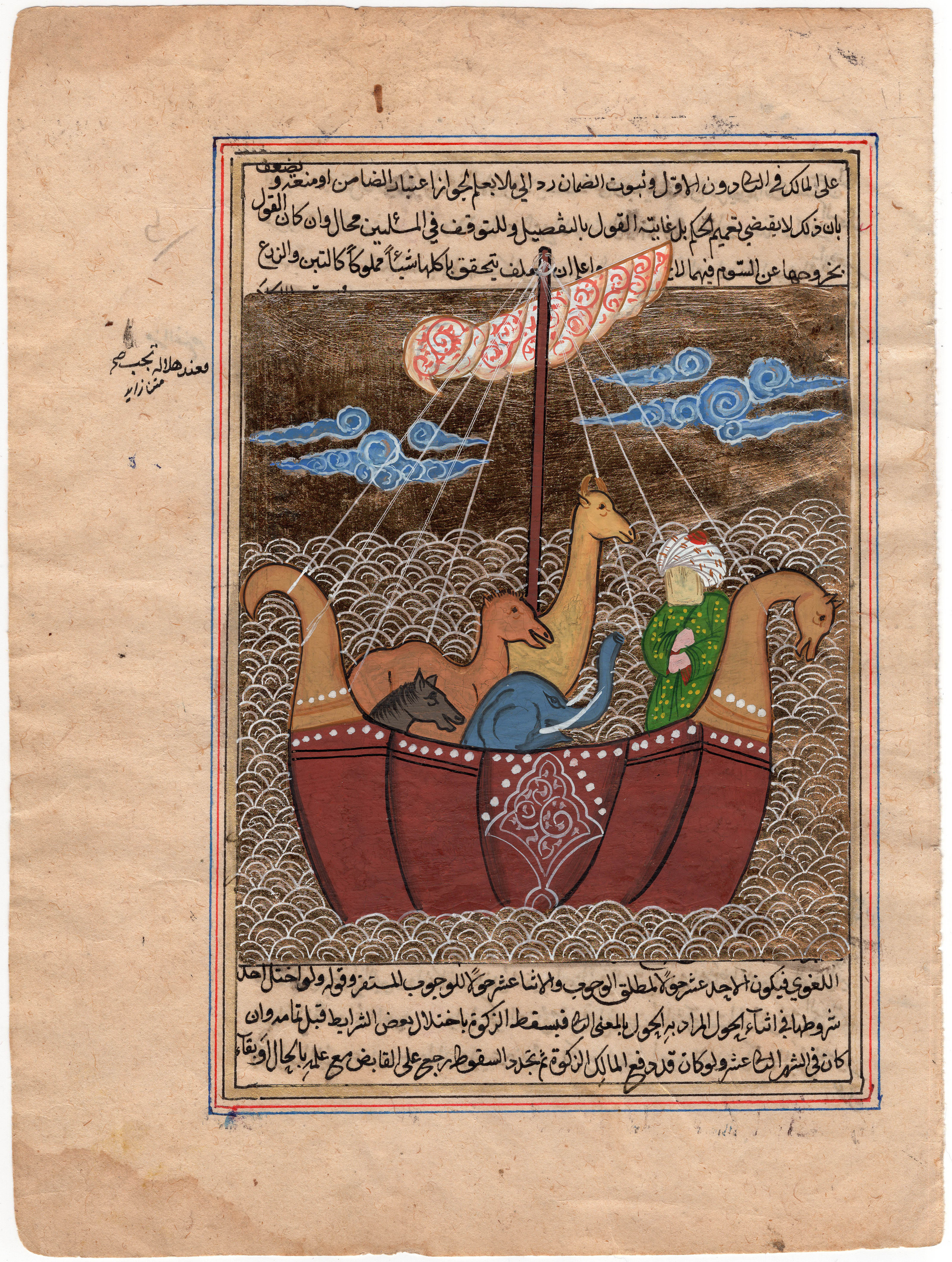
I bought this miniature in the bazaar of Isfahan, in the dim workshop of an old miniature painter, who paints his traditional gold-leaf Persian figures on the pages of hundred-year-old notebooks discarded from the local theology. “Do you know who’s in the picture?” he asked me, scanning my face. “Of course, Nūh, Noah.” “Are you a Muslim?” he asked with happy surprise. “No, masihi am, I’m a Messiah-believer. But every one of us knows Noah.” “Of course,” he said thoughtfully, “since we all come from him.”
Mahsa Vahdat: از دل سلامت میکنمAz del salâmat mikonam (I greet you from my heart). A poem by Jalal ad-din Rumi (1207-1273). From the album امید خفته Âmid khafte (Serene hope) (2017)
The Quran and the Hadith – the collected sayings of Prophet Mohammad – mention in several places Noah, his ark, and the flood once covering the whole earth, which surely embraced the imagination of the inhabitants of the desert. Noah – Nūh ibn Lamech ibn Methuselah –, just as in the Book of Genesis, was a righteous man, to whom God first entrusted prophesy against idolatry, which had become widespread on earth. After trying to convert mankind for nine hundred and fifty years with great patience, but without the slightest success, he finally resorted to Plan B, and brought only his own family and two of every kind of animal on the Ark as propagation material from the former Paradise.
The Quran is better informed than the Book of Genesis – or, as the unbelievers would say, it likes to embroider its sources –, inasmuch it also knows about a fourth son of Noah in addition to Shem, Cham and Yafet. This fourth son, Yam, was secretly an unbeliever, and so at the last moment he leapt from the ark to await the passing of the flood on a high mountain. It did not work. What’s more, Noah’s wife – whom the Quran does not name, but the exegetes know from a certain source that she was called Umzrah bint Barakil – was also a secret unbeliever, so she also missed the ark. In the Islamic exegesis, they are the usual examples to point to, that on the day of judgment everyone will go into the fire of Jahannam for their own sins, and coming from a distinguished or righteous family will not save them.
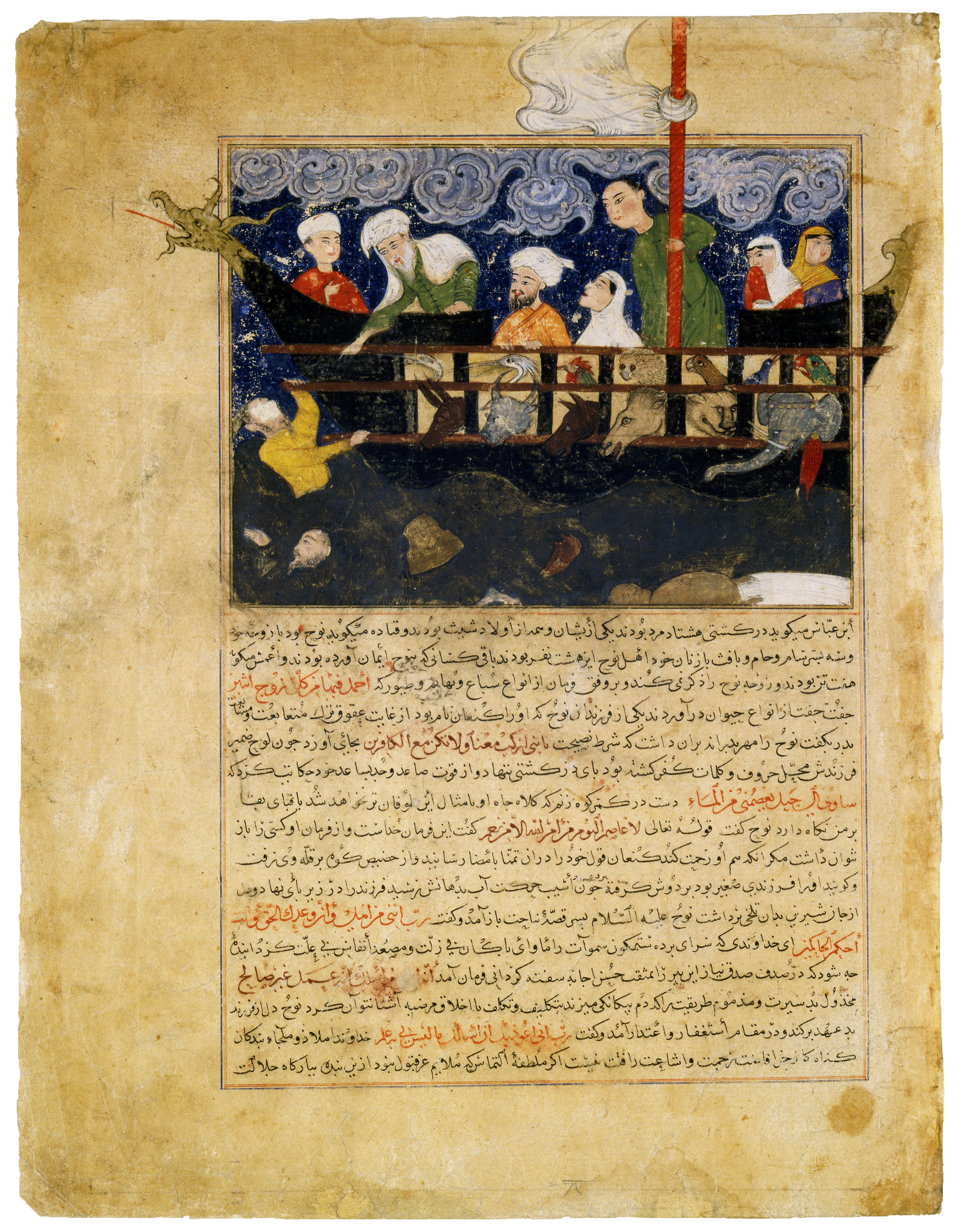
Hafiz-i Abru, Majma al-tawarikh (“Collection of Histories”). Herat (Iran), ca. 1425
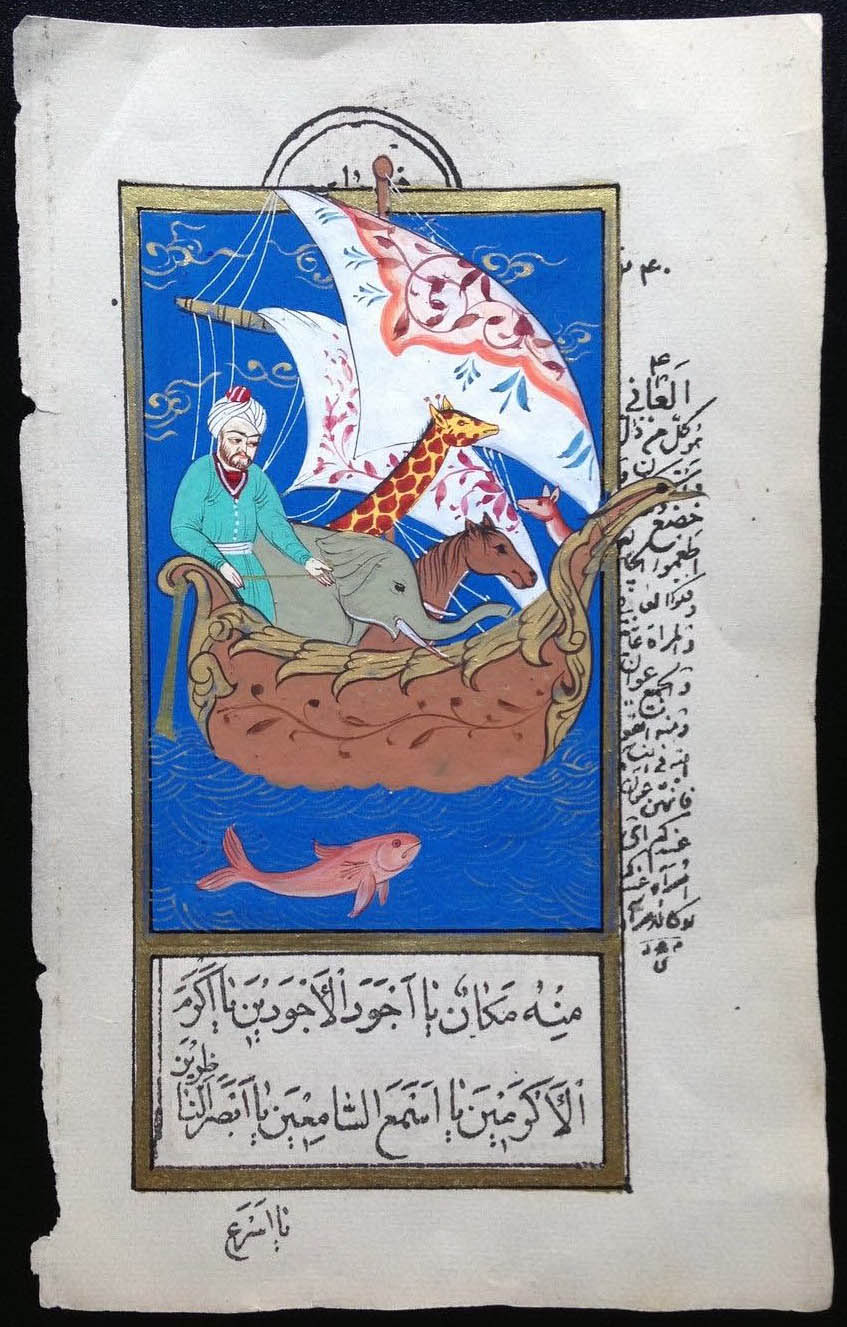
The representation of Noah’s ark became popular after 1501 in Persian Safavid and Ottoman miniature painting. In these pictures, the ark is a lightweight, single-mast dhaw, whose holding capacity would be tested even by a lucky catch of fish, let alone two of each righteous animal on earth. Islamic exegesis, which only accepts literal interpretation, has a hard job of explaining the unexplainable. But Allah is great, and if on the Day of Judgment the righteous will pass over the sirat, the spiderweb bridge, while under the guilty ones even the iron bridge will collapse, so with His will the complete gene pool of the world can fit well in a single-mast shell.
Late 19th-c. print in the synagogue (!) of the Moroccan Ouarzazate
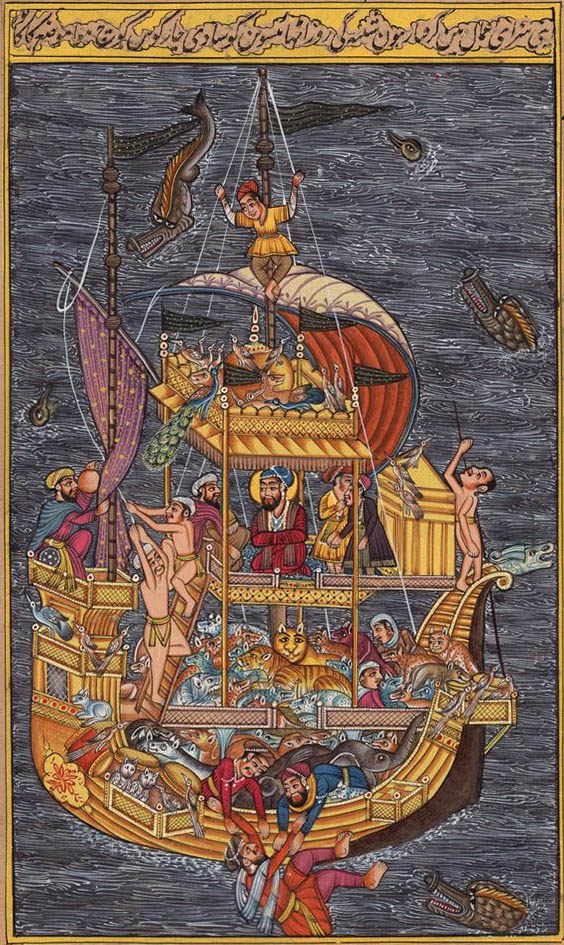
In the Mogul version of Persian manuscripts, the ark is a much more serious construction, a kind of floating entertainment palace, like the ones on which the ruler and his courtiers often went to cruise on the backwaters of the great Indian rivers.
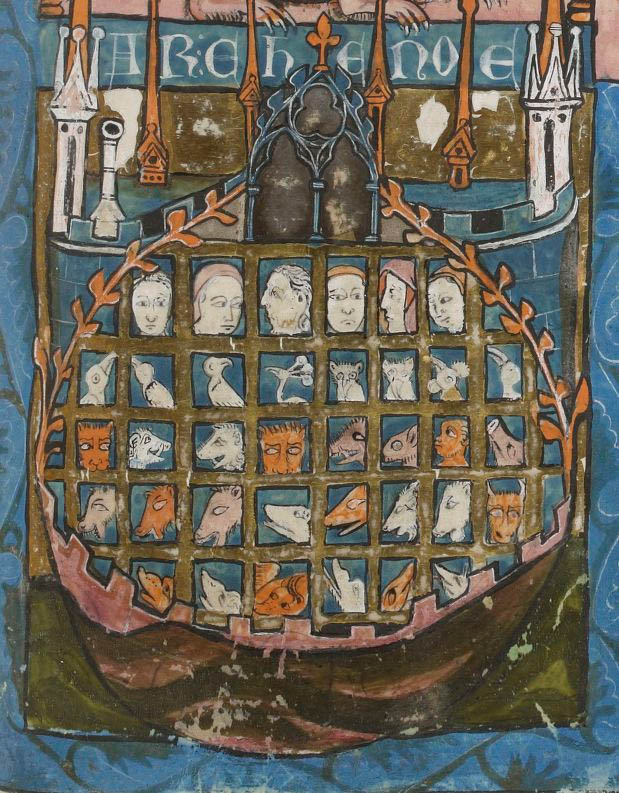
And the medieval European representations of the ark often depict it as a high-rise ocean cruiser. In the spirit of the ancient encyclopedic tradition, the animals are sitting in its infinitely many windows, like they do later on the branches of the tree of evolution.
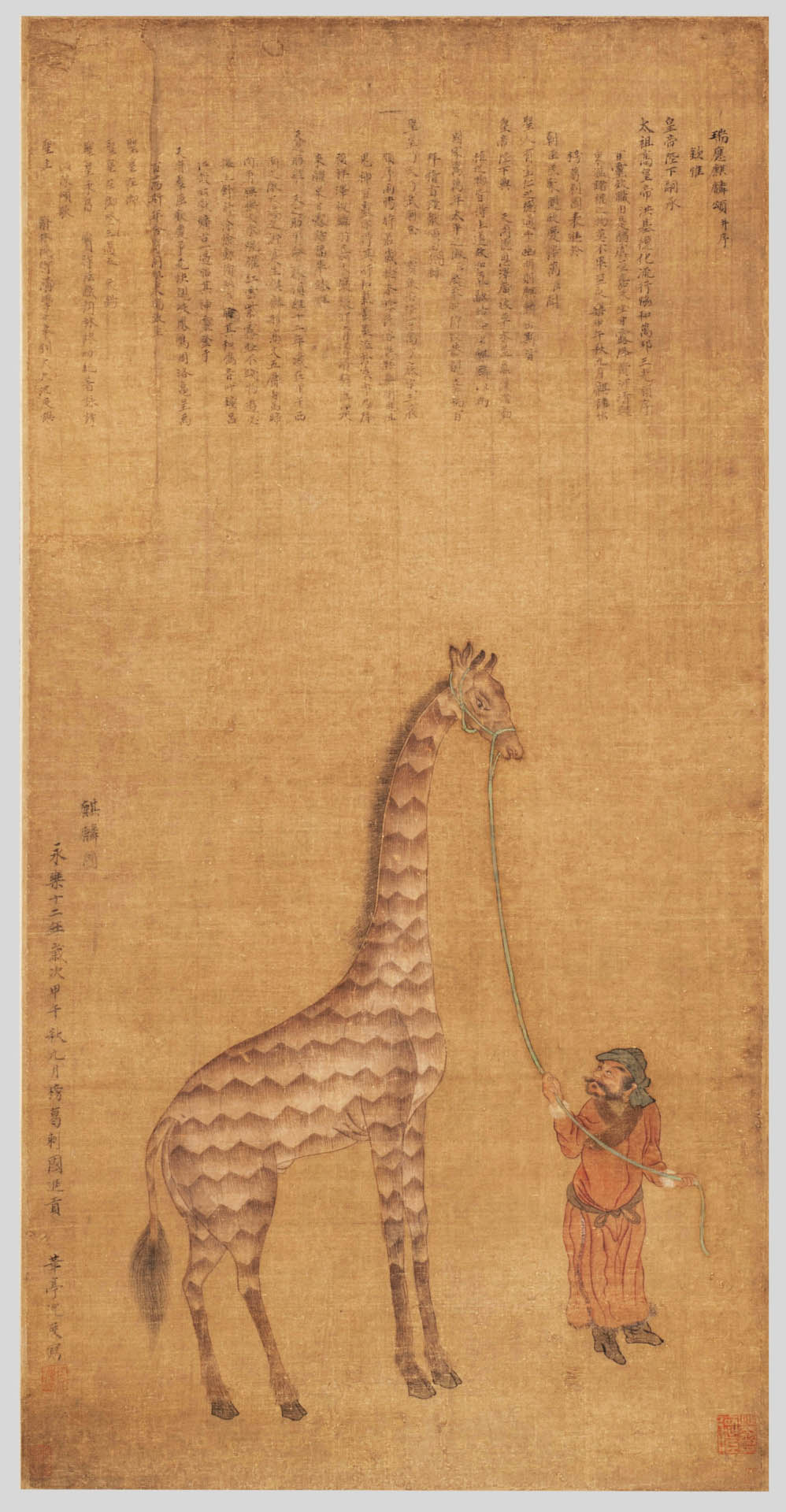
The Persian-Ottoman manuscript tradition does not aim at this completeness. In the little shell, only a handful of animals exemplify the complete fauna of the world, the most common and the most exotic ones. In addition to the horse and the camel, the elephant and the giraffe – this latter being a symbol of Allah’s greatness – evoke the great world, their long neck and muzzle dazzling in one rhythm with the zoomorphic ship’s head and tail. Such animals were seen by the common folk even in Isfahan and Istambul only as a gift of embassies from remote lands. Like the giraffe sent forward in 1414 by the Sultan of Bengal from the gifts of the embassy of Malindi – today Kenya – to Emperor Yongle, and portrayed in an iconic work of ancient Chinese painting.
It is particularly interesting that Noah’s face is covered with a veil, and he also hides his hands in his robe. This is how Mohammed is usually depicted from the late Middle Ages on. In fact, according to the Quran, idolatry is the degeneration of the honor given to outstanding people, whose image usually becomes worshipped. This is why exactly the most excellent ones should not be depicted. This teaching obviously reflects the Christian image cult of the period, and it is telling that while on Eastern Christian icons the face and hands appear uncovered, on the portraits of Mohammed exactly these two parts are covered, as if indicating that only his robe is painted on the picture.
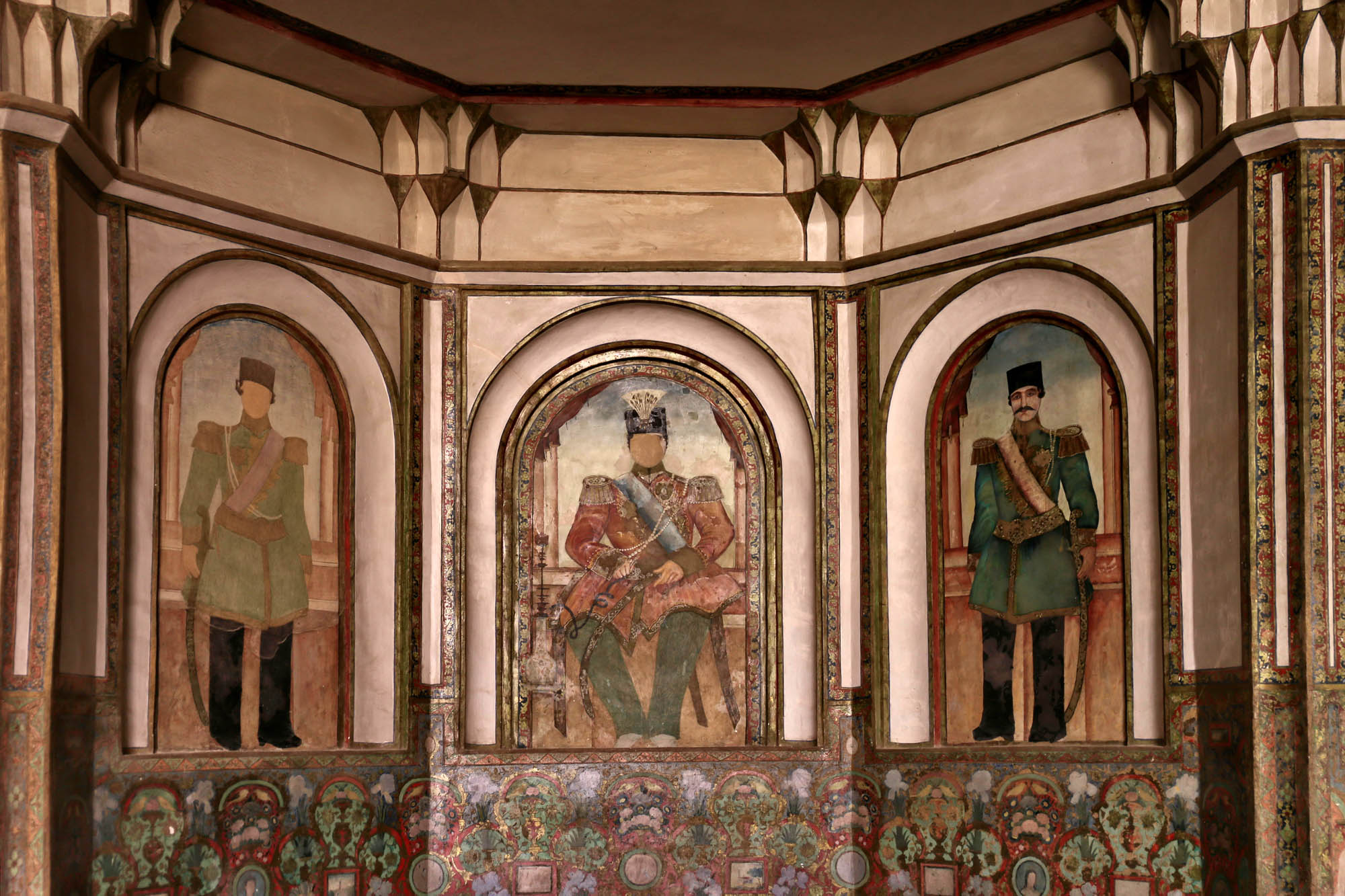
The prohibition of depiction, the face covered with a veil or left empty is sometimes transmitted to other great people, and at the Shiites also to the Imams. In the late 19th-century salon of Boroujerdi House in Iranian Kashan, even Nasreddin Shah and his heir Mozaffar ad-Din are represented in this way. The owner may have thereby suggested to the still very conservative merchants of Kashan, that in spite of all his devotion to the Shah, he will not fall into the sin of his worshiping.
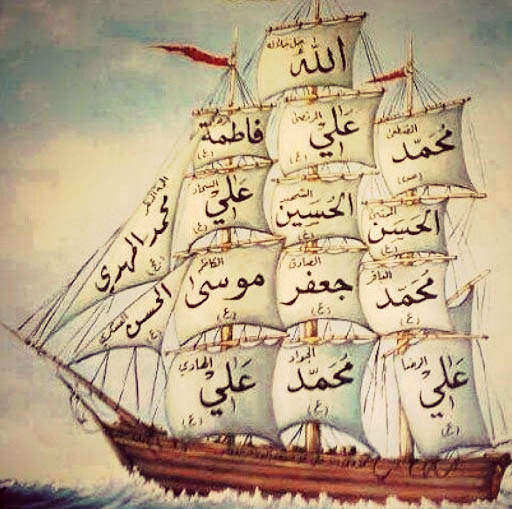
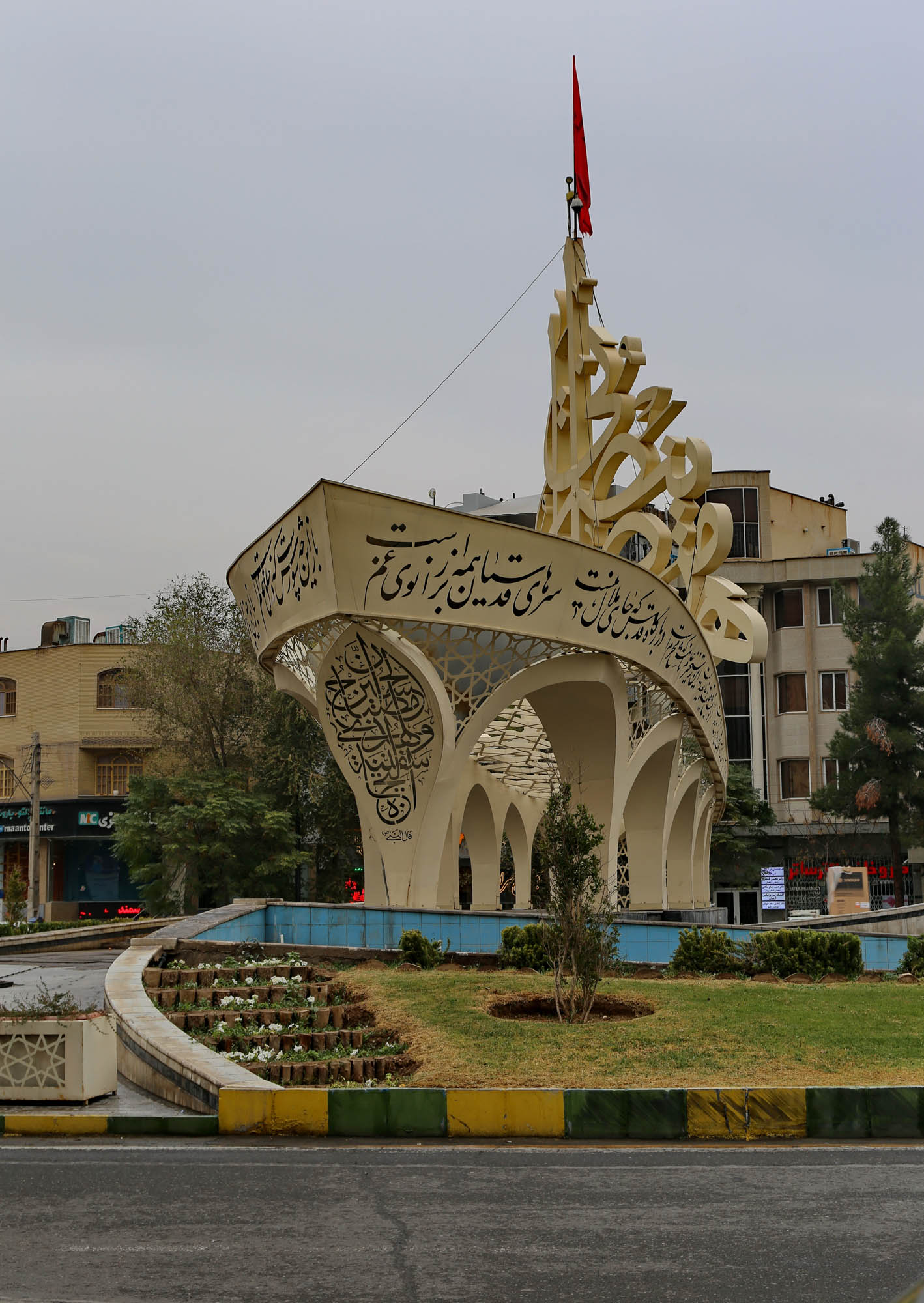
Perhaps this is why Noah is also veiled on many pictures of the Ark. But there is also another possibility. Namely, that the veil refers to Mohammed. For among the sayings attributed to him by the Shiites is: “Behold, my house is like the ark of Noah. Those who embarked it, were saved, but those who turned away from it, perished.” In the Shiite interpretation, the house of Mohammed – Ahl al-Bayt – includes his daughter Fatima and his son-in-law Ali, as well as their sons, Hassan and Hussein, the first imams. That is, all those who were persecuted, killed, and even cast out of their holy tombs by the Sunnis, and whose throne has since been occupied by Sunni usurpers. This is the reason for such Persian pictures of the ark, where the sails have the names of the members of the House, and above them, that of Allah.
“The boat of the Prophet’s family”, modelled after Noah’s Ark, with a sail shaped from the names of the Five Saints (Mohammad, Fatima, Ali, Hassan and Hussein) in Kashan’s Imam Hussein Square
The extremely popular legendary collection Qisas al-Anbiya (“Stories of the Prophets”) tells a Shiite story, in which the angel Jebrail (Gabriel) brought 129 thousand nails to Noah for the preparation of the ark. Noah diligently drove them all in, until only five very bright nails were left, each with an unknown name on it. He asks about them one after the other, and Gabriel explains one by one, that the nails symbolize the five great forthcoming figures of the Ahl al-Bayt, from Mohammed to Hussein. The nail of this latter is covered with blood, foretelling his bloody martyr death suffered by the hand of the Sunnis in the Battle of Kerbala.
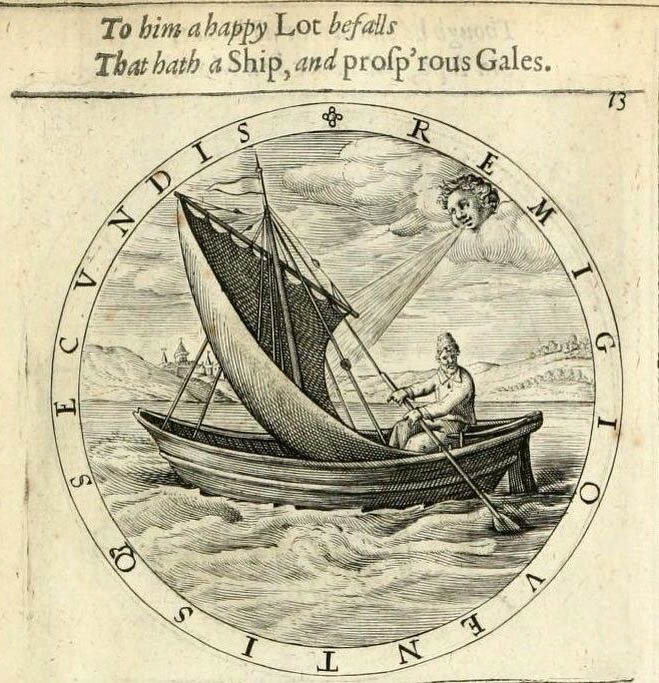
It is no coincidence, then, that Noah and his ark become popular in Persian miniature painting just after 1501, when the new Safavid dynasty introduces Shia as the state religion, and support the cult of images that elevate it above its Sunni counterpart. And thereby – just as we have seen before, in the symbol of the butterfly and the candle – they create the Oriental counterpart of a European emblem. This is the symbol of the ship, which surely advances even in the greatest storm, since a righteous man is sitting at its rudder, and the Lord is its protector.
George Wither, A Collection of Emblemes, 1635, Emblem 1.13.
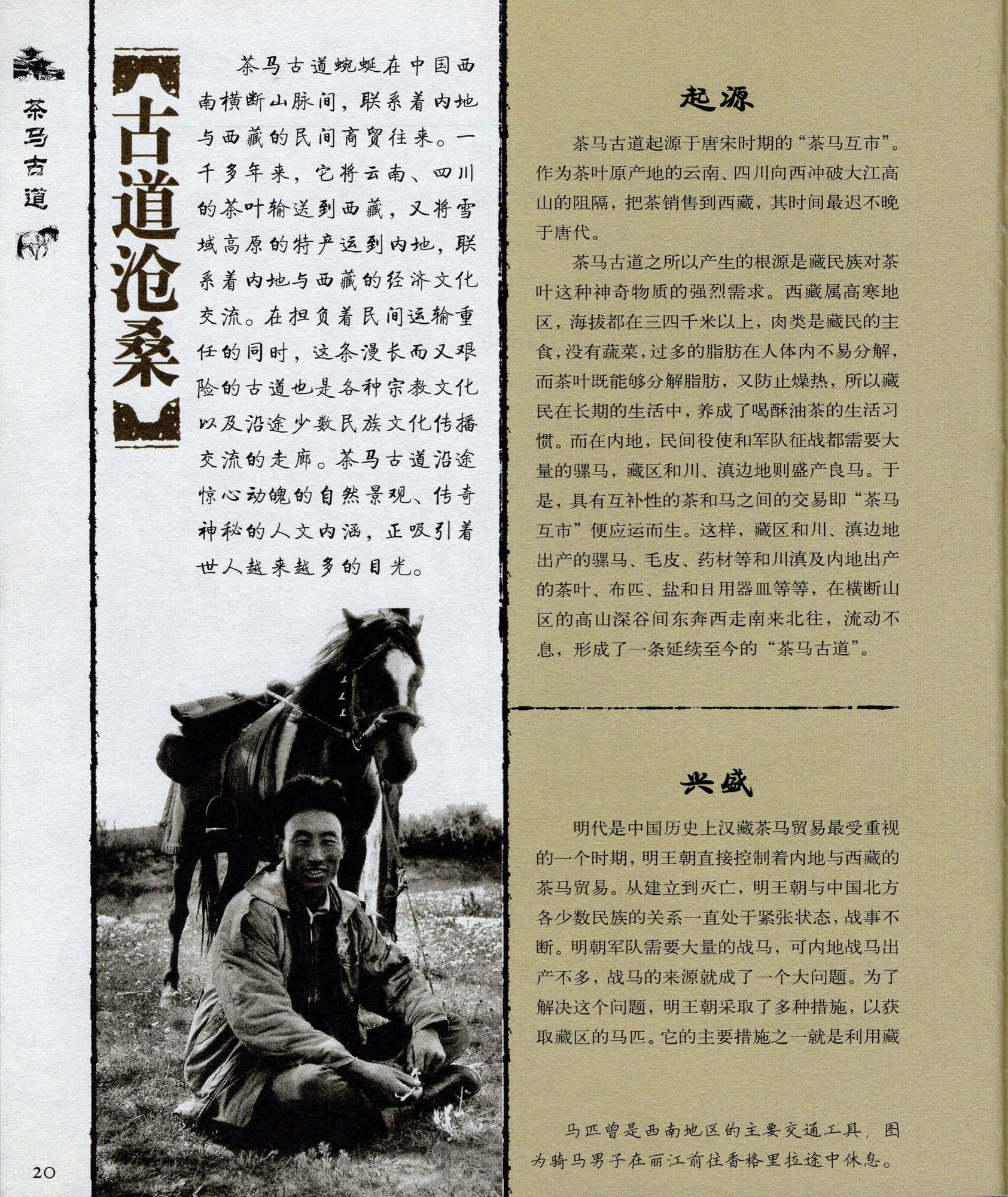
First page of the guidebook 古茶马道 Gŭchàmădào, “The tea-horse-road”
The tea-horse-road beneath the Himalayas, on which tea was carried for five thousand years from southern Yunnan to the north, the Tibetan capital Lhasa, and gorgeous nomadic horses to the south, to the courts of the Tang Empire, the Nanzhao Kingdom, and the local landlords, only stopped for a moment in 1949, with the Maoist takeover. Nowadays it starts again, today only for gourmets yet, but surrounded by a growing interest. The small towns along the road, like Sleeping Beauties for seventy years, still look like after the passing of the last tea transport to the north, of the last herd to the south. To this journey we invite our readers in this November, when the weather is the most optimal in the subtropical Yunnan, and we can best travel across the central part of the former route, which is the richest in historical monuments.
From Europe we will arrive with a couple of transfers, in about one day, to Dali, Yunnan’s second center, the capital of the two-million-strong Bai people (proposed to the World Heritage List). The beautiful traditional old town lays on the shore of Lake Erhai, surrounded by the foothills of the Himalayas. The ancient Bai people were among the most important merchants of the tea-horse-road, so after visiting Dali, we will spend the second day in Xizhou (the “zhen” endings on the map mean “walled old town”), the best-preserved old Bai merchant town a few miles to the north along the shore. The trade of the entire Chinese Silk Road was in the hands of the Muslim Hui diaspora, and we will also visit their mosques and excellent small restaurants. Our hotel in Dali – just to enhance diversity – will be in Yahveh Hotel, operated by Chinese Catholics from Beijing in the former monastery of the still functioning Catholic church, built hundreds of years ago by Catholic monks in traditional Chinese style.
From Dali we go through the foothills of the Himalayas, along breathtaking mountain roads, to Nuodeng, an important branch of the tea-horse-road, still in Bai territory. The salt needed to provide for the large number of horses was mined here, in Nuodeng, which was thus a kind of free royal town, similar to the Transylvanian salt mine town of Szék. In the 1400s the beautiful small town was melted by the Ming Dynasty into the empire, and then, having lost its significance, it stopped in time, preserving its former richness, its temples, its shops, its airy aristocratic houses, one of which will be our hotel for two nights. From there we visit the surrounding ancient small trading towns, like Baofeng, and the stunning mountain range.
From Nuodeng we come back on long, winding mountain roads, through passes, along river valleys and next to thousand-year-old bridges to the main line of the tea-horse-road, to Shaxi, the best preserved merchant town of the old caravan route (proposed to the World Heritage List), the center of the Yi people. We walk around the city, visit the medieval monastery and the Qing-era theater, and make an excursion to the 8th-century Shibao Monastery in the nearby mountains, the royal sanctuary of the former Nanzhao kingdom, the historical core of today’s Yunnan, which, until the 1300s, was a country in a par with China and Tibet.
From Shaxi we go over to the headquarters of the once powerful Naxi people, to Lijiang, “China’s Venice”, a thousand-year-old town permeated by three main rivers and many side-branches (World Heritage Site). This town, the richest one in historical monuments on our route, is completely bilingual: everything is written both in Chinese and in the Naxi people’s own thousand-year-old hieroglyphic script, which was also declared a World Heritage Treasure in 2005. From here we go to visit the old Naxi merchant town of Baisha, or one of the deepest canyons of the world, the Tiger Leaping Gorge along the upper reach of Yangtse (part of the Three Parallel Rivers World Heritage Site), where we do a whole-day excursion. Not by walking which is only for experienced tourists (22 kilometers, up 1000 down 800 meters), but by bus, nevertheless going up to important viewpoints. On the last stop of the road we sleep in a particularly nice guesthouse. The next day we return to Dali, and from there to the airport, heading either home, or, if you want to venture a bit more in China, to the site of your new adventure.
So many people are interested in this road, that we must organize it twice, both times with about 18 participants. The first one is more or less complete, but in case of cancellation there may still be places in it, and the second is still open. The dates of the from Dali to Dali ten-day-plus-two-half-day tour are 4 to 15 November, and then 15 to 26 November, to which you should add one day travel there and one back, thus two weeks altogether. I can also give suggestions to those who, after the trip, want to further venture in China. The flight ticket from Europe to Dali on the above route is about 670 euro, and the participation fee 1000 euro, which includes accommodation with breakfast, domestic travel by rented bus or off-road vehicles (or on some tracks with public transport), and the guide. As for accommodation, it is important to draw attention to the fact that, as tourism is still in its infancy in many parts of this region (in some villages, in fact, I was the first foreigner they have ever met), thus comfort is also not always what we are accustomed to in Europe. For example, in Nuodeng they already have European bathroom and WC, but only three ones for eighteen persons in the whole hotel. Nevertheless, this hotel is the former home of a 14th-century aristocrat, preserved as it was, with the utmost convenience. If you are interested, write until 25 August, Friday, at the usual wang@studiolum.com.
Our partner blog, the Dunai Szigetek / Donauinseln is eight years old today. We celebrate the birthday with a post of the blog’s author, Dániel Szávoszt-Vass, specifically written for Poemas del río Wang.
It is an eternal question, how good is it for a community existing in blissful ignorance, when the wider world finds out about its existence, and hordes of tourists are attracted for a visit? For such isolated communities, one does not need to go as far as Papua New Guinea. You can find similar ones even in Hungary. What is more, one lies just seven kilometers from Budapest.
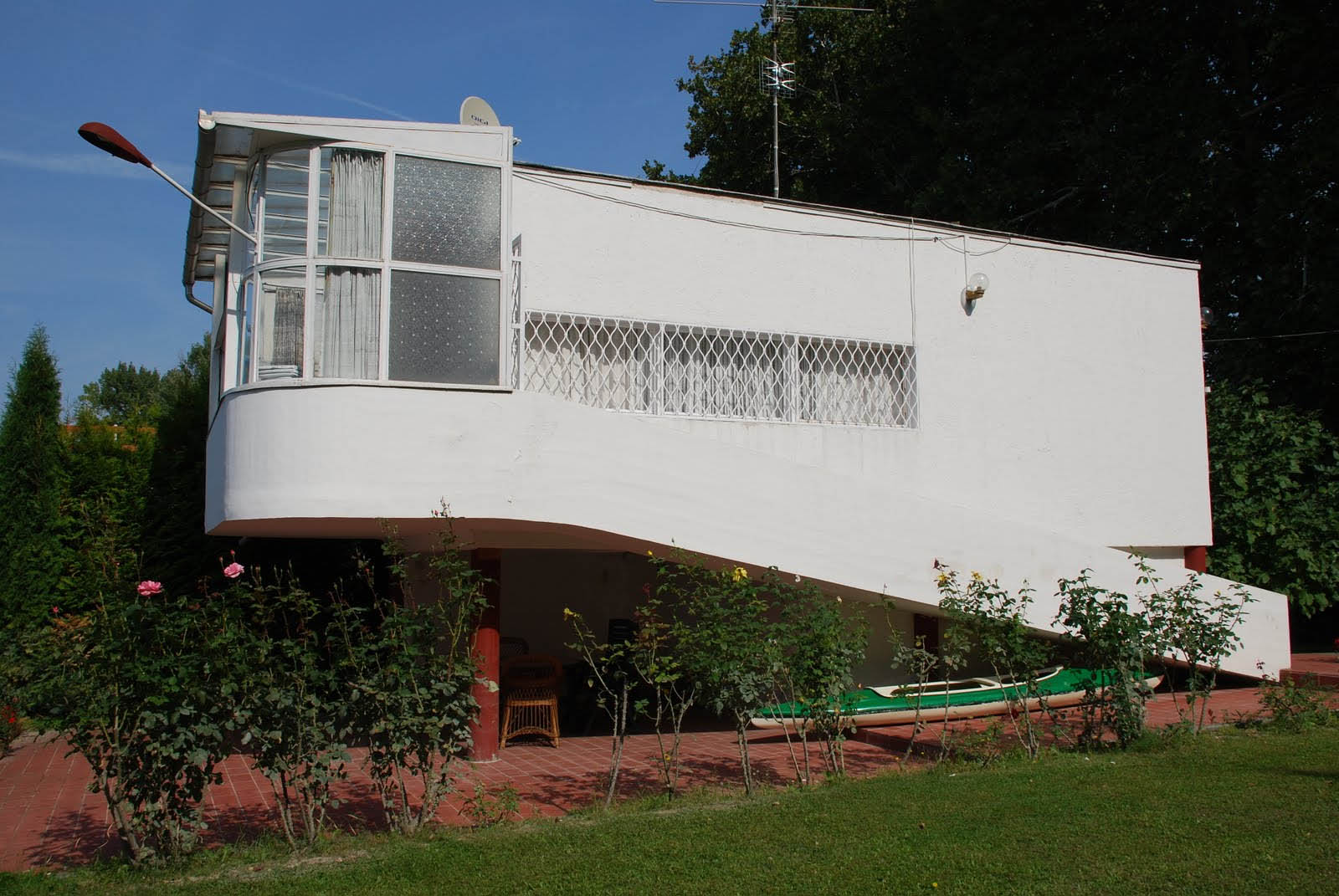
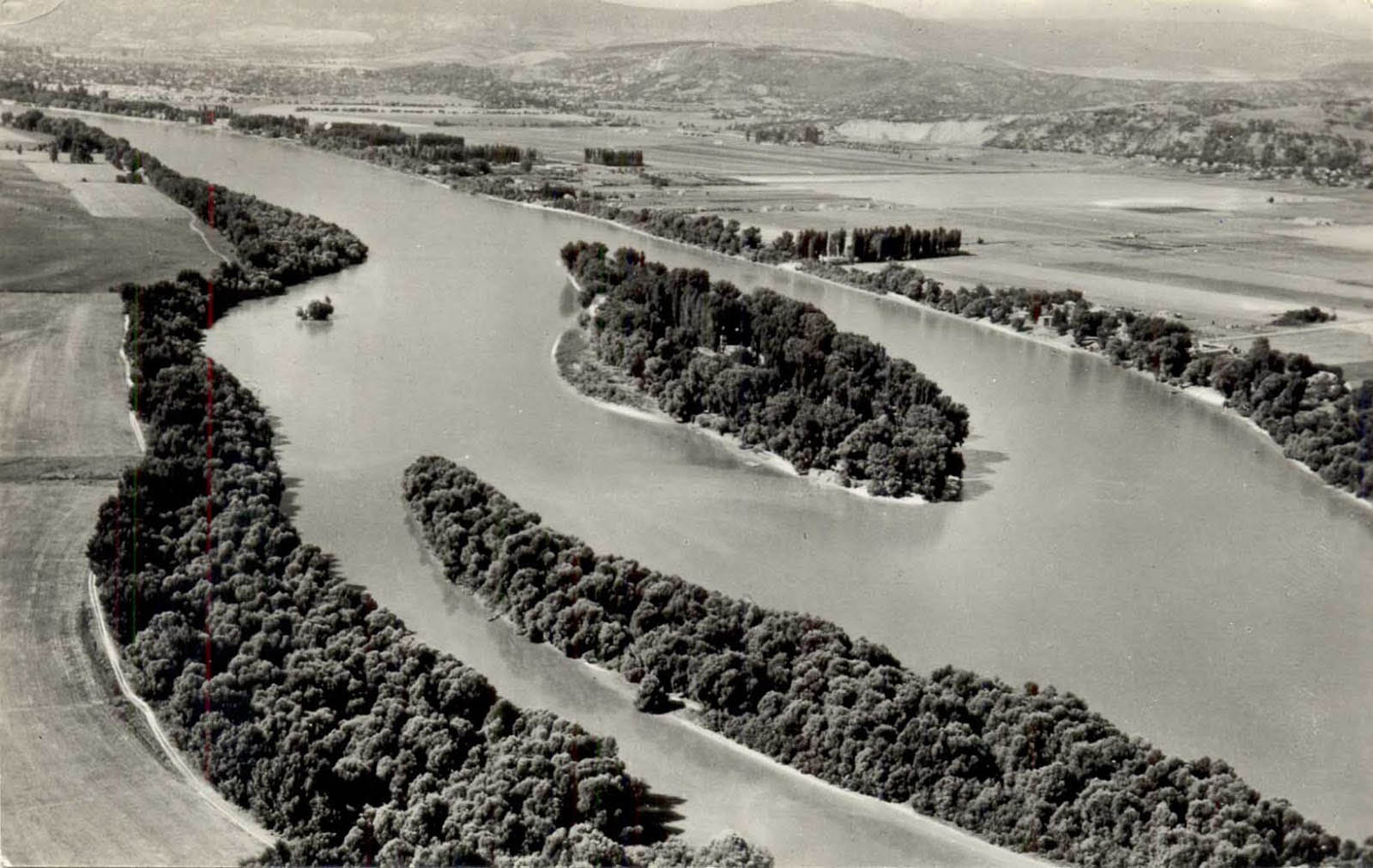
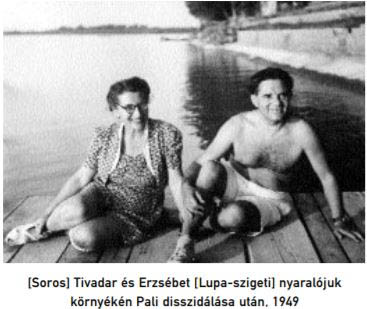
In Luppa Island near Budakalász, parceled between the two world wars, a unique architectural environment and micro-society emerged. In 1932, just a year after the inauguration of the experimental housing estate in Pasarét in the north of Budapest, the other Bauhaus reserve of Hungary was established here, on a one-street island in the Danube. Military officers, manufacturers, lawyers, architects, artists bought land here and spent their summer holidays in their cottages standing on high “legs”. The lawyer Tivadar Soros (originally Schwartz), father of George Soros, also bought here a cottage in the name of his wife.
Until it was parcelled, Lupa or Luppa Island was just a boulder with some lonely trees and a shepherd’s hut. Perhaps this is why it was called Mészáros (Butcher) Island. Administratively it belongs to Budakalász, but it is almost completely isolated from it by the Danube. It can be approached only across the water. It is completely covered during larger floods, so it is no accident that the airy ground floors of the cottages are primarily used for storage. During flooding, probably the inhabitants of Luppa Island are the most assiduous visitors of water level reporting websites.
In summer, Luppa Island is full of life. The surrounding Danube roils with motorboats, tugboats and oher hand-driven watercraft. On the shore, clouds of cyclists are wafted by the wind to the north, Szentendre and the Danube bend. Meanwhile, Luppa Island, nestling in the shadow of mighty plane trees, is filled with the noise of tinkering. The owners repair the damage from the spring flood, clear off driftwood, in order to prepare everything to receive family members and their guests during the summer. Not many unknown people visit the island. A few canoes stop here for a beer or for lunch, but they usually do not stay there for a night. They also feel that this is still a closed community.
A study by Bálint Ablonczy reports about the beginnings of the settlement in the island:
“On the 6-hectare island, 160 plots were parceled, each between 2700 and 8000 square meters. At the beginning, not all plots were sold, and the new owners built houses only on a few of them. (Some owners bought more than one neighboring plots.) The average plot size varied between 3000 and 4000 square meters, for which the buyers paid between 1200 and 1800 pengő. If they wanted so, they could also pay in installments. [...]
By 1941, 33 houses were built in the island. Their number rose only by two by 1947, but five of them were in ruins – not so much because of the destruction of the war, but due to the overwhelmingly devastating ice flood at the turn of 1944 and 1945. The first cottages already stood in 1934, and at the end of that year, the Budakalász-Lupasziget Baths Association was established in Fészek Club.”
The 33 cottages built before 1941 also included the holiday house of the Soros family, designed by Endre and György Farkas. The Budapest lawyer Tivadar Soros was born in Nyírbakta, to a family of ten children, and later died in New York. He was a famous Esperanto enthusiast. He had learned the language during WWI in Russian captivity. He also wrote in this language his memoirs, which contain many references to the summers spent in Luppa Island. Just like many other cottage owners, he bought the plot in the name of his wife. The Bauhaus-style Soros Cottage was completed in 1935. His designer, György Farkas had been acquainted with Tivadar Soros in Berlin, and later he married Klára, the sister of Soros’ wife Erzsébet. The two tennis courts in the island were established on the proposal of Tivadar Soros. The cottage was owned by the family until 1944. Then Soros donated it to a certain Hászka, in whose villa in Buda he was hiding during the Nazi occupation and the siege of Budapest, together with the famous architect Lajos Kozma, who was also a cottage owner in Luppa Island.
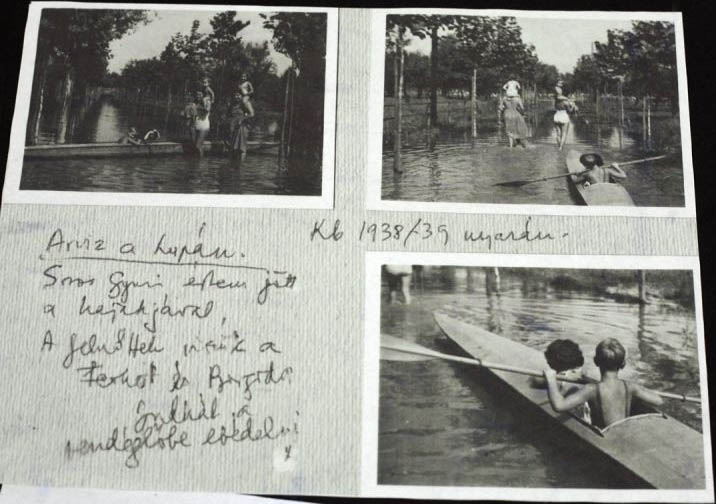
George Soros, born in 1930, also often spent the summer vacation in Luppa Island. It was not only a holiday, but also “work”. He established a newspaper, of which he was the author, editor, reporter and distributor. The periodical was called the Luppa News. And in times of flood, he sat in a kayak, and slalomed between the recently planted plane line, as evidenced by the following images.
“– Gyuri! – I tell him strictly. – What does this mean? What do you want here with this big money? A light flashes in the two angelic whimsical eyes. – I brought it to the Finns. They are fighting a freedom fight now. Daddy said. I put Gyuri under gritty cross-questions. He patiently replies to the questioning. The money belongs to him. No, he did not get it from his dad. Neither from his mom. It is his. He earned it. How? In the summer. Because in the summer he is a newspaper editor, publisher and paperboy in one. They spend the holidays on Luppa Island. And then he composes a newspaper, the «Luppa News». He is the only journalist, editor, reporter and paperboy of the news. As if he is a chamber member? No, no. In any case, the newspaper was mainly bought by the adults, since children do not have money. He, however, can earn money in this way. Until now he kept the two banknotes, put aside for Christmas, in a plaster money box. One can even see the plaster dust on the crumpled banknotes. He broke the money box, and brought the money. To the Finns. Gyuri Soros, a fourth elementist, who had five B marks in his recent certificate, this apple-faced smiling little guest, the all-in-one editor-in-chief of Luppa News, the golden-hearted little Hungarian calms down, when we take over his gift. Then he closes his pen holder, he says good bye, reaches up to the door handle, and goes home.”
„Soros Gyurka adakozik” (Gyuri Soros donates). 8 Órai Újság, 23 December 1939. Quoted by Béla Nové
Gyuri’s mother was also not idle. She opened a confectionery on the ground floor of their cottage, since she had studied pastry at the renowned Gerbeaud. She obviously did not base her business on local demand, since 33 families on holiday could have not keep it alive. The world of the rowers, buzzling all over the summer, presented a greater demand. The confectionery was an interesting island of social equality, where the high bourgeois served the rowers belonging to the most various social classes. The rest of the cottage owners were not so sensitive to equality, and they asked the Soros family to pay more into the common cash because of their industry.
WWII and the icy flood of 1945, and then the nationalization of the buildings caused serious damage both to the buildings and the micro-society coming together in the summers in the island. Despite the nationalization (and then restoration) of the cottages, the extinct high bourgeoisie and the M0 bridge monster pulled on its neck, Luppa Island is still a delightful and special relic of the Danube.
Literature:
Soros Tivadar: Masquerado. Dancing around death in Nazi Hungary. Canongate, Edinburgh, 2000