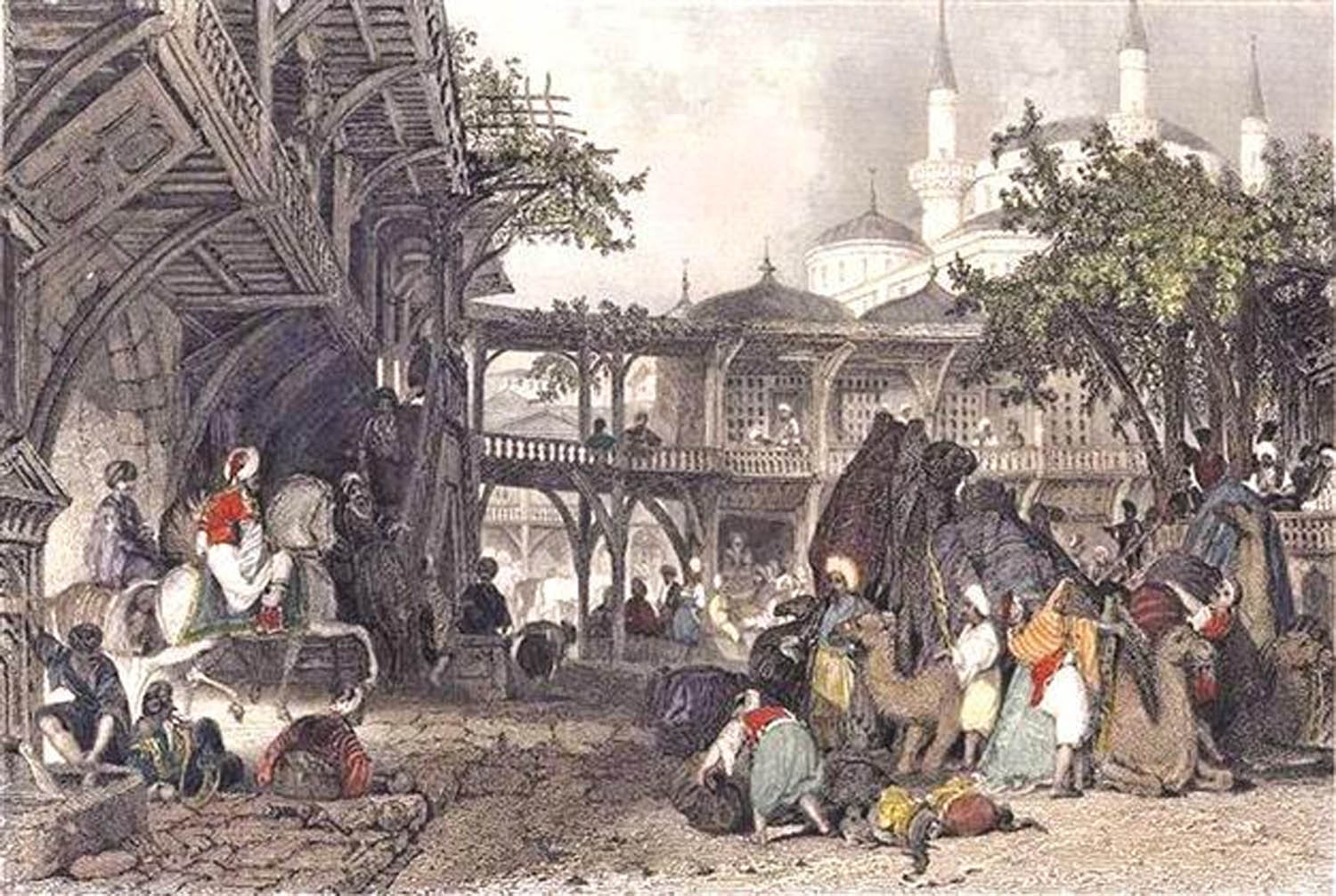
 Han in Aydın’s Güzel Hissar neighborhood. Robert Walsh – Thomas Allom, 1836
 The first caravanserais in Anatolia were built by the Persian Empire. Herodotus (5.52), as a well-informed Persian subject, describes in detail the road from the Ionian coast to the capital, Susa, “along the entire length of which royal stations follow one another, with excellent resting places”. He counted one hundred and eleven of them on this road alone. For “resting place”, Herodotus uses the word κατάλῠσις, which comes from the verb καταλύω, ʻdissolve, scatter’: a place where the guest can relax and spread out his luggage. Modern Herodotus editions translate this with a term a thousand years younger, ʻcaravanserai’, which comes from Turkish kervansaray, and means “a palace of caravans”.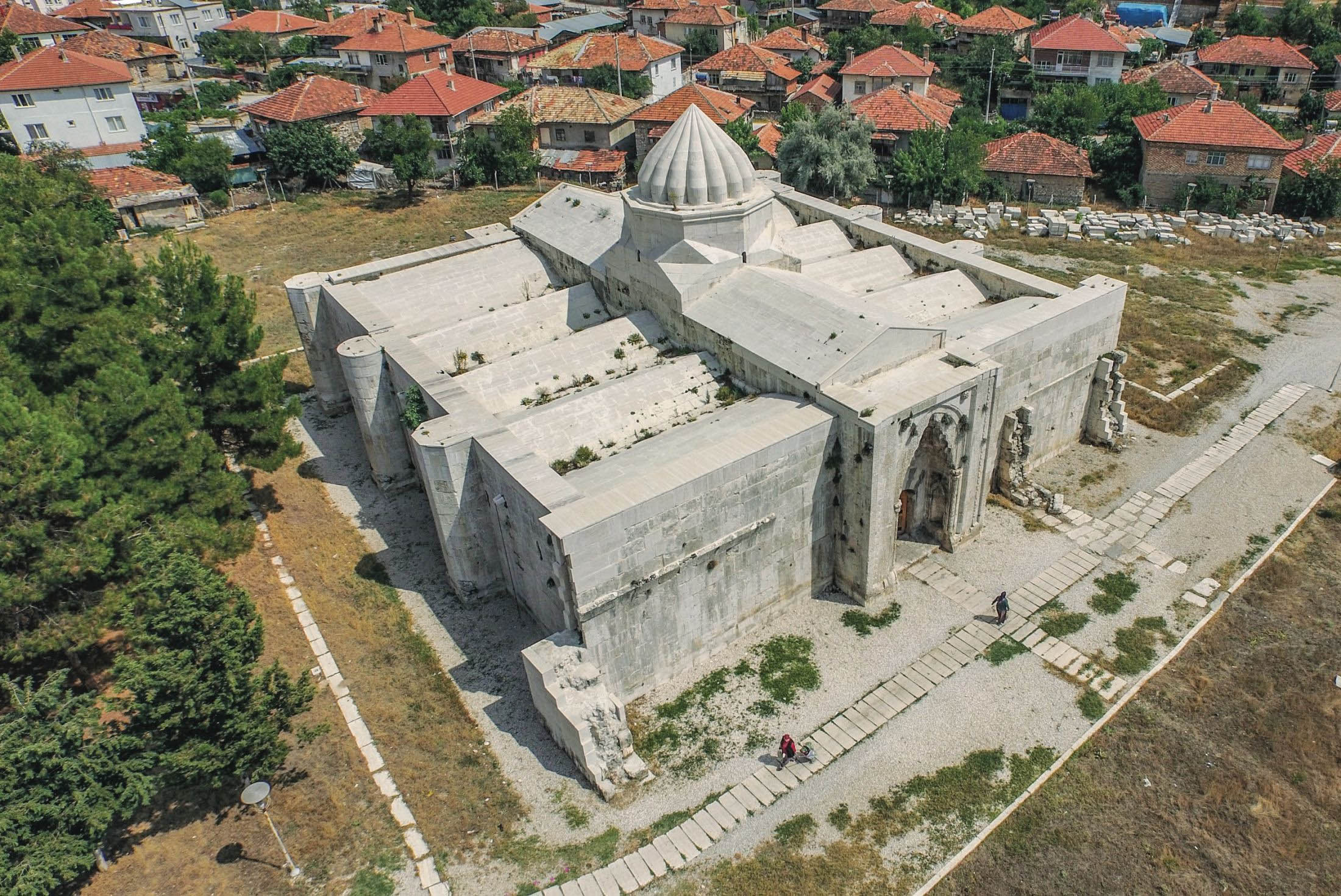
 A palace of caravans: the Seljuk Turkish Susuz caravanserai (1244-46) along the Antalya-Burdur road
The first caravanserais built in Anatolia by the Seljuk Turks, who inherited the legacy of the Persian Empire, were indeed palaces, and even forts, designed to protect passengers and their precious cargo from robbers, the distance of a day’s walk between them – about 30-40 kilometers – on roads across uninhabited lands. In the cities, however, a less fortified version of them took hold, which were called han from the Persian خانه khâne, ʻhouse’. Their main purpose was not for protection against armed robbers – although their gates were closed for the night –, but rather to offer a comfortable long-term stay to merchants with their animals and servants next to the bazaar, where they could also present their goods to wholesalers. Their basic structure is demonstrated by one of the earliest and best-preserved examples,
the 16th-century Hasan Paşa Hanı in Diyarbakır, Eastern Anatolia. The rectangular building has two floors. On the ground floor were the stables and warehouses, and on the first floor the rooms for the merchants. The rooms were relatively small, but on the upstairs corridor in front of them there was large room where the merchants could display their merchandise samples to the city’s wholesalers. Sometimes there was also a third floor where the servants stayed. Usually every floor opened with arcades onto the large courtyard, where there was a fountain for watering animals and ritual washing, wagons and animals loaded with goods went in and out, and various magicians, karagöz puppet theaters, picture-showers and other showmen entertained the guests and the inhabitants of the city.
In Constantinople, the hans became established much later than in Eastern Anatolia, only in the 16th century. The axis of the Byzantine capital was the Mese leading from the imperial palace to the forum, the scene of royal processions and rituals. When, in 1453, Mehmed II marched into the conquered city, and decided to make it his capital, he turned away from this axis, and began to lay the foundations of the sultans’ capital in the north: first his palace Aksaray (which he would change for today’s Topkapı Sarayı only in the 1460s); and then, as a center of commerce, the covered “department store” for the sale of precious textiles,
the Iç Bedestan. This latter became the center of the Grand Bazaar. Around it, more stores gradually developed in concentric circles, which would be vaulted in 1701 by Mustafa II, thus creating the Kapalıçarşı, the Covered Bazaar. To the north of it, between the bazaar and the harbor, a multitude of hans were built for the merchants flocking from all over then empire to the capital. In the 1630s, Evliya Çelebi counted one hundred and eighty of them, but by the early 19th century there were more than five hundred. Later, with the wane of caravans, their number also started to decrease. Their most important period was the 18th century, when the sultans and grand viziers built the largest hans to promote trade and increase the wealth and authority of the dynasty.
Still existing hans in Istanbul’s “historical peninsula”, traditionally known as Stamboul
The majority of the hans were built as a part of a charitable foundation, and their revenues – the room rents – covered the foundation’s charitable institutions, the free kitchens (imaret), theological schools (medrese) and hospitals (darüşşifa). The founding charts (waqfiyya) of the foundations (waqf) always indicate the beneficiary of the han’s income, naming the institution, and in this way invisible connections and interesting stories connect a han with a mosque or a mosque complex (külliye) with a renowned founder.
 The small Ali Paşa Han, for example, in the outskirts of Eminönü, which faithfully follows the classical two-story model, was built by Çorlulu Ali Paşa during his time as Grand Vizier (1706-1710). Its founding charter did not survive, but presumably it was connected to the grand vizier’s only large foundations, the Çorlulu Ali Paşa mosque complex along the Mese. The han’s proceeds may have served the complex theological school, Çorlulu Ali Paşa Medresesi, which by now has changed function, and has become one of the best hookah cafés in Istanbul. I doubt that the earlier theology students would have objected this change.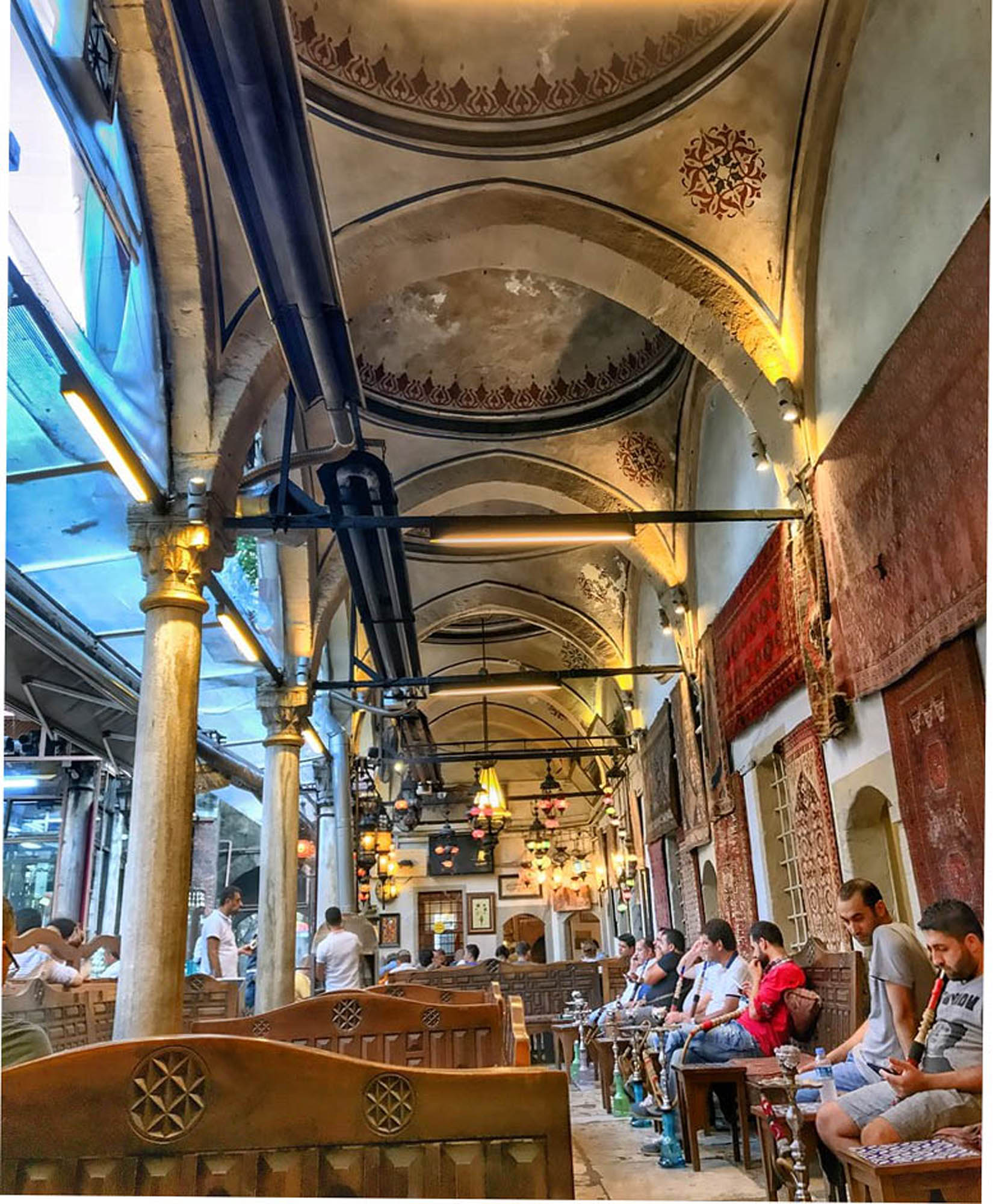
Nor could Ali Pasha himself have objected to it either, for he underwent the usual fate of the grand viziers. After the battle of Poltava in 1709, where Peter the Great of Russia won a decisive victory over the Swedish army of Charles XII, the Swedish king fled to the Ottoman Empire, where he sought to persuade the sultan to declare war on the Russians. Ali Pasha was reluctant to do so, and history has justified his wavering, as the Russo-Turkish wars that were about to begin, lasting for more than a century and half, ultimately leading to the collapse of the empire. However, the sultan believed Charles XII’s accusations that Ali Pasha had been paid off by the Russians, and sent him to the island of Lesbos, where he was executed.
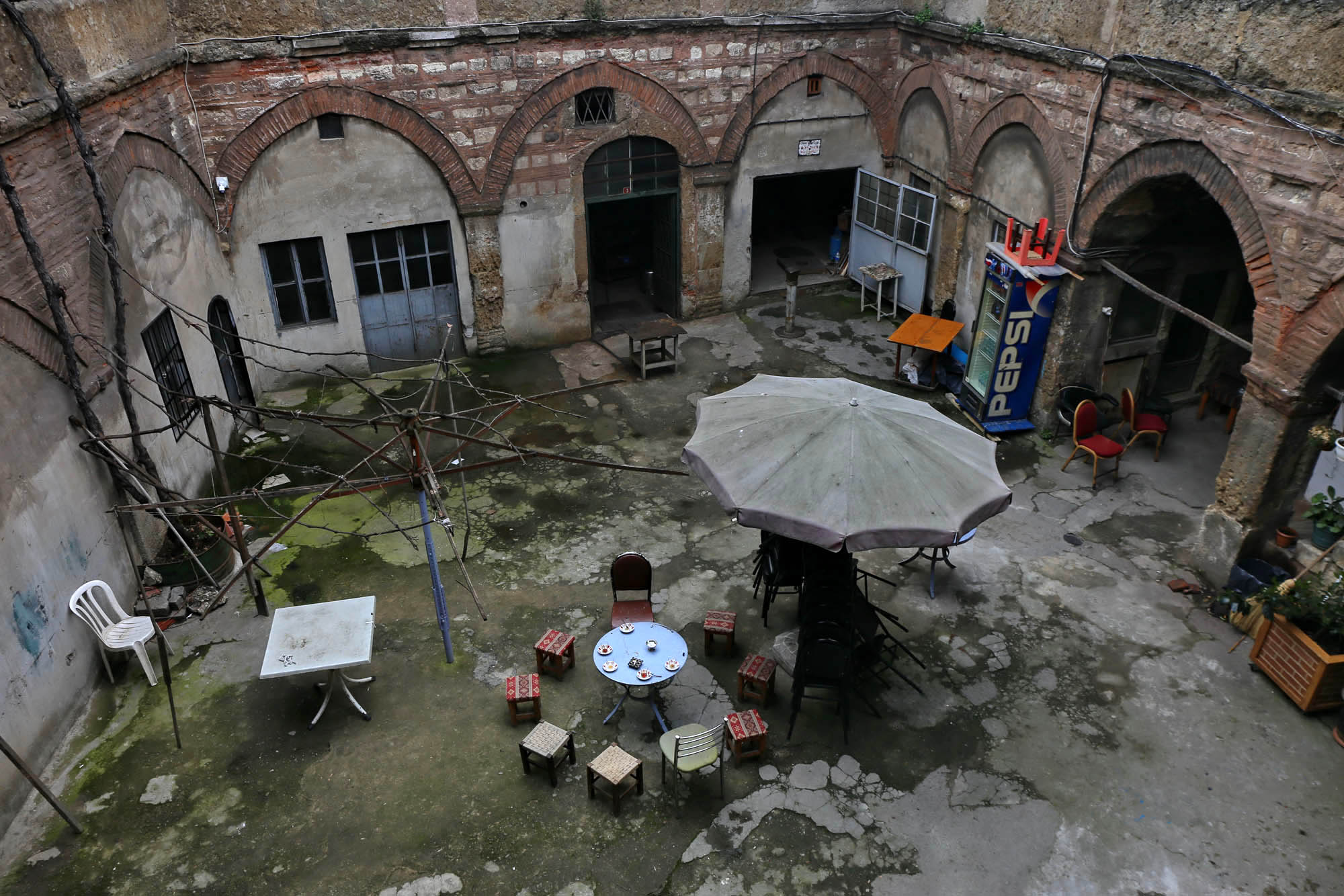
The han has since then also undergone a change of function. With the lack of caravans, its ground-floor rooms were rented by blacksmiths and assemblers. Its current owner, Genco Erkal, a leading Turkish actor, has also been organizing here his Dostlar Tiyatrosu, the Friends’ Theater, every summer since 1969.


The map detail above shows the 1943 state of the han. Such maps have survived of almost all of Istanbul, in two series. At the turn of the century, European insurance companies began to take an interest in investing in Istanbul, and prepared a full conditions map of the city to see, which buildings were flammable, and for how much they were to be insured. The first series of maps was made by the English Charles Goad on a 1:600 scale. This covered Stamboul, the historical peninsula, Pera-Galata, the European part of the city, and Kadiköy on the other side. The second series was produced on an even more detailed scale of 1:250 by the French – or properly said, Catholic Serbian born in Constantinople – Jacques Pervititch (from 1940, Pervitiç). This included the western part of Stamboul (Fatih-Aksaray), Eminönü in northern Stamboul, the European Beyoğlu (Pera-Galata) and Ortaköy, and the Asian Kadiköy and Üsküdar. The overview maps of the two series can be seen and all their detailed maps can be downloaded here and here. Wherever it is possible – that is, where a detailed map exists, and fortunately they exist for almost all the han region –, I included the Pervititch maps to each han.
Old Istanbul was threatened by two major plagues: earthquakes and fire. Because of the first, it was safer to build of wood, at least from the first floor upwards, but this made the whole city extremely flammable. Orhan Pamuk describes in his Istambul, how great the spectacle of the burning of an old aristocratic wooden house was even in his childhood. In the early 18th century, Davut Ağa introduced the portable fire pump, which was carried to the spot of the fire by four Janissaries and then, after their dissolution, by four volunteer firefighters. Each district, mahalle, had its own volunteer fire department, but they were quite ineffective. The most beautiful thing they left to us were the firefighters’ cafés, where the four firefighters on duty would wait for a fire to flare up or the next group on duty to arrive. Today, only one of these cafés has survived in its original state,
in the Kadırga mahalle in the southern part of Sultanahmet. The mouth of the old marble fountain is reminiscent of the end of a fire hose.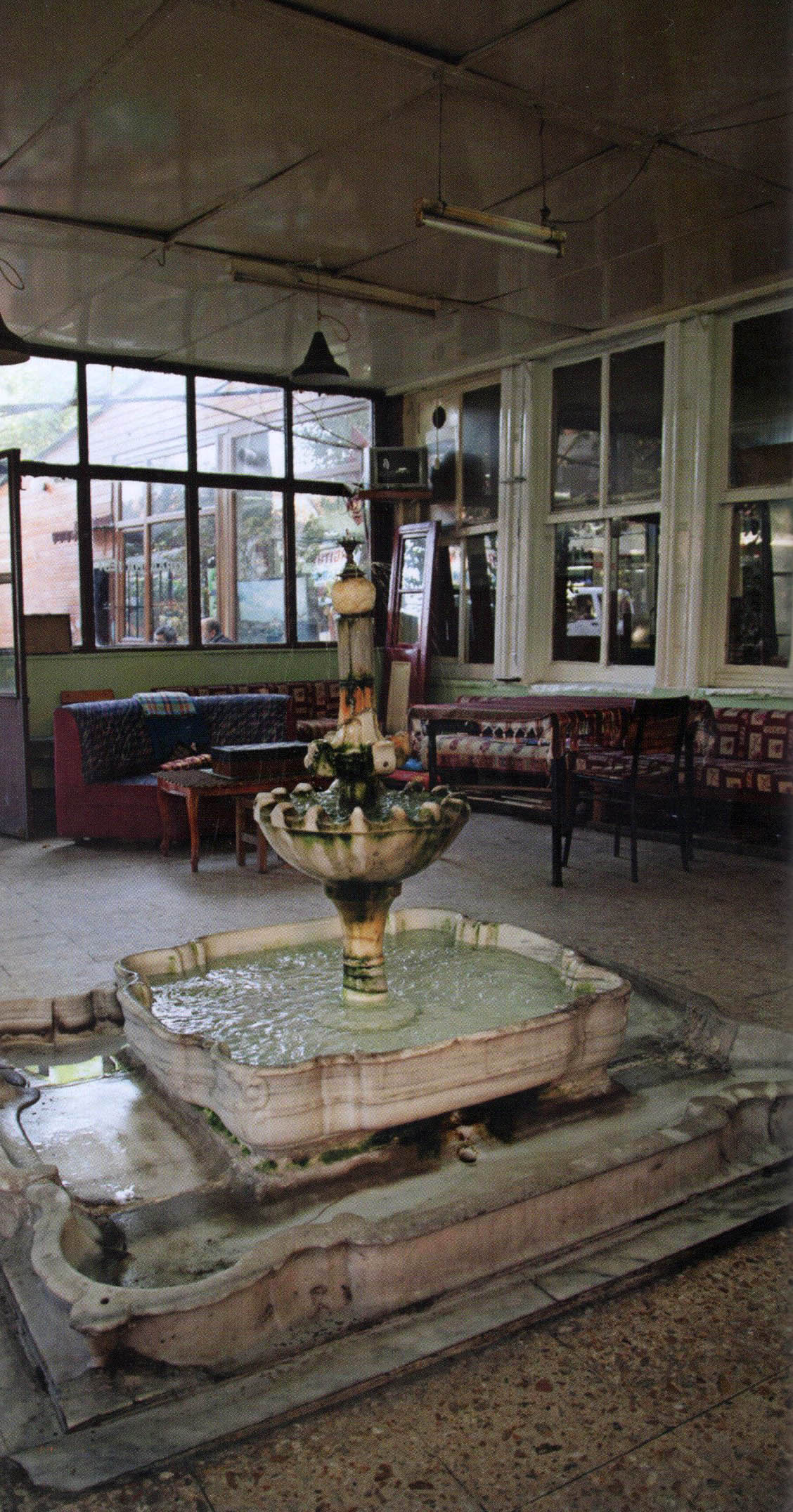
Modern fire service was eventually introduced to Constantinople by a Hungarian specialist. Not just anyone: Ödön Széchenyi, the second son of Count István Széchenyi, a great world traveler, who became acquainted with organized firefighting at the 1862 World’s Fair in London. With the permission of the fire chief of London, he joined the local fire brigade, learned the craft and technique, and then founded the Hungarian association of fire brigades in Pozsony (then capital of Hungary, today Bratislava) and Pest. In 1870, he visited Constantinople immediately after the great fire, and offered his help to the sultan. He also staged a demonstration with the Hungarian firefighters, which convinced the sultan of their professionalism, so he then appointed Ödön Széchenyi as the city’s fire chief. He performed this task until his death in 1922.
 Ödön Széchenyi in 1897 with Hungarian fire officers But back to the hans. Büyük Çorapçi Han, the great han of stocking makers, has a similarly torturous life behind it. This was founded in 1578 by Piyâle Pasha, Admiral of the Ottoman Fleet. According to some Dalmatian sources, he was of Croatian descent, but, according to the İslâm Ansiklopedisi, hailed from Tolna in Hungary. He was taken prisoner by the Turks as a teenager in the decisive Battle of Mohács in 1526, which ended the independence of the medieval Hungarian Kingdom. He was taken to Constantinople, where he graduated from the Janissary officer school of Enderun. Sometime in the beginning of his career as a military officer, he also brought his Christian mother to the city. He studied to be a navy captain under Admiral Turgut Reis, and in 1553 he replaced him as Admiral of the entire Ottoman fleet in the Mediterranean. He won impressive victories over the Spaniards. In 1560, after the conquest of Djerba, when he brought five thousand Christian soldiers to the slave market in Constantinople, Sultan Selim II married his daughter to him. In 1568 he became grand vizier, and in 1570-73 he occupied Cyprus. In his waqf, founded in 1578, he ordered the Büyük Çorapçi Han established for the maintenance of his mosque, the Piyâle Paşa Camii in Beyoğlu, built by the most outstanding Ottoman architect, Mimar Sinan.
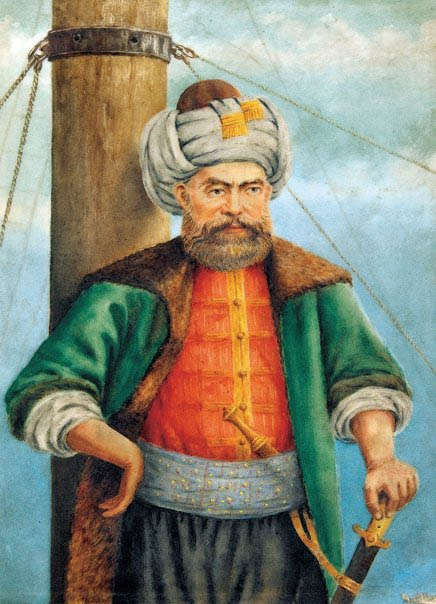 Piyâle Paşa’s portrait in the Istanbul Maritime Museum, and his han in Pervititch’s map
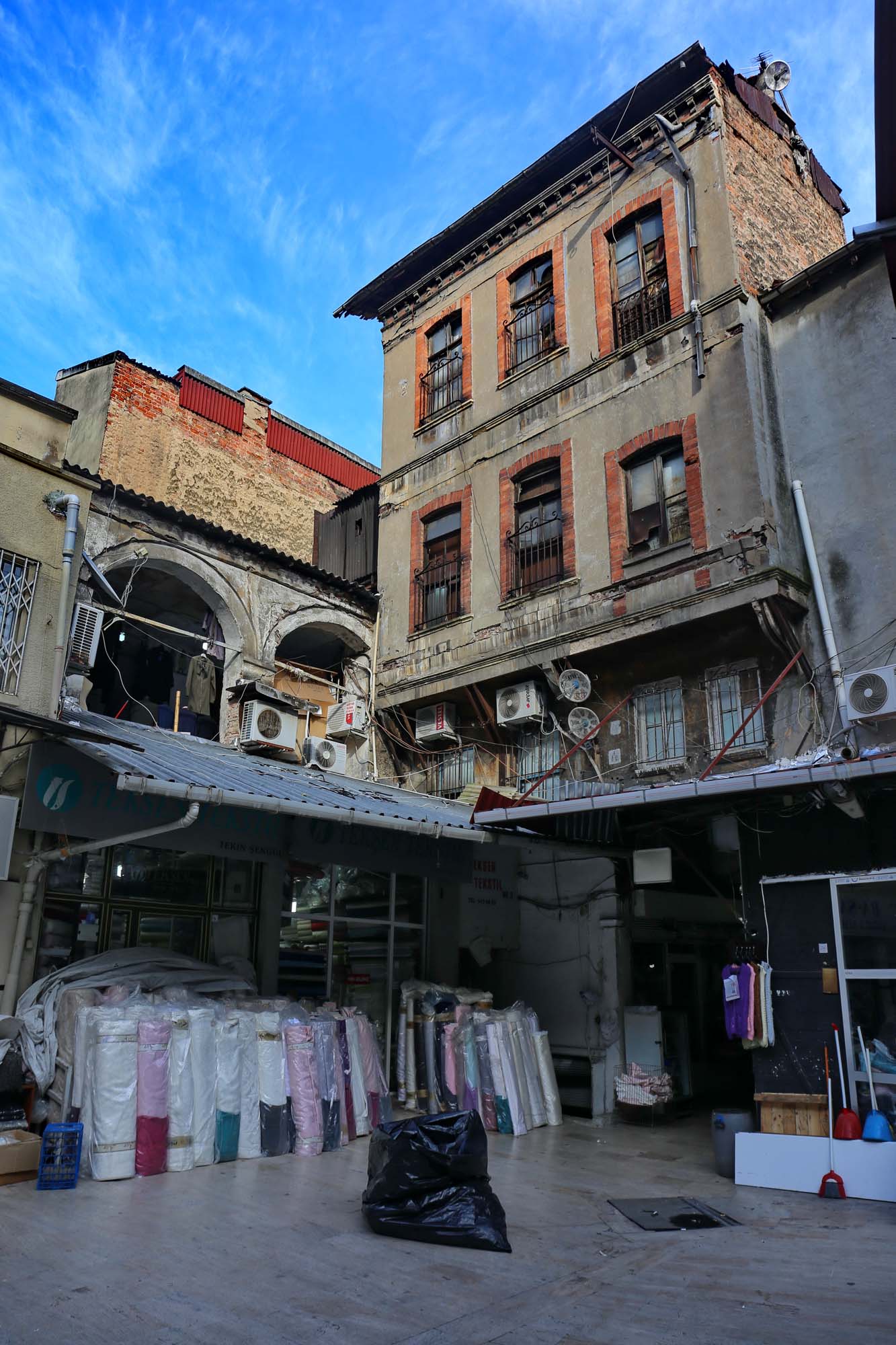
Unfortunately, Büyük Çorapçi Han’s original form has by now been almost completely deformed. The stocking makers have long left, it is now inhabited by Chinese clothing dealers, and its original beautiful classic two-story arcade structure – which still emerges here and there – has been obscured by ad hoc additions. These, however, also include one historically interesting piece. From the second floor, an iron door opens to a superstructure which was – a synagogue. The synagogue of the Russian Jews, who began to appear in large numbers in Istanbul from the mid-19th century, and who asked for the help of the prominent Sephardic banker and philanthropist Abraham Salomon Camondo to build their own synagogue. This superstructure was probably done with his support, and probably here because many Russian Jewish merchants may have been operating in the han. The audience of the synagogue was greatly expanded by the revolution of 1917 and the subsequent civil war, after which the abundance of white Russian, Cossack, Georgian, Jewish and other refugees made Istanbul an almost Russian city. The synagogue was used until the 1970s, when Russian Jews emigrated to Israel or merged with Istanbul Jewry.
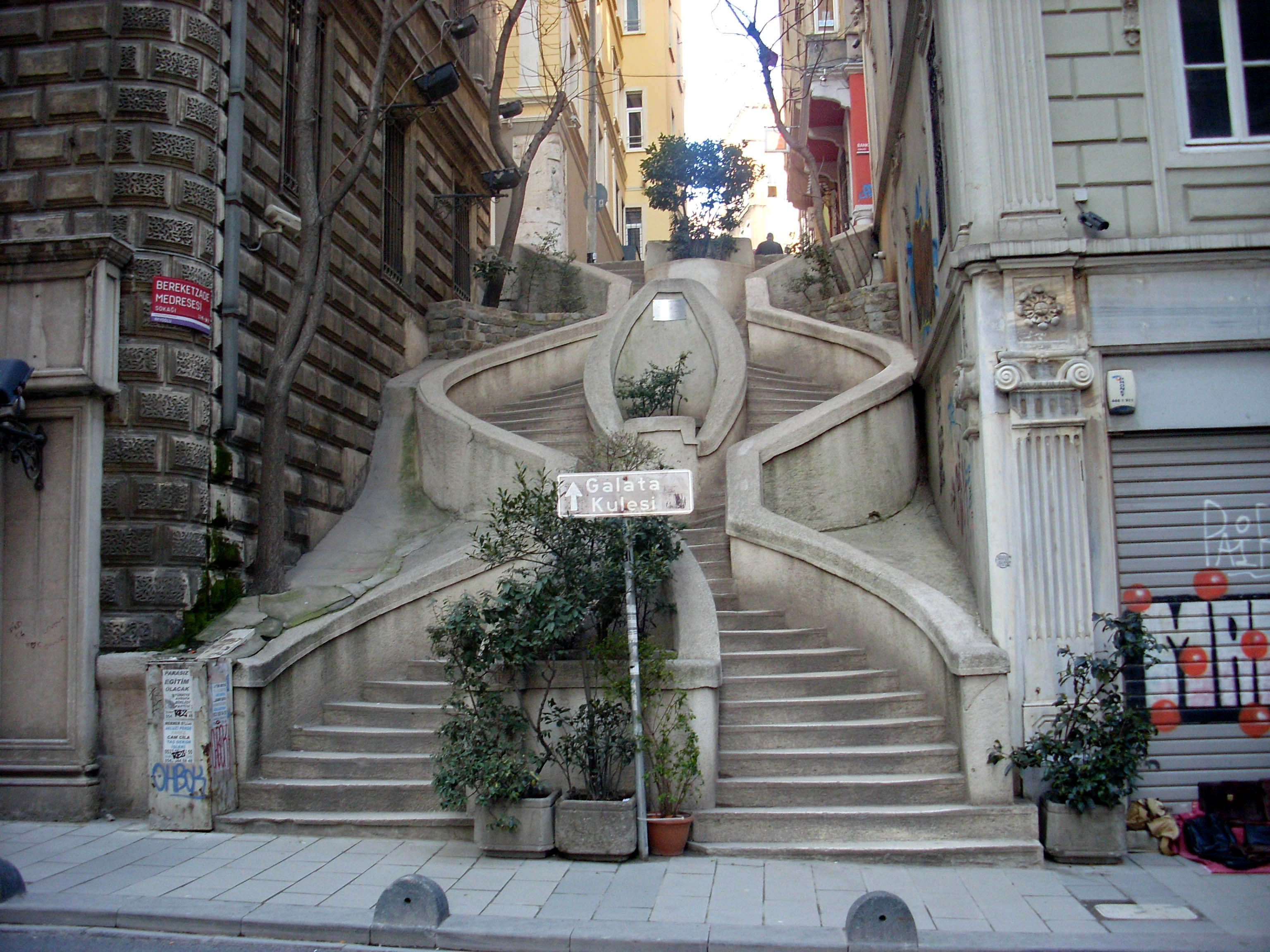 The stairs built by Abraham Salomon Camondo in Beyoglu
One of my favorite hans is Cebeci Han, the Blacksmiths’ Caravanserai in the corner of the Grand Bazaar, an apocalyptic corner of Istanbul. It was built among the ruins of various Byzantine buildings, the former arches still emerge broken above and below it. It has three floors. At the bottom, there is a café and tea saloon, which is worth a look even in the exotic Istanbul for the extra mile. Above it is a gallery bricolaged from several Byzantine fragments. And on the top, from Bakırcılar Caddesi, Coppersmiths’ Street, which is now a street of wholesale Chinese clothing, a narrow, small staircase, known only to the initiates, leads down to the han and the Grand Bazaar. From the top of the stairs you can see Nuruosmaniye mosque at the opposite end of the bazaar. But you can also get here through the bazaar, you just need to know which alley branches off from the maze. Hakan, the protagonist of the movie Muhafız (The Protector) knows this, and he safely cuts through the bazaar to this point, where a fortune teller predicts him the rest of the film. And let’s face it, is there any better place for a downcast fortune teller in Istanbul than Cebeci Han?
The stairs built by Abraham Salomon Camondo in Beyoglu
One of my favorite hans is Cebeci Han, the Blacksmiths’ Caravanserai in the corner of the Grand Bazaar, an apocalyptic corner of Istanbul. It was built among the ruins of various Byzantine buildings, the former arches still emerge broken above and below it. It has three floors. At the bottom, there is a café and tea saloon, which is worth a look even in the exotic Istanbul for the extra mile. Above it is a gallery bricolaged from several Byzantine fragments. And on the top, from Bakırcılar Caddesi, Coppersmiths’ Street, which is now a street of wholesale Chinese clothing, a narrow, small staircase, known only to the initiates, leads down to the han and the Grand Bazaar. From the top of the stairs you can see Nuruosmaniye mosque at the opposite end of the bazaar. But you can also get here through the bazaar, you just need to know which alley branches off from the maze. Hakan, the protagonist of the movie Muhafız (The Protector) knows this, and he safely cuts through the bazaar to this point, where a fortune teller predicts him the rest of the film. And let’s face it, is there any better place for a downcast fortune teller in Istanbul than Cebeci Han?
Muhafız (The Protector). Meeting the fortune-teller in Cebeci Han
Most hans have similar stories, which I have briefly summarized on the above map. Now I just want to talk in detail about the two largest ones, which open like twin hans opposite one another in Çakmakçılar, that is, Lamp Makers Street, next to the Covered Bazaar.
Büyük Yeni Han, the “big new han” was built between 1761 and 1764 by Mustafa III for the maintenance of the Laleli mosque complex erected by him. The 18th century was a period when the sultan’s court returned to Constantinople from a half-century absence in Edirne (1648-1703), and the sultans sought to make up for the backlog of developments, represent their presence and channel the empire’s commerce into the capital through spectacular constructions. The Büyük Yeni Han hit these three birds with one stone. Its long rectangular building cuts into a slope descending from the bazaar, so that through its rear pedestrian gate – which opens almost insignificantly, promising nothing, on Tarakçılar, that is, Brushmakers’ Street – we immediately reach the gallery on the third floor. The long han is divided by a wall raised in the middle. From a rental list of 1780 we know that it had 164 rooms, most of which were rented by Christian, predominantly Armenian, sarrâfs, money changers and money lenders. This group, which was essential for the operation of the bazaar, came here as a body from the vicinity of the bazaar after the construction of the han. Stables no longer functioned in this han; the ground floor rooms hosted about sixty shops, just like today.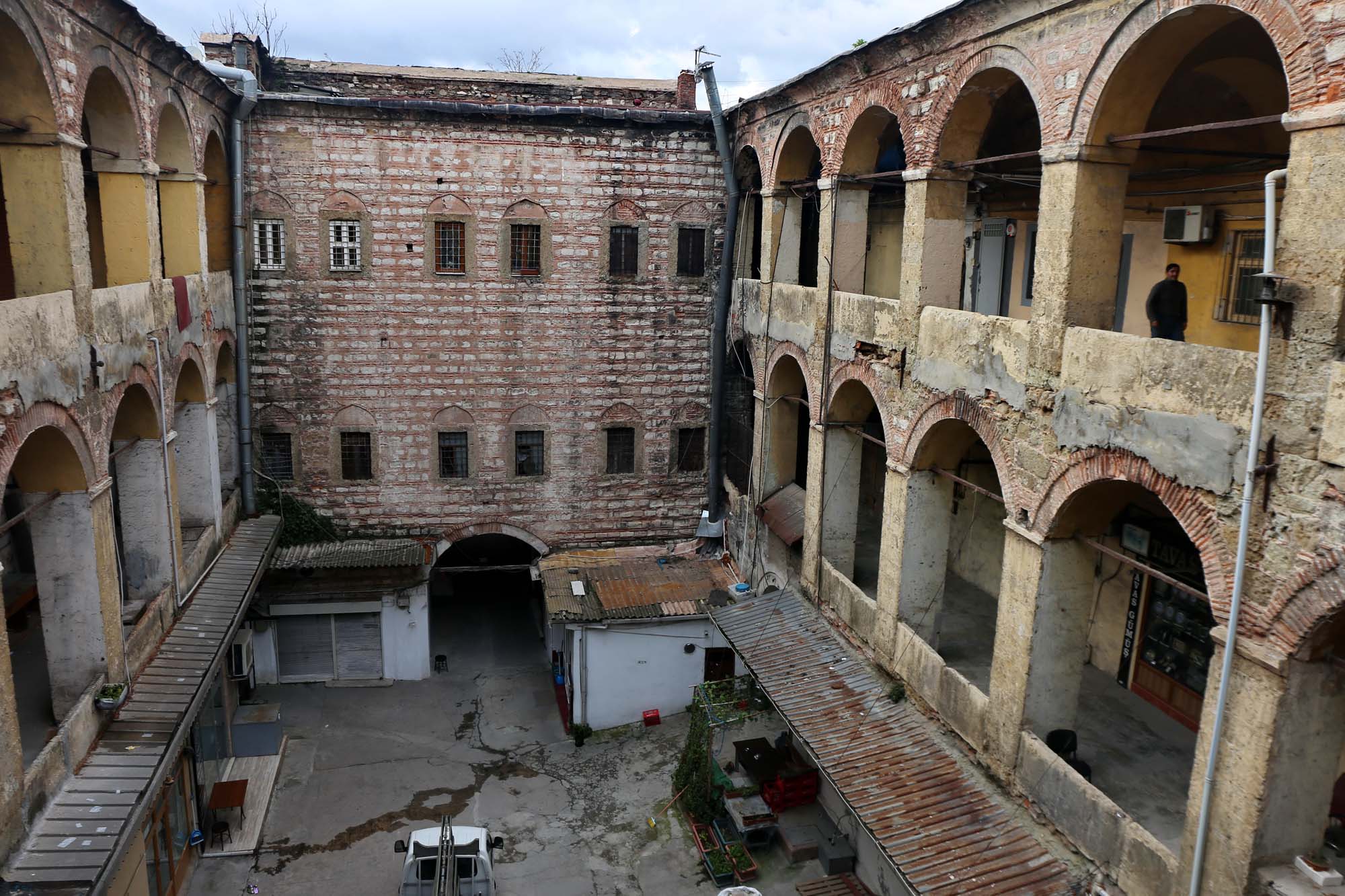
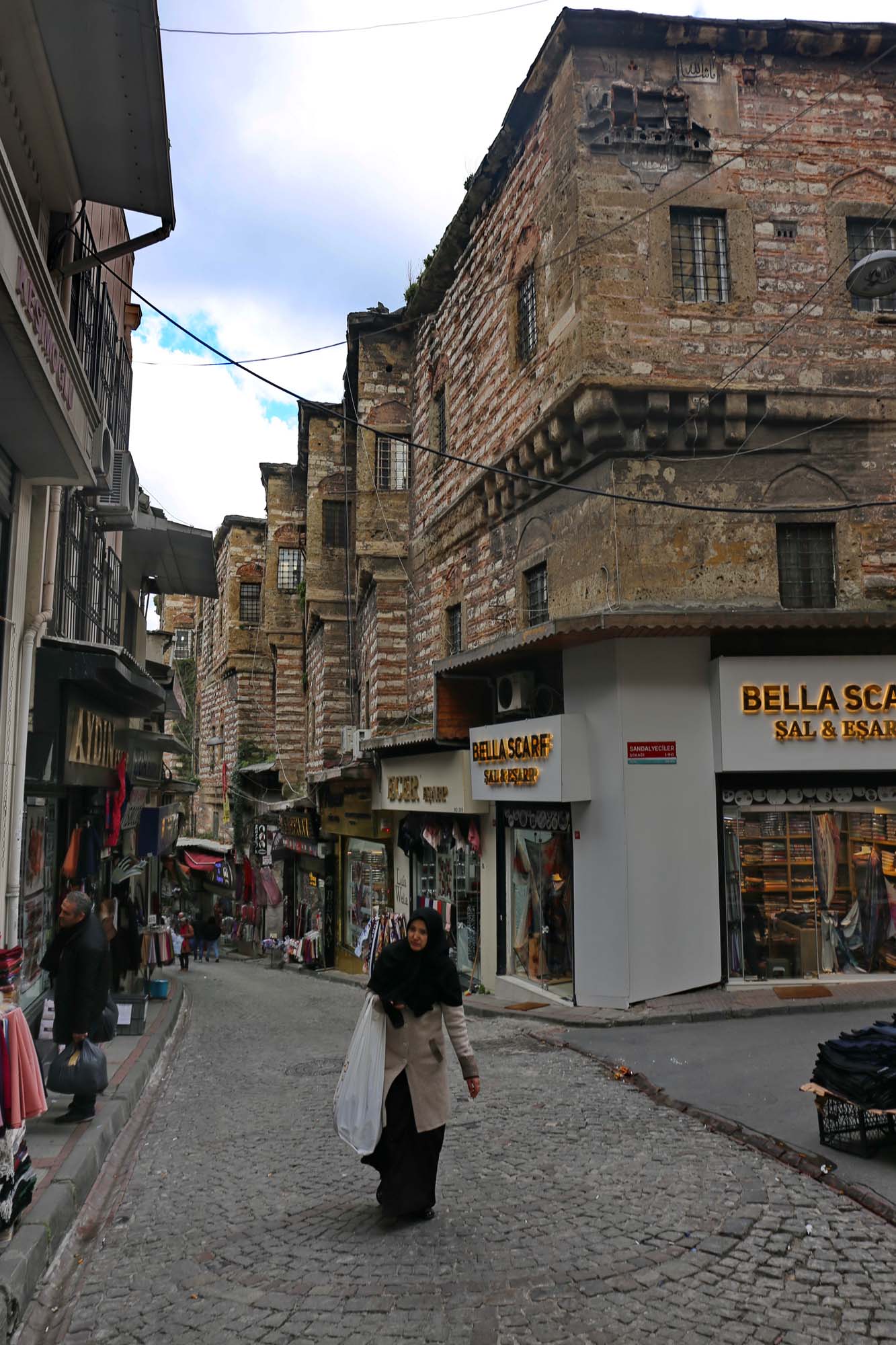
A special feature of this han is that the main façade facing Çakmakçılar Street is “stairstepped” so that the inhabitants of the rooms could see what was going on in the street. And that it has a characteristic “sparrow palace”, albeit largely destroyed, with the inscription ماشالله mashallah, ʻGlory to God’ and the year of construction.
 Opposite, Büyük Valide Han has an even more interesting story. The name means “the great han of the Sultan Mother”. The title of valide sultan belonged to the mother of the reigning sultan, who had a great say in state affairs, especially if her son was still a minor: in this case, the valide was the omnipotent regent. In particular, the hundred years between the mid-16th and mid-17th centuries were characterized by the influence of the valides, so that this era is also called “the Sultanate of Women”. They included the founder of this han, the wife of Ahmed I (1603-1617), the Greek Kösem Sultan (1589-1651), who was a regent during the minority of her two sons, the already mentioned Murad IV (1623-40) and Ibrahim (1640-48), as well as of her grandson Mehmed IV (1648-87).
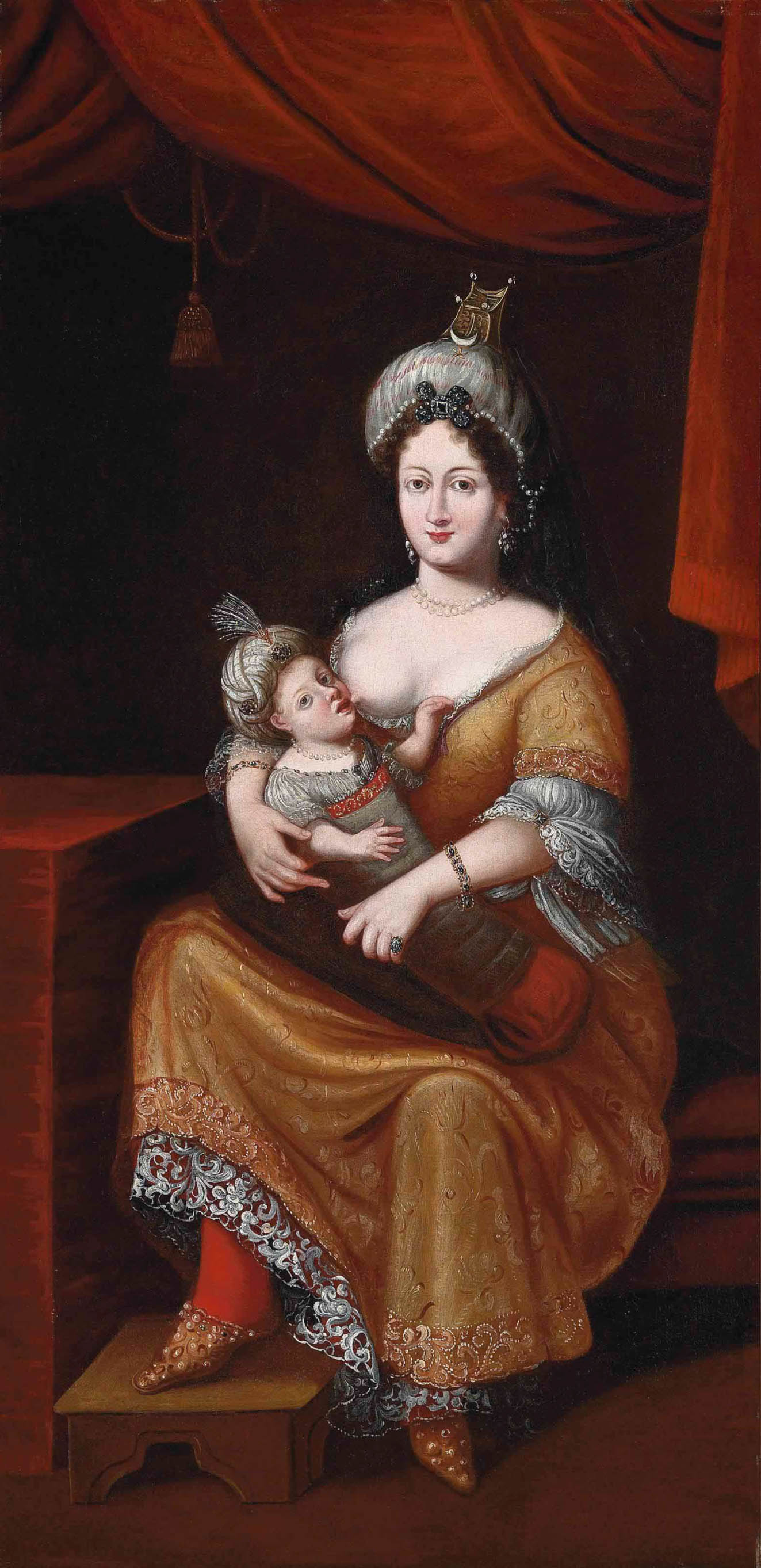 Kösem Sultan with her son Murad. Circle of Franz Hermann and Hans Gemminger, Austria, mid 17-th c. From Christie’s auction site
 Due to their position, the valides also gained considerable economic independence, unique among Muslim women, which they often used to set up some lucrative economic enterprise. An important goal of the business was to have their own income for their old age, when their sultana’s and regent’s salaries ceased. However, that goal was to be packaged in a charitable foundation. Kösem Sultan therefore dedicated most of the revenue of this han, founded in 1651, to the supply of the Çinili mosque complex built in Üsküdar.
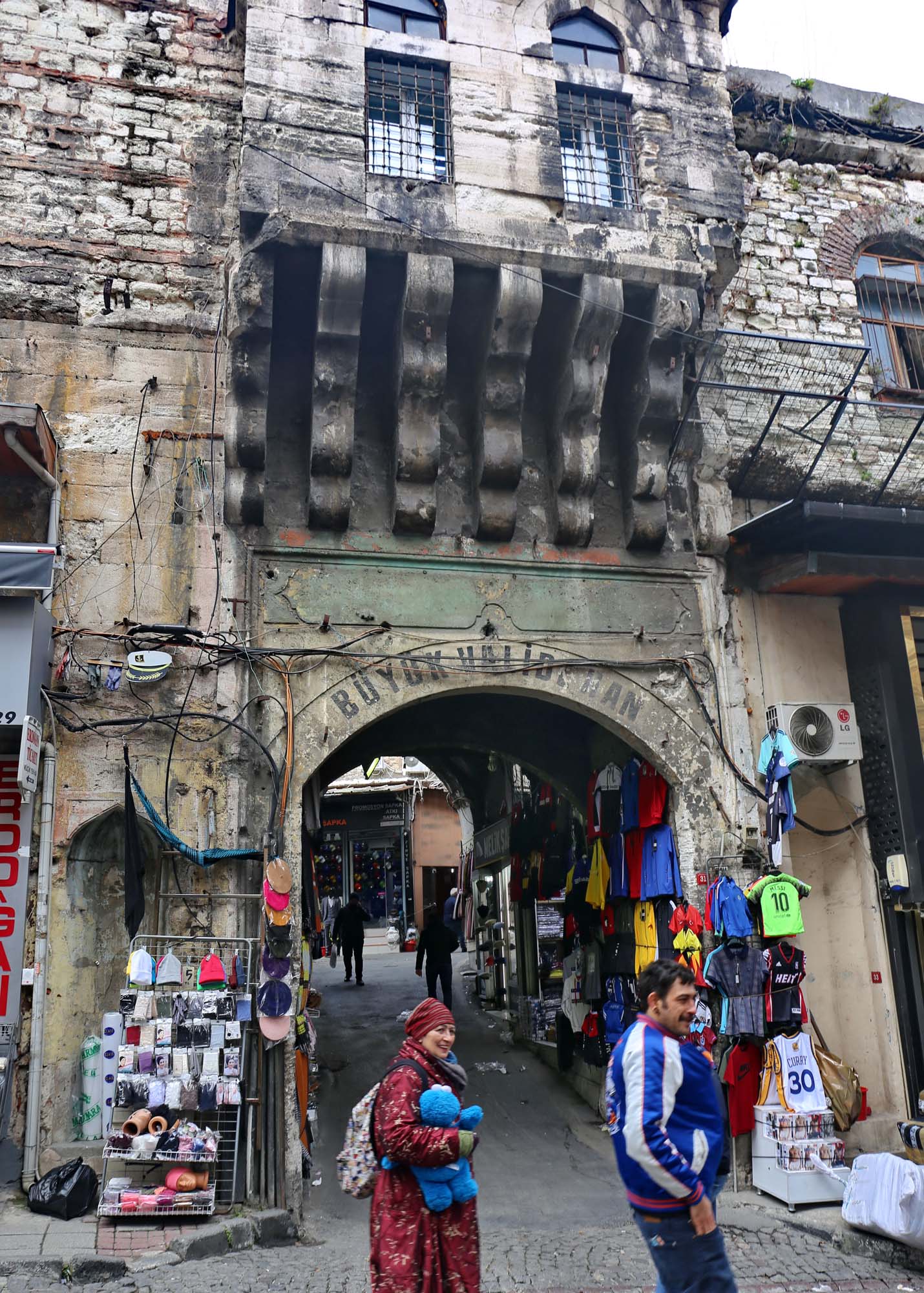
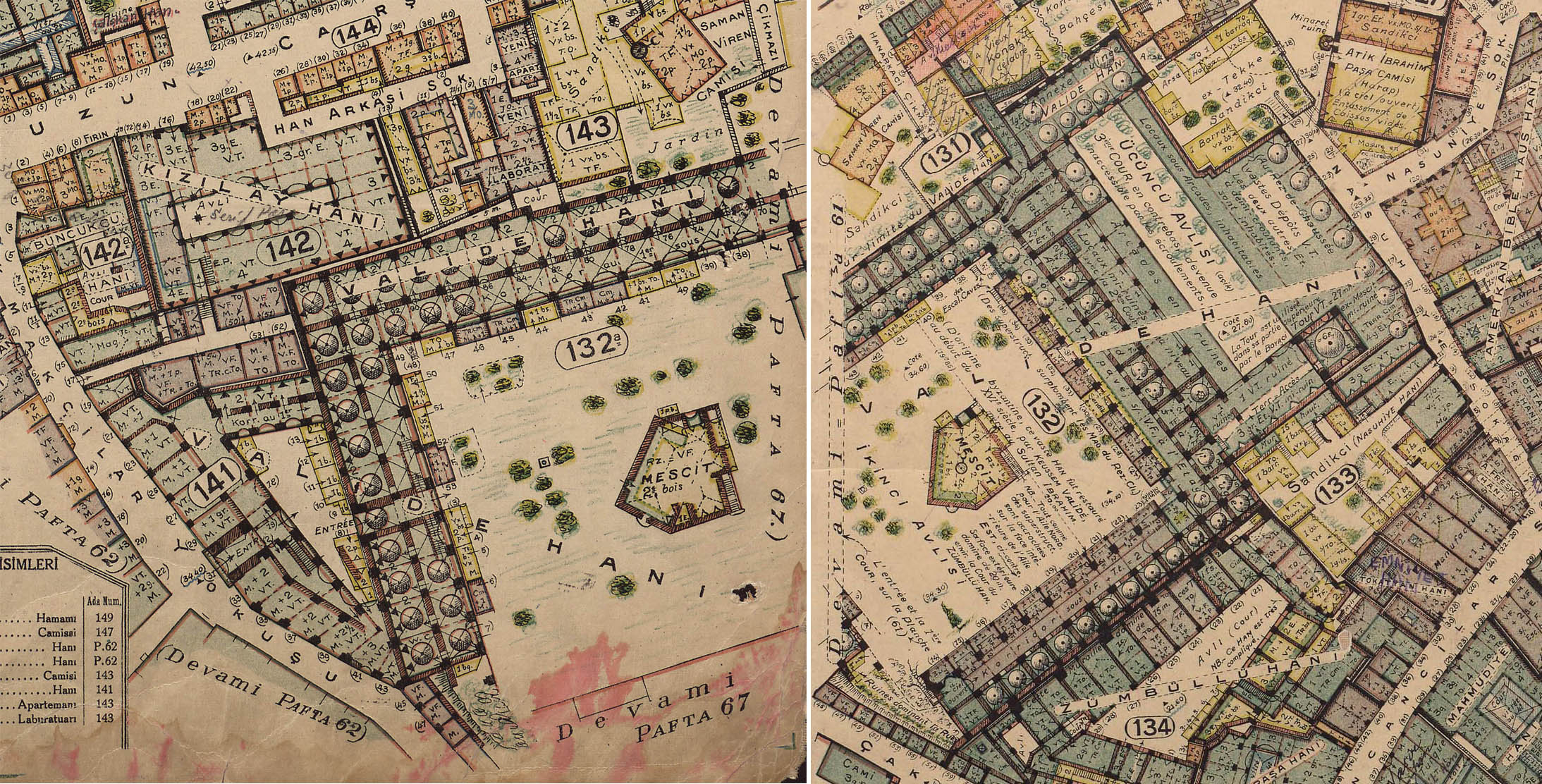
The han has three courtyards: a triangular forecourt, from which stairs lead up to the first floor gallery, a large square middle courtyard, and
a long rectangular backyard also called Küçük – Small – Valide Han. This latter was built on the remains of the former palace of Grand Vizier Cerrah Mehmed Paşa (1598-99). The palace also included a significant Byzantine building, the 27-meter-high Eirene Tower, built by Emperor Arcadius (395-408). The tower and the thick-walled side wing served as a safe for Kösem, who kept her personal treasures here. The impressive tower is very visible from the courtyard of the neighboring Nasuhiye Hanı, which is today a carpentry workshop.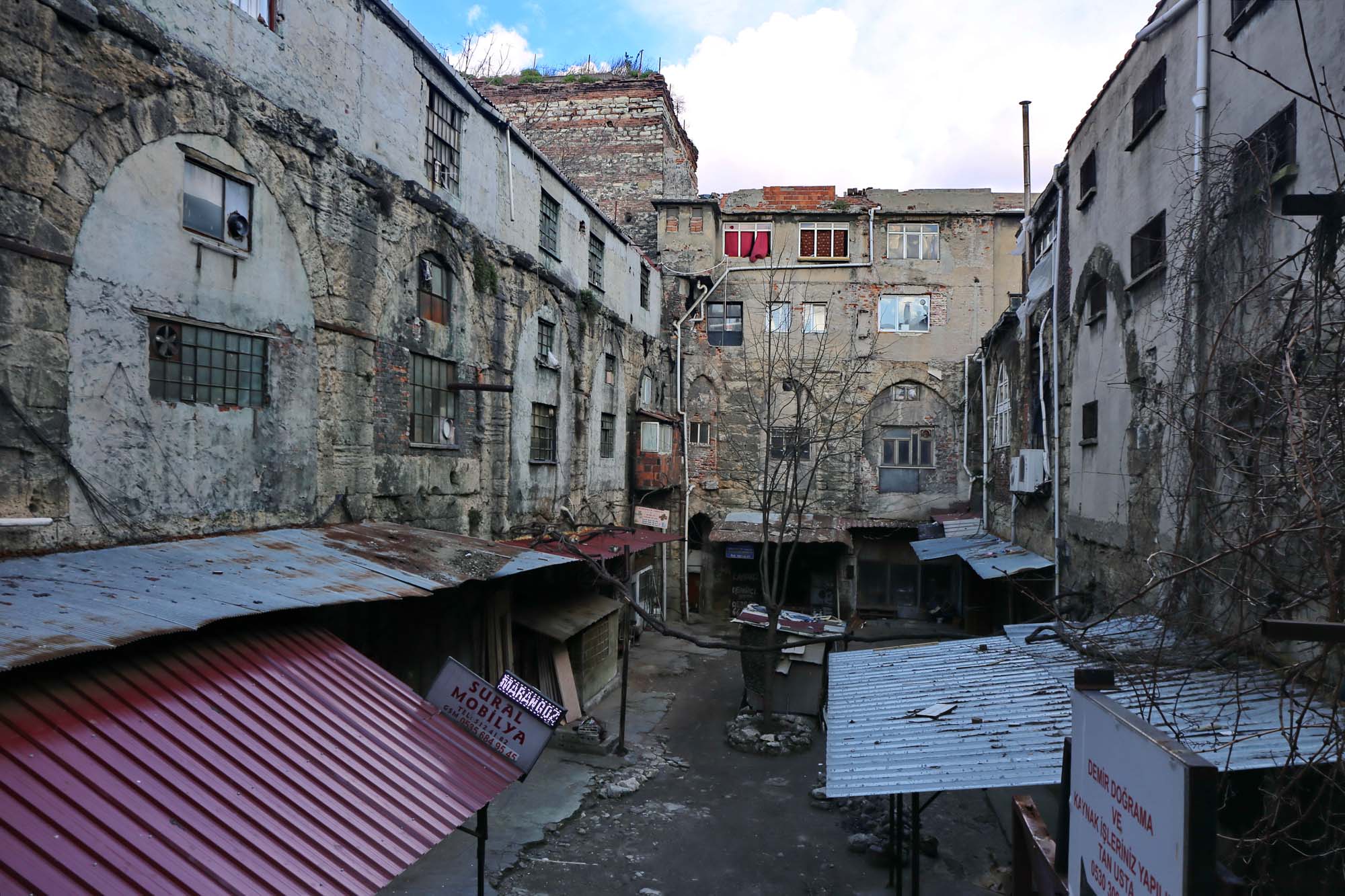
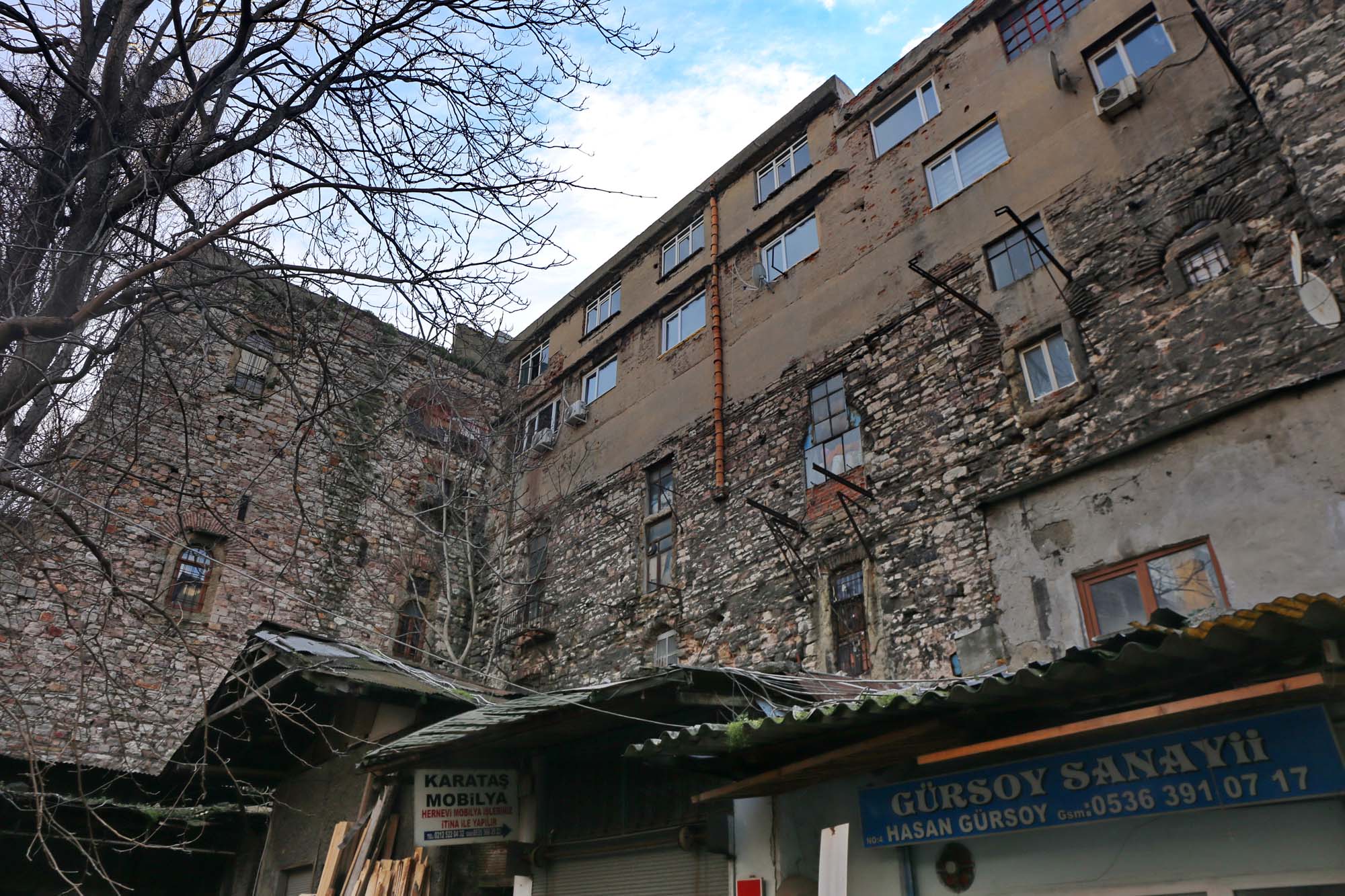
There were a total of 210 rooms in the han. Most of them were occupied by Persian merchants who set up here their Istanbul headquarters. They traded mainly in Iranian silk, whose production, weaving and export was made a national industry by Shah Abbas the Great (1571-1629), and they also controlled the monopoly on Persian rugs. In the 19th century, sixteen thousand Persians lived in Istanbul. The han therefore played an important role in the modernization of Persia. While Persian intelligentsia and aristocracy sent their children to Paris to study, the bazaar merchants took or sent their sons to Istanbul, where they, in addition to trade, became acquainted with the developments of European culture, technology and political ideology, as well as with the Ottoman tanzimat, the constitutional reforms, which they later sought to introduce at home. The first major Iranian revolution, the Constitutional Revolution of 1905, was started and fought not by the flaming intellectuals, but by the bazaar traders in Tehran, making Iran the first constitutional country in the Middle East. The Büyük Valide Han played a key role in this process. From 1876, they also published here the Persian-language newspaper Akhtar (Star), which focused on Persian political and social topics, as well as many Persian books.
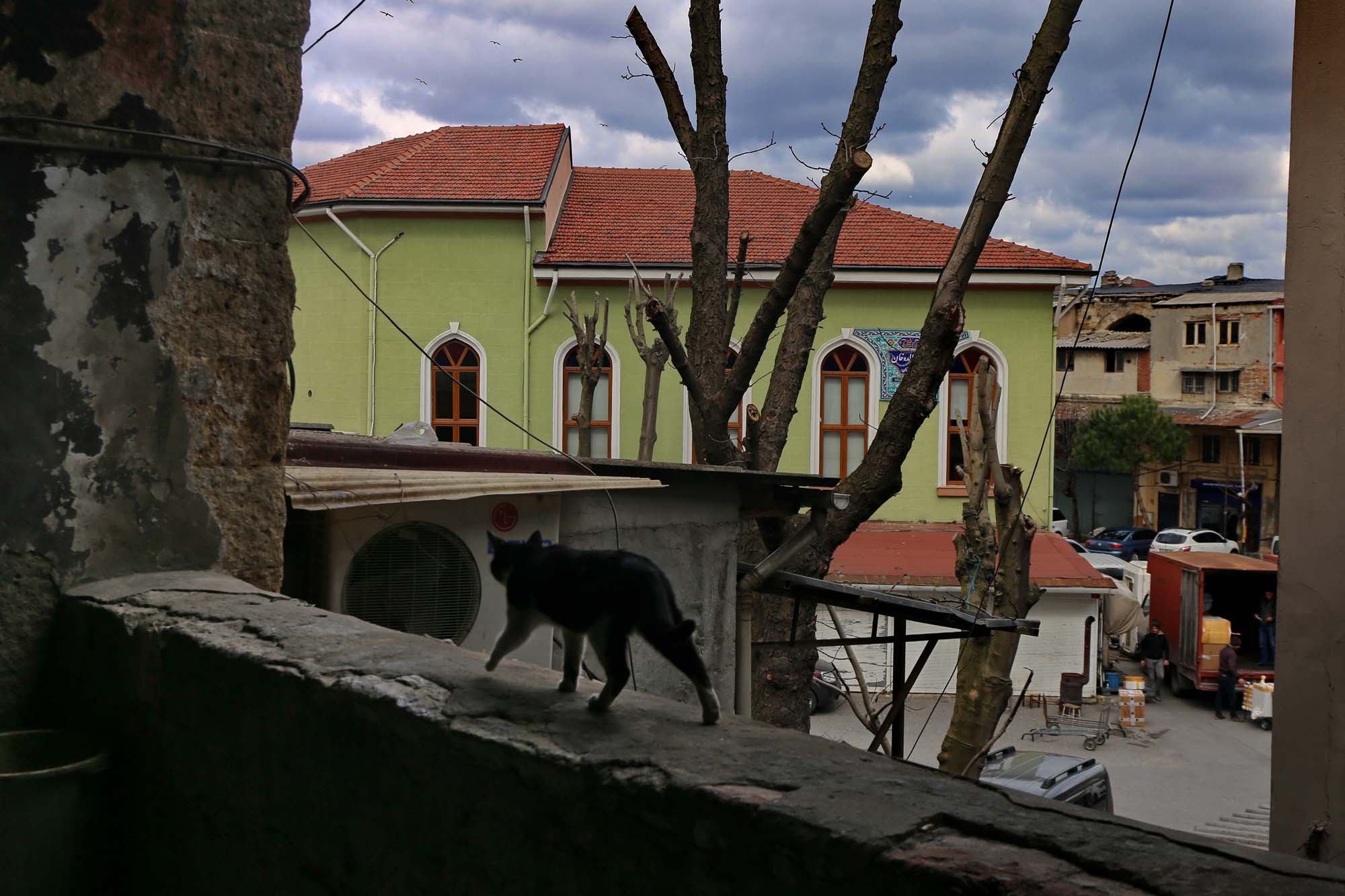
The han also played an important role in the representation of Persia in Istanbul. In its midst, a small Shiʿite mosque was built – the only one in Sunni Istanbul –, and Ashura Day ceremonies commemorating the death of Imam Hussein in Kerbala and the birth of the Shiʿite denomination were held here every year in the presence of many guests:
“The Iranian ambassador as official representative of the Qajar Empire invited the members of the foreign embassies and their guests. The Valide Hanı was in those days not only decorated with religious calligraphic posters and symbols but also with the picture of the Qajar Padishah and the flags with lion and sun. A kind of box with chairs and carpets was always built in one of the corners of the court of the Valide Hanı, especially for the Iranian ambassador and his guests. In many of the accounts at the end of the XIXth century it is mentioned that the Iranian ambassador used to pardon some prisoners at the end of the flagellation-procession. But the members of the embassy were not the only hosts. The Iranian merchants invited their customers. Those who used to live in the Valide Hanı could prepare their small living-rooms or their shops on one of the galleries for their guests. All of the Persians showed hospitality. They served delicious tea and sometimes cake, cigarettes or a water-pipe.” (Erika Glassen: Muharram ceremonies in Istanbul in the late 19th century, 1993)
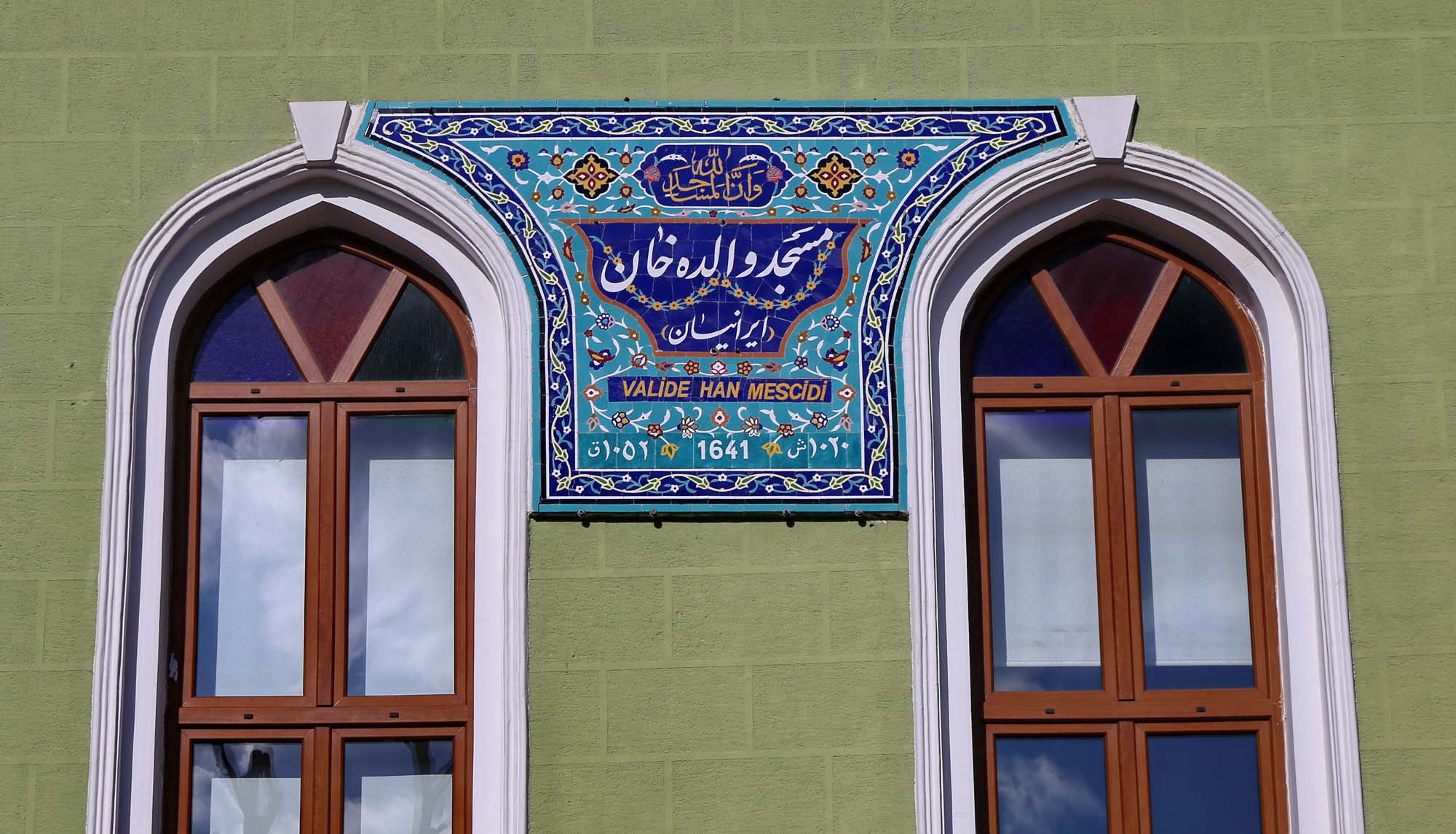 Persian script: “The mosque of Valide Han (Iranian)”. The year is by Christian solar years in the middle, by Sunni lunar years to the left (1052) and by Shiʿite solar years to the right (1020)
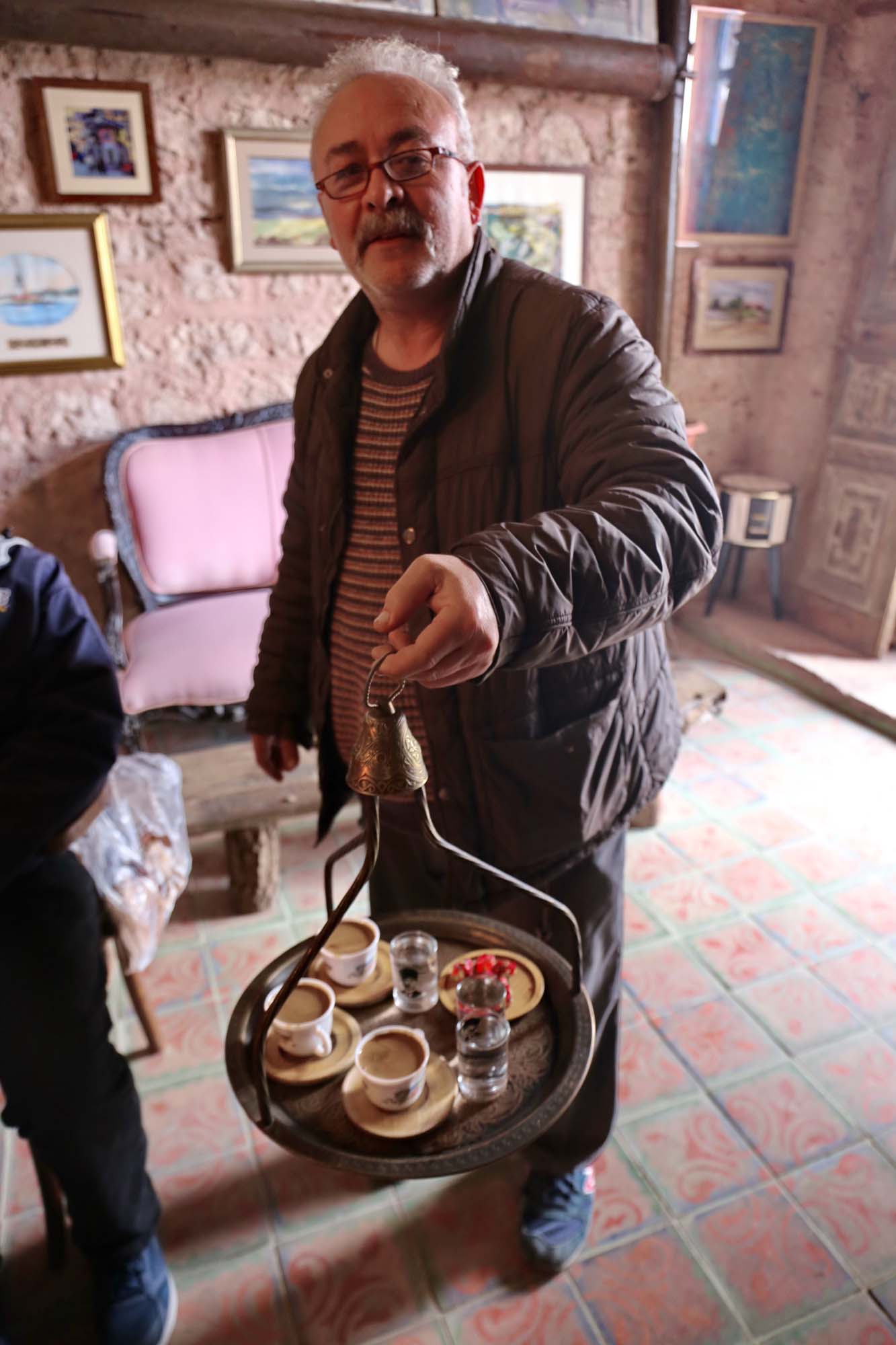
However, the most interesting detail of the han is the staircase in the southeast corner of the courtyard leading up to the eastern gallery. From the gallery, you have a door to the top of the han, with a splendid view of all Istanbul. This door has been kept closed for some time, but in the café at the beginning of the gallery, the goldsmith Eldar who speaks five languages perfectly, happily lets you out to the balcony, from where, from a height of thirty meters, you have an amazing panorama –
Persian script: “The mosque of Valide Han (Iranian)”. The year is by Christian solar years in the middle, by Sunni lunar years to the left (1052) and by Shiʿite solar years to the right (1020)
However, the most interesting detail of the han is the staircase in the southeast corner of the courtyard leading up to the eastern gallery. From the gallery, you have a door to the top of the han, with a splendid view of all Istanbul. This door has been kept closed for some time, but in the café at the beginning of the gallery, the goldsmith Eldar who speaks five languages perfectly, happily lets you out to the balcony, from where, from a height of thirty meters, you have an amazing panorama –
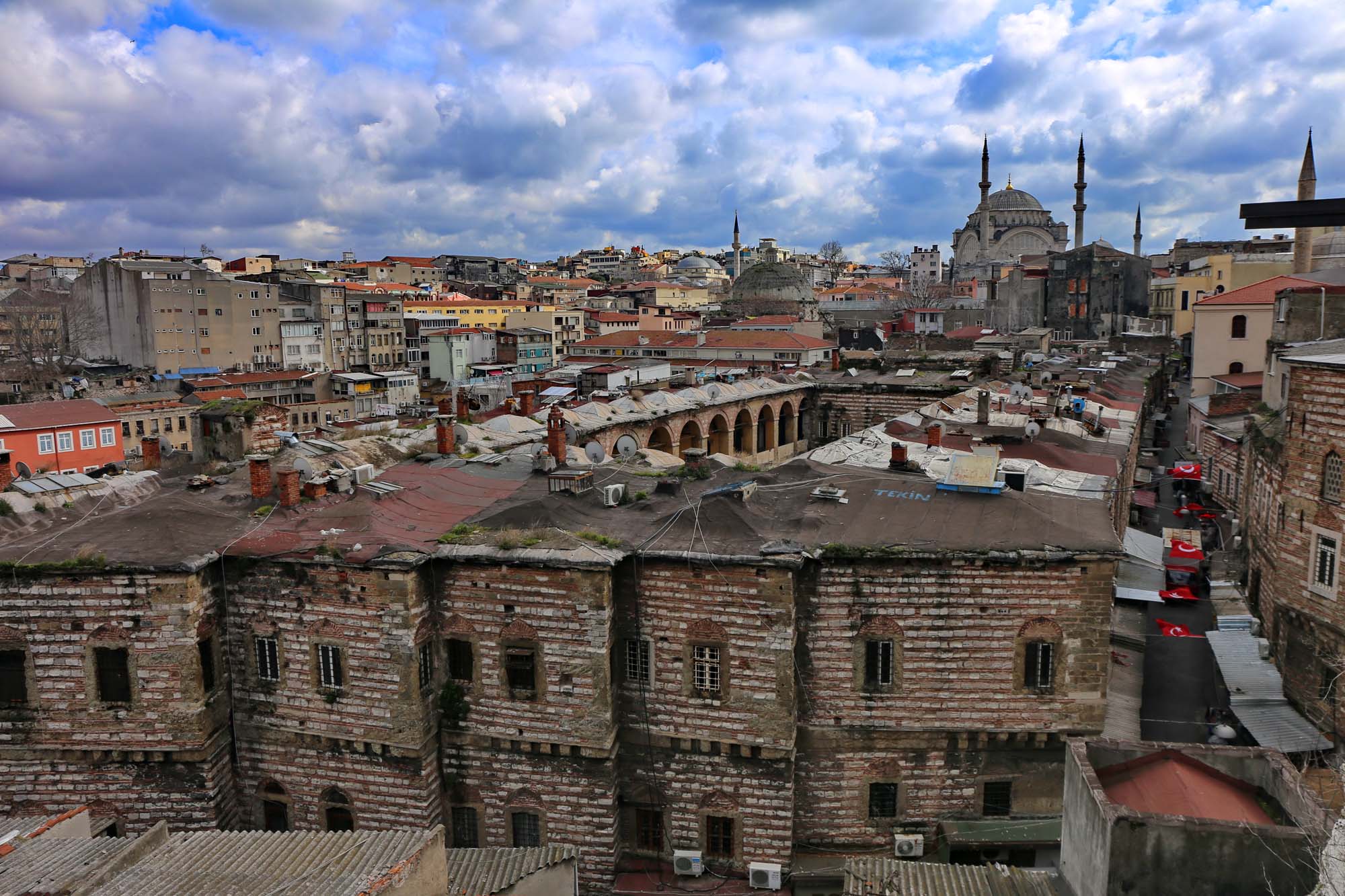 – over Büyük Yeni Han and the bazaar –
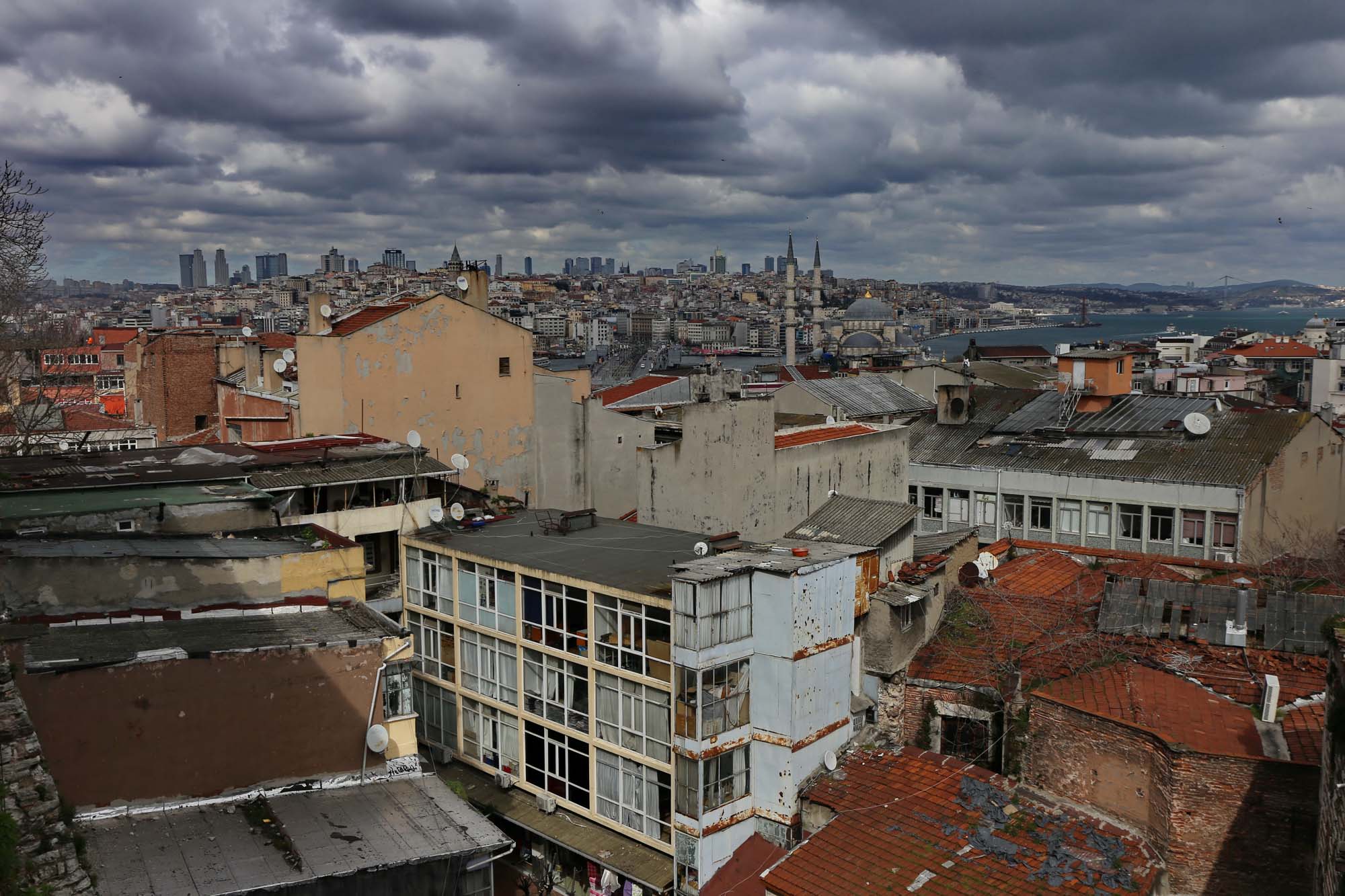 – over Beyoglu and the Galata Tower –
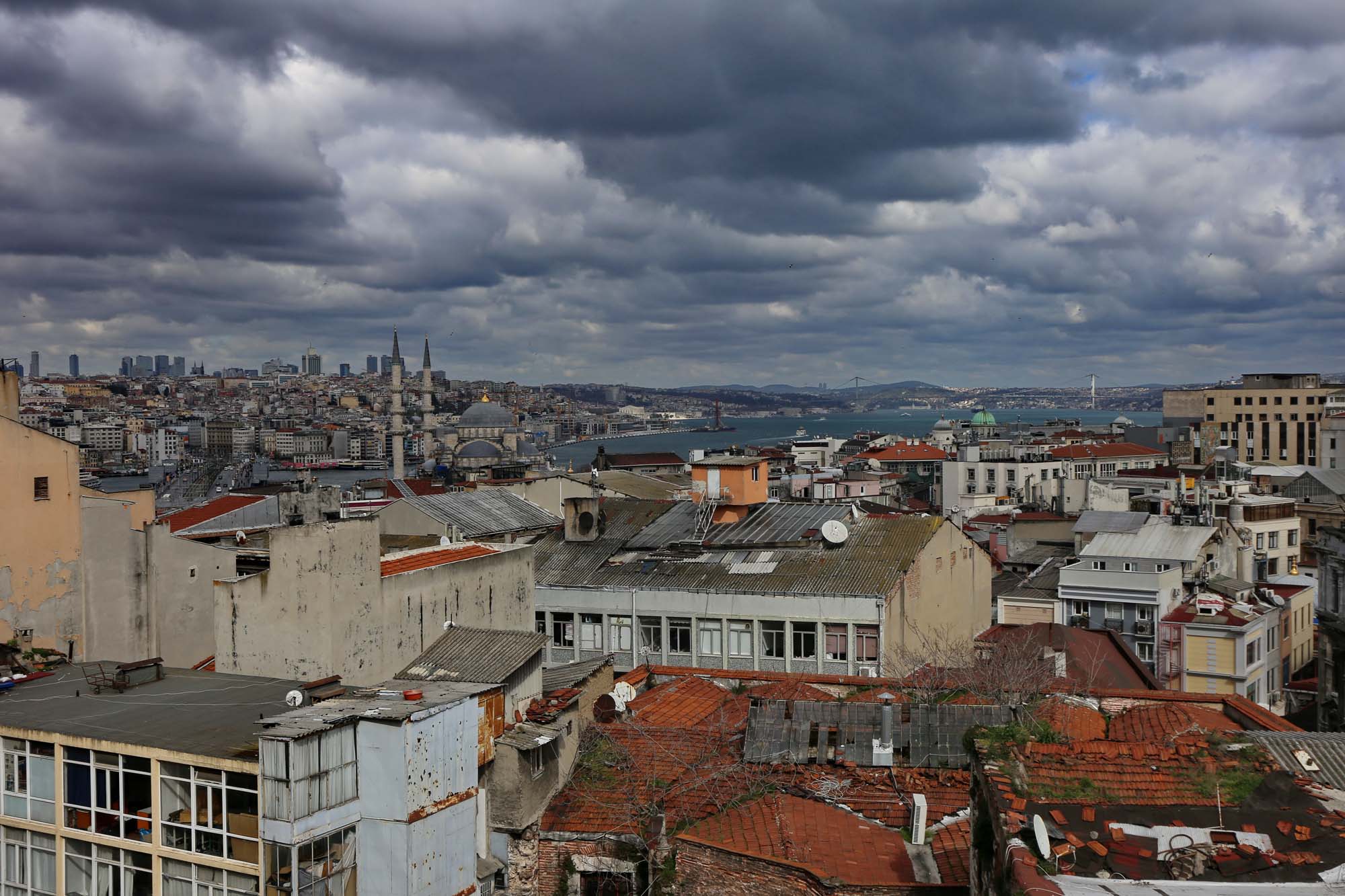 – and the Golden Horn as well as the Bosphorus and Asia in the background.
If you, however, are definitely curious about the panorama from the rooftop, check out the opening scene of Skyfall (2012), where Patrice, fleeing with the stolen hard drive, and James Bond, chasing him, race with motorbikes on the top of the han, before the backdrop of Istanbul’s magnificent panorama. The secret service following their route on the computer screen at the MI6 headquarter ask each other: “Where are they now?” “On the rooftop of the Grand Bazaar.” No, mister. That is Büyük Valide Han there.


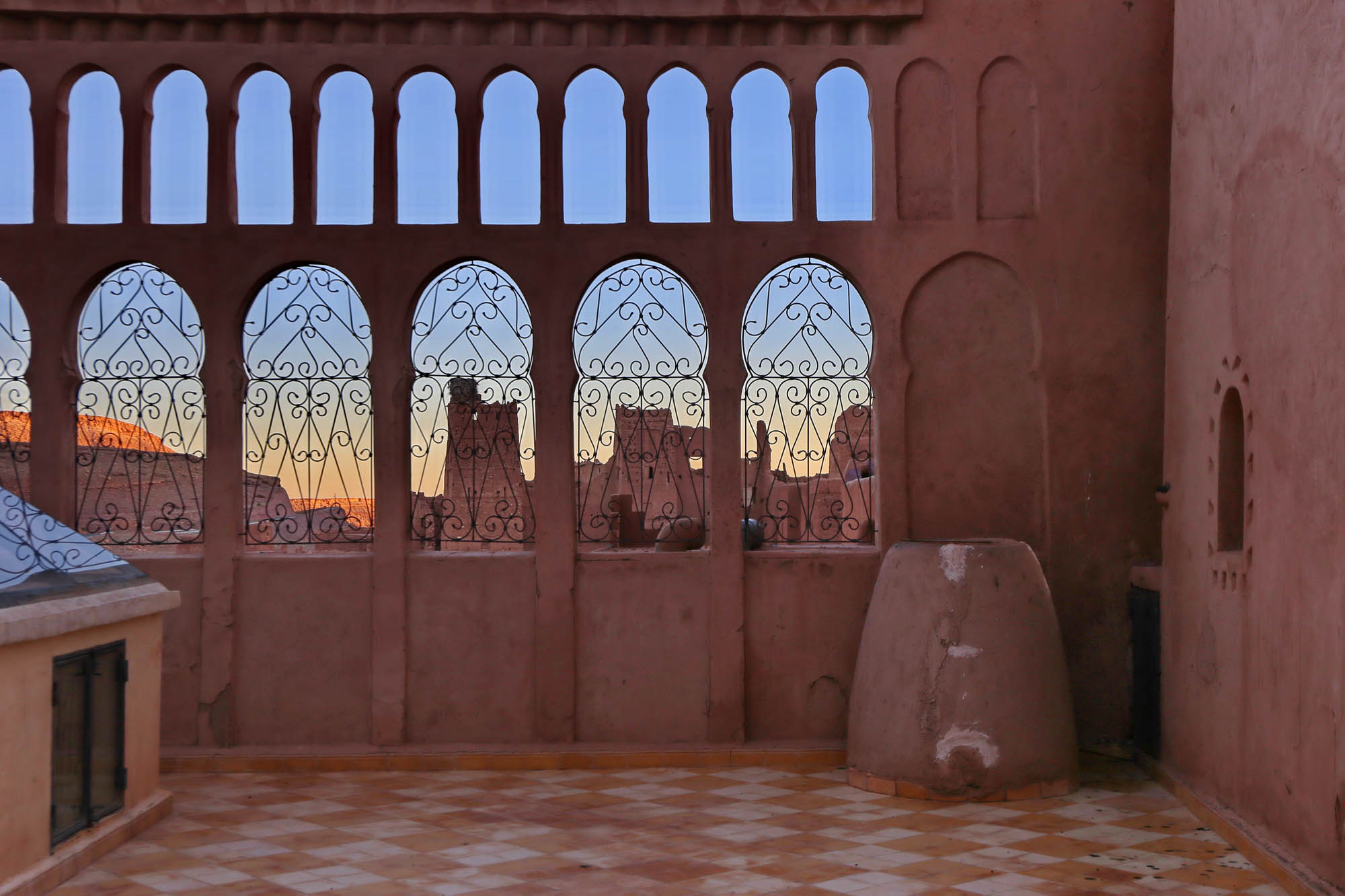






 Come with us to…
 Atlantis
 Bestiary
 Bohemia+Prague
 Books, exhibitions, music, film
 Brave old world
 Caucasus
 Cemeteries
 Crimea
 Get to know the
 Images of the East
 Lightwriting
 Lwów/Lemberg
 Mallorca
 Message on the wall
 The Museum of Propaganda
 Odessa
 Paper Museum
 Persian letters
 The Jewish heritage


