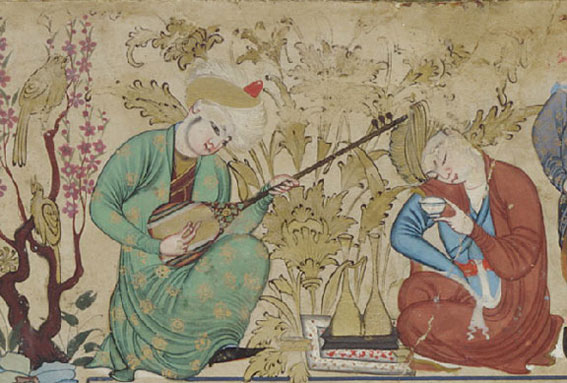
 Persian setar player and his drunken public. Muhammad-Sharif Musawwir’s miniature from a copy of The Seated Princess, ca. 1600, perhaps from Bokhara. The Smithsonian Institute
Many times we have written that Persian music is one of the world’s most powerful and most sophisticated musical traditions. Hitherto our readers may have considered this as a personal bias. Now, however, we have an irrefutable evidence that Persian music has a greater impact than any other music on the bias-free children’s soul. Our reader Dániel Sturm olvasónk wrote the following message just an hour ago on the Facebook page of our blog:
Dear Studiolum! We always read your posts with great pleasure. The song included in the post Masouleh, 1975 has caused this effect to our 16-month old child: http://www.youtube.com/watch?v=5dLIlW0yzfY He listens to a lot of music, but he never responded to anything so vehemently. He was at once passionate and serene. Thank you for this one, too!
We say thanks for the experience shared, which we share further below. As the music is hardly audible on the video, here we include both the Gilani folk song and the dance video. By starting both simultaneously perhaps you can better reconstruct the scene. And observe that the child is not only following the dynamic rhythm, but he is repeating the beginning of this very song!
Freidoun Poorreza – Hossein Hamidi: ناز بداشته Naz Bedashteh (Beautiful Bedashteh), Gilani folk song. From the album می گیلان Mi Gilan (in Gilaki) / Man-e Gilan (in Persian) (My Gilan) (2007)
For anyone who wants to try it him/or herself, instead of a lyric folk song here you are a real dance music from Lorestan in the Zagros mountain, from the Lori nomads, relatives of the Bakhtiaris, on kamanche and daf, the round Persian violin and the nomadic round drum whose leather is stretched on wooden frame.
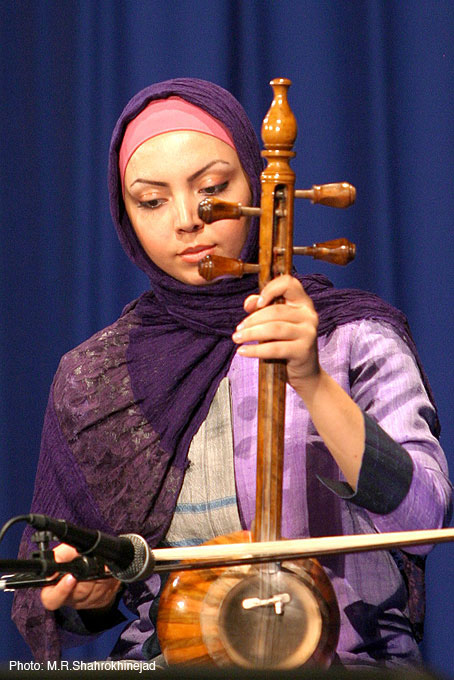
Sepa va dopa. Lorestani dance
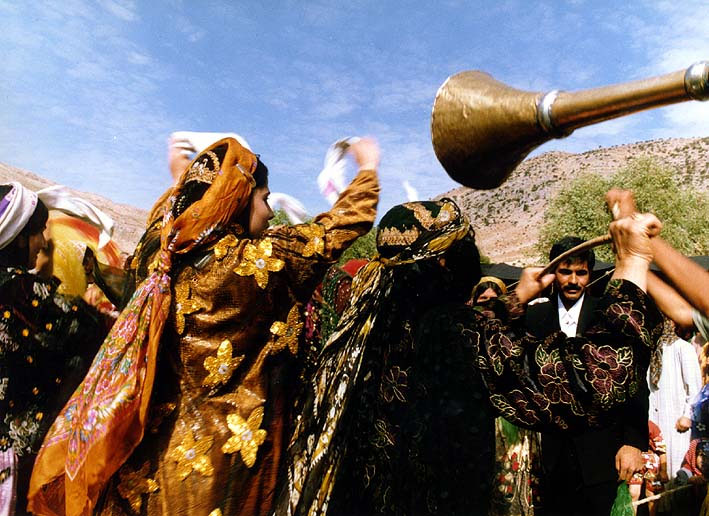 Lori dancers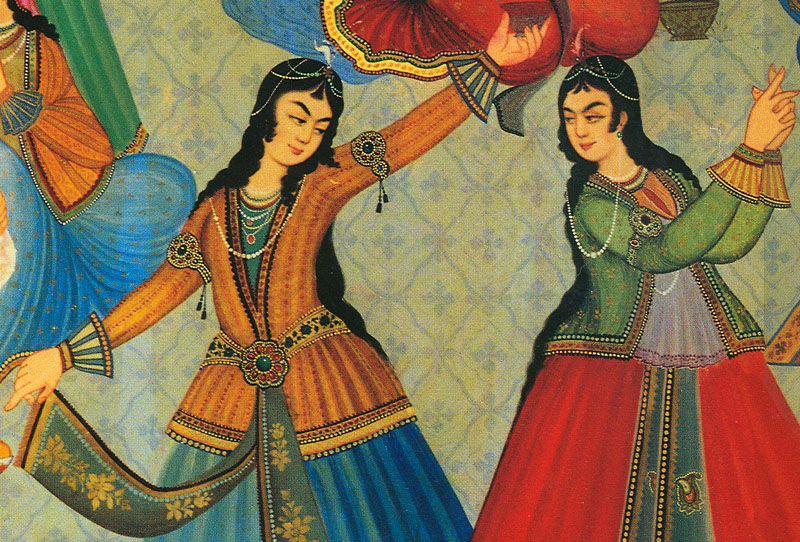


 Come with us to…
 Atlantis
 Bestiary
 Bohemia+Prague
 Books, exhibitions, music, film
 Brave old world
 Caucasus
 Cemeteries
 Crimea
 Get to know the
 Images of the East
 Lightwriting
 Lwów/Lemberg
 Mallorca
 Message on the wall
 The Museum of Propaganda
 Odessa
 Paper Museum
 Persian letters
 The Jewish heritage


No hay comentarios:
Publicar un comentario