Switch over to our new blog! • ¡Pásese a nuestro nuevo blog!

The renewed version of our blog, with more features, a richer design, and available in nine languages, can be read here: https://wangriver.com

The new version also includes the old posts, often in expanded form. If you are curious about the updated version of this post, replace “riowang.blogspot.com/” in the URL with “riowang.studiolum.com/”, and the new link will most likely lead you there.


La versión renovada de nuestro blog, con más herramientas, un diseño más rico y disponible en nueve idiomas, se puede leer aquí: https://riowang.com

La nueva versión también incluye las publicaciones antiguas, a menudo en una forma ampliada. Si tiene curiosidad por la versión actualizada de esta entrada, sustituya «riowang.blogspot.com/» en la URL por «riowang.studiolum.com/es/», y el nuevo enlace probablemente le llevará allí.

Naipes y literatura


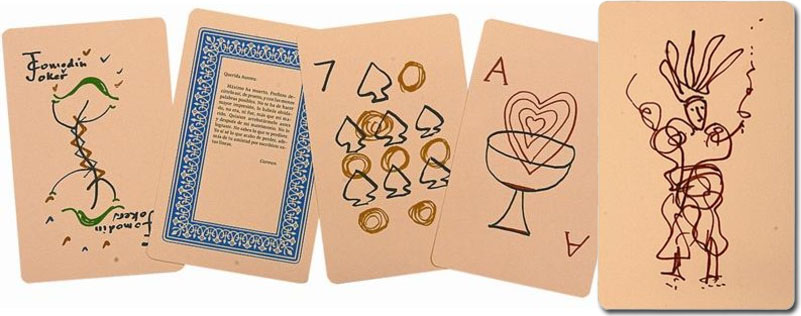
Aunque Max Aub nació en París en 1903, al ser  su padre alemán y su madre judía francesa, llegó pronto a España, el lugar más a mano para escapar a los peligros de la Gran Guerra. Aub se convertiría en escritor español, pero la Guerra Civil lo devolvió a Francia. Tras ser denunciado en 1940 por el gobierno de Franco al gobierno colaboracionista de Pétain, fue deportado al campo de concentración de Djelfa, en Argelia. Con la aquiescencia de uno de los guardias huyó a México, donde vivió hasta su muerte en la colonia española con una cuádruple ciudadanía (alemana, francesa, española y mexicana). Allí compuso en 1962, junto con el pintor cubista catalán Jusep Torres Campalans —un rival de Picasso inventado por Aub cuatro años antes— un tipo genial de novela formada por ciento seis naipes. Las caras de los naipes las dibujó Campalans como una libre paráfrasis de la baraja francesa, y en en los dorsos se leen ciento seis cartas sobre el misterioso Máximo Ballesteros. Su compleja figura surge de estas ciento seis cartas diametralmente contradictorias. El jugador que primero da una imagen verosímil de su personalidad gana el juego.
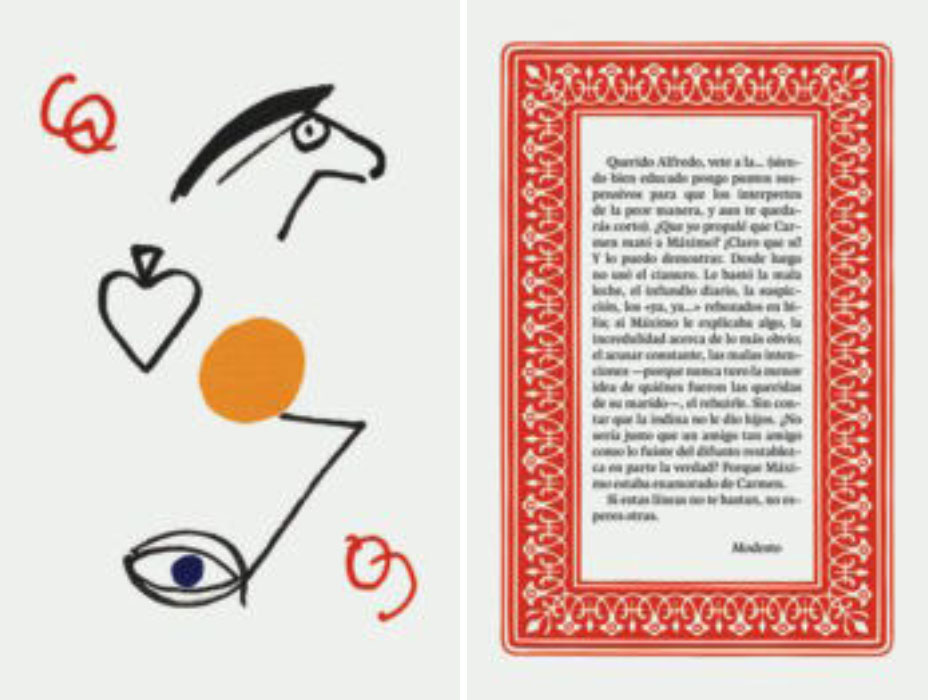

Aub publicó este mazo con la ayuda de otro exiliado —éste una persona real—, el gallego Alejandro Finisterre (nomen est omen). Tiró sólo 300 ejemplares como regalo de Navidad para sus amigos, y desde entonces el precio de estos originales en la web va creciendo hasta muchos miles de euros. En estos días vuelve a estar en circulación editorial, casi cincuenta años después, gracias a la labor de la editorial granadina Cuadernos del Vigía.

La novela escrita en forma de baraja nos recuerda otros juegos en los que naipes y literatura se encuentran sobre la misma mesa. La forma más simple es cuando las figuras de las cartas son personajes o autores literarios. El primer ejemplo que conocemos es una baraja de Hamburgo, de 1787 que se conserva en el Museo Peterhof de Cartas donde las figuras de los cuatro palos pertenecen a cuatro dramas de Shakespeare, Hamlet, El rey Lear, Macbeth y Enrique V.


La baraja de Pushkin fue diseñada por V. A. Mishin a petición de la prestigiosa editorial de naipes Piatnik para celebrar el bicentenario de Pushkin en 1999. Las cuatro sotas son: el mismo Pushkin (1799-1837) y sus contemporáneos Anton Delvig, compañero de secundaria; Aleksandr Griboedov, embajador de Rusia que fue linchado en Teherán y cuyo ¡Ay de Wit!, brillante sátira de la alta sociedad de Moscú, sigue siendo una de las obras más representadas en Rusia, y Petr Vyazemsky, magnífico poeta, amigo de Pushkin, cuyos versos también se citan en el Onegin. Las cuatro reinas lo fueron en el corazón de Pushkin: Natalya Goncharova, su esposa; Evdokiya Golitsyna, la «Princesa de la Noche»; Elizaveta Vorontsova, modelo de la Tatiana de Onegin, y Anna Kern, a quien escribió «el poema de amor más bello de la literatura rusa» (Я помню чудное мгновенье / Recuerdo un momento maravilloso...). Los cuatro reyes —qué otra cosa podrían ser— son los cuatro los zares Alejandro I (1801-1825) y Nicolás I (1825-1855) gobernantes durante la vida de Pushkin, y Boris Godunov (1598-1605) y Pedro I (1682-1725), héroes de su tragedia Boris Godunov y de su poema épico El jinete de bronce. Finalmente los dos comodines son Pavel Voinovich Nashchokin, el mejor amigo de Pushkin y el excéntrico conde Fedor Ivanovich Tolstoi llamado «El Americano», un rival de Pushkin cuya pasión por jugar a las cartas satirizó en el poema Para Chaadaev. Sólo esta reunión de figuras concretas y las relaciones establecidas entre ellas suscitan un sofisticado mundo, complejo social y literariamente, la Edad de Oro de Rusia para aquellos jugadores capaces de apreciarlo.


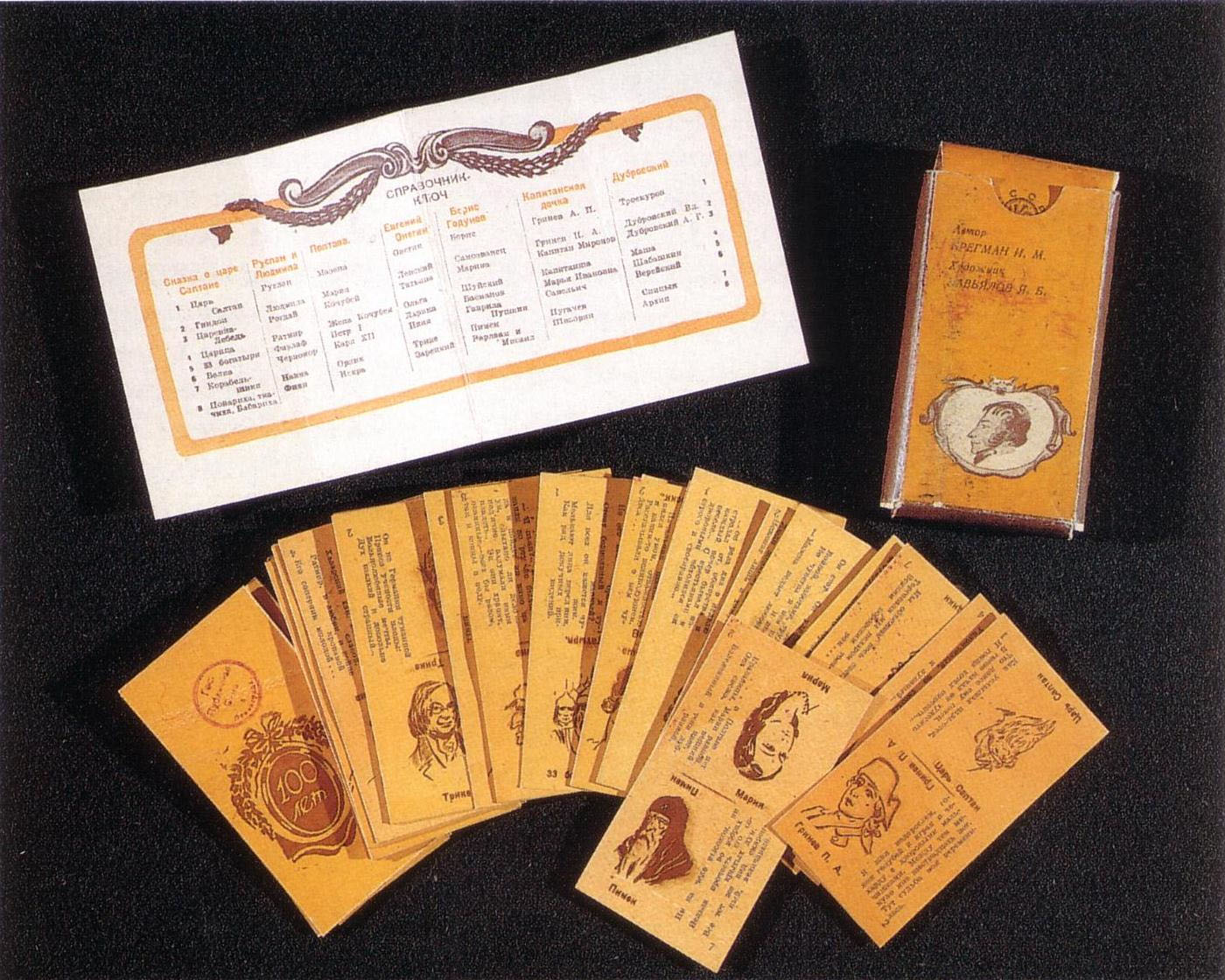
También apareció un juego de cartas, o mejor un dominó en forma de naipes, en 1937 con motivo del centenario de la muerte de Pushkin. Se ilustró con imágenes de sus héroes y, bajo de sus efigies, los versos más memorables que ellos evocan. Gracias a este dominó, y a tantas otras ayudas para la memoria de parecido tenor, estos versos salpican continuamente los lugares más inesperados de la literatura rusa contemporánea.

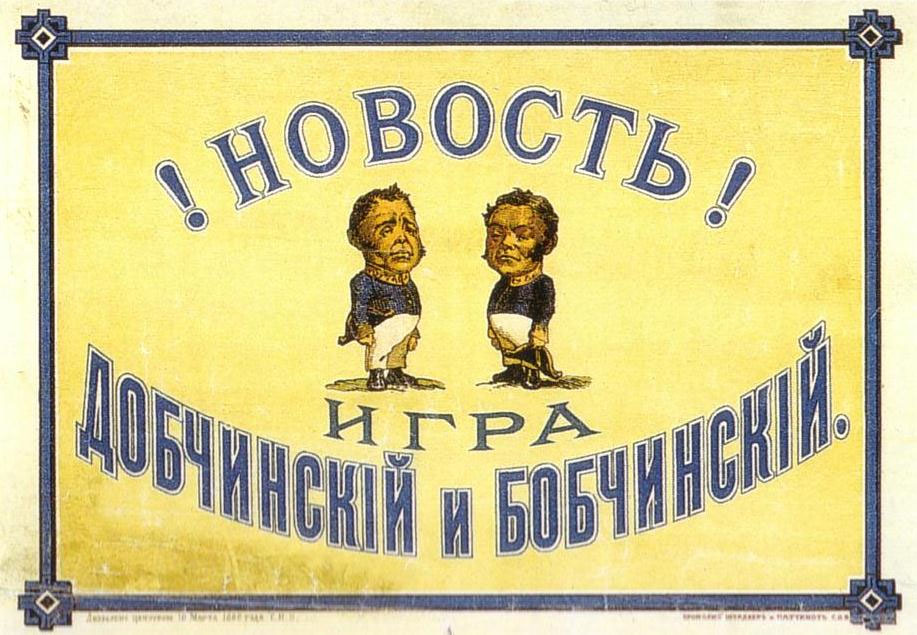
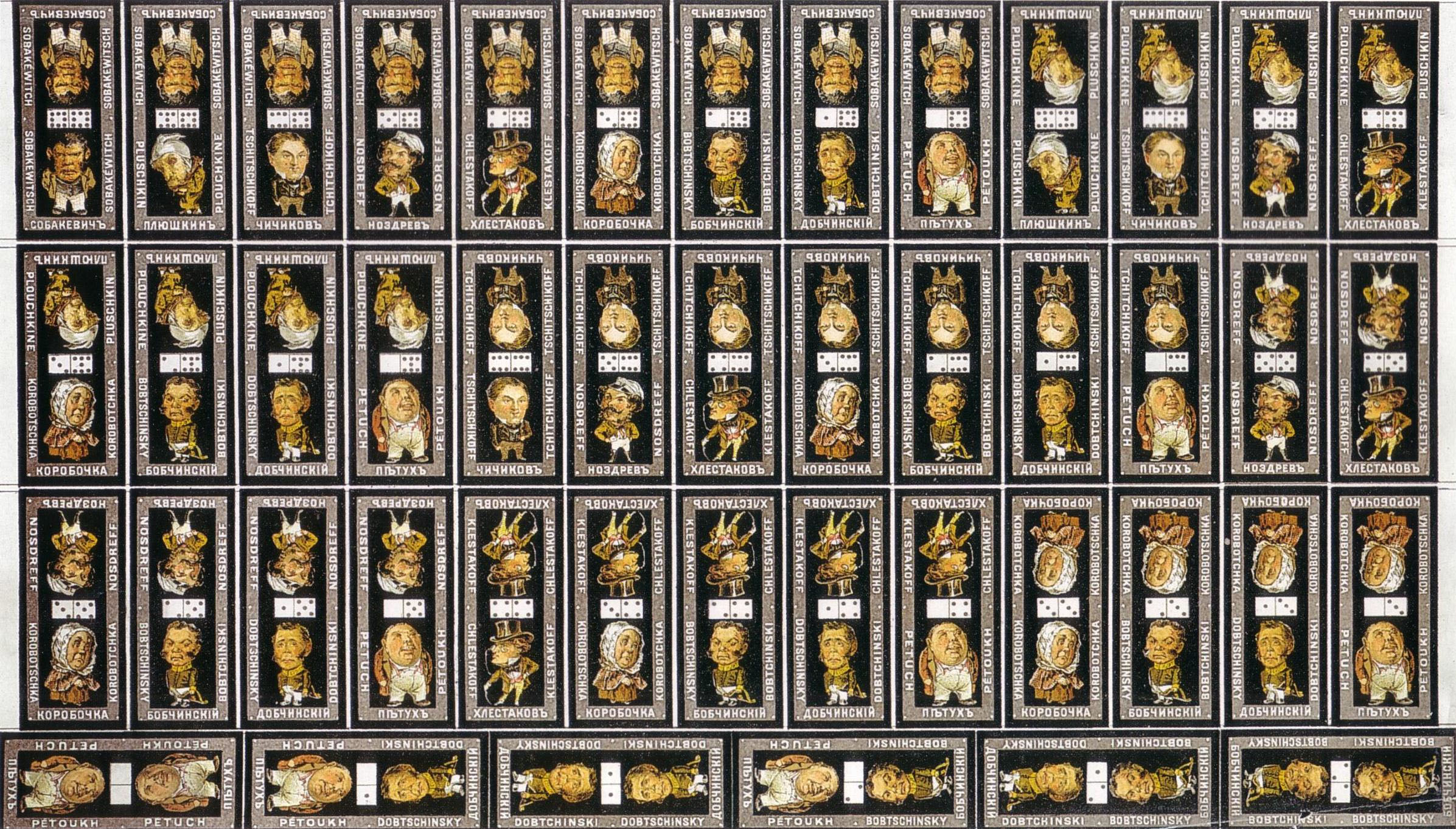
El dominó de Pushkin contó con un precedente en la obra «Dobchinsky y Bobchinsky» de 1882, que debe su nombre a dos figuras principales del Inspector General de Gógol  —«dos pequeños hombres siempre curiosos, tan parecidos como dos huevos, ambos con un poco de tripita, ambos de hablar rápido y gesticulante»-. Las figuras de Gógol aparecían también en un juego de dominó. Si ampliáis la segunda imagen de abajo veréis el juego completo.


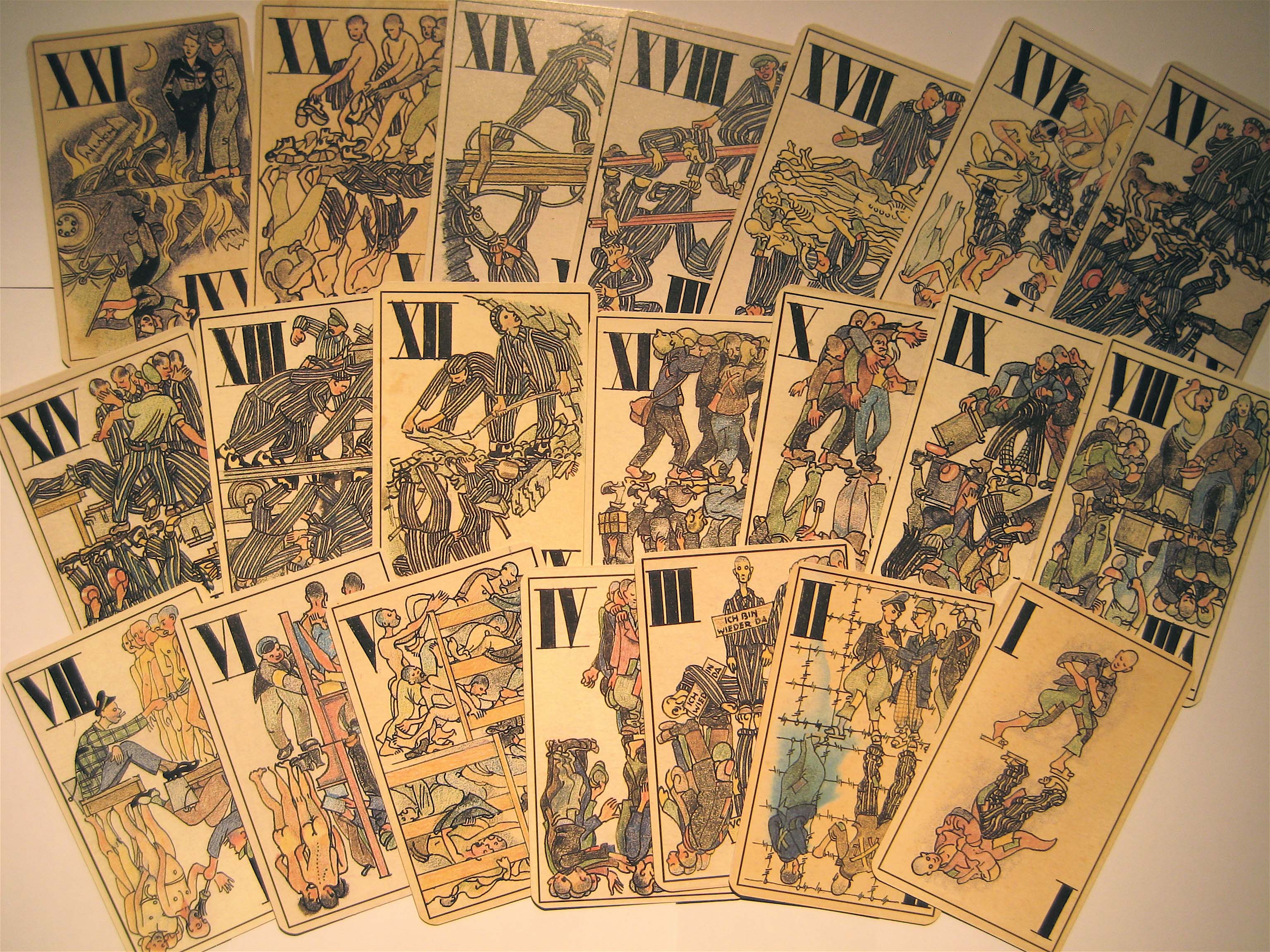
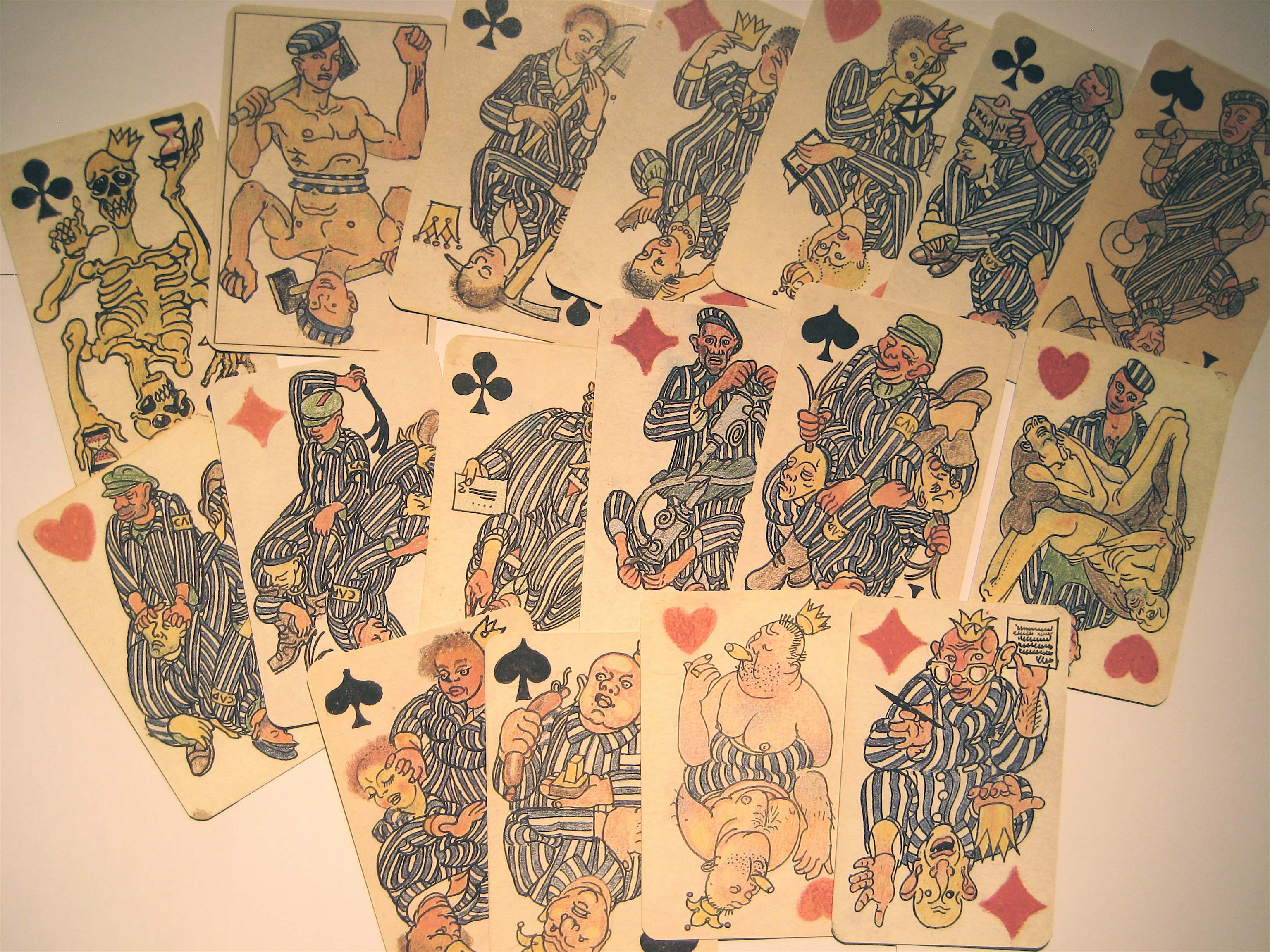
Sin embargo, la baraja más cercana a la novela de naipes de Max Aub es la que hizo el arquitecto y pintor esloveno Boris Kobe (1905-1981) en el campo de concentración de Dachau-Allach. Las cartas representan escenas cotidianas de la vida de los trabajadores forzados, con un énfasis en la crueldad de los kapos. A primera vista podríamos pensar que las tarjetas hechas a mano se hicieron para los escasos momentos de relajación en el campo. Sin embargo, la tarjeta número 21, que representa la bandera eslovena y dos soldados estadounidenses entre las ruinas humeantes del campo, muestra que la baraja se hizo solo después de la liberación del campo en abril de 1945. Y si es así, entonces los dibujos son una crónica de los sucesos del pasado para ser leída en un orden opcional, al igual que la novela de Aub, y utilizando el disciplinado formato de una baraja de cartas para estilizar y hacer representable del horror vivido.


Cards as literature


Although Max Aub was born in Paris in 1903, nevertheless since his father was a German and his mother a French Jew, therefore Spain was the nearest place where both could survive the Great War without internment. Aub thus grew up as a Spanish writer. Аfter the Civil War he emigrated to France, but as in 1940 he was denounced by the government of Franco to that of Pétain, he was deported to the concentration camp of Djelfa in Algeria. With the help of a guard he fled to Mexico, where he lived until his death in the Spanish colony with a fourfold citizenship. There he composed in 1962, together with the Catalan Cubist painter Jusep Torres Campalans, a rival of Picasso, created by him four years earlier, that genial genre of a novel which consisted of a hundred and six cards. The faces of the cards were drawn by Campalans as a free paraphrasis of French cards, and on their back a hundred and six letters are to be read about the mysterious Máximo Ballesteros. His complicated figure emerges from these hundred and six, diametrically contradictory letters, and the player who first gives a credible picture on his personality wins the game.


Aub published the pack with the help of another – but really existing – Spanish exile, the Galician Alejandro Finisterre (nomen est omen) in only three hundred copies as a Christmas gifts to friends, and since then the price of the copies sold over the web has grown to many thousands of euros. The work was made available again after nearly fifty years in these days by the Granada publisher Cuadernos del Vigía.


The novel written in the form of a deck recalls some other games in which cards and literature meet each other. The simplest version is where the ranks of the cards are literary figures. The earliest example known to me is the 1787 Hamburg deck from the Peterhof Card Museum where the ranks of the four suits are the figures of four Shakespeare dramas, Hamlet, King Lear, Henry V and Macbeth.


The Pushkin deck was designed by V. A. Mishin on the order of the prestigious Piatnik card publisher for the Pushkin bicentenary of 1999. The four jacks are Pushkin himself (1799-1837) as well as his eminent contemporaries Anton Delvig, Pushkin’s high school classmate, Aleksandr Griboedov, the Russian ambassador lynched in Tehran whose Woe from Wit, a brilliant satire of the Moscow high society is still one of the most often played Russian plays, and Petr Vyazemsky, the splendid poet, Pushkin’s friend, whose verses are also cited in the Onegin. The four queens are four of Pushkin’s heart queens: Natalya Goncharova, Pushkin’s wife, Evdokiya Golitsyna, the “Night Princess”, Elizaveta Vorontsova, model of Tatyana in the Onegin, and Anna Kern, to whom he wrote “the most beautiful love poem of Russian literature” (Я помню чудное мгновенье / I remember a wonderful moment…) The four kings – who else could they be – are four czars, Alexander I (1801-1825) and Nicholas I (1825-1855) ruling in Pushkin’s life, as well as Boris Godunov (1598-1605) and Peter I (1682-1725), heroes of his tragedy Boris Godunov and his epic The bronze horseman. Finally the two jokers are Pavel Voinovich Nashchokin, Pushkin’s closest friend and the eccentric Count Fedor Ivanovich Tolstoy called “The American”, a notorious opponent of Pushkin, whose passion of card-playing was satirized in the poem To Chaadaev. Merely this bringing together of the figures and the relations between them recall a complex and sophisticated social and literary world, the Russian Golden Age for the initiated users of the cards


A set of cards, or rather card-shaped domino was also made back in 1937 for the centenary of Pushkin’s death, which was decorated with the images of his heroes and, beneath them, the most memorable verses evoking them. Thanks to this domino and many other similar aids of memory, these verses pop up in the most unexpected places in the contemporary Russian literature.


The Pushkin domino had its precedent, the “Dobchinsky and Bobchinsky Play” of 1882 which got its name from two main figures of Gogol’s Inspector-General – “two ever-curious small men, similar to each others like two eggs, both with a little belly, both speaking quickly and gesticulate a lot” – and which also presented the figures of Gogol in the form of a domino. The central panel below is only a detail of the full set which can be seen by clicking on it.


However, the deck that is the closest to Max Aub’s card novel is the one produced by Slovenian architect and painter Boris Kobe (1905-1981) in the Dachau-Allach concentration camp. The cards depict the everyday scenes of the life of forced laborers, with an emphasis on the cruelty of the kapos. At first glance we might think that the hand-drawn cards were made for the rare moments of relaxation in the camp. However, card number 21 which represents the Slovenian flag and two American soldiers at the burning ruins of the camp shows that the deck was made after the liberation of the camp in April 1945. And if so, then the drawings are a chronicle of the past events to be read in an optional order, just like the novel of Aub, and they use the disciplined format of the card deck to stylize and render utterable the horror experienced.


Szék


24 August, St. Bartholomew’s Day is a day of mourning not only for the Calvinists of France, but also for those of Szék (Sic). It was on this day that the Tartars devastating all northern Transylvania burned the town in 1717. The bulk of the population were killed or deported. The survivors who are still wearing black, made a vow to attend on the anniversary of the tragedy penitential service three times a day. And although nowadays the majority of the inhabitants of Szék work in the big cities or abroad – as in the village there is almost no job –, nevertheless on this day everyone comes home.


I also wanted to be there on Bartholomew’s day in this year, to meet our friends after the two devastating floods that hit Szék in this year, to give over to them the money collected by the readers of Río Wang, and to ask them about their plans and opportunities. But in the end it happened otherwise: the money went there, but I had to stay at home. And the opportunities also unraveled only slowly in the course of the last months. At first, it seemed that the local self-government would give land for free to the victims on which they would build their houses by their own efforts. Then it was rumored that they would receive cash assistance to buy vacant houses in the village. Finally, as it is usual in Transylvania, everything was completely different. The self-government did not give anything, and they have not even distributed yet the money collected by all the inhabitants for their fellow villagers. However, someone managed to obtain some public assistance for the victims in the form of a certain amount of bricks and cement, so in the last month whoever could began to build. Our friends were twice lucky: on the one hand, they could buy from the inheritance of some relatives, for a very low price – 2500 new lei, ca. 600 euros – a small land of about 500 square meters, and on the other hand, due to the readers of Río Wang, they also had the cash to immediately pay it, and the rest served for a first part of the building materials not covered by the public assistance. In these days they complete the walls of the new house, but for the roof and the interior they have to collect more, and they can continue the work only in the spring.


By clicking here you can send via PayPal or from bank card any amount to the flood victims of Szék. We will send a receipt of each donation. Thank you for your help.
After Christmas, the family of four members will come to Budapest, so until the school begins for the two schoolgirls they could be together for a while – as now they live with different relatives scattered around –, and could find some temporary job. We ask our readers that if you can,  no matter with how little, please contribute to the construction costs via PayPal or bank transfer (we will send the account number on request). We will give over to them the money accumulated in the week after Christmas, and we hope that in the spring, when visiting Szék, we can already report with photos about the outcome.


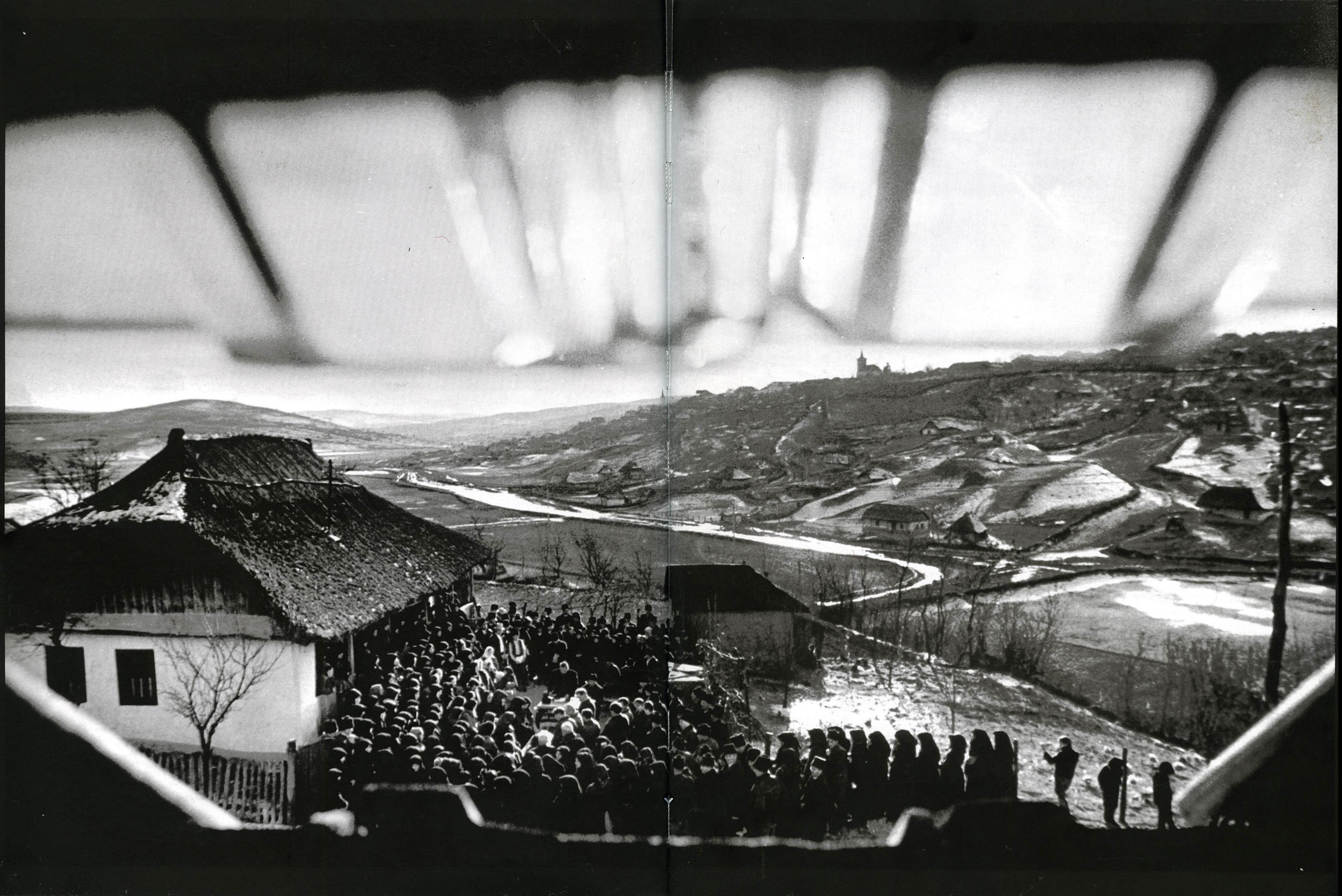
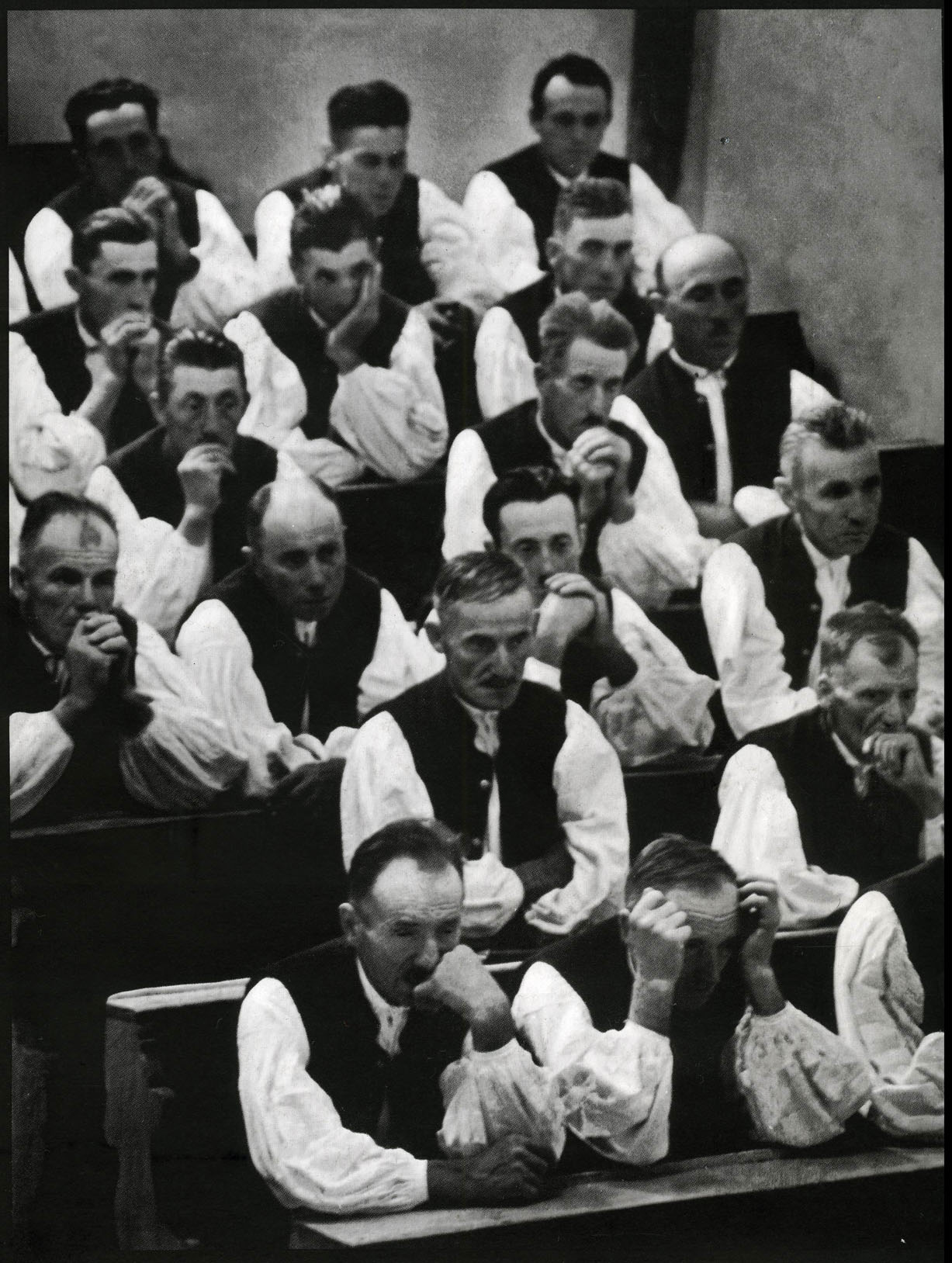
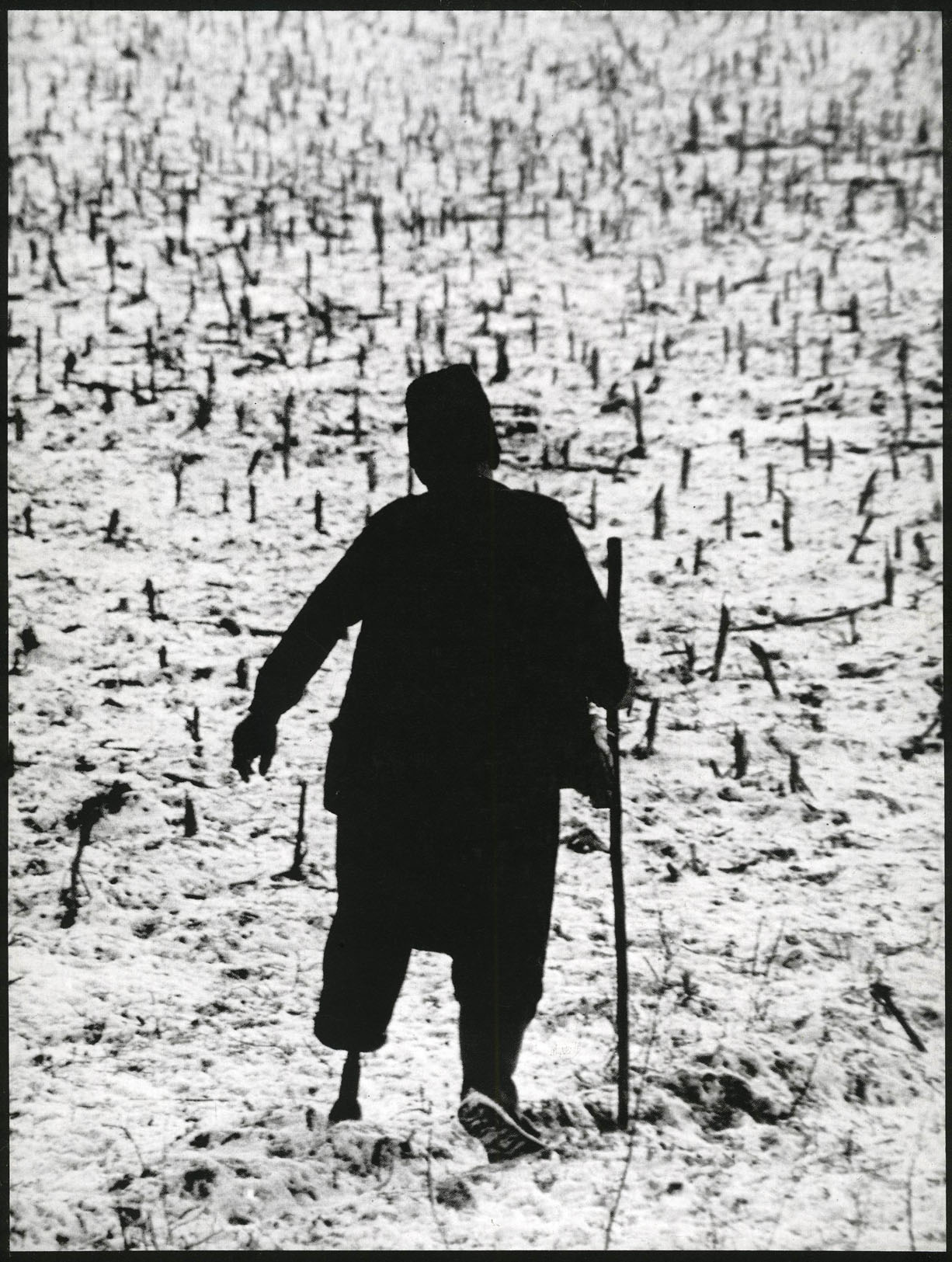
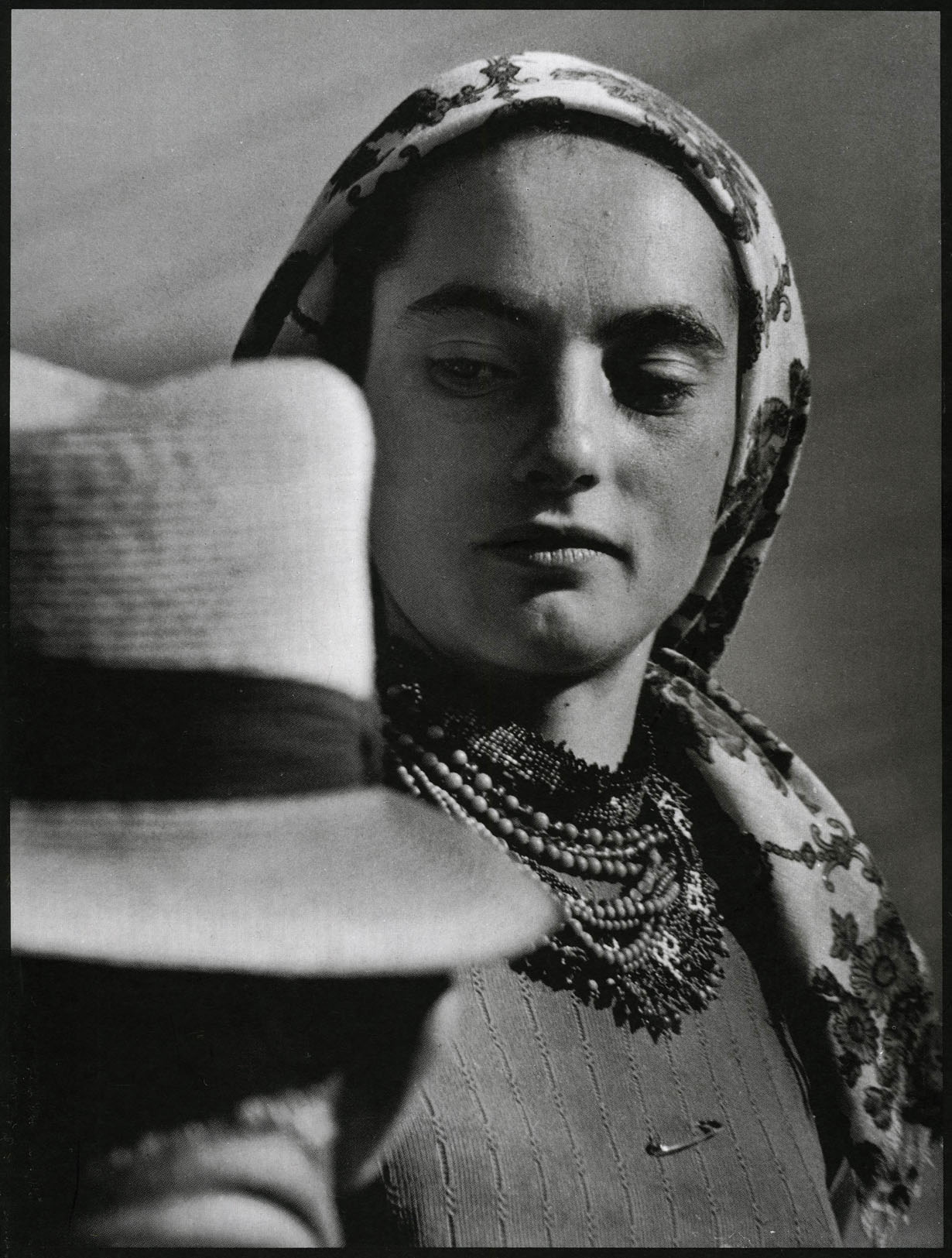
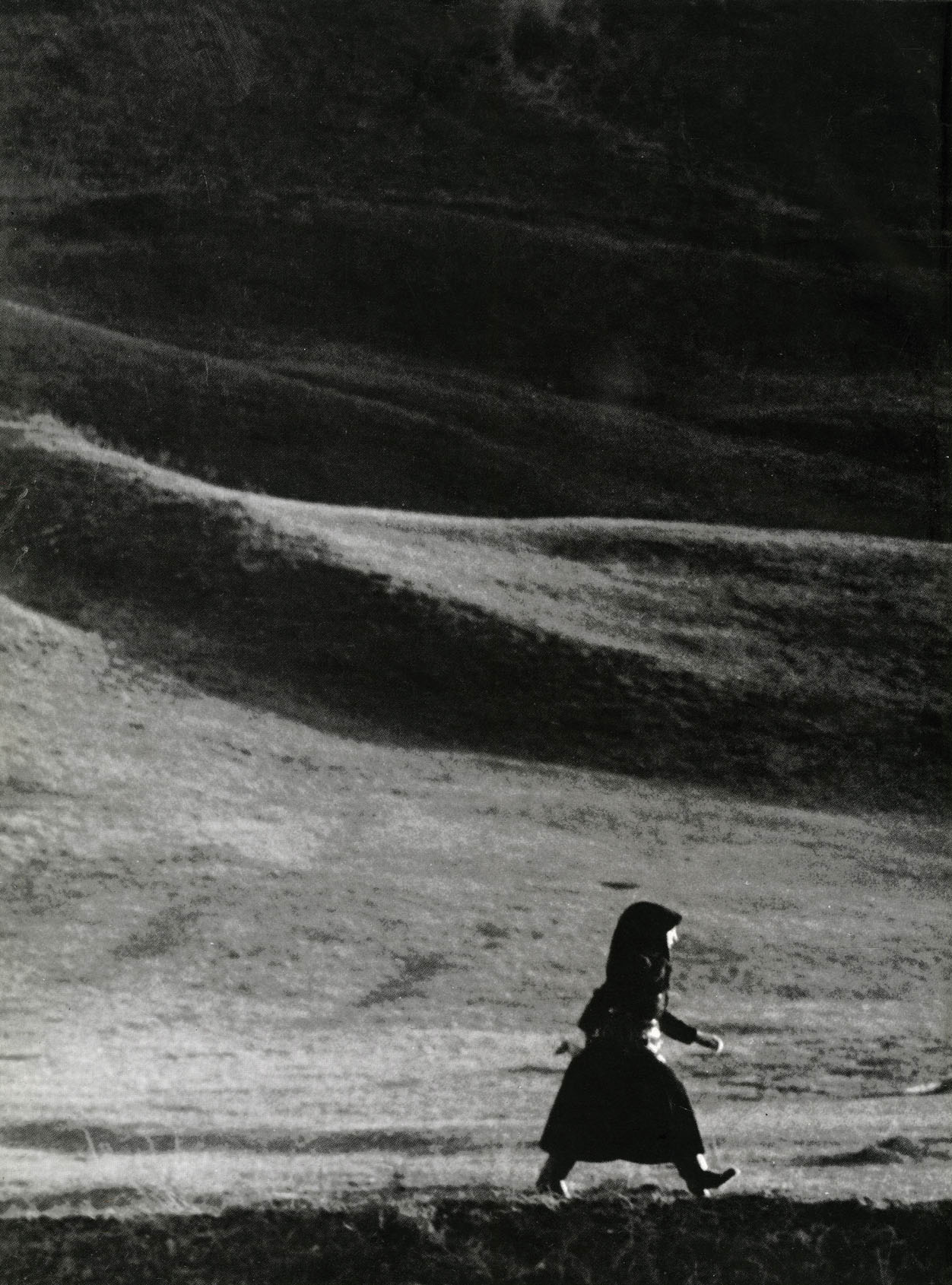
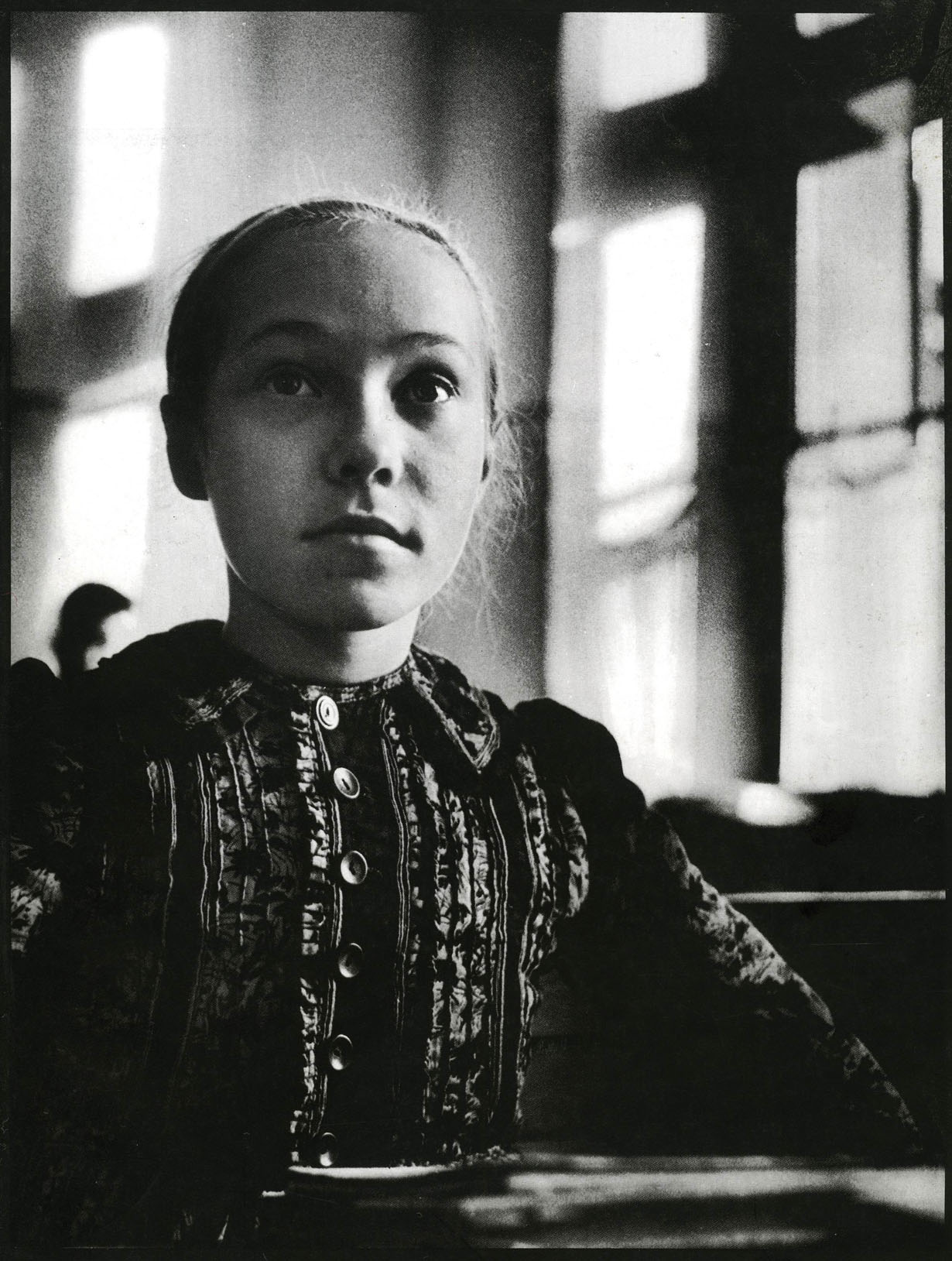
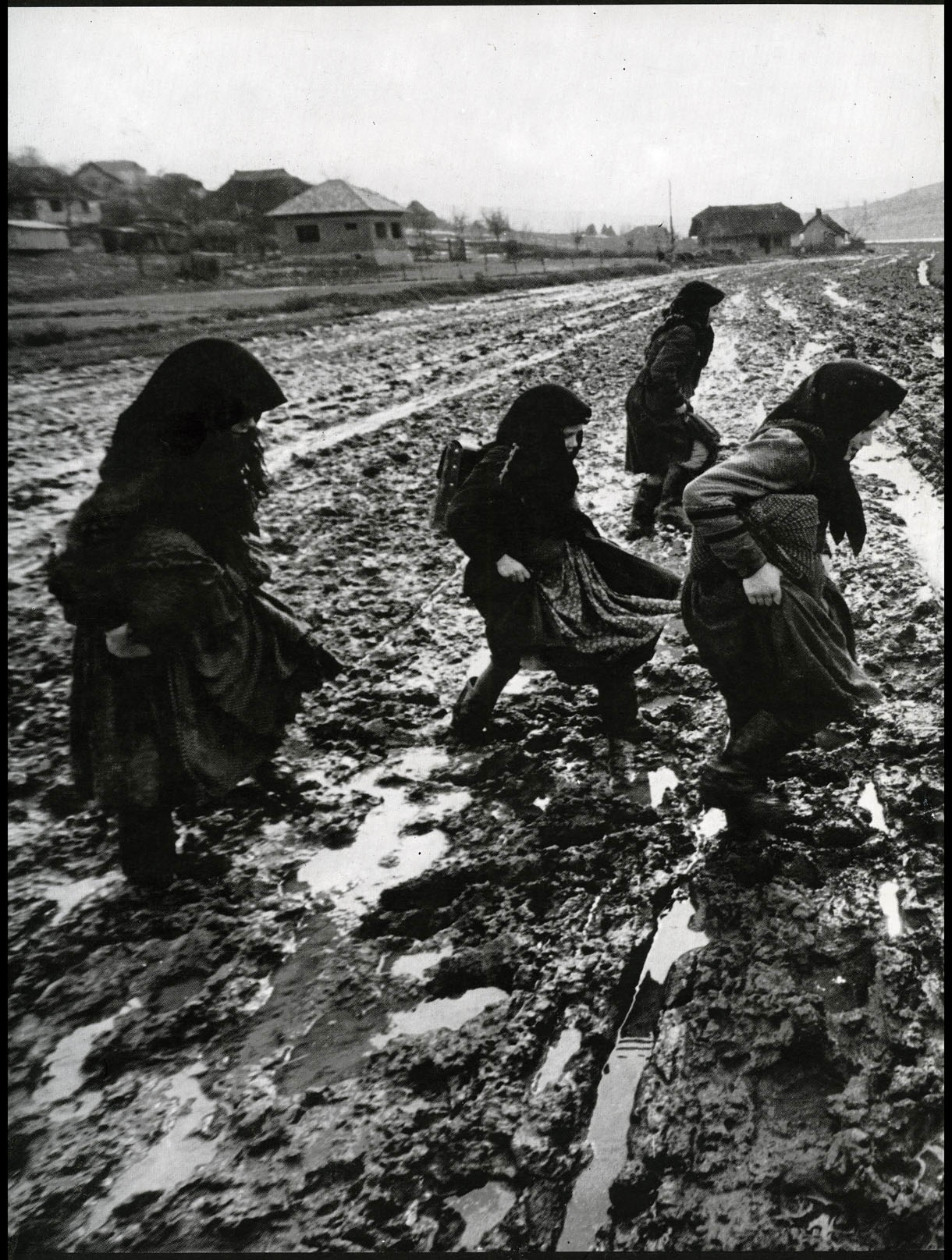
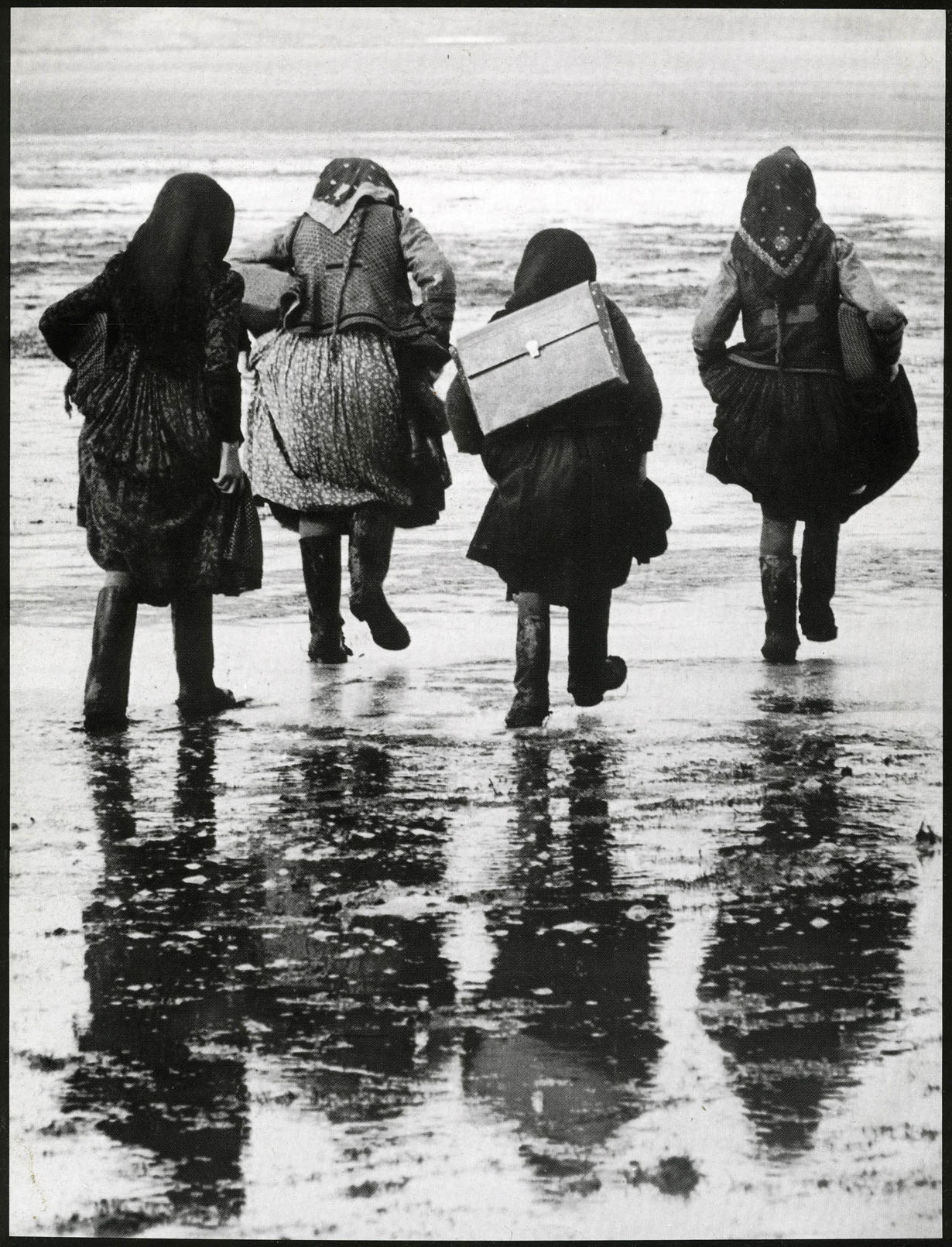
In the meantime, we illustrate this post with the photos by renowned artist Péter Korniss. He has been visiting Szék since 1967, and in his album Past time (1979) he also published the wedding photos of our common friends – not the victims of the flood, but a different couple. Thirty years later, in 2008 we photographed together on the wedding of our friends’ daughter. We illustrated with our photos made at that time our previous post on Szék, while he included in his album Ties: 1967-2008 side by side the wedding photos of the parents and the children. That is the only album in our possession dedicated to us both by the photographer and the models.


Interior castle


The compositions of Johann Sebastian Bach completely miss
beauty, harmony and, essentially, clarity.
(Johann Adolph Scheibe, Der critische Musikus, 1737)

Today, on the feast of Saint John of the Cross we have completed the Hungarian translation of the Interior castle by Saint Teresa of Ávila, the greatest work of Christian mysticism, on which we have been working since this spring. A lot of splendid words have been written on the work and its author in the past four and half centuries. On this occasion let us recall one of the earliest opinions, told by the papal nuntius Felipe Sega when, on 29 August 1577, with a staff of fifty persons, secretaries, pages, stewards, cooks, barbers and coachmen he arrived to Madrid to abolish the reforms of the Carmelitan order on which Teresa had been working for all her life.

Fémina inquieta, andariega, desobediente y contumaz, que a título de devoción inventaba malas doctrinas, andando fuera de la clausura contra el órden del concilio tridentino y prelados, enseñando como maestra contra lo que San Pablo enseñó, mandando que las mujeres no enseñasen.

A troublesome, restless, disobedient, and stubborn female, who under the guise of devotion invented bad doctrines, running around outside the cloister against the order of the Tridentine Council and prelates, instructing like a teacher in defiance of what St. Paul taught, who ordered women not to teach.

Teresa is today considered one of the thirty-three Doctors of the Catholic church. And Sega is indebted to this quote for the fact that, besides some specialists, anyone knows he ever existed.

Linguistic record

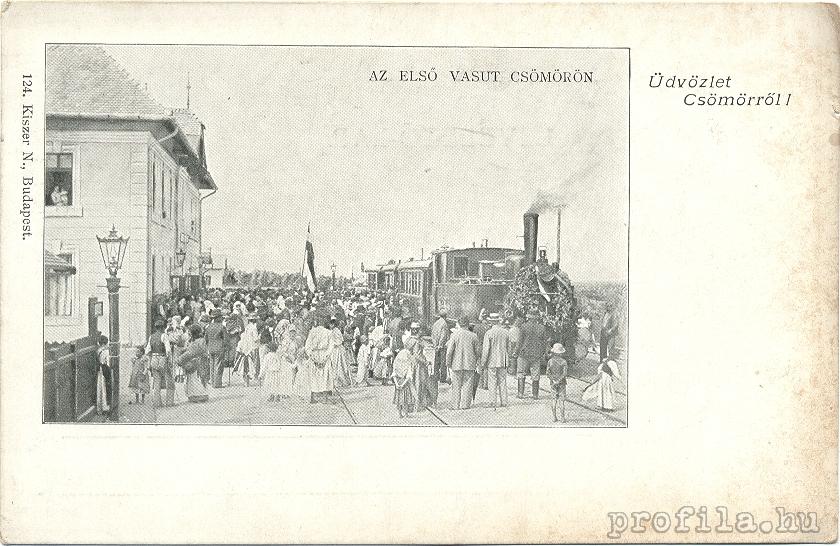
“The first railway in Csömör” – “Greetings from Csömör!” Postcard from ca. 1896

Fifteen years ago when we came to this village, the old people still spoke among themselves in Slovak, or as they told, in “Tót”, thus making a sharp distinction between the literary Slovak language – which they of course knew and read – and the archaic dialect they brought with themselves from the northeastern Carpathians when, in the early 1700s, they descended to the hills around what is now Budapest to repopulate the villages destroyed during the previous hundred and fifty years of Ottoman domination. Ľudovit Štúr’s Nárečia Slovenskuo which more than a century later, in 1844 proclaimed the autonomy of Slovak language and established its grammar, already did not reach them. They have kept speaking until this day their dialect, close to Rusyn and enriched both by the language of their 17th-century Lutheran Czech hymn and prayer books and by lots of Hungarian terms. I also picked it up from them much earlier than I learned literary Slovak on the language course run by the local  self-government of Slovak ethnic minority.

Slovak women in Csömör on the Ecumenical Prayer Day traditionally organized on 20 August (2010)

This language variant, however, exists only in an oral form. They consider its written form the literary Slovak they encounter in the newspaper Ľudové noviny circulated by the minority self-government, in the books sent from Slovakia by the relatives resettled there during the forced population exchange between 1947 and 1949, or in the minority language courses introduced in the school from the 1950s. However, recently I have discovered with surprise that it used to have a written form of its own which was in use since their arrival to this place for more than a century until it was replaced by Hungarian as an official language.

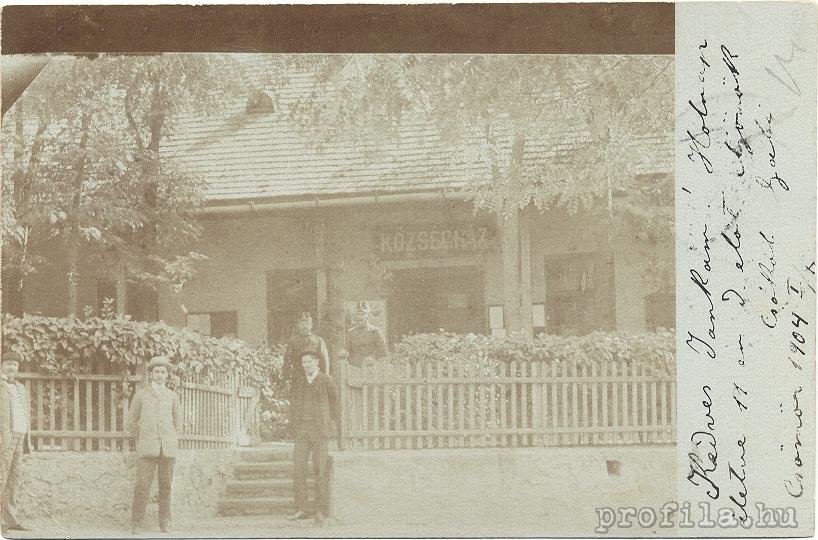
Csömör, Parish Hall, 1905

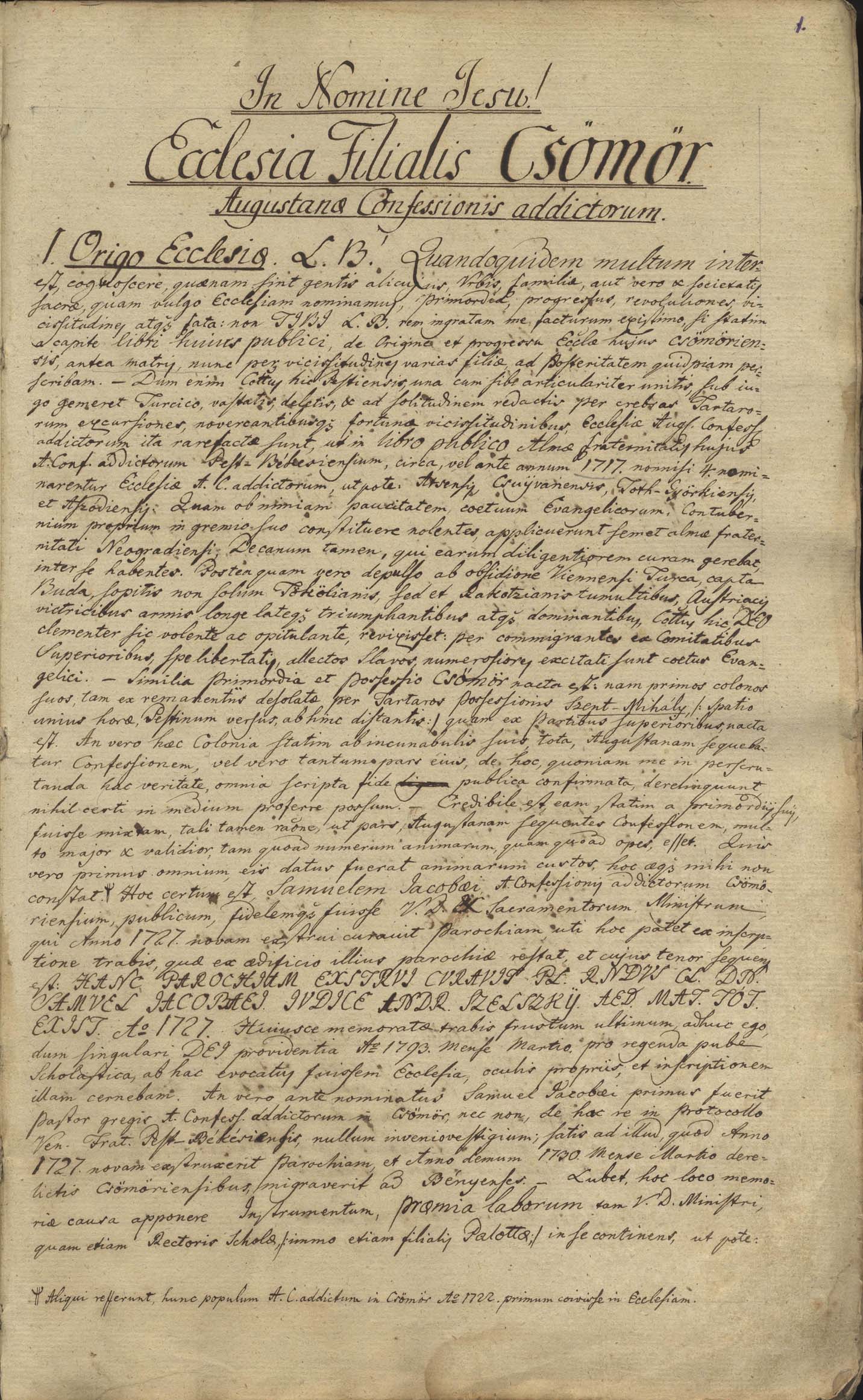
While working on the homepage of the local Lutheran church and collecting materials for the historical part of it, I discovered on the attic of the vicarage an old handwritten book describing in Latin the history of the local Lutheran community since their arrival in the early 1700s until the mid-1800s. This manuscript offered so many new data on the history of the parish and of the village that we decided to publish it in its entirety in a separate library of the Lutheran homepage as a facsimile with transcription and translation. This library was solemnly opened today, on the anniversary of the church’s foundation by pastor Gyula Johann.

Head of the first page of the Lutheran community’s handwritten history, from here

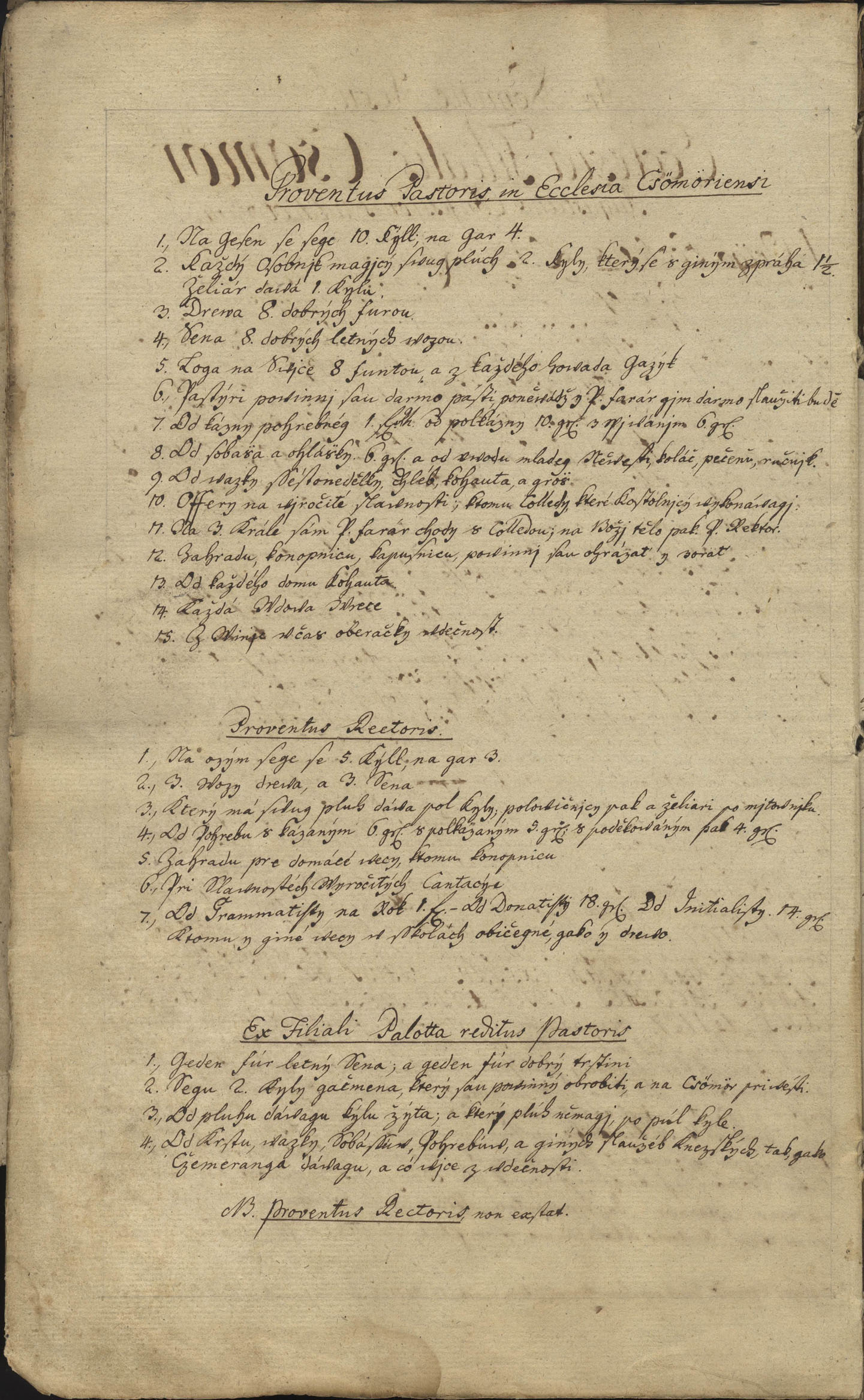
On the first few pages of the manuscript the local schoolmaster Ján Klinger summarized in 1798 the history of the community in the eighty years that had passed since their settlement in Csömör. He also quoted a number of since then lost documents from the archive of the vicarage, including the two letters of invitation sent by the community in 1722 to their future pastor Samuel Jacobeus and then in 1793 to him as a schoolmaster. While such letters, describing in detail the provisions offered by the community, were usually written in Latin at that time, these two, as a curiosity, were composed in the local Slovak dialect of the community mixed with old church Czech. It is this mixture and the local terms that make its translation difficult, so we will be grateful for any correction by our readers.

Letter of invitation to pastor Samuel Jacobeus and to the Lutheran schoolmaster, Csömör, ca. 1722 (copy, 1798), from here

Proventus Pastoris in Ecclesia Csömöriensi

1. Na gesen se sege 10. kýll; na gar 4.
2. Každý Osobnik magjcý swug plúch 2 kyly, který se s ginným zpráha 1½. Želiár dawá 1 kylu.
3. Drewa 8. dobrých furou.
4. Sena 8. dobrých letných wozou.
5. Loga na Swjce 8 funtou a z každého howada gazýk
6. Pastýri powinnj sau darmo pásti, ponĕwádž y P. farár gjm darmo slaužiti budĕ
7. Od kázny pohrebnég 1. flh. od polkázny 10. grs. z wywánjm 6. grs.
8. Od sobaša a ohlášky 6. grs. a od wwodu mladeg Nĕwesti, koláč, pečenŭ, ručnjk.
9. Od wazky Šéstonedĕlky, chléb, kohauta, a groš.
10. Offery na wjročité slawnosti, ktomu Colledy, které kostolnjcý wykonáwagj.
11. Na 3. Krále sám P. farár chody s Colledou; na Božj tĕlo pak. P. Rektor.
12. Zahradu, konopnicu, kapusnicu, powinnj sau ohrázať y zorať
13. Od každého domu kohauta
14. Každá Wdowa Wrete
15. Z Winjc wčas oberačky wdečnost.

Proventus Rectoris

1. Na ozým sege se 5. kýll; na gar 3.
2. 3. wozy drewa, a 3. Sena
3. Který má swug pluh dáwa pol kyly; polowičnjcy pak a želiári po mjtowniku.
4. Od Pohrebu s kázaným 6. grs. s polkázaným 5. grs. s podĕkowáným pak 4. grs.
5. Zahradu pre domácé wecy, ktomu konopnicu
6. Pri Slawnostéch Wyročitých Cantacýe
7. Od Grammatisty na Rok 1 fl.- Od Donatisty 18. grs. Od Initialisty. 14. grs. ktomu y giné wecy w Školách običegné, gako y drewo.

Ex Filiali Palotta reditus Pastoris

1. Geden fúr letný Sena; a geden fúr dobrý trstini
2. Segu 2. kyly gačmena, který sau powinný obrobiti, a na Csömör priwésti.
3. Od pluhu dáwagu kýlu žýta; a který plúh nĕmagj, po púl kyle.
4. Od Krstu, wazky, Sobášúw, Pohrebúw, a ginných slaužéb knezských, tak, gako Cžemeranga dáwagu, a có wjce z wdečnosti.
Provisions for the pastor in the church of Csömör

1. For autumn they sow for him 10 bushels of grain; for spring, 4 bushels
2. Every person who has his own plow gives him 2 bushels, who works with another’s plow 1½ bushel, a day laborer 1 bushel
3. 8 good cartful of wood
4. 8 good summer cartful of hay
5. Tallow for candles 8 pounds, and the tongue of every cattle
6. The shepherds are obliged to pasture for him for free, as the pastor will also serve them for free
7. For funerals with sermon [?] 1 forint [?], for half-funeral [?] 10 groschen, for the inscription [?] 6 groschen
8. For wedding and announcement 6 groschen, and for the introduction of the new bride, milk loaf, roast and wash cloth
9. For childbirth blessing [baptism?] bread, rooster and one grosch.
10. Gifts on the [funeral] anniversaries, plus the colledae collected by the parish-clerks
11. On Three Kings [Epiphany] the pastor himself goes to colleda, and on Corpus Christi the schoolmaster.
12. His garden, hemp field, cabbage-patch and vineyard will be fenced and dug up for him
13. A rooster from every house
14. Every widow will weave for him
15. Grape harvesters will give him an early gift of the harvest

Provisions for the schoolmaster

1. For autumn they sow for him 5 bushels, for spring 3 bushels
2. 3 cartful of wood and 3 of hay
3. Who has his own plow will give him a half bushel, those working on shares and day laborers according to their wealth
4. For funerals with sermon 6 groschen, for half-funerals [?] 5 groschen, for valedictory address 4 more groschen
5. A garden for vegetables and a hemp field
6. Cantacýe [?] for the anniversary feasts
7. From grammatists [upper classes] yearly 1 forint, from donatists [lower classes] 18 groschen, from initialists [pupils learning the alphabet] 14 groschen, to which are to be added the things necessary in the school as well as firewood

Provisions of the pastor from the curacy of Palota

1. One cartful of summer hay and one cartful of good reed
2. They sow 2 bushels of barley for him, which they are obliged to take care of and to carry to Csömör
3. They give one bushel of rye per plow, and who has no plow a half bushel
4. For baptism, blessing, wedding, funerals and other priestly services they give the same as those of Csömör, and something more as thanksgiving

Letter of invitation to Lutheran schoolmaster Ján Klinger, 1793 (copy, 1798), from here

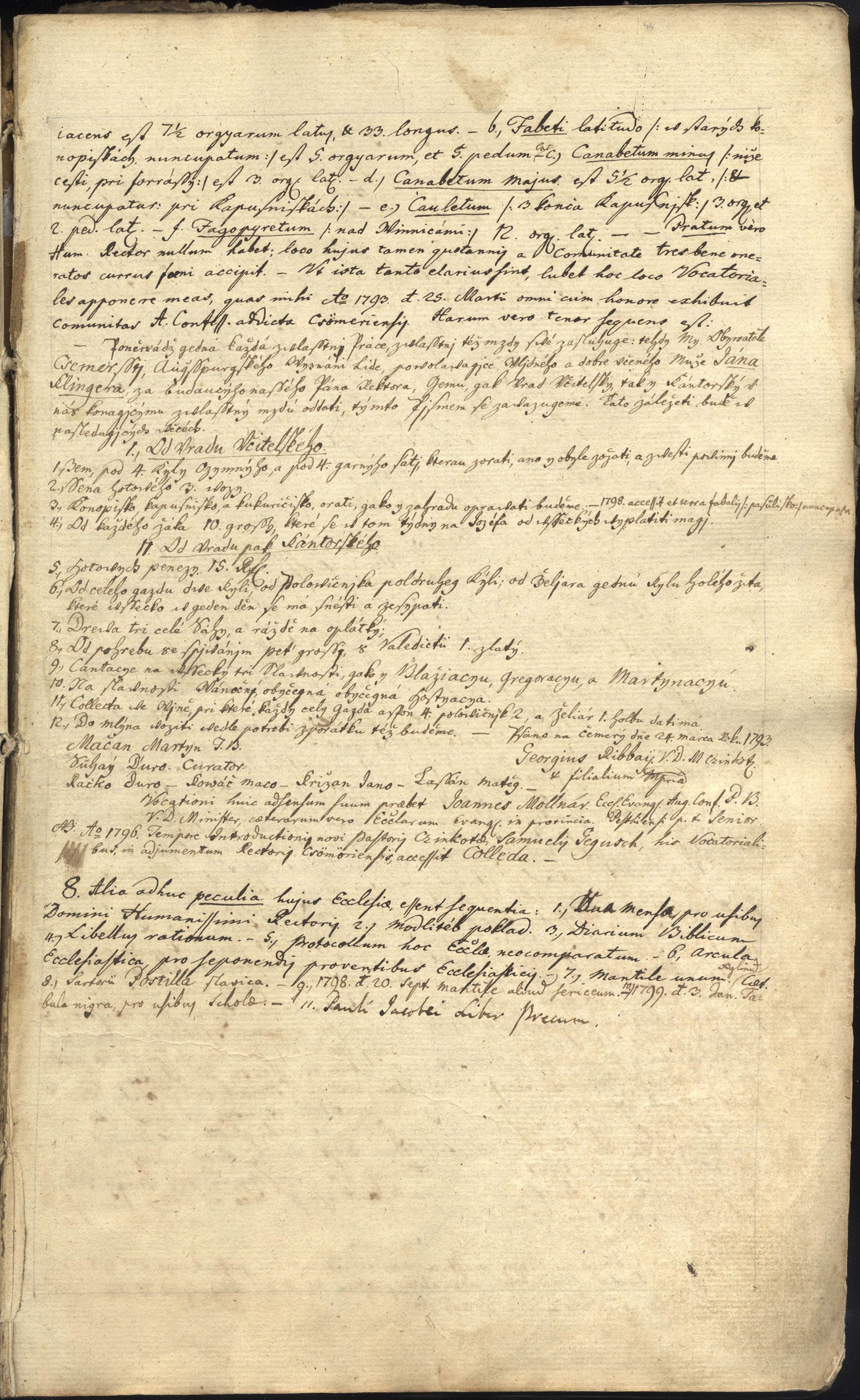
Poněwádž gedná každá zwlaštny Práce, zwlastny též mzdy swé zasluhuge: tehdy My Obywatěle Csemerštj, Augšpurgského Wyznáni Lide, powolawagjce Widného a dobre wčeného Muže Jána Klingera, za budaucýho našého Pána Rektora, Gemu, gak Wrad Wčitelšky, taky Kántorský w nás konagjcýmu zwlaštný mzdú oddati, týmto Pjsmem se zawazugeme. Tato záležeti budě w nastedugjcých wěcéch.

I. Od Wradu Wčitelského.

1.) Zem, pod 4. kyly Ozymnýho, a pod 4. garnýho sátj, kterau zorati, ano y obyle zožati, a zwesti powinnj buděme.
2.) Sena hotowého 3. wozy.
3.) Konopisko, kapusnisko, a kukuričisko, orati, gako y zahradi oprawati buděme. – 1798. accessit et terra fabalij (pasŭlisko) nuncupata.
4. Od každého žáka 10. grošý, které se w tom týdny na Jozéfa od wšeckých wyplatiti magj.

II. Od Wradu pak Kántorského

5. Hotowych penezy. 15. Rfl.
6. Od celeho gazdu dwe kýli, od Polowičnjka poldruheg kýli; od Željara gednú kylu holého žita, které wšecko w geden děn se má snésti a zesypati.
7. Drewa tri celé Sáhy, a ráždě na oplátky.
8. Od pohrebu se spjwánjm peť grošj, s Valedictii 1. zlatý.
9. Cantacye na wšecky tri Slawnosti, gako y Blažiacyu, Gregoracyu, a Martynacyú.
10. Na slawnosti Wánoční, obyčegná obyčegná hostyacya.
11. Collecta we Wjně, pri které každy cely gazdá aspon 4. polowičnjk 2, a želiár 1. holbu datimá.
12. Do mlýna woziti wedle potrebi zporátku též buděme.

– Psáno na Čemerý dne 24. marca Roku 1793. Georgius Ribbaij V. D. M. Czinkot. & filialium M[anu][pro]pria.
Mačan Martyn J. B.
Suhaý Ďuro. Curator
Račko Ďuro – Kowáč Mate – Križan Jano – Lašán Matěg.
As everyone works, therefore everyone deserves a wage. * So we, inhabitants of Csömör following the Confession of Augsburg (= the Lutheran creed), when inviting the respectable and erudite Ján Klinger as our future schoolmaster, oblige ourselves with this letter to give him payment both for his teacher’s and cantor’s duties. And it will consist in the following things.

I. For his teacher’s duties

1. We will be obliged to plow up, cultivate and care for his land sufficient for 4 bushels of autumn and 4 bushels of spring sowing.
2. 3 complete cartful of hay.
3. We will plow up his hemp field, cabbage-patch and cornfield, and will dig up his garden. [In Latin:] In 1798 was added also the bean field, called pasŭlisko.
4. 10 groschen from every student which each of them has to pay in the week of the day of St. Joseph.

II. For his cantor’s duties

5. In cash 15 Rhenish forints.
6. From every complete farmer two bushels of cleaned rye, from those working on shares one and half bushel, from day laborers one bushel to be brought to him and poured together on the same day.
7. Three complete heaps of firewood and lop as a payment.
8. For funerals with singing five groschen and for the valedictory sermon one gold.
9. Cantacye [?] for all three feasts, on the day of Blaise, Gregory and Martin.
10. On the feast of Christmas the usual hospitality.
11. A collecta of wine, that is at least 4 quarterns from every complete farmer, 2 quarterns from those on shares and 1 quartern from day laborers.
12. We will also carry [his grain] to the mill and pour it on the millstones.

Written in Csömör, on 24 March 1793. Ďuro Ribbai, pastor of Cinkota and its curacies m.p.
Martin Mačán, judge
Ďuro Suhai, curator
Ďuro Račko, Matej Kováč, Ján Križán, Matej Lašán

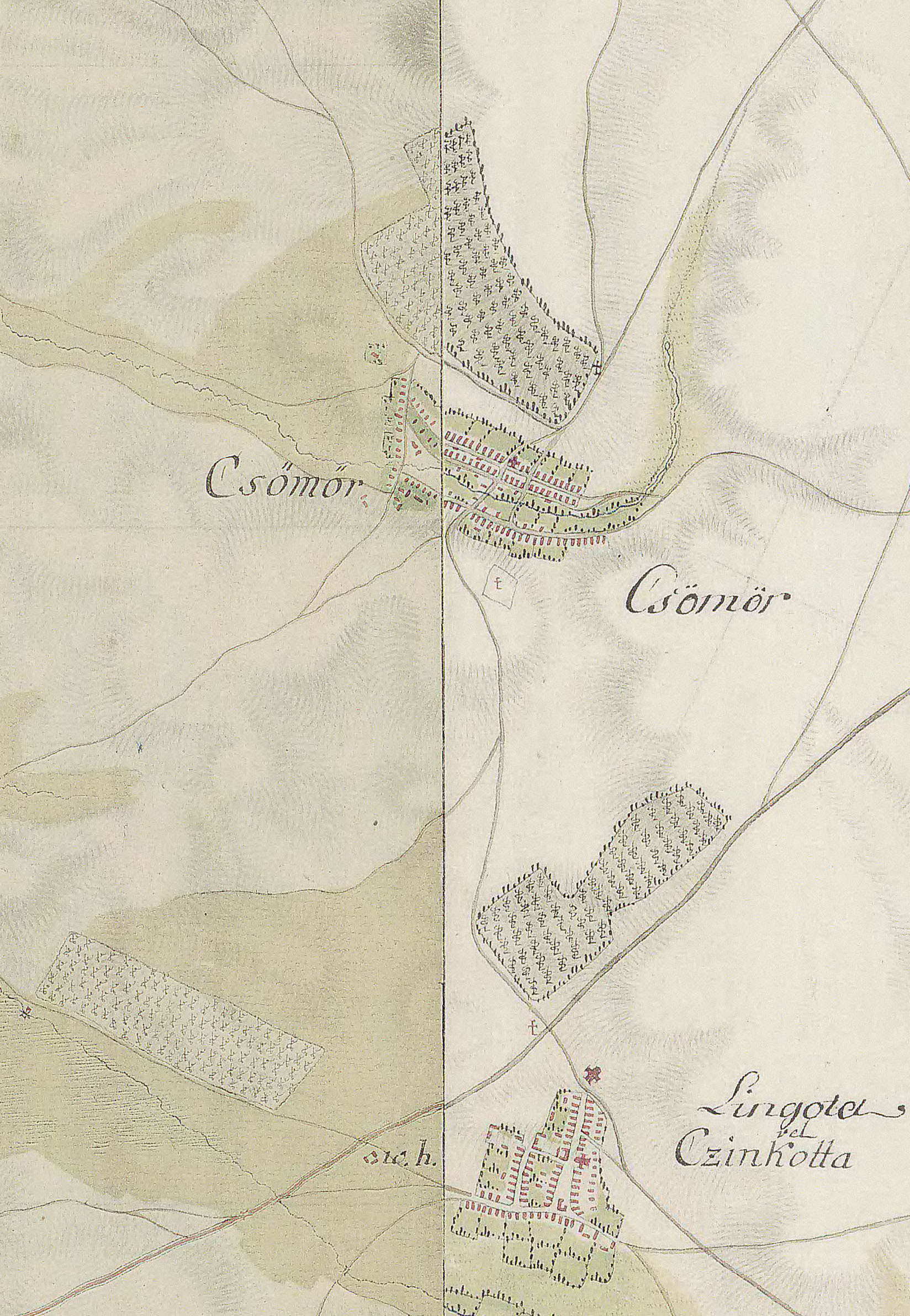
Map of Csömör from the first military survey of 1781, from here

Besides the two letters of invitation we also find some Slovak terms in the description of the lands of the church which specifies their location with their locally used Slovak names. Note the term pri forrášy, ‘at the spring’ borrowed from Hungarian forrás instead of literary Slovak prameň.

7. Terrae, et prata. – Inseminat D. H. Scholae-Rector de Lege 4. metr. pos. hyemalis, et 4. vernalis seminaturae. Terrae vero hae, non sunt singulatim excissae, sed adhaerent fundo pagensi. – Hortus vero infra Scholam – situs denique fabetum – canabetum, cauletum et fagopyretum sunt excissae. – Latitudo earum moderna, adinventa est sequens: a.) Hortus infra Scholae aedificium iacens est 7½ orgyarum latus, et 33. longus. – b.) Fabeti latitudo (w starých konopistkách, nuncupatum) est 5. orgyarum, et 5. pedum lat. – c.) Canabetum minus (niže cesti, pri forrášy) est 3. org. lat. – d.) Canabetum majus est 5½ orgy. lat. (et nuncupatur: pri kapustniskách) – e.) Cauletum (z konča kapustnjsk.) 3. org. et 2. ped. lat. – f. Fagopyretum (nad Winnicámi) 12. org. lat.7. Lands and fields. – The schoolmaster sows four Pressburg bushels in the autumn and four bushels in the spring. These lands are not marked off in one piece, but they join the lands of the village. – A garden under the school, furthermore a bean field, hemp field, cabbage-patch and buckwheat field have also been marked off for him. Their present location is found as follows: a) The garden laying under the school is seven and a half fathoms large, 33 fathoms long. – b) The bean field (as they say, v starých konopistkách [Slovak: in the old hemp field]) is 5 fathoms large and 5 feet long. – c) The smaller hemp field (niže cesti, pri forrášy [over the street, at the spring]) is 3 fathoms large. – d.) The larger hemp field is 5 and a half fathoms large (and is called pri kapustniskách [at the cabbage-patch]). – e.) The cabbage-patch (z konča kapustnisky [from the end of the cabbage-patch]) is 3 fathoms long and 2 feet large. – f.) The buckwheat field (nad vinicami [over the vineyards]) is 12 fathoms large.

Horsemen surveying the fields of Csömör

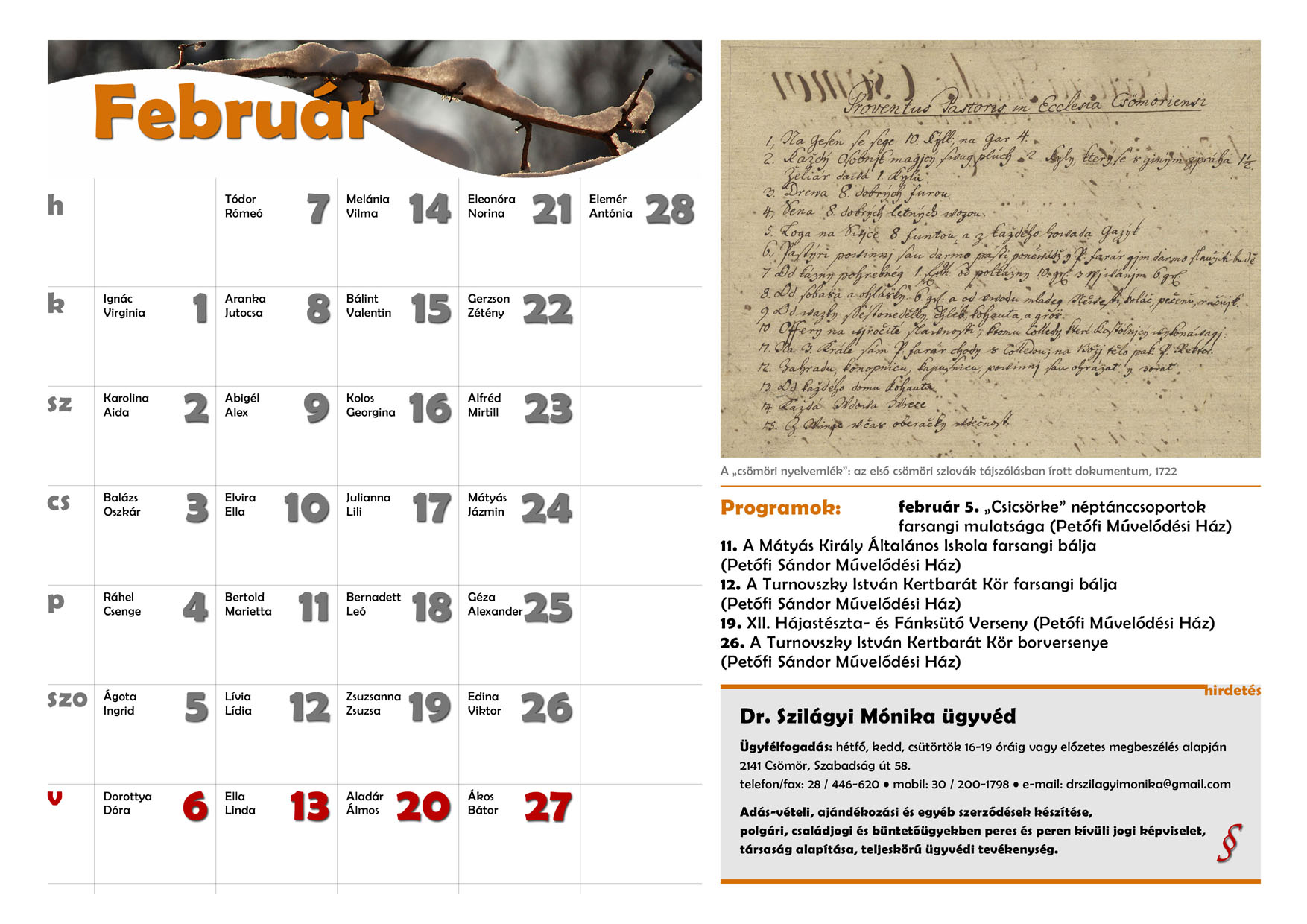
This unexpectedly discovered earliest linguistic record of the Slovak language in Csömör deserved to be included also in the calendar of the village traditionally distributed for Christmas by the town hall to the households of the village, and designed by us for the first time in this year.