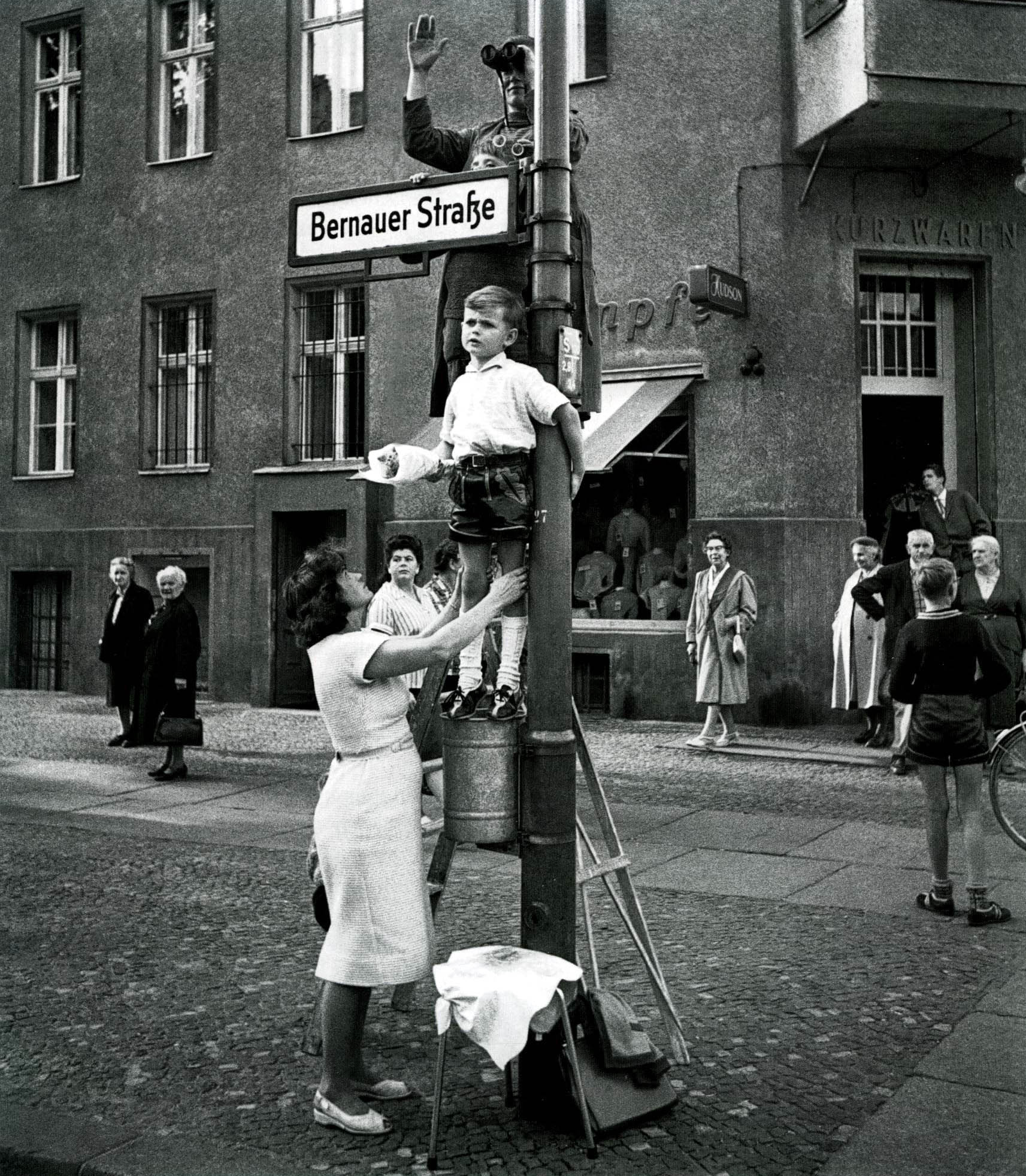
 In the afternoon we left Budapest’s Eastern Railway Station, around three in the morning we arrived at Dresden. We did not spend more than five minutes at the station, but the atmosphere suddenly changed, it was filled with electricity. The new passengers brought strange news, fragments of sentences were heard from the corridor, we understood little, and even that sounded incredible. Around seven in the morning, in the disappearing fog we were slowly nearing through the suburbs of East Berlin to the Ostbahnhof, and looking down from the railway embankment one could see long queues before certain buildings – waiting for passports, as we found out later. At the small window in the station we paid the usual ten Eastern German marks for a Zimmer Frei, and went out by tram to somewhere towards Marzahn. The hosts said, they would just give us a key, because they immediately would go over the other side of the wall. We also prepared to go there, to take photos of Berlin’s post-modern architecture for a presentation in our final semester. But by then I would much rather have stayed on the Eastern side, because I saw something that never before happened: East Germans smiling and being nice to each other and to us.
At the S-Bahn station of Friedrichsstraße, the only authorized border crossing, there were no more wolf dogs, and there was no trace of the usual Gestapo feeling. Before the usually empty gates reserved for GDR citizens, now there were kilometer-long queues, but we as foreigners could get quickly over. On the other side, euphoria was raging. All West Berlin was one large festival, those arriving were welcomed by loudspeakers, given money and packages, unknown people embraced each other, concerts were set up in the squares, masses wandered to and fro in a city which was still possible to see twenty-eight years ago by our elders, and never by those of our age.
Now, after twenty-five years I again walk around in the city where I live, to see how they remember what happened on that day. The festive programs run from Friday evening to Monday morning, more than five hundred a day. Nevertheless, we try to compile our schedule from the previously published programs so that we could take part in at least the most important programs. I will report, if not minute by minute, at least by every few hours.

November 7, Friday
The weekend’s main attraction is the Lichtgrenze, the row of white balloons hanging on the line of the former wall, which are lit after five in the afternoon. Each has its own “adopter”, who will let it fly up on Sunday at seven o’clock, at the twenty-fifth anniversary of the opening of the border.
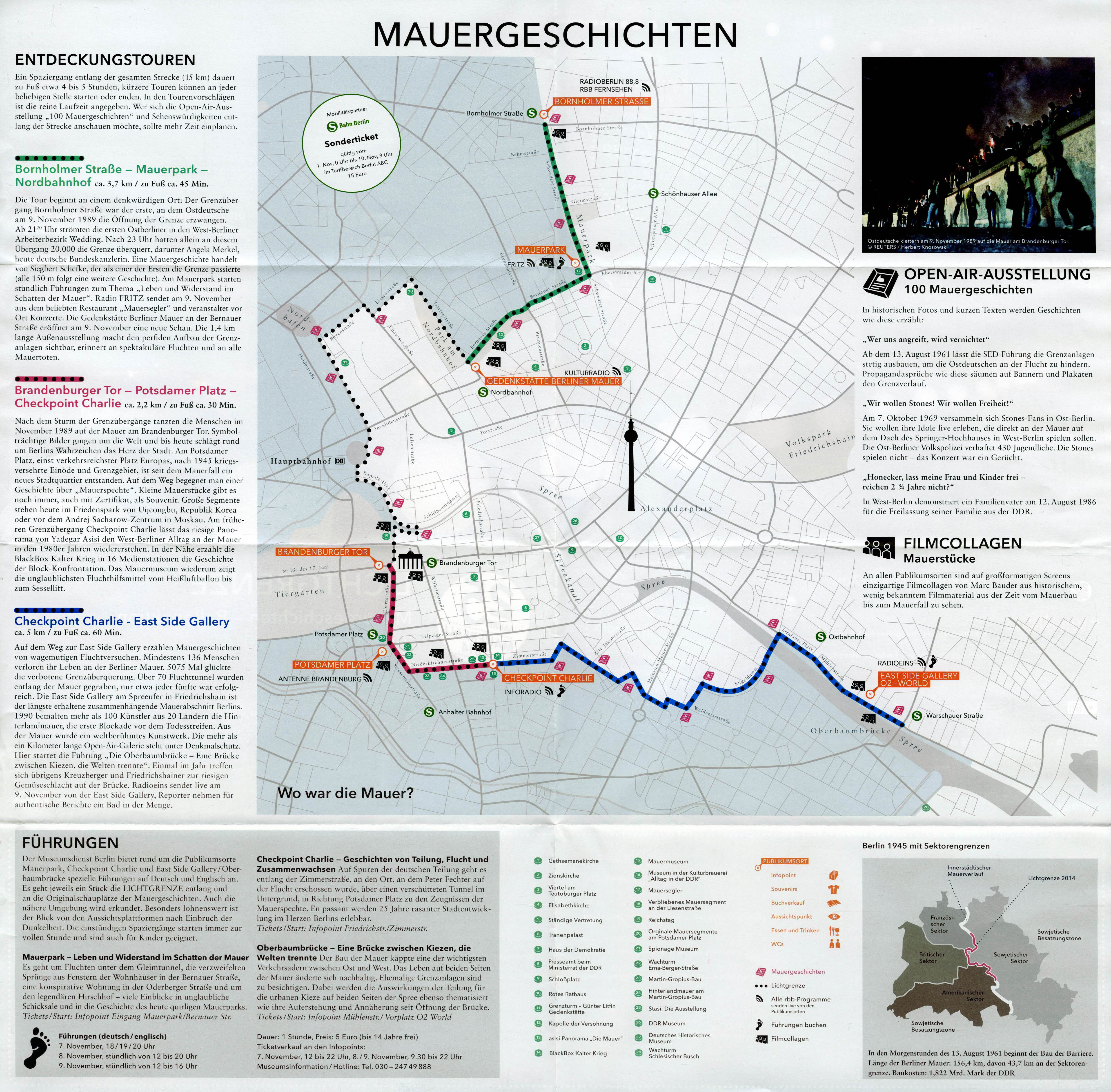 The “light border” from Bornholmer Straße (N) to the East Side Gallery (S). For a larger map see the scanned leaflet. The red numbers refer to the sites of our report.
The balloons were put up on Thursday night. About their state on Friday morning, see among others, the illustrated coverage of stylemag.net.

Along the balloons following the line of the former border, at every hundred and fifty meters you can read a story, linked more or less to that specific point of the wall. The stories have been also published in a separate volume, about which we will write in detail.

1. November 7, Friday, 4 p.m.
I begin the tour on Potsdamer Platz. The balloons of the light border align along the central line of Stresemannstraße and Ebertstraße. This does not exactly coincide with the line of the former wall. We might remember from Wim Wender’s Wings of Desire that in the place of the former Potsdamer Platz there was a large deserted area on both sides of the wall, and the streets of the post-1990 skyscraper district follow an entirely new arrangement. The former line of the wall is indicated by a stripe inserted into the square’s pavement, with a few preserved pieces of the wall placed on it, in front of which now tourists take photos of each other. An extra dressed in Soviet uniform with a red flag stands before them, with a lush black beard, which no soldier of the Warsaw Pact armies was ever permitted to wear. On the projector, both here and in the other locations, a montage runs on the story of the wall.

2. November 7, Friday, 4:30 p.m.
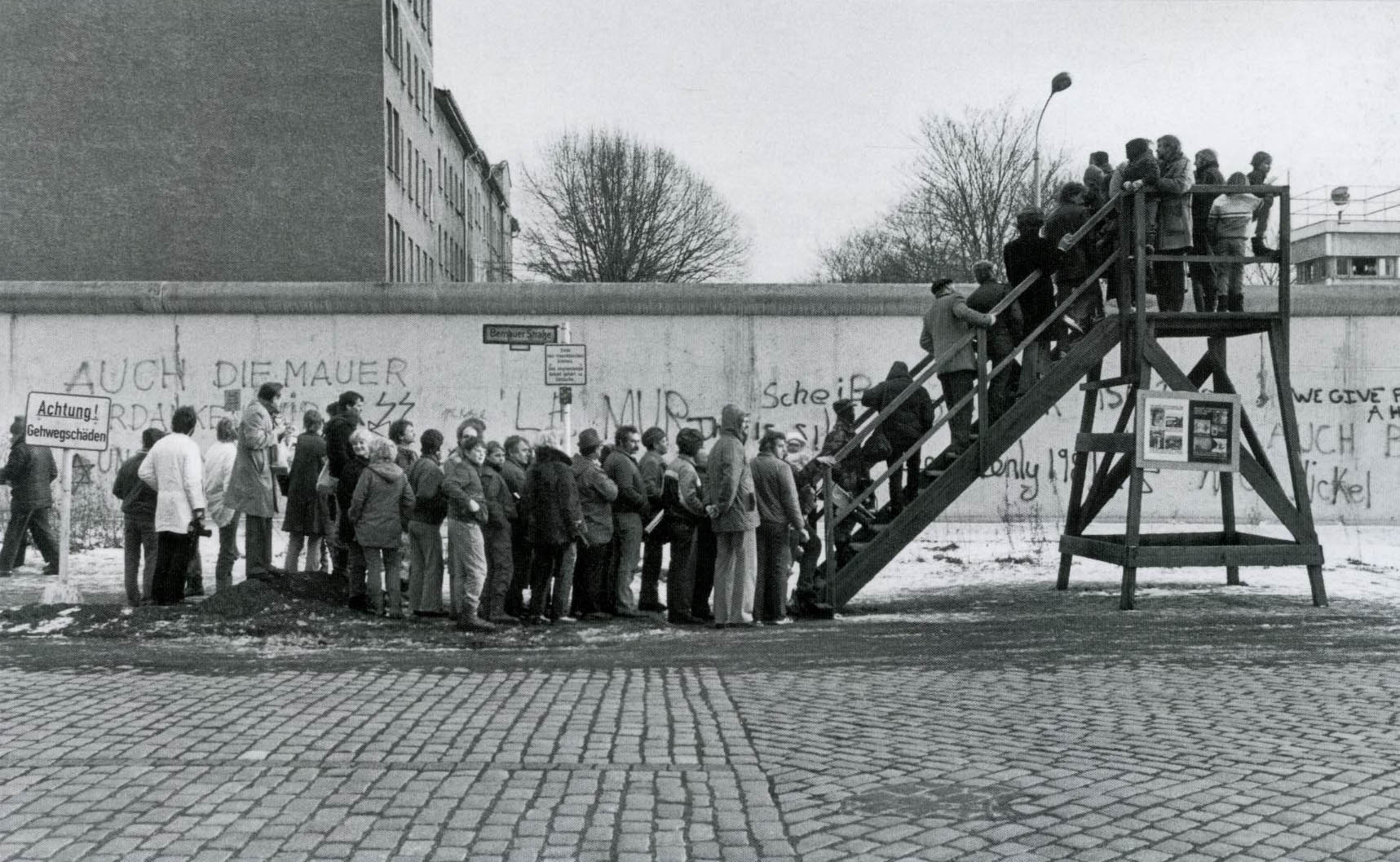
We travel by metro to the largest remaining portion of the wall, the Wall Museum at Bernauer Straße. On the grass covering the former no man’s land along the wall, many people are already waiting for the five o’clock illumination. I wait for the same in the opposite Ost-West Café, and in the meantime I begin writing this report.

3. November 7, Friday, 8 p.m.
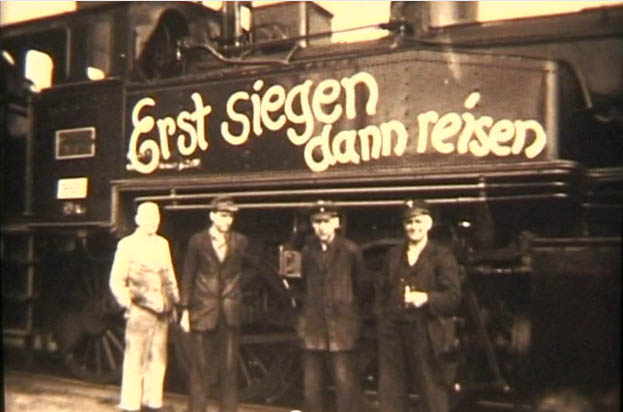
At the other end of the Wall Museum, at the Nordbanhof – which for twenty-eight years functioned as a Geisterbahnhof – a ghost station, walled off from those of the East, and used only for the transit of the Western underground – I take the only S-Bahn now running in Berlin, because the state railways have announced a general strike from Wednesday morning until Saturday evening. I go to Alexanderplatz, and from there by tram to Weissensee, the former neighborhood of East German apparatchiks, which up until today has remained a strong bastion of the Socialist party. Quite different faces, different characters, than in my narrower patria of western Charlottenburg. On Antonplatz, at the Cinema Toni – which from 1919 was the Cinema Trianon, then from 1939 the Universum, and then hit by a bomb in January 1945, and after for more than a year there hung the remains of the last poster: Es fing so harmlos an… – “It all started so innocently…” – they are screening three very important short films on the wall. The first, Claus Krüger’s Einmal Mittelwalde und zurück (1978) – “A ticket to Mittelwalde and back” – is about an old rail line of Neukölln, which was interrupted for three hundred meters and thereby made impassible by the wall. Beautiful images, very rich documentation of local history, it is really worth watching, and even obligatory for railway fans! The second – unfortunately, this cannot be found on youtube – is Manfred Winkler’s beautiful amateur video, Frühling in November (1989), “Spring in November”: exactly that euphoria that we saw with Eszter then, on 10 November in West Berlin. And the third is a very special film, which has been since quoted as an unparalleled documentary film all over Germany and in the West: an absolutely vivid documentary film shot by Matthias-Joachim Blochwitz, the staff film director of the East German army, between 11 November (!!!) and 22 December: Grenzdurchbruch 89, “Border breakthrough” (the term refers to an illegal and violent attempt at border crossing). Blochwitz, as he says in the post-film discussion with the secretary of the local Socialist party (!!!), on 10 November came to Berlin from Karl-Marx-Stadt (earlier and since then Chemnitz) to Berlin, and, after Dresden encountering the army barricades, was forced to wait. In his boredom he started to ask the border soldiers: And what will you do now? The answer was clear and soldier-like: “we don’t know”. This gave him the idea for the film, which he presents in a unique way, from the inside, how clueless the entire East German army and border police was during and after the fall of the wall.
4. November 8, Saturday 7 a.m.
Két Sheng from Copenhagen arrives for the weekend, we go together to the city. The still empty and deserted Potsdamer Platz is an unusual sight. A lone early morning tourist greets us as a savior, because finally there is someone to take a photo of him in front of the remains of the wall. In the Alexanderplatz, an apparently Russian-sponsored group has a demonstration, the same group that earlier in this year, at the Russian annexation of the Crimea plastered the city with their posters: “No fighting against Russia!” Their present message: the German-German border was only abolished so that the Western powers could take a united Germany to war again.

November 8, Saturday morning
After breakfast, we must return to finish the article requested by the Hungarian news portal “origo” on the fall of the wall. To give it a personal touch, I recycle the first two paragraphs of this post, and then I continue like this:
“It is characteristic of the disorganization of the last days of the GDR, that the opening of the border shocked not only the inhabitants of Berlin, but even the leadership of the country. Actually, it was a mistake. It is true, that due to the demonstrations under way since May, and especially to the fact that the West German embassies in Prague and Warsaw, and then on September 11 Hungary and in early November Czechoslovakia opened the Western borders and the East Germans quickly fled to them, on November 7 the Central Committee of the Socialist Unity Party of Germany decided to allow limited travel to the west. A version of this draft was given to the East Berlin party secretary Günter Schabowski, just prior to leaving for a press conference, where he was to report the decisions of the CC meeting. As he was not present in person at the discussion of the draft, and he had had no time to read it, and so to the questions by Western journalists as to whether they plan to facilitate the exit of East German citizens, he firmly answered yes, he already had the draft with him. And to the question, as to when it will take effect, he said: “According to my knowledge, with immediate effect.”
After the live broadcast of the press conference, masses went to the Berlin border crossings. The border guards did not receive any central instructions, so for a while they did not allow anyone to cross the border, but after the TV and radio repeatedly broadcasted the Schabowski’s announcement, every border post commander decided personally about the opening of the border. First, from 21:20 they let out the travelers at Bornholmer Straße, but for a while they stamped their identity cards with a no-return stamp. By midnight, twenty thousand people crossed the border to West Berlin. The Schabowski’s mistake, and then a series of personal decisions by commanders made the situation irreversible, and basically shattered the power of the Socialist party which had rejected any claims up to the last moment. Schabowski was shortly thereafter expelled from the party, but this did not change the fate of the GDR, nor that of the wall. A growing number of border crossings were open, and unauthorized border crossings were increasingly tolerated, until on 1 July 1990 border control was officially terminated.
The unexpected “fall” of the wall – as it is usually called, although its physical destruction took place gradually, and only much later – can be really understood only if we compare it with its equally unexpected construction during the night of August 13, 1961. The immediate antecedent that precipitated it was the same as of the fall: the massive flight of East German citizens, especially of skilled professionals – for example, on August 12, only the day before, 3190 persons fled – to West Berlin. The East German leadership had long wanted to stop this by closing the borders, but this was for a long time not authorized by Soviet general secretary Khrushchev. The turning point was on August 3, during a Moscow negotiation with East German secretary Ulbricht, Khrushchev finally judged that the closure of the borders was the best response to the Western powers’ having rejected the demilitarization of West Berlin and its declaration as a “free city”. He also considered that the Western powers would not protest against this clarification of the status quo – and he was right. And just as in the building, so too in the fall of the wall, the East German government was not the real actor, but rather the Soviet Union, which, in a sign of perestroika, withdrew from the Eastern European region, and the Western powers, whose interest was no longer the maintenance of the status quo, but instead the taking of control over the region.
On the 25th anniversary of the fall of the wall, from November 7 to 10, a spectacular series of events in several hundred locations will take place in Berlin. We will visit as many as we can, and soon we will publish a summary of it.”
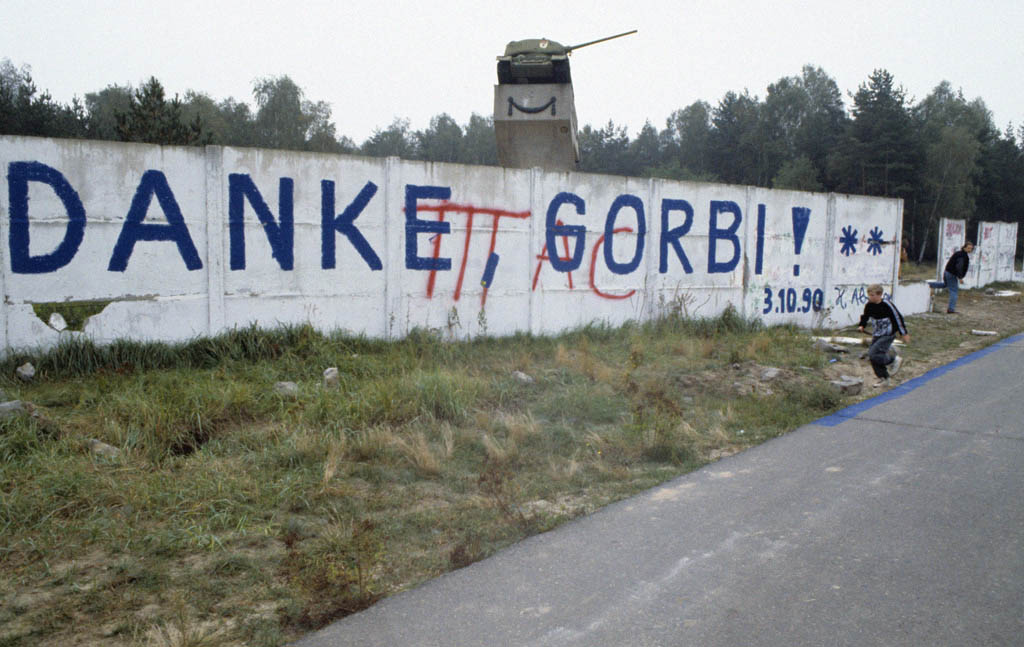
P.S. In the meantime the article was published in origo, illustrated with good period photos.
5. November 8, Saturday 2 p.m.
In the Gestalten bookshop and gallery they opened the photo exhibition “Berlin Wonderland, 1990-96. Wild Years Revisited”. The gallery is situated in the courtyard of a beautiful little passage in Sophiestraße, in the Spandauer Vorstadt district, which developed in the 18th century in front of the former city walls, and which has always been the residence of unwanted elements in the city, Jews, Catholics and the like. After the war this remained the only more or less spared traditional quarter of Berlin. However, the leadership of the GDR intended to demolish this one, too. Until the fall of the wall they could not realize it due to lack of money, but as the territory had not been developed for decades, its inhabitants happily fled to modern housing estates, and for a decade the Spandauer Vorstadt was converted into a bohemian quarter. These are the “wild years” presented in the exhibition, about which we will later write more.

November 8, Saturday 8 p.m.
In the evening, at the concert of one of the greatest living Persian musicians, Hossein Alizadeh. True, it only has so much to do with the wall, that before the fall of it, there could have been hardly any concert like this in the eastern part of Berlin, and that recently the Iranian wall seems to be getting thinner, too. Hossein Alizadeh – whose music has already been quoted by us several times – is on a week-long concert tour in Germany, and then an Iranian lute course in Cologne. In recent years he has increasingly moved away from classical Persian music toward an improvisational style of his own, as it is shown by the following trailer of his last CD Monad.

6. November 9, Sunday morning
The S-Bahn runs again since yesterday evening. Although the strike was announced until Monday, the unions stopped it “out of fairness” already on Saturday night. I do not know how else the whole city, on feet for the celebrations, and the weekend guests estimated for two hundred thousand, would otherwise move around in the city. We go out to the Warschauer Straße. Here, the traces of the GDR are still alive, even after twenty-five years, although they are now eliminating them with great force. The burst balloons are just being changed on the Oberbaumbrücke, to make them ready to fly at seven o’clock in the evening.

Until the fall of the wall, the Oberbaumbrücke was the border bridge between East and West Berlin. Many people tried to swim across the river here, but as here the full width of the river was East Berlin territory, the border guards could and did fire on them until boarding. And whoever fell into the water from the high western bank – during the twenty-eight years, at least five Turkish children and others –, was drowned there, because no one dared to rescue them by violating the frontier and thus risking one’s own life. On the east side, the river bank houses were all demolished, and the former no man’s land is a park today, but some projects have already been suggested to build it. A one kilometer long section of the wall, completely decorated with graffiti immediately after 1989, still stands along the park: this memorial site is the East Side Gallery. And on the other bank, in Kreuzberg, memorial stones have been erected for the refugees who successfully boarded or who were shot into the river. After the fall of the wall, this bridge was one of the euphoric meeting points between the two sides. And one year later it was the starting point of the first great pogrom of the East Berlin mob, which had experienced a cultural shock, against the Turkish quarter on the other side.

2. November 9, Saturday 5 p.m.
The Wall Museum is only a few hundred meters from the flea market. We walk over to finally watch the film which was projected for four days in seven locations along the wall, Marc Bauder’s Mauerstücke. And we do not regret it. This film is the highlight of the three-day event. Its twenty-eight minutes were collected from twenty archives, a hundred and eighty hours of footage. “An emotional journey through twenty-eight years of history”, says about it the director, who is also the author of the idea of the Lichtgrenze. The archive footage is so beautiful and sensitive, that sometimes we think: they are staged scenes, but no: it was the filmmakers of the East German army, who recorded so sensitively and professionally the reactions of the Berliners at the sudden appearance of the wall. Relatives, who, leaning from both sides on the wall in building, say a last goodbye to each other, a refugee who lies exhausted on the west bank of the Spree, the scene where the startled Schabowski improvises at the reporter’s question, the haggling at November 9 night at the border station. This movie really makes you understand, what was the real historical and psychological weight of the wall, which by now has become a touristic commonplace. It is a great pity that it still cannot be found on youtube or elsewhere. If you know about it, let us know!
 Advertisement in the subway station of the Wall Museum
November 9, Sunday 8 p.m.
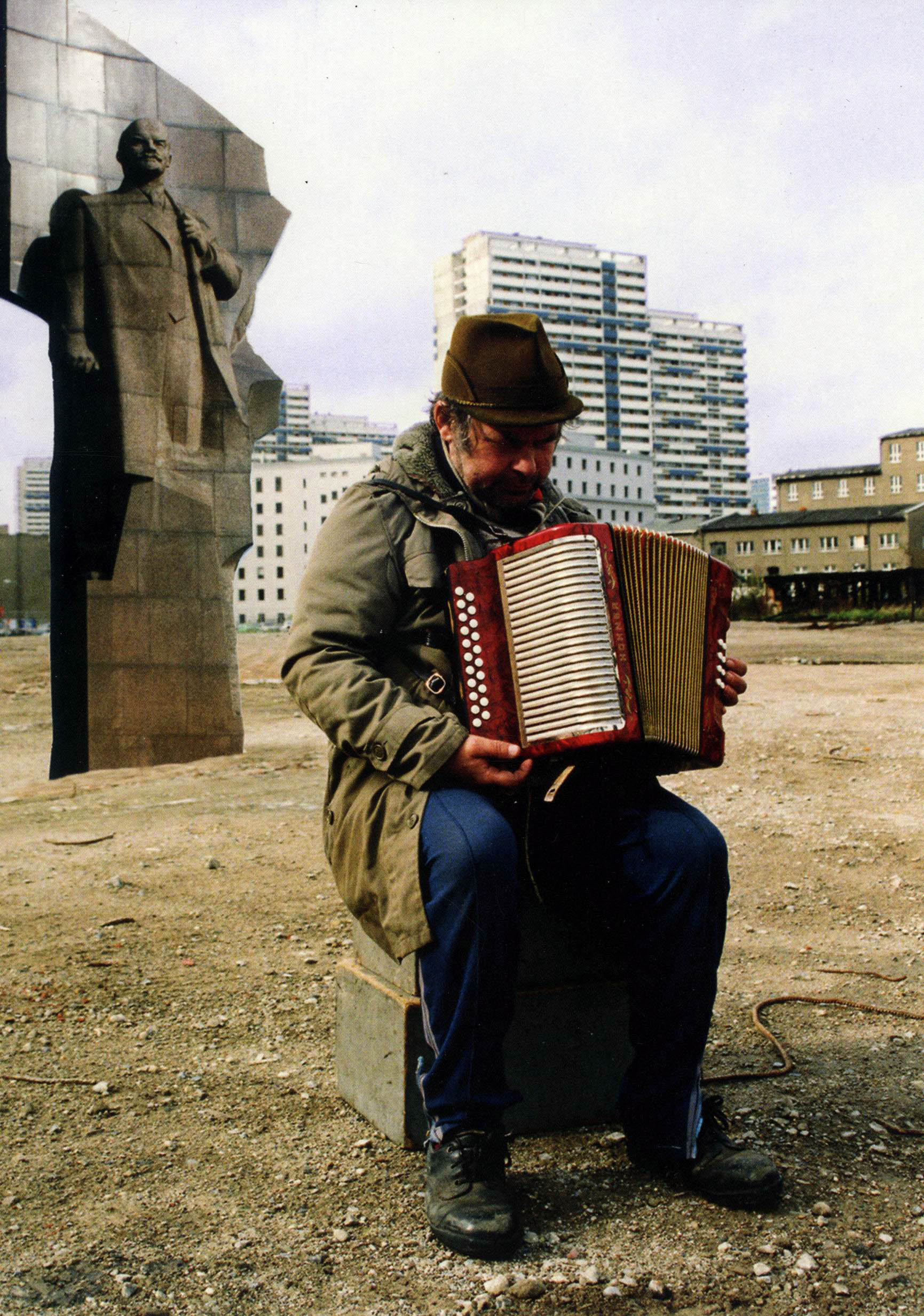
In the Zeughauskino – the old film movie of the Deutsche Historische Museum – we watch in the series “Borderland Berlin”, Egon Monks’ Mauern. Von Vätern und Söhnen (Walls. About fathers and sons). The film, one of the earliest West German television films (1963) adopts the often used didactic constellation to let its message – the German unity and humanity is much more important than party affiliation – to every television viewing German family. The two fathers are a Communist Jewish printer and a Nazi businessman: the former saves the latter during the Weimar republic, and the latter the former in the Hitler period. Then the situation changes, and the son of the former as a border guard commander cannot convince himself to shot on the son of the latter, his good friend, who swims over the Spree precisely at the Oberbaumbrücke. After this morning walk it is interesting to watch in the film the ruined double tower of the bridge in the early sixties, and the still standing and functioning border guard facilities, of which only a few have remained. Unfortunately, this film is also not on youtube.
8. November 9, Sunday 7 p.m.
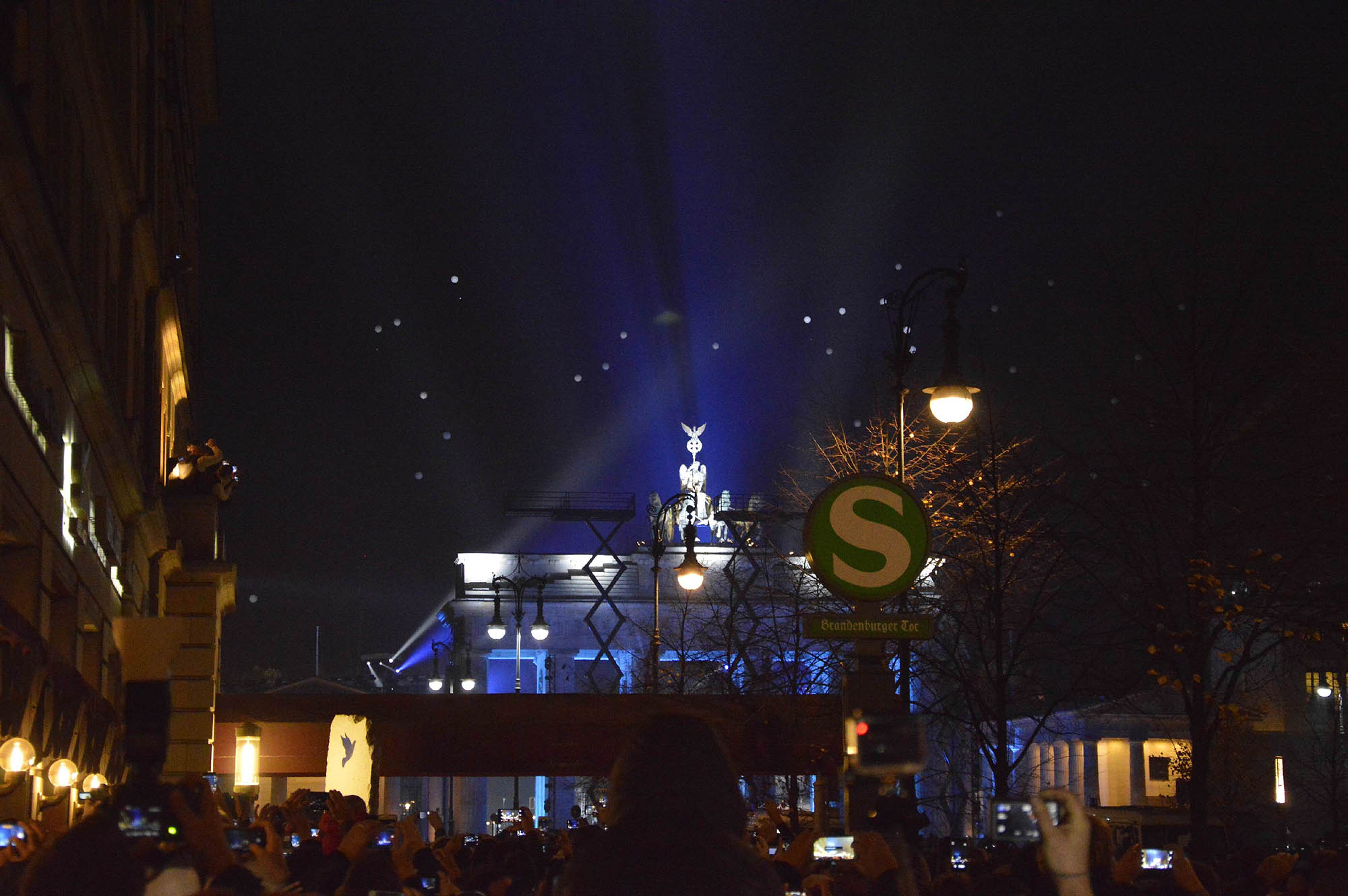
I came home after midnight from the celebration that is engulfing the whole city center. Now I only have strength to post the last scene, the earlier ones tomorrow. At the Brandenburg Gate, according to the Berlin press, there were three hundred thousand, and along the whole Lichtgrenze one million people waiting for the release of the eight thousand balloons that represent the former wall.







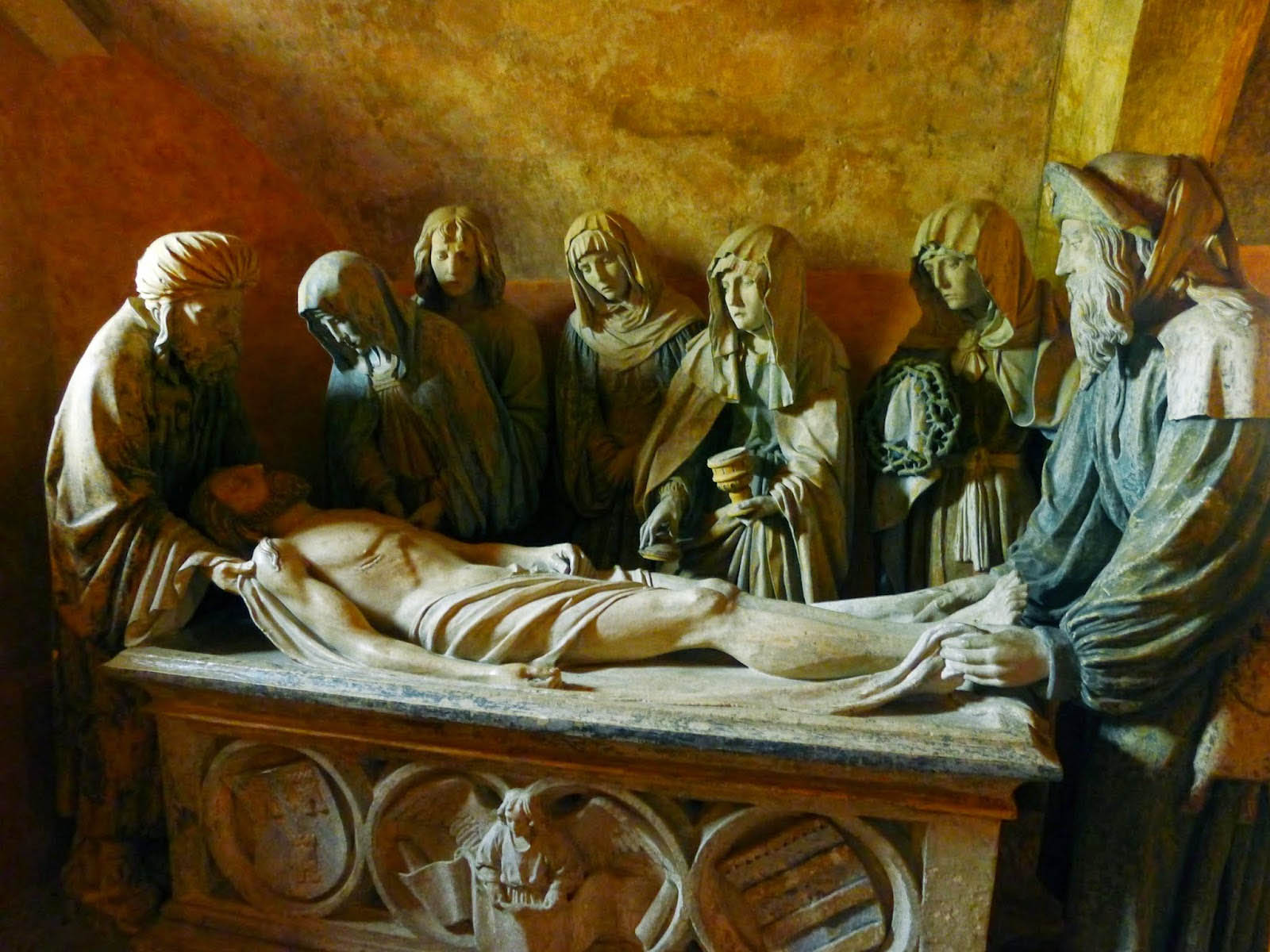
 In the times of the Counter-Reformation in 16th-century Champagne, it was fashionable to place statues in churches, many statues, very realistic ones, completely colored – living statues, so to speak. In Troyes, the site of one of the most important fairs in Europe, several churches, each having its own guilds and confraternities, had its stone figures, some of them placed at the gallery, others sitting at the base of an arch, or attentively looking down from the ceiling of the presbytery.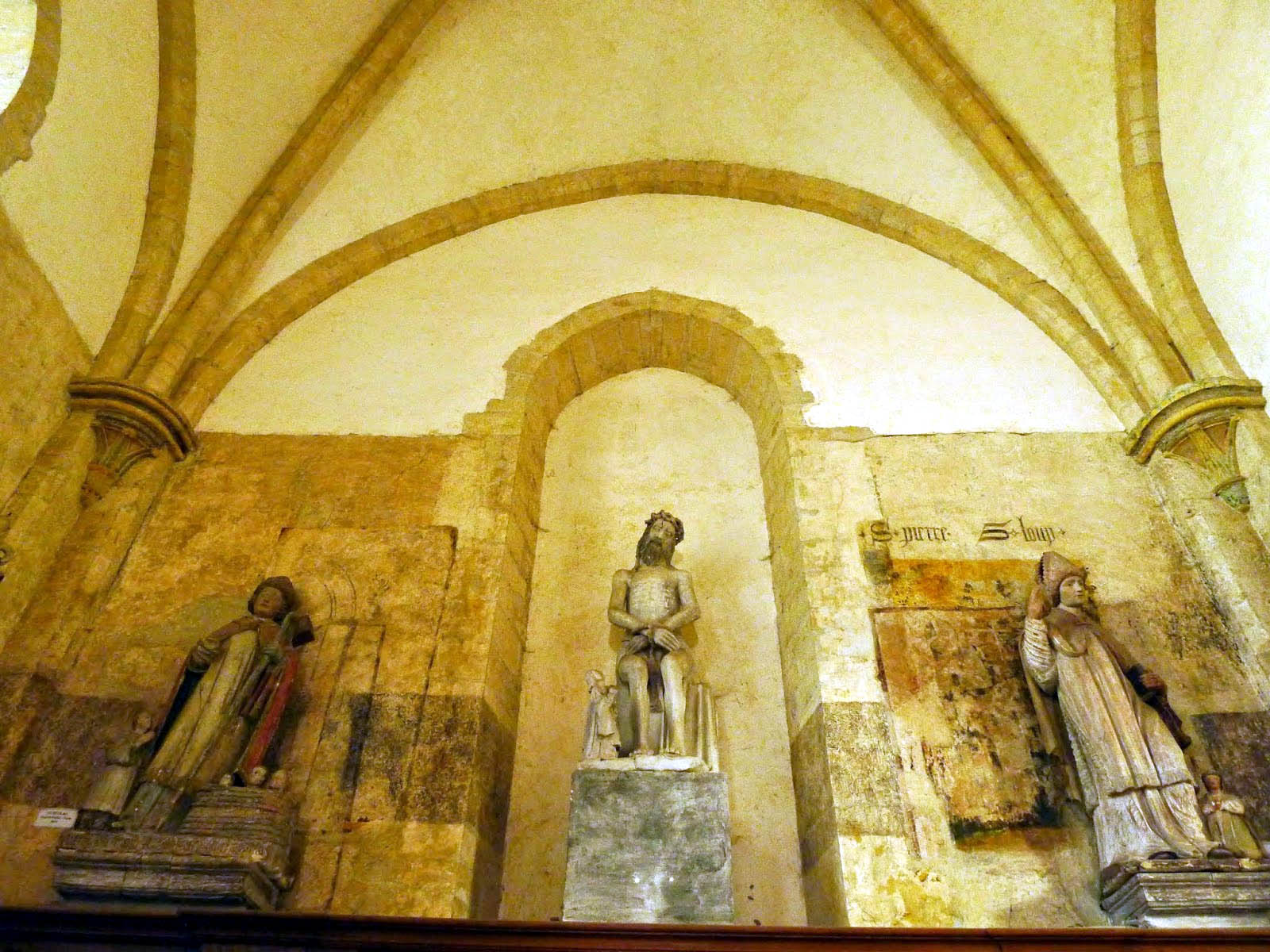


 Lors de la Contre-réforme au XVI


 Come with us to…
 Atlantis
 Bestiary
 Bohemia+Prague
 Books, exhibitions, music, film
 Brave old world
 Caucasus
 Cemeteries
 Crimea
 Get to know the
 Images of the East
 Lightwriting
 Lwów/Lemberg
 Mallorca
 Message on the wall
 The Museum of Propaganda
 Odessa
 Paper Museum
 Persian letters
 The Jewish heritage


