

Whoever goes in search of a lost time, also knows that the imprints left by plaques removed from walls, their orphaned nails jutting out into the air, and flagpoles that have lost their function, are as much the documents of the history of a building, as the time that is marked when they stopped scraping the ad stickers off from the windows, so that the moss, the sumac, the graffiti can freely breed on the building.

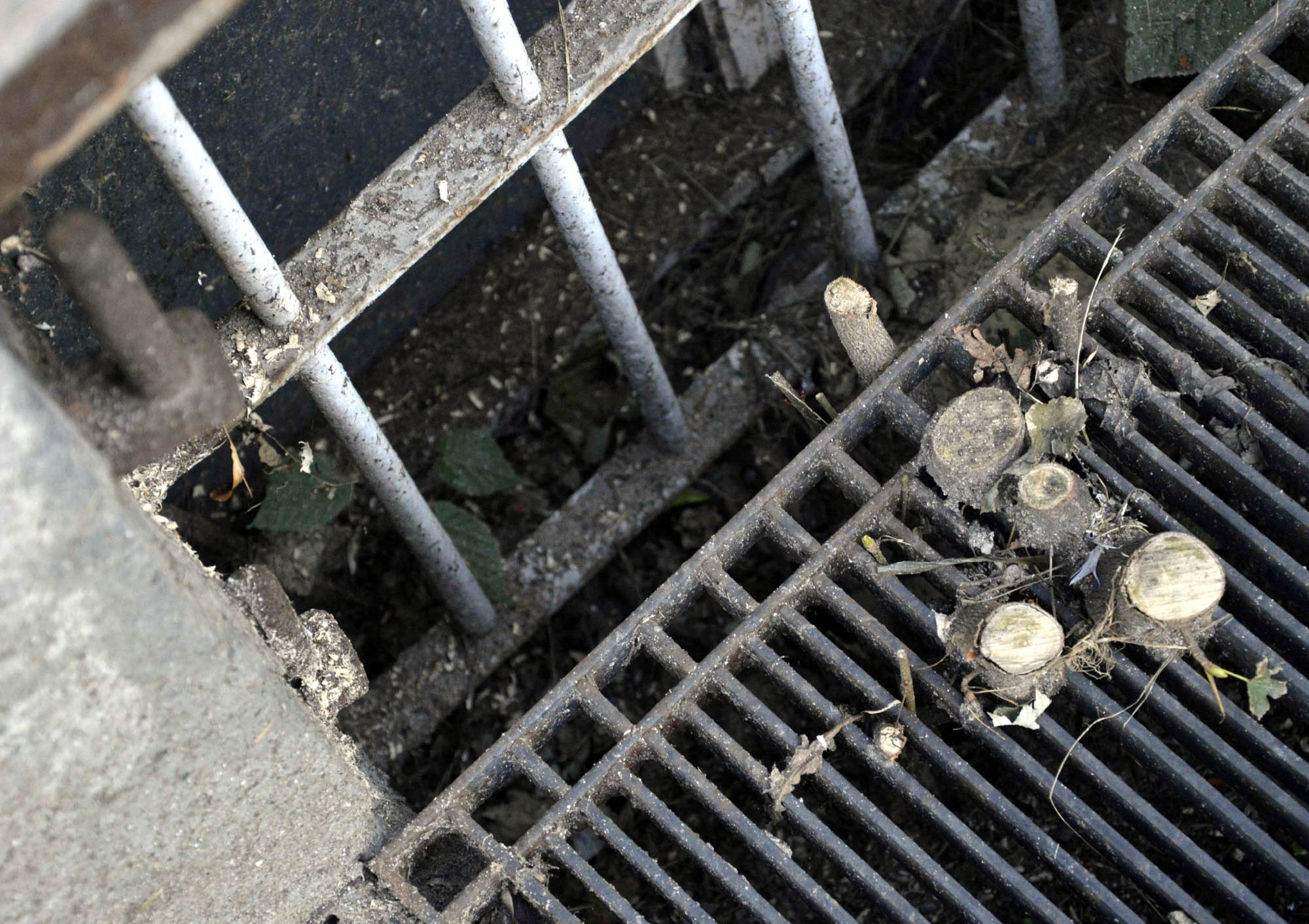
The former museum of minerals and fossils, in what was formerly Breslau, was erected in 1866 in place of the former St. Matthias bastion, as the final building of the university, which was established in the gorgeous Jesuit convent that lined the river Oder. When, after 1945, with the total destruction of the collection the building lost its purpose, and, not incidentally, also changed its country and language, it was subsequently occupied by the pharmaceutical faculty of the new, now Polish university. Judging from the imprints left by the multitude of plaques which were previously to be seen on it, the building may have been too big for the university, and it was shared with a number of other institutions. The imprints of other plaques bear witness to the names, doomed to oblivion, of the neighboring streets. The familiar size and position of the imprints of even more plaques suggests that they probably erected monuments, more lasting than bronze, to events and persons no longer non gratae, over a period of almost fifty years. Small plaques, like flocks of sparrows, serve as a schematic diagram to the wires, pipes and tunnels running under and upon the ghost building, as long as they remain, and as long as it stands. That this will not be long is clear from the most recently placed plaques warning of collapse. When this agony might have begun, I don’t know. The sumac trees have already reached the second floor, but as late as, 2003 they attached yet one last plaque, the only one you can see today.




 Come with us to…
 Atlantis
 Bestiary
 Bohemia+Prague
 Books, exhibitions, music, film
 Brave old world
 Caucasus
 Cemeteries
 Crimea
 Get to know the
 Images of the East
 Lightwriting
 Lwów/Lemberg
 Mallorca
 Message on the wall
 The Museum of Propaganda
 Odessa
 Paper Museum
 Persian letters
 The Jewish heritage


No hay comentarios:
Publicar un comentario