Switch over to our new blog! • ¡Pásese a nuestro nuevo blog!

The renewed version of our blog, with more features, a richer design, and available in nine languages, can be read here: https://wangriver.com

The new version also includes the old posts, often in expanded form. If you are curious about the updated version of this post, replace “riowang.blogspot.com/” in the URL with “riowang.studiolum.com/”, and the new link will most likely lead you there.


La versión renovada de nuestro blog, con más herramientas, un diseño más rico y disponible en nueve idiomas, se puede leer aquí: https://riowang.com

La nueva versión también incluye las publicaciones antiguas, a menudo en una forma ampliada. Si tiene curiosidad por la versión actualizada de esta entrada, sustituya «riowang.blogspot.com/» en la URL por «riowang.studiolum.com/es/», y el nuevo enlace probablemente le llevará allí.

Baths of Tbilisi

Tbilisi was literally born in a bath. Around 458, when King Vakhtang Gorgasali was hunting here on the banks of the Mtkvari/Kura, he saw a pheasant rise on the opposite side of the river and released his falcon. The falcon struck the pheasant, and both birds fell. Crossing the river, the king discovered them floating in a pool of hot water — already cooked. Taking this as a divine sign, he moved his seat of power here from his palace in Mtskheta, which he left as the center of the Georgian Church.

Today, the story is still vividly commemorated by the equestrian statue of King Vakhtang Gorgasali on the left bank of the river, on the hill of the Metekhi Church, just as he releases his falcon — and by the tiny statue of the pheasant, still gripped by the falcon even in death, on the opposite side, at the edge of a small pool. And of course, by the great, brick-domed, Persian-style thermal baths rising behind the bird statue.

The tale neatly sums up a much longer process. Hot sulphur baths already existed on the site of present-day Tbilisi in the 1st century BC. According to travelers such as Marco Polo and Ibn Hawqal, there were sixty-five of them in the 13th century. The many sieges of the city — Tbilisi was destroyed twenty-six times over fifteen hundred years — took their toll on the baths as well, but like the city itself, they were always rebuilt. Today, about a dozen still operate under the fortress, in Abanotubani, the old Muslim bath quarter on the edge of the former bazaar. After the Persian invasion of 1795, the aristocratic Orbeliani family rebuilt them in the Persian hammam style: square plans, brick domes with skylights, sunk deep into the ground so that the underground sulphur springs wouldn’t have to be pumped upward.
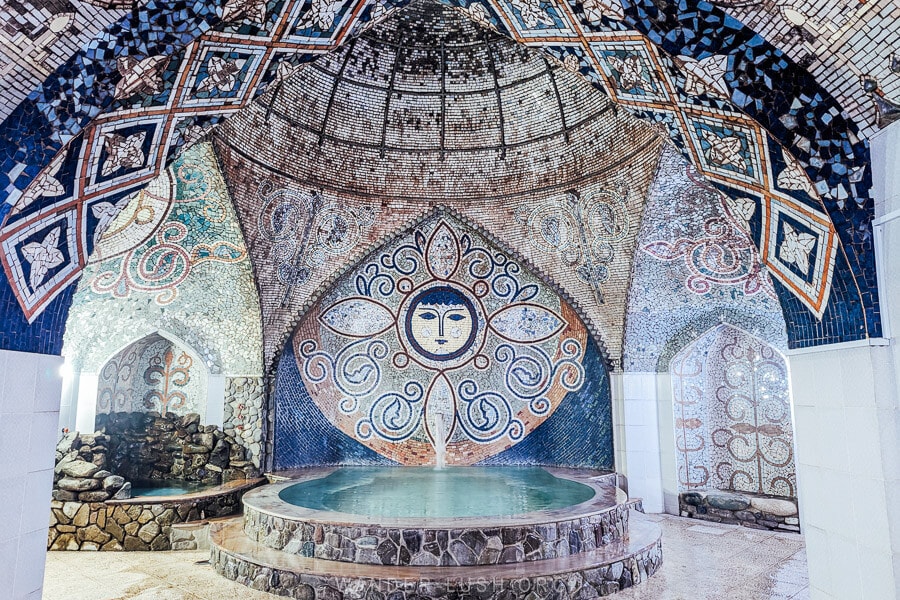
Soviet-era mosaic in one of Abanotubani’s Persian baths

The baths were less about washing and much more about social life. This was where Tbilisians and foreign merchants met for family gatherings, business talks, and celebrations. Future mothers-in-law could discreetly inspect potential brides without veils. Travelers could even spend the night here before heading onward the next day.

That the baths were simply part of everyday life is shown by the fact that Georgian authors hardly wrote about them at all. Such things amaze foreigners, not locals. One of them was Alexandre Dumas, who visited Georgia in 1858 at the invitation of his Russian and Georgian aristocratic admirers. He recounts the journey in his hefty travelogue Le Caucase. Chapter XLI is dedicated to the Tbilisi baths, which made a strong impression on him. Since the book has never been completely translated into English, I quote the chapter below in my own translation.

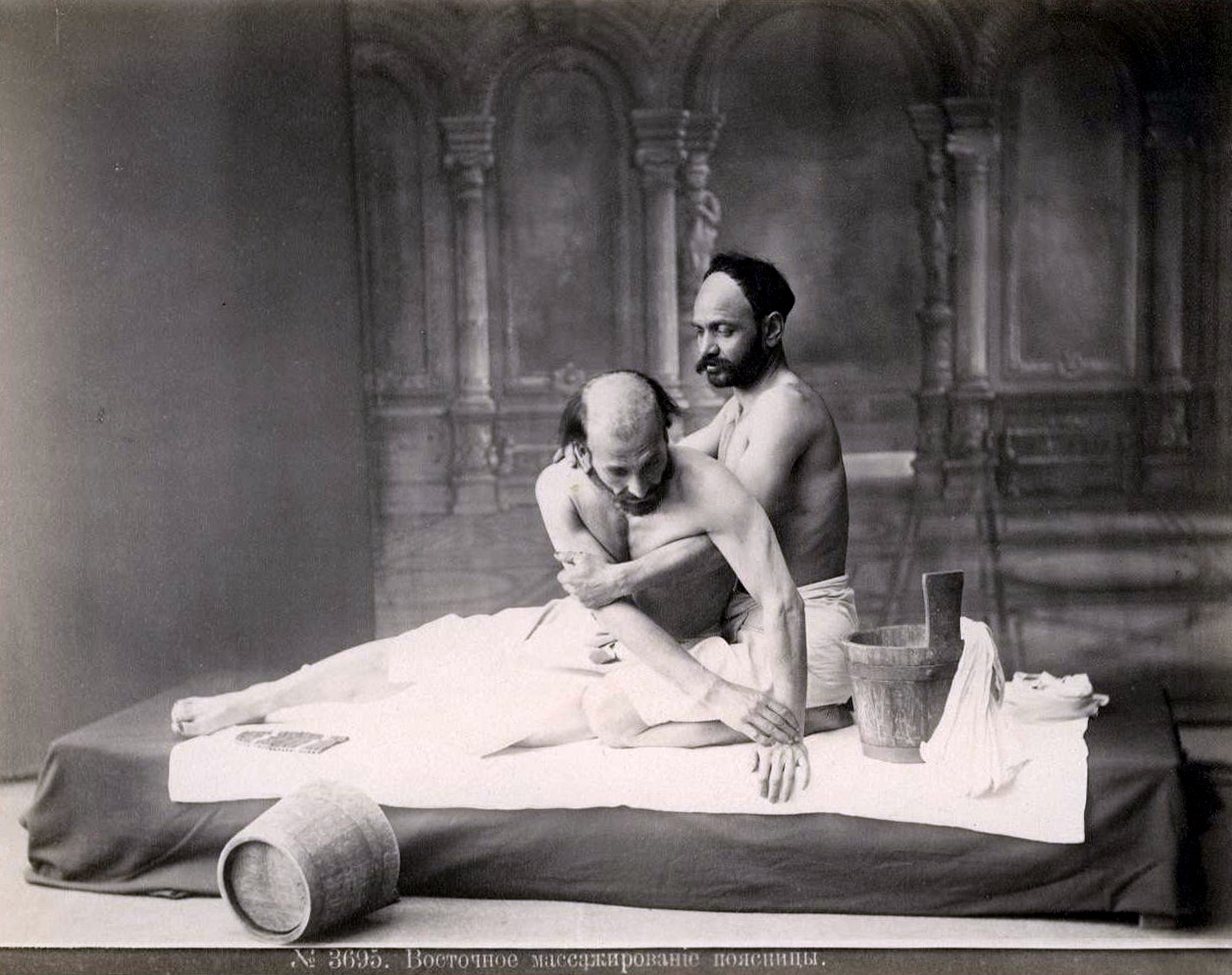
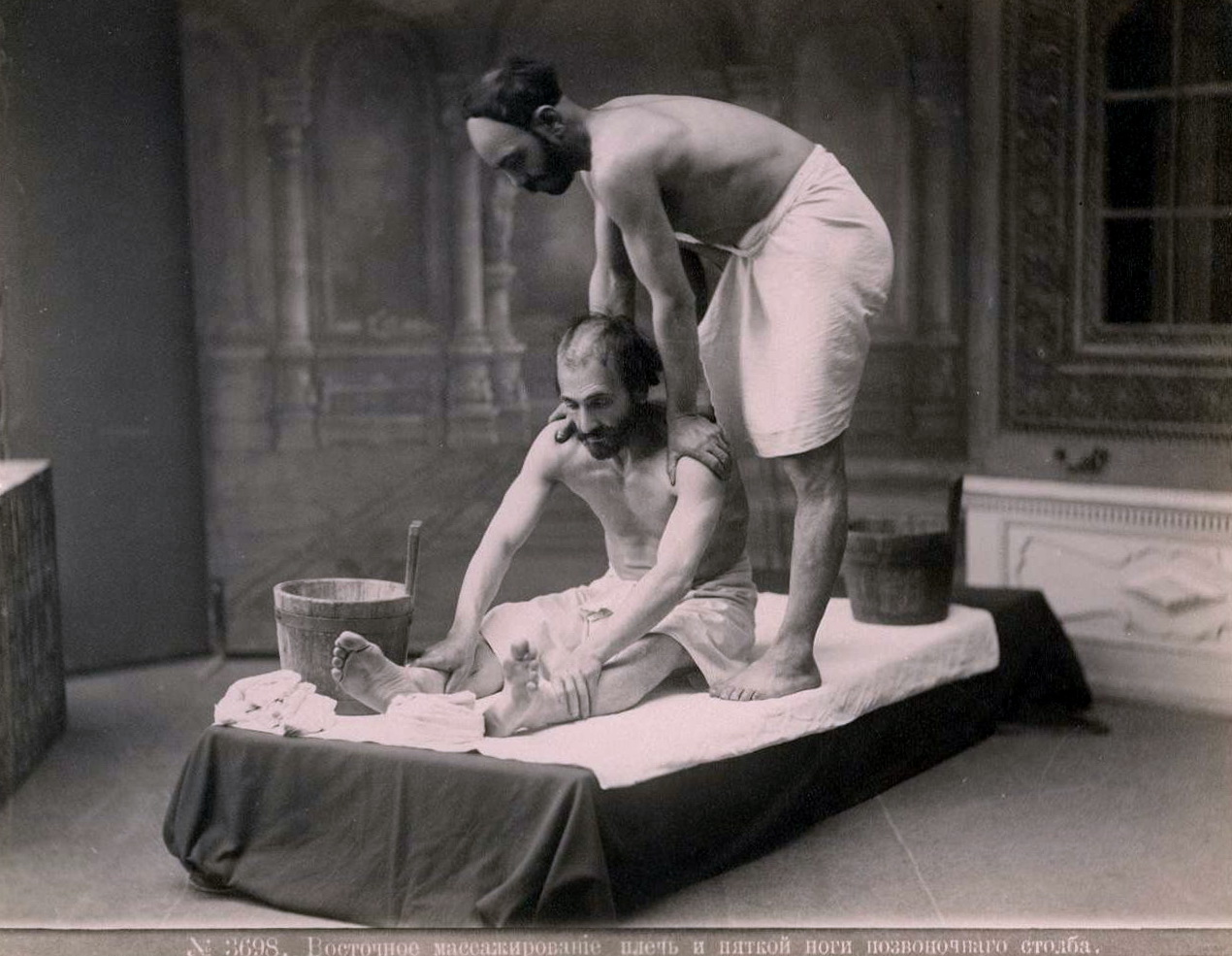
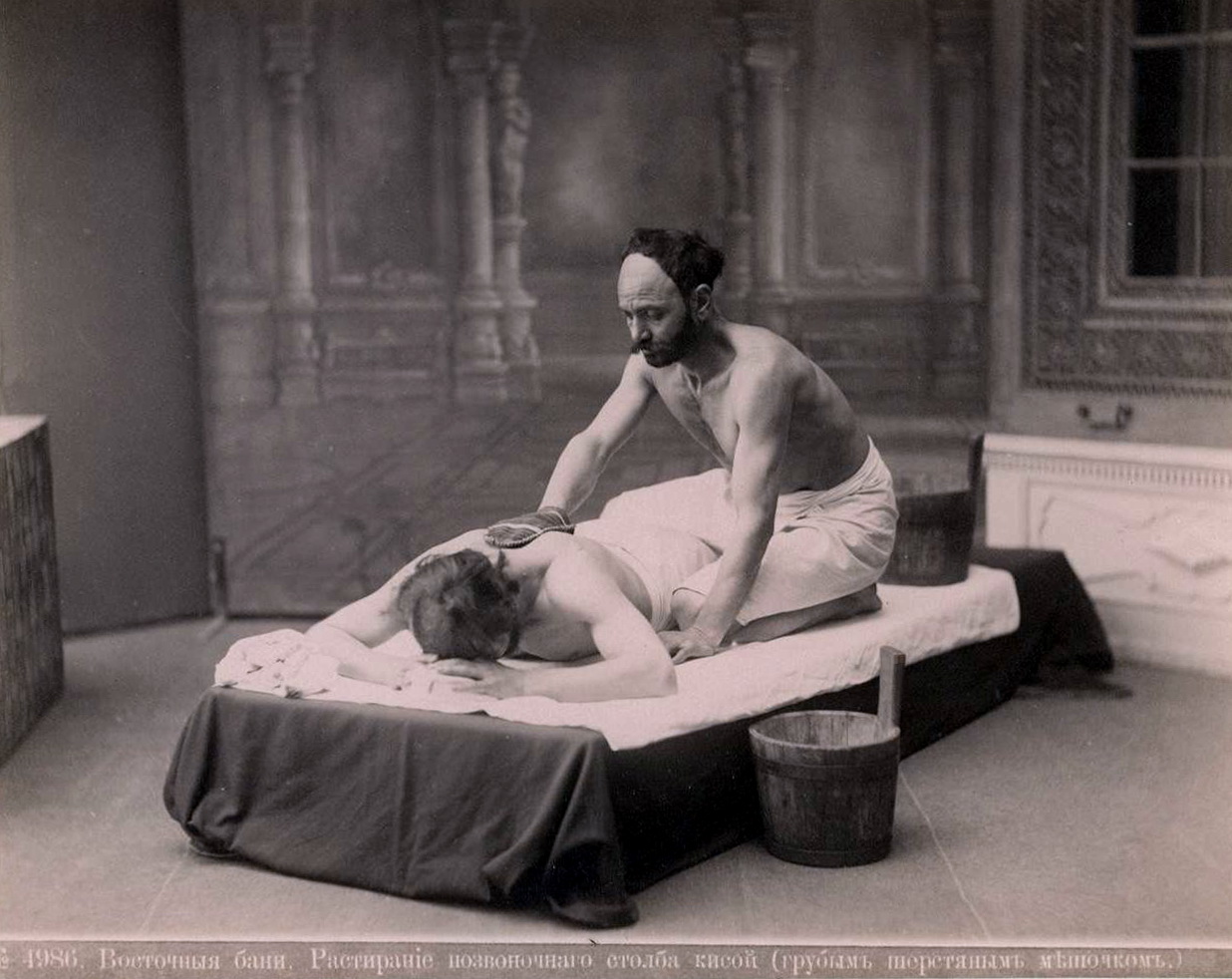
And although Dumas gives a wonderfully vivid description of the baths, we also have actual images from roughly the same period. Dmitri Ermakov, the early photographic chronicler of the Caucasus, took pictures here as well.

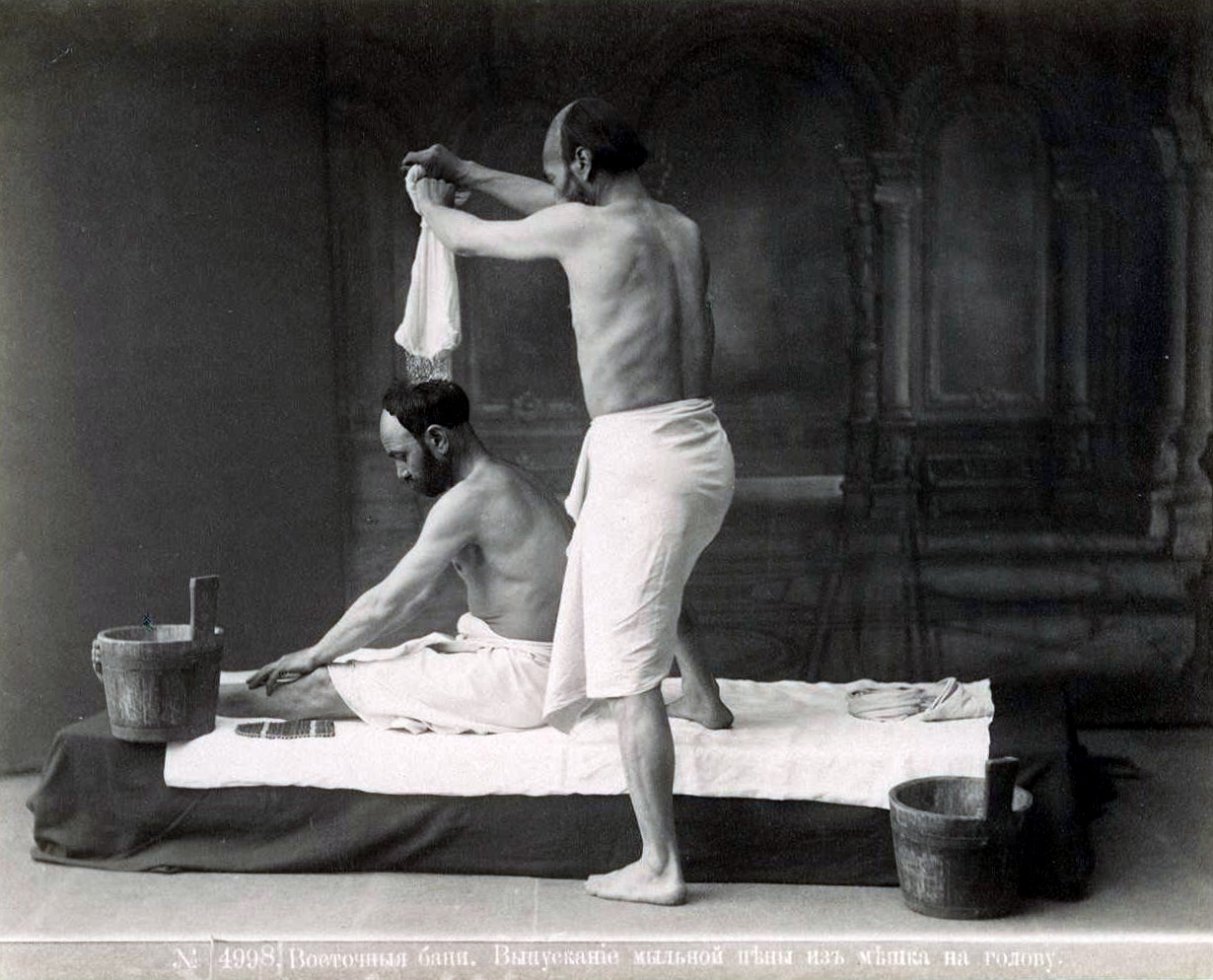
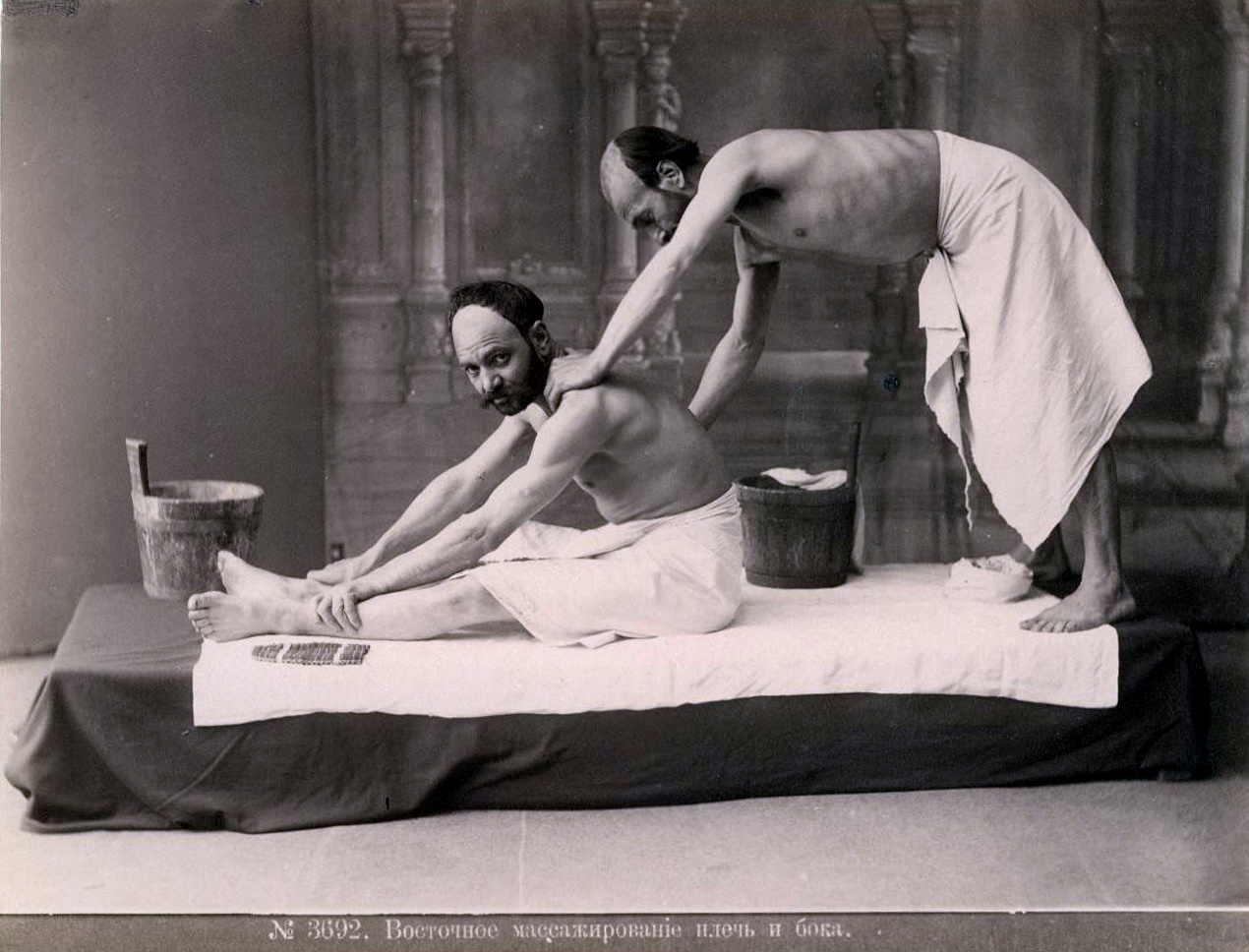
Ermakov’s archive of tens of thousands of photographs is released only sparingly by the Tbilisi State Museum. When I first wrote about him fifteen years ago, I included in the post all the images available at the time on Georgian and Russian websites. Since then, more have surfaced. Until recently, we knew only one photo of the traditional massage performed in the Tbilisi baths. Russian sites have now published an eighteen-image series of which that single photo was only one piece. The series shows that Ermakov wasn’t merely chasing exotic themes — although selling his photos as postcards was an important source of income — but was also documenting with anthropologist’s eyes a world whose approaching disappearance he already sensed.

Dumas starts his account with a solid foundation, mentioning that the name Tbilisi comes from the Georgian tbili, meaning "warm," and that its full original name was Tbili Khalaki, or "Warm Fortress." Interestingly, he adds, there’s also a spa town in Bohemia called Teplice, whose name likely derives from the Latin tepidus, meaning warm.

Dumas didn’t yet need to know about the Indo-European language family, which traces words like Teplice, тёплый, tepidus, and similar ones back to the Proto-Indo-European root *teplos—and which considers it purely coincidental that this resembles the Proto-Kartvelian root *t’bil, from which the Georgian tbili comes.

“One of the two bath attendants laid me down on a wooden bed, carefully placing a damp pillow under my head; then they stretched my legs together and aligned my arms along my sides. Then each of them grabbed one of my arms and started cracking my joints. The popping began at my shoulders and ended at the tips of my fingers. Next came the arms, then the legs. When my legs popped, they moved to my neck, then my vertebrae, and finally my lower back. This exercise, which could have seemed to risk total dislocation, happened quite naturally—not only without pain, but with a peculiar sense of pleasure. My joints, which had never uttered a word in their life, seemed to crack as if that had always been their way. I felt as if they could fold me up like a napkin and slip me between two shelves of a cabinet, and I would endure it silently.”
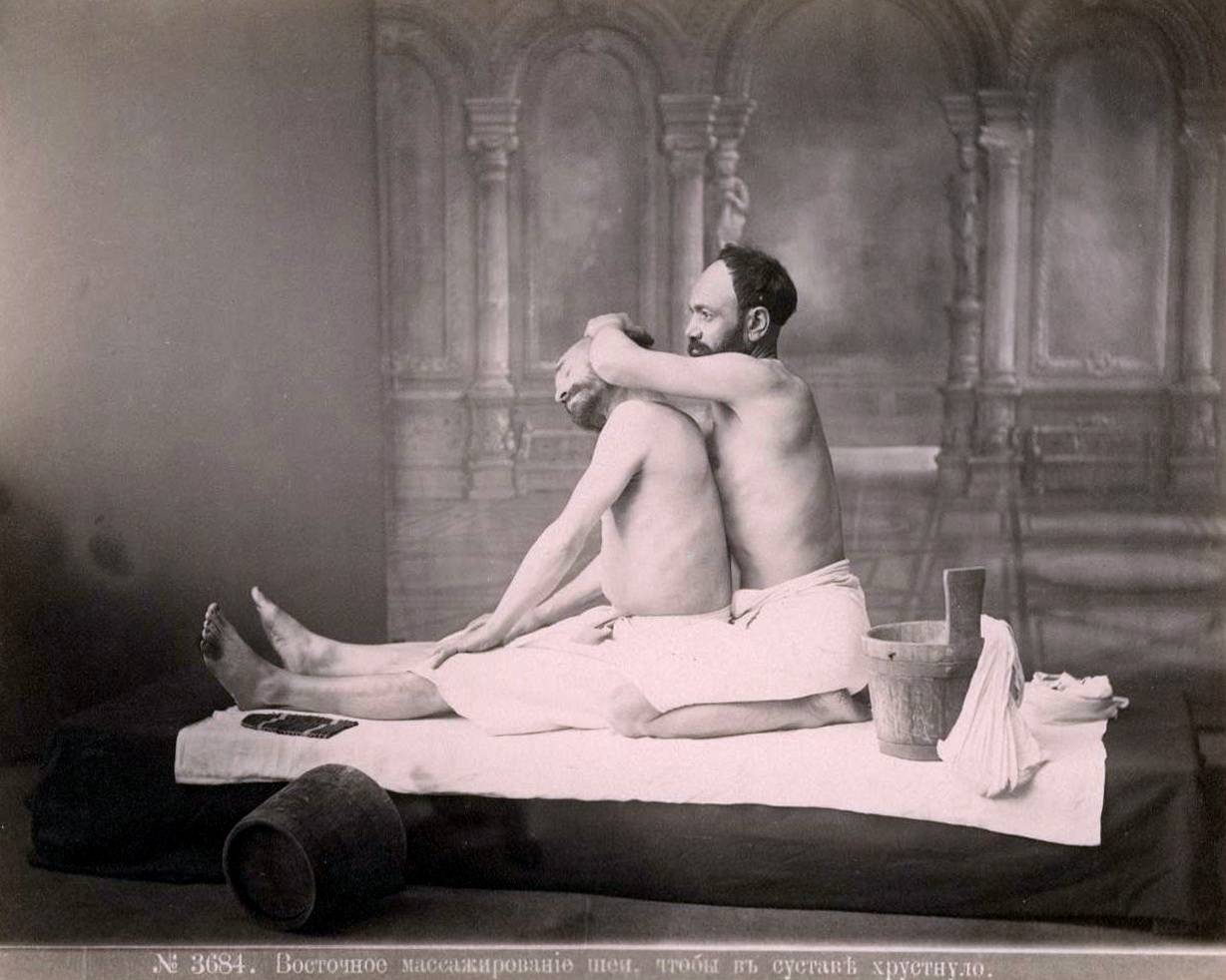
“After the first part of the massage was over, the two bathmen turned me over, and while one pulled my arms with all his strength, the other began dancing on my back, occasionally sliding his feet along my shoulder blades, then noisily landing them back on the board."

This man, who must have weighed around 120 pounds, strangely felt as light as a butterfly. He climbed onto my back, jumped off, then climbed back up, creating a chain of sensations that brought me into an incredible state of well-being. I breathed like never before; my muscles, instead of tiring, seemed to gain extraordinary strength—I would have bet I could lift the Caucasus with outstretched arms.”
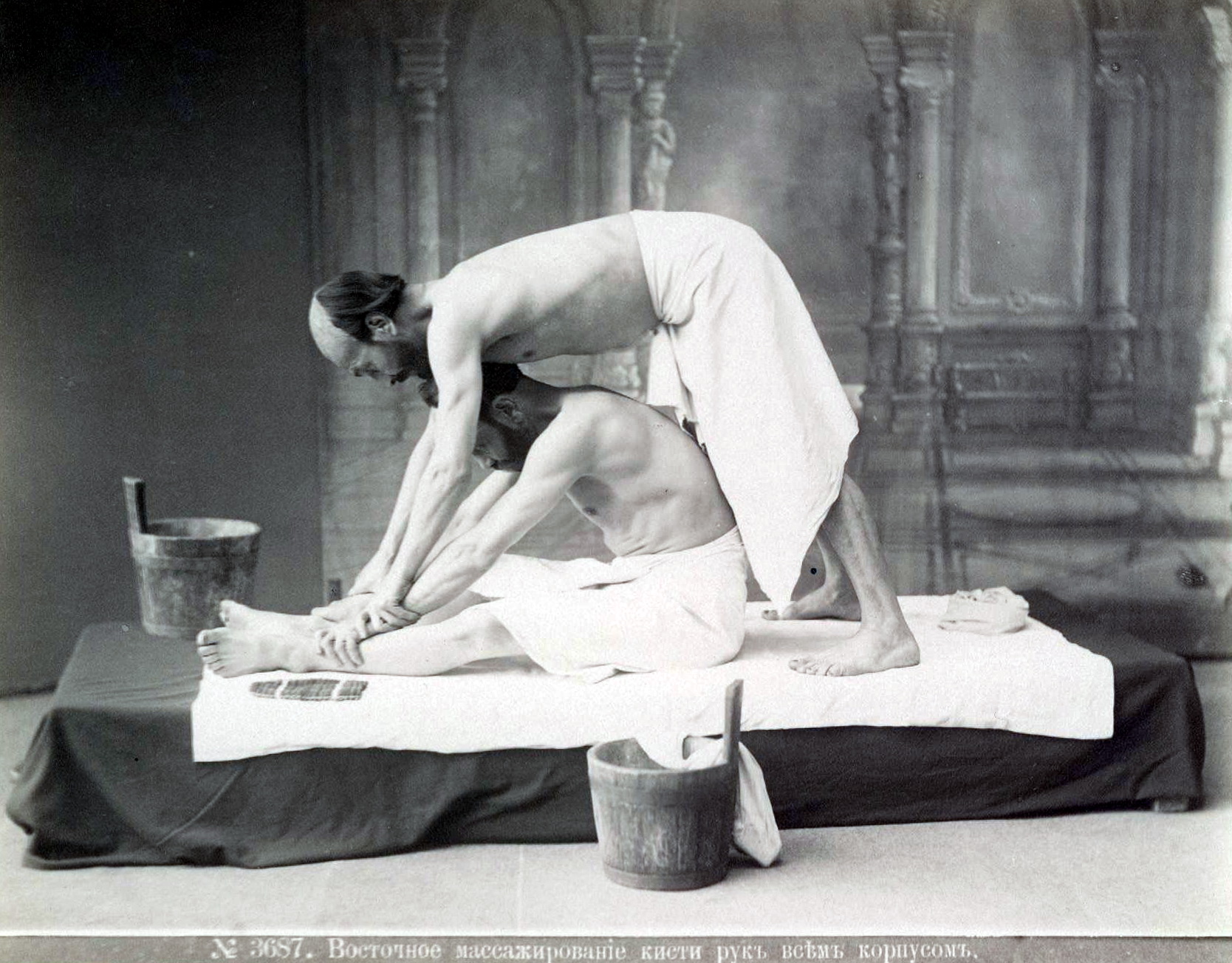
“Then the two bath attendants started slapping my lower back, shoulders, sides, thighs, calves—and so on. I became like some musical instrument, on which they played a melody far more delightful to me than any aria from Guillaume Tell or Robert le Diable. And this melody had one big advantage over the two esteemed operas: I, who can’t sing a single verse of Malbrough without hitting a wrong note ten times, now followed the rhythm perfectly, nodding my head in time and never missing a beat. I was exactly in the state of a dreaming man, just awake enough to know he is dreaming, yet enjoying it so much that he makes every effort not to fully wake.”
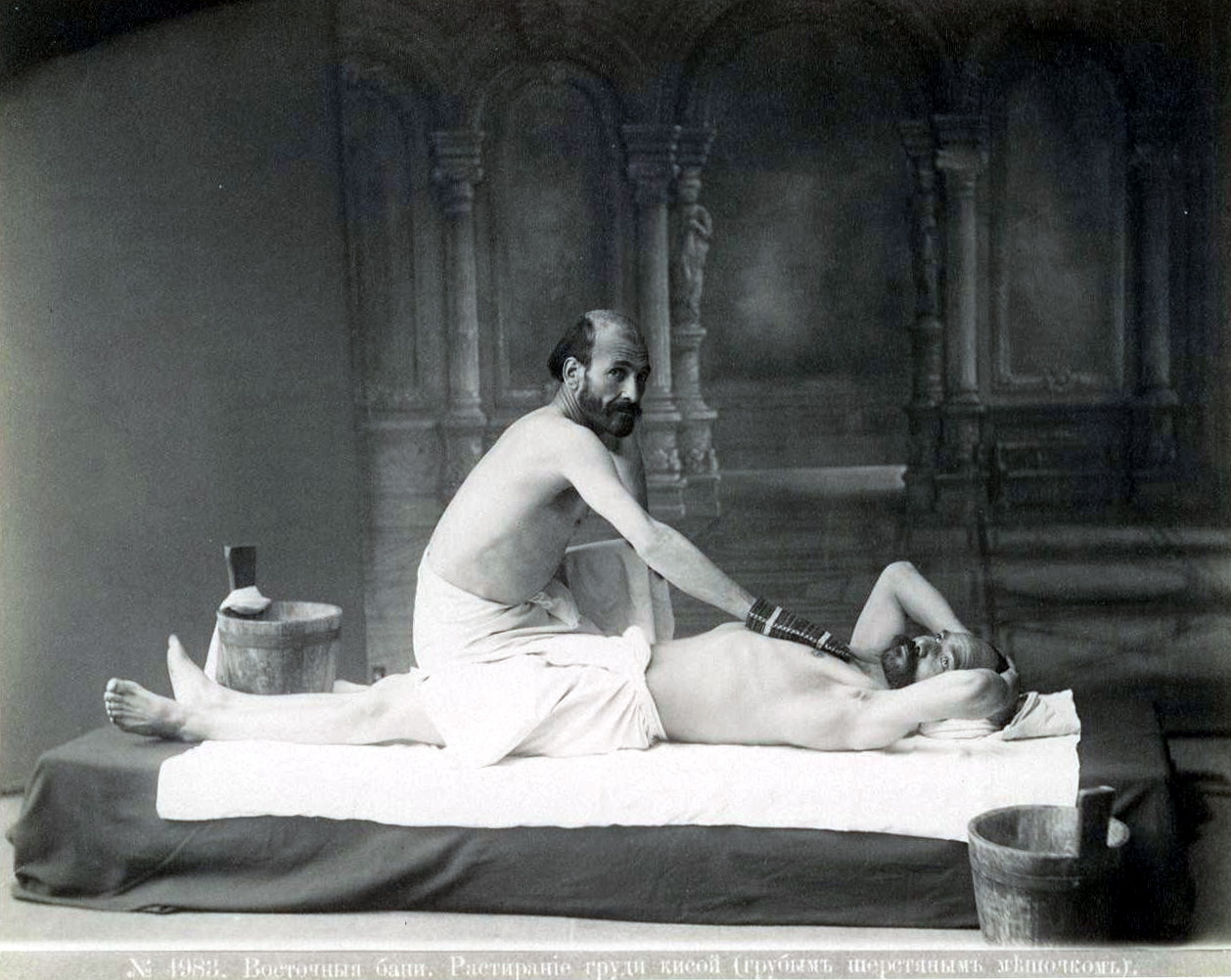
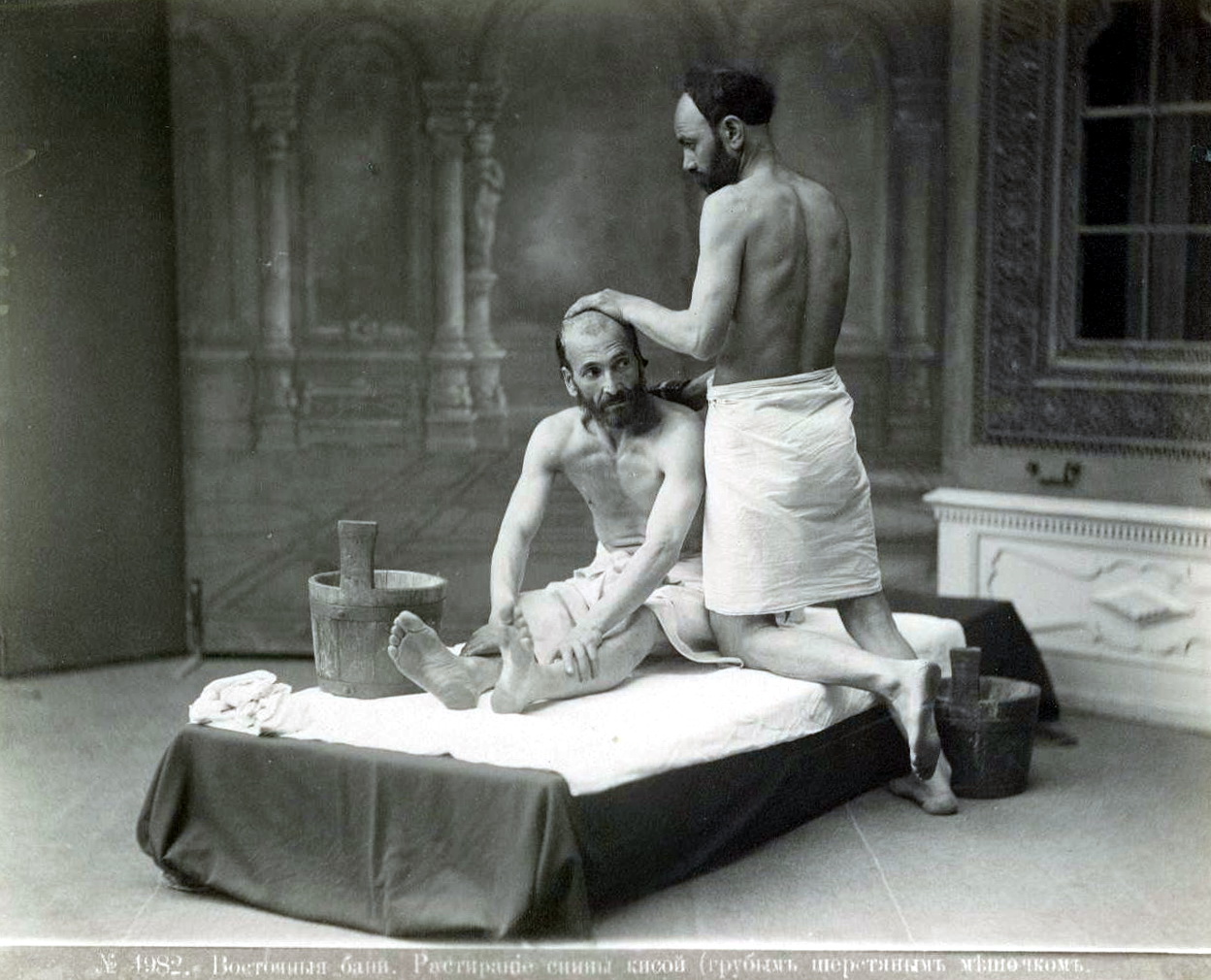
“Finally, to my great regret, the massage ended, and they moved on to the last stage: soaping. One man slipped his hands under my arms and seated me on my behind, much like Harlequin would with Pierrot when he thinks he has killed him. Meanwhile, the other, wearing a glove, rubbed my entire body, while the first lad scooped buckets of 104°F water and poured them over my back and neck with full force. Suddenly the gloved man decided ordinary water wasn’t enough, pulled out a bag, and I watched it puff up, sweating a foamy lather that completely engulfed me. My eyes stung a bit, but I never felt anything sweeter than this foam cascading over my body.

How is it that Paris, the city of sensual delights, has no Persian baths? How has no entrepreneur brought two bath attendants from Tbilisi? Such a philanthropic act, and more importantly, a real fortune to be made.”
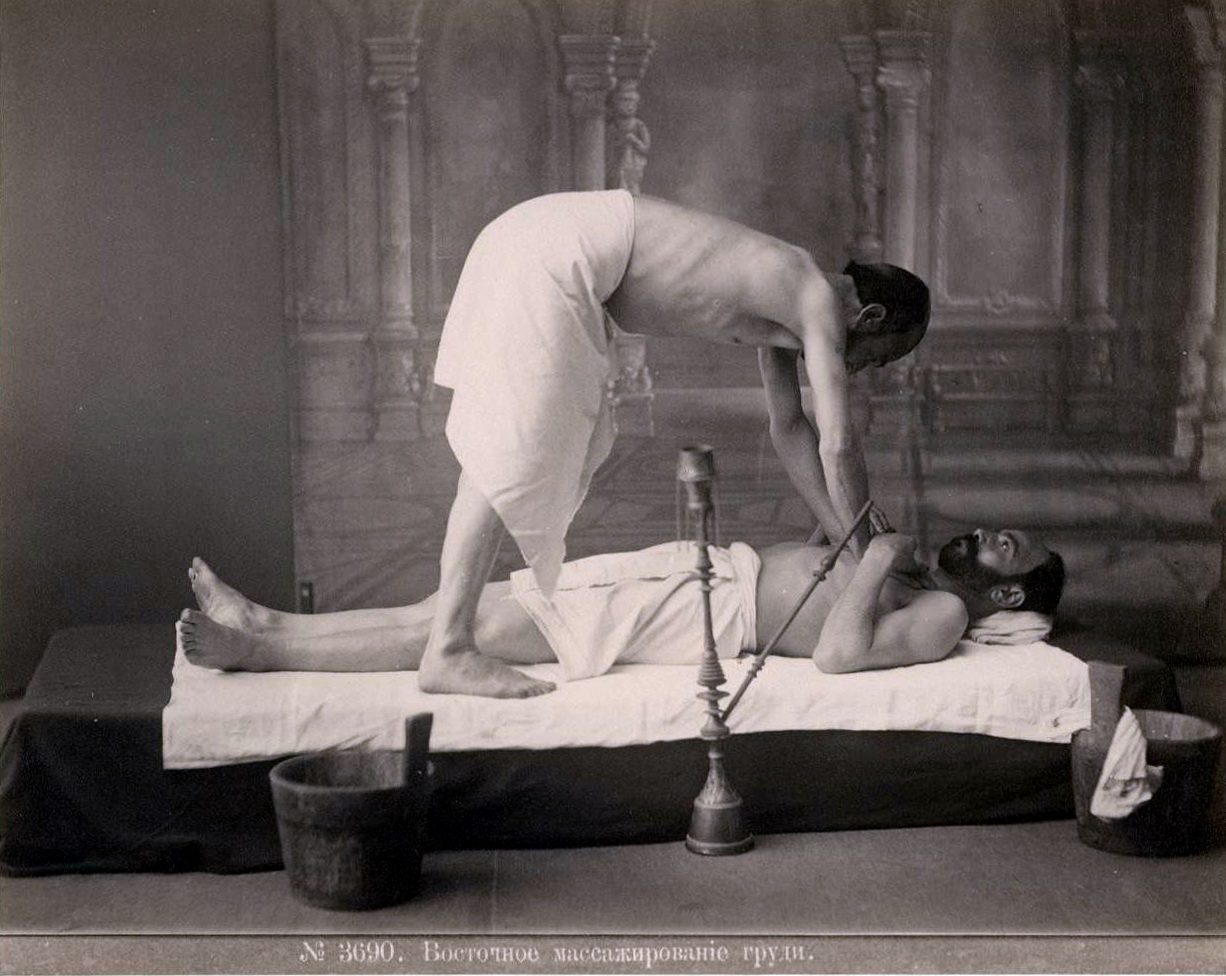
“Completely covered in the warm, milky-white, light, airy foam, I let them lead me to the pool, stepping in as if pulled by an irresistible force, as if nymphs who had abducted Hylas were there. All my companions were treated the same, but I was focused on myself. Only in the pool did I seem to wake up, reluctantly reconnecting with the outside world. We stayed about five minutes in the pools, then got out. Long, perfectly white sheets had been laid on the vestibule beds; the cold air surprised us at first, but gave a new, pleasant sensation. We sat on these beds, and pipes were brought to us.”

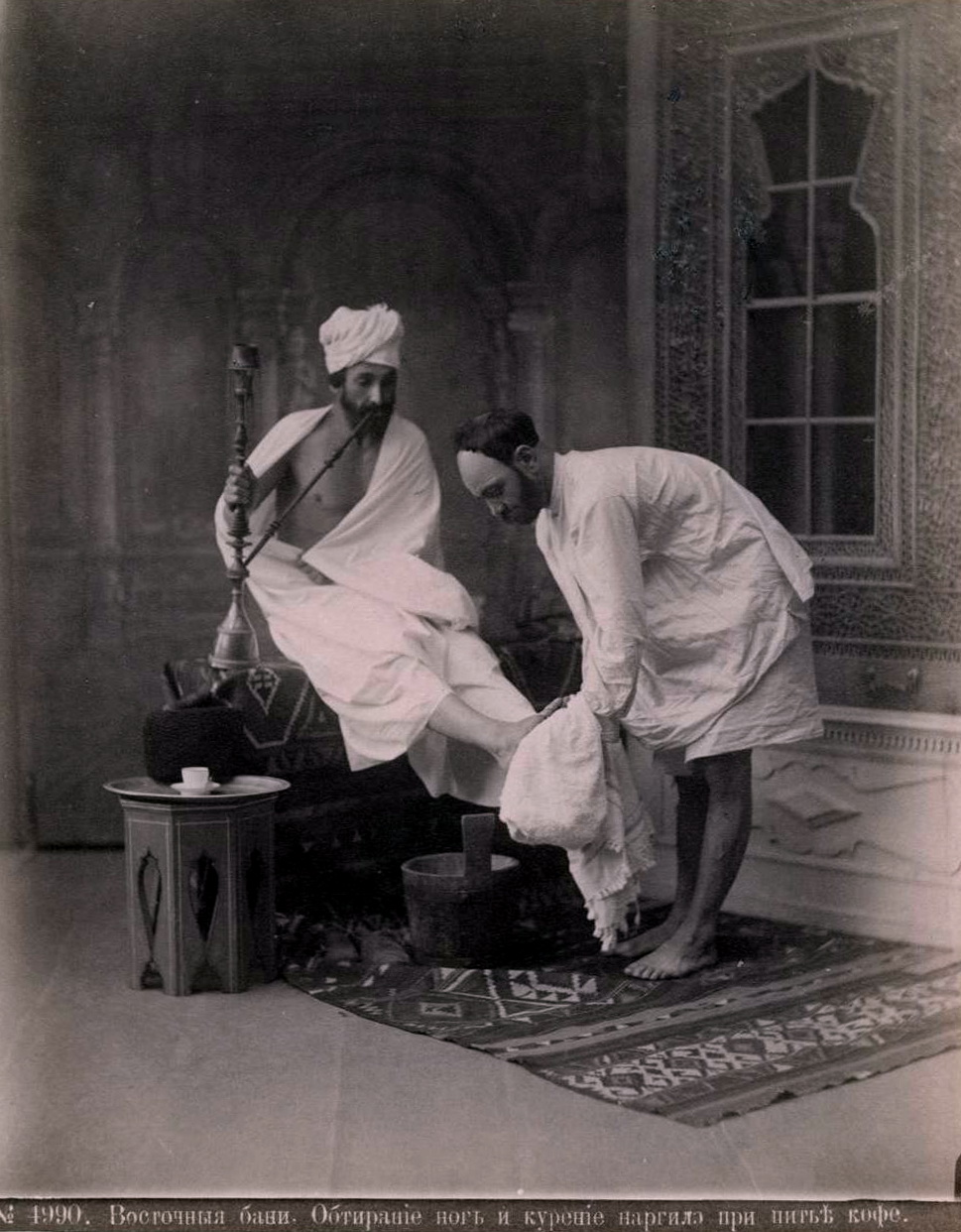
“I understand why smoking is typical in the East, where tobacco is a fragrance, and the smoke travels through perfumed water and amber pipes. But a clay pipe, or a fake Havana cigar, coming from Algeria or Belgium, chewed as much as smoked… ugh! There was a choice: kalyan, chibouk, and hookah, and each could be Turkish, Persian, or Indian as they pleased.

To complete the evening, one of the bath attendants brought out a type of one-legged guitar that rotates on its leg, so the strings seek the bow rather than the bow seeking the strings, and he played a plaintive melody to accompany verses by Saadi. This music rocked us so gently that our eyes closed, the kalyan, chibouk, and hookah slipped from our hands, and indeed, we fell asleep.”


Kayhan Kalhor: Improvisation in Shustari mode, kamanche solo, accompanied on tombak by Navid Afghah. Tehran, 2020

“During the six weeks I stayed in Tbilisi, I visited the Persian baths every other day.”

El Ziz

Introdujimos un epílogo judío a nuestra publicación sobre san Martín y sus gansos con esta miniatura que muestra un ave más o menos como un ganso (coloreado, eso sí) y una línea inequívocamente judía al pie, cosa que la legitimaba para ilustrar aquella curiosa historia de los judíos que transportaban gansos asados a Viena el día de san Martín.

Pero, ¿qué pájaro es realmente este, con ese enorme huevo?

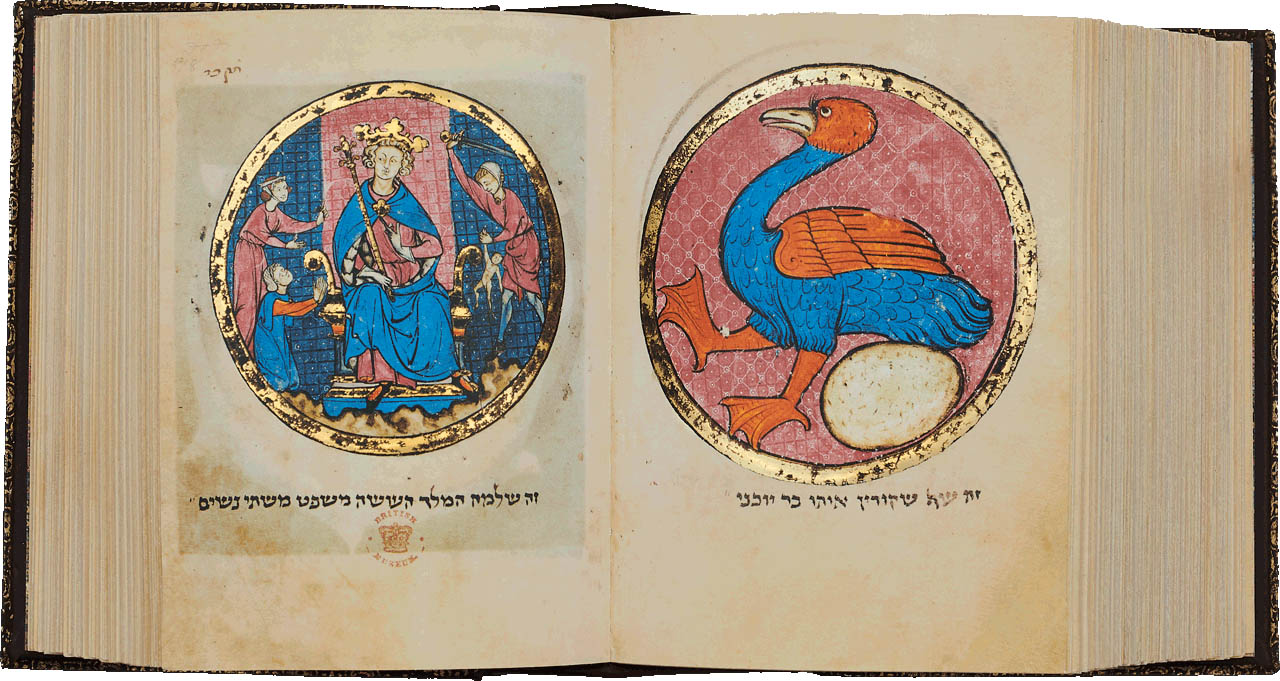
La inscripción dice: זה עוף שקורין אותו בר יוכני zeh ʿof she-qorin oto Bar Yochnei, es decir, «Esta es el ave llamada Bar Yochnei.»

De acuerdo. Ahora solo falta averiguar qué pájaro es el Bar Yochnei.

1.

El nombre aparece en el Talmud babilónico. El tratado Bekhorot 57b, entre historias entretenidas de animales y plantas extraordinarios, nos dice:

«Una vez, el ave llamada bar yokhani (=el hijo del nido) dejó caer un huevo, y el contenido del huevo inundó sesenta ciudades y arrancó trescientos cedros.»

La misma ave gigantesca también aparece en el Bava Batra 73b, entre las historias de Rabbah bar bar Hana, cuyas aventuras y experiencias maravillosas se integraron incluso en las peripecias de Simbad:

«Una vez, viajando en barco, vimos un ave que estaba en el agua hasta los tobillos [kartzuleih] y su cabeza alcanzaba el cielo. Dijimos: aquí el agua no es profunda, y quisimos bajar para refrescarnos. Pero una voz divina nos dijo: 'No bajen aquí, porque el hacha de un carpintero cayó hace siete años y todavía no ha llegado al fondo'. […] Rav Ashi dijo: Este ave se llama ziz sadai, como está escrito: ‘Conozco todas las aves de los montes; y el ziz sadai es mío’ (Salmos 50:11).”

La existencia de un ave tan colosal ya es un milagro, pero que existan dos sería milagro aún mayor. Por eso, comentaristas posteriores del Talmud—tácitamente el Yalkut Shimoni medieval y, de forma explícita, por primera vez el Maharsha de Polonia (1555-1631) en su comentario sobre Bekhorot 57b—identifican a ambos como una misma criatura.

2.

Así que ahora sabemos que el Bar Yochnei es lo mismo que el ziz sadai. Pero, ¿qué demonios es un ziz sadai?

Aquí ya estamos un poco mejor, porque el ziz sadai se menciona en dos salmos. Sin embargo, la palabra no aparece en ningún otro lugar de la Escritura; solo el contexto del Salmo 50:10-11 nos da pistas:

כִּי־לִ֥י כָל־חַיְתֹו־יָ֑עַר בְּ֝הֵמֹ֗ות בְּהַרְרֵי־אָֽלֶף׃
יָ֭דַעְתִּי כָּל־ע֣וֹף הָרִ֑ים וְזִ֥יז שָׂ֝דַ֗י עִמָּדִֽי׃

Ki-lī kol-ḥaytō-yā‘ar, behēmōt beharᵉrê-’ālef.
Yāda‘tī kol-‘ōf hārīm, ve zīz sāday ‘immādī.

El problema es que estas líneas se han traducido de varias maneras, dependiendo de cómo se interpreten los términos behēmōt y zīz sāday:

for every animal of the forest is mine, and the cattle on a thousand hills.
I know every bird in the mountains, and the insects in the fields are mine.

(New International Version)

Míos son todos los animales del bosque, ¡los miles de animales que hay en las colinas!
Mías son todas las aves de los montes; mío es todo lo que se mueve en los campos.

(Reina-Valera Contemporánea)

Mas La traducción literal, dejando lo que no tiene una interpretación clara, sería:

Porque mío es todo animal del bosque, el behemot en mil montes.
Conozco todas las aves del cielo, y el ziz sadai es mío.

La interpretación de Ziz Sadai como «insecto del campo» o «lo que se mueve en los campos» proviene del influyente Rashi del siglo XI, quien derivó ziz del verbo zuz, «moverse rápidamente». Pero la mayoría de los primeros comentaristas del Talmud, que aún estaban dentro del contexto original, lo entendieron como un ave, y no cualquier ave, sino un ave gigantesca. Ellos comprendieron que estas dos líneas, cada una con un hapax legomenon, confirmaban que cada una designaba a una criatura mítica, y que Adonai se glorificaba al declararse señor de ambas. Al igual que hace con la tercera criatura, el Leviatán, que presenta como prueba de su grandeza en el Libro de Job (40:25-32), como ya vimos:

¿Podrás pescar al Leviatán con un anzuelo? ¿harás pacto con él para que sirva a tu voluntad una vez por todas?

Así, los tres animales —Behemot, Leviatán y ziz sadai— forman un conjunto inseparable. Tres criaturas colosales que superan con creces cualquier dimensión humana, pero que aún así permanecen bajo el dominio de Adonai. Según los comentaristas del Talmud, Behemot es la criatura milagrosa de la tierra, Leviatán la del mar, y el ziz sadai la del aire, siendo este un ave gigantesca.

Behemot, Leviatán y el ziz sadai aparecen en la Biblia hebrea de Ulm de la Bibliotheca Ambrosiana, datada entre 1236 y 1238.

Hablando del Leviatán, ya mencionamos que proviene de los antiguos relatos de la creación del Cercano Oriente, que los judíos exiliados en Babilonia conocían muy bien y tejieron en su propia mitología. Durante el periodo del Segundo Templo, los estrictos editores sacerdotales eliminaron estos mitos de la versión oficial de la Torá que compilaron, pero aún así quedaron suficientes huellas en libros poéticos o anecdóticos, como los Salmos o el Libro de Job.

La idea fundamental de estas narraciones de la creación es que el dios o los dioses —ya sea Elil o Marduk, que más tarde ocuparía su lugar— debían someter primero al caos y a sus príncipes rebeldes, principalmente en las aguas, pero también en la tierra y en el aire.

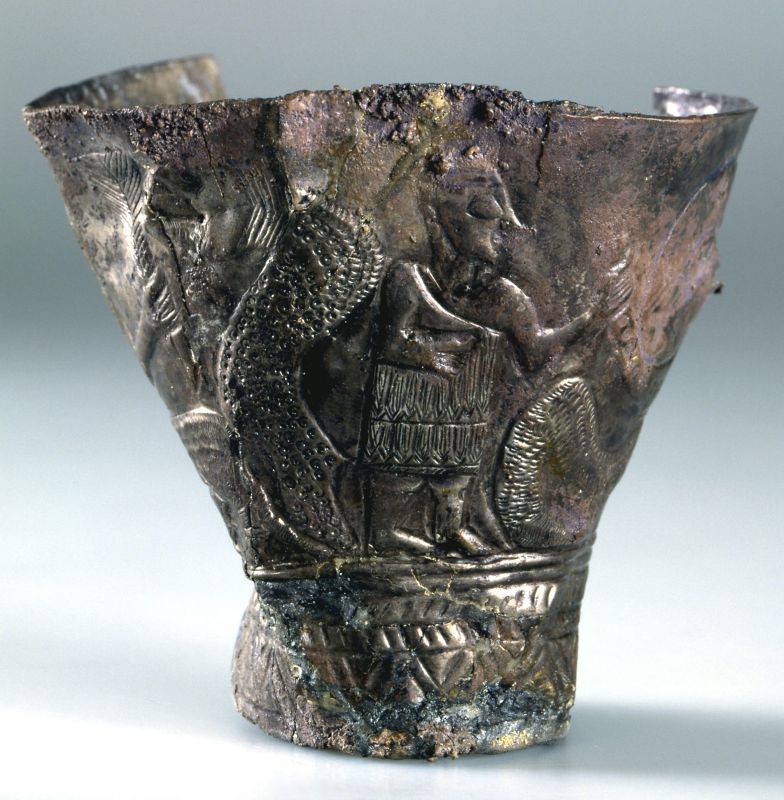
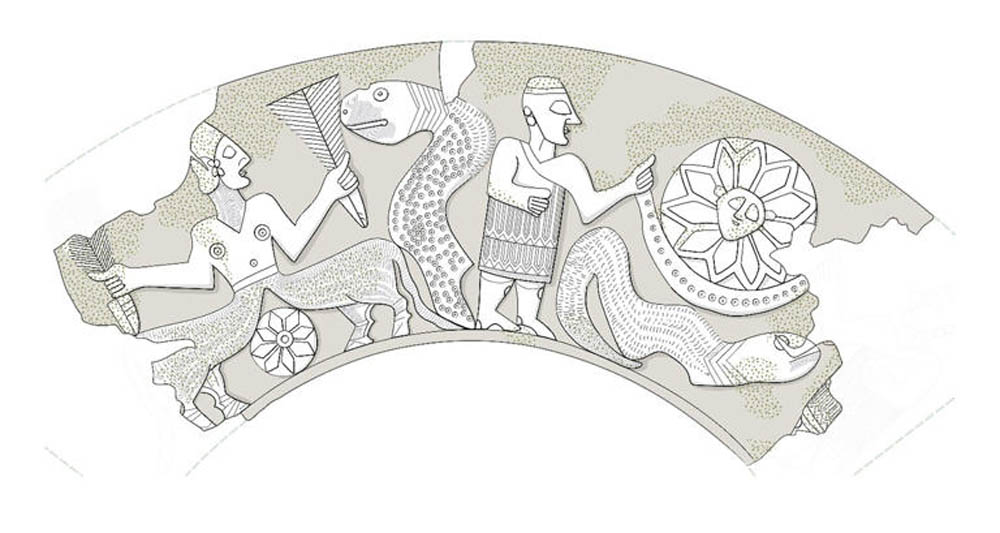
El llamado cáliz ʻAin Samiya, hallado cerca de Ramala (aprox. 2300-2000 a.C., hoy en el Museo de Israel en Jerusalén), representa la más antigua ilustración conocida de la historia de la creación. En él, la deidad, tras vencer al caos, pone el sol en un bote sobre las aguas celestiales. Más abajo, el llamado prisma de Lidar Höyük (alrededor de 1800 a.C.) muestra escenas similares de la salida del sol, lo que indica que este mito era ampliamente conocido en el Antiguo Oriente. Todo esto se documenta en el último número del Smithsonian Magazine, del 13 de noviembre de 2025.

En las aguas, Tiamat-Leviatán; en la tierra, el toro divino —con el que incluso Gilgamesh debe enfrentarse— y en el aire… ahí está Anzu (su nombre original sumerio/acadio: Imdugud), un enorme pájaro de cara de león que habita en las montañas. Según el mito acadio más antiguo que se conserva, Anzu roba las tablas del destino de Enlil —que otorgan a su dueño poder sobre el destino de todos los seres vivos— y es el hijo de Enlil, Ninurta, quien debe derrotarlo y recuperarlas. Con Anzu, también el mundo del caos se rebela contra el nuevo orden, y son los dioses quienes deben someterlo.

Todo esto está detalladamente documentado por Nini Wazana, de la Hebrew University of Jerusalem, en su artículo “Anzu and Ziz: Great Mythical Birds in Ancient Near Eastern, Biblical, and Rabbinic Traditions”, publicado en el Journal of the Ancient Near Eastern Society 31 (2009).

Anzu/Imdugud aparece en la tabla votiva del rey lagashita Entemena, ca. 2400 a.C., Louvre

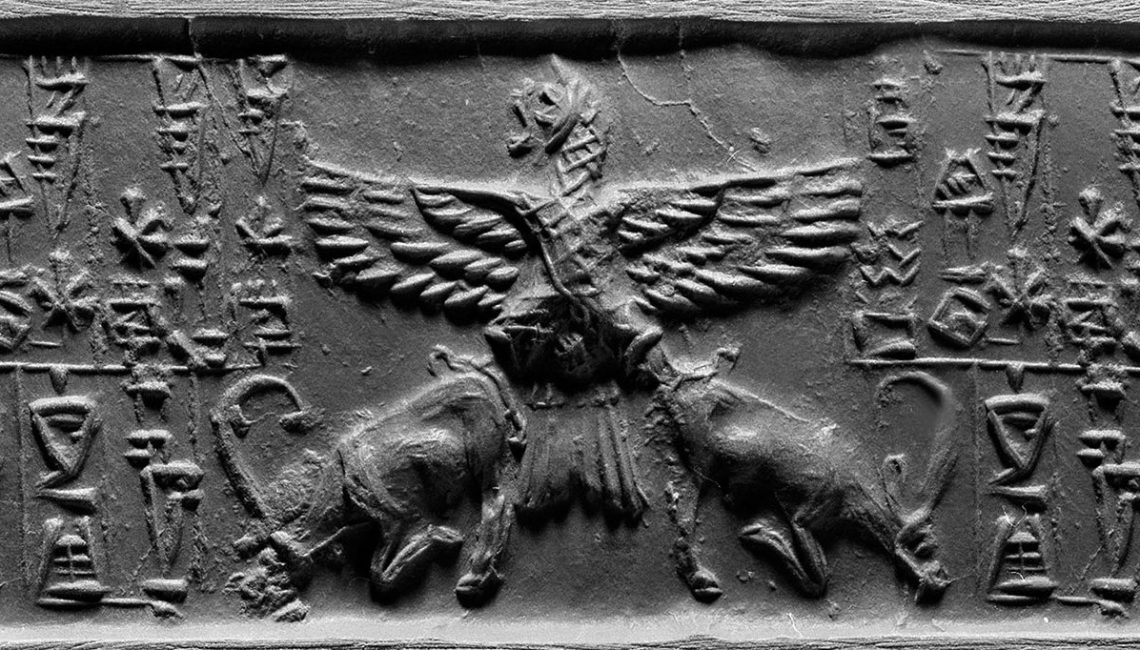
Anzu/Imdugud con dos íbices en un sello de ca. 2154–2100 a.C., Morgan Library & Museum

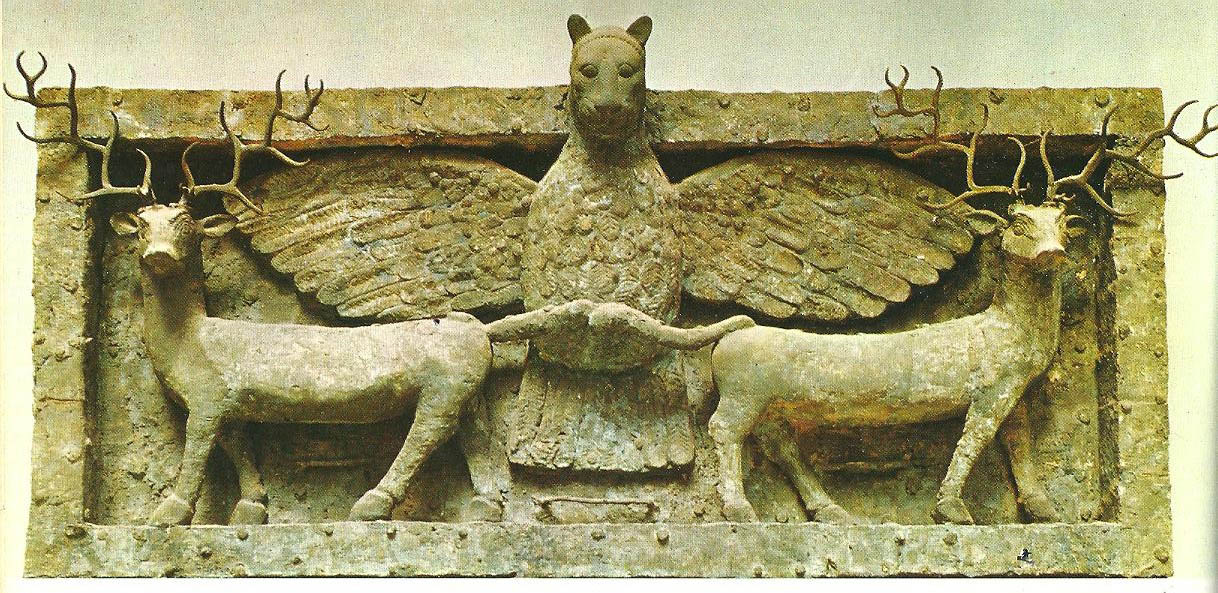
Anzu/Imdugud con dos ciervos en un friso de cobre de ca. 2500 a.C. de Tell-el-Obed, del antiguo templo de Ninhursag, British Museum

Anzu/Imdugud en un relieve votivo del rey Ur-Nanshe de Lagash, de la antigua ciudad de Girsu, ca. 2550–2500 a.C., Louvre

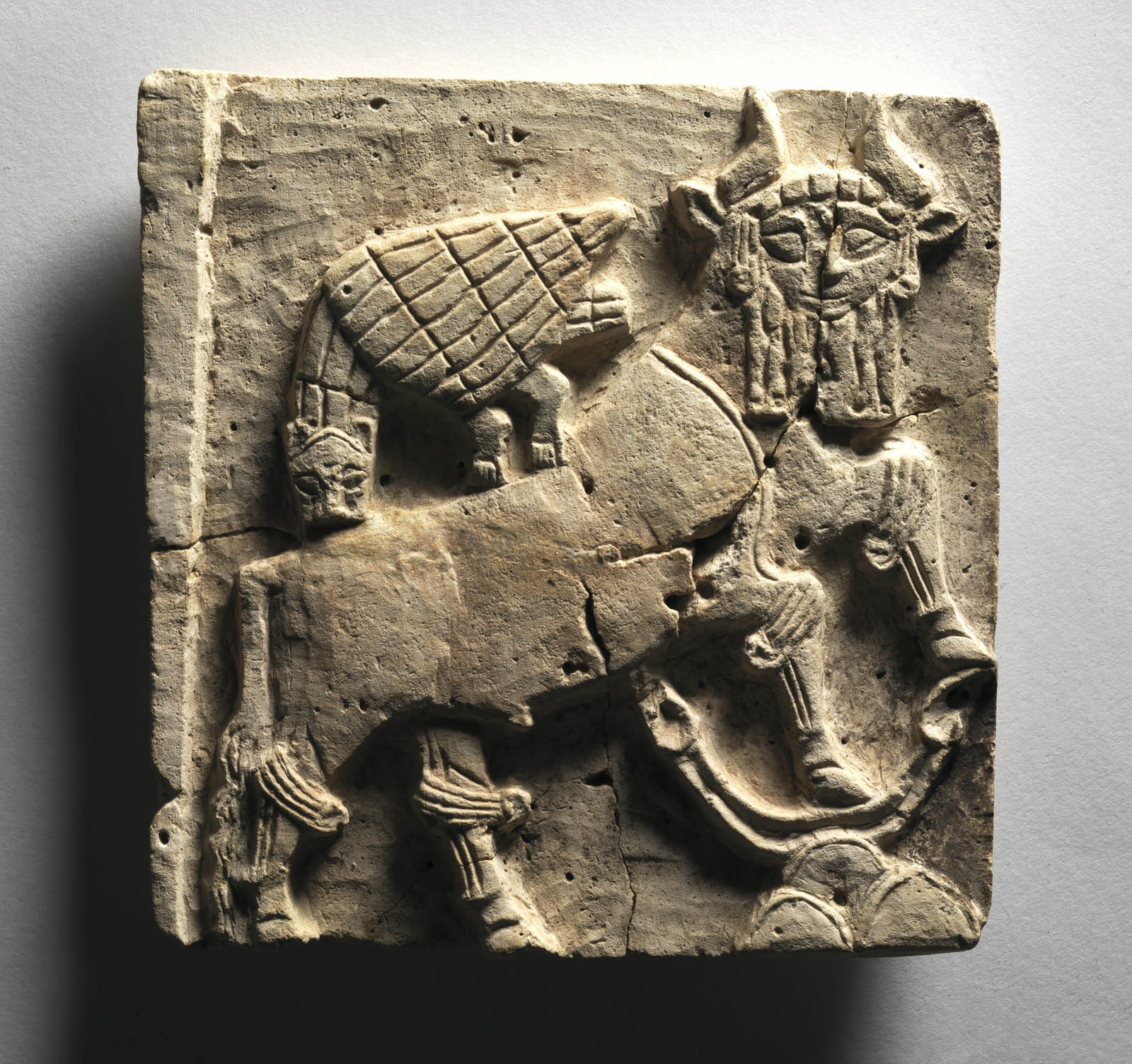
Anzu/Imdugud atacando un toro (quizá representación simbólica de la luna menguante), Tell-el-Obed, ca. 2600–2500 a.C., Penn Museum, Filadelfia

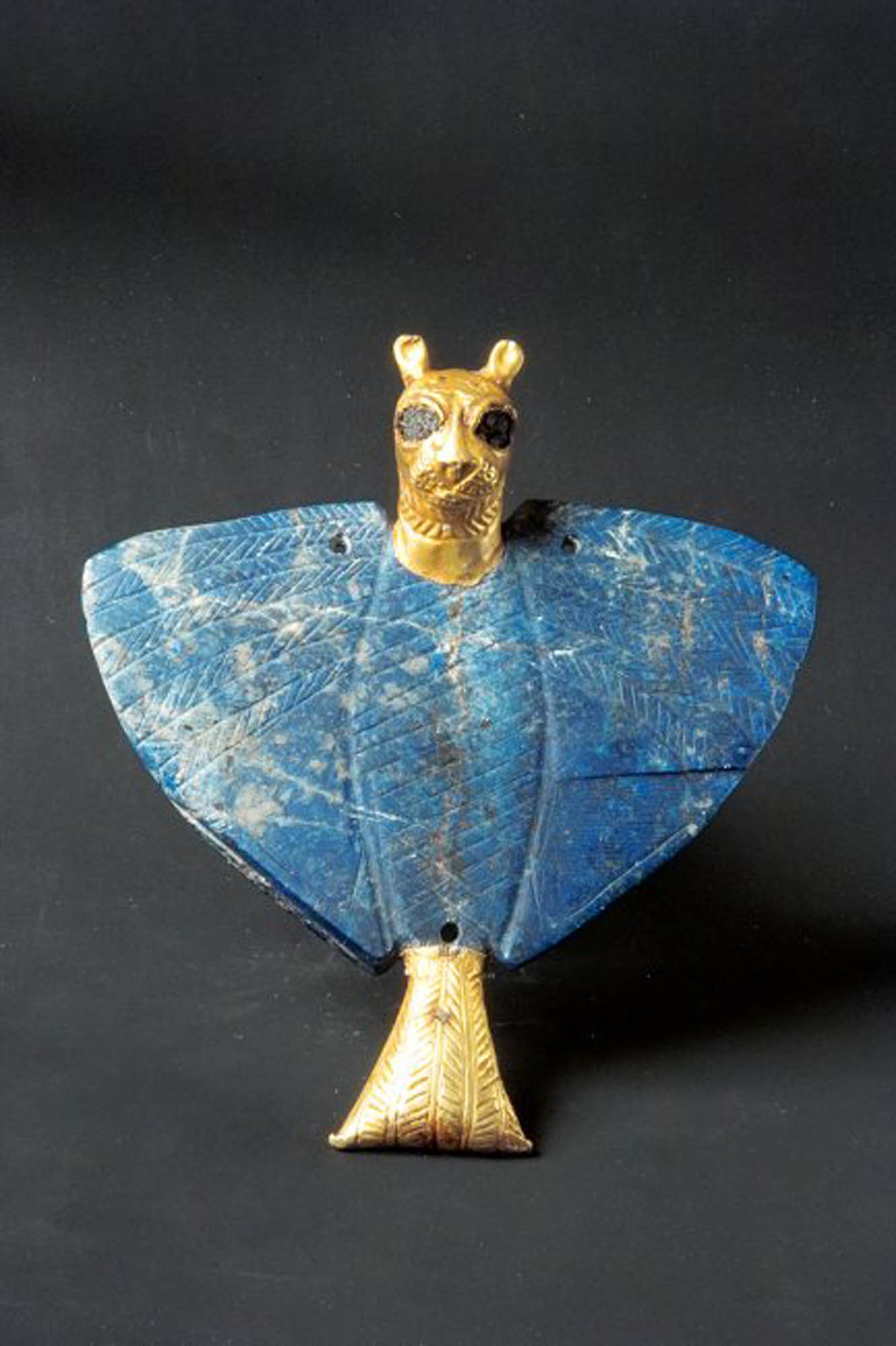
Anzu/Imdugud en un colgante de lapislázuli y oro del llamado «tesoro de Uri» descubierto en el palacio real de Mari (supuesto regalo del rey de Ur al rey de Mari), ca. 2500 a.C., Museo Nacional de Siria, Damasco

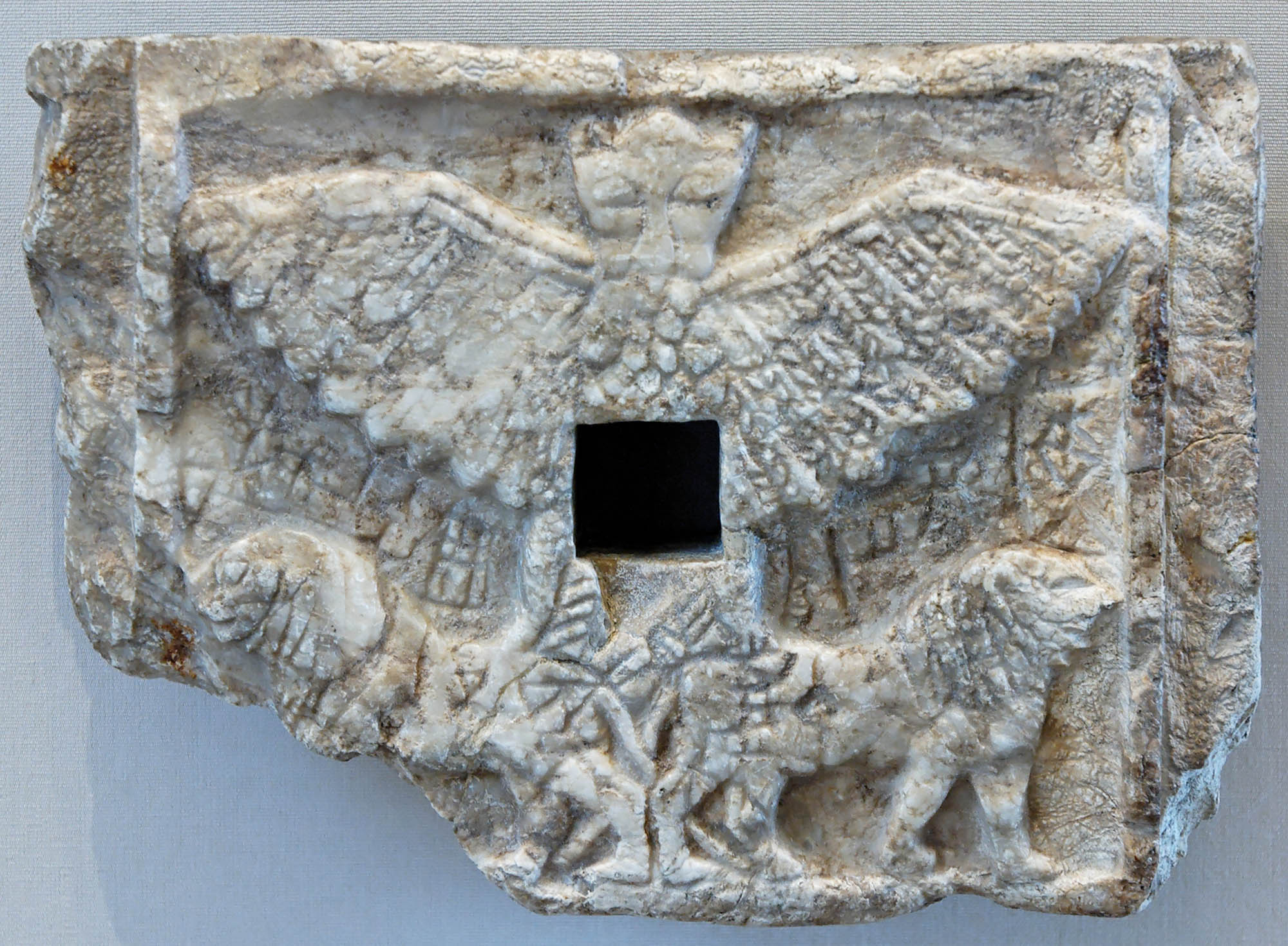
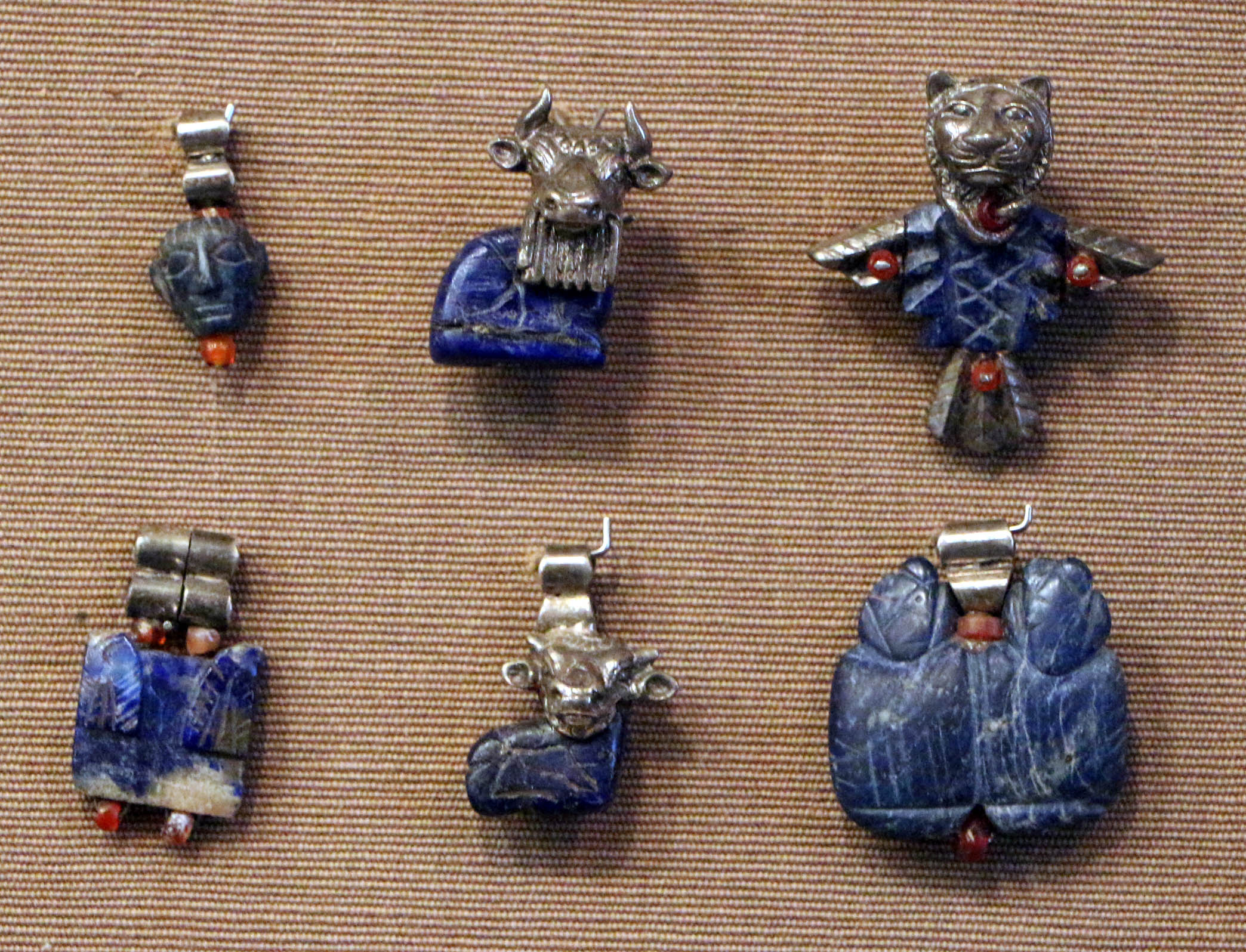
Anzu/Imdugud en el tesoro de Tell Asmar, de la antigua ciudad de Eshnunna, Bagdad, Iraq Museum

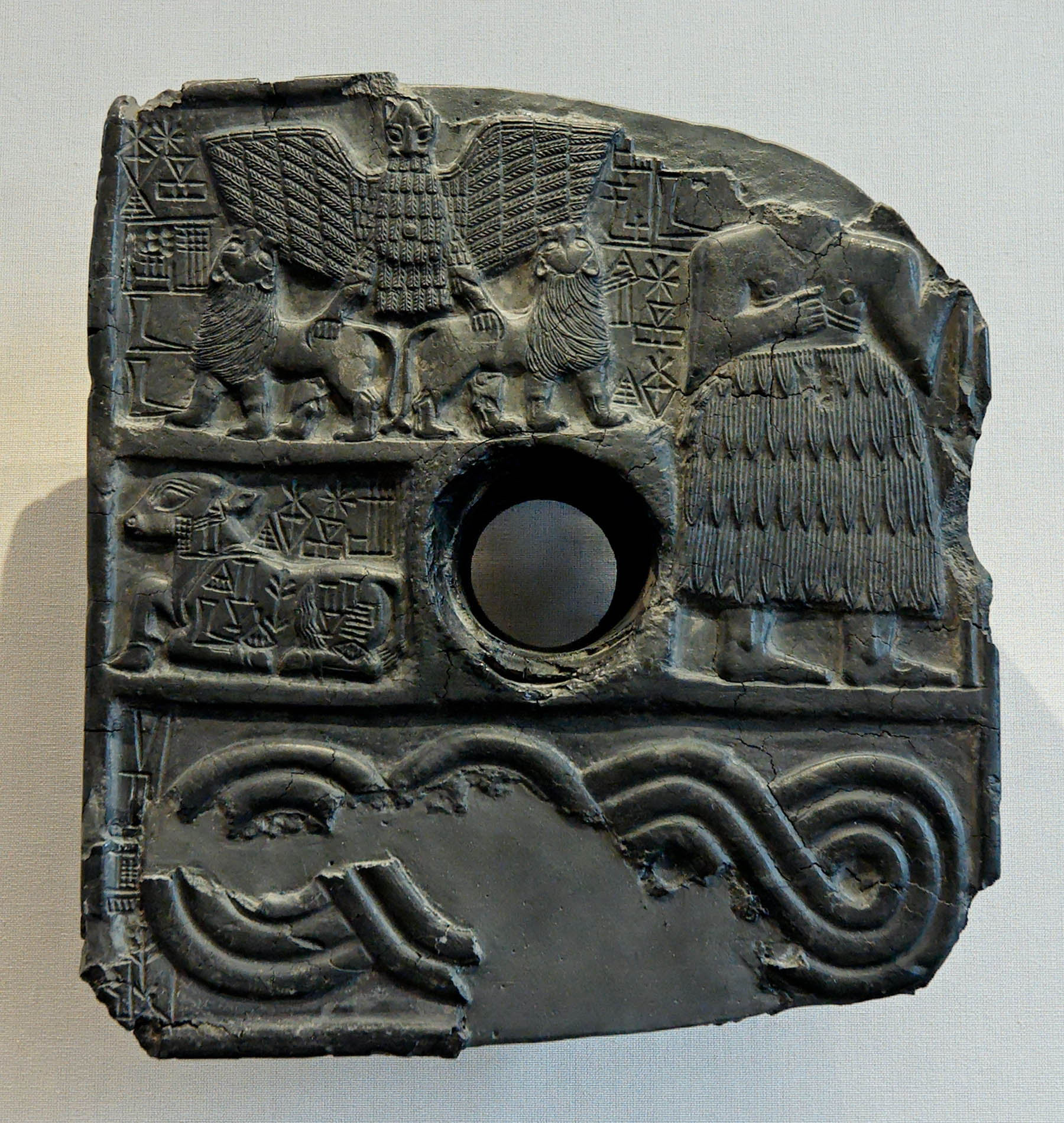
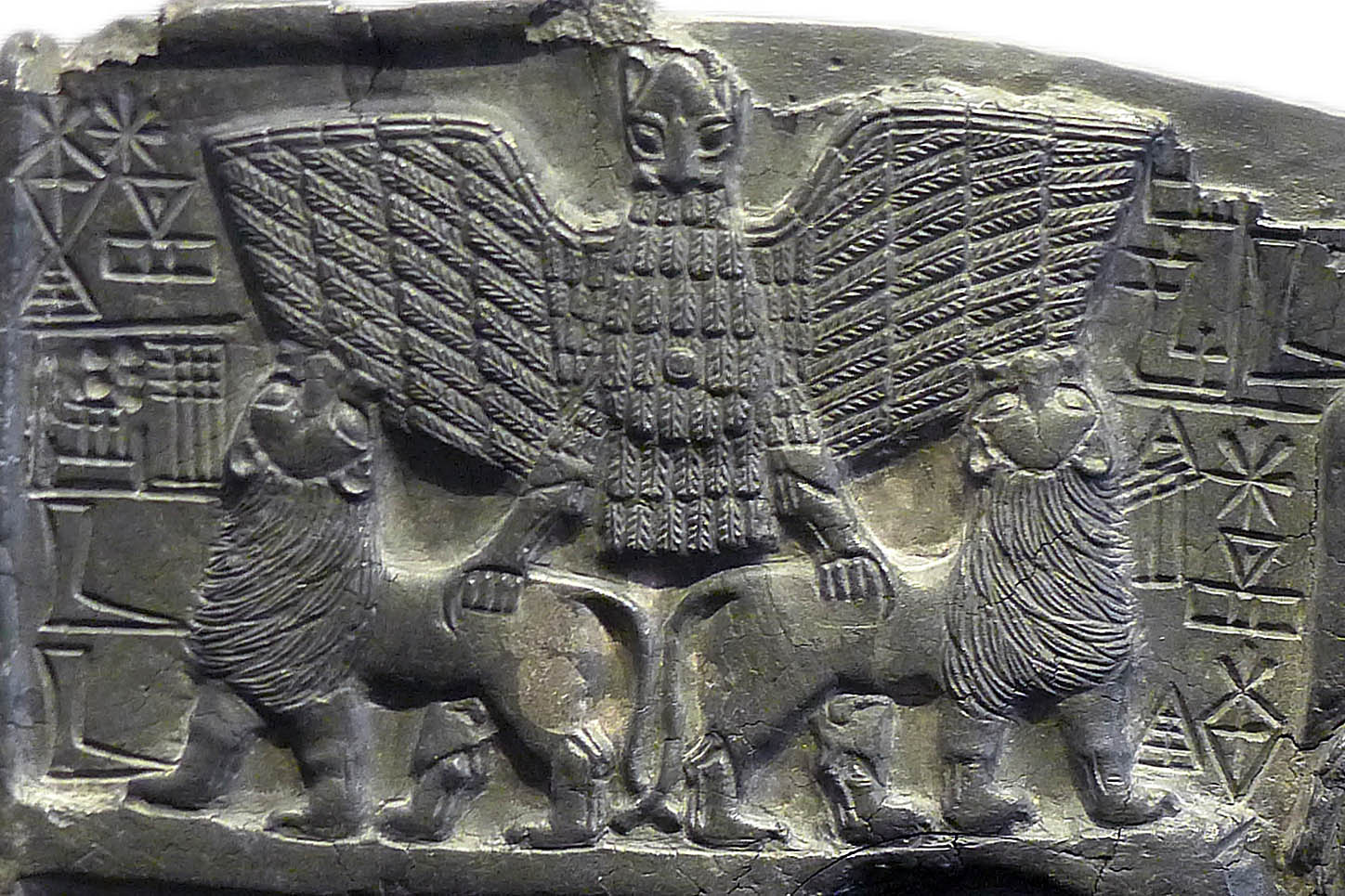
Anzu/Imdugud en el bastón votivo ofrecido por el rey Mesilim de Kish a la deidad Ningursu, de la antigua Girsu, ca. 2600–2500 a.C., British Museum

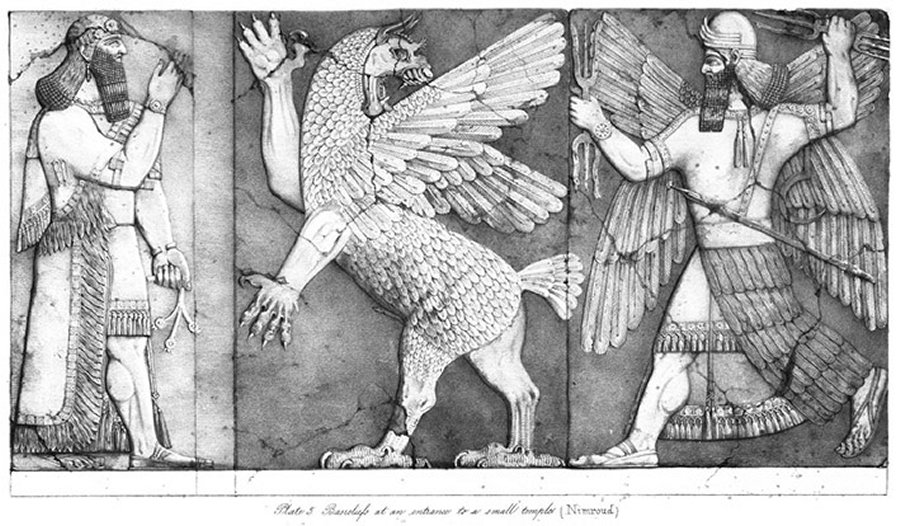
El combate entre Ninurta y Anzu en el relieve de la entrada del templo de la ciudad asiria de Nimrud, hoy en el British Museum. Grabado de Ludwig Gruner en Monuments of Nineveh, de Austen Henry Layard (1853). La descripción detallada del relieve puede leerse aquí

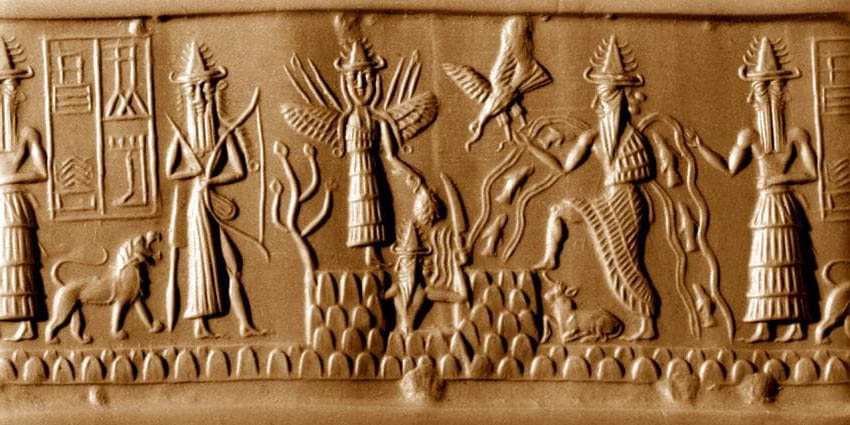
Ninurta atacando a Anzu, sello neoasirio de Nimrud, siglo VIII–VII a.C., The Walters Art Museum

El llamado Sello de Adda, ca. 2300 a.C.: Anzu/Imdugud ante el tribunal de los dioses, British Museum

Que Anzu realmente haya sobrevivido en los salmos bajo el nombre de ziz sadai durante tres mil años lo demuestra que la palabra sāday —hapax legomenon, única en la Biblia y de significado incierto— proviene del epíteto acadio original de Anzu/Imdugud, šadû, que significa «montañés». Para Mesopotamia, las montañas eran lo desconocido y amenazante, de donde venían atacantes y tormentas, y Anzu era el dios de estos.

Otra pista la da la segunda aparición del nombre: el Salmo 80 describe a Israel como una vid magnífica sacada de Egipto y plantada en tierra nueva, ahora devastada por el enemigo:

יְכַרְסְמֶ֣נָּֽה חֲזִ֣יר מִיָּ֑עַר וְזִ֖יז שָׂדַ֣י יִרְעֶֽנָּה׃

Yekharsemennā ḥazīr miyyā‘ar, ve zīz sāday yir‘ennā

«Destruye el jabalí del bosque y devora el zīz sāday.»

Según Nini Wazana, estos dos seres corresponden simbólicamente a los dos enemigos que amenazaban a Israel en la época en que se compuso el salmo: el jabalí representa a Egipto, y el zīz sāday a la Asiria montañosa.

3.

La leyenda de nuestra «ilustración del ganso» no dice nada sobre toda esta historia de tres mil años. Ni tampoco el volumen en el que aparece.

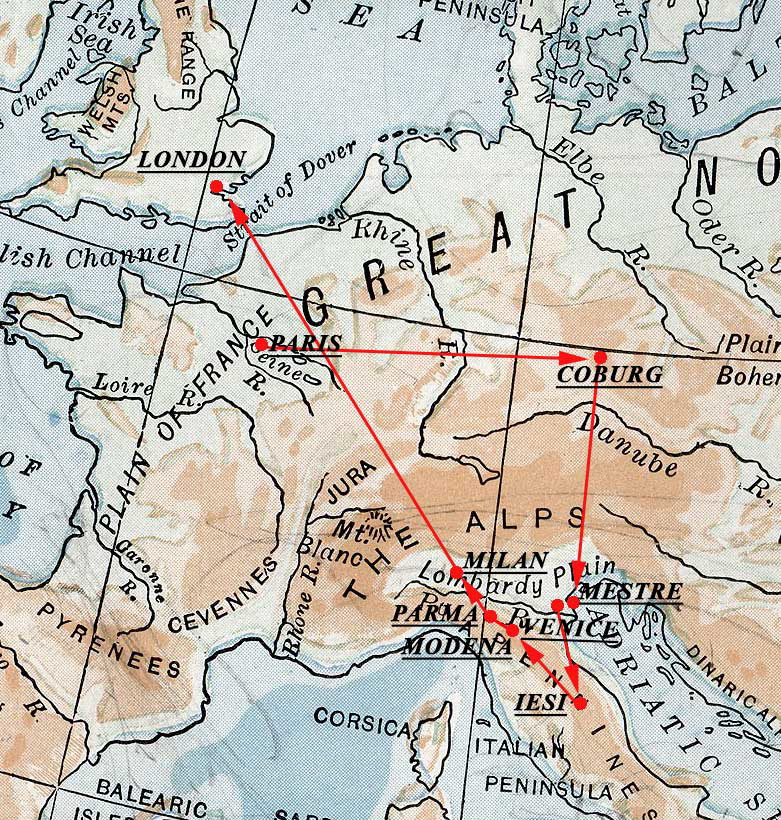
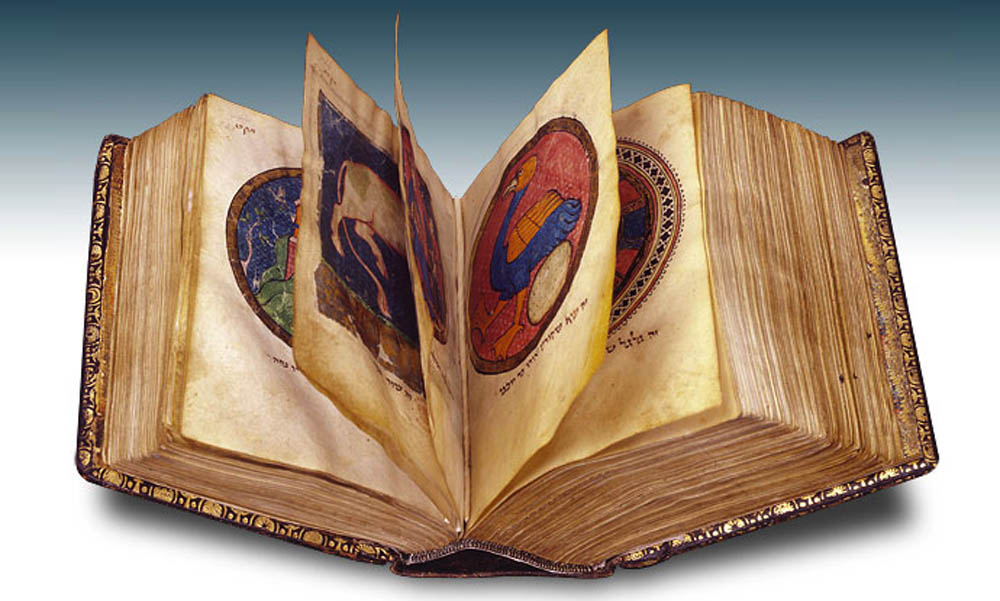
La imagen proviene de un códice medieval conocido como North French Hebrew Miscellany, compilado entre 1277 y 1298 en el norte de Francia. Desde allí emprendió un viaje bastante aventurero: pasó por Alemania, Venecia, Padua y Milán, hasta llegar finalmente a la British Library en 1839 (Add MS 11639).

Este enorme manuscrito, formado por 746 folios de pergamino (1.492 páginas), contiene, además de la Torá, textos litúrgicos, la Hagadá, el texto hebreo más antiguo conocido del Libro de Tobit, escritos legales y poemas de Moisés ibn Ezra. Fue copiado por un único escriba, Benjamín, aunque sus 49 miniaturas fueron realizadas por varios artistas. Las imágenes estuvieron disponibles en la web de la British Library, pero desaparecieron con el tiempo. La editorial Facsimile Editions, especializada en facsímiles de manuscritos hebreos, publicó este códice, y todas las ilustraciones se pueden ver en su página web.

Las imágenes, que representan principalmente escenas bíblicas, no guardan mucha relación con el texto y forman, en cierto modo, una especie de miscelánea dentro de la miscelánea. Sus modelos provienen de la pintura gótica parisina de la época; el ave Bar Yochnei, por ejemplo, se inspira en los bestiarios cristianos contemporáneos.

fol. 518a-517b

La imagen del Bar Yochnei se enfrenta con el Juicio de Salomón. Entre ambas no se perciben muchas conexiones evidentes. Pero al pasar solo una página, nos encontramos con viejos conocidos. Aquí están: ¡Behemot y Leviatán!

fol. 518b-519a. זה שור הבר ze shor ha-bar «este es el buey salvaje» = Behemot, y זה לויתן ze livyātan «este es el Leviatán»

En el siglo V, Esdras y Nehemías, al regresar del exilio babilónico y preparar la versión definitiva de la Torá, probablemente depuraron de ella los mitos de la creación babilónicos y cananeos, que representaban la origen del mundo como una lucha entre los dioses y las fuerzas del caos. Conscientemente los reemplazaron con un relato monoteísta, donde el único Dios crea el mundo con solo su palabra, sin resistencia alguna. Sin embargo, las figuras derrotadas de esos mitos encontraron refugio en obras poéticas, en los Salmos y en el Libro de Job, y a través de la tradición rabínica que los interpreta, han seguido viviendo durante tres mil años.

The Ziz

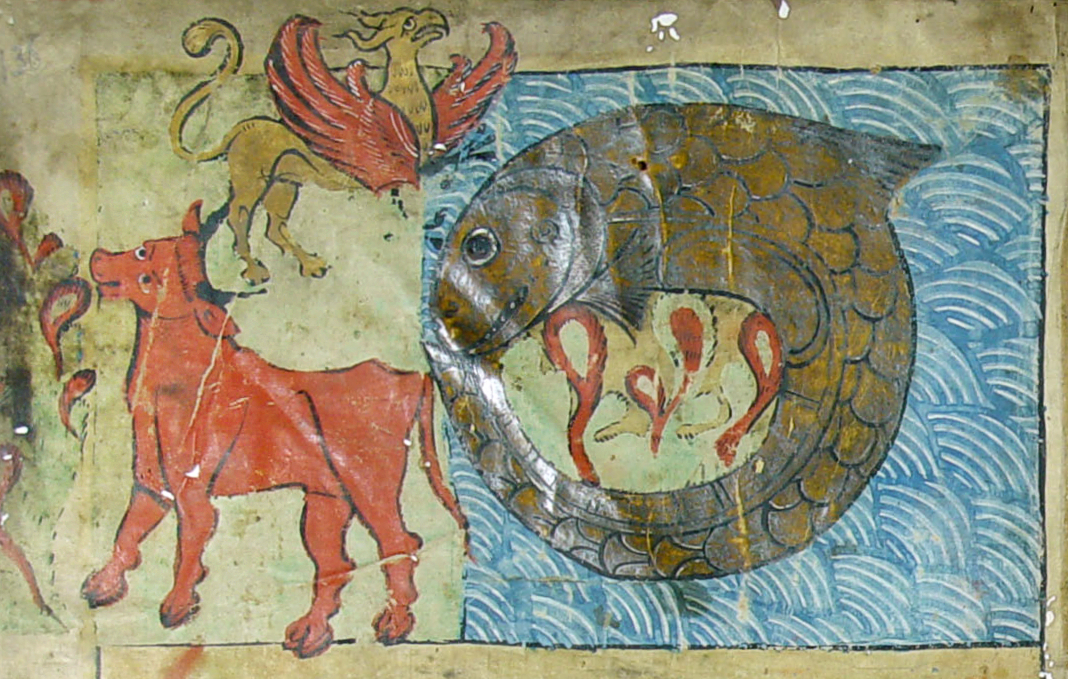
I introduced the Jewish epilogue of the post on Saint Martin and his geese with this image, which, with its depiction of a goose-like bird and a signature unmistakably Jewish, proved perfect to illustrate the peculiar story of the Jews who delivered roast geese to the Habsburg emperor on Saint Martin’s Day.

But what exactly is this bird with that enormous egg?

The inscription only reads: זה עוף שקורין אותו בר יוכני zeh ʿof she-qorin oto Bar Yochnei, that is, “This is the bird called Bar Yochnei.”

All that remains is to figure out which bird is called Bar Yochnei.

1.

This name appears in the Babylonian Talmud. Tractate Bekhorot 57b amidst tales of wondrous animals and plants, mentions:

“Once an egg of the bird called bar yokhani (=the son of the nest) fell, and the contents of the egg drowned sixty cities and broke three hundred cedar trees.”

The colossal bird also shows up in Bava Batra 73b, in the adventures of Rabbah bar bar Hana whose travels and miraculous encounters would eventually find their way into Sinbad-style tales:

Once we were traveling in a ship and we saw a certain bird that was standing with water up to its ankles [kartzuleih] and its head was in the sky. And we said to ourselves that there is no deep water here, and we wanted to go down to cool ourselves off. And a Divine Voice emerged and said to us: Do not go down here, as the ax of a carpenter fell into it seven years ago and it has still not reached the bottom. […] Rav Ashi said: And that bird is called ziz sadai, as it is written: “I know all the fowls of the mountains; and the ziz sadai is Mine” (Psalms 50:11).

The mere existence of such a bird is miraculous enough—but two of them? That would be an even greater miracle. Later Talmudic commentators—implicitly the medieval Yalkut Shimoni, explicitly the Maharsha (1555–1631) of Poland in his commentary on Bekhorot 57b—identified the two as one and the same.

2.

We have thus learned that Bar Yochnei and the ziz sadai are one and the same. But what is the ziz sadai?

We’re in slightly better shape here: the ziz sadai is mentioned in two psalms. However, it doesn’t appear anywhere else in Scripture. Only the context of Psalm 50:10–11 hints at its identity:

כִּי־לִ֥י כָל־חַיְתֹו־יָ֑עַר בְּ֝הֵמֹ֗ות בְּהַרְרֵי־אָֽלֶף׃
יָ֭דַעְתִּי כָּל־ע֣וֹף הָרִ֑ים וְזִ֥יז שָׂ֝דַ֗י עִמָּדִֽי׃

Ki-lī kol-ḥaytō-yā‘ar, behēmōt beharᵉrê-’ālef.
Yāda‘tī kol-‘ōf hārīm, ve zīz sāday ‘immādī.

The difficulty is precisely that these two lines are translated in various ways, depending on how one interprets the animals behēmōt and zīz sāday mentioned in them.

for every animal of the forest is mine, and the cattle on a thousand hills.
I know every bird in the mountains, and the insects in the fields are mine.

(New International Version)

for all forest creatures are mine already, as are the animals on a thousand hills;
I know all the birds in the mountains; whatever moves in the fields is mine.

(Complete Jewish Bible)

A literal translation, preserving the parts with no clear interpretation, would read:

For the forest and all its beasts are mine, the Behemoth on a thousand hills;
I know every bird of the heavens, and the ziz sadai is mine.

The translation of Ziz Sadai as “field insect” or “thing that moves on the field” goes back to the highly respected 11th-century Rashi, who derived ziz from the verb zuz, meaning “to move about.” However, most early commentators of the Babylonian Talmud, who were still immersed in the original context, understood it as a bird—indeed, a giant bird. They reasoned that the two lines, each containing a hapax legomenon, confirm each other as referring to two distinct mythical creatures, and that Adonai here is glorifying Himself as the master of both. Just as He cites the third, Leviathan, in Job (40:25–32) as proof of His grandeur, as we have already seen:

„Can you catch the Leviathan with a hook or make a covenant with it to be your servant forever?”

Thus, the three creatures—Behemoth, Leviathan, and the ziz sadai—form a coherent triad. They are three gigantic, wondrous beings, far beyond human dimensions, yet Adonai maintains dominion over them. According to Talmudic commentators, Behemoth is the wonder of the land, Leviathan the wonder of the sea, and Ziz Sadai the wonder of the air, as it is a colossal bird.

Behemoth, Leviathan, and the ziz sadai in the Ulm Hebrew Bible (1236-1238) of the Bibliotheca Ambrosiana

As for Leviathan, we have already noted that it originates from ancient Near Eastern creation myths, well known to the Jews living in Babylonian exile, and woven into their own mythology. During the Second Temple period, the strict priestly editors purged these myths from the Torah in its officially compiled form, yet traces remained in poetic or anecdotal texts, such as the Psalms or the Book of Job.

The central theme of these creation narratives is that the god or gods—Elil, or later Marduk, who replaced him—must first subdue chaos and its rebellious rulers, primarily in the waters, but also on land and in the air.

The so-called ʻAin Samiya goblet (c. 2300-2000 BC, found near Ramallah, now in the Israel Museum of Jerusalem) provides the earliest known depiction of the creation story. The god, having conquered chaos, sets the sun afloat on heavenly waters in a boat. Below, the so-called Lidar Höyük prism (c. 1800 BC) shows similar sun-launching scenes, demonstrating that this myth was widely known throughout the ancient Near East. All of this is discussed in the latest issue of Smithsonian magazine, 13 November 2025

In the waters: Tiamat–Leviathan; on the land: the divine bull, which even Gilgamesh must confront; and in the air? There Anzu (by its original Sumerian/Akkadian name, Imdugud), the lion-headed giant bird of the mountains, who, according to the oldest surviving Akkadian myth, steals Enlil’s Tablet of Destiny—which grants its owner power over the fate of all living beings—and must be defeated by Enlil’s son, Ninurta. Here too, the forces of chaos rise against the new world order, and the gods must overcome them.

All of this is explored in detail by Nini Wazana of the Hebrew University of Jerusalem in “Anzu and Ziz: Great Mythical Birds in Ancient Near Eastern, Biblical, and Rabbinic Traditions” Journal of the Ancient Near Eastern Society 31 (2009).

Anzu/Imdugud on the votive tablet of Entemena, ruler of Lagash, c. 2400 BC, Louvre

Anzu/Imdugud with two ibexes on a seal from c. 2154–2100 BC, Morgan Library & Museum

Anzu/Imdugud with two stags on the copper frieze from Tell-el-Obed, c. 2500 BC, former temple of Ninhursag, British Museum

Anzu/Imdugud on a votive relief of King Ur-Nanshe of Lagash, from the ancient city of Girsu, c. 2550–2500 BC, Louvre

Anzu/Imdugud attacking a bull (possibly symbolizing the waning moon), from Tell-el-Obed, c. 2600–2500 BC, Penn Museum, Philadelphia

Anzu/Imdugud pendant in lapis lazuli and gold, from the so-called “Ur Treasure” discovered in the former royal palace of Mari (presumably a gift from the King of Ur to the ruler of Mari), c. 2500 BC, Damascus, Syrian National Museum

Anzu/Imdugud from the Tell Asmar Hoard, ancient Eshnunna, Baghdad, Iraq Museum

Anzu/Imdugud on the mace of King Mesilim Kishi dedicated to the god Ningursu, from ancient Girsu, c. 2600–2500 BC, British Museum

The struggle of Ninurta and Anzu on the entrance relief of an Assyrian temple in Nimrud, now in the British Museum. Engraving by Ludwig Gruner from Austen Henry Layard’s Monuments of Nineveh, 1853. A detailed description of the relief is available here 

Ninurta attacking Anzu. Neo-Assyrian seal from Nimrud, 8th–7th century BC, The Walters Art Museum

The so-called Adda Seal, c. 2300 BC: Anzu/Imdugud before the divine tribunal, British Museum

That Anzu indeed made it into the psalm, surviving there for three thousand years under the name ziz sadai, is further confirmed by the fact that the word saday—a hapax legomenon appearing only here in the Bible, with an uncertain meaning—derives from Anzu/Imdugud’s original Akkadian epithet šadû, meaning “mountain.” For Mesopotamia, mountains were the threatening unknown, the source of attackers and storms, whose deity was Anzu.

This is also reflected in the second occurrence of the name. Psalm 80 describes Israel as a splendid vine brought out of Egypt and planted in new land, now being ravaged by enemies:

יְכַרְסְמֶ֣נָּֽה חֲזִ֣יר מִיָּ֑עַר וְזִ֖יז שָׂדַ֣י יִרְעֶֽנָּה׃

Yekharsemennā ḥazīr miyyā‘ar, ve zīz sāday yir‘ennā

“ravaged by forest boar and devoured by the zīz sāday”.

According to Nini Wazana, in the symbolic language of the time, these two creatures correspond precisely to the two enemies that threatened Israel at the period when the psalm was composed: the wild boar representing Egypt and the ziz sadai representing the mountainous Assyria.

3.

The caption of our “goose illustration” says absolutely nothing about this entire three-thousand-year history. In fact, neither does the volume in which it appears.

The image comes from a medieval codex known as the North French Hebrew Miscellany. The manuscript was assembled in Northern France between 1277 and 1298. Through a winding journey via Germany, Venice, Padua, and Milan, it finally reached the British Library in 1839 (Add MS 11639).

This massive codex, comprising 746 parchment folios (1,492 pages), contains the Torah alongside liturgical texts, the Haggadah, the earliest known Hebrew text of the Book of Tobit, legal texts, and poems by Moses ibn Ezra. A single scribe, Benjamin, copied the text, while the 49 miniatures were painted by multiple artists. Their digitized images were once available on the British Library website but have since vanished. The facsimile publisher Facsimile Editions, specializing in Hebrew manuscripts, has issued this codex, and all illustrations are visible on their site.

The images that mostly represent biblical scenes do not directly relate to the texts; they form a miscellany within a miscellany. Their models were drawn from contemporary Parisian Gothic manuscript painting, while the Bar Yochnei bird derives from contemporary Christian bestiaries.

fol. 518a-517b

The image of Bar Yochnei is paired with Solomon’s Judgment. Little direct connection can be discerned between the two. But flip a page, and on the next two folios we meet old acquaintances: Behemoth and Leviathan!

fol. 518b-519a. זה שור הבר ze shor ha-bar “this is the wild ox” = Behemoth, and זה לויתן ze livyātan “this is the Leviathan”

In the fifth century BC, Ezra and Nehemiah, returning from Babylonian exile and finalizing the Torah, may have purged from it the Babylonian and Canaanite creation myths, which depicted creation as a struggle between gods and the forces of chaos, deliberately replacing them with a monotheistic story in which the single God brings the world into being by His word alone, without opposition. Yet the vanquished figures of these myths found refuge in poetic works, the Psalms, and the Book of Job, as well as in the rabbinic tradition that interprets them—and there they have continued to live for three thousand years.