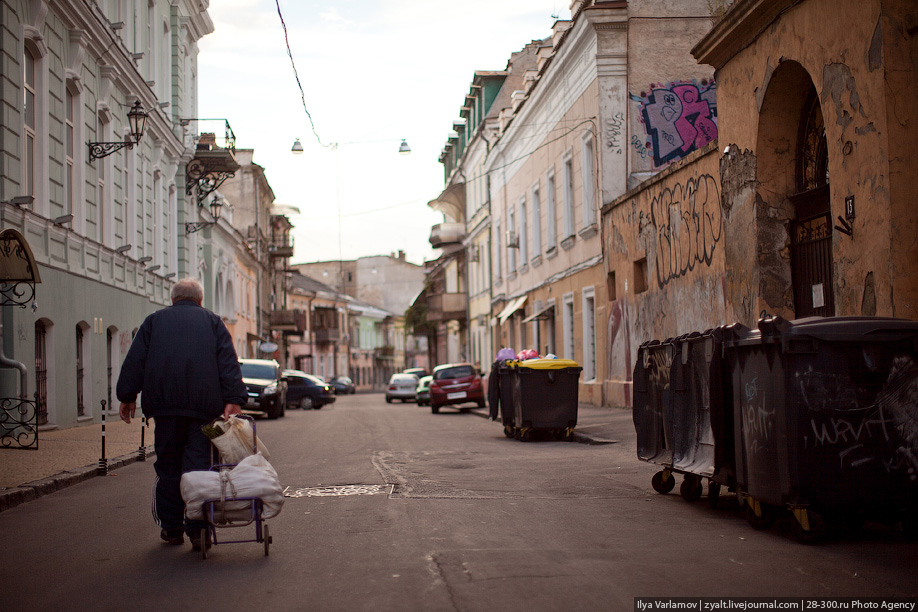
Odessa, the ghost city was recently revealed at Río Wang through the photos of Vsevolod Vlasenko. The genial Ilya Varlamov, that is zyalt, whose pictures on the burnt out Muromtsev Dacha were quoted earlier, now discloses to us another, rather living Odessa which is chaotic in a Babelian – Isaak Babelian – way, but it is just as vivid and literally reviving from its ashes as that other Odessa known to us from the Stories. You are recommended to enlarge every picture.
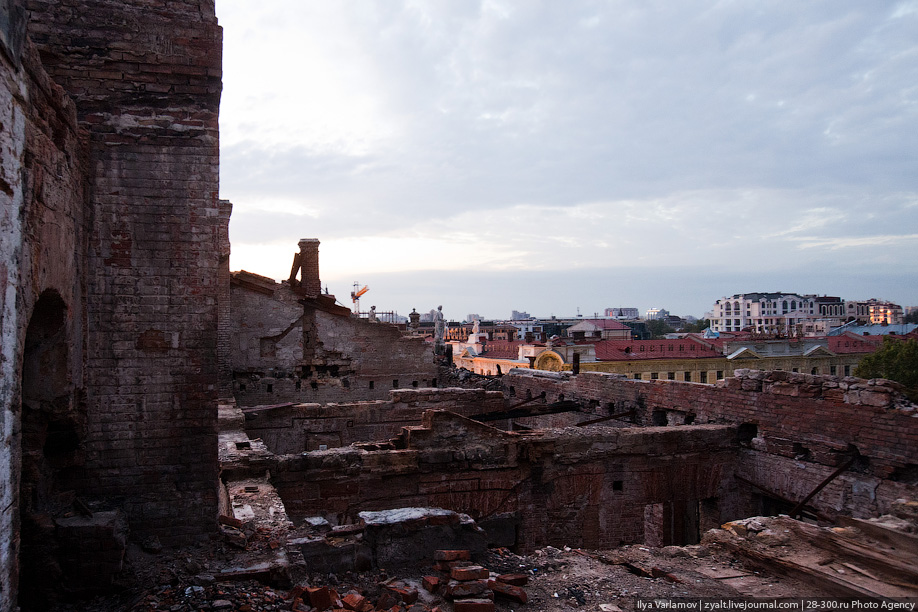 The Russov house, an important late 19th-century historical and architectural monument of
the city on the Sadovaya, at the northern side of the Cathedral burnt out on October 27,
2009. This was the second fire since the beginning of its restoration in 2004.
 It is believed that the house was set on fire in order to destroy the building and seize the land.
The fire drew attention of Odessans living all over the world, and thus the authorities
were obliged to react, condemning the case as “an act of vandalism”.
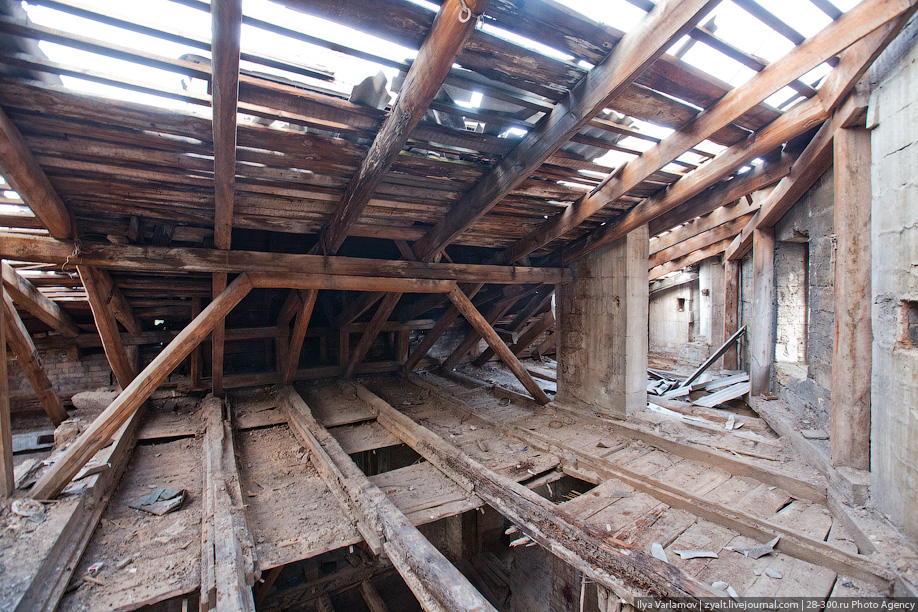 Ceilings like this do not invite for a walk.
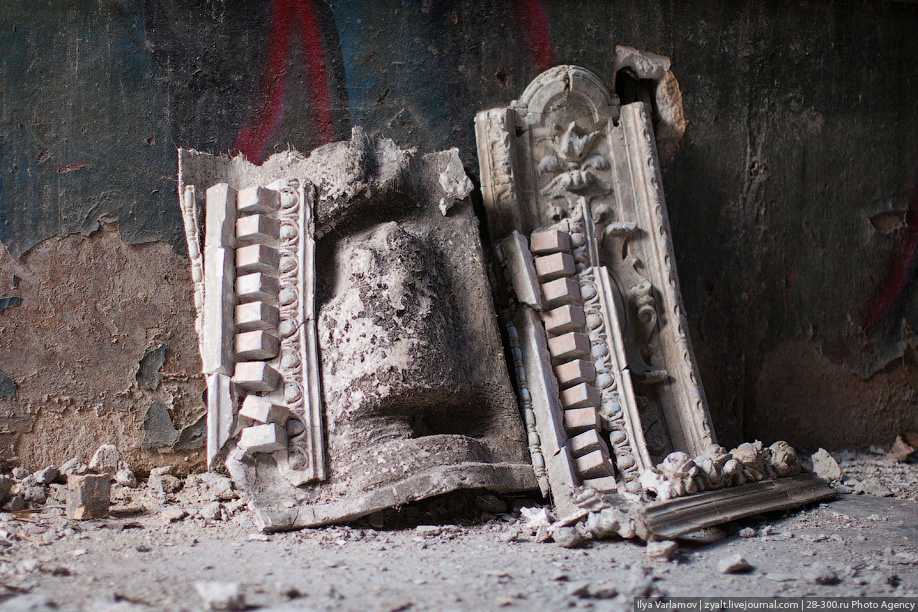 Remnants of the decoration. They are now cleaning the site and strengthening the surviving parts of the facade. The exact deadline of restoration is not published by any legal document.
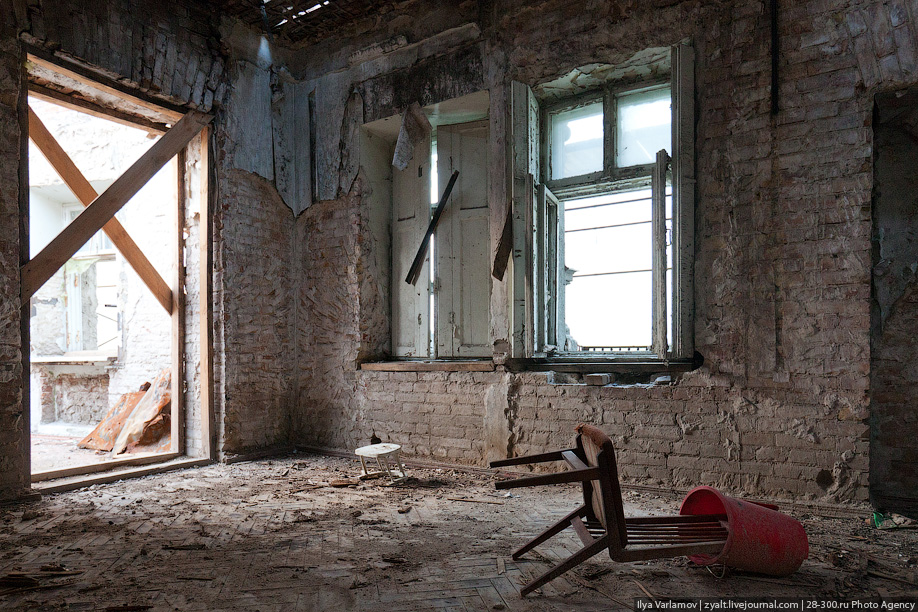 In Socialist times the building was “комуналки”, a multiple joint tenancy.
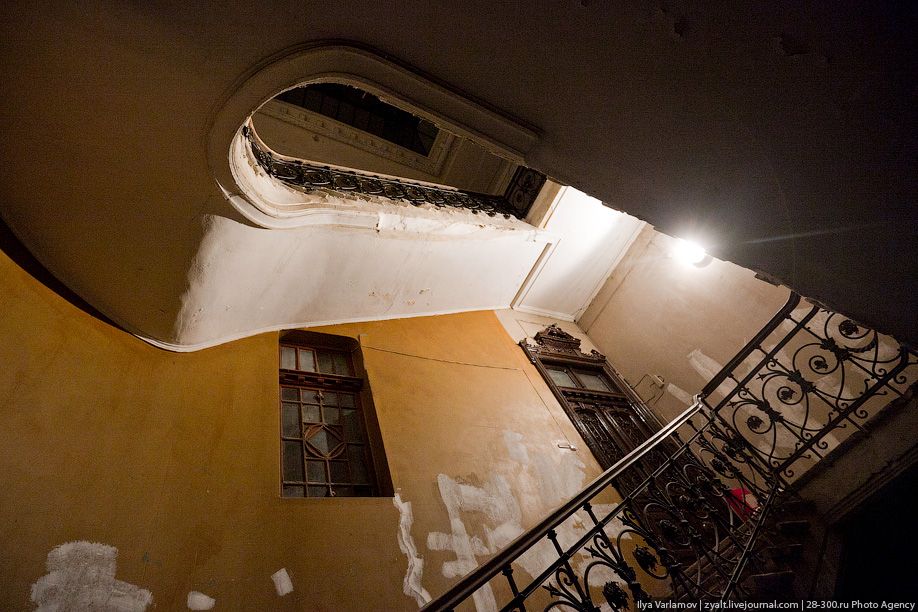
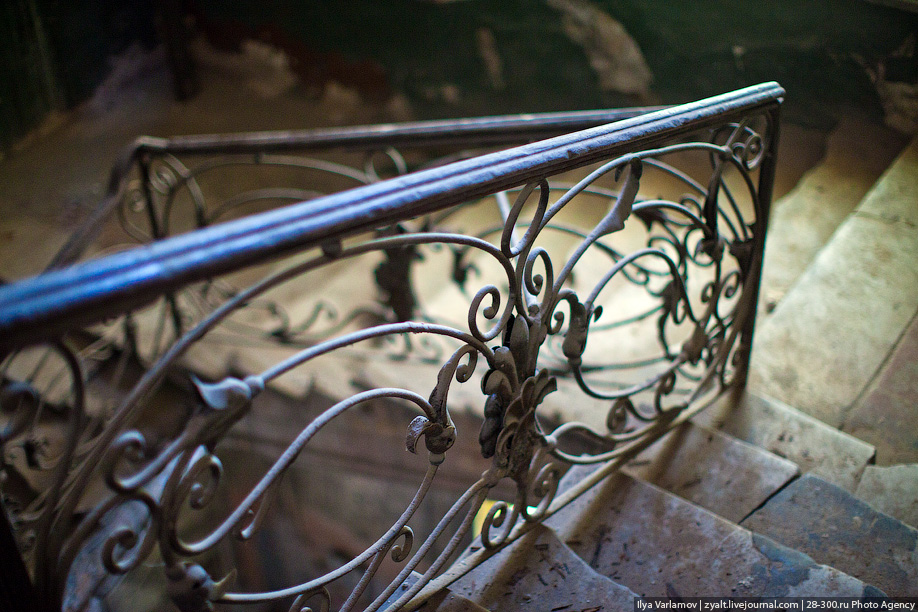 A gracious staircase. The building was built in 1897-1900 by L. M. Chernigov on the commission of the entrepreneur, art collector and patron A. P. Russov.The facade was planned by V. I. Shmidt.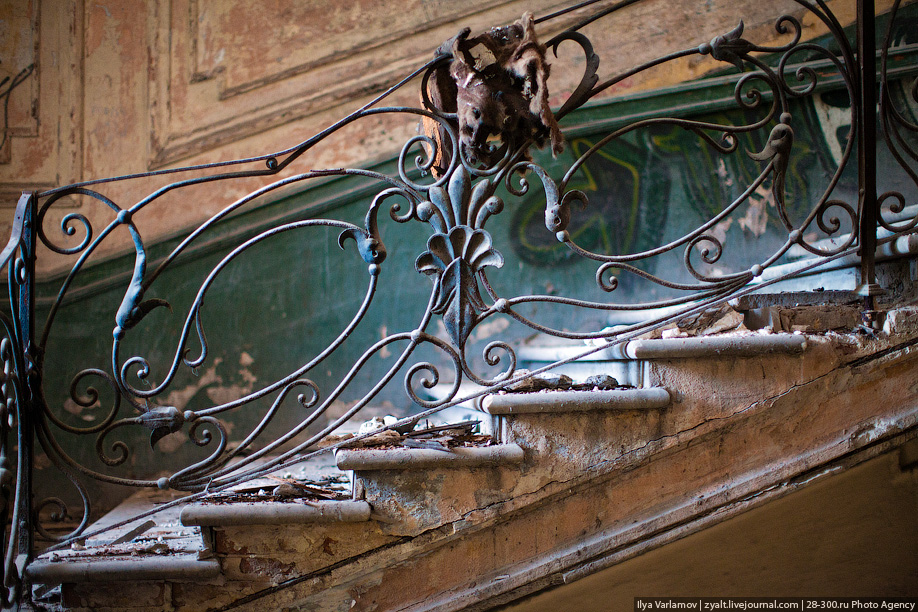
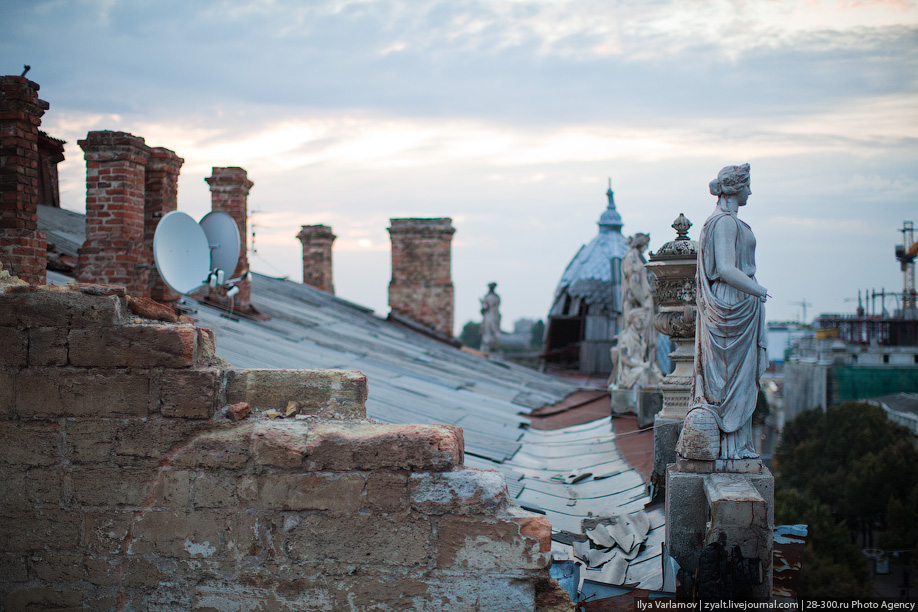 A look on the Libman house.
 The house was built in 1887-88 on the site of the town’s prison by Berngard Ernestovich
Libman, producing and selling bread and confectionery active in Odessa since 1867.
Architects: E. Y. Mesner, with the collaboration of I. A. Morgulis and A. Nissa.
The names bear witness to the former international air of the city.
 The house was famous all over Odessa for its bakery and confectionery, its café and
 billiard pool. The Libman Café, equipped with all the high tech of the period
(e.g. electric lights) was popular among the citizens of Odessa.
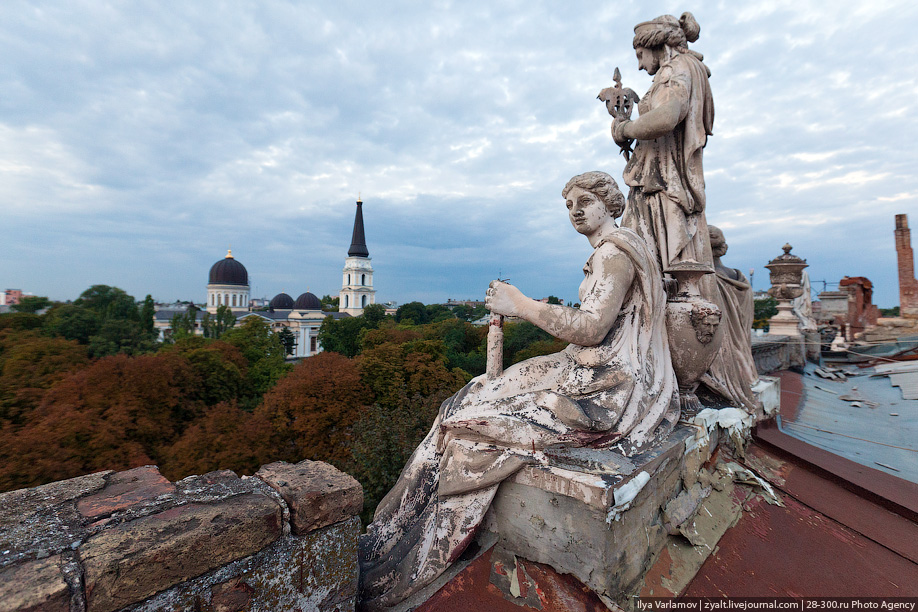 After the revolution multiple joint tenancies were established at the upper stories.
 Now it is in very bad condition and requires restoration. View on the Saviour’s Cathedral.
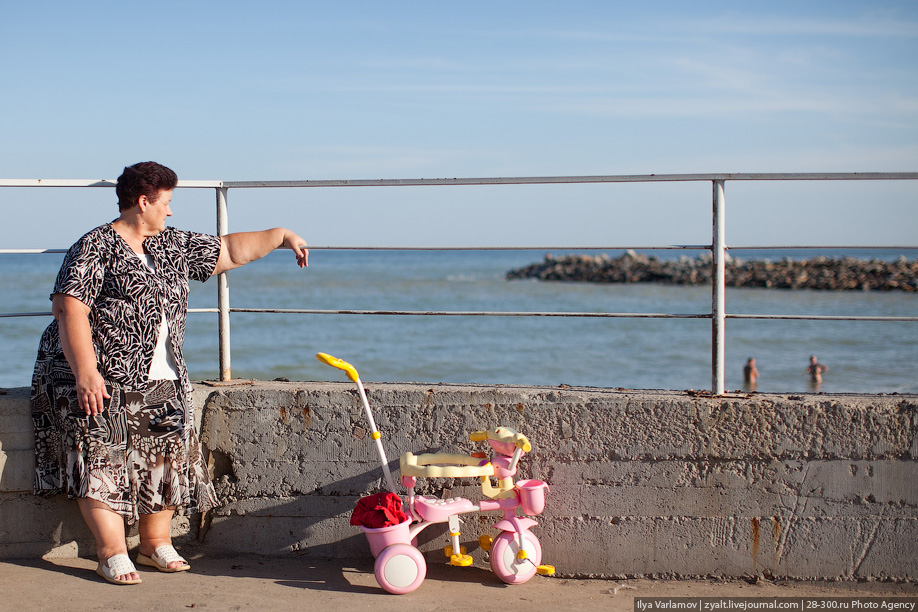
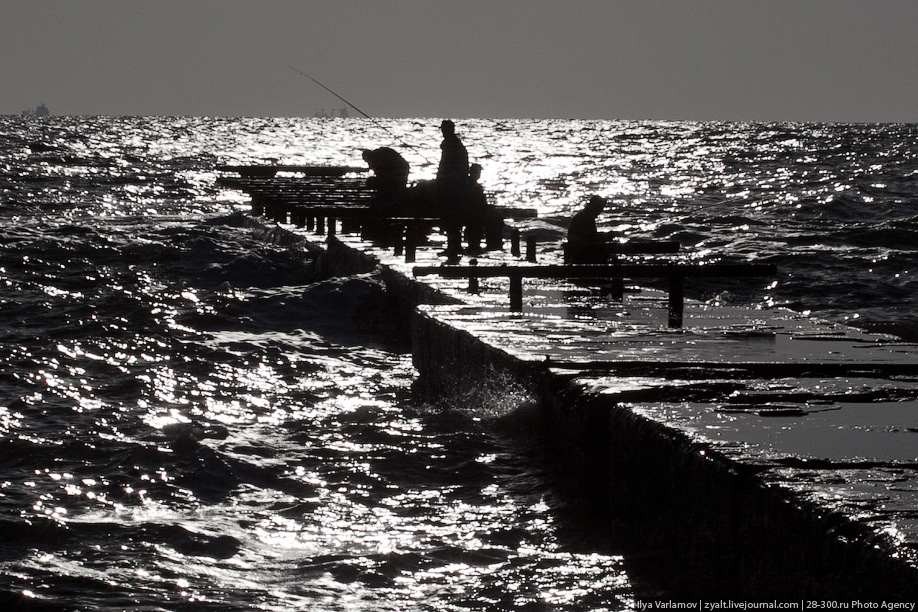 In Odessa, the largest sea resort of the country they celebrate the feast of liberation twice
 a year: on April 10 from the German and Romanian army of occupation,
and on September 1 from the tourists.
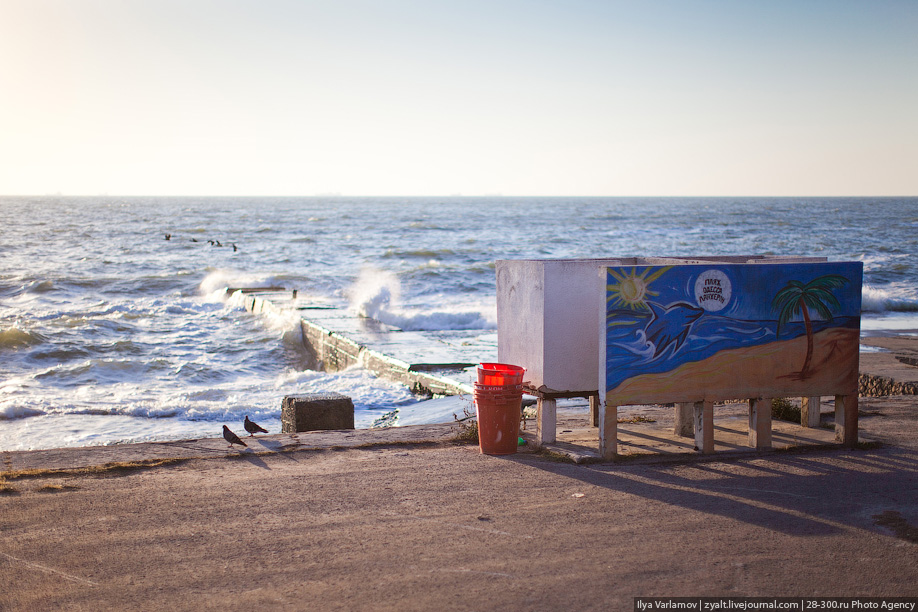
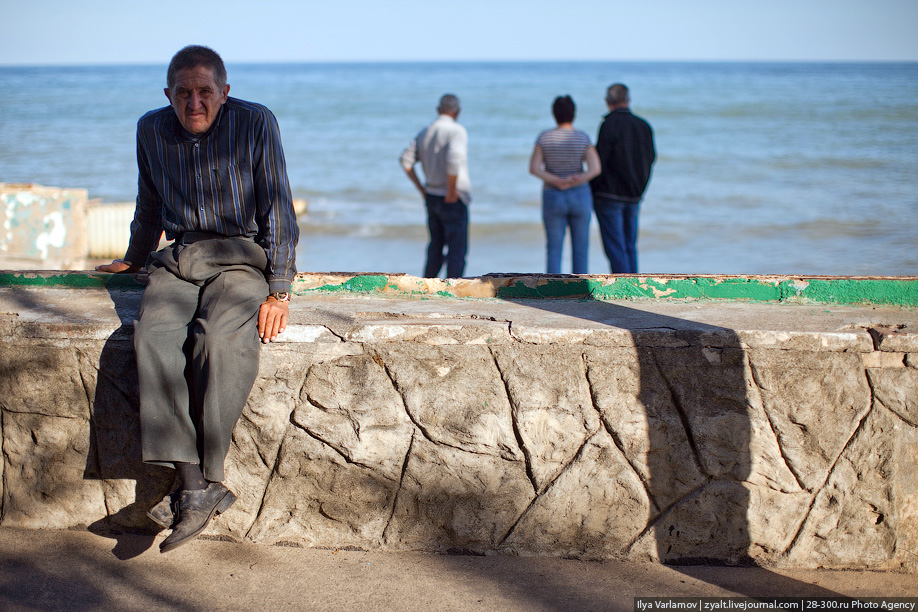
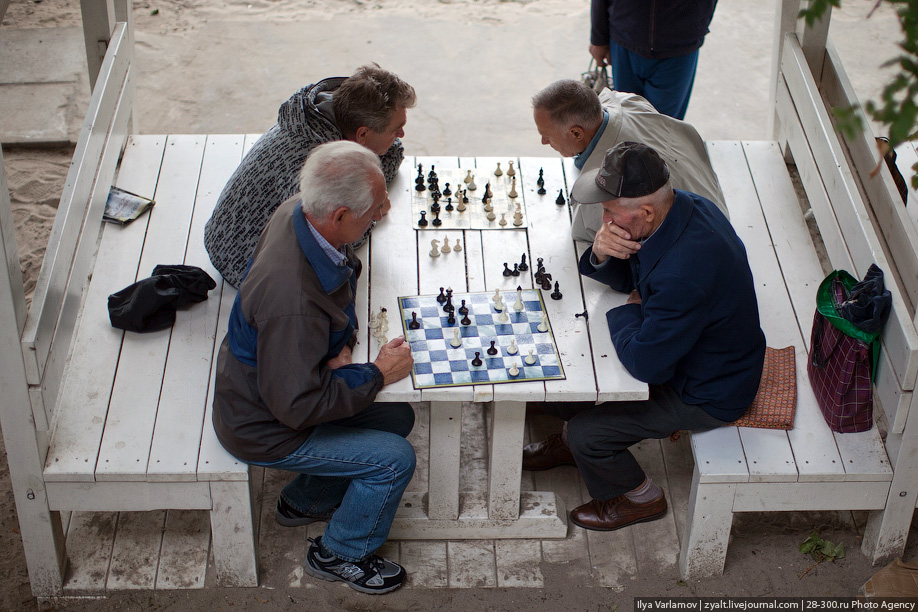 On Arkadiya Beach the public is playing chess, domino and cards.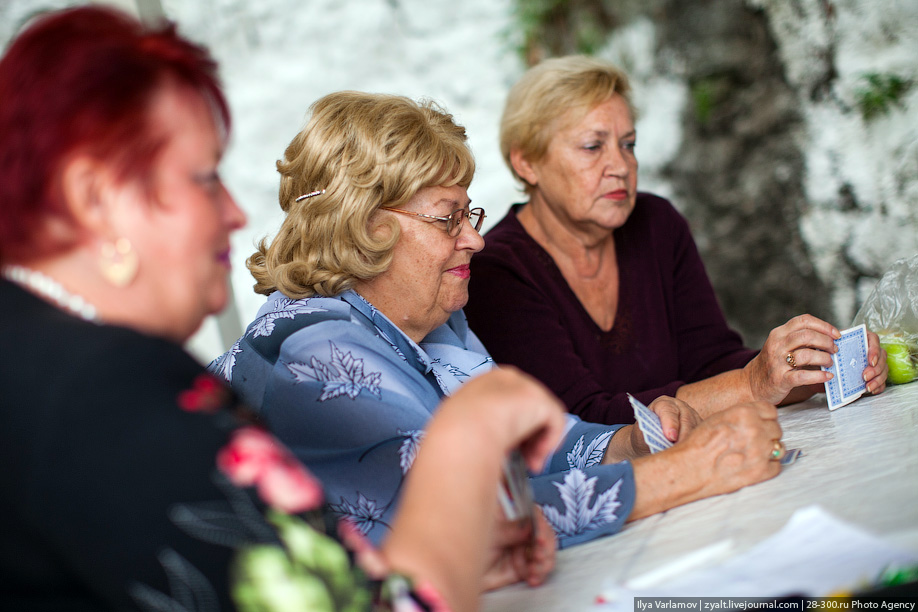
 – Take a photo of Sergey! He’s the chess champion of Odessa! – But aren’t you playing domino? – You’d better write chess. Domino is not so serious. By the way, he is also a champion of domino.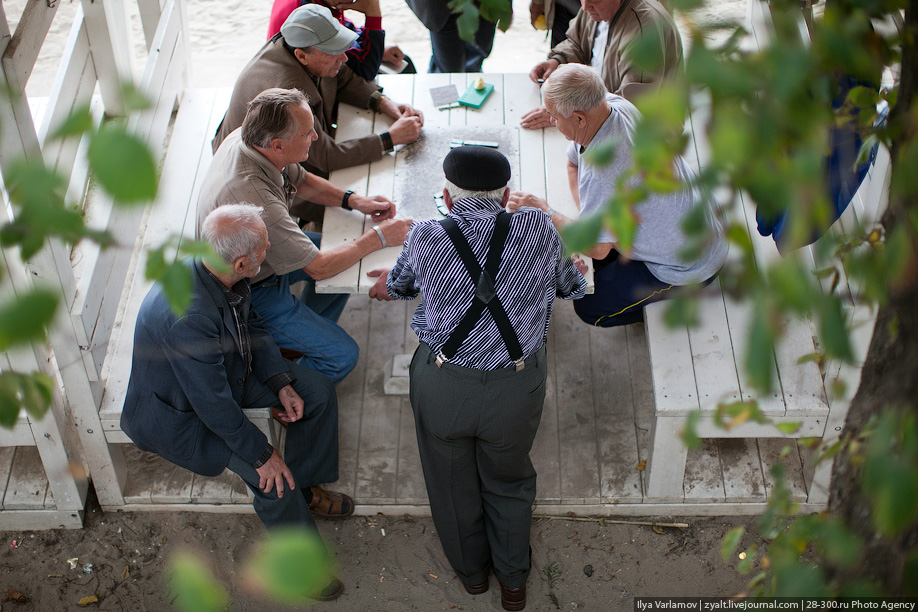
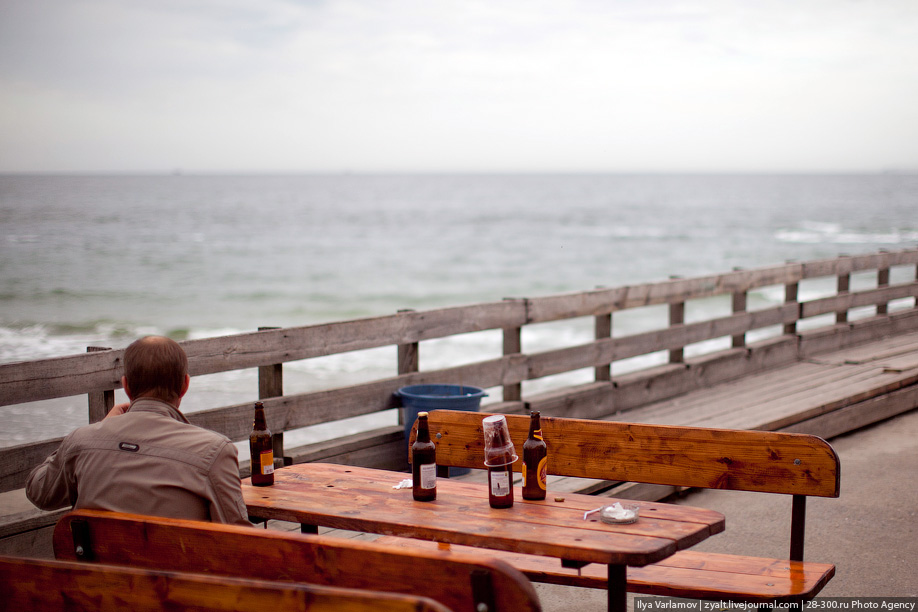

 Near Odessa there is a sanatorium called “Kuyalnik”. The mud baths were built in 1892 by N. Tolvinsky, and rebuilt between 1927 and 1930 by F. A. Troupyansky.
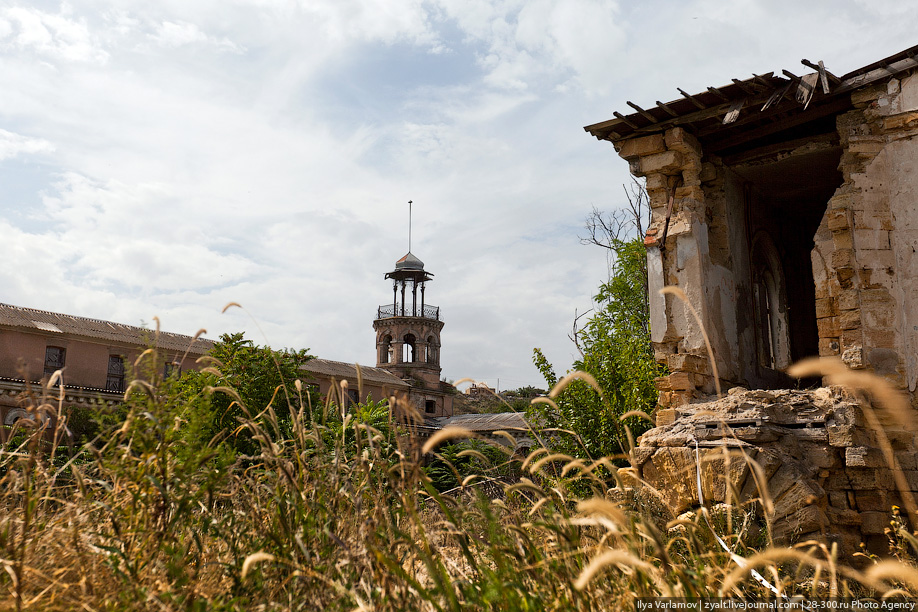 Today the whole hospital seems to collapse. It could still be saved and would make an excellent resort.
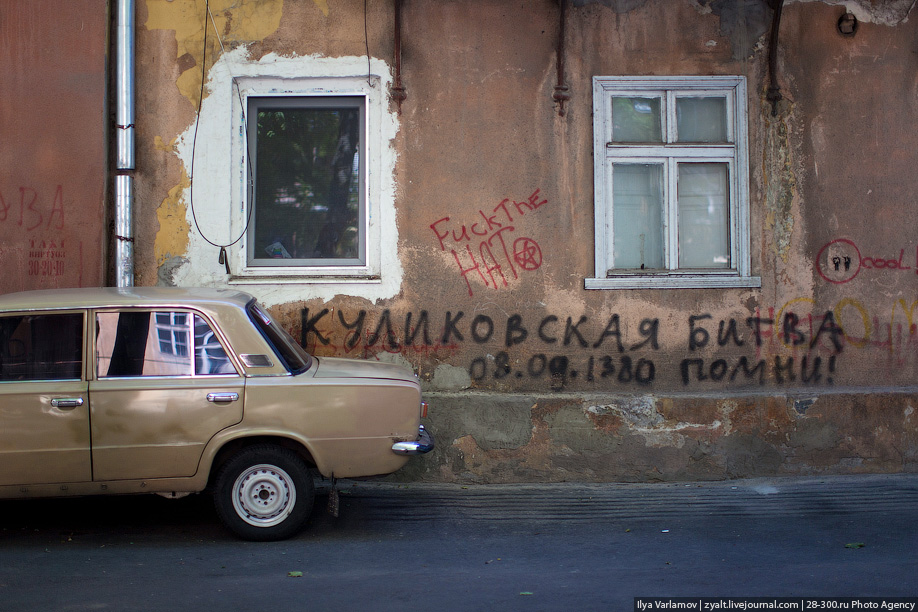 “Remember the Battle of Kulikovo: 8 September 1380!” – In the city you immediately see that it is inhabited by intelligent and educated people.
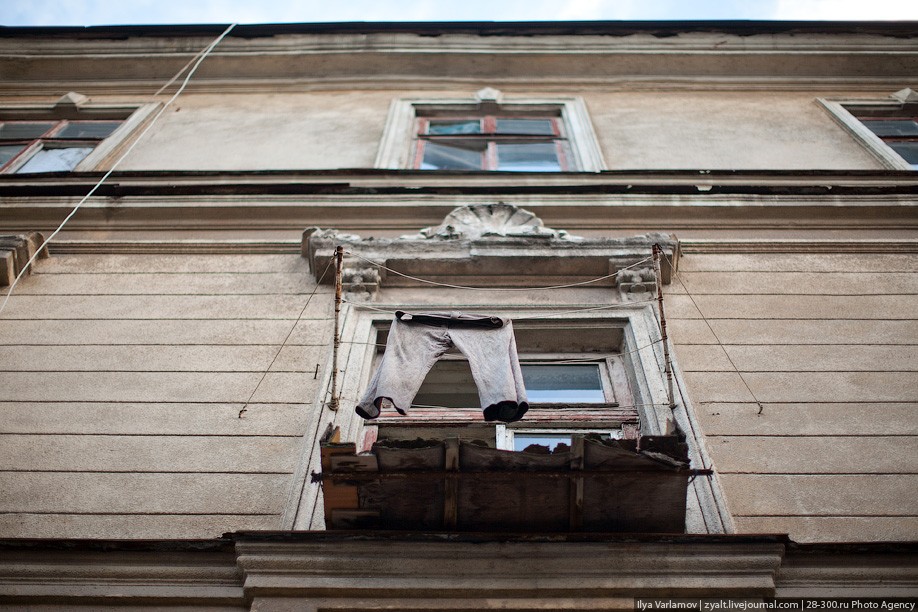
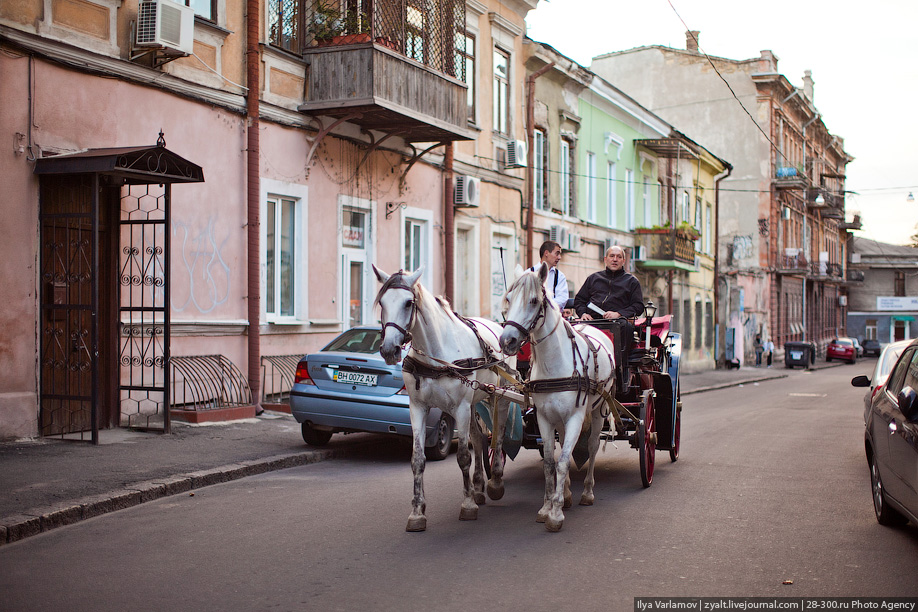
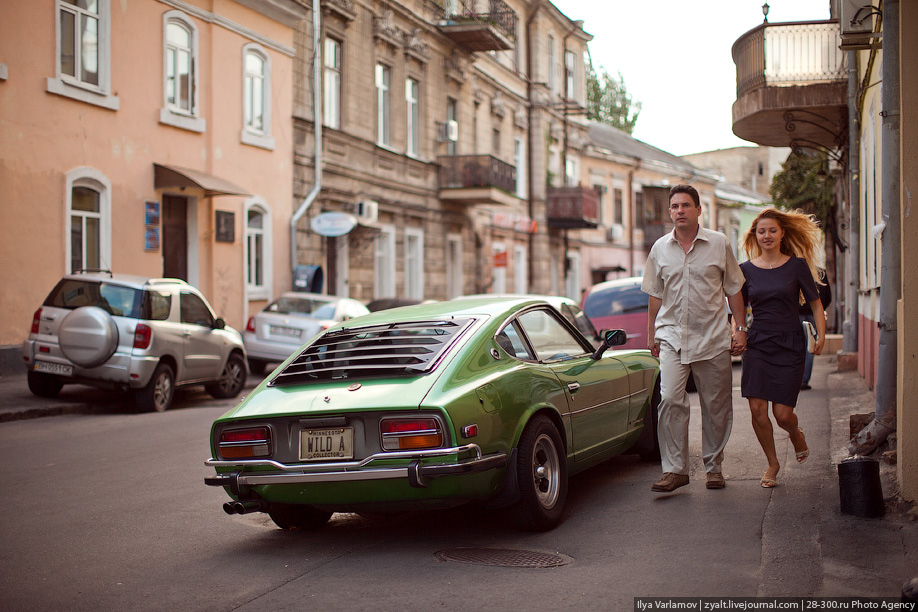
 The drivers of Odessa merit special attention. Local rule is that the more expensive car has the
precedence. The owners of the really expensive cars regard it as their duty to leave the car
on the center of the sidewalk and to enter in a pedestrian area or in the opposite direction.

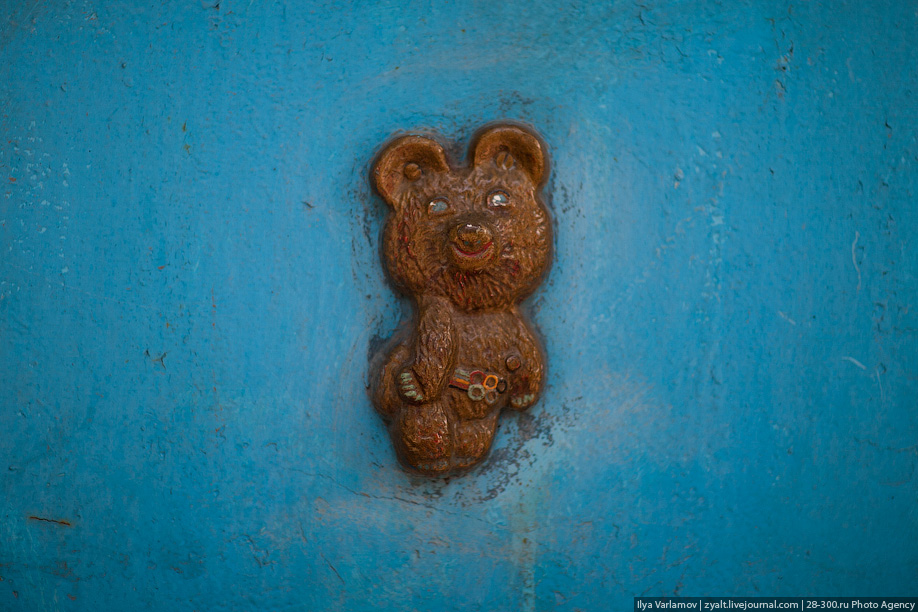 On the streets you can still meet such old bears. (Emblem of the Olympiad of Moscow, 1980)
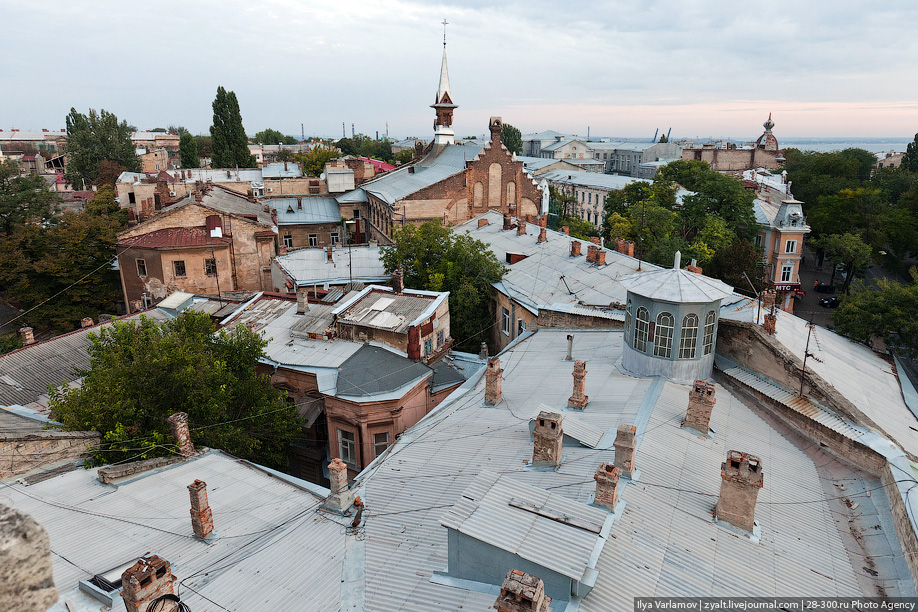 More roofs. The Presbyterian church seen from above.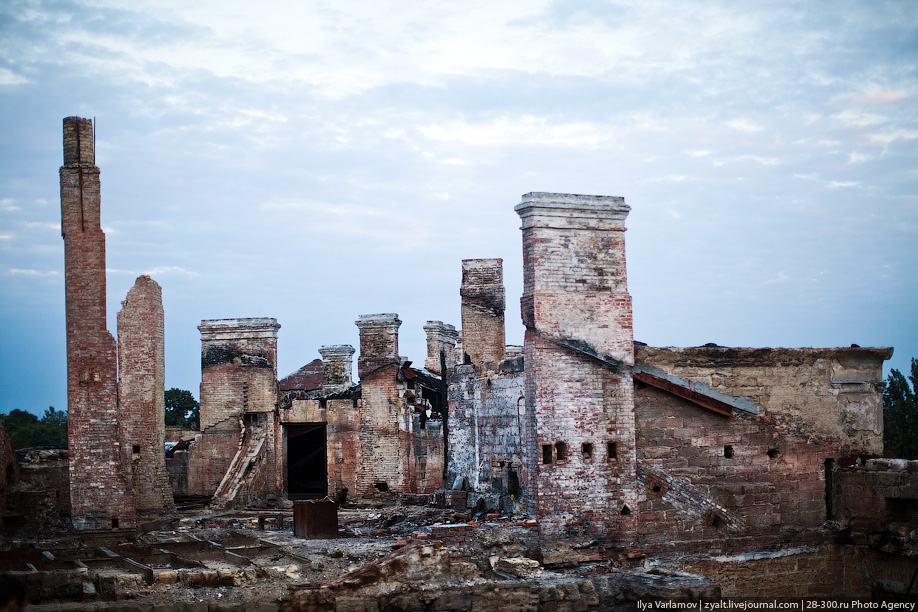

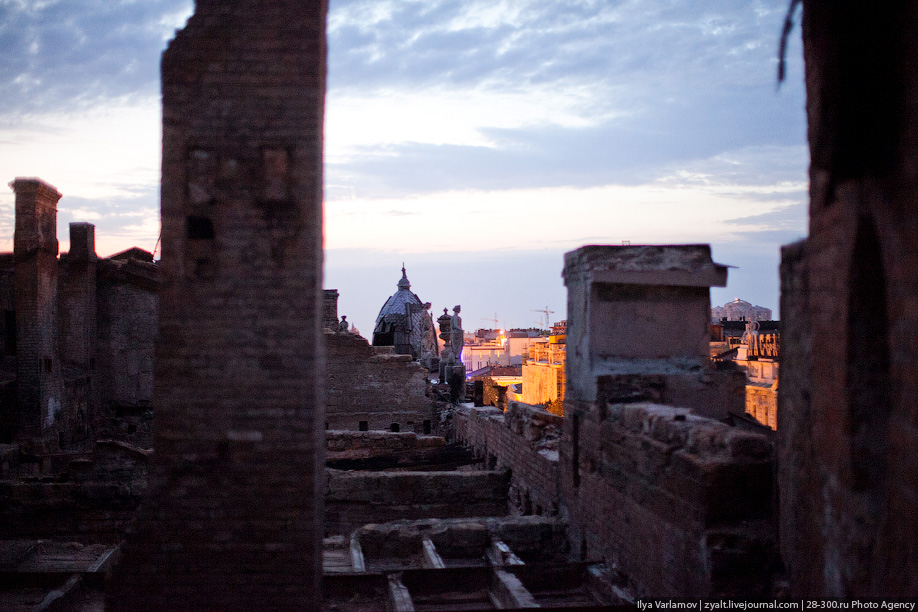
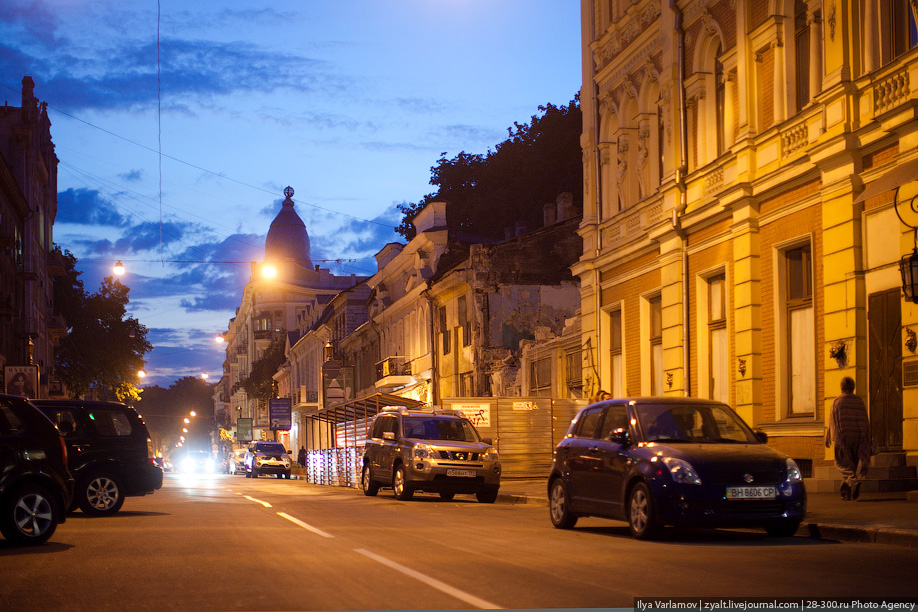
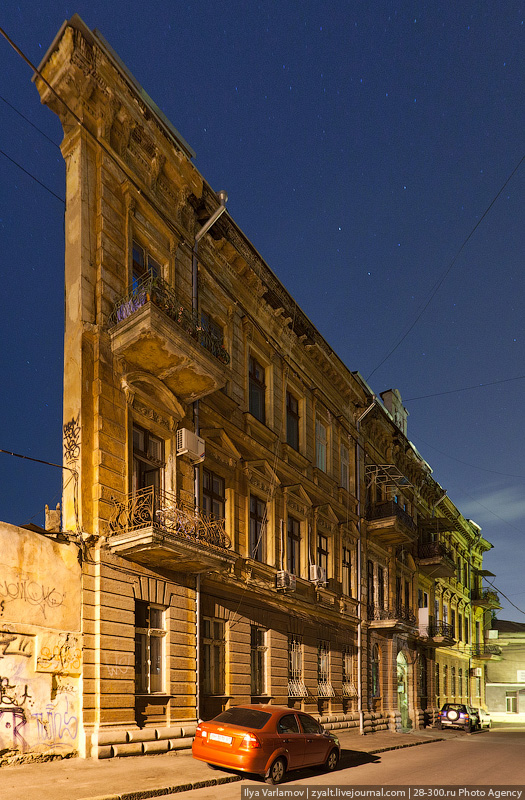 “The Witch’s house”. At the first glance it seems that the house was pulled down and only the facade was left. But in the reality the lowest level of the house is still inhabited.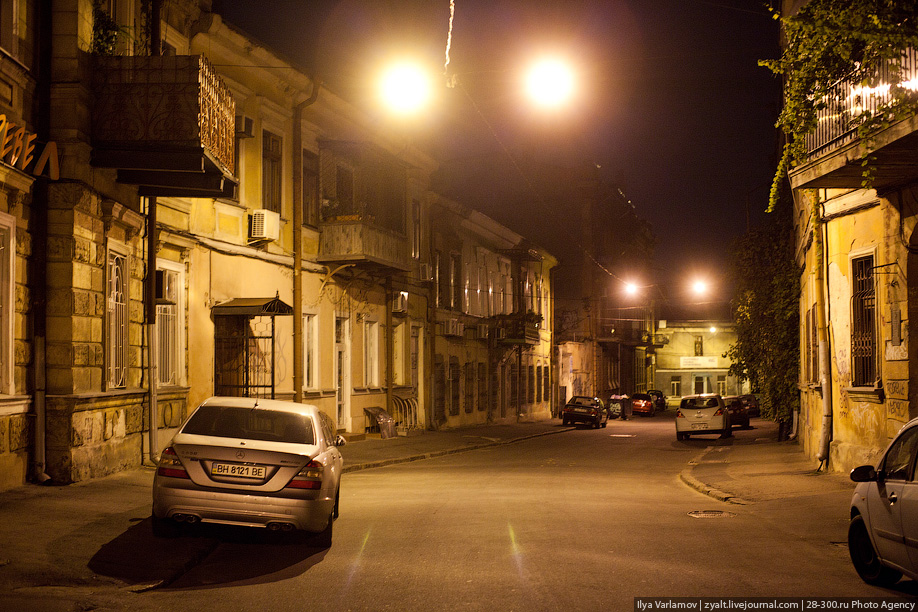
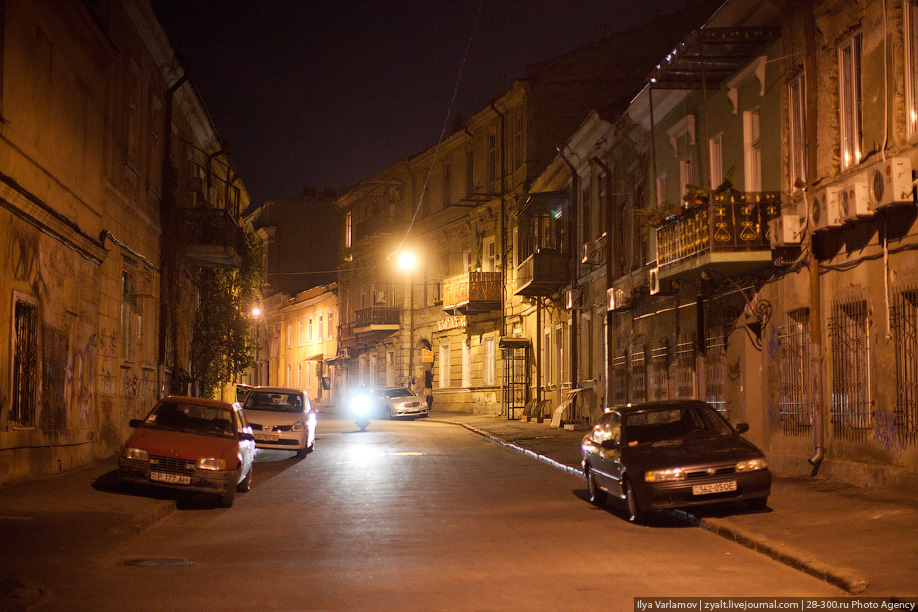
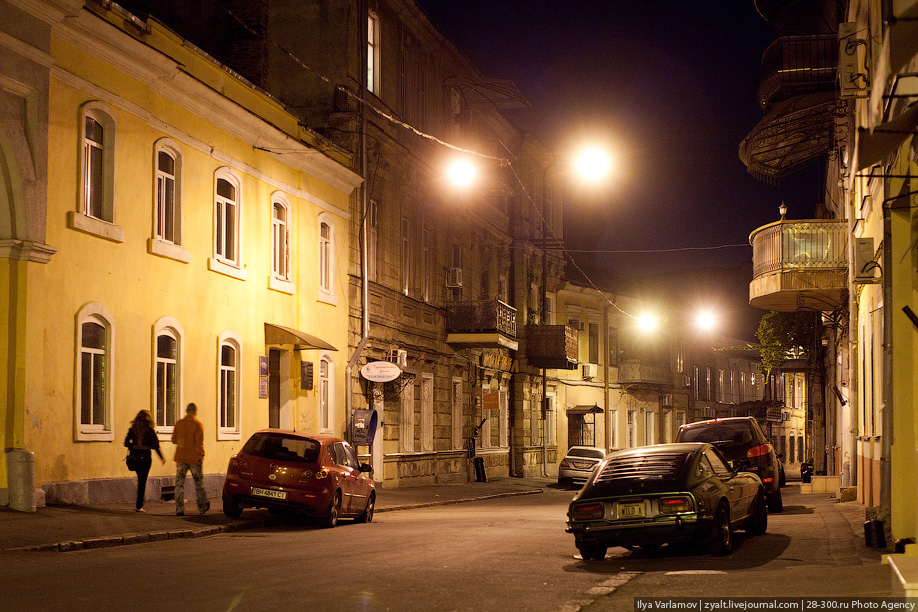
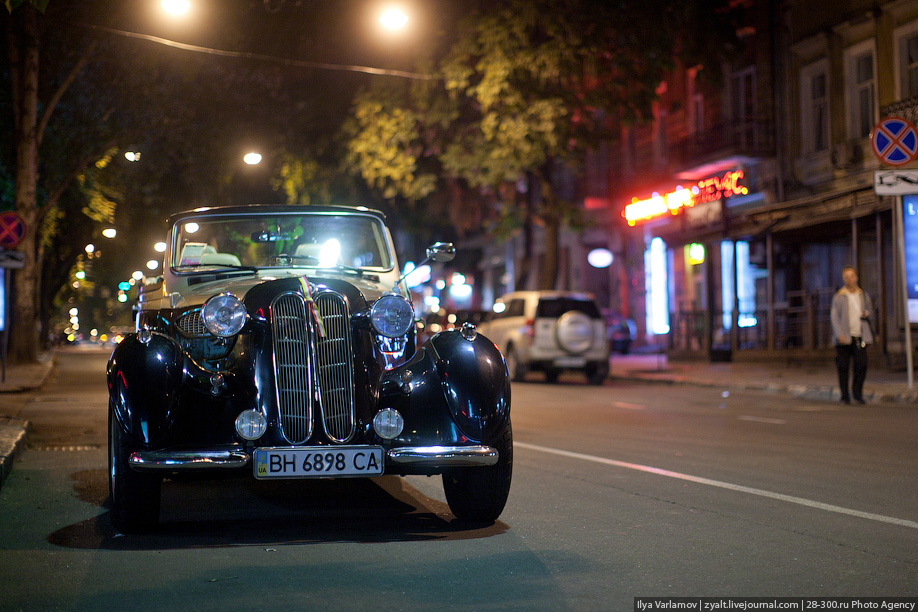
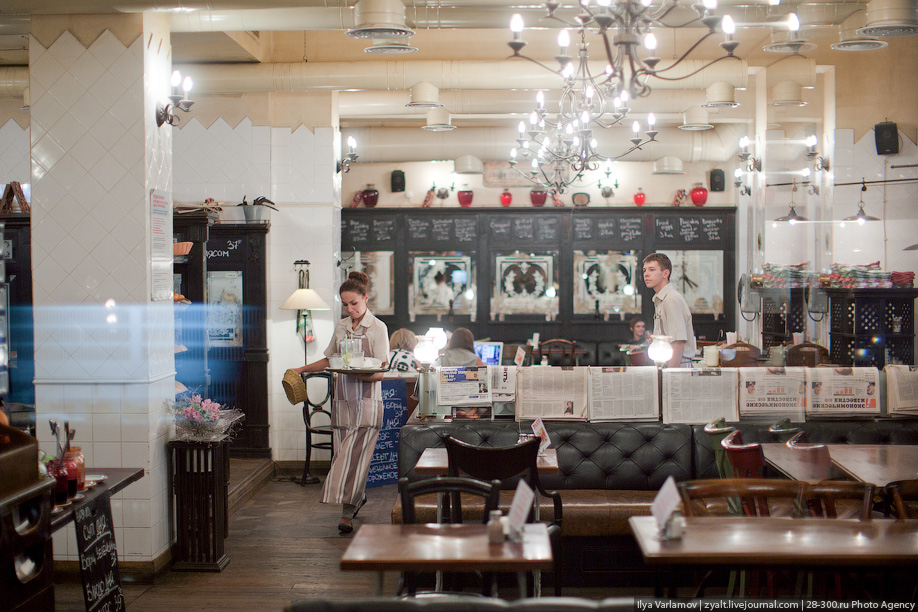 Excellent and cheap restaurants – this is one of the specialties of Odessa. Unfortunately the owners prohibited taking photos, so our readers will have to go and check them personally.


 Come with us to…
 Atlantis
 Bestiary
 Bohemia+Prague
 Books, exhibitions, music, film
 Brave old world
 Caucasus
 Cemeteries
 Crimea
 Get to know the
 Images of the East
 Lightwriting
 Lwów/Lemberg
 Mallorca
 Message on the wall
 The Museum of Propaganda
 Odessa
 Paper Museum
 Persian letters
 The Jewish heritage


7 comentarios:
so Odessa is still alive and kicking and somehow Babel-ian. Wonderful pictures of roofs and people and houses as the Witch's house, that maybe does exist, maybe doesn't.
(e chissà cosa ne è stato della Moldavjanka)
Wonderful photos! (I must say, I found the graffiti directly above “Remember the Battle of Kulikovo: 8 September 1380!” personally insulting...)
Well, this is the drawback of world fame: you might have enemies in the most unexpected places… :)
La Moldavjanka oggi è così: http://www.flickr.com/photos/7784598@N04/sets/72157602050852666
ma un occhio più sensibile troverà ancora le traccie di Benya Krik e Froim Gach.
Magnifiche, magnifiche immagini! Grazie per la splendida segnalazione, Studiolum.
Vecchi cortili, muri sbrecciati, balconi sbilenchi, frutta in vendita accatastata per terra, strade sterrate; in alcuni angoli della Moldavjanka sembra che l’ultimo secolo non sia trascorso per nulla.
Emozionante (come entrare esattamente “dentro” alle storie di Babel) vedere la casa del “re” e leggere la didascalia di questa foto:
http://www.flickr.com/photos/7784598@N04/2504424255/in/set-72157602050852666/
“там в комментариях почему-то один мужик посчитал упоминание про Куликовскую битву за личное оскорбление”, they write on the фото.сайт forum: “there, in the commentaries some guy for some reason took the reference to the battle of Kulikovo for a personal offense”. “небось, татарин какой-нибудь”, “my God, he must be some Tatarman”, replied someone, with reference to the Tatars beaten by the Russians in that battle. Нет, ребята, речь идет о верхнем надписе, no, guys, he spoke about the upper inscription, “fuck the hat”, “еб шляпу”, as the commenter is the great Hat: languagehat.com
Publicar un comentario