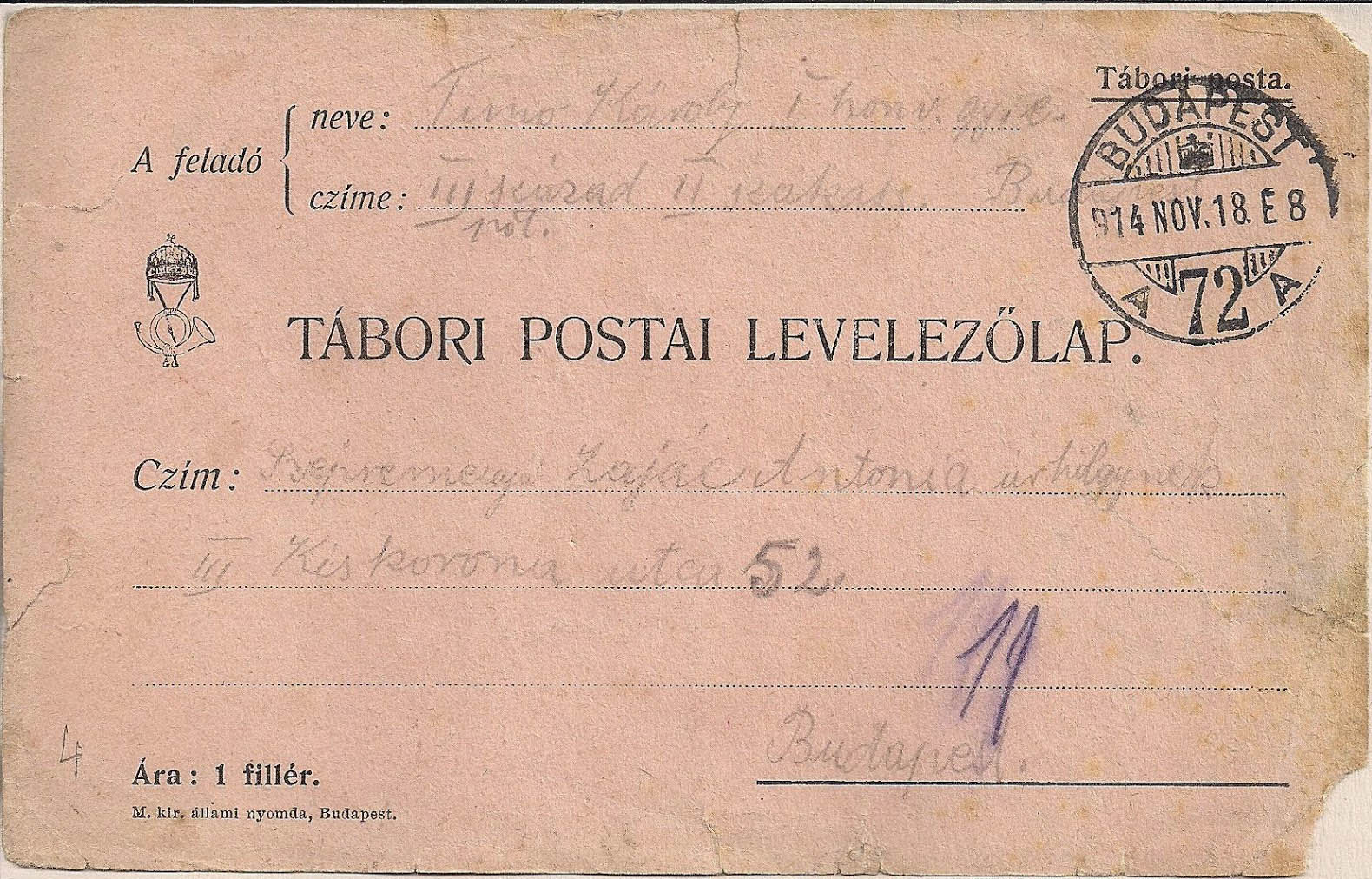
 [18 November 1914]
Name of the sender: Károly Timó, 1st Infantry Regiment
Address of the sender: 3rd suppl. bataillon, 2nd section, Budapest
Address: To the honored Miss Antónia Zajác
3rd district, Kis Korona Street 52.
Budapest

My dear Janka!
I am letting you know, that now we have leave several times in the evening, but I cannot use it, because we are allowed to leave only from 6 to 9, so it is not worth anything. On Sunday I’ll probably come home, unless something comes up, which I don’t know yet; if before 4 I am not at home, you come to see me. Now you also have more time, since your mother is at home. How is she? I hope you also feel well. I have got a bad cold, but this is nothing. And now I’m going to play. My greetings to the old flolks.
Servus. Many k…s from your
tü…kód.
 Previous letters (indicated in grey on the map): • Budapest, 27 October 1914 • Debrecen, 25 September 1914 • Szerencs, 28 August 1914 |
One can feel from the letter the uncertainty because of the missing leaves, and the concern about the health of the parents of the sender and the addressee.
What can the last, mysterious abbreviation mean? It is left to our imagination. At the sight of the parting words, a prudish reader rather turns his or her eyes away.]
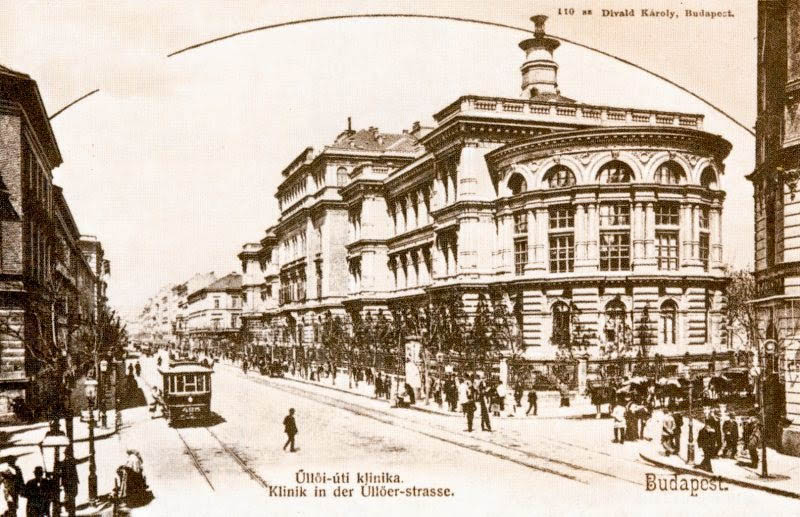
 Next postcard: 27 November 1914


 Come with us to…
 Atlantis
 Bestiary
 Bohemia+Prague
 Books, exhibitions, music, film
 Brave old world
 Caucasus
 Cemeteries
 Crimea
 Get to know the
 Images of the East
 Lightwriting
 Lwów/Lemberg
 Mallorca
 Message on the wall
 The Museum of Propaganda
 Odessa
 Paper Museum
 Persian letters
 The Jewish heritage


No hay comentarios:
Publicar un comentario