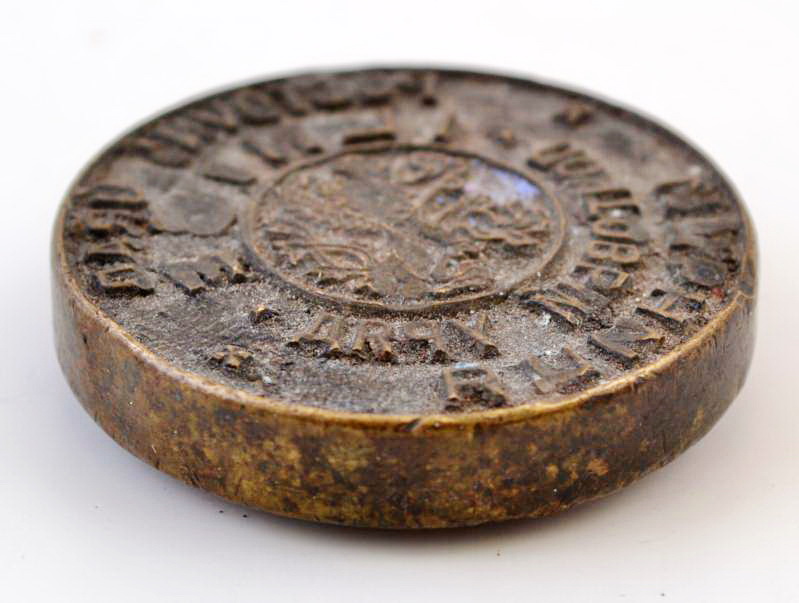
 Postage stamps are often associated with surprising stories. A more surprising story than the following one, however, you won’t read today, as they say in the tabloids. The following object showed up today on an auction site:
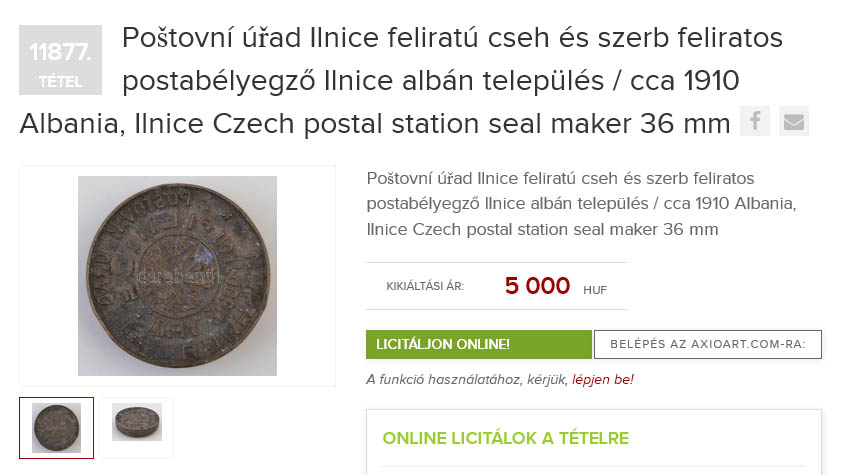 “Postage stamp labeled Poštovní úřad Ilnice in Czech and Serbian, from the Albanian settlement of Ilnice / ca 1910 Albania, Ilnice, Czech postal station seal maker 36 mm”
Truly it must have been a historic moment, the culmination of the multiculturalism of “the happy times of peace,” when the first post office opened in the Albanian mountain town of Ilnicë, among the picturesque mountains of the Balkans, not far from today’s Macedonian border. And what a post office! With a bilingual, Czech and Serbian stamp, and with the two-tailed lion instead of the two-headed Austrian imperial or Albanian royal eagles. All this in 1910, four years before the Great War, and eight years before the great Central European border shifts. What harmony of the Central European nations! Oh, if it had just stayed this way!
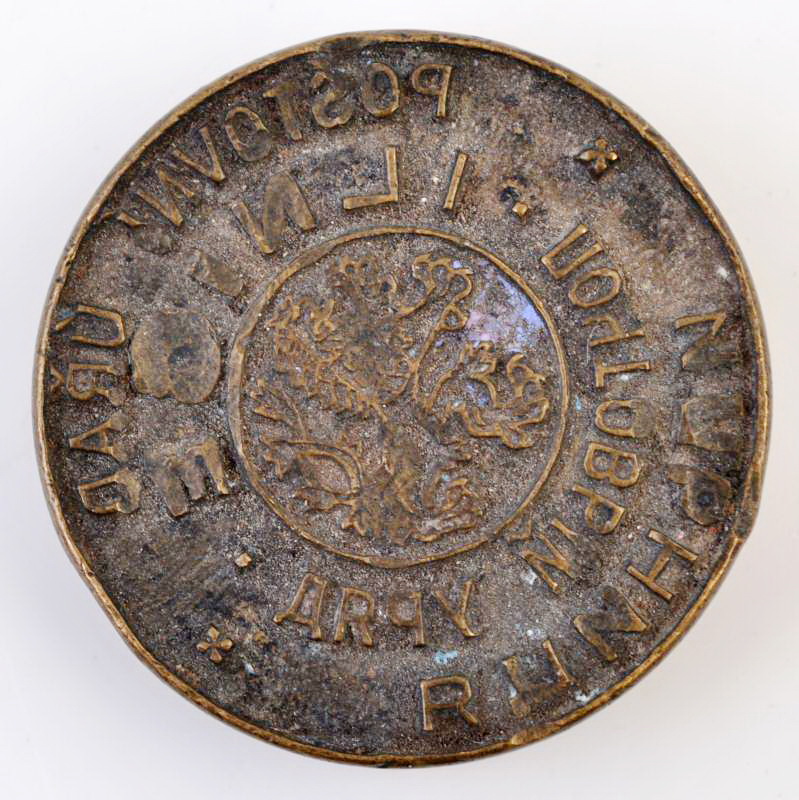
But it has not. And perhaps it never was this way. After all, what is the source of this localization? The fact is, that if we search for “Ilnice”, Google points to the Albanian town. There is no other result. If, however, we use a minimum of common sense, we then think about where and when they used Czech and Cyrillic official labels simultaneously under the auspices of the two-tailed lion, and we realize that it could be only in the diametrically opposite corner of the former Austro-Hungarian Monarchy, in Rusinsko, annexed from Hungary to Czechoslovakia in 1920. And then it is already easy to find, not far from Nagyszőlős/Vinogradov, along the Ilnitska stream, the village of
 Ilonca (in Czech Ilnice, in Rusyn Ильниця, in Romanian Ilniţa, by the modern Ukrainian official name Ільниця), of which no historical names, like those on the stamp, are known by Google.
In linguistics, a “faux-ami”, false friend is a word that sounds similar in two languages, but has a different meaning in each. Such as Czech Ilnice and Albanian Ilnicë. The above auction description also points out that, without due care and criticism of the sources, Google also may be your false friend.
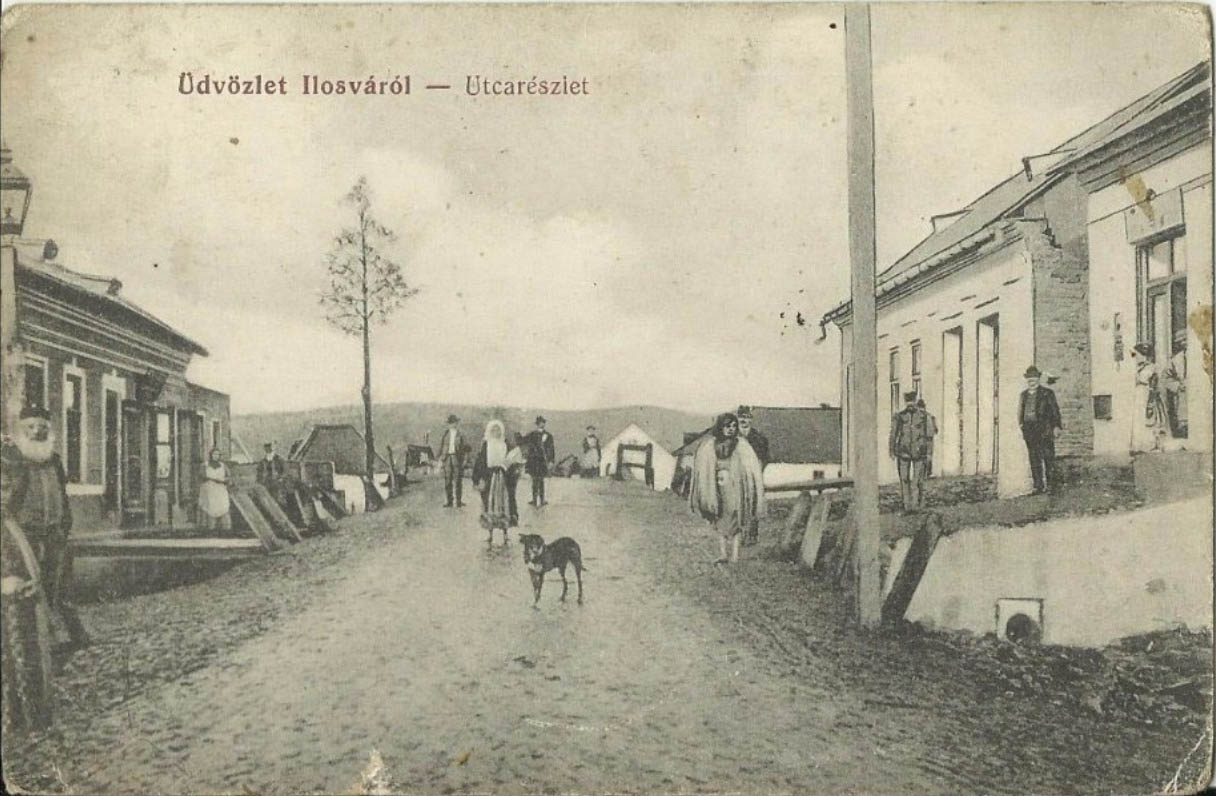 We could find no contemporary postcard from Ilonca. This is from the neighboring Ilosva, which lay closer to the main road and he railway, and so could be counted on for more postcard customers. After all, it is still closer to Ilonca than the Albanian Ilnicë.


 Come with us to…
 Atlantis
 Bestiary
 Bohemia+Prague
 Books, exhibitions, music, film
 Brave old world
 Caucasus
 Cemeteries
 Crimea
 Get to know the
 Images of the East
 Lightwriting
 Lwów/Lemberg
 Mallorca
 Message on the wall
 The Museum of Propaganda
 Odessa
 Paper Museum
 Persian letters
 The Jewish heritage


No hay comentarios:
Publicar un comentario