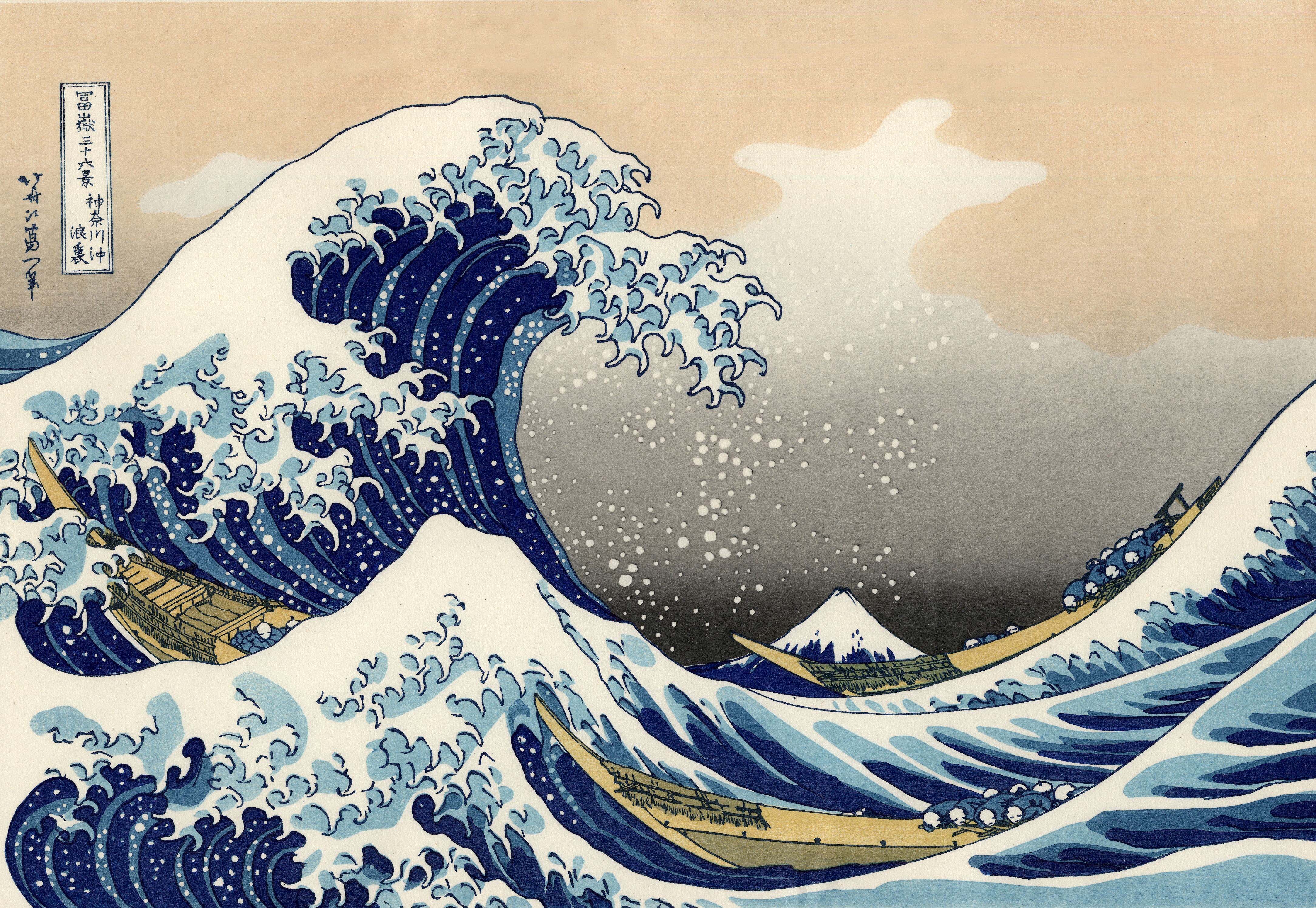
 Hokusai (1760-1849): The Great Wave off Kanagawa (From Thirty-six views of Mount Fuji, 1832)
| Софья Петровна Лихутина на стенах поразвесила японские пейзажи, изображавшие вид горы Фузи-Ямы, – все до единого; в развешанных пейзажиках вовсе не было перспективы; но и в комнатках, туго набитых креслами, софами, пуфами, веерами и живыми японскими хризантемами, тоже не было перспективы: перспективой являлся то атласный альков, из-за которого выпорхнет Софья Петровна, или с двери слетающий, шепчущий что-то тростник, из которого выпорхнет все она же, а то Фузи-Яма – пестрый фон ее роскошных волос; надо сказать: когда Софья Петровна Лихутина в своем розовом кимоно по утрам пролетала из-за двери к алькову, то она была настоящей японочкой. Перспективы же не было. | Sofya Petrovna Likhutina hung up everywhere on the walls Japanese landscapes depicting the views of the Mount Fuji-Yama, one and all; on the little landscapes there was no perspective; but also in the little rooms, stuffed with armchairs, sofas, puffs, fans and living Japanese chrysanthemums there was no perspective; the perspective was the satin alcove hangings from behind which Sofya Petrovna glides in, and the cane curtain hanging from the door and whispering something, from behind which the same Sofya Petrovna glides in, and the Fuji-Yama is only a colorful background to her luxuriant hair; one must say: when Sofya Petrovna in the morning flew from behind the door to the alcove in her pink kimono, she was a real Japanese woman. For there was no perspective. |
Andrei Bely: Петербург (Petersburg, 1913)
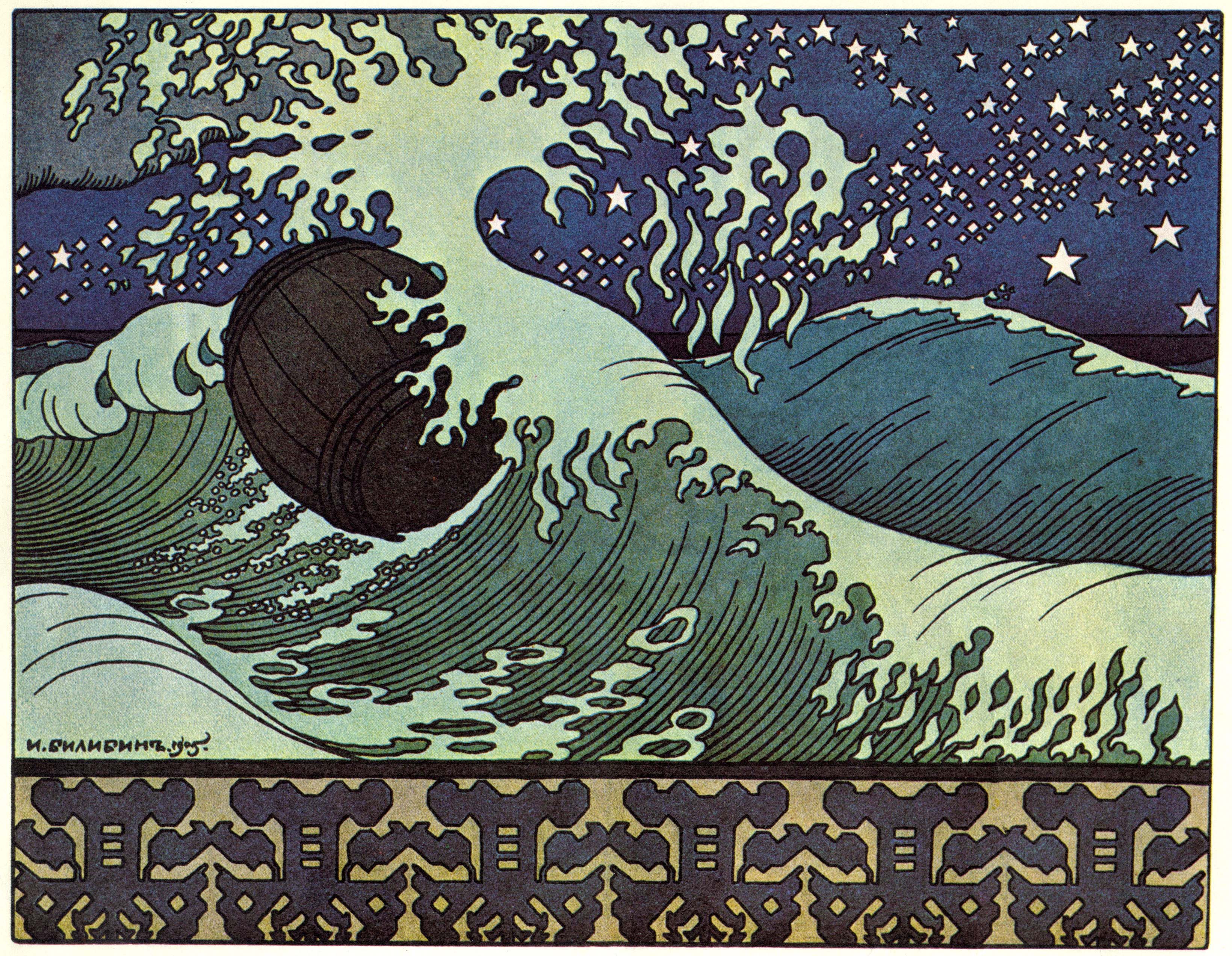 Ivan Bilibin (1876-1942): The son of Czar Saltan travels the sea in a barrel.
Illustration to Pushkin’s Tale about Czar Saltan and his son Gvidon.
Bilibin created the illustrations in 1905 – in the same year of
the plot of Bely’s Petersburg – and dedicated them
to the composer Rimsky-Korsakoff.


 Come with us to…
 Atlantis
 Bestiary
 Bohemia+Prague
 Books, exhibitions, music, film
 Brave old world
 Caucasus
 Cemeteries
 Crimea
 Get to know the
 Images of the East
 Lightwriting
 Lwów/Lemberg
 Mallorca
 Message on the wall
 The Museum of Propaganda
 Odessa
 Paper Museum
 Persian letters
 The Jewish heritage


4 comentarios:
di Andrei Bely ho amato molto Il Colombo d'Argento. Non ricordo se l'onda si era propagata anche lì (come sensazione psichica, senza dubbio sì)
Grazie per aver riportato l'originale russo di Петербург; è una lingua che non ricordo quasi più, ma il suono che ricavo dalle parole è sempre magnifico.
L’onda dell’infinita anima russa, quella sí, senz’altro. E’ quella che costituisce il vero soggetto sia del Colombo d’Argento che degli altri romanzi di Bely. :)
(Sul Colombo d’Argento recentemente c’era un interessante resoconto in Languagehat.)
Sí, sempre mi sforzo di riportare il testo in lingua originale quando la traduzione è mia, volendo così compensare per le imperfezioni di quest’ultima – e di nascosto sperando che il lettore lo goderà nell’originale, desiderio che ora si è compiuto.
So poetic...
Regards Studiolum!
dall'onda, e attraverso il Colonmbo d'Argento, nell'interesasnte discussione che hai segnalato si è arrivati a parlare di campane. Questi filologi!
Ora, le campane son di bronzo, e non d'argento (un campanellino, magari, potrebbe essere d'argento), ma sicuramente hanno un movimento ondulatorio, come la risacca del mare. E nel testo citato (dal Colombo) si parla di "abisso blu" intendendo il cielo, visto evidentemente come uno specchio del mare (dell'abisso).
Tutto si tiene :-)
Publicar un comentario