
    |
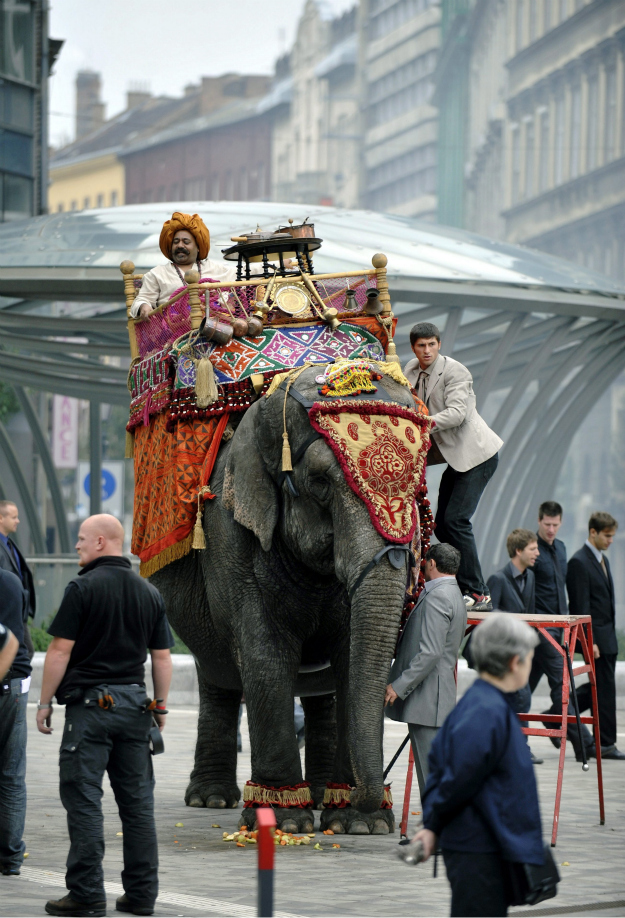
Such phenomenon is absolutely common in Budapest, whose streets since time immemorial are unexpectedly flooded by elephants which then just as suddenly disappear in the nothing. A proof is this photo by Endre Friedmann from 1958 showing a whole herd of elephants marching along the Theresa (at that time Lenin) Boulevard towards the Andrássy (at that time People’s Republic, some months earlier Hungarian Youth and even earlier Stalin) Boulevard: maybe it was the accelerated rhythm of name changes to cause such space-time fluctuation.

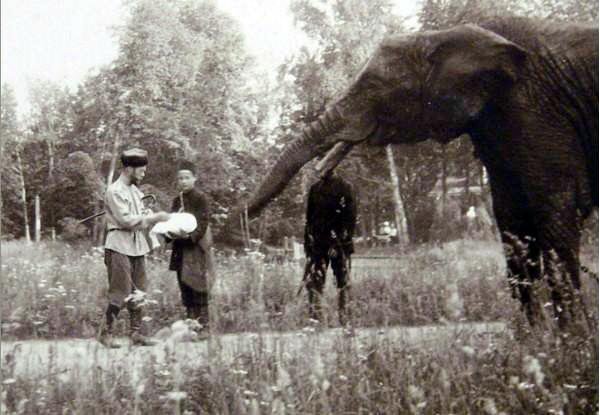
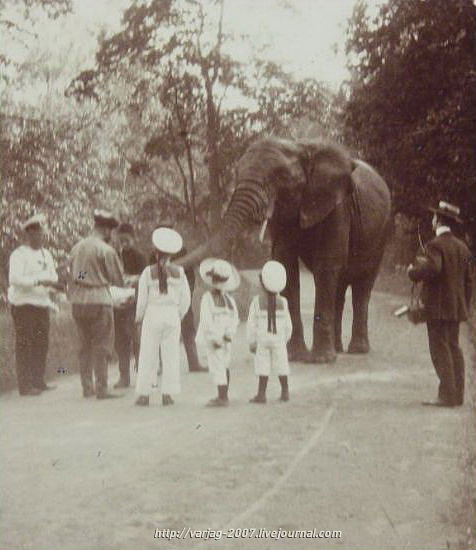
That the unexpected appearance of elephants on the streets of big cities is a concomitant of great political earthquakes is proved with many examples by twentieth-century Russian history. Beginning with the elephant, which appeared in 1916 at the imperial residence of Saint Petersburg’s Tsarskoe Selo and disappeared within a short time together with Nicholas II and his family feeding it on this picture. But on this we will write another time: the elephants of St. Petersburg have their own secret history.
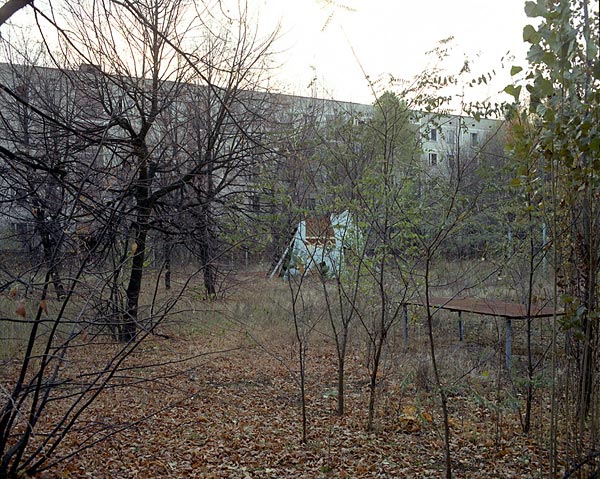
And ending with the one that appeared in Chernobyl at the end of the 1980s. In this case, however, it was the socialist reality that proved more virtual: the Soviet Union disappeared and the elephant was left.

Thus it is just natural that the third, most shocking event of 20th-century Russian history, the Great Patriotic War was also accompanied by the emergence of an elephant, which, similarly to the war, came from Germany.

The elephant named Punch arrived together with the circus captured in Berlin as a trophy by Marshal Zhukov. In Moscow it was accommodated in the famous Ugolok Durova Animal Theatre founded in 1912 by animal trainer and clown Vladimir Durov. Its caretaker, Karl Stvora, who also came as part of the trophy, led it to a walk every day to the nearby Suvorov Square, either alone or with the camel of the circus, to the great pleasure of the people of Moscow.
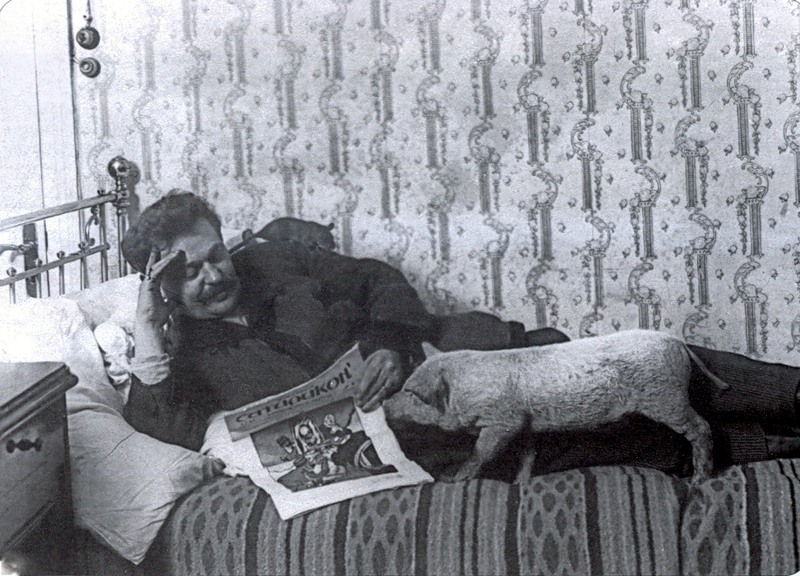 The theater’s founder Vladimir Leonidovich Durov and his piglet, ca. 1910
 The building marked is the Ugolok Durova Animal Theater. The oblong square to the left is Suvorov Square (before 1917, Catherine Square) with the Catherine Garden along its northern side and the characteristic five-pointed star-shaped building of the Theater of the Soviet Army which can be seen on the photos below. Click for full map
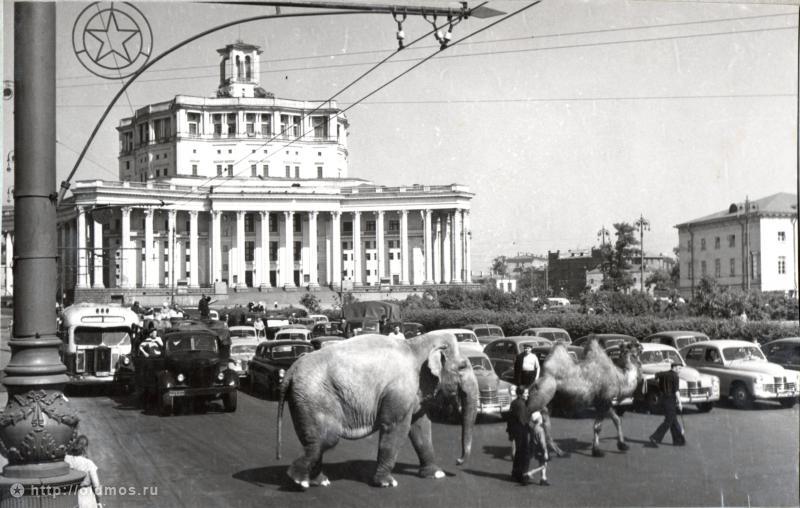
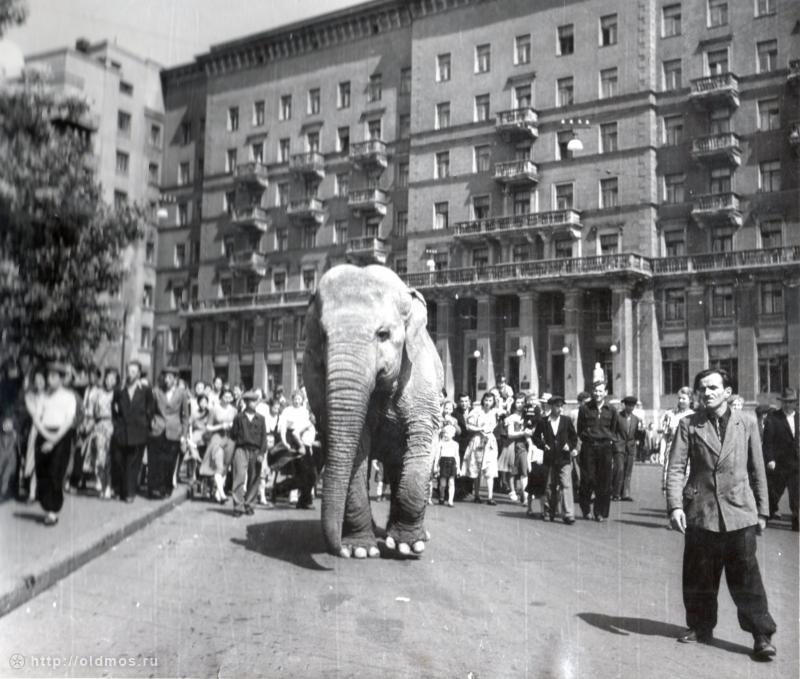
Krilov: The elephant and the pug-dog (1809)
По улицам Слона водили, Как видно напоказ - Известно, что Слоны в диковинку у нас - Так за Слоном толпы зевак ходили. Отколе ни возьмись, навстречу Моська им. Увидевши Слона, ну на него метаться, И лаять, и визжать, и рваться, Ну, так и лезет в драку с ним. “Соседка, перестань срамиться,- Ей шавка говорит,- тебе ль с Слоном возиться? Смотри, уж ты хрипишь, а он себе идет Вперед И лаю твоего совсем не примечает”.- “Эх, эх! - ей Моська отвечает,- Вот то-то мне и духу придает, Что я, совсем без драки, Могу попасть в большие забияки. Пускай же говорят собаки: “Ай, Моська! знать она сильна, Что лает на Слона!” | An elephant was led along the streets, so people would see it: as you know, elephant is a rarity at us, so the crowd flocked after it. A pug fell among them, from nowhere, and as soon as he saw the elephant, started barking and screaming at it, showing that he would fight with it. “Come on”, a spitz says, “with the elephant you’d like to tinker? Stop it! You see: you are barking at it, and it just goes ahead, not even hearing your noise.” “Eh!” the pug answers. “It’s a sign of my greatness of spirit, that I absolutely without a fight can put to flight so big bullies! Just let the dogs all say in an awe: “Well, the pug! he’s a real macho! he has even barked at the elephant!” |
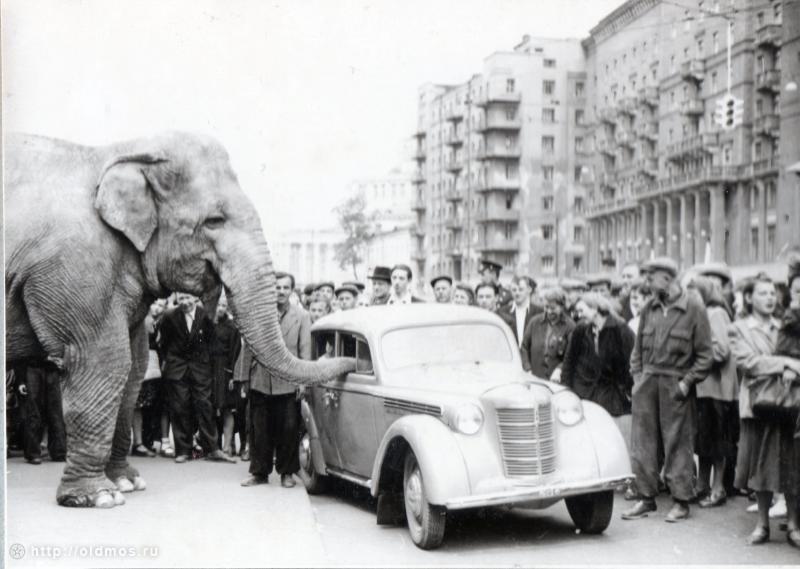
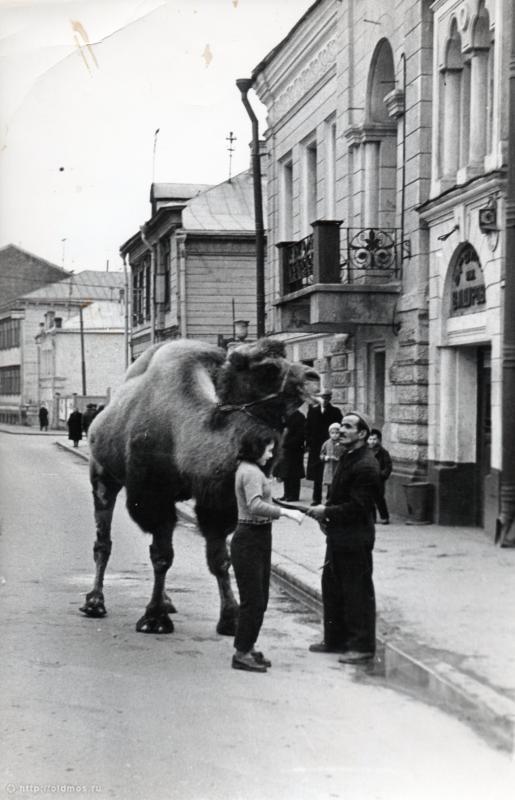
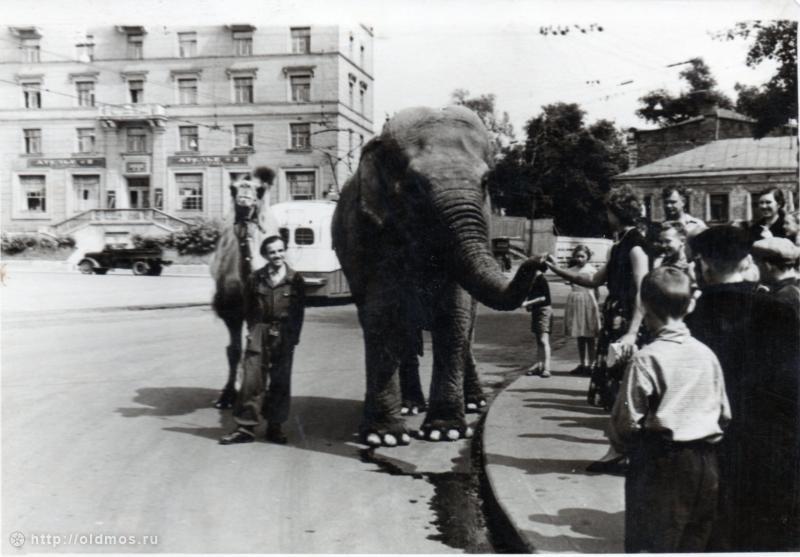
Dedushkin’s blog also quotes a contemporary recollection:
“Nowadays probably very few people remember the elephant which used to live at the Ugolok Durova. For us it was like a prisoner of war, as it was brought from Germany for war reparation, together with a German to take care of it. We children, whose fathers were killed or came home as invalids, even fifteen years after the end of the war hated all Germans. To us “German” and “Nazi” was one and the same, and we spent our revenge on the elephant and its caretaker. We climbed over a hole in the fence (all holes in all fences were ours) and started throwing stones on the elephant and its caretaker. The guard caught us, and we were sincerely wondering: how’s that he’s standing up for the Nazis – does not know that these all Germans, therefore Nazis? We hit the caretaker with the stones on the head so much that he had to be taken to the hospital. This is how we revenged ourselves for our fathers and relatives, and we did not run away even when it was clear that we cannot avoid being caught. But then some strange thing happened. We were not punished, and we started to realize that things are not exactly as we thought… A few weeks later our fathers – whoever had one – collected us, they bought vodka, sausage, and certainly some more things as well, and we set off somewhere: as it turned out, to the Ugolok Durova, to the German. He lived in the elephant’s house, because the only stove was there, such a little iron stove, because without that there would have been terribly cold all over winter. They spoke to him in German as much as they could, because he spoke very bad Russian. All his head was bandaged. But then somehow they managed to discuss with them what they wanted, then they all drank, he gave us hand, and told something that we did not understand, and then we children were sent home. My father came home late, drunk. The next day we learned that all the relatives of the German died in a bomb attack, and he had nobody in this world besides the elephant, and that he spent all his poor earnings to buy cabbage and beets to it, while he drags on from one day to another. If you knew how ashamed we felt! If we were punished, then we would have thought we were right, but like this… We collected all our money (we were collecting it for soccer buttons, it was the dream of every child to have HIS OWN team), and we went to the central market hall to buy some boxes of vegetables. We spent all the money on this, we wanted to mend what we had done. We took it to the elephant. The caretaker came to meet us, but I will never forget: the elephant did not let him to come to us, it blocked his path, and when he kept trying to come, it wrapped its trunk around it and lifted him in the air. This is how it defended him. We gave over the vegetables and left. At home we told everything, and my mother began to cry. And the next evening my dad brought me a soccer button team.”
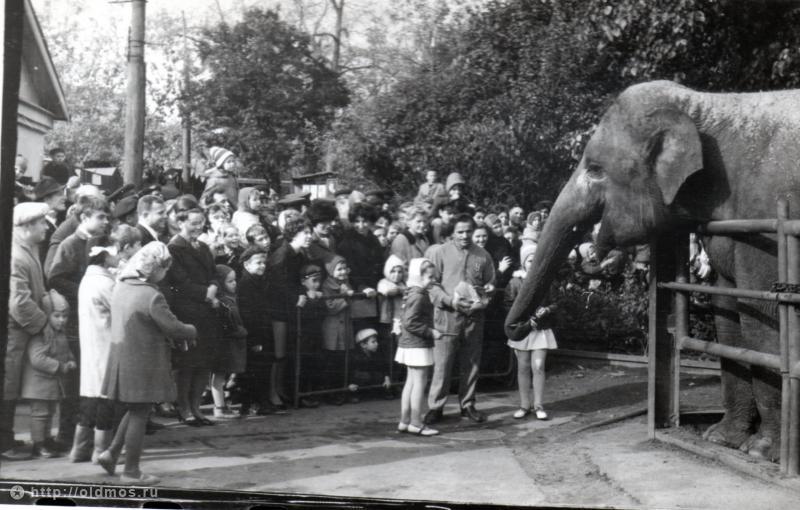 The elephant with Gagarin and his family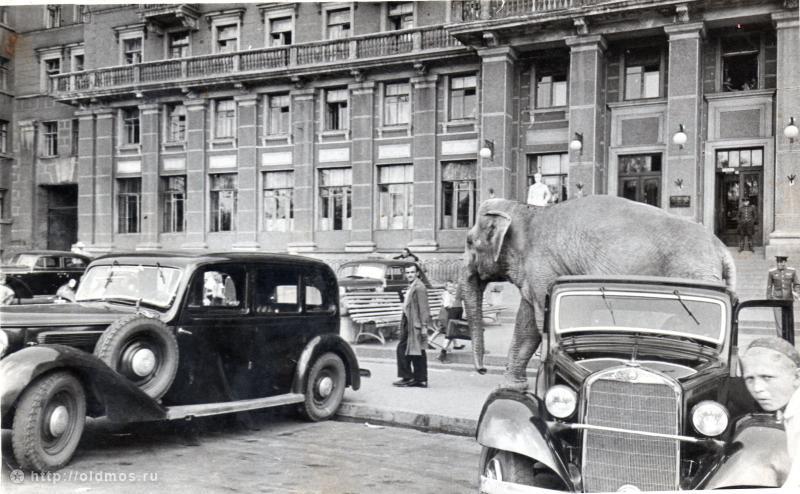


 Come with us to…
 Atlantis
 Bohemia+Prague
 Books, exhibitions, music, film
 Caucasus
 Cemeteries
 Crimea
 Images of the East
 Lwów/Lemberg
 Mallorca
 Message on the wall
 The Museum of Propaganda
 Odessa
 Paper Museum
 Persian letters
 The Jewish heritage


8 comentarios:
The news in the elevator (!) had a picture of that elephant, named Szandra, with a caption indicating that it was loose in the streets for a while.
Oddly, it's not yet in Google News in the languages I normally read, but here's Blikk.
Yes, many Hungarian newspapers reported on it yesterday with the caption “a Spanish ad spot is being shot on the Little Boulevard”, but this is just a miserable rationalization, which fails to account for the other elephants. The most probable explanation is the rupture in the space-time continuum.
I think that crocodiles and elephants and other wild animals use to live among us, quietly walking down our streets and sharing with us our cities: we just don't pay enough attention.
What a great story Dedushkin told! I like it so much, thanks to Studiolum for reporting it. I wonder which is the end of the story of the German and his elephant.
And of course, you really have to tell us the secret story of Piter's elephants
For the strangest beings living with us in our cities, read Michal Ajvaz’s exciting “The other city” about “the hidden Prague”!
As to “the German”, his fate slowly turned better. Apparently he married in the 60’s (for several reasons we think that the above report, despite the “fifteen years” mentioned in it, refers to a period only five-six years after the war) and he had two sons. One of them, Pavel lives in St. Petersburg, and he’s an animal trainer as well (here you can see him on his father’s elephant). Punch died in the 60s, but then Karl received another elephant, Jenny. He died in 1991, shortly outliving the Soviet Union which he served with his elephants.
The history of Piter’s elephants is a complicated and amusing one, marching through several dimensions of reality and unreality. We will try to resume it in a next post.
Thank you very much, Studiolum.
Rio Wang is like a house with many rooms: you can come in, leave, come back, and there is always someone telling a new story.
What, no mention of родина слонов?
Ssh! I reserved this point for the post written on the elephants of Petersburg and their role played in the revolution!
The animals of the world exist for their own reasons. They were not made for humans any more than black people were made for whites or women for men. --Alice Walker
Publicar un comentario