  |


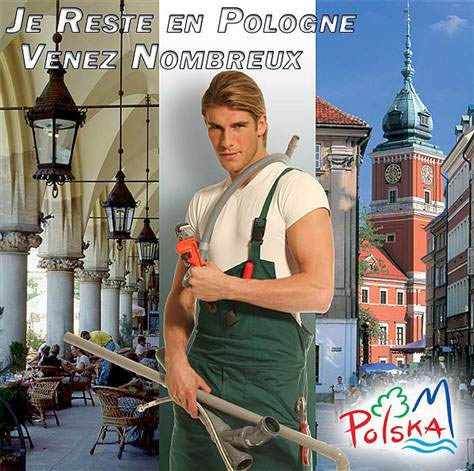
More Polish plumbers.
And an earlier beautiful story on the unpredictability of affections here.
The renewed version of our blog, with more features, a richer design, and available in nine languages, can be read here: https://wangriver.com
The new version also includes the old posts, often in expanded form. If you are curious about the updated version of this post, replace “riowang.blogspot.com/” in the URL with “riowang.studiolum.com/”, and the new link will most likely lead you there.
La versión renovada de nuestro blog, con más herramientas, un diseño más rico y disponible en nueve idiomas, se puede leer aquí: https://riowang.com
La nueva versión también incluye las publicaciones antiguas, a menudo en una forma ampliada. Si tiene curiosidad por la versión actualizada de esta entrada, sustituya «riowang.blogspot.com/» en la URL por «riowang.studiolum.com/es/», y el nuevo enlace probablemente le llevará allí.
|

 where we daily publish new photos about our travels around the world:


 Come with us to…
 Atlantis
 Bohemia+Prague
 Books, exhibitions, music, film
 Brave old world
 Caucasus
 Cemeteries
 Crimea
 Get to know the
 Images of the East
 Lightwriting
 Lwów/Lemberg
 Mallorca
 Message on the wall
 The Museum of Propaganda
 Odessa
 Persian letters
 The Jewish heritage
7 comentarios:
well, marriage is a dangerous place, beware (of plumbers, too)
Do we have a larger image of page 13? It is the only one which doesn't have a link to a full-size picture (an unlucky number I guess!), and it's hard to interpret the (really sweet) Polish script on an image so small :)
Some subplots are very familiar, such as the one about the Elephant trading in fine china, or the Coon doing laundry (did we know him from Lilian Moore's tale or from Durov Circus?). But with some other pages, it seems that there is also a reference to some very well-known story ... yet I couldn't figure out what would it be. Like the Ant warrior, is it just a generic entomology allusion, or a literary one?
Until Marguerite responds, I have uploaded a larger version of picture 13 in two parts (unfortunately I only have mutilated scans in large size) here and here
I think that if there are any subplots behind the scenes, they must be fairly simple and widely known. The comparison with the elephant in the china shop also exists in Hungarian, and precisely w sklepie z porcelaną like Polish, rather than в посудной лавке. Durov’s Tishka doing laundry was unknown to us at that time, but one of the basic Hungarian primers was called “Laundry of Washing Masha”, so we knew her quite well – I don’t know how it was in Poland.
…and, for the sake of nostalgia, here is Tishka!
Don’t think so! Durov really loved his animals.
I didn't realize that the full cast of characters was right there on the last page! So the uniformed ant is a pharaoh ant, and, if Polish slang was similar to Russian one, then he must be a cop rather than a soldier?
And of course English and Russian share one strange thing about racoons, that they aren't called laundry-workers in either language (a Russian word, according to Vasmer's dictionary, is a misattribution from a completely unrelated group of ring-tailed furry creatures, the Genettes). But in Latin, and in German, and in Polish, etc., the racoon has the laundry connection right there, in its very name
Actually, the English term also has to do with washing, being a loan word from a native American tongue where it also means “the washing one”…
Publicar un comentario