 “Hey, I’ve put down the soutane, in spite of all my relatives; let him be a priest who wants it!”
 Old revolutions and counter-revolutions also used propaganda. They employed all sorts of texts and images for it, and every part of society, each group of revolutionaries distributed their messages this way.
These five etchings date back to the French Revolution, from 1789 to 1795.
Marco Beasley, Accordone – Marcia delle truppe Sanfediste. From the CD Fra Diavolo: La musica nelle strade del Regno di Napoli (2010)
A counter-revolutionary version of La Carmagnole, sung in 1799 by the Sanfedians, a folk movement against the Republic of Naples, which mobilized peasants and brigands with the support of the Church. The movement rose up in Calabria under the command of the cardinal Ruffo and resulted in anti-French riots.
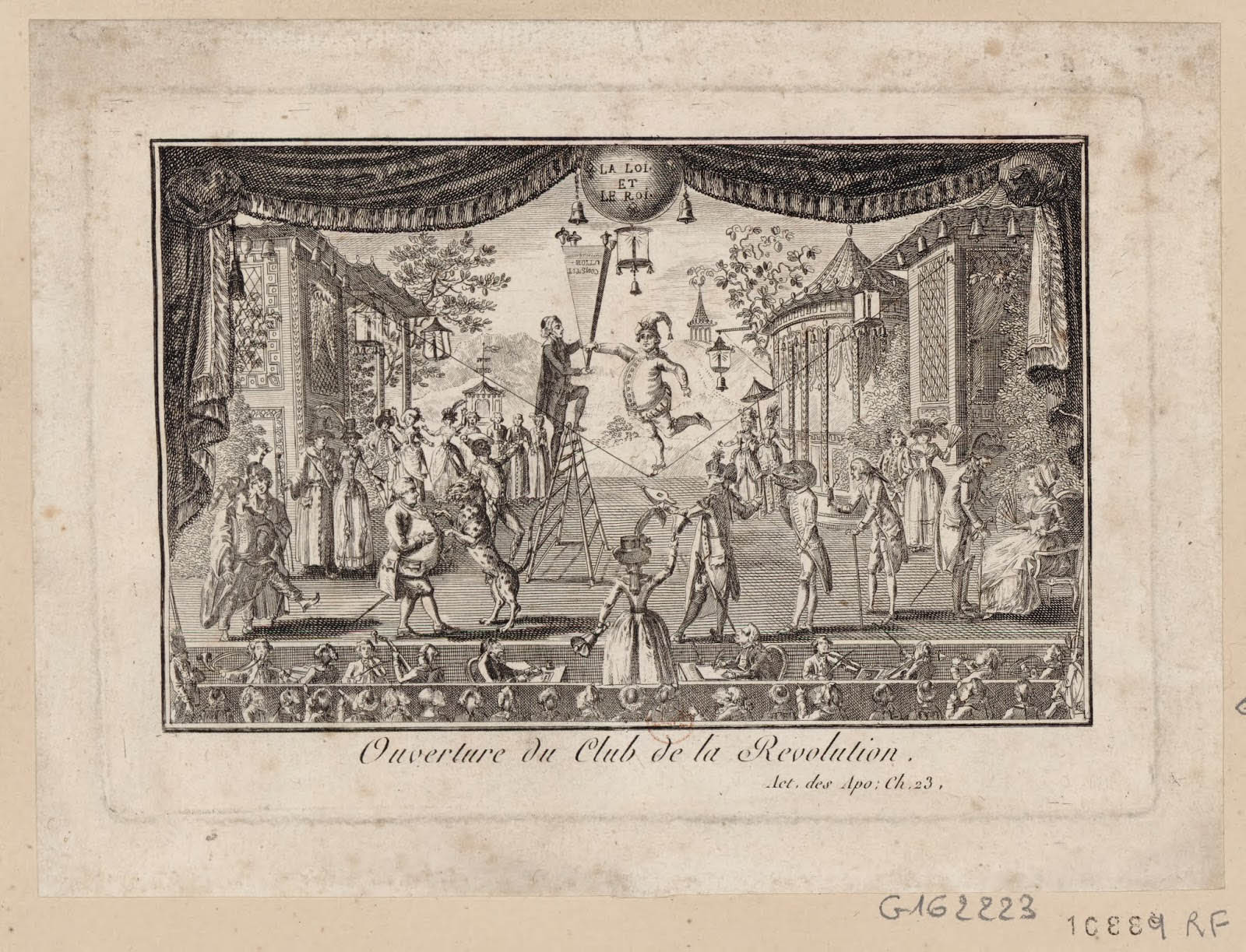 Revolutionaries opened assemblies, where they were free to speak. This enigmatic
 etching (1790) represents the club as a stage. The actors are performing a mock
pageant of the regime, especially of the king’s duplicity (hence the reference
to Acts 23 and the hypocritical Sanhedrin), with the king dancing on a rope,
assisted by a priest (the Church) who keeps the Constitution topsy-turvy.
The personages dancing on the scene might be masqued aristocrats.
A well-dressed woman, perhaps Théroigne de Méricourt, directs
the orchestra, assisted by two clerks. The public, enthralled,
awaits the resolution.
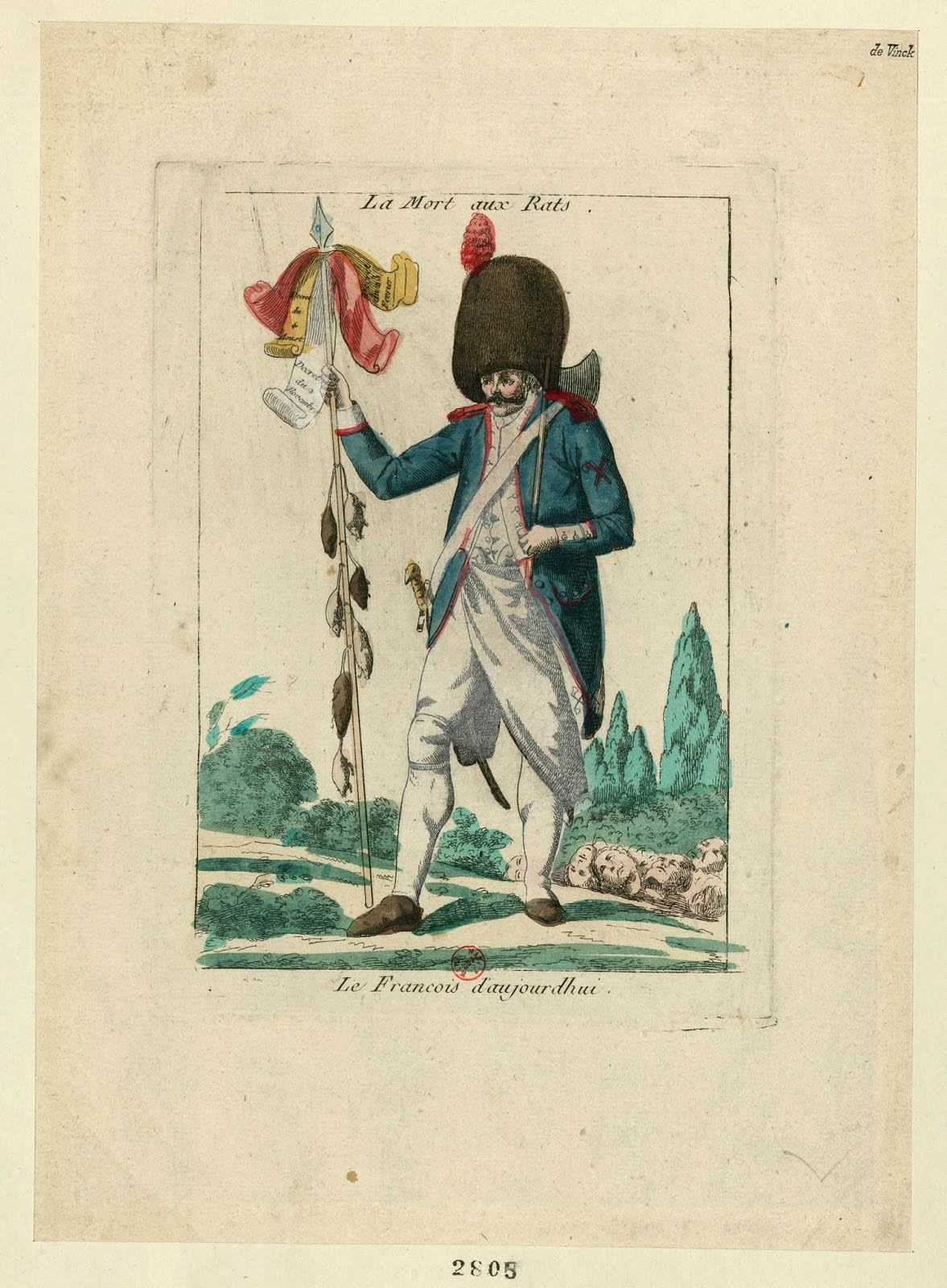 After 1792, the wars – both civil and foreign – following the revolution created
a new Frenchman, at least in revolutionary propaganda:
“mort aux rats” – rat poison – from top to toe.
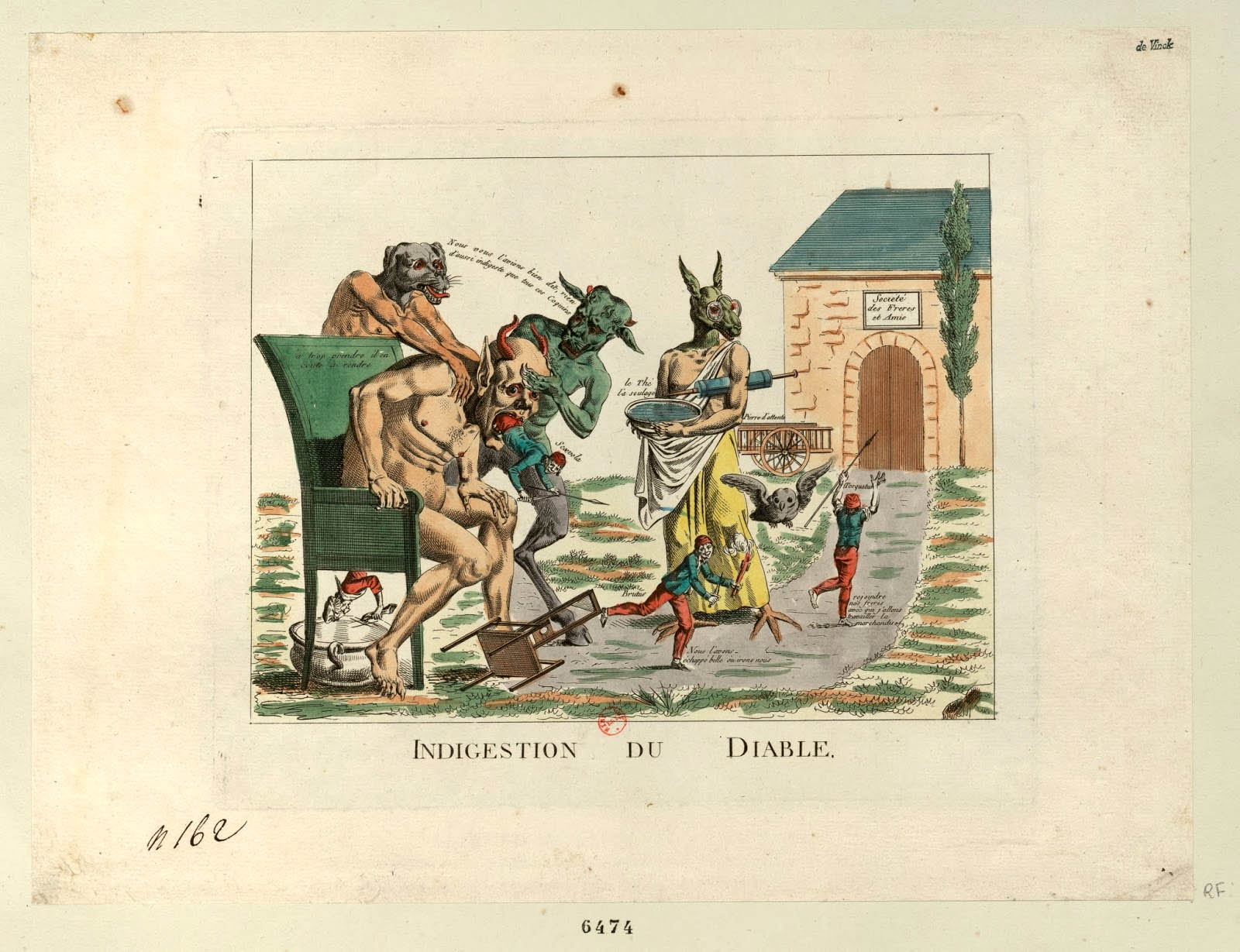 In 1793, the devil got sick from eating too many “sans-culottes”. He seems to
 symbolize a moderate faction which had tried to suppress the radical one,
but the result was too heavy to digest, and stronger than the devil himself.
He gives up, and they flee to the “Société des Frères et Amis” –
Society of Brothers and Friends –, one of the radical far-left
clubs during the Reign of Terror. In the background, a
cart is waiting to bring convicts to the guillotine
which the devil has overturned in vomiting.
 After the Terror, this etching shows a Jacobin, a partisan of Robespierre,
 fraternizing with Discordia on the ruins of a burning village.
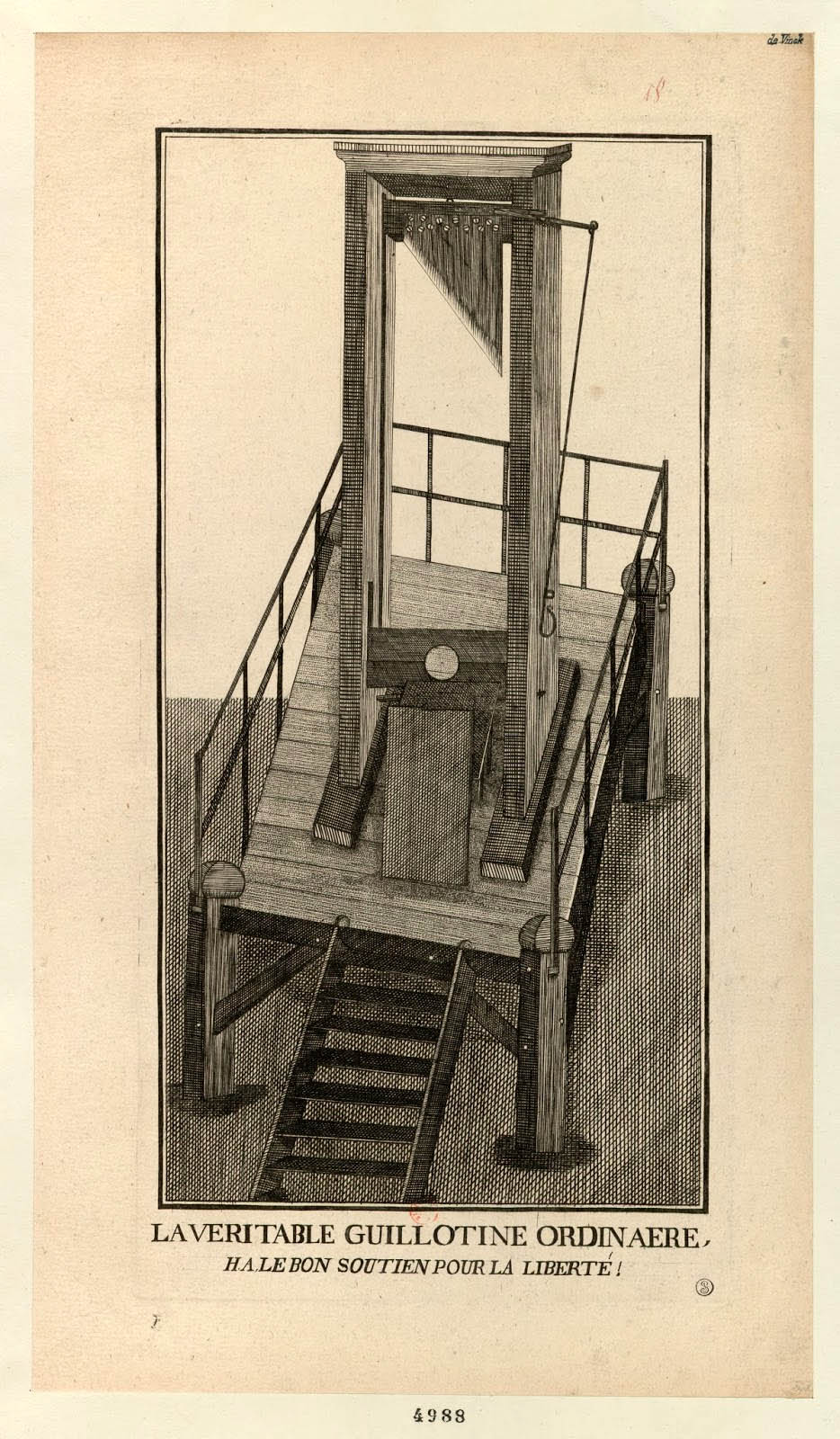 And the last words belong to this True Ordinary Guillotine:
“A good support for freedom, indeed!”


 Come with us to…
 Atlantis
 Bestiary
 Bohemia+Prague
 Books, exhibitions, music, film
 Brave old world
 Caucasus
 Cemeteries
 Crimea
 Get to know the
 Images of the East
 Lightwriting
 Lwów/Lemberg
 Mallorca
 Message on the wall
 The Museum of Propaganda
 Odessa
 Paper Museum
 Persian letters
 The Jewish heritage


No hay comentarios:
Publicar un comentario