 Family album: Family album:• Alba, 1867 • Hong Kong, 1897 • Marseille, 1900 • Paris, 1904 • Valenciennes, 1918 • Buenos Aires, 1930 |
 When I was a little girl, she was a very old lady with still black hair and white-powdered face. However I listened to her, I did not really understand what she was telling – perhaps she spoke a language foreign to me. Actually, she scared me a lot, and I would have not wanted to be left alone with her.
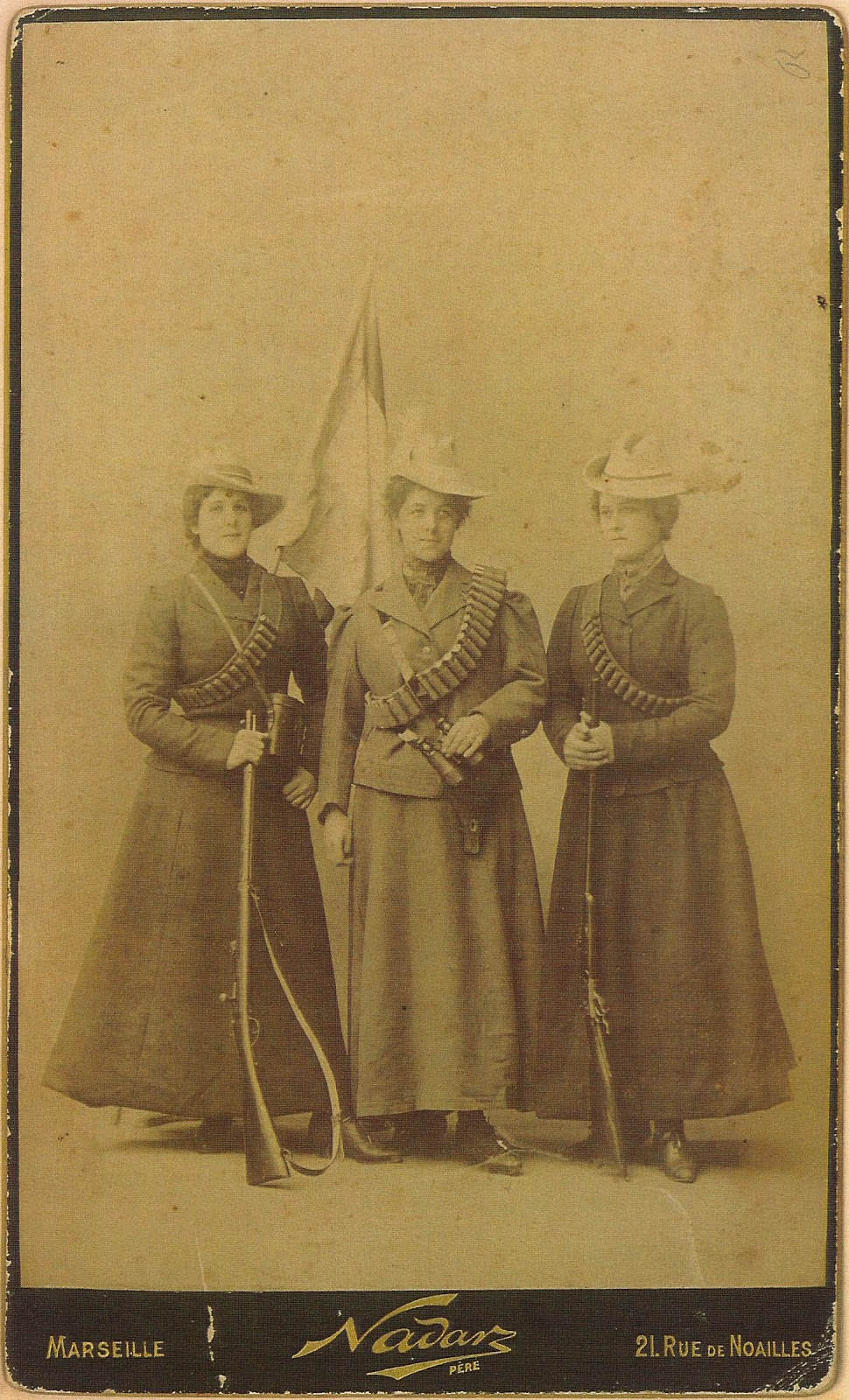
Here she’s sixteen. She is standing a bit stiff alongside her sister, and they both have a proud look, like who saw the fire closely. About the third girl nobody knows anything today, she only keeps company with them in this photo, she is looking pensively before disappearing into oblivion.
They arrived to Marseille in November 1900 on a Dutch ship, perhaps the previous day. They got to know the war and they lost it, here they are already defeated and exiled. But however defeated and exiled they are, the European public opinion is on their side, and the press reports about them: from Paris through Berlin to Brussels or Amsterdam, they want their stories and images. They therefore pose for a series of photographs in the Marseille studio of old Felix Nadar: the two sisters on single photos, the three ones together, in one in city dress, in the other in military dress.
Did they bring with themselves these garments, hats, cartridge-clips, guns, binoculars from their distant country? Did they travel with these weapons in their trunks, in memory of the conflict? Did they fight alone, or following the movement of the troops? What do they think about, while posing?
Or maybe these accessories come from another trunk, that of the photographer – like the fan, the embroidered slippers or the strange water pipe from that of the studio of Hong Kong –, and were used to make the traveler returning from a safari in Africa, the policeman who captured the bandit in Corsica, or the archeologist and his wife coming back from Nineveh appear more authentic. Perhaps somebody dressed them, they were lined up, they put a rifle in the hands – oh, let us not forget about the cartridge-clip, cried the propman digging in the trunk.
However it happened, they proved useless. The press did not take over this shot. After all, the war was already gone.


 Come with us to…
 Atlantis
 Bestiary
 Bohemia+Prague
 Books, exhibitions, music, film
 Brave old world
 Caucasus
 Cemeteries
 Crimea
 Get to know the
 Images of the East
 Lightwriting
 Lwów/Lemberg
 Mallorca
 Message on the wall
 The Museum of Propaganda
 Odessa
 Paper Museum
 Persian letters
 The Jewish heritage


3 comentarios:
I don't understand. What war are you talking about?
The Boer wars, I assume.
Yes, but I thought the war was over in november 1900 since The British controlled most of the South African Republics but there has been a third phase of guerilla until 1902. The Boer governement left Transvaal to Lourenço Marques (Maputo) and went to Europe — Marseilles — on a Dutch warship.
Publicar un comentario