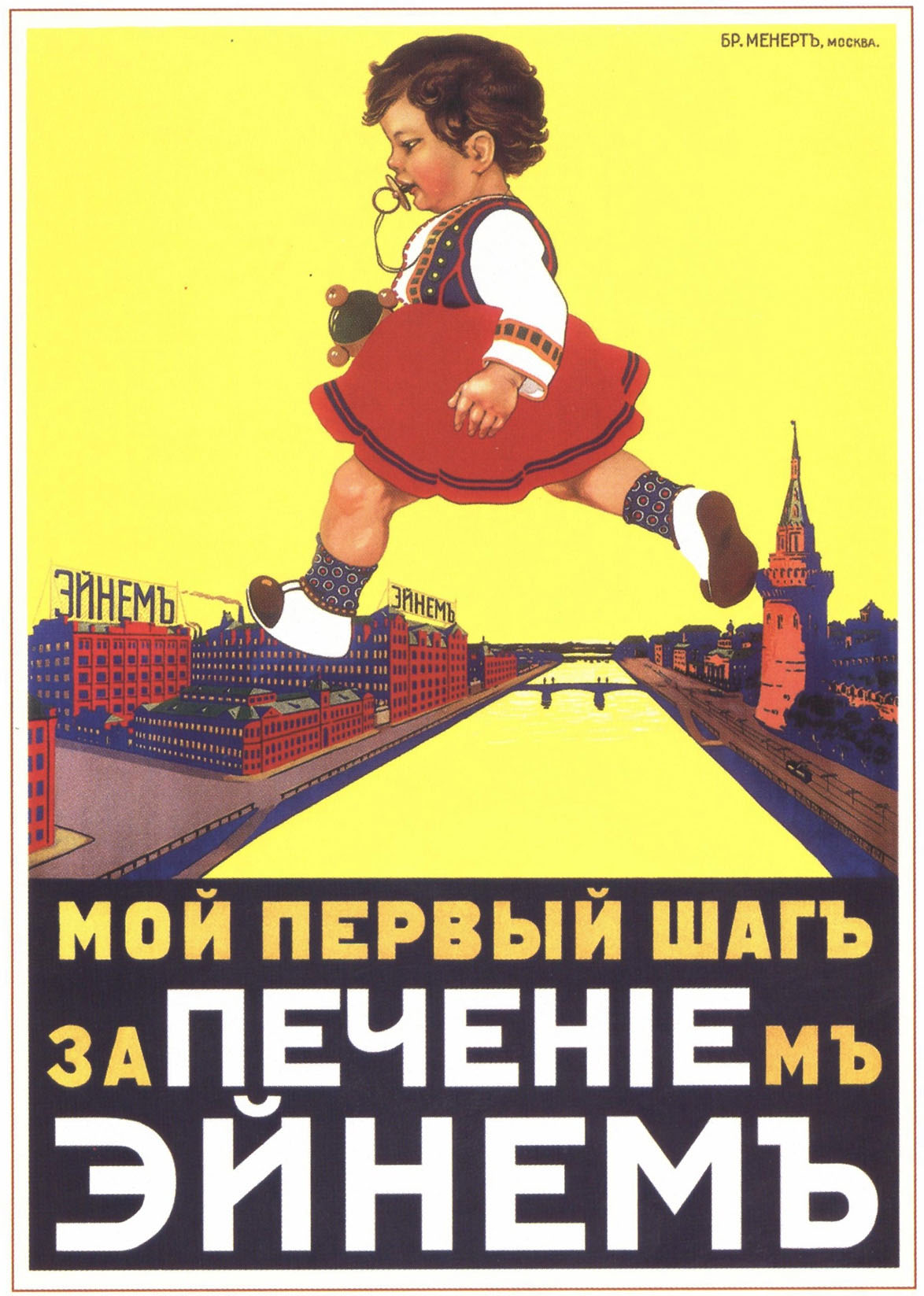
 My first step for the Einem Cookie, late 19th c. The candy factory established in 1851 by Theodor Ferdinand von Einem on the Arbat moved in the late 19th century to the Moscow Island, where the little girl is jumping to. Nationalized in 1917, since 1922 it works under the name Red October
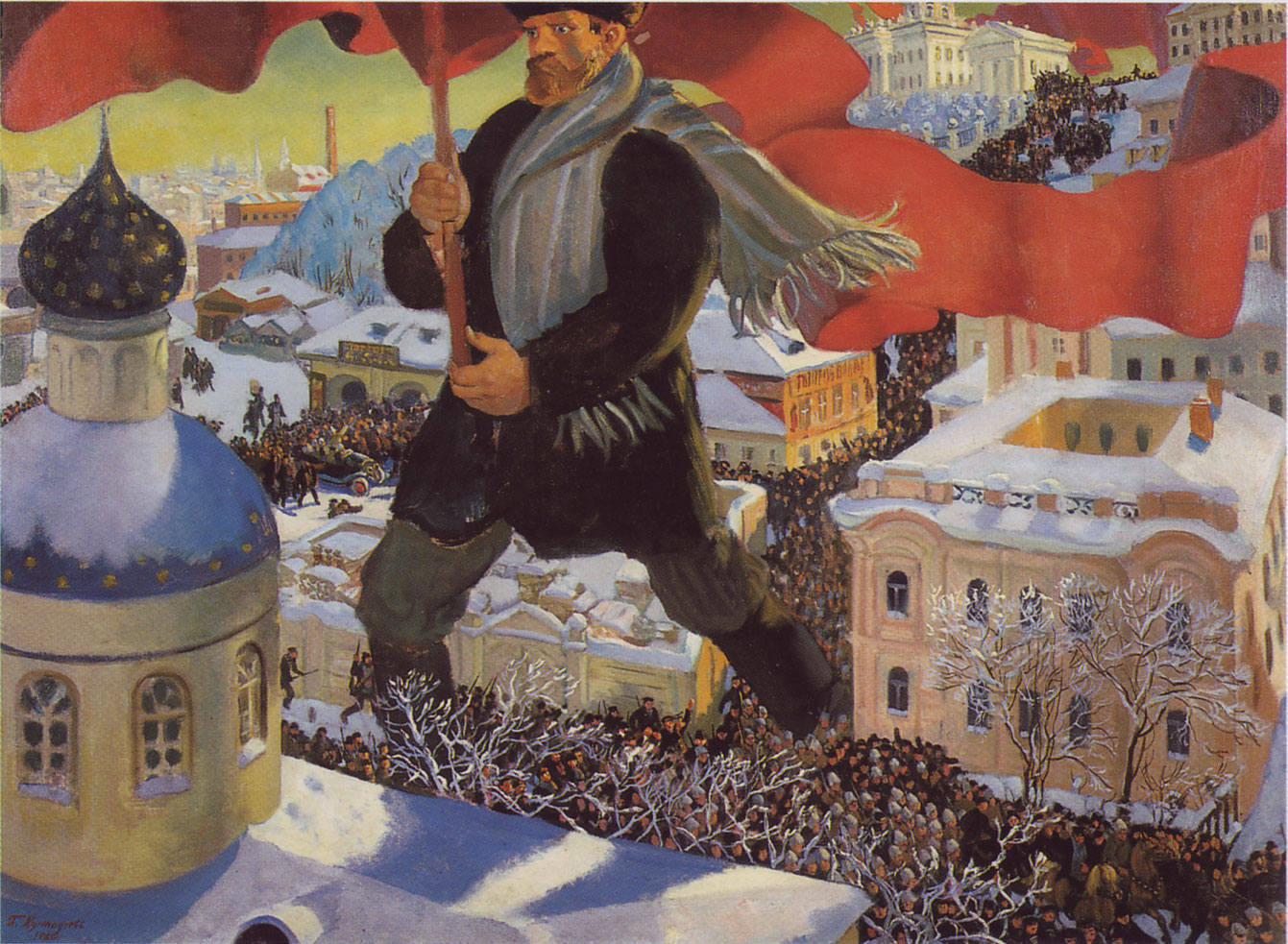 Boris Mikhailovich Kustodiev: The bolshevik, 1920. Moscow, Tretyakov Gallery
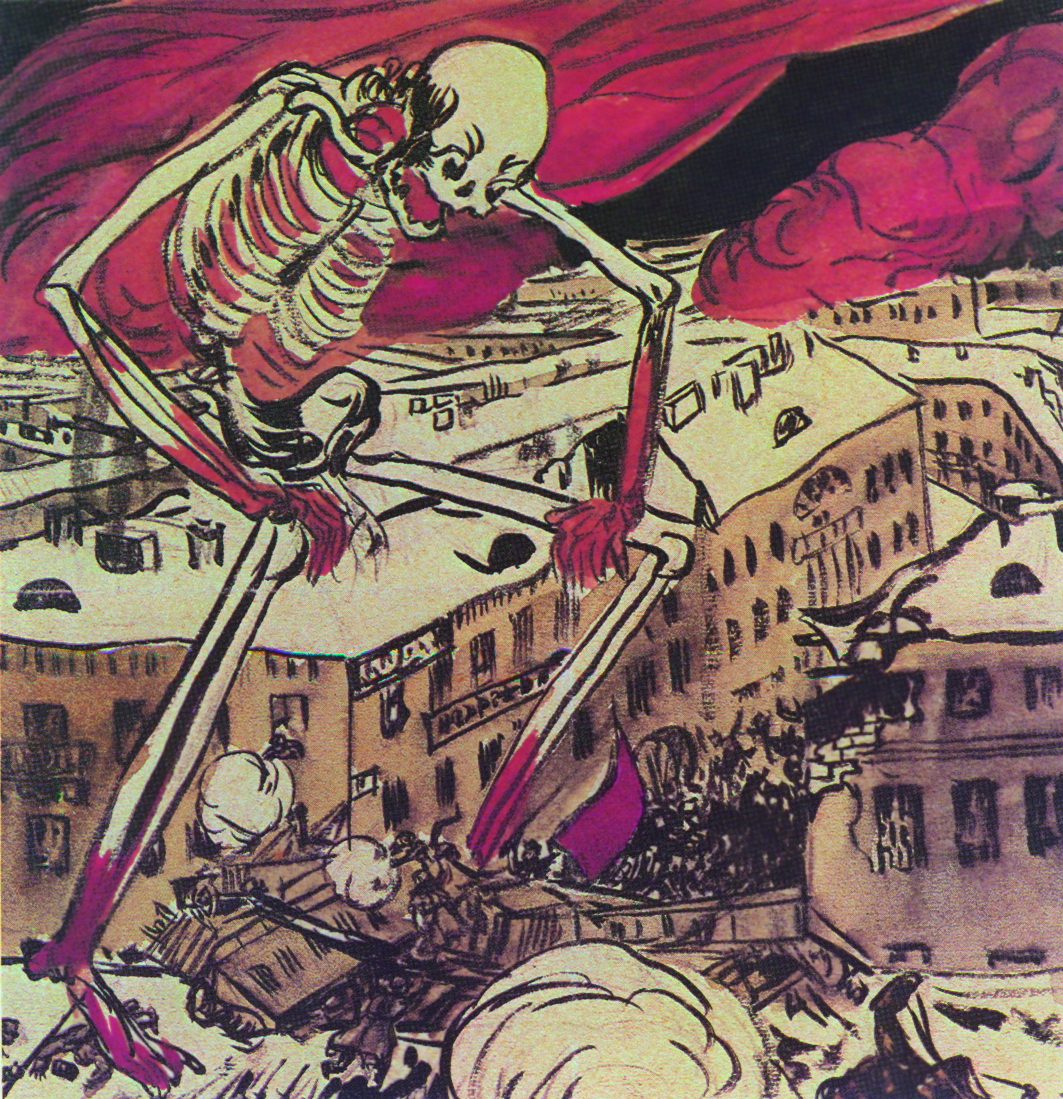
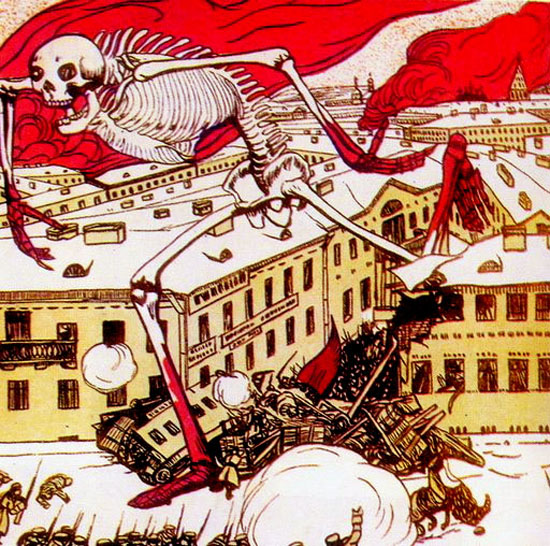 Boris Mikhailovich Kustodiev: The entry, 1905. Drawing for the journal Жупел
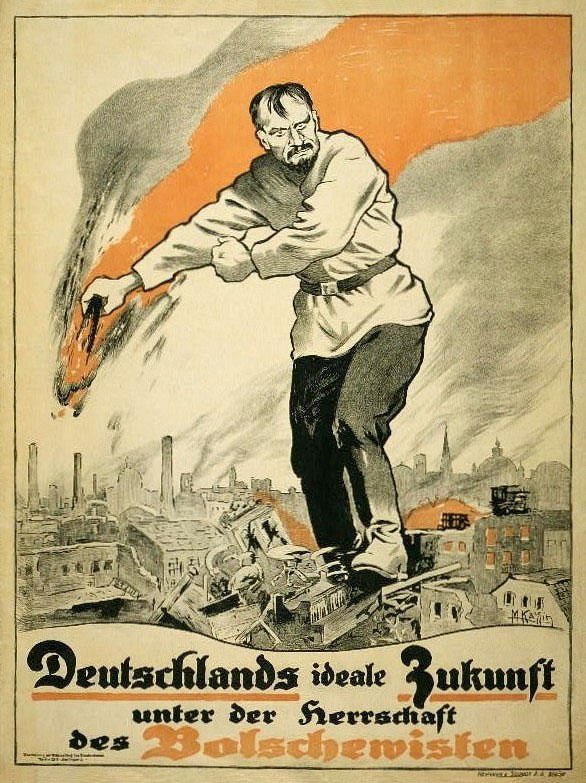 M. Kassin: Germany’s ideal future under the Bolshevik rule, Berlin 1919
(Ludwig Meidner’s Revolution (1913) and Kustodiev’s other Entry (1905) would also fit here, but less is more)


 Come with us to…
 Atlantis
 Bestiary
 Bohemia+Prague
 Books, exhibitions, music, film
 Brave old world
 Caucasus
 Cemeteries
 Crimea
 Get to know the
 Images of the East
 Lightwriting
 Lwów/Lemberg
 Mallorca
 Message on the wall
 The Museum of Propaganda
 Odessa
 Paper Museum
 Persian letters
 The Jewish heritage


3 comentarios:
Your posts are absolutely superb, always get the thumbs up in Google+.
https://plus.google.com/100146646232137568790/posts/7eLawJVLPLX
Thanks a lot! And just now I see how many of them have already been linked there. I feel really touched, and it encourages to write more.
The dissolution of Red October Factory may present another interesting track of images. The grand offices of the old factory, overlooking Moscow River, are still very much intact skeletons, the Board Room now used by a nature conservancy office, and the accounting department turned into a restaurant called Kontora, which was a popular tango venue back when we visited.
Publicar un comentario