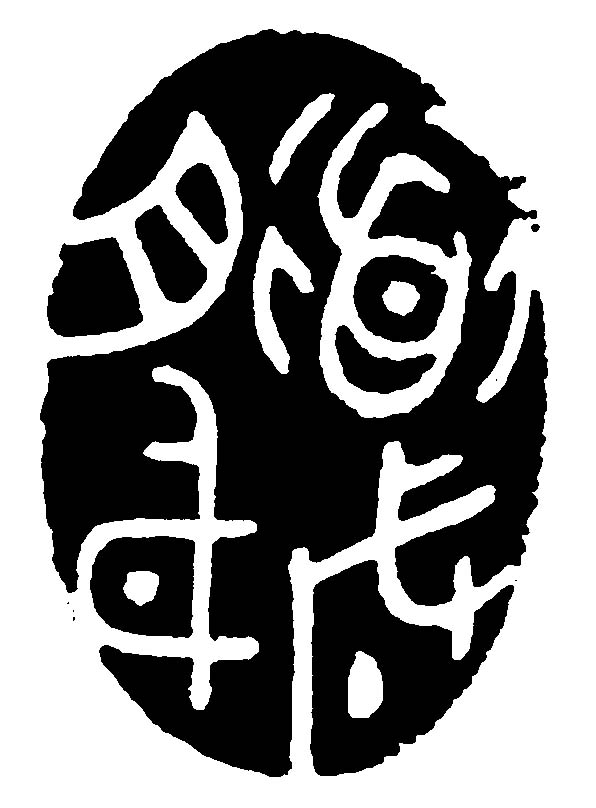
 This is how the Gospel of John begins in the most widespread Chinese translation, the Chinese Union Version, achieved between 1890 and 1919 in the collaboration of several Protestant denominations.
太 初 有 道
tài chū yŏu dào
[in the] remotest / beginning / there was / Tao
[in the] remotest / beginning / there was / Tao
This statement is embarrassingly unambiguous. True, Jesus himself says some chapters below (Jn 14:6) that “I’m the way” – in Chinese 道, tao as well –, but does this authorize us to identify the common noun with the concept carrying powerful historical and philosophical connotations, the Verb with the Tao?
In order to answer this question, first we have to clearly see what the Verb of the biblical tradition, the logos of the Greek original means.
Then we have to see what the Tao means for the Chinese Taoist tradition.
And finally: who, why and how attempted to reconcile these two concepts, and with what results.
This is what I will try to survey in the following months.


 Come with us to…
 Atlantis
 Bestiary
 Bohemia+Prague
 Books, exhibitions, music, film
 Brave old world
 Caucasus
 Cemeteries
 Crimea
 Get to know the
 Images of the East
 Lightwriting
 Lwów/Lemberg
 Mallorca
 Message on the wall
 The Museum of Propaganda
 Odessa
 Paper Museum
 Persian letters
 The Jewish heritage


1 comentario:
продолжение не следует?
Publicar un comentario