Switch over to our new blog! • ¡Pásese a nuestro nuevo blog!

The renewed version of our blog, with more features, a richer design, and available in nine languages, can be read here: https://wangriver.com

The new version also includes the old posts, often in expanded form. If you are curious about the updated version of this post, replace “riowang.blogspot.com/” in the URL with “riowang.studiolum.com/”, and the new link will most likely lead you there.


La versión renovada de nuestro blog, con más herramientas, un diseño más rico y disponible en nueve idiomas, se puede leer aquí: https://riowang.com

La nueva versión también incluye las publicaciones antiguas, a menudo en una forma ampliada. Si tiene curiosidad por la versión actualizada de esta entrada, sustituya «riowang.blogspot.com/» en la URL por «riowang.studiolum.com/es/», y el nuevo enlace probablemente le llevará allí.

Mostrando entradas con la etiqueta history sung. Mostrar todas las entradas

The Love Song of Kangding

Traveling in Kham:

Jashideley!
Burial in the sky
Kangding, the gateway of Tibet
The Love Song of Kangding
The monastery of Tagong
The Buddhas of Drakgo
The towers of the Himalayas
Nomadic wedding in Tibet
On the border of two Tibets. Dzokchen Monastery

Kangding’s best-known cultural product is the Love Song of Kangding. In China, it is second only to the national anthem in terms of familiarity and popularity. And it is where most Chinese first hear about Kangding itself. The city of Kangding naturally takes advantage of this popularity in its self-promotion, touristic publications, advertisements, and in the title of festivals. This is illustrated by the above picture, where, looking down from the 4298-meter-high Zheduo Pass near Kangding on the Shanghai-Lhasa National Highway 318, the view of the Tagong Plateau unfolds before you, and on the side of the opposite mountain you can read not some party slogan, but the city’s trademark, the title of the Love Song of Kangding in large white characters in Tibetan, Chinese and English.

But national propaganda also uses the song, for example by giving its title to the 2010 film which sets a metaphor for the eternal and unbreakable friendship and interdependence of Tibet and China through the love between Li Sujie, a young Chinese engineer, and Dawa, a Tibetan servant.

Let us first listen to the version of the song we hear in this film, in the original, very archival 1949 recording by the great soprano Yu Yixuan (1909-2008).

跑马溜溜的山上,一朵溜溜的云哟。
端端溜溜的照在,康定溜溜的城哟。
月亮弯弯,
康定溜溜的城哟!

李家溜溜的大姐,人才溜溜的好哟。
张家溜溜的大哥,看上溜溜的她哟。
月亮弯弯,
看上溜溜的她哟!

一来溜溜的看上,人才溜溜的好哟。
二来溜溜的看上,会当溜溜的家哟。
月亮弯弯,
会当溜溜的家哟!

世间溜溜的女子,任我溜溜的爱哟。
世间溜溜的男子,任你溜溜的求哟。
月亮弯弯,
任你溜溜的求哟!

Pǎomǎ liūliūde shānshàng,
yīduǒ liūliūde yún yō.
Duānduān liūliūde zhàozài,
Kāngdìng liūliūde chéng yō.
Yuèliang wān wān,
Kāngdìng liūliūde chéng yō!

Lǐjiā liūliūde dàjiě,
réncái liūliūde hǎo yō.
Zhāngjiā liūliūde dàgē,
kànshàng liūliūde tā yō.
Yuèliang wān wān,
kànshàng liūliūde tā yō!

Yīlái liūliūde kànshàng,
réncái liūliūde hǎo yō.
Èrlái liūliūde kànshàng,
huìdàng liūliūde jiā yō.
Yuèliang wān wān,
huìdàng liūliūde jiā yō!

Shìjiān liūliūde nǚzǐ,
rènwǒ liūliūde ài yō.
Shìjiān liūliūde nánzǐ,
rènnǐ liūliūde qiú yō.
Yuèliang wān wān,
rènnǐ liūliūde qiú yō!

A cloud is on the Galloping Horse Peak,
the moon shines brightly on the city of Kangding
the moon, the crescent moon, on the city of Kangding

The eldest Li girl is beautiful
the eldest Zhang boy fell in love with her
oh moon, crescent moon, fell in love with her

First he loved her for her beauty
secondly for her care for her family
oh moon, crescent moon, for her care for her family

All the girls of this world, my loves,
let all the men of this world go crazy for you
oh moon, crescent moon, let them go crazy for you.

This song is everywhere called “a folk song of Kangding”. According to Béla Bartók’s definition of a folk song – “a song that has been sung by many people for a long time” – it certainly is, as are Yesterday and The Sounds of Silence, too. But from the more established definition – “a work of folk poetry by unknown author, the text of which has been polished and shaped by the people and has survived through oral tradition” – at most the second criterion is true. After all, the song’s author and origin story is known, even though it is much more romantic to spread the opposite.

As the California researcher Yi Liu summarizes in ChinaBlog, the song was written by Li Yiruo from Sichuan in the 1930s. At the Chengdu Conservatory, he fell in love with his fellow student, Miss Li from Kangding, but their parents opposed the marriage. Li Yiruo even went after his love to Kangding, but their relationship finally broke up. Li, however, remained in Kangding, where he dedicated this song to the memory of their love. In the original text, the boy is also called Li instead of Zhang.

The composition of the Kangding music teacher then became locally popular under the title The Galloping Horse Song, and many people started to sing it. Wu Wenji, who was studying at the Chongqing Conservatory in the mid-1940s, heard it from such singers, namely from Kangding soldiers. He showed it to his teacher Jiang Dingxiang, who wrote an orchestral accompaniment for it. He also changed the title to The Love Song of Kangding, and recommended it to Yu Yixuan, the celebrated soprano singer who had just returned from the USA. She included it in her permanent repertoire, and her performance spread it throughout the country.

But it is also known worldwide and performed by many singers. One of the most notable is Placido Domingo, who sang it at the opening of the 2008 Bejing Olympics and in 2009 at the Beijing concert organized for the 100th anniversary of Yu Yixuan’s birth with Song Zuying, accompanied by Lang Lang on piano.

The Polish-Ukrainian band Dagadana performs it much more jazzily.

And a really surprising version, performed by the Georgian Geo Folk Choir in four voices, with Georgian images. This shows that not only Kangding and China can use this song as a city and country image, but also Georgia, to attract an increasing number of Chinese tourists to the country.

There was a city

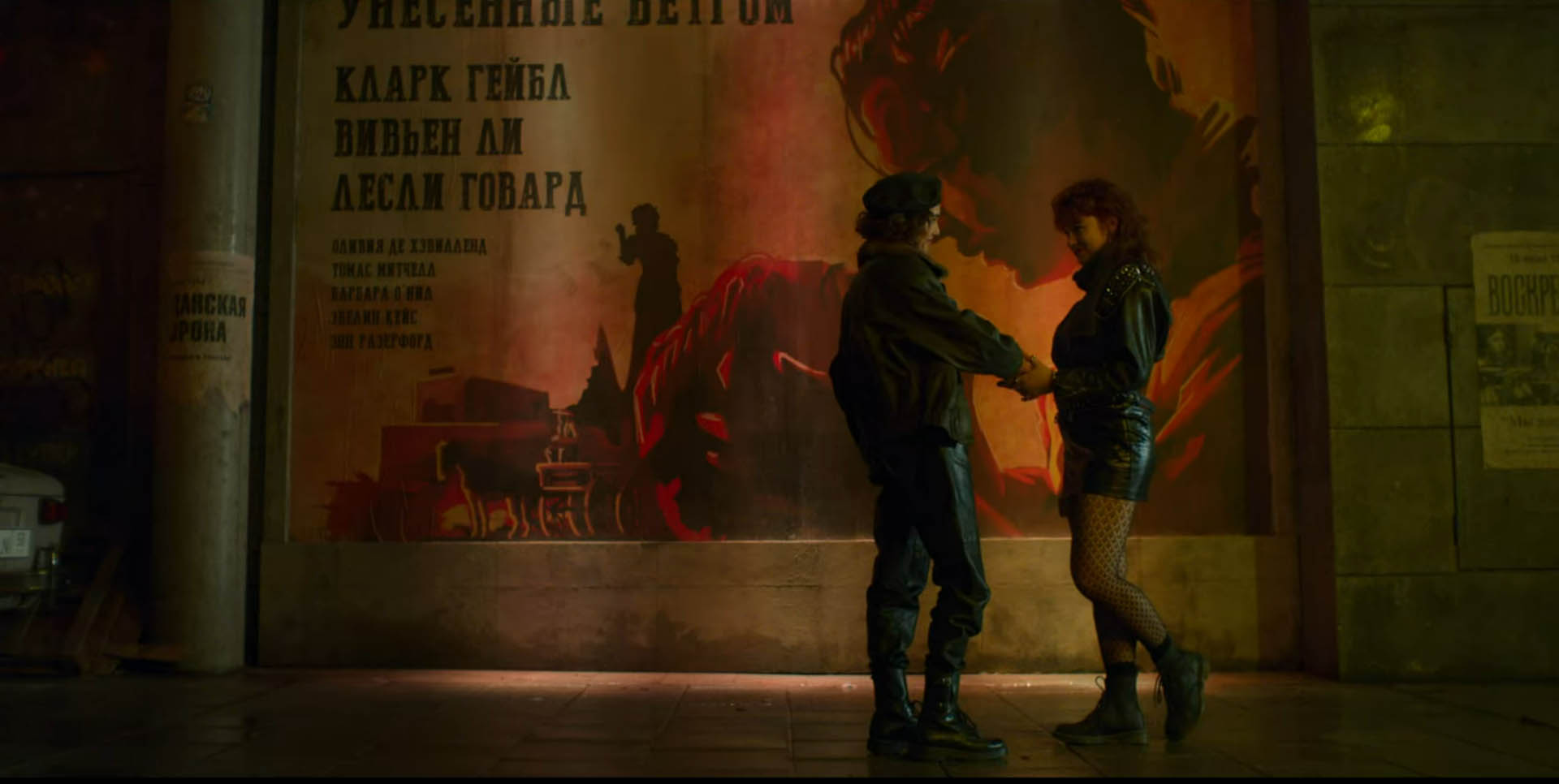
Assa (1987), directed by Sergei Soloviev, was as much a cult film of the Soviet change of regime as Hair was of an earlier change in the West. The theme songs of the movie – just like Aquarius in Hair – all became “anthems” of the change, but mainly the two that I presented some fifteen years ago here on the blog with the title There is a city: Перемен! – “Change!” and Город золотой – “The Golden City”

To the west of the Soviet Union, Assa remained largely unknown, and along with, its theme songs, too. But they are still popular in the Russian language area. This is attested by the fact that the Udmurt women’s choir Buranovskie Babushki won third place in the Russian pre-selection of Eurovision 2010 with the Udmurt version of The Golden City, along with the Udmurt version of Yesterday by Beatles, as I reported at that time. And that this is still the case, I found new evidence in the past few days.

An American spy story is running on Netflix under the title In From the Cold. In this, Russian spies trained in the 90s by KGB successor organizations, but inactive for twenty years, are reactivated – in Madrid. The two spies, who now work for opposite sides – Americans vs. Spanish far-right and ultimately Russians – had had a romantic relationship at the time. In one of the film’s key scenes, before the final showdown, this is recalled at a dinner, with none other than The Golden City as background music.

In fact, this music is not so background. It emerges as an independent actor. The figures reflect on it, telling that it was the song of an era that was beautiful but irretrievably gone.

The Russian references of the film are by the way just as stereotypical as in most other American movies. They present the image that the average American viewer thinks to know and wants to see to confirm their knowledge: the puppet figures of the vampire-like Russian KGB officer, the typically bisexual Russian woman who promotes her career with her body, the unscrupulous Russian mobster, the Russian scientist wanted for death back home because of his wonderful invention. This audience did not see Assa, and does not know what The Golden City means. Who is, then, this song for? Perhaps the movie’s Russian expert – because there had to be one, at least to recall the material world of Moscow in the 1990s – speaks out here with this song of his youth, like a message in a bottle thrown into the emptiness, without any hope of understanding, rather only to himself?


They take me as a soldier

Заберут меня в солдаты,
На кого буду служить.
Отец старый, мать больная,
Дед беременный лежит.
Помолися, милка, Богу
На высокой на горе,
Чтобы не взяли во солдаты,
Не убили на войне.
Во солдатики поеду
На три года на войну,
На кого же я оставлю чернобровую мою?
Город Рига, город Рига,
Рига – славный городок,
Да какой же я вояка –
мне семнадцатый годок.

Стали листики валиться, стала осень приходить,
Рекрута стали с тальяночкой по улице ходить.

Шила я, кроила я, кисетик из лоскутиков,
Любила я, гуляла я, с парнем из рекрутиков.
Расхорошенький ты мой, ведь я ж не виноватая,
Разлучила нас с тобой солдатчина проклятыя.
Мил последний день гуляет на лошадке вороной,
Повезут его в солдаты на машине паровой.
Милый мой, моя утеха, я люблю, а ты уехал,
Ты уехал воевать, меня оставил горевать.
 
На вокзалике фонарики осталися гореть
Дружка в солдатики угнали, я осталась реветь.

Что ж ты, милка, по мне плачешь, али я тебе родной?
Как, хороший, мне не плакать – оставляешь сиротой.
Ой ты, маменька родная, куда деньги бережешь
Мать заплакала, сказала: «Во солдаты, сын, пойдёшь».
Ах ты, писарь, чёрт усатый, записал меня в солдаты,
К девятнадцати годам я в солдатушки попал.
Распроклятая война, что она наделала,
Сколько девок, сколько баб, сиротами сделала.
 
Ах ты, милая моя, начинается война,
На войну меня угонят, ты останешься одна.

They take me as a soldier
whom will I serve?
My father is old, my mother is sick,
my grandfather lays paralyzed.
Ask, my dear, our God
up there on the high mountain
so they would not take me away
to be killed in the war.
I am going to be a soldier,
for three years in the war,
who do I leave my black-eyebrowed to?
Riga city, Riga city,
famous city of Riga *
what kind of warrior am I
with my seventeen years?

Leaves are falling, autumn has come,
the recruits are marching to the sound of the accordion.

I sewed, I embroidered, I made appliqués,
I fell in love with one of the recruits.
My sweetheart, it is not my fault
that the cursed summoner separates us.
On the last day my sweetheart rides a black horse,
a black steamer takes him to the war.
My dear, my joy, I love you but you leave,
you go to war, and I am left with grief.

The lights are still on at the station.
He was taken as a soldier, I am crying alone.

Why do you cry, my dear, since I am yours.
How should I not cry, my love, since you leave me an orphan.
Oh, mother, what do you collect the money for?
My mother cries: “So you are going to war, son?”
Oh, you scribe, hairy devil, why did you put me on the list
to become a soldier at the age of nineteen?
Cursed war, what did you do,
you made so many girls, so many mothers orphans.

Oh, dear, the war starts,
I am taken to war, you are left to yourself.


Where is happiness?


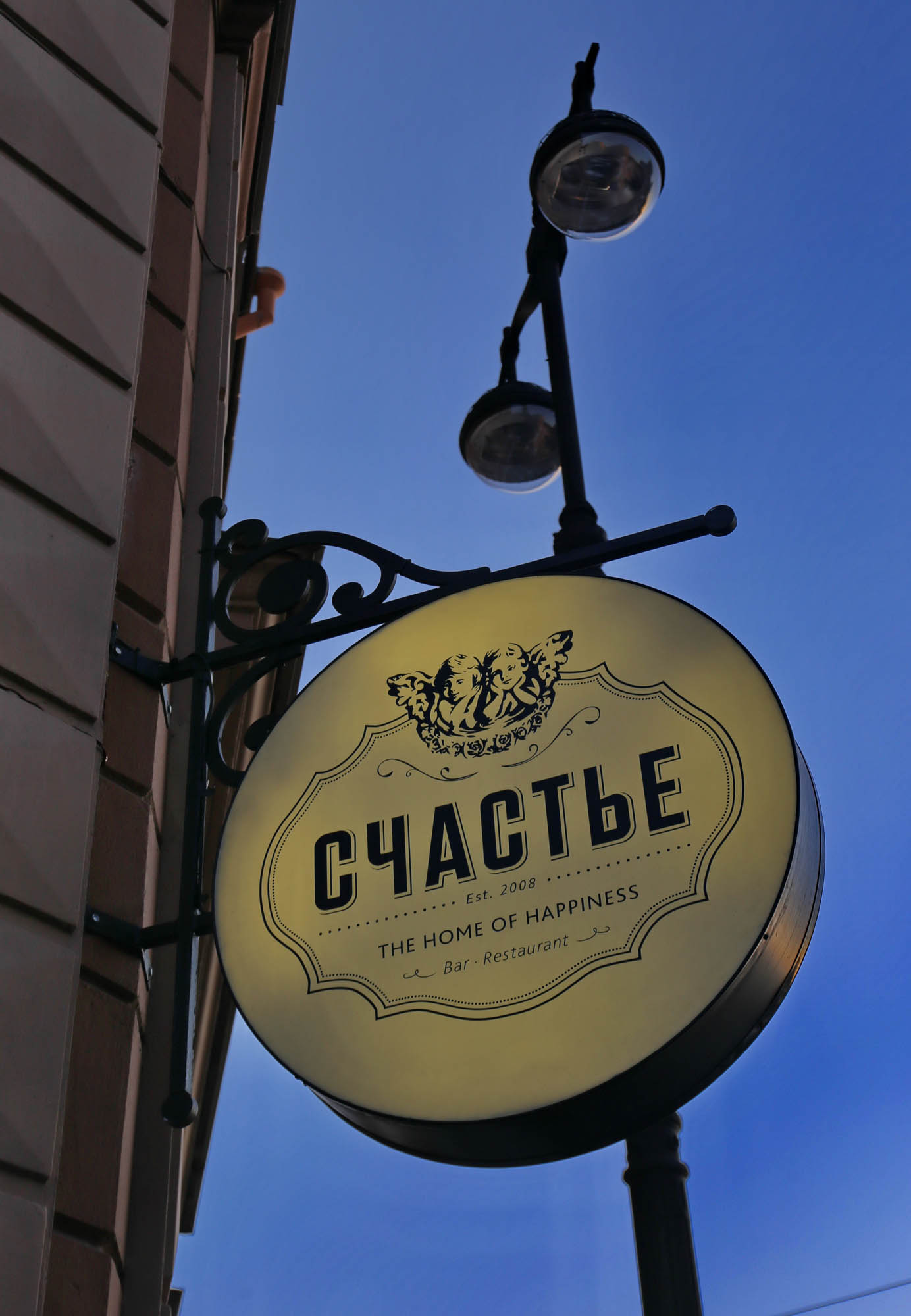
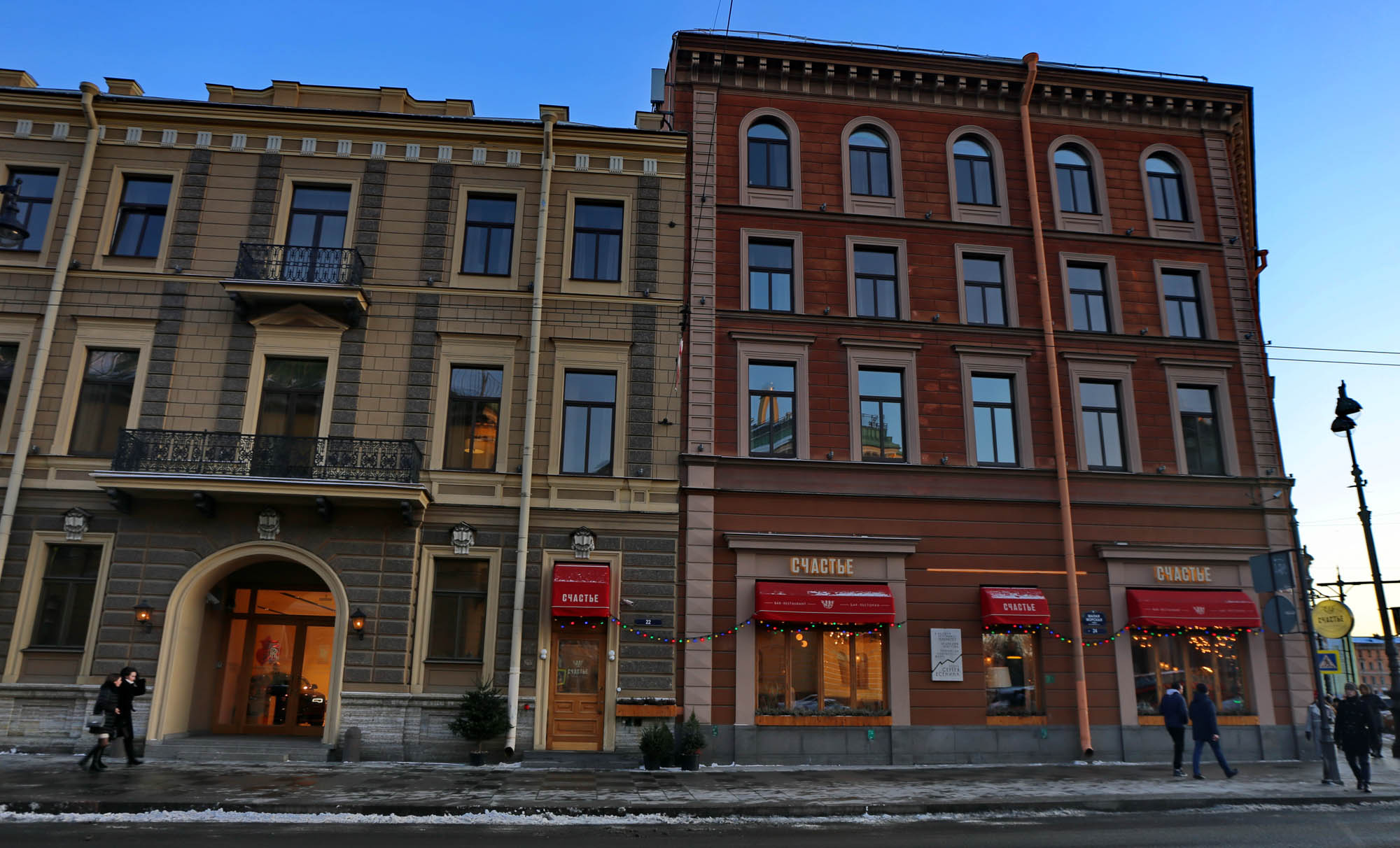
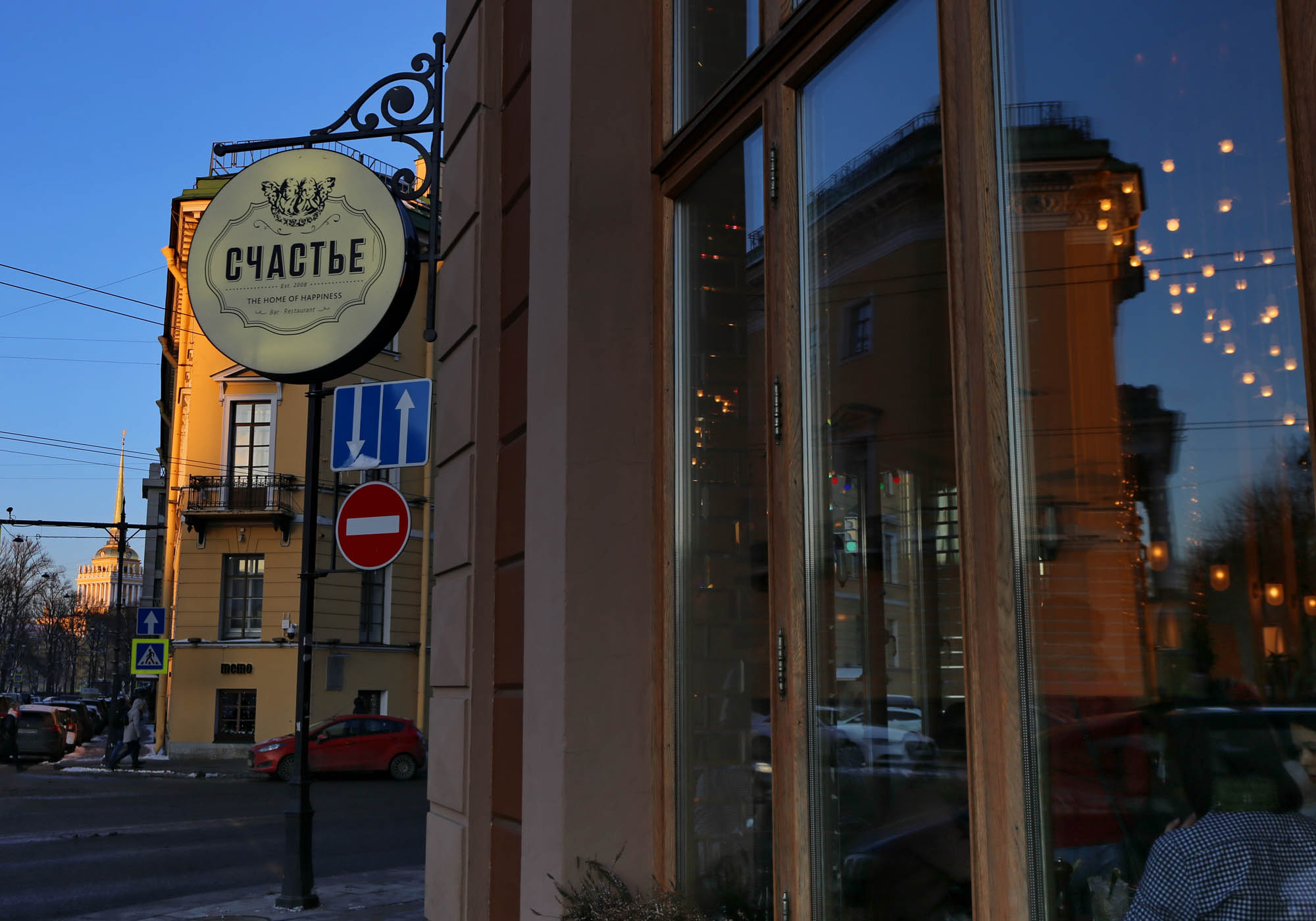
Happiness is in the center of Saint Petersburg, at the corner of Malaya Morskaya Street and St. Isaac’s Cathedral Square. Three of its ground floor windows overlook the square, and two Malaya Morskaya Street, but on this side it also shines on the adjoining house – before the Revolution, the seat of the famous Marks publishing house, and today the Rolls-Royce showroom in Saint Petersburg –, because its entrance opens from there.


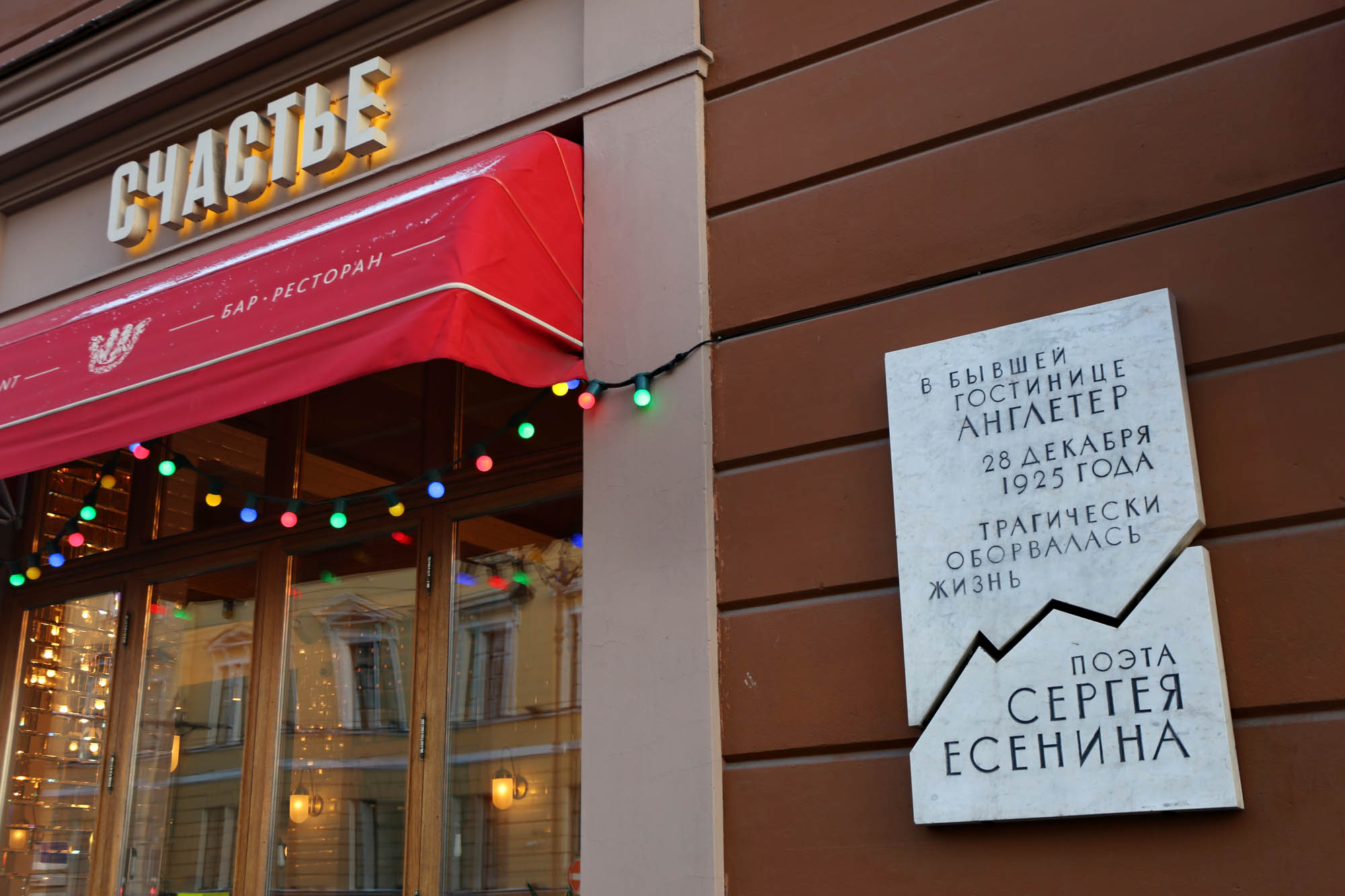
People are weird. Just as God’s address is not widely known, so the seat of Happiness is famous for something completely different. The white marble plaque stands in quite absurd contrast to the happily shining golden name of the pub.

“In the former Hotel Angleterre, on 28 December 1925, the life of the poet Sergey Yesenin was tragically broken.”

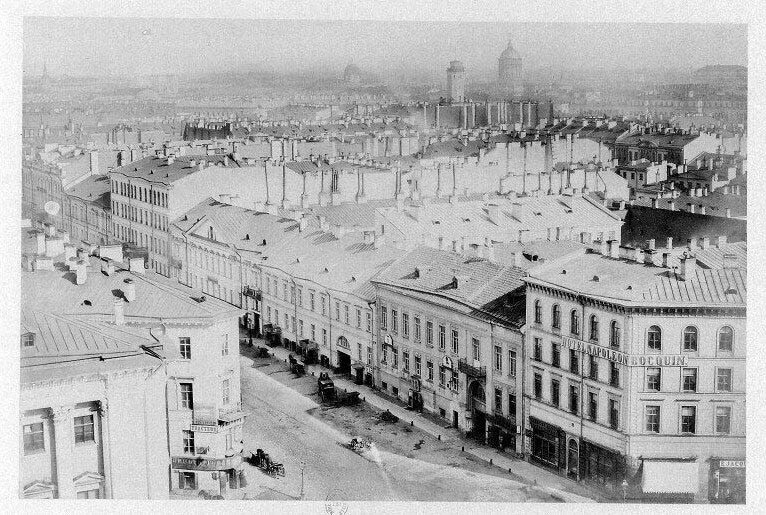
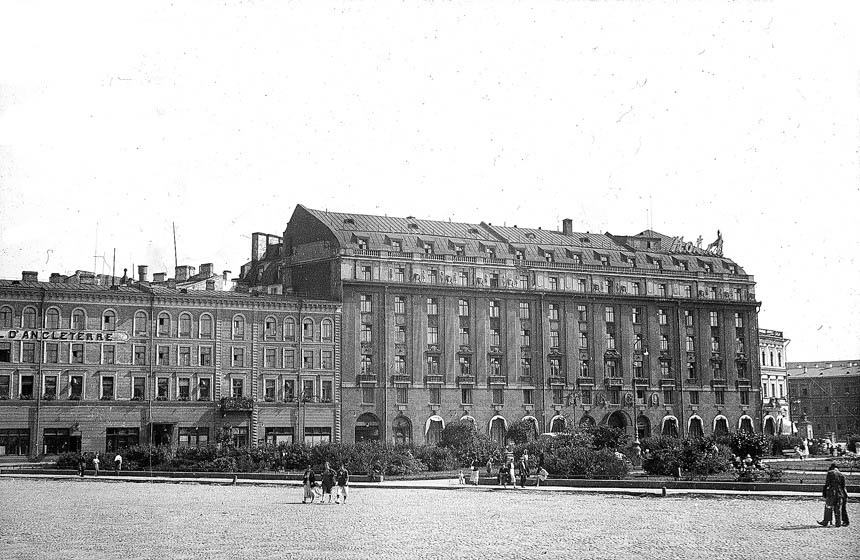
Hotel Angleterre/Англетер, in whose room no. 5 Yesenin hanged himself – or, according to some unlikely conspiracy theories, was killed – did not always bear this name. Napoleon Bocquin, who built it around the middle of the 19th century, openend the hotel in his own name. In the first photo of the area, made in 1859 from the dome of St. Isaac’s Cathedral, it still bears this name.


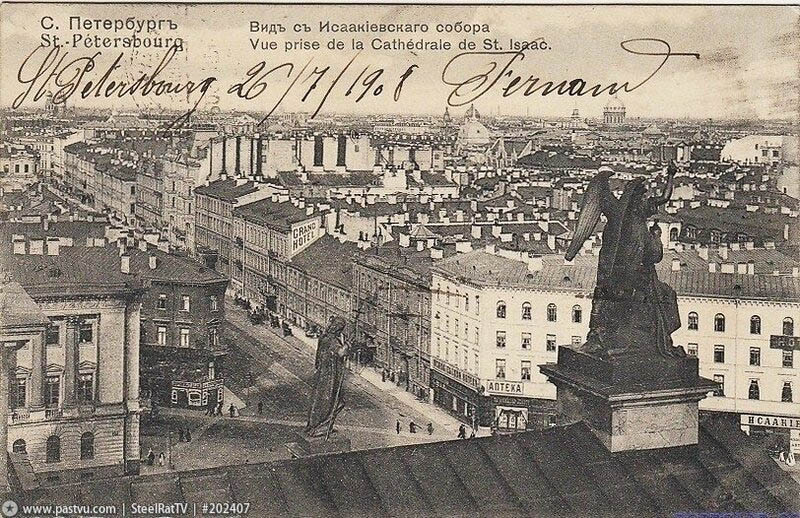
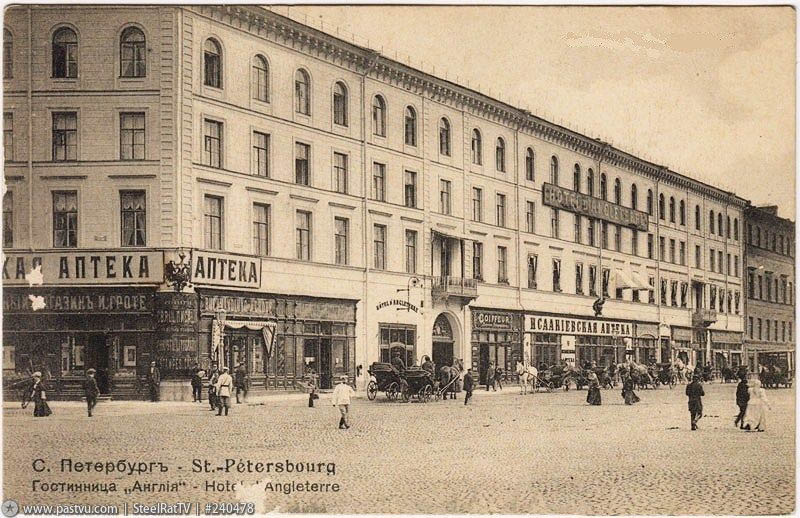
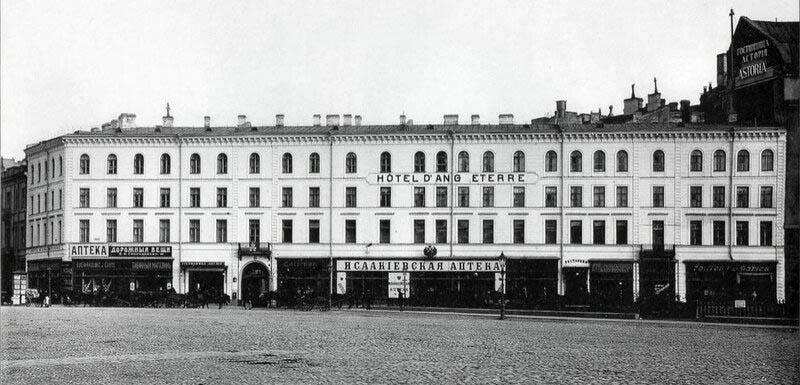
In the next photo, of 1908, the main entrance was moved to the façade in Isaac Square, and the place of today’s Happiness Bar is occupied on the corner by I. Grote’s bookshop and the signboard for the St. Isaac Pharmacy. And the hotel is already called Angleterre, taking that name in 1876, when Theresa Schmidt bought it. For a short while it was called Angliya, then Schmidt-Angliya, but it was soon replaced with the more elegant French version. After the revolution, it was renamed “Internatsional”, but in 1925 it was again renamed Angleterre, just in time for Yesenin to die and to immortalize the hotel under that name.


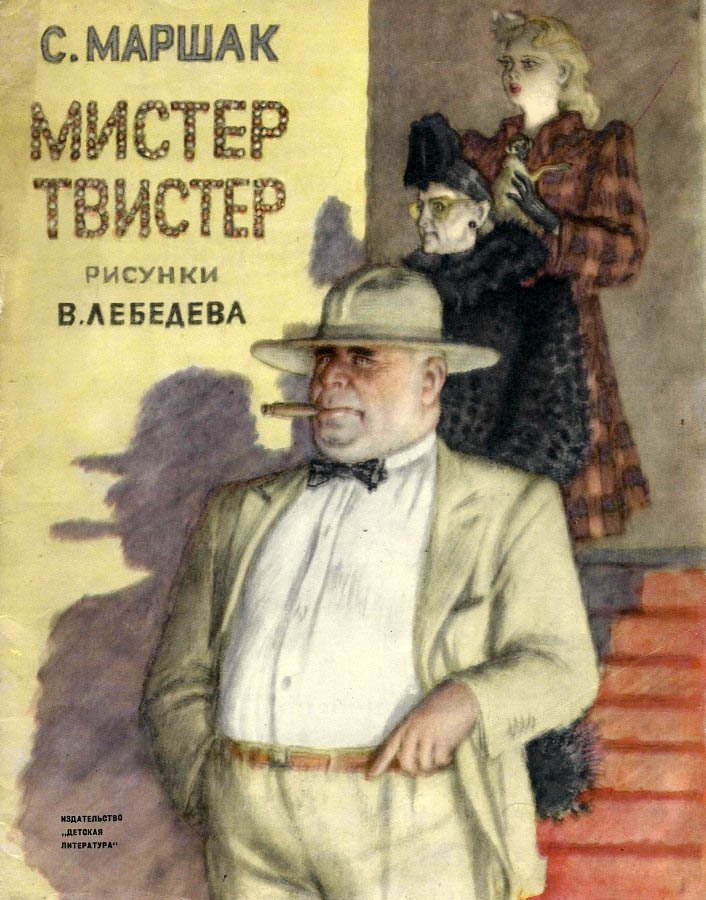
In the 1920s, in the NEP era, it was mainly a hotel for Western guests, along with the neighboring Astoria Hotel. In this period the renowned poet, children’s book author and translator Samuil Marshak wrote a poem mocking racist bourgeois money bags, which was the second reason to make the hotel widely known.


„Мистер
Твистер,
Бывший министр,
Мистер
Твистер,
Миллионер,
Владелец заводов,
Газет, пароходов,
Входит в гостиницу
«Англетер»”, etc.
„Mister
Twister
former minister,
Mister
Twister,
millionaire,
who has plenty of
factories, ships
and newspapers,
enters the hotel
Angleterre.”

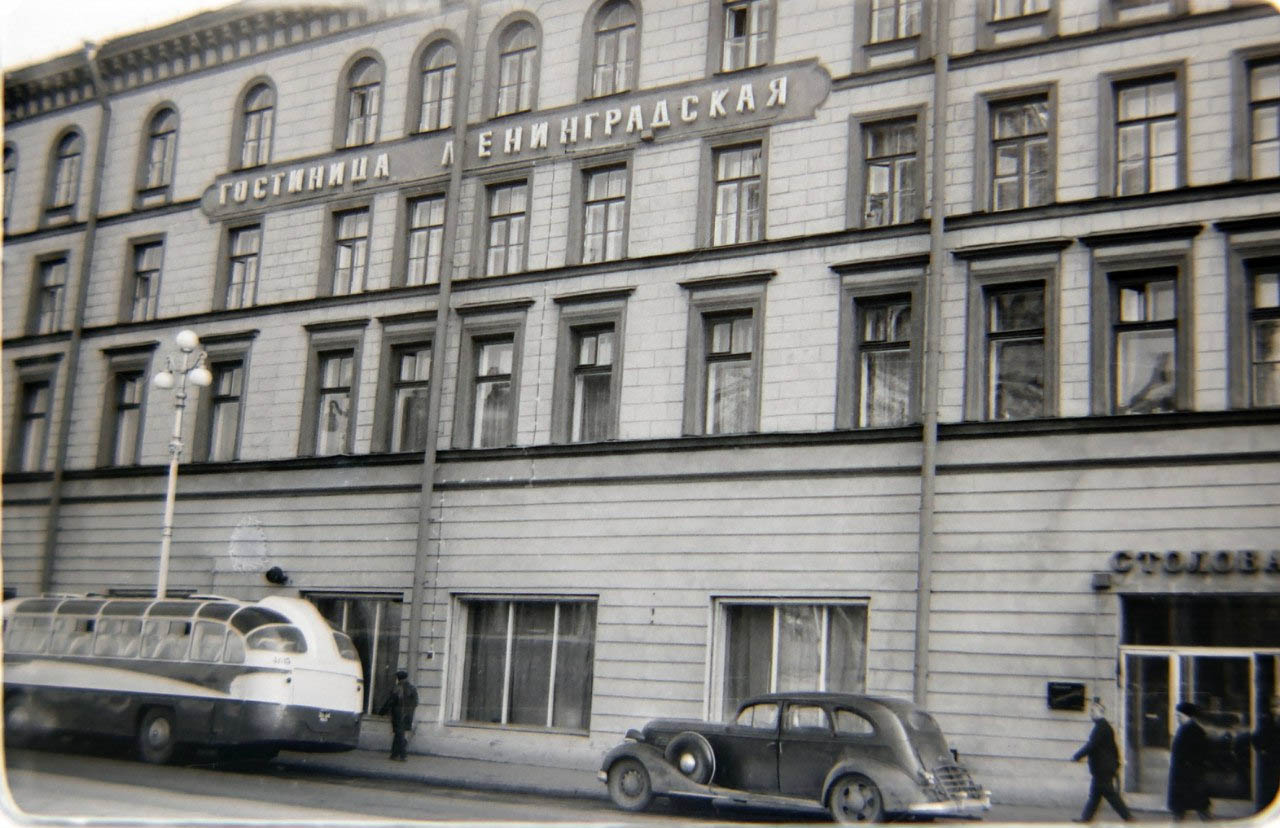
You can see the whole poem here as an animated film. However, in this post-WWII film, the hotel cannot be identified, for since 1948 it was called Leningradskaya, and it only returned to its original name in the early 1990s.


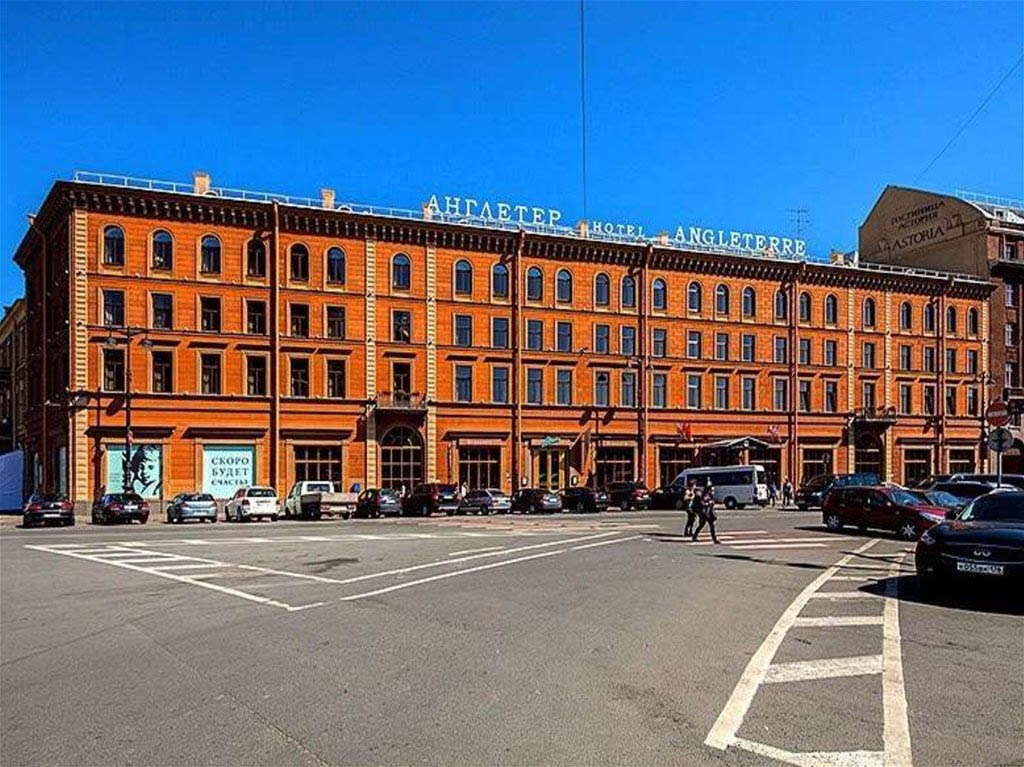
Renaming, however, was not the beginning of a new life, but the definitive ending for the old one. During the decades of socialism, the hotel decayed to such an extent that it only functioned as a low-cost worker hostel. The new investors found it impossible to save. Although there was a mass demonstration and a lifeline against its demise, it did not help. In 1991, the hotel was completely rebuilt with a façade imitating the old one, now part of the neighboring Astoria Hotel.

Building the new Angleterre, 1990s

The new Hotel Angleterre, with a sign on the left-hand side shop windows:
Скоро будет Счастье,
“Happiness will soon be here”.

Room no. 5 does not exist any more, as no longer does the other room where Yesenin first met his femme fatale, Isadora Duncan, who stayed here in 1921.

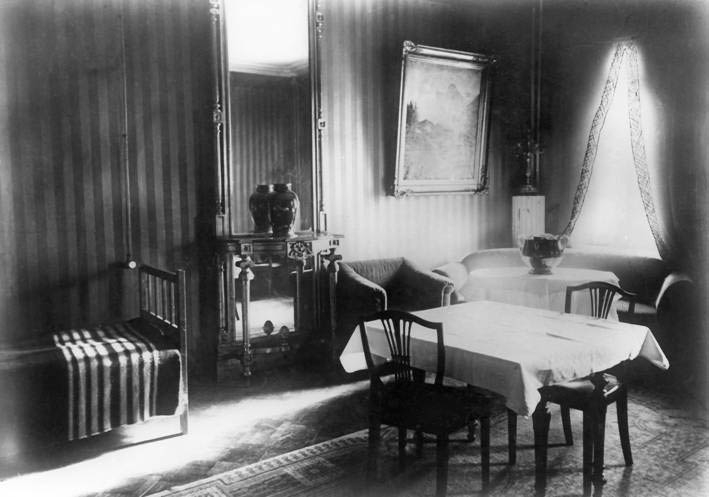
Room no. 5. The photo was taken by photographer Presnyakov, just after Yesenin’s death, at the request of his widow Sofia Tolstaya. It is interesting that the curtain’s edges were retouched by the photographer’s hand, since without that, the window opening was similar to a contours of a person.

In the room, Yesenin left a short farewell, one of his most poignant and well-known poems:

До свиданья, друг мой, до свиданья.
Милый мой, ты у меня в груди.
Предназначенное расставанье
Обещает встречу впереди.

До свиданья, друг мой, без руки, без слова,
Не грусти и не печаль бровей, —
В этой жизни умирать не ново,
Но и жить, конечно, не новей.
Goodbye, my friend, goodbye,
my dear, you are in my heart.
It was preordained we should part,
and then be reunited again.

Goodbye: no handshake, no word,
no sadness, no furrowed brow –
there’s nothing new in dying in this life,
though living is no newer, of course.

Below, I also include its Hungarian translation with the beautiful musical version by Kaláka Ensemble, which drew inspiration from Orthodox church funerals:


Yessenin: Ég veled, barátom – Kaláka. From the LP Fekete ember: Dalok Szergej Jeszenyin verseire (Black Man: songs on Sergei Yesenin’s poems)

Ég veled, barátom, Isten áldjon,
elviszem szívemben képedet.
Kiszabatott: el kell tőled válnom,
egyszer még találkozom veled.
Isten áldjon, engedj némán elköszönnöm.
Ne horgaszd a fejedet, hiszen
nem új dolog meghalni a földön,
és nem újabb, persze, élni sem.

Of course, like all great Russian poems, this one also has a well-known Russian musical version. However, its text is not quite the same as Yesenin’s original. The melody comes from Alexander Vertinsky, the great magician of pre-WWII Russian chanson, and he found it more suited to his genre if he paraphrased the original poem with a hint to Yesenin’s memory:


Alexander Vertinsky: Последнее письмо – The last letter. Sung by Zhanna Bichevskaya (1st version) and by Vertinsky himself (2nd version)

До свиданья, друг мой, до свиданья.
Мне так трудно жить среди людей.
Каждый шаг мой стерегут страданья.
В этой жизни счастья нет нигде.

До свиданья, догорели свечи…
Как мне страшно уходить во тьму!
Ждать всю жизнь и не дождаться встречи,
И остаться ночью одному.

До свиданья, без руки, без слова…
Так и проще будет и нежней…
В этой жизни умирать не ново,
Но и жить, конечно, не новей.
Goodbye, my friend, good bye,
it’s hard for me to live among people.
There’s no happiness in this life anywhere,
every step just prolongs my suffering.

Goodbye, the candles burned to the stump,
how terrible to enter the darkness!
to wait for a meeting for a lifetime
and finally to stay alone in the night.

Goodbye: no handshake, no word,
it’s gentler this way and easier for me –
there’s nothing new in dying in this life,
though living is no newer, of course.

В этой жизни счастья нет нигде” – “There’s no happiness in this life anywhere”, says Yesenin in Vertinsky’s paraphrase. But reality disproves it. After all, where is Happiness? In Saint Petersburg, at the corner of Malaya Morskaya Street and St. Isaac’s Cathedral Square.


The Hebrew sailor


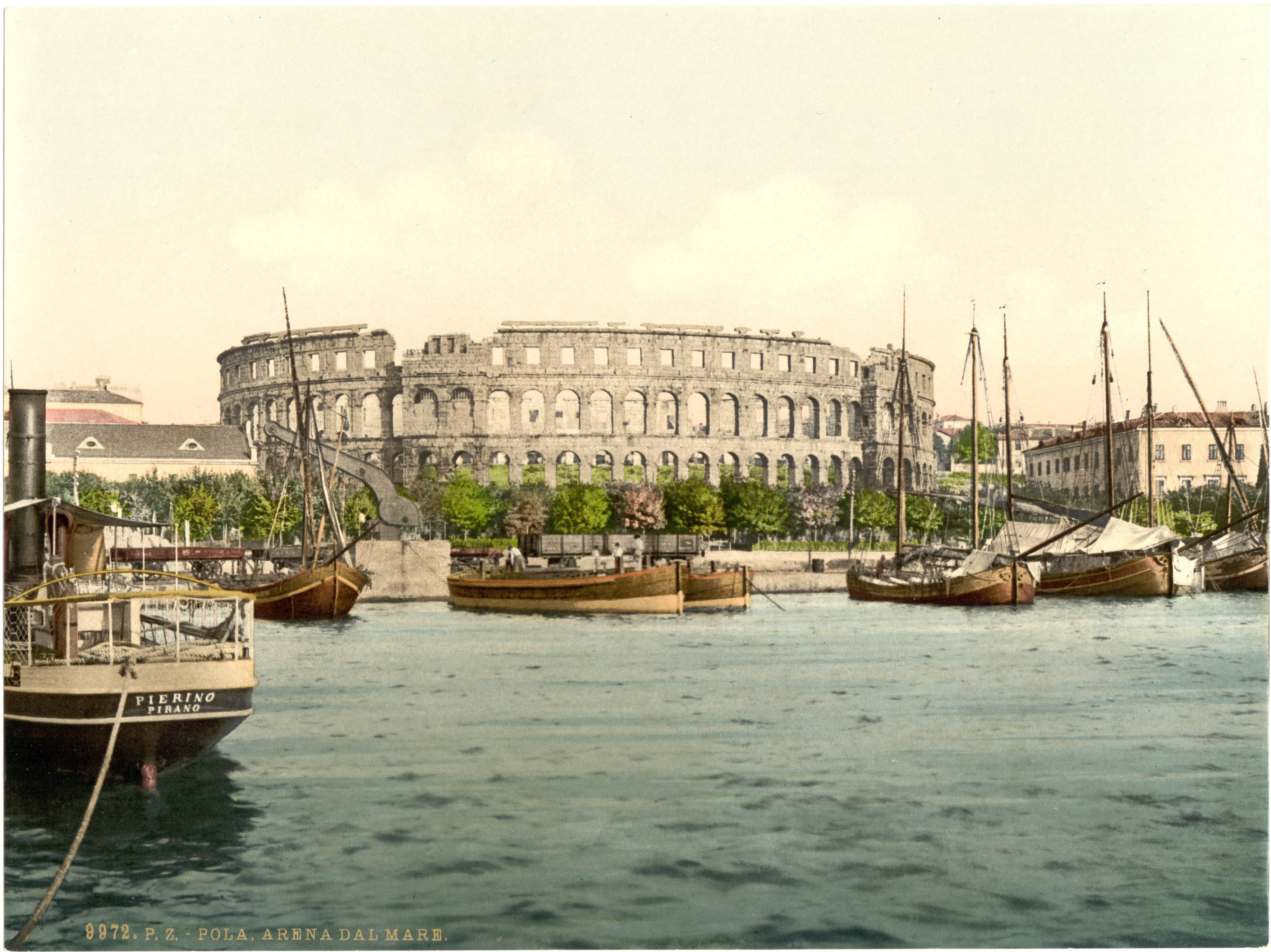
Pula is a charming little town in the Istrian Peninsula, in a deep bay of the Adriatic Sea. It has a Roman amphitheater and a triumphal gate, a medieval main square and a Renaissance town hall, a Venetian fortress, a Monarchy-era market hall, and a permanently closed archaeological museum. And a hundred years ago it also had a military port.

pola pola pola pola pola pola pola pola pola pola pola pola pola pola pola pola pola pola pola pola pola pola pola pola pola pola pola pola pola pola pola pola pola pola pola pola pola pola pola pola pola pola pola pola pola pola pola pola pola pola pola pola pola pola pola pola pola pola pola pola pola pola pola pola pola pola pola pola pola pola pola pola pola pola pola pola pola pola pola pola pola pola pola pola pola pola pola pola pola pola pola pola pola pola pola pola pola pola pola pola pola pola pola pola pola pola pola pola pola pola pola pola pola pola pola pola pola pola pola pola pola pola pola pola pola pola pola pola pola pola pola pola pola pola pola pola pola pola pola pola pola pola pola pola pola pola pola pola pola pola pola pola pola pola pola pola pola pola pola pola pola pola pola pola pola pola pola pola pola pola pola pola pola pola pola pola pola pola pola pola pola pola pola pola pola pola pola pola pola pola pola pola pola pola pola pola pola pola pola pola pola pola pola pola pola pola pola pola pola pola pola pola pola pola
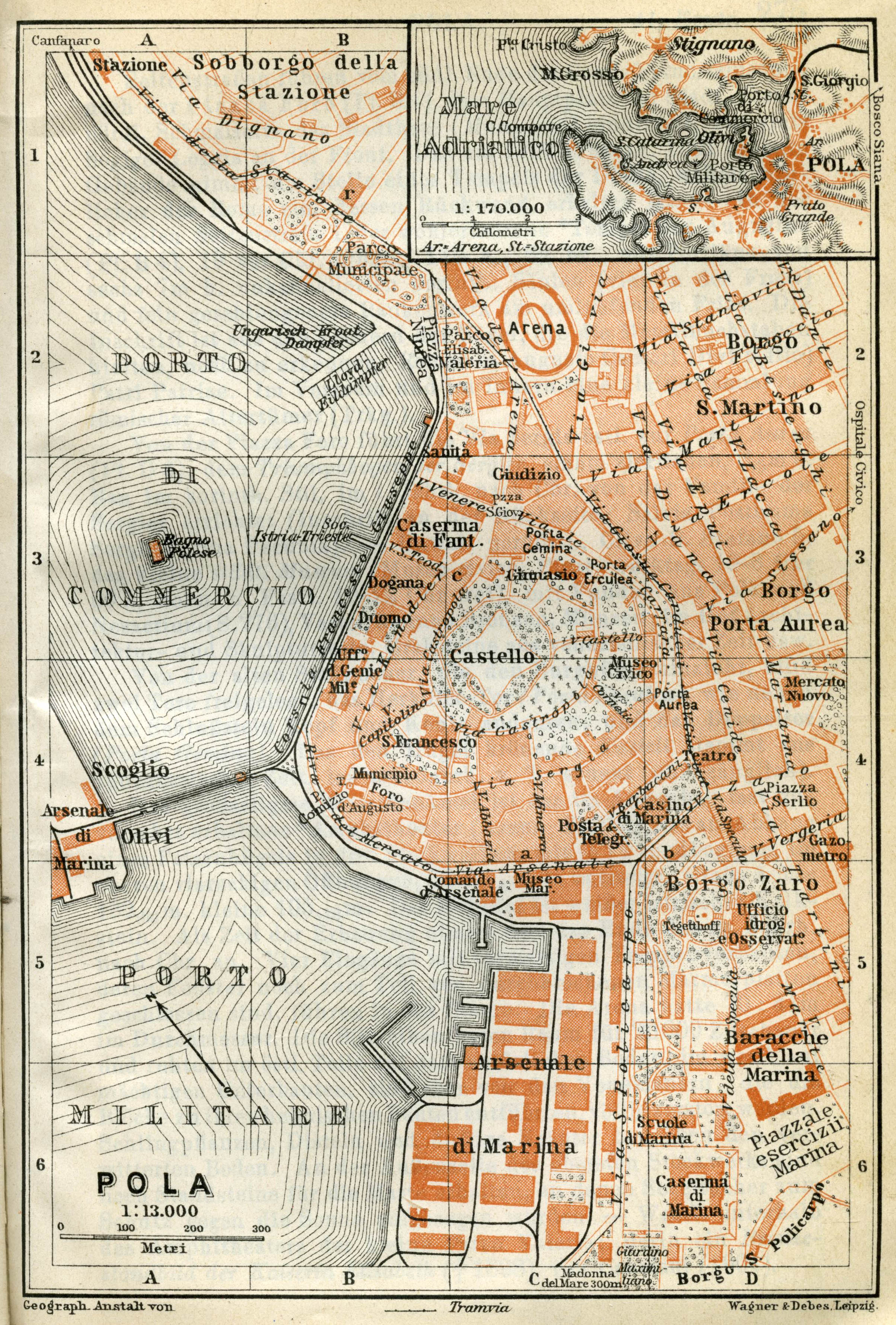
The map of Pula from the Baedeker Österreich-Ungarn of 1910. In high resolution here. By clicking on any dot, you can browse the old postcards

In 1859, the Habsburg navy chose the port of Pula as its main base and center of shipbuilding. So it remained until 31 October 1918, the last day of the war, when a handful of Italian military officers, inspired by D’Annunzio, carried out the most spectacular achievement of the Italian navy, and secretly blew up in the port of Pula the battleship Viribus Unitis, the flagship of the Monarchy. The fly in the ointment was that the heroes did not know that the war was over, and the ship had been handed over to the newly formed South Slav state, whose four hundred sailors thus perished in the explosion.

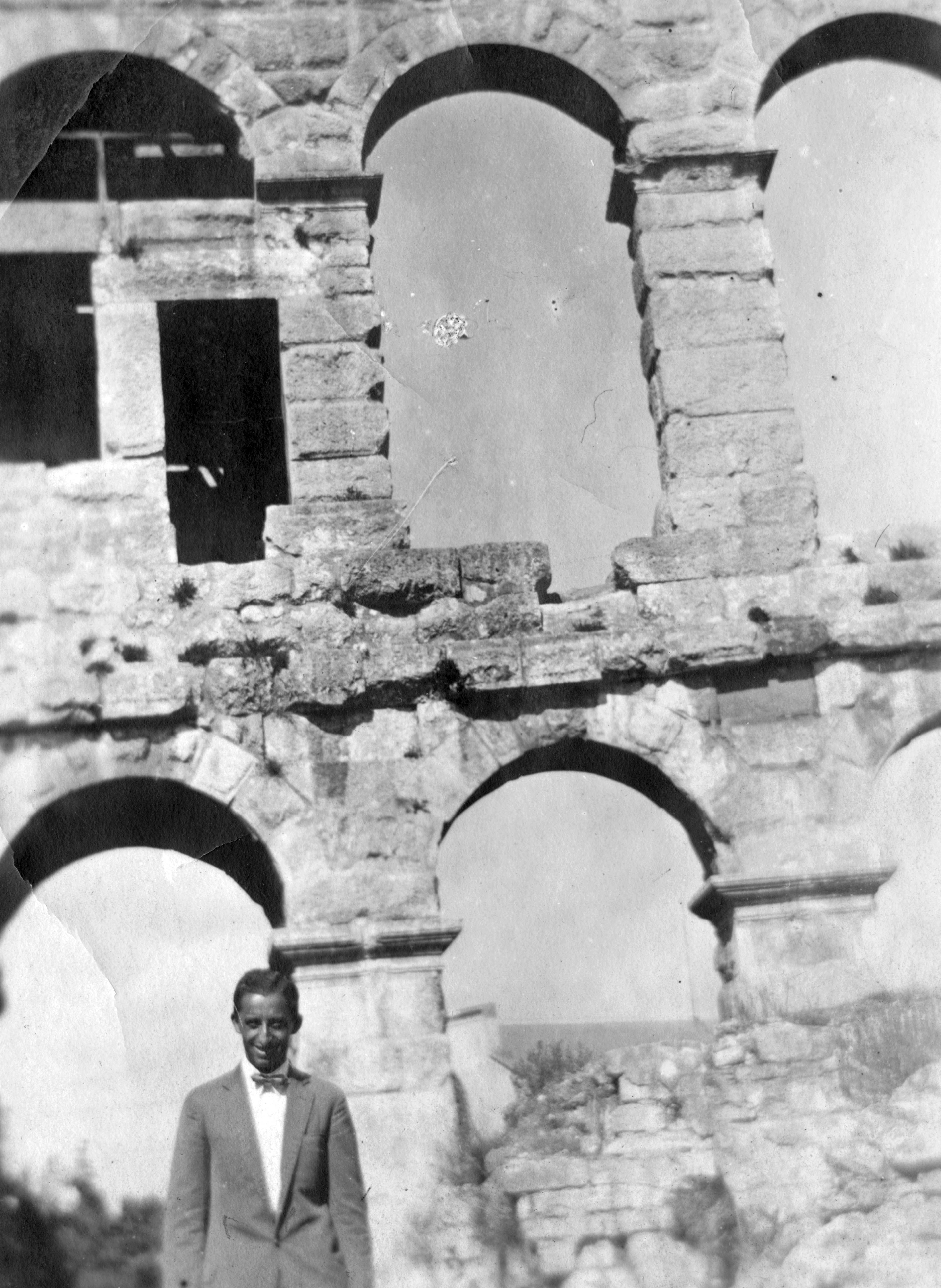
This also shows that the fleet’s crew had always been multi-ethnic, like the Monarchy itself. Today, the Czechs in particular feel great nostalgia for the first and last sea of their history – if we do not count the one that Shakespeare gave them –, and last year they commemorated this with a large exhibition and volumes of memoirs of the Czech and Moravian marines of the Monarchy, about which we will report soon. According to statistics, they and the Germans provided mostly technical and organizational tasks, the majority of the gunners were Hungarian, while the sailors were mostly Italian and Croatian. But we also know of Rusyn, Polish and Romanian marines, and around the turn of the century, four Jewish naval officers also served in Pola. However, there was only one Hebrew sailor in the Monarchy: Aurél Göndör, the popular comic actor of Budapest.


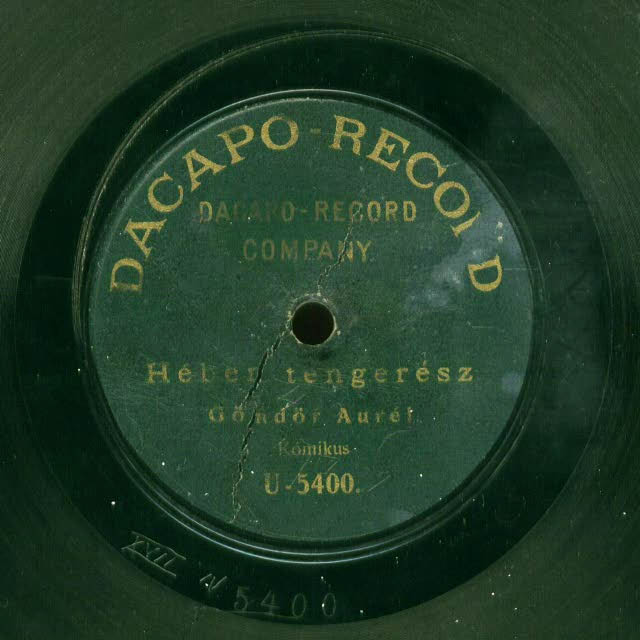
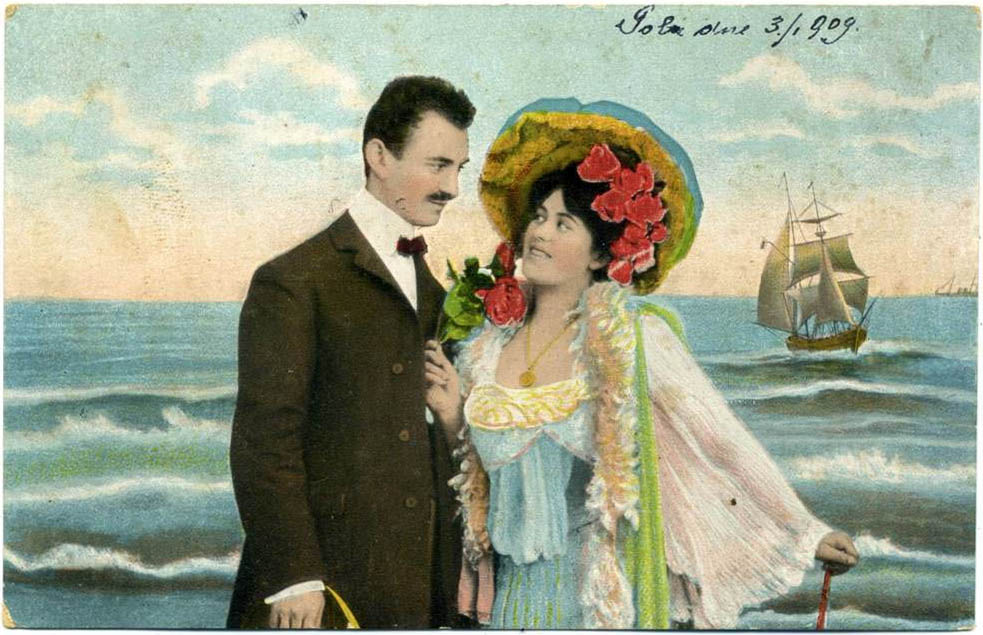
Aurél Göndör: Héber tengerész (Hebrew sailor), c. 1909

Tudja rólam mindenki, hogy nem vagyok merész
Leider mégis vagyok én egy héber tengerész.
Tauli * lettem, be is hívtak engemet Pólába
S ott tartottak tengerésznek ebbe a gúnyába

Refr:
Hej, mondd Lipi, hitted-e, hogy tengerész leszel
Hogy életedben a hajón szolgálatot teszel
No de sebaj, nem busulok, sorsom bár nehéz:
Én vagyok az egyedűli Jordán-tengerész.

Hogyha már a kegyetlen sors engem idetett,
Ó, Jehova, hallgasd meg az én kérésemet:
Zsidó vagyok, vitorlázom sima Adrián,
Add meg nékem, Jordán vizén legyek kapitány.

Refr, azzal az utolsó sorral:
…én vagyok az egyedűli zsidó tengerész.

Hogyha járnak dühös szelek, s minden háborog
A hajó kész ringlispíl, amely forog-forog.
Én áthajlok a korláton, s mérgem kiadom
Fájó lelkem ott kóvályog zsidó piacon (?)

Refr:
…én vagyok az egyedűli Jordán-tengerész.

Én Istenem, hogy hiányzik a hajón a nő.
Éjjel csupa tűz a testem, és a fejem fő.
A tengertől ovakodjék Izráel szent népe:
Csak álmában áll előtte Vénusz asszonyképe.

Refr:
Lipi, Lipi, ne busulj, ha letelik időm
Hazamegyek, szabad leszek, lesz is szeretőm
Szőke-barna, mindenfajta, zsidó-keresztény,
Minden leány így kiált: Lipi derék legény!
Everyone knows I’m not adventurous,
Leider, I have become a Hebrew sailor.
I was tauli, * so I was taken to Pula,
I was kept there as a sailor in this uniform.

Chorus:
Have you, Lipi, ever thought of becoming a sailor?
or that you would ever serve on a ship?
Never mind, although your fate is heavy:
I am the only Jordan sailor.

Once cruel fate put me here,
oh, Jehova, hear my plea:
I’m a Jew, I’m sailing on the smooth Adriatic,
but let me once be a captain on the river Jordan.

Chorus, with the last verse:
…I am the only Jewish sailor.

When angry winds come, and all is stirred up,
the ship is a carousel that is turning around.
I bend over the railing, I pour out my anger,
and my soul is walking on a Jewish market.

Chorus:
…I am the only Jordan sailor.

Oh my God, how much I miss women on the ship
At night my body is all on fire, and my head burning.
Let the holy people of Israel beware of the sea
where they see beautiful Venus only in dreams.

Chorus:
Lipi, Lipi, do not mind, once my time is over
I go home, I’ll be free, I will have plenty of lovers.
Blondes, brunettes, any kind, Jews and Christians,
all the girls will cry: Lipi is a brave lad.

I’m not quite sure how I should render the “Jordan sailor”. It cannot be a people name like “Hebrew” and “Jewish” are. The author obviously could not have in mind the Jordanian kingdom which became independent in 1946, and with which he would have not identified himself anyway. Perhaps he rather imagines himself as a sailor on the Jordan, as he also asks this in his prayer. This reference shows the song’s post quem, the turn of the century, when both Zionism and the singer achieved their first major success. And the fact that he can openly give voice to his craving for Christian women, refers to a sad ante quem, which he fortunately did not live to see. He died in 1917, even before the dissolution of Austro-Hungarian Pula.

Is it perhaps him, Aurél Göndör, on leave in Pula? (Fortepan)

…and in service?

The gramophone disc, published around 1909, was digitized by Gramofon Online, together with several other discs by Aurél Göndör. And now the Hungarian Jewish Museum and Archives of Budapest have hailed it with their centenary exhibition to be opened tomorrow, Saturday evening at 20:15. A visit to which we recommend to all our readers. Mazel tov!


War from a grassroots perspective


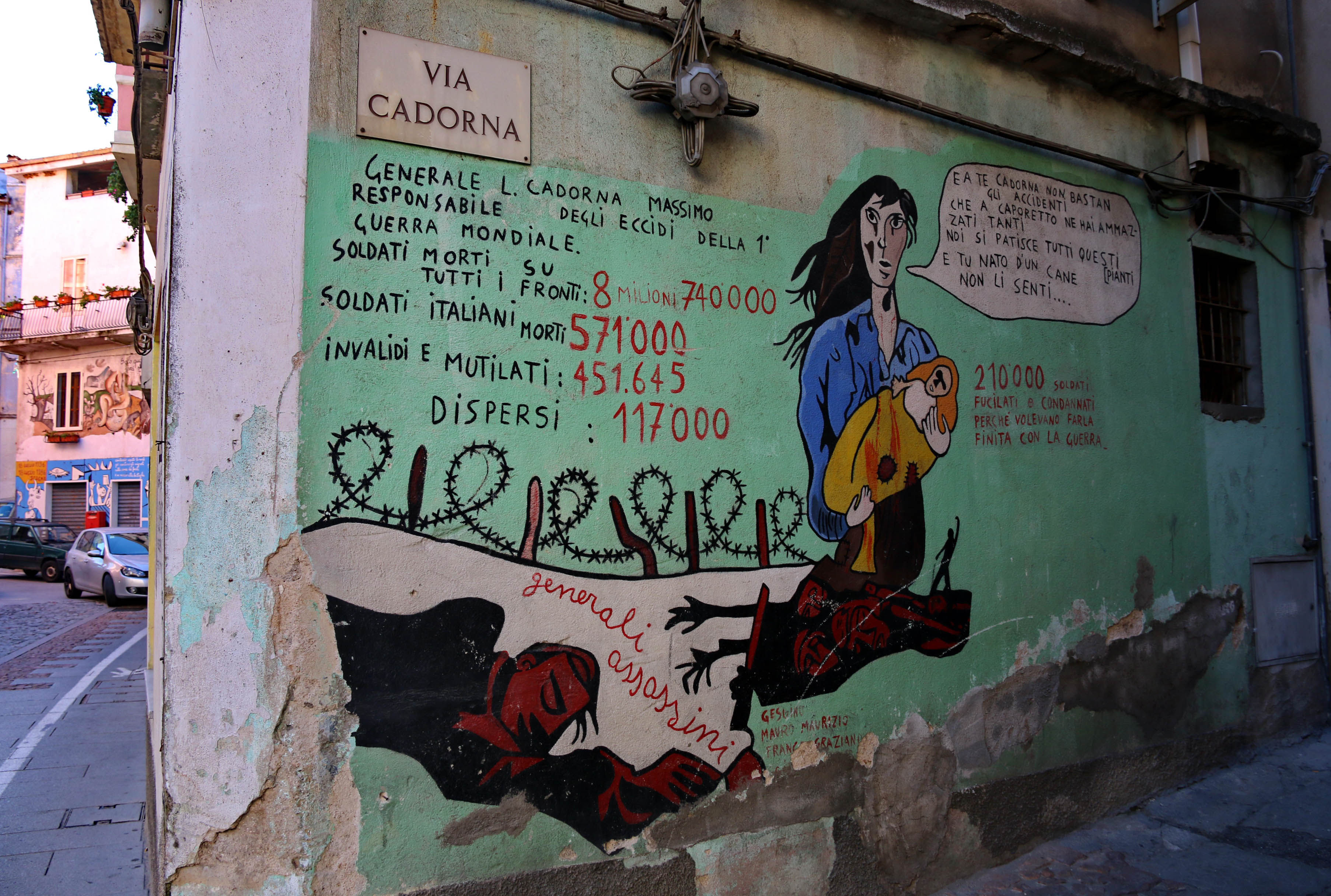
“War from a grassroots perspective”, as we wrote before in the conference report of yesterday, which focused on the relationship between the front and the hinterland, the soldiers and their families, the self-organization of local communities, wartime postcards, and so on. The war, however, is seen from a real grassroots perspective by the fallen. They were commemorated with an unusual monument in the Sardinian town of Orgòsolo.


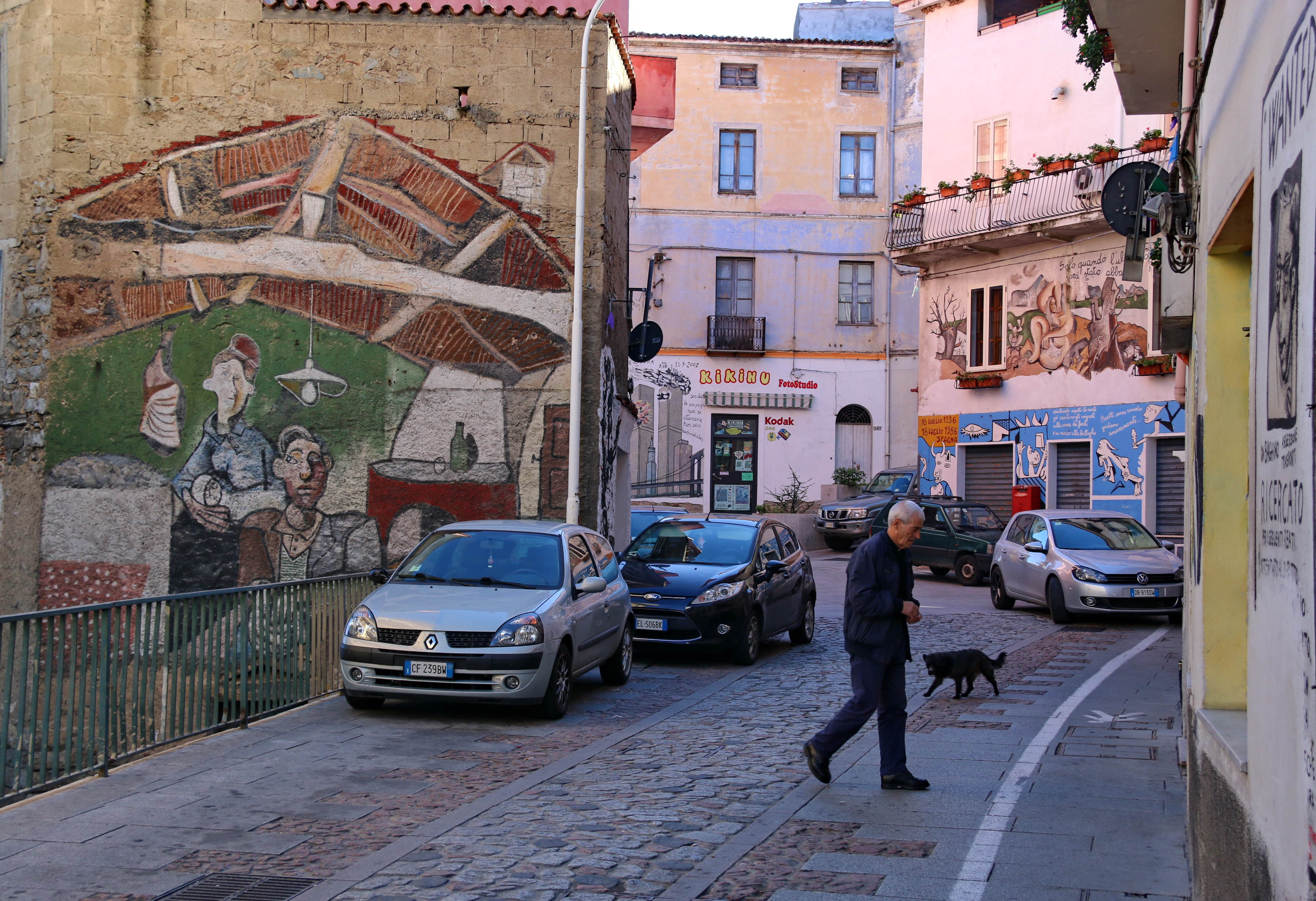
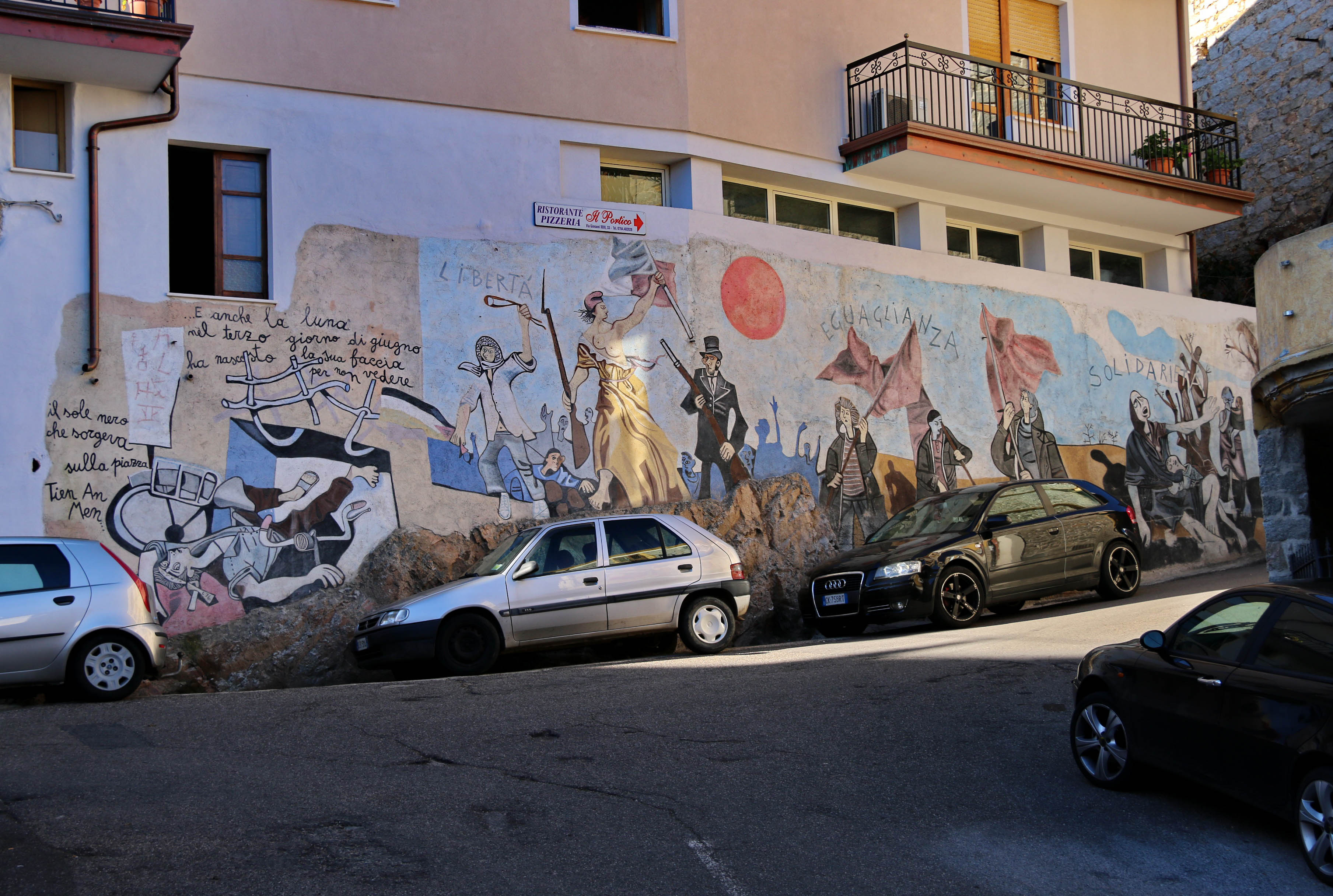
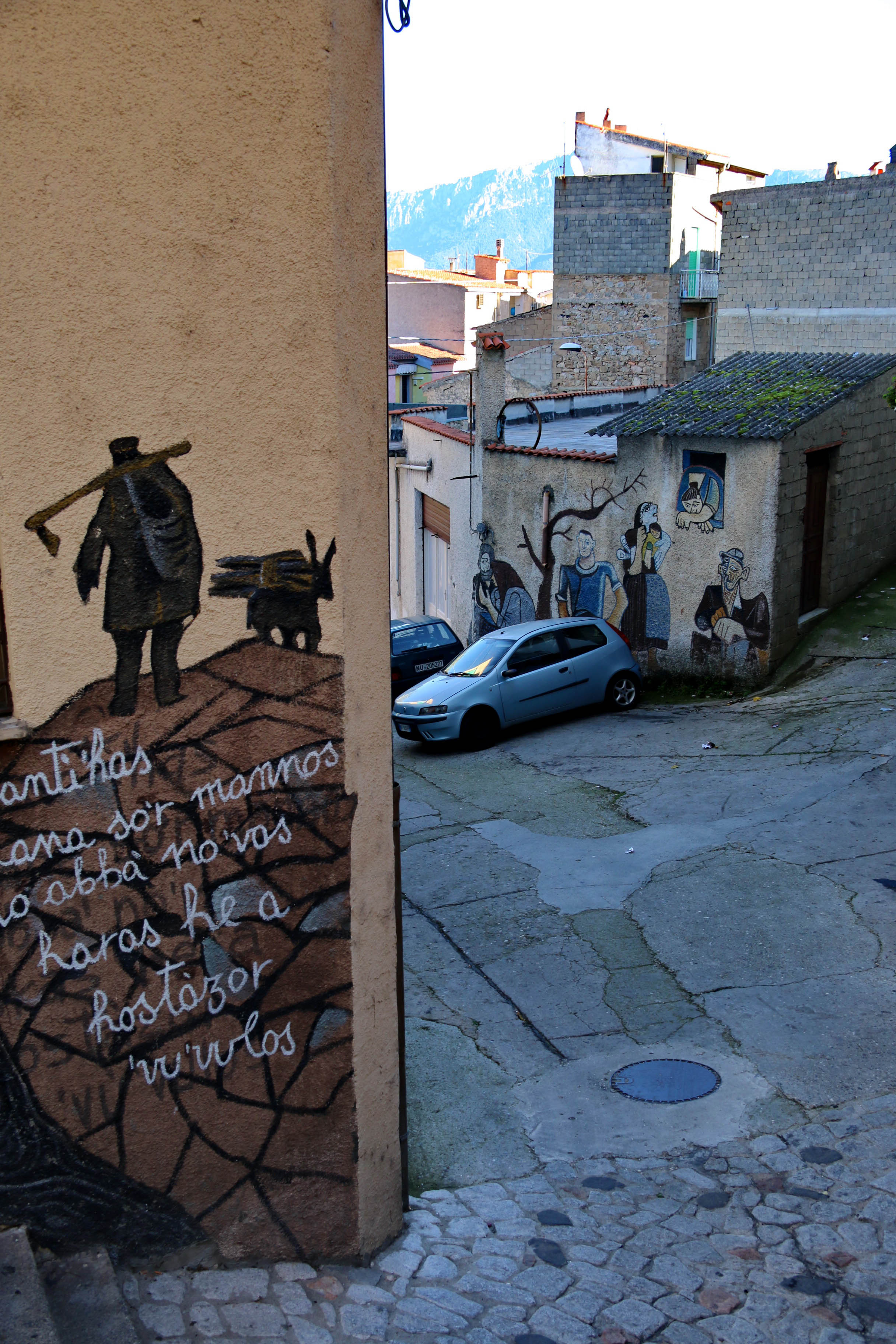
The walls of Orgòsolo have been decorated by – surprisingly good quality – murals since the 1960s, and from here they have spread to the other towns of Sardinia. But while in the other places they usually paint traditional scenes and figures on the walls of the houses, the majority of the Orgòsolo frescoes are politically charged protest paintings. Orgòsolo, laying in the heart of the Barbagia, the most closed, most archaic mountainous region of Sardinia, has always been the center of Sardinian independence and of protest against Italian power, whom they consider as invaders. It was especially so in the 1960s and 1970s, when they defended the traditional pastoral culture against the expropriation of land by the central power. The first murals, about which we will write in detail in a separate post, were expressions of this resistance.


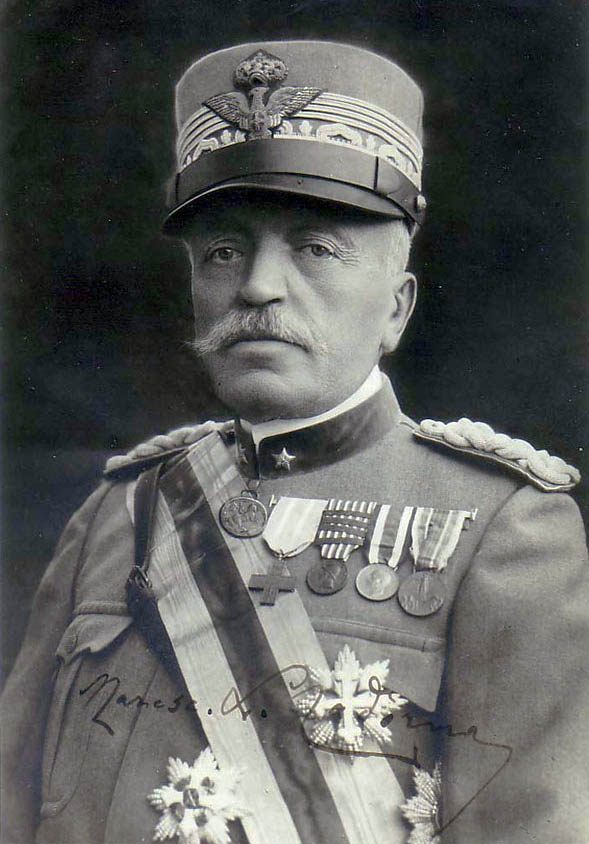
The mural in question adorns the corner of via Cadorna. General – under Mussolini, Marshall – Luigi Cadorna was the commander-in-chief of the Italian army during World War I. In victorious Italy, many streets have been named after him. However, the opinion of the historians is not so favorable of him. According to David Stevenson, he was “one of the most callous and incompetent of First World War commanders”, who believed that discipline could resolve every problem. He was extremely cruel to his soldiers, while he could not attain the smallest success on the Isonzo front, due to a lack of organization, supplies and military overview. Between 1915 and 1917 he launched eleven major offensives against the Austro-Hungarian positions, all unsuccessful, with massive casualties. Then, when in late October 1917 the Central Powers launched a counterattack at Caporetto – today Kobarid –, they swept away in a few days the Italian army, the majority of whom – 275 thousand soldiers – surrendered. The Italians were able to finish the war only through French and British support. Nearly six hundred thousand Italian soldiers perished in the Isonzo and Piave fronts.

“For a brilliant attack, you calculate how many men the machine gun can break down, and you attack with a greater number of men. Someone will reach the machine gun.”
Luigi Cadorna: Letters


If a grateful Italian State guarantees that a street sign that the name of General Cadorna will forever be maintained, the mural painted next to it as a commentary will ensure, that the Sardinians – who lost especially many young people during the First World War – know precisely what is Cadorna’s due. The text commentary in the picture reads as follows:

“General L. Cadorna, the main responsible for the massacre of World War I.
Soldiers killed on all frontlines: 8 million 740 thousand
Italian soldiers killed: 571 thousand
Invalids and mutilated: 451.645
Missing: 117.000
210 thousand soldiers were shot dead or were convicted, because they did not want to fight any more.
KILLER GENERALS!”


And the First World War soldier’s song given in the mouth of the young widow, and thus of the whole community, makes sure that the memory of Caporetto be also maintained:


E anche a mi’ marito tocca andare (My husband must also go). Text and recording from here

E anche al mi’ marito tocca andare
a fa’ barriera contro l’invasore,
ma se va a fa’ la guerra e po’ ci more
rimango sola con quattro creature.

E avevano ragione i socialisti:
ne more tanti e ’un semo ancora lesti;
ma s’anco ’r prete dice che dovresti,
a morì te ’un ci vai, ’un ci hanno cristi.

E a te, Cadorna, ’un mancan l’accidenti,
ché a Caporetto n’hai ammazzati tanti;
noi si patisce tutti questi pianti
e te, nato d’un cane, non li senti,

E ’un me ne ’mporta della tu’ vittoria,
perché ci sputo sopra alla bandiera;
sputo sopra l’Italia tutta ’ntera
e vado ’n culo al re con la su’ boria,

E quando si farà rivoluzione
ti voglio ammazzà io, nato d’un cane,
e a’ generali figli di puttane
gli voglio sparà a tutti cor cannone.
My husband must also go
to put a barrier to the invaders
but if he goes to war and dies,
I remain alone with four children.

The Socialists were right, that so many
die, and we are not still awaken
but even if the priest tells you to go
you should not go, there’s not that Christ!

But you, Cadorna, are not satisfied with
the so many dead you’ve killed at Caporetto
we here suffer and cry all the time
but you, son of bitch, do not even hear it


I’m not interested in your victory,
because I spit on your flag,
I spit on all Italy,
I fuck in the ass the king with his arrogance

And when there will be revolution,
I want to kill you, son of a bitch
and all the bastard generals
I will to shoot dead with cannon.


“მე გადმოვცურავ ზღვას” – “I’ll cross the sea swimming”

“The ideology of Moscow fought with a special devotion against all values and symbols of the United States, also including jeans, and therefore the Soviet citizens considered, that where there are jeans, there is happiness. In a country where they do not produce jeans, there also does not exist the right to private property, which is one of the bases of independence.
(Dato Turashvili)

attraverso attraverso attraverso attraverso attraverso attraverso attraverso
Photos by Jacopo Miglioranzi in the Gldani and Zahesi quarters of Tbilisi

“They called it hijacking, but in fact it was much more the suicide of desperate people. The hijackers were dressed like ordinary people, all of them wore the usual clothes of the jeans generation, only behind Gia Tabidze’s jacket appeared a tie, and he held a world map in his hand.”: Seven lives, seven young people among the many in Soviet Georgia. But the story is not ordinary, although it is about simple desires: the desire for jeans, the desire of freedom.

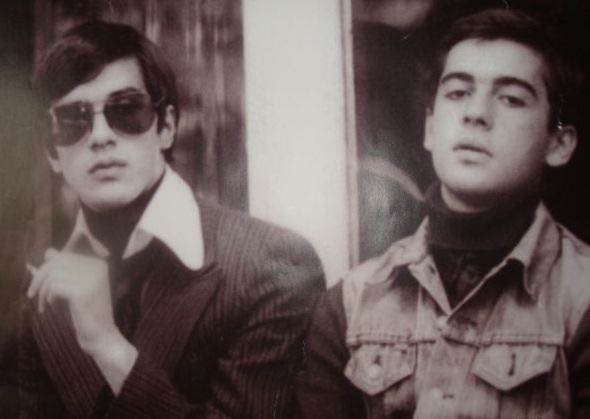
Gega Kobakhidze, Irakli Charkviani, Giorgi Mirzashvili

“After the collapse of the Soviet Union, I no longer considered it timely to publish this book. I naively thought that the Soviet past of Georgia will be able to become a far away, bitter memory. But I discovered that the past can return, especially if we ourselves are unable to move away from it. We only moved away from that period, but not from the common consciousness of that country, which was called the Empire of Evil, where mercy was so rare, and where, in the first country of the world that was capable of sending people into outer space, they were unable to produce a pair of jeans.”
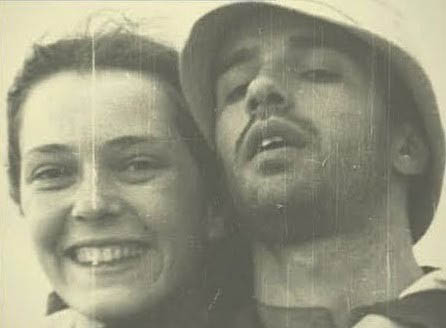
The story, told by the famous Georgian writer David Turashvili in his book “The Jeans Generation” (original title ჯინსების თაობა, jinsebis taoba, published in 2013 in Italian as Volare via dall’Urss (Flying away from the Soviet Union) by Palombi Editore, as translated by Ketevan Charkviani). The book is narrated in an intentionally “everyday” register, so that the words follow each other like the frames of a film, and is based on the most scandalous and most tragic event in 1980s Soviet Georgia. Seven young Georgians, calling themselves “the jeans generation”, tried to hijack an airplane to escape from the Soviet Union, which was considered a very serious offense at the time.

“Fifteen years ago, on 18 November 1983, a young woman stood, with a bomb in her hand, in the open door of the airplane that had landed at the Tbilisi airport after a failed hijacking attempt. Rain drops trickled down on her desperate face, looking for the inevitable end. She stood in the doorway, holding the bomb, hoping that the Soviet authorities would as soon as possible complete what they had planned. While postponing their decision, the massacre inside the airplane dragged on so long, that everyone, both those standing outside and those sitting inside desired only one thing: that it may have an end. In the airplane, pierced by the bullets, there were several dead both among the passengers and the crew members, many dead bodies laid on the corridor. There were also many wounded, and in the deadly silence they could hear only their moaning, while one of them whispered to Tina, begging her not to explode the bomb.”

Tina Fethviashvili és Gega Kobakihdze

The majority of the young people were sentenced to death by the Soviet government for their naive attempt to escape, for fear that the incident may serve as an example for other Georgian youth.

These are the years of political ferment in the little Soviet republic. Since the arrival of the Bolsheviks in 1921, who put an end to the short-lived Menshevik government (1918-1921), there were fewer and fewer attempts to rebel against the new political course. The faltering attempts of armed uprisings, which were each time followed by a bloody crackdown, were replaced by more peaceful times, when everyone tried to keep to him or herself the small spaces and moments of freedom in everyday life. „After a few years, when armed uprising became utterly impossible, the Georgians attempted to peacefully fight for their democratic rights. It is obvious that they often failed to achieve their goals in this way, but the result of the huge mass demonstration, which was called up shortly before the hijacking in the main square of Tbilisi in the defense of Georgian as an official language, was strongly positive”, writes Turashvili.

In the years of the Soviet republic, the author himself was one of the leaders of the student movement, which often organized demonstrations at the Eastern Georgian monastery of David Gareja, whose territory was used by the Soviet army as a training space.

Dato Turashvili

Or on 14 April 1978, when “a sea of people flocked to the main road of Tbilisi to protest against Moscow, which finally persuaded the Kremlin to withdraw the decision unfavorable to the Georgians.”

As for the hijacking, public opinion was sharply divided. Many regarded the hijackers as terrorists, while others claimed that life was so horrible in the Soviet regime, that it made it acceptable if someone wanted to escape by hijacking.

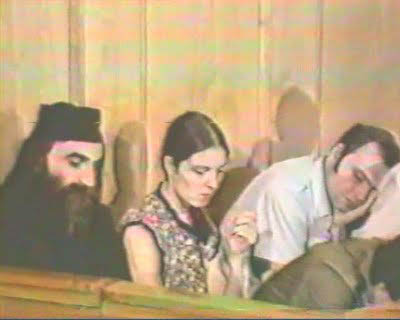
Before the tribunal

“The public opinion of Tbilisi and all Georgia was very divided. People were in shock at what happened, but no one knew anything for sure, no details were published. In the newspapers and on television, the regime spread the version most favorable to them, to influence public opinion. The state, which had a total control of the means of mass media, saw fit to make the hijackers appear as monsters and criminals even before the start of the investigation. It was quite urgent to develop this image, because in Georgia at this time there existed already the first trends of anti-Soviet thought, and part of the society had started to defend the hijackers.

Even before the book was published, the story was already taken on stage, when Eduard Shevardnadze became the leader of the new Georgia. The state theater rejected the presentation of the piece, but private theaters gladly gave it space. A giant poster of the première was set up in front of President Shevardnadze’s house, reminding him of “the jeans generation”. In fact, in 1983, at the time of the tragedy, Eduard Shevardnadze was the first secretary of Soviet Georgia.

Eduard Shevardnadze

“Mr. Vazha understood, about what, or rather about whom, Shevardnadze wanted to speak with him, and he intentionally went in jeans to the building of the Central Committee, where his children’s fate was decided. Mr. Vazha had no jeans, so he looked for a pair of jeans in the room of his sons. It was not easy to find one, because the his sons’ room had been searched and ransacked so many times, that he stopped to put it in order. It would have made no sense, because during the next search it would have been turned it upside down again. Therefore Mr. Vazha sought long, until he found a pair of jeans, which still had the smell of his sons. He put it on in front of the mirror, and he went to the building of the Central Committee. At the entrance of the building of the Central Committee, where he was granted an entry permit, everyone, from the lowest-ranking employees to the highest-raking ones, was shocked to see the man, who had an appointment with Shevardnadze, because it was the first time that someone summoned to the Central Committee had worn jeans. Shevardnadze was leaning over his desk, and at first did not even hear the man’s greeting. Then he noticed Mr. Vazha’s trousers, and when he motioned at him to sit down, he took a good look at his guest’s jeans. He looked at him angrily, and perhaps he understood that this is how the father wanted to protest against the judgment affecting his sons.”


The desire to escape the Soviet Union would call the youth on the streets again a few years later. The 9th of April, 1989 is for the Georgians the day of “the Tbilisi massacre”, celebrated today as ეროვნული ერთიანობის დღე erovnuli erianobis dghe, the Day of National Unity, which left twenty dead and several hundred wounded on the cobblestones. And this desire is manifested in the words of one of the greatest contemporary Georgian singer-songwriters, Irakli Charkviani, who at the time of the events was a friend of the accused:

But why, didn’t you want to fly?
I have always wanted to fly. I want to fly, and I have no doubt that I will, but not by airplane.
The Russian interrogations officer thought in silence for a few minutes about Irakli’s answer, but he did not understand what this young Georgian boy referred to. Finally he asked a new question of Irakli only to break the embarrassing silence:
And if you do not manage to fly?
Then I’ll cross the sea swimming.
Cross what?
The sea.
But how?
By the power of the song.
Are you joking with me?
I’m not joking.
Can we write it down in the protocol, such as you said?
Yes, sir.
How should we write it?
Literally.
Exactly how?
I’ll cross the sea swimming…

Irakli Charkviani (1961-2006): Паспорт / Союз. An interpretation of Mayakovsky’s “Verses on the Soviet passport”. Russian and English text here.


Irakli Charkviani (მეფე Mefe – „The King”): მე გადმოვცურავ ზღვას – I’ll cross the sea swimming

attraverso2 attraverso2 attraverso2 attraverso2 attraverso2