Switch over to our new blog! • ¡Pásese a nuestro nuevo blog!

The renewed version of our blog, with more features, a richer design, and available in nine languages, can be read here: https://wangriver.com

The new version also includes the old posts, often in expanded form. If you are curious about the updated version of this post, replace “riowang.blogspot.com/” in the URL with “riowang.studiolum.com/”, and the new link will most likely lead you there.


La versión renovada de nuestro blog, con más herramientas, un diseño más rico y disponible en nueve idiomas, se puede leer aquí: https://riowang.com

La nueva versión también incluye las publicaciones antiguas, a menudo en una forma ampliada. Si tiene curiosidad por la versión actualizada de esta entrada, sustituya «riowang.blogspot.com/» en la URL por «riowang.studiolum.com/es/», y el nuevo enlace probablemente le llevará allí.

Mostrando entradas con la etiqueta Armenian. Mostrar todas las entradas

Armenian Saint George

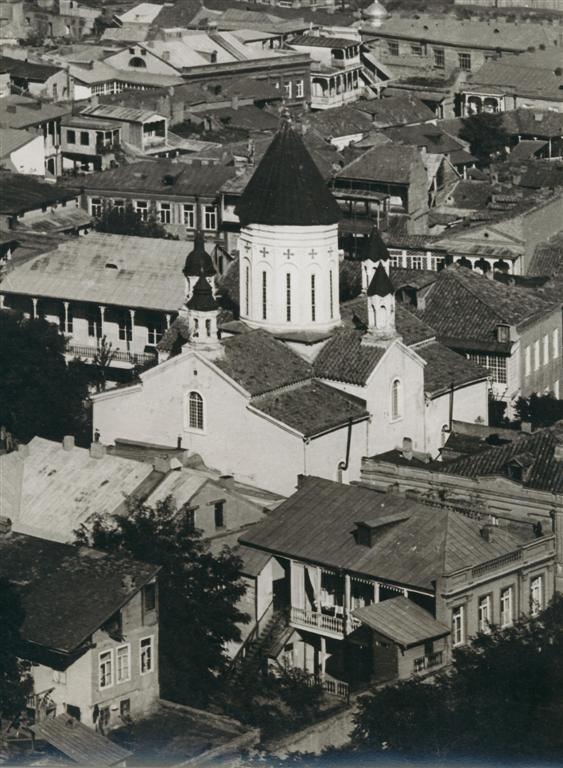
Saint George is an important patron saint not only of Georgians but also of Armenians. What is more, his body was also buried in an Armenian church, in Mughni, from where it – or at least his skull – was transferred in the 13th century to the church of the Armenian monastery of St. George of Mughni in Tbilisi. True, the saint’s body is also venerated in the church of Lydda in the Holy Land, as well as many of his relics in many other churches, but the important thing for the Armenians was to be also considered proud owners of it. Just as one of the bodies of Saint Bartholomew the Apostle is kept in an Armenian church in Iran, while the other lies in Rome, on Tiber Island.

The Church of St. George of Mughni in Tbilisi at the end of the 19th century. Photo by Dmitry Yermakov

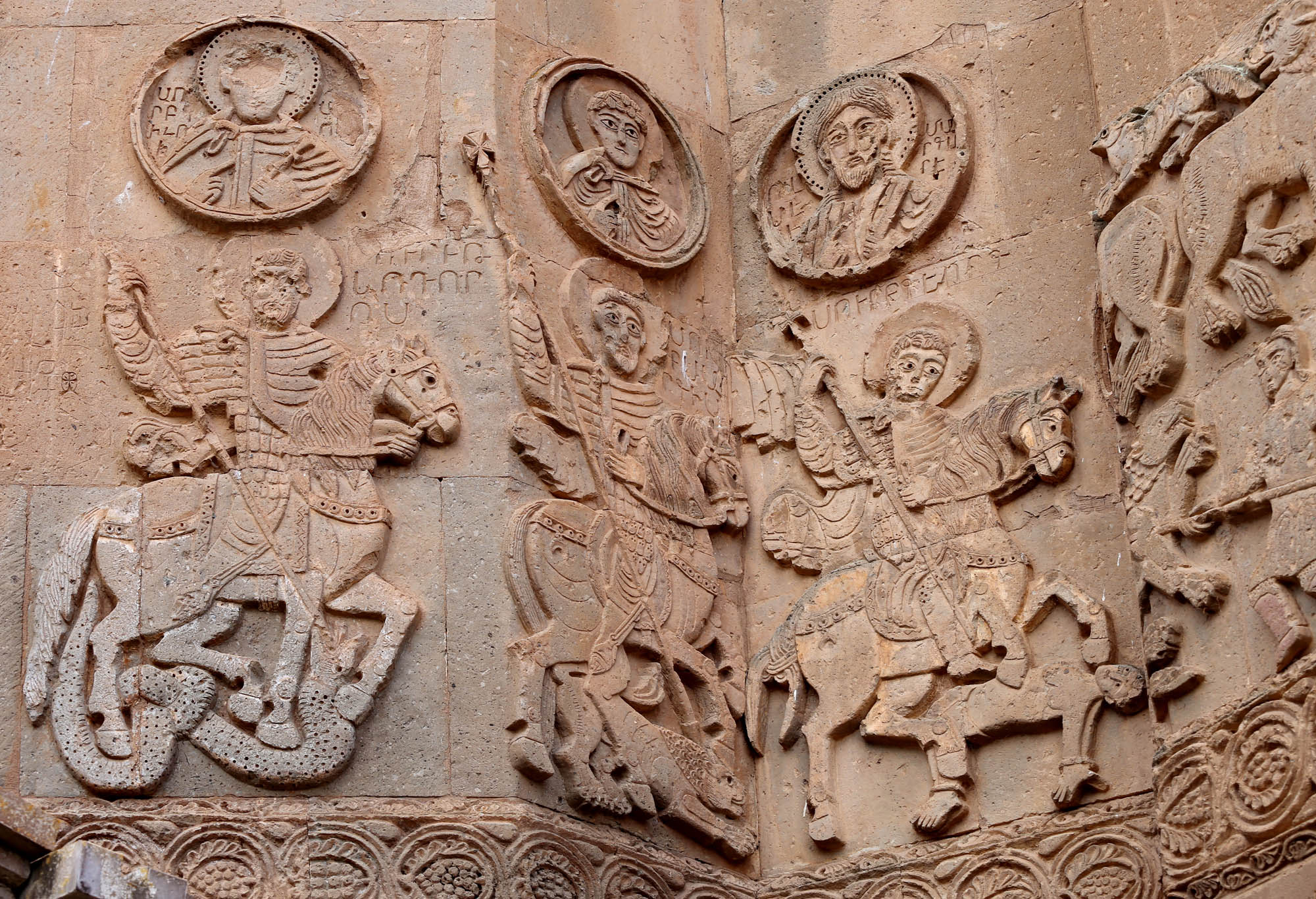
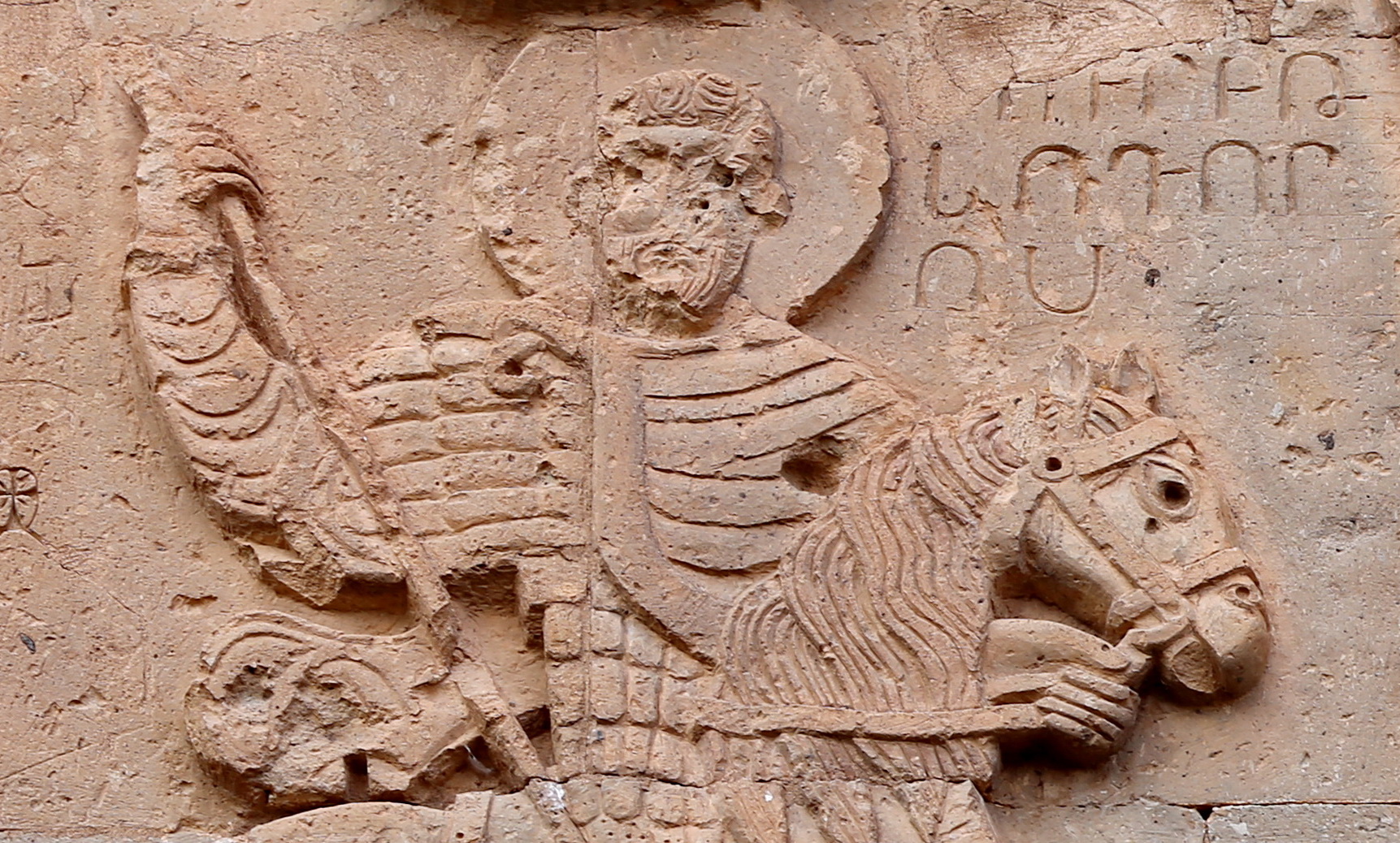
Saint George also watches over, together with his two fellow saintly knights, Saint Theodore and Saint Sarkis, one of the most famous Armenian monasteries, the church of Akhtamar on the island of Lake Van, which was the seat of the Armenian archbishop from its foundation until 1915. Although, as I wrote, Saint George only begins to be seated on horseback in 10th-century Georgia to knock down the enemy – first the Christian-persecuting emperor and only later the man-eating dragon –, nevertheless, the earliest example of this representation is visible on the northern outer wall of the Armenian church in Akhtamar, built between 915 and 921.

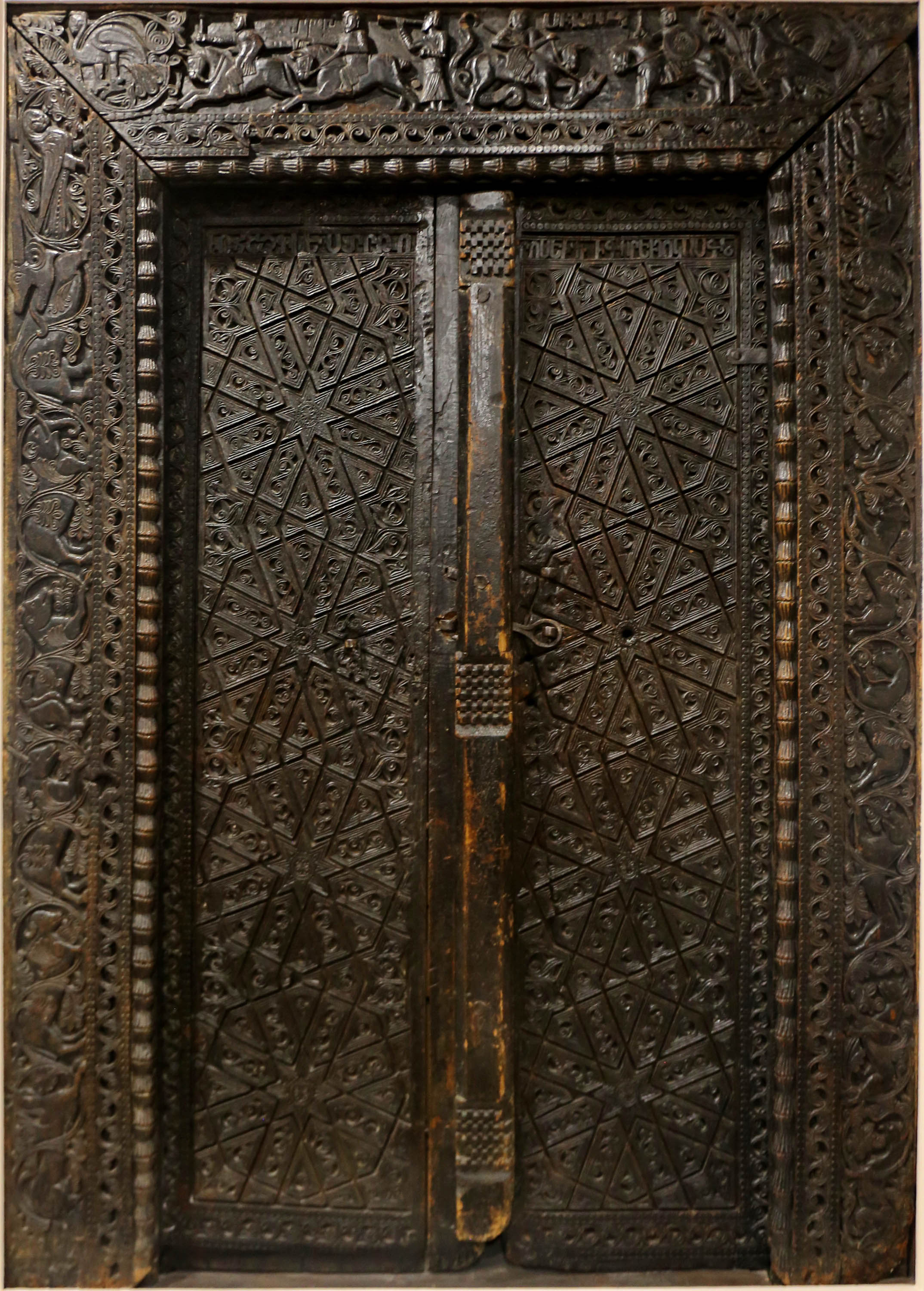
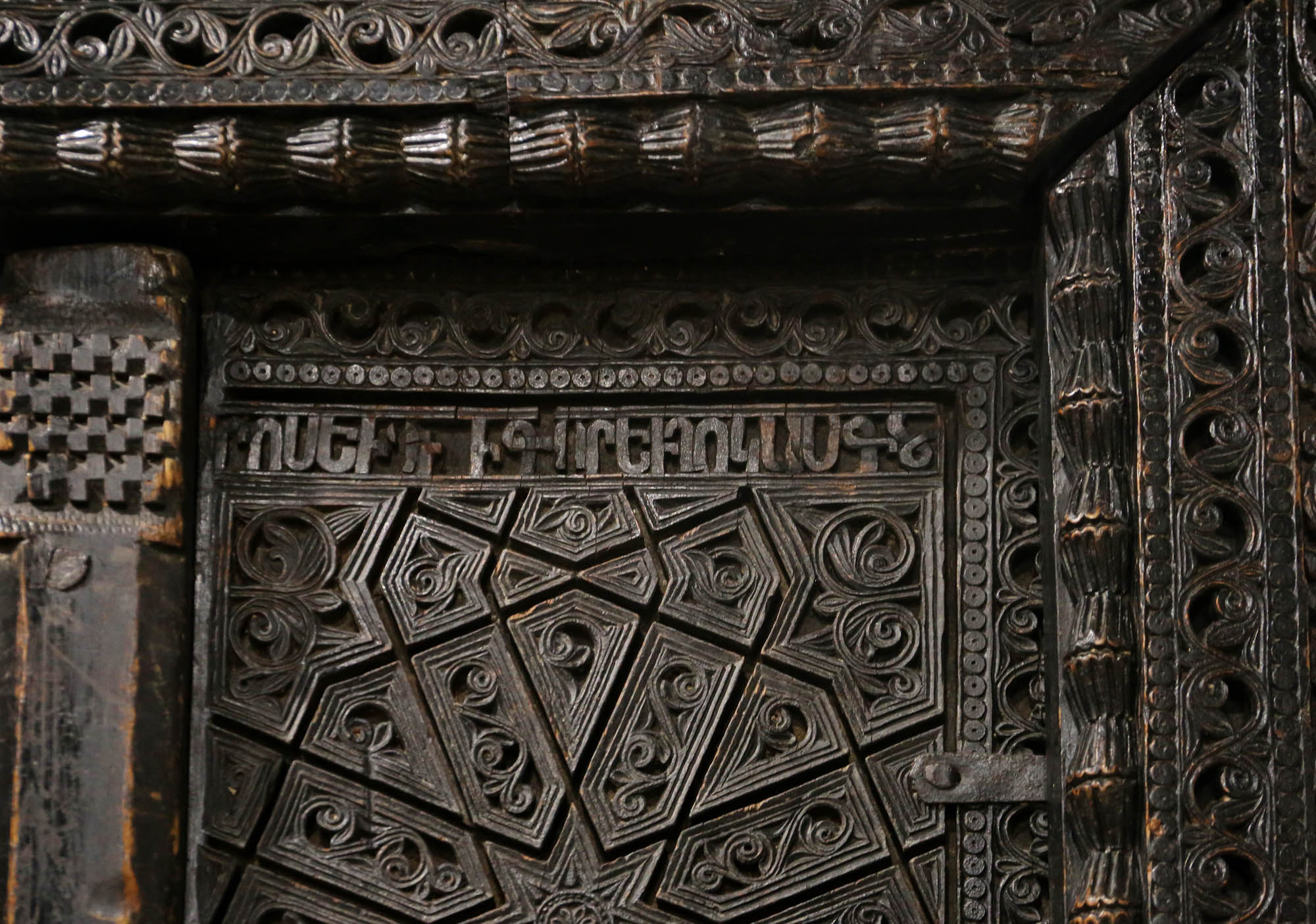
And Saint George also protects the gate of a third Armenian monastery, the famous Msho Arakelots, that is, the Church of the Holy Apostles in Mush. According to tradition, the monastery was founded in 312 by Saint Gregory the Illuminator, the apostle who converted the Armenians, and it housed the relics of three apostles – Saints Peter, Paul and Andrew –, hence its name. The landowners of the area, the ancient Armenian aristocrat Tornikian family, rebuilt the monastery in 1125. Its gate, an outstanding piece of medieval Armenian art, was also built around that time, and according to its inscription, it was carved by Toros, Grikor and Ghugas in 1134.

The frame of the two-meter-high door is decorated with human and animal figures, and its two panels with geometric and palmette motifs. These motifs obviously come from Armenian manuscript art. Since the Armenians, as Monophysites, considered it theologically problematic to publicly depict people, their figurative art flourished only in the hidden pages of manuscripts, and thence it spread in exceptional times to public surfaces, icons, wood and stone carvings, as I will discuss it in another post. Good examples of this are the fantasy animals of this door frame, whose typical habitat is the margins of manuscripts.

arakelots1 arakelots1 arakelots1 arakelots1 arakelots1 arakelots1 arakelots1 arakelots1 arakelots1

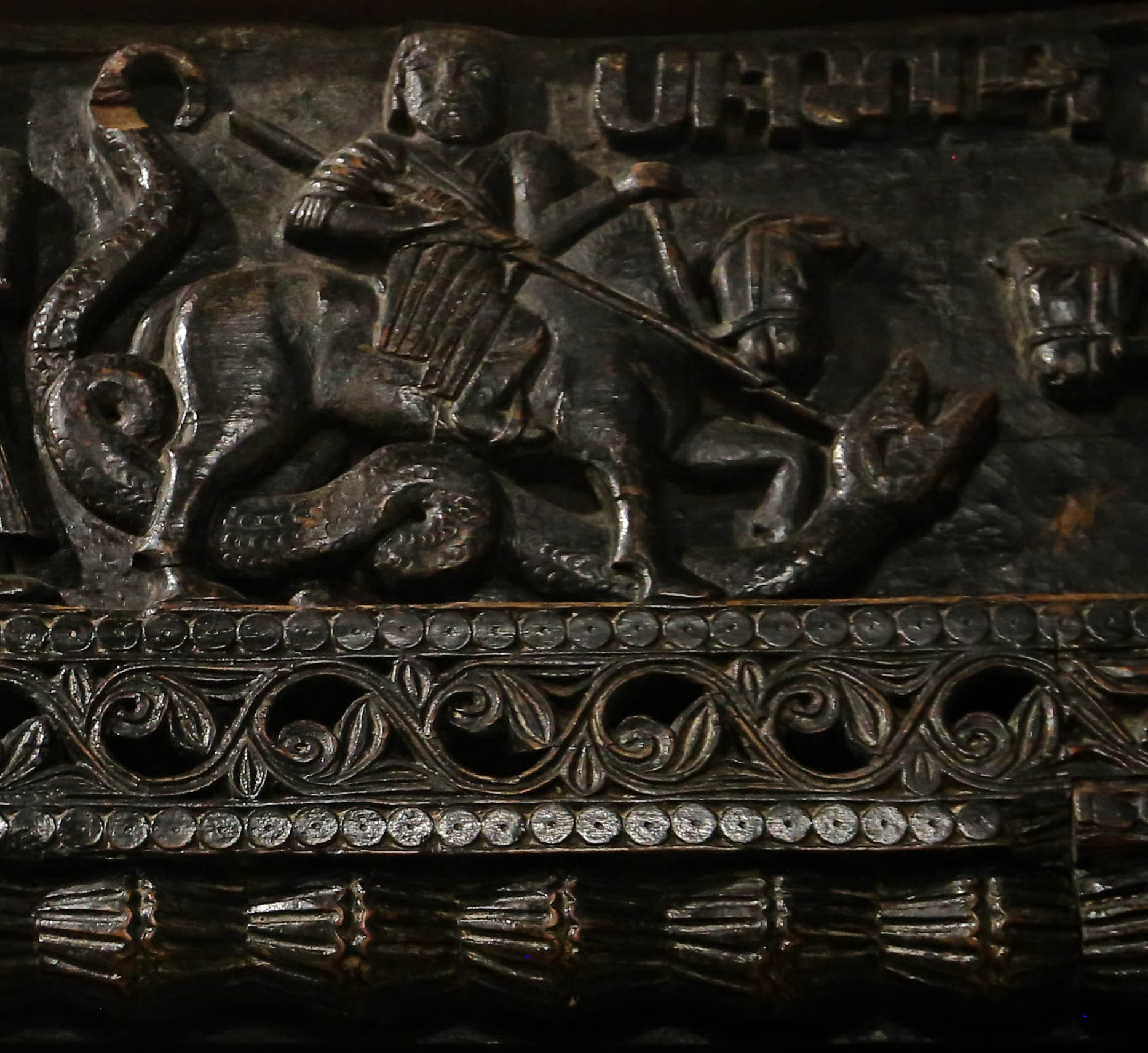
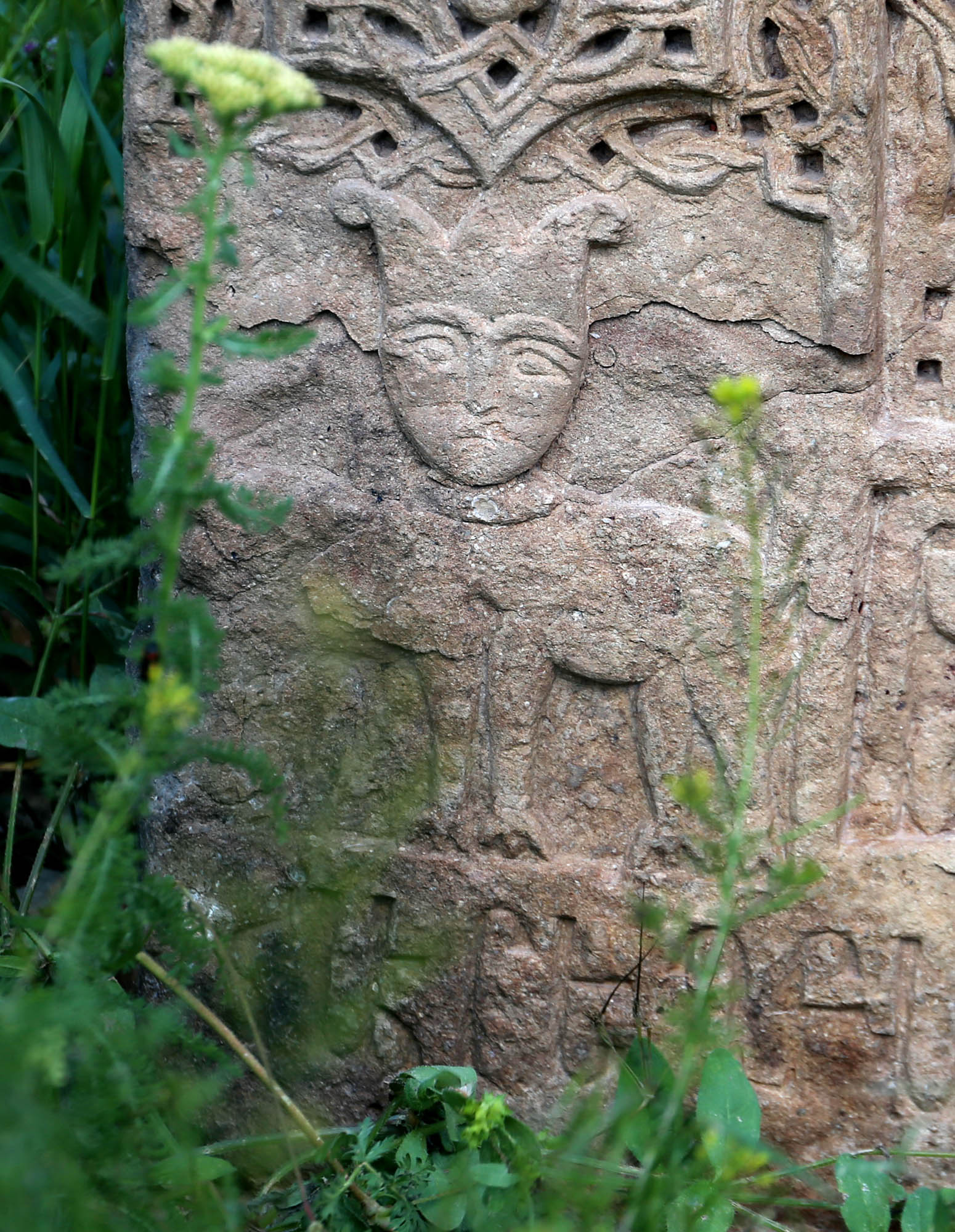
Roughly in the middle of the upper frame Saint George rides, knocking down a coiling dragon. His name was also carved to the right of his head, so he could be distinguished from other knight saints, Theodore, Sarkis or Demeter: ՍԲ Գ[ե]ՈՐԳ, Sb. G[e]org. A bloody battle scene takes place around him. To the left, an Armenian soldier blows a trumpet, and one mounted soldier gallops after another, whom he impales with his sword. To the right stands a soldier on horseback, representing the army from which the victorious soldier has galloped forth.
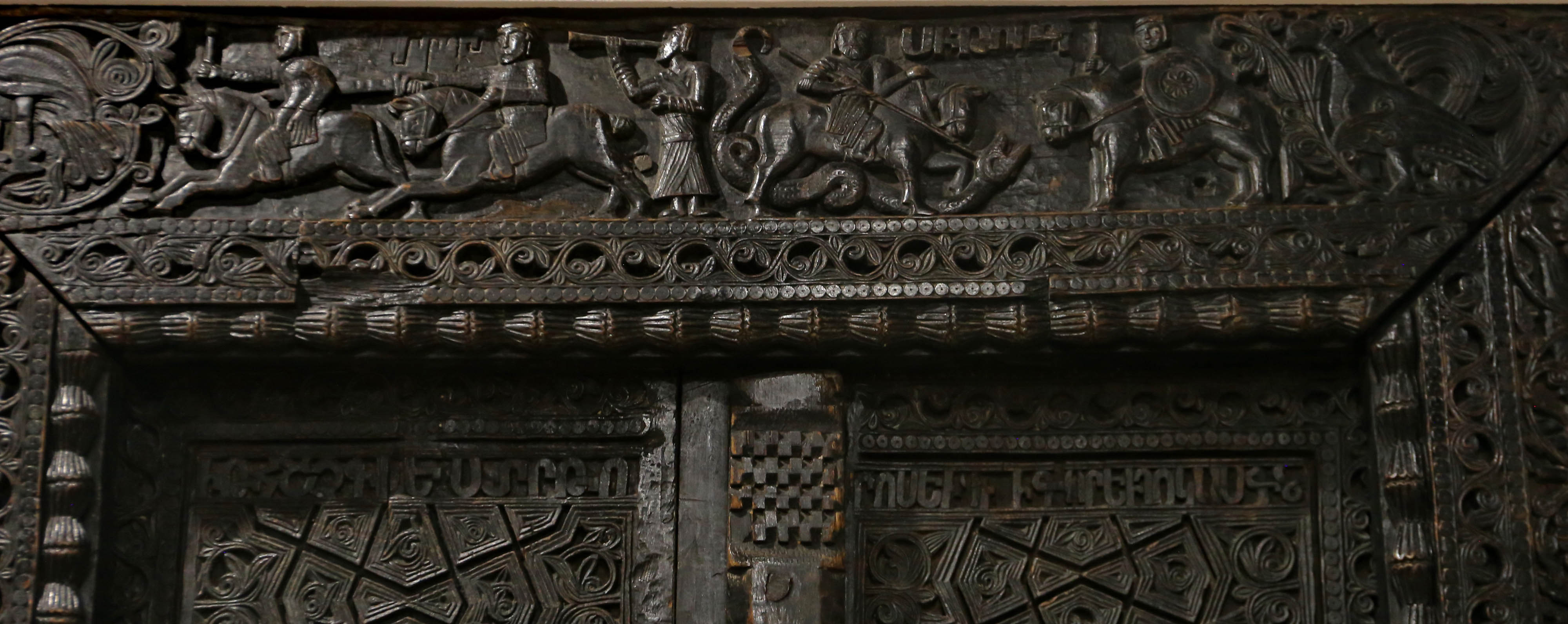
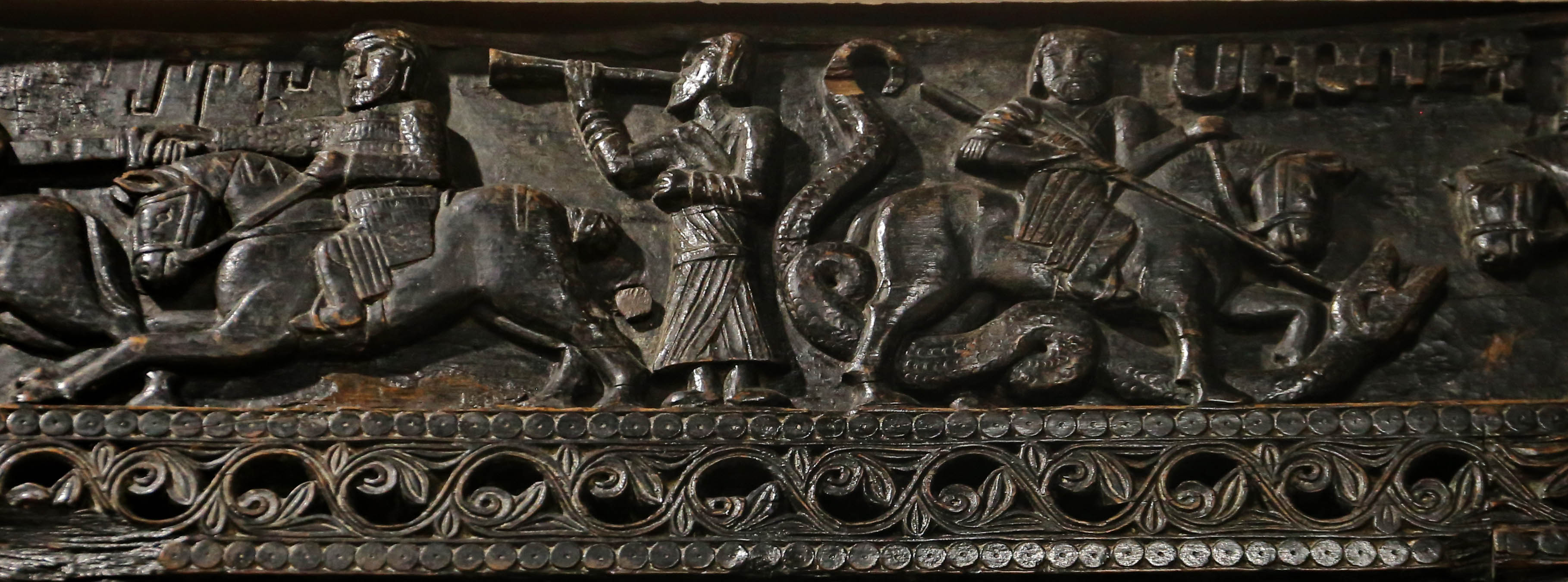
The victorious soldier is David of Sassoun (Davit Sasunc’i), and this scene is one of the highlights of the popular 8th-century Armenian heroic epic about him. In the epic, the 7th-century Arab conquerors reach Lake Van, but the king of the Armenian province of Vaspurakan repulses them after a difficult struggle. David of Sassoun plays a decisive role in this, as he personally kills the Egyptian Sultan Melik, the leader of the Arabs. In addition to David’s bravery, the heavens also contributed to this victory over the pagans. This is symbolized by the figure of St. George, integrated into the battle scene – or rather projected into a transcendent commentary layer before the scene – which promises similar help in similar distressed situations of the Armenians.
The Msho Arakelots monastery was also rebuilt in such a circumstance. In 1064, the Seljuk Turks captured the Armenian Bagratuni kingdom, on whose territory they established several emirates. One of these, Shah-Armenia, lay north of Lake Van. Its center was Ahlat, which still boasts a field of thousands of beautiful gravestones made by Armenian stonemasons for the Muslims. The Christian landowners were not driven out until later, and they tried to counter the growing islamization by founding monasteries and churches. Among them were the Tornikian branch of the Mamikonian clan, which has played a glorious role in the protection of the Armenian people and religion for a thousand years. They were the lords of the local town of Taron, now Muş. In 1125 they renovated and enlarged the monastery of Msho Arakelots, founded in 312. Between the 11th and 13th centuries, the monastery became one of the prominent centers of Armenian culture and education. This is where the gigantic illustrated manuscript of the “Sermons of Mush” comes from, which after an adventurous career is now preserved in the Yerevan Manuscript Museum. And it is no coincidence that the wooden gate commissioned by them in 1134 was also decorated with motifs of the self-defense of the Armenian nation, David of Sassoun and Saint George.
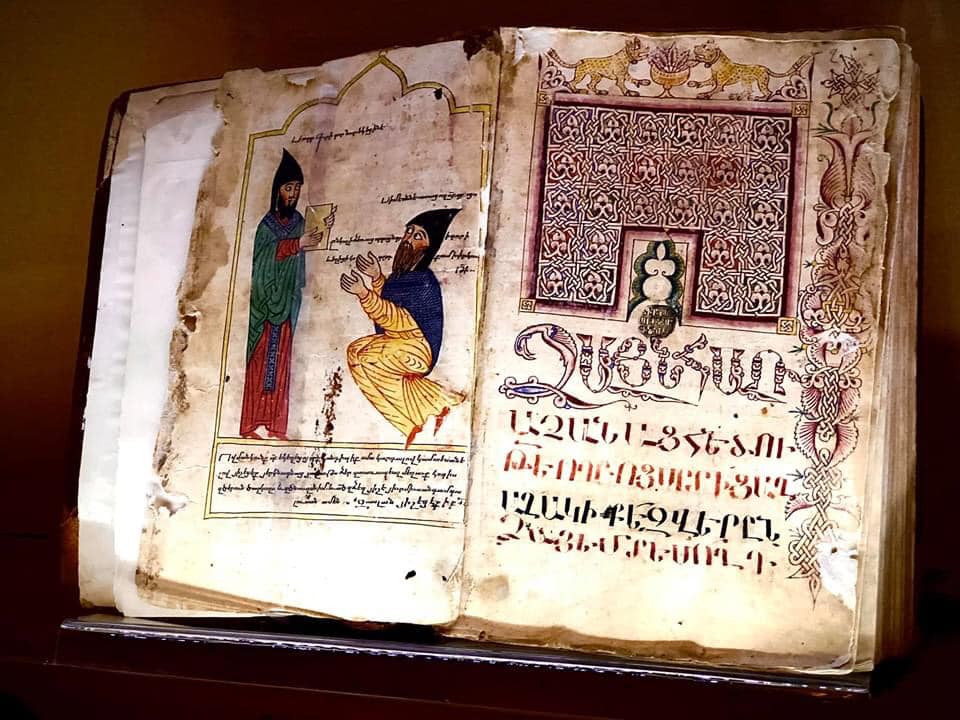
Colophon of the Sermons of Mush. The manuscript weighing 28 kg was written between 1200 and 1202 on the skin of 600 calves in the monastery of Avag near Erzincan, destroyed in 1915. It was written by Vardan Karnetsi and illustrated by the monk Stepanos on the commission of a certain merchant Astavtsur. Astavtsur died a year later, during the Mongol invasion, and the manuscript was stolen by the Turkish judge of the city of Ahlat, who offered it for purchase. The monks of Msho Arakelots monastery collected the negotiated purchase price of 4,000 silver (approx. 20 kg of pure silver) from the Armenian faithful, and they added the story of the acquisition to the purchased manuscript. In 1915, after the Turkish looting of the monastery, two fleeing Armenian women came here to spend the night and found the manuscript. They cut it in half and each took a half with them. One of them soon reached Etchmiadzin, where he gave her half to the monastery. The other, however, soon died while fleeing in Erzincan, but before that she buried the other half of the manuscript in the garden of the local monastery. There it was found by Nikolai de Goberti, an officer of the advancing Russian army, who took it to Tbilisi and donated it to the local Armenian museum. The two manuscripts met only fourteen years later in Etchmiadzin. Today it is kept in the Matenadaran Manuscript Museum in Yerevan, but seventeen pages went to the Armenian monastery of San Lazzaro in Venice, and one to the Nationalbibliothek in Vienna.

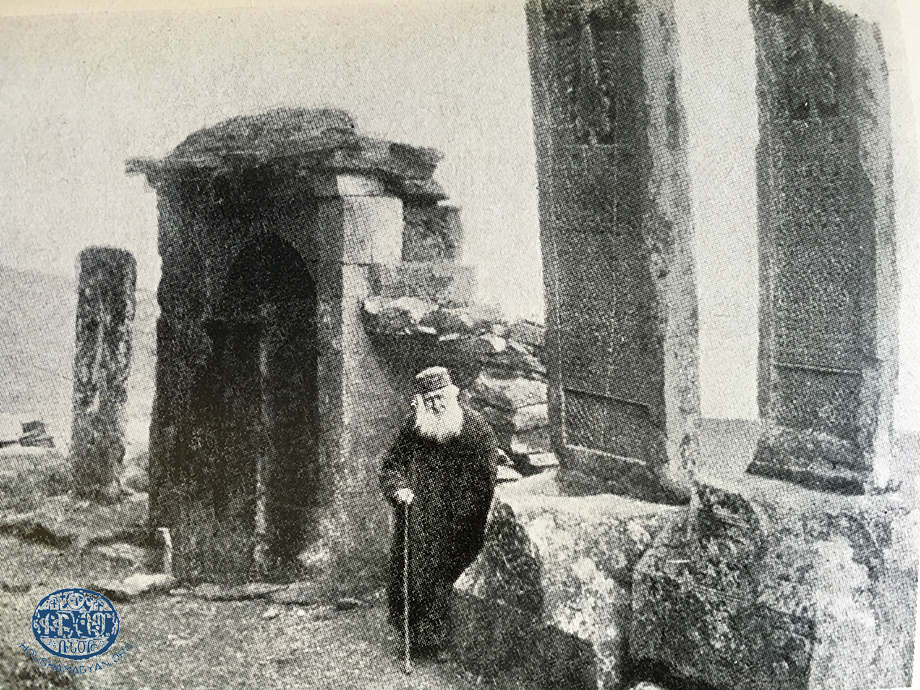
The cemetery of Msho Arakelots monastery before 1915. From an 1953 Mechitarist publication in Vienna

In 1915, the frontal attack against the Armenians also began on St. George’s Day. That night, the Ottoman authorities arrested almost three hundred leading Armenian intellectuals in Constantinople, thereby preventing the central coordination of any Armenian resistance. Most of those arrested were later killed.

The monastery of Msho Arakelots was occupied by the Turkish army in May 1915. The monks and Abbot Yovhannes Vardapet Muratian were massacred and the monastery was massacred and burned. The buildings that were still almost intact in 1960 were blown up by the then governor of Muş. Today, only the remains of the central part of the main church dedicated to Saint Thaddeus, the first apostle of Armenia, stand on the barren hillside near Muş, with no road leading to it. The monastery lives only in the memories of the refugees, as in Vigen Galstyan’s story, where Aunt Angin after long prompting tells in an unemotional voice her whole life:

“…she spoke of a prosperous family living in a large village next to Mush not far from Lake Van in a stone house with two floors where five siblings grew up playing in an olive grove after coming back from school that taught arithmetic and needlework to prepare girls as clever housekeepers much like the mother who wove carpets and organized large feasts when the family went to Msho Arakelots monastery during festivals where the villagers sang and danced together until one day in 1915 they packed whatever they could in a cart and fled under the cover of the night from the Turkish army that chased them over the rocky mountains where Angin’s mother had to leave her newborn under a rock so they wouldn’t get caught and somehow reached Baghdad to find shelter in date palm orchards in which two of the boys died from fever before the father took them on the road again with other survivors shuffling from Iraq to Iran until their caravan arrived in Soviet Armenia in 1922 to rebuild their shattered lives on the other side of the Holy Mountain…”

The remains of the Church of Saint Thaddeus of Msho Arakelots today

The monastery of Aghtamar was also raided in May 1915 by the Turkish army and Kurdish marauders. The monks were slaughtered. From then on, the island was used as a military firing range, during which the external reliefs and the internal frescoes were seriously damaged. In 1951, only Yaşar Kemal, the Kurdish-Turkish writer nominated for Nobel Prize, was able to prevent the demolition of the church, then in preparation. Then in 2010, the Turkish state restored the church in a grand manner, emphasizing the ethnic and religious tolerance of the Turks and their respect for monuments, which, in addition to the thousands of destroyed Armenian, Greek and Syriac villages and churches, can also be abundantly witnessed in our former Hungarian villages. The tendentious nature of the restoration has been denounced by several Armenian and Turkish sources. Many reliefs had to be carved anew, but the bullet-shattered faces of Saint George and his fellow knights still illustrate the special treatment of Armenian monuments.
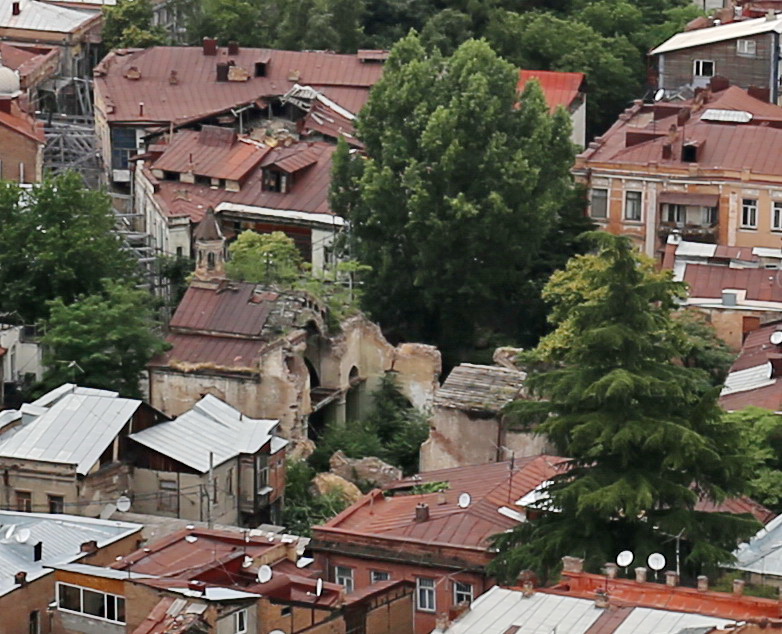
The skull relic of Saint George disappeared from the Church of Mughni Saint George in Tbilisi in 1921, after the entry of the bolsheviks. But the Armenians of Tbilisi still revered the church, and after the independence of Georgia, when the Georgian Church claimed all churches of Tbilisi, they refused to give it up. The church was ravaged by vandals in the early 2000s, and its dome was struck by lightning in 2009. Still it stands there split open, like a skull cut in two by a sword, and a forest of sumac trees oozes from its crack.
After the destruction of Msho Arakelots monastery, the door was noticed by German archeologists who, as allies with the Ottoman empire, were still present in the country. They asked for permission to transport the door to Berlin, just as thirty years later the Christian neighbors of the deported Jews ask for permission to take over their pianos. However, the door only reached Bitlis – in Armenian, Baghesh. The offensive of the Russian army reached the city, and the Turkish soldiers who had looted the monastery fled from them. The door left in the city along with the booty was found by the outstanding Armenian historian and archaeologist Smbat Ter-Avetisian, who accompanied the Russian army to save the Armenian cultural heritage that had not yet been destroyed. He transported it to Tbilisi for a future Armenian museum, and from there it went in 1925 to Yerevan, where this museum was actually established.

“He saved others, but he could not save himself”, they mock Jesus hanging on the wood of the cross in the Gospel. Saint George, triumphantly enthroned on the wooden gate of Msho Arakelots, could not save others, but he could save himself. The door is still standing today in the Western Armenian section of the Yerevan History Museum.

Resurrection

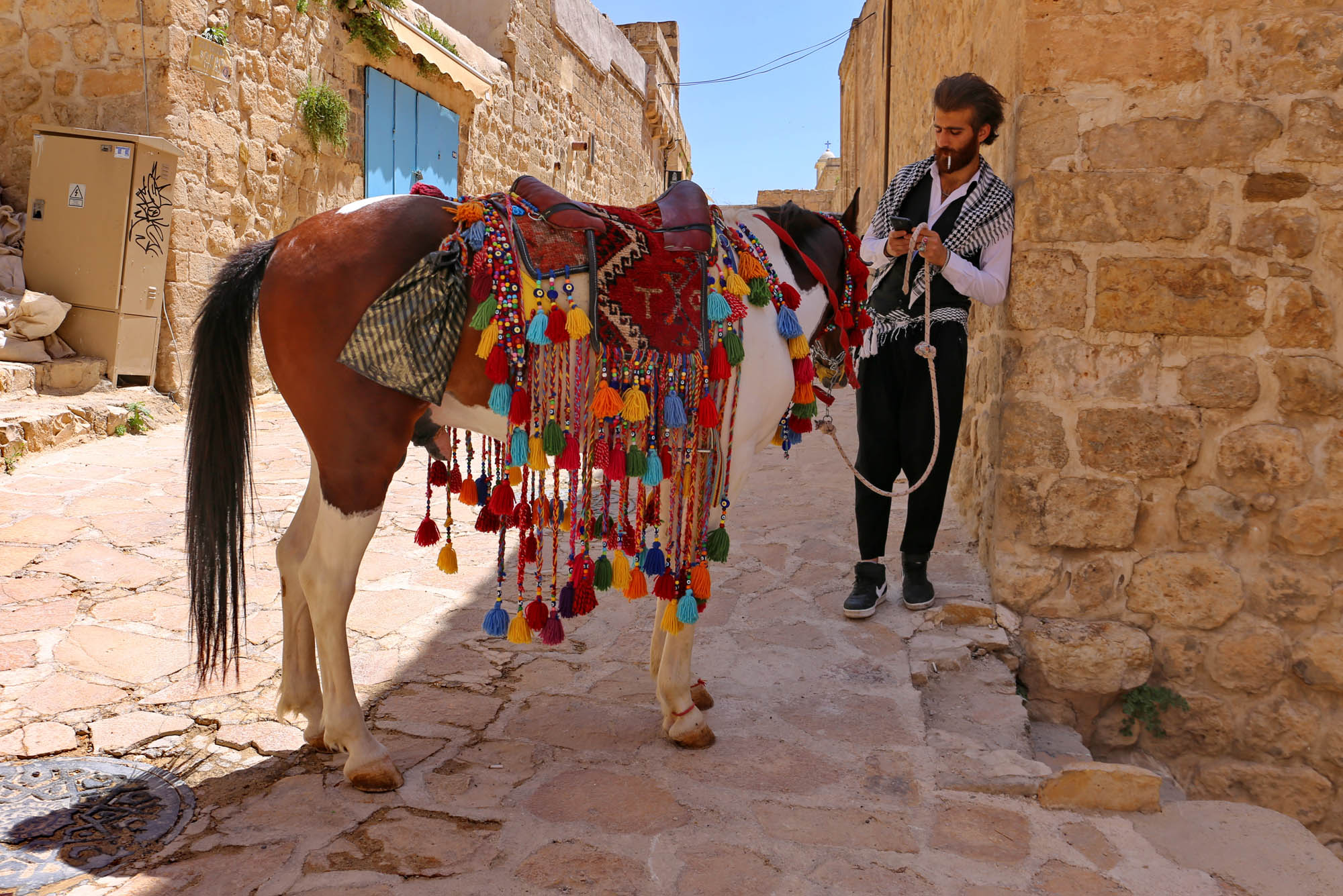
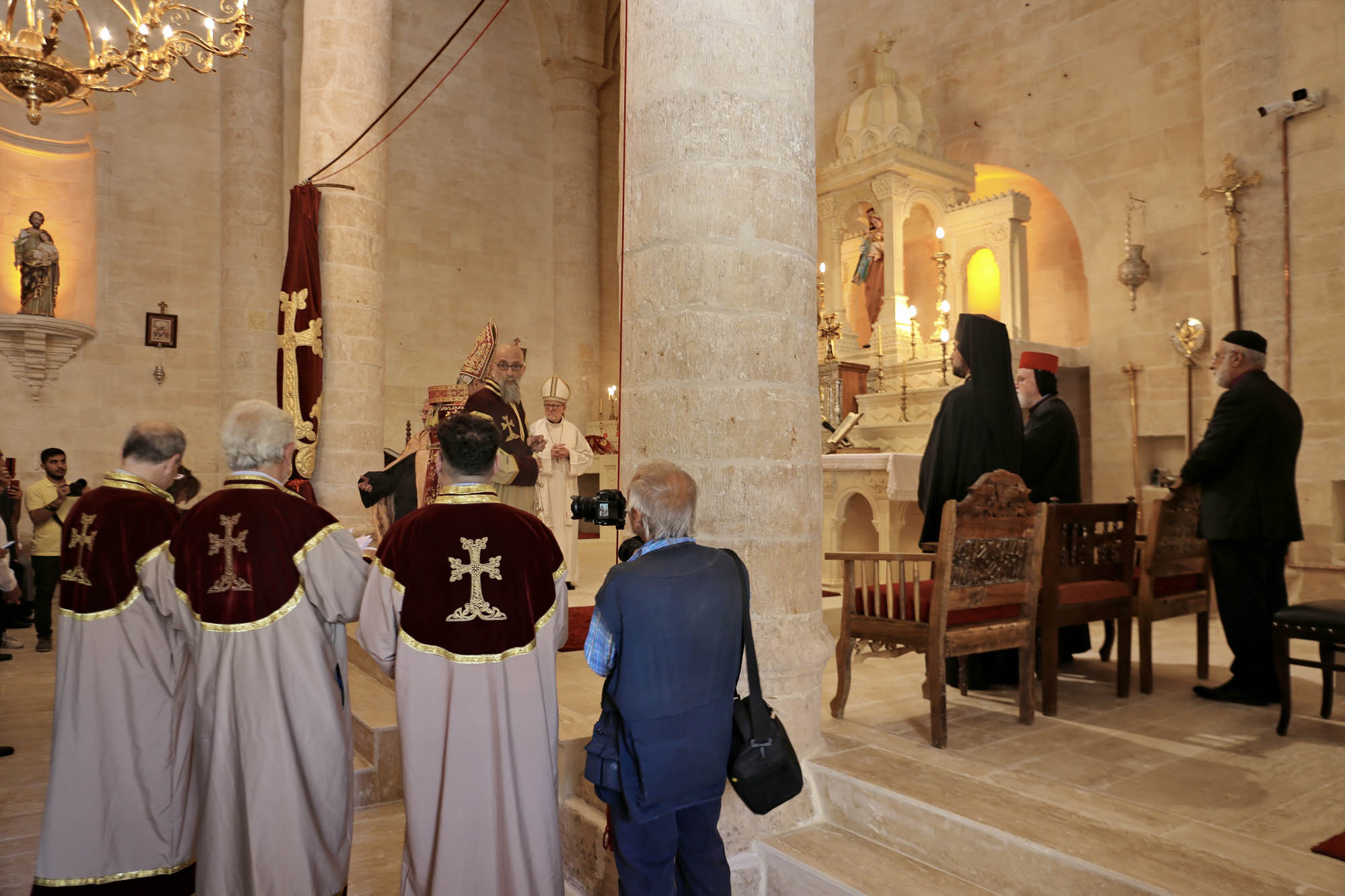
At ten in the morning I leave with the group to visit the Christian quarter of Mardin. I can already see from afar that a decorated horse is waiting with its Kurdish caretaker at the corner of the street of the Surp Hovsep (St. Joseph) Armenian Catholic church. And this indicates a big event, since the horses used to appear on such events, so that the little boy dressed for the occasion or the bride dressed for a wedding photo could pose with them or eventually on them for some money. But what event can be here at ten in the morning on a Sunday? In the side street going down there is no building but Surp Hovsep, and it has been closed for decades. It is true that in recent years there has been a major restoration here, and I wondered what the church would be transformed into. I look down the side street and see that there are men dressed for the occasion waiting around the gate of the church, and then families walking up from below walk through the gate. Is it perhaps open? I run down to check it.

The gate is really open, families are really walking in. I would also go with them, but the men in suits standing at the gate tell me it is closed. “And them?” I point to the people going in. “To them it’s open.” “And when will it be open to others?” “Another time.” “When exactly?” “In two weeks”, a hitherto silent man in a suit from the back row tries to dissuade me. I look there, and see a familiar face next to the person. “Edip!” I shout with joy. It is the custodian of the Syriac Orthodox church, with whom I talked a lot after the visits last year. “Thomas!” he shouts, too. We shake hands. “Let him in, he’s a good friend”, he says to the men in suits. “I am with a small group, eight people. Can they come in, too?” I ask. “Sure”, Edip says, and the men in suits obligingly let us in.

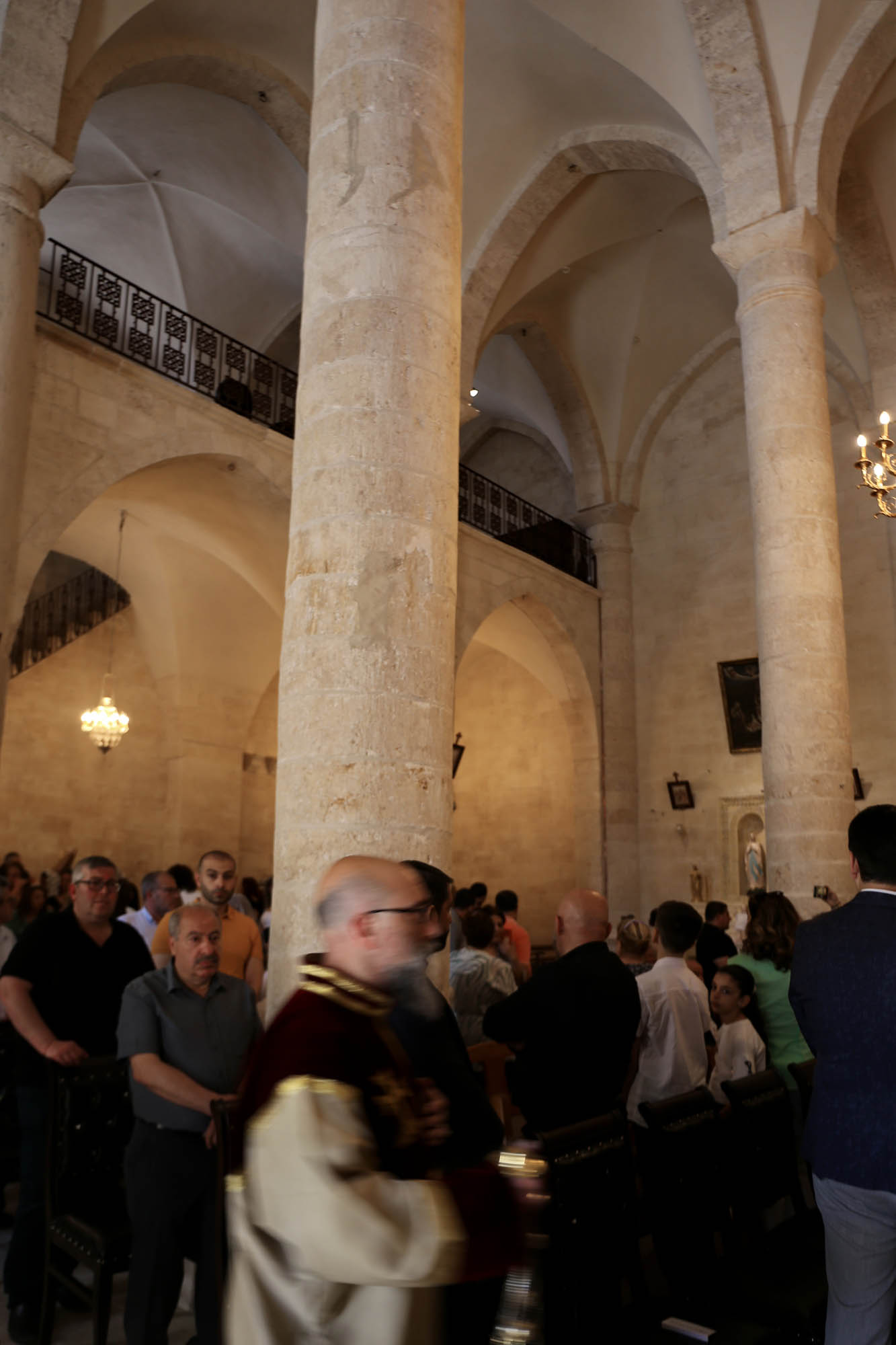
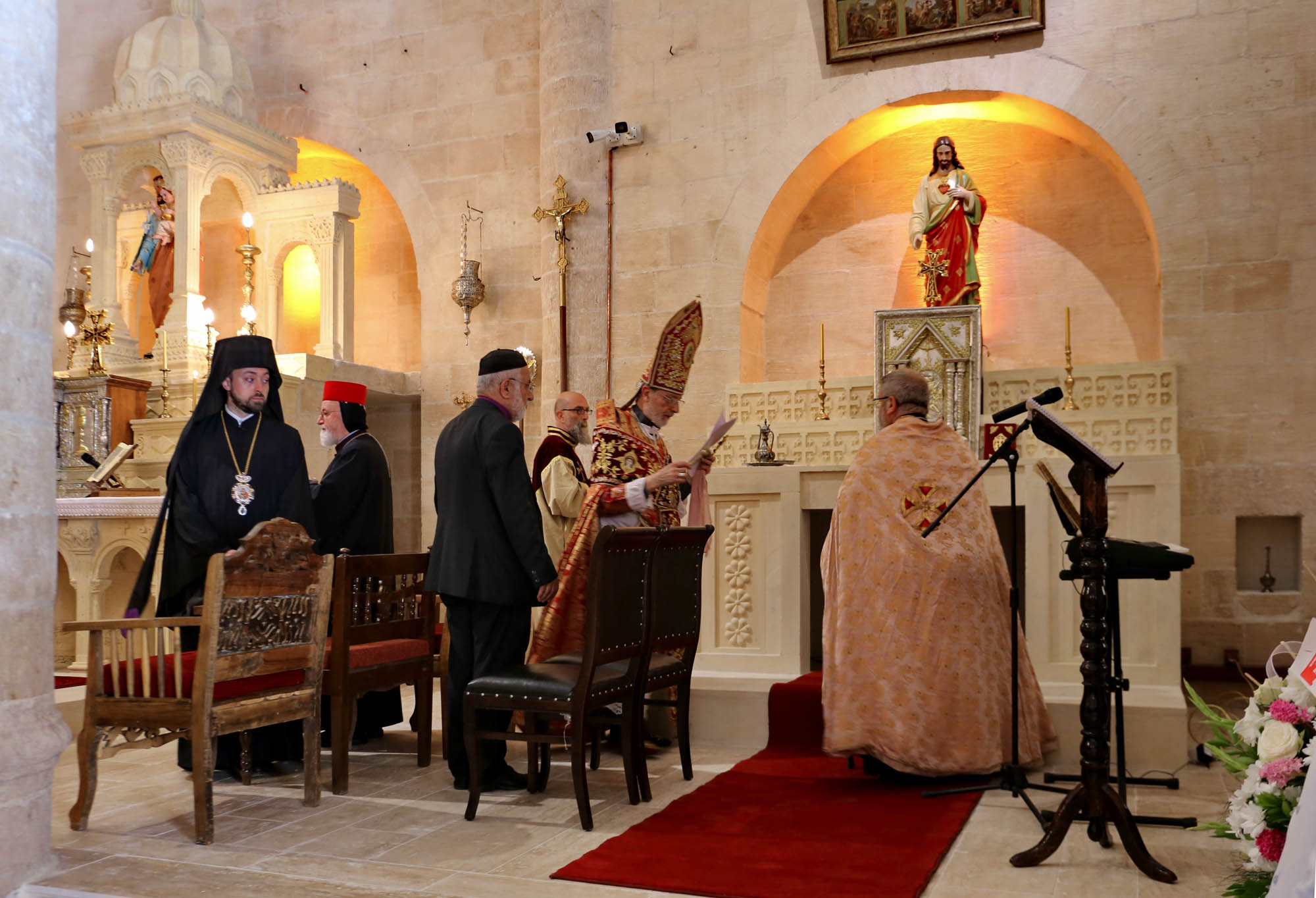
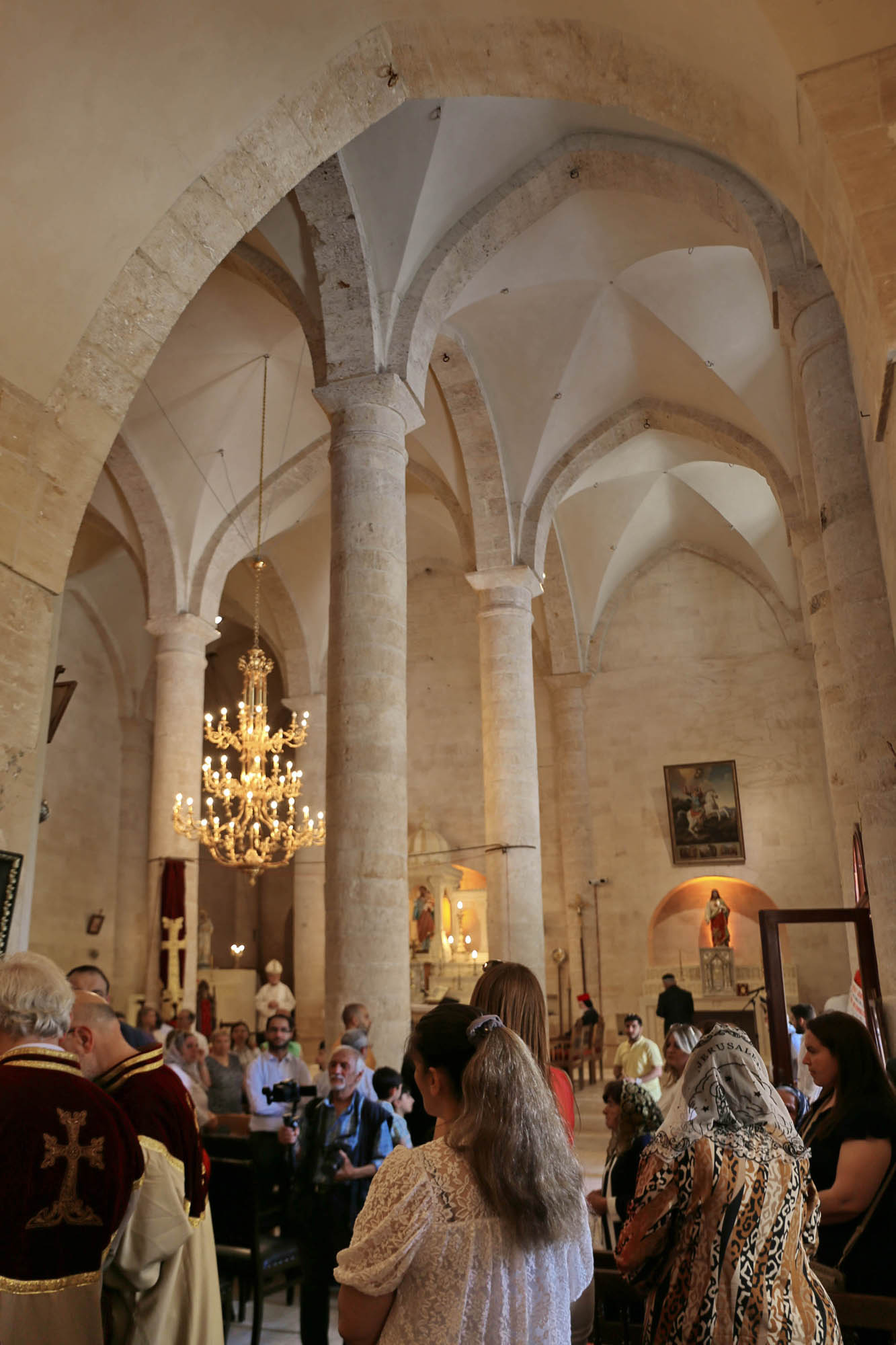
“What is happening here?” I ask Edip, now in the courtyard. “The Armenian church was restored. It is being consecrated today.” “Are there that many Armenians in Mardin?” I point to the almost full church, where people are still entering. “No. But all Christians came, it is a feast for all of us.” And indeed, familiar faces now enter the gate, the parish priest of the Syriac Orthodox church and the Syriac Orthodox metropolitan dressed in festive vestments. They are heading in, we go in after them.

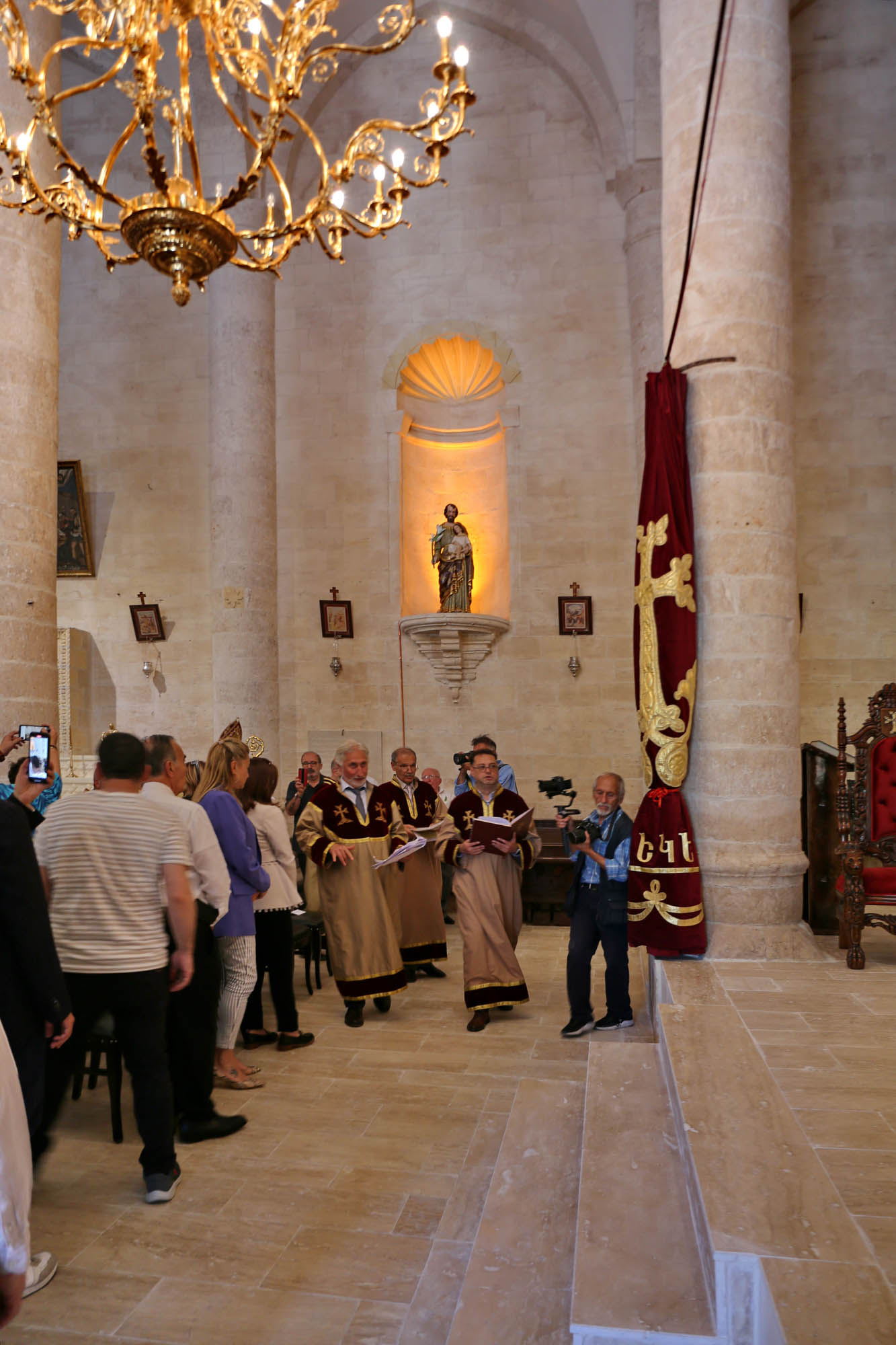
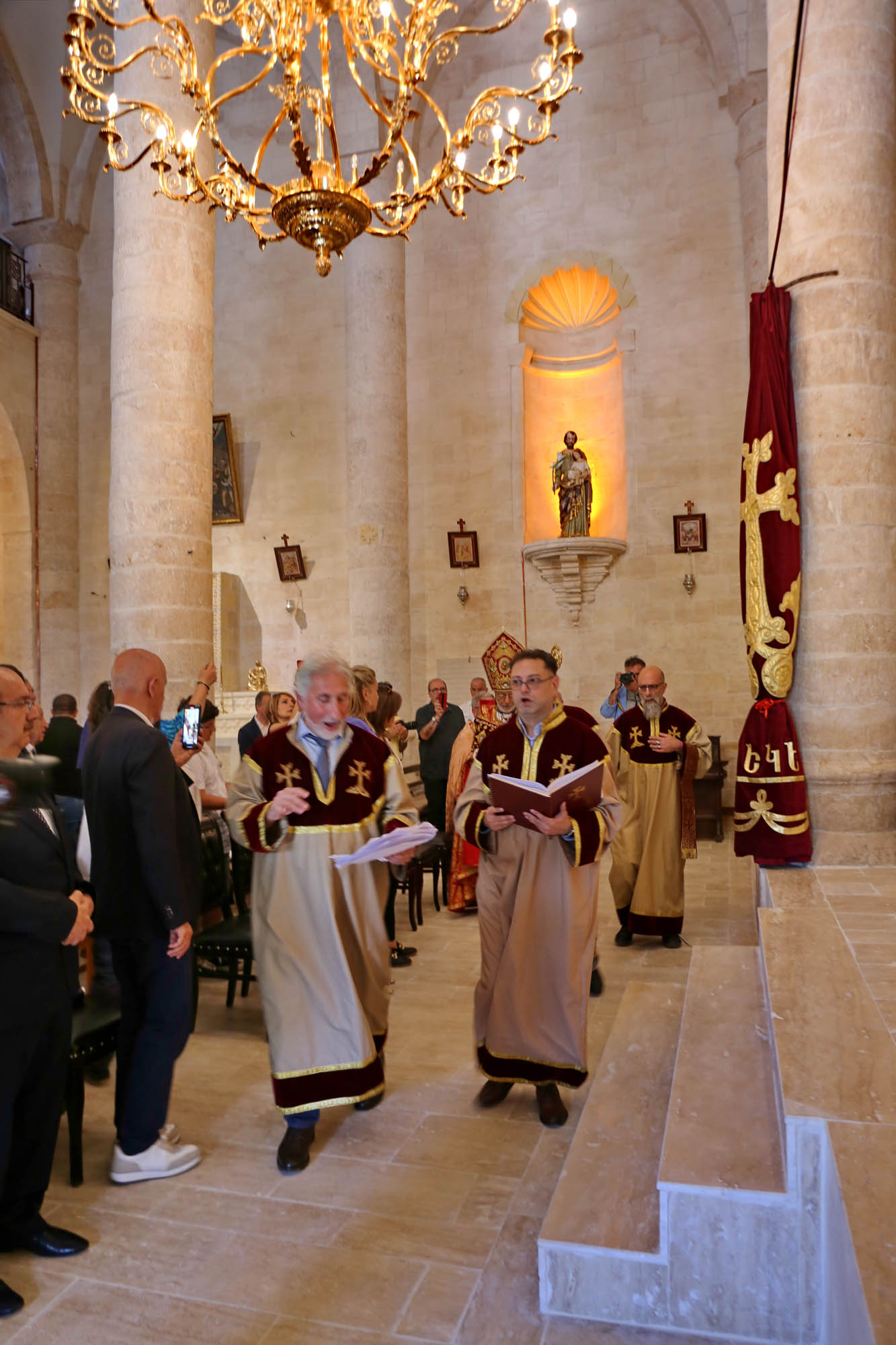
The consecration ceremony is already taking place in the church. The Armenian bishop and the choir are already at the back of the church, under the gallery. The text of the ceremony and the songs are Armenian, but sometimes I hear Turkish mixed in as well.

I go forward to the altar, where an Armenian priest is already preparing the celebration, and the Syriac priests are sitting on the benches to the side as guests. After a short wait, the consecration ends in the back, and the priests with the choir, led by the bishop, come forward. The liturgy begins, in Armenian, with Armenian songs.

My baggy Kurdish pants and black shirt with a calligraphic quote from Hafez attract the attention of one of the young doormen, who asks me: “Are you Christians?” “Yes”, I answer, “Hungarians, from Budapest”. He smiles at us reassuringly.

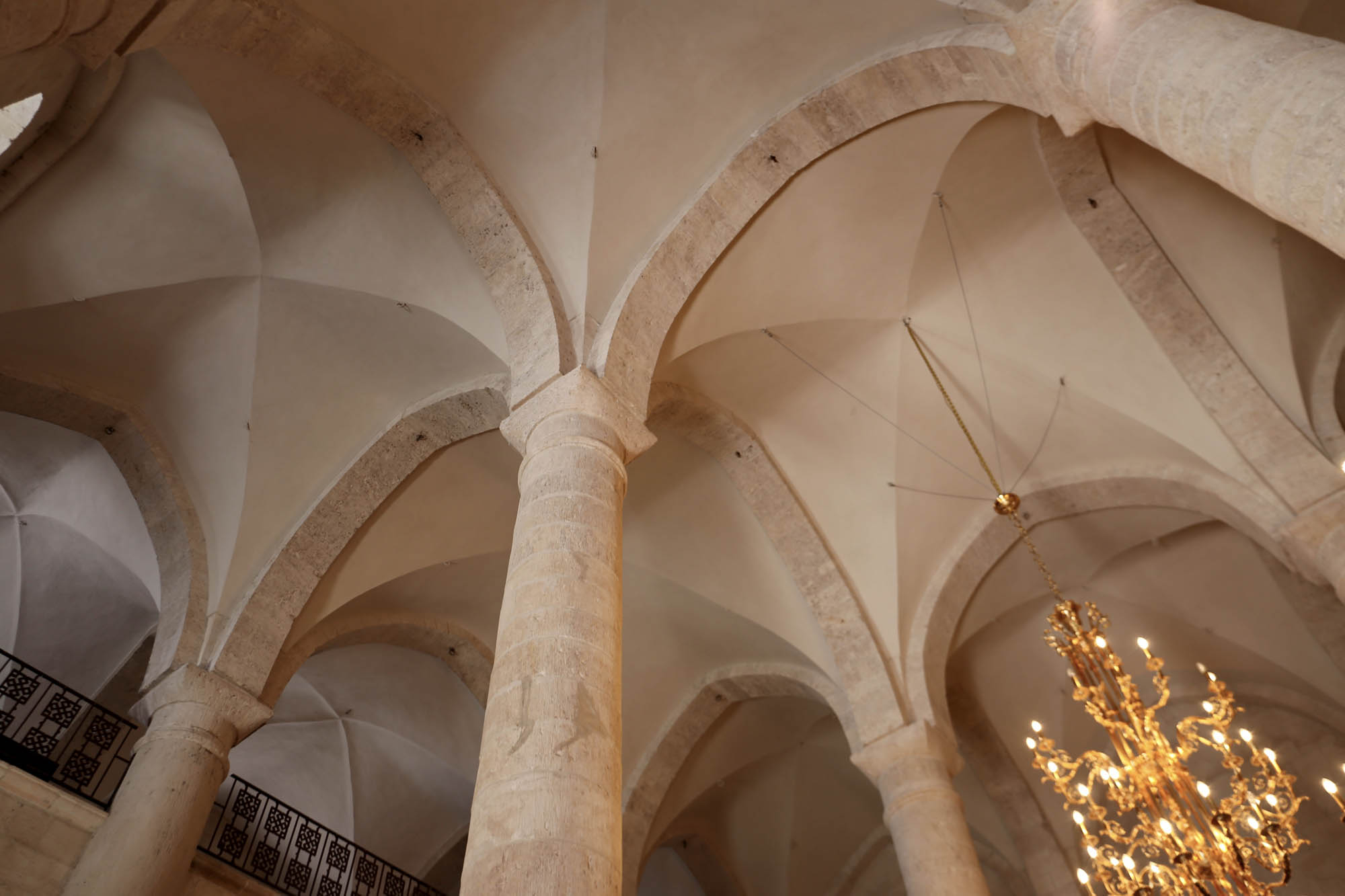
The Surp Hovsep church was built in 1894 by the Armenian Catholic community in Mardin. Most Armenians belong to the independent Armenian Apostolic Church, which is Monophysite, so it is separated not only from the Catholics, but even from the Orthodox. However, for various historical reasons, one branch of the church accepted the Pope as their leader, while retaining their own Armenian liturgy and church language. The seat of the Armenian Catholic Metropolite in Turkey and Syria is precisely Mardin. The recently visited Red Church, which is now listed among the seven most endangered monuments in Europe, was the cathedral of this branch. And their parish church is Surp Hovsep, too. After the Armenian Genocide of 1915, the church was used as a barracks and then as an orphanage. Later – according to one of my sources, in 1949 –, the Armenian community got it back, but then it was closed for decades due to the emigration of the surviving Armenians and lack of financial resources. This is why today’s reconsecration is such a big feast, since the first Armenian church after the Genocide was rebuilt in Turkey in 2015, and since then maybe only one or two.

“How many Armenians are there in the city?” I ask the young doorman. “Maybe we are six or seven families”, he replies. I wish the rebirth of this church would also mean the survival of the community.


The Red Church

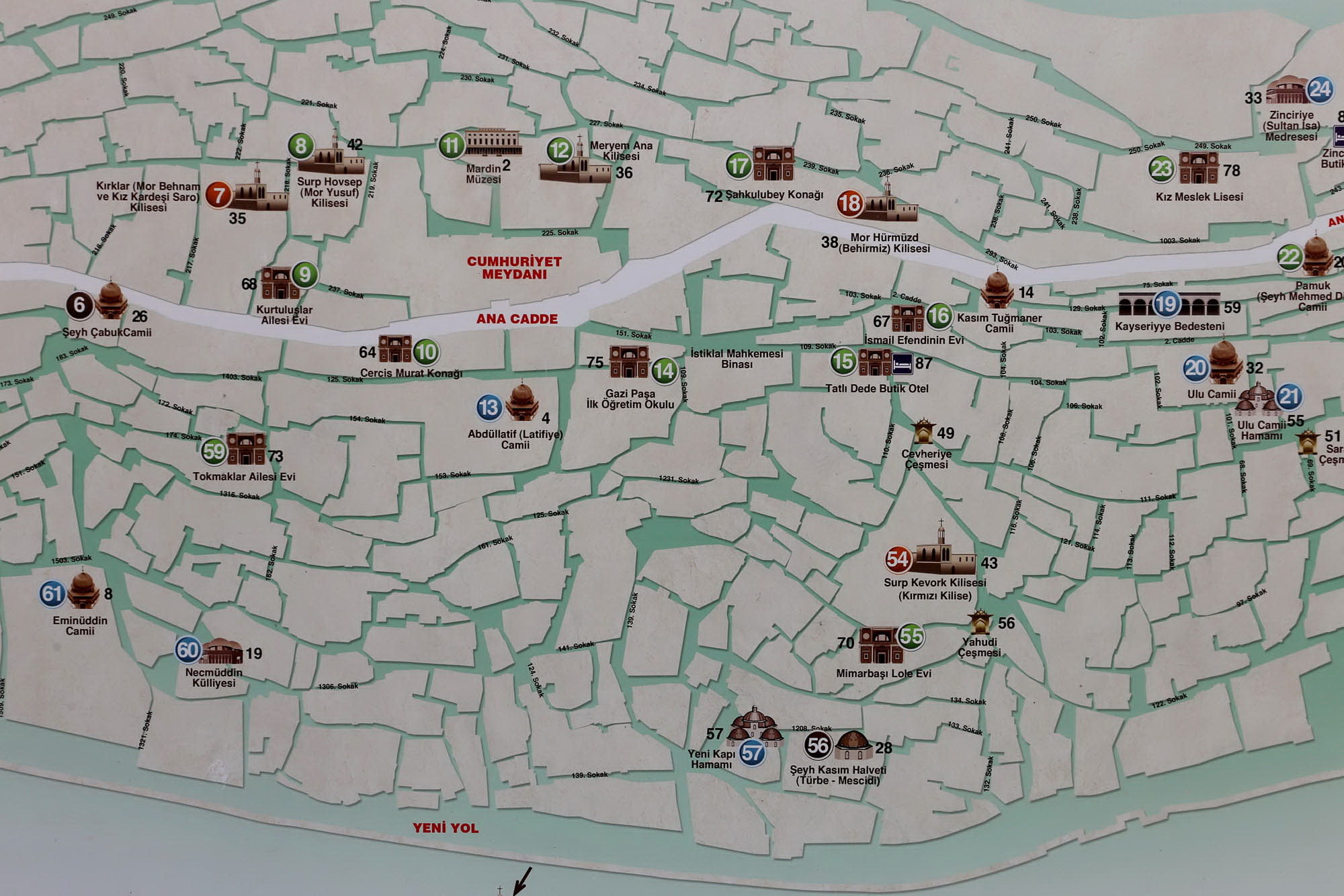
This morning in the Mardin museum, standing in front of the map of Mardin’s monuments, I catch sight of the Red Church, marked with the red number 54 and emphasized with a small drawing. And the passion that a hunter can feel at the unexpected reappearance of a capital deer that has been scouted for years flares up in me again.

I have been looking for Kırmızı Kilise, the Red Church, officially called Surp Kevork, i.e. St. George Armenian Catholic Church in Mardin for years. Google Maps gives its location, and the available literature also roughly locates it there, but there is no church of any kind in that place. The people in the neighborhood haven’t heard of it either, they shrug their shoulders. At this time last year, Noémi and I spent an entire morning visiting the whole quarter, with the only result that we were able to typologize the informants: there are those who admit they do not know it (mainly women), those who quite resolutely steer you in the wrong direction (mainly men), and those who even lead you to the wrong address, mostly to the Mor Hürmüzd Syriac Catholic Church on the other side of the main street, which I have seen many times (red number 18), and there they ask for the bakshish (mainly young boys).

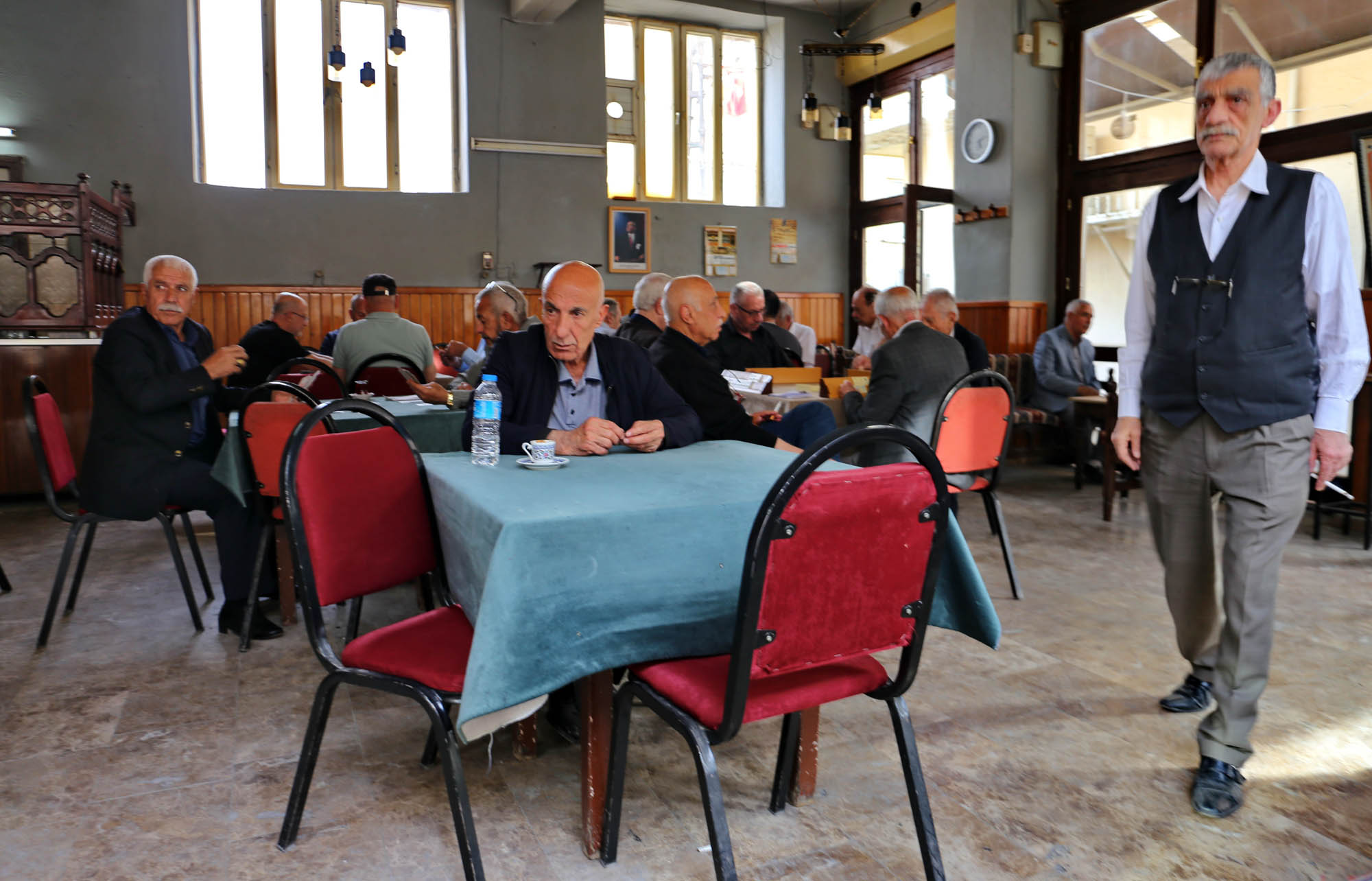
This time I am stubborn. I dismiss the group at five o’clock, I have time until seven. I put on my chamois-feathered hat, I load my rifle, and sit down where everyone knows everything, the Kiraathane, the smoky old boys’ café found in every Turkish neighborhood.

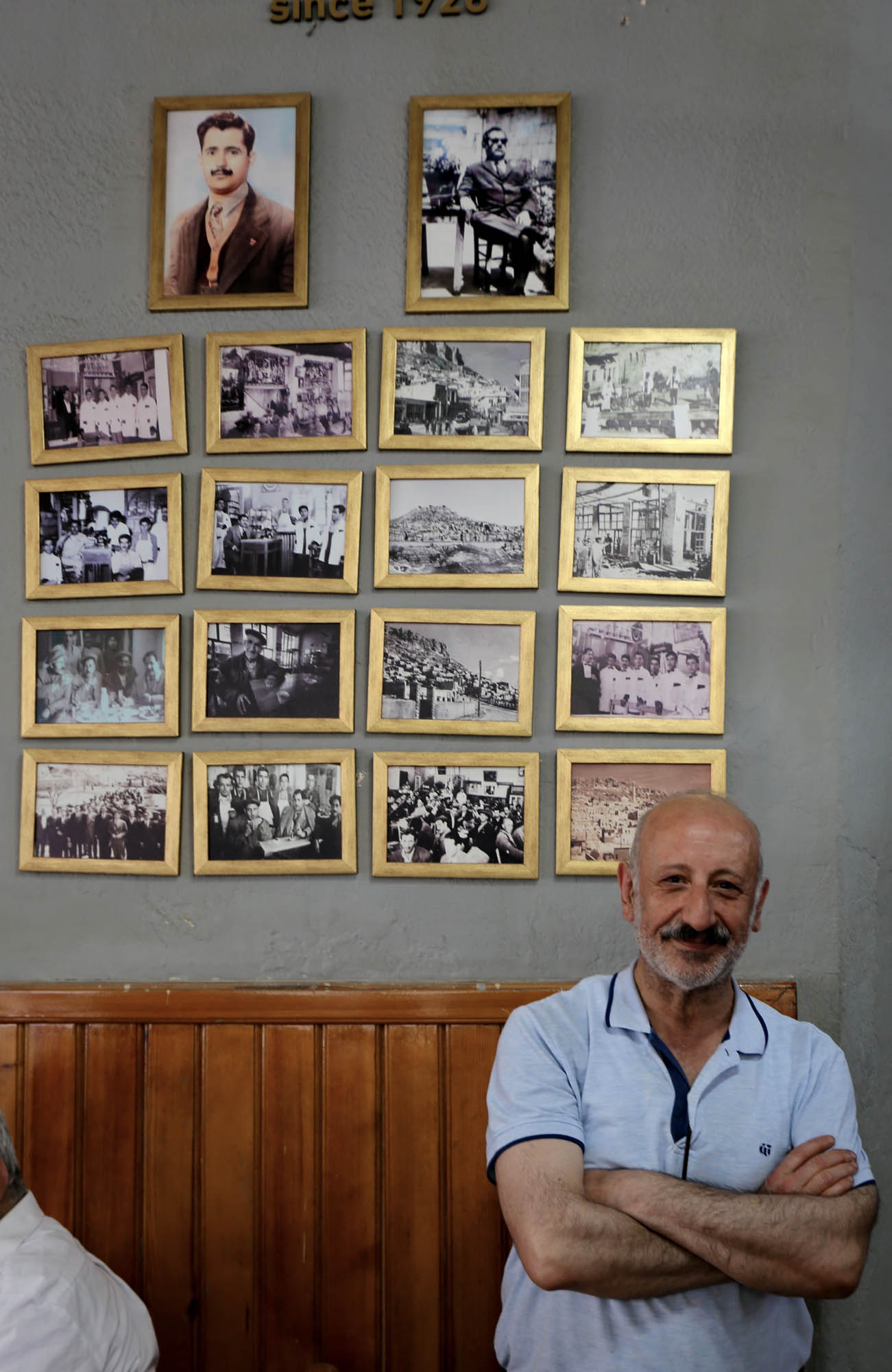
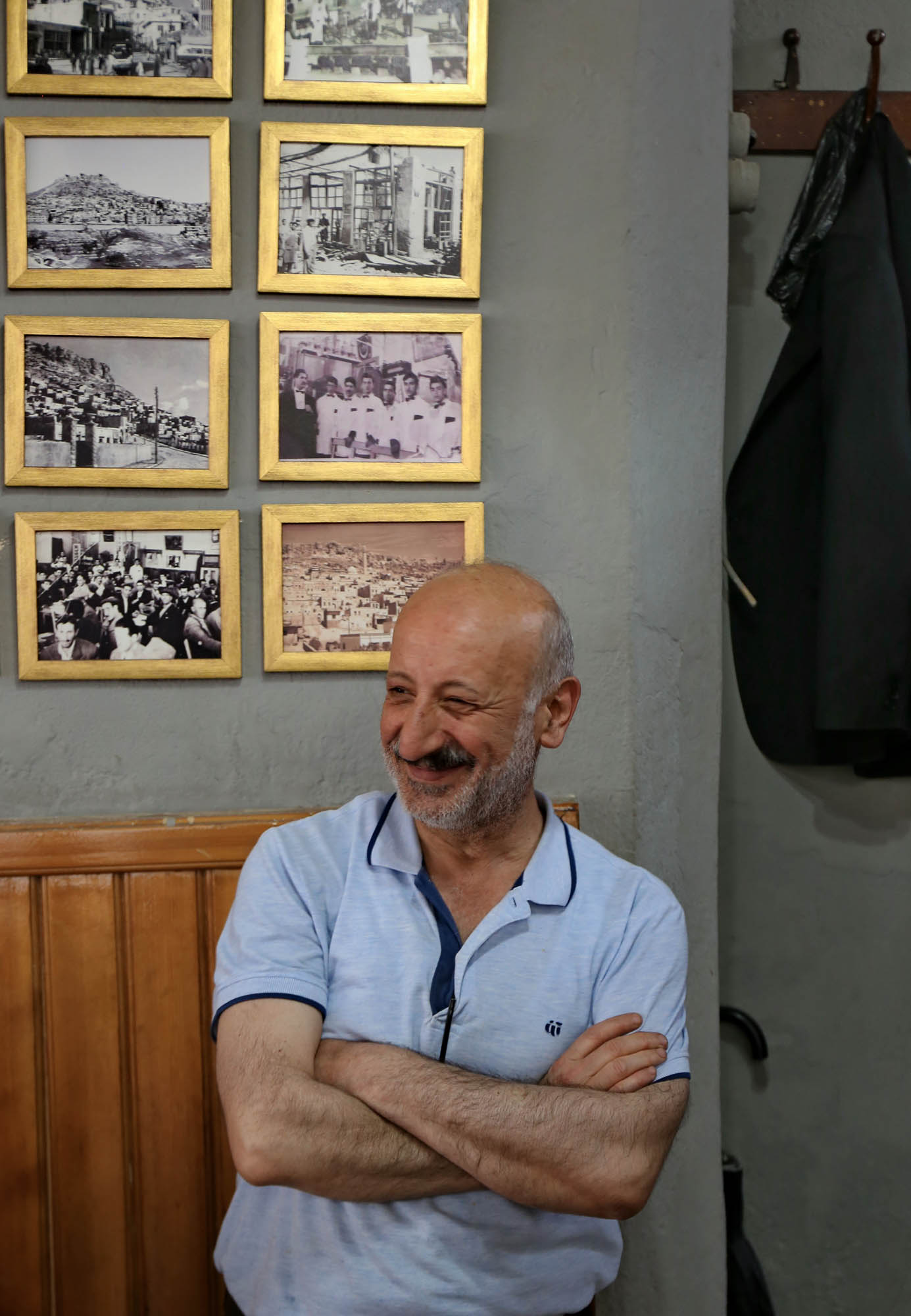
Affedersiniz, Kırmızı Kilise’nin nerede olduğunu biliyor musunuz? excuse me, do you happen to know where the Red Church is? I ask the waiter after the first coffee. He frowns deep, then admits that he is new here, he does not know it, but will ask someone. This someone is the owner of the café, Servet, who willingly comes to my table. “Hungarian? There were many Hungarians in the city this morning.” I congratulate him on his insight, and tell him that it was my group. I will bring the next one to him. “A hundred meters ahead on the main street, under the Sultan Sofrası restaurant you go down into the bazaar, down to the Great Mosque, from there straight down to the well of the Jews, and everyone will tell you there.” Because the above map is not meant for flat terrain, but for a hillside, so that each street is at least thirty meters lower than the previous one. “And if you are interested in anything else, feel free to come. We can help with everything here.” He lets himself be photographed under his grandfather’s photo. The café was opened nearly a hundred years ago.

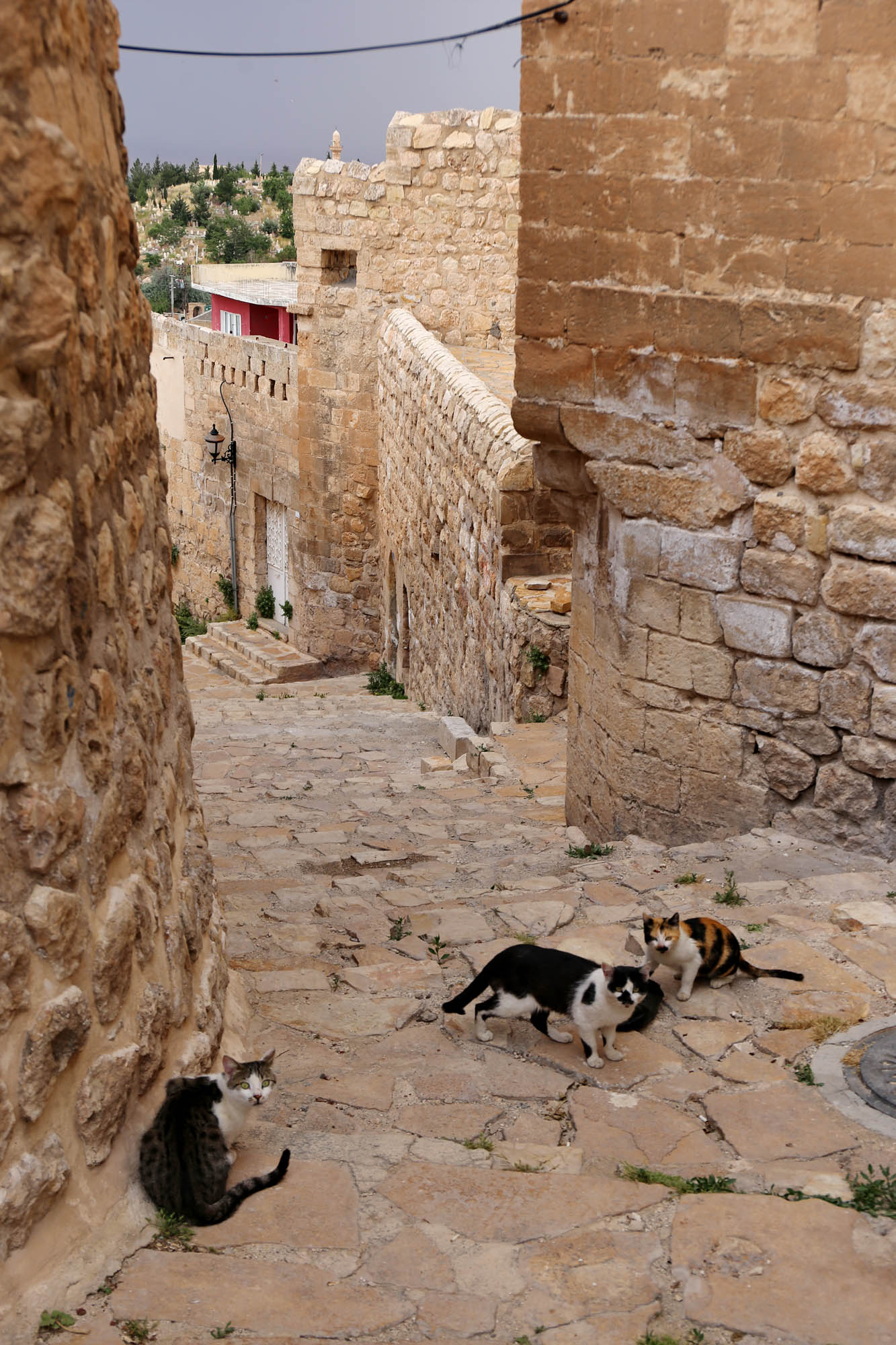
My descent through the winding alleyways is followed by the suspicious glance of three-headed lions, worrying for their prey. I am only a hundred meters away from the destination marked on the map, when the manager of the Mardius historical guest house would direct me back on the main street, because he had never heard of the Red Church either. But I’m moving on.

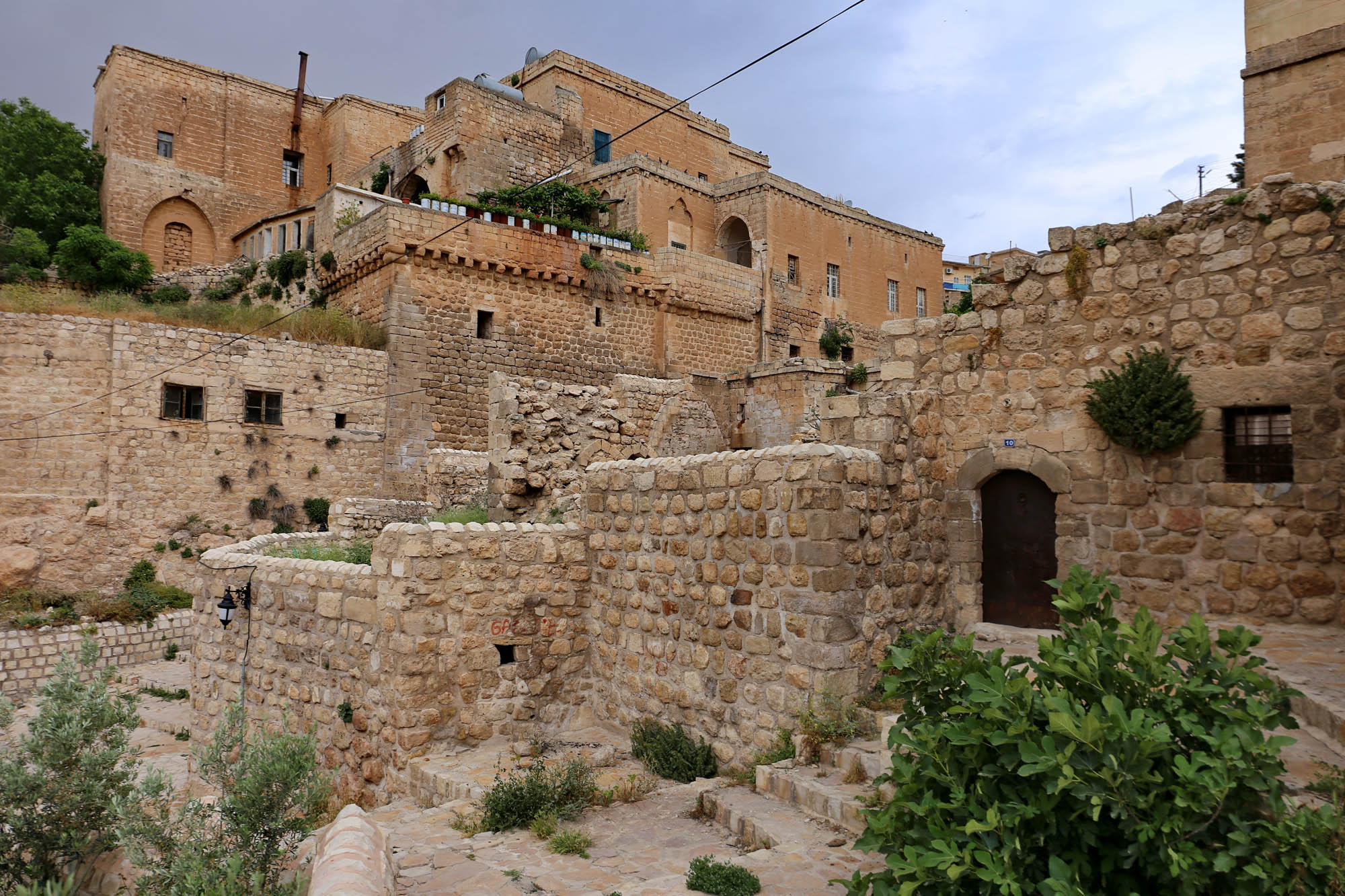
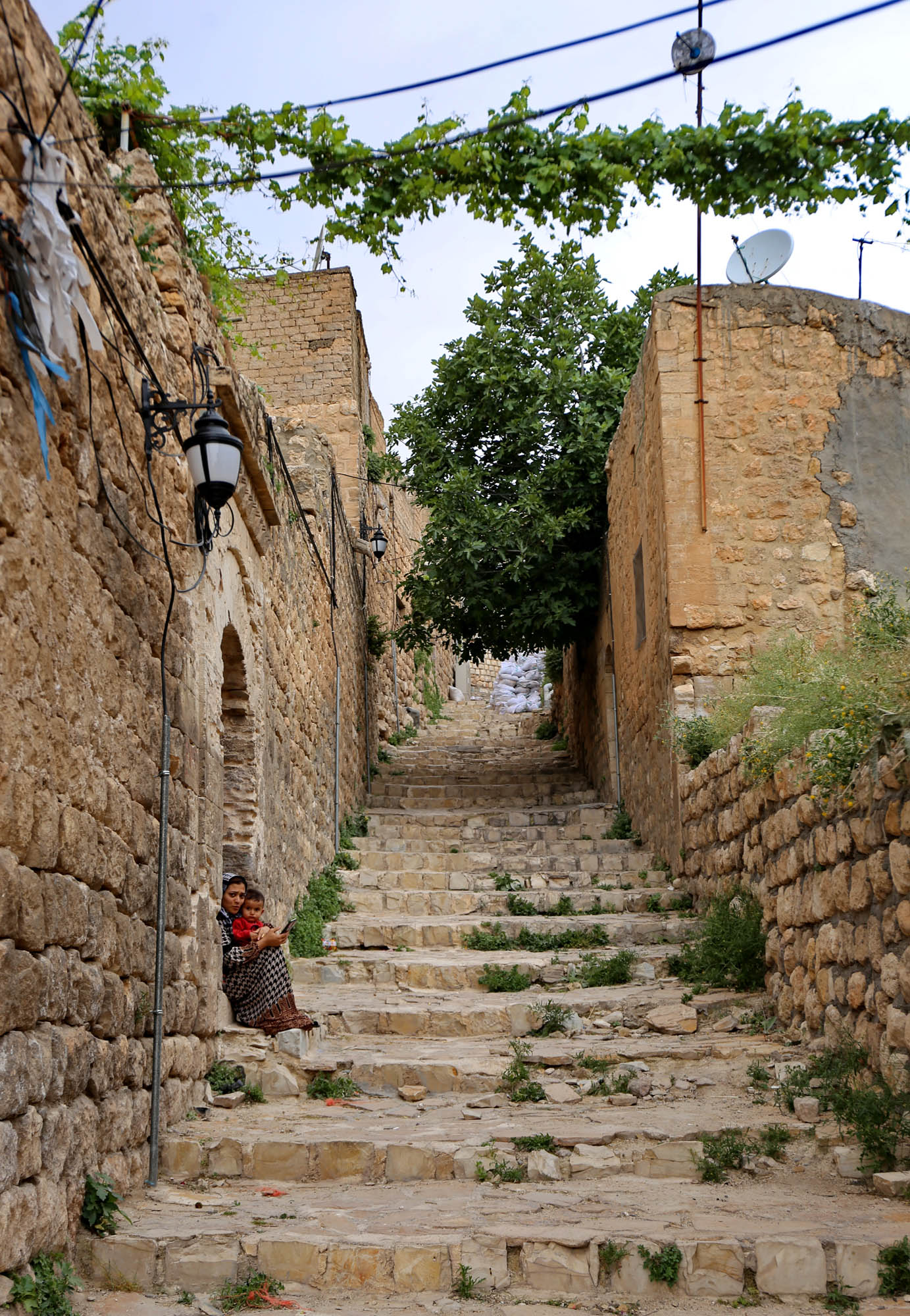
A steep staircase leads up from the well of the Jews. The block on the left, where Google Map marks the Red Church, really stands out, it is surrounded by a fortress wall with a gabled roof, and tall buildings with large arches rise above it. But at the place marked by Google Map there is no entrance.

A man comes down the stairs with a water can in the hand. I ask him, too. He answers firmly – but not with the Oriental male determination which is just making it up – that I should go up the stairs to the Cevheriye fountain, turn sharply back on the other stairs, and there will be an entrance.

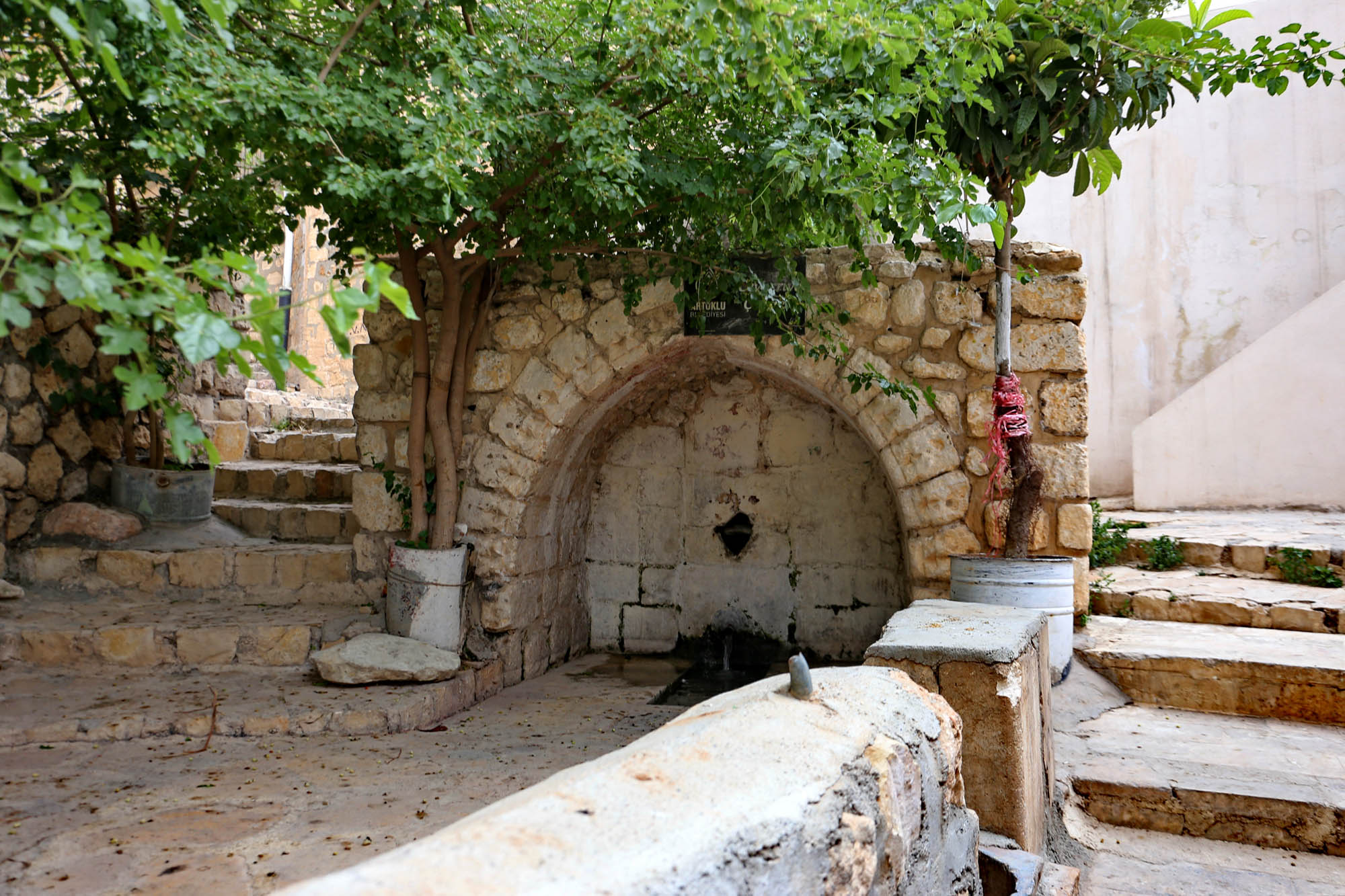
The 14th-century Cevheriye fountain is an important point of reference in the Great Mosque neighborhood. Its water is considered to have a healing effect.

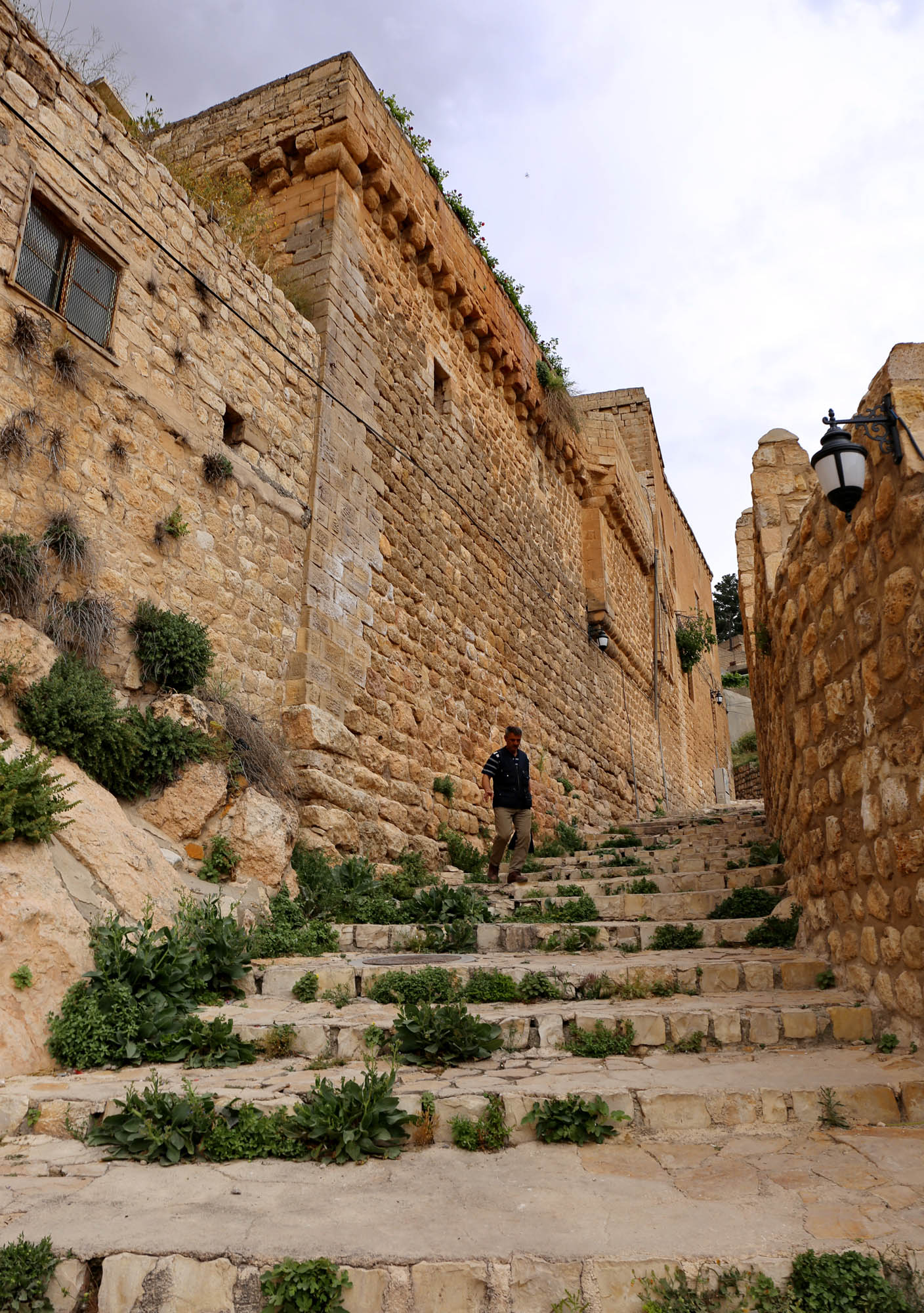
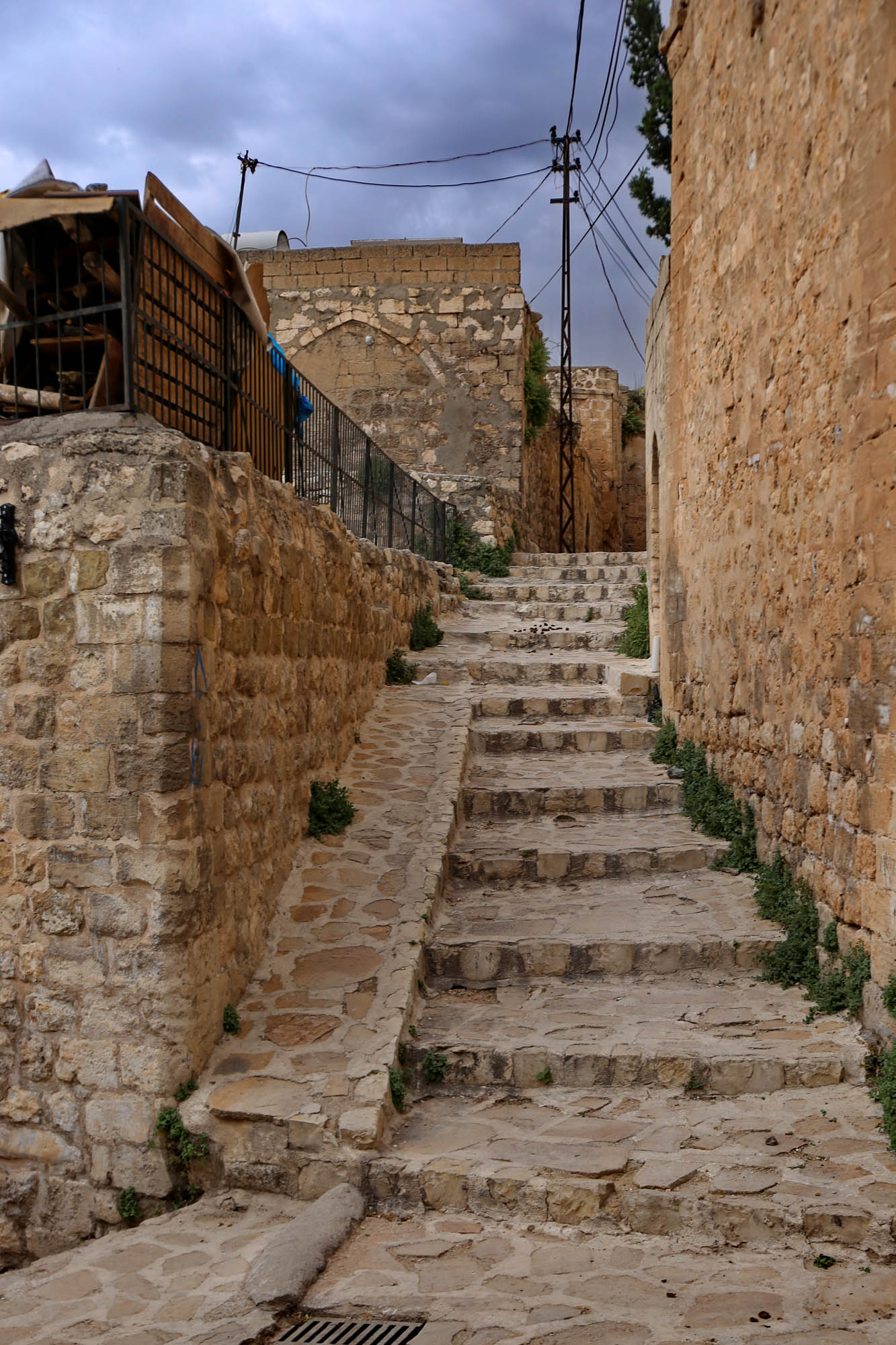
From there, steep stairs lead up along the west side of the block. At the turn, a fourteen-year-old boy stands in front of a house. He looks at me and asks: “Are you looking for the church?” I say yes. He steps forward and pushes open an iron door that you would have never thought was open.

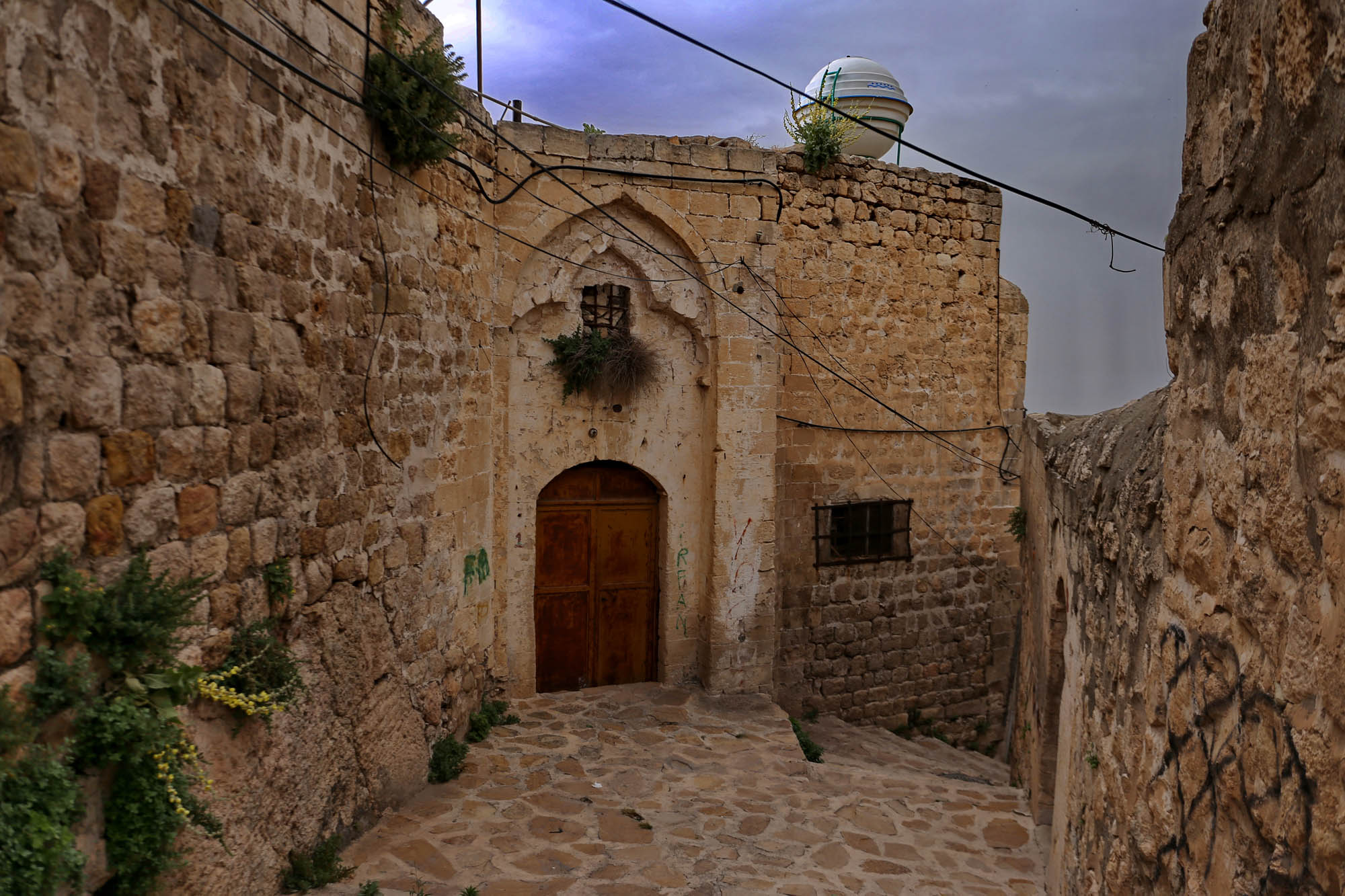
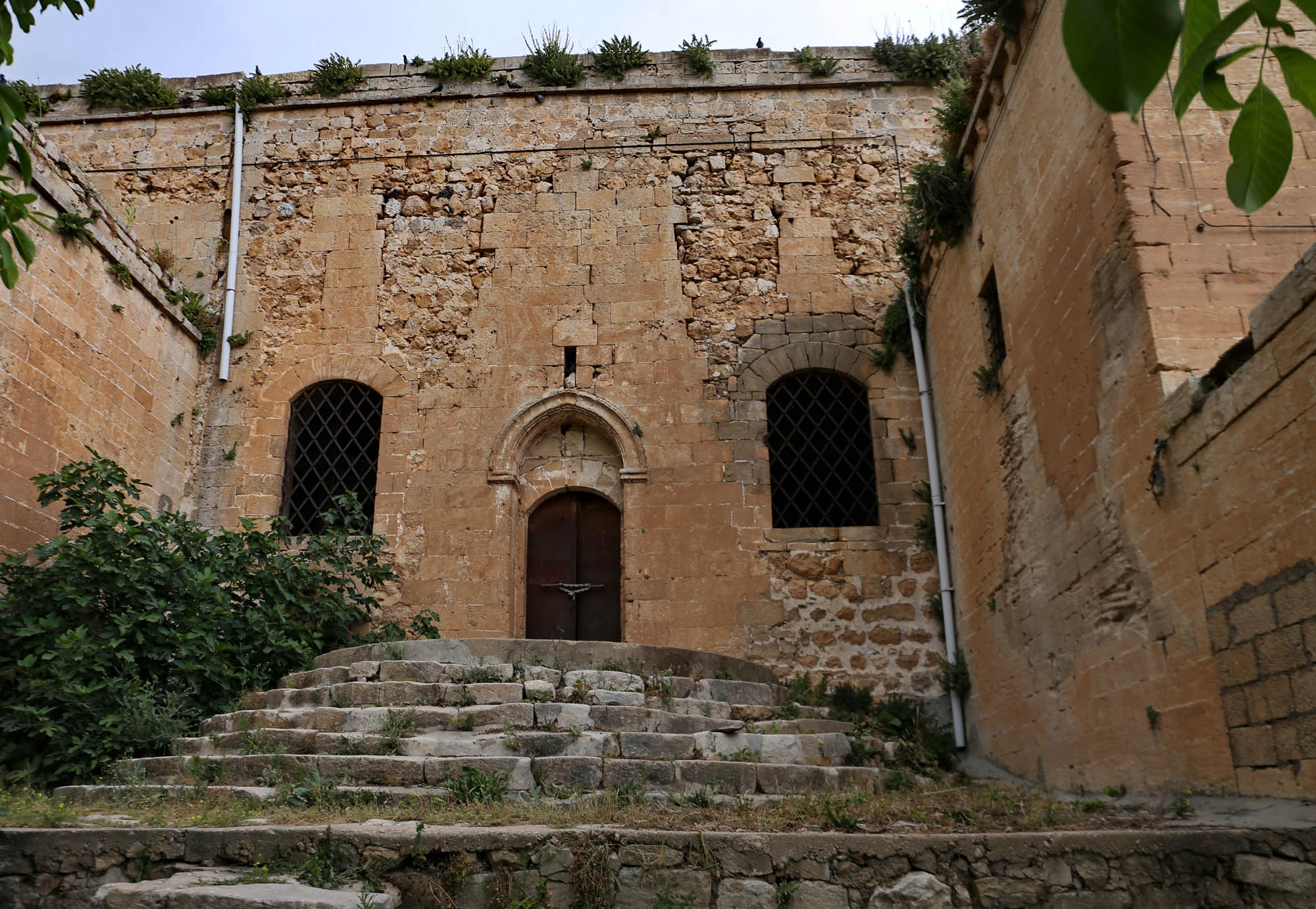
After the iron door, there is a dark doorway a few meters long, followed by a former church courtyard densely overgrown with fig trees. The church gate rises several steps to the left, but is locked with a chain and padlock.

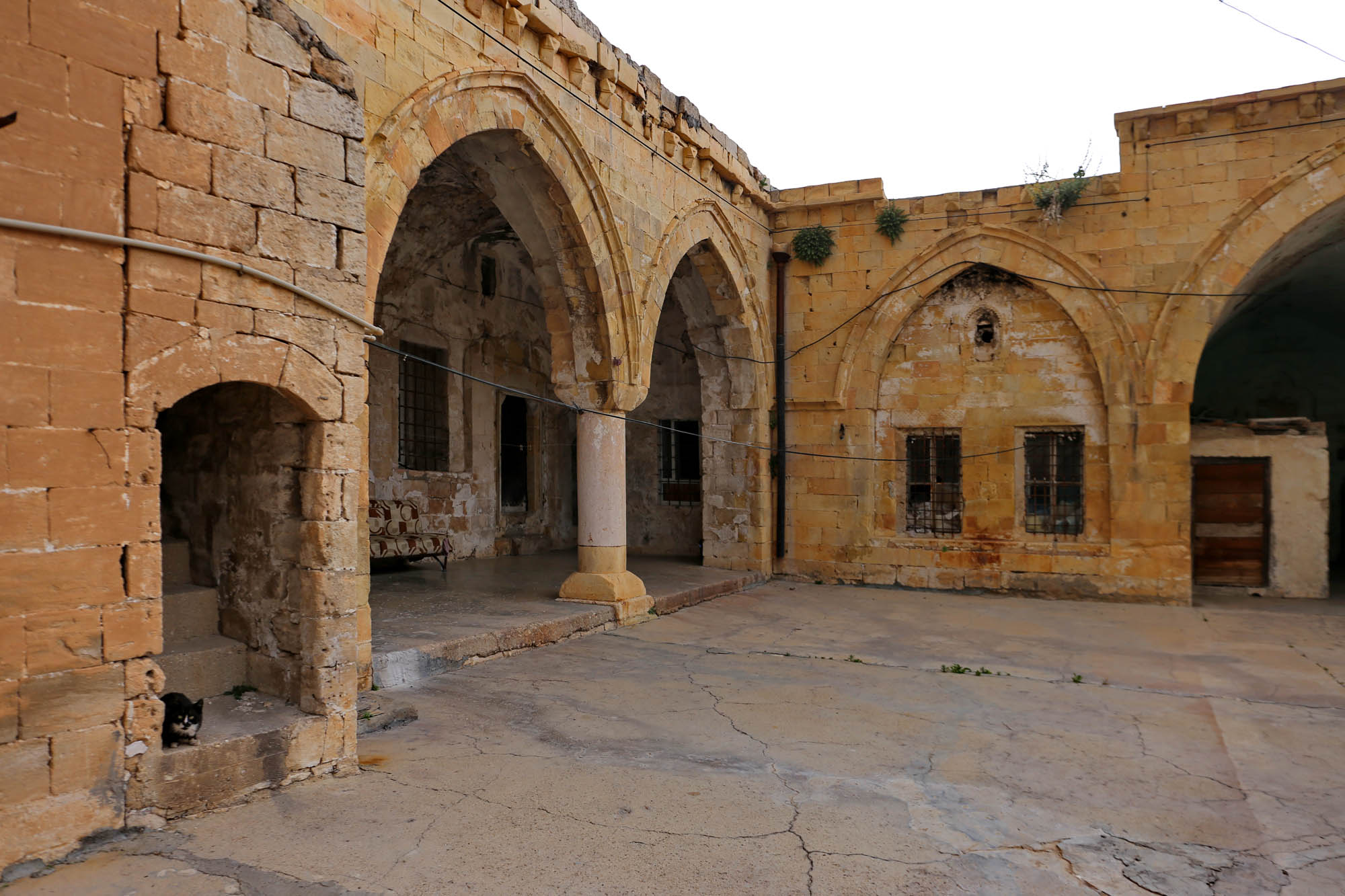
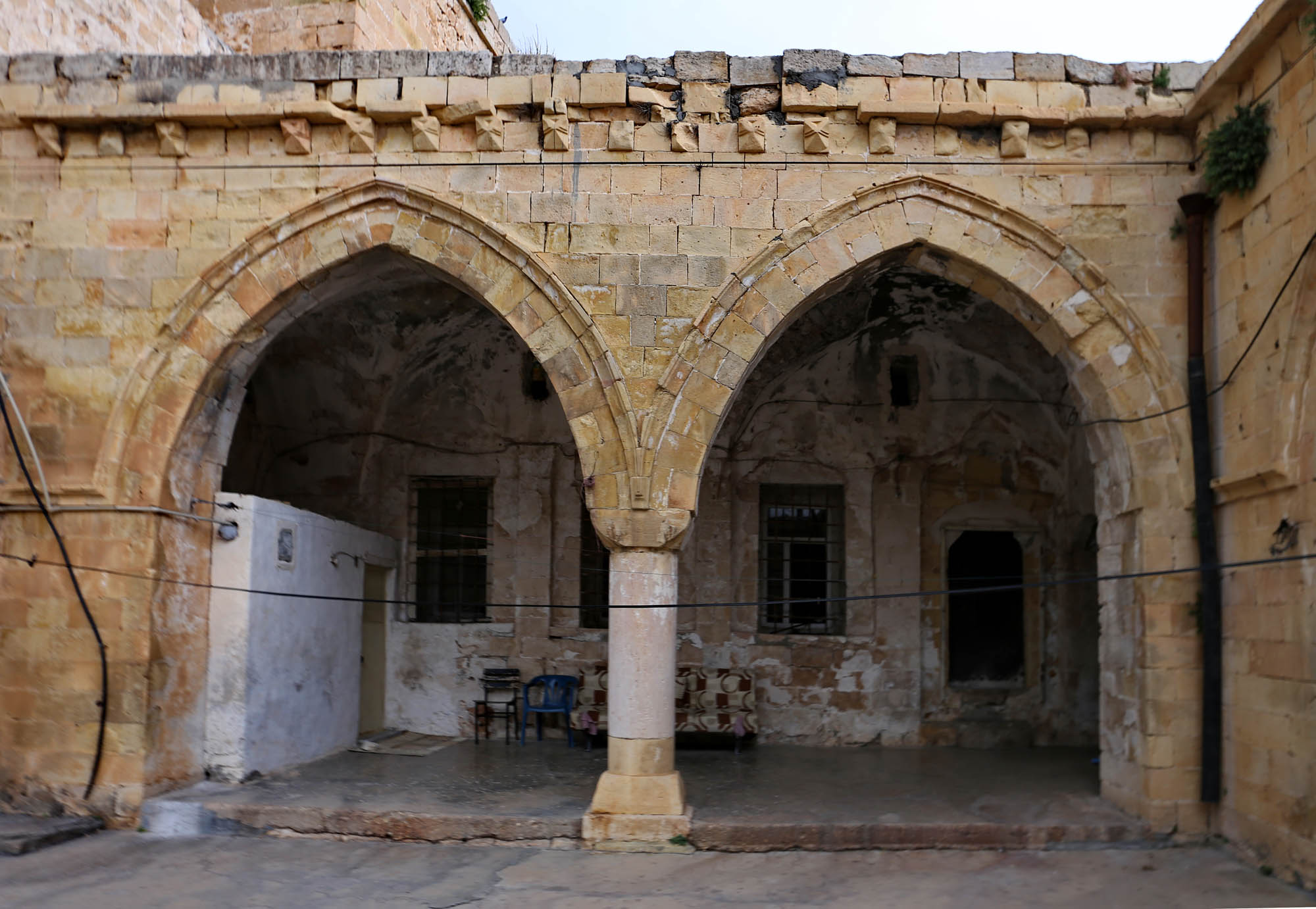
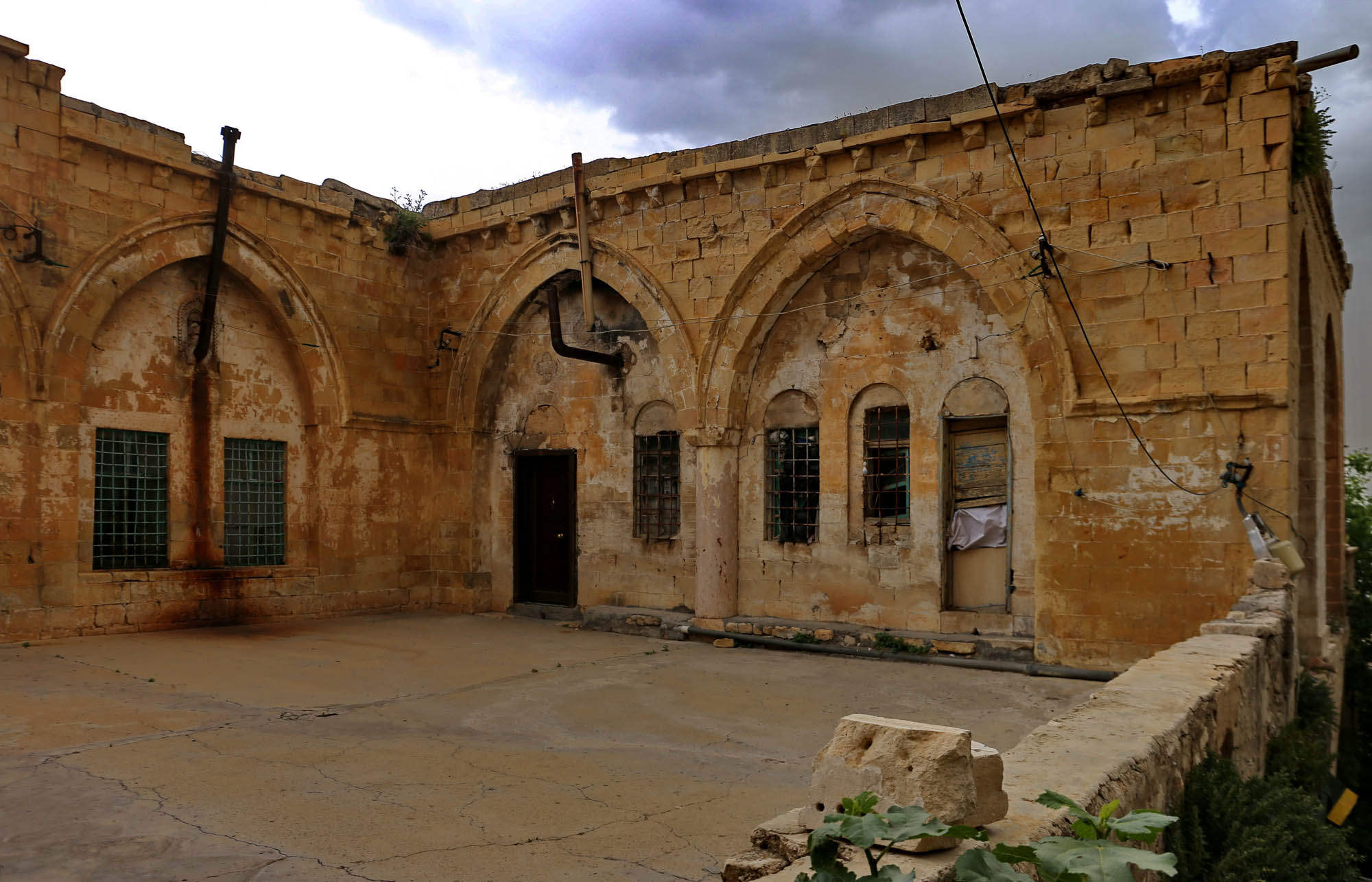
To the right, an open gate leads to another courtyard, whose arcades recall a former monastery courtyard. I just enter and start taking photos, when a belligerent old Kurdish woman comes out of the end of the courtyard, and shouts that it is forbidden to take photos. I am saving the trump card, the red-bellied tranquilizer, for the next week, when I am going to come here with a small group, so now I am just eagerly nodding while taking photos around the yard from left to right.

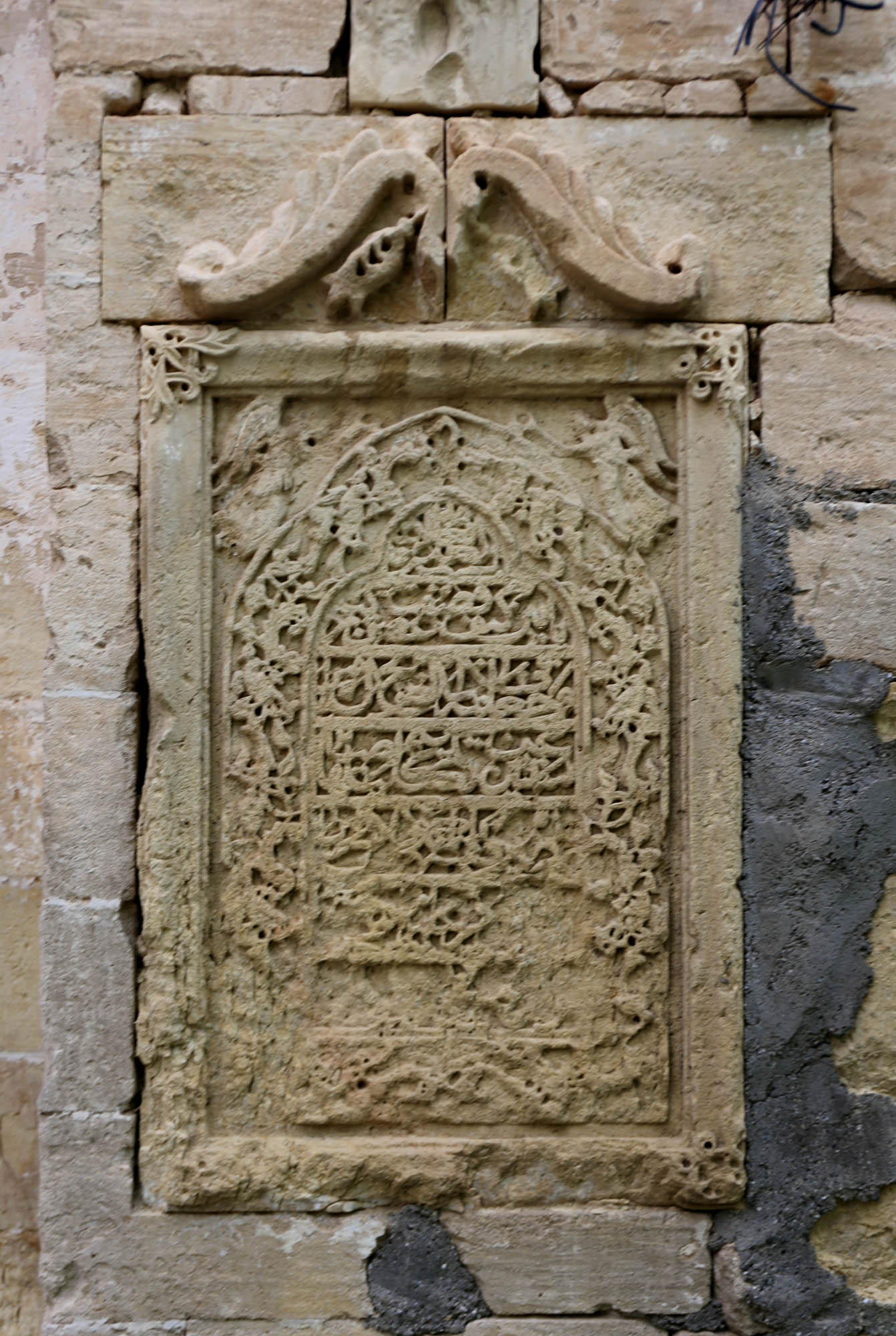
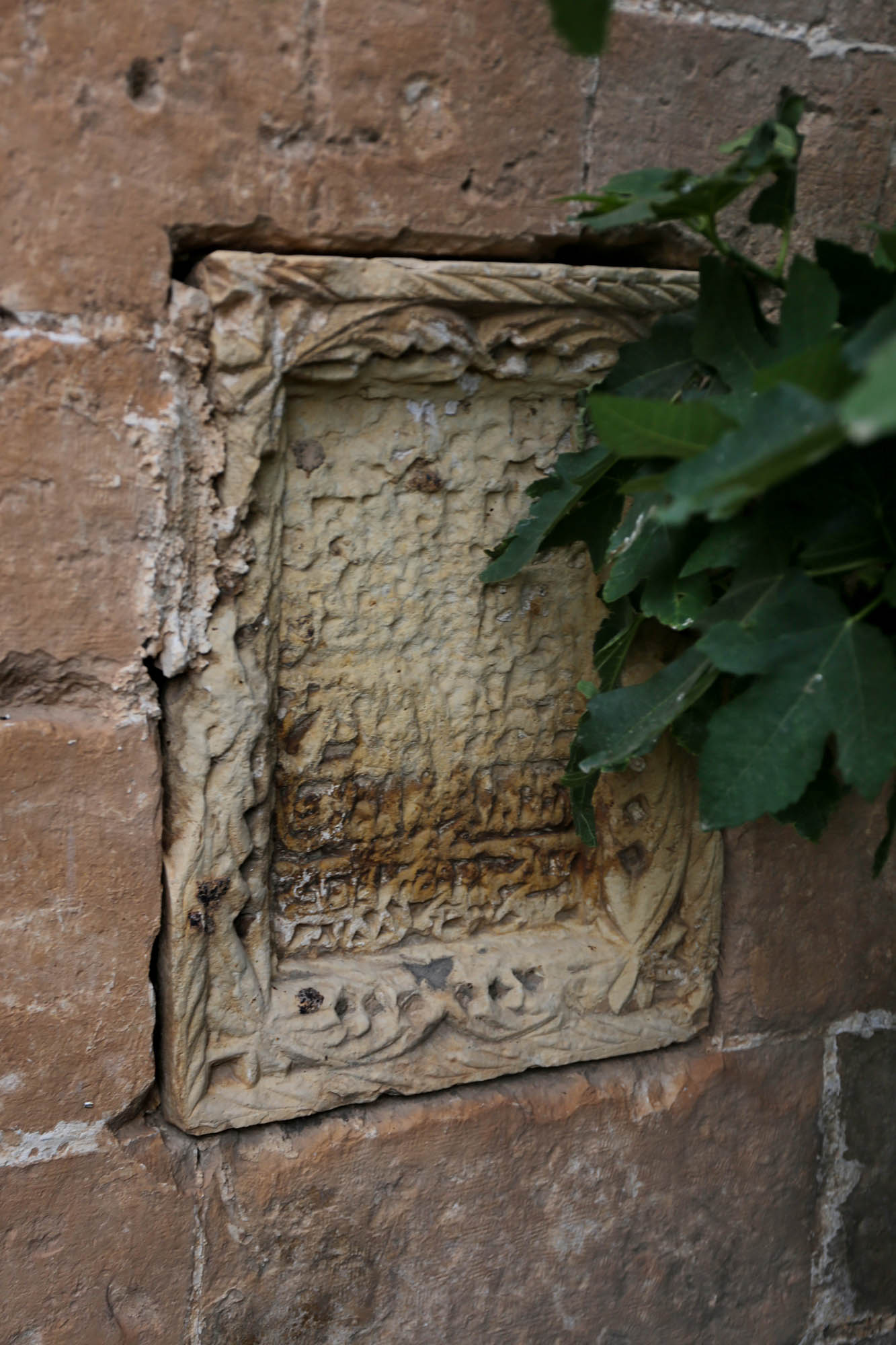
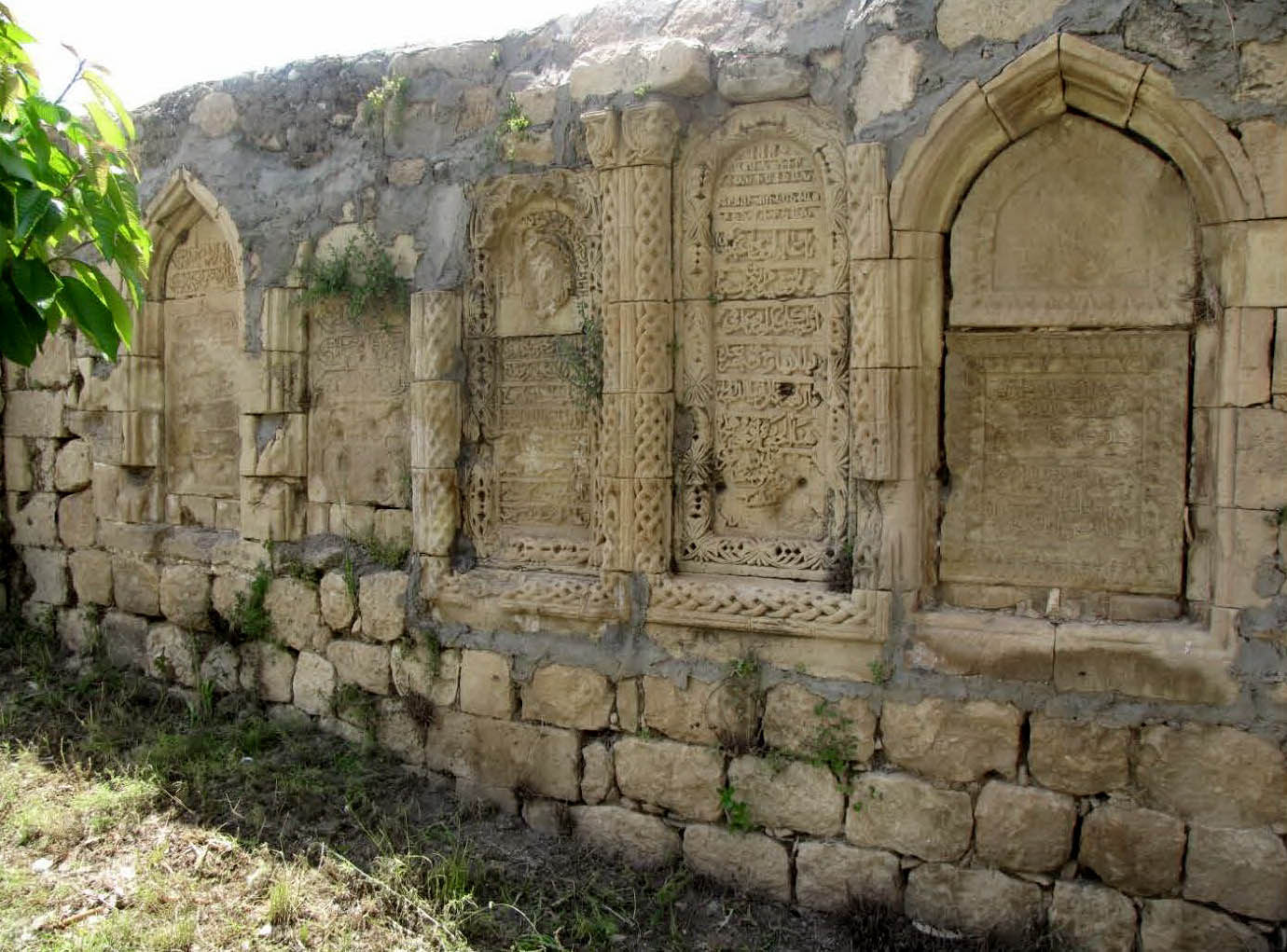
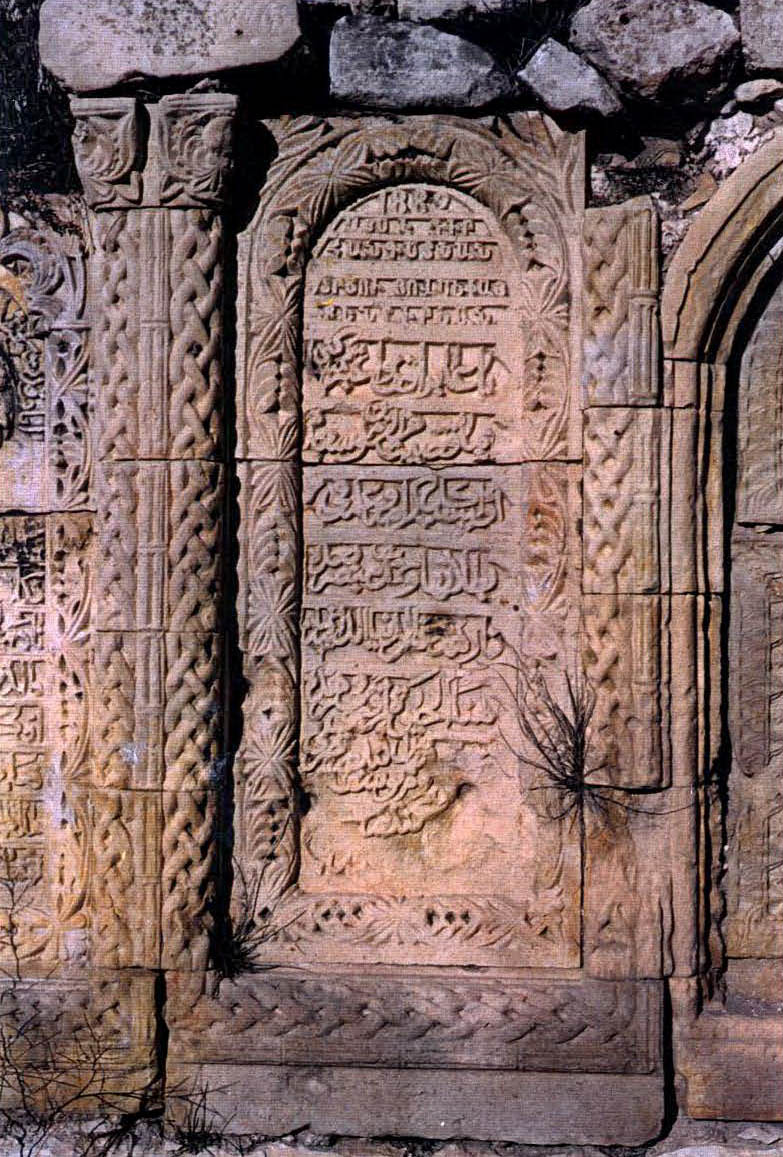
In the courtyard itself, there are a few carved gravestones, most of them in secondary placement. Their inscription is mainly Arabic. Yıldız Deveci Bozkuş in his study Mardin yöresinde Ermeni-Arap ilişkilerinin (Armenian-Arab relations in the Mardin region) writes that the Armenians of Mardin used the majority language of the city, Arabic, as their everyday language and on tombstones, and he illustrates this with several tombstones of the Red Church (which, according to the photos of the article, were in the wall of the courtyard, but I could not find them).

The Arabic text of the fragment used as a stair begins with the year 1904, which refers to the Christian calendar, since the Muslims only wrote 1322 at that time

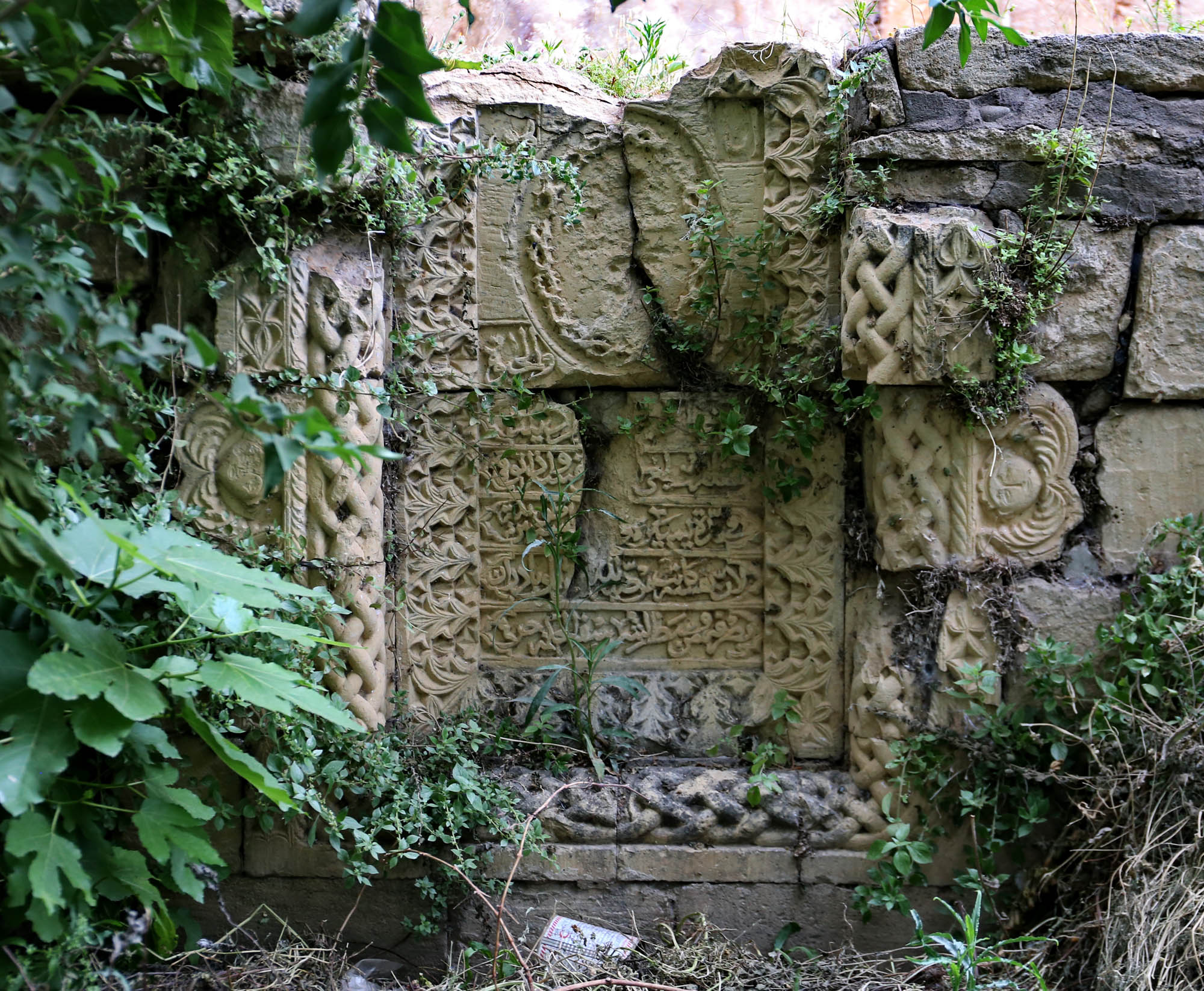
A retaining wall assembled from carving fragments. The boy who let me in is still standing next to me and retails me information: “A Christian tombstone. You know, this is a Christian church. Here there were Christians and Jews, that is, giaours”, he uses a term with absolute nonchalance which I thought was used the last time by the 16th-century Ottoman conquerors

An Armenian-language tombstone fragment on the top of the retaining wall

Tombstones with Arabic and Armenian inscriptions in the garden of the Red Church. From Bozkuş’s article

Tombstone of Father Der Hovsep Kendiryan from 1822, with Arabic and Armenian inscription, in the garden of the Red Church. From Bozkuş’s article

Bozkuş reports, that during the repair of the church in 1791, an inscription was found, which dates the foundation of the church to 420. Nesrin Aykaç’s informative article in Mardin Söz (December 1, 2022) also adds that after the Armenian Genocide of 1915 – which claimed especially many victims in Mardin – the two Armenian Catholic churches, Surp Kevork and Surp Hovsep, were used as barracks and as an orphanage for children left without parents in the genocide. The two churches were returned to the Armenian community in 1949. The latter was restored in 1949, the former between 1950 and 1954, and opened for worship. Today, however, most of the surviving Armenians have left Mardin, and the church is permanently closed. It seems that several people live in its courtyard and monastery building. The municipality has not yet decided on its fate.