Switch over to our new blog! • ¡Pásese a nuestro nuevo blog!

The renewed version of our blog, with more features, a richer design, and available in nine languages, can be read here: https://wangriver.com

The new version also includes the old posts, often in expanded form. If you are curious about the updated version of this post, replace “riowang.blogspot.com/” in the URL with “riowang.studiolum.com/”, and the new link will most likely lead you there.


La versión renovada de nuestro blog, con más herramientas, un diseño más rico y disponible en nueve idiomas, se puede leer aquí: https://riowang.com

La nueva versión también incluye las publicaciones antiguas, a menudo en una forma ampliada. Si tiene curiosidad por la versión actualizada de esta entrada, sustituya «riowang.blogspot.com/» en la URL por «riowang.studiolum.com/es/», y el nuevo enlace probablemente le llevará allí.

Mostrando entradas con la etiqueta Japonisme. Mostrar todas las entradas

Uchiwa Gallery

On the street behind Rouen Cathedral, Rue St. Romain, named after the city’s holy bishop, an interesting shop opens. Uchiwa Gallery, a Japanese shop with Japanese prints, books about them, albums by Utamaro, Hiroshige, Hokusai, and Japanese souvenirs. It is very appropriate that precisely in the birthplace of the Impressionism there is such a shop for Japanese prints, which inspired the vision of the Impressionists and Post-Impressionist so much that it is considered a separate movement called “Japonisme”.

We are browsing between the objects, leafing through the books. The saleswoman offers to help us. We start talking about the selected objects.

“Why did you open a Japanese shop? Does it have anything to do with Japonisme?”

“I don’t think so. The owner, my friend, started this shop as a picture framer, and in the meantime she became interested in Japanese prints, so much so that they now form the profile of the shop.”

“Who is your audience, who buys Japanese prints here?”

“On the one hand, collectors from all over France. There are maybe only four such shops in the whole country, so anyone who is interested in them will come here again and again. On the other hand, a lot of young people. France is the homeland of comics, most comics are published here and in Belgium. And within that, manga, too. After Japan, most manga are published here. Manga is familiar to young people who read comics, and they quickly notice the Japanese prints that are related to them. After all, in Japan, manga and prints form a continuum. It is mainly the thirty- and forty-something generation who, having grown out of manga, can appreciate the original Japanese prints and come in and buy.”

“Do you also have Japanese visitors? What do they say? Do they buy?”

“Yes, Japanese tourists also come in, and they are very surprised, even touched. Japanese people do not know how popular Japanese prints are in the West, especially in France, and they are shocked that there is a special shop for them here. But they don’t buy. In Japan, classical prints don’t have such a large audience anymore. They still make modern paraphrases,” she points out a few, “but even that is rare, because the genre is too laborious, few people undertake it anymore.”

La Galería Uchiwa

En la calle detrás de la catedral de Ruan, la Rue Saint-Romain, llamada así por el santo obispo de la ciudad, se abre una tienda interesante. La Galería Uchiwa, una tienda japonesa con grabados de allí, libros de arte, álbumes de Utamaro, Hiroshige, Hokusai y recuerdos japoneses. Es muy atinado que precisamente en la cuna del impresionismo exista una tienda de grabados japoneses, que tanto inspiraron la visión de los impresionistas y postimpresionistas, hasta el punto de desarrollarse un movimiento desgajado llamado «japonismo».

Curioseamos entre los objetos, hojeando los libros. La vendedora se ofrece a ayudarnos. Empezamos a hablar sobre las cosas que tiene allí a la vista.

«¿Cómo es que abrió aquí una tienda japonesa? ¿Tiene algo que ver con el japonismo?»

«“No creo. La propietaria, mi amiga, comenzó esta tienda como enmarcadora, y poco a poco se fue interesando por los grabados japoneses, tanto que ahora forman el perfil de la tienda.»

«Cuál es su público, quién compra aquí grabados japoneses?»

«Por una parte, coleccionistas de toda Francia. Quizá haya solo cuatro tiendas así en todo el país, de modo que cualquiera que se interese por ellos vendrá aquí de vez en cuando. Pero también muchos jóvenes. Francia es la patria del cómic, la mayoría de los cómics se publican aquí y en Bélgica. Y también el manga. Después de Japón, aquí es donde más manga se publica. El manga les resulta familiar a los jóvenes que leen cómics, y enseguida reconocen los grabados japoneses que se relacionan con ellos. Al fin y al cabo en Japón el manga y los grabados forman un continuo. Son sobre todo los de la generación de treinta y cuarenta años quienes, al dejar atrás el manga, saben apreciar los grabados japoneses originales y entran a comprar.

«¿Tiene también visitantes japoneses? ¿Qué le dicen? ¿Compran?»

«Sí, también entran turistas japoneses, y se sorprenden mucho, incluso se conmueven. Los japoneses no saben lo populares que son los grabados japoneses en Occidente, especialmente en Francia, y se quedan asombrados de que haya aquí una tienda especializada. Pero no compran. En Japón los grabados clásicos ya no tienen un público tan amplio. Con todo, aún hacen versiones modernas» —nos enseña algunas— «pero incluso esto es raro porque es un género demasiado laborioso, ya casi nadie se atreve a con él.»

Dissolving: For woman poets, on invitation cards

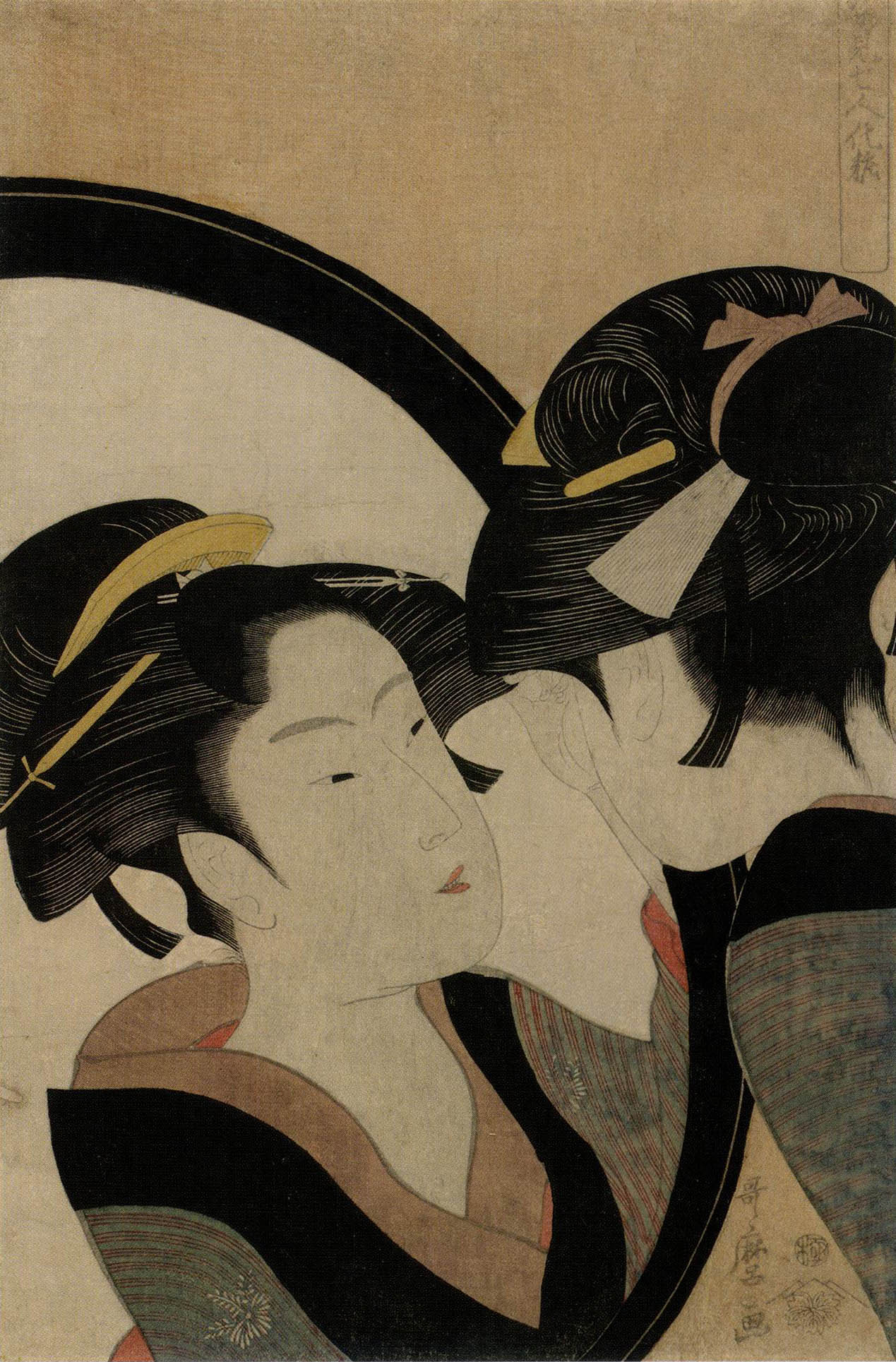
Kitagawa Utamaro (1753-1806): From the series Seven women applying make-up (1792-93)

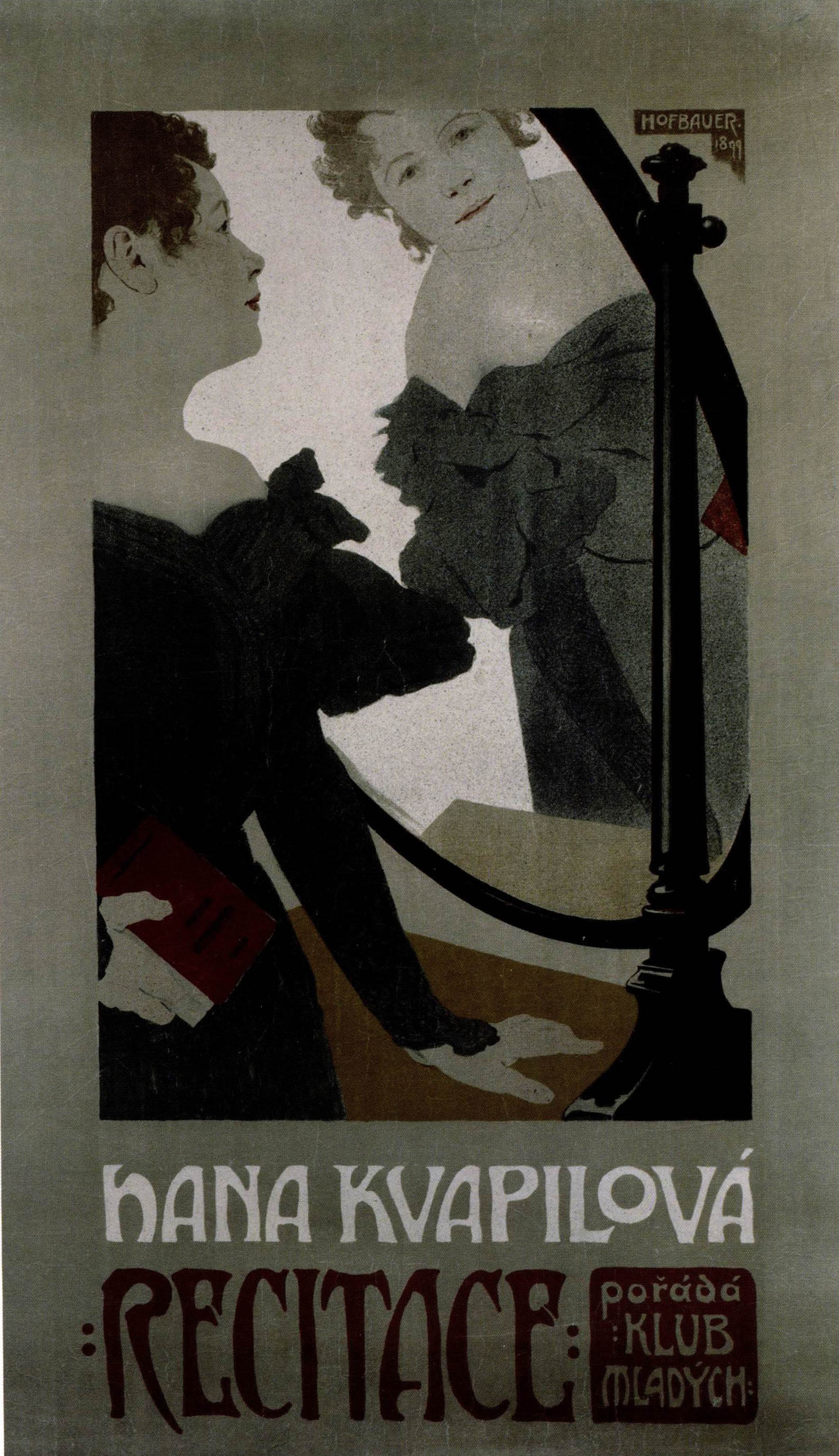
Arnošt Hofbauer (1869-1944): Invitation to the reading of Hana Kvapilová (1860-1907) in the Youth Club of Prague, 1899