Switch over to our new blog! • ¡Pásese a nuestro nuevo blog!

The renewed version of our blog, with more features, a richer design, and available in nine languages, can be read here: https://wangriver.com

The new version also includes the old posts, often in expanded form. If you are curious about the updated version of this post, replace “riowang.blogspot.com/” in the URL with “riowang.studiolum.com/”, and the new link will most likely lead you there.


La versión renovada de nuestro blog, con más herramientas, un diseño más rico y disponible en nueve idiomas, se puede leer aquí: https://riowang.com

La nueva versión también incluye las publicaciones antiguas, a menudo en una forma ampliada. Si tiene curiosidad por la versión actualizada de esta entrada, sustituya «riowang.blogspot.com/» en la URL por «riowang.studiolum.com/es/», y el nuevo enlace probablemente le llevará allí.

Mostrando entradas con la etiqueta Austro-Hungarian Monarchy. Mostrar todas las entradas

Christmas in Kashan

Christmas? In Kashan?? At the edge of the Iranian desert?? Maybe rather in Isfahan, among the Armenians of New Julfa, or with the Assyrian Christians in Tabriz or Tehran… But the title is no mistake, there was a Christmas in Kashan as well, at least once. And guess what, one of the participants was Hungarian.

Christmas in the Armenian district of Isfahan. Photo taken in 2019 by Mortezâ Sâlehi from here

Gergely Béldi de Uzon was a member of an aristocratic family from Transylvania. He was appointed as vice-consul to Tehran in the summer of 1914 at the age of 26. In the absence of the envoy, Logothetti, he was in charge of the affairs. At first life in Persia seemed to be one of ease – in August 1914 they spent two weeks hunting in Mazandarân –, but things became complicated soon enough.

Though Persia (as Iran was called at that time) officially stayed neutral in the Great War, it was heavily under the influence of Russia and Great Britain, while in domestic politics one political crisis ensued the other for years. Soon after the outbreak of the war the Germans tried to make Persia an ally of the Central Powers which seemed to turn out a success by the end of 1915. To prevent this, Russians – who already occupied the northern parts of the country since 1911 – sent troops (8000 cavalry and 6000 infantry) under the command of General Nikolai Baratov to the south, to Qazvin.

Iran in the First World War. Source: Yann Richard: Iran. A Social and Political History since the Qajars, 2019. 123. p.

On the news of the advance of the Russians, the diplomats of the Central Powers fled Tehran (the last group of the Austro-Hungarians leaving on the morning of 14 January 1916, disguised as Bakthiyari nomads). Back in early December 1915 Gergely Béldi was south of Tehran in Qom. From there he set out to Isfahan together with a group of Austro-Hungarian officers and soldiers. Then they went on to Abade, where they turned back towards the northeast, to Kermanshah upon the advance of the British troops from the southeast. Finally he arrived via Mesopotamia and Anatolia to Constantinople, then to Vienna on 16 April 1917.

In this period, from 10 December 1915 until April 1917 Béldi wrote a personal diary of his experiences en route, a unique source in which the actual political events are mixed with his personal observations on ornithology and hunting. Later, in 1918 his ornithological notes were published both in Hungarian and German in the Hungarian ornithological journal Aquila. There he gave a brief summary of the hardships of the previous years, illustrating his involuntary Persian voyage with a map.

The voyage of Gergely Béldi through Iran during the First World War. Source: Béldi, Gergely: Madártani jegyzetek Nyugat-Perzsiából és Mesopotámiából [Ornithological notes from Western Persia and Mesopotamia]. In: Aquila 25 (1918) 89. p., accessible here

However, the entire diary was never published. Nowadays one copy is kept in the Archives of Vas County in Szombathely, Western Hungary in the family archives of the Chernel family (presumably a copy of the original, based on its even, clear handwriting). Supposedly it ended up there via Béldi's wife, Erzsébet Mannsberg, a relative to the Chernels. Maybe it is due to the ornithological observations, as a member of the family, István Chernel was a famous ornithologist of his time (and the editor of the Aquila journal), just as later Gergely's son, Miklós too.

His account would not put Baedeker or Lonely Planet to shame, though. He obviously didn't have an eye neither for the Iranian landscape, nor for the milieu in general. He writes about the landscape and Kashan (where they arrived on the evening of 22 December 1915) in such detail and manner:

“We arrived to Kashan in the evening. The road was of no interest. The great, plain Kevir [the desert] to the left and some hills to the right. A large inquisitive crowd was waiting for us outside the city. Kaschan(!) is a city stretching all over and one of no interest, with the usual narrow, arched bazaars.”

However, the wartime circumstances are an excuse for him (how would you enjoy the road if you should take it fleeing from the advancing Russian army on horseback and among uncertain rumors?), as well as the fact that even if he wanted to, he could not visit the nowadays must-see places of Kashan, like the Fin Garden (on the UNESCO World Heritage List since 2012) or the historical houses.

According to his account they spent 23 December in Kashan and as they had to marched on the following day, they had an early Christmas Eve there, under rather unconventional circumstances, exactly 109 years ago:

“XII. 23. We rest for a day. Napravil commanded the soldiers that today is Christmas Eve. We had to go on the next day and we could not celebrate it then. We sat together, me, the two officers (Napravil and Daskiewicz) and the two Jewish physicians and we celebrated Christmas Eve as much as we could. We ate raisin and almond and drank red wine at the light of a candle, lying on the carpet.”

There was even time for an occasional bargain earlier that day, though it turned out very soon that it was not a good deal:

“I bought from one of the Swedish officers, who was still there, a fine-looking 6-years old chestnut stallion. I wondered at the low price he asked for it, but the next day I realized why. He went on very well and tame but as soon as I got off of him, as a tiger, he attacked the other horses and kicked them where he reached them. Thus until Isfahan I could not get off and at the lodgings I had to find an empty stable and could only get off there. I cursed the Swedish many times. Otherwise, he endured fatigue better than the other horses we had.”

On 24 December they went on to Isfahan and in the evening they arrived to a caravanserai. His short description reflects the circumstances very well:

“XII. 24. At noon we departed for Isfahan. We, Napravil and I, got lost again fortunately. We departed later than the soldiers and the people showed us the shorter way because they didn't know that the others go with a wagon and that we would go with them. When we discovered our mistake, we passed through the stony wasteland and after a long fumble and stumble we reached the others in the dark at a half-collapsed caravanserai. which was full of fleeing Cossacks. They did not have a single bit of discipline and would not make place for us. We didn't even try to throw them out as they were many and the air was already rather awful in the rooms. Thus we set up our beds in a half-collapsed stable where seemingly stray dogs used to give rendez-vous to each other. But we cleaned the place and settled in well enough. What a poor Christmas Eve!”

We hope our readers will have a a richer and less adventurous Christmas.

***

I noticed it only after writing this post that the Hungarian Iranist Miklós Sárközy gave a lecture on Gergely Béldi's diary just a few weeks ago. The recording of the lecture is available online (only in Hungarian) since 21 December but I didn't have the time to watch it until the publication of this post. Thus I wrote this post without knowing it and before it became available, waiting only for the anniversary to publish the story of Gergely Béldi’s unconventional Christmas in Kashan.

Signs of homeland


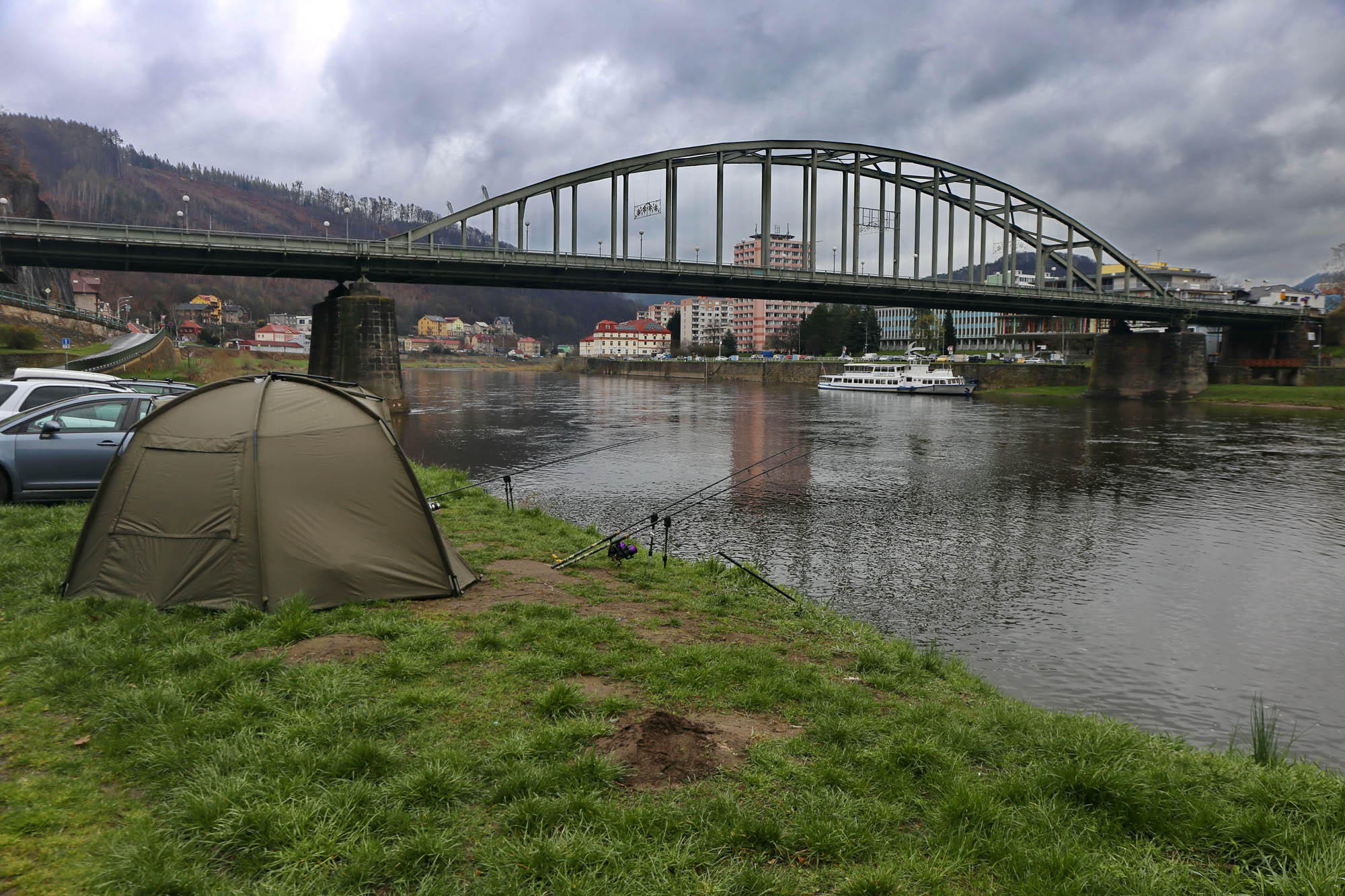
In hard times like these, one gets used to skinning a weasel with a stone ax. When traveling from Berlin to Prague, I instinctively get off at Bad Schandau to take the local train to the border town of Schmilka, where I cross the Elbe by ferry, then walk on hiking trails over to the Czech side, where I take the bus in the border village Hřensko to the first town, Děčín, to catch the train to Prague. But times are changing, and nowadays packaged weasel fillets are available in the store, as they used to be. When getting off in Bad Schandau, on the neighboring track there is already a small Czech train with the lofty label “Děčín, main railway station”. Whatever may ensue, I board it, as if it were a normal world. Crossing the border is officially still bound to a 48-hour Covid test, but the car is full of Czech guest workers, and none of them is waving it to show it off. The conductor goes around, selling tickets in Czech. The closely watched train rolls along undisturbed to the other side. Welcome to the East European Absurd.


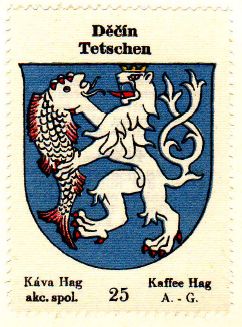
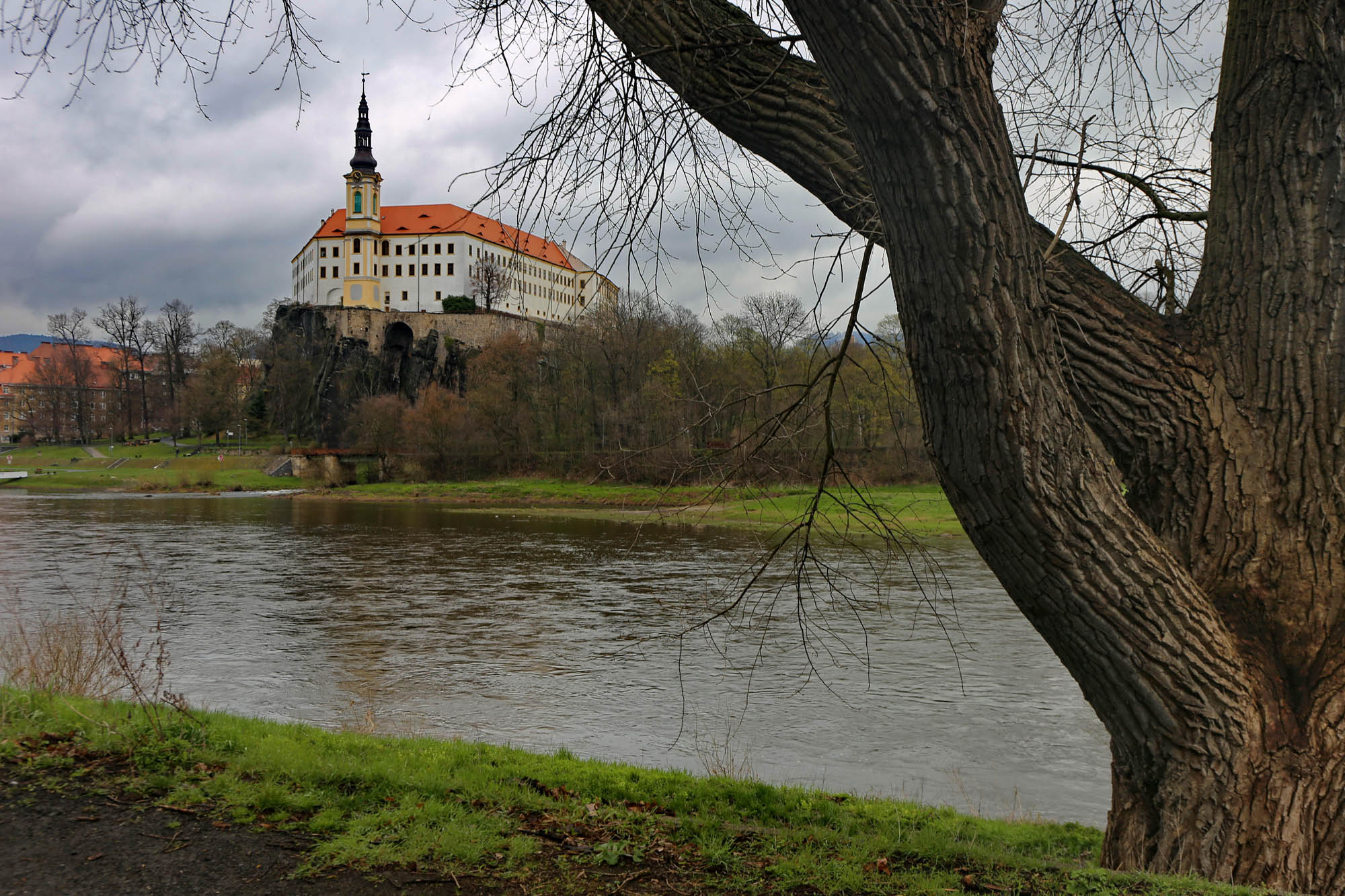
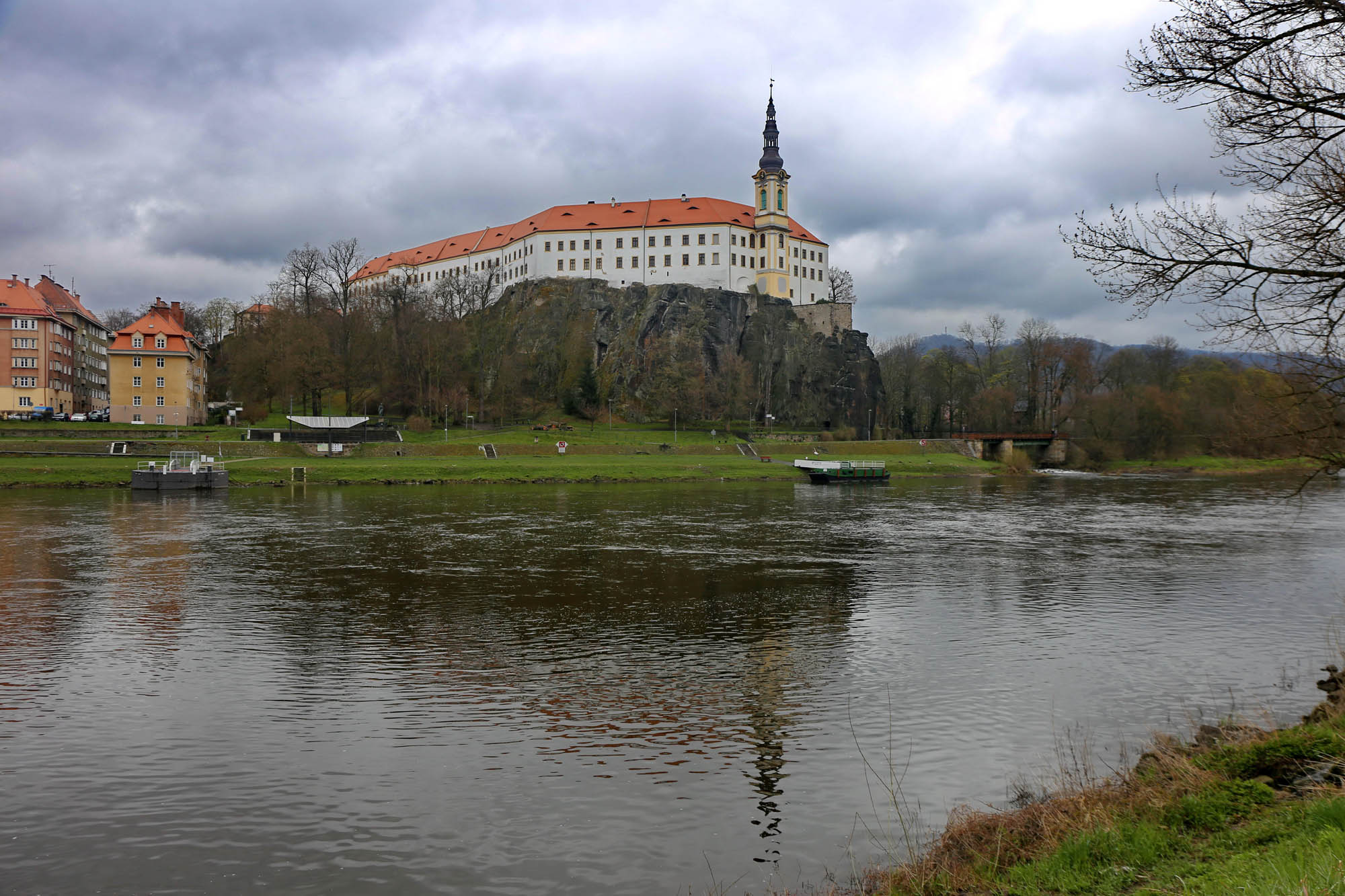
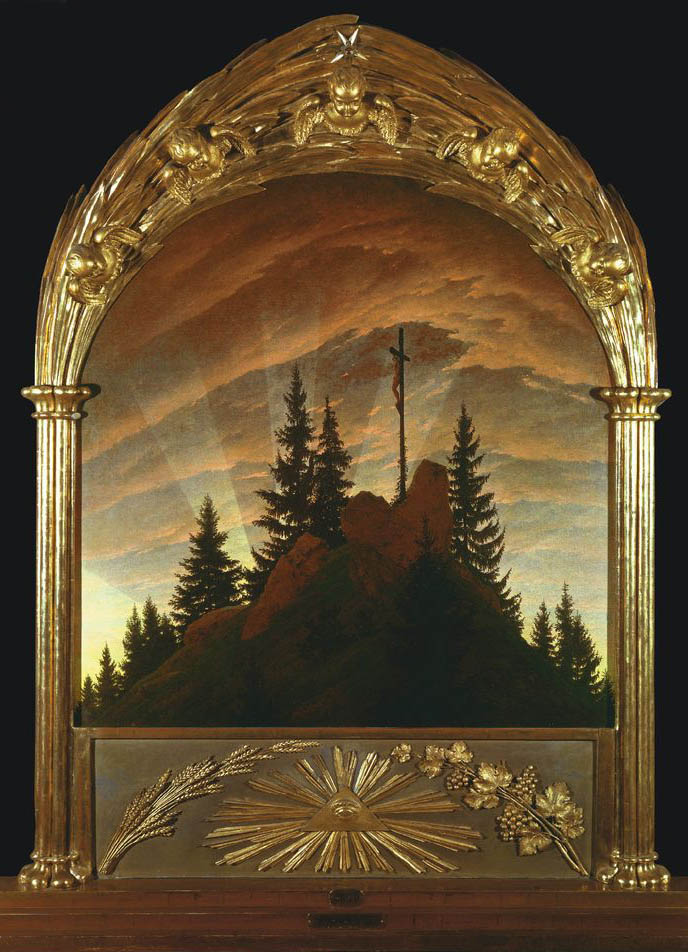
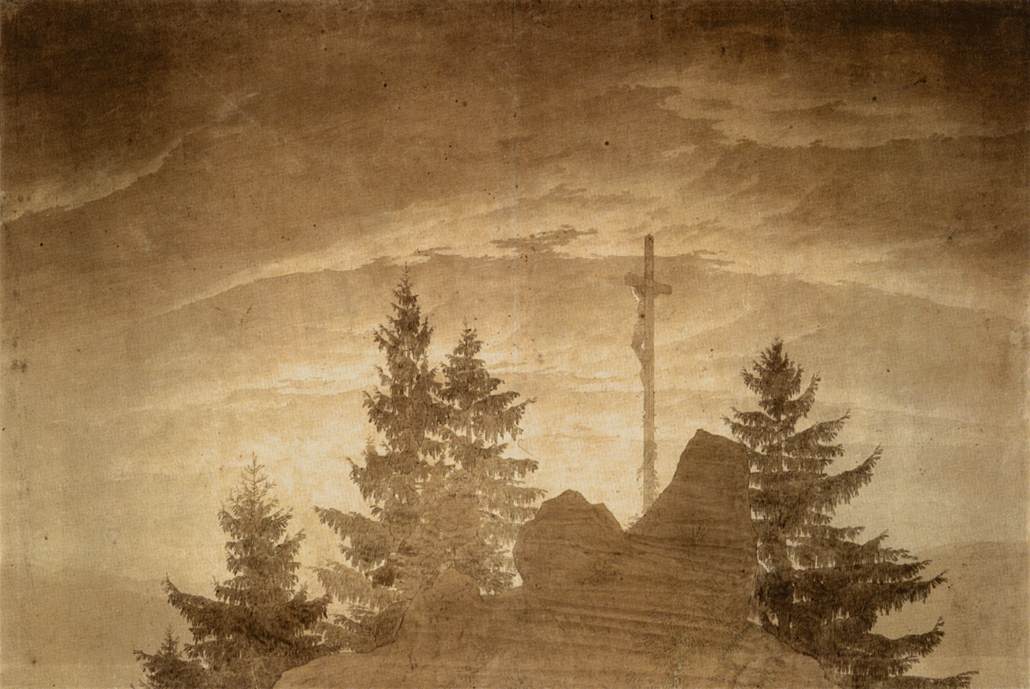
I still have one hour until the train to Prague. I walk out in the town. Děčín – Tetschen – was a German spa town in the Bohemian/Saxon Switzerland until the deportation of the Sudeten Germans in 1946. This is still remembered by the Art Nouveau villas that decay in melancholy. Over the Elbe, on the edge of town rises the Tetschen Castle, founded in the 12th century, and then rebuilt in Renaissance and Baroque style. In 1808, Caspar David Friedrich painted his Tetschen Altarpiece (or Mountain Cross) for its chapel, where he for the first time elevated nature to the rank of religious painting, according to the creed of German Romanticism. The pines and the crucifix that rise on a lonely cliff fit very much to the castle rising on a sandstone cliff on the banks of the Elbe. And here Chopin wrote his “Valse brillante”, whose melancholic ebbs and flows coincide well with the atmosphere of the river pulsating beneath the castle and of the former small German town forgotten on the other bank.


Chopin: Valse brillante Op. 34. No. 2. a minor. Performed by Arthur Rubinstein


Caspar David Friedrich: Tetschen Altarpiece or Mountain cross, 1808. Dresden, Galerie Neue Meister

The sketch of the painting (1805-6), on the basis of which Countess Theresia von Thun-Hohenstein ordered the altarpiece

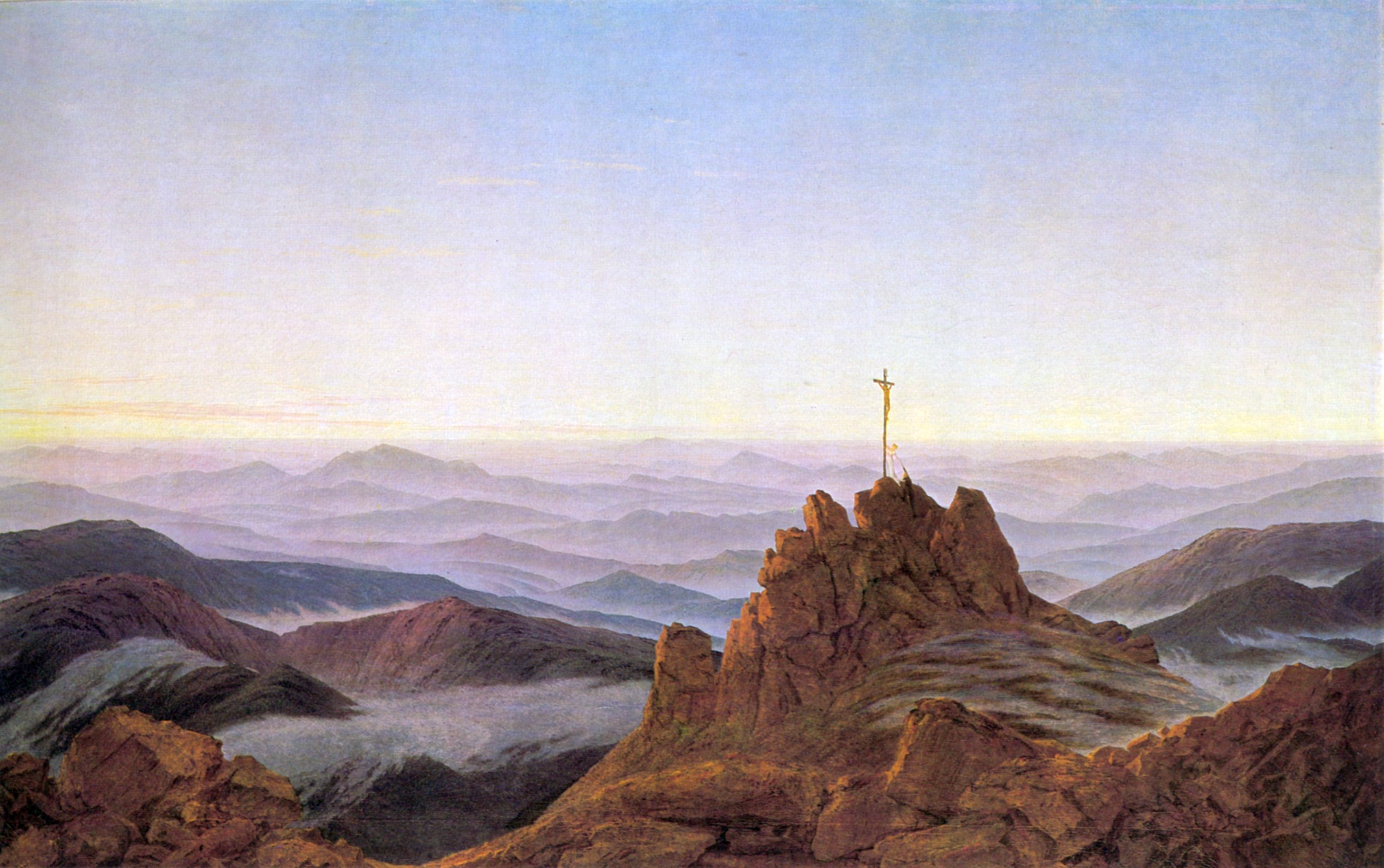
Caspar David Friedrich: Morning in the Giant Mountains, 1810-11. Berlin, Schloss Charlottenburg

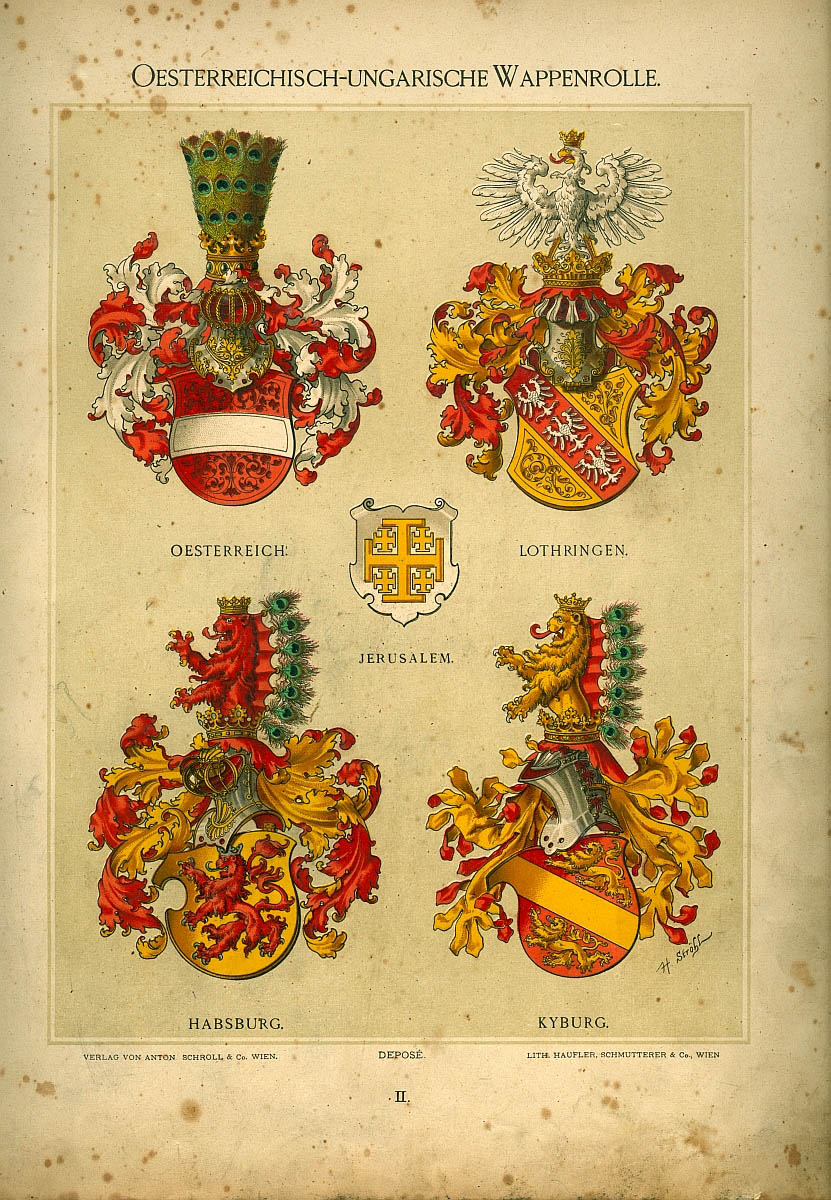
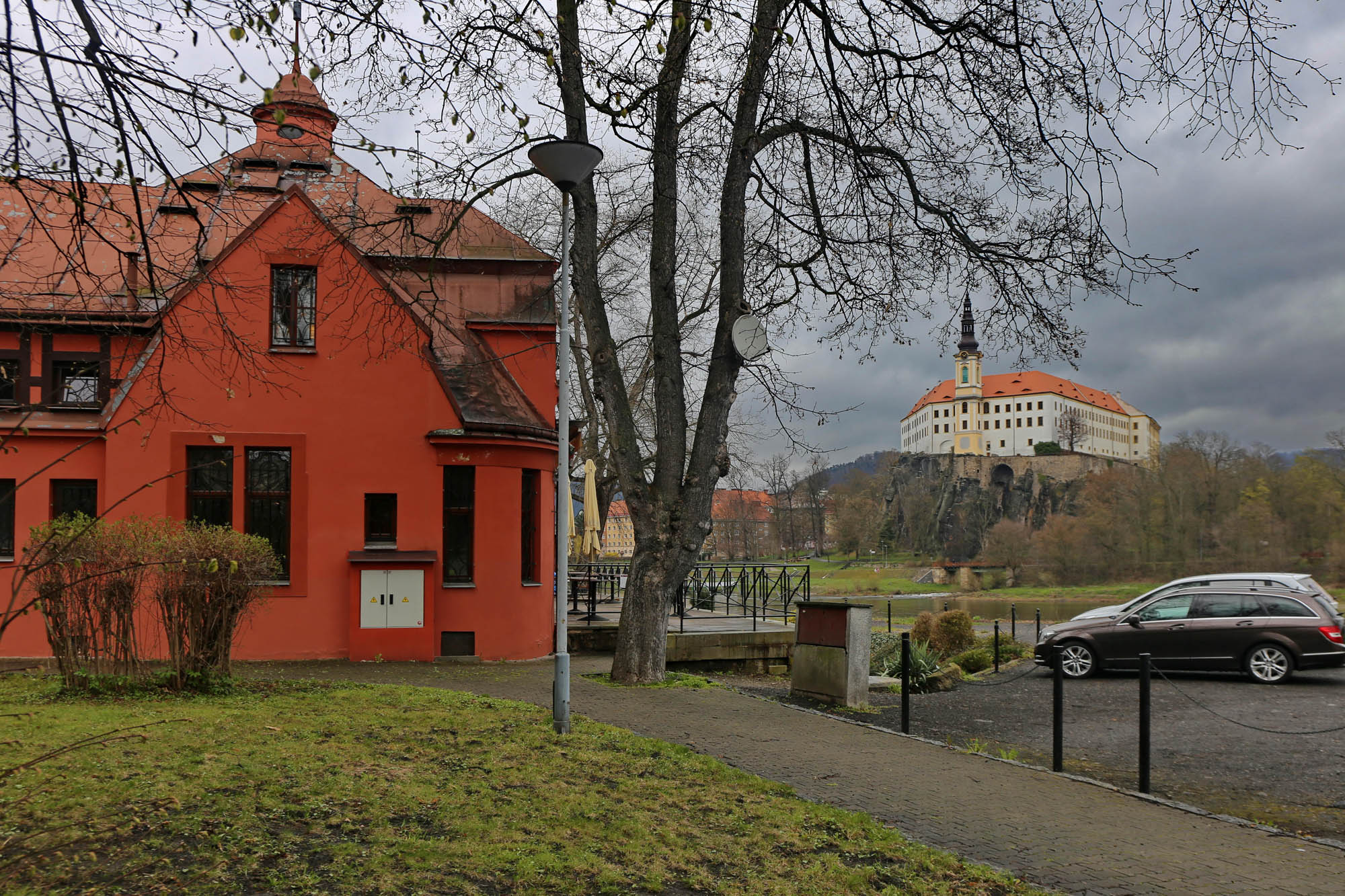
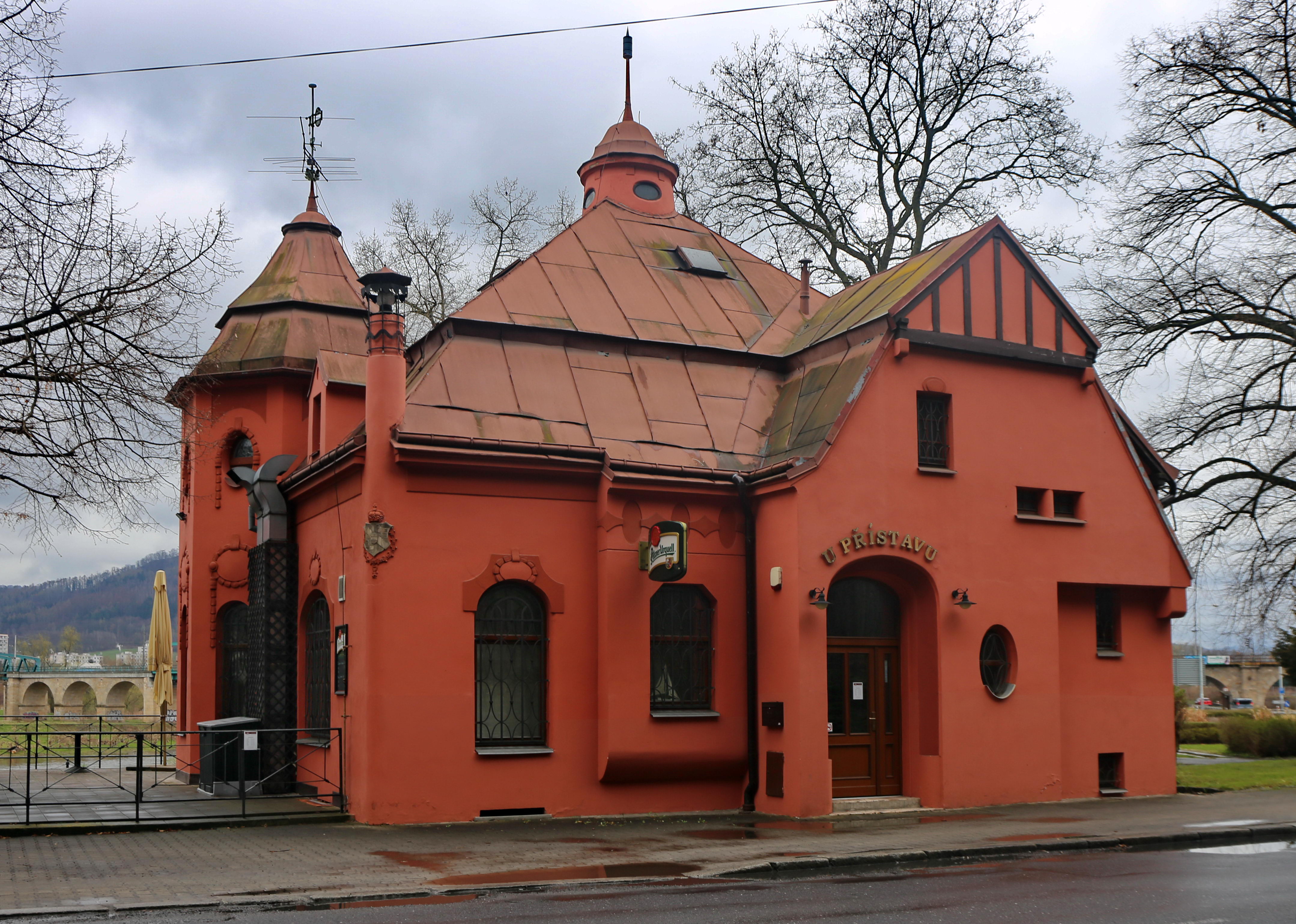
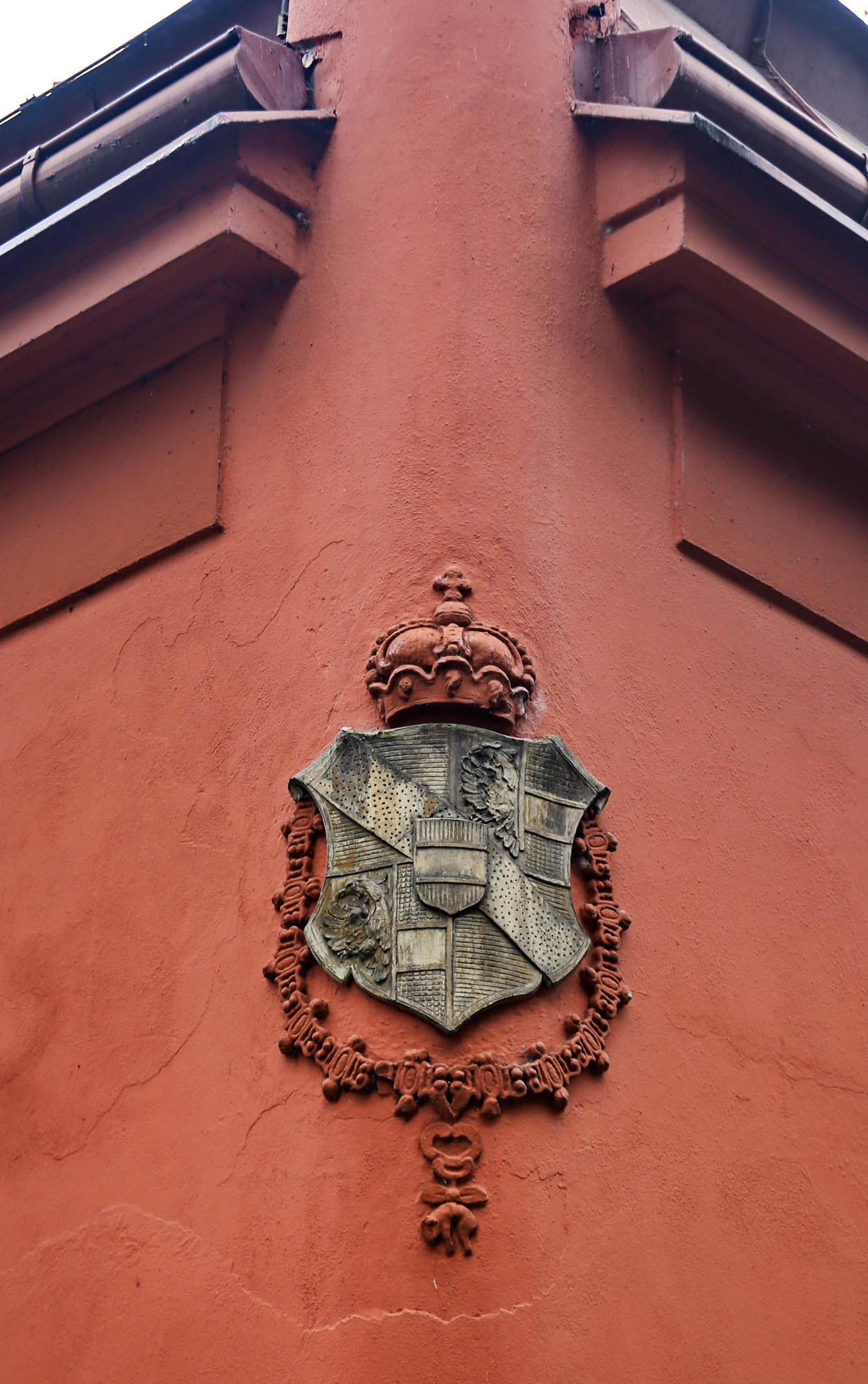
There is an Art Nouveau restaurant on this side of the river, opposite the castle. It is also reminiscent of a lonely castle, and sometimes it was the first house of the city for a passenger coming from Germany. So it was probably the former customs house. This is indicated by the name of the restaurant – U Přístavu, To the Harbor, while there has been no harbor here for a long time –, but even more so by the carefully preserved Austrian imperial coat of arms on the corner of the building.


The portrait of the emperor could be shat upon in rebellious Prague, the column of Mary, tied to the Habsburg power, pulled down by revolutionary vandals, but here, in the German Sudetenland, which was not so enthusiastic about the collapse of the Monarchy, the symbol of former unity was preserved. And now that nostalgia for the Monarchy is once again appreciating such relics, it has been nicely restored as well. So as for centuries before, now again it welcomes those coming from Germany to the territory of the former Monarchy. Welcome home.


Un testigo


«Estamos en 1920. Salamon Tannenbaum toma asiento en la Posada del Emperador de Austria, cuyo nombre cambió hace dos años pero a la que ningún cliente, tampoco Salamon Tannenbaum, llama Posada de los Tres Ciervos, según mandan las ordenanzas municipales. Es más, cuando Salamon lanza su gorra desde un extremo a otro de la habitación y siempre acierta a colgarla en el perchero, exclama: ¡Moni ha llegado a El Emperador de Austria! Y el coro de borrachines allí presentes responde así: ¡Que el buen Dios le otorgue larga vida!»

Miljenko Jergović: Ruta Tannenbaum

En Sarajevo, que —salvo unos años terribles— ha sido respetado por la historia y donde los estratos del tiempo se han acumulado como la hojarasca quieta de un bosque, desde los pequeños cementerios turcos y las cornisas Art Nouveau hasta los edificios cubistas, se encuentra junto al bazar Baščaršija, en la calle Brodac, donde el fundador de la ciudad, Beg Isa Ishaković en 1460 fundó su primer monasterio de derviches, una pequeña planta baja con tres puertas. No se sabe cuánto lleva cerrada. Tal vez sea una de las que Ozren Kebo describe en su Sarajevo za početnike (Sarajevo para principiantes), que trata del asedio de 1992-1996:

«El primer abril en guerra estuvo marcado por un gran éxodo. Los más avisados escaparon atemorizados. Los menos prudentes no supieron reconocer el miedo. La ciudad estaba paralizándose. En Baščaršija dos tiendas aún vendían el burek, comida tradicional, una čevapčiči, y tan solo quedaban dos pastelerías. Cada mañana aparecía una más con un candado en la puerta. Solo habían pasado dos semanas desde que se oyeron los primeros disparos y nadie imaginaba qué clase de hambruna se nos venía encima.»


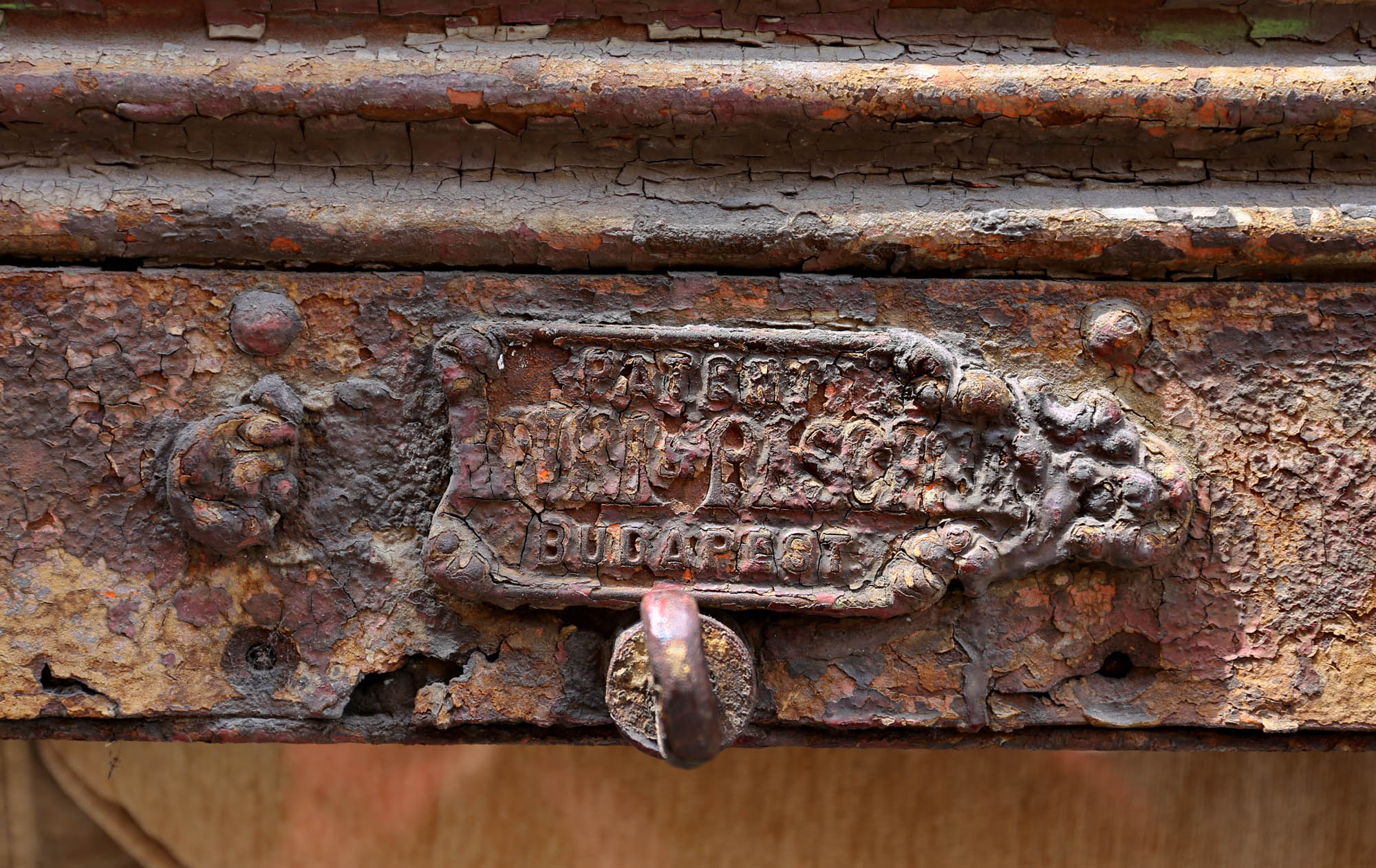
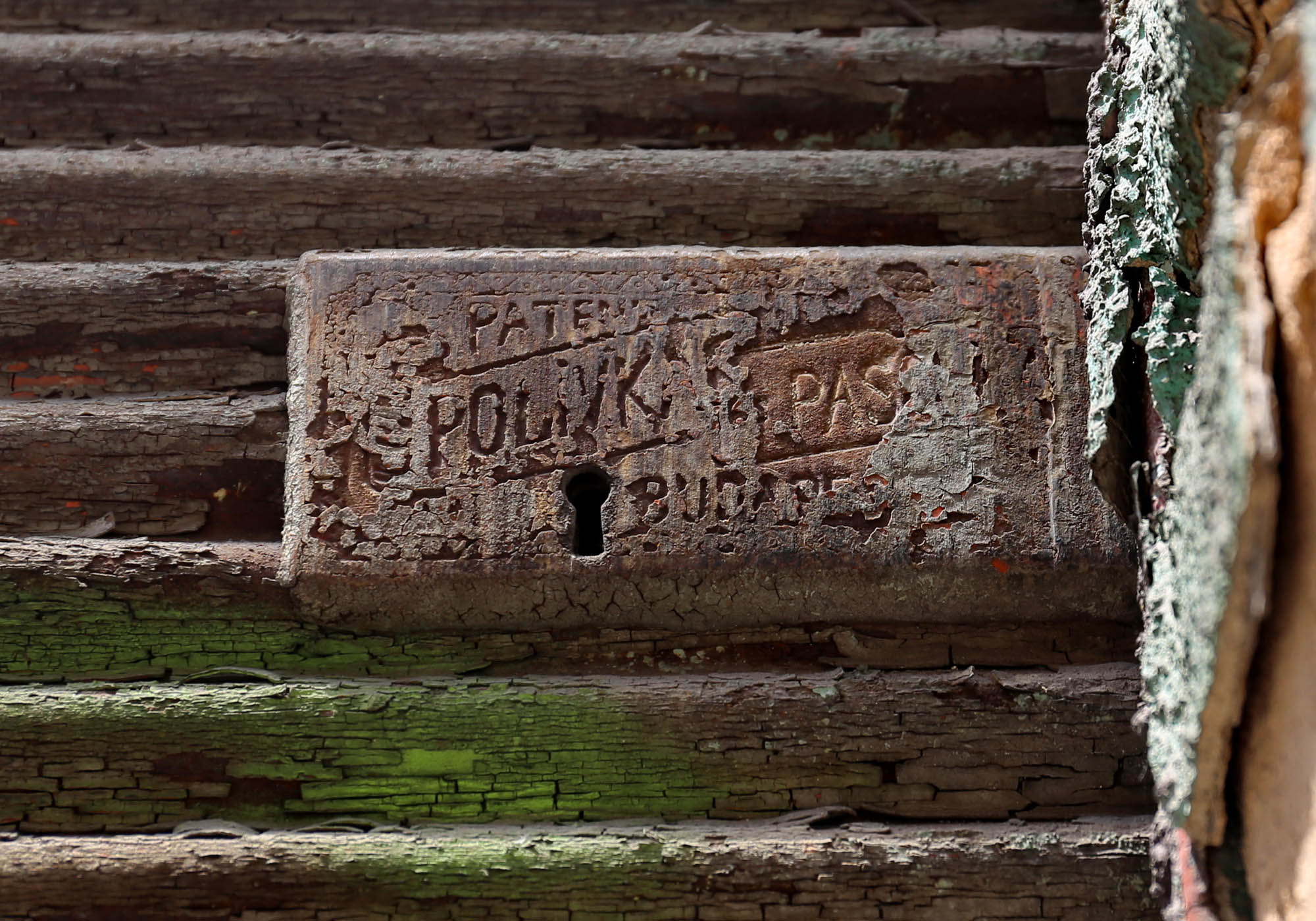
Esta tienda, sin embargo, no tiene candado. Su persiana solo está medio bajada, quizá no hubo tiempo para más al salir corriendo. Por ello la inscripción oxidada de la cerradura es visible aún con claridad.


«Patent Polivka & Paschka, Budapest»

Ya escribimos sobre la la imperial y real fábrica de persianas Paschka, de la isla de Csepel, al sur de Budapest, cuyos productos todavía se encuentran delimitando la frontera de la antigua Monarquía. Después de cien años de destrucción, se ven en Lemberg y Košice, Bačka y Böhmerwald. Y, como podemos comprobar, también en Bosnia, puesta bajo protección austro-húngara en el Congreso de Berlín de 1878. Pasaron guerras y asedios, ustashas y chetniks vinieron y marcharon pero la marca del cerrajero del emperador de Austria, junto a los habitantes de la ciudad, permanece.


The witness


“It is the year 1920. Salamon Tannenbaum is sitting in the inn of the Austrian Emperor, which was given a different name two years ago, but, just like Salamon Tannenbaum, no guest calls it the Three Deers Inn, as prescribed by the city. Furthermore, when Salamon throws his hat from one end of the room to the other, and always hits the hat-rack, he shouts: Moni has come to the Austrian emperor! And the sots present reply like this: may Good God give Him long life!”

Miljenko Jergović: Ruta Tannenbaum

In Sarajevo, which, with the exception of a few terrible years, has been avoided by history, and where the layers of time pile up on each other, from the small Turkish cemeteries through the Art Nouveau ledges to the Cubist buildings, like unstirred litter in the forest, there stands next to the Baščaršija bazaar, in Brodac Street, where the founder of the city, Beg Isa Ishaković in 1460 established his first dervish monastery, a small three-door stop. It is not known how long it has been closed. Perhaps it is one of those of which Ozren Kebo writes in his Sarajevo za početnike (Sarajevo for beginners), dealing with the 1992-1996 siege:

“The first month of April in war was marked by a great exodus. The wise fled in panic. The less wise did not know how to recognise the panic. The city was shutting down. At Baščaršija, two shops were still selling burek, one traditional food, one čevapčiči, with just two cake shops. Every morning a padlock appeared on a different one. It had been just two weeks since the first shots were fired and no one knew what kind of hunger was coming our way.”


This shop, however, has no padlock. Its shutter has been pulled down only halfway, maybe there was no time to do more before the escape. So the rusty inscription of the shutter label is still clearly visible.


“Patent Polivka & Paschka, Budapest”

We have already written about the imperial and royal shutter manufacturer Paschka from Csepel Island in southern Budapest, that its products still designate the boundaries of the former Monarchy. After a hundred years of destruction, they still can be seen in Lemberg and Košice, Bačka and the Böhmerwald. And, as we see, also in Bosnia, placed under Austro-Hungarian protection by the Berlin Congress of 1878. Wars and sieges subside, ustashas and chetniks come and go, but the shutter label to the Austrian emperor, just like the inhabitants of the city, perseveres.


The last annexation


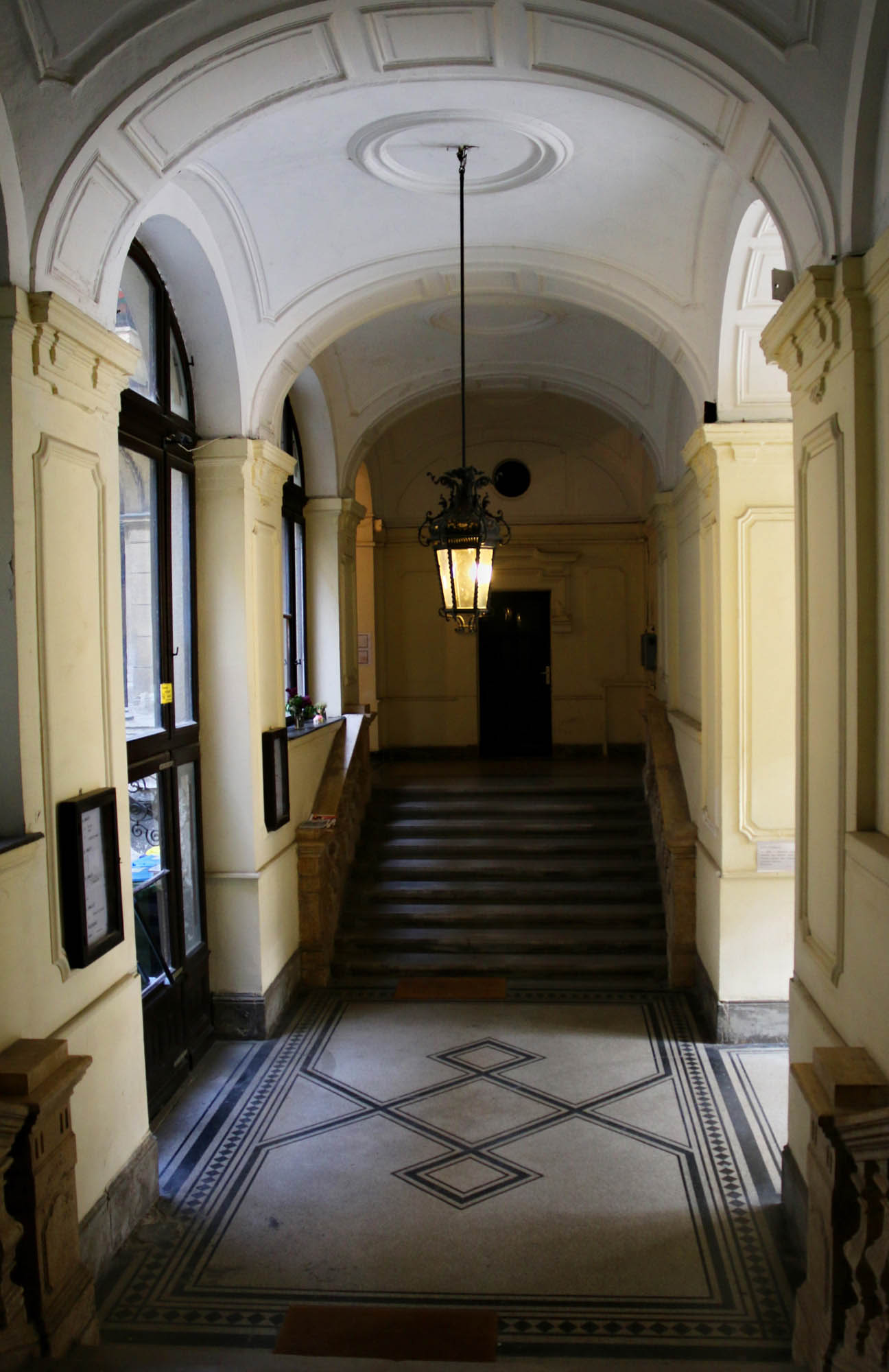
Alajos Hauszmann is one of the most significant representatives of Hungarian historicist architecture. Many buildings in Budapest are associated with his name. They include the splendid block of flats at Döbrentei street 8, whose commissioner was one of Hauszmann’s first clients and his old friend György Kégl (1822-1908) – a distant relative of Sándor Kégl, the renowned Iranologist and great friend of cats. The commission was probably also connected with an earlier, almost fatal accident. In fact, during a duck hunt, Kégl shot off an incisor of Hauszmann, who at that time was at the beginning of his career. Due to his guilty conscience, he payed close attention to him, as Hauszmann himself mentions in his diary.

On 22 and 23 April, during the Budapest100 festival of this year, this house was open to visitors. The stories of the former inhabitants were collected by Noémi Saly, the great monographer of Budapest, who also lives here. One of her own family stories was also included in her volume Példabeszédek (Parables, 2015):

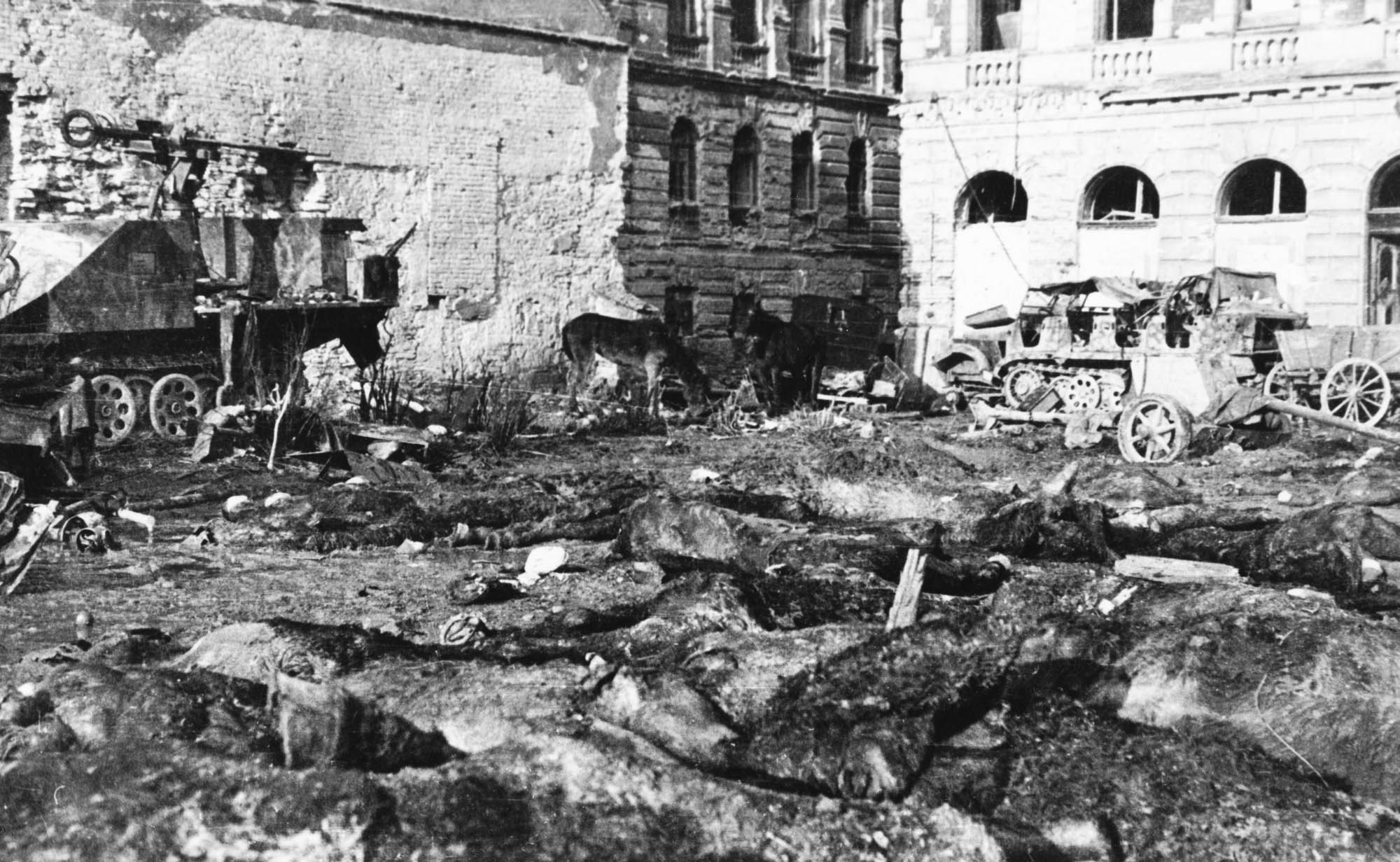
“My mother moved to Döbrentei street in 1947. It was two years after the siege. Two of the three rooms in the flat were only covered by the starry or stormy sky, and the kitchen had no walls. The bathroom had also no roof, so the rain and snow fell steadily on the thick ceiling beams. […] She enters into the block of ruins, bathing in sunshine, and then, through the gilt beams, to the balcony. The Danube is blue, so she decides to stay.”

Some blocks away: Döbrentei street 16, seen from Attila street, in 1945. Source: Krisztián Ungváry / Fortepan

Many people spent shorter or longer time in the house from its construction to its nationalization in 1950. One of the first inhabitants was Rezső Abele, the former governor of Fiume, who moved to Budapest after his resignation in 1897, and lived here until his death in 1923. Although he changed the Adria for the Danube, nevertheless he kept the brand: both the governor’s palace in Fiume and the house in Döbrentei street were built by Hauszmann. Later, in the early 1920s, several prominent figures of the Russian monarchist emigration found new home here. Under the leadership of  Petr Glazenap, the former military governor of Stavropol, here operated from 1921 the administrative center of the White Legion, which tried to recruit former Russian prisoners of war in Hungary and anti-Bolshevist officers of the former Austro-Hungarian army for a war against the Soviet Union. Although Glazenap left to Munich in 1923, the former colonel of the Tsar’s body guard Vladimir Malama and his family, who had lived here since 1919, remained in the house. Their flat was home on a weekly basis for a political salon, whose purpose was to convince the local representatives of the Entente about the necessity to restore the monarchy in Russia. The club’s regular visitors included the Governor of Hungary, Miklós Horthy, who was on friendly terms with Malama. In 1925, the organization of the Russian emigrés was abolished by an order of the Foreign Ministry, but the Malama family remained in Döbrentei street. Vladimir Malama died in 1935 in Nice, but his wife, Anna Samoylova remained in Budapest. She died in 1950, allegedly due to the illness received in 1945 from the Soviet soldiers.

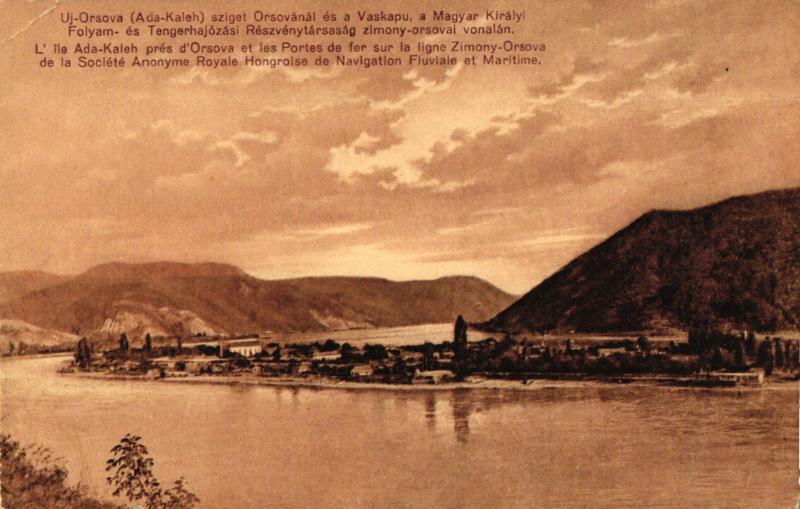
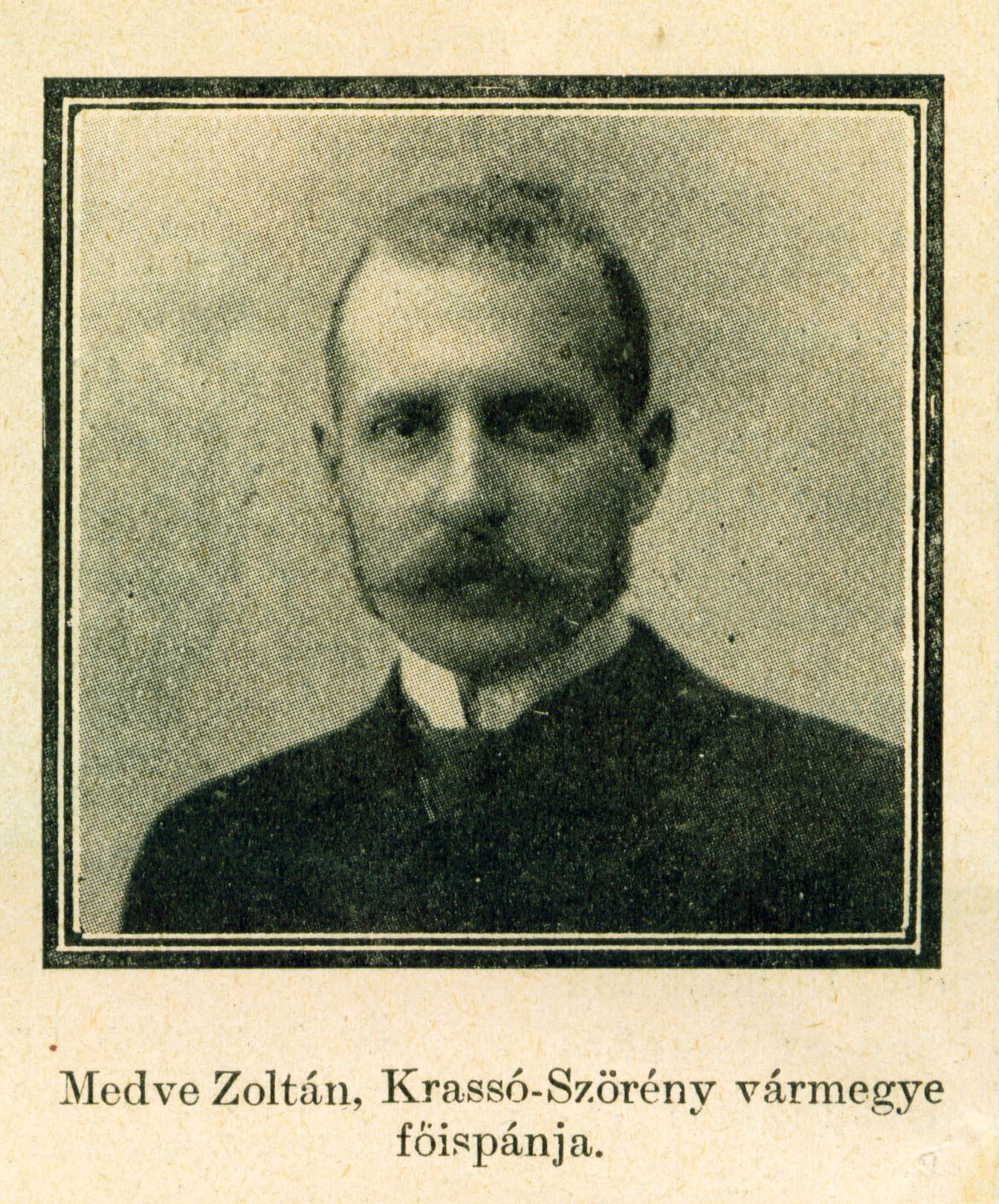
And towards the end of his life, from 1939 on, here lived Zoltán Medve Zoltán (1868–1943), the retired governor of Krassó-Szörény County, who at the peak of his career, on 12 May 1913 performed the last territorial expansion of Hungary, the annexation of the island of Ada-Kaleh.


Albeit the Interior Minister’s order required full confidentiality, the event quickly became known. The Népszava reported about it three days later, on 15 May, taking over the report of the Keleti Értesítő:

“On 12 May, the Monday of Pentecost, the Turkish island of Ada Kale near Orsova, was annected and immediately taken into possession on behalf of the Hungarian government by Dr. Zoltán Medve, Governor of Krassó-Szörény County.
It is reported from Orsova: On Monday at 12 noon, Governor Zoltán Medve, Vicegovernor Aurél Issekutz and Mr. Podhraczky, Chief Servant of Orsova, accompanied by a gendarme officer and four gendarmes, appeared in the island of Ada-Kaleh, and immediately went to the Governor’s building, where the Governor of the island, Sherif Eddin Bey received them.
Mr. Medve showed the decision of the Hungarian government, and he read its Hungarian text. This decision instructed the Governor to annex the island of Ada Kale in the name of His Majesty, and to immediately take it into possession.
Then, turing to the Vicegovernor and the Chief Servant, the Governor briefly outlined the importance of the event, and he entrusted them to strictly observe the traditions of the island’s population, especially the free practice of religion, and to act so that the inhabitants feel themselves equal to the other sons of the homeland. Finally he called on the Chief Servant as the administrative authority to take over the island as part of Krassó-Szörény County.
After the annexation was completed, a protocol was redacted. Governor Sherif Eddin Bey declared, that he cannot acknowledge the annexation, because he had received no instructions from the Turkish government. He is therefore obliged to refuse the signature of the protocol, and to protest against the occupation of the island. Governor Zoltán Medve referred to the decision of the Hungarian government, and declared, that he cannot take the protest into account. Nevertheless, he had no objections to the Governor’s remaining on the island, until he receives detailed instructions from his government. He also instructed the gendarmes to stay in the island as a sign of the annexation, and to take care of the order and peace. After this, the Governor and his escort left the island.
According to a more recent telegram from Orsova, on Tuesday evening Sherif Eddin Bey left the island, but nobody knows to where. Rumor says, that the Turkish government will oppose the annexation of the island in the most decisive way at the great powers.”


Despite the appearances, the annexation was merely a formal act, the last episode of the decade-long territorial debate. In fact, Ada Kale had previously been under Hungarian sovereignty. It was almost precisely thirty-five years earlier, on 25 May 1878, that the Monarchy, taking advantage of the Stan Stefano Peace Treaty which closed the Russian-Turkish war, occupied the Turkish island on the Lower Danube. The treaty, concluded on 3 March, had not decided about the possession of the island, only about its evacuation and the demolition of its fortress. Thus, the Ottoman empire in any case had to renounce the territory, whose possession was not irrelevant to the Danubian empire. In case they did not act, a neighboring competitor, Serbia or Romania could have laid hand on the island, laying in a comercially and tactically strategic point. In March and April 1878, the Austro-Hungarian diplomacy, which was already vigilant, made the decisive step, and after lengthy negotiations, on 21 May, with the tacit consent of the Russians, the representatives of the Austro-Hungarian and the Ottoman government agreed on the temporary Austro-Hungarian occupation of Ada Kale, postponing the final regulation.


The temporay occupation lasted forty years. The clearing up of the odd situation – a Turkish civil administration alongside with an Austro-Hungarian military presence – was from time to time on the agenda of the Hungarian party, but no progress was made until the annexation of 1913. The annexation took place in a political situation which was very similar to the occupation of 1878. The Monarchy wanted to prevent that during the new negotiations at the end of the first Balkan War any other Balkan state might require the island for itself. However, the integration into the Hungarian civil administration remained nominal – due not so much to Müdir Sherifeddin’s protest, but rather to the prudence of the Austro-Hungarian government, which did not want to overshadow the good relations with the Porta either in 1913, or later, in the war years. A Lex Ada Kale was never born. The “Ada Kale question” was finally resolved by the dissolution of the two parties, the Austro-Hungarian Monarchy and the Ottoman Empire. The 1938 Sèvres and the 1933 Lausanne Treaty awarded the island to Romania.


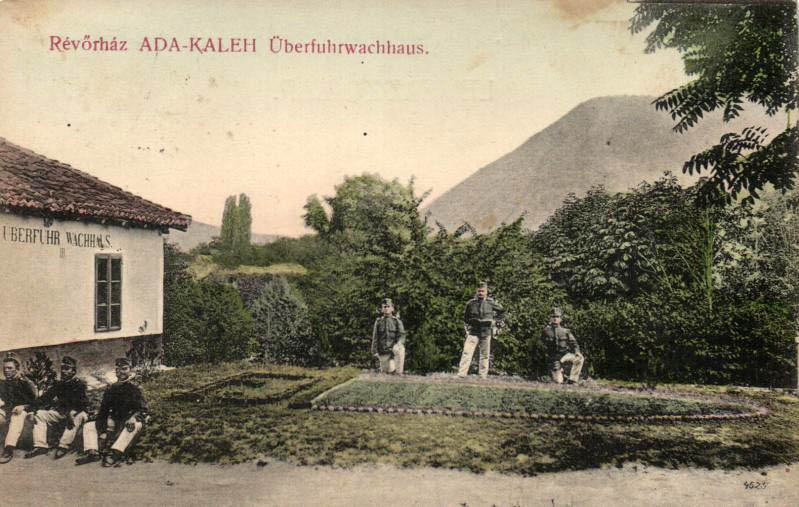
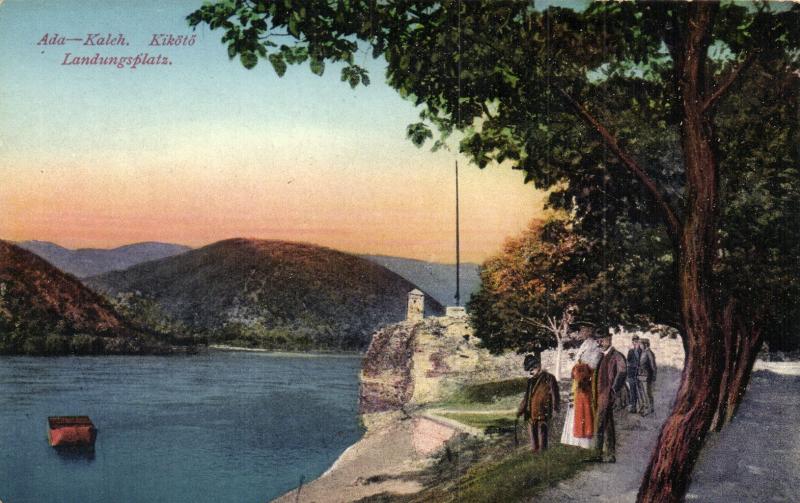
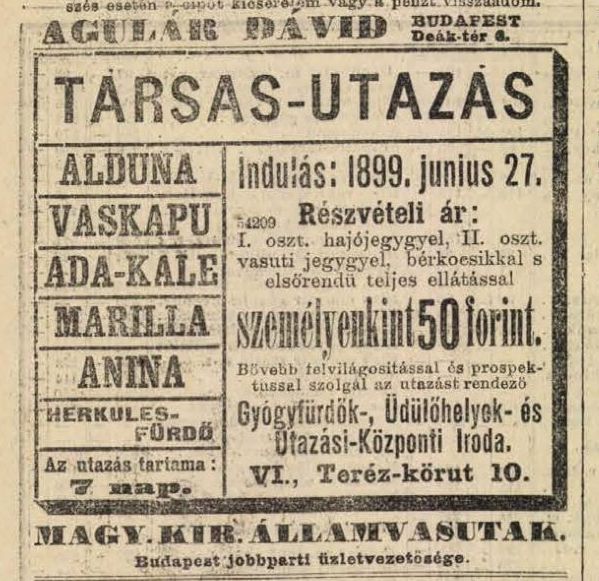
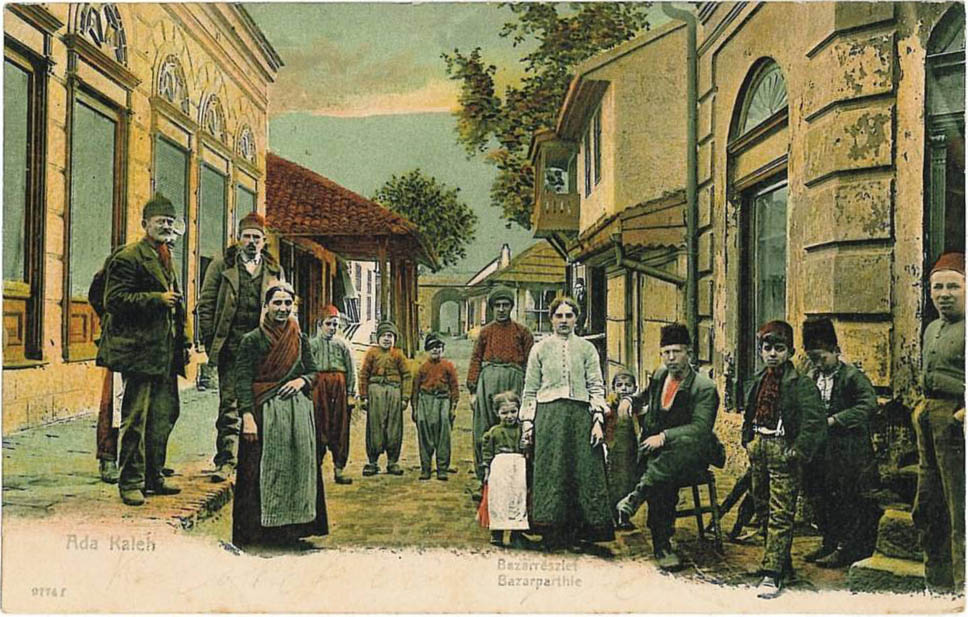
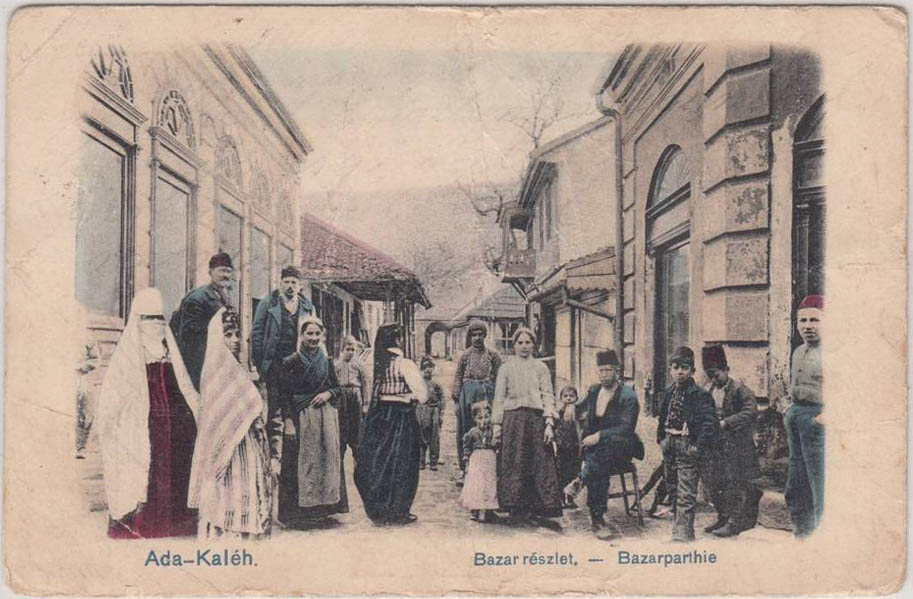
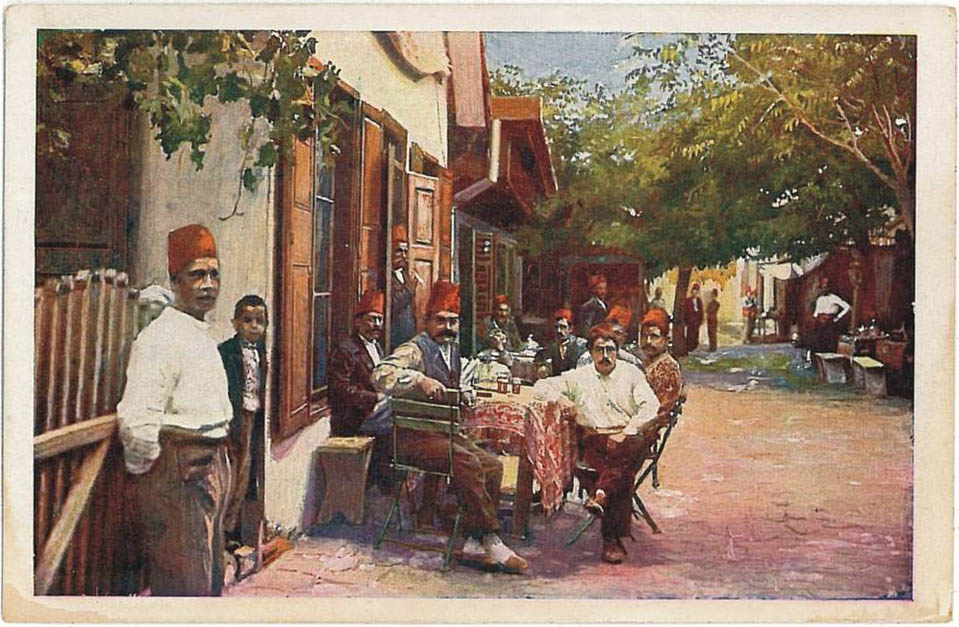
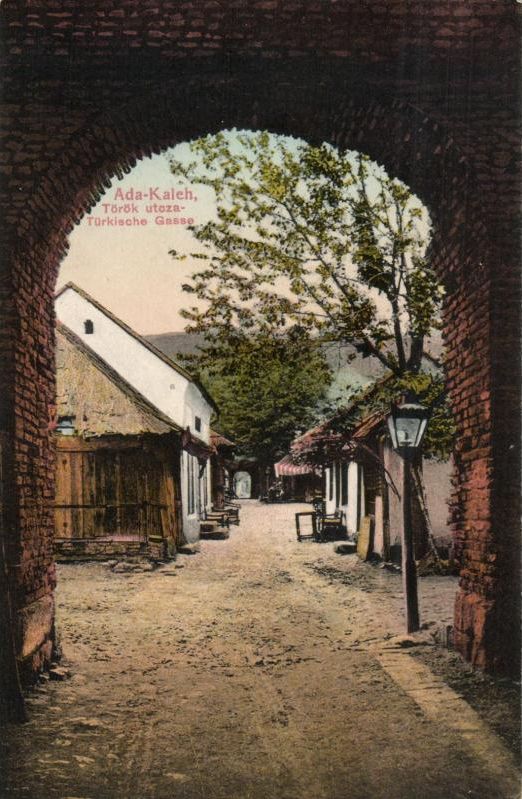
Forty years of Hungarian rule, however, did not pass without trace. In the years of the occupation, the strategic significance of the island declined (only during the war it became important again, when even Egon Erwin Kisch, “the frenzied reporter”, wrote articles from here. Nevertheless, due to its situation and the neighboring Orsova and Hercules Bath, the island soon became a popular tourist destination, as it is attested by newspaper ads and postcards sent from here. But it attracted not only the touirsts. Turcologist Ignác Kúnos visited the island several times. His ethnographic research was aided by the local teacher and merchant Mehmed Fehmi, who, as attested by the postcards, also operated a printing press, and who, as the leader of the anti-annexation movement, was elected in 1914 the deputy of Ada Kale in the constituency of Constantinople. Kúnos held lectures and published articles on his visits to the island, and he published the materials collected by him in several volumes: the folk songs in 1906, the folk tales first in 1907 in German, in two volumes, then in 1923 also in Hungarian. Thereby he virtually saved a great part of the island’s ethnography and of the archaic Turkish dialect spoken here, almost seventy years before its sinking under the water of the Danube. Kúnos probably would have got to the island without the Hungarian occupation as well, but, alongside with the gradual disappearance of the Rumelian Turkish world, the popularity of Ada Kale in Hungary also contributed to his interest in the island. Seen from this point of view, the decades long Austro-Hungarian aspirations were perhaps not completely useless.
The first summary blog post on Ada Kale in Hungarian was published on Falanszter. The Dunai Szigetek (Danubian Islands) regularly publishes information-rich entries on it, with many little-known infos and images. In 2011, a large exhibition on Ada Kale was organized in Bucharest, whose catalog, Marian Țuțui’s Ada-Kaleh sau Orientul scufundat (Ada Kale, or the sunken Orient) will be soon presented by us.

Package tour to Ada Kale. Ad in Budapesti Hírlap, 17 June 1899

A genre postcard on Ada Kale: the original version (above), livened up with a few odalisques for a tourist trap (below)


adakalehdobr adakalehdobr adakalehdobr adakalehdobr adakalehdobr adakalehdobr adakalehdobr adakalehdobr adakalehdobr adakalehdobr adakalehdobr adakalehdobr adakalehdobr adakalehdobr adakalehdobr adakalehdobr adakalehdobr adakalehdobr adakalehdobr