

To reach the Armenian quarter of Isfahan, you must first cross the river, the Zâyandarud, which crosses the oasis where Isfahan developed.
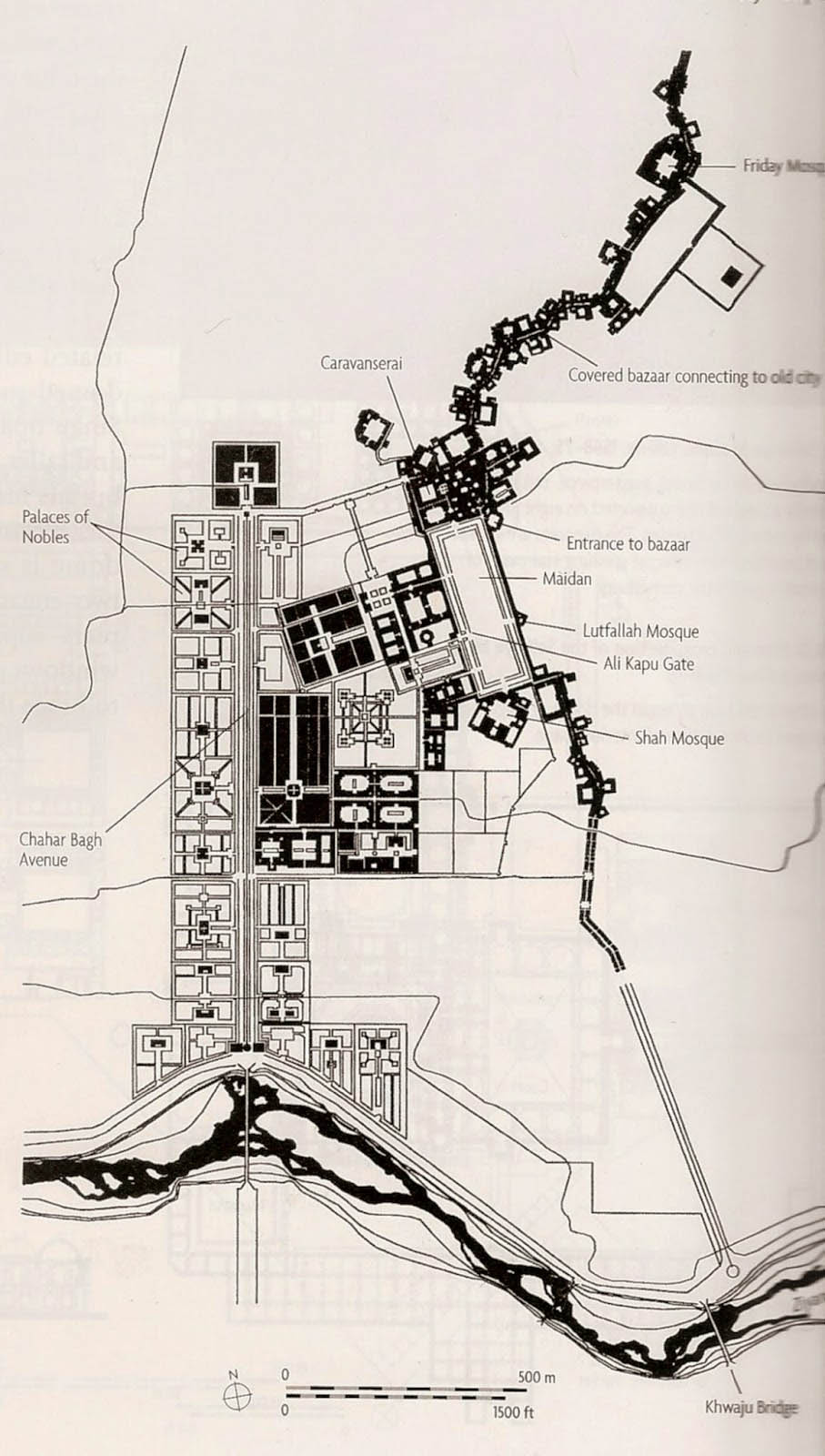
From the main square of Isfahan, the Naghsh-e Jahân, you descend straight to the south. The avenue that runs through the gardens, reaches the river at right angle. The four gardens – Chahâr Bâgh –, the extension of the Safavid palaces intended to shape the city as a figure of the paradise.
 The map of the Maidan-e-Shah (or Maidan-e Naqsh-e Jahan, the Image of the World) and its extensions built between 1590 and 1602 by Bahaʿ ad-Din al-ʿAmili for Shah Abbas. The various axes of the plan point to an essentially palatial urbanism. The rest of the city was only a disordered aggregate of buildings at that time. The orthogonality of the squares, palaces, canals and gardens is in contrast to the strange curvature of the bazaar that stretched towards the old town, dominated by the ancient Friday Mosque. The Armenian neighborhood of Julfa was built in the following years on the other side of the river, to the southwest of the city.
Under the shady paths, along the fountains, people look at you, smile at you, talk to you. Young girls are playing ball under the trees, old men are having a rest in the grass, children are running. A man I meet every day asks me each time whether he could be photographed with me. And every day someone takes a photo of us with my camera, a photo he does not look at and he will never see, with his hand on my shoulder, and a twisted smile on his lips.
Close by, I pass by a building place, next to which a group of workers are standing on the sidewalk. When I am passing by them, one of them turns to me, with a slice of watermelon in the hand, and he hands it to me. He says nothing, and I do not remember whether he smiled or even looked at me.
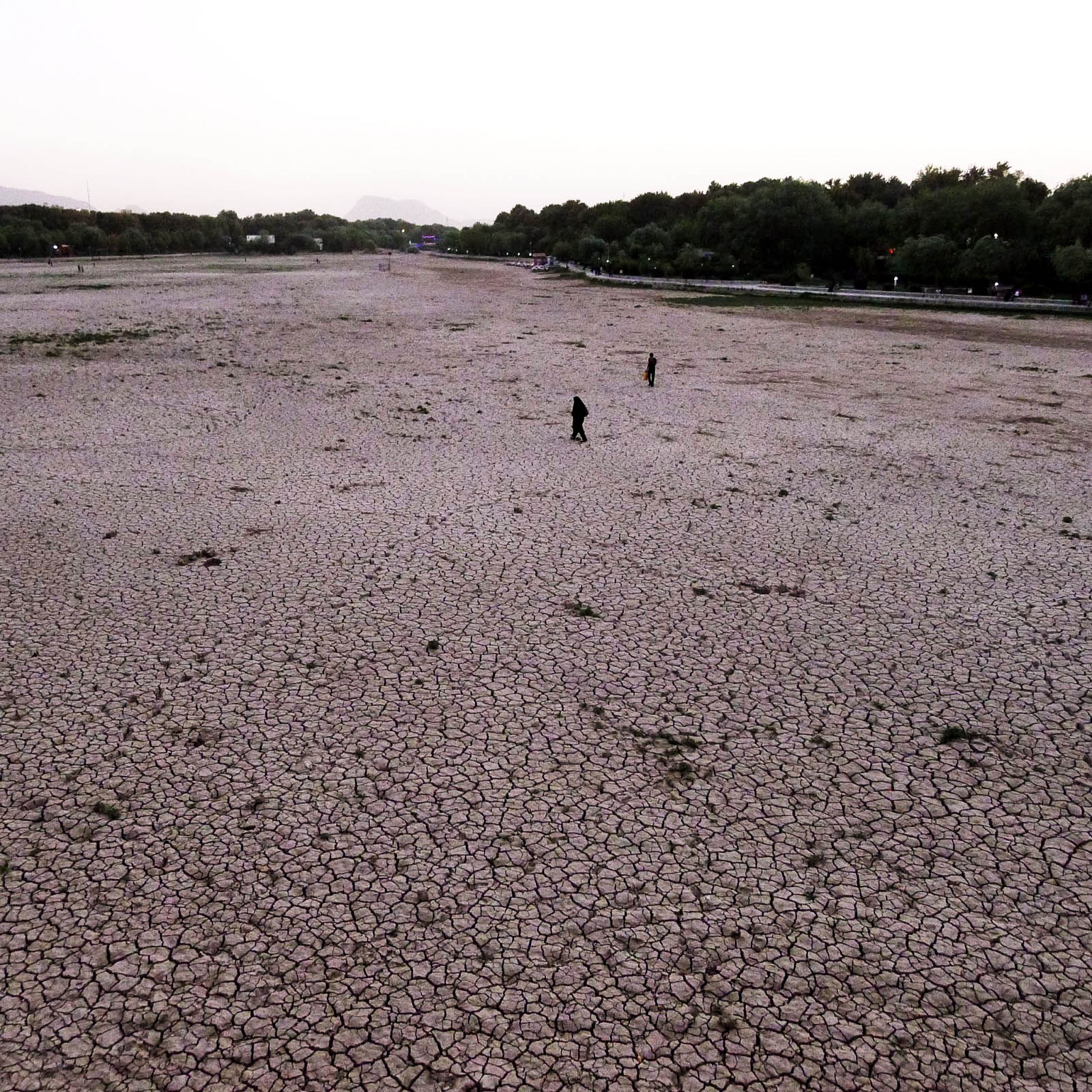
I only remember the gesture of the arm that reaches toward me, the watermelon, red like blood, the sunny street with low trees, the deep gap, like a trench, where in the spring a stream has to run. In August, there were only leaves in its bottom.

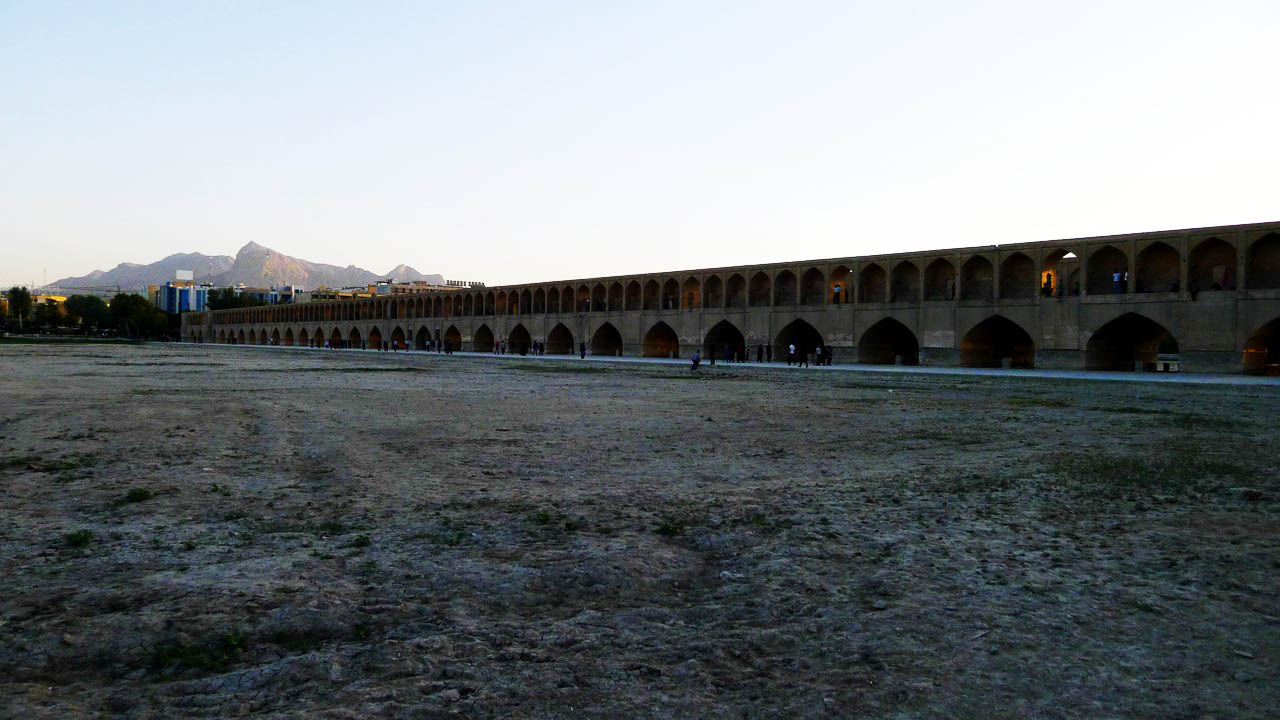
Arriving at the river, the avenue leads across the most beautiful bridge of the city, the “Bridge of Thirty-Three Arches”, Si-o-Se Pol, built in 1608 by the grand vizier of Shah Abbas, the Georgian Allahverdi Khan. However, in August 2013, not a drop of water passed under the thirty-three arches.
Nobody has really been able to explain
what happened to the river. A month ago, it was still there, friends could testify, walkers on the shore could assure me. Maybe it had been diverted to irrigate some other place, a young man suggested. Who knows it?

Beyond the bridge, on the southern bank of the river, you have to cross some modern neighborhoods to reach what was once only a suburb, a city within the city, New Julfa.
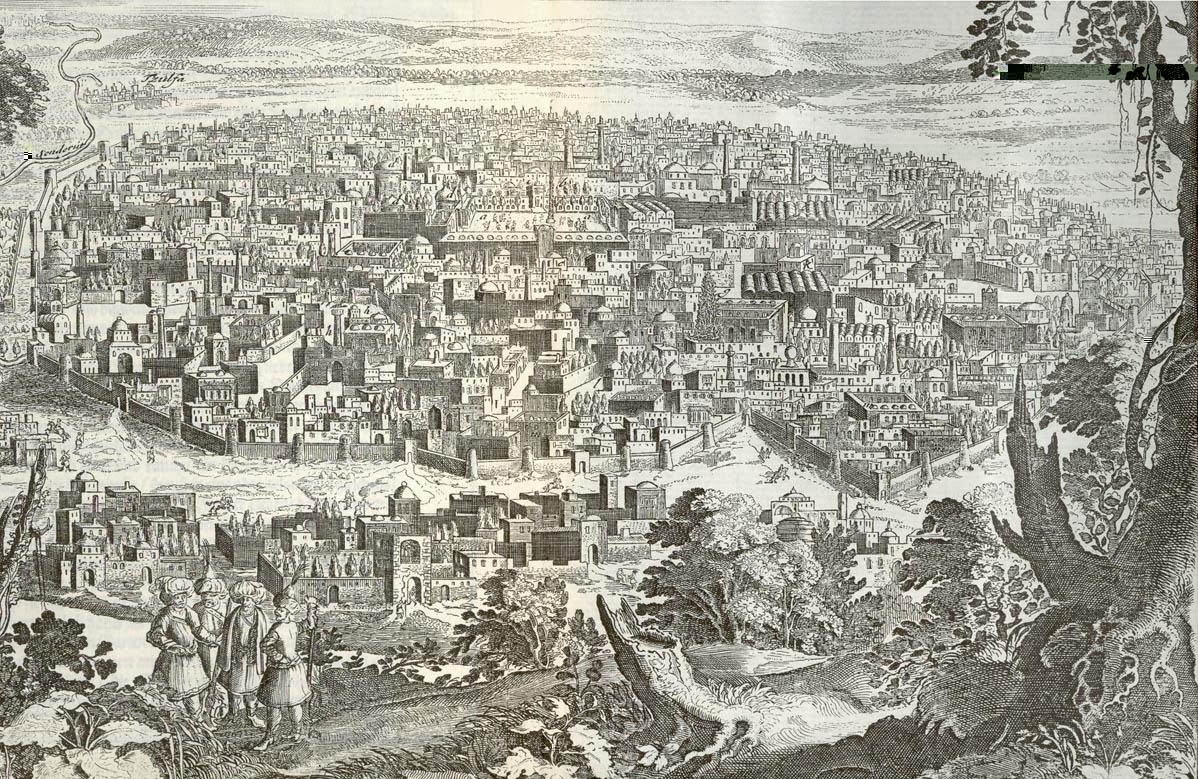
 View of Isfahan. Adam Olearius, Vermehrte Newe Beschreibung Der Muscowitischen und Persischen Reyse (Schleswig, 1656)
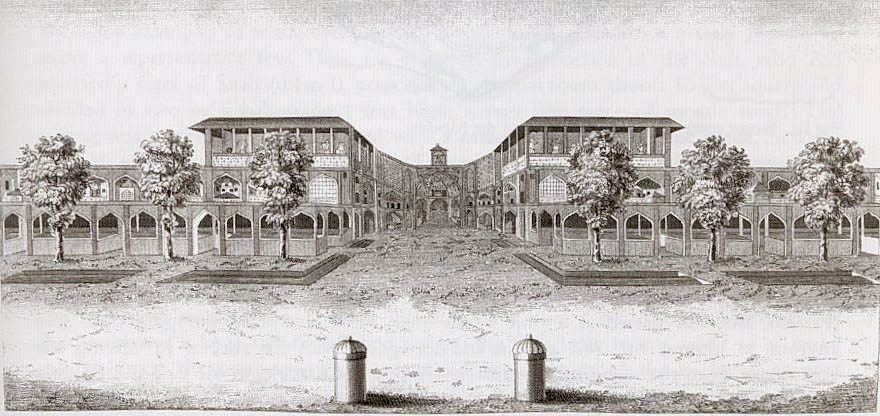
 The door of the palace and the courtroom. Nicholas Sanson, The Present State of Persia… (London, 1695)
 The grand entrance of the bazaar. Jean Chardin, Sir John Chardin’s Travels in Persia (London, 1720); Les Voyages (Paris, 1811)
Julfa along the Aras, the river which separates Iran from the enclave of Nakhichevan, the city of Julfa no longer exists. Even its last remnant, its
medieval cemetery was transformed into shooting ground by the Azerbaijani army.
However, the destruction goes back much further in time, when, in June 1604, Shah Abbas occupied Yerevan, and marched against Kars. Unable to face the Ottoman army, he had to withdraw, and he imposed the policy of scorched earth onto the areas south of the Caucasus, and ordered the deportation of their population to Iran.
All the cities, including Julfa were destroyed, and the entire population, perhaps 400 thousand people, were forced to cross the Aras. The following spring, the Armenians were spread in several regions, including Gilan and Mazandaran in the north, as well as in the rural areas between Isfahan, Shiraz and Hamedan.
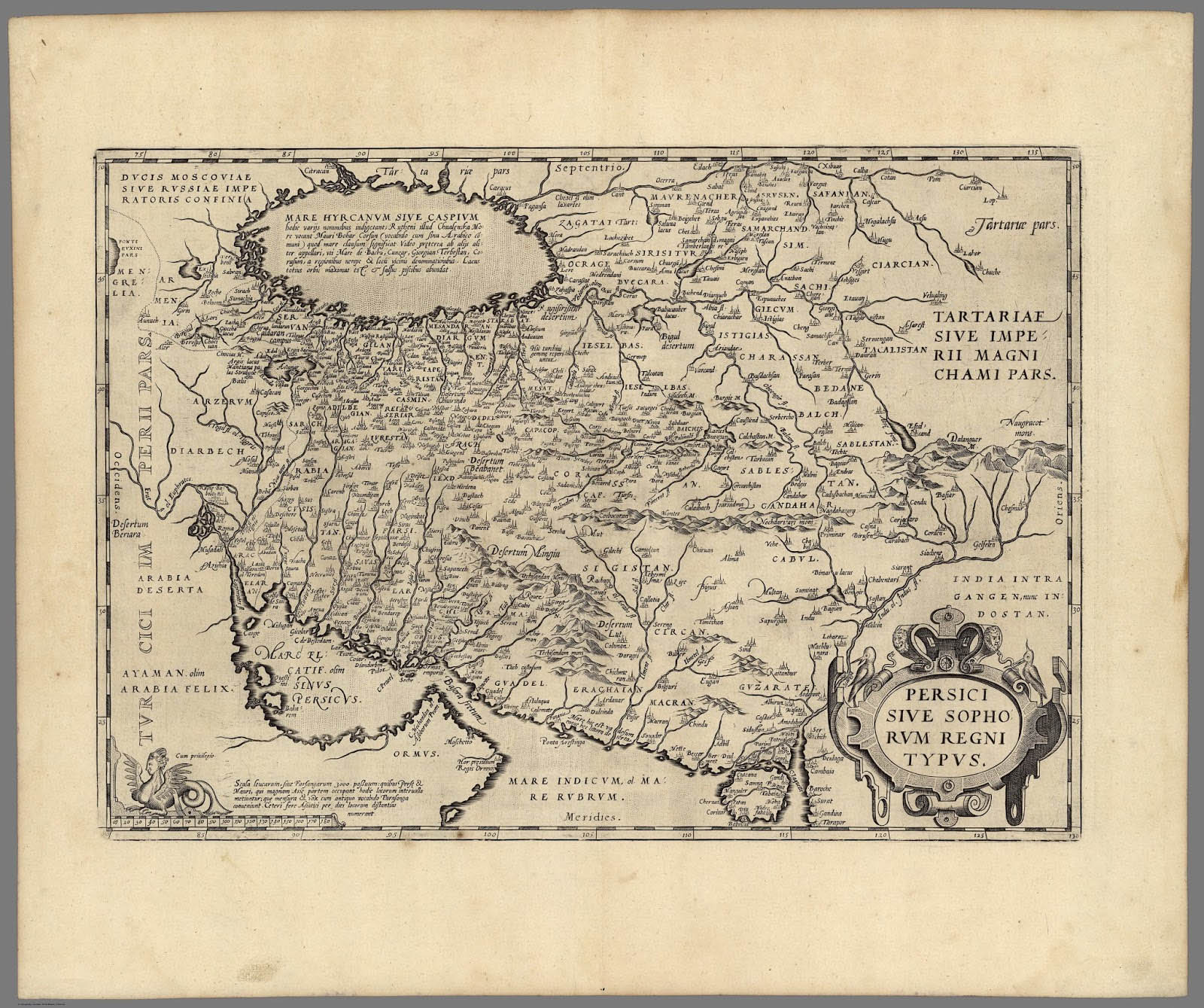
 Abraham Ortelius (1527-1598), Map of Persia, Antwerp 1608
In 1606, when Shah Abbas began the construction of Isfahan, he ordered the artisans of Julfa to be its first builders. He settled the whole population of Julfa next to Isfahan, some 75 thousand people, maybe more. He also estimated, that the knowledge of the Armenians of Julfa, who were masters of the silk trade in the Levant, would be essential to the integration of Persia in the international commerce: their trading skills would enrich the coffers of the Safavid state, while their profit would increase the capital of Persia. Thus, of all the deportees of the Caucasus, the Armenians of Julfa had the best treatment. Shah Abbas gave them enough time to gather their possessions before destroying the city, they received means of transportation, and they could spend the winter in Tabriz. Upon arrival in Isfahan, they could immediately begin to build on the right bank of Zâyandarud what would become New Julfa, and Shah Abbas authorized them to own land. Twelve years later, the Italian traveler Pietro Della Valle (1586-1652) described the quarter as a cluster of vast houses around a dozen churches. The Armenians built six more churches even on the other side, in the city of Isfahan itself.
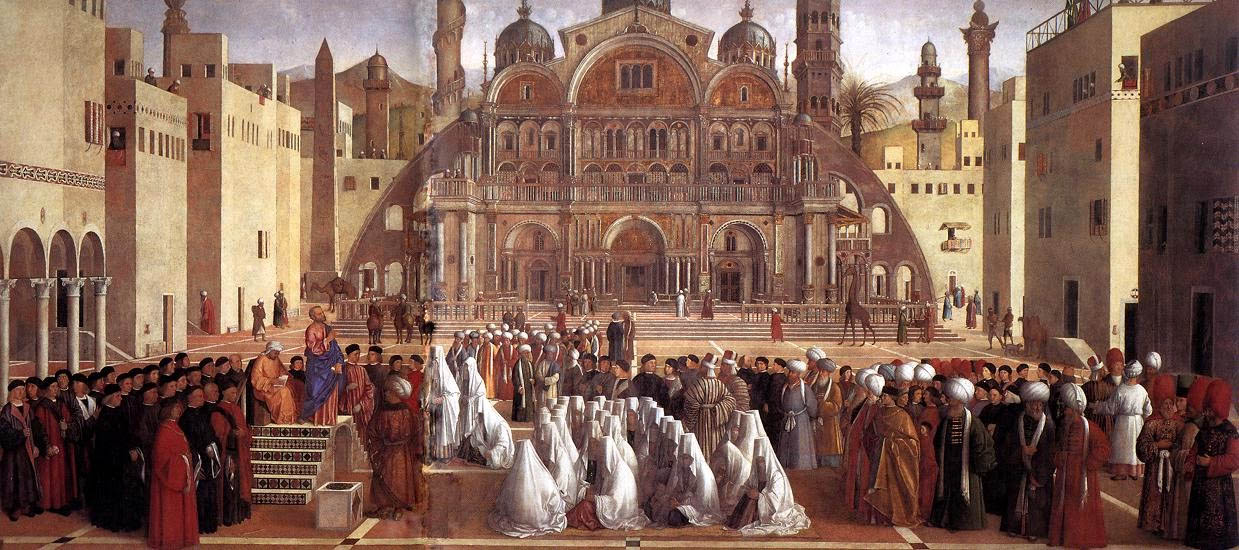
Not only the churches showed the importance of the Armenian community in the early seventeenth century. Beginning with January 1607, the Armenians organized large processions through New Julfa on the occasion of Christmas and Epiphany. Among the thousands of participants led by two hundred members of the clergy with cross and banners, and singing hymns, there were not only Armenians, but also Safavid dignitaries, and foreign guests. The scene reminds me a painting – perhaps Carpaccio? or Bellini? Yes, the architecture drawn by Gentile Bellini behind the preaching of St. Mark probably originates from the buildings he saw in Constantinople, when, in 1479, he was the guest of Mehmet the Conqueror. However, the mountains in the background seem to be on a better place in Isfahan than in Alexandria. The turbans, the high hair styles of the women, the purple and silk, the giraffe at the stairs of the church, everything evoke the fabulous East, of which Isfahan was a pearl.
 Bellini, The preaching of St. Mark in Alexandria, Pinacoteca Brera, Milan
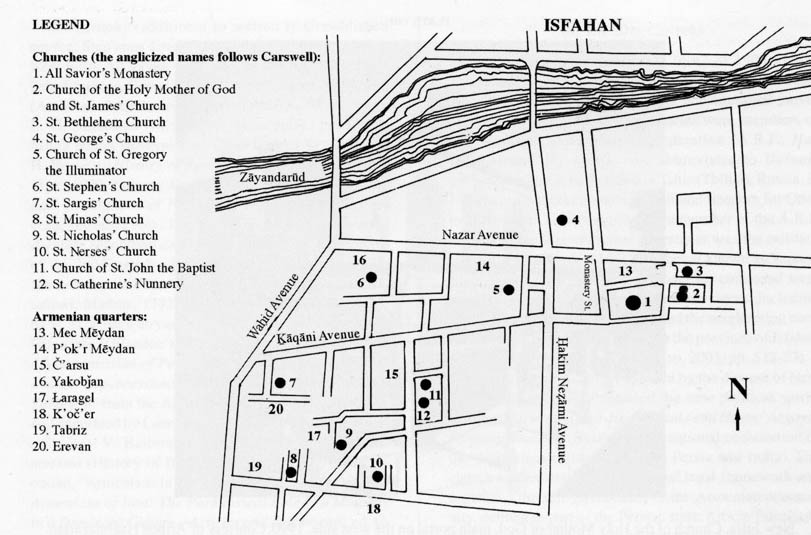
In New Julfa, the ten thousand Christians were isolated from their Muslim neighbors, while in Isfahan itself, where there were about a thousand Armenian families, the living together was much more tense. The churches, the ringing of bells, the planting of vines offended the Muslims, who obtained the expulsion of the Armenians from the city to its suburbs under the reign of Shah Abbas II (1642-1666). New Julfa was thus enlarged by seven new neighborhoods: Tabriz, Gâvrâbâd, Šamsâbâd, Gask, Kʽočʽēr, Laragel and Yerevan. The entire quarter extended on the both sides of a long avenue oriented east-west, cut by nine north-south streets, which encircled about twenty areas, sets of lanes and courtyards. The main gate was closed at night. The quarter was ruled by the heads of the noble families of the city.

Islamic law recognized the personal and communal rights and freedom of worship of the Christian Armenians – like of a monotheistic minority
(ahl al-ketāb, “people of the book”) –, as long as they paid their personal tax. The security of the site was assured by a Muslim police chief
(dāruḡa), whose main task was the collection of this tax. He also had to ensure the maintenance of order, and was charged of the criminal cases and the conflicts between Christians and Muslims.
Some pages of the Voyages de monsieur le chevalier Chardin en Perse et autres lieux de l’Orient dedicated to Jolfa (BnF)
Half a century later, beginning with 1686, the French Huguenot traveler and goldsmith Jean Chardin spent a few years in Isfahan. He described the city at length in his
Voyages de monsieur le chevalier Chardin en Perse et autres lieux de l’Orient (Travels of Mr. Knight Chardin in Persia and other places of the East), completed in 1711. In the third volume, dedicated to the architecture of the city, Chardin described in detail each quarter of the city, including
le bourg de Julfa.
According to him, New Julfa had nearly 30 thousand inhabitants. This population was ruled by the clerics and nobility, the twenty richest families of the community, the princes
(išxān), nobles
(malek or
beg) and lords
(paron or
āqā). The rest of the population were dependent on them, or, like the poorest, their servants.
On the lower grades of the social ladder, there were the great merchants, who were either dependnt on, or independent of the great families, and the craftspeople – painters, goldsmiths, jewelers, sculptors, scribes and illuminators, watchmakers –, who worked in large workshops.
At the bottom there were the more ordinary artisans, those working on the constructions and ornamentation of buildings, the workers and the domestic servants.
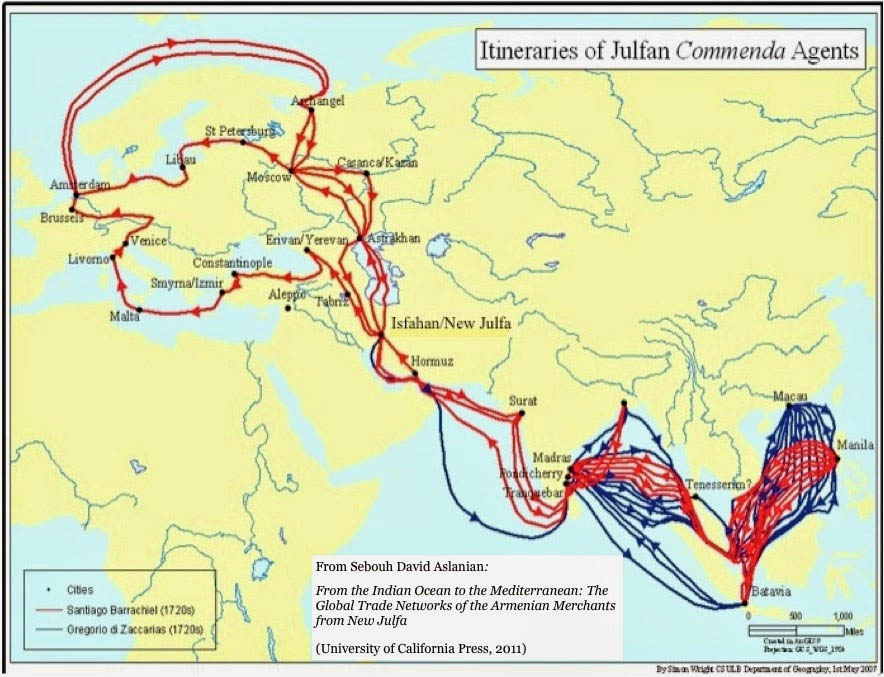
 The traders of New Julfa maintained a network of agents, mainly in India and Southeast Asia. They traded with raw silk as well as with cotton fabrics. Their most striking trade route led up the Volga, linking Isfahan to Amsterdam via Arkhangelsk.
They say that in New Julfa once there were more than a dozen churches, schools and scriptoria. Later there were presses, newspapers and libraries as well. The city was long the heart of the production of books in Armenian, hence the many scribes and illuminators. The Primate of the Armenian Church of Isfahan, Xačʽatur Kesaracʽi was invited in 1629 to Lemberg at a theological dispute within the Armenian community of Poland, and he brought back the first printing press, which was set up in the Monastery of the Savior in 1636. The monastery still has a small exhibition showing the manuscripts below.

At the beginning of the 18th century, the situation of the Armenians of Isfahan underwent a dramatic change. The economic difficulties, and the religious tensions related in part to the presence of Catholic missionaries from Portugal and Italy, drove out much of the Armenian merchants. The major setback for the Armenian community came during the Afghan invasion in 1722, which devastated New Julfa, causing a mass exodus of the Armenians. A part of their descendants, who have not left Iran even after the 1979 revolution, still live in the suburb reserved to them by Shah Abbas.
In the hot afternoon, the shops have lowered their curtains, and everything seems deserted. Although the neighborhood is still largely populated by Armenians, the signs are subtle – some shop labels, a menu in the window of a closed restaurant.
From the sixteen churches that remain, only the cathedral, the Church of the Savior, or
Kelisa-ye Vank, completed between 1655 and 1664, is consecrated. No doubt, the same Armenian architects traced the plans of this church and of the mosques on the other bank. In Isfahan, the churches are adjusted to the city, and their architecture has little to do with the churches of historical Armenia: raw brick facades, slightly swollen Persian domes, arched decoration.

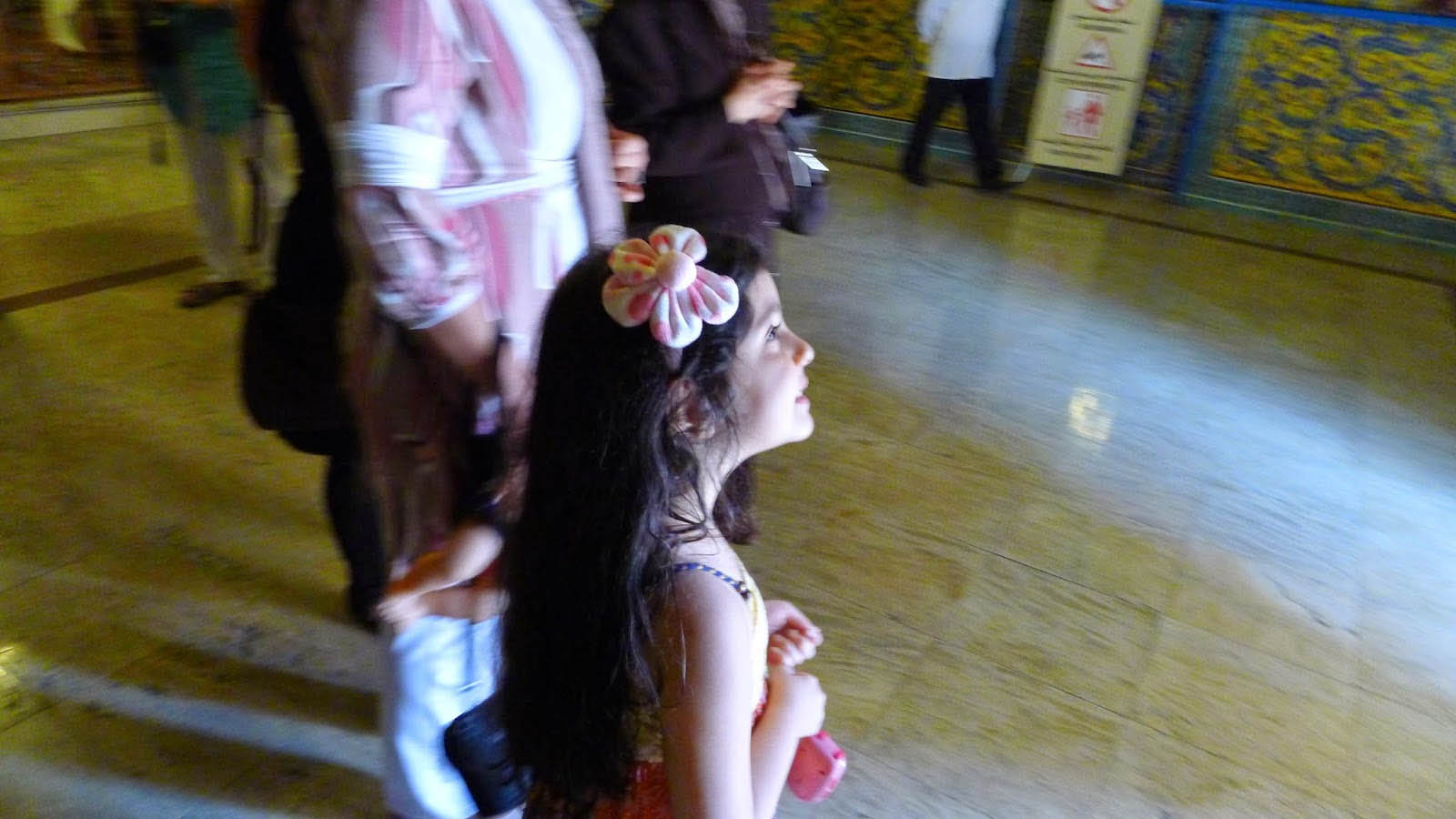
The exterior of the church seems to be more sober than the excessively decorated interior. The walls and the vault are covered with glazed tiles, the blue and gold dome evokes the Safavid mosques, while the arches have the figures of angels nested in a floral pattern. On the walls, alongside with the images from the life of Christ, they represent scenes of martyrdom of the Armenians in the Ottoman empire – a far cry from the peaceful and inviting Persia. In one corner, an old man with glasses, probably a guard, looks at his newspaper. He yawns, stands up, and goes to chat in the shade of the trees. Birds, flies. A little girl with eyes wide open.

The entrance and hallways, probably because they have not been renovated with the same vigor, seem more welcoming and conducive to meditation. Their motifs come from the Persian miniaturist tradition, along the walls, under the pillars and in the passage, where they align some tombs and funerary monuments. The small cemetery in the backyard has much more recent graves.
As in Julfa, there are very few visitors. A few Westerners, none of the many tourists coming to Isfahan from the Gulf States, no, mostly Iranian families. Persians? Armenians? Who knows? No one asks them, the gate is wide open.

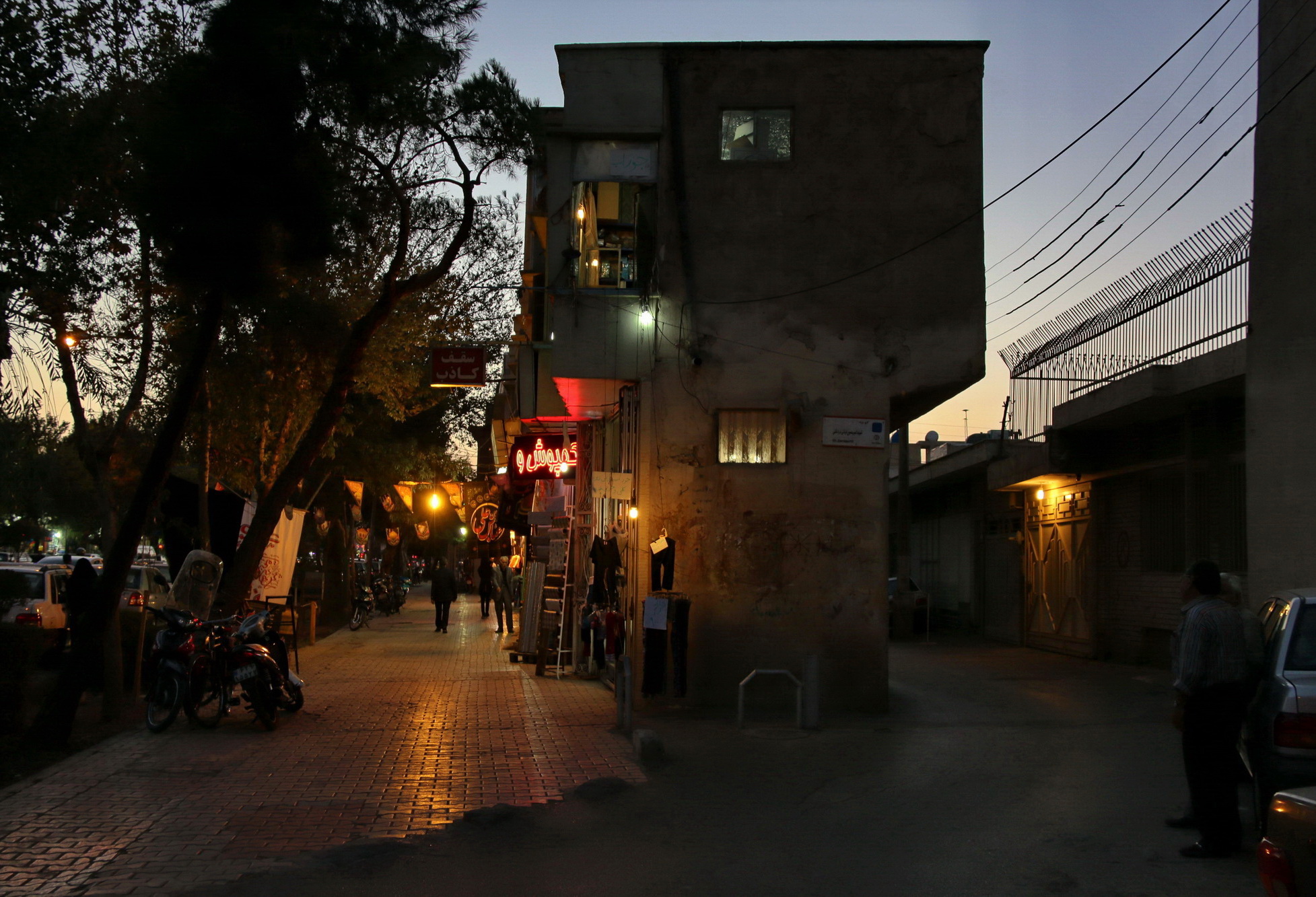


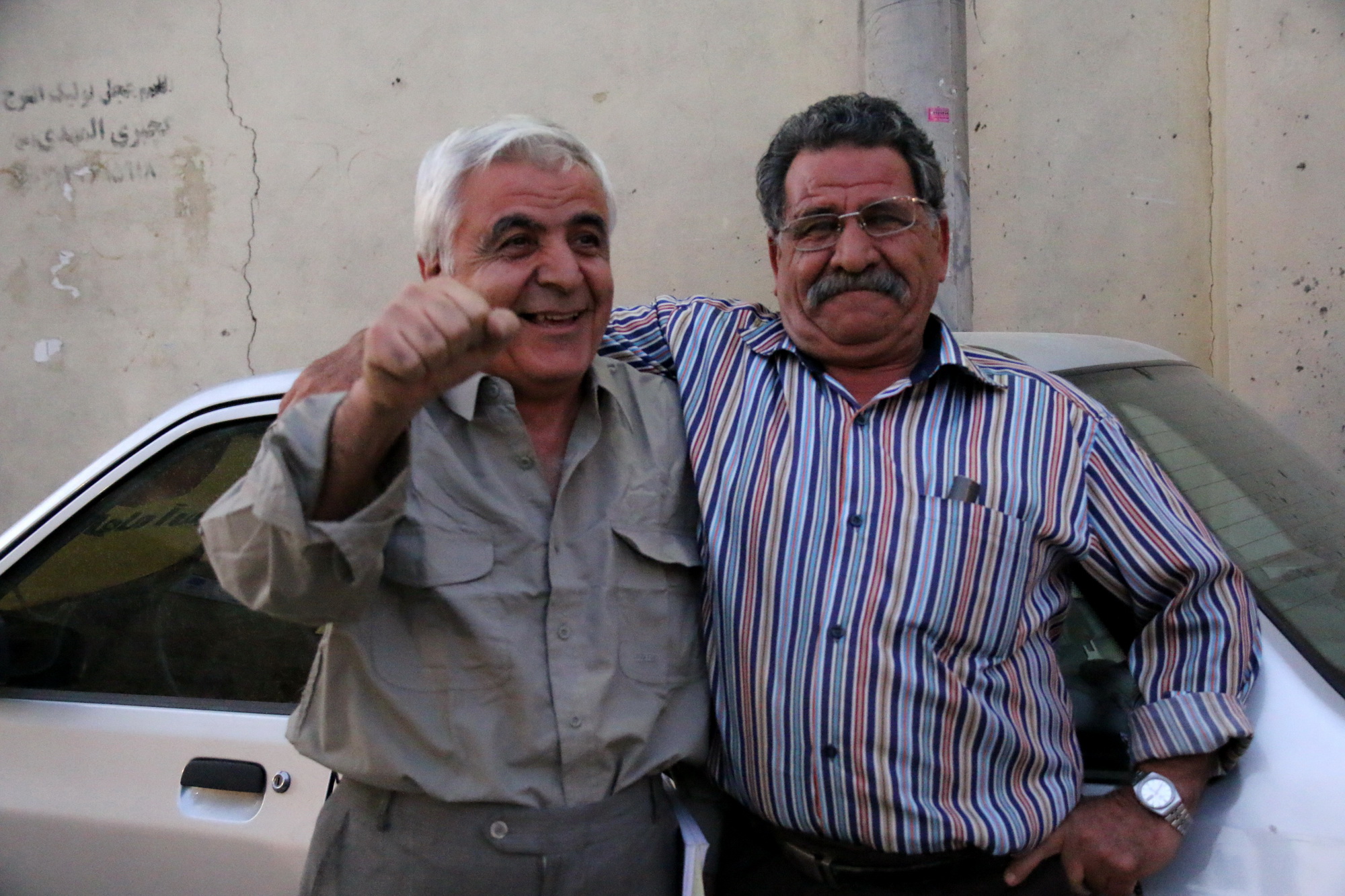


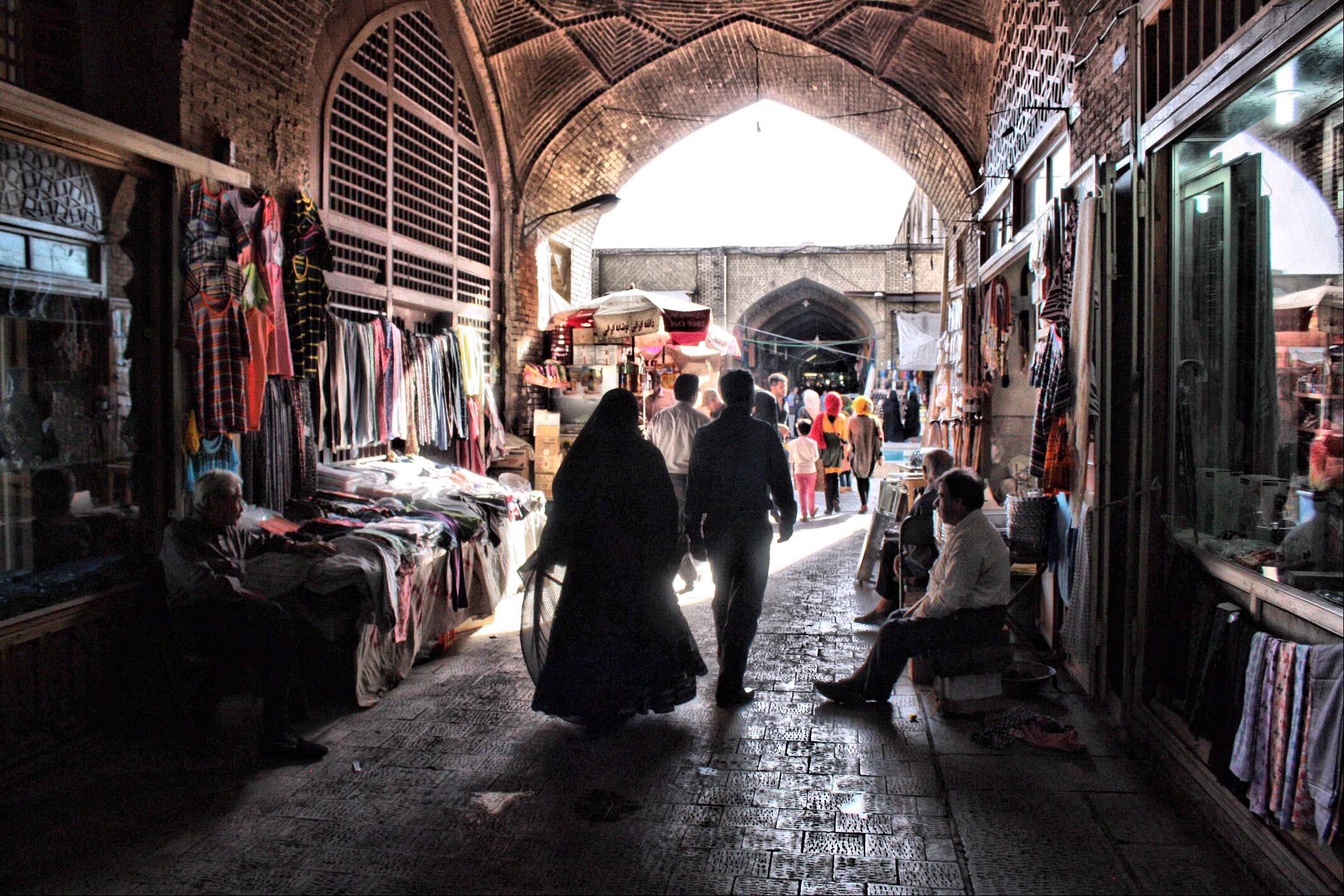
 “Are you a photographer?” the tall, thin man asks me, as he overtakes me along Chahar Bagh road, on the way to the bazaar of Isfahan. “No, I only take photos.” “Everybody starts like that.” He stares at the camera like an expert. “I have the same, but one number earlier.” “Are you a photographer?” “Yes, a press photographer, mostly for Iranian newspapers, but I have already published in Spiegel and National Geographic as well.” “Will you show me your photos?” “You’re welcome. I have a coffee shop here in the bazaar, I invite you for a coffee.”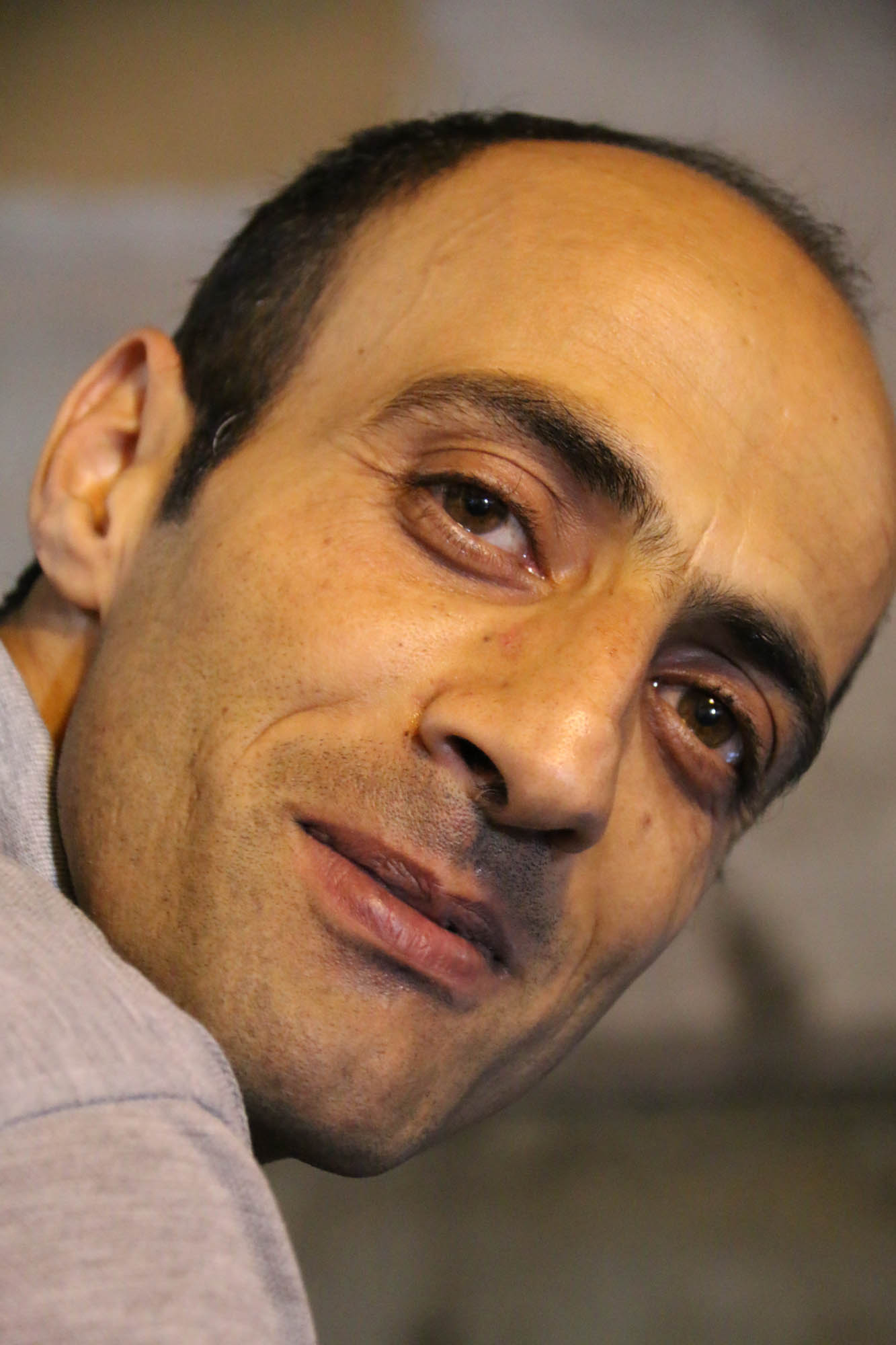









 Pour rejoindre le quartier arménien, à Ispahan, il faut d’abord passer la rivière, le Zâyandarud, qui traverse l’oasis où Ispahan s’est développée.


 Come with us to…
 Atlantis
 Bestiary
 Bohemia+Prague
 Books, exhibitions, music, film
 Brave old world
 Caucasus
 Cemeteries
 Crimea
 Get to know the
 Images of the East
 Lightwriting
 Lwów/Lemberg
 Mallorca
 Message on the wall
 The Museum of Propaganda
 Odessa
 Paper Museum
 Persian letters
 The Jewish heritage


