Switch over to our new blog! • ¡Pásese a nuestro nuevo blog!
The renewed version of our blog, with more features, a richer design, and available in nine languages, can be read here: https://wangriver.com
The new version also includes the old posts, often in expanded form. If you are curious about the updated version of this post, replace “riowang.blogspot.com/” in the URL with “riowang.studiolum.com/”, and the new link will most likely lead you there.
La versión renovada de nuestro blog, con más herramientas, un diseño más rico y disponible en nueve idiomas, se puede leer aquí: https://riowang.com
La nueva versión también incluye las publicaciones antiguas, a menudo en una forma ampliada. Si tiene curiosidad por la versión actualizada de esta entrada, sustituya «riowang.blogspot.com/» en la URL por «riowang.studiolum.com/es/», y el nuevo enlace probablemente le llevará allí.
Святі воїни, holy warriors, proclaim the two icons of the two warrior saints, dressed in black and red, the colors of Bandera, on the facade of the Icon Museum in Lemberg/Lviv. The two icons are parts of the decoration of the exhibition St. George the Dragon-Slayer and the warrior saints on icons from the 14th to the 19th century, but in these colors, and without the poster of Saint George announcing the exhibition are rather symbols of the current public climate of Lemberg, and profess the immortal glory of the heroes fighting for the Ukraine героям слава –, like so many other things, from the fairy tale books through the pubs to the cemeteries. The permanent exhibition shows the most beautiful pieces of Ruthenian icon painting in Galicia, from the museum’s collection of seventeen thousand pieces. This is a strange and unknown world to the eyes accustomed to the Russian icons, just as intense and fascinating, but with less stiffness, much more popular features and playfulness, and a lot of Western influences. Icons of saints’ life stories with the scenes of everyday life, Passion cycles with rustic side episodes, Last Judgements with the encyclopedic representation of sins and punishments. In the Saturday of the Orthodox Easter they close two hours earlier, they are preparing themselves for the Resurrection Mass and dinner. Христос воскресе – Во истино воскресе, we say goodbye to the attendant nanny. I would like to take a picture of a Resurrection icon in memory of the feast, but I cannot find any at the exhibition. The resurrection did not figure among the themes of the painting of the future Ukraine.
In our tour, between 28 April and 1 May (Thursday-Sunday) we will stroll the streets of the old town of Lemberg, the Armenian and the Jewish quarter, the Art Nouveau neighborhoods, the surviving parts of the Jewish suburb, and we will also visit the open air museum on a forest-covered hillside not far from the center, where at this time they hold traditional Easter ceremonies in the wooden churches and in front of them. I will indicate the dates of the most beautiful ceremonies of the various confessions. The participation in them is, of course, optional, just like in the peak of the feast, the Orthodox Resurrection Mass on Easter Saturday night. On the way to Lemberg we will visit the Baroque town of Drohobycz, the birthplace of Bruno Schulz, and on the way back we will stop on the Verecke Pass, to look around from the peak of the Carpathians. Participation fee (travel by 9-seat minibus from Budapest + one bed in a two-bed room, with breakfast + guided tour): 280 euro. Deadline of registration: 16 March, Wednesday, at wang@studiolum.com.
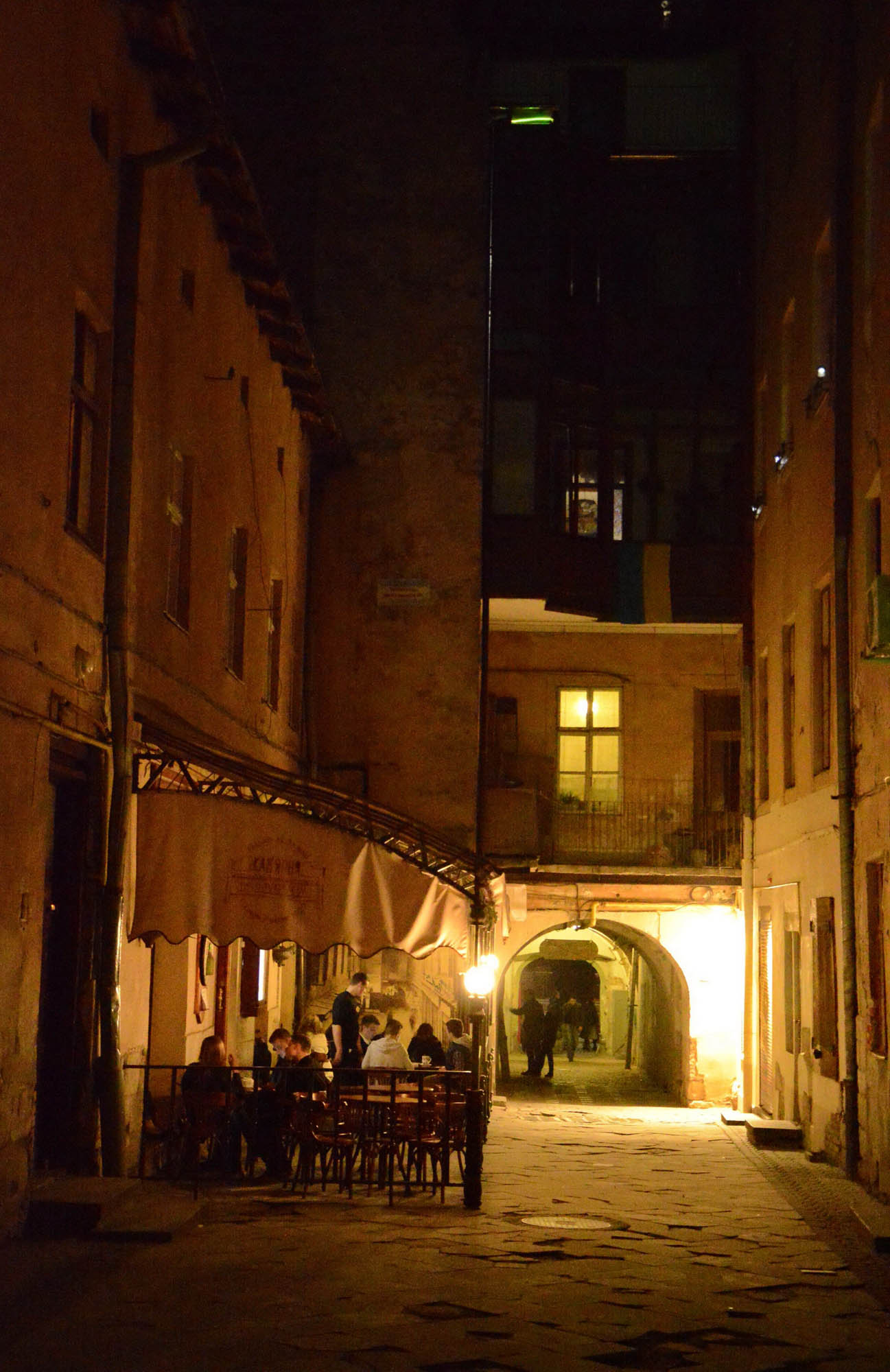
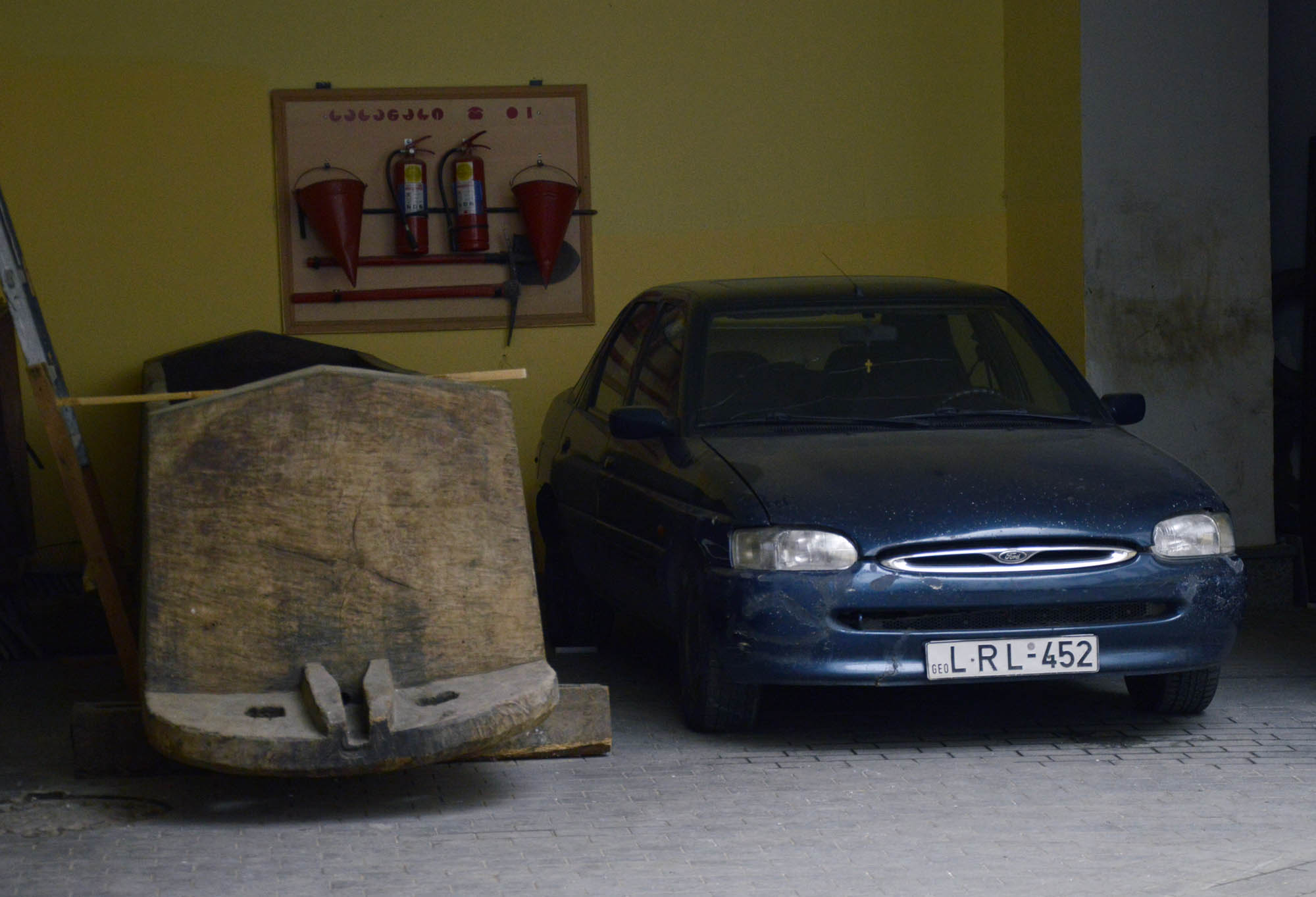
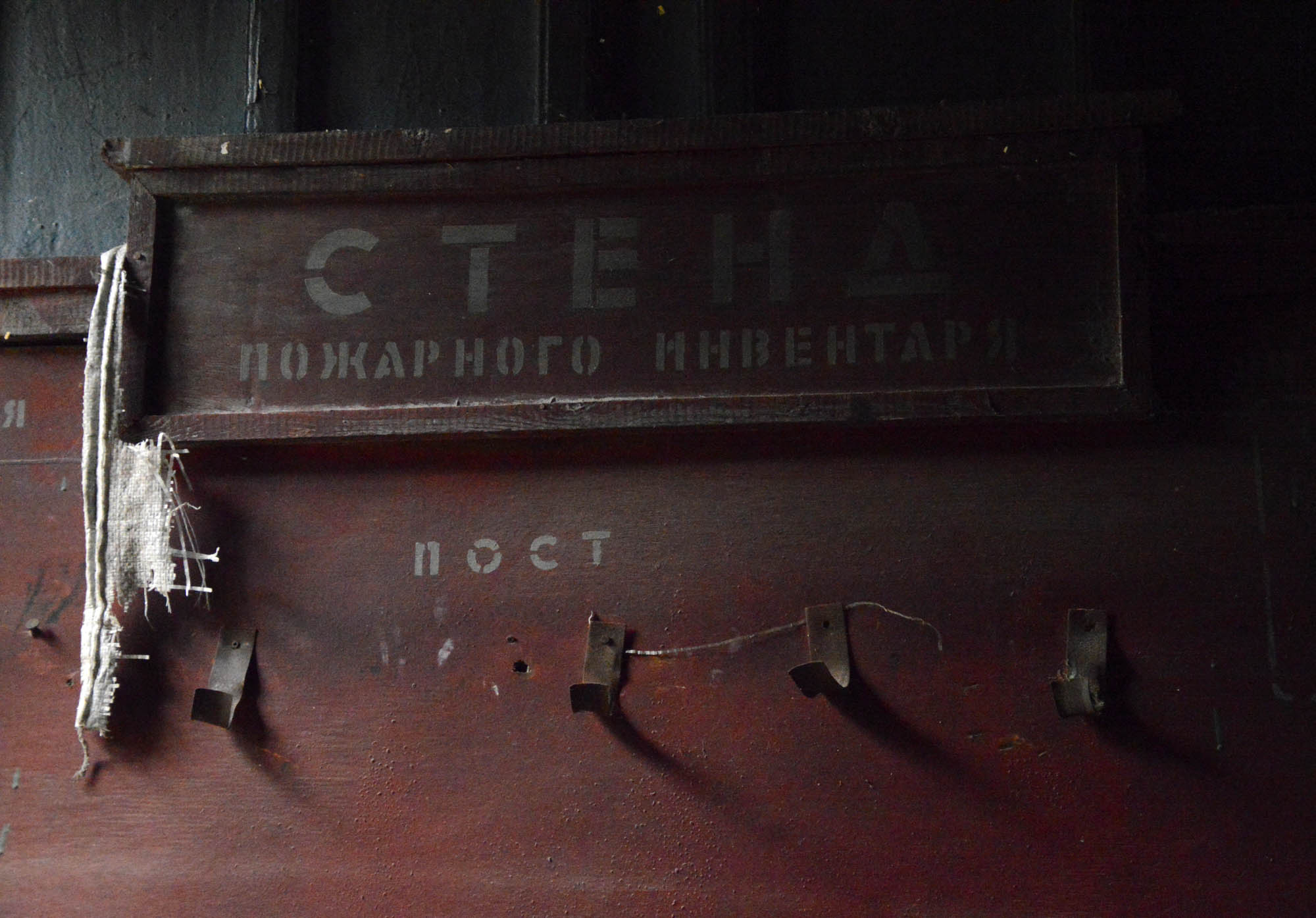
Lemberg, Gas Lamp Café in the Armenian Renaissance house, where in 1853 a Pole and a Hungarian invented kerosene. The four floors of the café are decorated with photos, newspaper clippings, shares and objects of use in the fin-de-siècle oil fields of Galicia. In the glass-enclosed top floor with open views over the rooftops of old Lemberg, a typical red-painted Soviet-era wall board with red fire buckets and shovel. “Do you know why the bottom of the fire bucket was pointed in those days?” asks András. “So it would not be stolen. Because like this, it could not be used for anything else.”
Leópolis, Café Luz de Gas en la casa renacentista armenia donde en 1853 un polaco y un húngaro inventaron el queroseno. Los cuatro pisos de la cafetería están decorados con fotos, recortes de periódico, cacharros variopintos y objetos de uso cotidiano en los campos petroleros del fin de siglo en Galizia. En la planta superior acristalada que mira sobre los tejados de la antigua Leópolis cuelga de la pared un tablero pintado de rojo, típico de la era soviética, con cubos de incendio también rojos y una pala. «¿Por qué se harían estos cubos en forma de cono en aquella época?», se pregunta András. «Así nadie se los llevaba. Con esta forma no podían utilizarse para otra cosa».
Kutaisi, Georgia, inner courtyard of the city museum, with old Georgian grape treading tub • Kutaisi, Georgia, patio interior del museo de la ciudad con una antigua artesa para pisar la uva
Abastumani, Southern Georgia, inside an Armenian church that was converted into bakery in Soviet times and then left to decay • Abastumani, Georgia del Sur, en el interior de la iglesia armenia transformada en horno de pan en tiempos soviéticos y luego abandonada
Khiva, service courtyard of Said Niyaz Sholikorbay mosque. Stealing from a mosque would have been embarrassing even in Soviet times • Jiva, patio de servicio de la mezquita Said Niyaz Sholikorbay. Robar en una mezquita habría sido vergonzoso incluso en la época soviética.
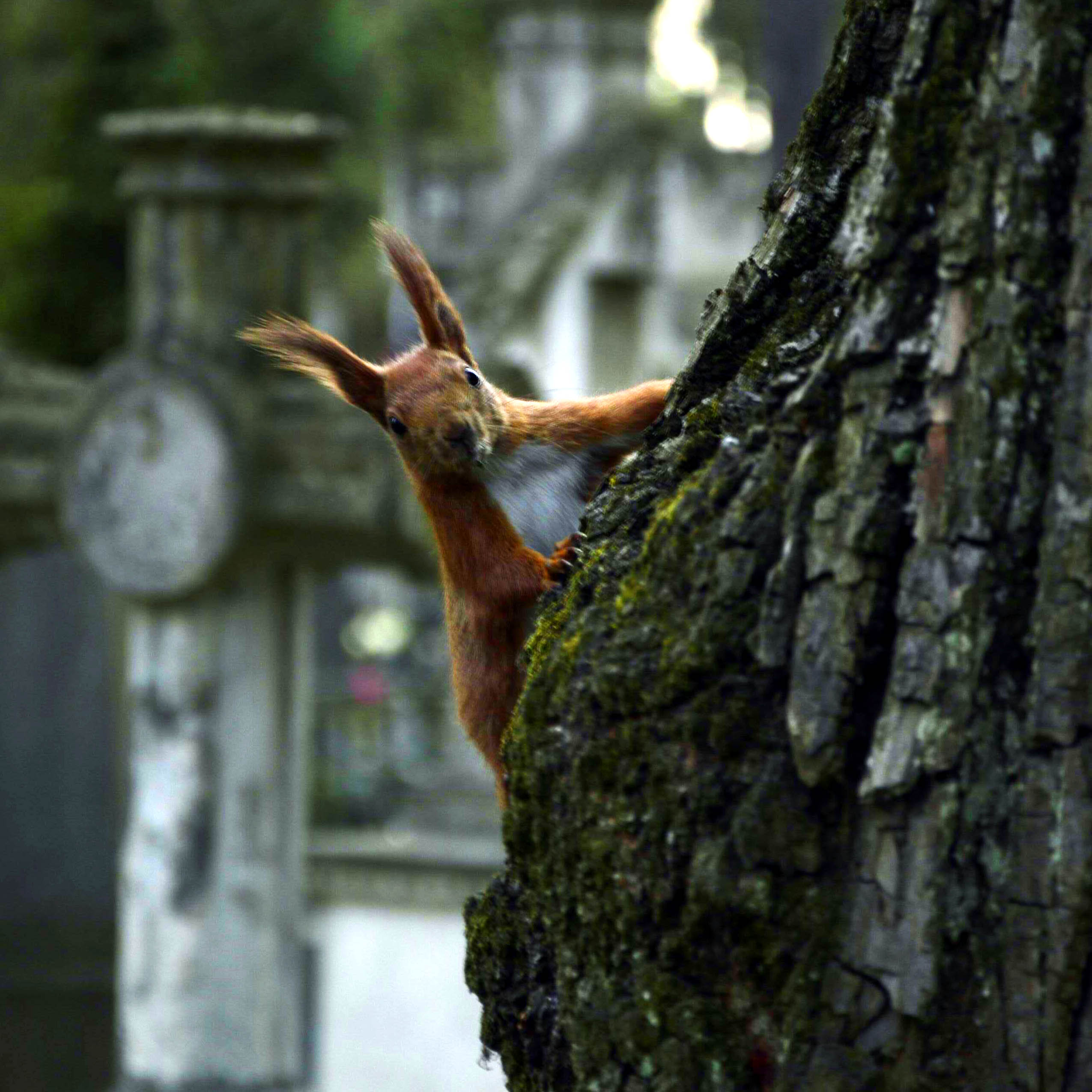
La Pascua en Lemberg no es sólo una fiesta para los vivos, también para los muertos. Al igual que en otras regiones ortodoxas, es ahora cuando las familias visitan las tumbas de sus seres queridos, rezan juntos y van luego a comer las viandas que fueron bendecidas el día anterior. El cementerio Łyczakowski es el más antiguo de los que conserva Lemberg. Inaugurado en 1788, después de que José II cerrara las zonas de entierro en el interior de las murallas, se lo considera panteón polaco. Aquí descansa un gran número de artistas, científicos y aristócratas polacos, y los caídos en los levantamientos de 1830-1831 y 1863. Y, en la esquina sur-este del cementerio, en una parcela aparte, los «aguiluchos», que defendieron a la solitaria Lwów contra el ejército ucraniano independiente durante la guerra civil ucraniano-polaca de 1918-1920, mientras el ejército polaco, comandado por Pilsudski, hacía retroceder al Ejército Rojo de Budenny y de Stalin desde Varsovia. En el cementerio de los héroes, construido en 1924, los nombres de los muchachos y muchachas se pueden leer sobre las cruces blancas dispuestas en largas filas. Ninguno de ellos tenía más de veinte años. Nadie viene aquí por Pascua, pero las flores frescas y las banderas polacas atestiguan la presencia de visitas constantes.
Tras la expulsión de los polacos de Lwów en 1945, el cementerio de los héroes también comenzó a decaer. Los monumentos fueron derribados y la mayoría de tumbas destruidas con tanques. Sólo en 2005, después del decidido apoyo de Polonia a la «Revolución Naranja» ucraniana, se dio permiso al gobierno polaco para restaurar la necrópolis. Mientras tanto, los ucranianos también habían establecido su propio cementerio de los héroes en las inmediaciones del polaco. En su punto más alto está el Arcángel San Miguel sobre una columna, con la espada desenvainada, y en el cementerio los cenotafios o las tumbas reales de los miembros del ejército ucraniano independiente de 1918, la división ucraniana de las SS de Galizia, el ejército nacional de Bandera, se alinean con los partisanos ucranianos que lucharon hasta 1955 contra los invasores soviéticos, unos al lado de otros. Todo el año tienen coronas de flores, no sólo de sus familiares, sino también del ejército ucraniano, de scouts o de asociaciones patrióticas.
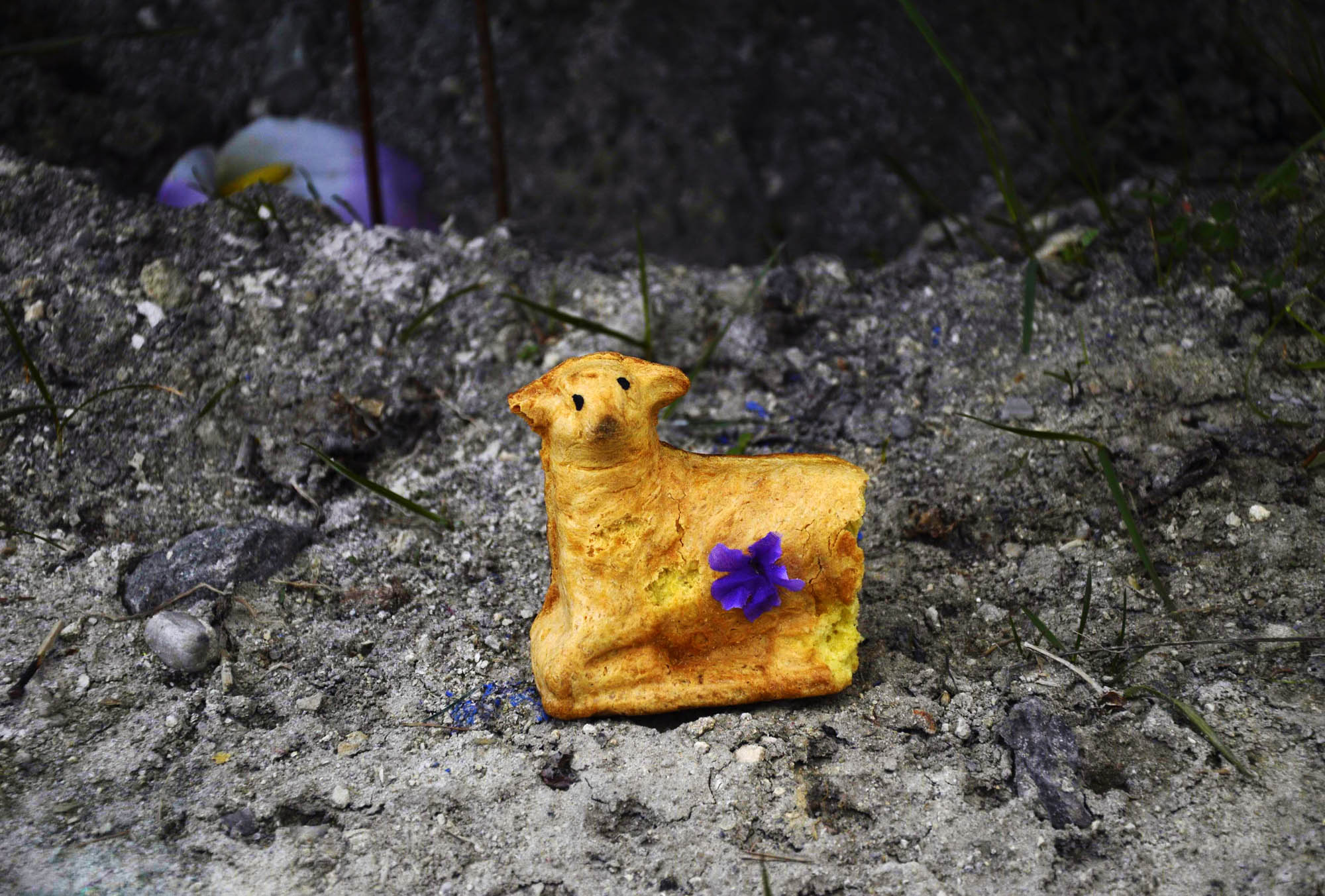
El año pasado una nueva, tercera, parcela fue inaugurada en el cementerio de los héroes, que ahora es la parte de mayor crecimiento del cementerio Łyczakowski. Aquí enterraron a los jóvenes soldados caídos en defensa de las fronteras orientales del país. Las coronas están aún frescas en la mayoría de tumbas. El domingo de Pascua hay visitantes en casi todos los sepulcros, familiares, amigos, muchos uniformes militares; algunos se acercan a dos o tres tumbas. Ya está superado el primer golpe, mecánicamente y sin lágrimas llevan a cabo los rituales de la visita. No hablan, ni tampoco comen, sólo colocan sobre la tumba, sacándola de la cesta de Pascua que llevan consigo, una rebanada de pan pascual, huevos cortados por la mitad, un bizcocho en forma de cordero.
Easter in Lemberg is not only the feast of the living, but also of the dead. As in other Orthodox regions, at this time the families visit the tombs of their loved ones, they pray together and eat the food blessed in the previous day.
The Łyczakowski cemetery is the oldest preserved cemetery of Lemberg. Opened in 1788, after Joseph II closed the burial grounds within the city walls, it has been considered a Polish pantheon. Here lies a large number of Polish artists, scientists and aristocrats, and the martyrs of the 1830-1831 and 1863 uprisings. And, in the south-east corner of the cemetery, in a separate plot, the “eaglets”, who defended the lonely Lwów against the independent Ukrainian army during the Ukrainian-Polish civil war of 1918-1920, while the Polish army, led by Piłsudski, beat back Budenny’s and Stalin’s Red Army from Warsaw. In the heroes’ cemetery, built in 1924, the names of boys and girls can be read on the white crosses which stand in long rows. None of them were older than twenty. Nobody comes here at Easter, but the fresh flowers and the Polish flags testify to the fact of frequent visitors.
After the expulsion of the Poles from Lwów in 1945, the heroes’ cemetery also started to decay. The monuments were torn down, and most of the graves were destroyed with tanks. Only in 2005, after the firm support of Poland for the Ukrainian “Orange Revolution”, did the Polish government receive permission to restore the necropolis. In the meantime, the Ukrainians also set up their own heroes’ cemetery in the immediate vicinity of the Polish one. At its highest point, the Archangel Michael stands at the top of a tall column, sword drawn, and in the cemetery the monuments and the real or symbolic graves of the independent Ukrainian army of 1918, the Ukrainian SS division Galichina, the national army of Bandera, and the Ukrainian partisans fighting up until 1955 against the Soviet invaders, line up next to each other. They are wreathed throughout the year, not only by family members, but also by the Ukrainian army, scouts, and patriotic associations.
Last year a third, new, plot was opened in the heroes’ cemetery, which is now the fastest growing part of the Łyczakowski cemetery. They bury here the young soldiers fallen in defense of the country’s eastern borders. The wreaths are still fresh on most of the graves. On Easter Sunday there are visitors at almost every grave, family, friends, many in military uniform, with some even visiting two or three graves. They are already over the first shock, they perform mechanically and with dry eyes the rituals of grave visiting. They do not speak, they do not even eat, they only place on the grave, from the Easter basket brought with them, a loaf of Easter bread, eggs cut in half, a lamb-shaped cake.
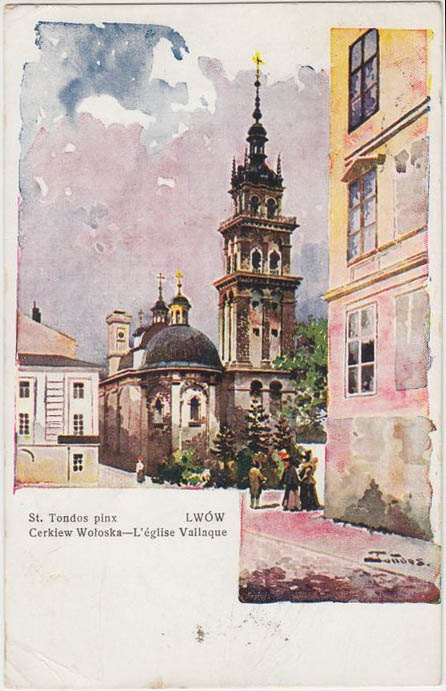
La iglesia ortodoxa de Leópolis está consagrada a la Dormición de la Virgen (Uspenska / Успенська), pero en la ciudad se la conoce como la «iglesia valaca» (Wołoska / Волоська), ya que originalmente la financió, entre 1547 y 1549, el príncipe moldavo Alexandru Lapusneanu. Después de arder por completo en 1571 fue reconstruida a partir de 1574 tal como es hoy por la cofradía de comerciantes ortodoxos de la ciudad, la Hermandad Ortodoxa Uspenska
La Hermandad, que además detentaba la imprenta ortodoxa de la ciudad y la escuela, fue fundada por los comerciantes rutenos, griegos y moldavos de Lwów en la década de 1530 para mejor resistir, por un lado, los intentos de asimilación del Patriarca de Moscú –la iglesia ortodoxa ucraniana era entonces independiente de Moscú y sujeta al Patriarca de Constantinopla– y, por el otro, a las aspiraciones de la iglesia católica polaca, que en 1596 convertiría gran parte de la iglesia ortodoxa en greco-católica, unida a Roma. El patrocinador principal de esta segunda iglesia también fue un príncipe moldavo, Ieremia Movilă, el padre del Metropolita de Kiev, Petro Mohyla, que, como hemos escrito en otra ocasión, trabajó en la creación de una iglesia ortodoxa rutena de formación occidental, y cuyo excepcional experimento acabó deshecho por las medidas de rusificación llevadas a la práctica por Pedro el Grande.
No es de extrañar, por tanto, que la apariencia de la iglesia sea diferente del modelo de iglesia rusa. En sus sesenta y cinco metros de altura, el campanario, bautizado como la Torre Korniakt en honor de su constructor, el comerciante cretense Konstantinos Korniaktos, recuerda a las torres urbanas renacentistas de Italia; y sus esculturas siguen asimismo patrones renacentistas. En continuidad con las antiguas aspiraciones de independencia, hoy pertenece de nuevo a la Iglesia Ortodoxa Ucraniana autónoma, que resucitó tres veces, en 1921, 1942 y 1990 y que, a causa de la presión del Patriarcado de Moscú todavía no es reconocida por ninguna otra iglesia ortodoxa.
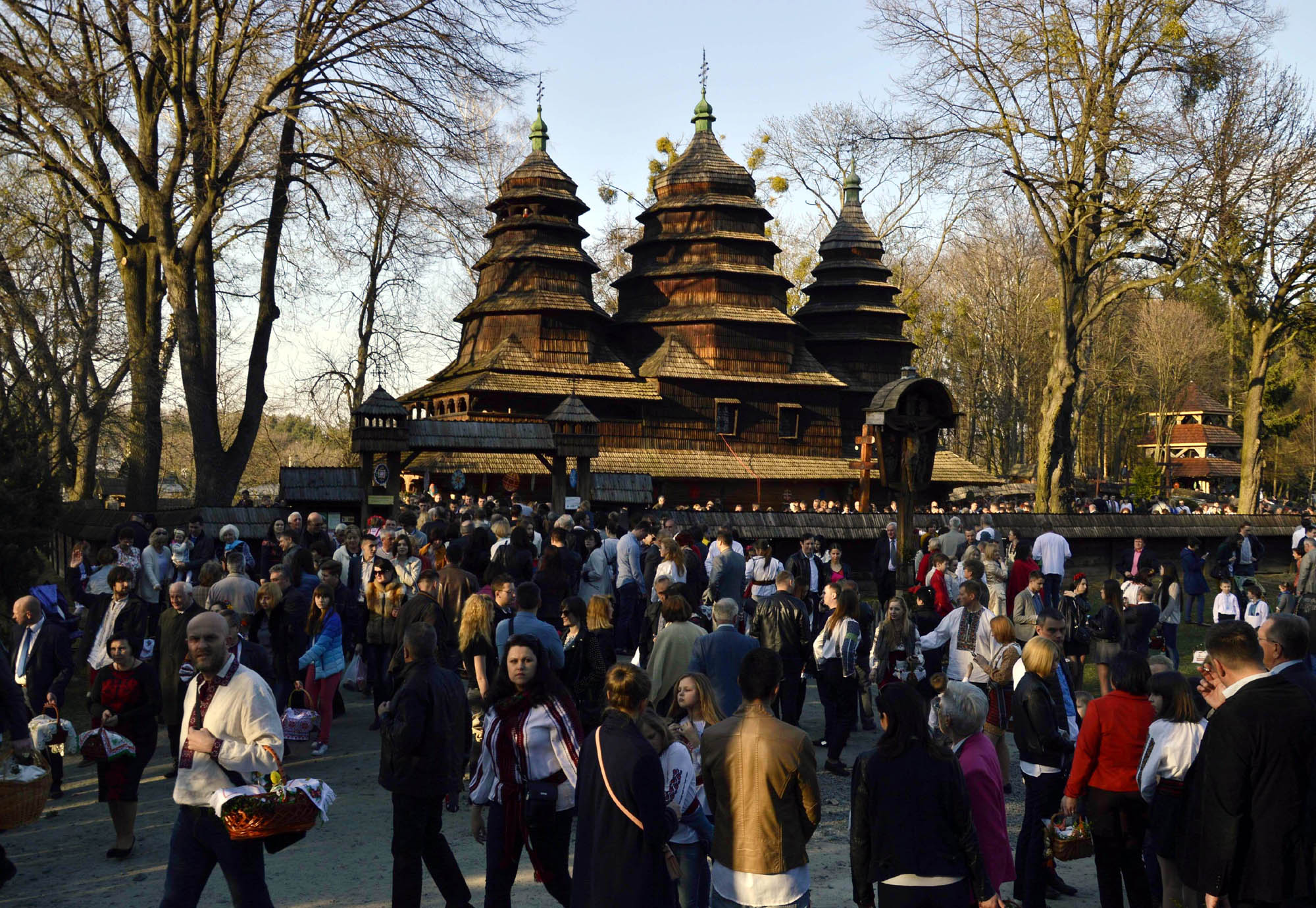
En la tarde del Viernes Santo, las iglesias ortodoxa y greco-católica instalan la tumba de Cristo en sus capillas laterales. La visitan largas colas de creyentes durante toda la noche. El sábado todas las familias de la ciudad, en trajes nacionales ucranianos, se dirigen al museo al aire libre de las iglesias de madera rusinas. Allí se bendicen los alimentos que llevan en pequeñas cestas desde la mañana hasta bien entrada la tarde. Estas viandas formarán parte del almuerzo familiar del domingo, tras haber asistido la noche antes a la procesión y Misa de Resurrección. Hasta en los bufés de los hoteles encontraremos huevos o pasteles bendecidos.
Bendición de los alimentos en el museo abierto de Leópolis, 11 de abril de 2015
La gente empieza a reunirse en la iglesia ortodoxa alrededor de las once y media. Extienden alfombras en el suelo de piedra y distribuyen las banderas procesionales. La ceremonia da inicio poco antes de la medianoche en el santo sepulcro, donde el velo con la representación de Cristo muerto se levanta y es conducido detrás del iconostasio. A medianoche se anuncia la resurrección de Cristo en medio del alborozo general y arranca la procesión por las calles de Leópolis. Volvemos a la puerta principal, que sólo se abre una vez al año, justo en esta ocasión, a petición del Patriarca que trae la buena nueva. Salimos a la una, pero podemos ver en la televisión local que la misa se prolongará hasta las cuatro de la mañana.
Procesión ortodoxa e Himno de la Resurrección, 11 de abril de 2015
The Orthodox church in Lemberg was erected in honor of the Dormition of the Blessed Virgin Mary (Uspeńska/Успенська), but in the city it is referred to as “the Wallachian church” (Wołoska/Волоська), because its first version was financed between 1547 and 1549 by the Moldavian Prince Alexandru Lăpușneanu. After it burned down in 1571, it was rebuilt from 1574 on in the present form by the religious confraternity of the city’s Orthodox merchants, the Uspenska Orthodox Brotherhood.
The Brotherhood, which also operated the city’s Orthodox printing house and school, was founded by the Ruthenian, Greek and Moldavian merchants of Lwów in the 1530s, to better resist on the one hand the attempts of assimilation of the Patriarch of Moscow – the orthodox church in the later Ukraine was at that time independent of Moscow, and was subject to the Patriarch of Constantinople –, and on the other the aspirations of the Polish Catholic church, which in 1596 would convert a large part of the Orthodox church into the Greek Catholic church, which is in union with Rome. The main patron of the second church was also a Moldavian Prince, Ieremia Movilă, the father of the Metropolite of Kiev, Petro Mohyla, who, as we have written about it, labored on the creation of a Western-educated Ruthenian Orthodox church, and whose unique experiment was broken only by the Russification measures of Peter the Great.
No wonder, therefore, that the church’s appearance is different from the Russian church model. Its sixty-five-meter high bell tower, which was named Korniakt Tower after his builder, the Cretan merchant Konstantinos Korniaktos, recalls Italian Renaissance urban towers, and its carvings also follow Renaissance patterns. In line with the former aspirations for independence, today it belongs again to the autonomous Ukrainian Orthodox Church, which resurrected three times, in 1921, 1942 and 1990, and which, to the pressure of the Moscow Patriarchate, is still not recognized by any other Orthodox church.
On Good Friday afternoon, the grave of Christ, who died on the cross, is erected in the side chapels of the Orthodox and Greek Catholic churches, and it is visited in long lines by the believers through all night. The next day all the families of the city, dressed in Ukrainian national costumes, walk out to the open air museum of Rusyn wooden churches, where the blessing of the food brought by them in small baskets is going on from morning till evening. This blessed food will be eaten by the family on Sunday morning, after the night Resurrection Mass and procession. You can find blessed cakes and eggs even on the buffet table of the hotel.
Food blessing in the open air museum of Lemberg, 11 April 2015
People begin to gather in the Orthodox church around half past eleven. They spread carpets on the stone floor, and distribute the procession flags. The ceremony begins shortly before midnight at the holy grave, from where the veil depicting the dead Christ is soon lifted and carried behind the iconostasis. At midnight they announce the resurrection of Christ in the midst of great joy, and a procession begins through the streets of Lemberg. We return to the main gate, which is only opened once a year, at this time, at the request of the Patriarch bringing the good news. We leave at one o’clock, but on the local TV I can see that the Mass goes on until four in the morning.
Orthodox procession and resurrection hymn, Lemberg, 11 April 2015
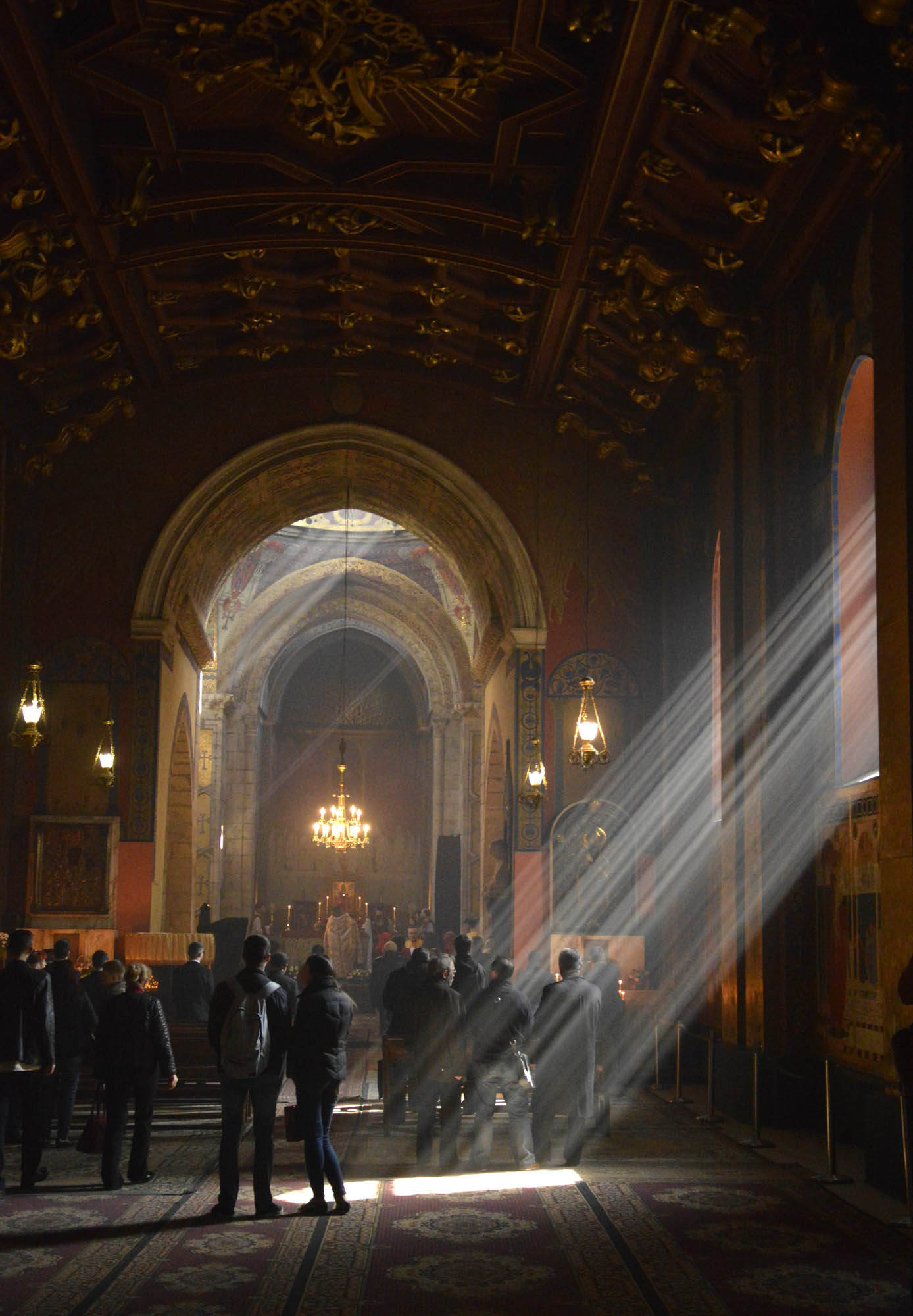
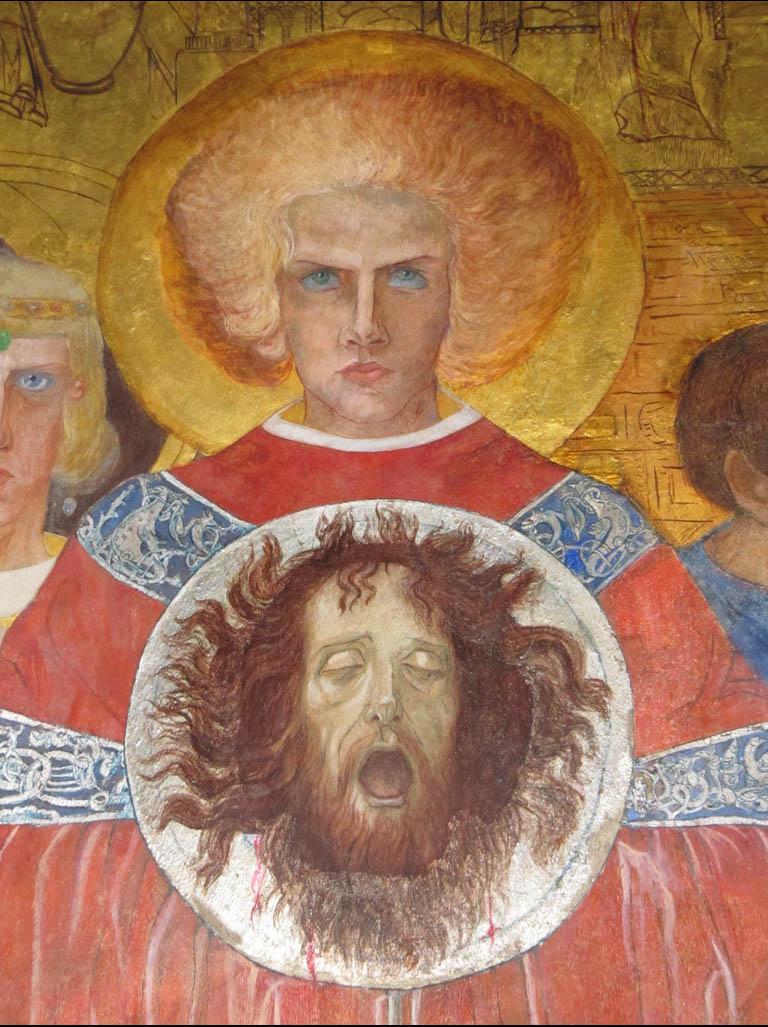
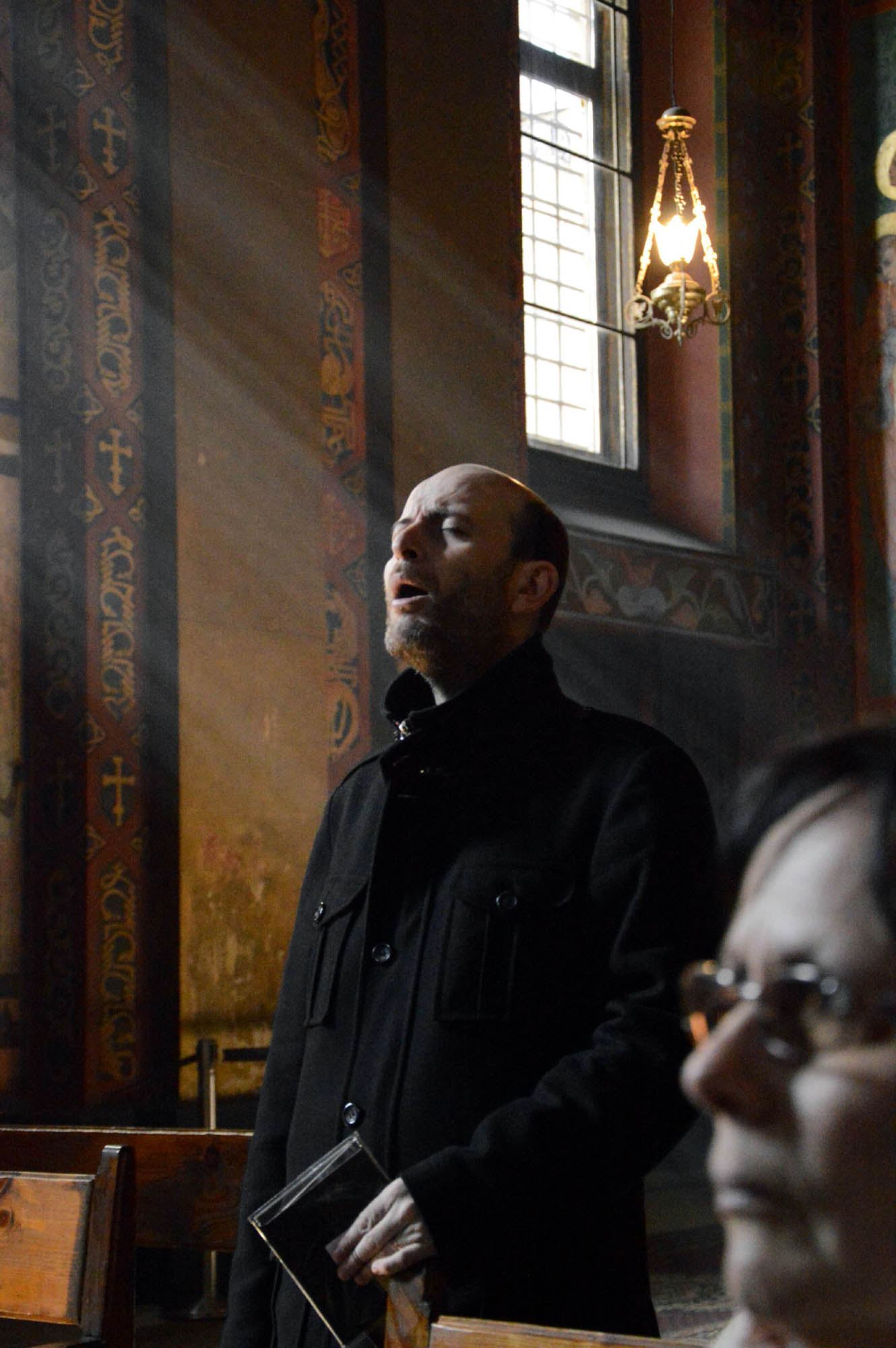
The light pours in beams into the Armenian cathedral of Lemberg. The church was founded in 1362 by Crimean Armenians on the model of the medieval Armenian churches, some three thousand kilometers from ancient Armenia, its walls are decorated by Art Nouveau frescoes in the manner of Klimt, ordered by the Armenian Catholic archbishop Józef Teodorowicz from the Russia-born French émigré Polish freedom fighter Jewish painter Jan Henryk de Rosen. This is Lemberg.
Los rayos del sol caen hasta el suelo desde los ventanales atravesando la penumbra de la catedral armenia de Lemberg. La iglesia fue fundada en 1362 por los armenios de Crimea siguiendo el modelo de sus antiguas iglesias medievales, a unos tres mil kilómetros de distancia. Sus muros están decorados con frescos art nouveau, con reminiscencias de Klimt, encargados por el arzobispo católico armenio Józef Teodorowicz a un pintor judío nacido en Rusia, emigrado a Francia, luchador por la libertad en Polonia: Jan Henryk de Rosen. Así es Lemberg.
Beheading of St. John the Baptist, detail Degollación de San Juan Bautista. Detalle.
A handsome man with a smart smile steps up to us. “We, Armenians do not celebrate Easter now, but a week earlier, like you. However, I sing to you one of our Easter hymns. It is about the light penetrating into the darkness of the tomb. Just as it penetrates now into the church.”
Un hombre agradable con una sonrisa inteligente se nos acerca. «Nosotros, los armenios, no celebramos la Pascua ahora sino una semana antes, como ustedes. Pero voy a cantarles uno de nuestros himnos litúrgicos. Trata de la luz que se introduce en la oscuridad de la tumba. Tal como entra ahora en la iglesia».
Tadeos Gevorgyan, Lemberg
At the end of the song he shows a CD. “Armenian liturgy, a recording of our church choir. The solos are sung by the dean of our church, a member of the Opera.” “So as not to be immodest”, he adds with a roguish smile. “And we also sing at Mass tomorrow, come and listen to it.”
Later, when talking with him about the Armenian community of Lemberg, he reflects on his performance with a phrase: “I am often here to talk to the visitors. I find it important to do so, in order they have a relationship to our community and to our church.”
Al acabar el canto nos muestra un CD. «La liturgia armenia, una grabación de nuestro coro. Los solos los canta el deán, que es miembro de la Ópera.» «Sin falsa modestia», añade con una sonrisa más bien pícara. «Y también cantamos en la misa de mañana, vengan a escucharnos». Más tarde, hablando con él sobre la comunidad armenia de Lemberg, vuelve sobre su actuación anterior: «A menudo estoy aquí para hablar con los visitantes. Considero importante hacerlo, que se relacionen con nuestra comunidad y nuestra iglesia.»
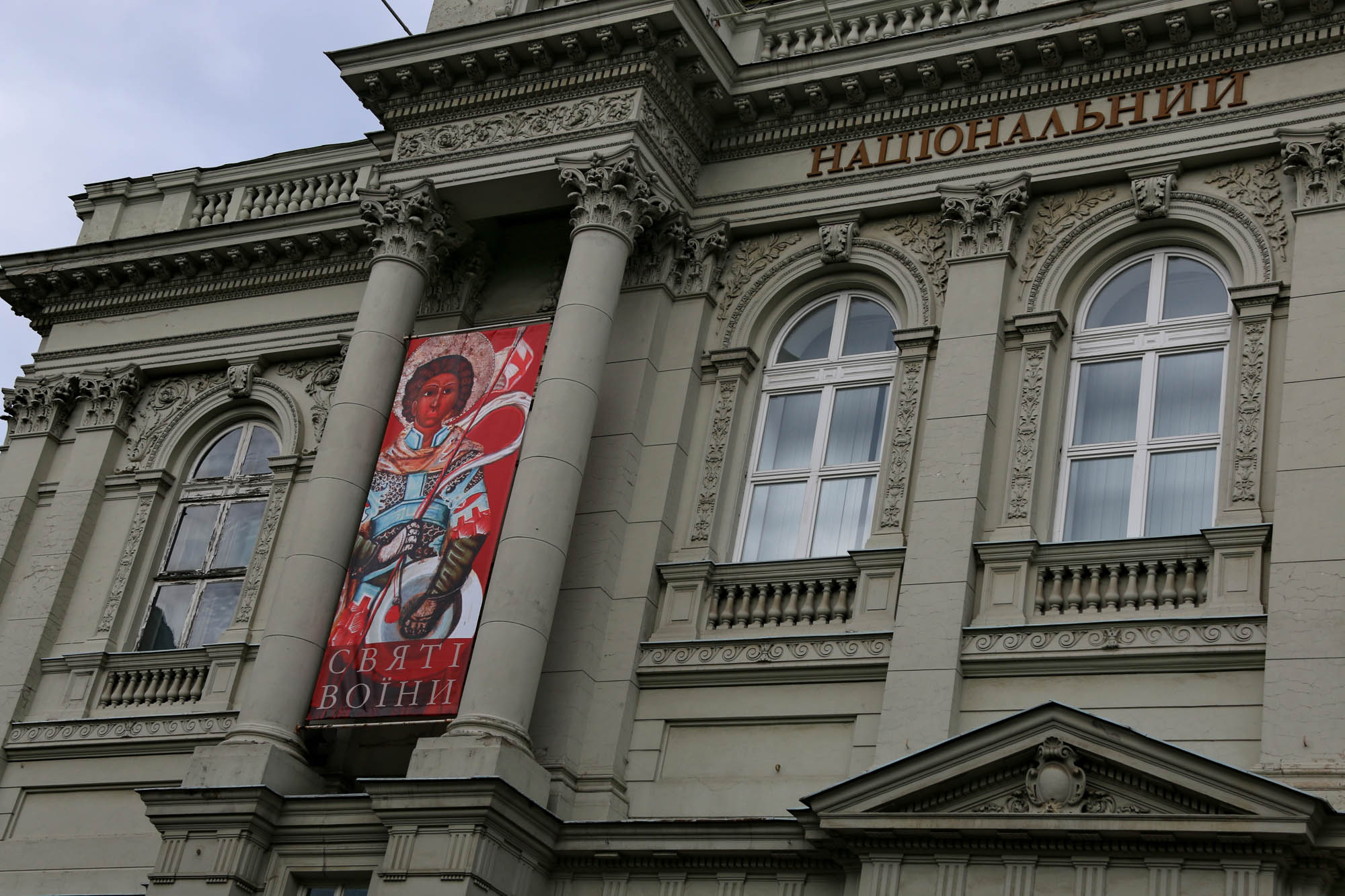

 Святі воїни, holy warriors, proclaim the two icons of the two warrior saints, dressed in black and red, the colors of Bandera, on the facade of the Icon Museum in Lemberg/Lviv. The two icons are parts of the decoration of the exhibition St. George the Dragon-Slayer and the warrior saints on icons from the 14th to the 19th century, but in these colors, and without the poster of Saint George announcing the exhibition are rather symbols of the current public climate of Lemberg, and profess the immortal glory of the heroes fighting for the Ukraine героям слава –, like so many other things, from the fairy tale books through the pubs to the cemeteries. The permanent exhibition shows the most beautiful pieces of Ruthenian icon painting in Galicia, from the museum’s collection of seventeen thousand pieces. This is a strange and unknown world to the eyes accustomed to the Russian icons, just as intense and fascinating, but with less stiffness, much more popular features and playfulness, and a lot of Western influences. Icons of saints’ life stories with the scenes of everyday life, Passion cycles with rustic side episodes, Last Judgements with the encyclopedic representation of sins and punishments. In the Saturday of the Orthodox Easter they close two hours earlier, they are preparing themselves for the Resurrection Mass and dinner. Христос воскресе – Во истино воскресе, we say goodbye to the attendant nanny. I would like to take a picture of a Resurrection icon in memory of the feast, but I cannot find any at the exhibition. The resurrection did not figure among the themes of the painting of the future Ukraine.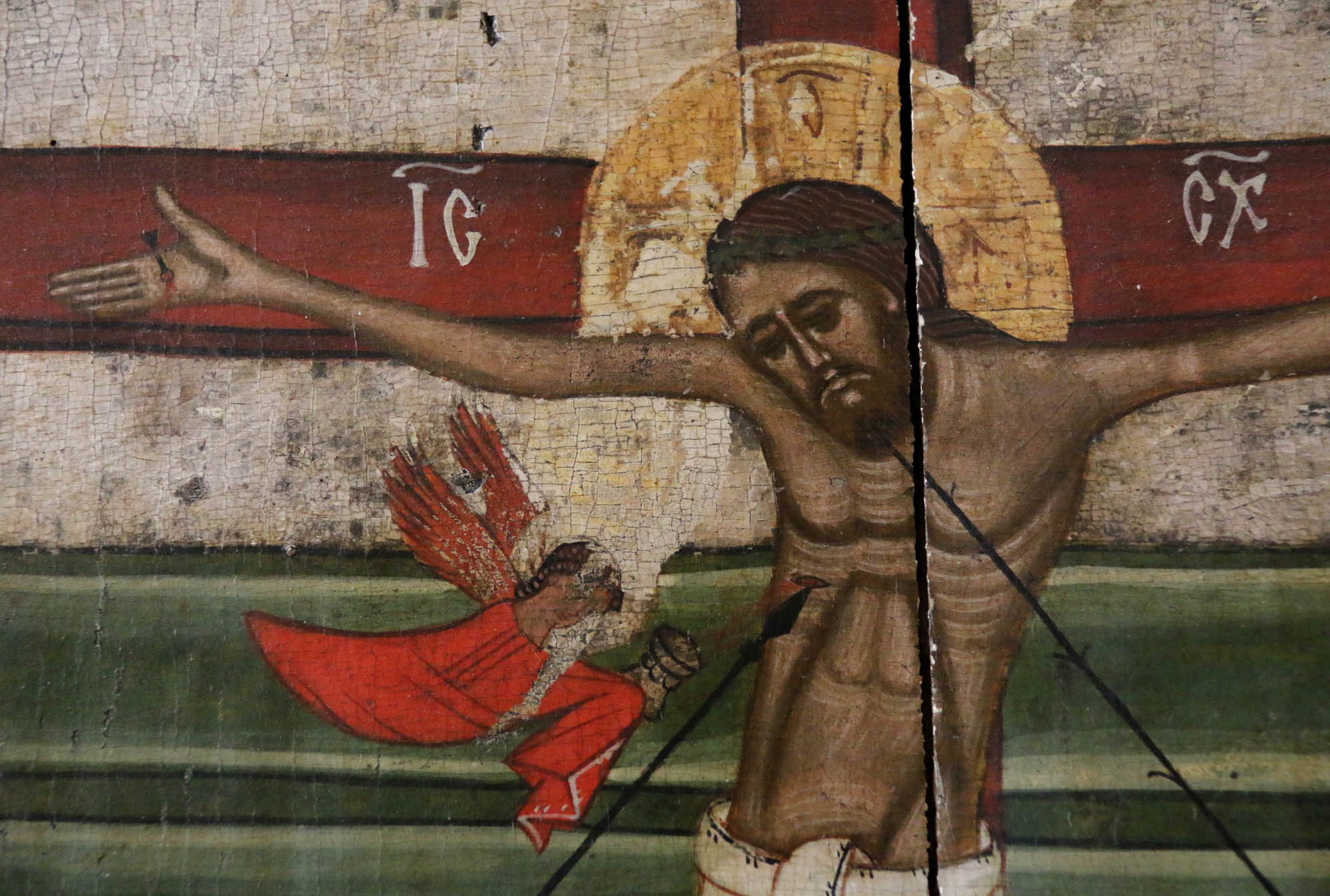








 La Pascua en Lemberg no es sólo una fiesta para los vivos, también para los muertos. Al igual que en otras regiones ortodoxas, es ahora cuando las familias visitan las tumbas de sus seres queridos, rezan juntos y van luego a comer las viandas que fueron









 Come with us to…
 Atlantis
 Bestiary
 Bohemia+Prague
 Books, exhibitions, music, film
 Brave old world
 Caucasus
 Cemeteries
 Crimea
 Get to know the
 Images of the East
 Lightwriting
 Lwów/Lemberg
 Mallorca
 Message on the wall
 The Museum of Propaganda
 Odessa
 Paper Museum
 Persian letters
 The Jewish heritage


