
 Florence, of course, has no kings, just as much as Venice has no queen. True, during the Quattrocento, many crowned people visited the city, beginning with the Byzantine emperor John during the Council of Florence (1439-1445), which greatly contributed to the rise of its organizers, the Medici family, the uncrowned kings of Florence, and ending with Charles VIII of France, whose invasion of the city in 1494 brought about the fall of the Medici. But Renaissance Florence regarded as its own three kings who came from an even further away Orient than the Byzantine emperor, every year on the sixth of January, to worship the newborn king of the Jews.
The day of the three Kings or Magi (in Italian, i re magi, the King-Magi) – about whose traditional iconography I wrote in detail here – was celebrated by the city with a spectacular parade. It started from a central square, of the Battistero or the Signoria, and always ended at the church of San Marco in the northern part of the old town, where the three oriental kings – and many Florentine citizens accompanying them – presented their gifts at the manger set up in the church square.
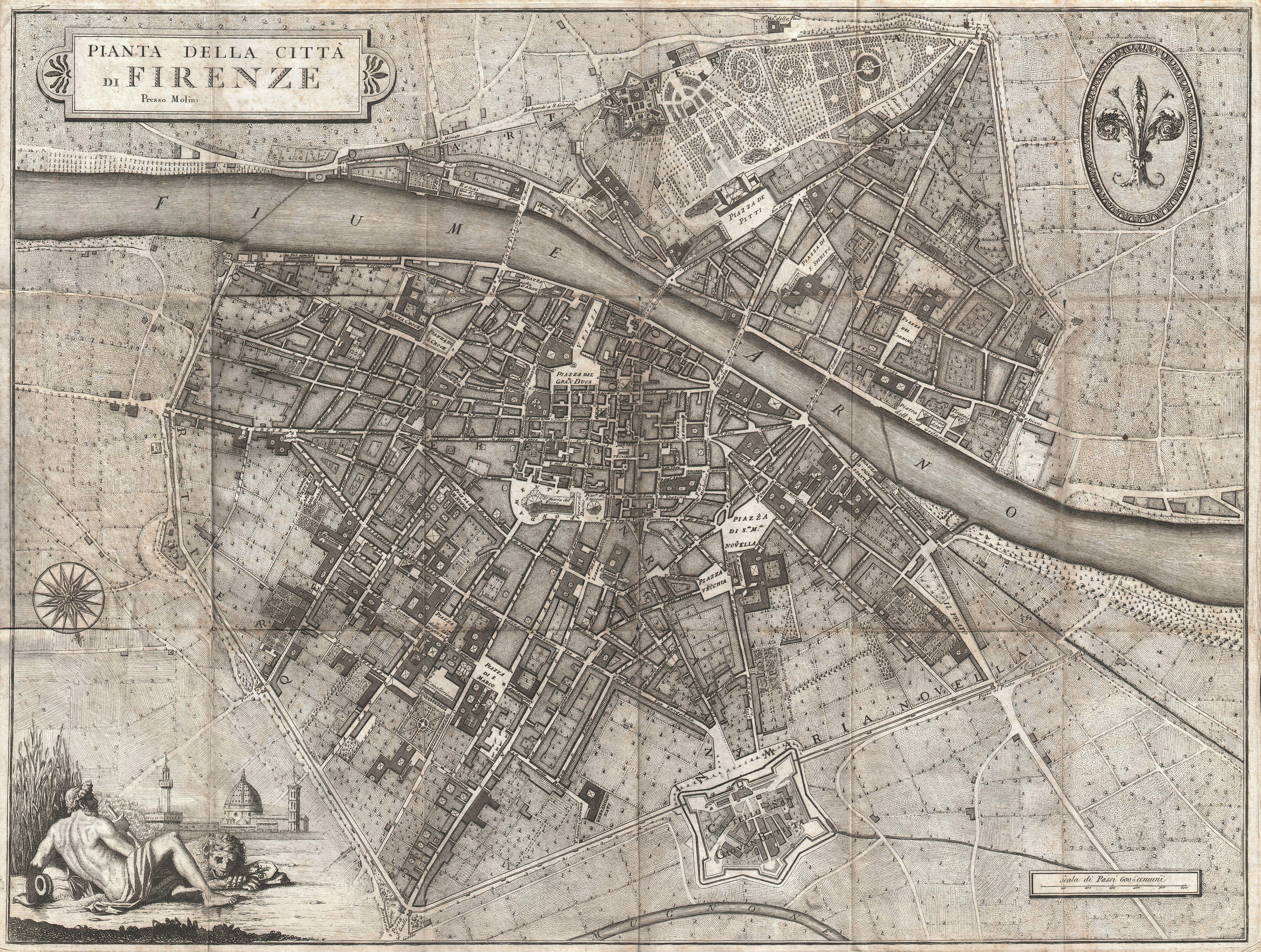 The backbone of the route of the Renaissance processions of the Magi in Florence (north down). The actual route was, of course, more complicated than this, as it “toured the entire city”, but it always passed in front of the Medici Palace marked in d. a: San Marco, the end point of the procession; b: Battistero, from where the procession started in 1390; c: Signoria, from where it started in 1429; d: Medici Palace on Via Larga. For the full map (Giuseppe Molini 1847, but designed by Ferdinando Ruggieri 1731) click on the image
Large ritual processions of this kind in medieval Europe were organized by specialized religious societies, as we have already seen at the Holy Week ceremonies in Úbeda or Mallorca. That of the Magi in Florence was organized by the Compagnia de’ Magi, the story of which was written in detail by Rab Hatfield in the 1970 issue of the Journal of the Warburg and Courtauld Institutes. The first record about the company has survived from 1390, from an anonymous chronicler, who described that year’s parade as follows:
| A dì vi di genaio si fe’ in Firenze una solenne e magnia festa alla chiesa de’ frati di santo Marcho de’ santi Magi e della stella. I Magi andorono per tutta la città molto orevolemente vestiti et chon chavagli et cho’ molta conpagnia et co’ molte novità. I’ re Rode istette a santo Giovannni i’ su ’n uno palcho molto bene adornato chon sua gente. E passando da santo Giovannj, salirono i’ su’ palcho dov’ era Erode e quivi disputorono del fanciullo che andavano ad adorare e promettendo di tornare a Erode. E fatta l’oferta i Magi al bambino, e non tornando ad Erode Erode gli perseghuitò e fe’ ucidere molti fanciulli contrafatti in braccio alle madri e balie. Et chon questo finì la sera la festa ale 23 ore. | | On the sixth of January there was done in Florence a solemn and great celebration of the holy Magi and of the star at the church of the friars of San Marco. The Magi went through the whole city, very honourably dressed and with horses and with many attendants and with many innovations. King Herod was staying at San Giovanni on a platform, very well adorned, with his followers. And passing by San Giovanni, they went up onto the platform where Herod was, and there they disputed about the child whom they were on their way to adore and promising to return to Herod. And after the Magi had made the offering to the babe, but not returned to Herod, he pursued them and caused to be killed many children represented in the arms of their mothers and nurses. And with this the celebration ended at five o’clock in the afternoon. |
Another description survived from 1429. By this time, the scene of the strage of the innocents in Bethlehem had already disappeared, and the focus had shifted completely to the magnificent parade and spectacle. The procession no longer starts from the Baptistery, but from the Signoria, thus spanning a route twice as long. This was also necessary, because otherwise there would have been no room for it. The first ones of the seven hundred (!) participants on horseback certainly already reached the manger of San Marco, when the last ones had not even set off. Notice that the VIP tribunes stood along Via Larga, where the Medici Palace was also built.
| Giovedì a dì vi di gennaio 1428 [1429] si fece la festa de’ Magi. Et fu orrevole et bella festa. Et in sulla piazza de’ Signiori si fecie uno palcho a Santo Romolo ché vi stette il significhato del re Roda ornato come re, et molti in sua compagnia col dirizzatoio di valuta assai degli arienti che su v’erano. Incominciò la mattina la festa. Et bastò insino a ore xxiiii° detto dì sanza il dì dinanzi. E passo[rono] la mattina per la piazza detta e xx vestiti di camici frateschi col significato di nostra Donna e ’l suo figliuolo. E andò in sul palcho alla piazza di San Marcho. Et dopo mangiare circha a settecento vestiti a chavallo furono, in tra’ quali fu[rono] i tre Magi e i loro compagnj vestitj orrevolemente. Et delle belle cose che vi fu[rono] i loro, furono tre giughanti et uno huom salvaticho, e in su uno carro il significhato di Davitti, che uccise il giughante colla fronbola. E chi era per Davitti andava ritto inn alti et molto destramente in sul charro. E’lla via Largha dal chanto di San Giovanni insino alla piazza di San Marcho da ogni lato della via era[no] palchetti e panche ornate di panchali e tappeti e spalliere. Et era una bella chosa a vedere quello aparecchio in quella via. | | On Thursday, the sixth of January, 1428 [1429], the Festa de’ Magi was done. And it was an honourable and handsome celebration. And in the Piazza de’ Signori, by San Romolo, there was set up a platform on which stood a man got up as a king, impersonating King Herod, and many in his entourage with headwears of considerable value, what with all the silver that was on it. The celebration began in the morning. And it lasted till six in the afternoon. And in the morning the Twenty, dressed in monkish habits, went through the square with the persons representing our Lady and her Son. And this group went on to the platform in Piazza San Marco. And after lunch there were about seven hundred costumed men on horseback, among whom were the three Magi and their retinue, honourably dressed. And of the striking things they had with them, there were three giants and a wild man and, upon a car, a man impersonating David, who killed the giant with the sling. And the man playing David went fully erect and quite skilfully upon the car. And on each side of the Via Larga, from the Canto di San Giovanni to Piazza San Marco, there were boxes and benches decorated with bunting and rugs and backings. And it was a fine thing to see those arrangements in that street. |
The church and monastery of San Marco originally belonged to the Sylvestrine Congregation of the Benedictine order, who, however, were expelled by Pope Eugenius IV in 1437 due to their laxist lifestyle. Cosimo de’ Medici, who had returned from his exile in Venice in 1434, and set about consolidating the political position of his family, recognized the opportunity and offered the pope to install a new, more reliable religious order in the monastery at his own expense. The order was that of the Observant (i.e. following a stricter interpretation of the Rule) Dominicans, who had moved out of the Dominican convent of Santa Maria Novella, the spiritual center of Florence, to Fiesole, a few decades earlier.
Together with the church, Cosimo also inherited the Confraternity of the Magi based there, and since then, the annual (or even yearly twice, because it was also repeated on June 24, the feast of Saint John the Baptist, the protector of the city) procession increasingly assumed a pro-Medici political overtone. The Medicis supported the parade with large sums, the family and their friends entered the confraterniy and they dressed as the three kings and their entourage, as we sse in the huge fresco in the Medici Chapel, which will be discussed soon.
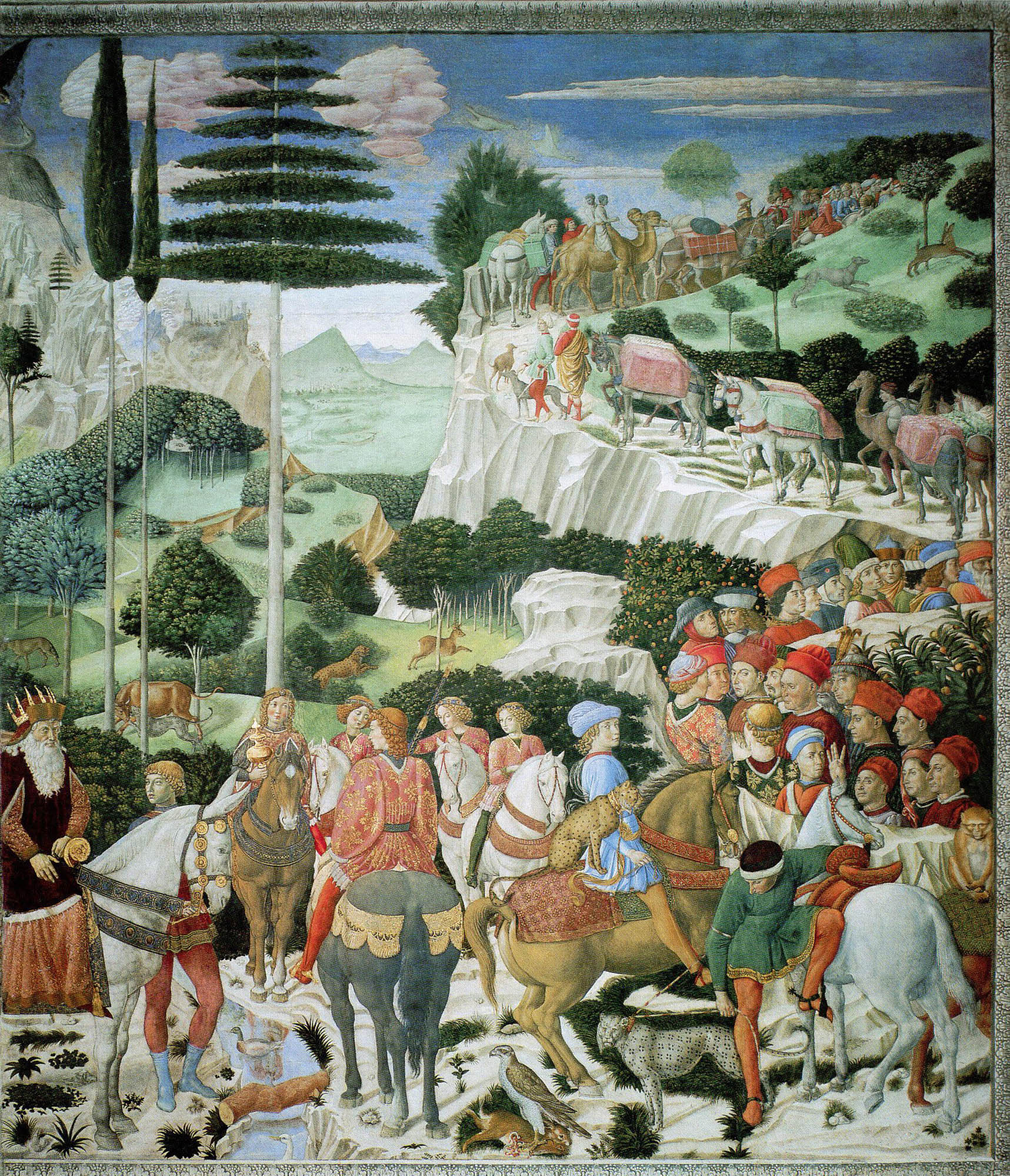
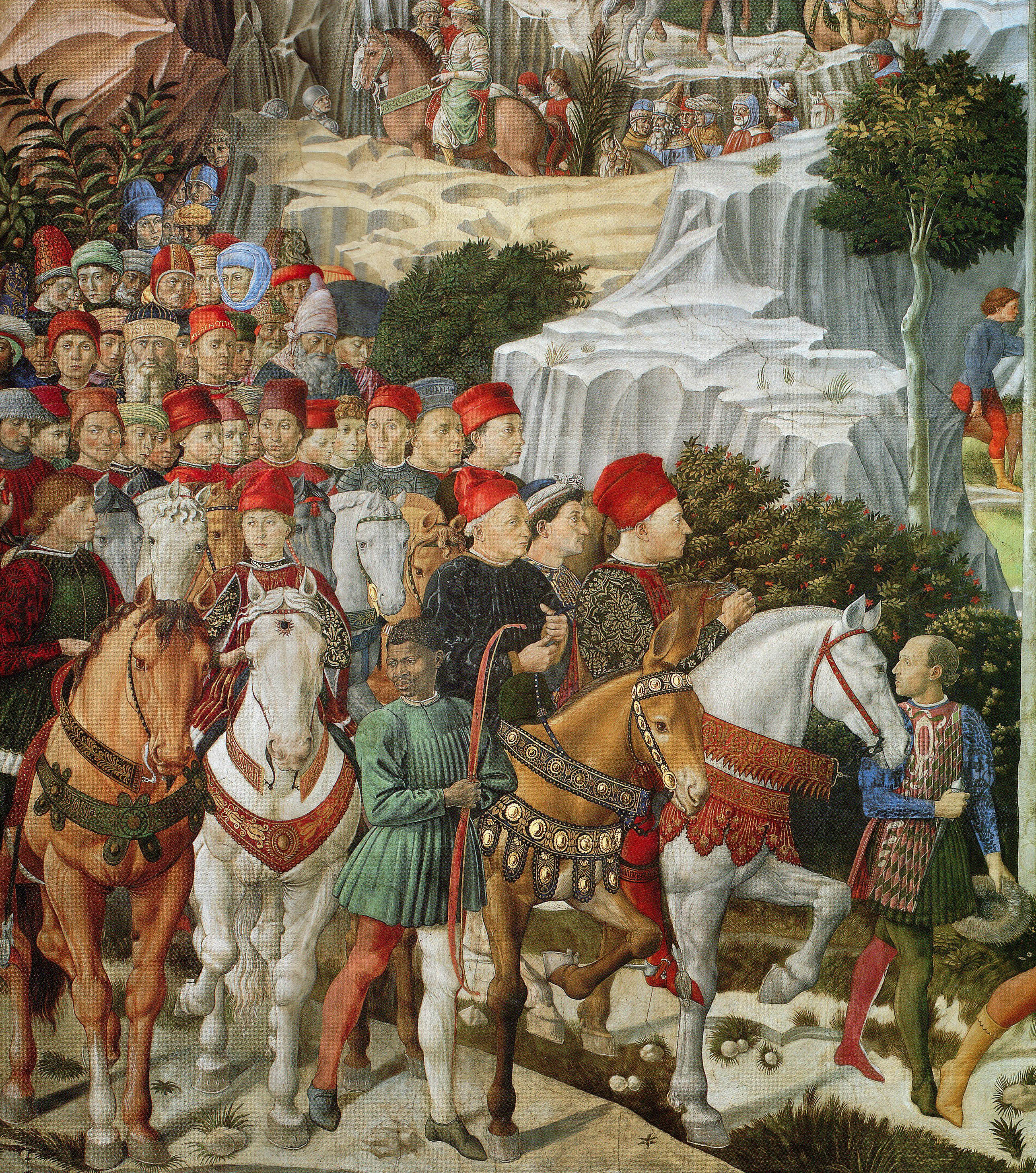 The end and beginning of the procession of the Magi in Benozzo Gozzoli’s large fresco of 1459 in the chapel of the Medici Palace. The central group of the kings (above) at the end of the procession is the Medici family and their clientele; dressed in black in the middle is Cosimo de’ Medici. From the opposite wall, portraits of citizens not belonging to the Medici circle look back in astonishment at the Medici courtyard (below)
Cosimo had rebuild the entire San Marco church and convent in early Renaissance style with his “court architect” Michelozzo. The monastery received a magnificent arcaded cloister, and, as a novelty in the period, a large library room as well, which housed Cosimo’s humanist collection of manuscripts. Obviously not only the confraternity, but also the monastery became a representative element of the expanding “Medici quarter”, together with the Medici Palace and the San Lorenzo, which was also rebuilt by Cosimo with Brunelleschi, and where Michelangelo would later establish the Medici tomb chapel. The new church was consecrated by Pope Eugenius IV in 1443, at the feast of the Epiphany or the Magi, in honor of St. Mark and the patrons of Cosimo, St. Cosma and Damian, in the presence of the ecclesiastical and secular dignitaries gathered to the Florentine Council. As the Council was convened to unite the Eastern and Western Churchs, the participation of many Eastern high priests and humanists lent a true Oriental hue to this year’s Magi procession.


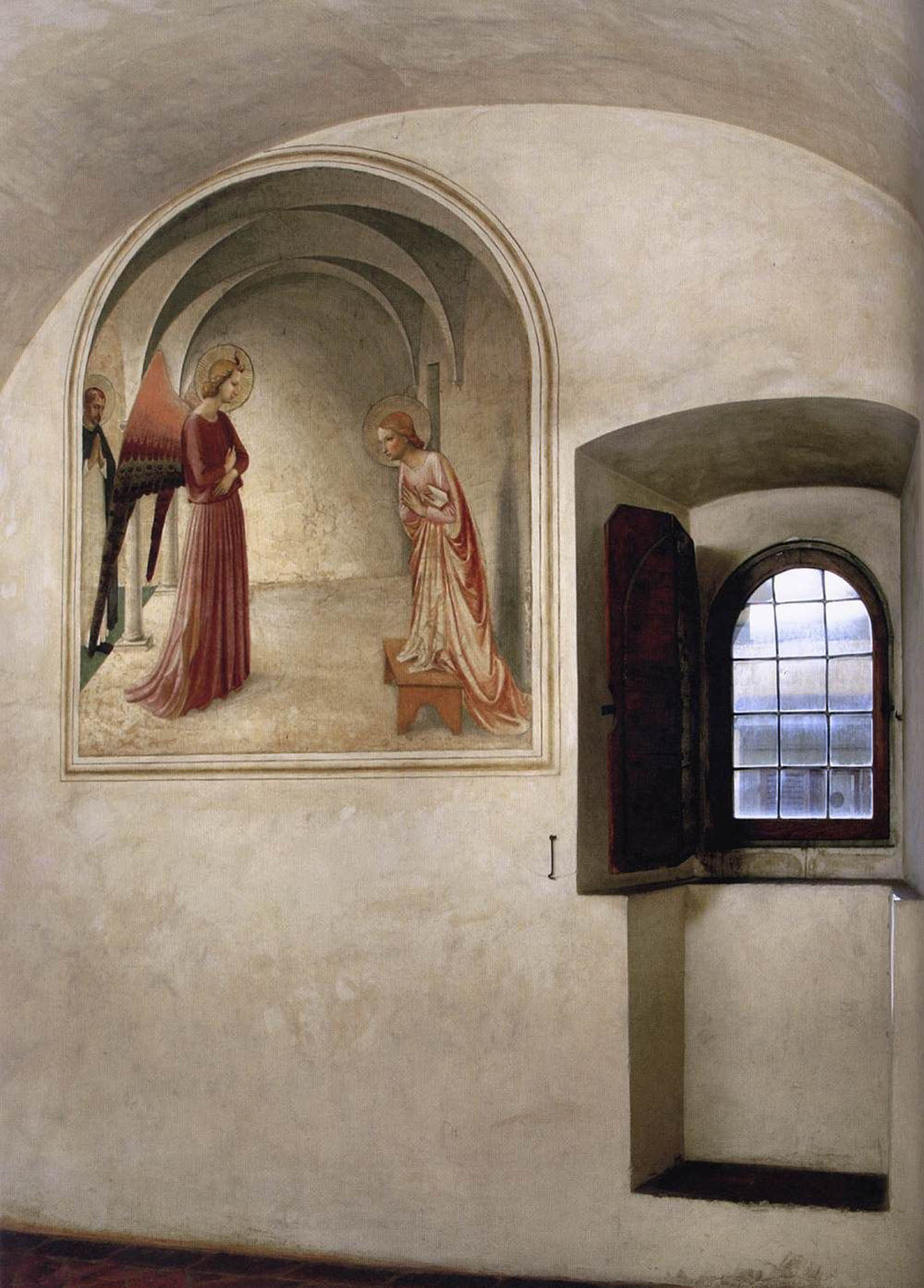
In the cells of the monastery, a member of the order and a resident of the monastery, Brother Giovanni, nicknamed Fra Angelico, painted a sacred image for each of the monks. Just like in the game of “which single book would you take to the uninhabited island”, these Dominicans also received this single image as a viaticum to the “seven storey mountain”, as their late successor Thomas Merton called the monastic enterprise. They had to farm out their spiritual nourishment for the whole life by contemplating this single one.

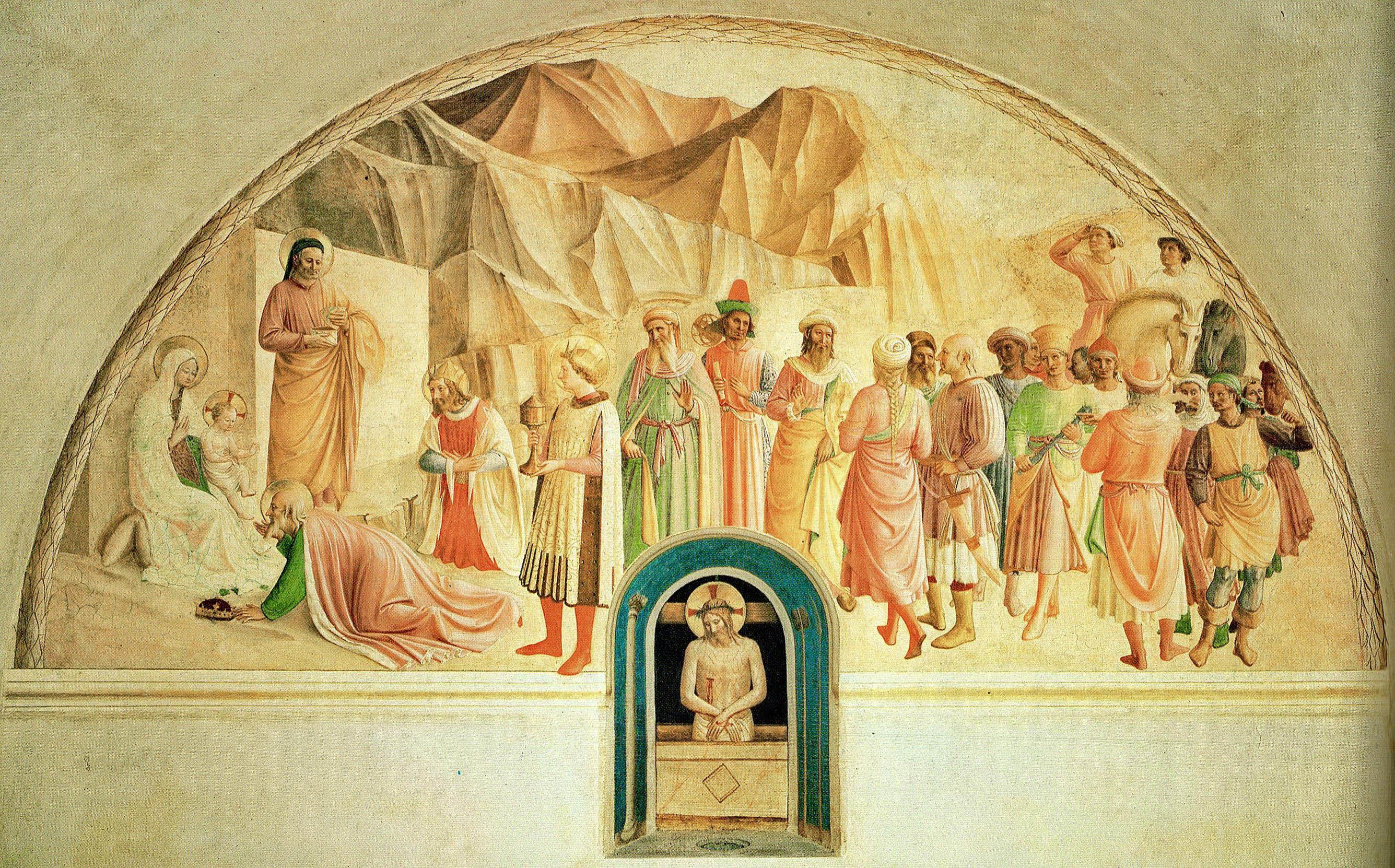
Cosimo also reserved a cell for himself, where he retreated to pray or to read his library located here. Fra Angelico and his assistant Benozzo Gozzoli also painted a fresco here, nothing else but the Adoration of the Magi. The characters, inspired by the dignified, statuesque figures of Masaccio, approach the Child in a solemn, classicist procession. Many of them wear oriental dresses and hats such as those of the Eastern participants of the Council of Florence, just as Piero della Francesca, who had attended the entry of Emperor John to the Council, painted the Oriental figures of his paintings, the Baptism of Christ or the Flagellation. By contemplating the picture, Cosimo could deepen the proper destination of power and wealth.
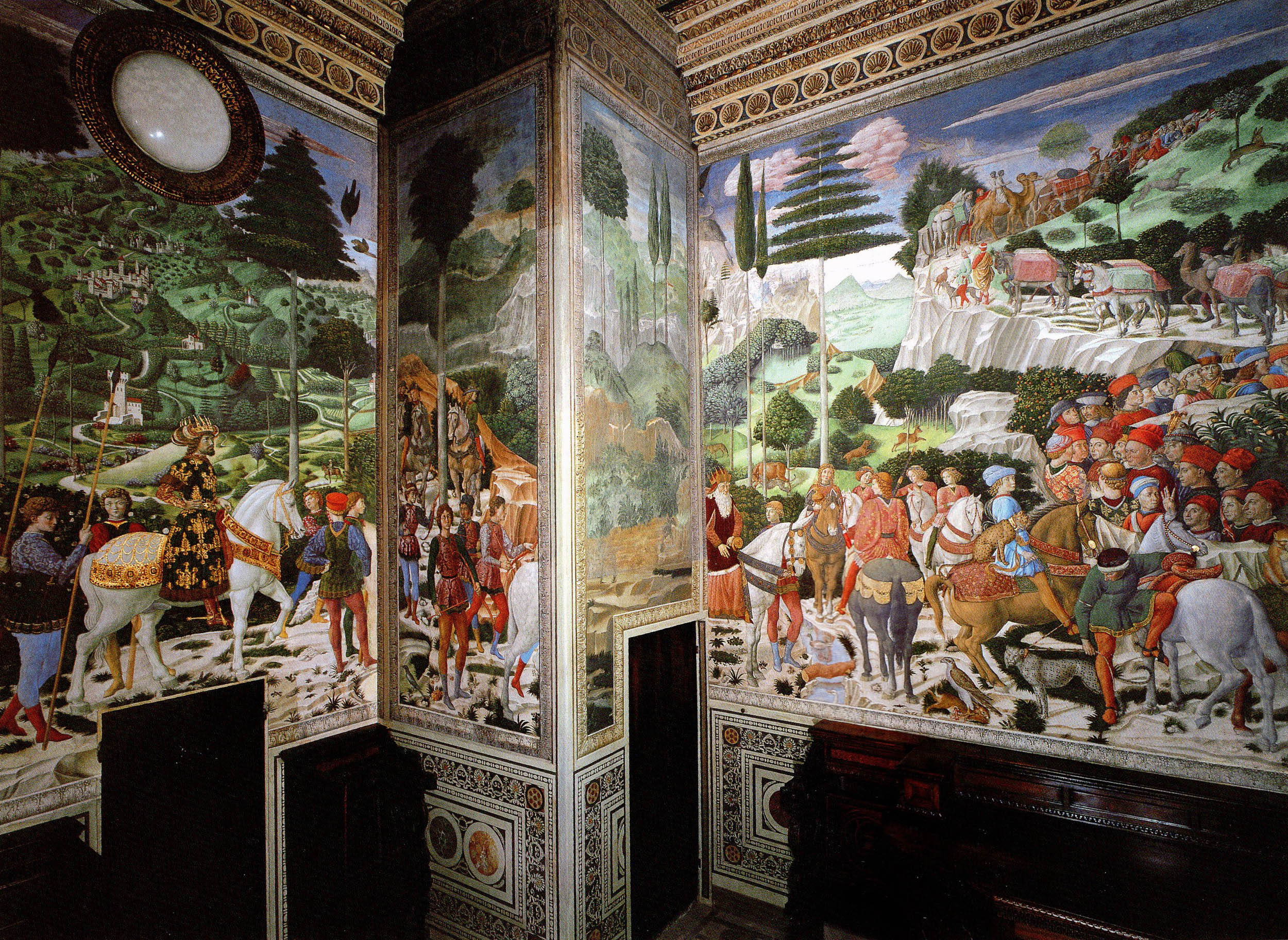
In a good businessman’s way, Cosimo tried to keep proven partners in his network of contacts. Therefore, when, a year after the consecration of San Marco, he undertook the reconstruction of his family palace in 1444, he also did it with Michelozzo, and then painted the palace chapel in 1459 with Benozzo Gozzoli. The theme of the frescoes completely covering three walls of the chapel was, of course, the procession of the Magi. It is characteristic that while the Medici, in their public orders, favored the classicizing, austere style of the Florentine Renaissance represented by Masaccio, Donatello or Brunelleschi, nevertheless they commissioned such a private decoration, seen only by the family and their guests, in the brilliant, elaborated and flamboyant style of International Gothic, highly popular in early 15th-century Tuscany. No wonder, as the chapel also served as a reception hall, which had to dazzle foreign dignitaries – including those from other Italian cities – who were not yet familiar with the greatness of Florentine Renaissance. Cosimo specifically proposed to Gozzoli as a model the altarpiece of the Magi by Gentile da Fabriano, ordered by the Strozzi family in 1423 for the church of Santa Trinità, which was admired by all the city.
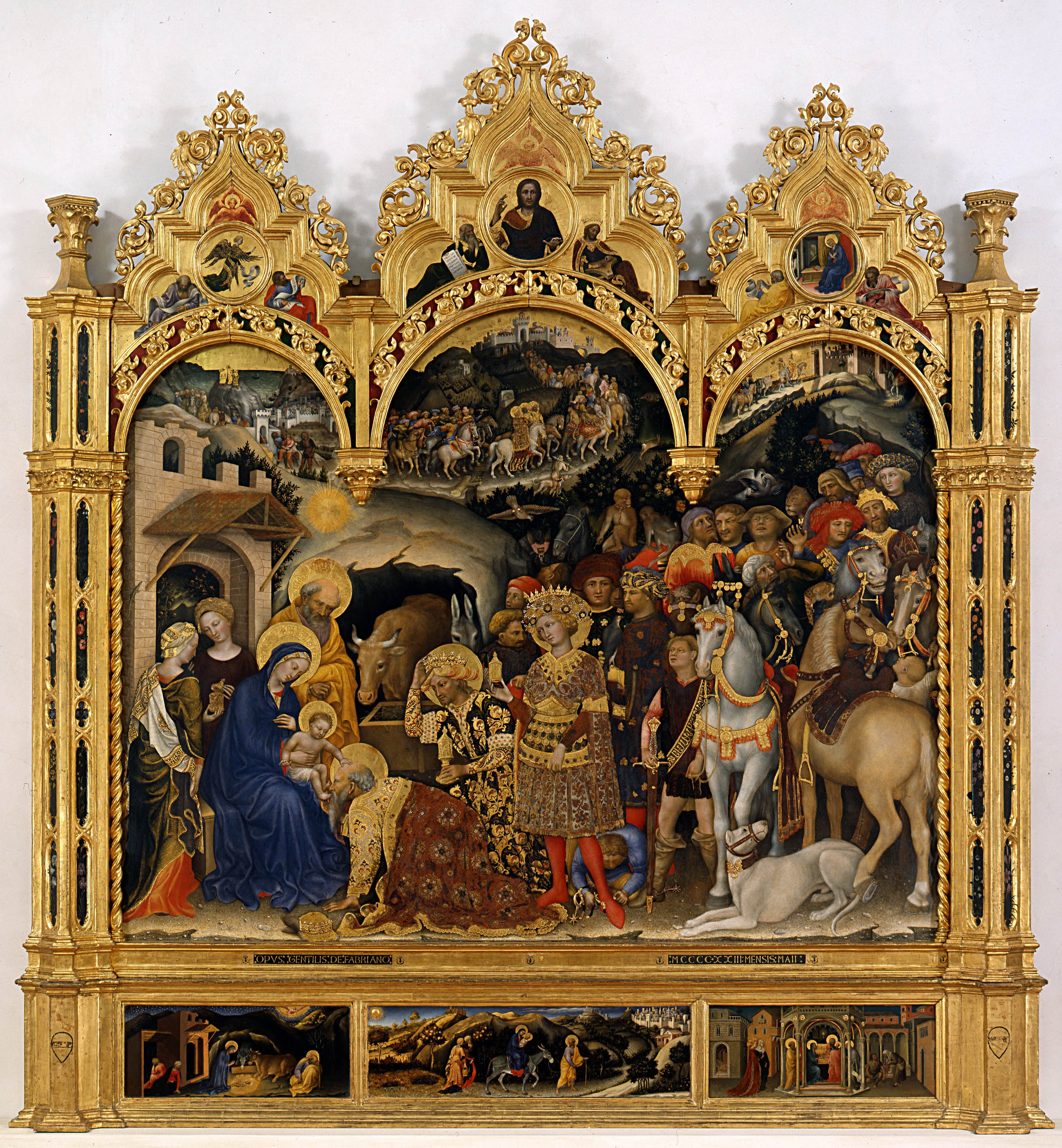 Gentile da Fabriano: Adoration of the Magi, 1423, today in the Uffizi (click for details)
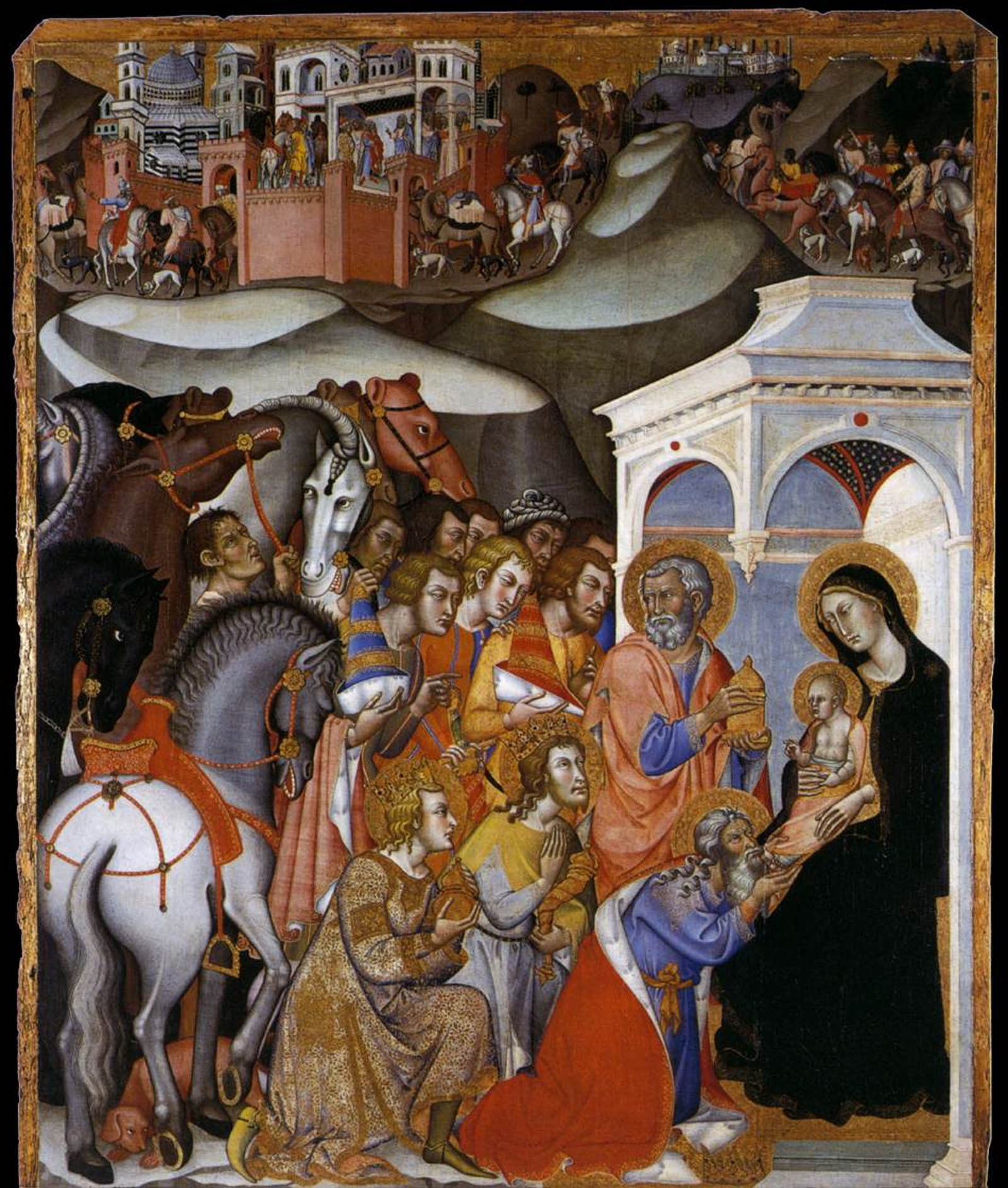 An earlier example of the style: Bartolo di Fredi: Adoration of the Magi, 1375-85, originally in the Duomo of Siena, today in Siena’s Pinacoteca Nazionale
In the wooded hilly landscape that opens on the three walls of the chapel, the most magnificent landscape of the century, a long line of riders richly dressed meanders up the hill, where, according to established iconography, the city of Herod stands, and then downhill to the manger of Bethlehem, which is now the sanctuary of the Medici Chapel. We have already seen that the procession starts with the prominent citizens of the city and ends with the Medici family and their clientele. In the middle of each of the three walls, a king rides in clothes and on horses richly decorated with gold: following the tradition, an old man, a middle-aged man and a young man. The young one riding in front of the Medici family is, according to many references, none other than the heir to the throne, the then only ten-year-old Lorenzo de’ Medici, the later Magnifico, though in a several years older, idealized edition. An episode of the recent popular Italo-English TV series The Medici shows in a touching way how the child Lorenzo stands in front of the fresco in preparation, and while, with the help of his grandmother Contessina de’ Bardi, Cosimo’s wife, he recognizes each character, he also realizes his own historical role.
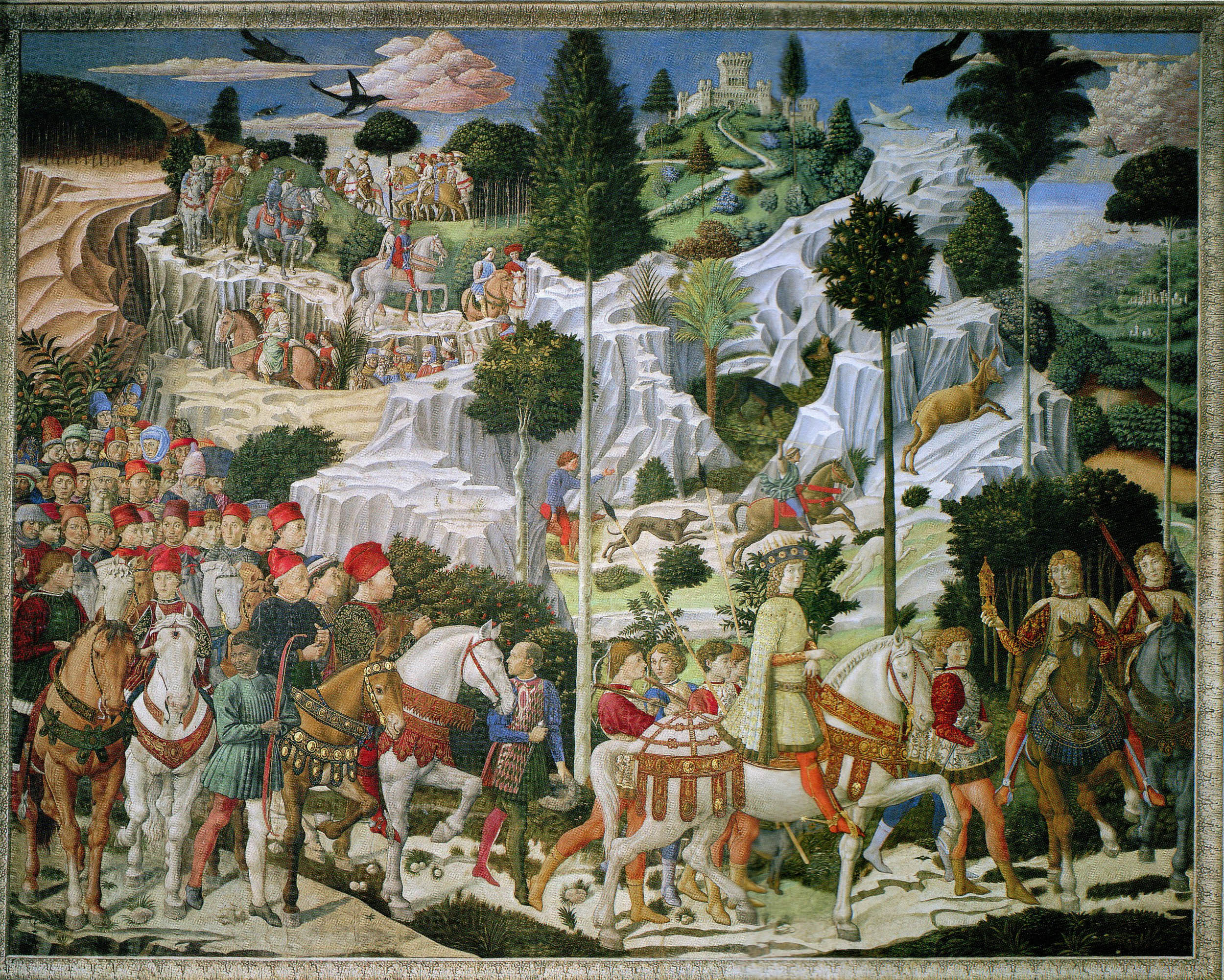
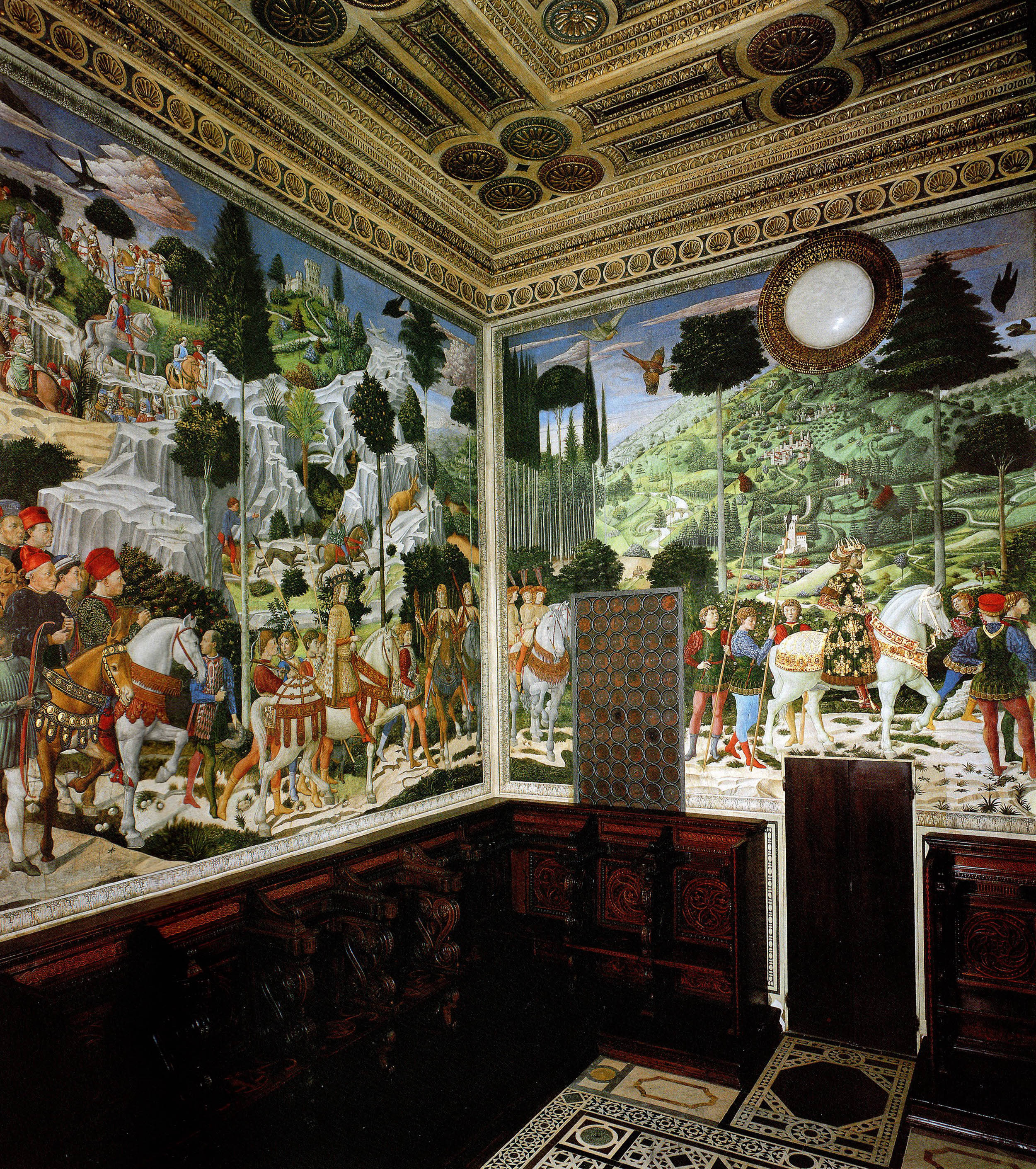

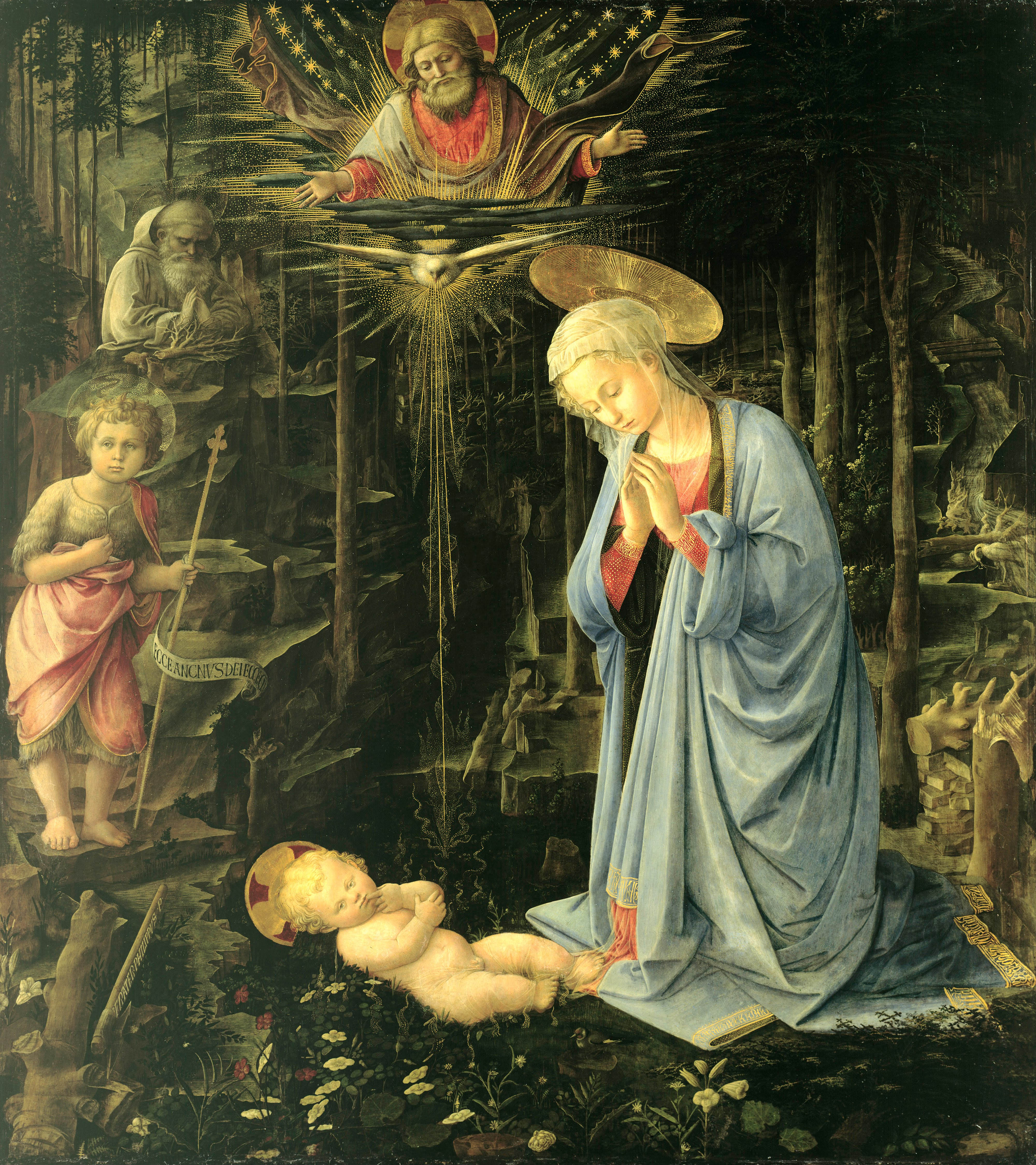
The target of the procession is the altarpiece in the middle of the sanctuary opening on the fourth wall, in which the Virgin Mary worships her newborn child, as described by the 14th-century St. Brigitta in her popular visions. This picture was made by another artist discovered by Cosimo, the Carmelite monk-painter Filippo Lippi. Its history and its system of iconographic references, however, are so rich and complex that it requires a separate post.

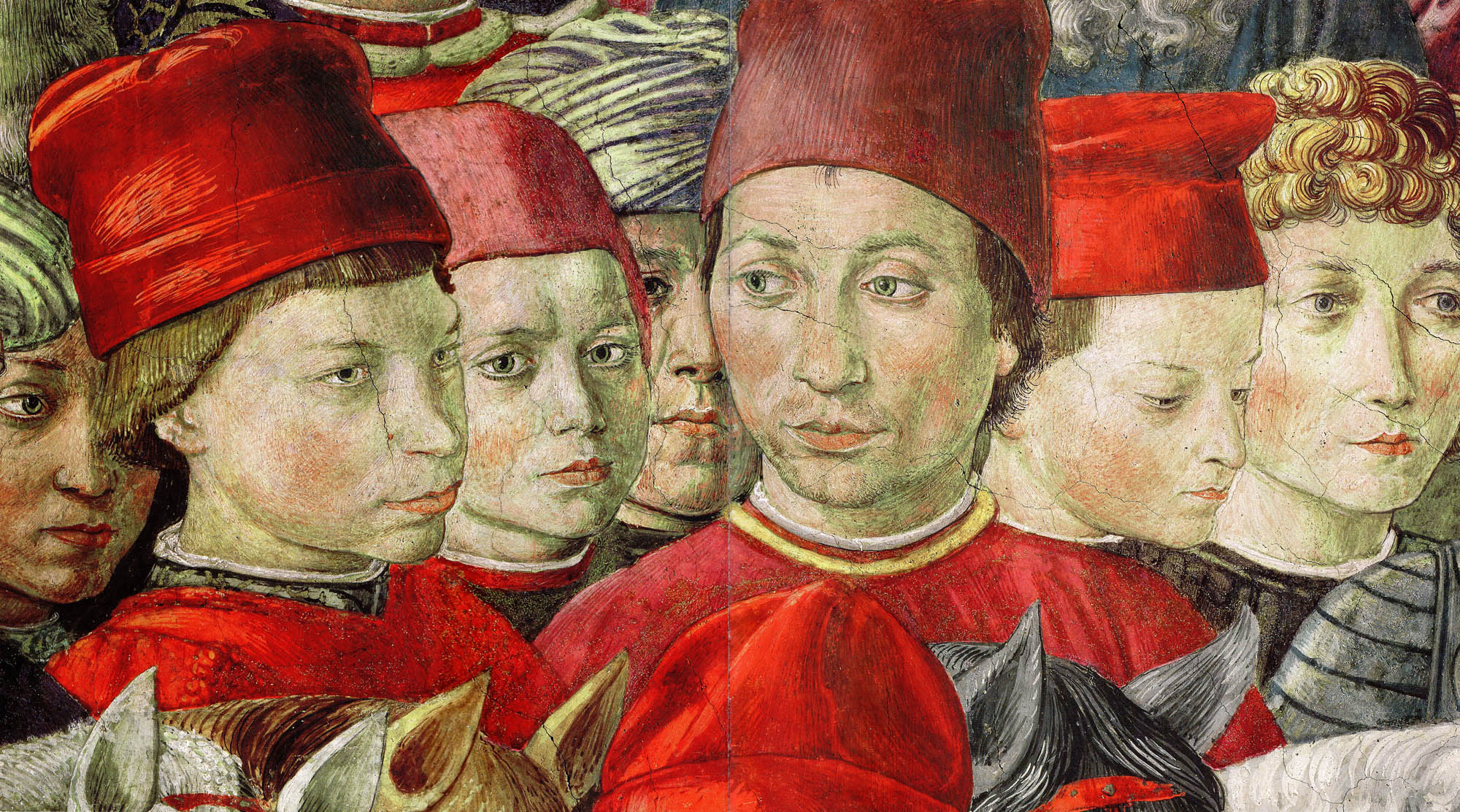
This procession of the Magi impresses the viewer mainly with its richness of detail, so that one wishes to enter the landscape, eagerly browsing among the colorful multitude of figures, animals, buildings and side episodes. To feel at least a bit of this impression, it is recommended to browse through the following series of details along with the music.
Jordi Savall – Hespèrion XXI: Istampitta / Saltarello (from a 14th-c. Italian manuscript)

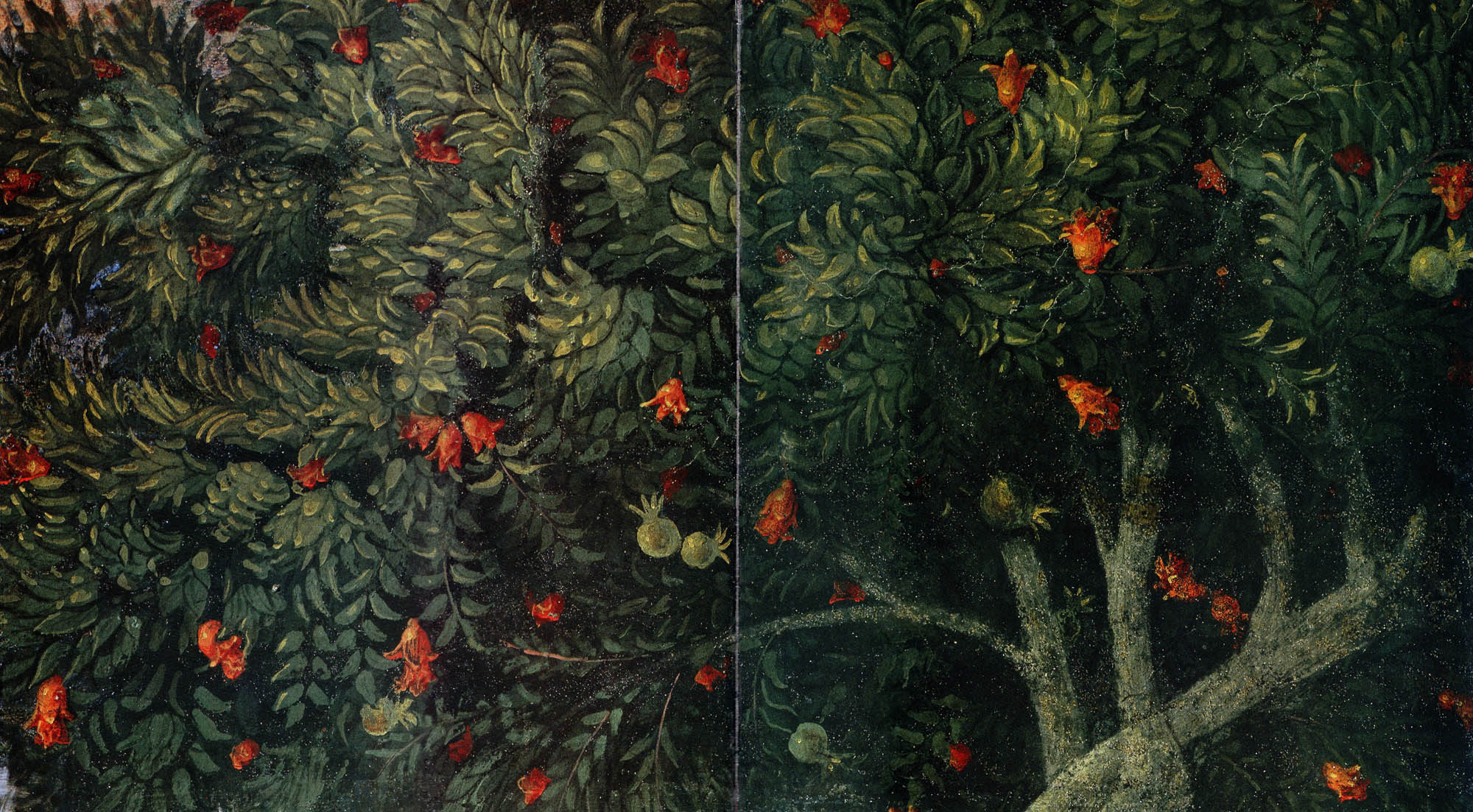
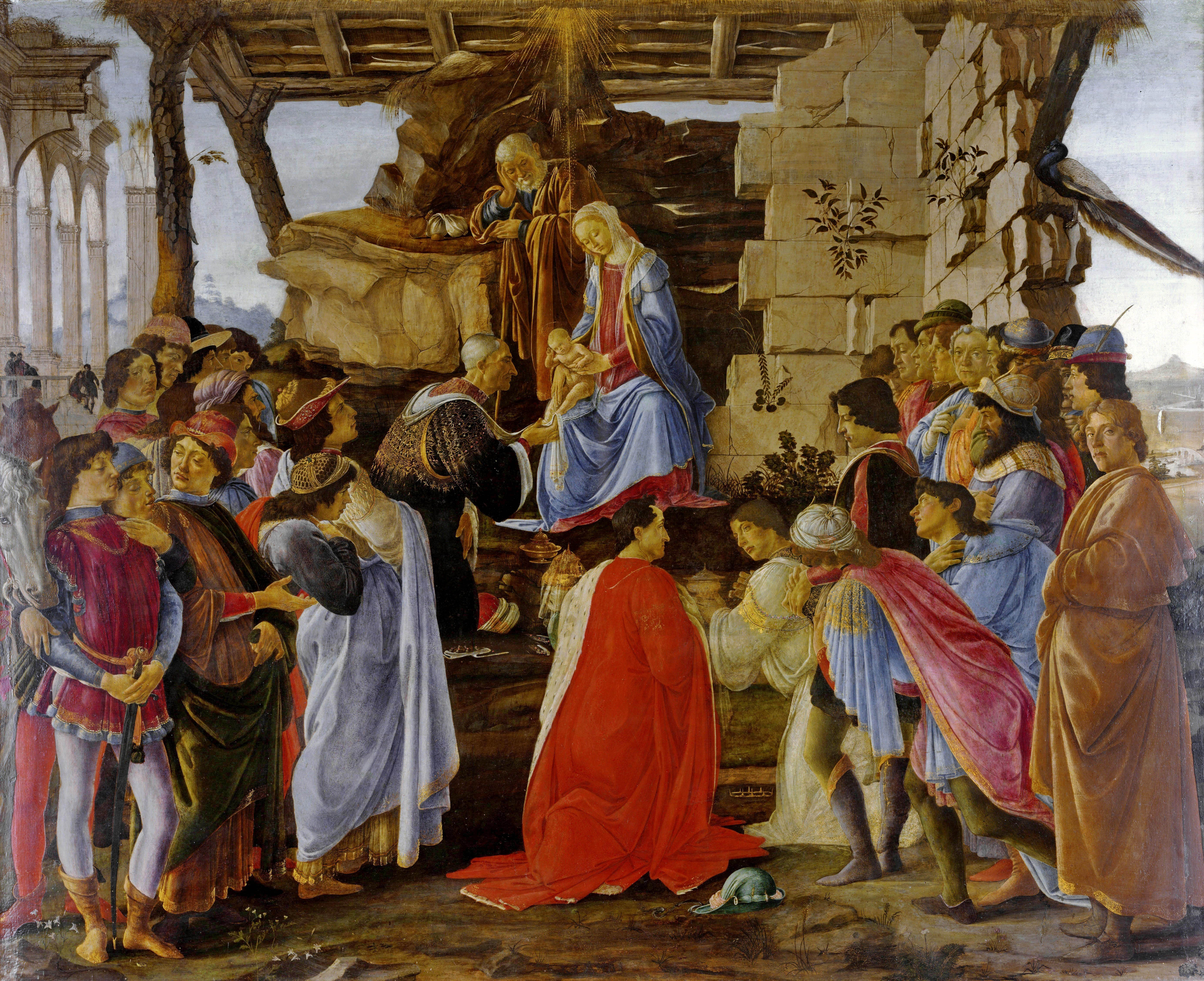
The artists supported by the Medicis also included Botticelli, discovered and invited to live in the Medici Palace by Lorenzo’s mother, Lucrezia Tornabuoni, a talented politician and poetess herself. Here he grew up with Lorenzo and his younger brother Giuliano, studied with them from their excellent tutor Marsilio Ficino, and participated with them in the lectures of the Platonic Academy, founded by Ficino, the lessons of which can be seen in his paintings of mythological subject. Lorenzo used his diplomatic services as a member of the family, that is, by giving him painter’s commissions with which he won his partners, such as Pope Sixtus IV with the frescoes of the Sistine Chapel in 1482. At other times, he obtained well-paying works for him, such as painting the altarpiece of the Zanobi Chapel in the Dominican church of Santa Maria Novella in 1475.
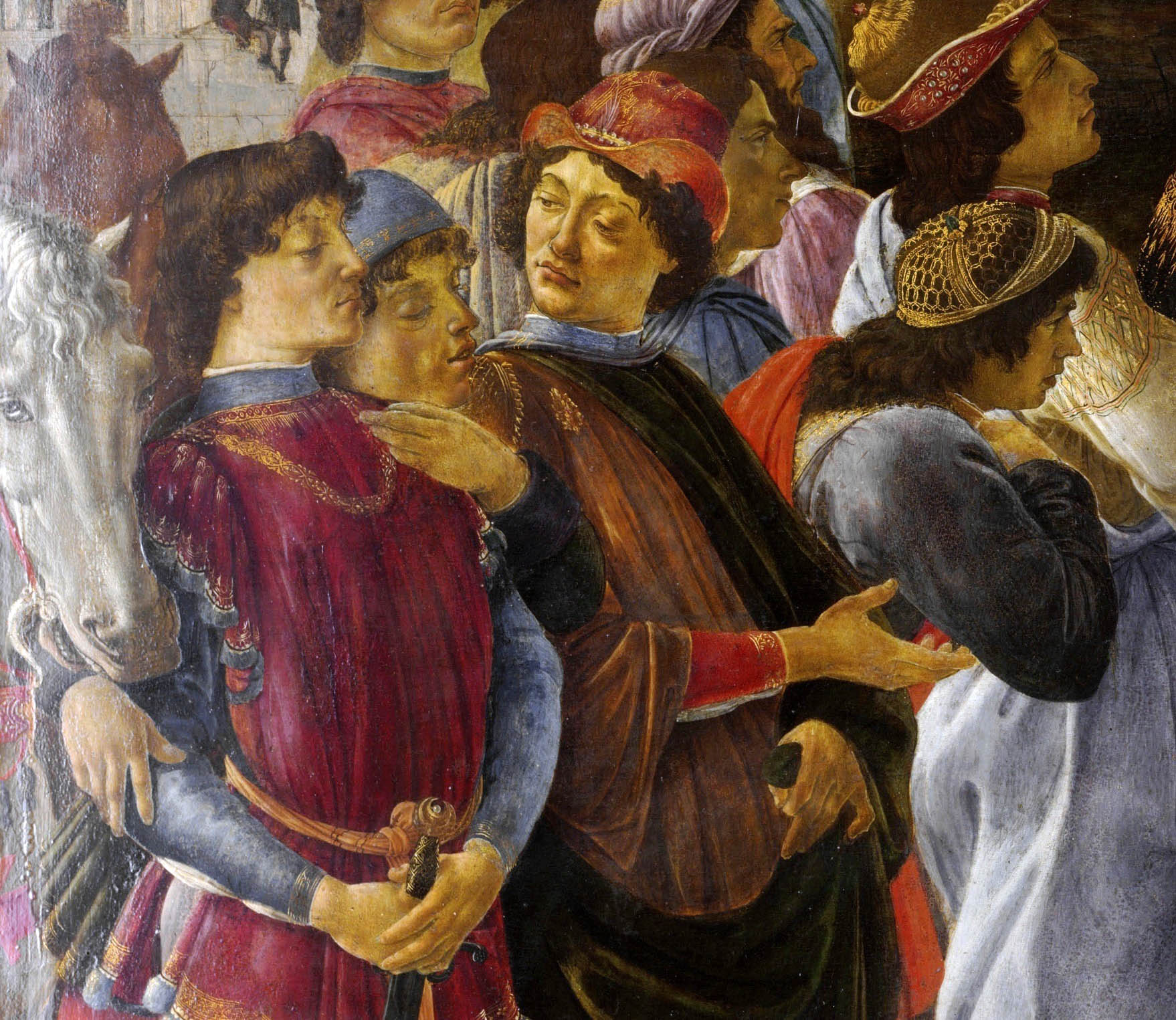
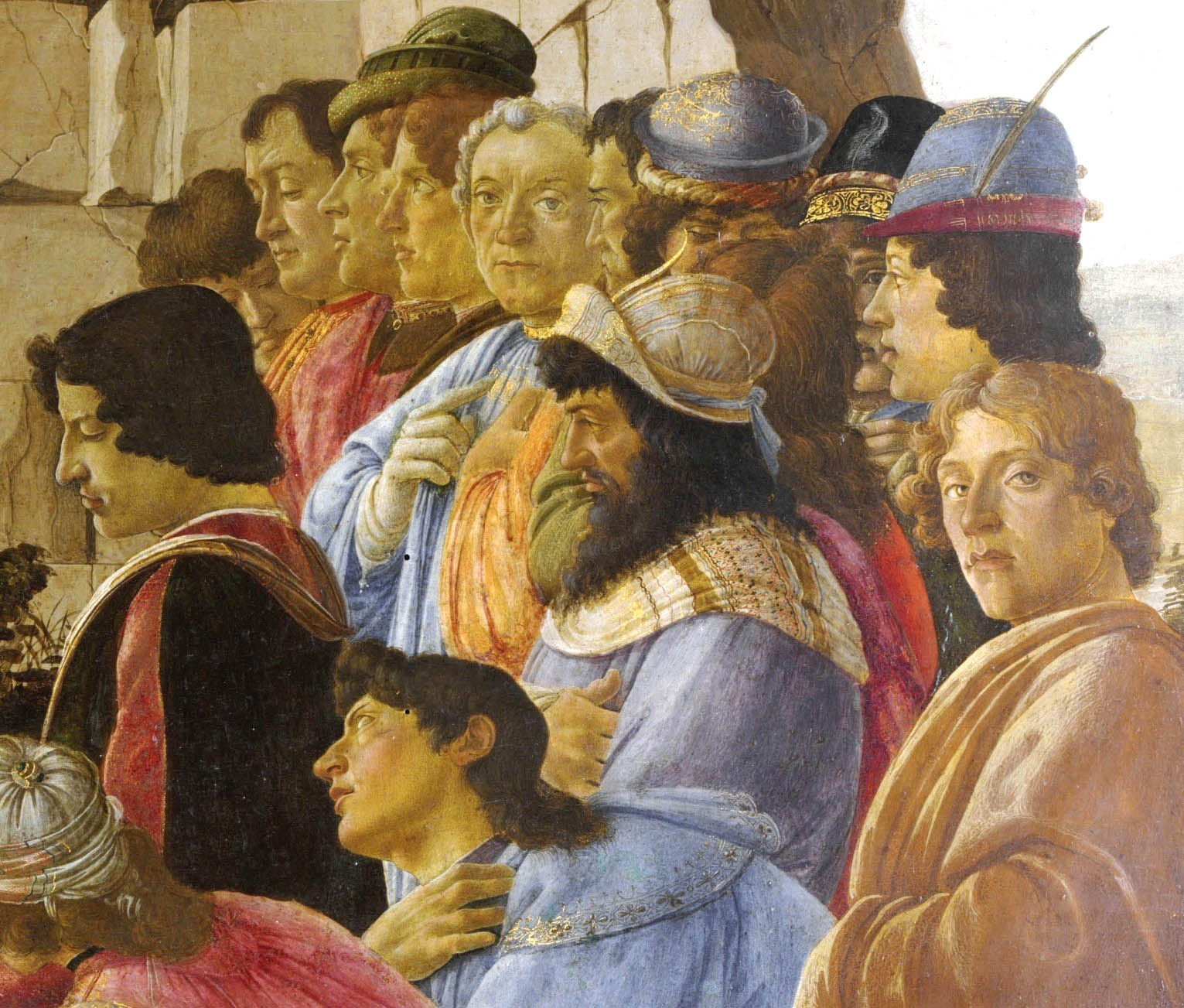
The altarpiece was commissioned by banker Gaspare di Zanobi del Lama for his funeral chapel bought in the elite church of Florence. Since Zanobi was a client and devotee of the Medici banking house, he gratefully received the painter recommended by Lorenzo de’ Medici, and left much more room in the picture for his patrons than for himself. It is telling that he chose the scene of the Magi as the theme of the altar, and once he decided so, in Florence the Magi had to be modelled after the three successive heads of the Medici family: old Cosimo, who is just offering his gifts to Jesus, his younger brother Lorenzo, and his son Piero, who are waiting their turn at the foot of the raised manger (whose raised level may evoke the podium of the manger in San Marco Square). When the picture was painted, all three of them were already dead. At the edge of the left side group, next to his favorite white horse, stands the young Lornezo and his friends, Angelo Poliziano and Pico della Mirandola. The right side group is led by Lorenzo’s younger brother Giuliano, and behind the group, in a golden brown robe, facing us, stands the painter himself, Botticelli. Zanobi hides modestly in the middle of the right-wing group, looking at us and pointing almost imperceptibly at himself, indicating who paid for the music.
A few years later, in 1481, Lorenzo also got a well-paying job for another young artist patrinized by the family and dining at their table, Leonardo da Vinci. He had to paint the Adoration of the Magi for the Augustinian convent of San Donato in Scopeto, once standing outside the Porta Romana. The friars probably chose this subject out of respect for the Medici. Leonardo took note of Botticelli’s several innovations: that the Madonna and Child, who had always sat in one corner of the picture and received the hommage of the Magi arriving from the other, were placed in the center and surrounded by a group, or the ruins which represented the old world order that collapsed with Jesus’ birth. But it was his habit that once he had solved a painter’s problem in his head, he was no longer in the mood of painting it on the board as well. He was lost in detail, painting the fifty shades of amazement on the faces of those standing around the Madonna, experimenting with horse heads and exotic scribbles like a little elephant in the background. He then used some of the lessons in his later paintings, such as Mary’s pose on the Madonna of the Rocks, or the horse heads in the Battle of Anghiari. But he never finished the painting of the Magi.
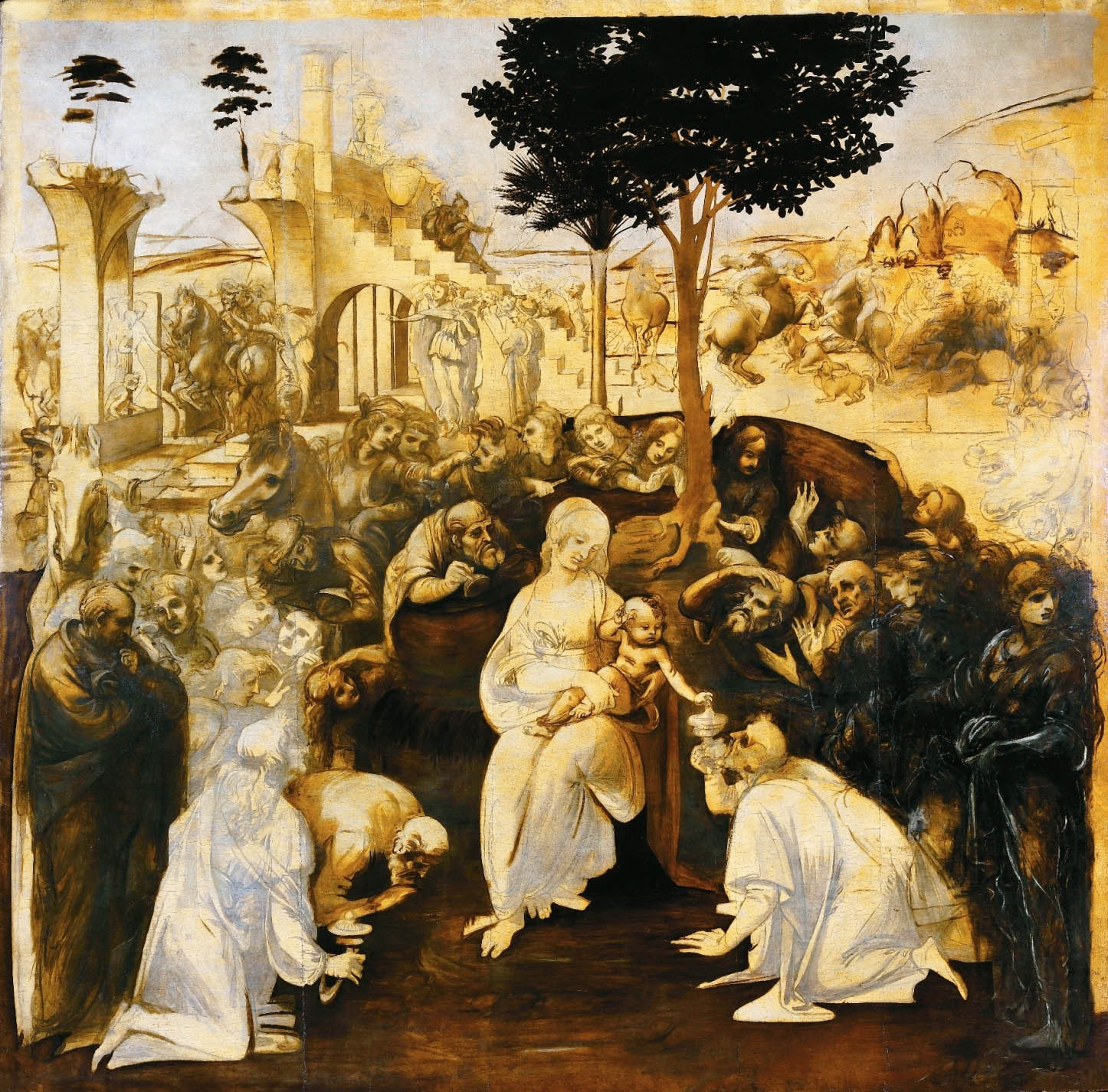
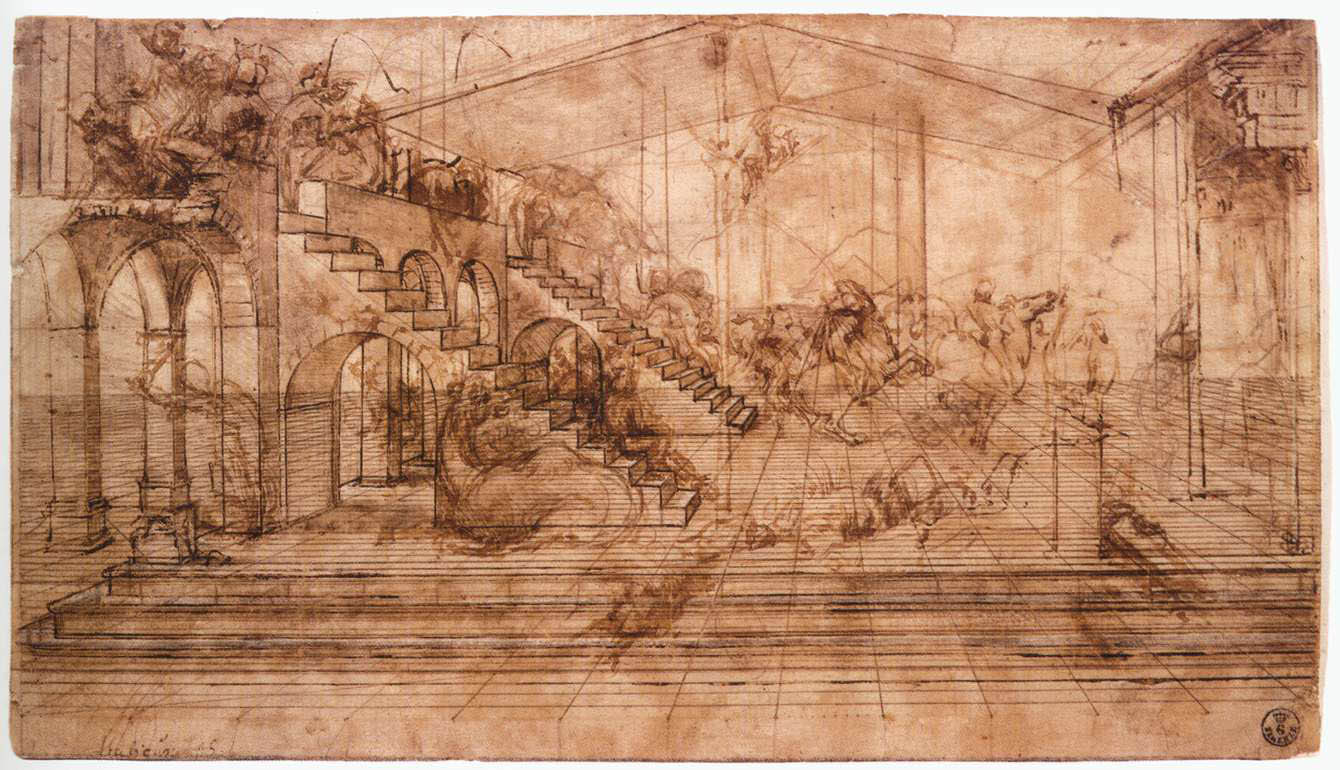
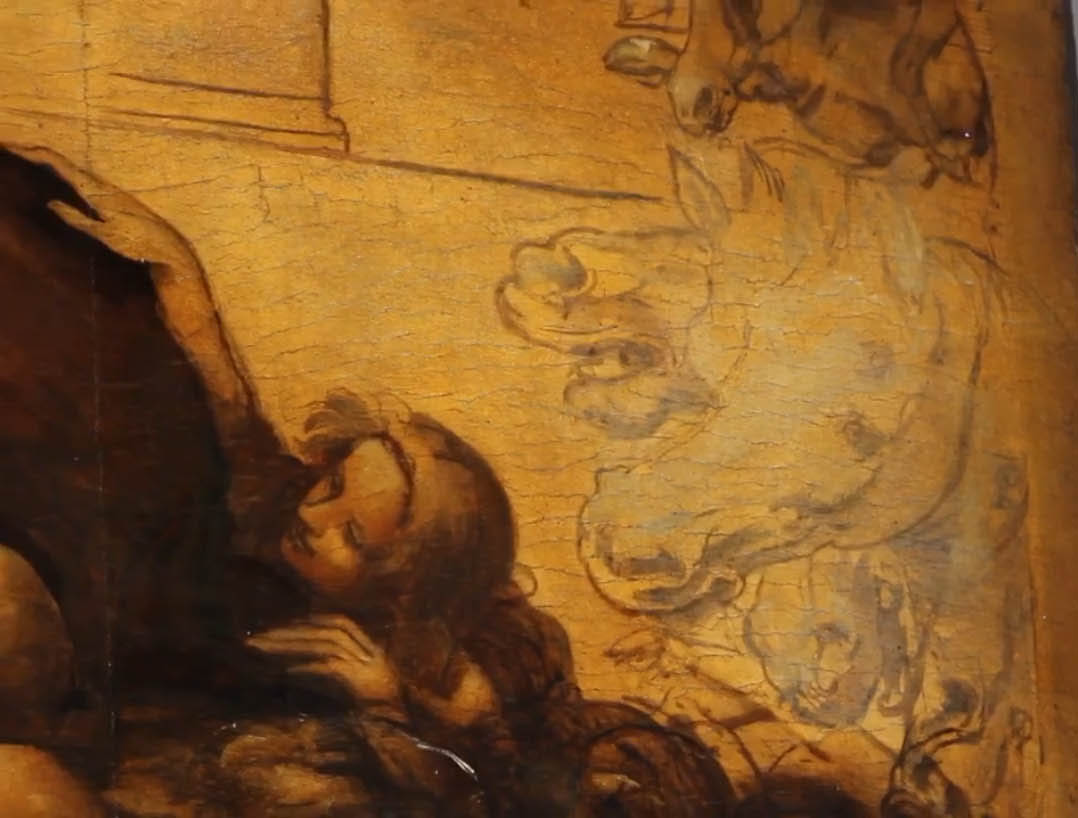
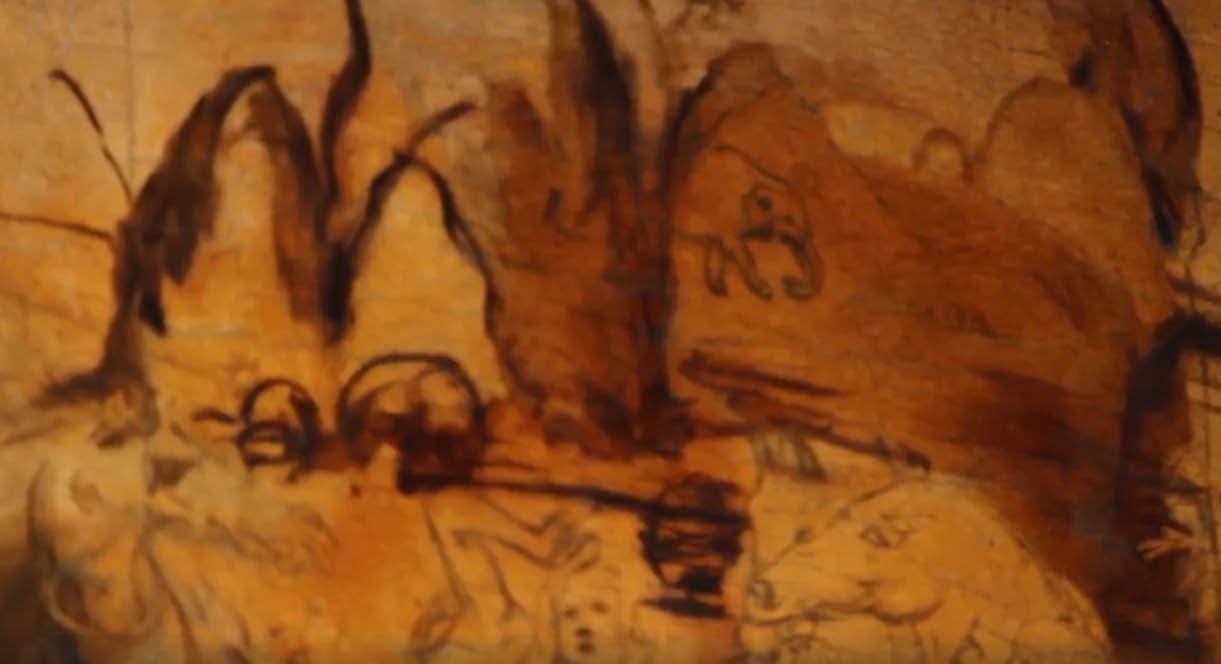
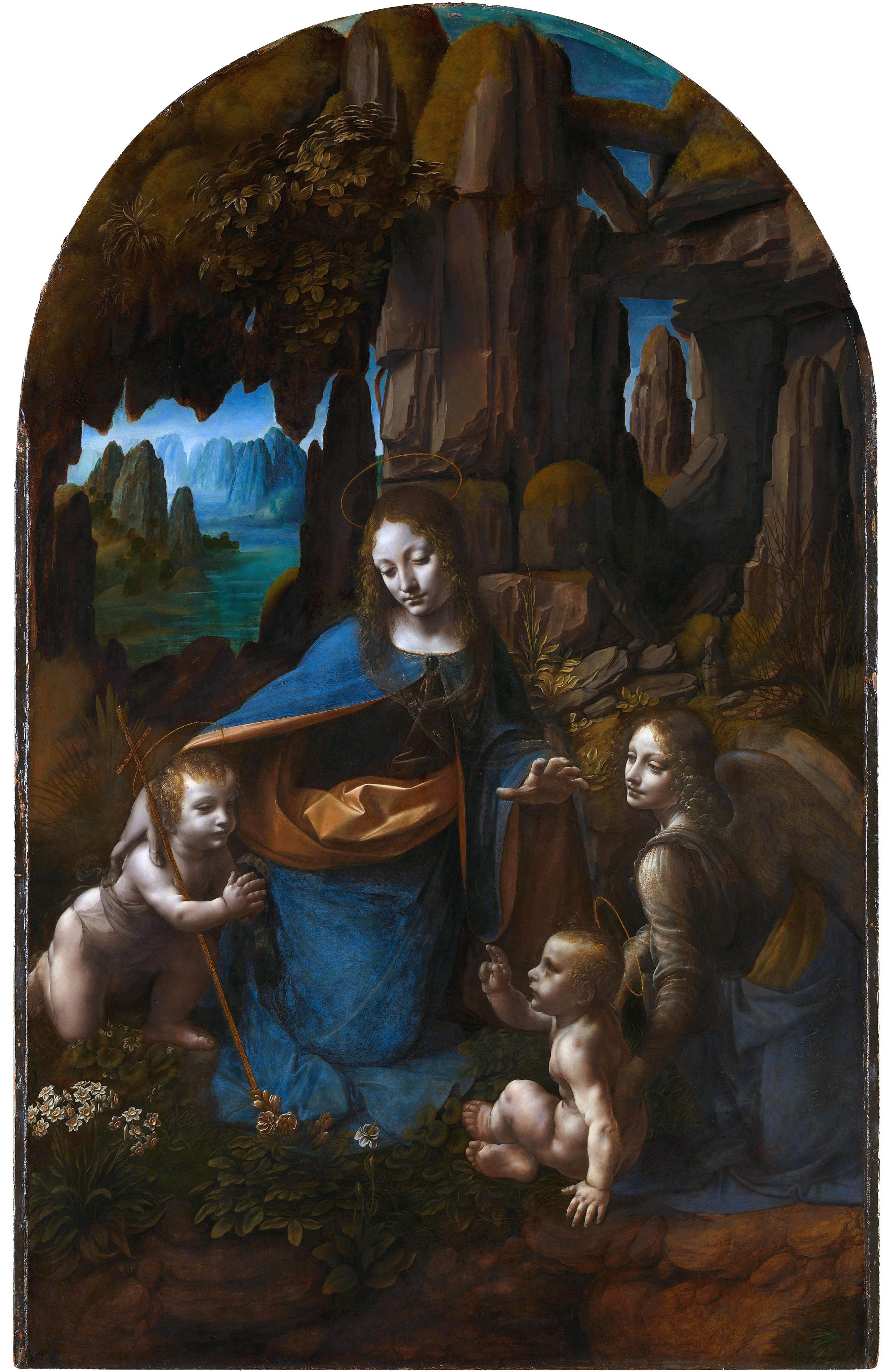
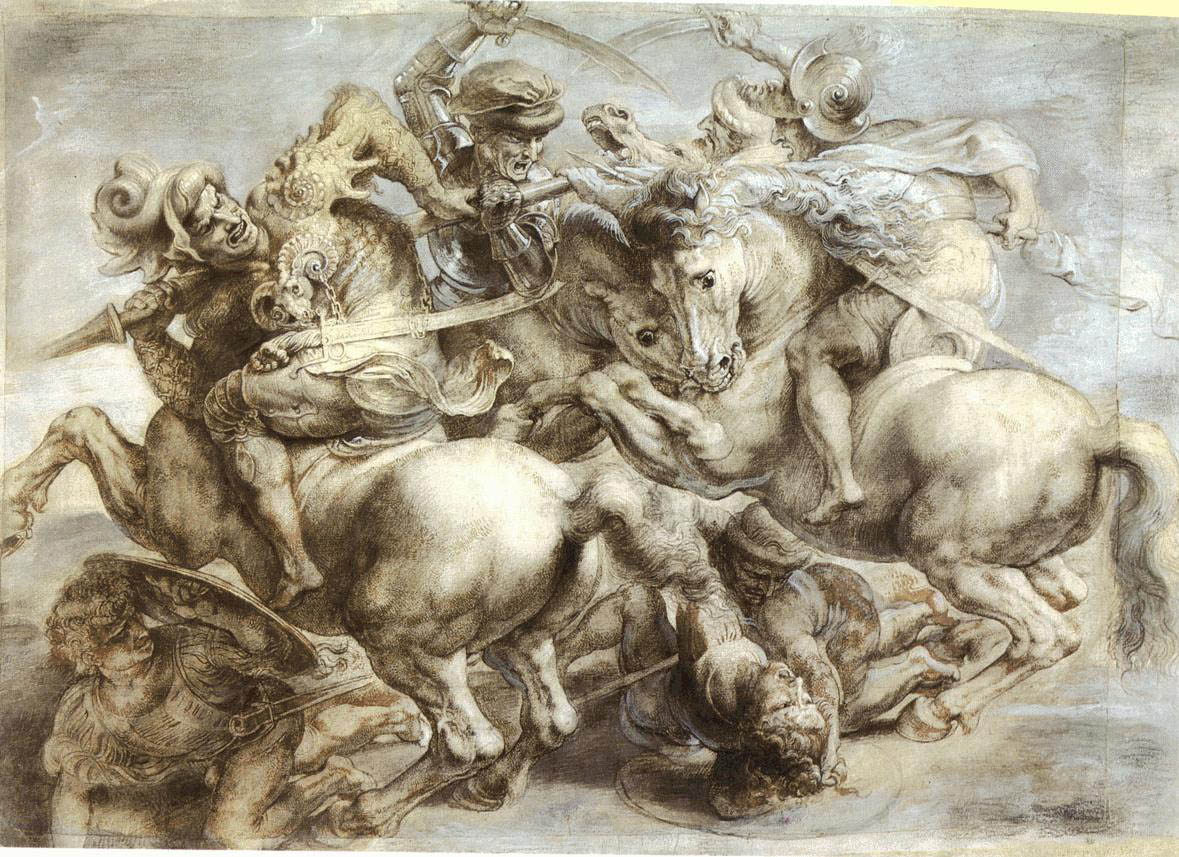
The Augustinians begged for a while, then they started to threaten him, and finally Lorenzo, to prevent the scandal, recommended Leonardo in the attention of Ludovico da Sforza in Milan. The two got along very well with each other, while Lorenzo asked Botticelli’s pupil, Filippino Lippi, son of Filippo Lippi who had painted the altarpiece in the Medici Chapel, to realize the Augustinian job.
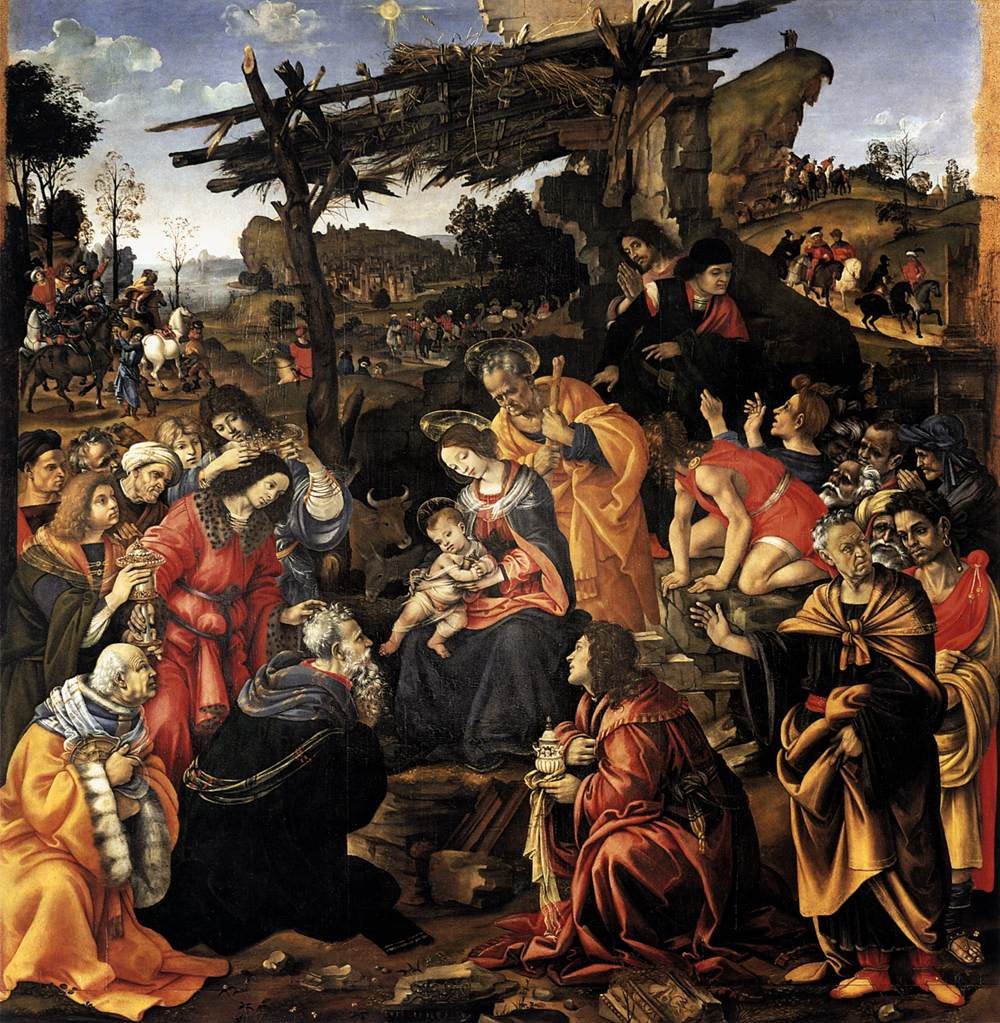
Filippino Lippi completed by 1496 the altarpiece following the style and composition of his master. By this time, however, the political climate had changed in Florence. Lorenzo died in 1492, the popularity of the Medici waned, and Lorenzo’s two sons, Piero and Giovanni were forced to secretly flee the city at one dawn in 1494. But as a Florentine Adoration of the Magi cannot be without Medicis, the role of the three kings was taken over by the members of the other branch, descendants of Cosimo’s brother Lorenzo: old Lorenzo himself, his son Pierfrancesco, and the younger Lorenzo and Giovanni, who had also been the commissioners of two famous Botticelli images, the Primavera and the Birth of Venus.
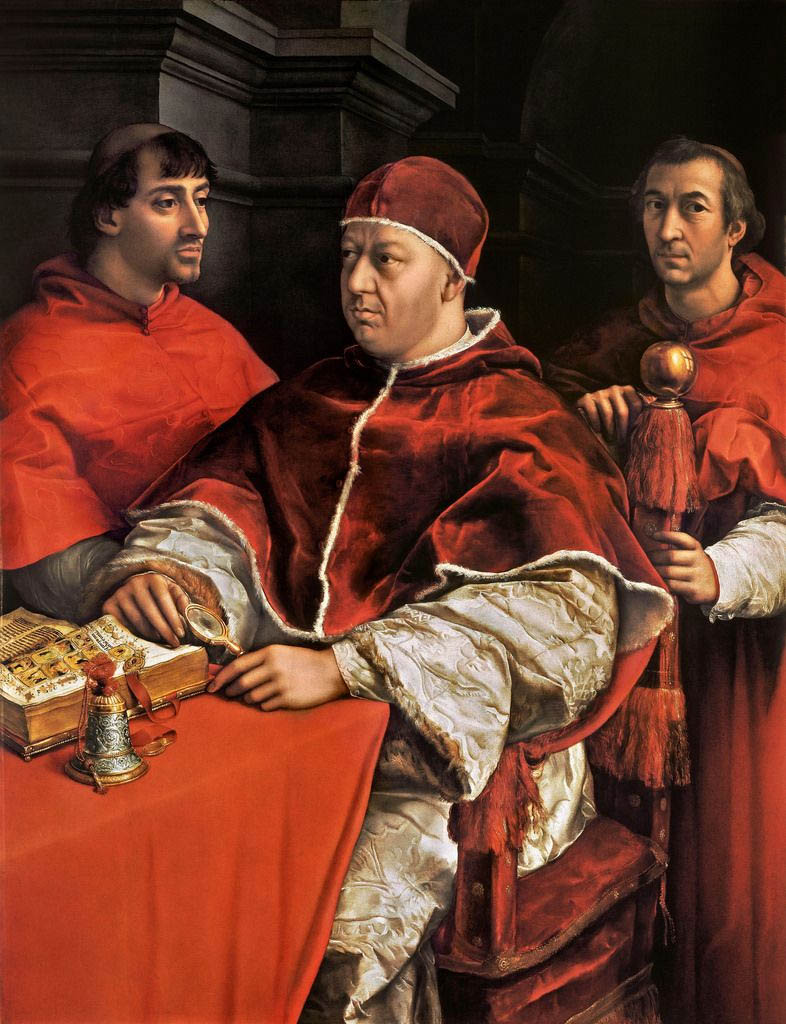
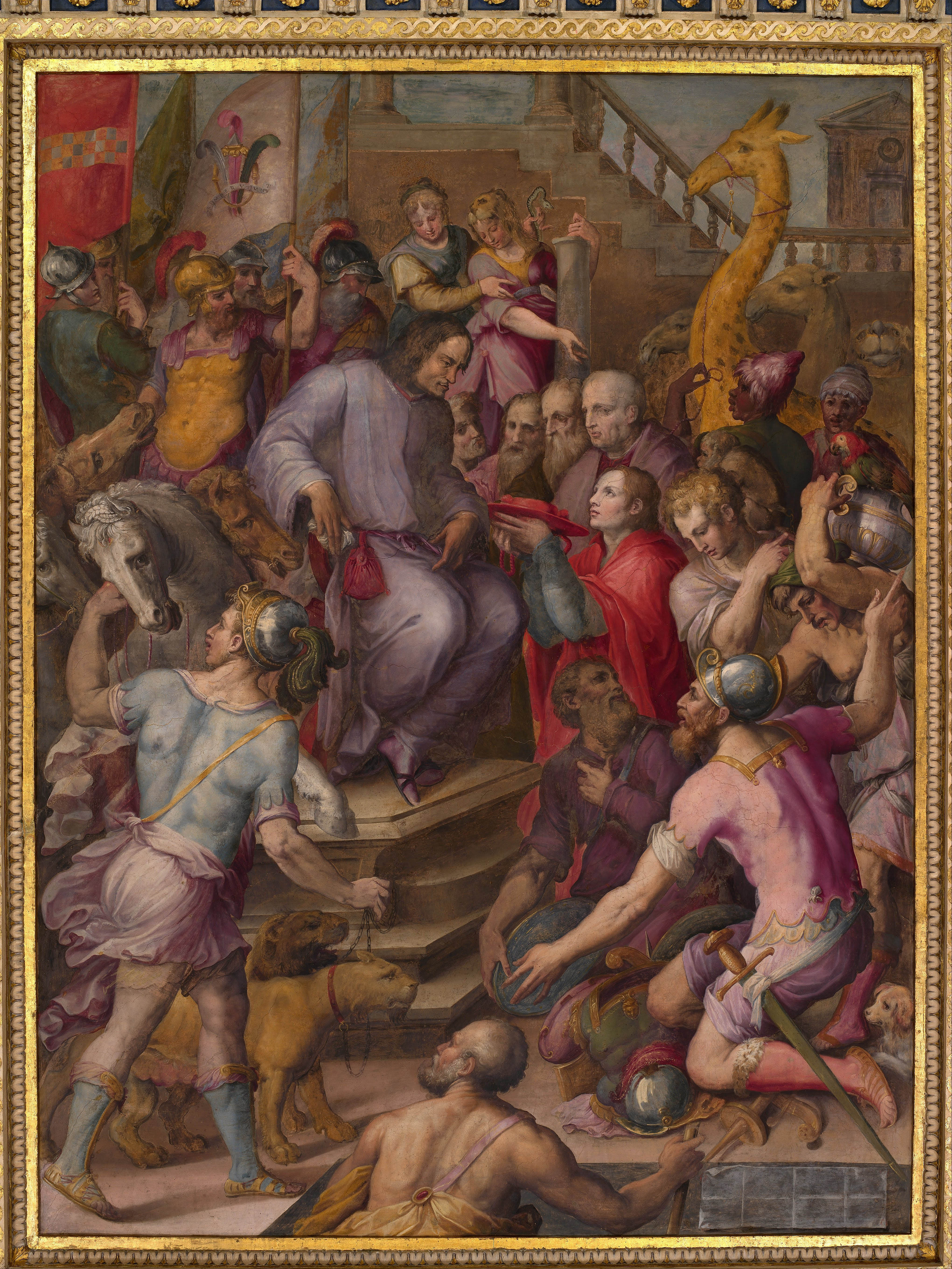
Lorenzo’s elder son Piero drowned in a river, and his younger brother Giovanni only returned to Florence in 1512 as Pope Leo X. In his above portrait painted by Raffaello, his cousin Giulio is also smiling to the left, who will later become the second Medici pope under the name of Clement VII. The star of the Medicis shines again. They become the lords of Florence again, and this time they would no longer give up power. Cosimo, who from 1537 to 1574 ruled Florence and then the whole of Tuscany as a Duke and then a Grand Duke, converts the symbol of the former republic, the Signoria into the palace of Herod. He sets up his princely suite on the second floor, each room of which is dedicated to the memory and glorious deeds of a great ancestor, beginning with Cosimo il Vecchio. On the ceiling of the room dedicated to Lorenzo il Magnifico, Lorenzo himself sits on a throne and receives the ambassadors of kings and princes from familiar and exotic countries, coming with Moors, giraffes, lions and gifts. The scene of the King Magi is still tied to the Medicis, only the roles have turned to the reverse.








 Come with us to…
 Atlantis
 Bestiary
 Bohemia+Prague
 Books, exhibitions, music, film
 Brave old world
 Caucasus
 Cemeteries
 Crimea
 Get to know the
 Images of the East
 Lightwriting
 Lwów/Lemberg
 Mallorca
 Message on the wall
 The Museum of Propaganda
 Odessa
 Paper Museum
 Persian letters
 The Jewish heritage


