Switch over to our new blog! • ¡Pásese a nuestro nuevo blog!

The renewed version of our blog, with more features, a richer design, and available in nine languages, can be read here: https://wangriver.com

The new version also includes the old posts, often in expanded form. If you are curious about the updated version of this post, replace “riowang.blogspot.com/” in the URL with “riowang.studiolum.com/”, and the new link will most likely lead you there.


La versión renovada de nuestro blog, con más herramientas, un diseño más rico y disponible en nueve idiomas, se puede leer aquí: https://riowang.com

La nueva versión también incluye las publicaciones antiguas, a menudo en una forma ampliada. Si tiene curiosidad por la versión actualizada de esta entrada, sustituya «riowang.blogspot.com/» en la URL por «riowang.studiolum.com/es/», y el nuevo enlace probablemente le llevará allí.

Mostrando entradas con la etiqueta American natives. Mostrar todas las entradas

New Year’s blessing


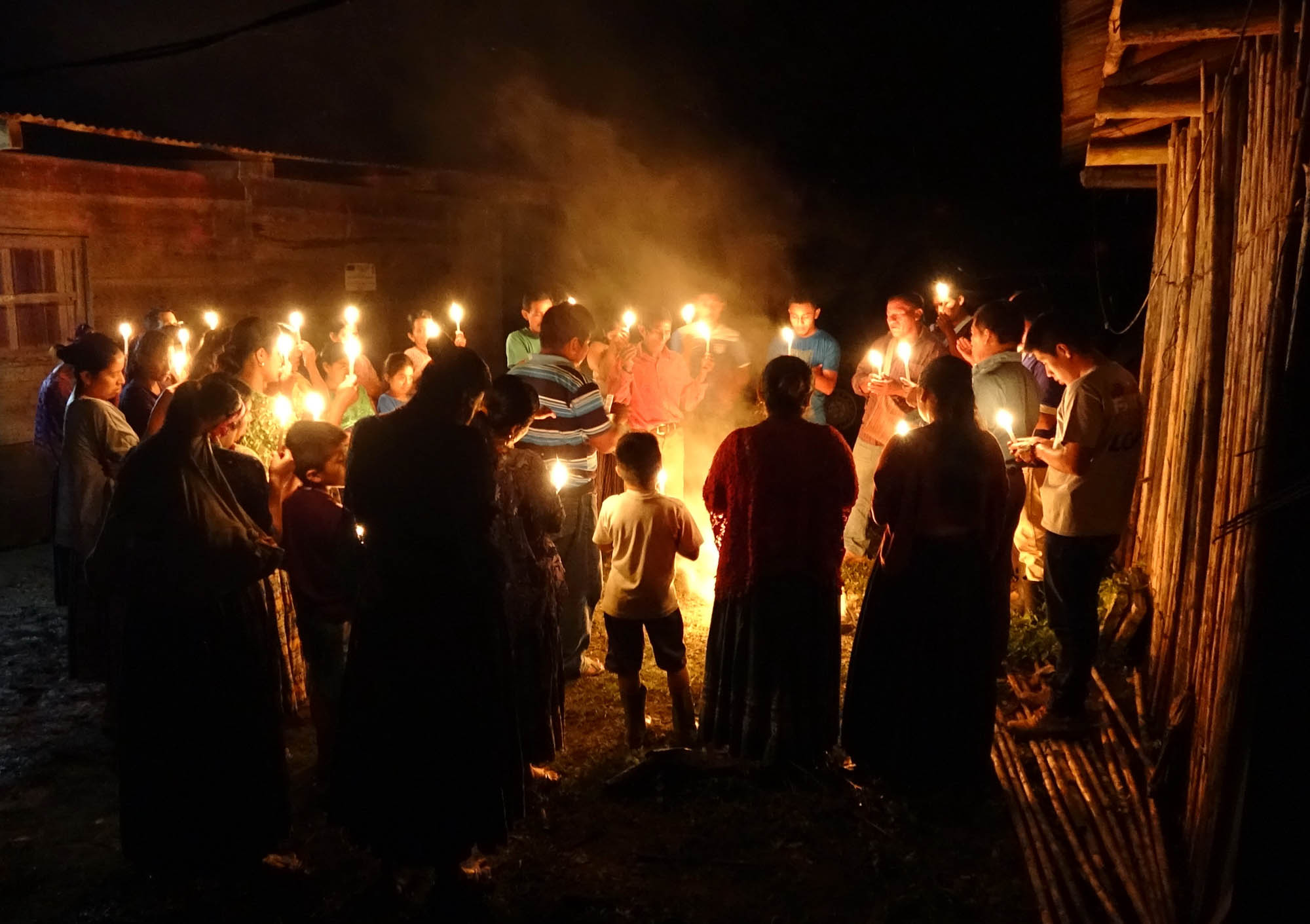
The Maya man, with a candle in his hand, steps out in the darkness of the night, in the terrible no man’s land between the old year that has gone and the new one that has not yet come. With a copal incense held high, he blesses the four directions of the world in the name of Jesus Christ, asking for good harvest and for protection from all evil to his whole family and their animals. Two dozen men, women and children are standing in a circle. The invisible light source of the incense placed in the middle illuminates their faces from the inside of the scene, like that of the three kings on Nativity paintings. The chiaroscuro of the candles held before them evoke the figures of Caravaggio, La Tour and Rembrandt in the Guatemalan night.


The name of the Israeli documentary film maker Eti Peleg is not unknown to the readers of Río Wang. A year ago we wrote about her film made on the “golden temples”, the monumental syangogues of fin-de-siècle Hungary, and many of you have also taken part at the premiere of her two other Hungarian films, on the onetime Jewish winemakers of Tokaj, and on the history of the song The rooster is crowing. Now she gives us a New Year’s gift, a scene of her Guatemala film in preparation, the New Year’s blessing.

“Exactly a year ago today, I was in Tzalamtun, Guatemala.
It wasn’t the first time I was there. I was among friends.

I didn’t even have to ask. Sebastián beckoned me aside and said, would I agree to film the Ceremony. I was honored and touched. He trusts me.
María Luisa took us to the market to buy the copal, the candles and the plentiful of food for the new year’s feast.
As the ladies prepared dinner in the kitchen, I was wondering what ceremony I am going to witness: a Quechi Maya or a Catholic one?


What a great new year’s present for me!
This film is a token of my affection and respect to Sebastián and Luisa Tiul and their wonderful family.”


An Indian in Subotica

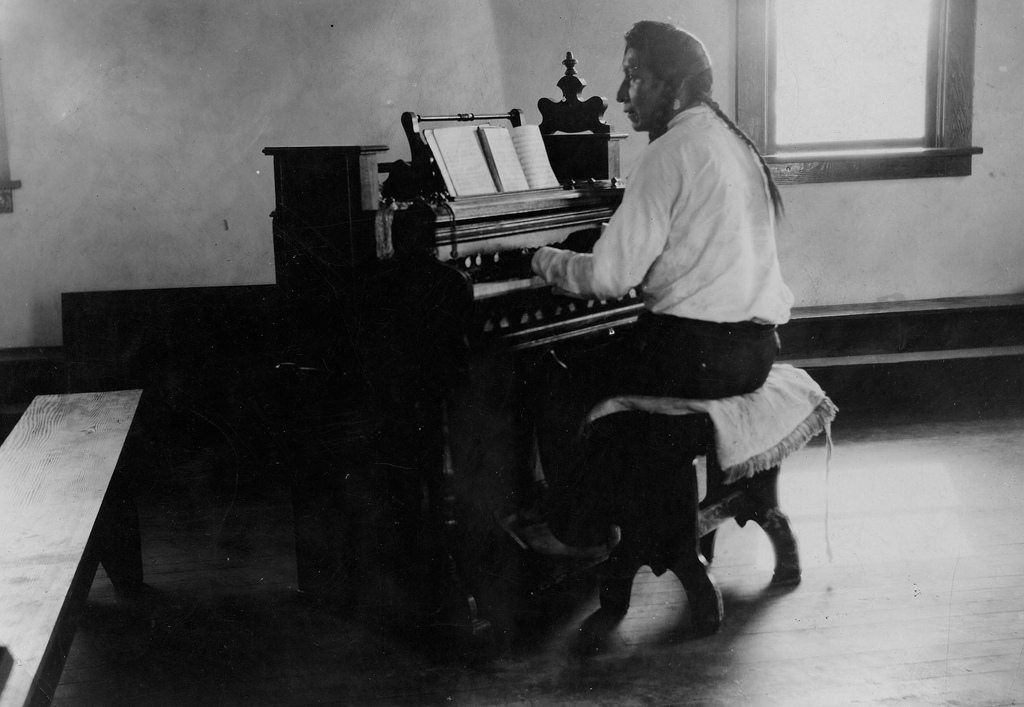
Catechist John Grey Bull (Crow) playing organ by Aloysius Vrebosch, St. Anthony’s Mission, Crow Indian Reservation, Wyola, Montana, 1925. Marquette University Archives

By leafing through the hundred year old editions of the daily Bácsmegyei Napló, we have already seen how many exotic visitors came to Szabadka/Subotica just in 1912, the glorious year of the local Art Nouveau, from the Chinese “idol god sellers” through the German students coming to work here as cowboys and the mysterious Turkish globetrotters to the Bulgarian and Serbian rulers who gave each other rendezvous at the railway station of Subotica only to point it out again and again how ugly it is. But perhaps the strangest one was that “red-skinned” Indian seminarist who dived into the city during his theological studies in Europe, and who was immediately noticed by the vigilant reporter of Bácsmegyei Napló.

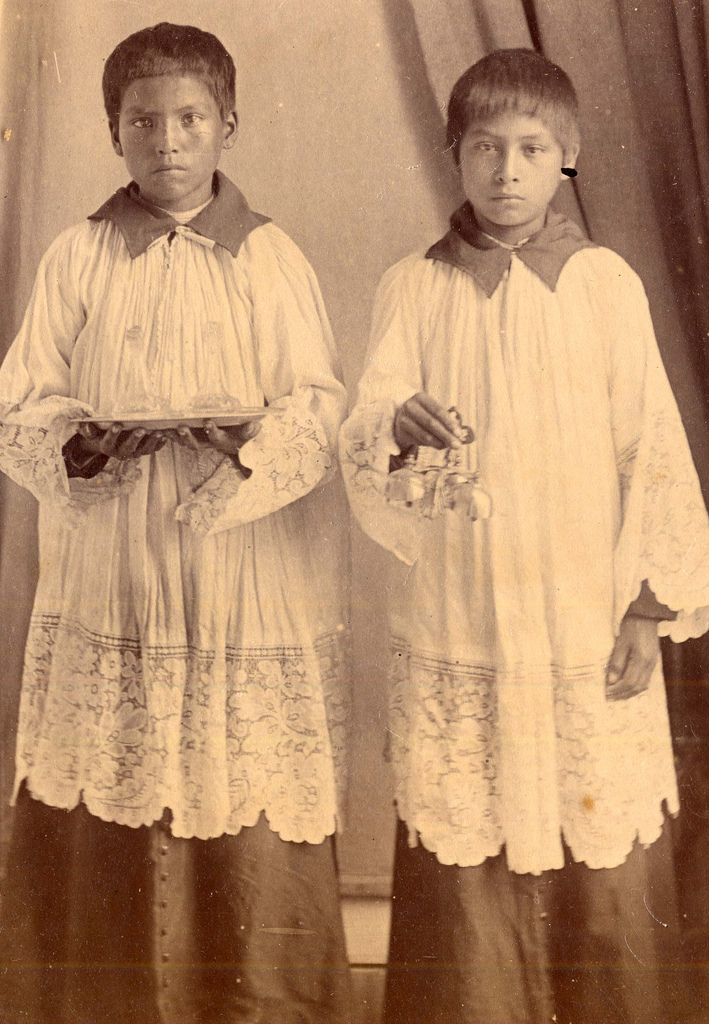
Choctaw altar boys, Holy Rosary Mission, Tucker, Mississippi, ca. 1900–1915. Marquette University Archives

Bácsmegyei Napló, 4 January 1912

A Native American seminarist in Szabadka
From our correspondent. Szabadka, 3 January

Yesterday afternoon an interesting young man walked about the streets of Szabadka. His clothing was the blue cassock of the Catholic seminarists, so he was not conspicuous for anybody.

This seminarist is a red-skinned Native Indian from America.

He is called Philip Gordon, and came from the state of Minnesota in Northern America. His grandfather may have hunted for scalps, his father was perhaps still a nomad roaming the endless American plains, and the son will probably become a bishop.

Philip Gordon was baptized, and took a liking to the priestly career. Now he sailed across the ocean to the Old World, and will go to Innsbruck to learn theology.

He got to Szabadka by having got acquainted with a seminarist from the village of Bajmok, Ernő Rickert, and he invited him now to us.

The Native American speaks in English, French and some German as well.

Whatever he has hitherto seen from Hungary was very pleasant to him, and he feels quite well here.

Philip Gordon remains in Bajmok only a few days, and then he goes to Innsbruck. And a few years later he will spread Christianity among his red-skinned siblings.


One hundred years later our American reader ribizlifőzelék was just as vigilant as the reporter of Bácsmegyei Napló, and noticing this article, he recalled having seen the grave of an Indian priest of the same name in Wisconsin, where it is held in high regard. In the wake of his guidance we have established that Philip B. Gordon indeed existed. What’s more, he was the first Native American Catholic Priest in the USA. He indeed came to Hungary. And even if he did not become a bishop, he indeed spread Christianity until his death among his “red-skinned siblings”.

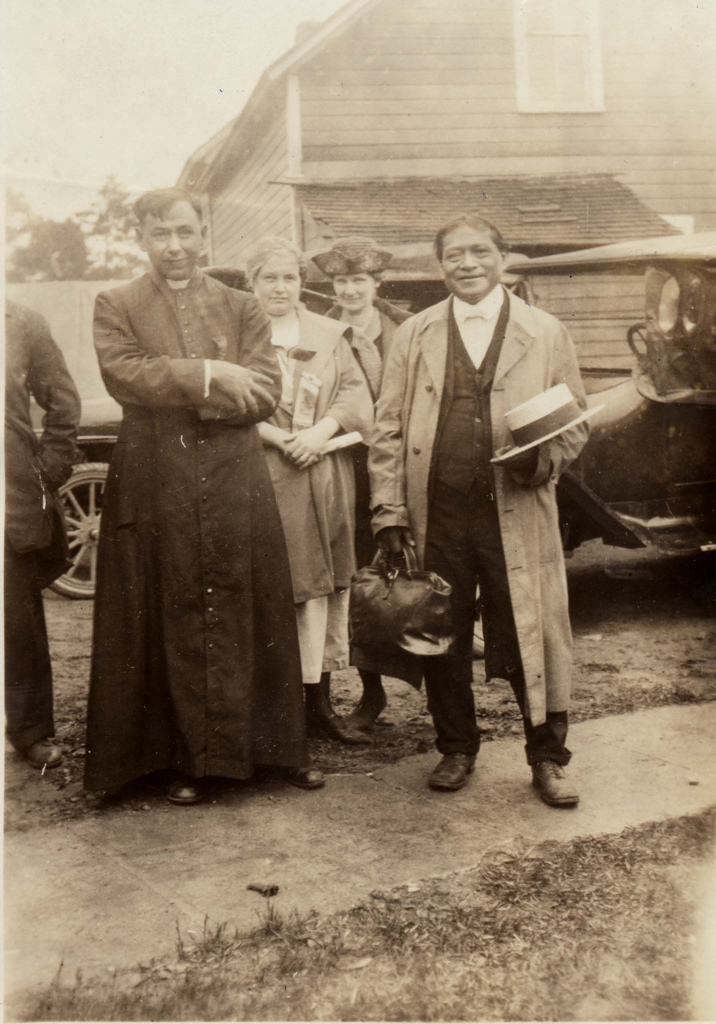
Rev. Philip B. Gordon (Ojibwa) and Dr. Carlos Montezuma (Yavapai), Lac Courte Oreille Indian Reservation, Reserve, Wisconsin, 1919, on a speaking tour as officers of the Society of American Indians. Marquette University Archives

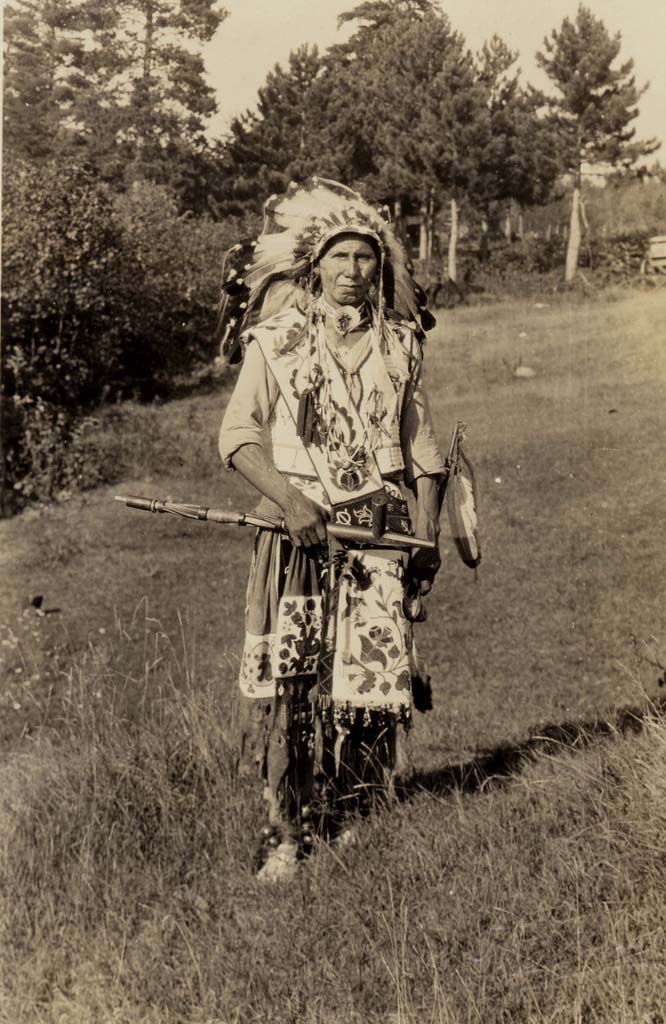
“The aging Indian priest sat, as his ancestors had, beside the war drum. A stiff breeze whistled through the tops of the tall pines, but beneath their sheltering branches, the eagle feathers in his war bonnet were barely ruffled. Although the priest was a Chippewa, the headdress he often wore was Sioux; he received it while he was doing mission work in the western states.

Along the sandy river bank a campfire, adding its glow and warmth to the cool June evening in the north woods, accentuated the priest’s Indian features and his ample figure. Around him sat twenty St. Paul, Minnesota, Boy Scouts, eagerly waiting for the proceedings to begin.

Friends of the scouts and the priest had gathered at the camp the scouts called Neibel to witness the presentation of the Chippewa war drum and peace pipe to the troop by Reverend Philip Gordon (Ti-bish-ko-gi-jik). The Calumet or peace pipe had always been sacred to the Indians, and like the drum, its presentation was attended by strict ceremony.

Among the spectators was Luther Youngdahl, Minnesota’s governor and a friend of Father Gordon. He had invited the priest to drum out a song.

For forty years the drum had been used for tribal ceremonies and it was said that on a calm night it could be heard for ten miles. But now the sound reverberated through the dense woods, one of the few stands of virgin timber remaining in the once heavily forested area.”


Thus begins the biography written by Paula Delfeld in 1977 about Philip B. Gordon, the first Native American Catholic priest.

John Frog (Ojibwa) by Philip B. Gordon, Lac Courte Oreille Indian Reservation, Reserve, Wisconsin, 1922. Marquette University Archives

Philip B. Gordon was born on March 31, 1885 as one of fourteen siblings in Wisconsin, the Great Lakes region, in a commercial station called Gordon, which was founded and named after their family by his uncle. Both of his parents belonged to the Ojibwe (Chippewa) tribe, but in both lineages there was also a French ancestor. Hence they inherited the name Gaudin, which was englicized for Gordon by his uncle. Philip, who at birth received the name Ti-bish-ko-gi-jik, “Heaven Viewer”, still grew up in the traditional Native American culture, but he also fluently spoke in French and English.

The railway arrived to the Great Lakes region in Philip’s childhood, and Philip witnessed the radical changes it had brought: the clearance of the forests and the destruction of the traditional Indian way of life. Depression, alcoholism and suicide rapidly spread among the Indians deprived of their living space and livelihood. Philip, who first went to a military college, felt obliged to devote his life to his Native American brothers, thus after two years he went over to the seminary of the local Franciscan mission. There he excelled with his intelligence, physical and rhetorical skills, and so after the first year he was sent to the American College in Rome. From there he went to the theology of Innsbruck, where he remained for two years, until finishing his studies. This is the period when he also came to Szabadka.

“Philip enjoyed traveling and spent two summer vacation periods in France, Germany, Hungary, Austria, Switzerland, Holland, Belgium and made one trip to England. Some of these were walking tours. In the land of his French ancestors, he learned to speak the language fluently and spent much of his time in the French department of Loir-et-Cher. Besides English and French, he spoke fluent German, Italian and numerous Indian dialects.”

On December 8, 1913, the feast of the Immaculate Conception he was ordained a priest in Wisconsin. His Czech bishop, Koudelka wanted to send him to an urban parish, but he successfully begged to be left among his Ojibwe brothers. In the coming decades he accomplished a huge organizational work. He built missions, organized the life of the local communities, actively fought for their rights against the authorities and the private companies who wanted to expropriate the lands and forests of the Indians. He became member, and then president of the Society of American Indians which fought for the emancipation and rights of the Native Americans. By denouncing the burning crosses as defamation of religion, he successfully defied the Ku-Klux-Klan; thanks to his perseverance, the sheriffs and other official persons, and even Baptist preachers who were members of the Klan, were dismissed or moved, so that the Klan could neve put root in Wisconsin. He carried out a great missionary work not only among the Ojibwe, but also among their ancient enemies, the Sioux; it was his merit that the two people finally made peace with each other. He was an exceptional organizer, an excellent orator, and, moreover, “a charming personality, highly educated and possessing a natural humor which made his remarks very entertaining as well as interesting and instructive.”

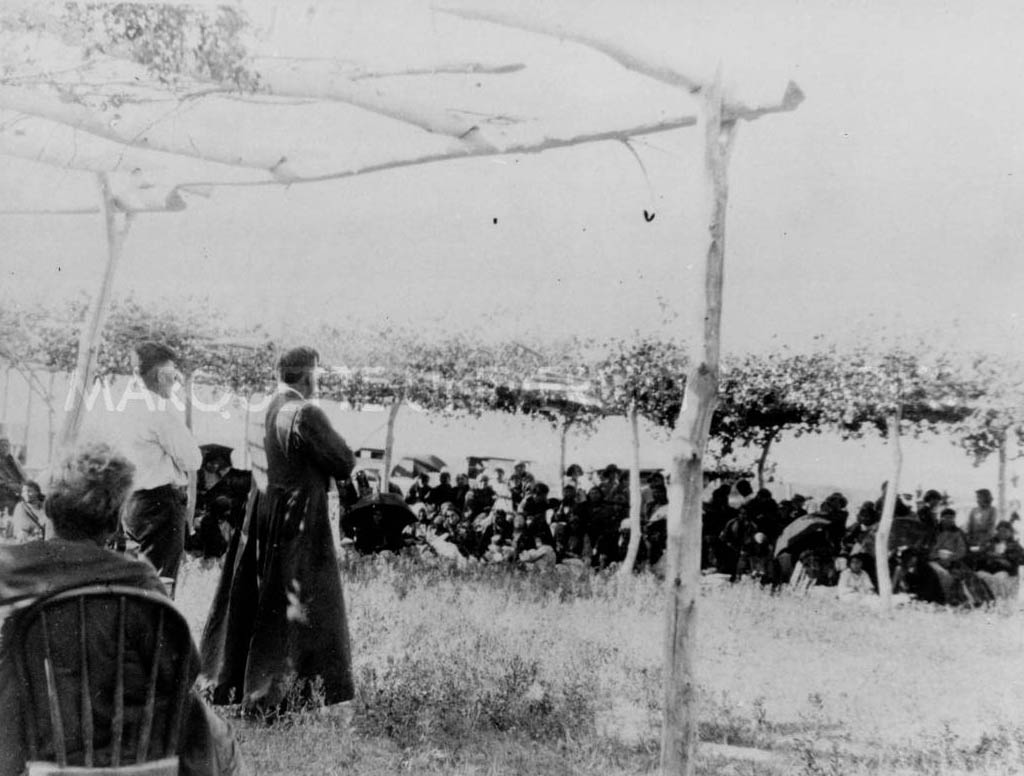
Rev. Philip Gordon addressing Catholic Sioux Congress, 1923. Marquette University Archives

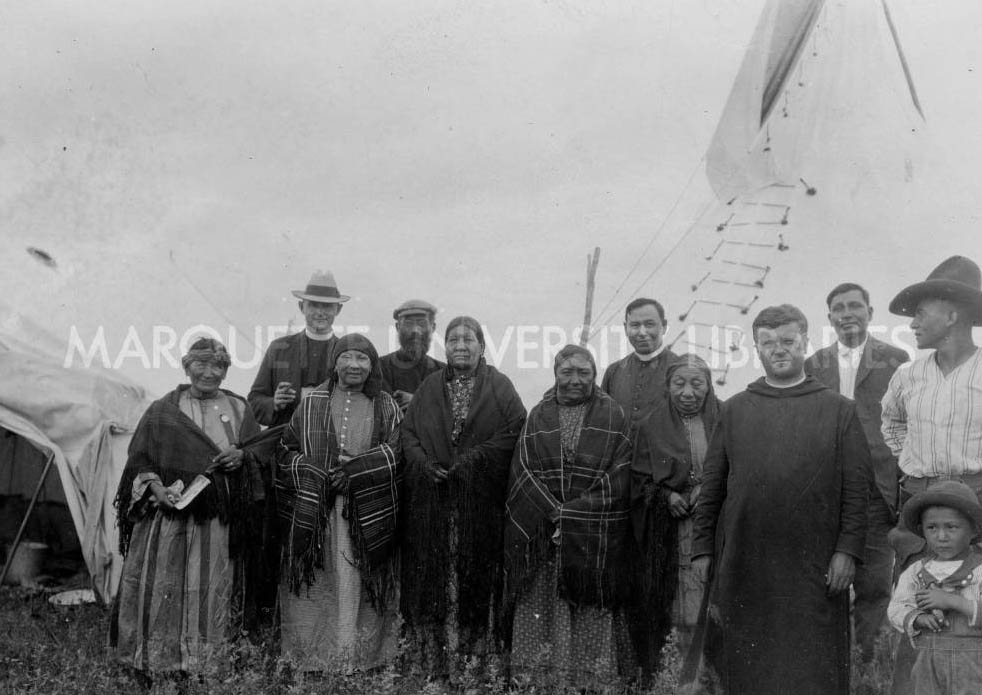
Attendees by tipi at Catholic Sioux Congress, 1923. A bit to the right, behind the two old women stands Rev. Philip Gordon. Marquette University Archives

The local newspapers reported on his activity regularly and with large sympathy.

Philip Gordon preaches in German and English in St. Louis, calling upon the support of the Indian missions. The Guardian, Arkansas, March 11, 1922. The complete edition.

Philip Gordon speaks in the interest of the emancipation of the Indians. The Guardian, Arkansas, February 17, 1923. The complete edition.

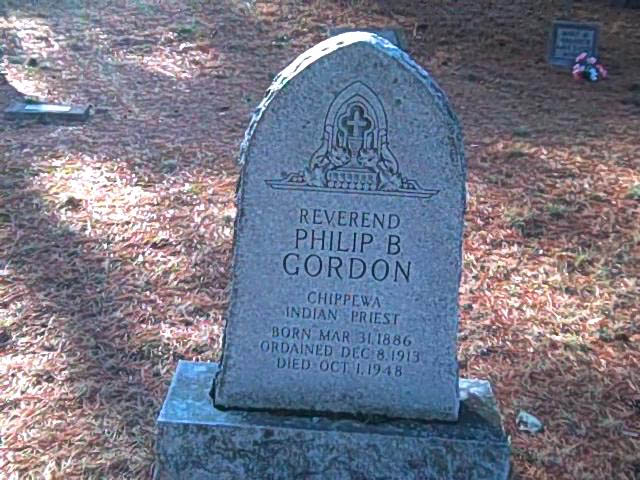
Philip Gordon died in 1948, after thirty years of intensive work, and two years of serious illness. With the last of his strength he organized the Odjibwe Inter-Tribal Organization, which claimed hundreds of millions of dollars against the government for the lands taken away from the Indians. He was buried in his native village Gordon. His tomb is still highly respected, and, as the Indian Country News writes, it is an obligatory element of every documentary on the Native Americans of the region. Subotica can be really proud of his former visit.

Szabadka Unlimited, 1


Boško Krstić, local historian of Szabadka/Subotica, in his guide of 2006 illustrates with a small story the vibrant diversity and characteristic absurdity of this multiethnic city along the Hungarian border of Serbia, which has been traditionally open to everything new. A German tourist on his way to Greece passes in the night by the art nouveau spa of Szabadka-Palics, and hits a kangaroo that escaped from the Palics zoo. Soon the police arrives, and a black policeman gets out of the jeep. The German cries out loudly: “Where have I got to?”

To Szabadka.

“On the way back home in the night in Szabadka”

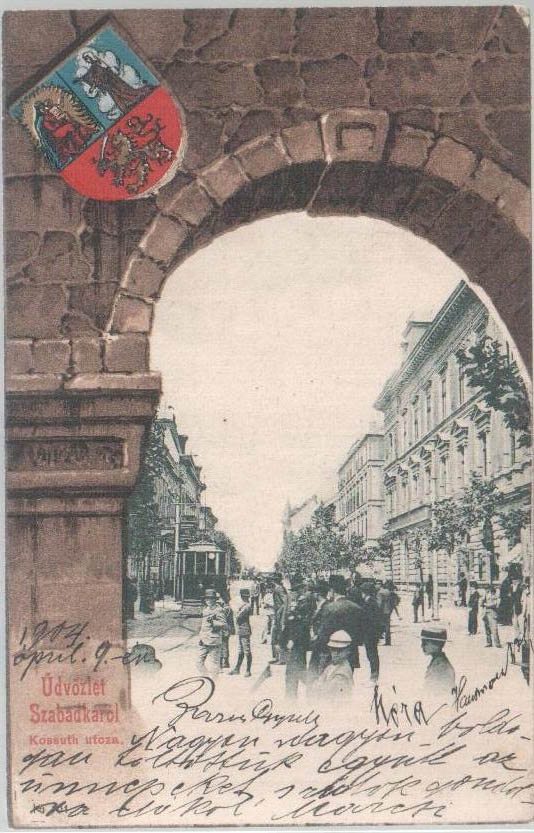
And that the atmosphere of the city has never been different, is well attested by some randomly picked articles from the most important local newspaper, the Bácsmegyei Napló – the first workplace of the great Hungarian authors Dezső Kosztolányi, Géza Csáth, Ervin Szabó – from exactly a century ago.

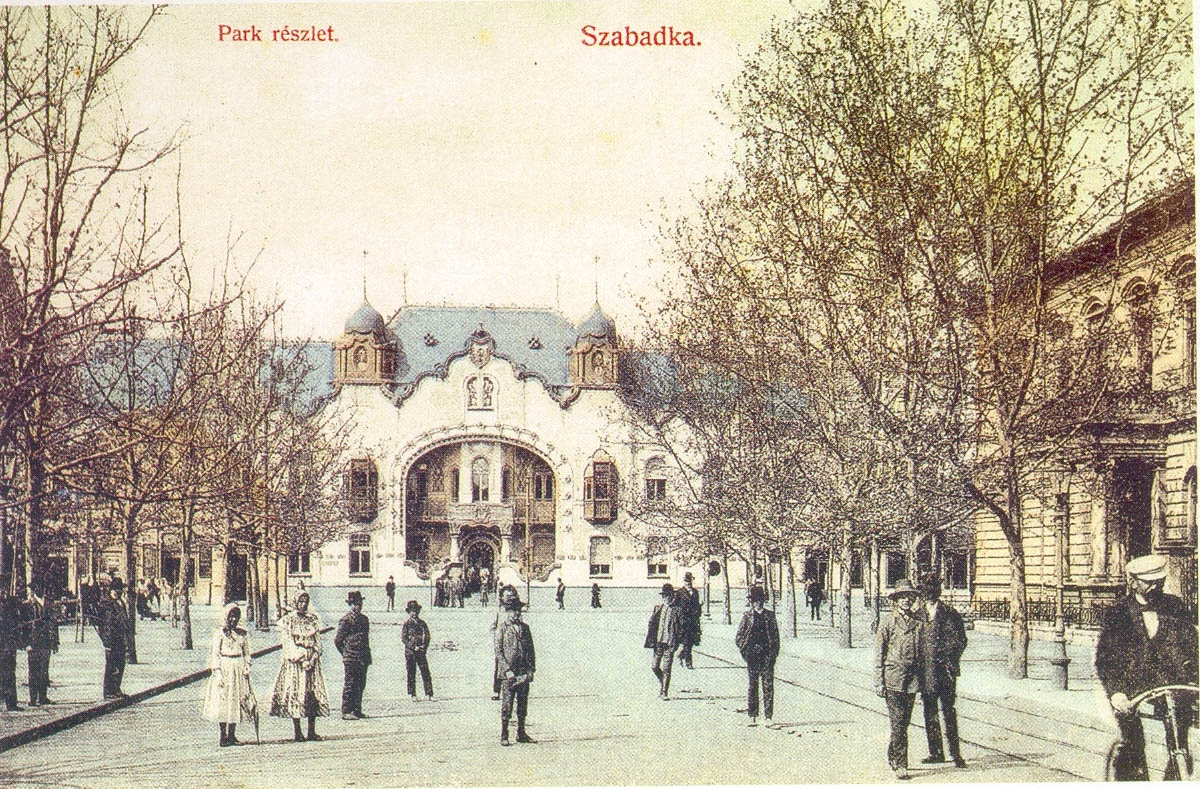
The Raichle Palace (1903), the first important art nouveau building in Hungary

Bácsmegyei Napló, 5 November 1912

From Shanghai to Szabadka
Three little Chinese

Yesterday three young Chinese people arrived to Szabadka. Three of those young people who nowadays come by tens of thousands from China and Japan, overflowing the cities of Europe, and selling small sculptures and fancy goods everywhere. In the meantime they observe the habits of the Europeans, get acquainted with their culture, learn a number of European languages, and then they go home to turn their experiences to profit.

Their job only apparently serves for their livelihood. Their main objective is to learn.

The three Chinese peddlers, as soon as they arrived, were taken by a policeman to the ambulance, where they got disinfected, as they arrived from a region threatened by cholera. The ambulance was unable to speak to them without an interpreter, so they asked our correspondent to talk to them and find out their identity.

Our correspondent talked to them in German. One of them said they knew German, but only a little – however, they speak much better in English.

Then they tell that they came from Shanghai. Their names are Lin Chi King, Tson Hong-Yen and Von-Ami Tü. They want to spend two days in Szabadka, and to sell figurines. Until now they were in Berlin, that’s where they have learned some German.

On the way here they heard that in China there was a revolution. They are very happy, and they are confident in the success of the revolultion. They want their country to become as strong as it is crowded. They tell that they have to suffer a lot, because the dynasty and the mandarins tyrannize over them. – That’s why the Chinese are so poor.

Then, replying to our question, they tell us to be very angry with the Japanese, because those are a stronger and more educated nation, which hurts them a lot. They love their country very much, and when they pronounce the name of their native city, Shanghai, their eyes brighten up. They want to travel throughout all Europe, and then will return to Shanghai.

After the conversation the ambulance disinfected the three Chinese, and led them to a cheap hostel. This evening they already go around the coffee houses and public places with their tiny idol gods. Then they will go from here to new cities and countries. – Years go by until the Heavenly Kingdom would see again his little sons, who by then will be richer in gold and in valuable experiences. In the new, reformed China they will perhaps take better use of their knowledge than of their gold.


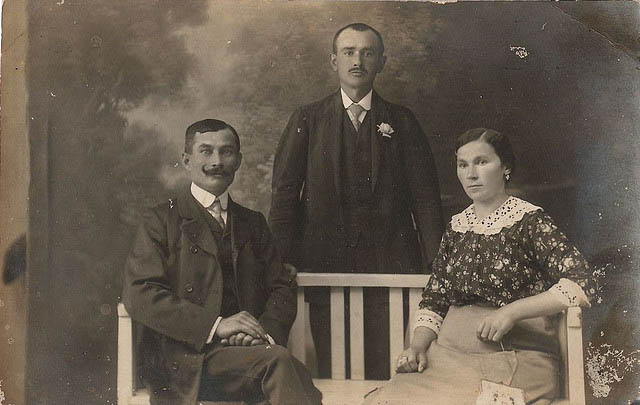
Three-person group photo. City photographer Imre Timár, Szabadka, Kossuth Street 20

Bácsmegyei Napló, 4 January 1912

A Native American seminarist in Szabadka
From our correspondent. Szabadka, 3 January

Yesterday afternoon an interesting young man walked about the streets of Szabadka. His clothing was the blue cassock of the Catholic seminarists, so he was not conspicuous to anybody.

This seminarist is a red-skinned Native Indian from America.

He is called Philip Gordon, and came from the state of Minnesota in Northern America. His grandfather may have hunted for scalps, his father was perhaps still a nomad roaming the endless American plains, and the son will probably become a bishop.

Philip Gordon was baptized, and took a liking to the priestly career. Now he sailed across the ocean to the Old World, and will go to Innsbruck to learn theology.

He got to Szabadka by having got acquainted with a seminarist from the village of Bajmok, Ernő Rickert, and he invited him now to us.

The Native American speaks in English, French and some German as well.

Whatever he has hitherto seen from Hungary was very pleasant to him, and he feels quite well here.

Philip Gordon remains in Bajmok only a few days, and then he goes to Innsbruck. And a few years later he will spread Christianity among his red-skinned siblings.


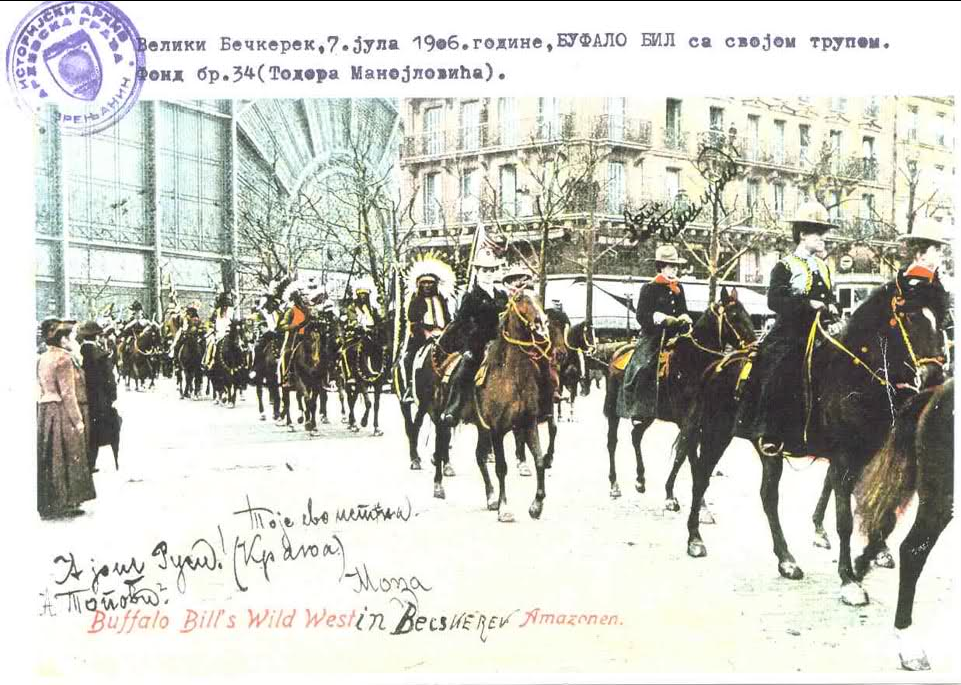
Not Szabadka, but a similarly bizarre nearby Hungarian town in Vojvodina: Buffalo Bill and his Native Americans in Nagybecskerek (Zrenjanin) in 1906. On Nagybecskerek, that is, New Barcelona, see our earlier post.

Bácsmegyei Napló, 18 November 1911

Russian secrets
A Russian teacher collects money for the arrested Russian revolutionaries
From our correspondent, Szabadka, 14 November


A young, blond, well-looking girl arrived today in Szabadka. Her name is Rosa Arendartotsky. She is a university student, who came from Riga to Szabadka to raise funds for the families of imprisoned Russian socialists.

Rosa Arendartotski certifies with documents issued by the Russian and German socialists her mission, which she tries to carry out with great enthusiasm and toughness. So far she went about Serbia and Germany, everywhere raising funds for the families of the revolutionaries.

The young Russian woman is selling pencils and small items, for which everyone pays as much as his charitable inclinations dictate to him, but Arendartotski does not accept any donation without giving a remuneration for it in turn.

She only sells the pencils to people, about whom she previously learned to be either socialists or sympathizers.

Arendartotski also has a sister who travels with the same mission about France and Britain. They both are extremely intelligent women, with a blazing inner flame to break down the Tsarist autocracy. They firmly believe to have, just like every freely thinking citizen of Russia, a mission to liberate the Russian people, whose fulfillment is their sacred duty.

The two girls have been far from their homeland for six months, and their tour will take three more months. Then they return to Russia where they will continue their mission for freedom and progress.


Bácsmegyei Napló, 10 November 1911

The deceitful Russian refugees

The Bácsmegyei Napló has already reported that a large number of Russian Jews peddled about the city, and begged for donations on the grounds that they were victims of the pogroms. The police collared the swindlers, about whom it turned out that they had nothing to do with the Russian events. Today arrived also the families of the swindlers, women and children, who, in the midst of an awesome hubbub, went to the police. There they required the deportation of their husbands to home, because they are confident that after that they will be able to drift back again to Hungary.


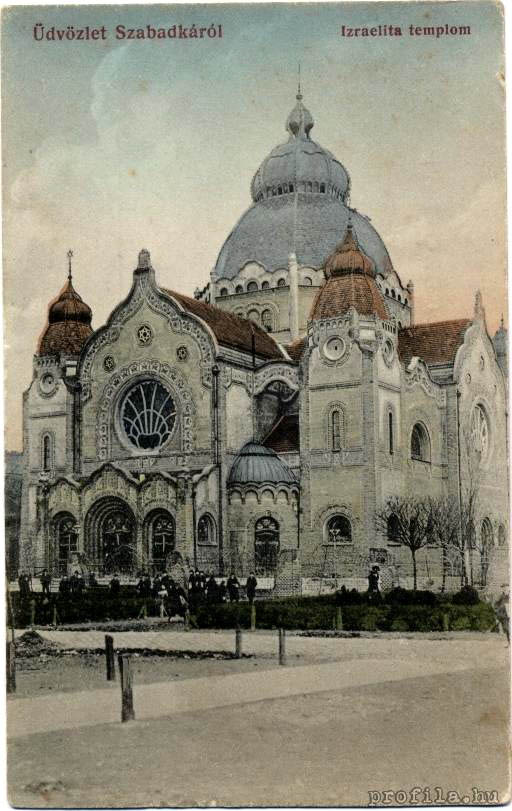
The synagogue of Szabadka (1901), one of the most majestic art nouveau buildings in Hungary

Those who personally want to experience this unlimitedness of Szabadka, should check the program Szabadka Unlimited, organized by the Hungarian Jewish Cultural Association at the weekend from 4 to 7 October. Besides a number of eminent local experts and events, I also will be there as the guide of the art nouveau architecture tours in Szabadka and its high-class hundred years old spa, Palics.  Just look at the rich program: surely you cannot resist.


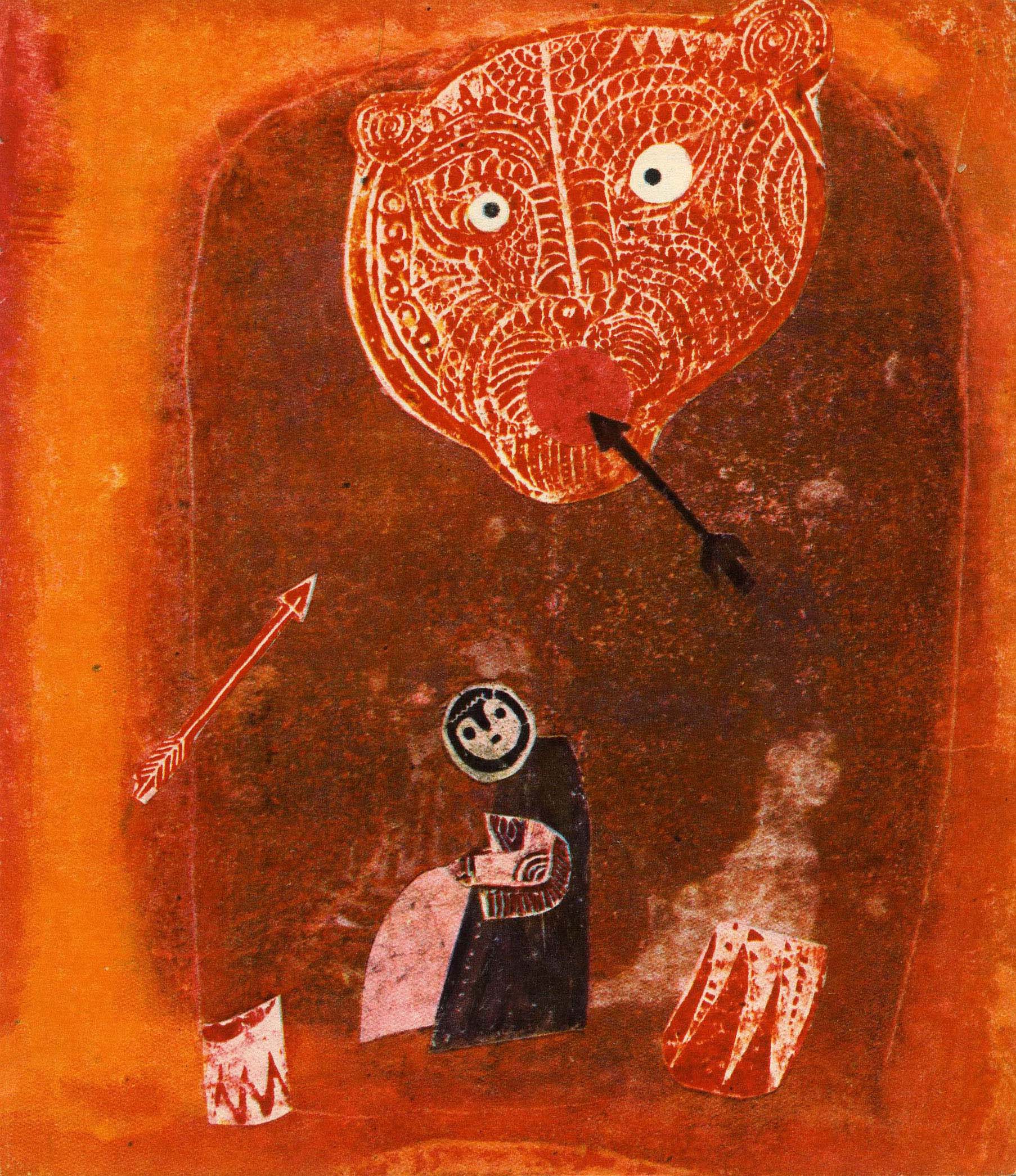
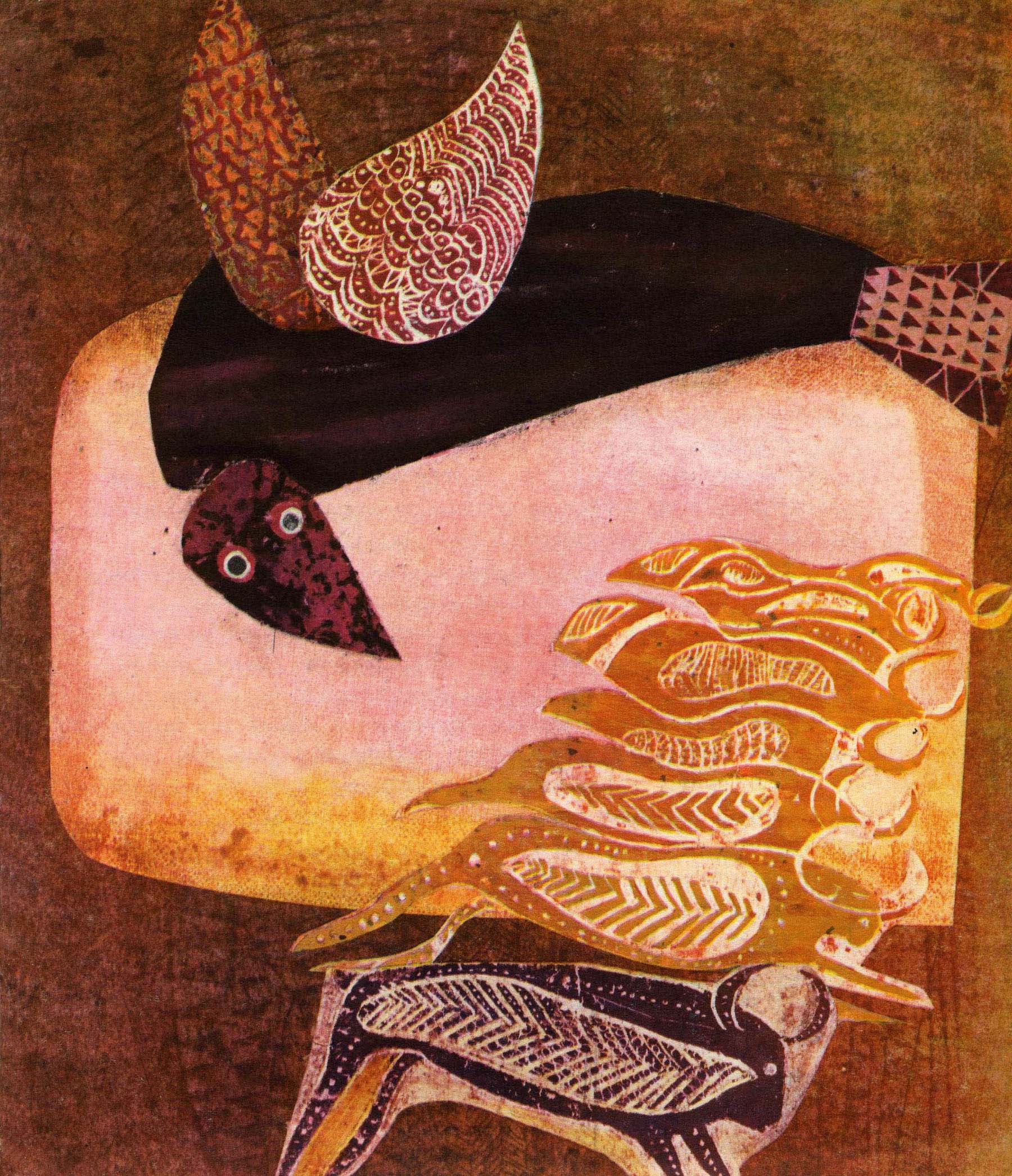
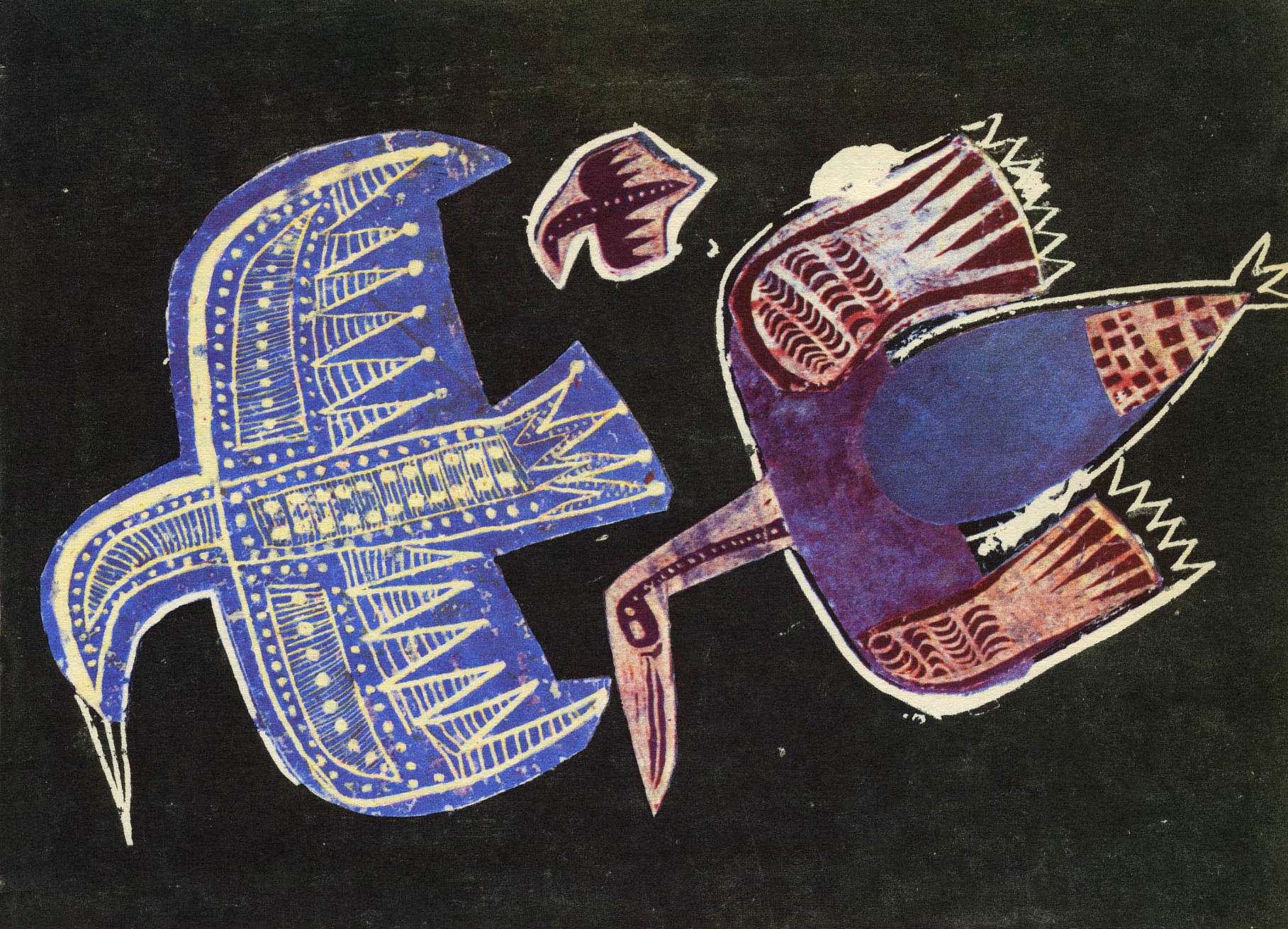
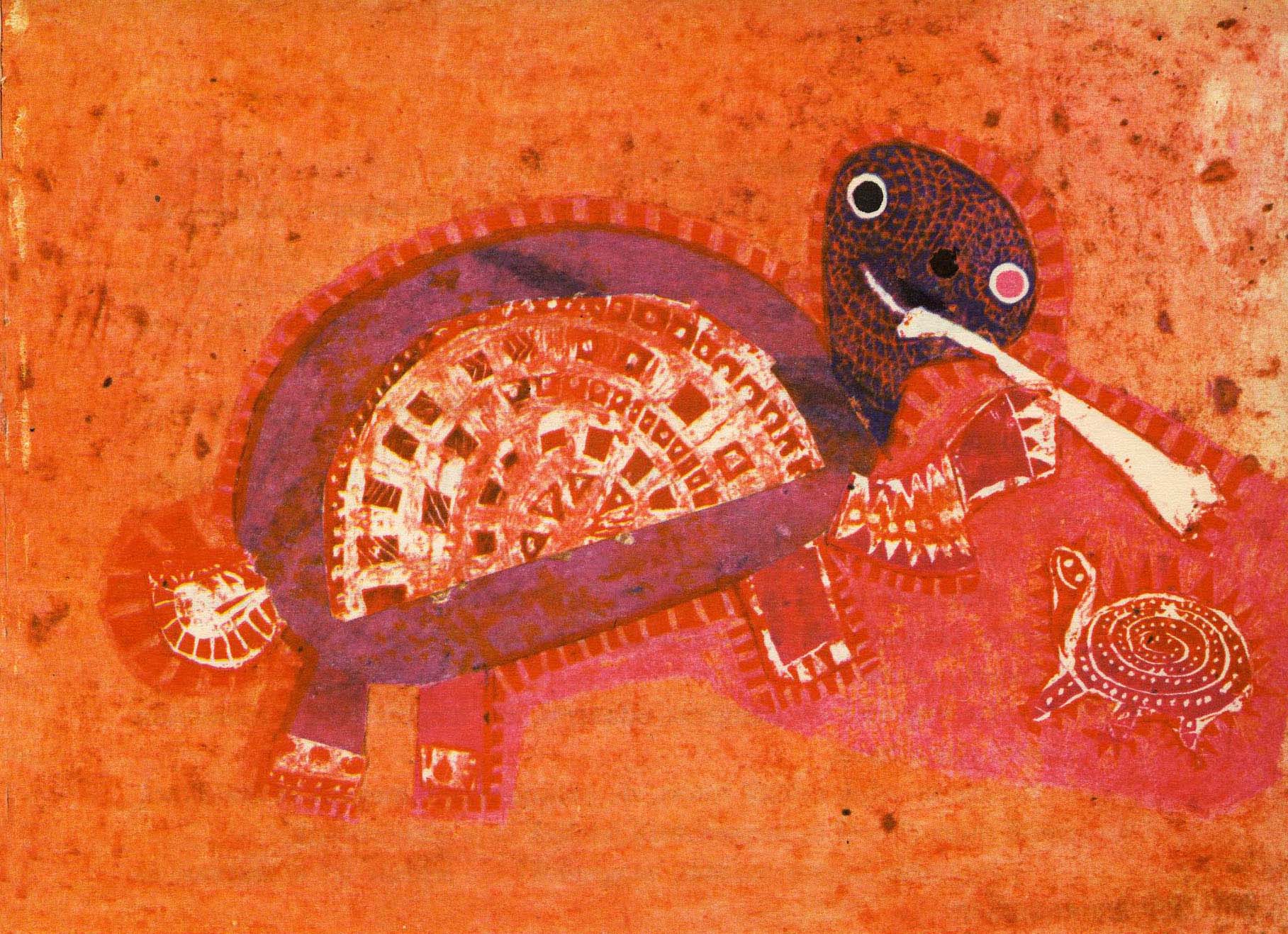
Manitou's Gift


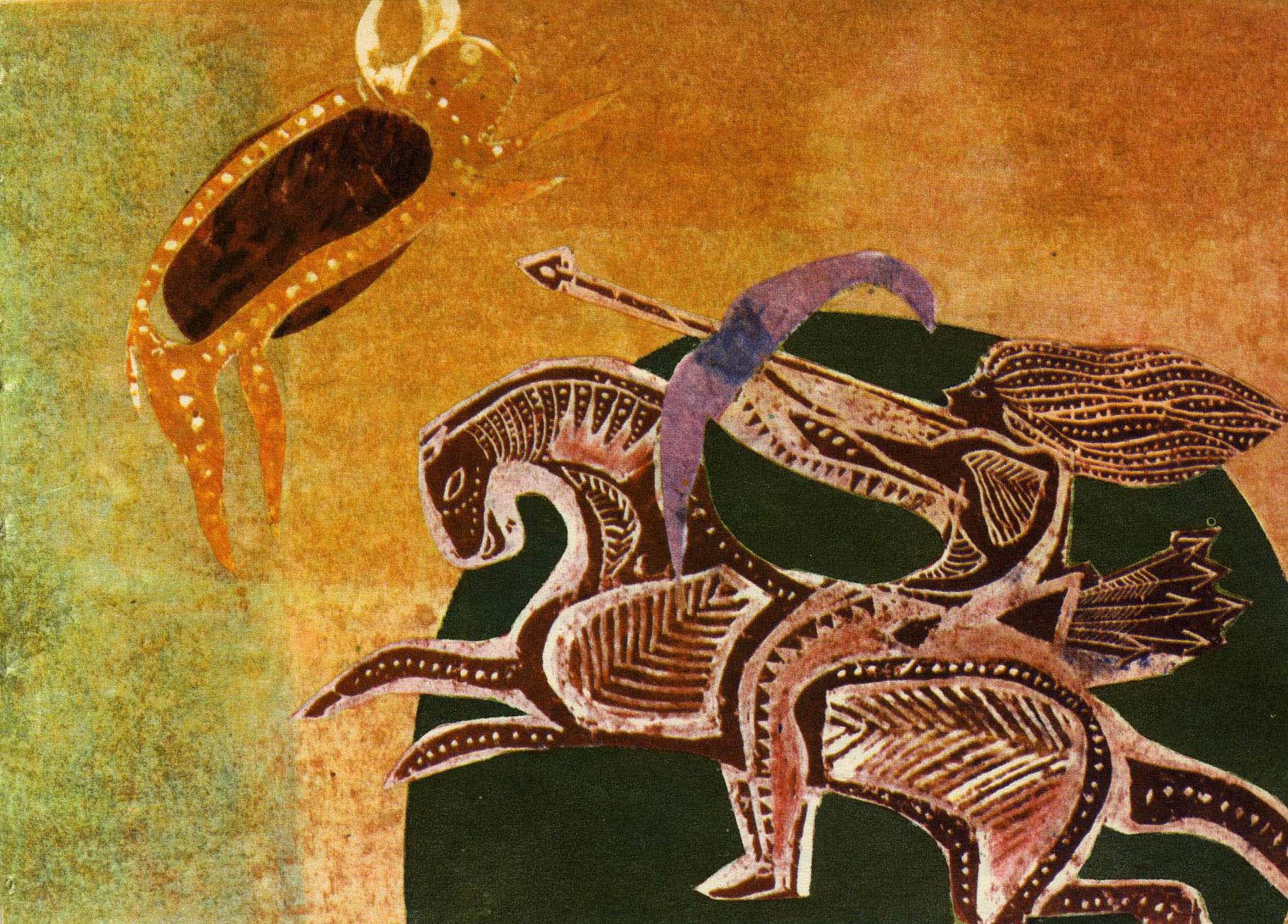
Viera Bombová (1932-2005) was a master of the dreamlike Slovak book illustrations of the 60s and 70s. Of this poetic surrealism assimilating many elements of archaic and folk art, a main source was Vincent Hložník who in the 1950s educated at the Bratislava art school a great generation of young illustrators – we will also publish from their graphics. This trend certainly appeared at that time also in the Slovak art life, at exhibitions and galleries, in albums and on the walls of the homes of intellectuals, but we know little about it. What reached out to us were mostly the book illustrations, thanks to the publishing industry of the period which supported ex officio the mutual translation of the products of the brotherly Socialist countries.


Bombová’s most richly illustrated work is the collection of Slovak folk tales Janko Gondášik (Swine herdsman Janko) compiled at the turn of the century by Samo Czambel, whose pictures – we will also publish them soon – often remind you of the paintings of Lajos Vajda or Endre Bálint working at the same time on the other, Hungarian side of the Danube. The elements of Slovak folk art appear naturally on these images, and later, curiously, they mix just as naturally in the American Native or Pacific motifs in the folk tale books of the respective people.


Manitou ajándéka. Indián mesék (Manitou’s Gift. Native American folk tales),
Bratislava-Budapest, 1968


Joseph Bruchac:
Ellis Island

Beyond the red bricks of Ellis Island
where the two Slovak children
who became my grandparents
waited the long days of quarantine,
after leaving the sickness,
the old Empires of Europe,
a Circle Line ship slips easily
on its way to the island
of the tall woman, green
as dreams of forests and meadows
waiting for those who’d worked
a thousand years
yet never owned their own
Like millions of others,
I too come to this island,
nine decades the answerer
of dreams

Yet only one part of my blood
loves that memory.
Another voice speaks
of native lands
within this nation.
Lands invaded
when the earth became owned.
Lands of those who followed
the changing Moon,
knowledge of seasons
in their veins.

(The Remembered Land. An Anthology of Contemporary Native American Literature, Albuquerque: University of New Mexico, 1993)


Huehuetlahtolli

We have just learned the melodious word “huehuetlahtolli” in the volume of essays edited by Roxana Recio, Traducción y humanismo: Panorama de un desarrollo cultural (Soria: Vertere. Monográficos de la revista Hermeneus, 2007). It is in Nahuatl, and it is composed by huehue (ancient) and tlahtolli (word, discourse, account, proverb, warning), so that its literal traduction would be “ancient word”. However, it would be more proper to translate it as “word – or testimony – of the ancients”, as it refers to a sort of simple didactic texts, written in beautiful verses and provided with delicate metaphors, which were used to inculcate the moral principles of civilization upon the youth. This is how it is explained in the analysis by Librado Silva Galeana, «Los huehuetlahtolli recogidos por fray Andrés de Olmos, publicados después por fray Juan Bautista. Algunas dificultades que presentó su traducción» (pages 173-185 of the book quoted).
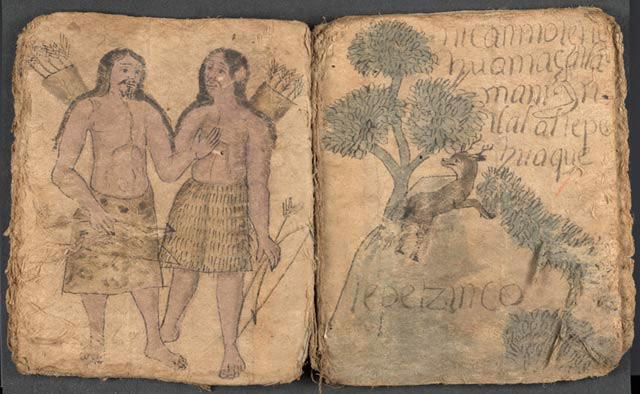
Don Andrés, Aztec notary: Techialoyan land records, in Nahuatl (17th c.) (Mexico)Don Andrés, Aztec notary: Techialoyan land records, in Nahuatl (17th c.)

These texts include that few that has been preserved from the culture of the ancient Mexicans. In the surviving compilations we can feel the efforts of the last Pre-Colombian generation done in a moment when their world has already been forever annihilated, and the dominion of the conquerors has become unequivocally palpable.

From here, far in space and time we believe that the ancient Nahuatl are also “our ancestors”. They began to become that in the very moment when Spain reached to them and the two people started to blend, and their word should be heard by us with the same attention dedicated to our European forefathers. Unfortunately, in the Spanish universities these themes are generally ignored. After the immense and grotesque publicity campaign dedicated by the Spanish government to the celebrations of the Fifth Centennary in 1992, we have fallen into the most absolute disdain in confront of the American culture (obviously, there are always small exceptions). What most vigorously survives from those solemnities are the sometimes vitrioline critical essays dedicated by Rafael Sánchez Ferlosio to them as well as to the relation of Spain with America.

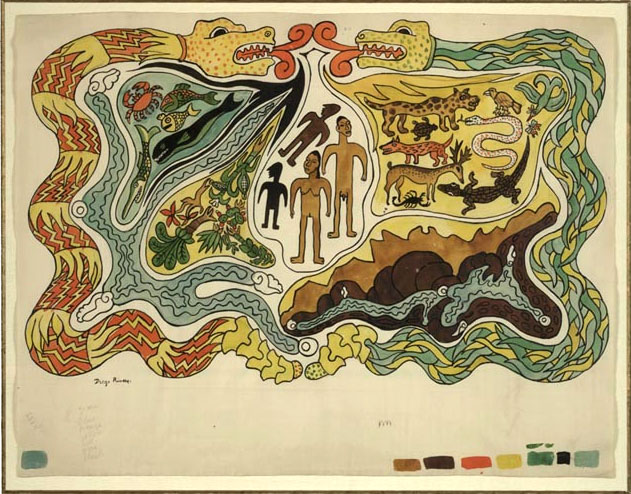
Diego Rivera (1886-1957): The Creation. Illustration to Popol Vuh, c. 1931Diego Rivera (1886-1957): The Creation. Illustration to Popol Vuh, ca. 1931

The occasion that moves us to write this commentary is the fresh shock of having seen the extremely distorted view of history of the Apocalypto perpetrated by Mel Gibson. It was the more irritating as with the means at his disposal he could have made of this theme something really good. True, we were delighted to hear the dialogues en Maya, but these spectacular simplifications of history create topic that stick to the mind of the spectator like a tick, forever blocking the way to any more subtle approach.

Anyway. Now our main task is to find this book: Fray Juan Bautista Viseo, Huehuetlahtolli: testimonio de la antigua palabra. Ed. Miguel León-Portilla. Trad. Librado Silva Galeana. México: Comisión Nacional Conmemorativa del V Centenario del Encuentro de Dos Mundos, 1988 (and México: Fondo de Cultura Económica, 1991).

Huehuetlahtolli

Ayer aprendimos la sonora palabra «huehuetlahtolli» en la colección de estudios que ha publicado Roxana Recio Traducción y humanismo: Panorama de un desarrollo cultural (Soria: Vertere. Monográficos de la revista Hermeneus, 2007). Es náhuatl y está compuesta de huehue (viejo, en el sentido de antiguo) y tlahtolli (palabra, discurso, relato, refrán, amonestación), así que su traducción literal sería «antigua palabra». Quizá sea más adecuado traducirla por «la palabra –o el testimonio– de los ancianos» porque designa unos textos didácticos simples –aunque de una poesía directa, hermosa y cuajada de delicadas metáforas– con que se adoctrinaba a los jóvenes y se les enseñaban los principios morales de la civilización. Así lo explica el trabajo de Librado Silva Galeana, «Los huehuetlahtolli recogidos por fray Andrés de Olmos, publicados después por fray Juan Bautista. Algunas dificultades que presentó su traducción» (págs. 173-185 del libro citado).

Don Andrés azték jegyző: Techialoyani birtokkönyv nahuatl nyelven (17. század) (Mexikó)Don Andrés, notario azteca: Catastro de Techialoyan en náhuatl (siglo XVII)

En estos textos se encuentra lo poco que nos ha quedado de la cultura de los antiguos mexicanos. En las recopilaciones que han sobrevivido vemos los esfuerzos de la última generación precolombina esmerándose en dejar constancia del viejo saber cuando ya había ocurrido la aniquilación de su mundo y se hacía presente la imposición del de los conquistadores.

Desde aquí, lejos en tiempo y espacio, creeemos que los viejos náhuatl también son «nuestros mayores». Lo empezaron a ser en el mismo momento en que España llegó allá y se mezclaron los pueblos, y su palabra debe ser escuchada con la misma atención que dedicamos a nuestros antepasados europeos. En los estudios universitarios españoles, desgraciadamente, se tiende a ignorar por completo estos temas. Después de la gran operación publicitaria y grotesca que montó el estado español alrededor de las celebraciones del Quinto Centenario, en 1992, hemos caído en el desprecio más absoluto hacia la cultura americana (siempre hay pequeñas excepciones, claro está). Sin duda, lo que mejor pervive son los escritos críticos, a veces furiosamente atrabiliarios, que dedicó Rafael Sánchez Ferlosio a aquellos festejos y a la relación española con América.

Diego Rivera (1886-1957): A Teremtés. Illusztráció a Popol Vuh-hoz, 1931 k.Diego Rivera (1886-1957): La Creación. Ilustración al Popol Vuh, c. 1931

Y ahora nos mueve a escribir estas líneas el estremecimiento sufrido hoy al ver la ambigua lección de historia perpetrada por Mel Gibson en su film Apocalypto. Es especialmente irritante porque con los medios de que ha dispuesto y los temas que apunta podría haber resultado una película muy valiosa. Nos ha gustado oír los diálogos en maya, pero estas espectaculares simplificaciones de la historia crean tópicos como garrapatas en la mente de la mayoría de espectadores, y luego ya no es posible matizar nada.

Bien. Buscaremos este libro: Fray Juan Bautista Viseo, Huehuetlahtolli: testimonio de la antigua palabra. Ed. Miguel León-Portilla. Trad. Librado Silva Galeana. México: Comisión Nacional Conmemorativa del V Centenario del Encuentro de Dos Mundos, 1988 (y México: Fondo de Cultura Económica, 1991).

Dogs of God

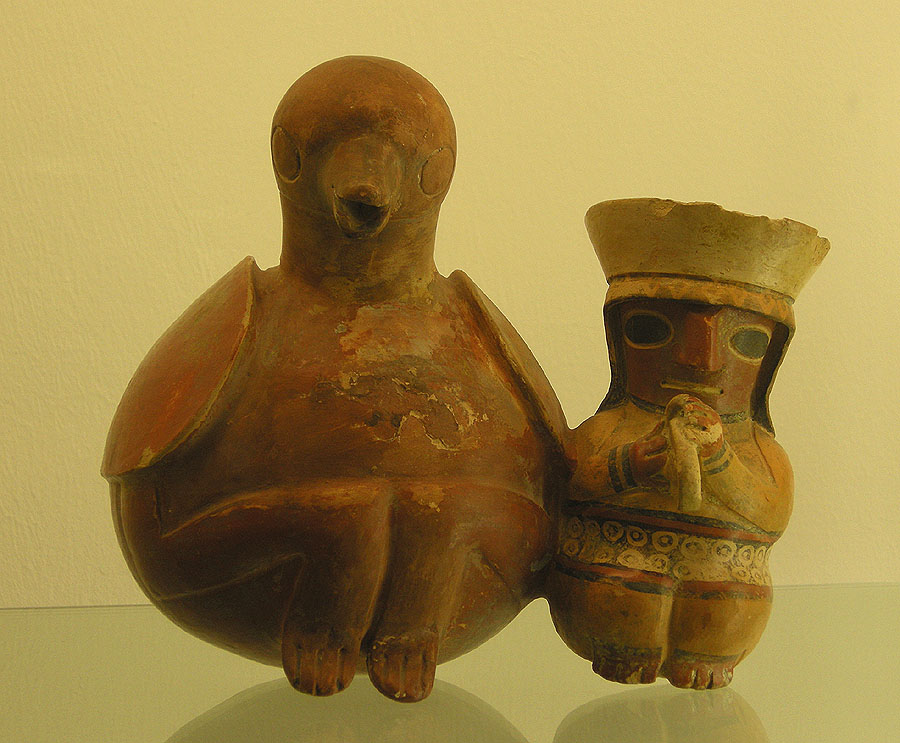
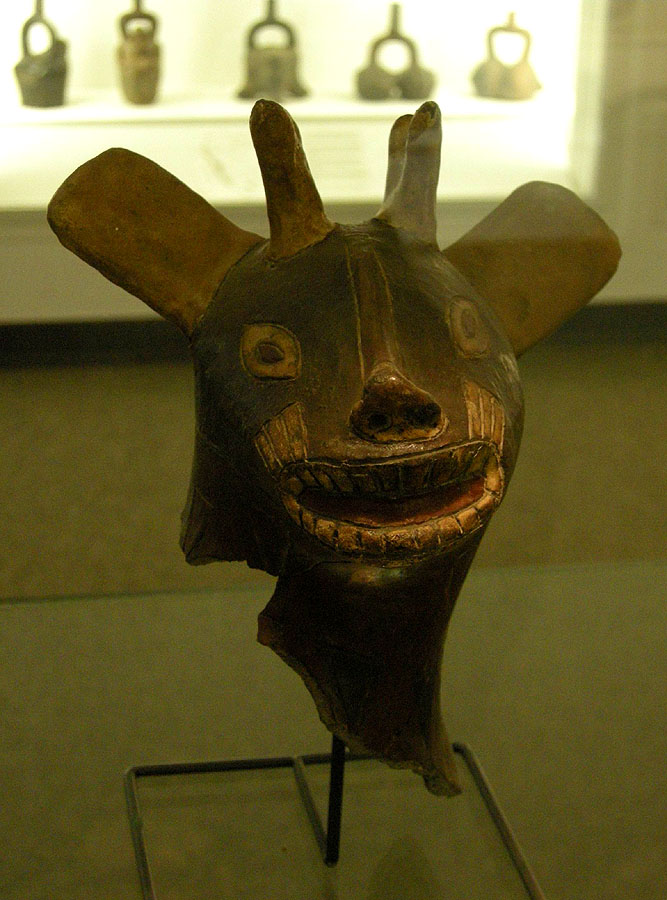
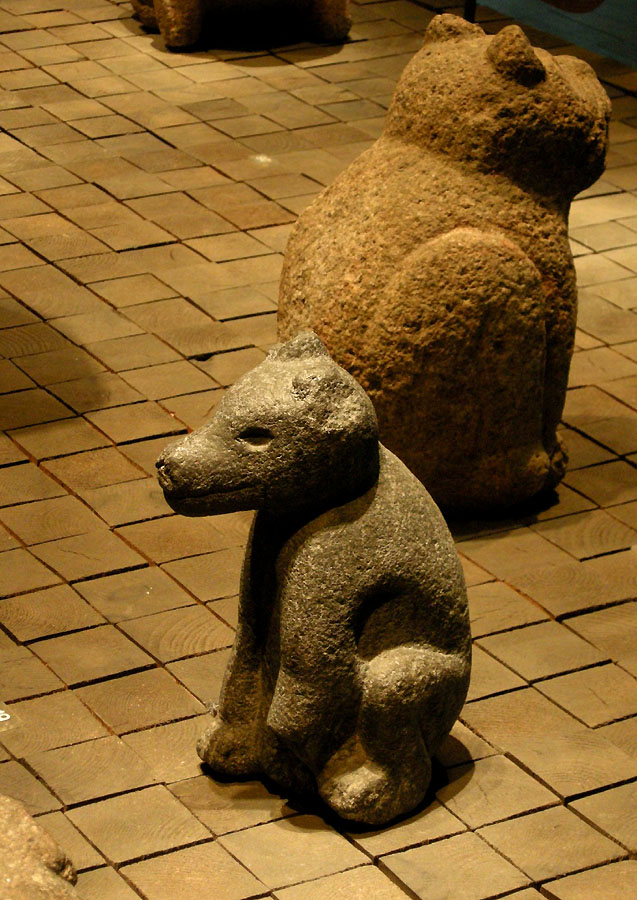
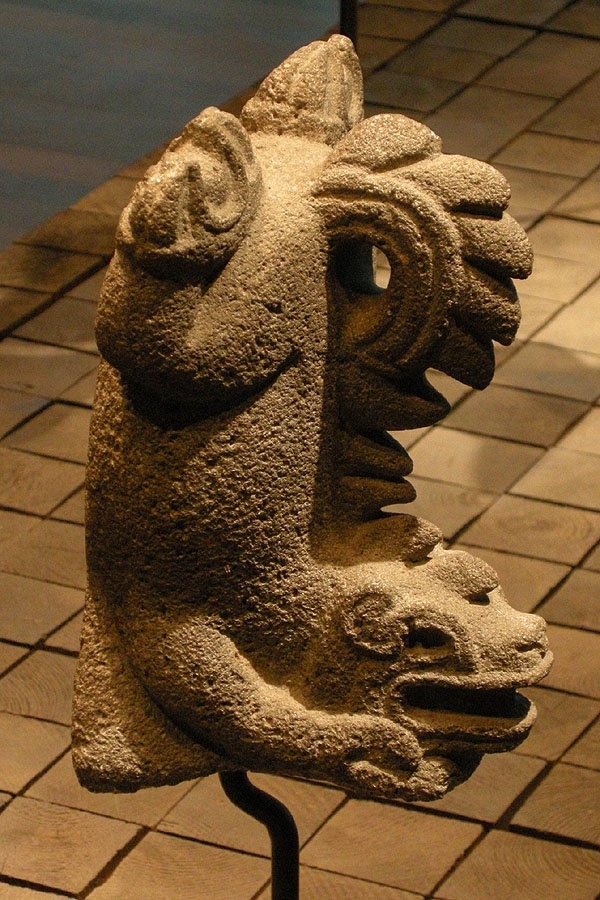
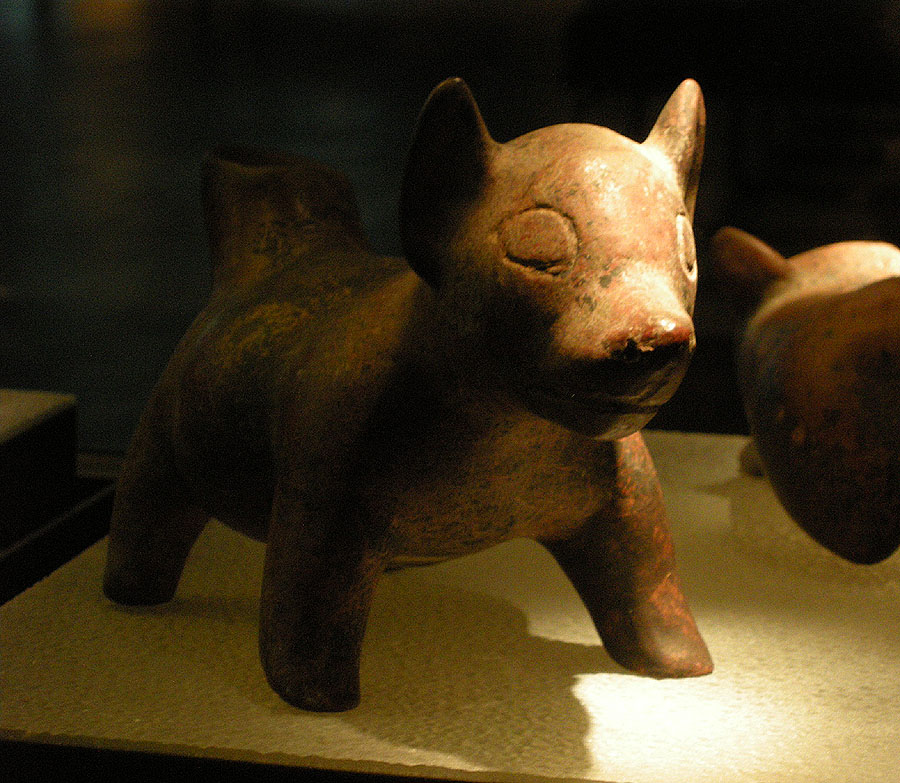
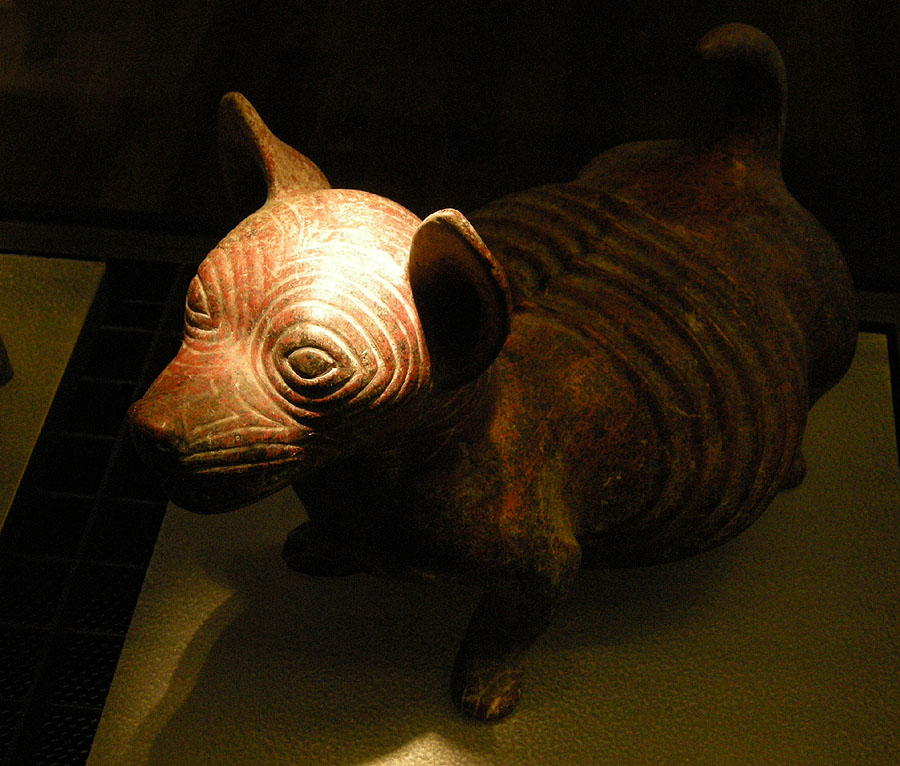
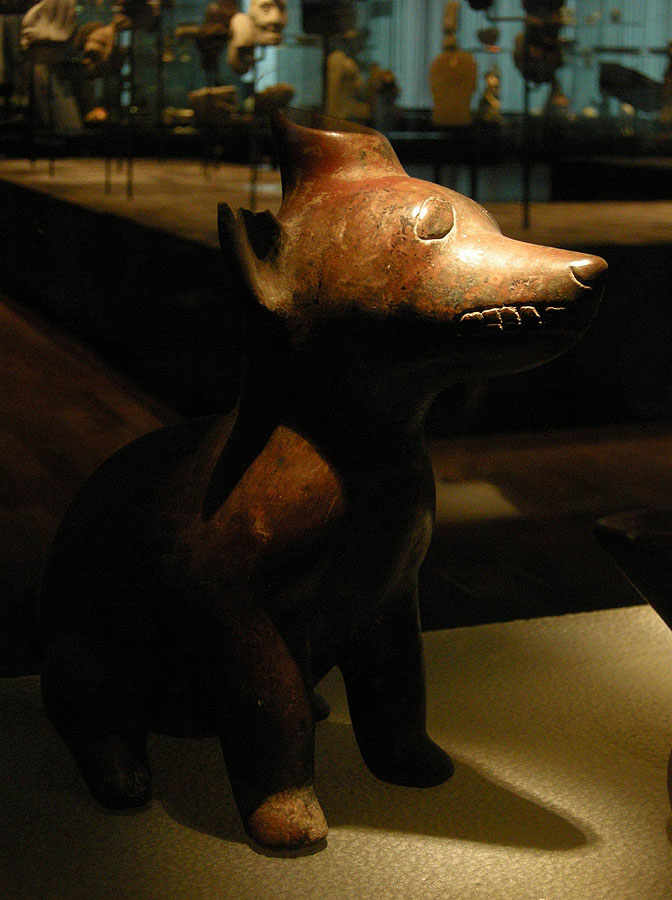
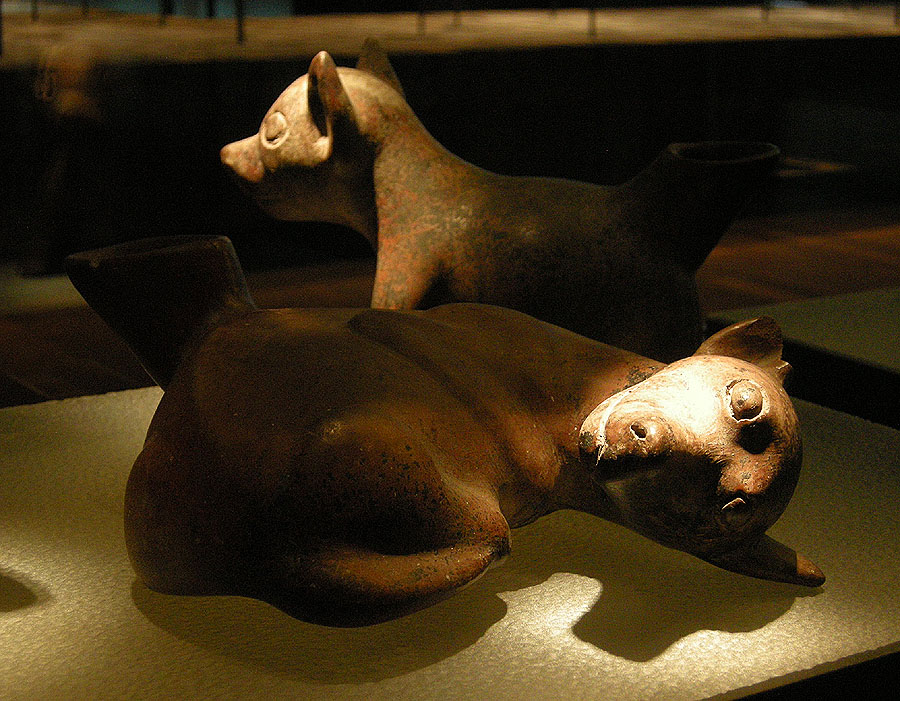
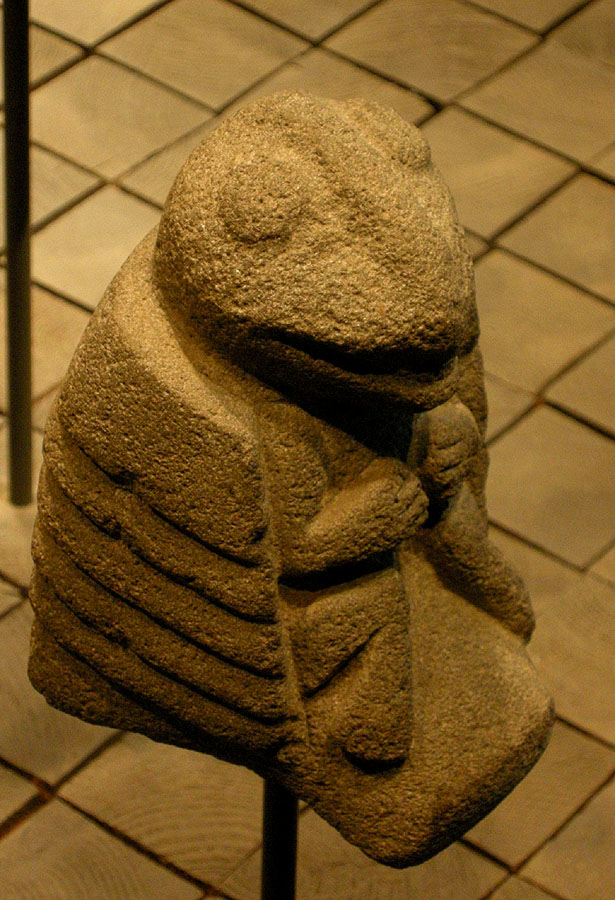
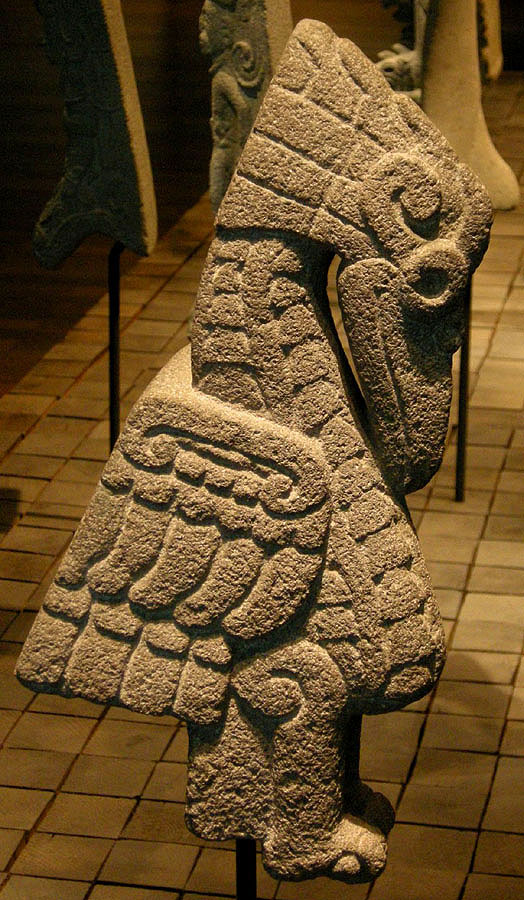
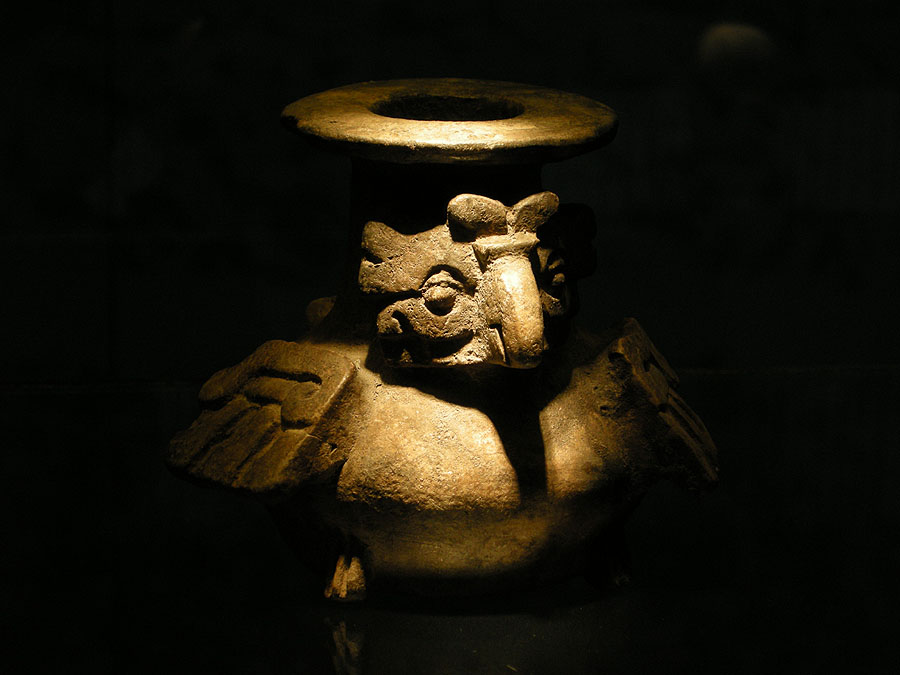
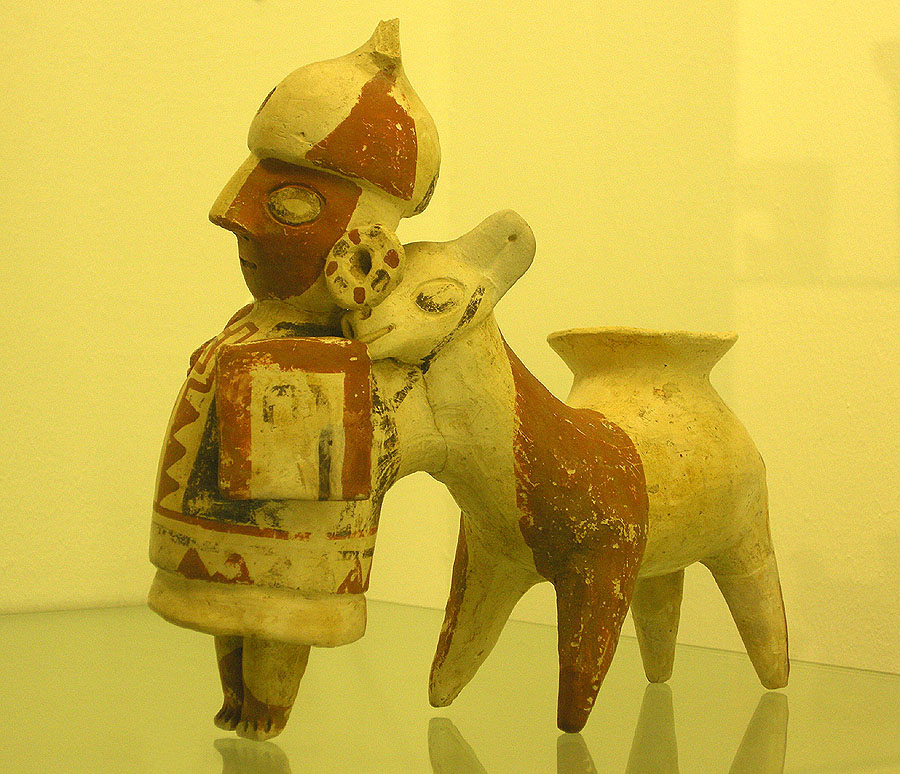
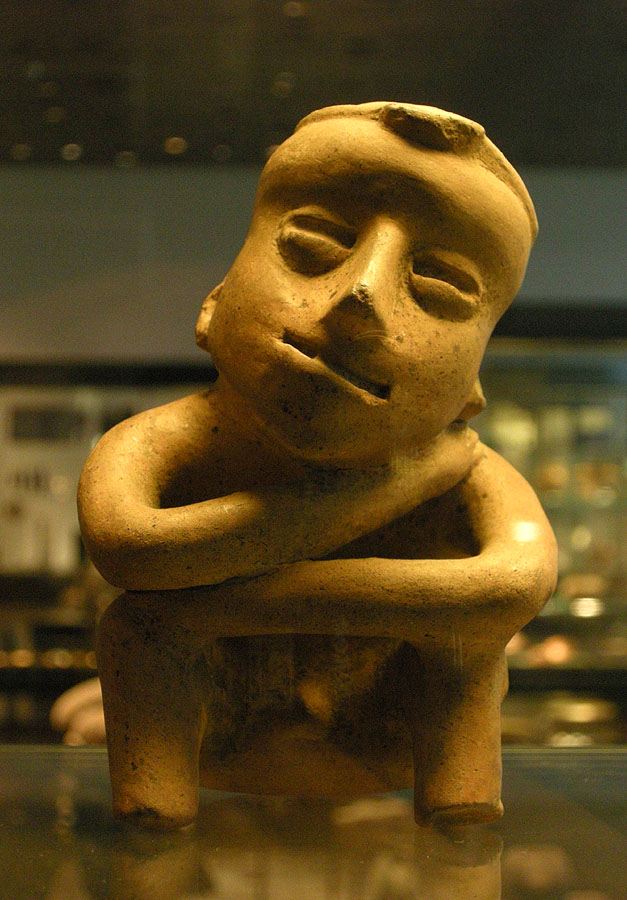
Not all of them are dogs. But all are looking with the same openness and confidence as the dog looks at its master. In the safety of the created being and in the presence of the Master taking care of the creation. In the Mesoamerican exhibition of the Dahlem Museum of Berlin.

With all its eyes the animal world
beholds the Open. … Free from death.
Only we see death; the free animal has its demise
perpetually behind it and before it always
God, and when it moves, it moves into eternity,
the way brooks and running springs move.

Mit allen Augen sieht die Kreatur
das Offene. … Frei von Tod.
Ihn sehen wir allein; das freie Tier
hat seinen Untergang stets hinter sich
und vor sich Gott, und wenn es geht, so gehts
in Ewigkeit, so wie die Brunnen gehen.

(Rilke, Eighth Elegy)

Berlin, Dahlem Museum, Mesoamerican ceramics: a big bird with an Indian
Berlin, Dahlem Museum, Mesoamerican ceramics: head of a dear
Berlin, Dahlem Museum, Mesoamerican ceramics: dog statue
Berlin, Dahlem Museum, Mesoamerican ceramics: frog statue
Berlin, Dahlem Museum, Mesoamerican ceramics: bird (pelican)
Berlin, Dahlem Museum, Mesoamerican ceramics: bird (owl)
Berlin, Dahlem Museum, Mesoamerican ceramics: lama with his master
Berlin, Dahlem Museum, Mesoamerican ceramics: man
Ethologists write that during the several thousand years passed on the side of the man, the dog became a being that is genetically dependent on man and is only able to accomplish itself in a symbiosis with him. It is not a being closed in itself as the majority of animals are, but is open to man: he is the center of its existence. It can become wild, but by this it also becomes deformed, unlike other animals, while if it lives in a real closeness to man, it is somehow able to rise above the limits of its own animal existence.

As a man living in a real closeness to dogs, I have been watching for several years this strange metamorphosis of them, and I can imagine on this model the relationship between man and God. As it was quoted from Saint John of the Cross by his companion Brother Eliseo (at that time living, by chance, in a Mexican Carmelitan monastery):

When a very simple sister once asked him why the frogs were jumping into the water when she was nearing to the pond in the garden of the monastery, he replied that for the frogs the depth of the pond is that place, that center where they feel safe and where nobody can hurt them. Let her act the same, that is, let her avoid the creatures and submerge to the depth and in her own center who is God and let her hide in Him.

Man – again unlike the majority of animals – is not a being closed in himself, but by constitution is open to God. His “center” is not in himself, but in Him. And like the dog, he also has only two choices of either turning away from this center and thus getting deformed, or trying to get increasingly nearer to Him, and thus rising above the limits of his human existence.

It is precisely John of the Cross and Teresa of Avila who describe this anthropology in the most detailed way.

And yet, upon that warm, alert animal
is the weight and care of enormous sadness.
For what sometimes overwhelms us always
clings to it, too—a kind of memory that tells us
that what we're now striving for was once
nearer and truer and attached to us
with infinite tenderness. Here all is distance,
there it was breath.
..
Und doch ist in dem wachsam warmen Tier
Gewicht und Sorge einer großen Schwermut.
Denn ihm auch haftet immer an, was uns
oft überwältigt – die Erinnerung,
als sei schon einmal das, wonach man drängt,
näher gewesen, treuer und sein Anschluss
unendlich zärtlich. Hier ist alles Abstand,
und dort wars Atem.