Switch over to our new blog! • ¡Pásese a nuestro nuevo blog!

The renewed version of our blog, with more features, a richer design, and available in nine languages, can be read here: https://wangriver.com

The new version also includes the old posts, often in expanded form. If you are curious about the updated version of this post, replace “riowang.blogspot.com/” in the URL with “riowang.studiolum.com/”, and the new link will most likely lead you there.


La versión renovada de nuestro blog, con más herramientas, un diseño más rico y disponible en nueve idiomas, se puede leer aquí: https://riowang.com

La nueva versión también incluye las publicaciones antiguas, a menudo en una forma ampliada. Si tiene curiosidad por la versión actualizada de esta entrada, sustituya «riowang.blogspot.com/» en la URL por «riowang.studiolum.com/es/», y el nuevo enlace probablemente le llevará allí.

Mostrando entradas con la etiqueta Moscow. Mostrar todas las entradas

Jazz on bones, or the real teddy boys. A Moscow subculture from the fifties


The soldiers returning from the war brought back discs, movies, clothes. The Russians who for decades had lived in isolation, suddenly confronted with the colorful and exciting life in the West, and they loved it. However, with the beginning of the Cold War the “American” way of life became undesirable again, and those who, in spite of formal and unofficial prohibitions listened to “bad” music, danced “bad” dances and dressed “inappropriately”, had to reckon with harsh retaliation.

Nevertheless, there were some courageous (?), crazy (?), or simply adventurous young people, who, in spite of all prohibition, wanted to follow the American way of life. Of course, the “American” way of life had a special meaning in Moscow of the 50s. An incredible subculture emerged, and the stilyagi appeared after Moscow also in Leningrad, and, in fact, almost every major city. From the late forties to as late as the sixties, they enjoyed life in small or large companies. At first it does not sound so risky, but it all happened in the worst period of Stalin’s terror, and in the territory of the Soviet Union, which was notorious of its not-so-wide supply of goods.
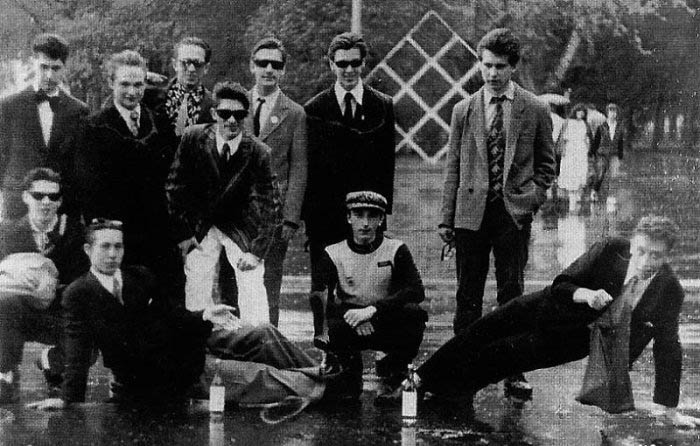

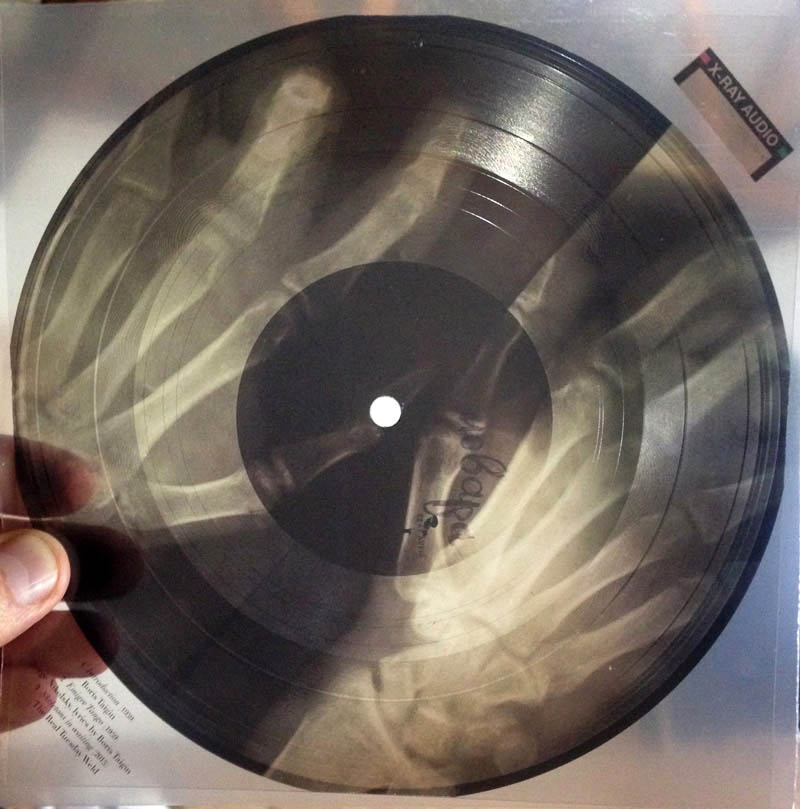
Since they could not go abroad, and had no fresh visual material, they conceived America from what they had from the war stock. They transformed the clothes brought home by the soldiers, and watched again and again the few American films they had access to. The key film – primarily because of its music – was Sun Valley Serenade (1941). This suggested them which clothes to wear, this was, for example, the source of the deer sweatshirts fetishism. The train illustrating the song Chattanooga Choo Choo gained a magic-symbolic significance: this let them fly from the pedestrian Soviet reality to the super-America of the imagination. And, of course, everyone listened to jazz. Since proper records were almost completely unavailable, they resorted to a procedure, which was also known to the young people in Hungary of the fifties (at least I have seen a scene like this in the film Nap utcai fiúk, “Boys of Sun Street”): they copied the music on used X-ray discs. This is why they called such discs jazz on bones (джаз на костях) or the skeleton of Granny. This morbid story was summarized just a couple of months ago by Stephen Coates’ richly illustrated X-Ray Audio: The Strange Story of Soviet Music on the Bone.

The introductory song of the short documentary is no jazz, but the famous Odessan gangster’s song Murka, about which we wrote in an earlier post

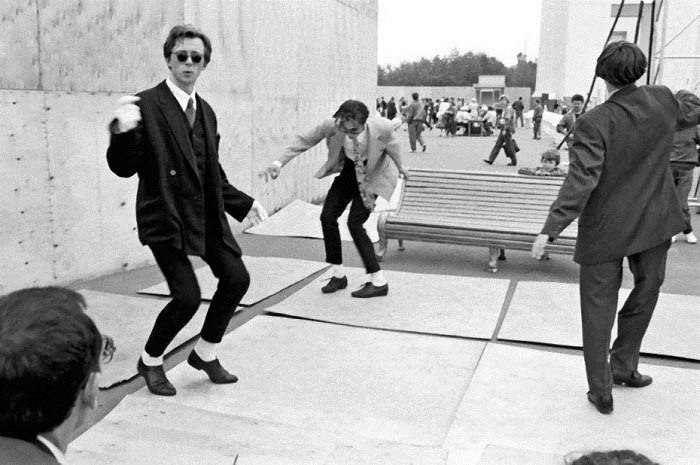
They developed a peculiar slang, whose basic words were mixed English-Russian terms. They called each other chuvak, which is a mosaic word for “one worshiping Amerikan high culture” (Человек Уважающий Высокую Американскую Культуру). At night they walked down the main street they called Broadway, that is, Moscow’s Gorky Street, went up to someone’s apartment, that is, “hata”, and there they danced in their own style. They developed three types of boogie-woogie: “atomic”, “Canadian” and “triple Hamburger” – it’s a pity I don’t know what they were like, only that Hamburger was the slow one.

There is no subculture without dealers catering for it, and so also in Moscow appeared the fartsovshchiks, who could provide for this special demand. They had good contacts, language skills, and an ability to see through police traps. They traded in ties (colorful silyotki), fashionable headgears, clothing, shoes, records, musical instruments. By the end of the sixties, the stilyagi were replaced by the hippies and other subcultures. However, the fartsovshchiki remained, just changed profile. In the Soviet shortage economy it was not difficult to sell products imported from the West, as anyone on scholarship, on job, or on a simple travel in the Soviet Union could experience it.

Interviews with former stilyagi and fartsovshchiki

Apart from parties and secret purchases, the stilyagi were mostly preoccupied with the war against the komsomolki specialized in confronting them. Even the term stilyaga was coined by a state-sponsored humorist, a certain Belyaev in the March 1949 issue of the satyric weekly Krokodil, from where it then spread. He, of course, talks in a quite negative sense about this funny figure, who is ridiculous, scruffy, ignorant of the basic rules of social life, and thus it is no wonder that the young Soviet people just laughs at him. As to the stilyagi, they called themselves statniki, belonging to the (United) States. Then, as usual, the term which had started its career as a mocking word, became the accepted name of the subculture, which was understood by everyone. The self-conscious female komsomolka, for example, could cast in the stilyaga’s teeth: Я не лягу под стилягу! (in a free translation: I don’t go to bed with a teddy boy!)
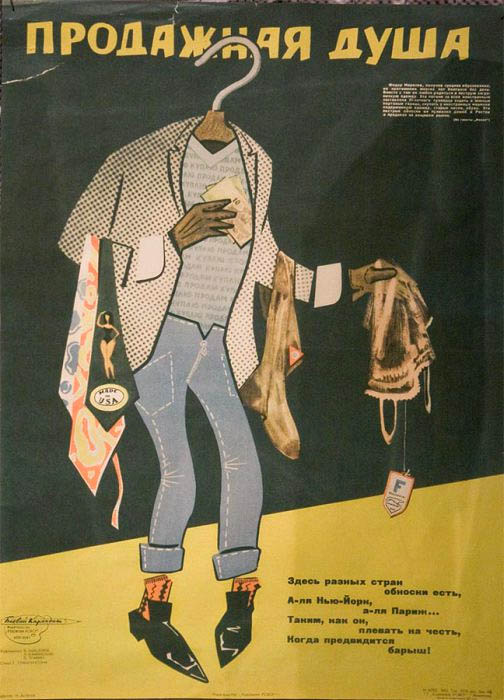
Soviet cartoon: The stilyaga is the agent of the West!
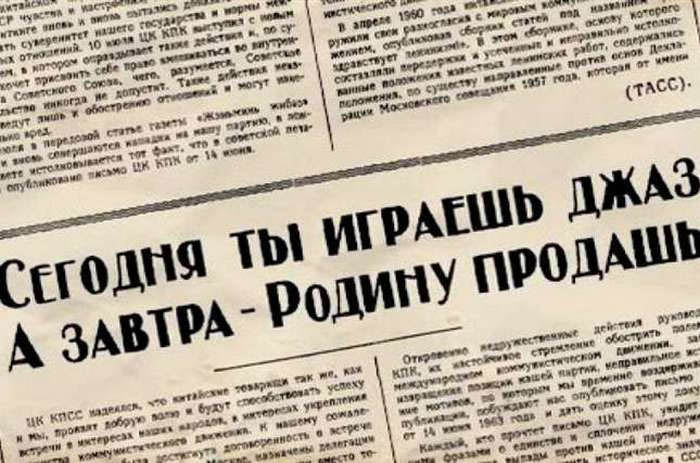
“Today you play jazz, tomorrow you betray the fatherland!”

This whole story could have lost in oblivion, had not been there Aleksey Kozlov, who in his autobiography of 2001 wrote about how he had become a saxophonist, how he founded his legendary jazz-rock band Arsenal, and how it all was linked to the story of the Moscow stilyagi. Then in 2008 partly based on Kozlov’s stories, and partly on his own imagination, Valery Todorovsky directed a film titled Stilyagi (Hipsters in the English release). All the details of the film are based on true events, but, due to a basic fraud, the whole cannot be considered an authentic document: the musical world of the film is taken from the golden era of Russian rock in the 80s. Well, it might be non-authentic, but this makes it really enjoyable, and this started the still longing stilyaga/teddy boy frenzy in Russia.

On 29 November we start the film club of río Wang with the film Stilyagi. In the club, Vadim Kemény presents every month a great Russian film from the production of the past few years, which is virtually unknown in the West. More details and registration on our Facebook site.
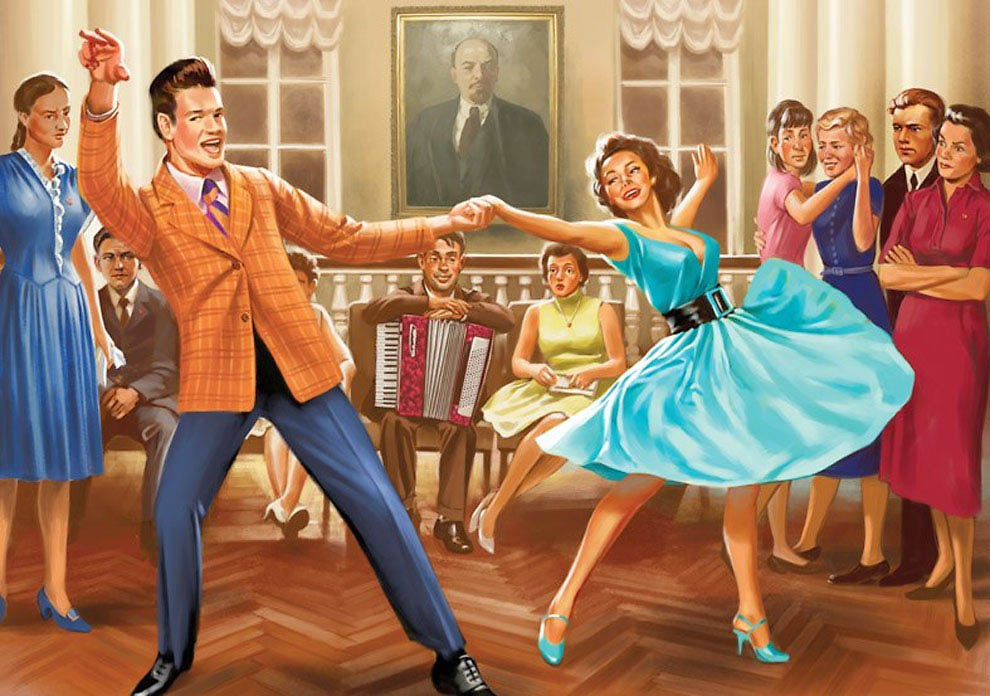
Valerij Barykin rajza
I wish you freedom


Thus begins the New Year’s greetings of the popular Russian photo blogger Ilya Varlamov. Of course, he immediately explains it, lest anyone misunderstands him:

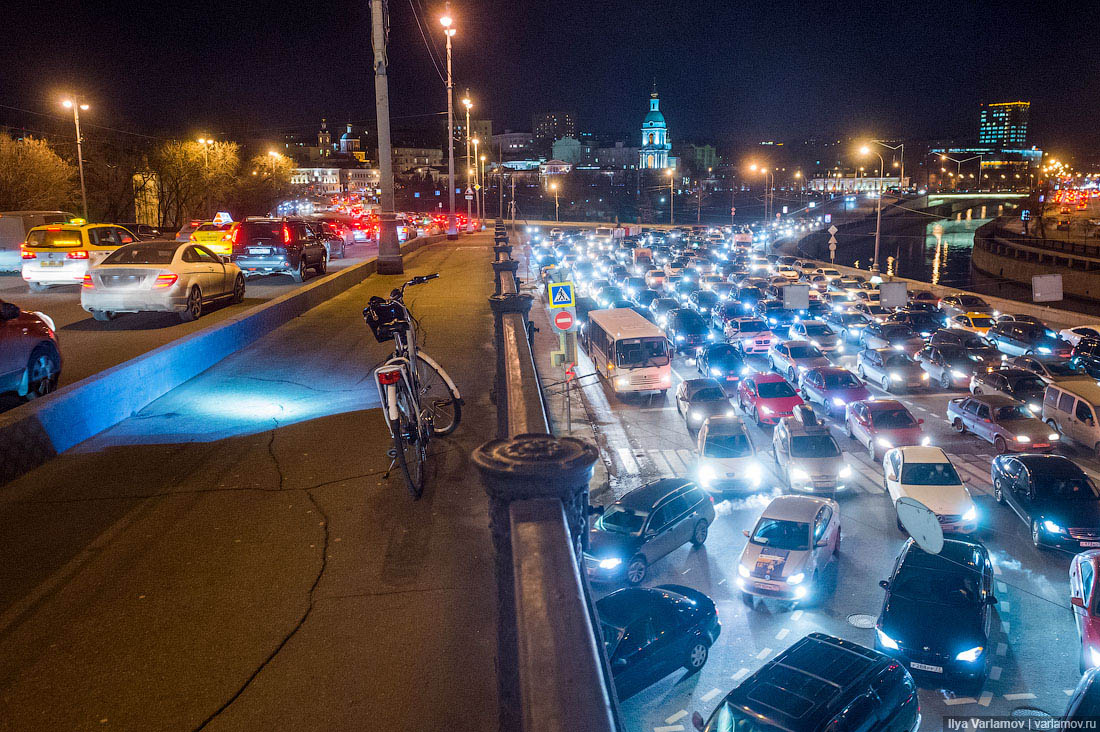
“The car is freedom. Without freedom, we do not go anywhere nowadays. In the new year I wish you all good and comfortable public transport, safe cycling infrastructure, wide and clean sidewalks, proper zebras and, of course, jam-free roads, where you can quickly and easily drive along by car. I wish you all freedom, convenience and safety in any city. This is not mere fantasy. This will certainly be so both in Moscow and in the other cities.”

Nevertheless, the pictures from the post, not devoid of overtones, portray how far removed the reality is for the time being from such ideal conditions. We are, however, captivated – especially in the wake of Boris Indrikov’s post, where the bicycle becomes a symbol of freedom – rather by the first picture, the lonely bicycle on the neglected, but deserted road with a boundless perspective, in the direction opposite to the mass of cars creeping along, or rather just stopped on the one-way road. To the metaphor, if you want, you can also add the fact that in the given situation the cyclist photographs the cars and the whole context, and not vice versa. This freedom I wish to you all in the new year.

svoboda svoboda svoboda svoboda svoboda svoboda svoboda svoboda svoboda svoboda

Back in the U.S.S.R.


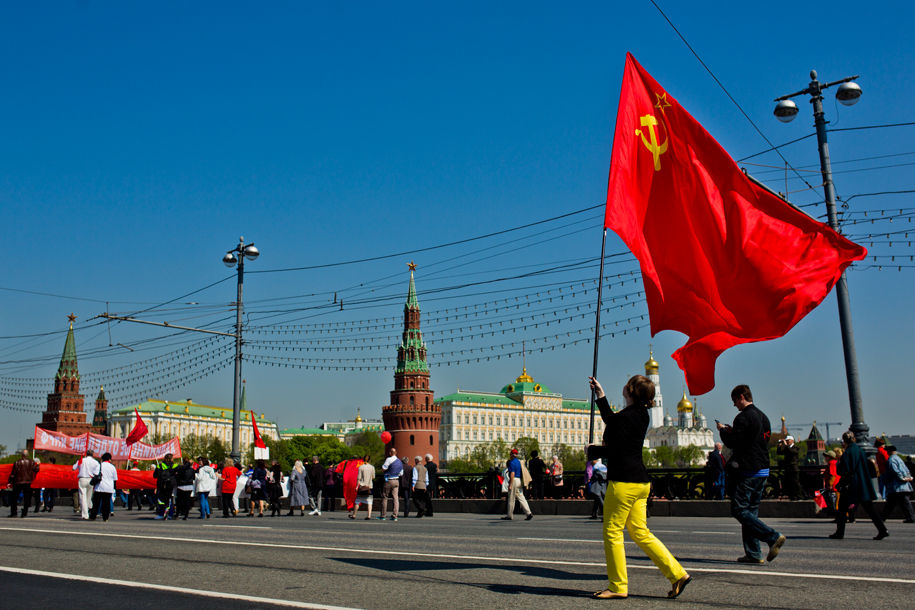
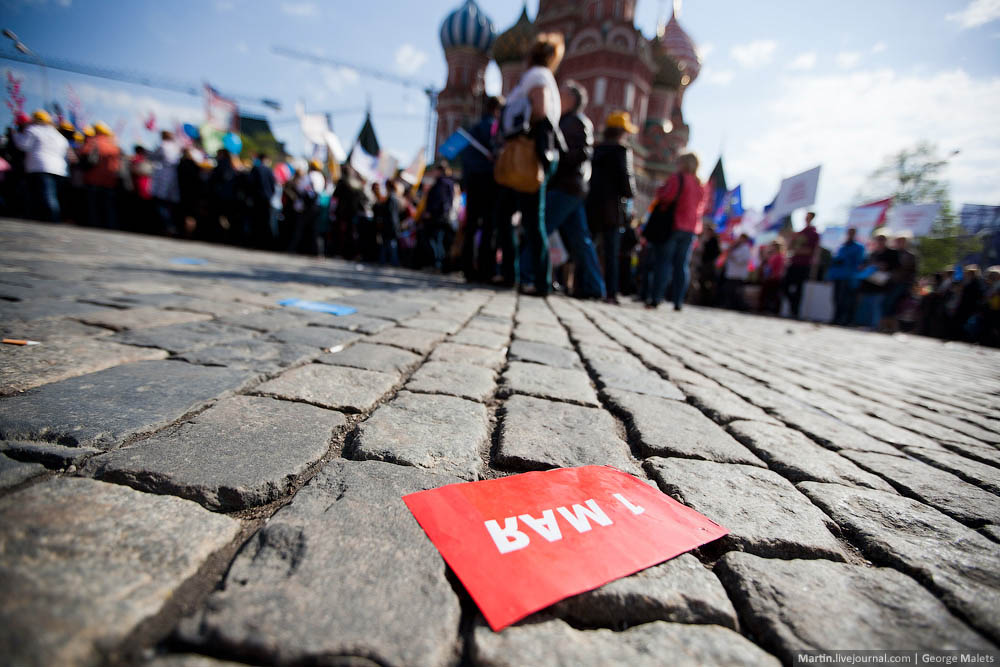
Yesterday, when I published the two remembrances of May Day, I could not yet know how much they would pave the way to this third one, inspired by late night news and blog posts from Russia. The traditional Soviet May Day, whose choreography was determined as a tribute to the people’s leaders and the condemnation of the imperialists, and the Nazi May Day of 1933, which was officially summoned by the federation of trade unions, but with apparent spontaneity and impressive dimensions, served to legitimize the regime, together offer the framework for interpretation of the May Day rally that was organized yesterday in Moscow, with almost a hundred thousand participants.

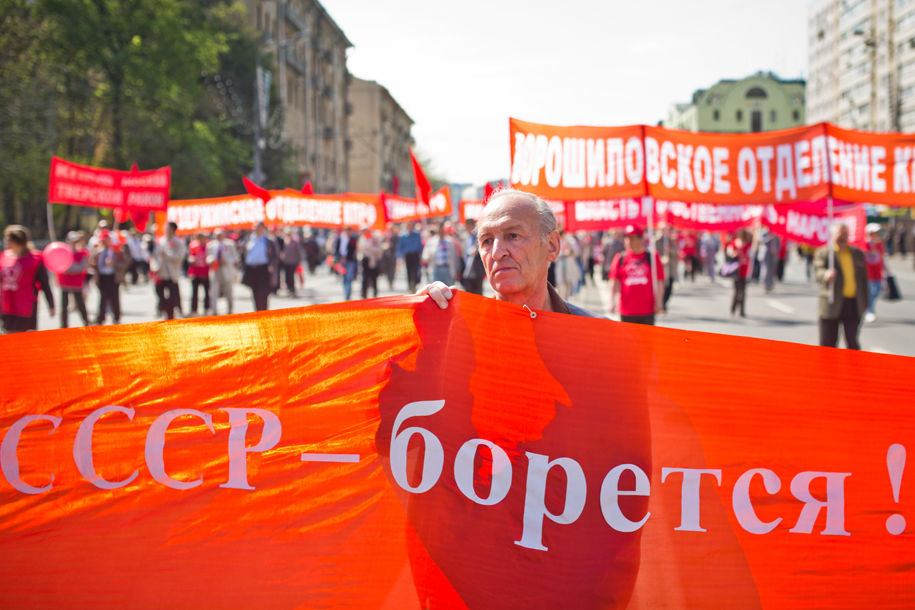
“The Soviet Union fights!”

May Day, the greatest feast of the Soviet Union, along with the military parades on the days of the Revolution and of the Victory, virtually ceased in Moscow since 1990. Some trade unions and old Communists organized picnics or small rallies here and there in the city, but a mass event of this size, especially one which marches through Red Square, like in the good old days, has not taken place since the fall of Communism, and the residents of Moscow have not even dreamed about it. That is, until it recently came to the federation of trade unions’ mind to organize this demonstration. It is wonderful how in such a short time they could do everything so strikingly well, obtain the legal permits, print propaganda matter, and of course organize seventy to a hundred thousand participants. But well, recently, on the occasion of the lightning-speed accession of the Crimea to Russia we have already seen how quickly such things can go when the Russian people support a case uniformly, giving heart and soul into it.

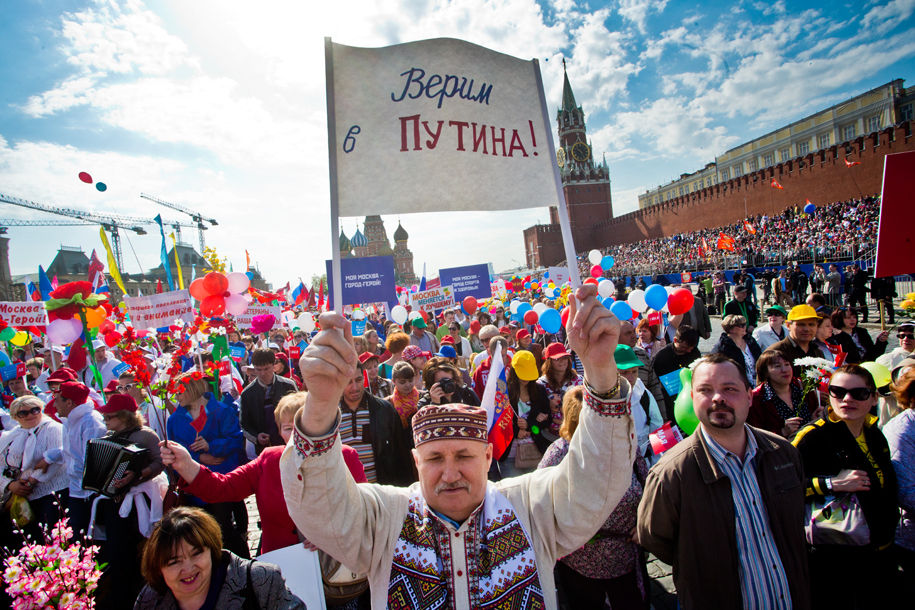
“We believe in Putin!”

may20141 may20141 may20141 may20141 may20141 may20141 may20141 may20141 may20141 may20141 may20141 may20141 may20141 may20141 may20141 may20141 may20141

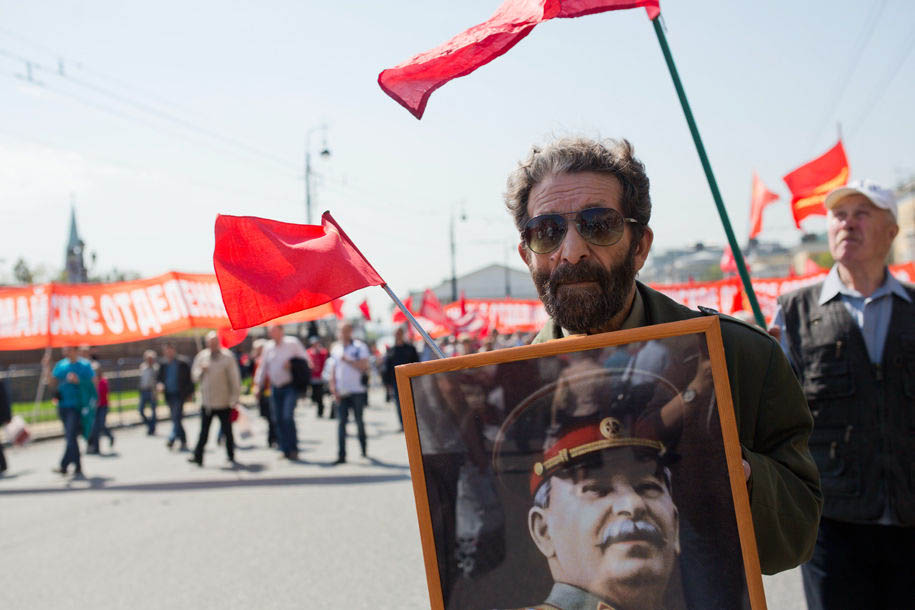
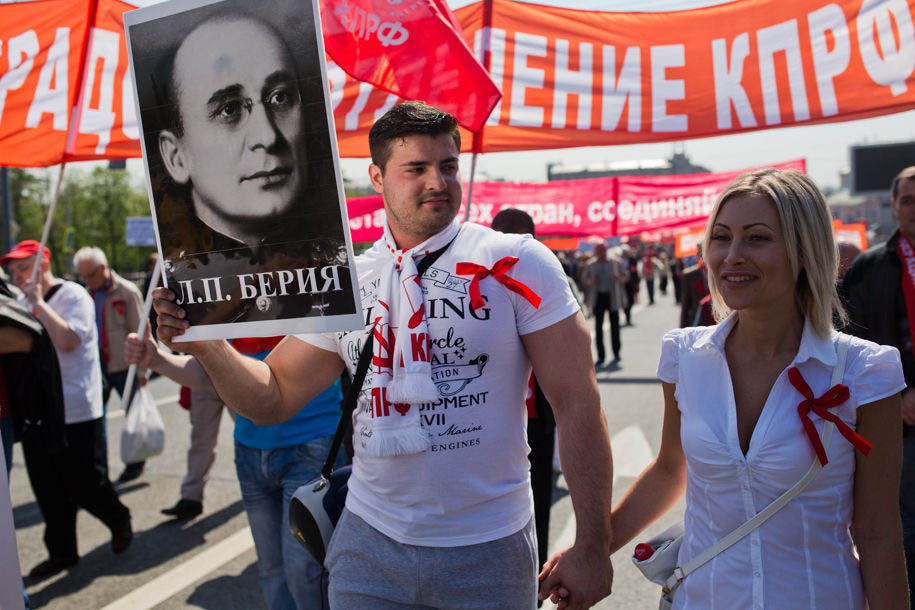
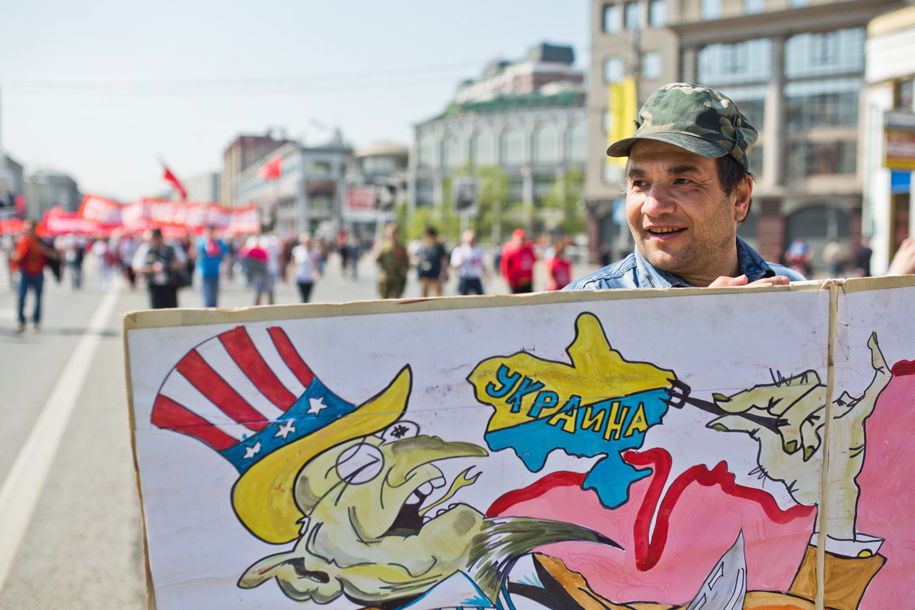
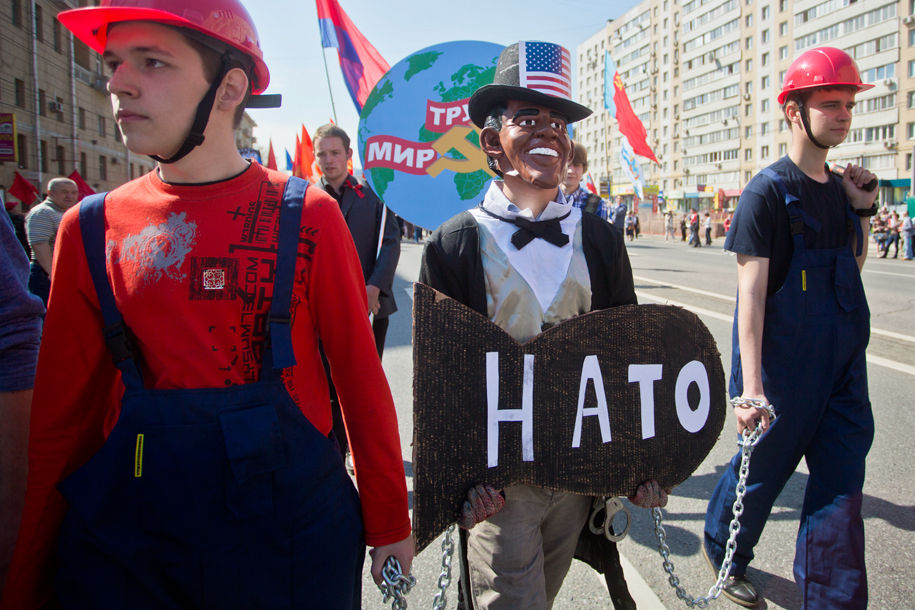
A seven-year old girl holds a red star-shaped balloon. Her mother proudly says to Novaya Gazeta: “I always wanted my kids experience this feeling I had in my childhood. After all, this was the greatest feast. This joy, this community, that we are all together, we are all Soviet people… And what I am seeing now, this is so, so much like it was…” And listening to the songs and the loudspeakers, and watching the marchers and their banners, it really looks as if the Soviet Union had been resuscitated, which in fact is not far from Putin’s intention. The event, officially organized by the federation of trade unions in honor of the working class is dominated by inscriptions glorifying former and present leaders – aside from Putin, Stalin, too, and even Beria –, praising the governing United Russia party, backing official policy, rejoicing at the recuperation of the Crimea, threatening the USA, NATO and Ukraine, as well as a large mass of the orange-black St. George ribbons, the symbols of victory.


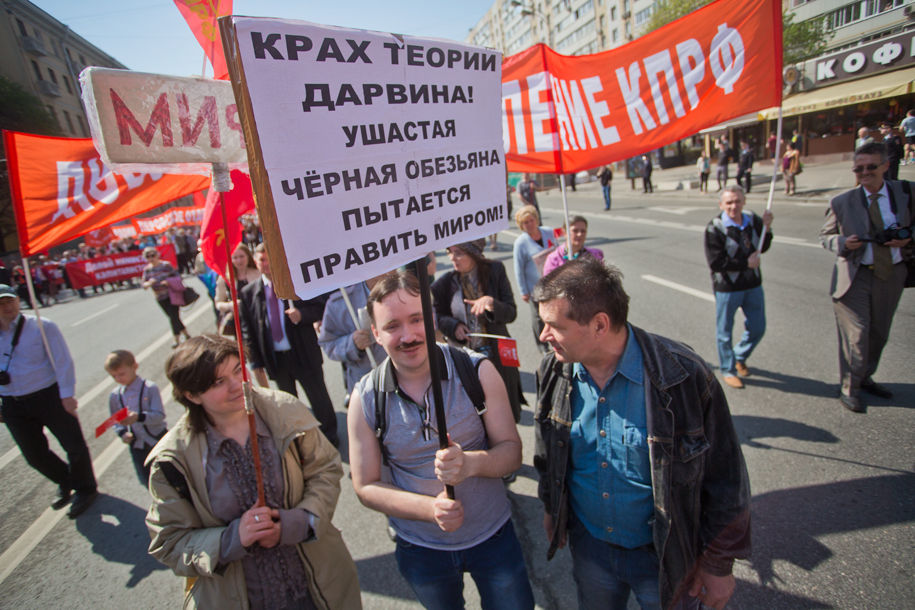
“The failure of Darwin’s theory! A large-eared black monkey wants to rule the world!”


How sharply the Russians are divided by the political situation is indicated by the 1204 comments in one single day posted in response to the pictures by photo blogger Georgy Malets. Independent polls show that 80% of the country agrees with Putin’s policies, and 73% feel happy, but on the internet the ratio between the pro- and anti-Putin camp is more balanced. The comments start with much mutual cursing, which draws from the dark side of the Russian language by way of a language textbook, and which is definitely not usual in Russian blogs. The people supporting with poker-face the President, proclaim the independence of the demonstration – “it was nice weather, so people came out for a walk”, “they support the leadership which finally serves the interests of the people” – while the opposition claims to know that people were sternly warned in their workplaces of the importance of participation in the rally, and point out the hypocrisy and political character of such an event, organized from above, and taken straight from the Soviet playbook. “More and more I think”, writes one of them, “that demonstration comes from demon and srat’ (to shit).”


may20142 may20142 may20142 may20142 may20142 may20142 may20142 may20142 may20142 may20142 may20142 may20142 may20142 may20142 may20142 may20142 may20142 may20142


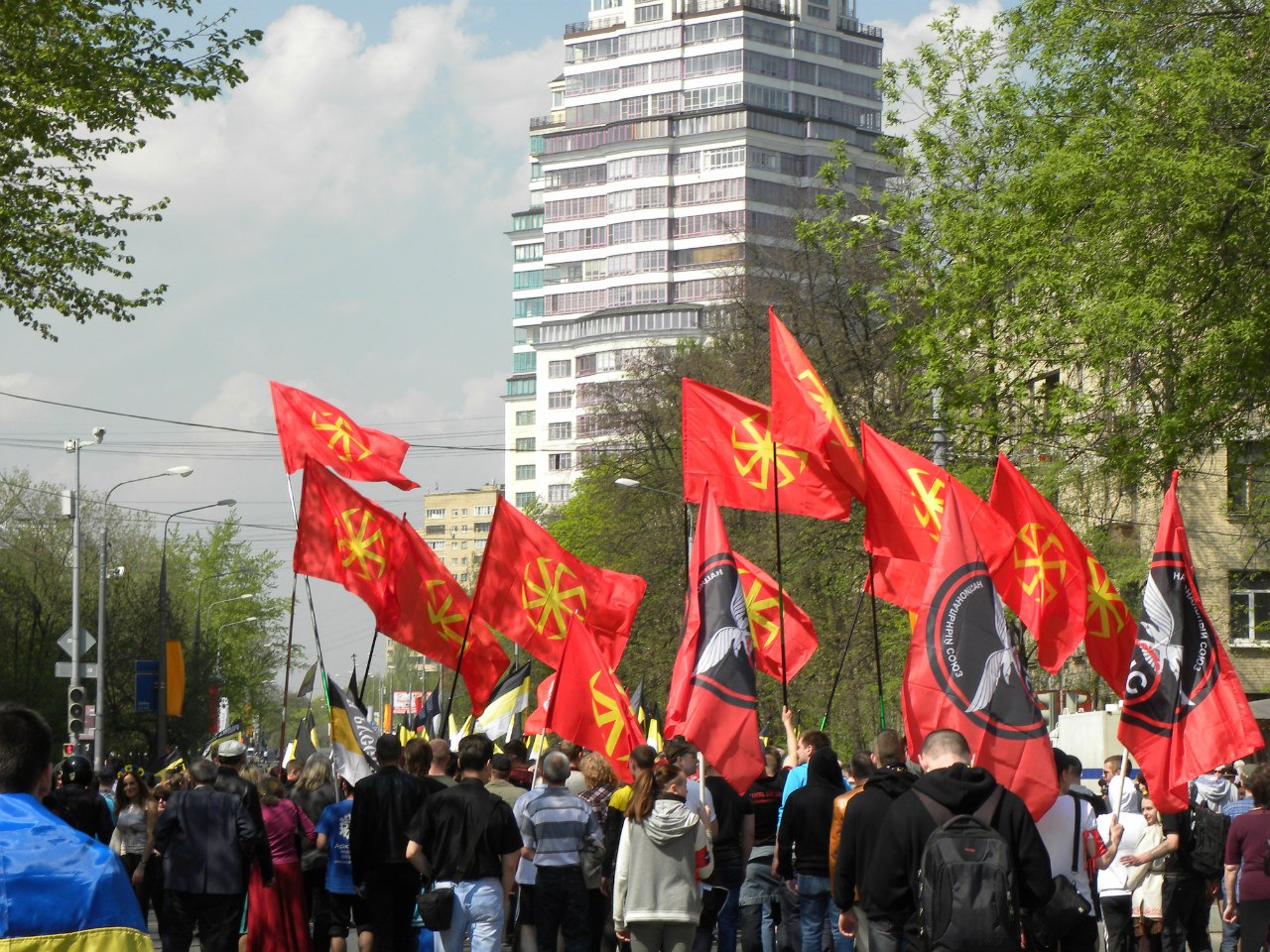
Finally, the parade was made more colorful by a number of nationalist groups, who, in the Soviet Union, would not have been allowed to go out on the street, let alone be near the parade. But, as we well know, when it is about the demonstration of unity and solidarity, all patriots are welcome.

“Faith, race, tradition!”

may20143 may20143 may20143 may20143 may20143 may20143 may20143 may20143 may20143 may20143 may20143 may20143 may20143 may20143 may20143 may20143


Even more Fascist elephants


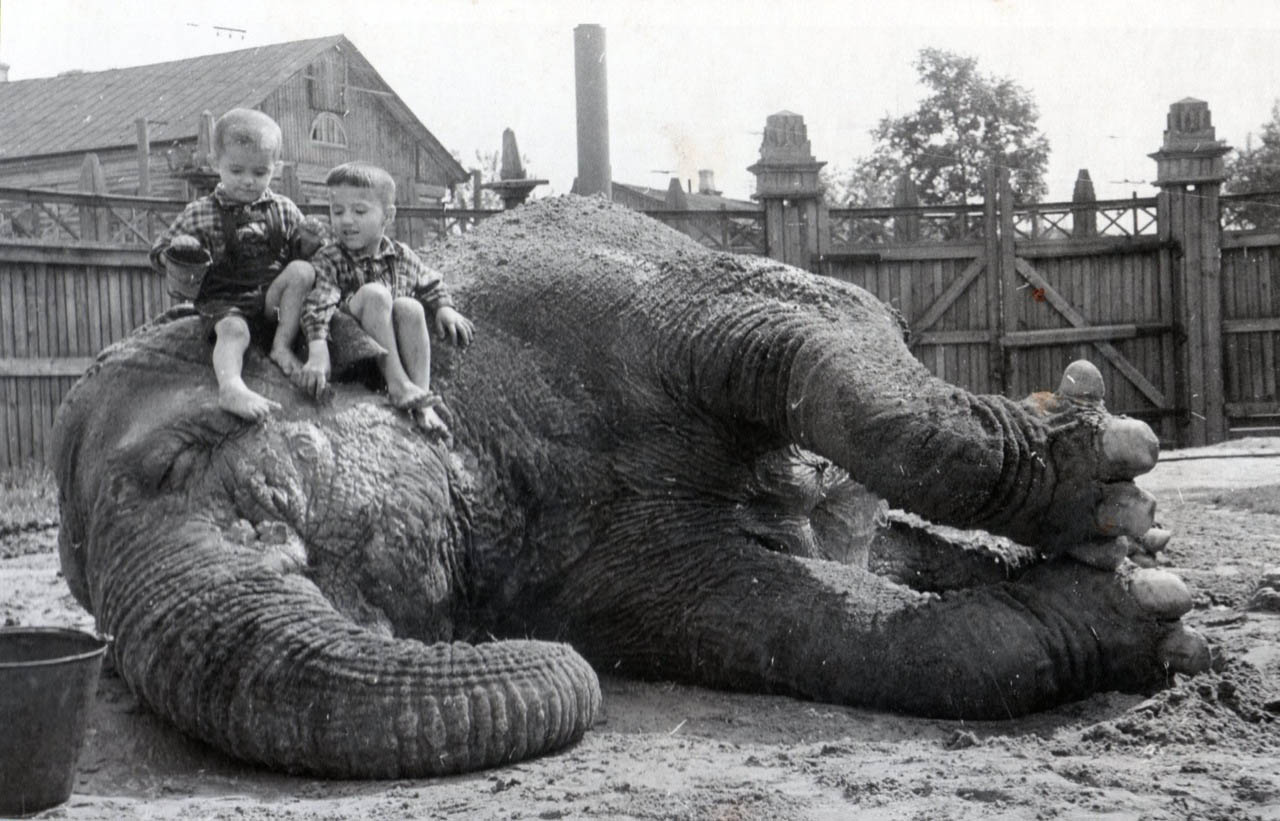
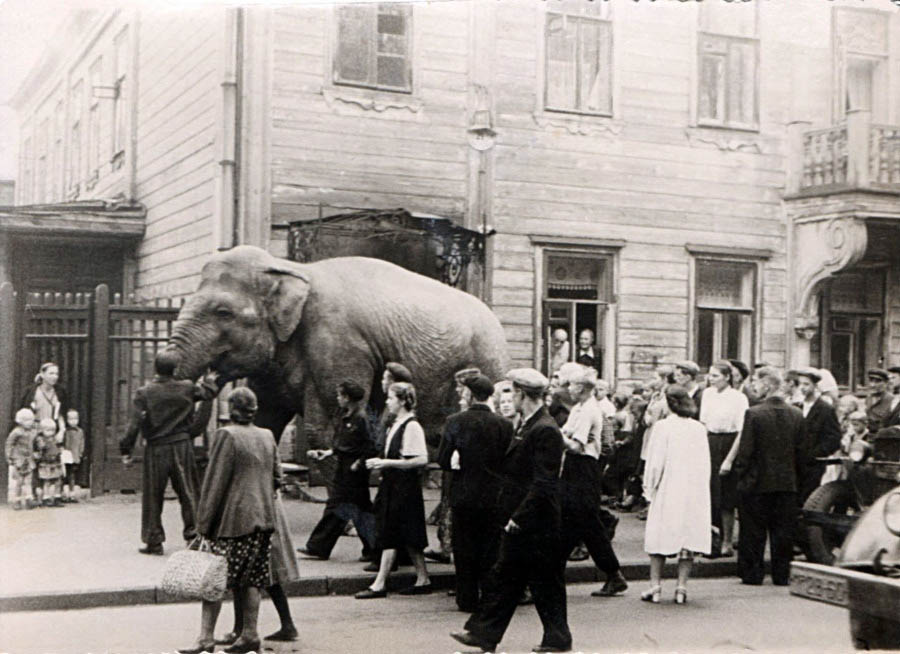
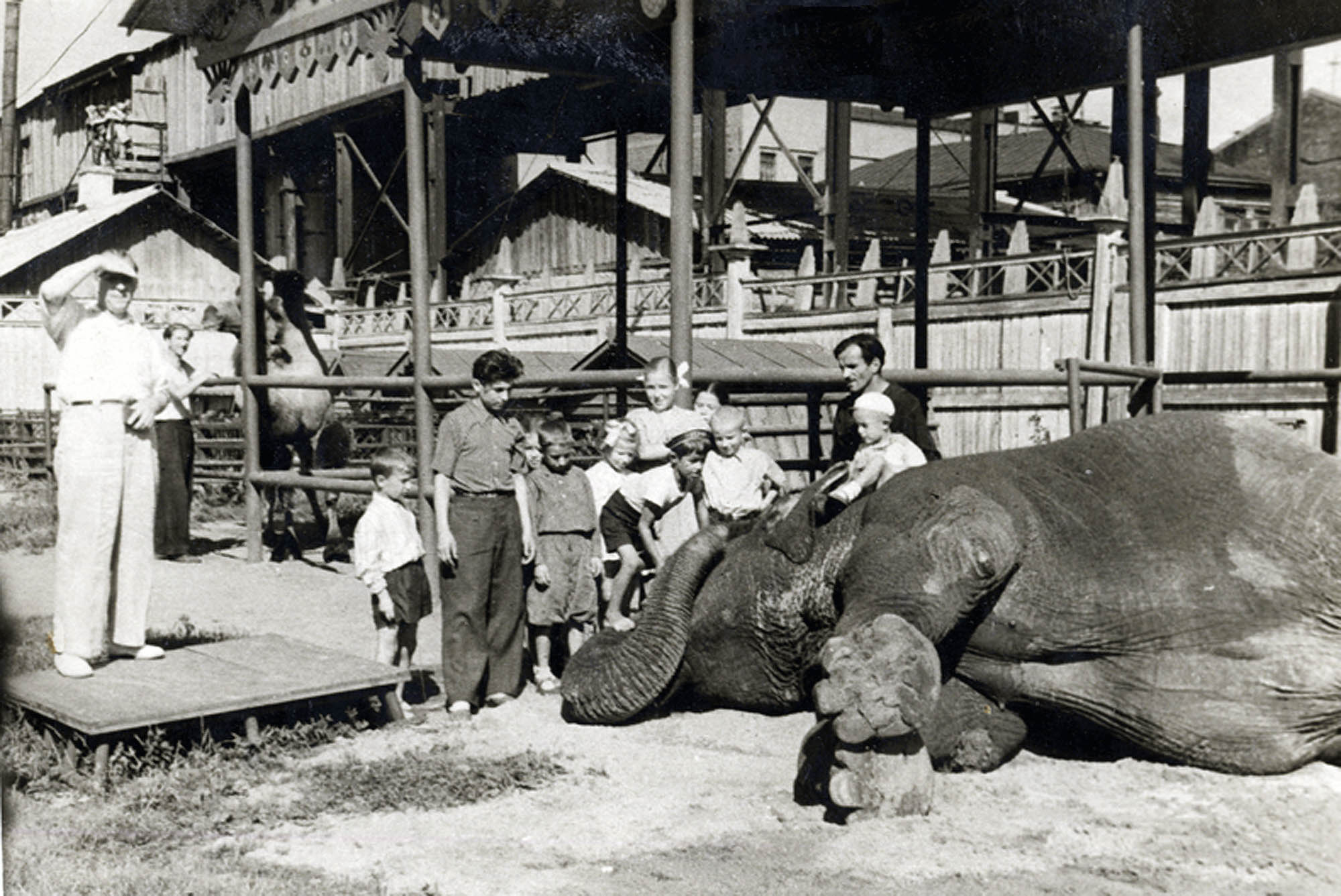
Do you still remember the German elephant, which in 1945 came to Moscow, to the Ugolok Durova as booty together with its caretaker, and which was recognized by the local street children as the last Fascist? Now, by courtesy of a Russian reader, two hundred and fifty new photos of it have been added to EtoRetro, the Russian social site for collecting old photos. These pictures show well, just like the story, how much the caretaker loved the animals entrusted to him, and how near he was to them. And, in this quantity, they also show how quickly common iconographic types are developed, even for such an unusual theme: an elephant with the curious crowd, a big elephant with a little child, and, of course, the archetype, the mahout on the animal’s neck, as was well known to everyone from the lithographic illustrations of the books on the marvels of the East.


elephantnew elephantnew elephantnew elephantnew elephantnew elephantnew elephantnew elephantnew elephantnew elephantnew elephantnew elephantnew elephantnew elephantnew elephantnew elephantnew


Waiting for you, comrade bird

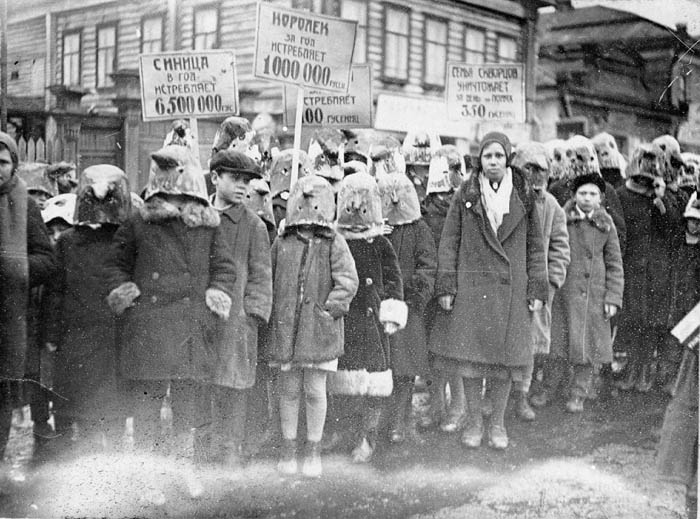
“The kinglet eats 1,000,000 worms a year” / “The titmouse 6,500,000 worms”

This picture should be actually not published today, but in May, when the lark sings and the nightingale replies, and the pioneers turn out to the fields in flower to celebrate the Bird Day. Yet its place is here after the previous post.

The celebration of the Bird Day began in the United States in 1894, in order to make students aware of the usefulness of the birds and the importance of protecting them. The celebration quickly spread around the world. The European countries signed an agreement in Paris in 1902 on the protection of useful birds, and within a couple of years most of them introduced by law the Bird Day in the curricula.

In Russia the Bird Day was organized again after the pre-war beginnings in 1927 by the great biologist and nature conservationist Nikolai Dergunov, suitably on the Sparrow Hill in Moscow, where he set up nesting places for the birds. The event was also attended by Mayakovsky, whose dacha was nearby. On this occasion he composed the poem Waiting for you, comrade bird, which has since become the compulsory repertoire piece of the Bird Day until the late 1970s, when the celebration silently died out of the Soviet curriculum.

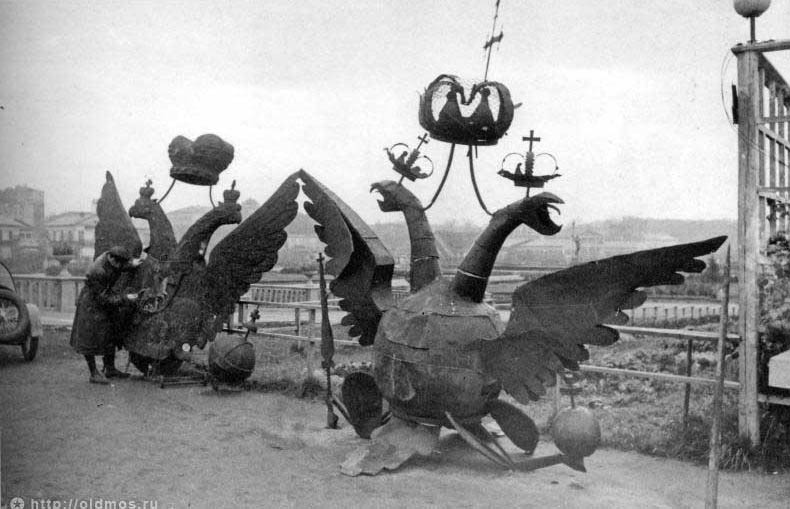
Removal of some not useful birds from the Kremlin, 1935

МЫ ВАС ЖДЕМ, ТОВАРИЩ ПТИЦА,
ОТЧЕГО ВАМ НЕ ЛЕТИТСЯ?

Несется клич
      со всех концов,
несется клич
      во все концы:
– Весна пришла!
      Даешь скворцов.
Добро пожаловать, скворцы! –

В самом лучшем месте
самой лучшей рощи
на ветке
      поразвесистей
готова жилплощадь.
И маленькая птица
с большим аппетитцем.

Готовы
      для кормежки
и зерна
      и мошки.
Из-за моря,
      из-за леса
не летят
      скворцы,
            пока
пионеры
      сами лезут
на березины бока.

Один
      с трубою на носу
уселся
      аж на самый сук.
– Вспорхнуть бы
      и навстречу
с приветственною речью. –
Одна заминка:
без крылышек спинка.

Грохочет гром
      от труб ребят,
от барабана шалого.
Ревут,
      кричат,
            пищат,
                  трубят.
– Скворцы,
      добро пожаловать! –

Бьют барабаны бешеней.
Скворцы
      погоды вешней
заждались за лесами, –
и в жданьи безутешном
ребята
      по скворешням
расположились сами.

Слетит
      скворец
            под сень листов,
сказать придется:
            – Нет местов! –

Хочу,
      чтоб этот клич
            гудел
над прочими кличами:
– Товарищ,
      пионерских дел
не забывай
      за птичьими.
WAITING FOR YOU, COMRADE BIRD,
WHY DON’T YOU FLY?

A cry is flying
      from every side,
a cry is flying
      to everywhere:
– Spring has come!
      With starlings!
Welcome, starlings! –

On the best place
of the best tree
all along
      the branches
the flat is ready.
Little birds
with great appetite.

They are ready
      to devour
seeds and
      flies.
From over the
      sea and forest
the starlings
      won’t fly
            until
the pioneers
      don’t climb to
the peak of the birch.

One of them,
      with a pipe on the nose
has sat down
      at the end of the branch.
– I would fly off
      to encounter them
with a welcoming speech. –
There’s just one hitch:
its hard to fly without wings.

Thunder rumbles
      from children’s pipes,
from crazy drums.
Roaring,
      shouting,
            beeping,
                  hooting.
– Starlings,
      welcome, starlings! –

Beating the drums in race.
The starlings who
      over the forest
waited for winter to pass –
now cannot have a rest:
the children
      themselves covered
the branches of the trees.

Flies
      the starling
            under the leaves,
and it returns:
            – Every place is full! –

I want
      this cry
            to outvoice
every other cry:
– Comrade,
      let the birds
not make you forget
      that you’re a pioneer.

Selecting a location for the statue of Mayakovsky, 1956

But to have also something current for today, here I include the archive photos of some further parades from the period. And those who want to know how they celebrated this day exactly 75 years ago, should check back to our respective report.


In the old chocolate factory


On full screen
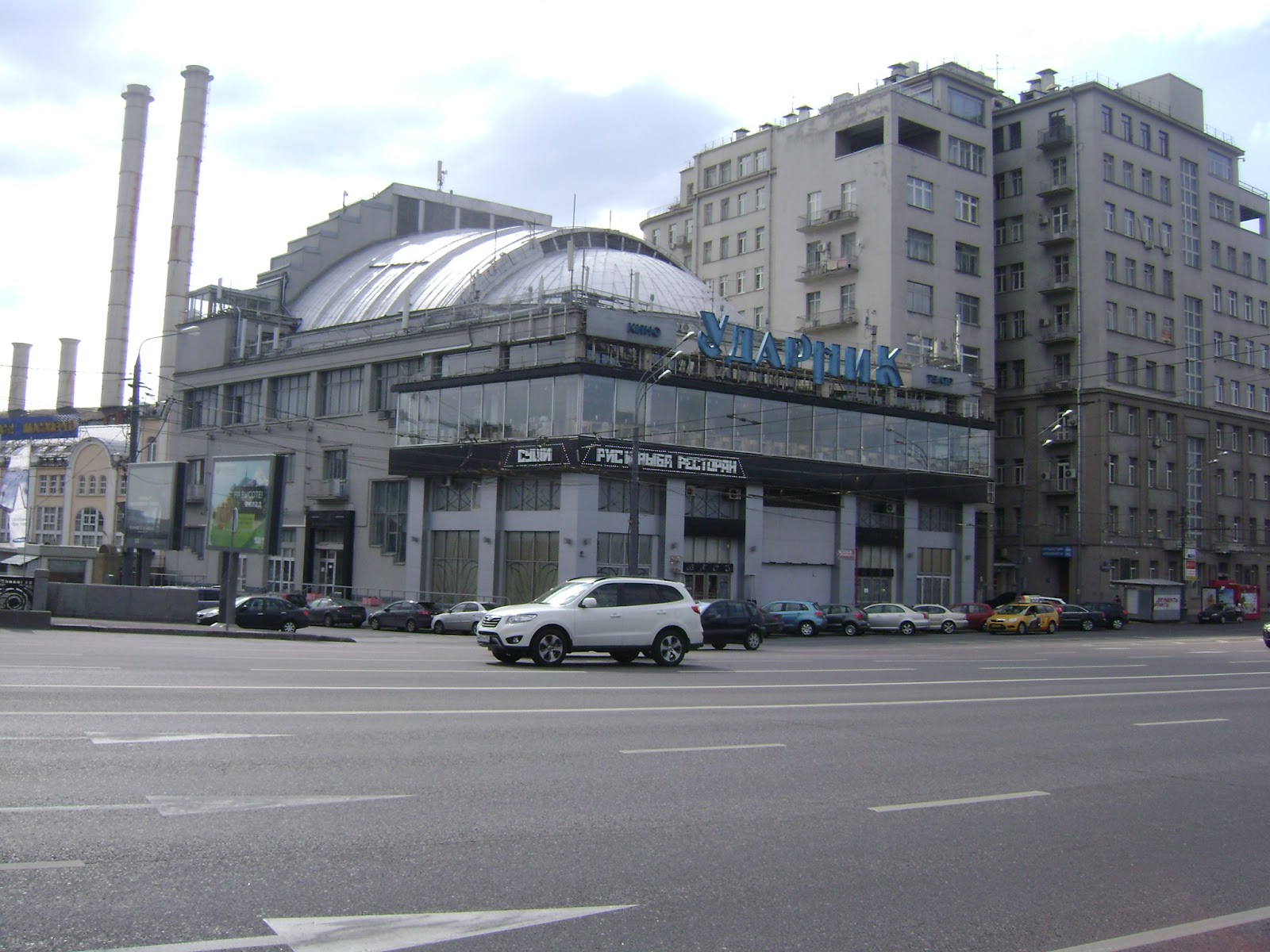
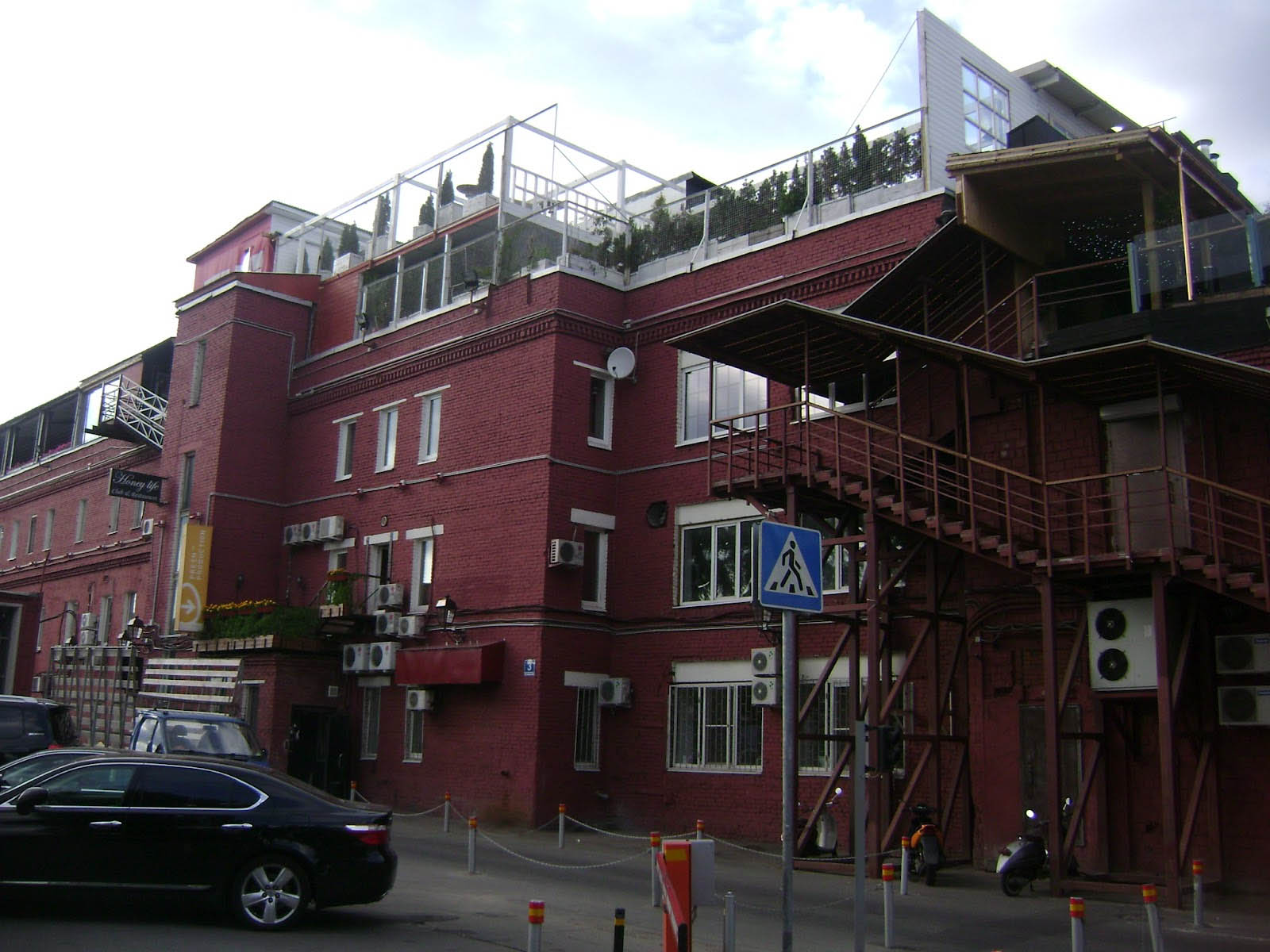
On Studiolum’s advice I went to the museum quarter established in the Krasny Oktyabr chocolate factory in Moscow. This complex was built in the center of the city, in the western corner of an artificial island. The 19th-century German-born chocolate industrialist Einem (see here, here and here) was the owner of everything here, which was then duly confiscated at the beginning of the Soviet power. I arrive at the island from Zamoskvorechye, through the bridge over the Drainage Channel (vodootvodnij kanal), and the first thing hits my eyes is the huge block of the Udarnik (Shock-worker) movie. Soviet style, lightly seasoned with art nouveau, not that bad. Next to it, the residence block of the high-rank party functionaries, the Dom na naberezhnoy, House on the Quay, as Trifonov called it. Then I pulled my tired legs forward to the Bolotnaya naberezhnaya, where I caught sight of the factory district built of the characteristic red Russian bricks. I go ahead uncertainly, I am afraid that a chocolate-glazed mastyer would pop up from the old days and would bawl at me that the creams are over… But then I slowly feel the taste, I look surprised at the transformation of each part of the factory complex: a small gallery here, a photo studio there, cafés, exhibition halls, design centers, and even a boxing hall. Well-dressed people get out of modern cars, the members of the new Russian upper middle class, already grown up after the Soviet era.


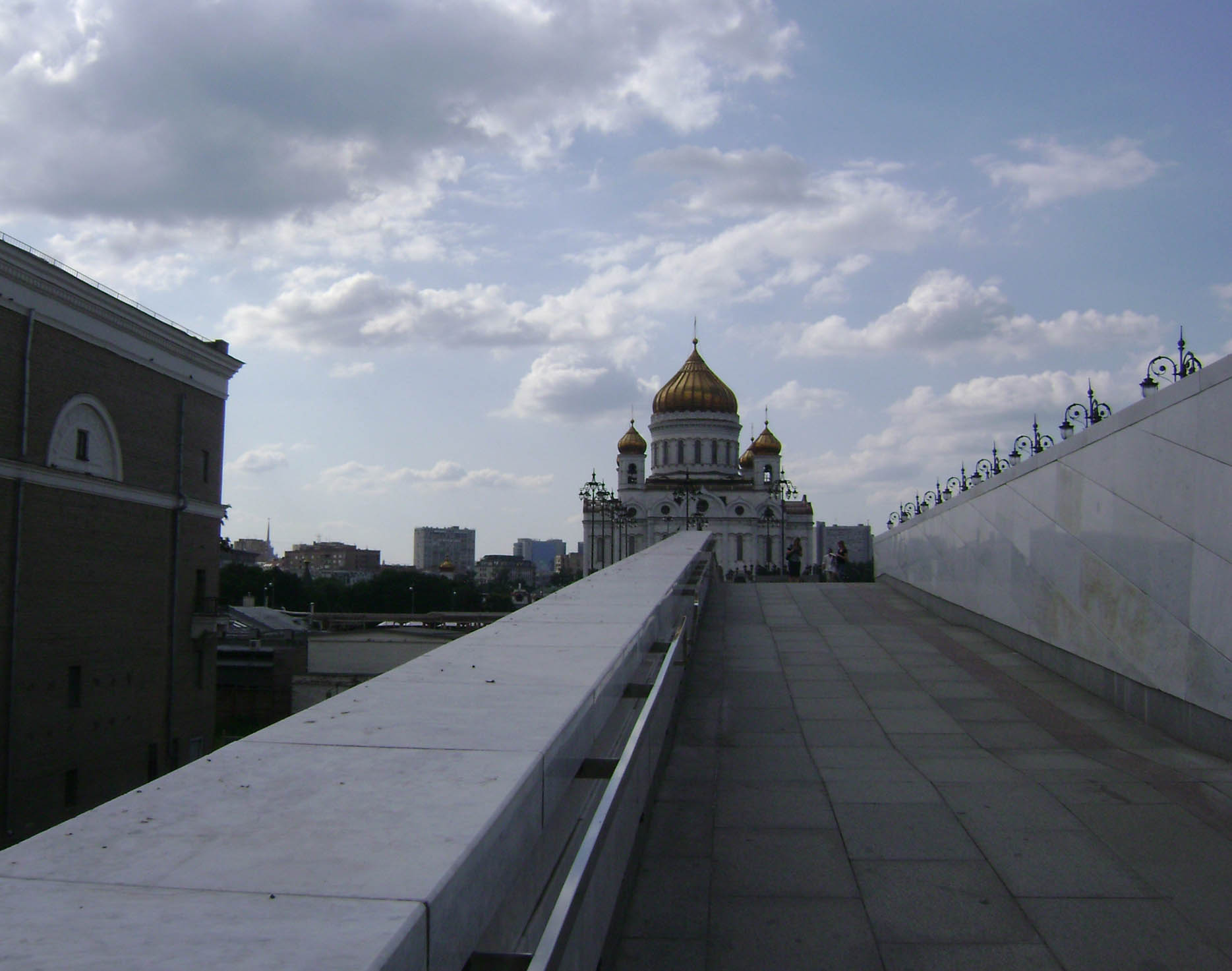
On the other side of the river, Christ the Savior.


In one of the huge factory halls I have seen an exciting poster exhibition.


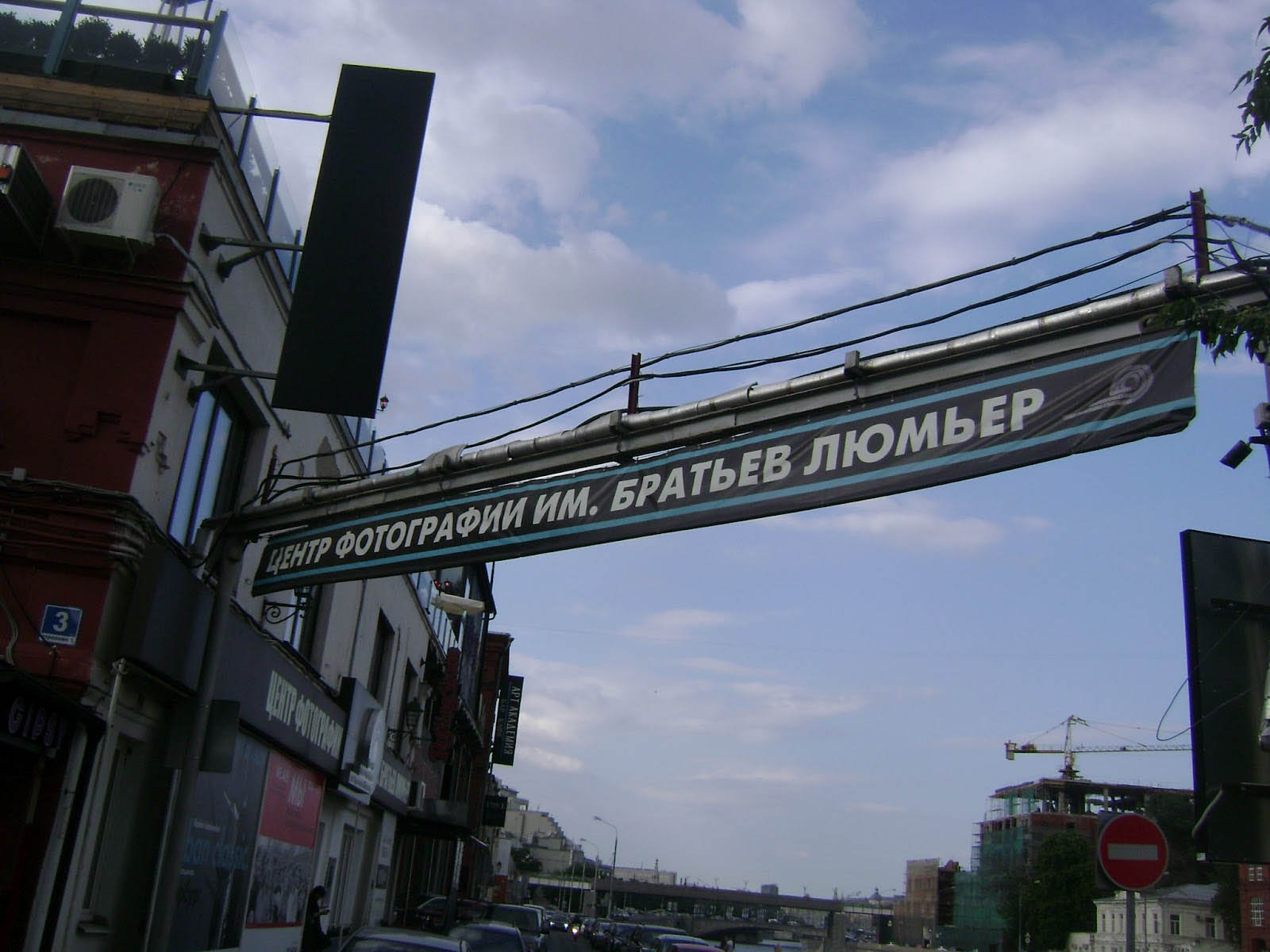
In the Lumière Brothers photo museum there was an exhibition presenting daily life in the Soviet era, after which I can say with safety that Russia lives more at peace with its recent past than Hungary.


On the roof terrace hyper-modern restaurants are waiting for the golden youth. The prices? They bite, as the Russians say, but how!


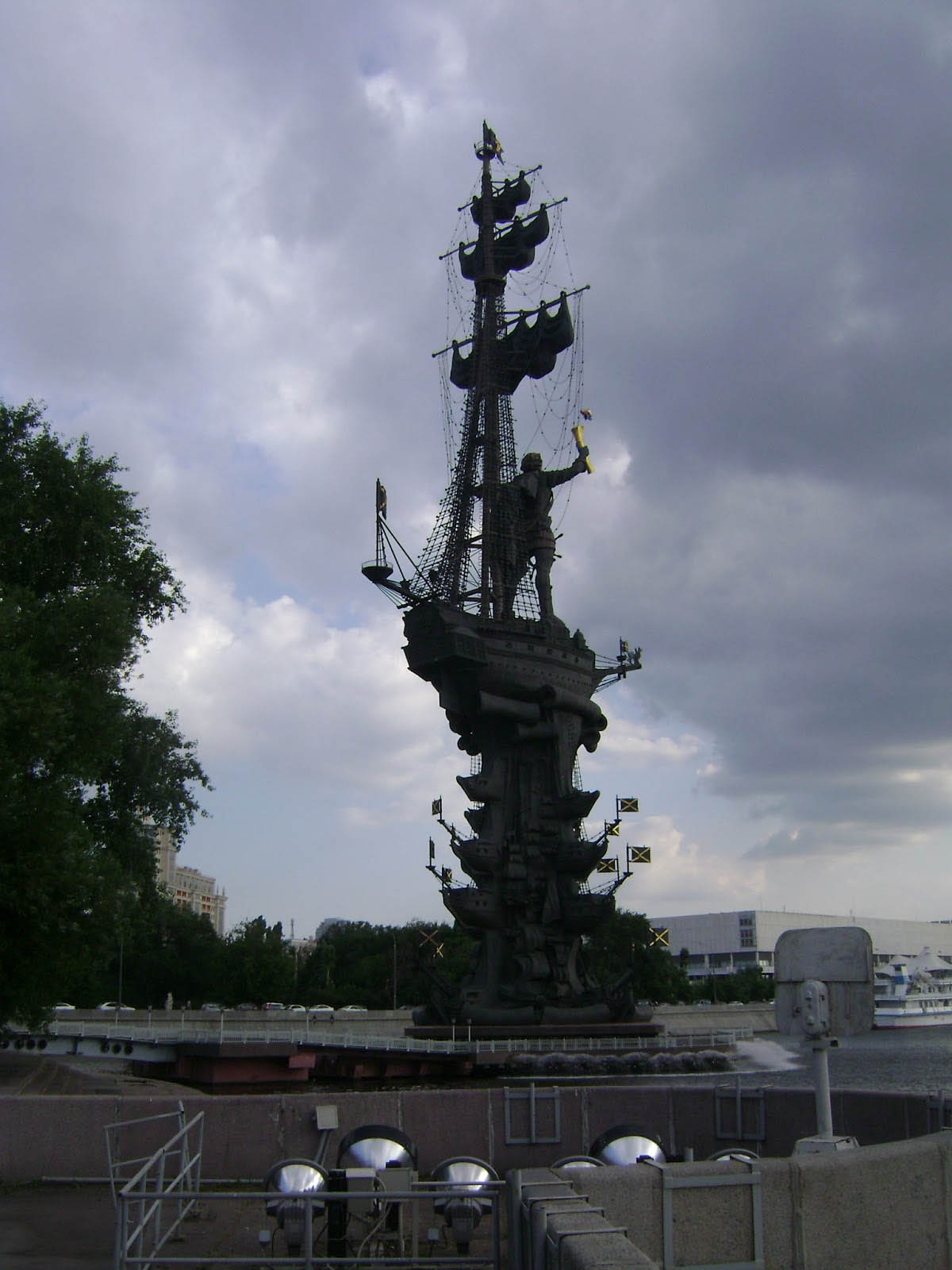
Then I somehow arrive at the Bersenevskaya naberezhnaya. Here I say goodbye to the Red October and the – really great – Peter, who turns his back to me. Previously the statue of Columbus stood here, which was replaced for the reform tsar by Zurab Tsereteli. And I continue towards the Patriarshy bridge, named so in memory of Patriarch Alexy II, who passed away in 2008. This leads over to the colossal Christ the Savior Cathedral.