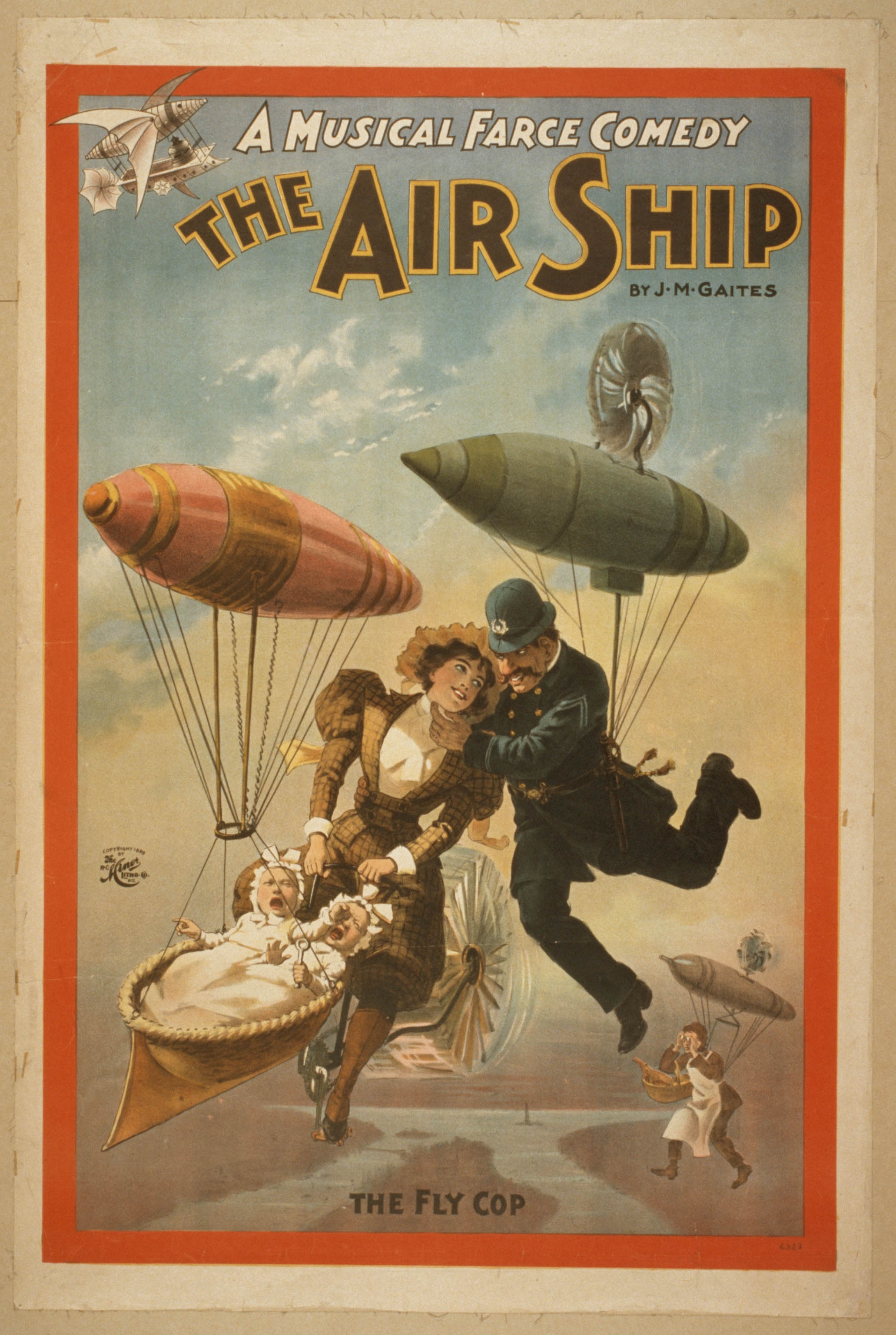
 The airship. A musical comedy, New York, 1898
 We have already seen
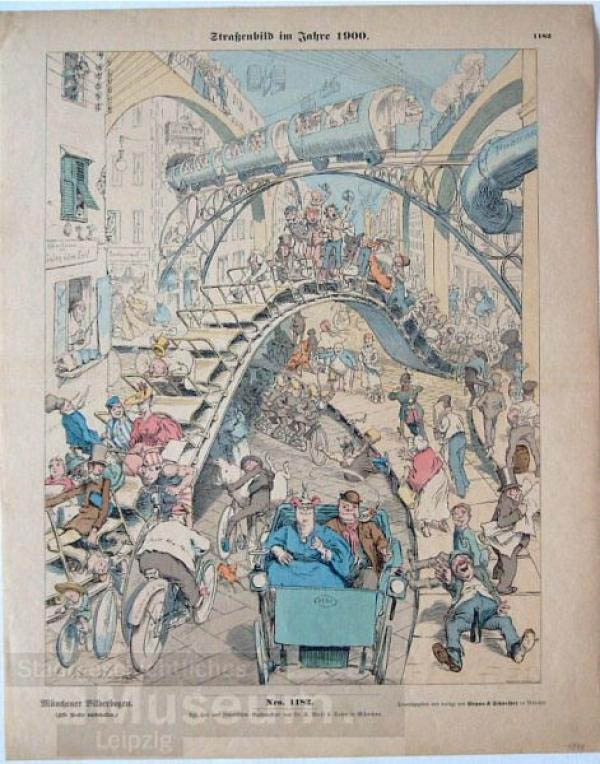
 that late 19th-century publishers, inspired by the dizzying technical development, competed with each other to present the beautiful new future in postcards, ads and magazines. Resourceful entrepreneurs, like Károly Divald and his Austrian, German or American colleagues, published entire series with views of a hundred years later from all the cities of their countries, so that it could be tangibly felt even in the smallest places: yes, this dazzling future, the crazily racing bicycles, the automobile, the tram, the funicular railway and the zeppelin will arrive exactly this way onto their small town’s main streets as well.
Mallorca had no Károly Divald to produce a postcard with a view of Palma one century later. However, she had her Mario Verdaguer who, in his essay collection
La ciudad desvanecida, “The vanished city”, published in 1953 at the twilight of his life, beautifully and sensitively evoked how this dazzling future arrived in the first years of the century on the main street of Palma, which at that time was also a little town.
 Up to the main street in the port of Palma from the La Riba lighthouse, at the turn of the century
Mario Verdaguer (1885-1963) was born in Menorca, but he spent his youth in Palma. He studied law in Barcelona, and he became involved as a journalist and a translator of Thomas Mann in the lively intellectual life of pre-war Barcelona. The civil war and the subsequent repression broke his career just like that of many others. He returned to the island, where he worked for local newspapers until his death. Already before the war he wrote two books on Mallorca –
La isla de oro, “The golden island”, and
Un verano en Mallorca, “A summer in Mallorca” –, but it is the work he did as an old man,
The vanished city, with which he definitely wrote himself into the memory of the city. This is a book that is not given to every city. It is a rare occurrence if once a while someone is able to so carefully and sensitively capture the essence of a city, like Gyula Krúdy, Iván Mándy or Endre Lábass did in Budapest (and we would be extremely curious to know who were the ones in your city), and to present the city with her own portrait. “If there is a book that talks about the eternal femininity of a city”, writes
José Carlos Llop, “then this is it, the book of Mario Verdaguer, one of the most sensitive, brilliant and sophisticated spirits who has ever lived in our city.”
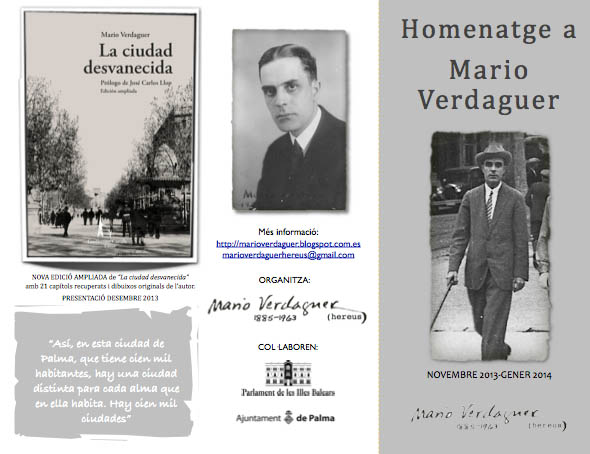
 Invitation to the premiere of the new edition of La ciudad desvanecida, 16 Dec 2013.
“So, in this city of Palma, which counts one hundred thousand souls, a distinct
city falls on each soul. This is one hundred thousand cities altogether.”
Verdaguer’s book, although it was originally written in Spanish, was added to the bookshelf of every Palma family in the Catalan translation of another sensitive Mallorcan author, Nina Moll. The original Spanish text was published again just now, on the sixtieth anniversary of its appearance, completed with Verdaguer’s other writings on the city. The
premiere of the book was a few weeks ago, and we have just received the first copy. The few chapters we will publish from it in the next days are the first translations ever made of it apart from the two languages of Mallorca.
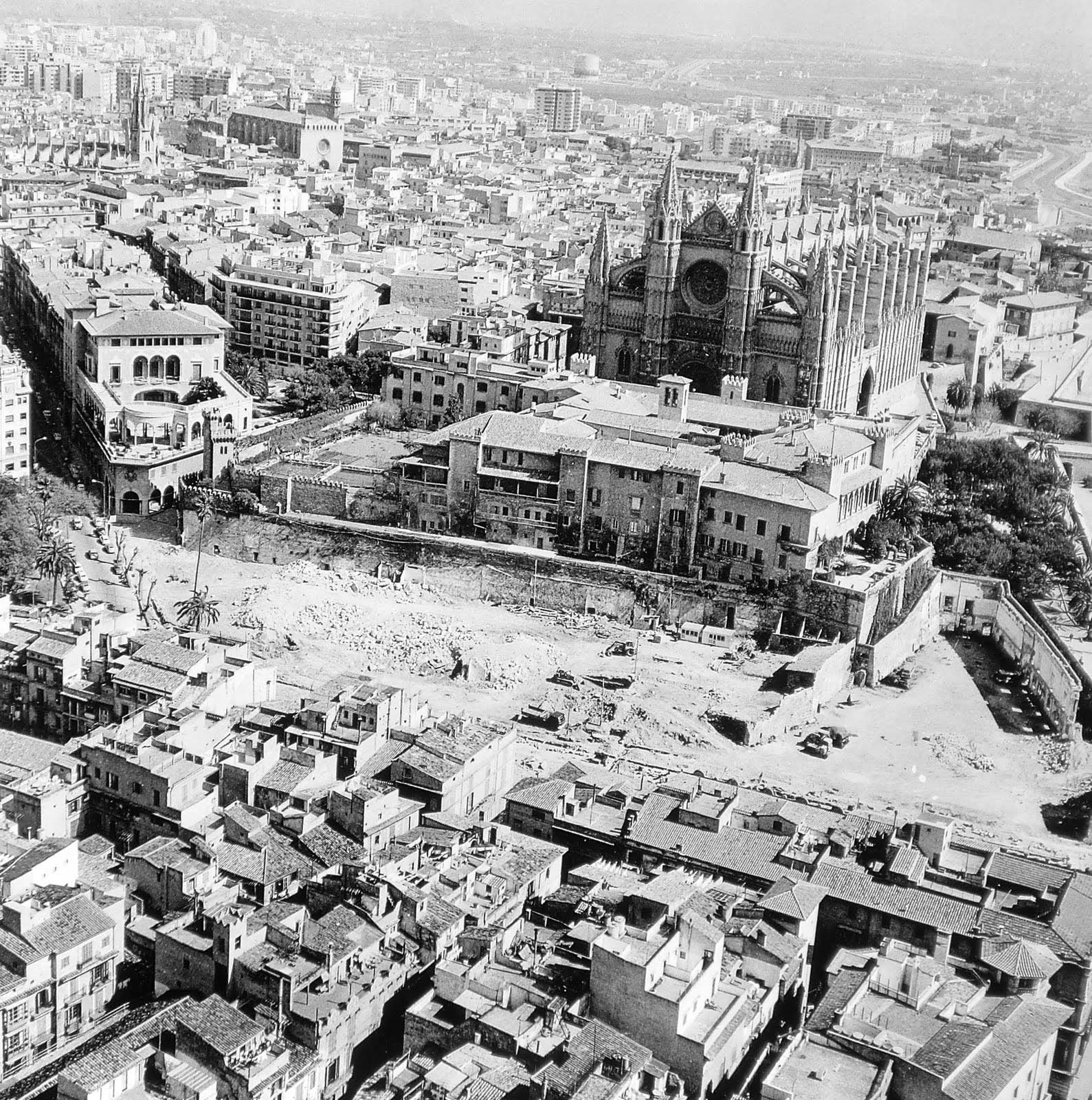
 March 1968. The cathedral of Mallorca, in front of it the Almudaina, the former palace
of the Arab caliphs, and in front of it the place of the recently demolished quarter,
which hosted the Hotel Alhambra, the Teatro Lírico, and Gaspar’s velodrome.
We will write about all these later. In their place you can now visit
the King’s Garden. Foto Archivo Josep Planas i Montanyà.

 The velodrome of Gaspar
Behind this old wooden theater, the Teatro Lírico, was the velodrome of Gaspar, who was the first to ride a velocipede in all Mallorca.
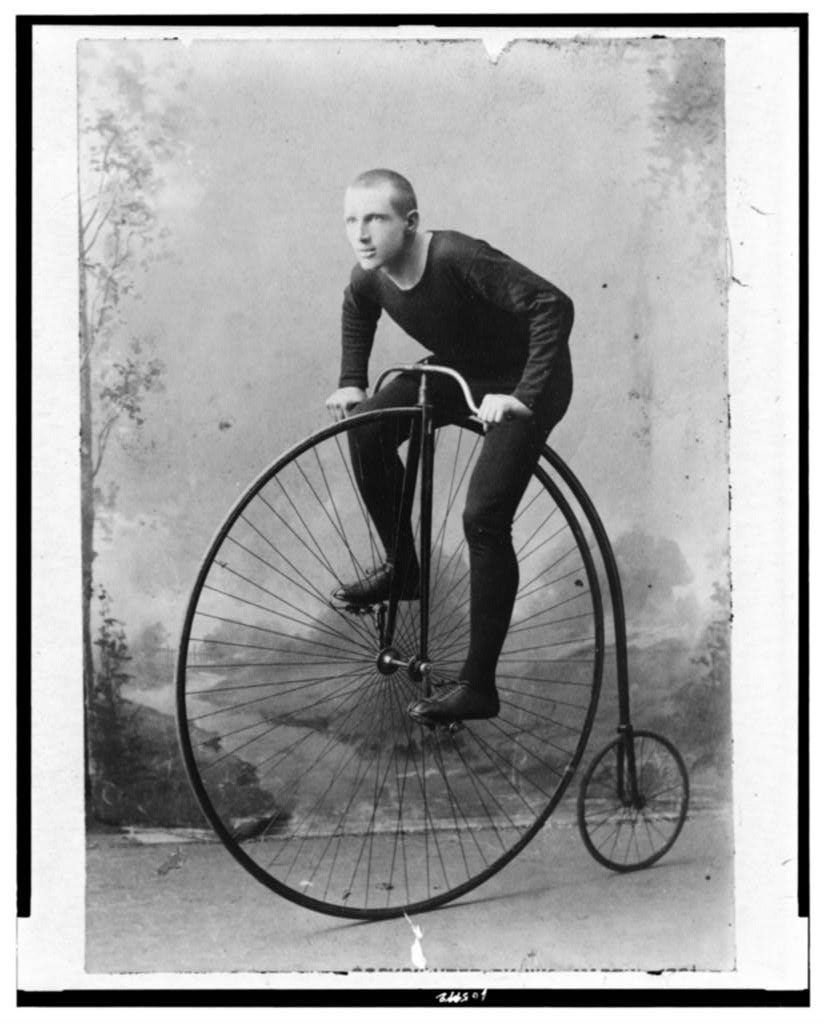
Señor Gaspar brought from Barcelona the great novelty of the velocipede, and he appeared in the afternoons on the Passage of the Borne, mounted on his machine. That is, atop a huge wheel, in the center of which they directly attached the pedals, and carrying behind, as a trailer, another tiny little wheel, like the rudder of the tall engine.
The people who saw him perched on that height, were holding their breath and waiting for the fatal, inevitable, and certainly mortal fall, since it was inexplicable to all what would keep upright such a great wheel.

But Gaspar swiftly moved his legs, and he proceeded at a speed which seemed dazzling at that time.
And more than one elderly gentlemen, imbued with the naive spirit of the previous century, exclaimed in a shock to see him pass:
“What a shame to appear in such a ridiculous position before the public!”
Because, indeed, according to the rules of civility of that time, for a mature man to shake his legs like that was a complete lack of dignity.
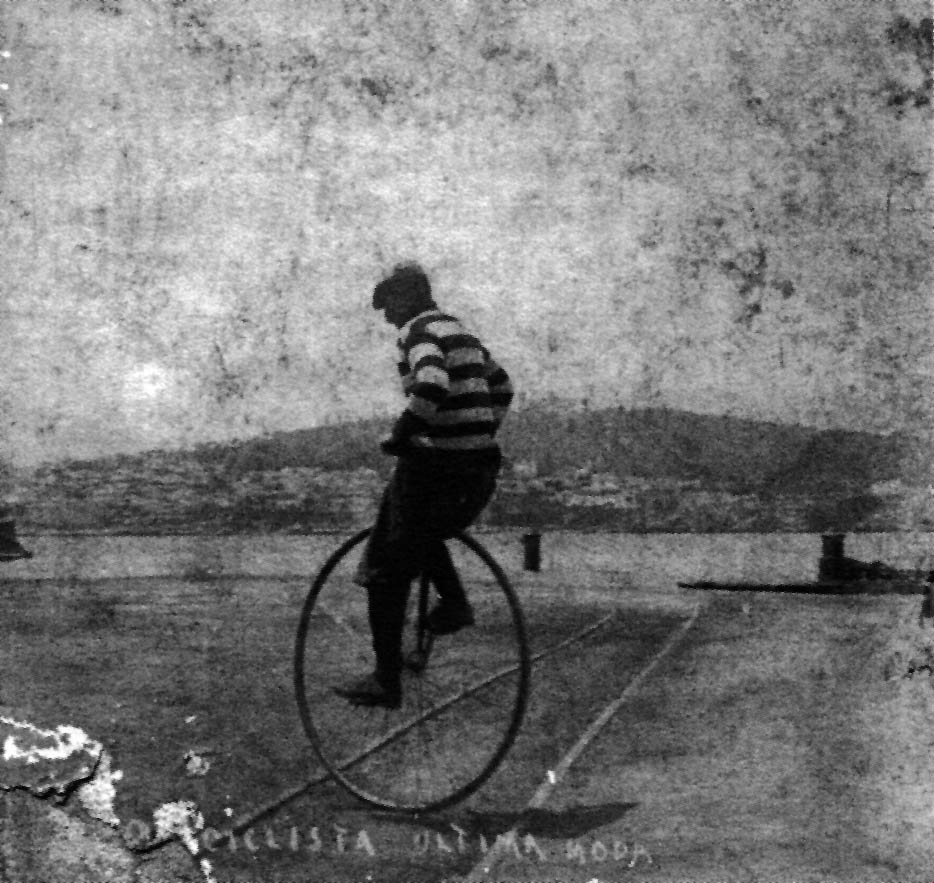
Nowadays these devices called velocipedes, which were soon followed by the bicycle, can only be seen in some retrospective museums or in ancient lithographs. Then, however, when we ran along the narrow alley behind the wooden theater, and left behind the wall that seemed to hold the Almudaina Palace, in the adjoining esplanade we found the velodrome of Gaspar who, in a shirt with blue and white stripes and baggy pants, was riding up and down with his machine, followed by his pupils, each sitting on a similar giant wheel.
All this seemed a miracle. We felt that Gaspar and his students were revolving with the speed of the wind.
 Gaspar and his velodrome. Drawing by Mario Verdaguer
 When I recall this scene, I feel like looking at one of those shining colored lithographs included in the chocolate boxes of Matías López. That revolving in that small velodrome seems so distant and so absurd, that I feel it impossible, that only a half century has passed since then, and not much, much more.
And yet, Gaspar and his velocipedists, passing over the Borne, moving their legs like nervous monkeys, and wearing their shirts with blue and white stripes, are a real lithographed emblem of the first, somewhat ridiculous, somewhat sentimental, effort of my generation to adapt ourselves to the great speed which would be soon reached by mankind, and which we foresaw in some way.
Because it is clear that our generation had to readjust itself at a rapid pace and ceaselessly to the dizzying advancement of science and to the change in the material conditions of human life. For we finished elementary school in the light of a kerosene lamp, we prepared ourselves for the baccalaureate at the gas mantle, and only the dawn of our career was enlightened by electricity.
The world was transformed very quickly, and we had to swiftly move our legs and proceed speedily, like Gaspar and the velocipedists, in order to keep pace with the time, which was just running, running and running.
For centuries, man was born, lived and died at the light of the oil lamp, which I have, in fact, seen in the form of the lamp hanging in our old kitchen.
From that lamp to the airplane trip, that is, in just half of a century, have been realized all the dreams which people considered as absurd, and with whose impossible promise Jules Verne made us tremble, when in the long winter evenings, around the family table lighted with the gas mantle, we read his charming fantasies.
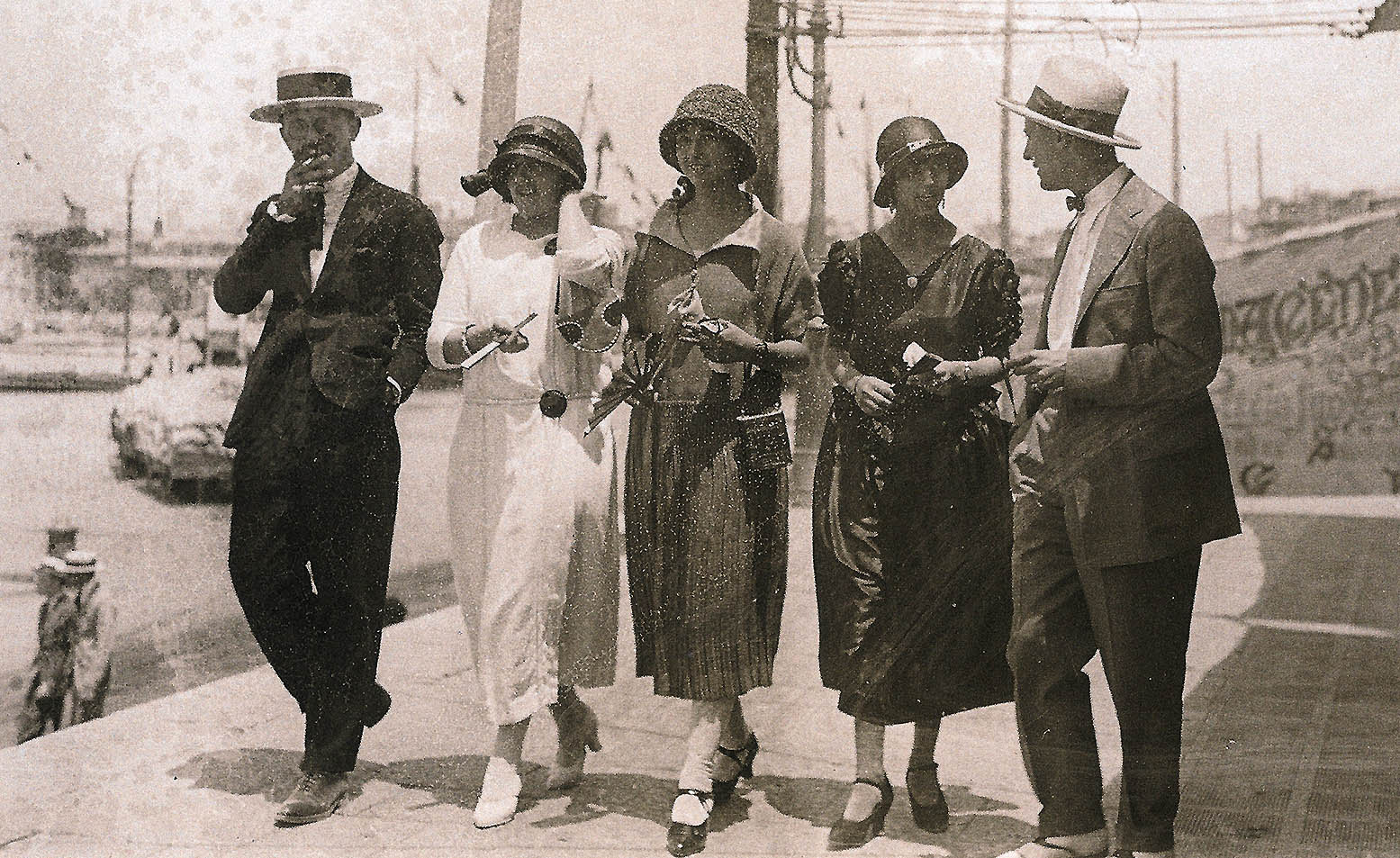
 Velocipedist on the beach of Palma, more or less in the period described by Verdaguer,
and just a few hundred meters from the velodrome of Gaspar
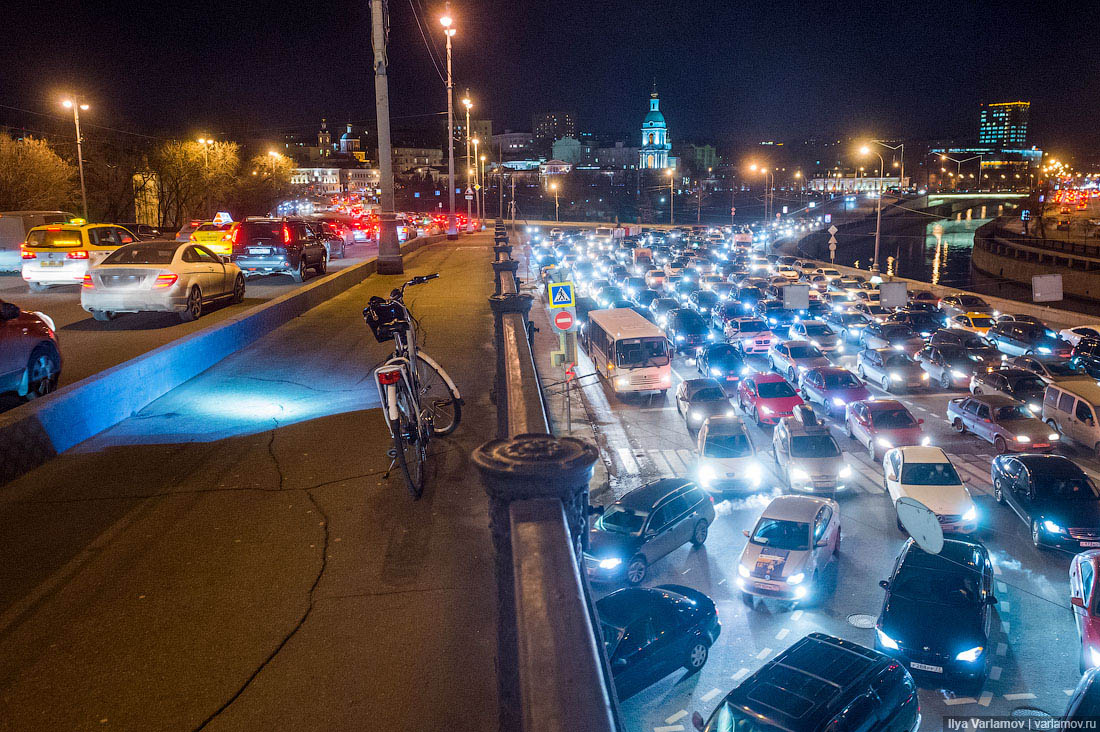

 Thus begins the New Year’s greetings of the popular Russian photo blogger Ilya Varlamov. Of course, he immediately explains it, lest anyone misunderstands him:







 To the
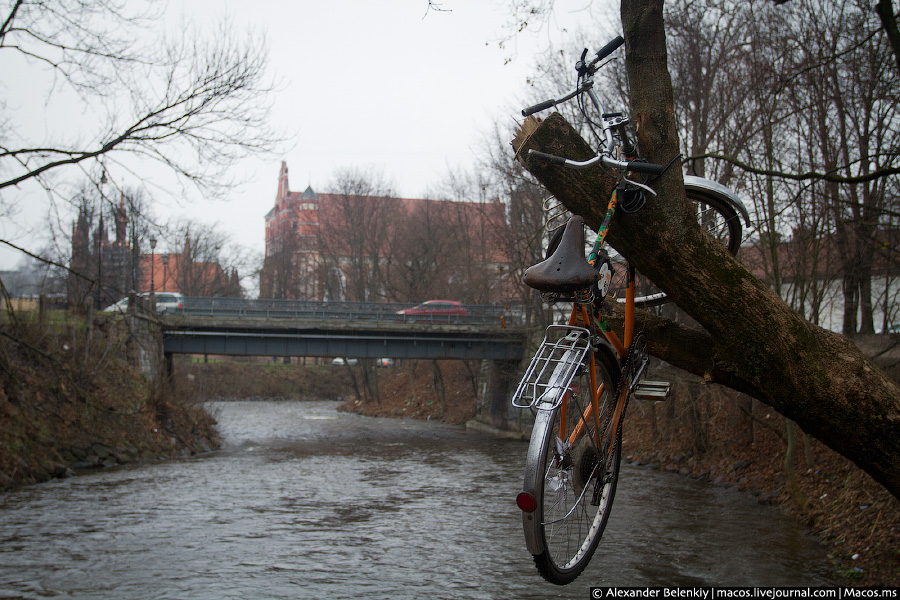
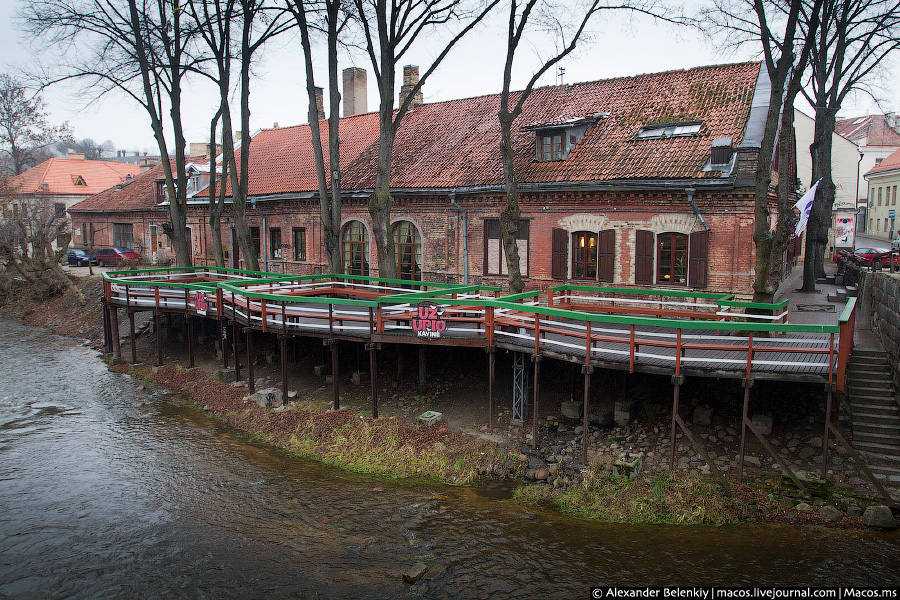
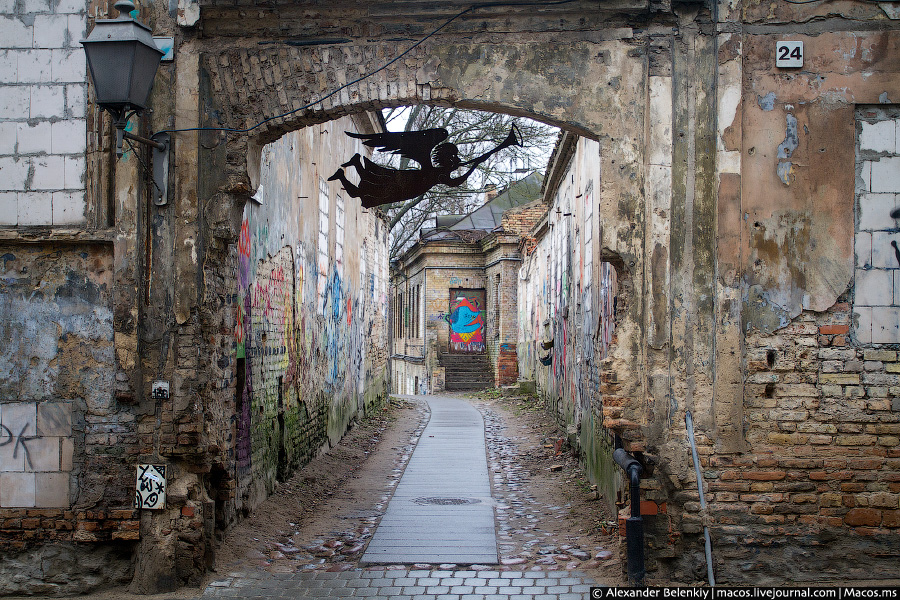
 No, not that of Transdnistria, but a much smaller and certainly much more cheerful one. This republic lays beyond the little river of Vilnius, in the former ghetto, populated after the deportation of the Jews first by the underworld and the city’s poorest residents, and then, from the 70’s onwards, an increasing number of penniless artists. They proclaimed in 1997 the Užupis – that is, Beyond the River – Republic, which has its own president and bishop, embassy in Moscow and no less than four flags.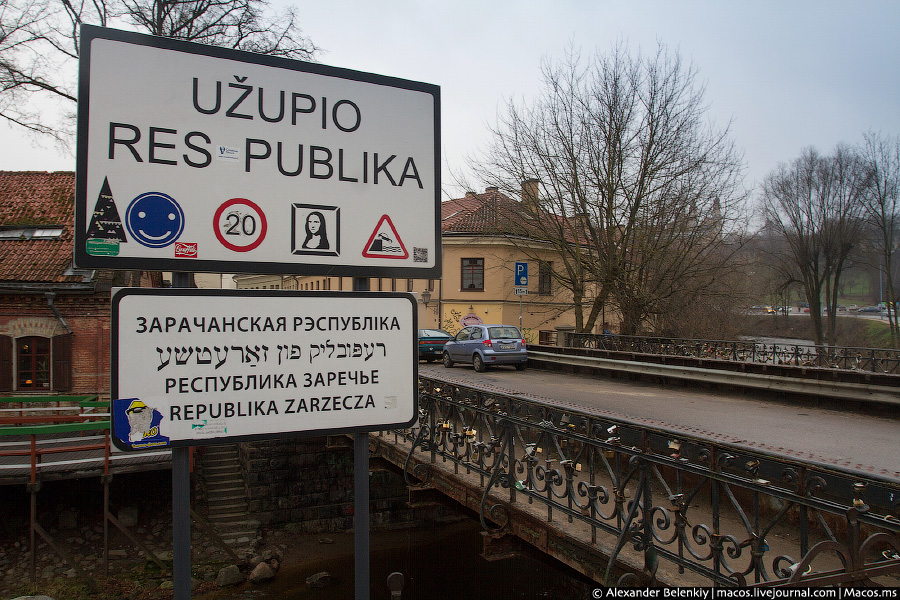

 No es la de


 Come with us to…
 Atlantis
 Bestiary
 Bohemia+Prague
 Books, exhibitions, music, film
 Caucasus
 Cemeteries
 Crimea
 Images of the East
 Lwów/Lemberg
 Message on the wall
 The Museum of Propaganda
 Odessa
 Paper Museum
 Persian letters
 The Jewish heritage


