Switch over to our new blog! • ¡Pásese a nuestro nuevo blog!

The renewed version of our blog, with more features, a richer design, and available in nine languages, can be read here: https://wangriver.com

The new version also includes the old posts, often in expanded form. If you are curious about the updated version of this post, replace “riowang.blogspot.com/” in the URL with “riowang.studiolum.com/”, and the new link will most likely lead you there.


La versión renovada de nuestro blog, con más herramientas, un diseño más rico y disponible en nueve idiomas, se puede leer aquí: https://riowang.com

La nueva versión también incluye las publicaciones antiguas, a menudo en una forma ampliada. Si tiene curiosidad por la versión actualizada de esta entrada, sustituya «riowang.blogspot.com/» en la URL por «riowang.studiolum.com/es/», y el nuevo enlace probablemente le llevará allí.

Mostrando entradas con la etiqueta translation. Mostrar todas las entradas

The Love Song of Kangding

Traveling in Kham:

Jashideley!
Burial in the sky
Kangding, the gateway of Tibet
The Love Song of Kangding
The monastery of Tagong
The Buddhas of Drakgo
The towers of the Himalayas
Nomadic wedding in Tibet
On the border of two Tibets. Dzokchen Monastery

Kangding’s best-known cultural product is the Love Song of Kangding. In China, it is second only to the national anthem in terms of familiarity and popularity. And it is where most Chinese first hear about Kangding itself. The city of Kangding naturally takes advantage of this popularity in its self-promotion, touristic publications, advertisements, and in the title of festivals. This is illustrated by the above picture, where, looking down from the 4298-meter-high Zheduo Pass near Kangding on the Shanghai-Lhasa National Highway 318, the view of the Tagong Plateau unfolds before you, and on the side of the opposite mountain you can read not some party slogan, but the city’s trademark, the title of the Love Song of Kangding in large white characters in Tibetan, Chinese and English.

But national propaganda also uses the song, for example by giving its title to the 2010 film which sets a metaphor for the eternal and unbreakable friendship and interdependence of Tibet and China through the love between Li Sujie, a young Chinese engineer, and Dawa, a Tibetan servant.

Let us first listen to the version of the song we hear in this film, in the original, very archival 1949 recording by the great soprano Yu Yixuan (1909-2008).

跑马溜溜的山上,一朵溜溜的云哟。
端端溜溜的照在,康定溜溜的城哟。
月亮弯弯,
康定溜溜的城哟!

李家溜溜的大姐,人才溜溜的好哟。
张家溜溜的大哥,看上溜溜的她哟。
月亮弯弯,
看上溜溜的她哟!

一来溜溜的看上,人才溜溜的好哟。
二来溜溜的看上,会当溜溜的家哟。
月亮弯弯,
会当溜溜的家哟!

世间溜溜的女子,任我溜溜的爱哟。
世间溜溜的男子,任你溜溜的求哟。
月亮弯弯,
任你溜溜的求哟!

Pǎomǎ liūliūde shānshàng,
yīduǒ liūliūde yún yō.
Duānduān liūliūde zhàozài,
Kāngdìng liūliūde chéng yō.
Yuèliang wān wān,
Kāngdìng liūliūde chéng yō!

Lǐjiā liūliūde dàjiě,
réncái liūliūde hǎo yō.
Zhāngjiā liūliūde dàgē,
kànshàng liūliūde tā yō.
Yuèliang wān wān,
kànshàng liūliūde tā yō!

Yīlái liūliūde kànshàng,
réncái liūliūde hǎo yō.
Èrlái liūliūde kànshàng,
huìdàng liūliūde jiā yō.
Yuèliang wān wān,
huìdàng liūliūde jiā yō!

Shìjiān liūliūde nǚzǐ,
rènwǒ liūliūde ài yō.
Shìjiān liūliūde nánzǐ,
rènnǐ liūliūde qiú yō.
Yuèliang wān wān,
rènnǐ liūliūde qiú yō!

A cloud is on the Galloping Horse Peak,
the moon shines brightly on the city of Kangding
the moon, the crescent moon, on the city of Kangding

The eldest Li girl is beautiful
the eldest Zhang boy fell in love with her
oh moon, crescent moon, fell in love with her

First he loved her for her beauty
secondly for her care for her family
oh moon, crescent moon, for her care for her family

All the girls of this world, my loves,
let all the men of this world go crazy for you
oh moon, crescent moon, let them go crazy for you.

This song is everywhere called “a folk song of Kangding”. According to Béla Bartók’s definition of a folk song – “a song that has been sung by many people for a long time” – it certainly is, as are Yesterday and The Sounds of Silence, too. But from the more established definition – “a work of folk poetry by unknown author, the text of which has been polished and shaped by the people and has survived through oral tradition” – at most the second criterion is true. After all, the song’s author and origin story is known, even though it is much more romantic to spread the opposite.

As the California researcher Yi Liu summarizes in ChinaBlog, the song was written by Li Yiruo from Sichuan in the 1930s. At the Chengdu Conservatory, he fell in love with his fellow student, Miss Li from Kangding, but their parents opposed the marriage. Li Yiruo even went after his love to Kangding, but their relationship finally broke up. Li, however, remained in Kangding, where he dedicated this song to the memory of their love. In the original text, the boy is also called Li instead of Zhang.

The composition of the Kangding music teacher then became locally popular under the title The Galloping Horse Song, and many people started to sing it. Wu Wenji, who was studying at the Chongqing Conservatory in the mid-1940s, heard it from such singers, namely from Kangding soldiers. He showed it to his teacher Jiang Dingxiang, who wrote an orchestral accompaniment for it. He also changed the title to The Love Song of Kangding, and recommended it to Yu Yixuan, the celebrated soprano singer who had just returned from the USA. She included it in her permanent repertoire, and her performance spread it throughout the country.

But it is also known worldwide and performed by many singers. One of the most notable is Placido Domingo, who sang it at the opening of the 2008 Bejing Olympics and in 2009 at the Beijing concert organized for the 100th anniversary of Yu Yixuan’s birth with Song Zuying, accompanied by Lang Lang on piano.

The Polish-Ukrainian band Dagadana performs it much more jazzily.

And a really surprising version, performed by the Georgian Geo Folk Choir in four voices, with Georgian images. This shows that not only Kangding and China can use this song as a city and country image, but also Georgia, to attract an increasing number of Chinese tourists to the country.

Burial in the sky

Traveling in Kham:

Jashideley!
Burial in the sky
Kangding, the gateway of Tibet
The Love Song of Kangding
The monastery of Tagong
The Buddhas of Drakgo
The towers of the Himalayas
Nomadic wedding in Tibet
On the border of two Tibets. Dzokchen Monastery

I love cemeteries, those museums not mentioned in guidebooks, which often tell a different kind of history than the official one. Their stones have often been written with different letters, in a different language, with different terms, and sacralized with religious symbols different from those customary in the city today. Their style and motifs follow a standardized set of forms, which are nevertheless almost made private and intimate, and tell small stories that are not necessarily included in the greater history of the city. I visit them wherever I can.

I would have done so in the Kham-Tibetan Garzê, too, where I asked the monks in Kandze Monastery where their cemetery was. They looked at me shocked, then pointed upwards. “Do you bury in the sky?” “Yes.” I recalled my readings about the “sky burial” of Tibetan monks: that they hand over the corpses to the vultures beyond the monasteries, among the mountains, with the participation of only the monks and family members. As the Zoroastrians did until the Islamic regime of Iran forbade them to do so. Or their successors, the Indian Parsis, until the anti-inflammatory diclofenac, which had been given to cattle, wiped out the entire vulture population of India. This ritual is still followed in Tibet, but in recent years the Chinese government – in an act of good taste – banned tourists from taking part in it, filming it and then spreading the images on social media.

In the absence of my own recordings, here I include a report from forty years ago. One of the best contemporary Chinese authors, Ma Jian (1953-) lived a troubled and vagabond youth during the Chinese cultural revolution. In 1979, he became a photojournalist in Beijing, and it looked like he was settling down, but a divorce pushed him back onto the roads. He went to Tibet, where he spent three years in mountain villages, wandering between monasteries and camps of nomads. Of this period he wrote the small volume of short stories Stick out your tongue, in which he writes with unvarnished openness about the inhumane conditions prevailing in the Tibetan countryside. The book was banned in China immediately after its publication in 1987 as “doing harm to the fraternal solidarity between the country’s ethnic groups”.

The narratives, as if following a process of descent, gradually become darker and darker, bearing witness to increasingly cruel conditions. Although even the very first one, which talks about the “sky burial” of a young girl, is quite shocking.

The title page of the Italian translation of the book is a very accurate illustration of its content. A Tibetan boy holds the skull of a slaughtered yak in place of his own human head. Tie title of the translation – Stick out your tongue – could also be interpreted as a playful reference to the typical Tibetan way of greeting, but the original title is longer and more serious, testifying to the author’s determination to portray reality without idealism: 亮出你的舌苔或空空荡荡, liàngchū nǐde shétāi huò kōngkōng dàngdàng, “stick out your tongue [to diagnose your illness], or keep quiet”

The woman and the blue sky

Our bus ground to the top of the five-thousand-metre Kambala Pass. Behind us, a few army trucks were still struggling up the foothills. As the last clouds tore from the rocks and prayer stones on the summit and slipped down the gullies, Yamdrok Lake came into view. When the surface of the lake mirrored the blue sky and plunged the distant snow peaks head-first into the water, I was filled with a sudden longing to take someone in my arms. This was the mountain road to Central Tibet.

During the month that I’d stayed in Lhasa, I had visited many ancient monasteries and shrines, but it was to the Jokhang Temple that I’d returned most frequently. The Jokhang is Tibetan Buddhism’s most venerated site. Pilgrims from every corner of Tibet circle its walls in a continual stream, spinning prayer wheels, praying for an end to their suffering in this life and a prosperous rebirth in the next. Crowds prostrate themselves before the entrance, resembling professional athletes as they hurl themselves to the ground, stand up with hands clasped in prayer, then throw themselves down again. These displays of religious fervour appeal to foreign travellers, but sky burials arouse an even greater interest. While I was staying in Lhasa, I trekked to the burial site several times, camera in hand. But I never managed to see a burial: it would either be finished by the time I’d arrived, or relatives of the deceased would spot me from afar and tell me to stay away. Sometimes they even threw stones at me. I always ended up traipsing back to Lhasa in a bad mood.

I had been told that when a Tibetan dies, the relatives keep the body at home for three days, then carry it to the burial site, making sure not to look behind them as they walk. When they reach the village gates or a crossroads, they smash an earthenware jar onto the ground to ensure that the dead person’s soul will never return. At the funeral site, the burial master lights a fire of fragrant juniper branches. Wealthy families employ a lama to recite from the scriptures and relate to the guardians of the Buddha Realm the merits and achievements of the deceased. Depending on the level of these achievements, the deceased will either return to the world of men, or remain in the Buddha Realm for eternity. The burial master hacks all the flesh from the corpse and slices it into small pieces. He grinds the bones into a fine powder and adds some water to form a paste. (If the bones are young and soft, he will thicken it with ground barley.) He then feeds this paste, together with the flesh, to the surrounding hawks and vultures. If the deceased was a Buddhist, a holy swastika will be carved on the corpse’s back. When everything has been eaten, the master presents the scalp to the relatives, and the burial is considered to be complete. After that, the only way the relatives can communicate with the deceased is to go to the temple and pray.

I was travelling to the remote countryside of Central Tibet. When the bus reached the foot of the mountain and hurtled along the shores of Yamdrok Lake, I began to feel dizzy. I opened the window. The lake was calm; there wasn’t a speck of dust in the breeze. The bus, however, was crammed to the brim, and the stench of dank sheepskin that wafted from the back made it hard for me to breathe. When I could take it no longer, I told the driver to stop, and jumped out.

It was August. The Tibetan Plateau’s golden month. The sky was so blue and transparent, it felt as though there was no air. I walked to the shore of the lake, put down my bag, took out a flannel and washed my face. In the distance, at the foot of a mountain, I could see the village of Nagartse. A hundred or so mud houses stood in rows along the foothills, prayer flags jutting from each roof. Above them, halfway up the mountain, was a small Buddhist temple, its walls painted in strips of red and white with a band of blue running below the eaves. Beside it were the ruins of a monastery, and a freshly whitewashed stupa, housing the ashes of a dead saint, gleaming in the sun.

It was a beautiful place. The shores of the lake were clean. The water was so clear, I could see every pebble. Beams of sunlight shone right down to the bed. The coloured prayer flags on the distant roofs moved in the wind, whispering the beauty of the Buddha Realm. Below the houses, near the shore of the lake, stood a cement hut with a red tiled roof. I assumed it was the village headquarters, and pulled out from my bag a forged introduction letter that was stamped with a red seal. As I approached, I discovered that it was not the village headquarters, it was just an ordinary brick hut. A soldier stepped out. From his accent I could tell that he was from Sichuan. He invited me to come inside and sit down, so I followed him through the door. The hut was an army repair station. The soldier had been posted here to maintain the smooth connection of the army telephone line. When the line was working, he would go fishing on the lake, and read a few kung-fu novels too, I assumed — seeing the pile of them lying on the floor. He was delighted when I asked to stay. He had lived here for four years, and could speak Tibetan quite well. He often went up to the village to have a drink with the locals. A rifle hung from a nail on the wall. The room was a mess — it looked like a scrap yard.

I asked if there was a burial site nearby, and he said that there was. Then I asked if there had been any burials lately. He froze for a second, and told me that a woman in the village had recently passed away. When I asked whether I might be allowed to watch the burial, the soldier muttered audibly then said that he needed to buy some beer. I handed him some money, but he pushed it away and walked out of the door. It occurred to me that this might be my last chance to see a sky burial: I was unlikely to come across one again in the next few days. I couldn’t let this opportunity slip by.

In the evening, we opened the beers and chatted about the latest news from China. I tried to worm myself into his favour. He liked to fish, so I said that I liked fishing too, and promised that when I returned to Beijing I would send him an imported, stainlesssteel fishing rod. I gave him my address and bragged that Premier Zhao Ziyang lived right next door to me. Needless to say, you could search Beijing for days and never find the address that I scribbled down for him.Then I talked about women. He listened avidly, sucking at his cigarette. I told him wild stories about today’s liberated women, and in a Sichuan dialect I assured him that when he came to Beijing, I would let him sleep with my girlfriend. ‘No problem’, I said. He brushed his hand over the table, then paused and told me that the woman was only seventeen. I couldn’t believe it. So young. ‘She died of a haemorrhage during childbirth, he said. ‘The foetus is still inside her womb.’

I crushed out my cigarette. We both fell silent. The floor of the room was damp. A single bed was pushed against the wall. The bed was wooden and painted yellow; on its headboard were a red star and an army regiment number. The walls of the room were pasted with pages torn from colour magazines. A pile of hooks and electric cables lay scattered beneath the washstand behind the door. There was just one window in the room.The lower pane was covered with a sheet of newspaper. Through the upper pane, I watched the sky turn from dark blue to black. It had been a long time since I’d heard a truck pass by outside.

The soldier stood up, leaned against the bed and said, ’You can go to the burial if you like. The people here won’t mind. Most of them have never seen a camera before. Myima’s two husbands certainly haven’t.

‘Whose two husbands?’ I asked.

‘The dead woman’s.’

‘How come she had two husbands?’

‘She married two brothers, that’s why,’ he answered quietly.

I paused, then asked why she had married two brothers. But as soon as the question left my mouth, I realised how disrespectful it sounded. The woman was dead. It was no business of mine why she had married two men.

He answered me, though. ‘Myima was not from these parts. She was born in Nathula. She was a weak child, the youngest of eleven. When she was six years old, her parents sold her to another family in exchange for nine sheep hides.’

‘Does that kind of thing still happen, then?’ I asked.

He ignored my question and continued, “She grew stronger after she moved here. She even attended school in Lungmatse. That was before her adoptive mother died, though.’

‘And what was her name?’ I asked, taking a pen from my bag. It sounded like an interesting story.

‘Her adoptive father is a drunk. When he drinks too much he breaks into song and starts grabbing women. Sometimes he grabbed Myima. After his wife died, his behaviour got worse. How could a young girl protect herself against such a brute?’ His voice was trembling. I could tell that he was about to swear. When he’d been showing off to me a few minutes earlier, he’d let out a torrent of abuse.

‘Bloody bastard! Just wait until I’m out of these army clothes!’ His face turned from red to purple, in that surly, stubborn way typical of Sichuan men. I kept quiet and waited for his anger to subside.

He went to the door and checked the direction of the wind. The telephone line was completely still. I finished my beer and circled the room. Although it was summer, the altitude was so high that there were no mosquitoes. The damp air from the lake poured into the room and chilled my bones.

‘Will you take me to see the brothers?’ I asked.

Without looking round, he grabbed a set of keys and a torch from the table and said, ʻLet’s go.’

We climbed to the village along dark, narrow passages of mud and brick. The path was rough and bumpy. The straw and dung on the ground flinched back silently as my torchlight fell on them. Behind every wall, I could hear the sound of dogs barking.

The soldier pushed through a gate and shouted a few words of Tibetan at a house with a light at the window. We walked inside.

The men seated around the fire turned and stared at me, mouths agape. The eldest one stood up and started speaking in Tibetan with the soldier, while the others continued to gawp at me. I took out my lighter and flicked it on, then passed my cigarettes around. In the dark, all I could see was the white of the men’s teeth. I flicked the lighter again and let the flame rise. Their jaws slackened. I handed the lighter to the man who was standing up. He took it from me and sat down. Everyone’s eyes focused on the lighter. They passed it between them, looking up at me from time to time to exchange a smile. At last I felt that I could sit down. The young man next to me took a chunk of dried mutton from his bag and cut me a piece. I had tasted raw mutton like that in Yangpachen, so I pulled the knife from my belt and took a slice. They seemed pleased, and handed me a bowl of barley wine. It was still green, and there were husks floating on the surface. My mind turned to the dead woman.

The smell of burning dung was suffocating. I glanced around the room. It was as simply furnished as most Tibetan homes: prayer scarves draped over a wooden table, whitewashed walls. To the right of the front door was an opening into a dark chamber. I presumed that this was Myima’s room, or a larder, perhaps. Opposite the fireplace was a traditional Tibetan cabinet, and a scroll painting of Yama, Lord of Death, gripping the Wheel of Life in his hands and flashing his ferocious teeth. It was an old painting; its edges were pasted with scraps of coloured paper printed with words from the scriptures.

I guessed that the men were discussing my request to see the sky burial. A few of them were talking in Tibetan and nodding at me. The soldier stood up and gestured for me to follow him. He led me to the chamber and shone his torch on a large hemp sack that was tied at the top with cord and stood on a platform of mud bricks.

‘That’s her,’ he said.

I flashed my torch on the sack. She appeared to be sitting upright, facing the door, her head bowed low. I presumed that the men had had to push her head down before they could tie up the sack.

Back in the soldier’s hut, I lay on the bed, eyes wide open, imagining what the woman had looked like. She could sing, like the Tibetan women I’d heard in the forests or high on the mountain paths. At noon, she bound her sheepskin cloak to her waist, and bent down over the fields, her long braids of hair slipping over her ears. I gave her the face of a girl I’d seen on a bus: large red cheeks, small nose, dark-rimmed eyes, a steady gaze. Her neck was soft and pale. As I stood beside her, I could see the dark dip between her breasts tremble with each shake of the bus.

The soldier walked in from his nightly inspection of the telephone line and switched on the light. His face was blank. He lit a cigarette and lay down beside me. Neither of us was in a mood to sleep.

Eventually he spoke. ‘I might as well tell you. You’ll be gone in a few days. Besides, I can’t keep this to myself much longer. The pain is too much.’ I propped a pillow against the wall and sat up.

‘Myima and I were very close,’ he continued. ‘That’s why I’ve stayed here so long. Most people would have applied for a transfer years ago. I first met her up on the mountain. I’d climbed up to repair the telephone line two mountains behind. She had let her sheep out and was sitting on the grass. On my way back, I was carrying a large bundle of wire. It weighed a ton. I said hello and sat down beside her. Her dog glanced at me then went back to sleep. It was a hot afternoon. Her sheep had wandered off to graze on a breezy slope. She smiled, then looked at me straight in the eye, without any shame or embarrassment. I told her I worked in the repair station below. She didn’t understand me, so I traced my finger along the telephone line to my house at the bottom. She laughed and turned her face to the Kambala Pass. Two trucks were driving up the foothills over there, too far away for us to hear. Myima said that she’d seen me before, and asked why I’d stayed here so long. Her accent was different from the other Tibetans in the village. Before I left her that day, I cut off a long piece of wire and gave it to her as a present. I told her that she could use it to hang out her laundry or to tie things up with.

‘After that, I often went up the mountain to see her. She’d be sitting there, waiting for me, with home-made dried mutton and barley wine. Sometimes she made gin for me from dates and mountain pears. I would stay with her until sunset. She was cleaner than most Tibetan girls — I grew to like the smell of mutton and milk on her skin. One day, I stretched my hand out to unfasten the belt of her sheepskin cloak. She didn’t push me away, so I put my arm around her. She was the first woman I’d ever touched. After that, as soon as I got close to her, or my hand brushed against her cloak, I’d panic. I could tell that she wanted me to put my hand inside her cloak, but I was too afraid. She told me how her adoptive father kept grabbing her, and how she’d often run away and be too frightened to return home. Everyone in the village knew about it. All the young men in the village looked down on her.

‘Last year, at about this time of night, she burst in to my room and felt her way to my bed. She had never slept here before … We spent the whole night together. In the morning, she pushed me aside and said that she had to leave. I helped her get dressed, then I went back to bed. Before she left, she took off the turquoise necklace she’d worn since she was a child and slipped it under my pillow. It wasn’t until the next day that I found out that she’d agreed to marry the two brothers.’

He paused and looked up at me. ‘If this gets out, I’m finished. My leaders will kill me.’

I nodded solemnly, and gestured to him that I would keep my lips sealed. That is why, in this story, I refer to him only as ‘the soldier.’

He took out the necklace from the drawer. I held it under the lamp and studied it closely. It was a string of agate and red wooden beads, with a large lump of turquoise in the middle. The turquoise was smooth and dark, and still smelt of the woman’s milky skin. I thought of her now, sitting in the hemp sack on the platform of mud bricks.

‘Did she visit you again after that?’ I asked.

‘No. After she got married, she was busy with her chores and seldom left the house. The brothers liked her very much, apparently. Whenever they’d had a drink, the villagers would hear Myima yelling late into the night. The younger brother was even seen making love to Myima on his horse as he rode back from Wangdan Temple. Myima was already pregnant by then. The brothers were in their forties. They’d never been married before.

‘Why didn’t she visit you again?’

‘She did,’ the soldier replied. ‘I just don’t want to tell you everything.’

When I reached the sky burial site, the sun had already risen. This wasn’t a large flat boulder jutting from a cliff like the burial site in Lhasa, it was a gravel terrace halfway up the mountain between the foothills and the higher slopes. Dirty ropes hung from metal posts that were jammed into cracks in the ground. Beside them lay rusty knives, two hammers and an axe with a broken handle. The gravel was scattered with scraps of bone, clumps of hair, smashed rings, glass beads and bird droppings dotted with human fingernails. The mountain was silent. Hawks and vultures sat perched on the summit. In the valley below, ribbons of mist rose from Yamdrok and rolled into a single sheet that slowly covered the entire lake. The mist thickened and spread, rising and falling like the chest of a woman breathing, drifting higher and higher until it veiled the blood-red sun. The mist still clinging to the lake trembled slightly, then broke free and floated towards the foothills.

Slowly they emerged from the mist. The elder brother was lugging the hemp sack. I guessed that they couldn’t afford to hire a burial master, or that perhaps there were none in the area. The younger brother was carrying a felt bag, a thermos flask and a frying pan. A lama followed behind. I recognised him as the man who’d sat beside me the night before in Myima’s home. Clouds of mist billowed behind them.

They smiled at me. The sack was opened and Myima’s body was pulled out. She was lying in the foetus position, her limbs bound to her chest. The auspicious swastika that had been carved onto her back had dried and shrunk. When the rope was loosened she flopped to the ground. They tied her head to a metal post and pulled her body straight. She was flat on her back now, her eyes fixed on the sky and the scattering clouds of mist.

The younger brother lit a fire of juniper twigs and sprinkled roasted barley on the flames. The thick smoke rose into the mist. Then he moved to a second fire and dropped a lump of yak butter into a frying pan that was resting on a wooden frame. The elder brother fed dung pats to the two fires and glanced at the mountain summit. The lama sat cross-legged on a sheepskin rug counting rosary beads over an open prayer book. He was sitting close to the flames. I studied the corpse from a distance, then slowly approached. Her limbs were splayed out as though she were preparing to take flight. Her breasts were paler than the rest of her body and drooped softly to either side of her ribcage. Her belly was swollen, the unborn child still lying inside it. I wondered whether the soldier was the father of the child.

I set the aperture of my camera, adjusted the distance, then squatted down beside her and prepared to take a photograph. In the background were clouds of fog and snow peaks flushed by the rising sun. Through the lens, Myima looked like a little girl. I imagined her arriving at this mountain on horseback as a child of six, peeping out from under her sheepskin cloak to catch her first glimpse of the Kambala Pass. Years later, when she was up here tending her sheep, she would often gaze at the pass and think about her home in the south.

She looked as though she were asleep. I panned my camera down her body. Soft arms, palms upturned to the sky, a red mole under her breast, smooth thighs. I thought of the soldier’s creaking wooden bed and of the two brothers who were now gulping the barley wine. I focused on her feet. The soles were white, the toes tightly clenched. The smallest toes were so short there was no room for nails to grow. I stepped back for a wider view and hit the shutter, but nothing happened. I checked the camera, pressed the button again. It was stuck. My legs gave way. I sat down on the ground, wound back the film and changed the battery. I focused on Myima’s face this time and pressed the shutter, but the button seemed to be frozen in place. Then, as I looked up, I noticed the corner of Myima’s mouth twitch. It was neither a smile nor a sneer, but her mouth definitely moved.

I stood up. A shriek echoed through my head then vanished with a gust of wind. A bald eagle plummeted through the sky, circled the corpse’s head, settled on a rock and ruffled its wings.

I tramped back to the fire. The younger brother reached into his felt bag, scooped out a piece of dung and flung it onto the flames.Then he produced a lump of roast barley and broke me off a piece. I chewed it greedily. There were raisins inside. He brought out some dried mutton and filled the lid of the thermos flask with barley wine. I grabbed it and downed it in one. I wondered whether Myima had prepared the mutton. I looked up at her. Her legs were spread open; a piece of string hung from the wounded flesh between her thighs. I presumed that someone had attached it during her troubled labour in an attempt to wrench the baby out. I dragged my knife through the dried mutton. The brothers smiled at me. I smiled too, perhaps, but my face was turned to the distant snowcaps that were reddening in the sun. The fog had vanished, and in the distance Yamdrok looked as calm as it had done the day before, and as blue as Myima’s turquoise.

The elder brother got up, threw some more dung onto the fires, then walked to the lama and poured him some wine. The lama pushed the bowl away and announced that Myima’s soul had risen to the sky. The younger brother stood up and took a sharp knife from his pocket. I followed the two brothers to the body. Immediately the sky darkened with vultures that screeched and swirled through the air. The brothers turned Myima’s body over, stuck the knife into her buttock and pulled it down, opening up her leg all the way to the sole of her foot. The younger brother hacked off a chunk of thigh and sliced it into pieces. Her right leg was soon reduced to bone. With her belly squashed to the ground, sticky fluid began to trickle from between her thighs. I picked up my camera, set the distance, and this time the shutter closed with a snap.

The vultures surrounded us and fought over the scraps of flesh. A pack of crows landed behind them. Perhaps they considered themselves an inferior species, because not one of them dared move forward. They kept their distance, sniffing the air, waiting for their turn.

The morning sun flooded the burial site with light. The younger brother shooed away the approaching vultures with pieces of Myima’s body. I picked up the axe, grabbed a severed hand, ran the blade down the palm and threw a thumb to the vultures. The younger brother smiled, took the hand from me and placed it on a rock, then pounded the remaining four fingers flat and threw them to the birds.

When the elder brother dug his knife into Myima’s chin and drew it up her face, I suddenly forgot what she had looked like. While the brothers continued to carve, her eyes remained fixed on the sky above, until every piece of her head vanished from the site.

The elder brother snatched a bunch of Myima’s braids that were still tied with red thread, swirled it around the circling vultures and staggered back to the fire. The crows had now joined the vultures at the metal posts, and were picking at the roast barley that had been mashed up with scraps of brain.

I checked my watch. I had been up here for two hours already. It was time to go down. I knew that the soldier was waiting for me in his room. He’d promised that he would borrow a boat in the afternoon and take me fishing on the lake.”


On the dignity of felines

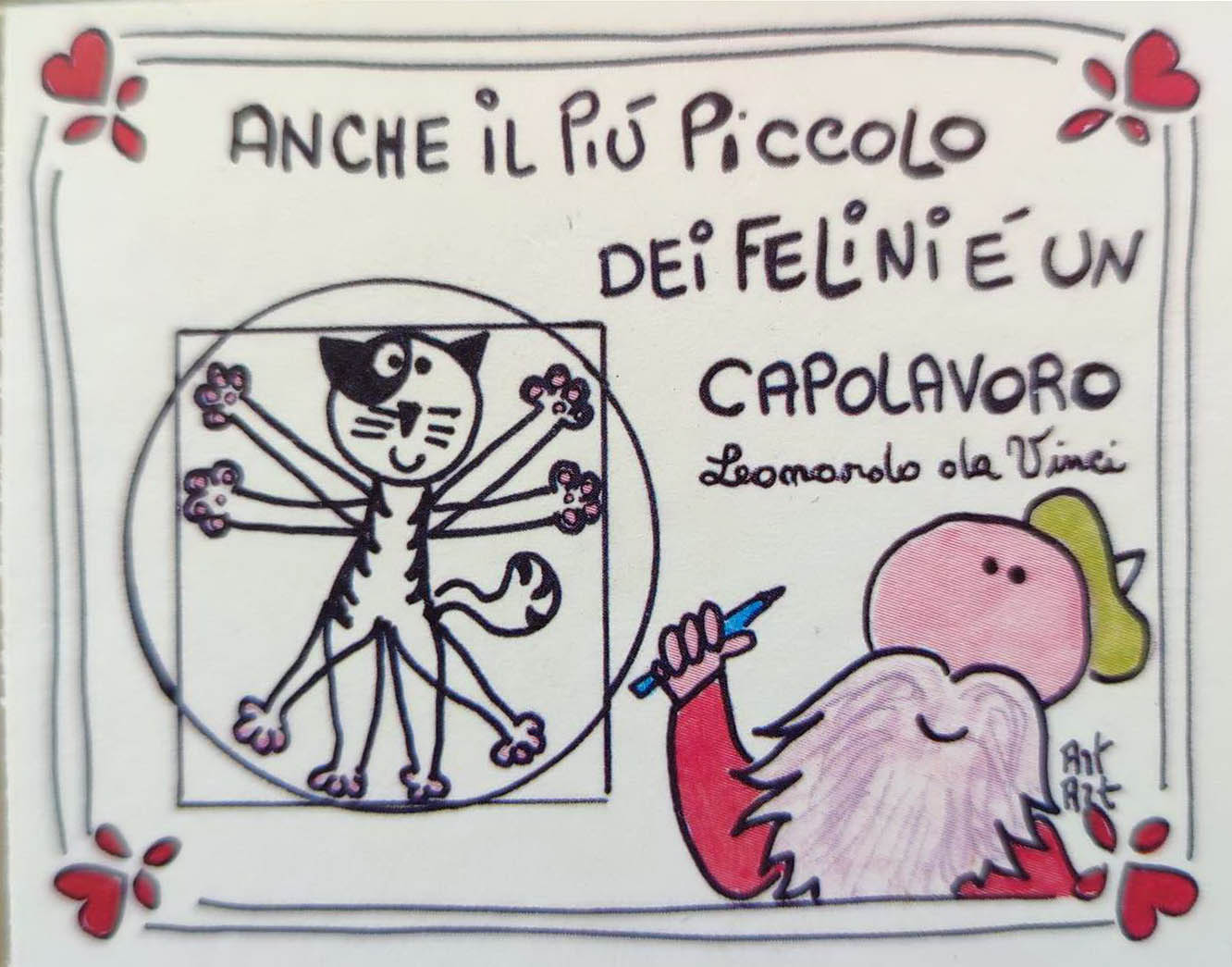
I just photographed this Leonardo caricature in Tuscany. “Even the smallest feline is a masterpiece”, the master comments on his Vitruvian cat with a satisfied face, as if he already knew that he would start his humanist treatise Laudatio cati (In praise of the cat) or De dignitate felidarum (On the dignity of felines) with this motto.

I also photographed this picture because it offers an opportunity to compare two nations’ souls, whatever that means. The other nation is the Russian, and the subject of comparison is the emblematic song about the cat, which is sung in the 1966 Soviet cult film Республика ШКИД.

This film is about how a school and art training were organized in the 1920s, after the civil war, for the orphaned children who wandered around (and committed crimes) by the millions in Russia. The protagonist of the film, Mamochka, wants to prove his talent with a beggar’s song.

У кошки четыре ноги
Позади у нее длинный хвост
Но трогать ее не моги
За ее малый рост, малый рост

The cat has four legs,
and has a long tail behind.
But don’t hurt it, since
it is so small by stature.

The song, one might say, begins in the same way as the picture. In the first two lines, it realistically depicts the cat with its four legs and one tail. But while the Italian artist continues this as “and these can be written in perfect plane figures, the circle and the square, so it harmonizes with the great relationships of the created world,” for the Russian two things follow: aggression and mercy. The cat is small and fragile: the first thought of the Russian is that it is easy to hurt. The second is to take pity on it and protect it. And yes, these two fit together in the Russian soul.

But the Russian character also requires a third component: brilliant absurdity. Already the unnecessarily factual opening image is absurd, but it is the performance that makes it really creepy. In the 1980s and 1990s, I myself heard such creepy and powerful songs from child beggars on Romanian and Soviet trains, and later in Iran. The film about Pyotr Leshchenko’s life, Петр Лещенко. Все, что было… (2013), also begins with such a scene, where the little Pyotr sings and begs on the streets of Chisinau. The emotionless, haunting song, accompanied with pizzicato chords, seems to be an Orthodox funeral song, a relative of later workers’ funeral marches.

Gennady Poloka, the director of Республика ШКИД, wanted to spice up the film with some блатные песни, gangsters’ songs that were still well-known in the 1920s and which today are enjoying a renaissance under the label “Odessan pub songs”. Aleksey Yeremeyev, the author of the autobiographical novel on which the film is based, himself quoted some of them. However, from the song about the difficult life of felines he only remembered the first verse. As can be seen from a recently published interview with composer Sergei Slonimsky, the rest was partly written by the composer, and partly expanded further by some unknown sons of the people after the success of the film. This is how it was included, as an authentic блатная песня, on the 2010 album Легенды блатной песни by the band Amerikanka:

А у кошки четыре ноги,
Позади у неё длинный хвост.
Но трогать её не моги
За её малый рост, малый рост

А кошку обидеть легко,
Утюгом её между ушей.
И не будет лакать молокооо,
И не бууудет ловить мышей.

А ты не бей, не бей, кота по пузу,
Кота по пузу, кота по пузу.
А ты не бей, не бей, кота по пузу,
И мокрым полотенцем не моги.

У ней голубые глаза,
На ресницах застыла слеза.
Это ты наступил ей на хвост,
Несмотря на её малый рост

The cat has four legs,
and has a long tail behind.
But don’t hurt it, since
it is so small by stature.

It is easy to hurt the cat,
with an iron rod between its ears,
and it no longer drinks milk,
and won’t catch mice any more.

Don’t hit, don’t hit the cat’s belly
the cat’s, the cat’s belly
Don’t hit, don’t hit the cat’s belly,
and don’t hurt it with a wet towel.

It has blue eyes,
with a tear on its eyelid:
it was you who stepped on its tail,
regardless of its small stature.

The extended text is almost reveling in the methods of doing in the cat, described with forensic precision and placidity, while it constantly formulates them as prohibitions. This song may also hint at violence against women, especially against one’s girlfriend, like Murka, written about the same time, but the singing rogue also identifies with the cat, and experiences the aggression that menaces it – which he knows well from his own daily life – as a threat against himself.

The absurd and therefore Russian character of the song is further enhanced by the 2020 music video by Отава Ё, in which it is accompanied by a series of gags made in the visual world of the films about the 1920s and 1930s, like Leonid Gaidai’s Twelve chairs, Vladimir Bortko’s Master and Margarita, or Vladimir Davidenko’s Mishka Japonchik. The main task of the gags is to evoke this retro visual world, but from their seemingly random succession, the thread of protecting the vulnerable emerges emphatically. This, perhaps, may give some ground for optimism regarding the future of the song and of the Russian soul.


They take me as a soldier

Заберут меня в солдаты,
На кого буду служить.
Отец старый, мать больная,
Дед беременный лежит.
Помолися, милка, Богу
На высокой на горе,
Чтобы не взяли во солдаты,
Не убили на войне.
Во солдатики поеду
На три года на войну,
На кого же я оставлю чернобровую мою?
Город Рига, город Рига,
Рига – славный городок,
Да какой же я вояка –
мне семнадцатый годок.

Стали листики валиться, стала осень приходить,
Рекрута стали с тальяночкой по улице ходить.

Шила я, кроила я, кисетик из лоскутиков,
Любила я, гуляла я, с парнем из рекрутиков.
Расхорошенький ты мой, ведь я ж не виноватая,
Разлучила нас с тобой солдатчина проклятыя.
Мил последний день гуляет на лошадке вороной,
Повезут его в солдаты на машине паровой.
Милый мой, моя утеха, я люблю, а ты уехал,
Ты уехал воевать, меня оставил горевать.
 
На вокзалике фонарики осталися гореть
Дружка в солдатики угнали, я осталась реветь.

Что ж ты, милка, по мне плачешь, али я тебе родной?
Как, хороший, мне не плакать – оставляешь сиротой.
Ой ты, маменька родная, куда деньги бережешь
Мать заплакала, сказала: «Во солдаты, сын, пойдёшь».
Ах ты, писарь, чёрт усатый, записал меня в солдаты,
К девятнадцати годам я в солдатушки попал.
Распроклятая война, что она наделала,
Сколько девок, сколько баб, сиротами сделала.
 
Ах ты, милая моя, начинается война,
На войну меня угонят, ты останешься одна.

They take me as a soldier
whom will I serve?
My father is old, my mother is sick,
my grandfather lays paralyzed.
Ask, my dear, our God
up there on the high mountain
so they would not take me away
to be killed in the war.
I am going to be a soldier,
for three years in the war,
who do I leave my black-eyebrowed to?
Riga city, Riga city,
famous city of Riga *
what kind of warrior am I
with my seventeen years?

Leaves are falling, autumn has come,
the recruits are marching to the sound of the accordion.

I sewed, I embroidered, I made appliqués,
I fell in love with one of the recruits.
My sweetheart, it is not my fault
that the cursed summoner separates us.
On the last day my sweetheart rides a black horse,
a black steamer takes him to the war.
My dear, my joy, I love you but you leave,
you go to war, and I am left with grief.

The lights are still on at the station.
He was taken as a soldier, I am crying alone.

Why do you cry, my dear, since I am yours.
How should I not cry, my love, since you leave me an orphan.
Oh, mother, what do you collect the money for?
My mother cries: “So you are going to war, son?”
Oh, you scribe, hairy devil, why did you put me on the list
to become a soldier at the age of nineteen?
Cursed war, what did you do,
you made so many girls, so many mothers orphans.

Oh, dear, the war starts,
I am taken to war, you are left to yourself.


Pandemic


Here you should see a photo that I did not make. The place where it was not made was Děčín, the last Czech railway station before the German border, when, due to Covid closures, it was only possible to travel between the two countries on wild boar routes. I hurried from the late arriving Prague train to the local bus that would have taken me to the border path, so I could only register with my eyes the gorgeous graffiti covering the whole long wall of the railway underpassage with the thousand pandas and the inscription PANDEMIE above them. Maybe it is still there today, but to see it, I’d have to pass through Děčín again, which might happen next time during the sixth wave.

The joke expressed visually in Děčín also has a verbal counterpart:

“An adult panda feeds for fourteen hours a day. Just like an adult person in quarantine. That’s why we call the epidemic a pandemic.”

A joke with whiskers? Yes. I have to admit again that I should have published my impressions at the right time. As well as the video below about the pandemic, which was also published at that time by Daniel Kahn and The Painted Bird, specialized in Yiddish chansons, not so far from there, in Berlin, as the backgrounds with the shabby industrial buildings demonstrate.

Here’s the Spanish. We are afraid.
It freezes bones and marrow.
Many people who have never died
will die today and tomorrow.

(Dezső Kosztolányi, 1918)
Actually, I am not so late with that. After all, the chanson was written in 1916 by Solomon Smulewitz, an American Yiddish singer and ballad writer from Pinsk. True, at that time pandas were not yet so well known, so the epidemic was not called a pandemic, but “Spanish flu”, as only Spain, which did not take part in the world war, dared to publish real death statistics about it, and these were far superior to the cosmeticized ones of the warring states.

Nowadays, a war is once again pushing into the background the pandemic that just recently covered the front pages of the newspapers. Still it is worth listening to this song that expresses the anxiety and bewilderment of the whole world. It also comes in handy if you want to comfort yourself during the sixth wave.

Gor a shreklekhe mageyfe
geyt fun land tsu land
Mit der shnelkayt fun a sreyfe
fun a fayerbrand
Makhtloz iz dem mentshns zinen
S’blaybt di khokhme shtil
S’iz keyn mitl tsu gefinen kegn
a batsil

גאָר אַ שרעקלעכע מגפֿה
גײט פֿון לאַנד צו לאַנד
מיט דער שנעלקײַט פֿון אַ שׂריפֿה
פֿון אַ פֿײַערבראַנד
מאַכטלאָז איז דעם מענטשנס זינען
ס׳בלײַבט די חכמה שטיל
ס׳איז קײן מיטל צו געפֿינען קעגן
אַ באַציל

A terrible plague is spreading
from country to country
with the speed of fire
with the power of a conflagration.
Human reason is powerless,
science is at a loss:
you cannot find any remedy against
– a bacillus.

Mikrobn, batsiln, vos vilt ir
Zogt, vemes shlikhes derfilt ir
Ir frest di korbones gor on a rakhmones
In bliyende lebn nor tsilt ir
Ir bodt zikh in treren fun veyner
Ir tsit oys dem markh fun di beyner
Ir samt di gederim,
ir krikhnde verem,
mikrobn, batsiln, vos vilt ir

מיקראָבן, באַצילן, וואָס ווילט איר
זאָגט, וועמעס שליחות דערפֿילט איר
איר פֿרעסט די קרבנות גאָר אָן אַ רחמנות
אין בליענדע לעבן נאָר צילט איר
איר באָדט זיך אין טרערן פֿון ווײנער
איר ציט אויס דעם מאַרך פֿון די בײנער
איר סמט די געדערים,
איר קריכנדע ווערעם
מיקראָבן, באַצילן, וואָס ווילט איר

Microbes, bacilli, what do you want?
Tell me, whose orders are you following?
You mercilessly devour your victim,
you take prosperous lives.
You bathe in our tears,
suck the marrow out of our bones.
You poison our insides,
you crawling worms.
Microbes, bacilli, what do you want?

In di lungen tif bagrobn
voynt di blase pest
Di batsiln, di mikrobn
boyen zeyer nest
Fresn undzer layb un lebn
frukhpern zikh pek
Un mir muzn zelbst farshvebn
far der tsayt avek
Un mir filn vi mir geyen
shtil un langzam oys
Un di shmertsn un di veyen
zenen shreklekh groys
Un di fintstere makhshoves
gresern dem shmarts
Yorn ligt der malekh-hamoves
tif bay undz in harts.

אין די לונגען טיף באַגראָבן
וווינט די בלאַסע פּעסט
די באַצילן, די מיקראָבן
בויען זײער נעסט
פֿרעסן אונדזער לײַב און לעבן
פֿרוכפּערן זיך פּעק
און מיר מוזן זעלבסט פֿאַרשוועבן
פֿאַר דער צײַט אַוועק
און מיר פֿילן ווי מיר גײען
שטיל און לאַנגזאַם אויס
און די שמערצן און די ווײען
זענען שרעקלעך גרויס
און די פֿינטצטערע מחשבֿות
גרעסערן דעם שמאַרץ
יאָרן ליגט דער מלאך-המװת
טיף בײַ אונדז אין האַרץ


Buried deep in the lungs
the pale plague rages:
the bacilli, the microbes
build their nest there.
They devour our bodies and lives,
they multiply abundantly,
and we die before our time,
and we feel being slowly,
silently eaten away.
Unbearable is
the pain and suffering.
Dark thoughts
add to our agony:
the Angel of Death
resides in our hearts.

Droysn zenen do vampirn
Um tsu lebn gut
undzer pratse zey rabirn
trinken undzer blut
Un farshlepn in di zumpn
undzer oyg in kop
Oy, ir niderike lumpn
Aykh halt keyn zakh op
Un tsekriplte un toyte
faln do un dort
Naye lebns ongegreyte
filn oys dem ort
un in groyse tife kvorim
pakt men laykhes fil
Un di hersher, di keysorim
shpiln shakhmat shpil

דרויסן זענען דאָ וואַמפּירן
אום צו לעבן גוט
אונדזער פּראַצע זײ ראַבירן
טרינקען אונדזער בלוט
און פֿאַרשלעפּן אין די זומפּן
אונדזער אויג אין קאָפּ
אוי, איר נידעריקע לומפּן
אײַך האַלט קײן זאַך אָפּ
און צעקריפּלטע און טויטע
פֿאַלן דאָ און דאָרט
נײַע לעבנס אָנגעגרײטע
פֿילן אויס דעם אָרט
און אין גרויסע טיפֿע קבֿרים
פּאַקט מען לײַכעס פֿיל
און די הערשער, די קײסאָרים
שפּילן שאַכמאַט שפּיל

You are vampires,
who for your own pleasure
deprive us from our work,
you drink our blood,
you gouge out our eyes,
you drag us into swamp.
Despicable thugs,
so nothing can stop you?
The crippled and the dead
are falling right and left,
and new lives take their places.
Huge, deep graves
are filled with corpses
while the rulers, the emperors
play their chess game.


Hotel Meissl & Schadn


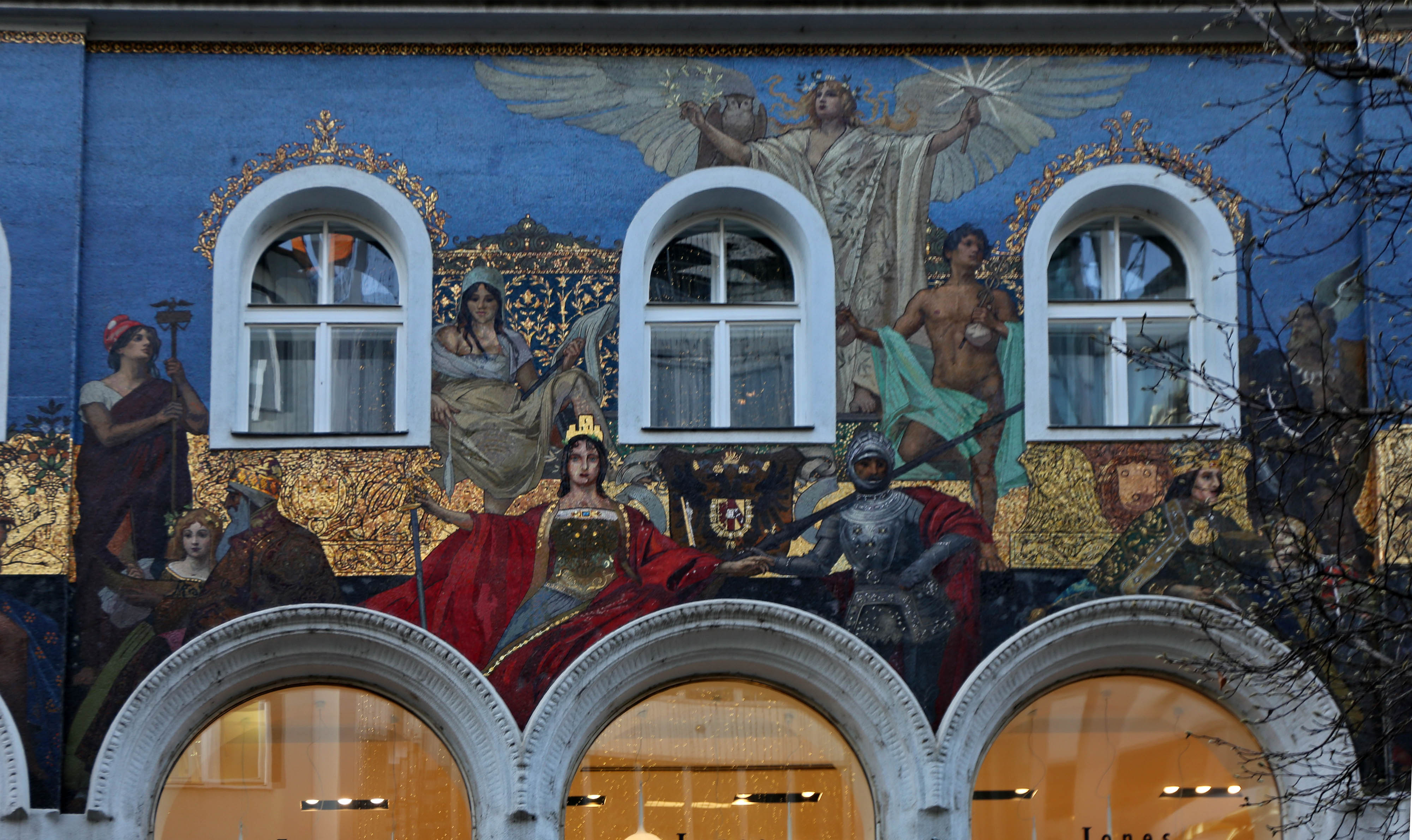
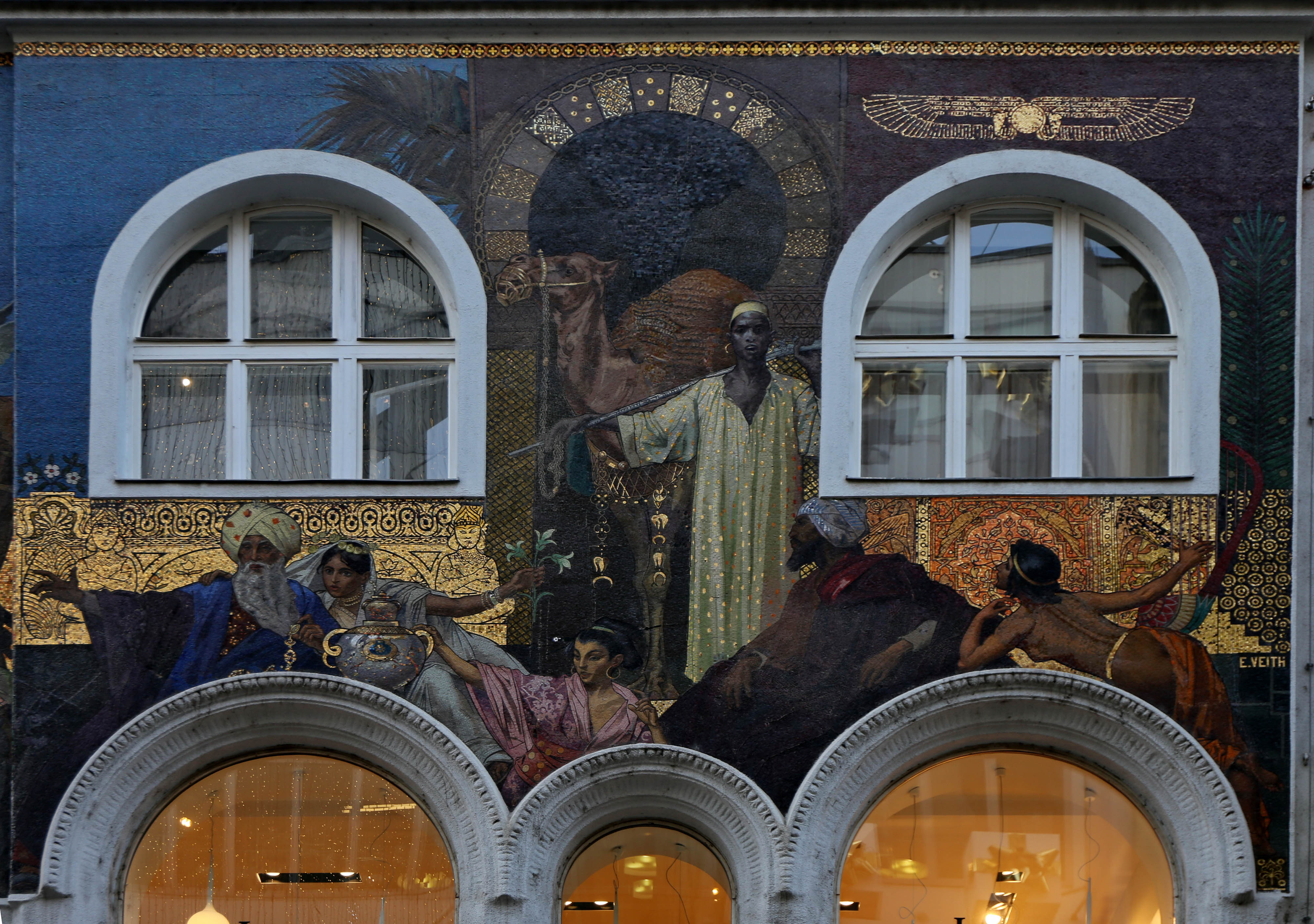
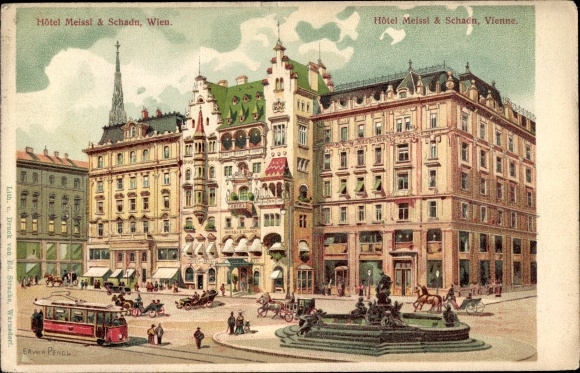
During the season of the great exhibitions in Vienna from late autumn to early spring, one often walks along the Kärntnerstraße which leads from Stephansdom to the museums. On the corner where you have to turn to the Albertina, an unusual mosaic running across the entire second floor of a building attracts your attention among the hypermodern façades of the elegant shopping street. The figures in the mosaic symbolize different peoples. If one carefully decyphers their identities, they add up to the ethnography of the five continents.


The central axis of the building is, of course, filled with allegories of Europe, with the coat of arms of Austria in the center, surrounded by a woman symbolizing the city of Vienna and an armored German knight. Above them, a man and a woman symbolize trade and industry, the vocations of Europe. From the characteristic peoples of Europe, we can see on the left a Frenchman with a revolutionary Frygian cap, and an Italian with a Doge’s hat, and on the right two hard-to-identify peoples – perhaps an ancient German and one of the lucky Eastern Europeans. At the top of the group rises the genius of Light, which floods all the other continents with the light from here.


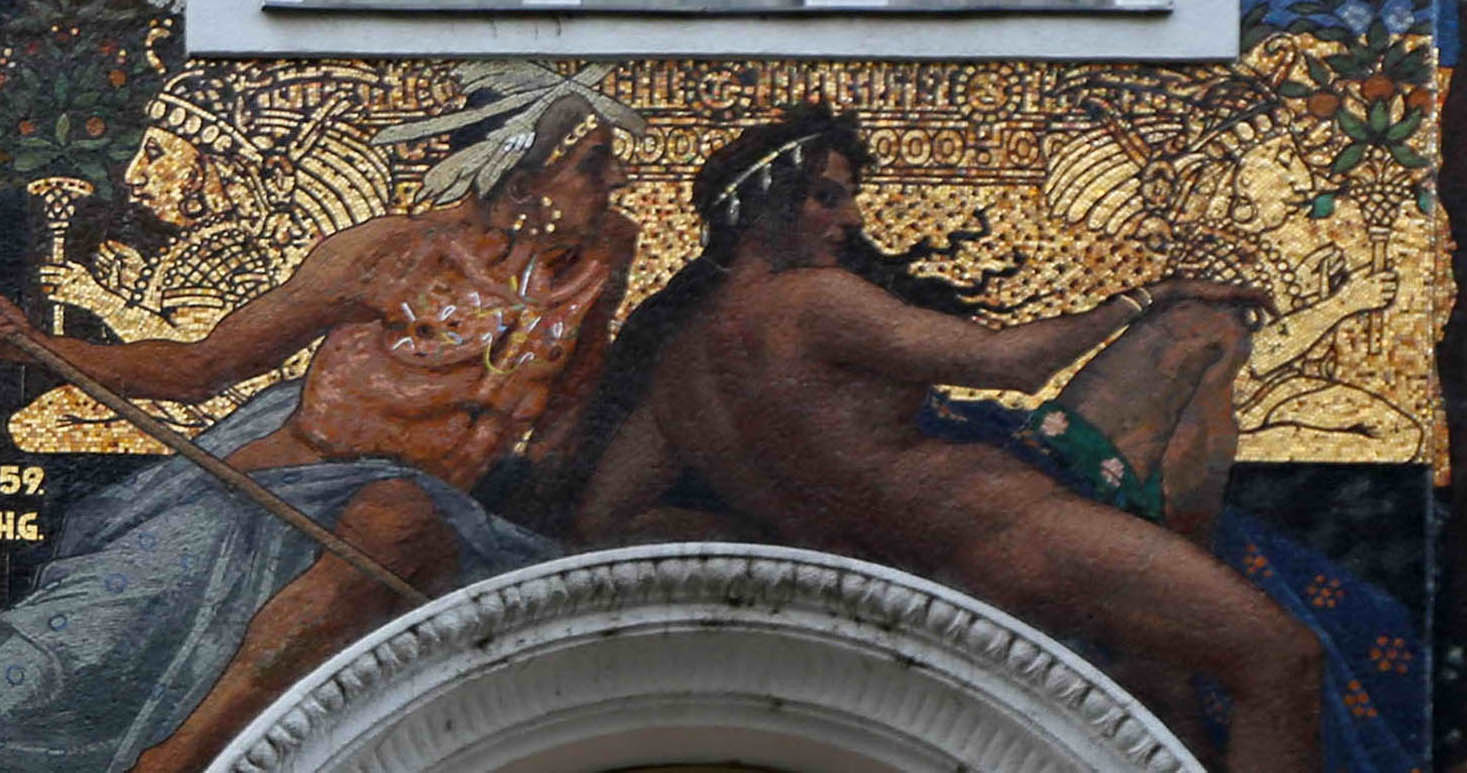
On the left axis, the peoples of the New World are lying in happy idleness, a mixture of Indians and Gauchos. Beneath the window, a golden Mayan motif evokes the highest level of civilization they have ever achieved. The pose of the Indian woman evokes the river statues of the Donner Fountain in the neighboring Neumarkt, as well as Michelangelo’s Medici epitaphs. In a strange way, an Austrian Old Shatterhand also appears among them in wild western dress, who brings them the light of Europe and the flag of Austria on a white horse.


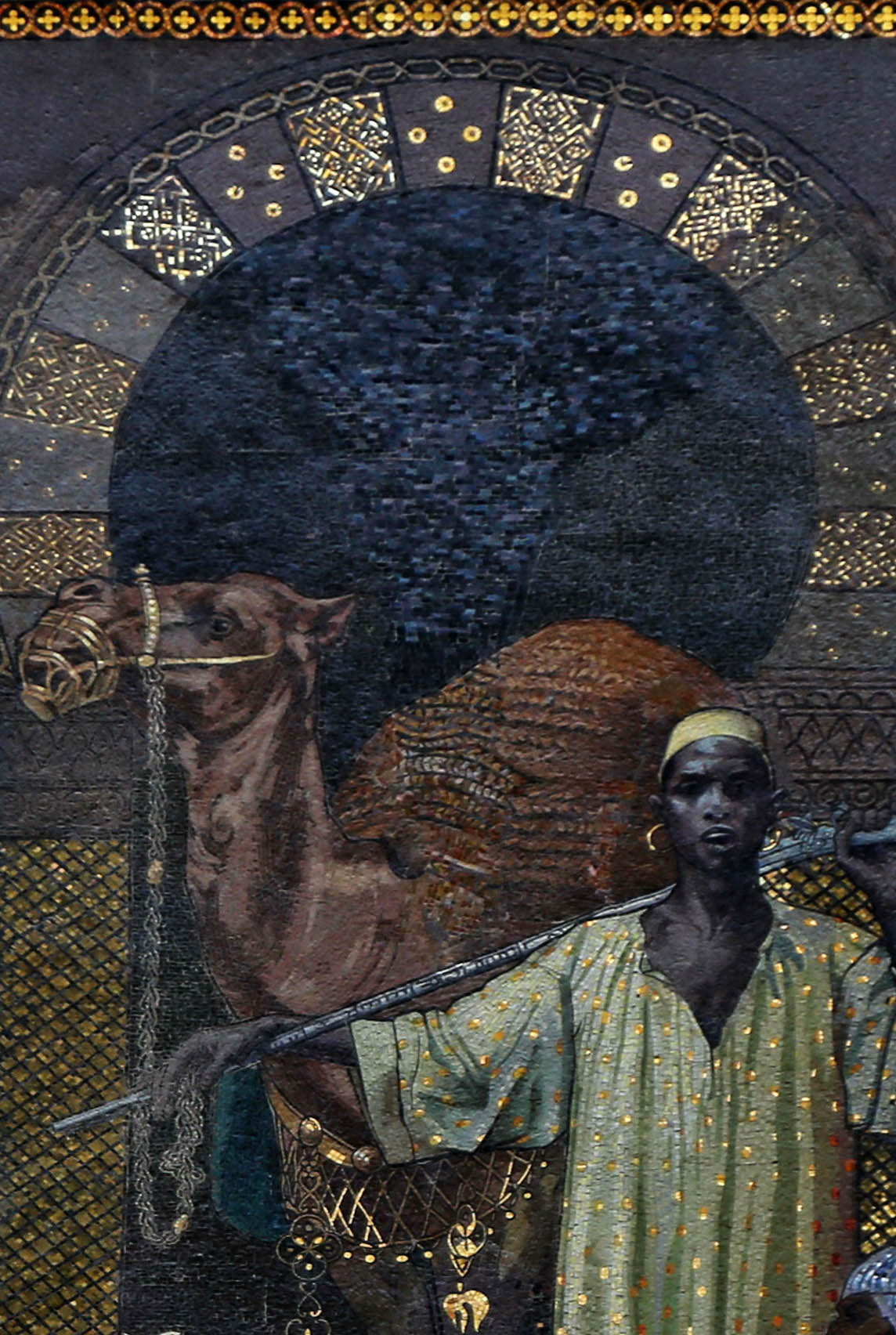
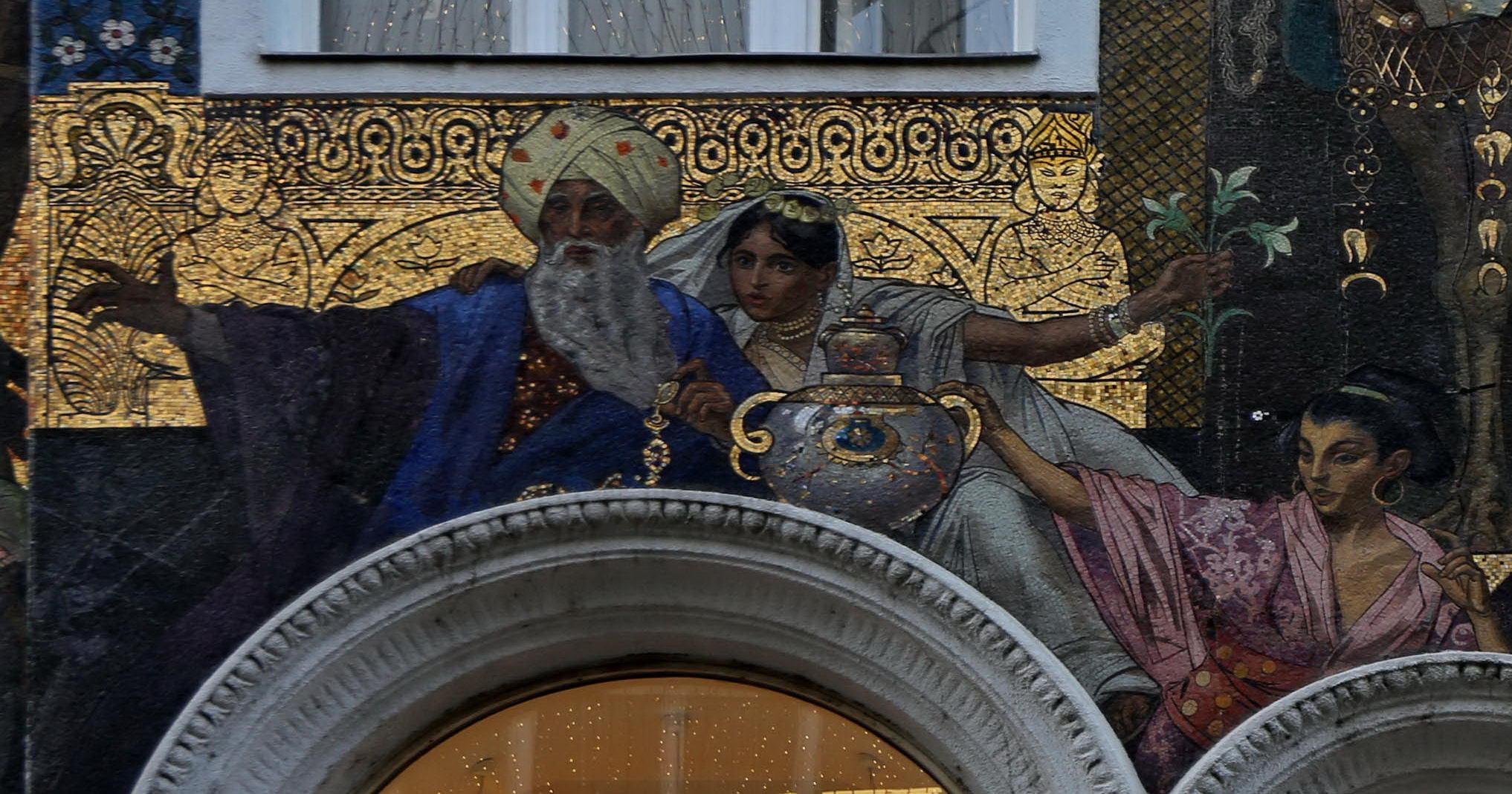
In terms of composition and motifs, the third axis to the right is the most exciting one, with the allegories of the peoples of the East. In the middle, between the two windows, opens a horseshoe-shaped Andalusian Moorish gate, through which a young black camel driver steps out, leading his camel on a bridle. To the left is an Indian couple, to the right an Arab one: the stereotypical attribute of the former is the incense, and of the latter, the seductive odalisk. Between the two couples, a Japanese lady in a kimono holds a Chinese vase, alluding to the Japonisme of the turn of the century. The background of the Indian couple includes a stylized Javanese pattern, of the Arabians a Persian rug.


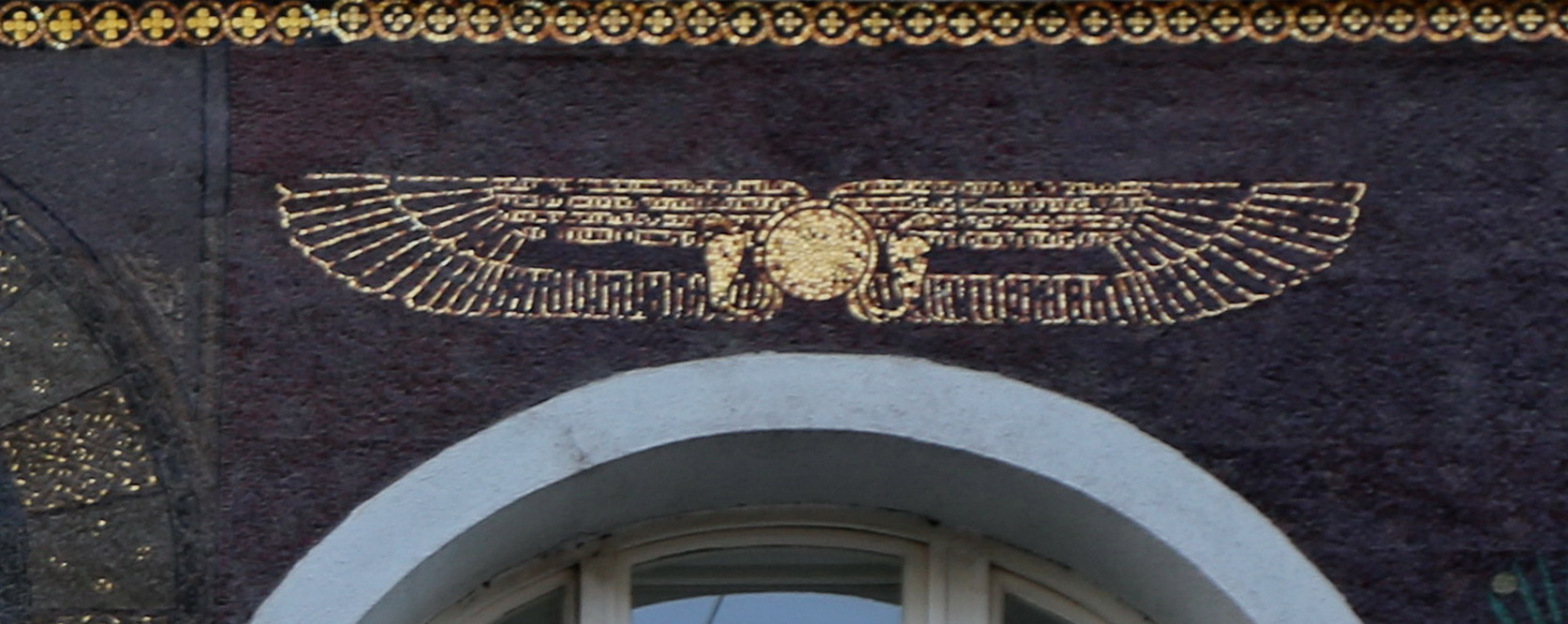
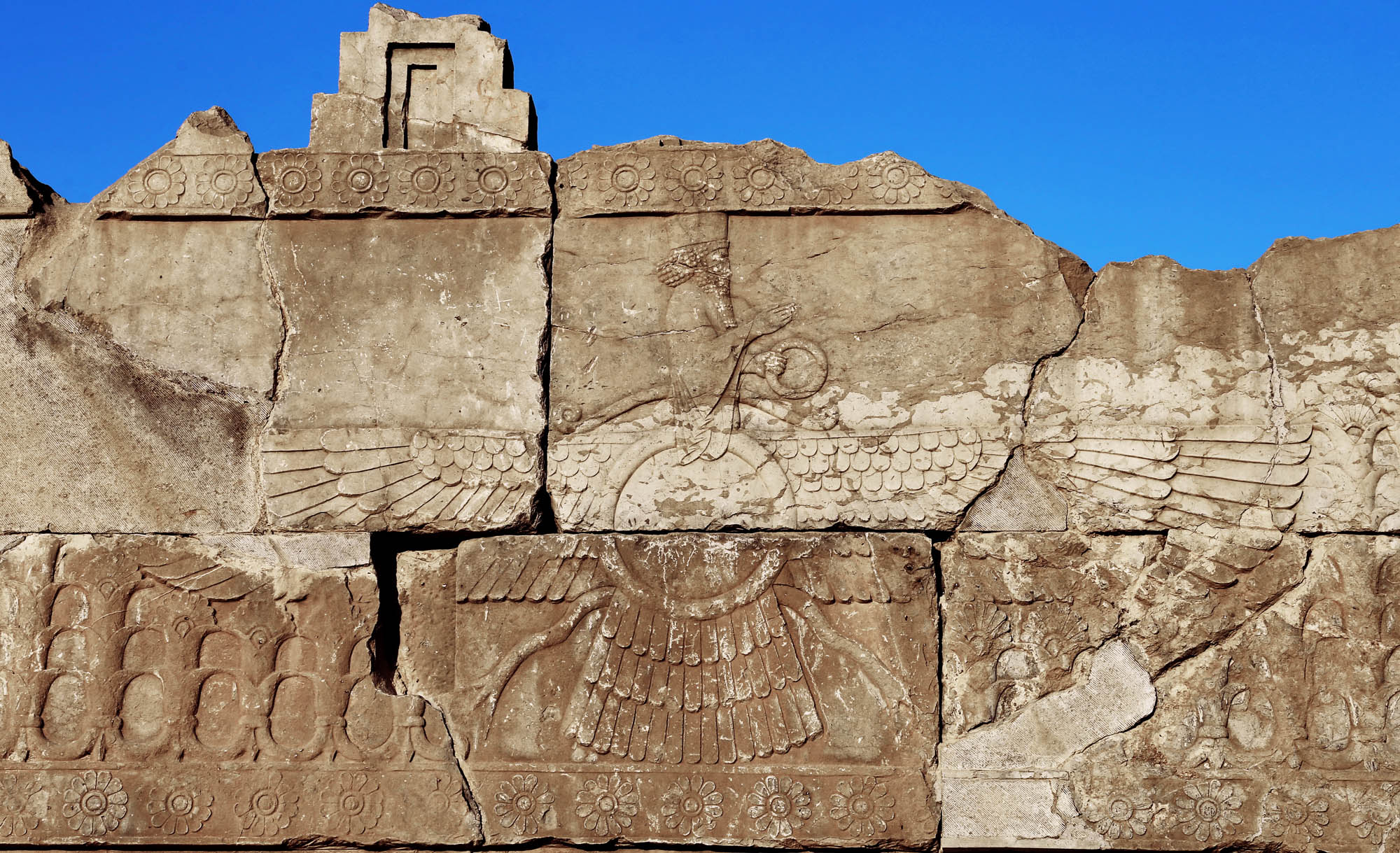
And the most peculiar motif: to the right of the horseshoe-arched gate, above the window, there is a faravahar, the identity symbol of the Iranian Zoroastrians, an allegory of God with the extended wings. True, a little arbitrarily transformed: the usual blessing male figure is missing from the middle of it, and the two bird feet are reinterpreted as cobras. It seems that the artist had already seen the motif, but did not understand it, or considered it a freely variable oriental decorative element.


Where did a Viennese artist see the Zoroastrian symbol of God at the turn of the century? It might be surprising, but he had quite a few occasions to. As Encyclopaedia Iranica describes in detail, commercial and later diplomatic, military and cultural relations between Austria and Persia developed greatly during the 19th century. The Shah, struggling with the pliers of Russia and Britain, found an external ally in Austria, still a great power at the time. From here he asked for support and specialists for the modernization of Persian education and military technology, and there was a considerable Austro-Persian trade between the ports of Trieste and Trabzon. Shah Naser-al-Din, who was of the same age as Francis Joseph and who took the throne in the same year of 1848, also took part in the 1873 Vienna World’s Fair, and, after his Austrian visit in 1878, also in the 1891 Vienna Carpet Show, which had a special focus on the Persian carpet industry. A multitude of enthusiastic Austro-Hungarian Orientalists visited the monuments of Persia and published their experiences at home. And they did not overlook the exotic faravahar.

The faravahar in Persepolis, on the 5th-c BC palace of King Darius, on which many 19th-century Austro-Hungarian travelers left their carved signatures

What building could have been adorned with such magnificent mosaics? Nowadays, the ground floor houses a currency exchange, which would somehow justify the display of the peoples of the world, but upstairs there is a clothing store, which obviously would have been completely uninteresting to a significant part of the peoples depicted.

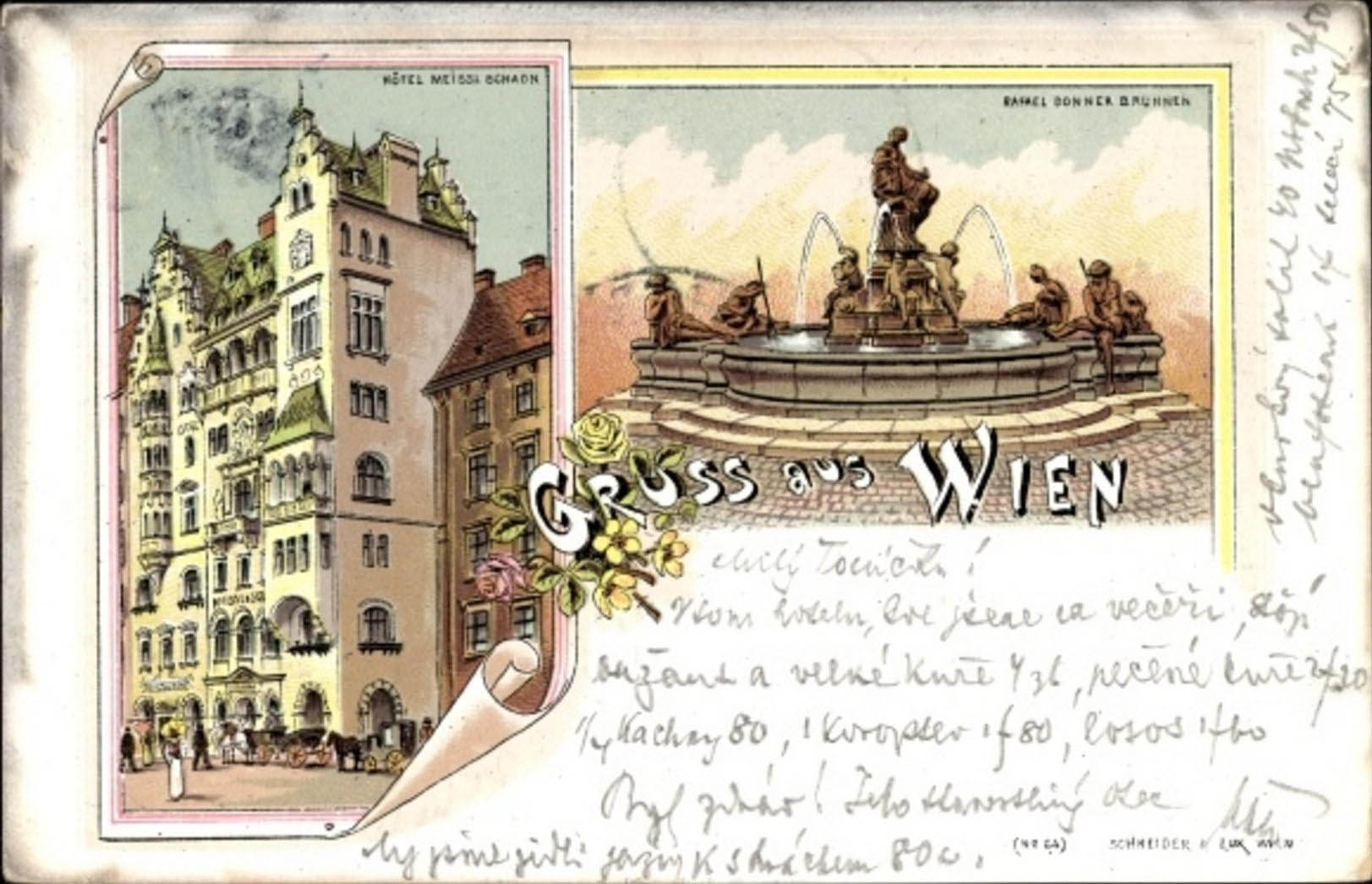
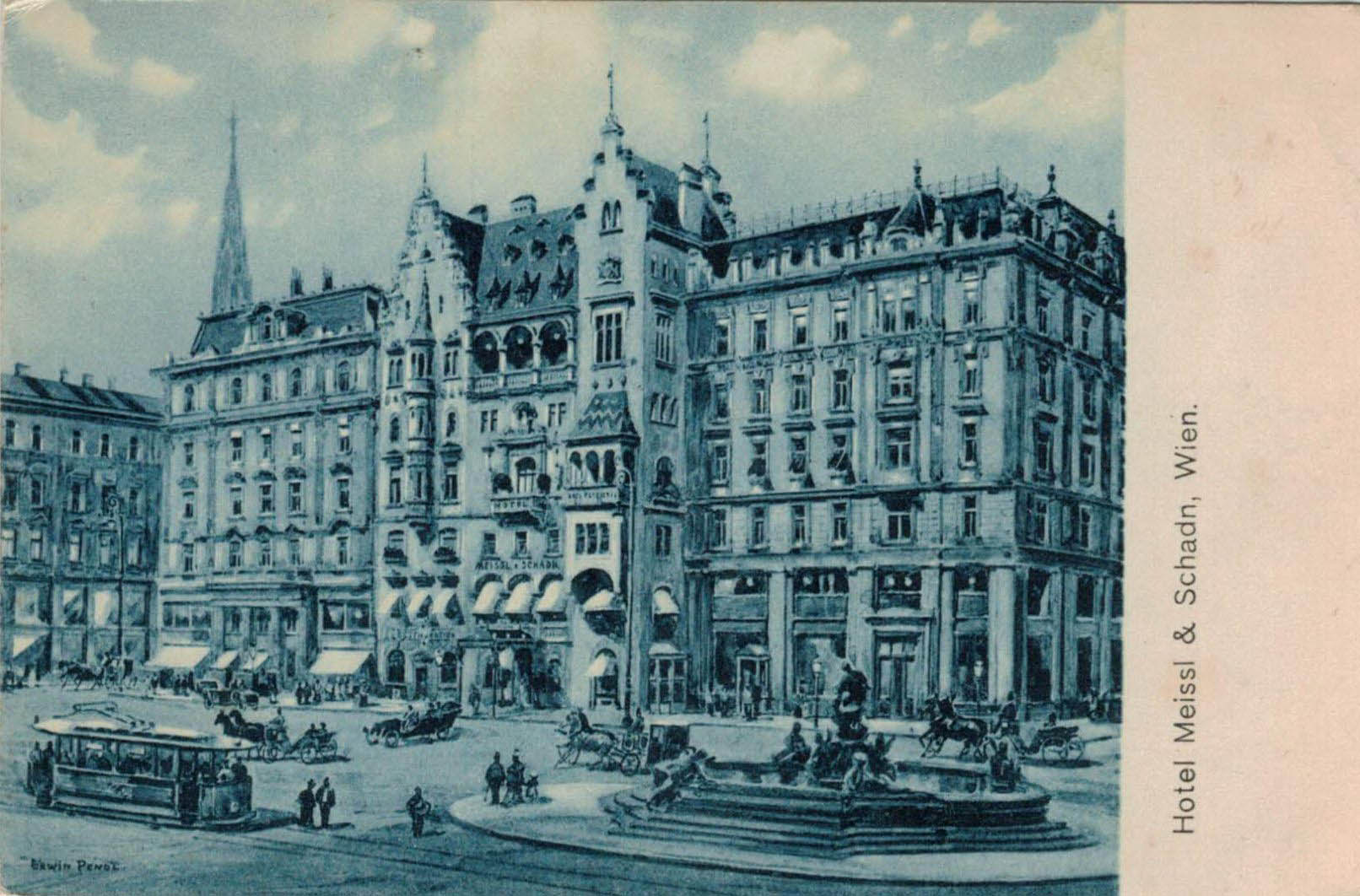
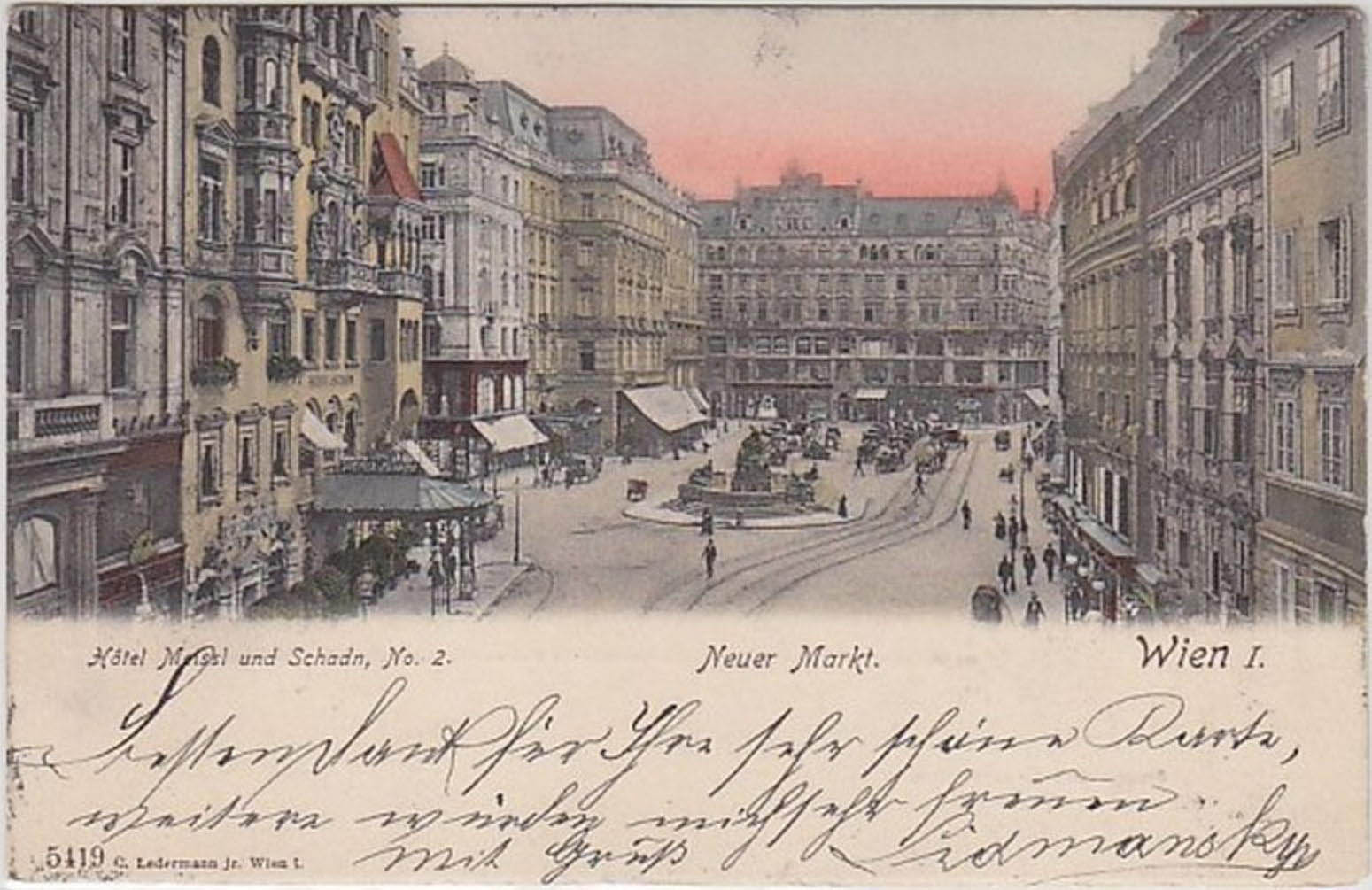
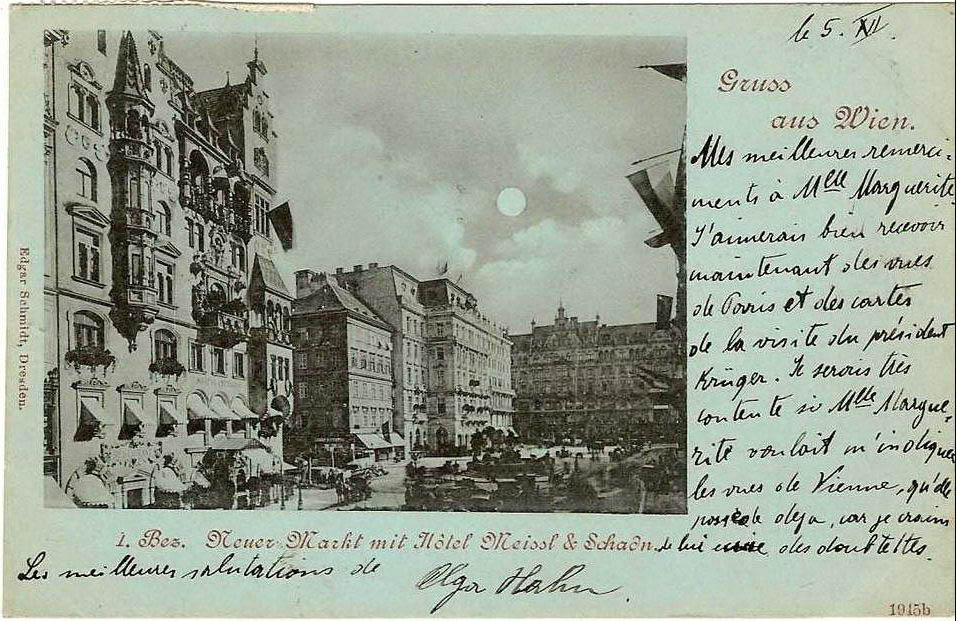
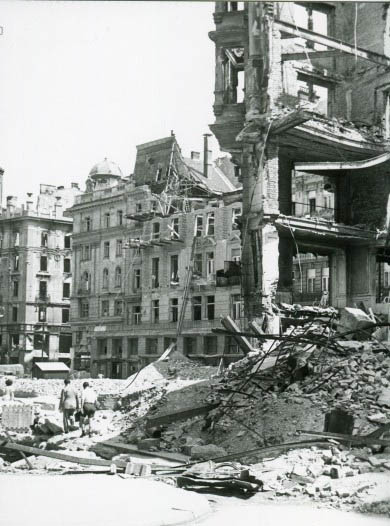
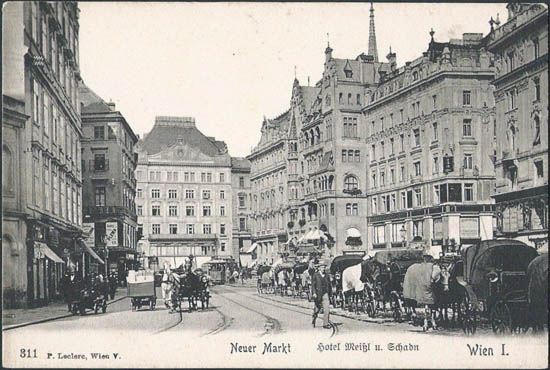
But nowadays, the rest of the building does not even look as it did in its heyday, at the turn of the century, when it was visited from its Kärtnerstraße side by all the peoples of the world, and from the Neuer Markt by the elite of Vienna. In fact, the block, built in 1894-1896 in the Romantic Neo-Gothic style, was the Hotel & Restaurant Meissl & Schadn. From Kärtnerstraße, one of Vienna’s most elegant hotels, whose guests are referenced in the mosaic of the façade made by Eduard Veith, the only element surviving from the building, which was bombed by the Americans and looted and set on fire by the Soviets. And from the Neuer Markt it was one of the best restaurants in the city, praised by contemporary authors as “Rindfleischparadies”.


In fact, the restaurant of Meissl & Schadn offered no less than twenty-four beef dishes with ten different garnishes, all following centuries-old Viennese recipes. It was a privilege to dine here that only Vienna’s elite could enjoy. It is no coincidence that on October 16, 1916 the socialist Friedrich Adler shot dead Prime Minister Count Karl Stürgkh at the dining table of the Groser Speisesaal here in protest against the war. (Count Stürgkh also signed Franz Joseph’s edict To my Peoples). The assassination made both Count Stürgkh and Adler a martyr – the former, in his death, and the latter, during his lifetime – and it further enhanced the reputation of the restaurant. So much that the really high-caliber authors – Karl Kraus, Egon Erwin Kisch, Maximilian Harden – only then devoted articles to the restaurants, in which, in addition to issues of political justice, they also wrote about the other virtues of the dining table. But they were all surpassed by Joseph Wechsberg, whose recollection of Meissl & Schadn’s Tafelspitz is both an anthem to Viennese cuisine and to the disappeared old Vienna.

Joseph Wechsberg, like so many who made the imperial city great, came from the provinces, of a Moravian Jewish family. After studying in Vienna and Paris, he became a journalist in Prague. The Czech government sent him to America in 1938 – just in time – to promote the Czech position on the Sudetenland. From there, he only returned in 1943 as a U.S. Army correspondent. From then on, he wrote only in English, promoting to the American public the disappeared Europe in which he grew up. In his book Blue Trout and Black Truffles: Peregrinations of an Epicure, an apotheosis of European cuisine, published in 1954, he devotes a separate chapter to the beef menu of the former Meissl & Schadn.


“The Hofrat’s Tafelspitz

Few Americans think of boiled beef as the gastronomic treat it is known for in central Europe. In Vienna there was a restaurant that was held in high esteem by local epicures for its boiled beef – twenty-four different varieties of it, to be exact.

The restaurant was Meissl & Schadn, an eating-place of international reputation, and the boiled beef specialties of the house were called Tafelspitz, Tafeldeckel, Rieddeckel, Beinfleisch, Rippenfleisch, Kavalierspitz, Kruspelspitz, Hieferschwanzl, Schulterschwanzl, Schulterscherzl, Mageres Meisel (or Mäuserl), Fettes Meisel, Zwerchried, Mittleres Kügerl, Dünnes Kügerl, Dickes Kügerl, Bröselfleisch, Ausgelöstes, Brustkern, Brustfleisch, Weisses Scherzl, Schwarzes Scherzl, Zapfen, and Ortschwanzl.

The terminology was bound to stump anybody who had not spent the first half of his adult life within the city limits of Vienna. It was concise and ambiguous at the same time; even Viennese patriarchs did not always agree exactly where the Weisses Scherzl ended and the Ortschwanzl began. Fellow Austrians from the dark, Alpine hinterlands of Salzburg and Tyrol rarely knew the fine points of distinction between, say, Tafelspitz, Schwarzes Scherzl and Hieferschwanzl – all referred to in America as brisket or plate of beef – or between the various Kügerls. Old-time Viennese butchers with the steady hand of distinguished brain surgeons were able to dissect the carcass of a steer into thirty-two different cuts, and four qualities, of meat. Among the first-quality cuts were not only tenderloin, porterhouse, sirloin, and prime rib of beef, as elsewhere, but also five cuts used exclusively for boiling: two Scherzls, two Schwanzls, and Tafelspitz. Unlike in present-day America, where a steer is cut up in a less complicated, altogether different manner, in Vienna only the very best beef was good enough to be boiled.

You had to be a butcher, a veterinarian, or a Meissl & Schadn habitué of long standing to know the exact characteristics of these Gustostückerln. Many Viennese had been born in the Austro-Hungarian monachy’s provinces of Upper Austria, Serbia, Slovakia, South Tyrol, Bohemia, or Moravia. (Even today certain pages of the Vienna telephone directory contain as many Czech-sounding names as the Prague directory.) These ex-provincials were eager to obliterate their un-Viennese past; they tried to veneer their arrivisme; they wanted to be more Viennese than the people born and brought up there. One way to show one’s Bodenständigkeit was to display a scholarly knowledge of the technical terms for boiled beef. It was almost like the coded parlance of an exclusive club. In Vienna a person who couldn’t talk learnedly about at least a dozen different cuts of boiled beef, didn’t belong, no matter how much money he’d made, or whether the Kaiser had awarded him the title of Hofrat (court councilor) or Kommerzialrat.

The guests of Meissl & Schadn were thoroughly familiar with the physical build of a steer and knew the exact anatomical location of Kügerls, Scherzls, and Schwanzls. At Meissl & Schadn, precision was the keynote. You didn’t merely order “boiled beef” – you wouldn’t step into Tiffany’s and ask for “a stone” – but made it quite clear exactly what you wanted. If you happened to be a habitué of the house, you didn’t have to order, for they would know what you wanted. A Meissl & Schadn habitué never changed his favorite cut of boiled beef.

The restaurant was part of the famous Hotel Meissl & Schadn on Hoher Markt, which was popular with incognito potentates for its discreet, highly personalized service. The chambermaids looked like abesses and knew the idisyncrasies of every guest. If a man came to Meissl & Schadn who hadn’t been there for ten years, he might find a small, hard pillow under his head because the abbess hadn’t forgotten that he liked to sleep hard.

There were two restaurants, the Schwemme on the ground floor – a plebeian place with lower prices and checkered tablecloths – and the de-luxe Restaurant on the second floor, with high prices and snow-white damask tablecloths. The upper regions were under the command of the great Heinrich, who was already a venerable octogenarian when I first saw him in the late twenties.


* * *


He was a massive, corpulent man with the pink cheeks of a healthy baby and the wisdom of a Biblical patriarch. His hands and jowls were sagging and he had serious trouble keeping his eyes open. He never budged from his command post near the door, from where he could overlook all tables, like an admiral on the bridge of his flagship surveying the units of his fleet. Few people in Vienna had ever seen an admiral in the flesh, but everybody agreed that Heinrich looked more an admiral than many a real one. Once in a while his pulse would stop beating and his eyelids would droop, and he would remain suspended between life and death, but the défilé of the waiters carrying silver plates with various cuts of boiled beef never failed to revive him.

Heinrich had spent his life in the faithful service of emperors, kings, archdukes, Hofräte, artists, and generals, bowing to them, kissing the hands of their ladies, or wives. His bent back had taken on the curvature of the rainbow, reflecting the fine nuances of his reverence, from the impersonal half-bow, with which he would dispose of the nouveaux riches, to the affectionate deep-bow, which was reserved for his old habitués, impoverished court councilors, and aristocrats living from the sale of one painting to the next.

Between Heinrich and his habitués there ruled a highly civilized, strictly regulated protocol. Upon entering the restaurant the guest would be greeted by Heinrich – or, rather, by Heinrich’s bent back expressing the exact degree of respect in which the guest was held. The depth of Heinrich’s bow depended upon the guest’s social standing, his taste for, and his knowledge of, boiled beef, and his seniority. It took a man from twenty-five to thirty years to earn the full deep-bow. Such people were greeted by “Meine Verehrung, küss die Hand”, which was breathed rather than whispered, and never spoken; Heinrich wasn’t able to speak any more.

The guest would be taken to his table by one of Heinrich’s captains. Each guest always had the same table and the same waiter. There was mutual respect between waiter and guest; when either one died, the other would go to his funeral. The waiter would hold the chair for the guest; he would wait until the guest was comfortably seated. One of Heinrich’s axioms was that “a man doesn’t enjoy his beef unless he sits well.”

When the guest was seted, the waiter would stand in front of him, waiting for the guest’s order. That was a mere formality, since the waiter knew what the guest wanted. The guest would nod to the waiter; the waiter, in turn, would nod to the commis; and the commis would depart for the kitchen.

The commis’s order to the cooks had the highly personal flavor that distinguished all transactions at Meissl & Schadn. It would be “The Schulterscherzl for General D.” or “Count H. is waiting for his Kavalierspitz.” This implied a high degree of finickiness on the part of the habitué, who wouldn’t be satisfied with so narrow a definition as the Kavalierspitz; his refined plate demanded that he gets his private, very special part of a Kavalierspitz.

After a suitable interval the commis would bring in the meat on a massive, covered silver plate. Some people would have a consommé before the meat; clear consommé was the only preceeding dish Heinrich approved of. The commis was followed by the piccolo, an eight-year-old gnome wearing a tiny tuxedo and a toy bow tie. The piccolo’s job was to serve the garniture: grated horseardish, prepared with vinegar (Essigkren), with apple sauce (Apfelkren), or with whipped cream (Oberskren); mustard, pickles, boiled potatoes, boiled cabbage, spinach, or anything else the guest wanted with the meat.

An elaborate ritual would ensue. The waiter had been standing motionless, watching his subordinates as they put the various plates on a small serving-table next to the guest’s table. Now the waiter would step forward, lift the cover off the silver plate, and perform the “presentation” of the meat. This was another mere motion, since the guest’s enthusiastic approval was a foregone conclusion. The waiter would serve the meat on a hot plate, place it on the table in front of the guest, make a step back, and glance at Heinrich. Then the guest, in turn, would glance at Heinrich.

There followed a minute heavy with suspense. From his command post Heinrich would review the table, with a short, sweeping glance taking in the meat, the garniture, the accessories, the setting, the position of chair and table. It was hard to understand how he managed to see anything through the narrow slit of his almost closed eyelids; but see he did. He would give a slight nod of approval to the waiter, and to the guest. Only then would a genuine habitué start to eat.


* * *


Words of ordinary prose have generally been held inadequate to express the delights of boiled beef at Meissl & Schadn. Many Austrian poets were moved to rhymed praise while they regaled themselves on a well-night perfect Hieferschwanzl. But poets, especially Austrian poets, are rarely given to tenacity of purpose, and somehow the poets didn’t bother to write down their poems after leaving the restaurant. Richard Strauss, an ardent devotee of the Beinfleisch, often considered writing a tone poem about his favorite dish, but after he finished his ballet Schlagobers (Whipped Cream), he thought that another major composition devoted to an Austrian food speccialty might be misinterpreted by posterity and resented by his admirers in Germany, who, like most Germans, disliked Vienna. Strauss, not unaware of his considerable German royalties, dropped the project.

“Too bad he did,” a Viennese music-critic and Strauss-admirer said not long ago. “A tone poem on Beinfleisch might have surpassed even the transcendental beauty of Death and Transfiguration.

* * *


There was a reason for the excellence of the beef served at Meissl & Schadn. The restaurant owned herds of cattle that were kept inside a large sugar refinery in a village north of Vienna. There the steers were fed on molasses and sugar-beet mash, which gave their meat its extraordinary marble texture, taste, tenderness, and juice. The animals were slaughtered just at the right time, and the meat was kept in the refrigerators from one to two weeks.

In Vienna, in those days, boiled beef was not a dish; it was a way of life. Citizens of the Danube capital, venturing into hostile, foreign lands where boiled beef was simply boiled beef, would take Viennese cookbooks along that contained the anatomical diagram of a steer, with numbered partitions and subdivisions indicating the Gustostückerln. This was a wise precaution. Even in German-speaking lands the technical expressions denoting various cuts of beef differ from land to land. Vienna’s Tafelspitz (brisket), for instance, is called Tafelstück by the Germans and Huft by the German-speaking Swiss. A Viennese Beinfleisch is called Zwerchried in Germany and plat-de-côte among the Swiss.

* * *


Vienna’s boiled-beef-eaters are vehement chauvinists. They don’t recognize the American New England dinner, the French pot-au-feu, or the petite marmite.

“The meat of the petite marmite is cooked in an earthenware stock-pot,” a Tafelspitz scholar explained to me. “And the necks and wings of fowl are added. Incredible!” He shuddered slightly.

The Viennese experts take a dim view of boeuf saignant à la ficelle, rare beef with a string, a great French dish. A piece of fillet is tightly wrapped around with a string, roasted quickly in a very hot oven, and dipped for sixty seconds – not for fift-eight or sixty-two, but for sixty – in boiling consommé, just before it is served. The juice is kept inside the pinkish meat by the trick of quick roasting and boiling.

But the Viennese do recognize Tellerfleisch, another local speciality. Tellerfleisch (the name means “plate meat”) is eaten only between meals. It consists of a soup plate filled two thirds with clear beef soup, boiled carrots, split green onions, chopped parsley, with a piece of almost but not quite boiled beef and several slices of marrow sprinkled with chopped chive.

There were two schools of cooking beef in Vienna. People who cared more about a strong soup than about the meat put the raw meat into cold water and let it cook gently, for hours, on a slow fire. They would add parsley, carrots, green onions celery, salt, and pepper. After an hour the white foam that had formed on top was skimmed off. Sometimes half an onion, fried on the open range plate, was put in to give the soup a dark color. Others, who wanted their beef juicy and tender, put it straight into boiling water and let it simmer. This would close the pores of the meat and keep the juices inside.

* * *


The Meissl & Schadn was hit by American bombs in March 1945. A few weeks later, Red Army liberators tossed gasoline-sokaed rags and gas into the half-destroyed building and set fire to it. The hotel burned down. But the tradition that had made Meissl & Schadn a great restaurant had come to an end long before. The restaurant was a creation of the Habsburg monarchy; its prosperity and decay reflected the greatness and decline of the Danube empire. With the help of Heinrich, it survived the hectic twenties, but when he died, the restaurant was doomed.

“People would come in and ask for ʻboiled beef’,” an ex-habitué now remembers. “It was shocking.”

Vienna’s butchers have forgotten the fine points of cutting up a steer, and the chefs don’t know how to slice a Tafelspitz. The small pieces at the pointed end of the triangular Tafelspitz are cut lengthwise, but the large, long, fibrous, upper end must be cut along its breadth.

Today most Viennese restaurants serve Rindfleisch or Beinfleisch, without any specification. The cattle are raised, and the meat is cut and cooked without the loving care that made it such a treat. It is often tough and dry, and served by ignorant waiters who recommend to their customers expensive “outside” dishes, such as Styrian pullet or imported lobster. The waiters are more interested in the size of their tips than in the contentment of the guest’s palate. Restaurant-owners, operating on the get-rich-quick principle, no longer keep herds of cattle inside sugar refineries. It wouldn’t be profitable, they say; besides, many refineries are located in the Soviet Zone of Austria.

* * *


Where Meissl & Schadn once stood, there is now an office building. Most of Heinrich’s habitués are dead, and the few survivors have been scattered to the winds by the last war. Once in a while two of them may meet in an undistinguished Viennese restaurant whose menu offers a Tafelspitz, a first-quality cut of boiled beef which, the old habitués can see at a glance, is really Kruspelspitz, a fourth-quality cut, somewhat comparable to an American chuck or round of beef.

At such moments of gloom the old habitués are likely to remember, with a nostalgic sigh, the day in the late twenties when old, dignified Hofrat von B., one of Heinrich’s favorite guests, came into the dining-room of Meissl & Schadn, exactly at twelve fifteen, as he had done almost every day in the past twenty-seven years, and was ceremoniously guided to his table. Everybody knew, of course, that the Herr Hofrat came for “his” Tafelspitz, the narrow part of that special cut which almost, but not quite, touches another first-quality Viennese cut, called Hieferschwanzl. If the Kaiser himself had come in, he wouldn’t have got the Hofrat’s particular piece of Tafelspitz. Heinrich was loyal to his habitués.

On that day, as on any other day, there was the familiar ceremonial after the Hofrat had sat down. In due time the commis appeared with the covered silver plate, followed by the piccolo who carried the Apfelkren. But at this point the waiter did not lift the cover off the silver plate to “present” the meat, as he’d always done. Instead he discreetly glanced at Heinrich. Then the old man himself advanced toward the Hofrat’s table, slowly and cautiously, like a large ocean liner moving toward the pier. Everybody looked up at him. It had become very quiet in the dining-room.

Heinrich bent his back until his mouth almost touched the Hofrat’s ear.

“I’m disconsolate, Herr Hofrat,” he whispered. “A regrettable accident in the kitchen. The Hofrat’s Tafelspitz has been cooked too long. It has –” Heinrich didn’t have the strength to finish the sentence, but the tips of his fingers twitched, indicating that the meat had dissolved in the soup like snowflakes in the March sunshine. He was very pale and his jowls were sagging. He looked as though he had been dead for a while and had been resurrected by mistake.

His breath almost gave out, but with a supreme effort he continued: “I have taken the liberty to order for the Herr Hofrat the rear part of the Hieferschwanzl, close to, and very much like, the Tafelspitz.

He made an effort to open his eyes and nearly succeeded. At his nod, the waiter lifted the cover off the plate with a flourish and presented the meat. There it was, a large, beautiful cut, tender and juicy, sprinkled with consommé, as delicate and enticing a piece of boiled beef as you could find anywhere in the world.

The Hofrat sat up stiffly. He cast one short, shocked glance at the meat. When he spoke, at last, his voice had the ring of arrogance – arrogance instilled in him by generations of boiled-beef-eating ancestors who had been around in Vienna in 1683 while the city fought off the assault of the Turks and saved – for a while, at least – Western civilization.

“My dear Heinrich,” the Hofrat said, with a magnificent sweep of his hand, and accentuating every single syllable, “you might just as well have offered me a veal cutlet.” A slight shiver seemed to run down his spine. He got up. “My hat and cane, please.”
He strode stiffly toward the door. Heinrich made his deepest full-bow, and he remained bent down until the Hofrat had left. But people sitting near Heinrich swear that there was a smile on his face. He looked almost happy.