 – the Day of Victory, the anniversary of the end of the Great Patriotic War. But since some years also the anniversary of the start of another patriotic war: this time not against the Fascist beast breaking in upon the Soviet Union, but against the American capitalism aspiring to the colanization of Russia. Yes, you remember well, it’s about NiKola.
The Deka brewery of Novgorod in 2005 announced intentionally on the Day of Victory their new product, the kvass NiKola. As the name shows – ni-Kola, that is, non-Kola – it has been represented and advertised up to the present as a patriotic counterblow against the invasion of Coca-Cola in Russia. We have described in detail how they, er, drew upon the novel Generation П by Boris Pelevin, how they have built a whole brand on his idea, and how all this verifies in an implicit way the intuition of Pelevin at the beginning of the 90’s about a dictatorship of pseudo-Slavic style and of a profound patriotic spirit to set in soon.
Shortly before the fourth anniversary we confronted the most recent offensive of NiKola, the NiKola Calendar for the year of 2009, which also exploits the glory of the Great Patriotic War as well as the vivid nostalgia to the retrospectively ennobled good old times with the paraphrases of the Soviet posters of the 30’s and 50’s. Below you can see all the pages of the calendar, side by side with the original posters.

“Beat!” (on the original poster: “Beat the enemy of the cultural revolution!”) Perhaps it is no chance that the series starts with this ukaz, easy to remember and to realize in any circumstances. It has been a favorite slogan of Soviet agitprop since as early as the Civil Wars, as it is attested by the Constructivist poster by El Lisitsky from 1919: “With a red wedge BEAT the white ones!” or by this leaflet in verse from 1941: “For the Soviet home land / Beat the German beast / Beat with bayonet, beat with grenade / Beat with what you want, but kill him!” The slogan on this poster of a temperance campaign can be also easily interpreted as diametrically opposed to the demand “Пей!” (Drink!). NiKola has only modified this archetype by somewhat transforming the shape of the bottle to the resemblance of… can you see what I see?


They did the same on the February page, on whose original the proletarian with a severe look stroke with his hammer bearing the inscription “Cultural Revolution” on a bottle of alcohol. His successor apparently finds it much more delightful to destroy his bottle of an indefinite content but with a characteristic shape. If it is about destroying at all… because the slogan долбанем signifies both “We strike on it!” and “We drink it out!”

As a little help, on every page of the calendar there appears a running footer with the slogan of NiKola: Квас – не Кола, пей НиКолу! “Kvass is no Cola. Drink NiKola!”


“Not even a drop!” – Because of its landscape format, the original poster was placed under its NiKola version, so there was some space left to include, as a parallel of the gesture, V. I. Govorkov’s iconic “Nyet!” poster (1954), the herald of the temperance campaigns re-launched after Stalin’s death.

The prototype of this calendar page also could only fit horizontally below. The original is an authentic Soviet slogan: “Alcoholism is the way to the degradation of personality.” The subject of the phrase on the calendar page, however, can be so clearly seen that it was superfluous to name it, so the slogan is: “The way to degradation!”


“The dealer is the worst enemy!”

“Still not too late – stop it!”

“The sad end.” This image recalls a fashionable movement song of the period: “Sun never shines into the window of the prison…”

“Allez, up!”

“On such an unstable basis / no matter how firmly you stand, / you will surely ruin your life!” I guess that the text must be a quotation, although I have not found an original. If you know where from, tell it!

“Alcohol is the enemy of mind”, announced the original poster. The new one omitted “alcohol”, for everyone can see with his own eyes what the true enemy of mind is.

“To the trash with the vices!” The old version also added: “We decidedly break with the remnants of the past.” This second slogan has been obviously omitted from the new image which receives its legitimacy from the past.

“We will oppress it!” What? The old one tells it: “drinking!” On the new one the head of the snake already speaks for itself. But the original poster, probably made in the 1950s, is also a visual crosstalk with a famous agitpol poster from the 1930s: “We eradicate the spies and subversive elements, the Trockist and Bukharinist agents of Fascism!”


We have left for the end the cover of the calendar. On this, in fact, unexpectedly the enemy himself appears by directing to us the decisive question: “Chemicals or life?”
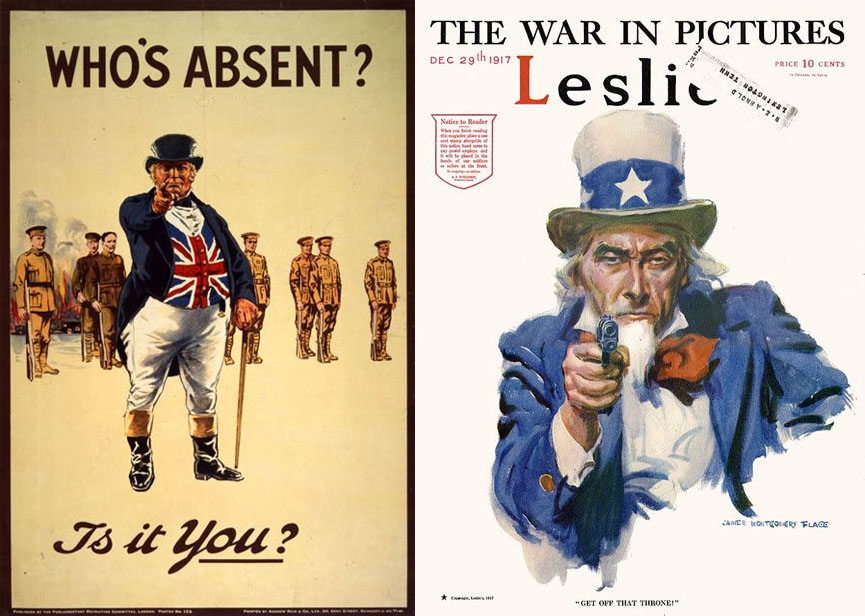
What’s that? What on earth is doing on a calendar of such a profound patriotic spirit the source of slough himself, Uncle Sam?
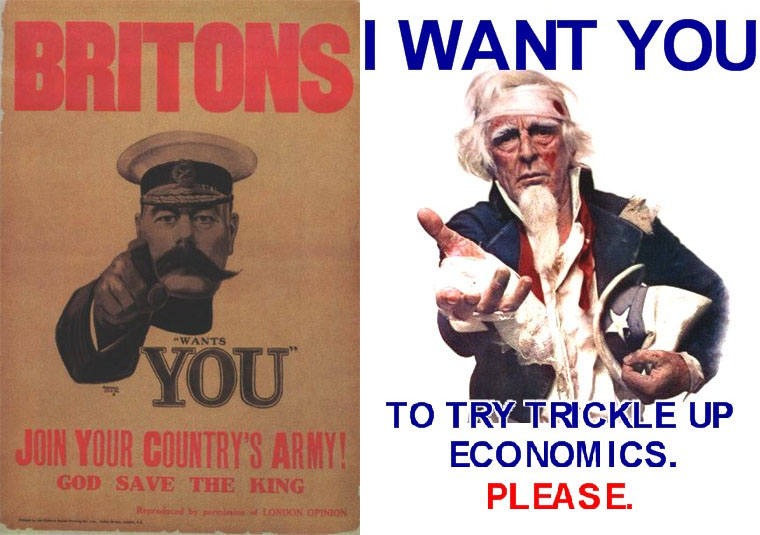
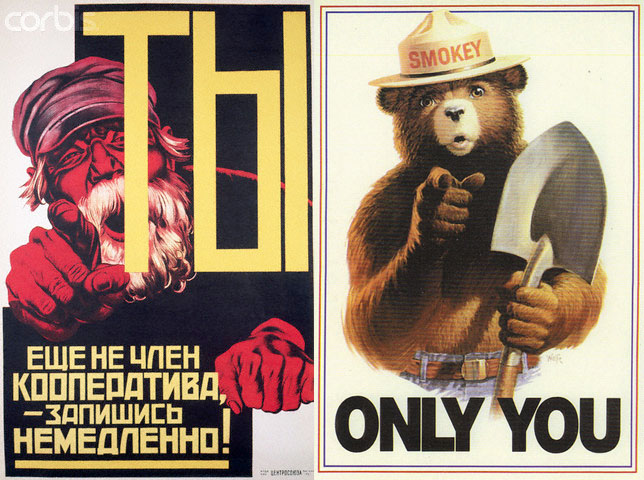
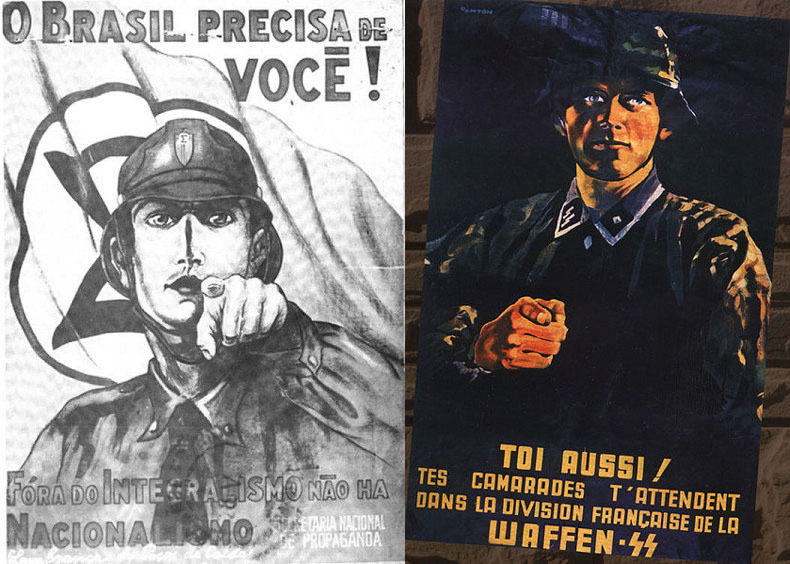
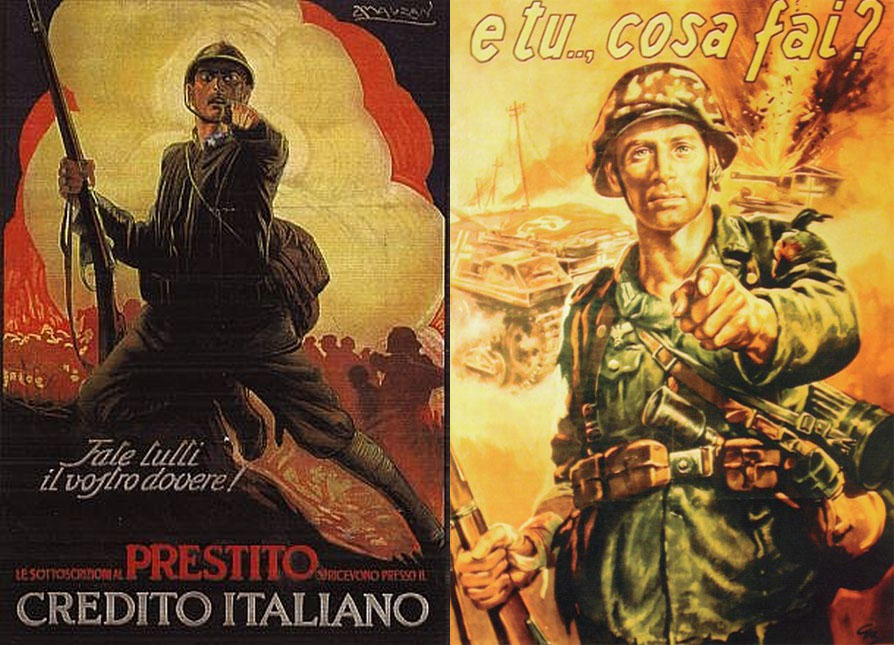
The genial motif of the First World War Anglo-American recruiting poster was used among others also by the Russians in the civil war of 1917-1921, namely both by the Whites and the Reds. Understandably, it was not the two White versions below, but the Red one, designed in 1920 by Dmitry Moor (“Did you sign up to volunteer?”) which has become just as iconic in the Soviet Union as the original version in the United States, so much that during the Great Patriotic War Moor redesigned it with the caption “How do you support the front?” This is why Gorbachev’s temperance campaign of 1985 resorted to its persuasive power, with the slogan “Say no to drinking!” And this one gave birth to the popular anti-temperance poster by Gleb Androsov asking point-blank the eternal question of Russian alcoholists: “Do you respect me?” [because if so, then you drink with me.]
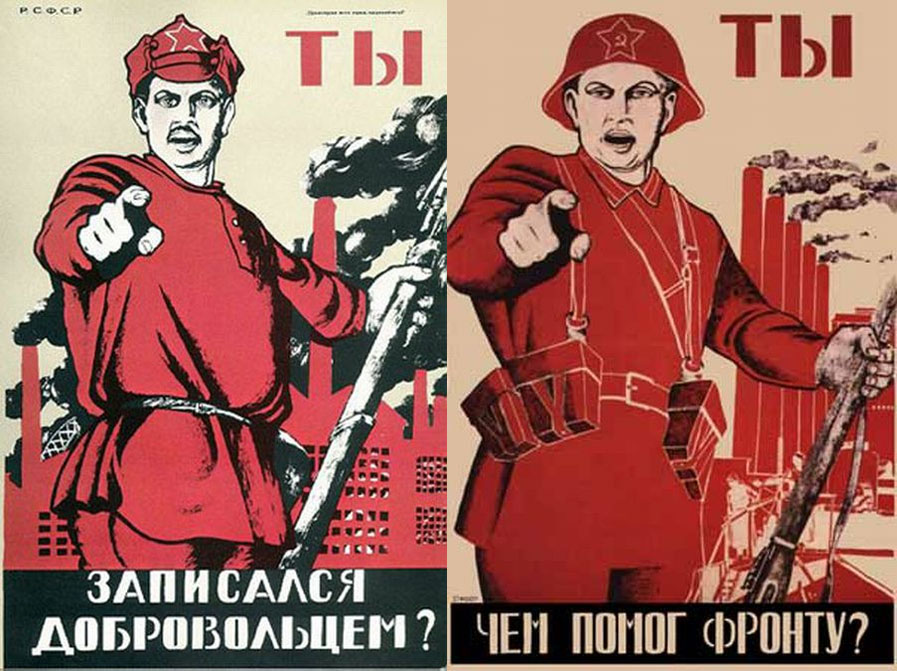
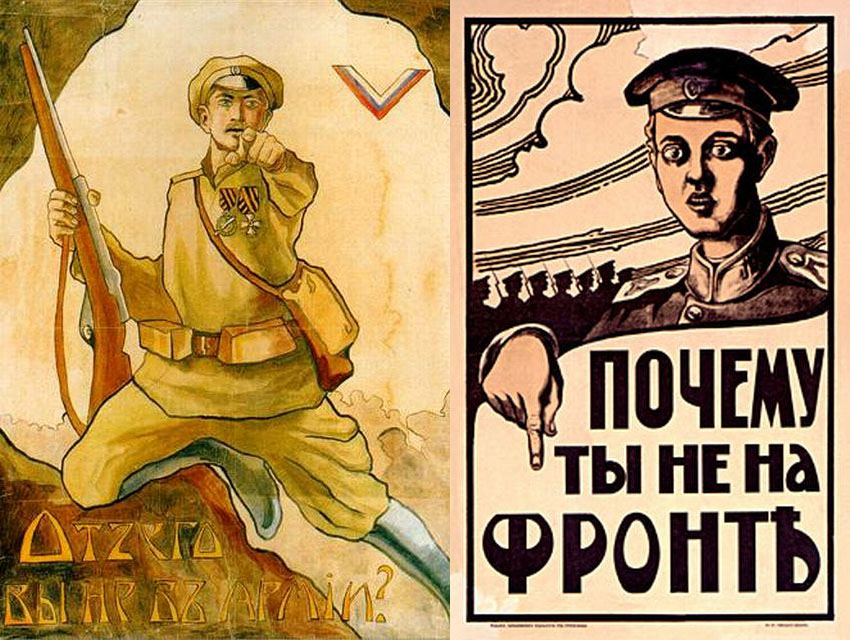
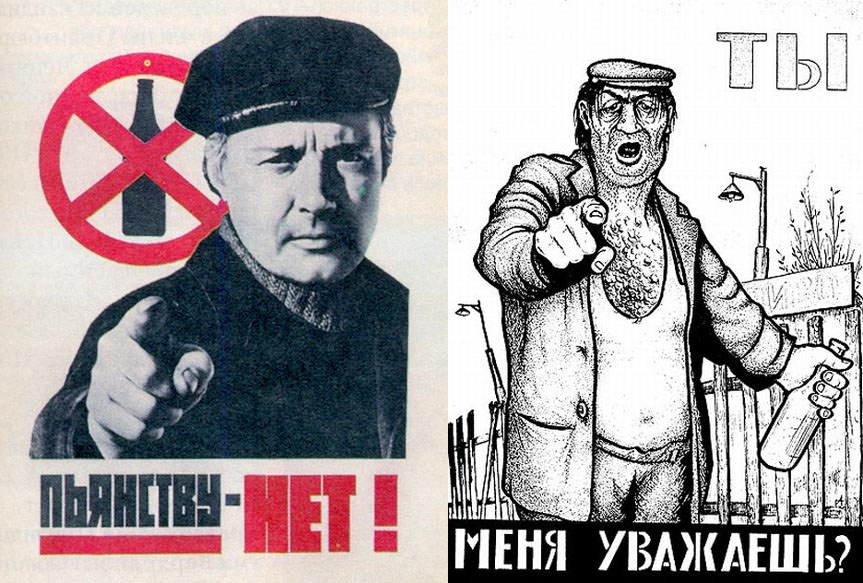
Just as during the Great Patriotic War the Soviet army had learned step by step the German war technology and turned it against the Fascist beast, so is here the challenging motif of the American recruiting posters, which in the meantime has become profoundly Russian, turned against the invader by NiKola standing up for life against chemistry. In war, as in love, there is no law.





-------------------------------
Commentary of Wang Wei:
The last poster – from Catalonia – has immediately brought to my mind the great tradition of Republican posters during the Spanish Civil War. One of the most innovative authors was Josep Renau, who made a characteristic series of photomontages. Of course he also fired his weapons against the two great American icons Coca-Cola and Pepsi-Cola. Here are two samples (from The American Way of Life, 1977):


 Come with us to…
 Atlantis
 Bestiary
 Bohemia+Prague
 Books, exhibitions, music, film
 Brave old world
 Caucasus
 Cemeteries
 Crimea
 Get to know the
 Images of the East
 Lightwriting
 Lwów/Lemberg
 Mallorca
 Message on the wall
 The Museum of Propaganda
 Odessa
 Paper Museum
 Persian letters
 The Jewish heritage


