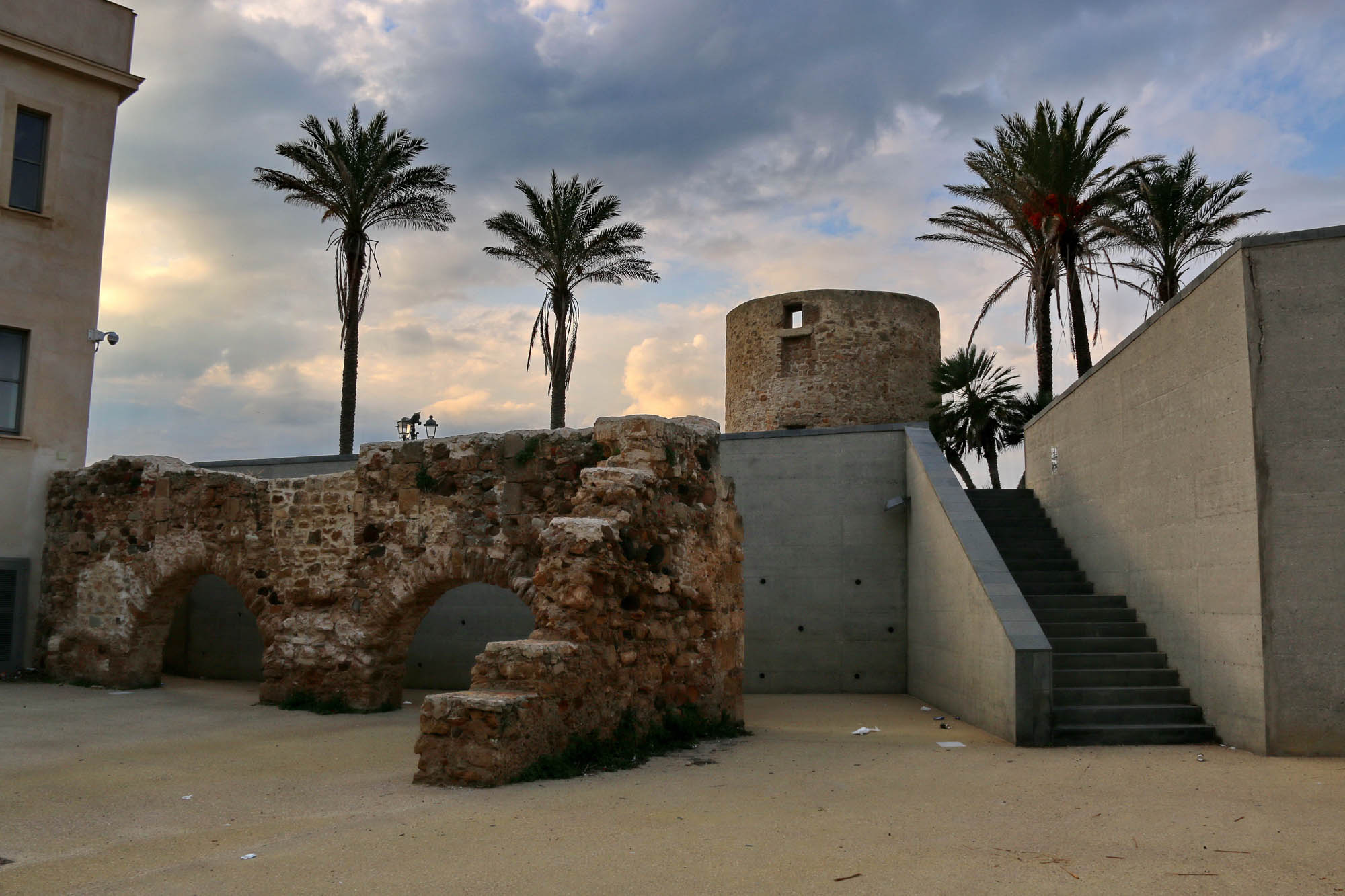

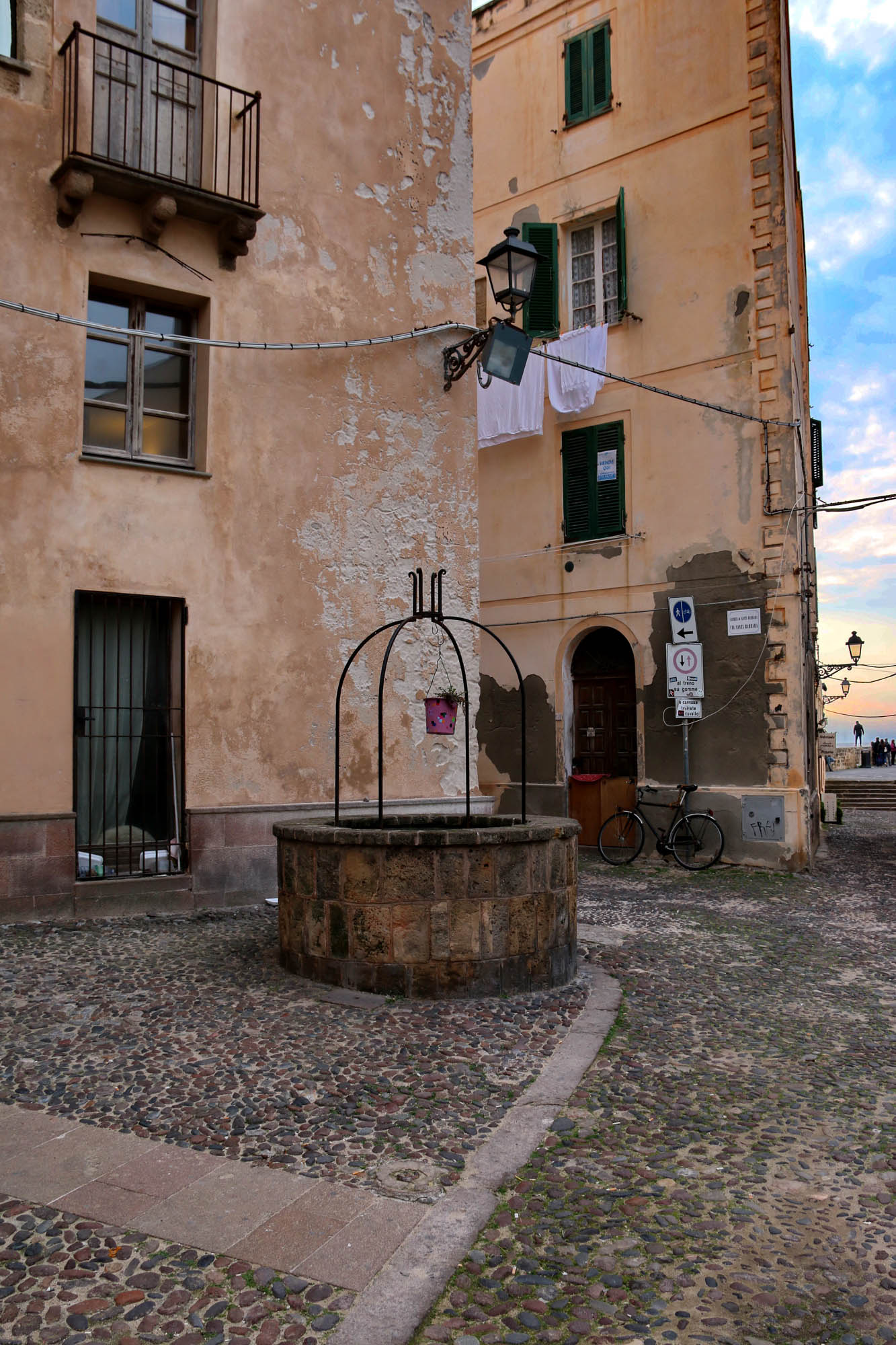
 In Sardinia, in the old town of the bilingual Alghero/Alguer, the street signs are also bilingual. The two names, however, are not translations of each other. They belong to two completely different registers. The Italian names are the empire-uniting trademarks of Italian nationalism, to be found in every city, the symbols and heroes of the Italian nation constructed a hundred and fifty years ago. The Catalan names are the medieval street names of an introverted traditional town: saints, churches, local landmarks, imprints of a local history. The street of Carlo Alberto, King of Sardinia and Piedmont, is in Catalan St. Francis, that of the Garibaldist Ardoino is Street of the old post, the Street of Rome is on the one end St. Anne Street, and on the other Stairs to the bell tower, the Square of Citizens is the Square of the old well, and the street of the Italian politician Manno is in Catalan Street of the Cemetery.
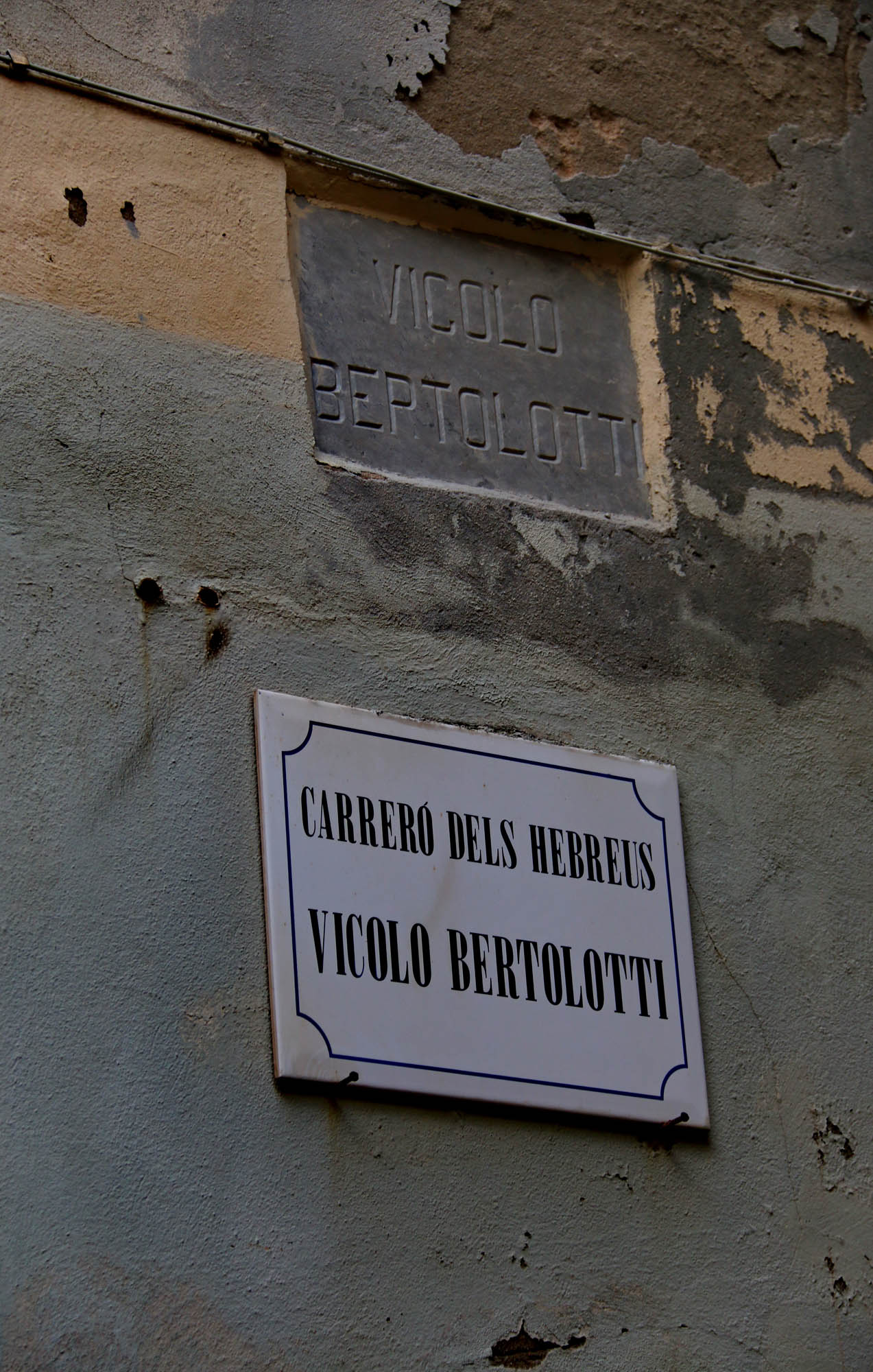
 The street named after the First World War hero Giuseppe Bertolotti is in Catalan Carreró dels Hebreus, Street of the Jews. In a city where there have been no Jews for more than five hundred years.
 There is also another square in the old town, whose name is the same in both languages, but as it is not translated into Italian, the foreigners do not understand it, only the local Catalans. Piazza/plaça de la Juharia – the Square of the Jewish quarter.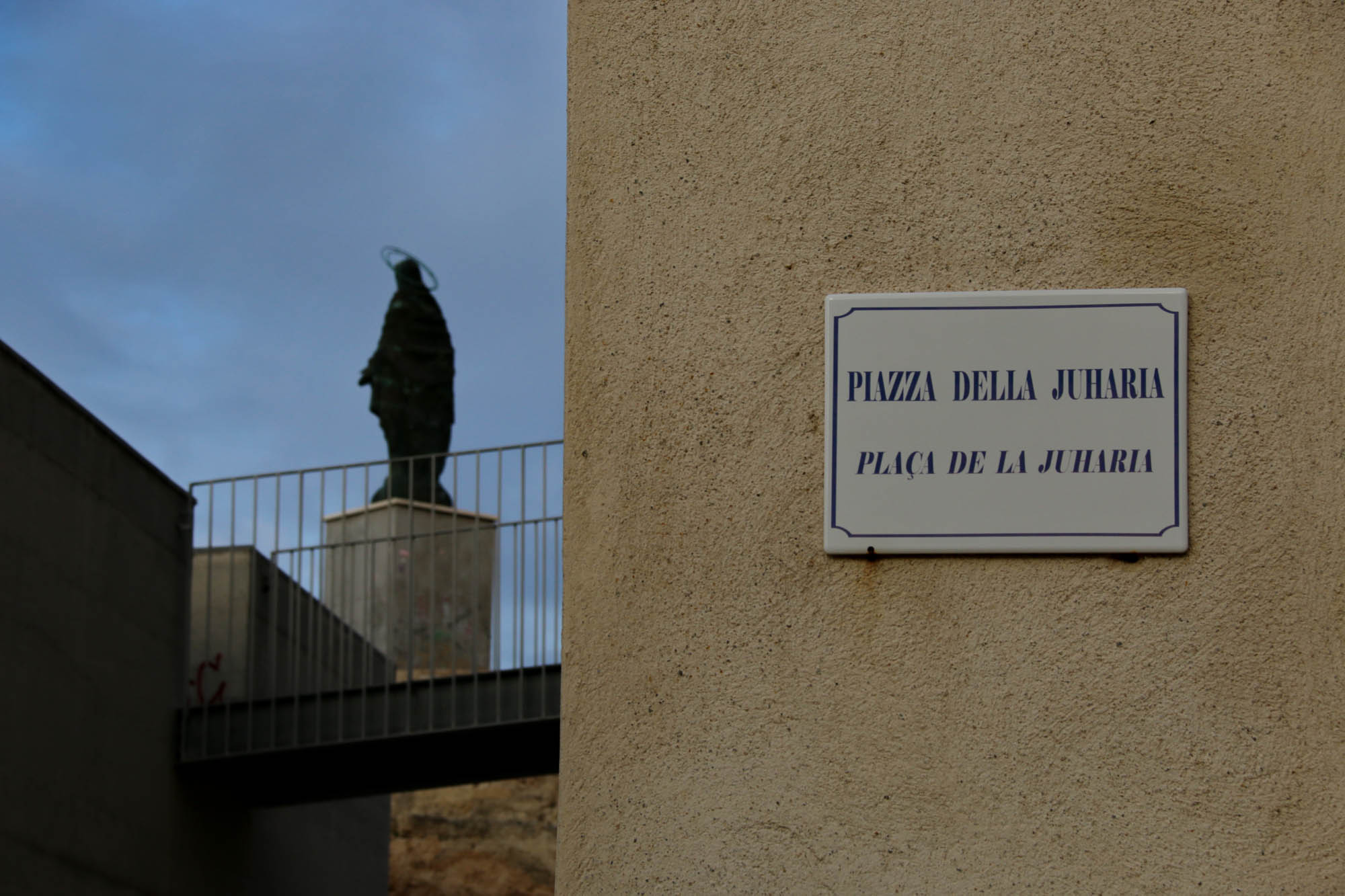
Local memory retained in the street names the remembrance of the Jews exiled in 1492.
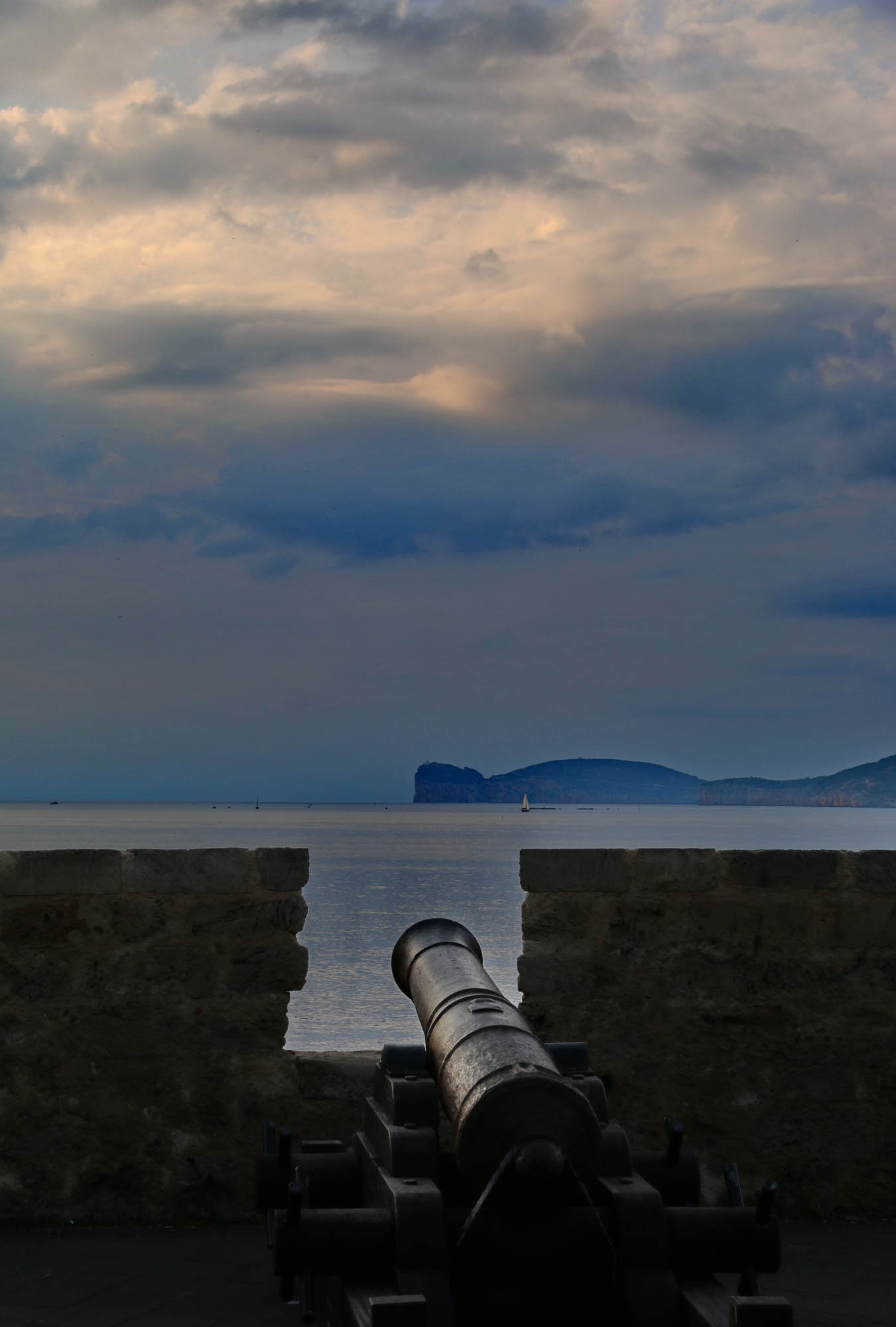 Even the weapons guarding on the sea bastion are of two types. Above, the one with which the Kingdom of Italy, below with which the Catalans guarded the peace of the port.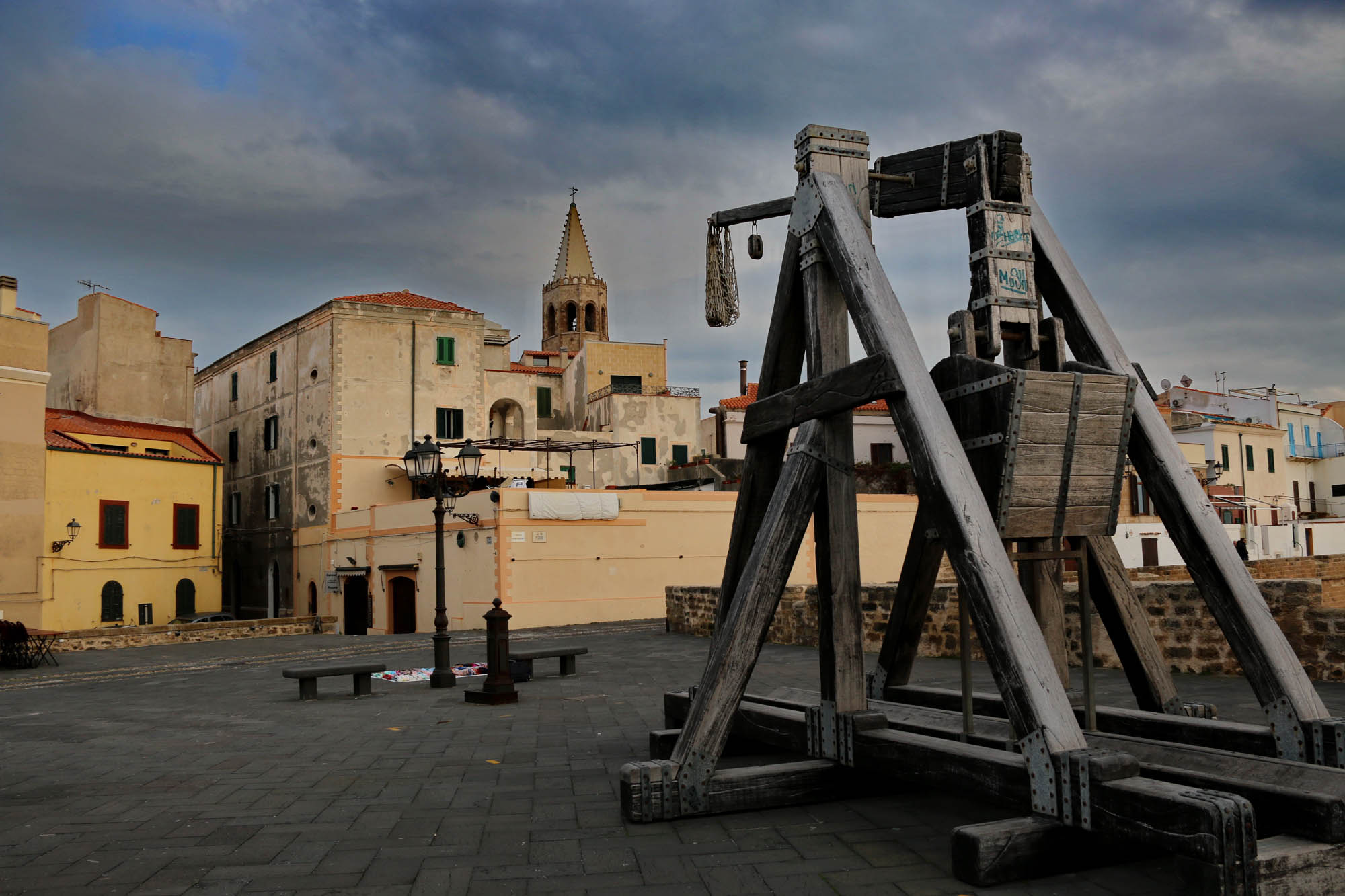
The first Jews, just like in Mallorca, arrived in Alghero with the Catalan conquerors, partly as investors, and partly as soldiers. In 1353, when Peter IV, King of Aragon set out to put an end to a centuries-old feud and conquer Sardinia from the Genoese, he previously had taken a major loan from the Jewish bankers of Catalonia, promising to compensate them with estates in the island to be conquered. His army also included a large number of Jewish soldiers, who – just like James I in Mallorca – were rewarded for their services with plots in Alguer. The preserved documents mention about twenty-five of them by name: Salamon and Jucef d’Alcatraz from Castilia, Murduto and Maymone Seciliano, Vital Codonyo and Jucef with his sons from Sicily, Isach Levi, Jahudano Ataf, Mosse Exalo, Isach Sucra and Abram Sanoga from the Catalonian Lerida, Mosse Amarello, Mosse Avempu, Samuel Botrom, Abraham and David Soriano from Calatayud, a certain Samuel from Segorbe, Isach Merdona from Mallorca, Janton Gabay from Zaragoza, Haim Crespin from Toledo, Samuel Juceff and David from the Valencian Jérica, Jucef Salamonis Argillet from Gerona. Abrahim Abenxeha provided two armored horses for the siege of the fortress, for which he received a generous reward. Ferrario de Santa Cruz was rewarded with an armored horse after the siege. Salamon Scarpa fought for his own life: he had been sentenced to death for murder in Catalonia, and he joined the army because of an amnesty promised to the participants of the campaign.
The first Jewish settlers were all given a plot in the northern “horn” of the old town, which is known since then as the Jewish quarter – aljama or juharia –, although, unlike later ghettos, it was never surrounded by walls. From the Christian city it was separated only by a broad street, which in the Middle Ages was called the Square of the old well, because here, between the two neighborhoods, stood the city’s public well.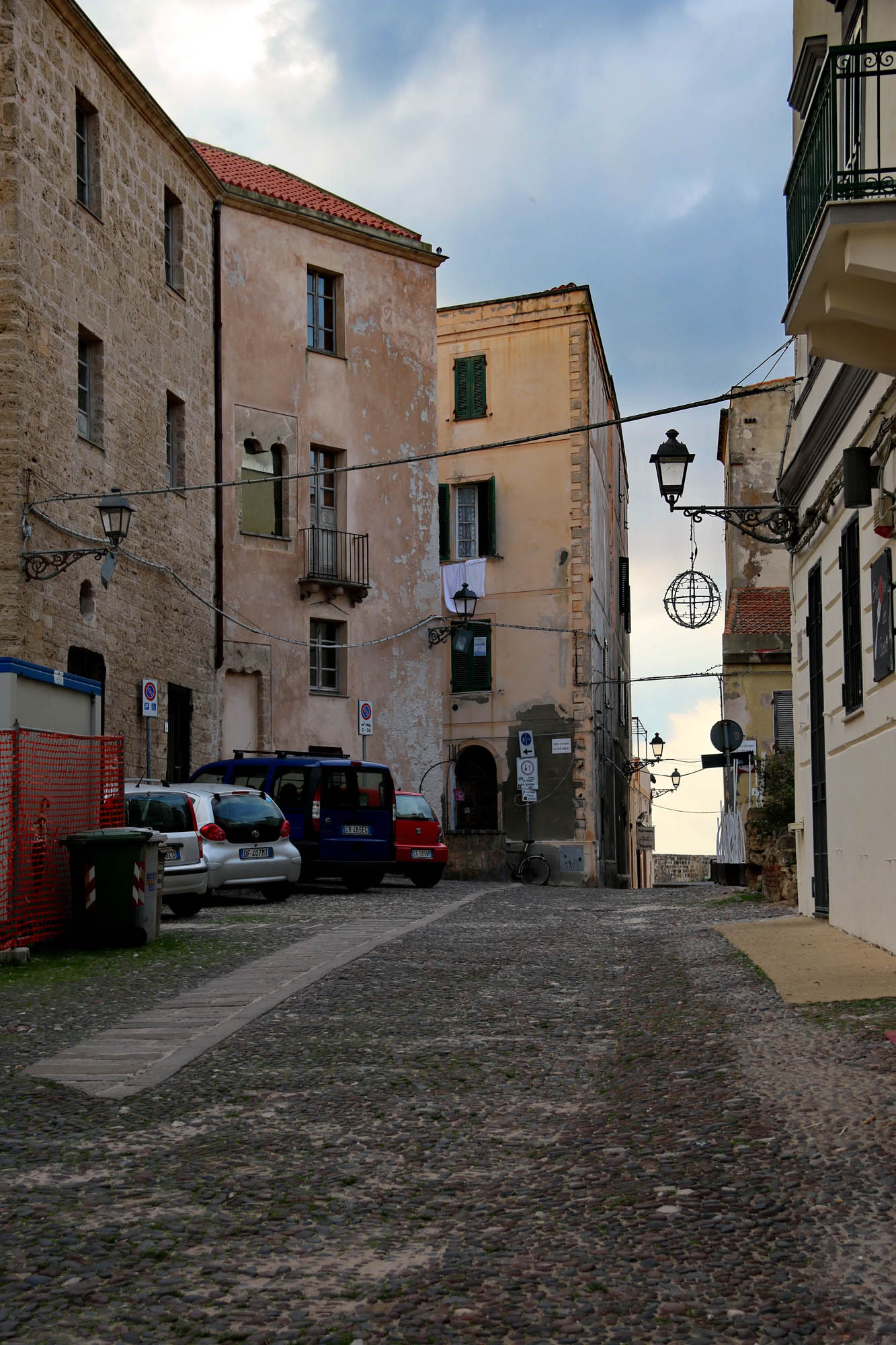
The residents of the Jewish quarter from the outset had the right of self-adnministration. This was the kahal, which was simplified to call in the Catalan language. The community was headed by three elected secretaries, nemanim, who collected the taxes and kept contacts with the royal authorities. The kahal also judged the disciplinary affairs of the Jews. In 1408 for example, as Eliezer ben David recounts in the 1937 issue of La rassegna mensile di Israel, they summoned a Jew who had played an illegal dice game. The piquant thing was that his opponent in the game with none other than the King of Aragon himself while on a visit to the island, and the Jew had even won 160 gold florins. To save himself, he subsequently asked the king for a declaration that he had forced him to play under penalty of capital punishment. The case ended up before Rabbi Bonjua Bondavin, a Marseille-born doctor, the highest Jewish authority in Sardinia, whose judgement was, that even if the accused repented, he must give the winnings to the embellishment of the synagogue. However, the person in question preferred to accept excommunication, and kept for himself the hundred and sixty gold florins.
The archives of the kahal were scattered after the expulsion of 1492, so that our main sources on the life of the Jews are the royal land registers and the documents of the lawsuits. From here we know that the owners of the plots were mainly merchants, whose network of connections covered the whole island, the countries of the Hispanic Peninsula and Northern Africa, as well as money lenders, physicians, artisans and soldiers. An especially prominent doctor was Eahim de Xipre, who wrote a book on the medicinal plants of Sardinia, and another on the climate of the island. In the 1370s a lot of new land buyers are registered from Southern France in the wake of the persecutions of Jews there. In the early 1400s, a third wave arrives from Provence, including some extremely rich dynasties, such as the Bellcayre, Lunell and Carcassona families. Lawsuit documents from 1376 mention the wealthy merchant Jacob Bessach, who wounded the Christian barber Pietro Seguert with a sword. In 1381 the same merchant and his wife sell a plot of land to the kahal for the purpose of a synagogue. In 1448 the synagogue needed to be expanded, because at that time there lived more than 700 Jewish families in the quarter.
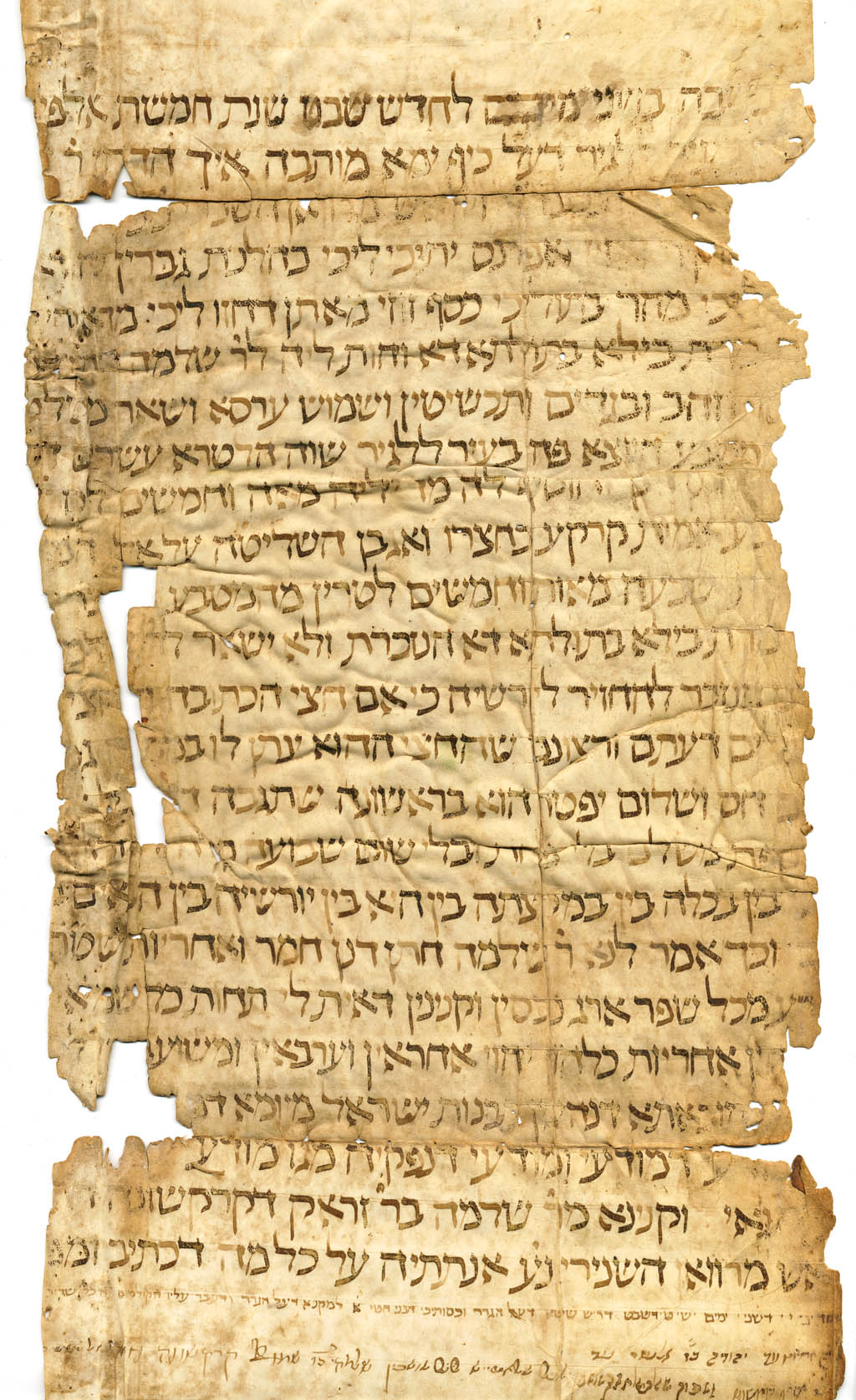
The only document originating from the kahal of Alguer, which has been preserved in a book-binding, is the ketubbah, marriage letter given by Shelomo ben Zarch de Carcassona to Bella bat Merwanha ha-Sheniri on the sixth day of the month of Shevat in 5216, that is, on 9 January 1456, “in the city of Alguer, on the seashore”. The groom promises the bride that he “…will provide for you and bury you and will give you to eat according to the custom of Jewish men”. According to the clause, Bella remains the owner of her entire dowry, as it was the custom among the Jews of Aragon. The document, which was analyzed in detail by Amira Meir in the 2009 issue of Materia Giudaica, has been also included in the World Digital Library.
The head of the wealthy Carcassona family, Samuele, came in 1422 from Provence to Alguer, where he immediately became a secretary of the call and the tenant of the royal customs. His sons, Maimone, Moisse, Zarquillo (Zarch, the father of the above groom) and Salomone (Nin) all occupied high positions both in the community and in the royal administration. They built their palace on the main street of the Jewish quarter, named after St. Erasmus.
It was so luxurious that Ferdinand II, King of Spain, wrote to the viceroy of Sardinia still before the publication of the decree on the expulsion of the Jews, that the house of “Nin de Carcassona” be held for him, for the purpose of royal accommodation:“…que la casa del Nin de Carcassona se reserve segons nos ab aquesta la reservam per abitacio real.”
The palace still stands, and is still the largest house in the quarter. Its gothic windows have been bricked up and decorated with Art Nouveau sgraffiti, but its arched gate is late medieval, just like the surprised face on the façade of the building. Today it houses the “Restaurant O” by Master Chef Eoghain O’Neill, so it still receives the same rank of guests as in the time of the Carcassonas.

In 1492, the decree of expulsion did not come unexpectedly to the Jews of Sardinia. The royal decree of 31 March was promulgated in Sardinia on 28 September, so the well-informed Jews had some time to escape with the movable part of their assets. The last Jew left the island on 16 December. However, many of them were converted to the Christian faith, so that they could remain there. They as marranos got into trouble with the Inquisition even generations later, such as Antonio Angelo de Carcassona, who became a priest, and he was summoned before the court in 1580 because he preached from the pulpit – fully in line with St. Paul’s Letter to the Romans – the chosenness of the Jewish people. It was an aggravating circumstance, that many of his relatives who had fled abroad, returned to Judaism, such as his brother who was the Rabbi of Krakow. Elio Moncelsi in his book Ebrei in Sardegna (2012) has collected more than two hundred family names of Jewish origin, still in use in the island. A local converted Jew was the interpreter of Columbus, Luis de Torres, who in the New World addressed the Indians first of all in Hebrew, suspecting them to be the descendants of the ten lost tribes.
The synagogue was converted into a church, named in good taste after the Holy Cross, with which the Jews had to do a pretty lot. Near the church was built in 1641 the convent and church of Santa Chiara for the order of the Isabellines, that is, the reformed Clares. After the order was dissolved in 1855, the convent was turned into a hospital, which in 1902 also included the Church of the Holy Cross. In 1909 the church was finally pulled down, and the entire hospital rebuilt as Ospedale Marino “Regina Margherita”. Today only the little square in front of the building recalls the name of the former Chiesa della Santa Croce.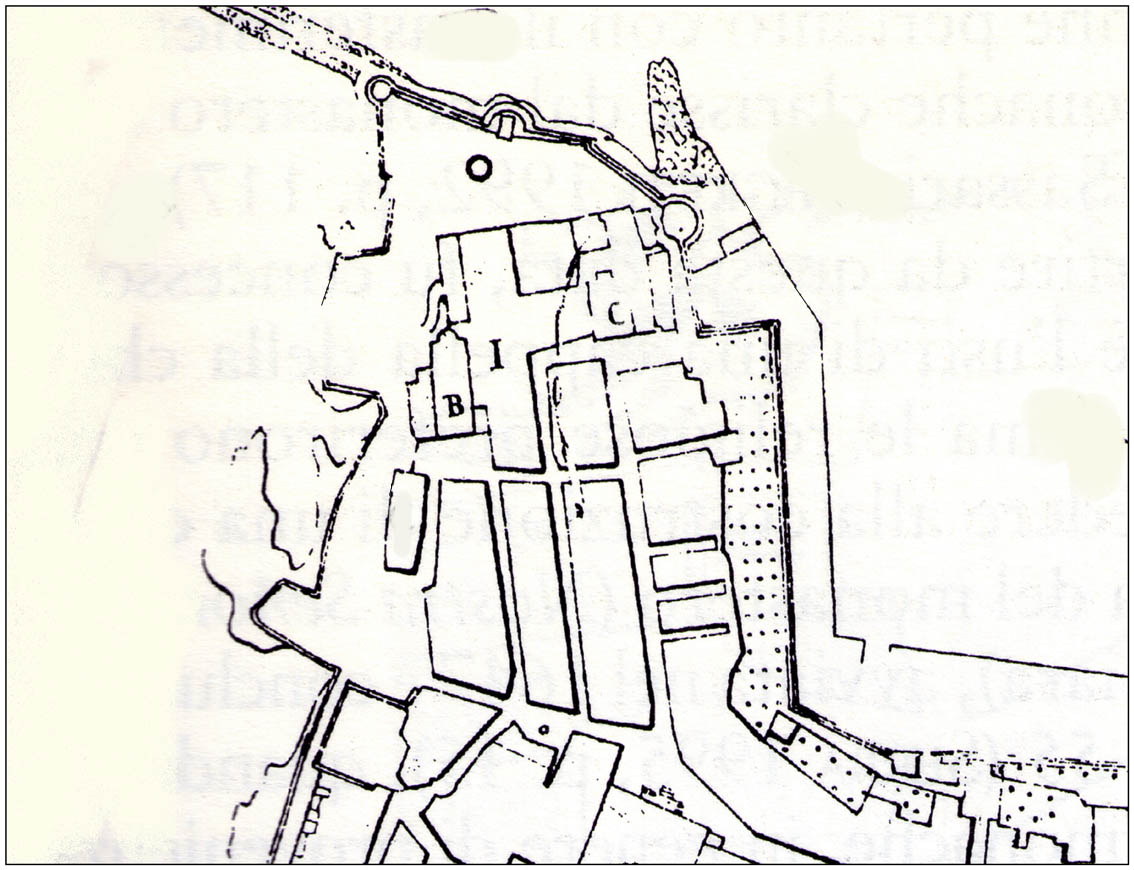 The Jewish quarter in the 1870 map of Alghero C. G. Gerenzani. B marks the church of Santa Croce, C that of the Clares, and I the hospital. From the blog post written on the old hospital.
In the 19th century, the ghost of the Jews once more returned to the old synagogue. In 1820 the news spread that the exiled Jews had buried their treasures, lu sidaru, as they say in Sardinian, in the synagogue, before leaving the island. The news came from Cià Crara, who was considered a witch, and who in a number of occasions saw in a dream the devil in the church of Santa Croce, undoubtedly guarding the treasure. This case shows simultaneously that, not only the street names, but also collective memory clearly preserved the memory of the Jews, more than three centuries after their expulsion. The enlightened Sardinian-Piedmontese government took the news seriously, and appointed a committee to dig up the church. As one would expect, they did not find anything.
In 1847 the digging started again. This time, the parish priest and his three colleagues created a secret consortium, to which two city doctors were also enrolled. As to how secret the undertaking was, is shown by the fact that a long satirical poem was immediately made about them, which was published in La ilustració catalana some thirty years later. According to this, prior to the commencement of the excavations, someone – perhaps the author himself – as a joke had hidden a small iron box in the earth, with a worthless German-language book inside. The treasure seekers found it, and they believed that God wanted to show them with this book, written in an unknown language, where to search the treasure. They were thus looking for someone who understood the mysterious language, and they came across Ferrandino Simò, the town fool, who noted that the book was written in mussulmà language, and it includes invaluable tips on how to get rid of the white flies, and how to heal a crooked leg, an empty head, and him who speaks in French. The book, ends the poem, is still shown off to foreigners at the gate of the city by “the son of Chichu Piga”, in the original and together with the translation.
Since then, nobody has sought for treasure in Alghero, but lu sideru became part of the folklore of the city. The last archaeological excavation in the place of Santa Croce was in 1997-1998, whereupon, aside from the traces of the former treasure hunt, they found the remains of the synagogue and of the mikveh.

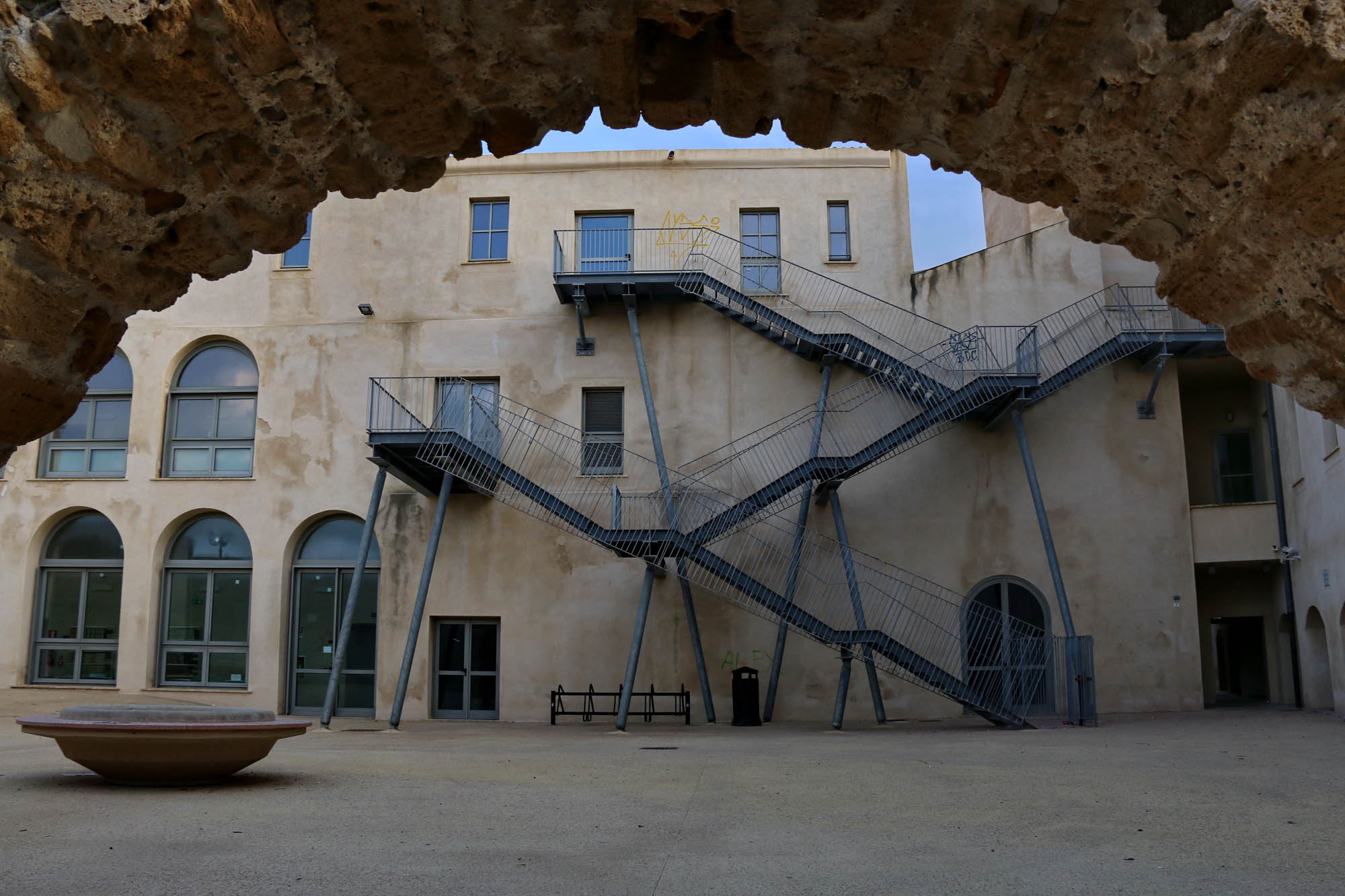
The former hospital is now partly a public library, and partly serves as the department of architecture and urban design. The Middle Eastern style elements adopted in the modern reconstruction suggest that consideration has been given to the Jewish tradition of the place as well. In the inner courtyard of the building, which is open to the sea, in front of the exciting exterior stair composition, a piece of an old wall of the former Jewish quarter stands, almost as if it were a sculpture. And on the wall of the building a plaque recalls the memory of the former juharia.

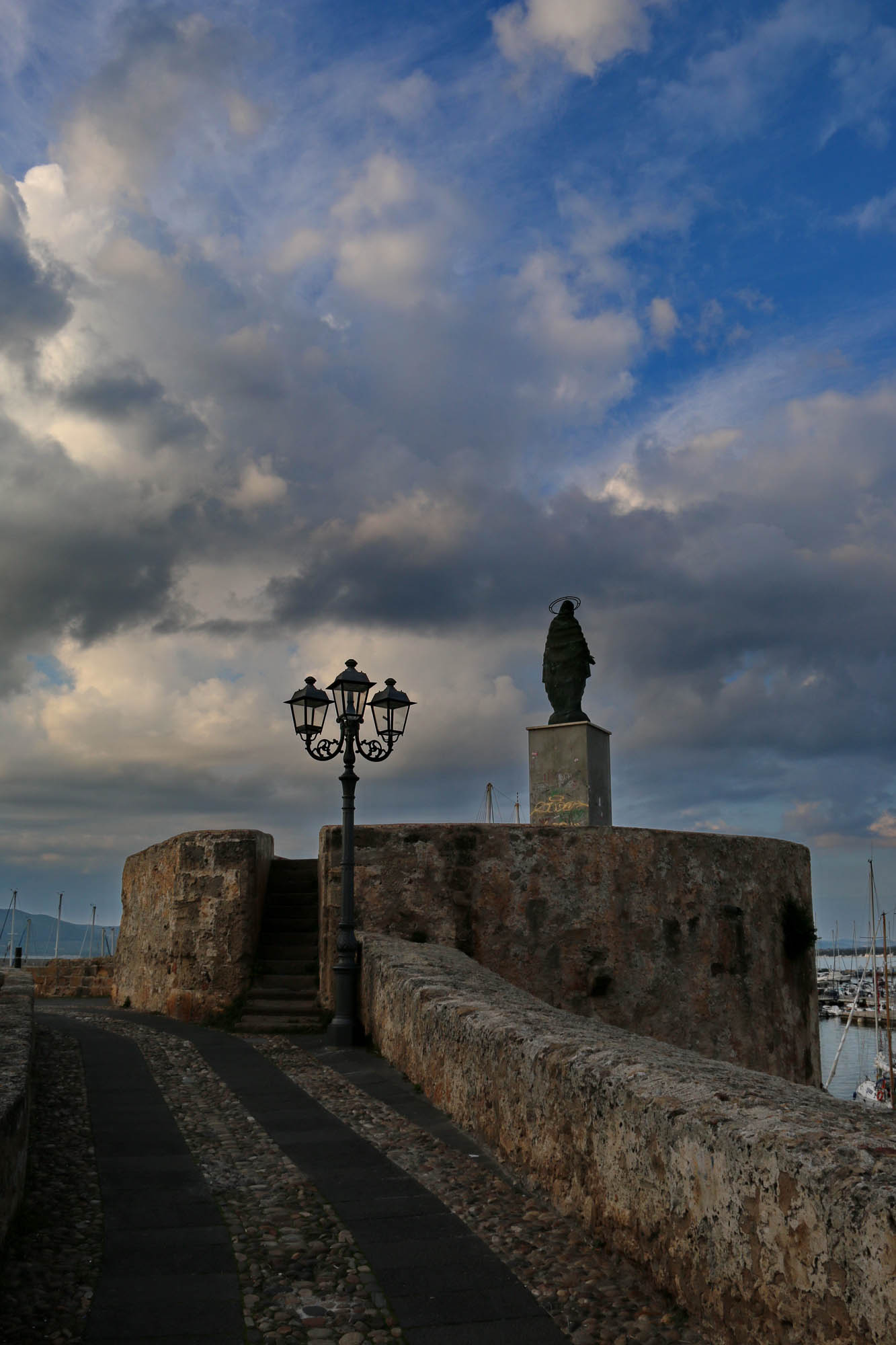
The Carreró dels Hebreus, the Jewish street starting from Santa Croce Square is flanked with cheerful Mediterranean flower pots cut from plastic bottles, praising the creativity of the residents. The plaster has been renewed a couple of times in the past five hundred years, but wherever it is lacking, there emerge the medieval carved stones, in front of which the Jewish inhabitants had passed day by day. The street emerges with a steep staircase to the seafront promenade, at the former Marine Gate, the guarding of which was once the responsibility of the Jews. On top of the St. Elmo Gate Bastion now stands the last Jewish woman who remained in the town, the Virgin Mary watching over the harbor.
Elena Ledda: Duru duru Deus Adonai. Sardinian urban music also preserving Sephardic melodies and texts

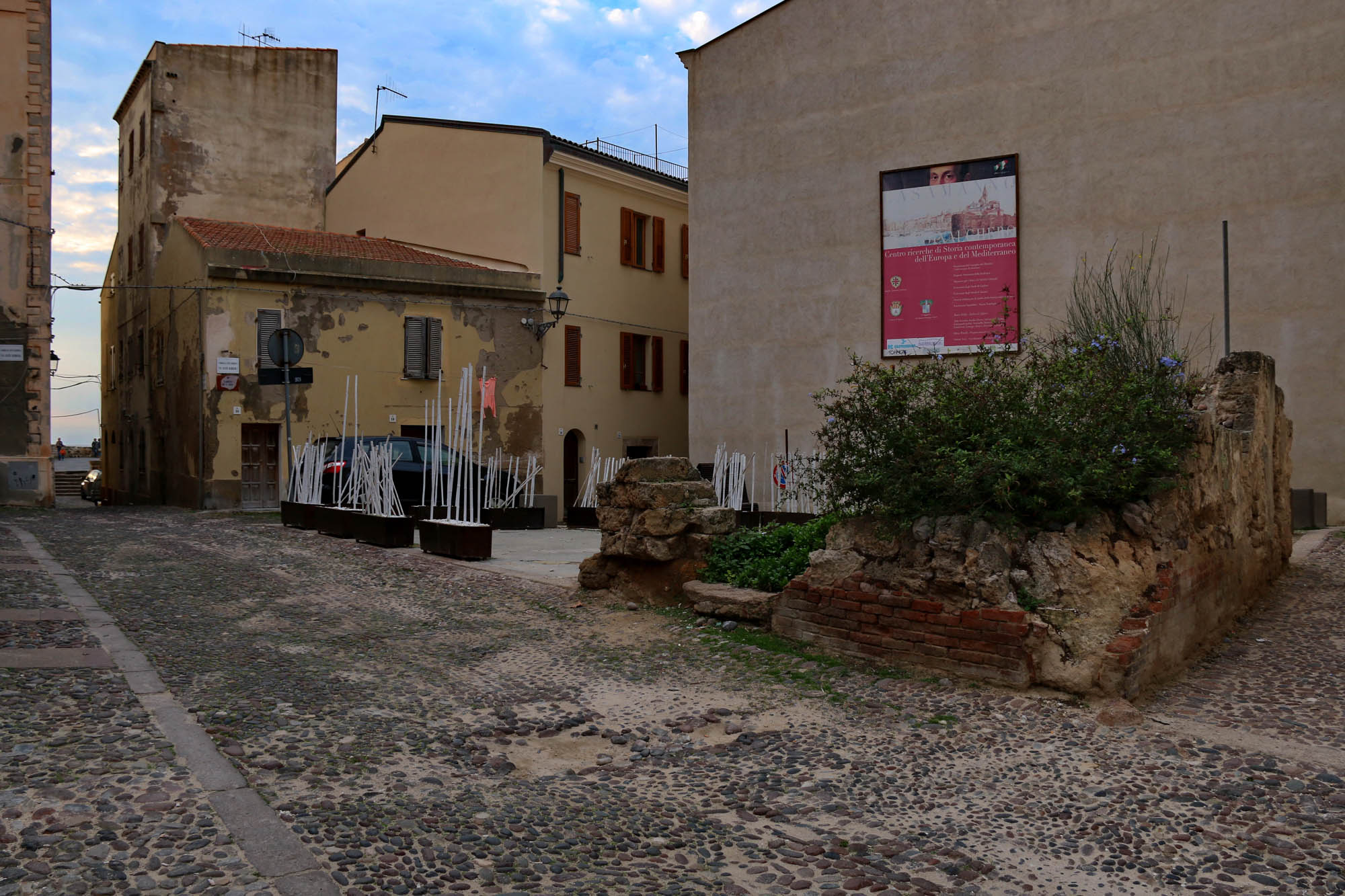
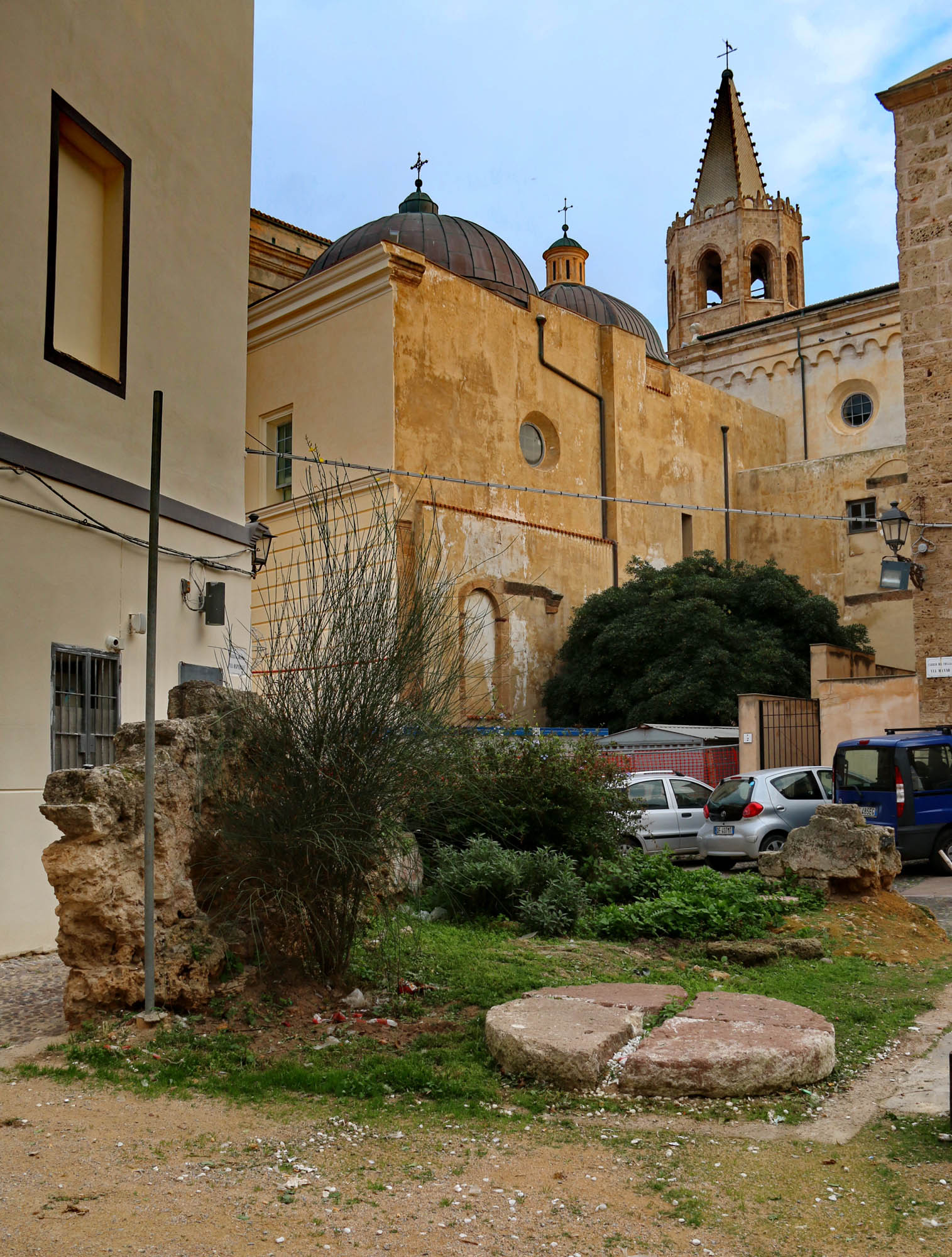
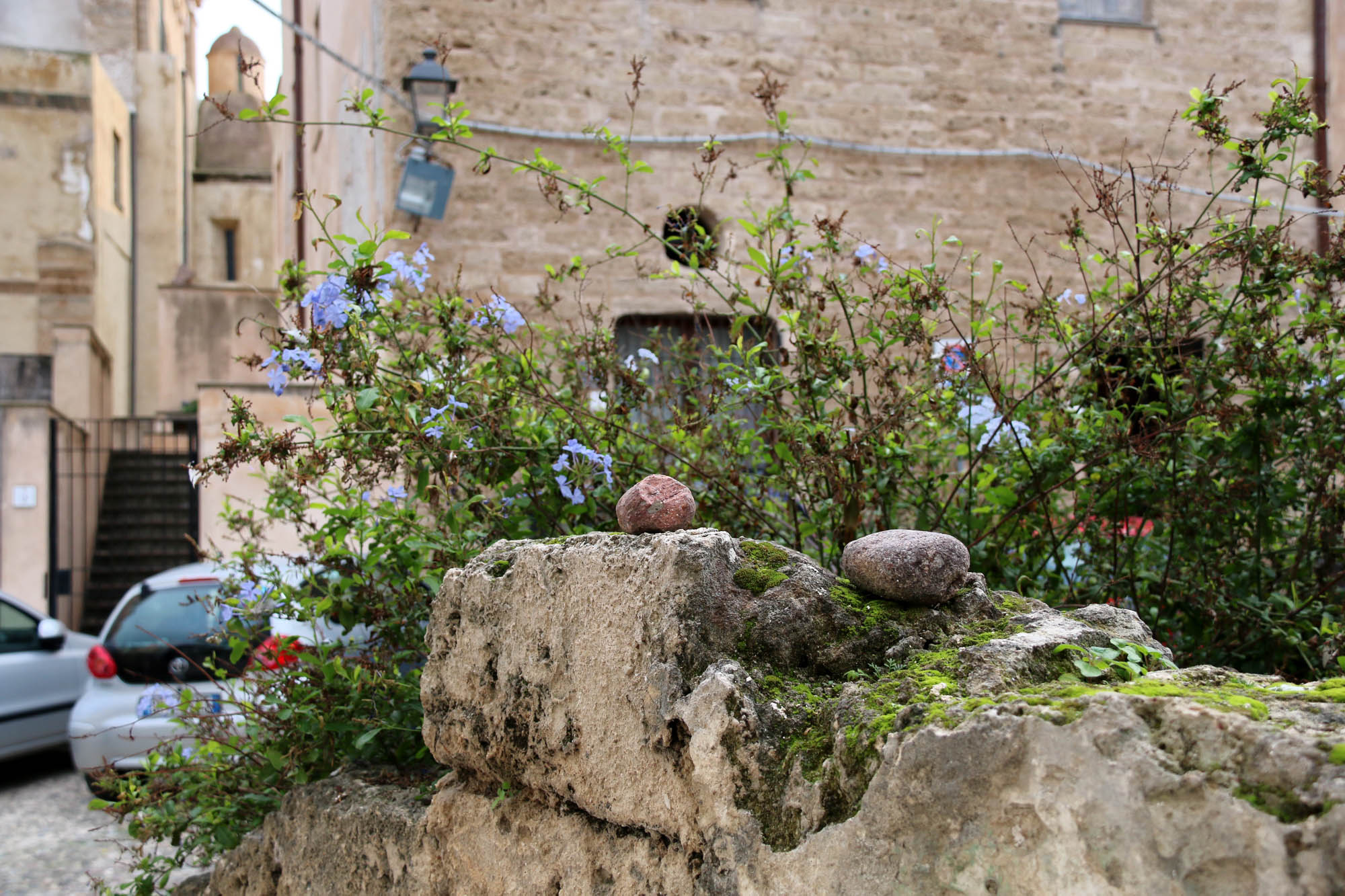
On Hospital street – in Catalan, Street of the nuns – we return to the Square of the old well, the border of the Jewish quarter. Across the square, or rather the broad street, the cathedral stands. On this side, a ruined medieval house, its knee-high wall has been overgrown by a bush with fragrant blue flowers. Someone, as in a Jewish cemetery, placed a pebble on top of the wall.


 En Cerdeña, en el casco antiguo de la bilingüe


 Come with us to…
 Atlantis
 Bestiary
 Bohemia+Prague
 Books, exhibitions, music, film
 Brave old world
 Caucasus
 Cemeteries
 Crimea
 Get to know the
 Images of the East
 Lightwriting
 Lwów/Lemberg
 Mallorca
 Message on the wall
 The Museum of Propaganda
 Odessa
 Paper Museum
 Persian letters
 The Jewish heritage


